Metapontum
Metapontum, Italy
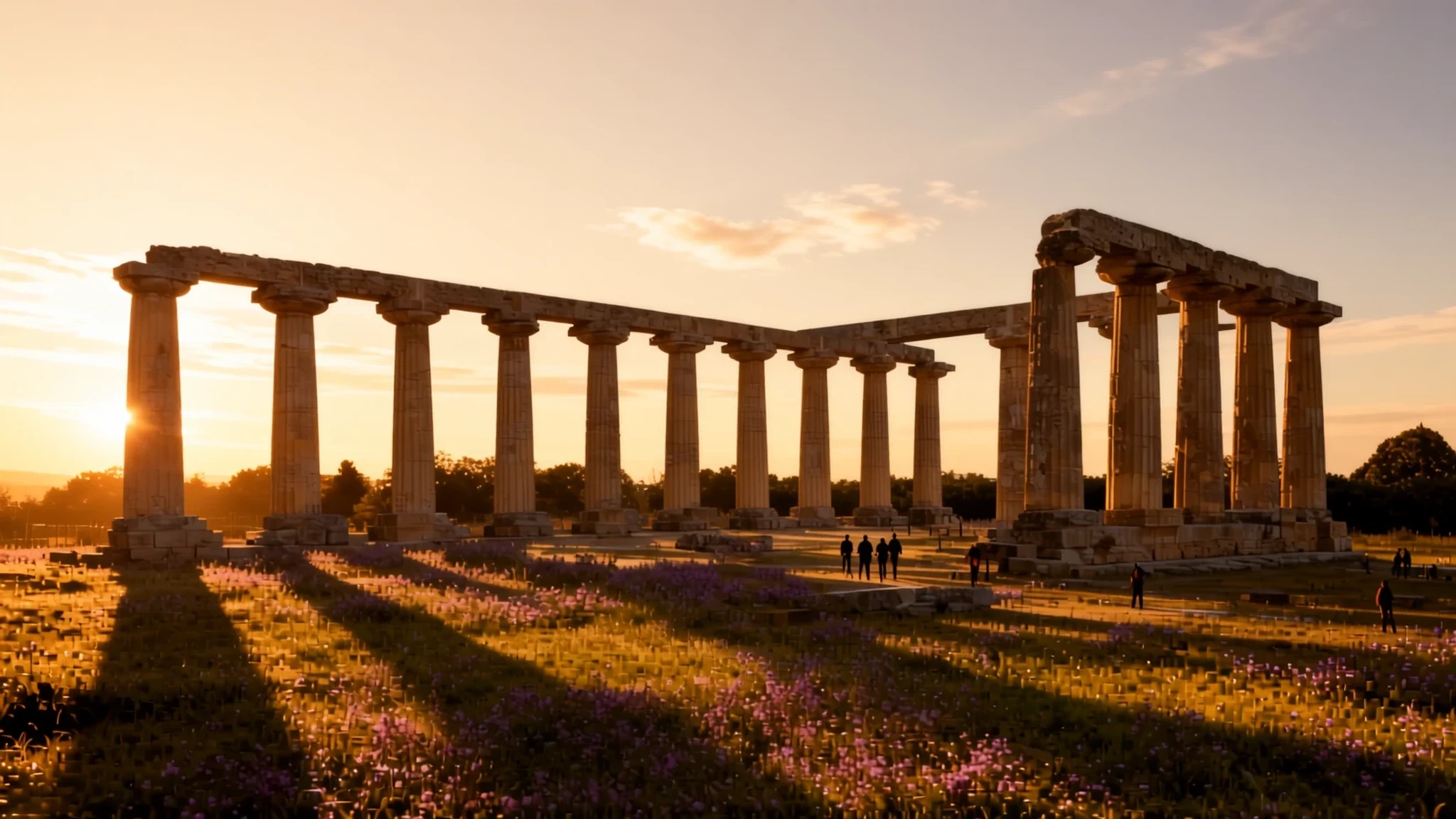
Metapontum is a quiet Greek colony site on Italy's Ionian coast, where temple ruins stand in open farmland far from the usual crowds.
The place
Metapontum sits on the flat coastal plain of the Ionian Sea in Basilicata, southern Italy, between two rivers: the Bradano to the north-east and the Basento to the south-west. Its ruins lie in Metaponto, a district of the comune of Bernalda, in the province of Matera. The site is only about four metres above sea level, so the landscape is wide, green and open, more farmland and sky than hillside. This is the opposite of Matera's famous stone ravines, which are not far inland.
Metapontum was one of the Greek colonies of Magna Graecia, the name given to the Greek-settled parts of southern Italy. Today it is an archaeological site rather than a town. The remains are spread out: a group of temple foundations and columns, a theatre built over an older assembly hall, a small place of oracles, and excavated streets of houses that now lie under fields. A national archaeological museum in the modern settlement holds many of the finds.
The pace is slow, as across the south. Do not expect a walled city with a skyline. Expect low ruins, grass, pines, a beach resort strip nearby and the occasional school group or cyclist. Most visitors come as a day trip from Matera or as a stop on a drive along the Ionian coast. The official archaeological park website, museometaponto.beniculturali.it, is the place to check what is open before setting out.
Its story
Metapontum was founded by Achaean Greeks, but the ancients themselves disagreed about who exactly started it. Strabo and Solinus credited followers of Nestor, the old king who fought at Troy. Justin offered a different hero, Epeius, builder of the Trojan Horse, and said local people once showed his tools in a temple of Minerva. Ephorus told of settlers from Phocis led by a tyrant named Daulius, and Antiochus of Syracuse linked the name to a hero called Metabus. These are foundation legends, not records, and they show how keen the colony was to claim a heroic past.
The more practical story is about rivalry. When the site was chosen, it stood empty. Settlers from the Achaean cities of Croton and Sybaris wanted it settled by Greeks of their own kind, mainly so that Taranto, whose people were also eyeing the coast, could not take it first. A colony was therefore sent out from Greece under a leader called Leucippus. One account says he won the land from the local people through a deceitful treaty.
What followed is visible on the ground rather than in the legends: sanctuaries, civic buildings and ordered streets laid out on a fertile plain. Later centuries rebuilt and reused many structures, which is why the theatre sits on the footprint of an earlier assembly space. The legends are worth knowing, but the stones are the better evidence of a prosperous farming city.
What to see
- The temple area — Metaponto archaeological park
The best-known group of ruins is the row of temple remains, associated with Artemis, Apollo and other deities. What survives is foundations and a few standing columns, so it rewards a slow walk and some imagination. In spring the grass is green and the light is soft; in high summer it is hot and shadeless.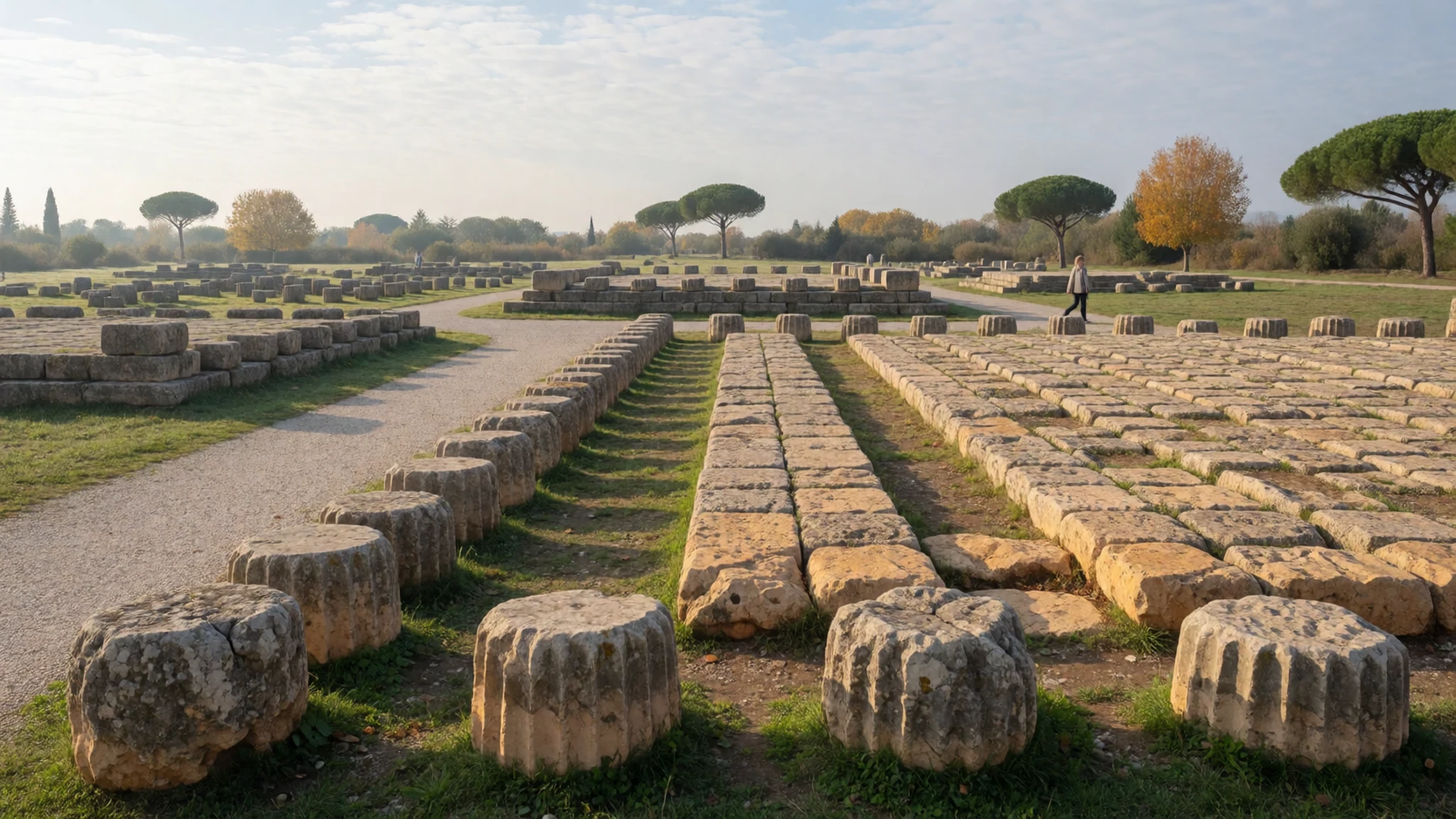
- The theatre — Metaponto archaeological park
The theatre was built over an older assembly hall, an ekklesiasterion, and part of a high outer wall from that earlier structure still stands. Seen from the rim, the circular layout is easy to read. It is a good place to understand how the civic life of the colony was arranged.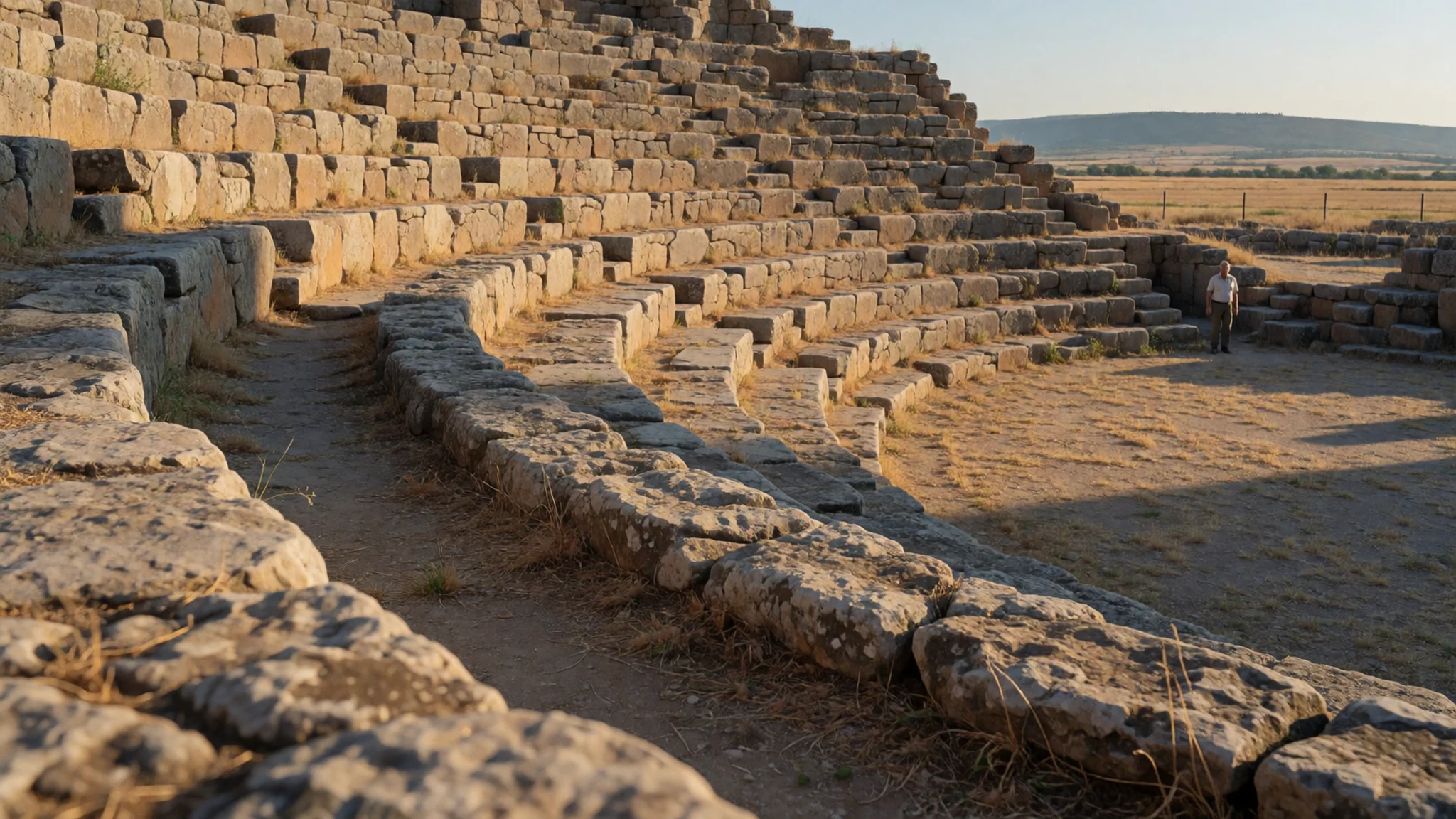
- The manteion — Metaponto archaeological park
The manteion is a small structure linked to oracles and divination, with low walls that mark its original outline. The theatre can be seen in the distance from here, which helps place it within the wider layout. It is quick to visit and easy to miss without a map.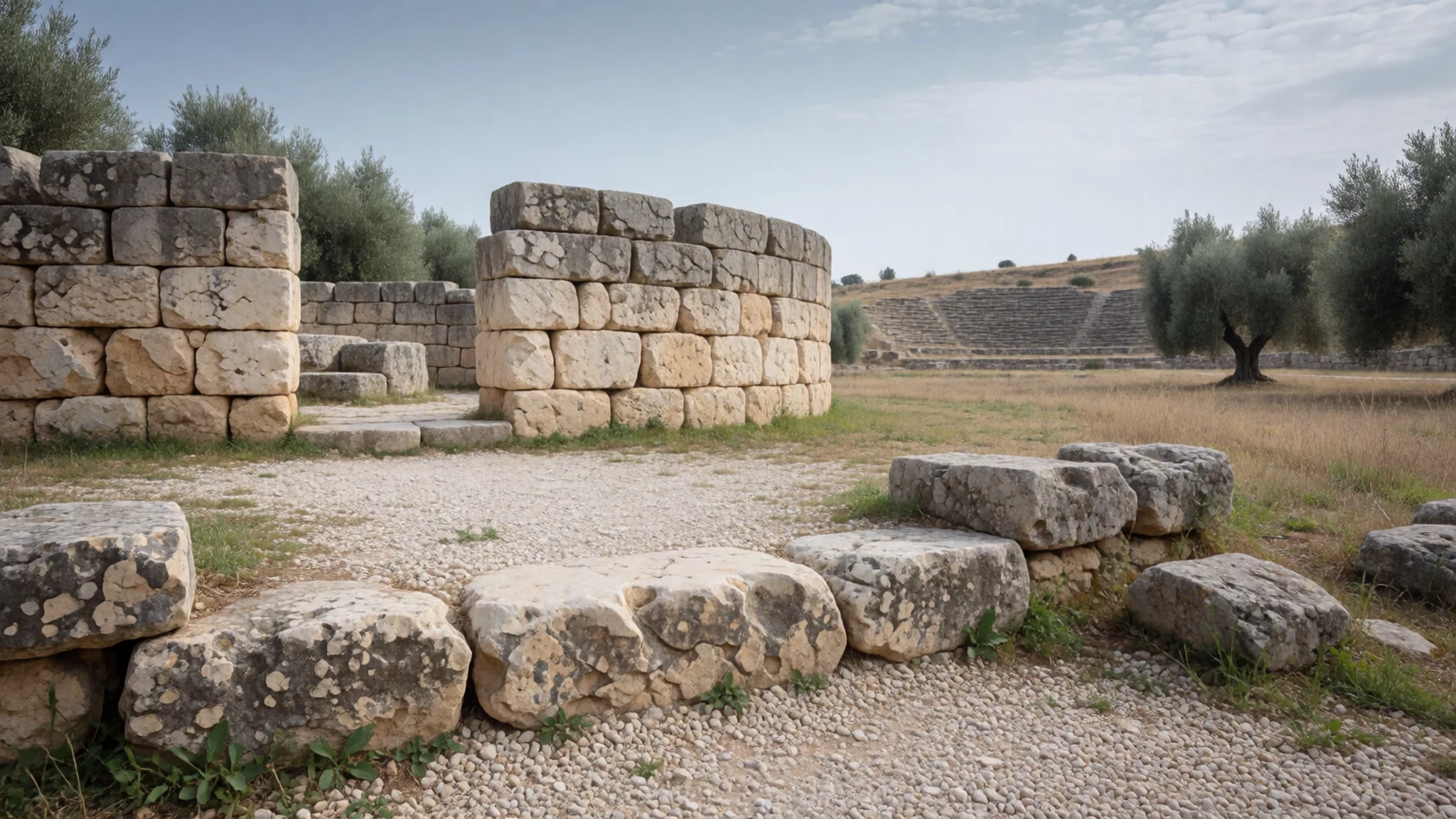
- The residential quarters — South of the ancient centre
South of the centre, excavated house plots show how ordinary people lived. Much of this land is now farmed again, so the traces are modest and best treated as a glimpse of the street plan rather than a full site. Check locally whether access is open before going.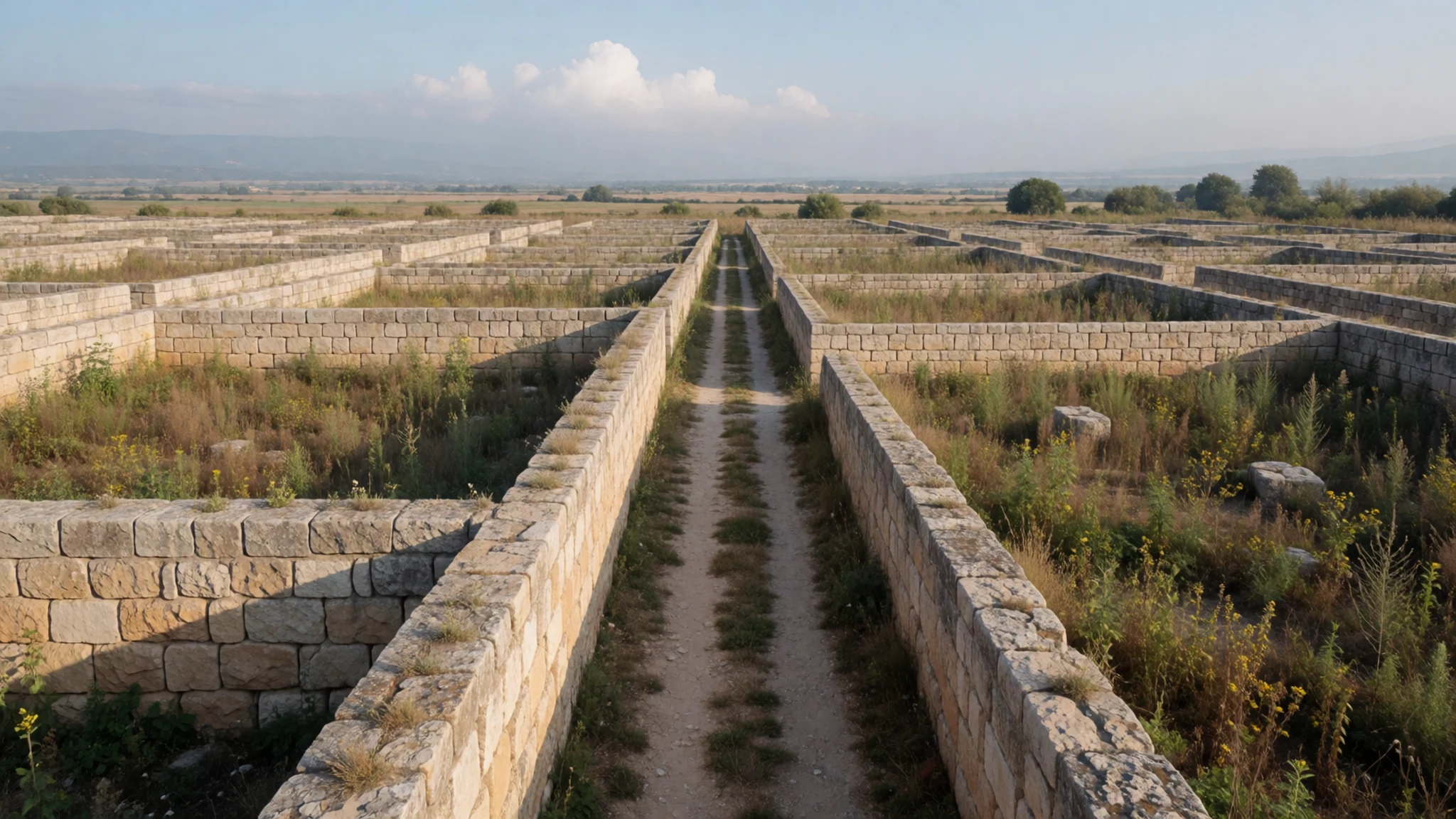
- National Archaeological Museum of Metaponto — Metaponto
The museum holds finds from the colony and its countryside, and gives context that the open-air ruins cannot. Pottery and everyday objects bring the place to life. Start here, or finish here, and check the official park and museum website for opening details.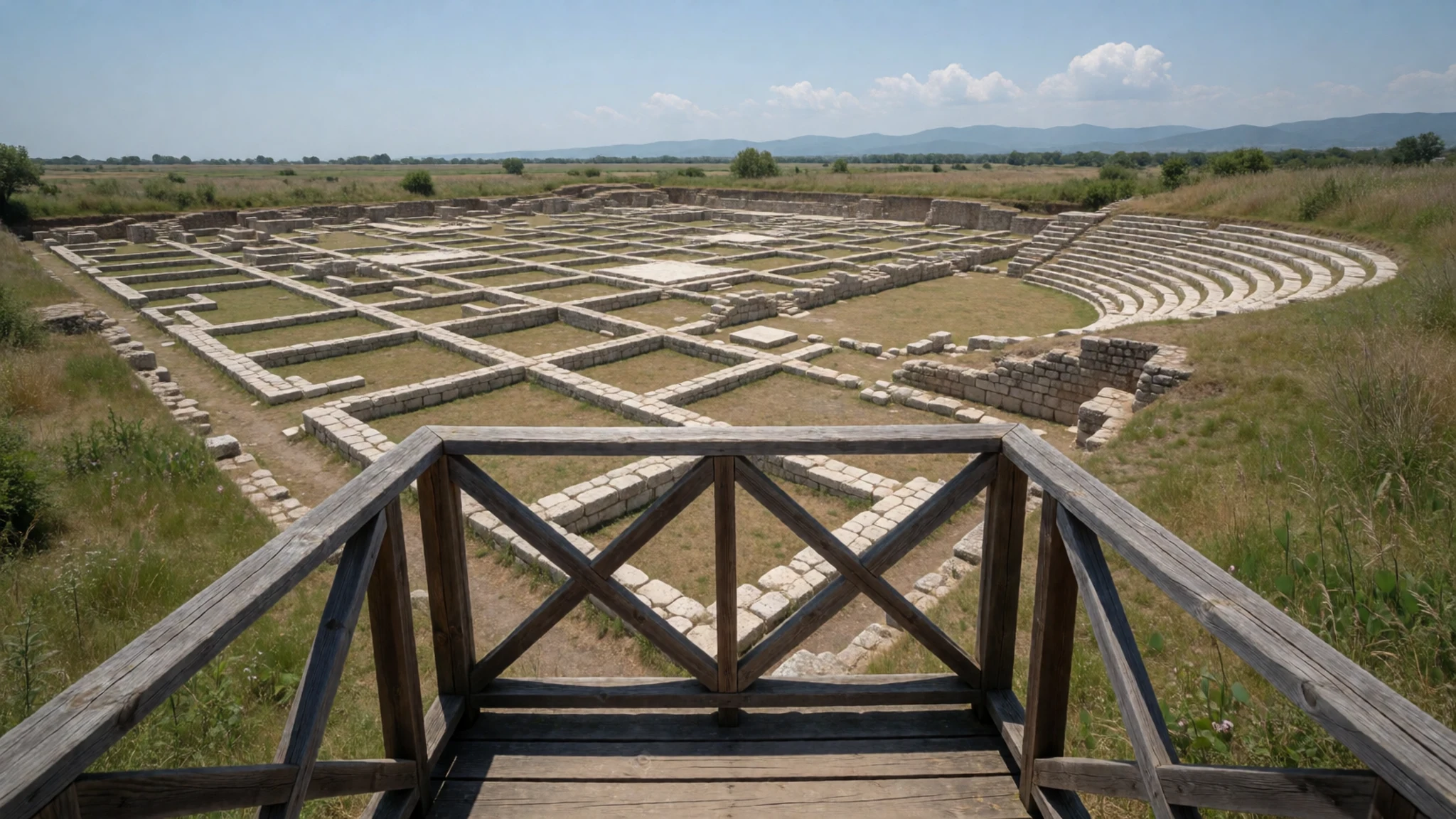
Culture
Metapontum belongs to a part of Italy where life moves slowly and the Greek past is treated as ordinary local heritage rather than a spectacle. Basilicata was once called Lucania, and the region carries a strong sense of its own identity, shaped by peasant farming, hardship in the mid twentieth century and a more recent wave of investment and quiet tourism.
The Greek colonists left a layered culture. Their cults of Apollo, Artemis and other deities, their theatre and their assembly hall tell of a society that mixed religion, politics and entertainment in the same civic spaces. The pottery found here, including red-figure vases showing athletes with strigils and oil flasks, reflects a city that valued sport and training for the body.
Modern Metaponto is a farming and beach area. Locals are friendly and unhurried, and meals, coffee and conversation take their time. Sunday and afternoon closures are common in small places, and visitors who adjust to the rhythm have a better time. The strong sense of place comes from the land itself: fields, rivers, the sea and old stone.
Stay on the marked paths and do not climb on the standing columns or walls, as they are fragile and the site relies on visitors treating it with care.
What to wear
Metapontum has no single traditional costume of its own to point to; its ancient colonists would have worn the Greek chiton, a tunic of linen or wool pinned at the shoulders, with a himation cloak over it. Wool and linen were the staple textiles of the period, and clothing was usually dyed or edged in simple colours for festivals.
In Basilicata more broadly, older rural dress used wool and sturdy cottons suited to farm work, and some villages still bring out traditional costume for saints' days and festivals. These are occasions rather than everyday wear, and the details vary from village to village.
People in Metaponto today dress as they do across southern Italy: casual and neat. Linen shirts, light trousers and sundresses are common in summer, with jackets and jumpers in the cooler months. Beach clothes belong on the beach; locals tend to dress a little more smartly in towns and when eating out.
For a visit to the ruins, wear comfortable shoes with a good grip, since paths are uneven and the grass can hide stones. The site is open and flat, with little shade, so bring a hat, sunglasses and sun cream from late spring to early autumn. Light, breathable layers work best in spring and autumn, when mornings can be cool and breezy. If you add a church in a nearby town, keep shoulders and knees covered. A light scarf is easy to carry for this.
What to eat
- Peperoni cruschi — Trattorie and food shops across Basilicata
Crunchy dried peppers, a sweet variety of the Senise pepper, nicknamed the red gold of Basilicata. They are fried briefly and eaten like crisps, or crumbled over pasta and egg dishes.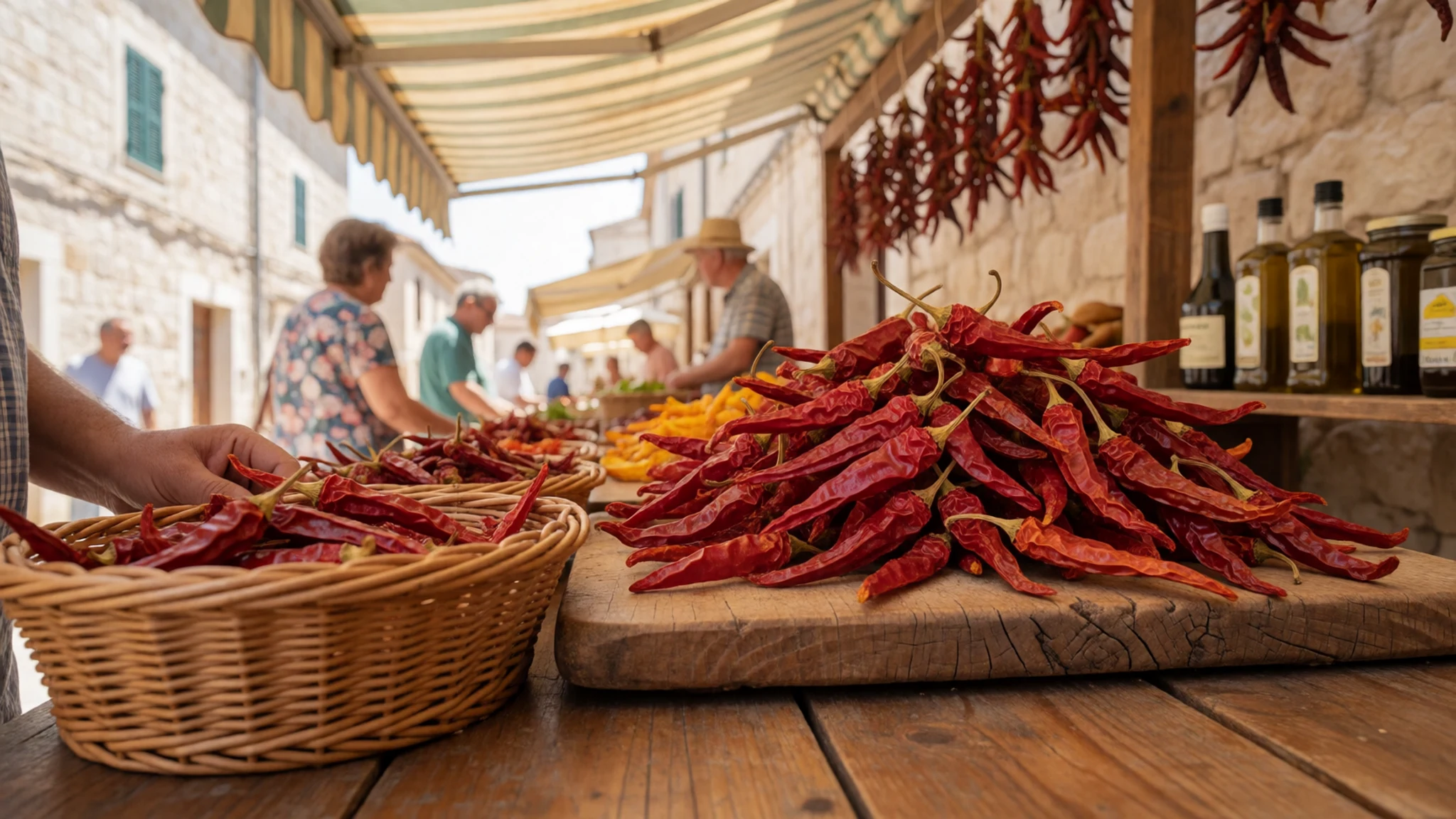
- Pane di Matera — Bakeries in Matera and nearby towns
Matera bread is a dense, golden loaf with a thick crust that keeps well. It is the base for many local dishes and is often served with oil, tomatoes or cheese.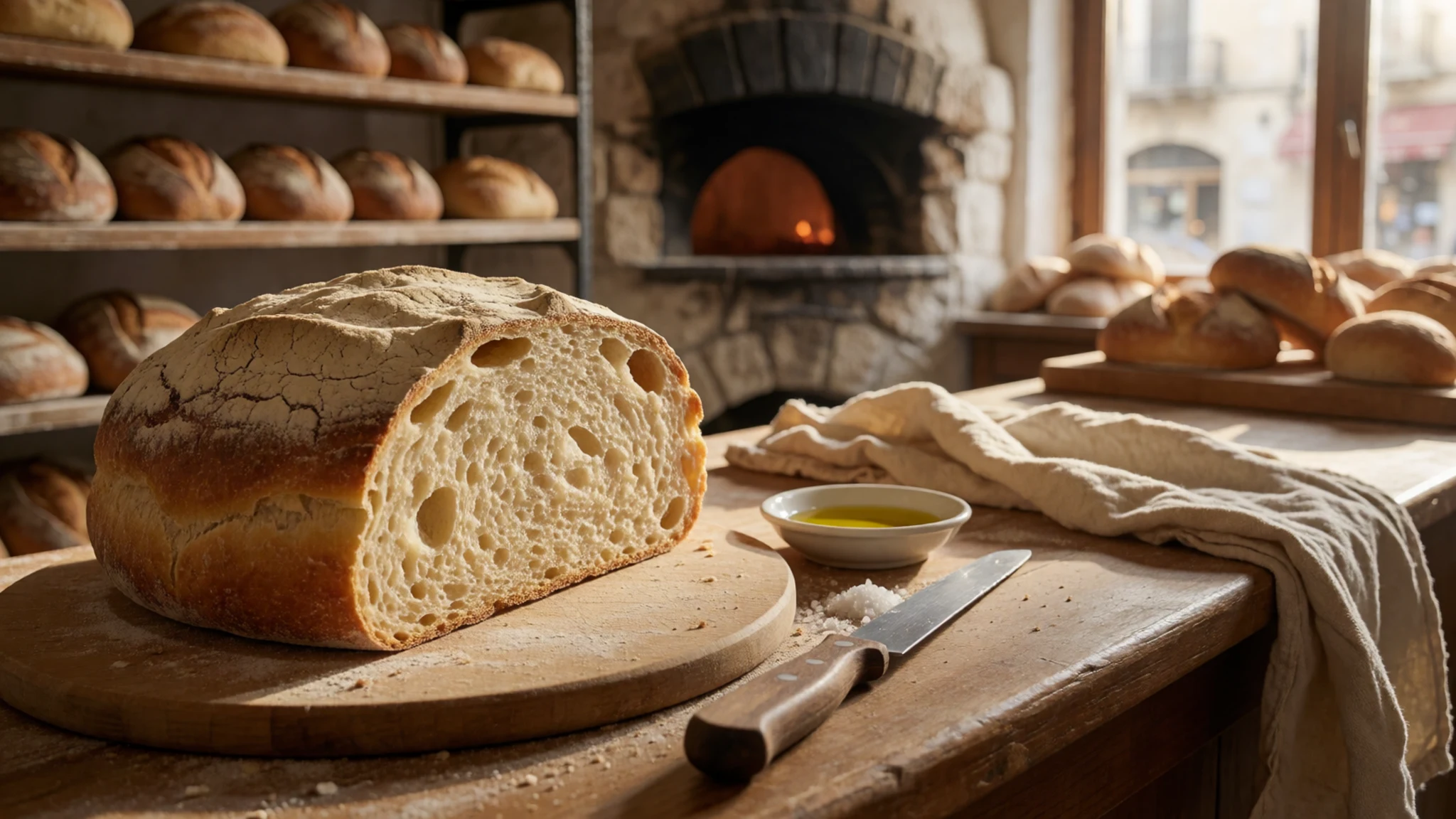
- Lucanica sausage — Butchers and trattorie in the area
A spiced pork sausage typical of the region, grilled or cooked in sauce. It is a hearty, peasant-style dish, best with bread and a glass of local red. - Pecorino di Filiano and Canestrato di Moliterno — Cheese shops and farm shops
Two regional cheeses made from sheep's milk, with a firm texture and a savoury, sometimes sharp flavour. They are served as a starter, grated over pasta or eaten with honey and bread. - Fragola Cadonga strawberries — Roadside stalls and markets on the plain in season
A strawberry variety grown on the Metaponto plain. The season is short, in spring, and the fruit is eaten fresh or in desserts.
Plan it
Best time. April–June and September–October. Spring is green and mild, and autumn is pleasantly warm. July and August are hot with little shade at the ruins.
How long. 1
Getting there. Bari-Palese Airport (BRI) is the usual gateway, followed by a drive or bus connection via Matera. Metaponto is close to the A14 motorway. Trains from Potenza and Matera are slow, so a car makes the last leg much easier.
Budget. mid
Tips
- Go in the morning to avoid the heat, as the ruins have little shade
- Check the official park website before travelling for opening days
- Combine with Matera, which is not far inland
- Bring water and sun protection, and wear sturdy shoes
- Carry some cash for small cafés and roadside stalls
Etiquette
- Stay on marked paths and do not climb on the ruins
- Ask before photographing people, especially at local festivals
- Dress modestly if you visit a church in a nearby town
Nearby
Sources
- Wikidata Q1058770 (CC0)
- Wikipedia: Metapontum (rev 1377140813) (CC BY-SA 4.0)
- Wikivoyage: Basilicata (rev 5286170) (CC BY-SA 4.0)
- Photo: Metapontum theater, AlexanderVanLoon (CC BY 3.0)
- Photo: Athletes, Louvre (Public domain)
- Photo: Metapontum temples, AlexanderVanLoon (CC BY 3.0)
- Photo: Metapontum manteion, AlexanderVanLoon (CC BY 3.0)
- Photo: Metapontum residential quarters, AlexanderVanLoon (CC BY 3.0)
- Photo: Metapontum 2013, Σπάρτακος (CC BY 3.0)
- Photo: Metaponto plan, Mboesch (CC BY-SA 4.0)
- Photo: Area archeologica di Metaponto, Revol Web (CC BY-SA 2.0)


