Megara Hyblaea
Megara Hyblaea, Italy
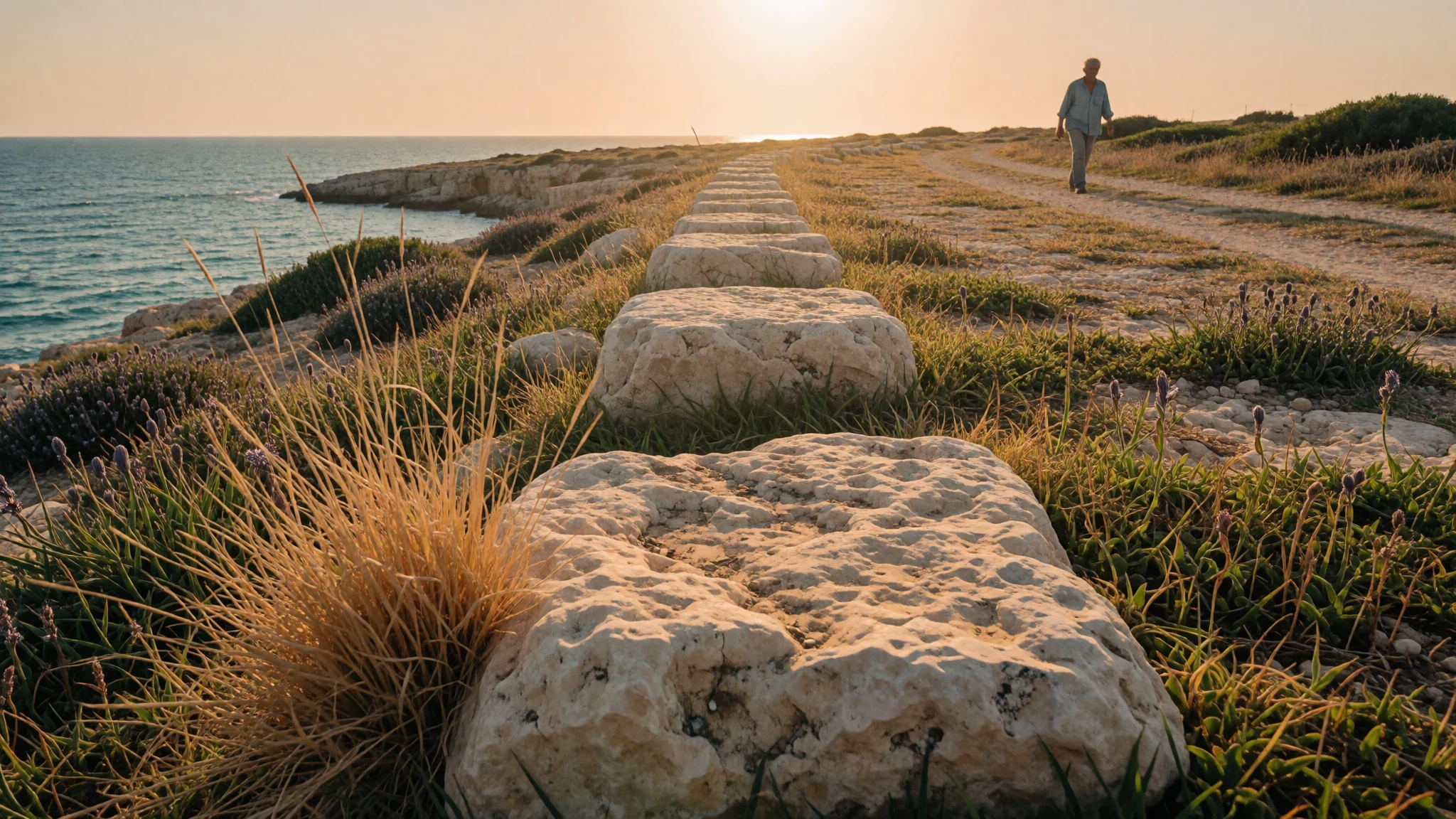
Megara Hyblaea is a quiet Greek colony on Sicily's east coast, where low foundations show how settlers laid out a town.
The place
Megara Hyblaea is an ancient Greek colony site on the east coast of Sicily, close to the town of Augusta and about 20 km (12 mi) north-northwest of Syracuse. It sits beside a deep bay sheltered by the Xiphonian promontory, a setting that explains why settlers chose it: a good harbour, open land behind it and the sea lanes to Greece within reach.
The name carries a small puzzle. Ancient writers mention at least three, and possibly five, places called Hybla in Sicily, and they were often muddled with one another. Megara Hyblaea may be the same as Hybla Major, though that is only a possibility. The first half of the name points back to Megara, the mainland Greek city that sent the original colonists.
Visitors should set their expectations honestly. This is an excavated field rather than a showpiece of standing temples. What survives is mostly foundations, street lines, house plans, workshop remains and patches of mosaic, spread over open ground. It rewards slow walking and some imagination, and it works best for people who enjoy reading a site from its plan.
The site is usually quiet, with little of the queuing found at Syracuse's better-known ruins. That also means little shade and few comforts, so the day should be planned around weather. Many people combine it with Syracuse and with Augusta's old town, using the coastal rail line between Catania and Syracuse as the backbone of the trip. Check the official regional archaeology pages before going, because opening arrangements for smaller Sicilian sites can change.
Its story
Megara Hyblaea has a story of repeated moves before it ever settled. According to Thucydides, a group of settlers from Megara in Greece, led by Lamis, reached Sicily at about the time Leontini was founded by colonists from Chalcis. They first camped at Trotilon, near the mouth of the river Pantagias, then joined the Chalcidians at Leontini, only to be driven out. Next they tried the peninsula of Thapsos near Syracuse. After Lamis died, a local Sicilian chief named Hyblon suggested the place where they finally put down roots.
Ancient authors disagree about timing. Scymnus of Chios and Strabo place the foundation before that of Syracuse, in the 730s BC, while Thucydides implies a slightly later date. The brief's source treats Thucydides as the more reliable account and arrives at about 726 BC. A modern reinvestigation of the evidence gives a spread of possible dates, from 758 BC to 728 BC. The honest summary is that the town is eighth-century BC, with the exact year unresolved.
It prospered. About a century after its foundation it sent out its own colonists to the far side of Sicily, where they founded Selinus, a city that went on to outgrow its parent.
The end came around 483 BC. Gelon of Syracuse besieged the town and took it by capitulation. Most of the inhabitants were sold into slavery, while the wealthier and noble families were moved to Syracuse. For a place that had begun as a refuge for wanderers, it was a hard conclusion, and the ruins visitors walk today belong to that interrupted life.
What to see
- Mosaics near the west gate — West gate area
One of the few visible floors at Megara Hyblaea is the mosaic of a house close to the west gate. It is modest in scale, but it gives a human note among the foundations. Go early in the day, when the light is low and the pattern easier to read.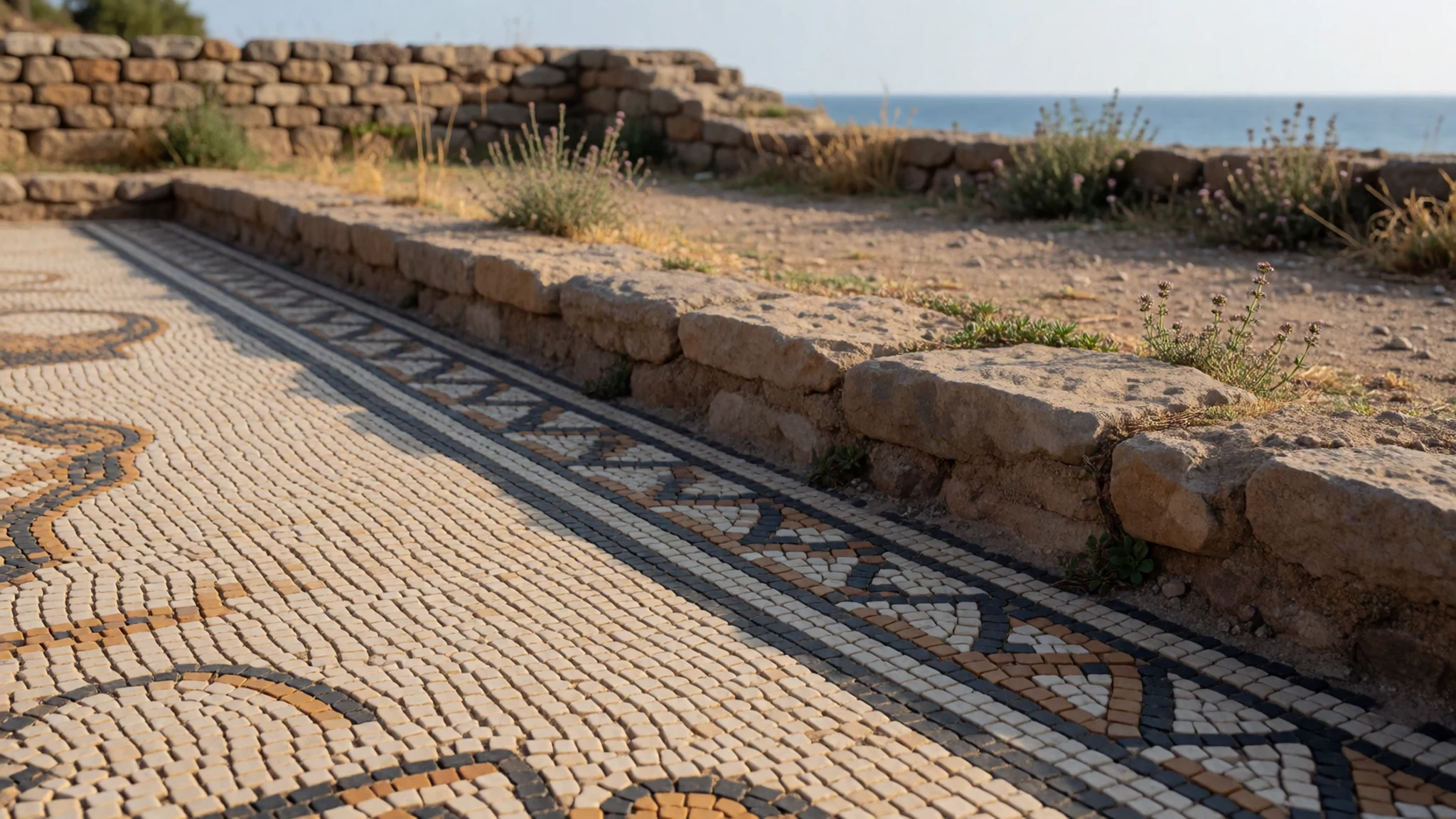
- The archaic kilns — Excavated craft quarter
Pottery kilns from the early period survive on the site, their circular, fire-blackened shapes still recognisable. They show that the colony was a working town, with potters turning out vessels for daily use. Look for the information panels and photograph the stoking channels from above.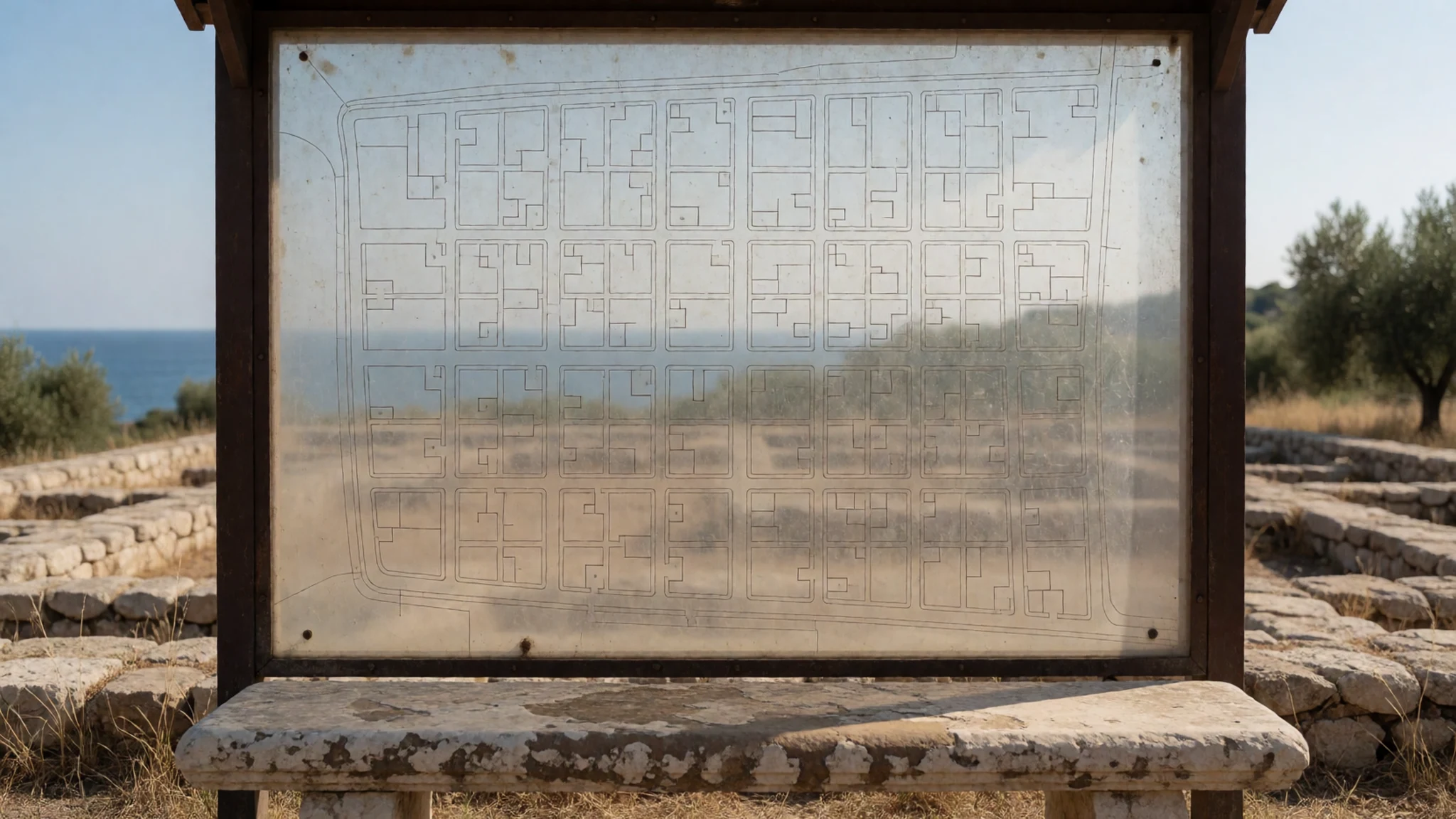
- The street plan and agora — Central excavation area
Megara Hyblaea is valued by archaeologists for its layout, with streets and house plots that show how Greek settlers organised a new town. On the ground it reads as low walls and gaps. Study the site plan first, then walk it with that in mind.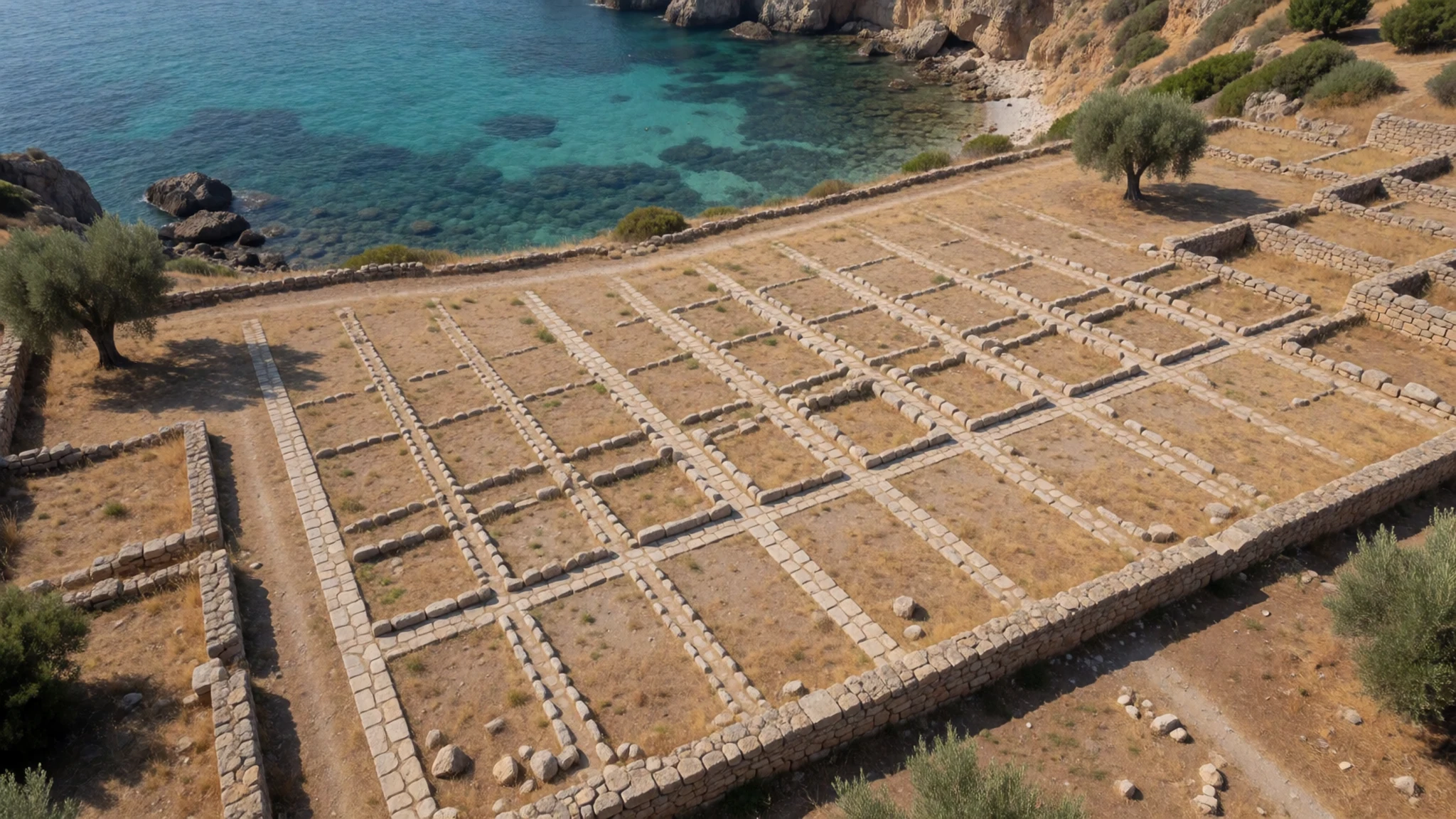
- The bay and Xiphonian promontory — Seaward edge of the site
Look outwards as well as down. The deep bay and the promontory that shelters it explain the colony's position, and the view is a quick lesson in ancient sea travel. The aerial photograph of the site is a useful companion for understanding how ruins sit against the coast.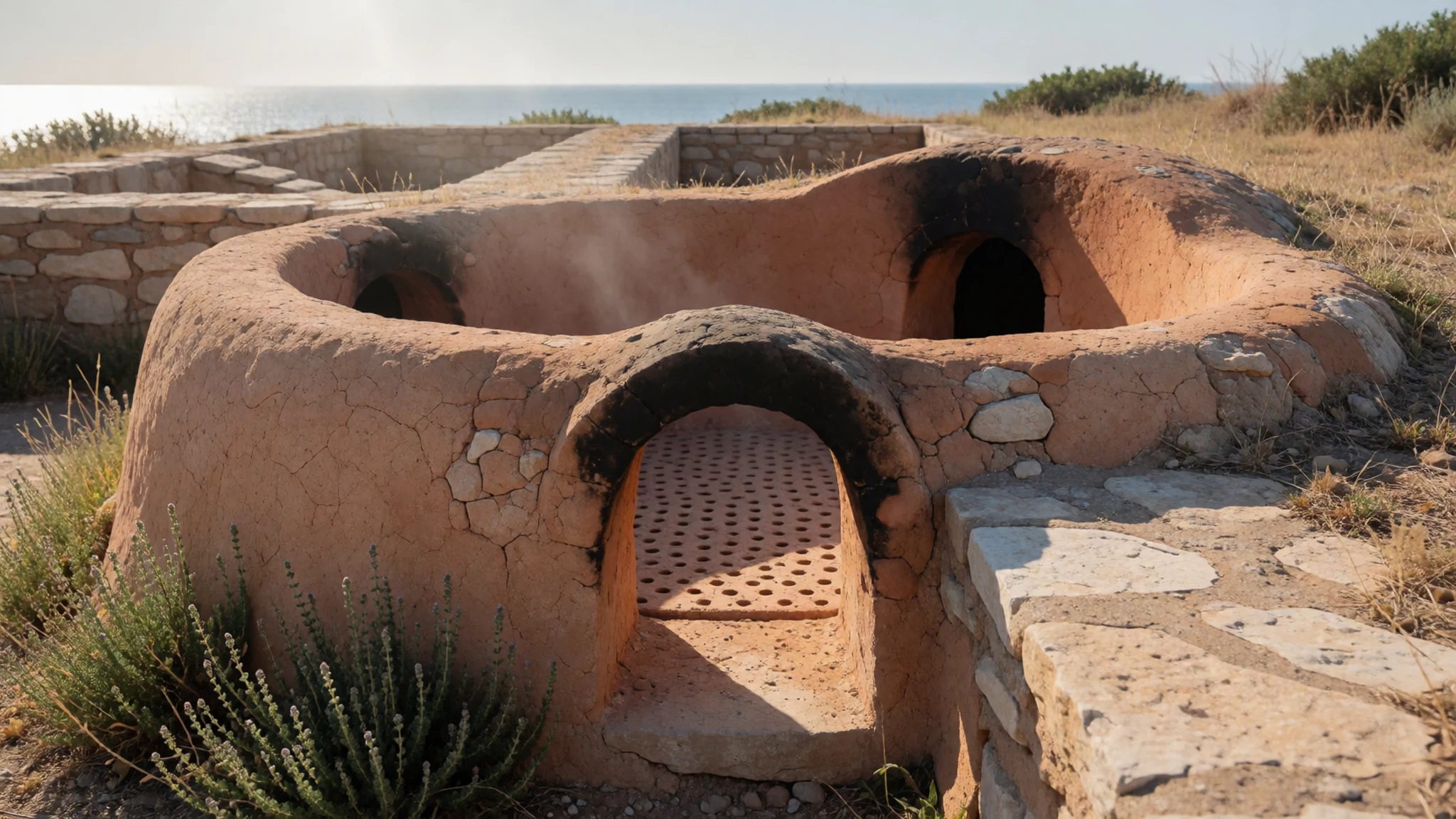
- Castle Svevo, Augusta — Augusta old town
Augusta's Castle Svevo dates from the 13th century and is in a somewhat decaying state, according to local travel notes. It makes a worthwhile contrast with the Greek ruins, being a medieval fortress rather than an ancient settlement. Check locally whether it is open and what can be entered.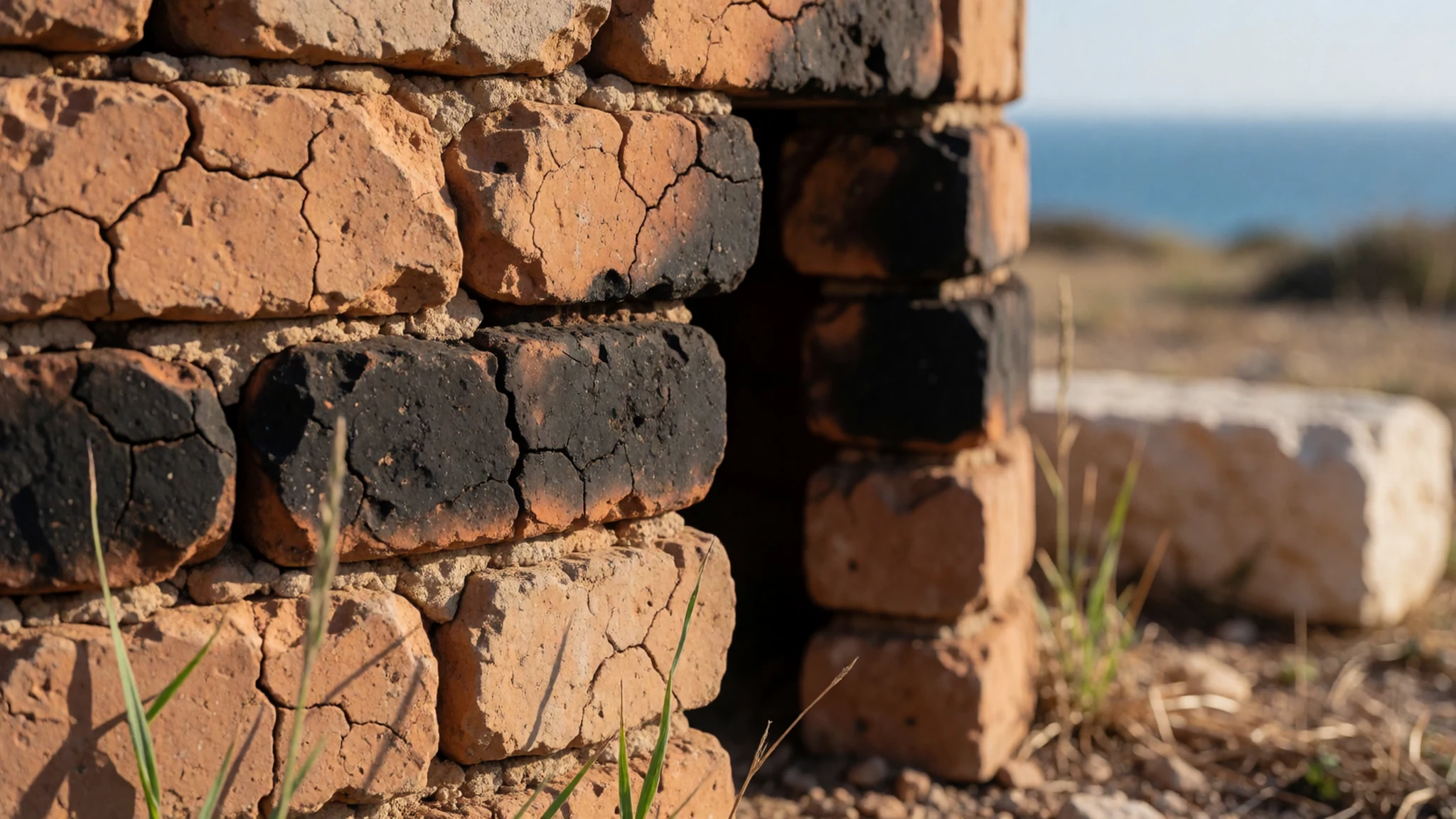
Culture
Megara Hyblaea belongs to the world of Magna Graecia, the cluster of Greek colonies that spread across southern Italy and Sicily. Its settlers brought the habits of a Greek polis: a town laid out around public space, worship of the Greek gods, workshops and a ruling class of landowners. Later Sicilian history layered Roman, Arab, Norman and Spanish influence over this base, so the island's culture today is a mixture, and the Greek chapter is only one strand.
The name itself is a reminder of how ancient colonies kept links to their mother city. Megara in Greece supplied the colonists and the name, and Megara Hyblaea in turn supplied the settlers who founded Selinus. Colonies were daughters of cities, not remote outposts, and that network of ties is central to understanding Greek expansion.
On the ground, Sicilian daily culture is relaxed and sociable. Mornings start with coffee at a counter, lunch is the main meal and shops often close in the early afternoon. Conversation is lively, and a friendly greeting when entering a shop or café is expected. Archaeological staff at smaller sites tend to be knowledgeable and glad of a visitor's interest, so a few words of Italian go a long way.
Stay on the marked paths and never step on or lift anything from the excavated walls, mosaics and kilns, and do not take pottery fragments or stones away as souvenirs.
What to wear
Megara Hyblaea's first inhabitants dressed as Greek colonists did, in the chiton, a tunic of wool or linen pinned at the shoulders, and the himation, a wool cloak draped over it. Colours came from plant and mineral dyes, and clothes were mostly woven at home. These garments are known from vase painting and sculpture rather than surviving cloth, so visitors will see them in museums, not at the site.
In later Sicilian tradition, the best-known piece is the coppola, a flat cap of wool or tweed worn by men in the countryside. Rural women once wore embroidered shawls and aprons, but these are now mainly seen at festivals and folk displays.
People in Augusta and Syracuse today dress in ordinary Italian smart-casual: linen shirts, light trousers, sundresses and neat trainers or sandals. Locals tend to look put together even on a hot day, though beachwear stays by the sea.
For the ruins, the main concerns are sun and uneven ground. Wear a hat, sunglasses and sun cream, and carry water. Closed, grippy shoes suit rough paths, loose stones and dry grass better than sandals. Light, breathable cotton or linen keeps the heat bearable in summer, and a thin layer helps on cooler spring and autumn mornings. If the day includes a church in Augusta or Syracuse, carry a scarf or shirt to cover shoulders and knees, since many Sicilian churches expect modest dress.
What to eat
- Pasta alla Norma — Family trattorias in Augusta and Syracuse
Pasta with fried aubergine, tomato and salted ricotta, a Catania classic that appears on menus across the east coast. Order it at a family-run trattoria in Augusta or Syracuse, where it is usually a first course, before fish.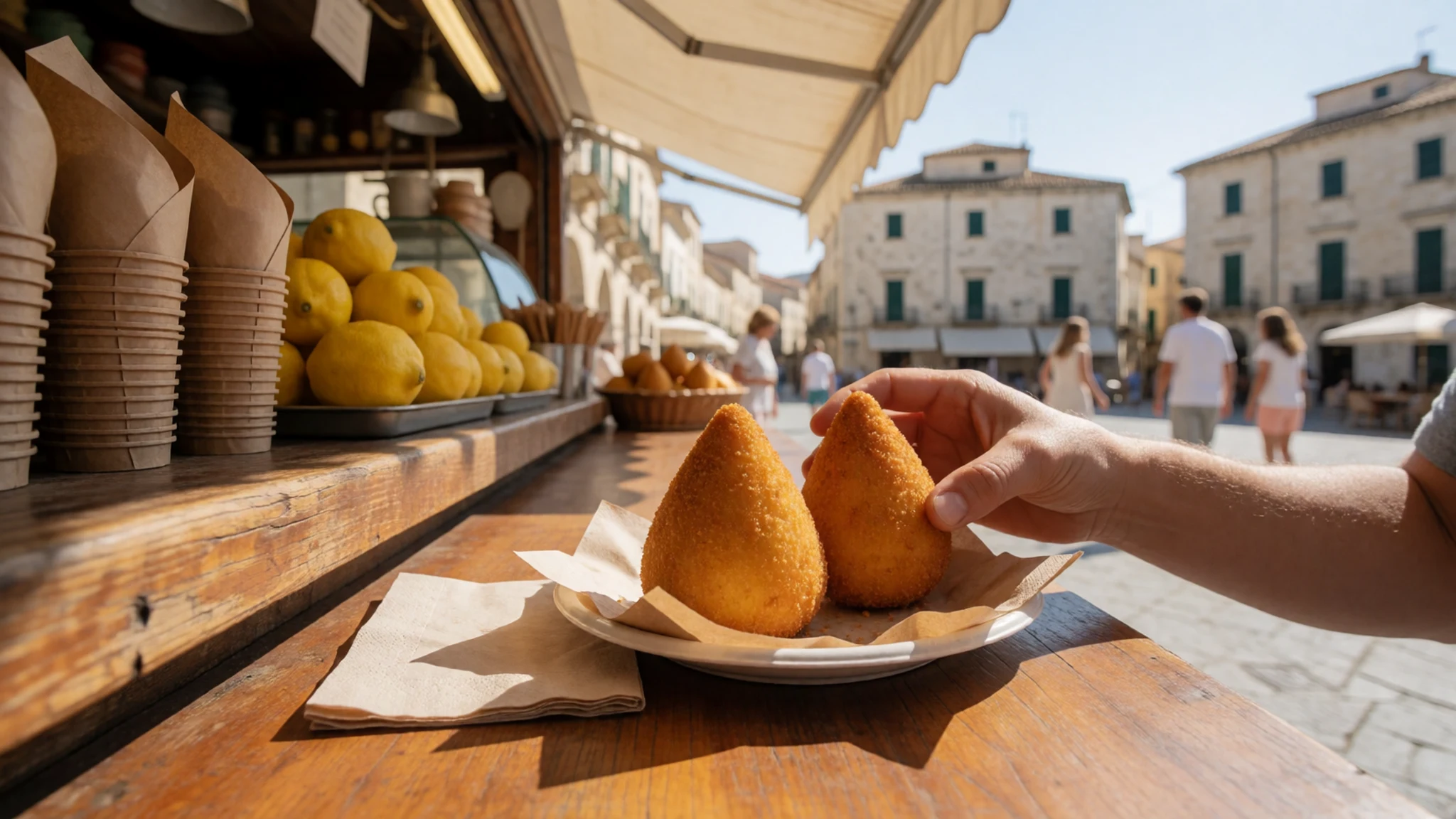
- Fresh grilled fish — Seafront eateries in Augusta and Syracuse
Whatever the boats landed that morning, usually grilled whole with olive oil, lemon and salt. Seaside eateries around Augusta and Syracuse show the catch on ice; point at one, and ask how it is sold, by weight or by portion.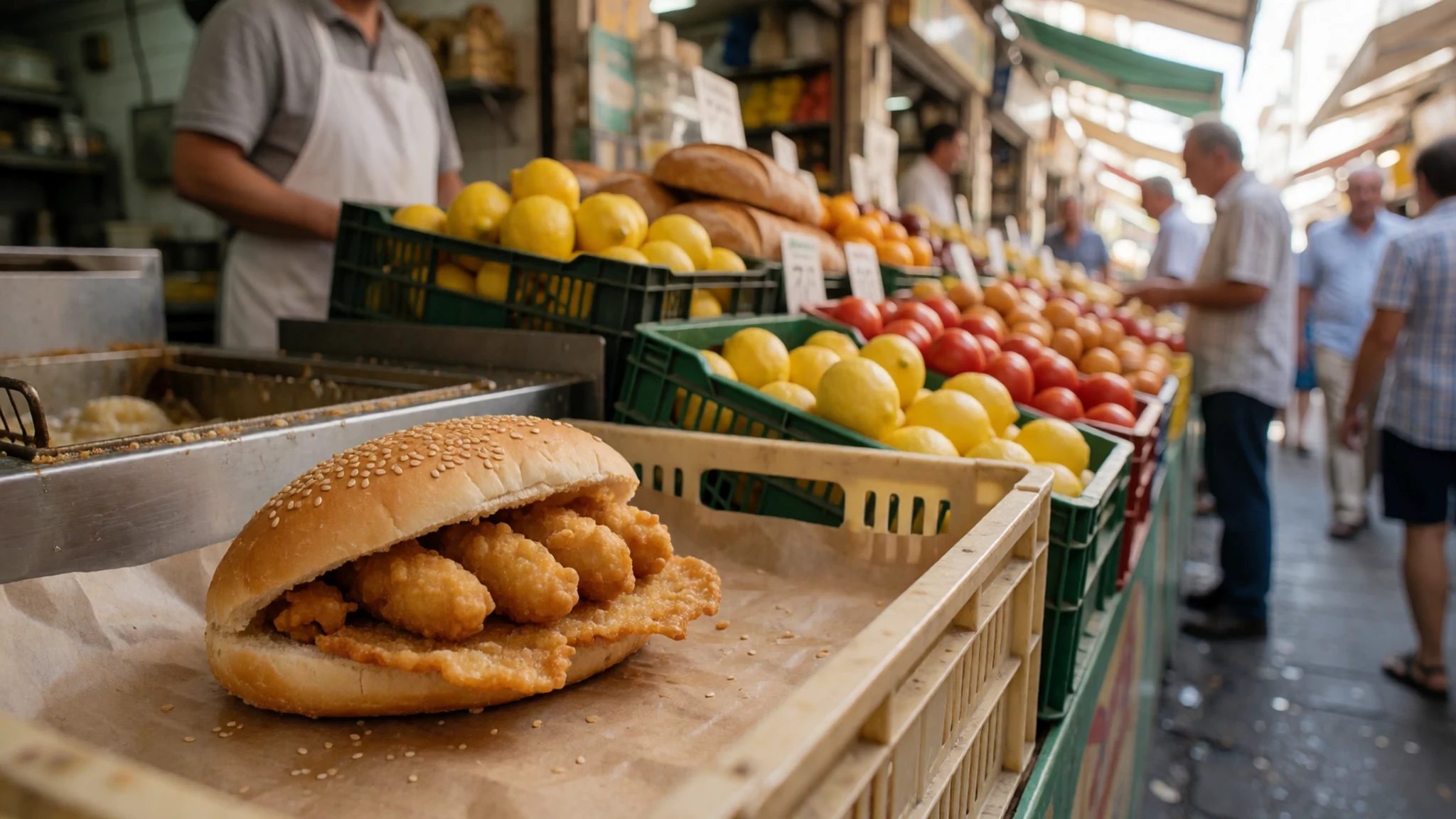
- Cannoli — Pastry shops and café counters
Crisp fried pastry tubes filled with sweetened sheep's-milk ricotta, sometimes with chocolate chips or candied fruit. Good pastry shops in Augusta and Syracuse fill them to order, which keeps the shell crunchy; eat one standing at the counter with coffee. - Granita with brioche — Café counters in any east-coast town
Semi-frozen sugar ice in lemon, almond or coffee, eaten for breakfast with a soft brioche to dunk. Found at café counters in any east-coast town, and welcome after a morning walking the sunbaked ruins in warmer months. - Arancini — Bakeries and snack bars in Augusta
Fried rice balls with a ragù, or butter and ham, filling, sold hot from the counter at bakeries and snack bars. Handy picnic food for the ruins, where shade and refreshments are scarce; buy before driving out.
Plan it
Best time. April–May and October–November, when the weather is mild enough for walking open, shadeless ruins. July and August are hot and exposed, so go early in the morning if visiting in summer.
How long. 1
Getting there. Fly to Catania airport, then take a train towards Syracuse; Augusta is on the Catania–Syracuse line. From Augusta, the last leg to the site is short by taxi or car; check the route and access before setting off.
Budget. low
Tips
- Check the regional archaeology website for current opening arrangements before travelling
- Carry water, a hat and sun cream, since shade on the site is limited
- Visit in the morning for softer light and cooler air
- Combine the site with Syracuse or Augusta's old town in one day
- Download or study the site plan beforehand to make sense of the low ruins
Etiquette
- Keep to marked paths and do not climb on walls, kilns or mosaics
- Never take pottery fragments or stones from the site
- Cover shoulders and knees when entering churches in nearby towns
Nearby
Sources
- Wikidata Q1457477 (CC0)
- Wikipedia: Megara Hyblaea (rev 1364716664) (CC BY-SA 4.0)
- Wikivoyage: Augusta (Italy) (rev 4915828) (CC BY-SA 4.0)
- Photo: Megara Hyblaea 001 (Clemensfranz) (CC BY 3.0)
- Photo: Map of the Megarean Colonies (O.Mustafin) (Public domain)
- Photo: Planimetria di Megara Hyblaea (Davide Mauro) (CC BY-SA 4.0)
- Photo: Posizione di Megara Hyblaea (Davide Mauro) (CC BY-SA 4.0)
- Photo: Megara Hyblaea vista dall'alto (Davide Mauro) (CC BY-SA 4.0)
- Photo: Fornace arcaica di Megara Hyblaea 01 (Davide Mauro) (CC BY-SA 4.0)
- Photo: Fornace arcaica di Megara Hyblaea 02 (Davide Mauro) (CC BY-SA 4.0)
- Photo: Fornace di Megara Hyblaea 01 (Davide Mauro) (CC BY-SA 4.0)


