Mayaguana
Mayaguana, The Bahamas
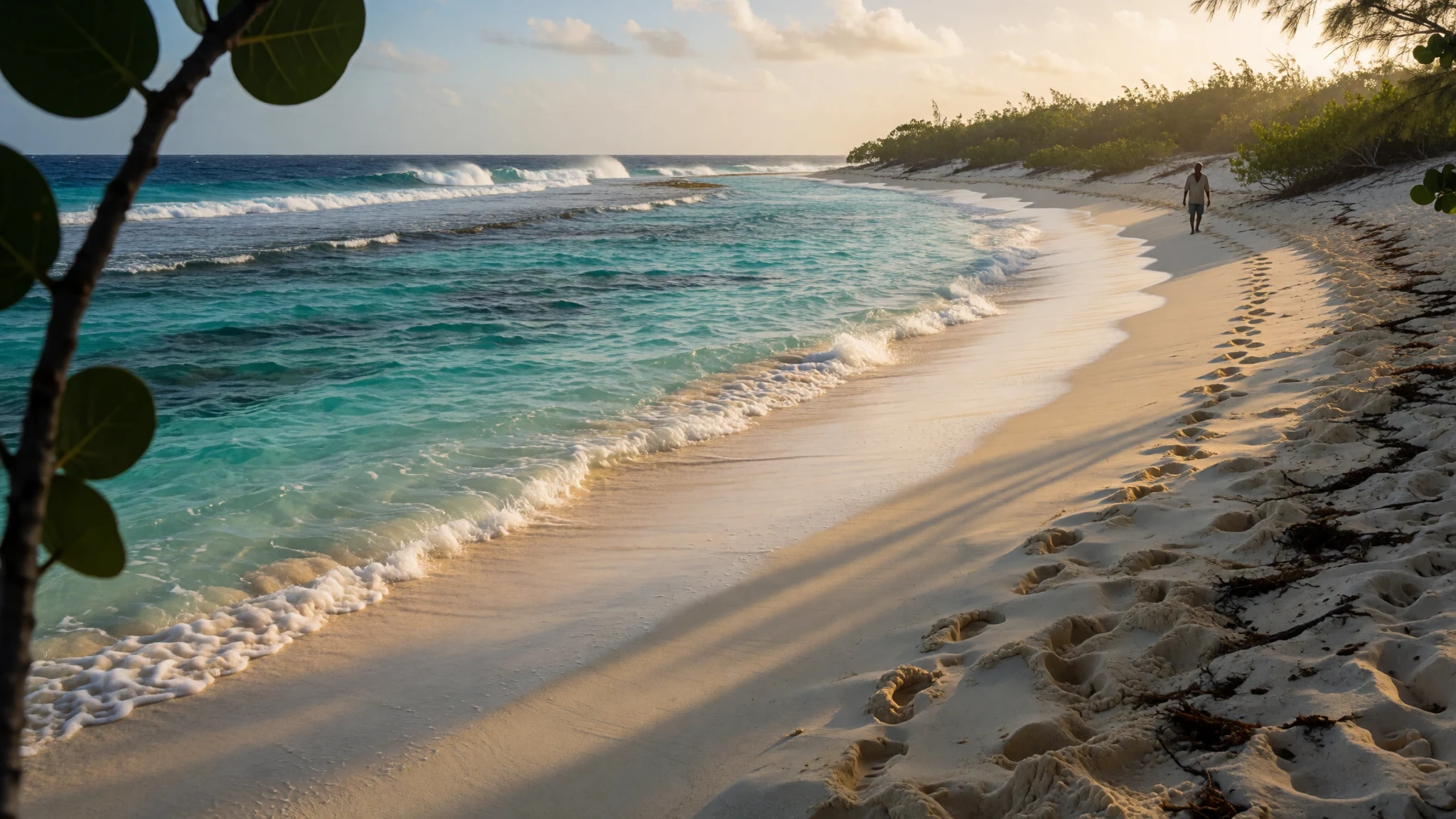
Mayaguana is a quiet, far-flung Bahamian island of empty beaches, reef, mangroves and flamingos, reached by small plane or mail boat.
The place
Mayaguana is a long, flat, thinly settled island at the far south-eastern edge of The Bahamas, with a population of about 208 and a highest point barely above the sea, around 7 metres. Most of its coast is fringed by reef, and the interior is scrub, salt ponds and mangrove. Three settlements hold nearly everyone: Abraham's Bay, Betsy Bay and Pirates Well. Distance defines the place. The island lies far from Nassau, closer in spirit to the Turks and Caicos than to the resort islands of the central Bahamas, and boaters use it as a convenient stop between Florida and Puerto Rico on the way to the eastern Caribbean. There are no banks or cashpoints, and card payment is rare, so visitors arrive with cash and bring most supplies with them, since the few shops stock a limited range at high prices. Development has been discussed for years, including a free-trade and tourism scheme covering a share of the coast, and islanders have met it with mixed feelings: they want work, but are wary of what would change. For now the island is quiet. Flamingos stand in the shallows, iguanas cross the tracks, and beaches on the north side are empty for long stretches. Social life is small and close, and visitors are folded in quickly. It suits people who like fishing, snorkelling, walking and doing little else, and it will frustrate anyone wanting a spa or a nightlife strip.
Its story
Mayaguana's recorded history begins with the Lucayans, a Taíno people whose name for the island survives as its modern one, usually glossed as 'Lesser Midwestern Land'. After Spanish contact following 1492, the Lucayans were taken off to Hispaniola, and in the early 16th century the island fell empty. It stayed that way until 1812, when families began sailing across from the Turks and Caicos Islands and settling the coast. Their descendants still make up the community. A nineteenth-century theory put Columbus's first landfall, Guanahani, here rather than on the islands usually named; later historians have mostly not been persuaded, though the argument resurfaces from time to time and gives the island a small footnote in the debate. Shipping history is more solid. The Royal Navy sloop HMS Driver, the first steamship to sail round the world, was wrecked on Mayaguana in August 1861, some years after that voyage. The twentieth century brought an odd tenant: the United States built a long runway here, and a tracking station supported the Mercury and Apollo programmes, following missiles launched from Cape Canaveral and helping keep astronauts on course. That runway is now the island's airport. Today the question is what comes next, with government-backed plans for tourism and a trade zone still being weighed against the island's quiet, low-impact character.
What to see
- North Beaches — North coast
The north coast of Mayaguana has road access to long white beaches that are often empty, looking across clear shallows to the line of surf breaking on the reef. Bring shade, water and food, as nothing is sold nearby. It is the easiest place on the island for a swim, a long walk and a picnic.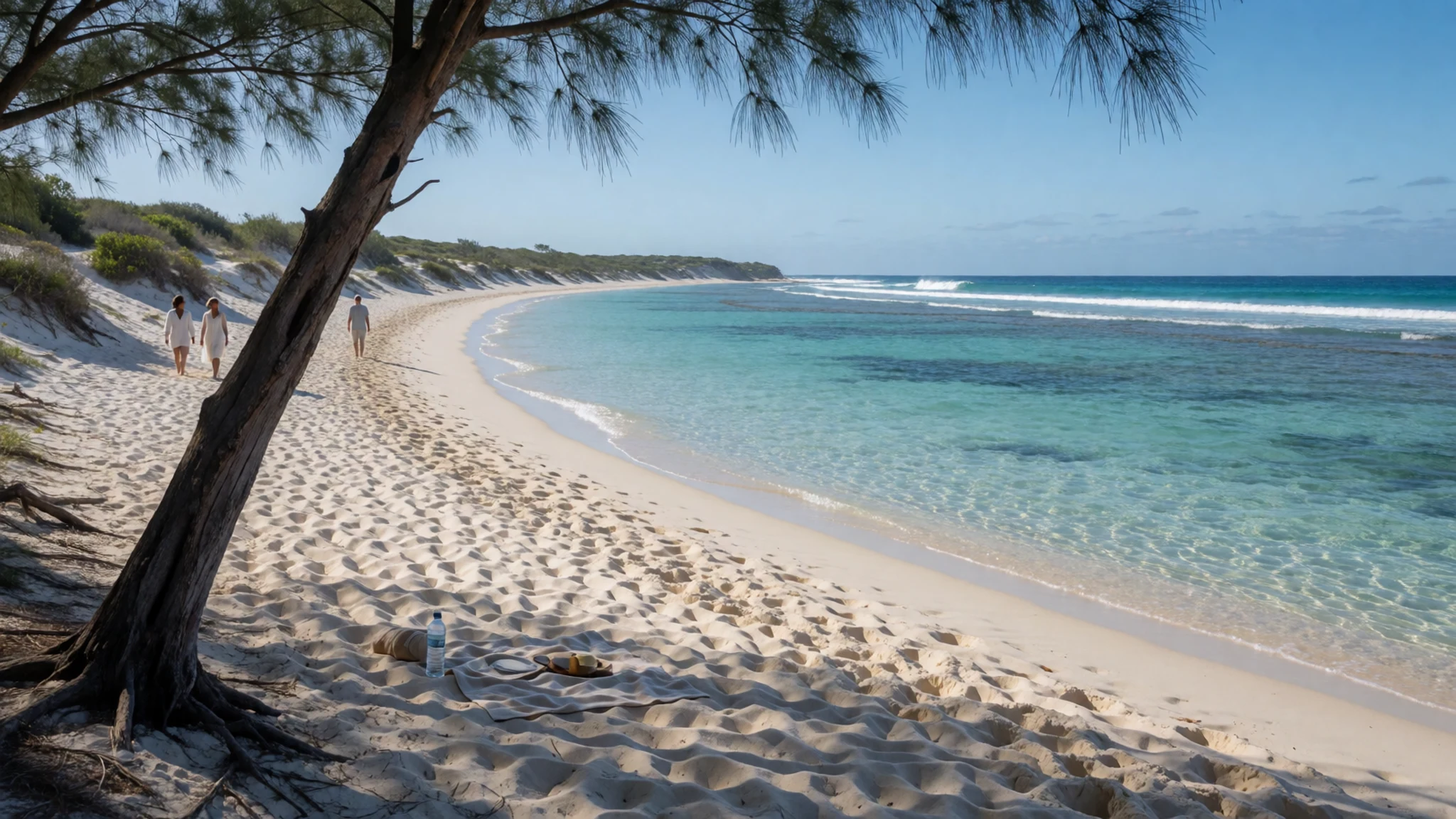
- The reef at Abraham's Bay — Abraham's Bay
Abraham's Bay is sheltered by a reef that local boatmen know well. Arrange a skiff and guide through your guesthouse, then snorkel among coral heads and reef fish, look for lobster, dive for conch, or ask to go outside the reef for deeper water and larger fish. Conditions depend on wind.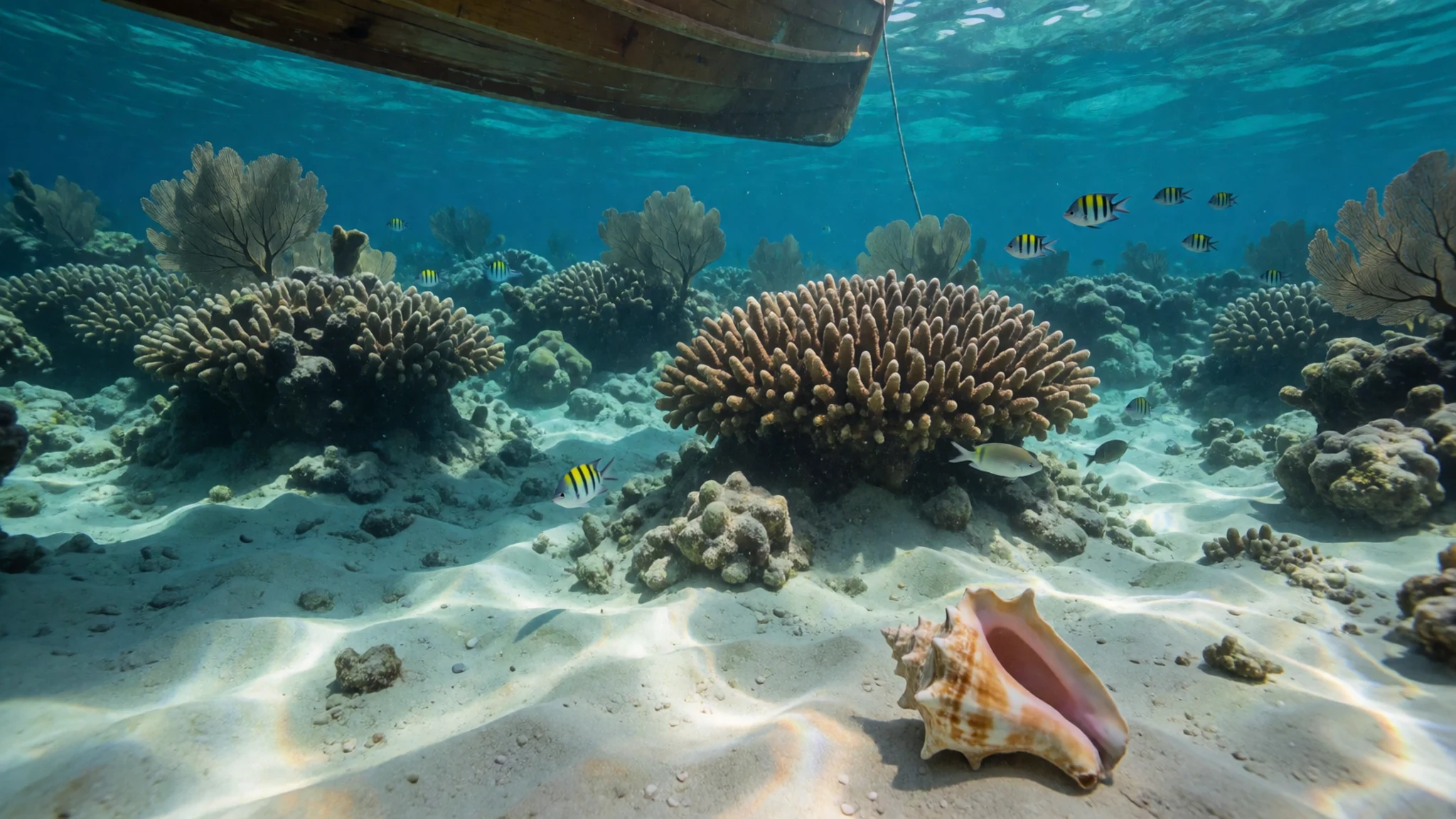
- Curtis Creek — Mangrove coast
Curtis Creek is a tidal channel through mangroves, best explored by canoe or by swimming slowly. Bonefish work the flats, and the sheltered water holds young barracuda, small sharks, turtles, rays and trumpetfish. Ask locally about borrowing a canoe, pick a calm day, and keep a respectful distance from the wildlife.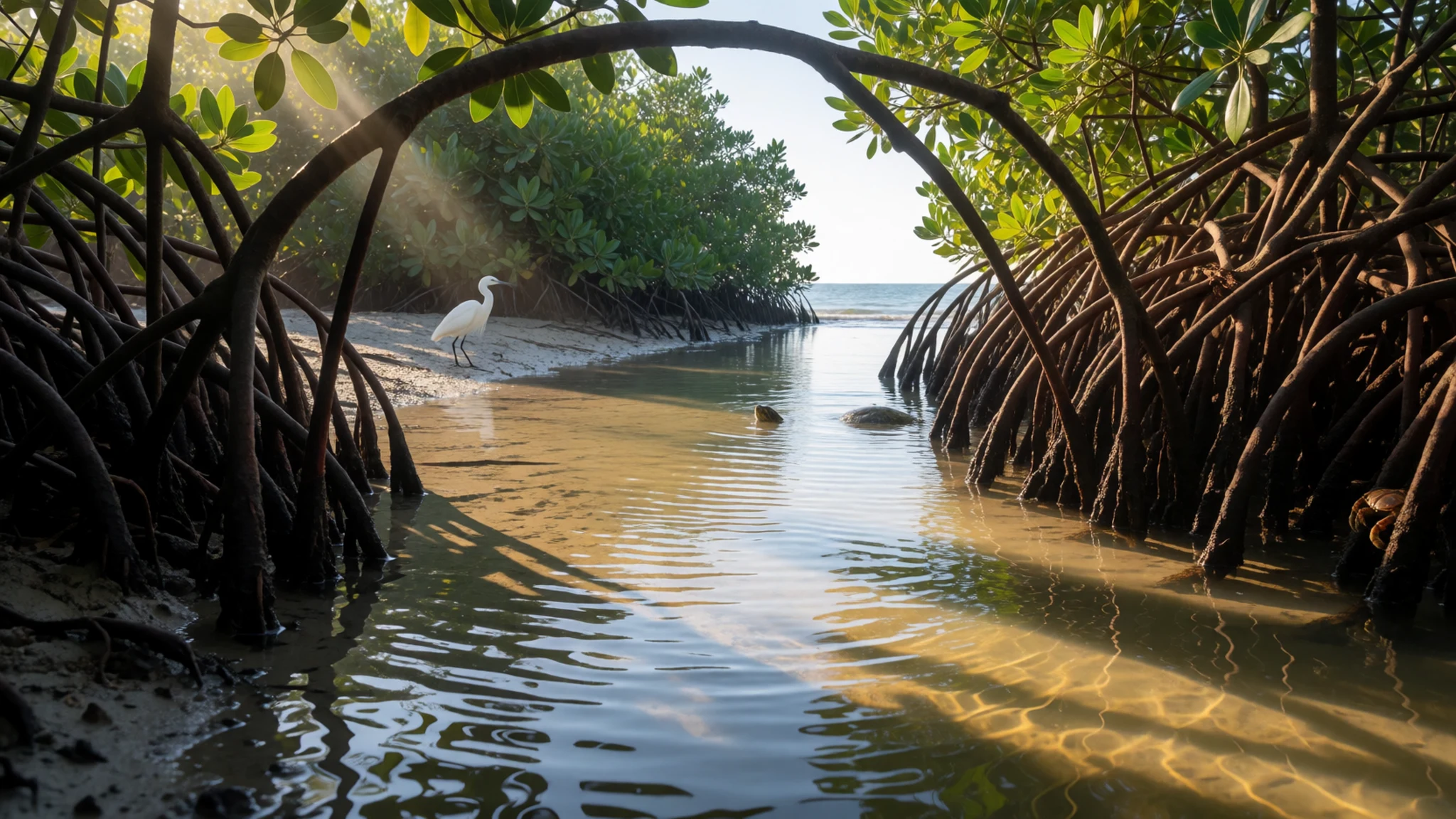
- Salt ponds and flamingos — Interior and coastal flats
Inland, shallow salt ponds and flats fringed with mangrove make habitat for flamingos and iguanas. The water can turn yellow or rust-coloured, and the birds feed at a distance, so binoculars help. Walk quietly, stay out of the ponds and keep well back from any nesting birds.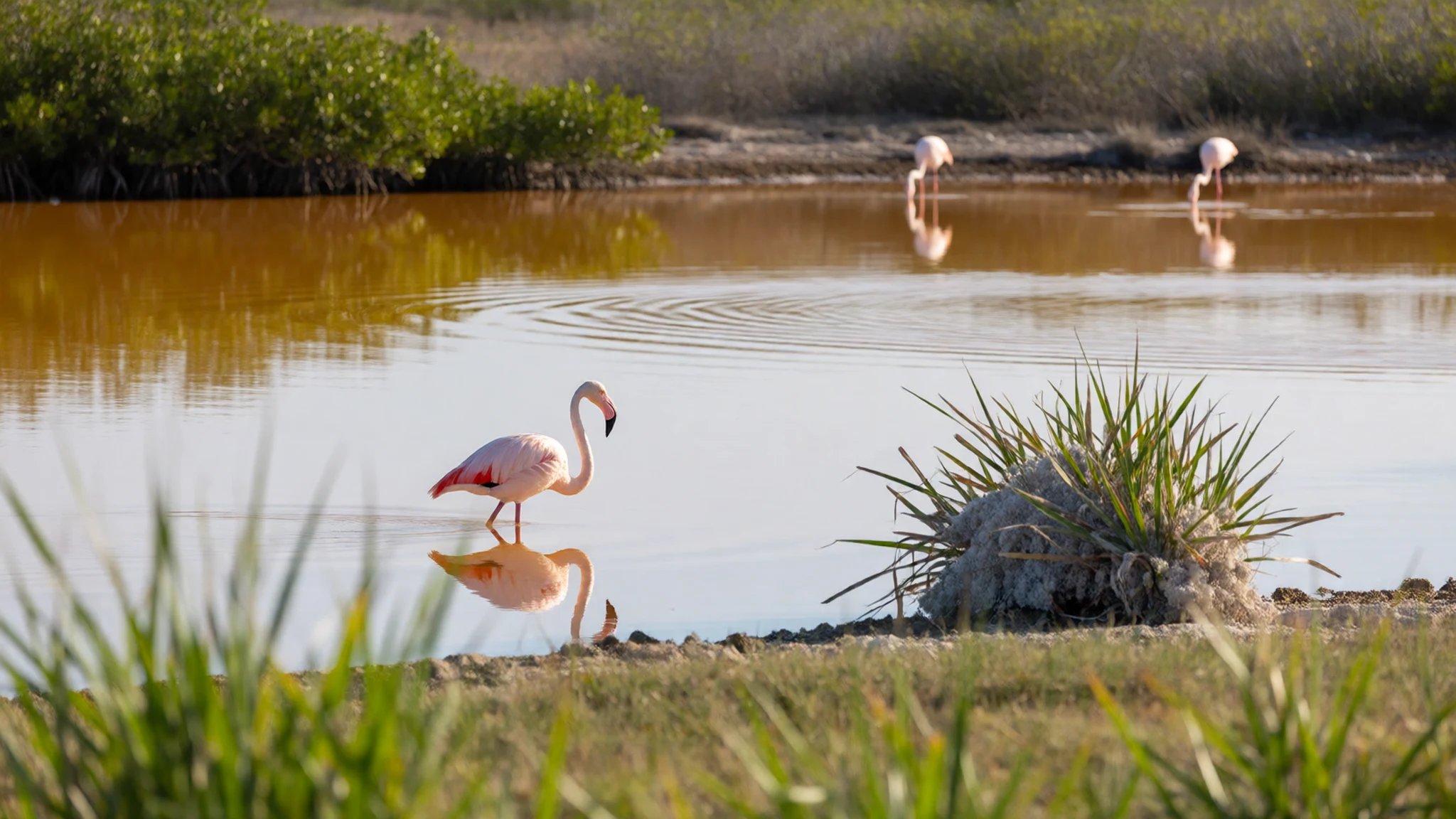
- A local-led island tour — Across the island
A tour with an islander is the way to see wild almonds, coconut palms and everyday life across the three settlements of Abraham's Bay, Betsy Bay and Pirates Well. Ask at your guesthouse who is currently running them. Time with a guide also explains how people fish, farm and get their supplies.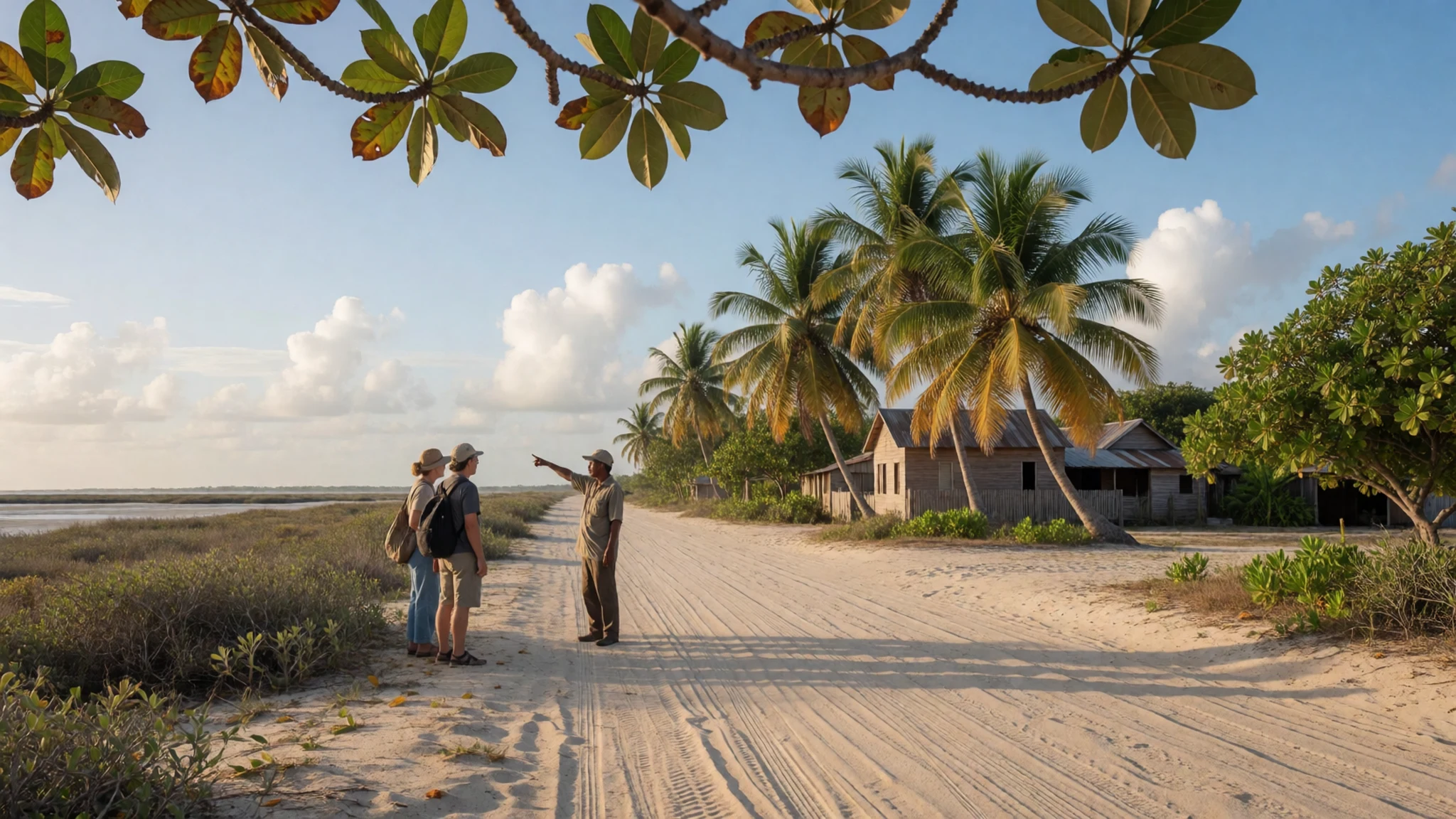
Culture
Mayaguana's culture is shaped by smallness and distance. With only a couple of hundred residents, the island feels like one household, and visitors are absorbed into it quickly: people greet strangers, few bother with locks, and a newcomer is soon known by name. Many families trace their roots to settlers who crossed from the Turks and Caicos Islands in the nineteenth century, and church, school and the settlement shop are the usual meeting points. The calendar has two fixtures worth knowing about: the Betsy Bay Homecoming Festival, when people with island roots return, and the All Mayaguana Regatta, a sailing event held annually in recent years. Both are good reasons to time a visit, though beds are few and need arranging early. Daily life follows the sea and the mail boat. Fishing, small-scale farming, home businesses and a handful of government jobs provide most income, and imported goods arrive on the weekly boat, so a delay at sea can empty a shelf. Visitors who stay with local hosts rather than at the nearest thing to a resort tend to see this side best. Conversation is relaxed, unhurried and curious, and asking about fishing or the weather is a good opening. Greet people you pass on the road, ask before photographing anyone, and check with a local before taking conch or lobster, since the reef is part of how neighbours earn a living.
What to wear
Mayaguana has no distinct island costume documented in the sources behind this reading, and it would be wrong to invent one. The wider Bahamian tradition includes plaited straw hats and bags, and the crepe-paper and cardboard costumes of Junkanoo, the festival parade seen on larger islands, but these are national rather than specifically Mayaguanan. Everyday dress today is practical and sun-ready: cotton shirts, shorts, sun hats and sandals or rubber boots for fishing and boat work, with something smarter for church on Sundays and for the homecoming and regatta gatherings. Visitors should dress for heat, glare and rough ground. Light, long-sleeved cotton or quick-dry shirts and a wide-brimmed hat protect better than constant sunscreen, though bring plenty of that too. Reef shoes are useful for rocky shallows and boat landings, and closed shoes help on scrub tracks and around mangrove. Swimwear belongs on the beach and boat; in the settlements, shops and church, cover up with a shirt and shorts or a skirt. Bring insect repellent for evenings near the mangroves, and a light rain layer for squalls. Everything should be packed in before arrival, because the local shops offer little choice and prices are high.
What to eat
- Fresh conch — Guesthouse kitchens and home cooking in the settlements
Conch is gathered from the shallow bays and eaten raw in a citrus-dressed salad, or cooked in fritters, stews and chowder. It is usually prepared on the day it is caught. Ask your host or a fisherman what is available.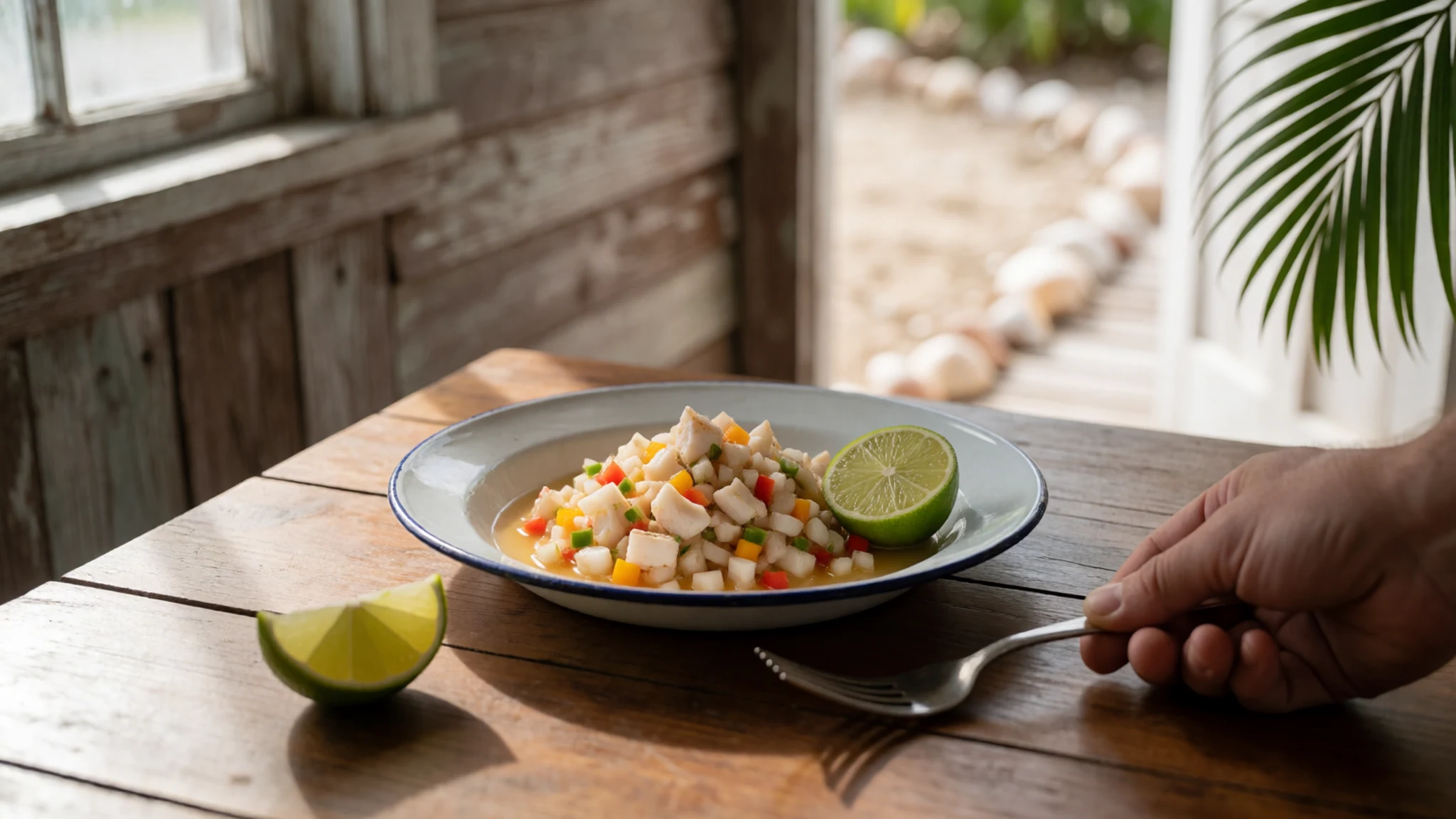
- Reef lobster — From local fishermen, cooked by hosts
Lobster from the reef is a staple when in season, usually grilled or steamed and served simply with rice. Local rules and closed seasons apply, so ask before taking any yourself and buy from fishermen who can say where it came from.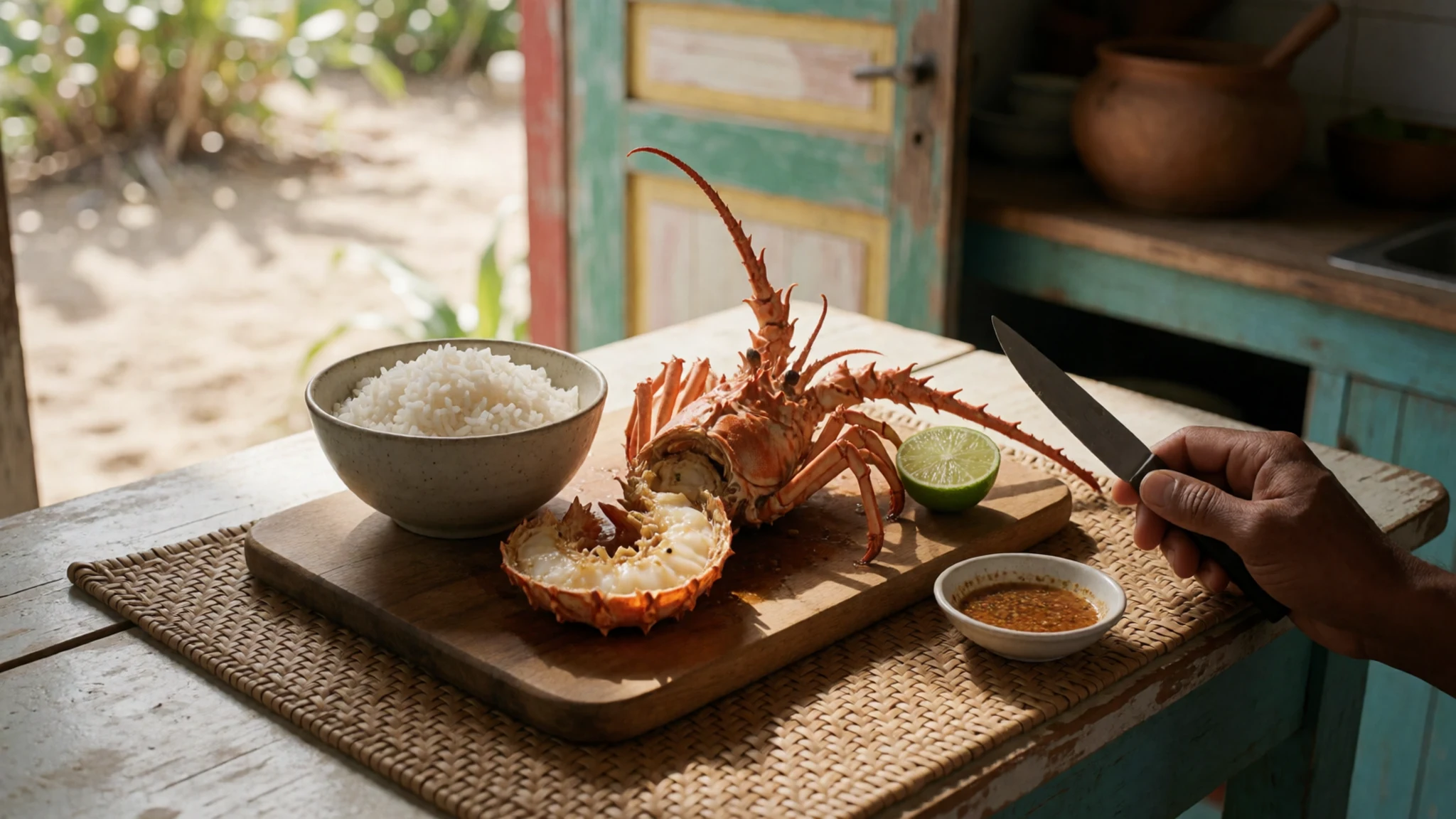
- Catch of the day — Guesthouses and home kitchens in Abraham's Bay and Betsy Bay
Many tropical fish are landed daily, and the choice depends on the weather and the boats. Fried, grilled or in a light stew with onions and peppers, it is the most dependable meal on the island. - Chicken, rice and beans — Home kitchens and settlement eateries
The everyday plate on Mayaguana pairs chicken with rice and beans, often with a spoonful of hot pepper sauce. It is filling, plain and shared, and it often appears next to fish at community gatherings. - Home-grown produce — Farm plots and from neighbours
The soil is fertile, and families grow watermelon, sweet potatoes, peanuts, corn and peas on small plots. Production is smaller than it once was, so supply is seasonal and informal. Ask hosts what is ripe. - A beer with the locals — A local bar in Pirates Well
A cold beer in a small settlement bar is as much about conversation as drinking. Pirates Well has a casual spot where islanders gather, and sitting there for an hour tells you more than any guidebook.
Plan it
Best time. December to April is the drier, cooler stretch and the best window for beaches, snorkelling and fishing. June to November is hot and humid and falls in hurricane season, so flights and boats can be disrupted.
How long. 3–5
Getting there. Fly from Nassau to Mayaguana Airport on the scheduled domestic service, which runs on only a few days each week, so confirm the timetable with the airline. The alternatives are a chartered boat or the weekly mail boat from the capital, which is slower but cheaper and more of an adventure. From the airport, arrange a lift to your guesthouse in advance.
Budget. mid
Tips
- Carry enough cash for the whole stay; there is no bank or cashpoint on the island and cards are accepted in very few places
- Bring sunscreen, insect repellent, medicines and most snacks, since the shops are small and expensive
- Book flights and accommodation well ahead and reconfirm before travelling, as seats and beds are few
- Arrange boat trips and tours through your host, and keep a day spare for weather
- Allow for supply delays, because stock depends on the weekly mail boat
Etiquette
- Greet people warmly and ask before photographing them or their homes
- Ask before fishing, collecting conch or lobster, or borrowing a canoe
- Take all rubbish with you from beaches and boats
Nearby
Sources
- Wikidata Q1540098 (CC0)
- Wikipedia: Mayaguana (rev 1385611274) (CC BY-SA 4.0)
- Wikivoyage: Mayaguana (rev 5311837) (CC BY-SA 4.0)
- Photo: Mayaguana (Waustindavis, Wikimedia Commons) (Public domain)
- Photo: Karte von Mayaguana (Joachim Greiner, Wikimedia Commons) (CC BY-SA 2.5)
- Photo: Salt ponds (Dr Mary Gillham Archive Project, Wikimedia Commons) (CC BY 2.5)


Wildlife
- American flamingo (animal)
The American flamingo is a tall pink bird that stands on stilt-like legs in the water. It is the only flamingo that lives wild in North America, and its home stretches from the Caribbean islands to northern South America and the Yucatán. On Mayaguana, look for it standing in the shallows. Keep well back, stay quiet, and go with a local guide if you can. Never feed it; a calm, distant watch keeps it relaxed.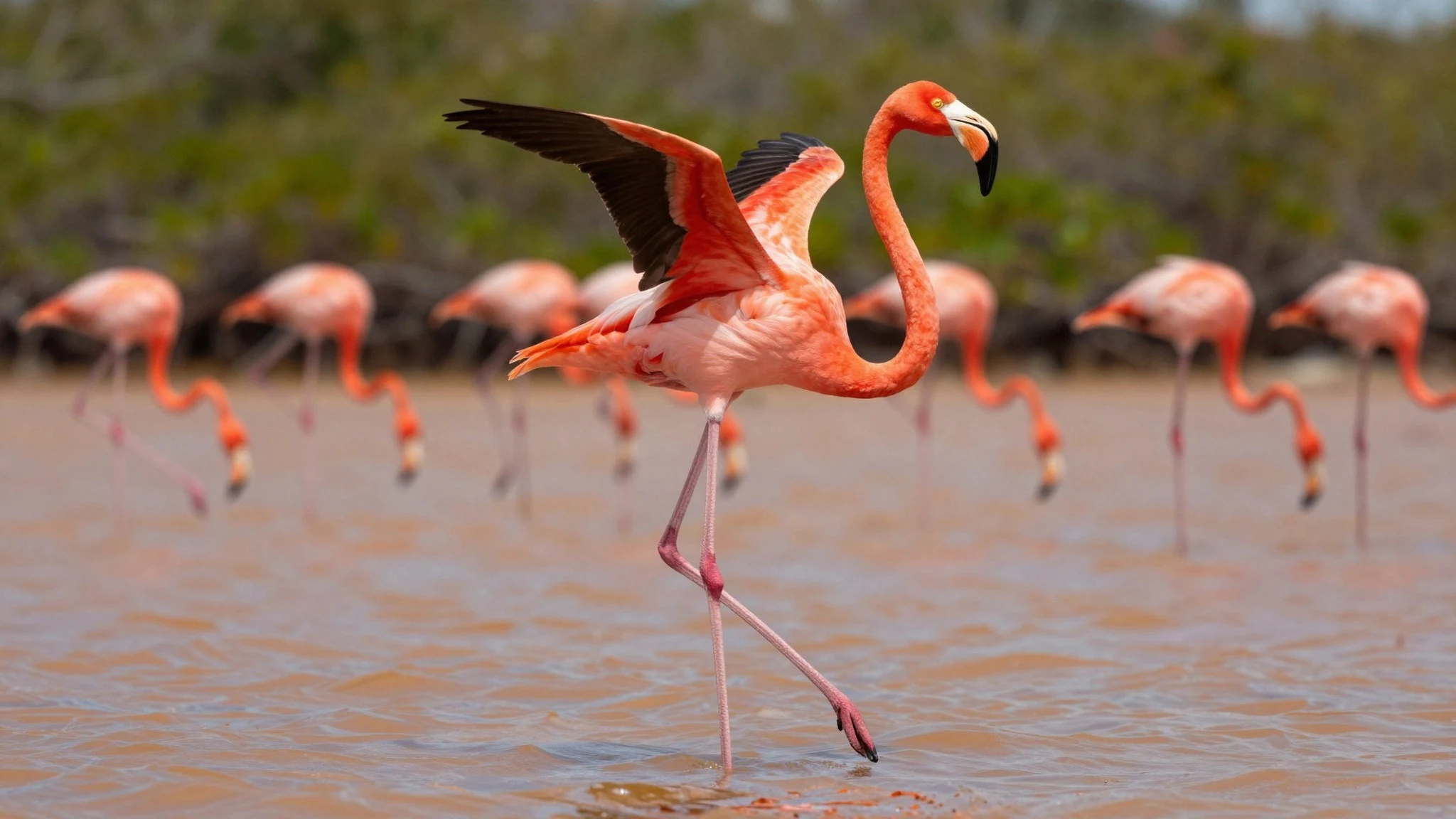
- Turks and caicos iguana (animal)
The Turks and Caicos iguana is a sturdy island lizard that looks like a small dragon without wings. On Mayaguana you may meet one crossing the tracks, so keep your eyes on the path ahead as you travel. Pause and let it pass in its own time. Stay a good distance away, keep your voice low, and ask a local guide where to look. Never feed it; human food does wild animals harm. - Flamingo (bird)
A flamingo is a long-legged, rosy bird that wades about in water. The Caribbean flamingo is simply another name for the American flamingo, and it is the one flamingo that naturally lives wild in North America. On Mayaguana, you can find flamingos wading in the shallows. Watch from afar, speak softly, and let a guide choose the spot. Please never feed them; a quiet watch lets the flock carry on undisturbed.