Cat Island
Cat Island, The Bahamas
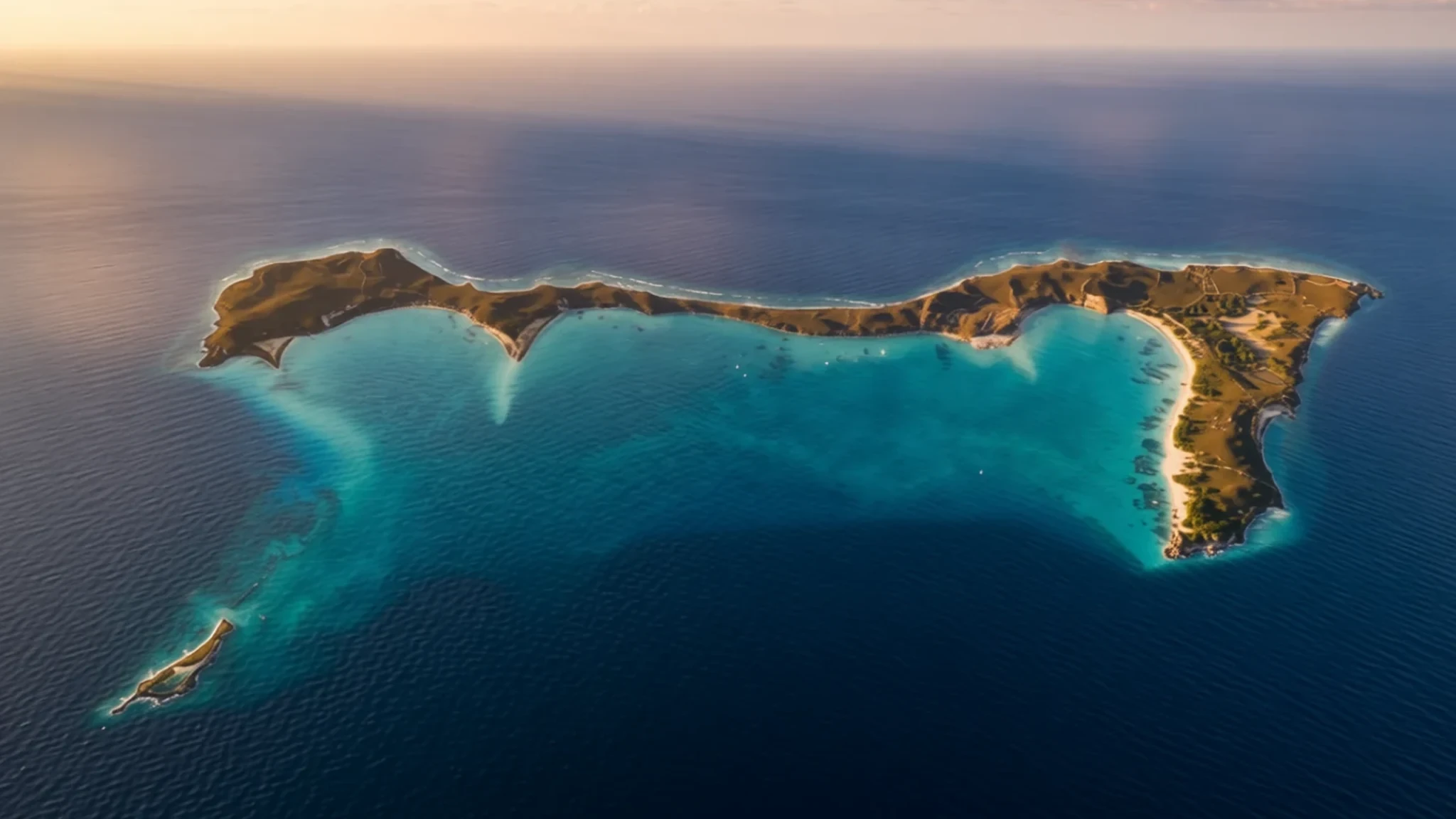
Cat Island offers quiet Bahamian beaches, a hilltop hermitage and settlements that still move at an out-island pace.
The place
Cat Island is a long, thin island in the central Bahamas, lying on a pale limestone platform and edged by beaches that open onto the banks or the Atlantic. Most of the land is low scrub, with one clear rise above New Bight, where a small stone hermitage looks over the settlements. Villages sit along the Queen's Highway, the single road that joins north and south: Arthur's Town, Bennett's Harbour, the Bight, Port Howe and the southern points. Between them the bush thickens, casuarina, silver thatch, coastal scrub, and empty houses disappear under vines, notably at Armbrister and Port Howe. Daily life is an out-island round of fishing, small farming and a modest flow of visitors. There is no resort strip and no cruise pier. People come for the leeward coves at Fernandez Bay, the long Atlantic sand at Greenwood, the bonefish flats, and the walk up to the Hermitage. The name is a puzzle for first-time visitors: Cat Island may once have been an island of cats. One account traces the label to Arthur Catt, a pirate; the other to feral cats, and people here tell both without much fuss. The two coasts do not behave alike. Leeward water stays gentler; the Atlantic shore takes the trade wind and a heavier swell. After a storm the tide line can carry debris, a plain reminder that this island sits in the hurricane belt. Inland, plantation traces and loyalist stonework are easy to pass until a ruined house shows through the trees. Nights are properly dark, and the day follows the mail boat and the small aircraft that tie the island to Nassau. Cat Island suits travellers who want a quiet beach, a shop-porch conversation and a landscape of limestone, scrub and sea.
Its story
Cat Island's recorded story runs from Lucayan life through colonial renaming, slavery, a loyalist influx and a long quiet that followed. Lucayan people lived on this limestone island before European ships began to work the central Bahamas, and later charts left a tangle of names. One account ties the name to Arthur Catt, a pirate; the other to a former population of feral cats. Both versions are still told, and people who live here will say which story they mean. In the plantation period, enslaved Africans grew cotton and provisions for loyalist families who crossed from the American colonies. Armbrister Plantation, just south of the Hermitage, and Deveaux House at Port Howe left stone houses that bush and vine have since pulled apart. Cotton did not last, estates emptied, and many owners departed. The families who remained made the villages along the Queen's Highway, carrying African and British habits of fishing, farming, worship and talk into a Bahamian present. A later chapter belongs to Father Jerome, the architect-priest John Hawes, who came to Cat Island and built the Hermitage on the hill above New Bight. The path is short and steep, and the stone rooms were made as a hermit's cell, not as a parish church. Visitors climb for the view; it is kept as a pilgrimage stop rather than a timed attraction. Cat Island, like other Bahamian out islands, lost people to Nassau and to work abroad, while those who stayed kept church life, family land and boats. Storms have redrawn the coast more than once. Debris on the sand, including pieces tied to the freighter El Faro after hurricane Joaquin, shows how directly the Atlantic reaches these beaches. A visitor meets living settlements, a hilltop cell and a shore that still holds loyalist ruins and the latest tide.
What to see
- The Hermitage — New Bight
The Hermitage on Cat Island stands above New Bight, a compact stone cell built by Father Jerome, also known as John Hawes. A path climbs from the settlement through scrub to a few rooms, a bell and a view over both coasts. Come for the quiet and the outlook, and wear shoes with a grip. Step aside if someone is using the cell as a place of prayer.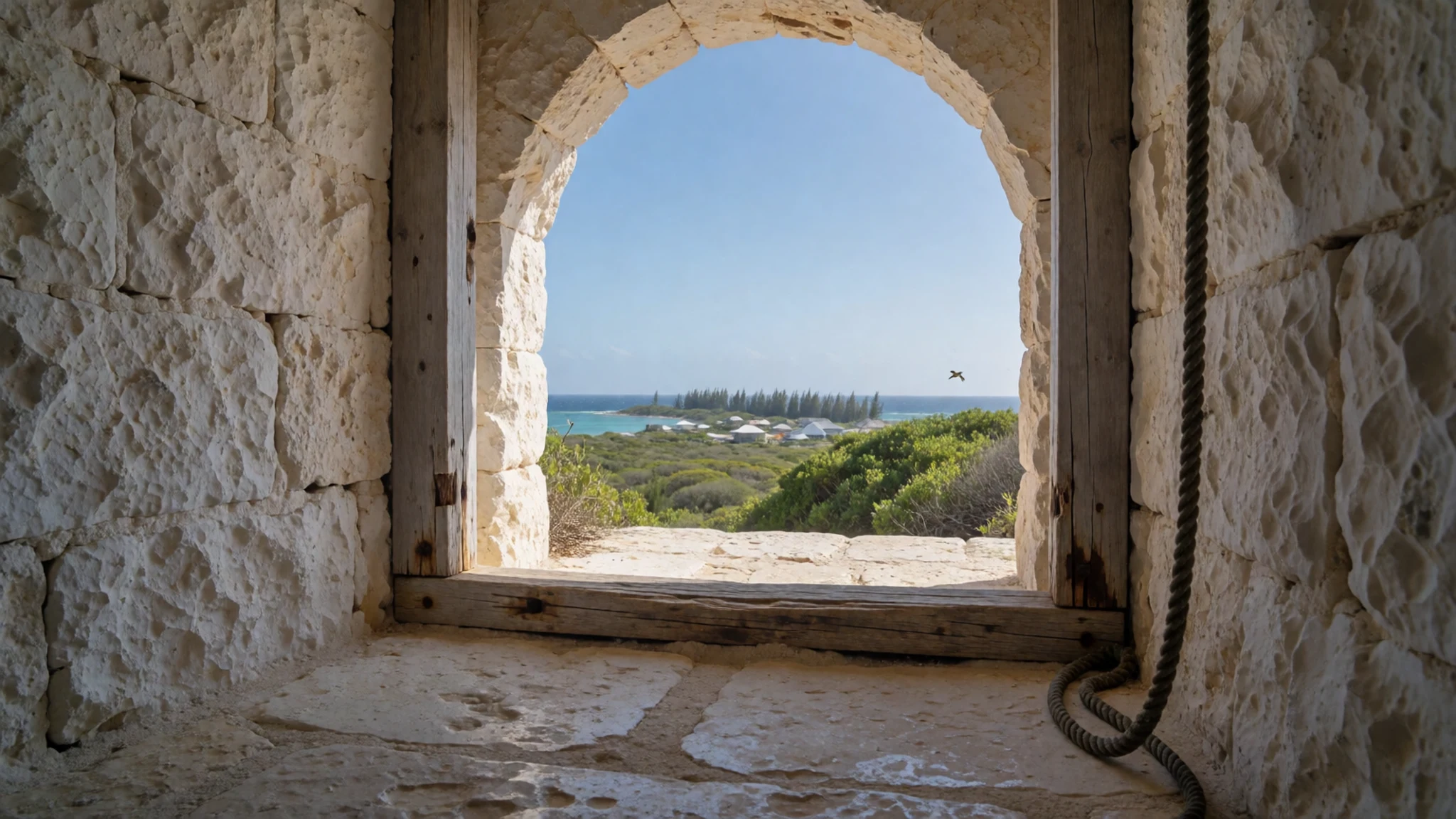
- Fernandez Bay — Fernandez Bay
Fernandez Bay on Cat Island is a leeward cove of pale sand and clear, shallow water, sheltered from the Atlantic swell that hits the other shore. Casuarinas and low bush back the beach, and the settlement of New Bight is a short ride away. Mornings are a good time for a swim. There is little shade and almost no facilities, so bring water and take rubbish away with you.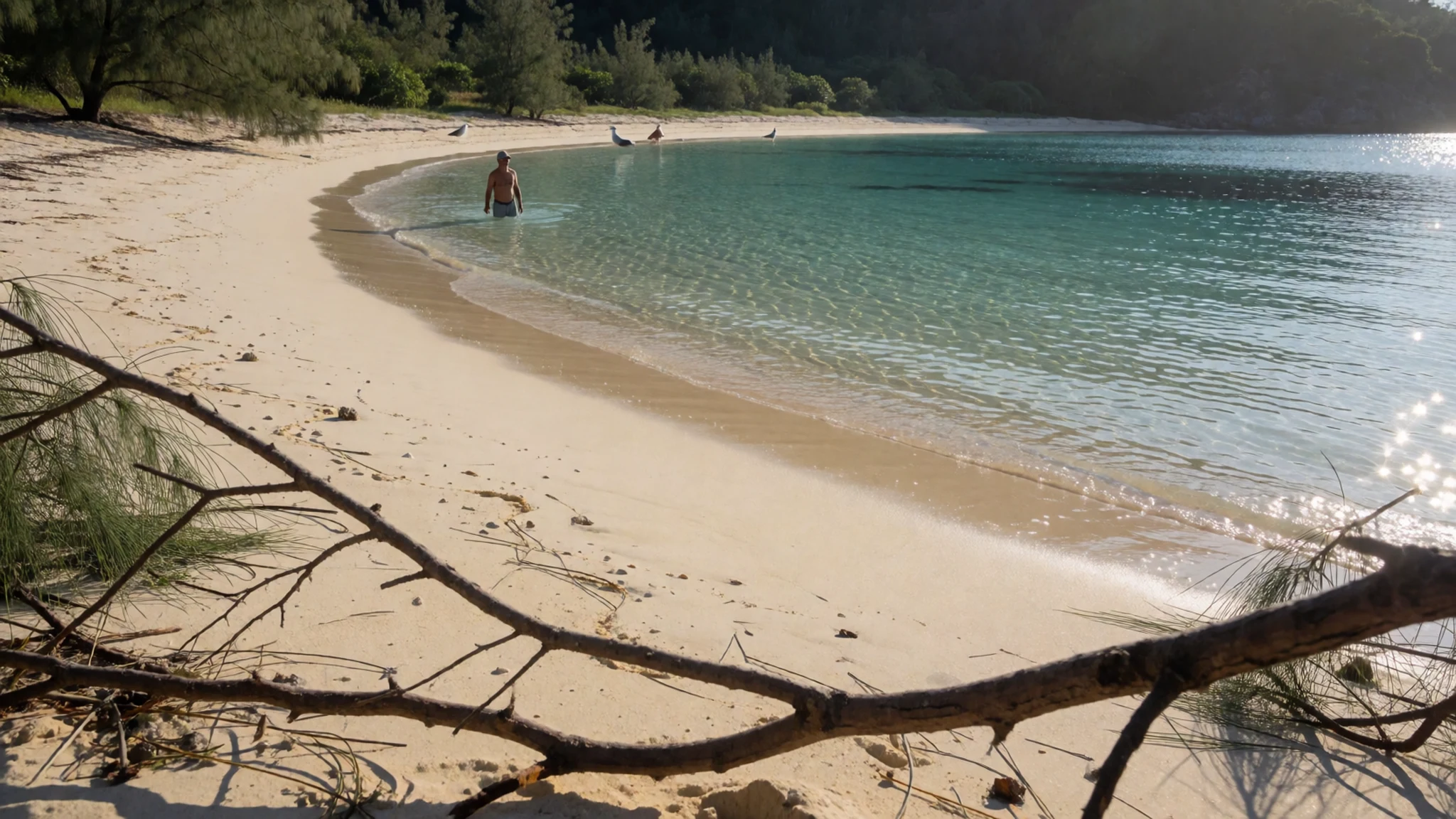
- Dumfries — Dumfries
Dumfries on Cat Island is one of the main settlements, a southern village still lived in, not a ruin left for the bush. Stone walls, empty windows and collapsed roofs at Armbrister and at Deveaux House sit among vines, which is how the old plantation landscape reads now. Those houses are not a staffed museum. Look without climbing on fragile masonry, and leave every object where it lies.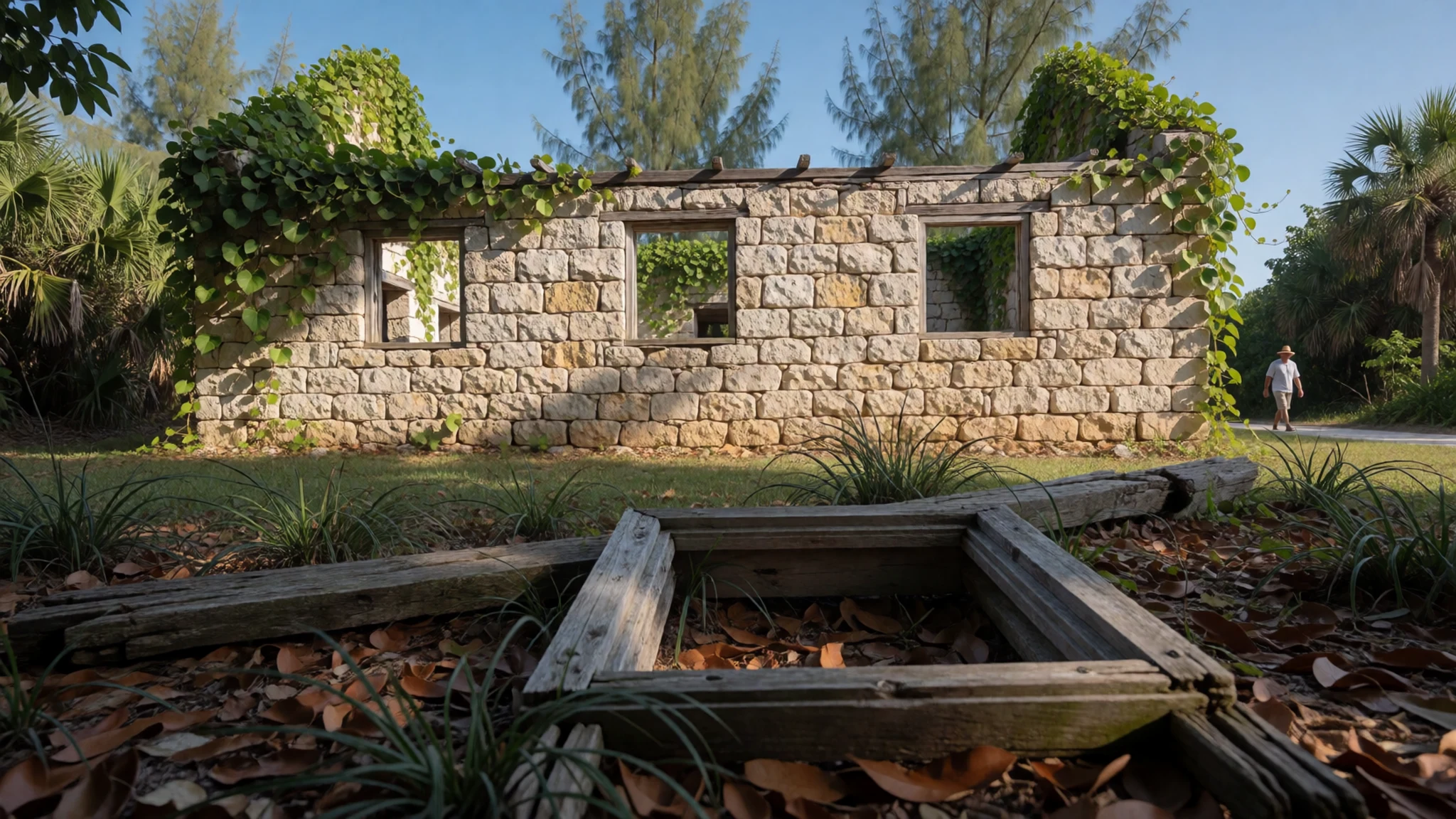
- Greenwood Beach — Atlantic shore
Greenwood Beach runs along Cat Island's Atlantic shore, a long band of pale sand backed by casuarina and scrub. The water is calmer in the morning and rougher when the trade wind rises, so read the surf before swimming. Shade is scarce; bring water and a hat. For much of the year the beach stays quiet, with the nearest settlements a short drive inland.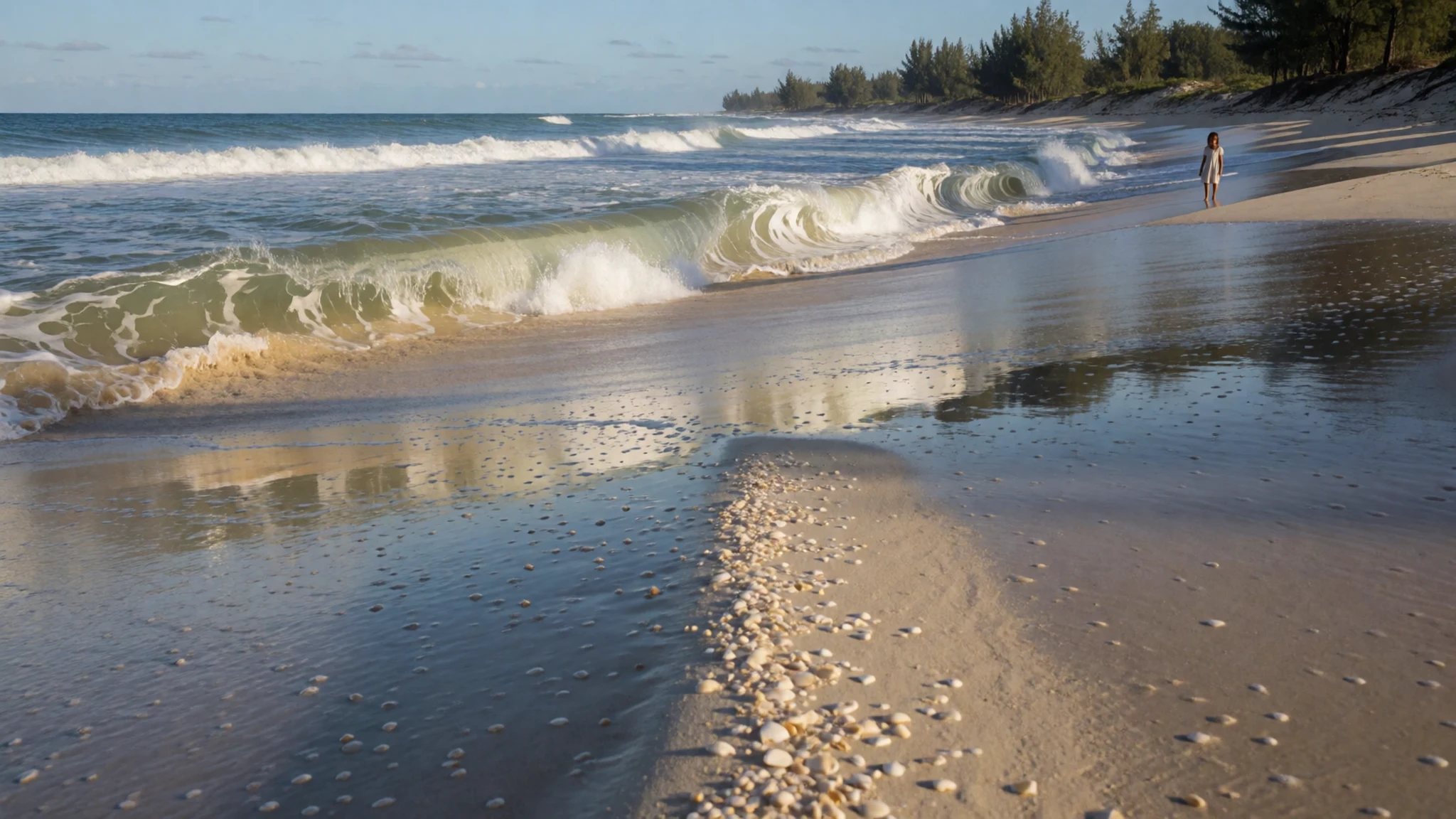
- Port Howe — Port Howe
Port Howe on Cat Island sits towards the southern end of the Queen's Highway, a small settlement with a loyalist past and open views to the Atlantic. Nearby ground holds traces of old walls and the kind of lithified dune rock that forms much of the Bahamian shore. It is a place to pause on a southbound drive, not a ticketed site. Ask locally before walking through private yards.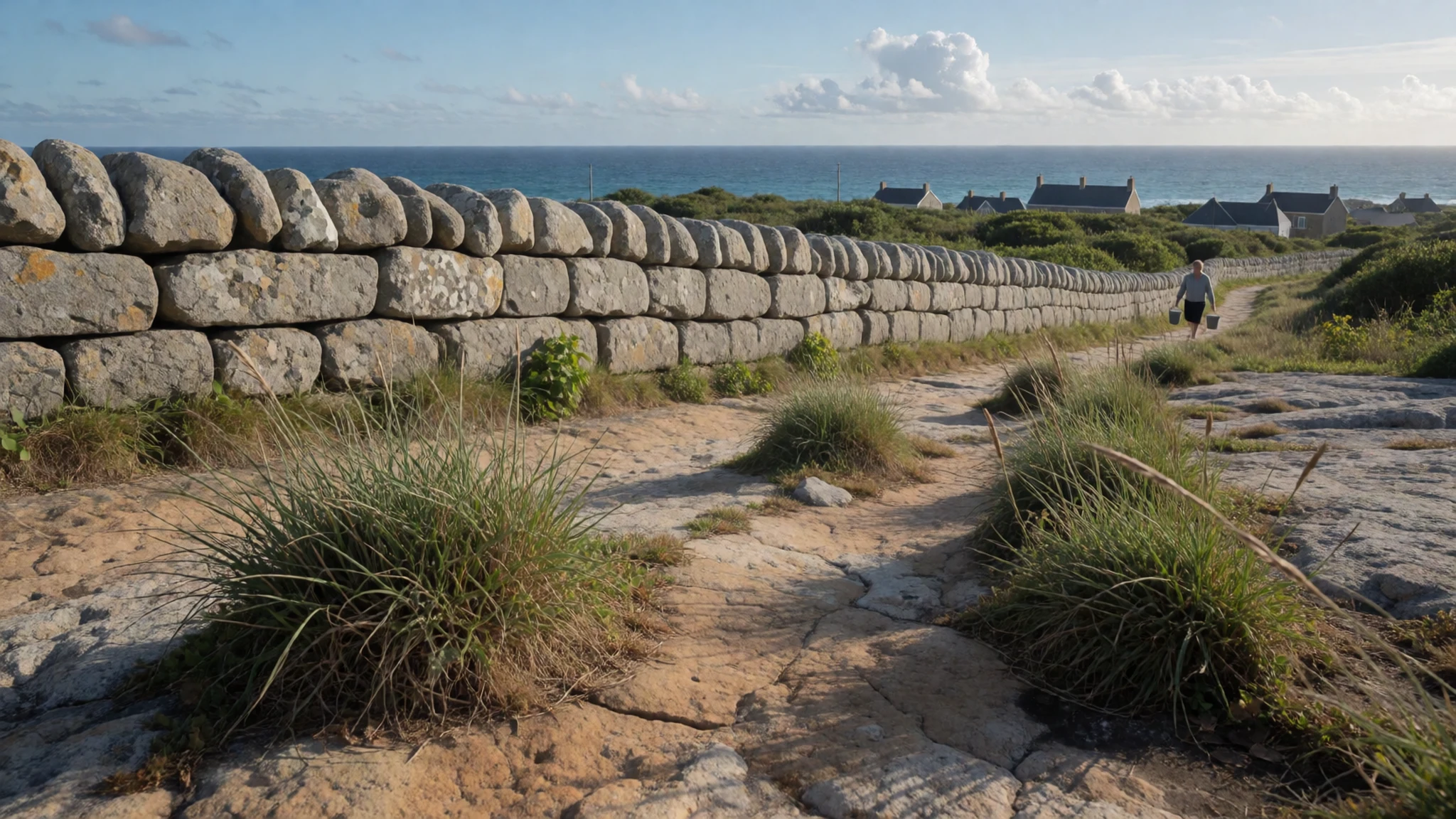
Culture
Culture on Cat Island is church, kinship and the pace of a small Bahamian settlement. Sundays structure the week: families dress and gather, and a visitor who wanders into a service is expected to sit quietly and follow the room. Through the week, talk happens on porches and in the shops along the Queen's Highway. Rake-and-scrape music, storytelling and Junkanoo, the Bahamian festival of costume, drum and brass, belong to the same tradition as on other islands, scaled here to a few communities rather than a city parade. Obeah, a system of folk belief and spiritual caution, is part of the old conversation; it is not a show for outsiders, and it should not be joked about or hunted for photographs. Fishing and family land still organise status and time. People know who belongs to which bay and which house plot, and a stranger walking behind a cottage is noticed at once. Hospitality is real and specific, a greeting, a direction, sometimes a plate, and it runs on reciprocity, not on a service script. Ask before you photograph people or the inside of a yard, and greet anyone you pass before you raise a camera.
What to wear
Fashion on Cat Island follows the wider Bahamas, with festival costume on one side and ordinary cotton on the other. Junkanoo dress is the traditional spectacle: crepe-paper fringe, cardboard and cloth built into large costumes, worn for the holiday parades. It is not everyday clothing. Older festival and church dress runs to bright printed cotton and straw hats; straw work from the islands, hats, bags and mats, is the textile craft a visitor often sees for sale. There is no single Cat Island costume that people put on for daily life. What people wear now is practical and neat. In the heat that means T-shirts, shorts, cotton dresses and sandals or flip-flops around the settlements. Sunday is different: shirts, dresses, hats and covered shoulders for church, and the contrast is obvious on the Queen's Highway. Work clothes for fishing and bush are worn out, sun-faded and chosen to survive salt. A visitor should copy that split. Swimwear belongs on the beach, with a shirt or wrap for the road, the shop and any churchyard. Light cotton, a hat and sandals handle most days; shoes with a grip are worth packing for the Hermitage path and for walking into bush around Dumfries.
What to eat
- Cracked conch — a settlement cookshop or takeaway on the Queen's Highway
Cracked conch on Cat Island is tenderised conch, floured and fried, usually with hot sauce, lime and peas and rice. It turns up at a settlement cookshop or a takeaway window on the Queen's Highway. Availability follows the catch, so ask what came in.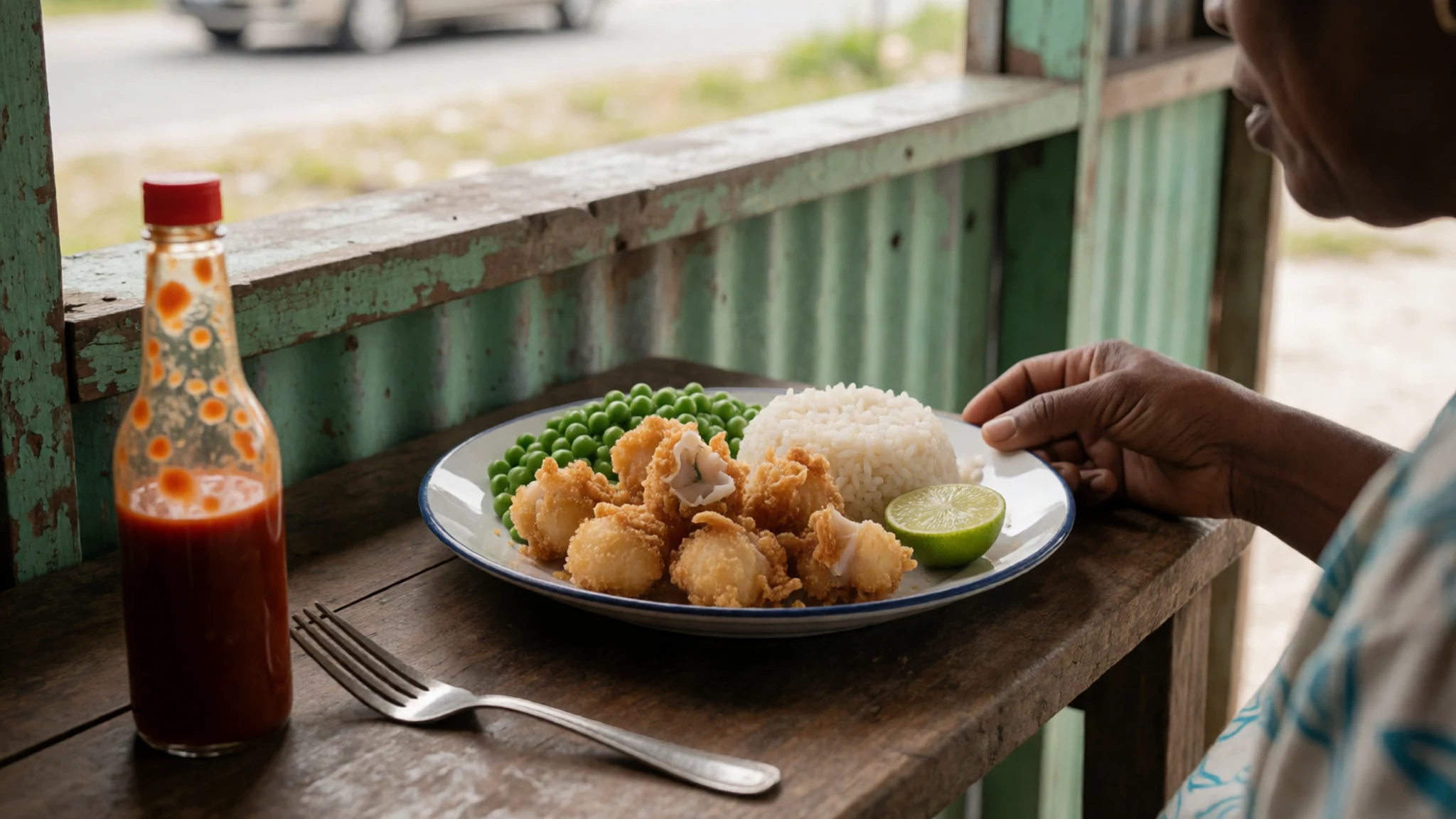
- Conch salad — a cookshop or roadside stand in New Bight or Arthur's Town
Conch salad on Cat Island is raw conch diced with onion, tomato, pepper and citrus, served cold. Look for it at a cookshop or a roadside stand in New Bight or Arthur's Town when conch has been brought in. It is sharp and meant to be eaten fresh.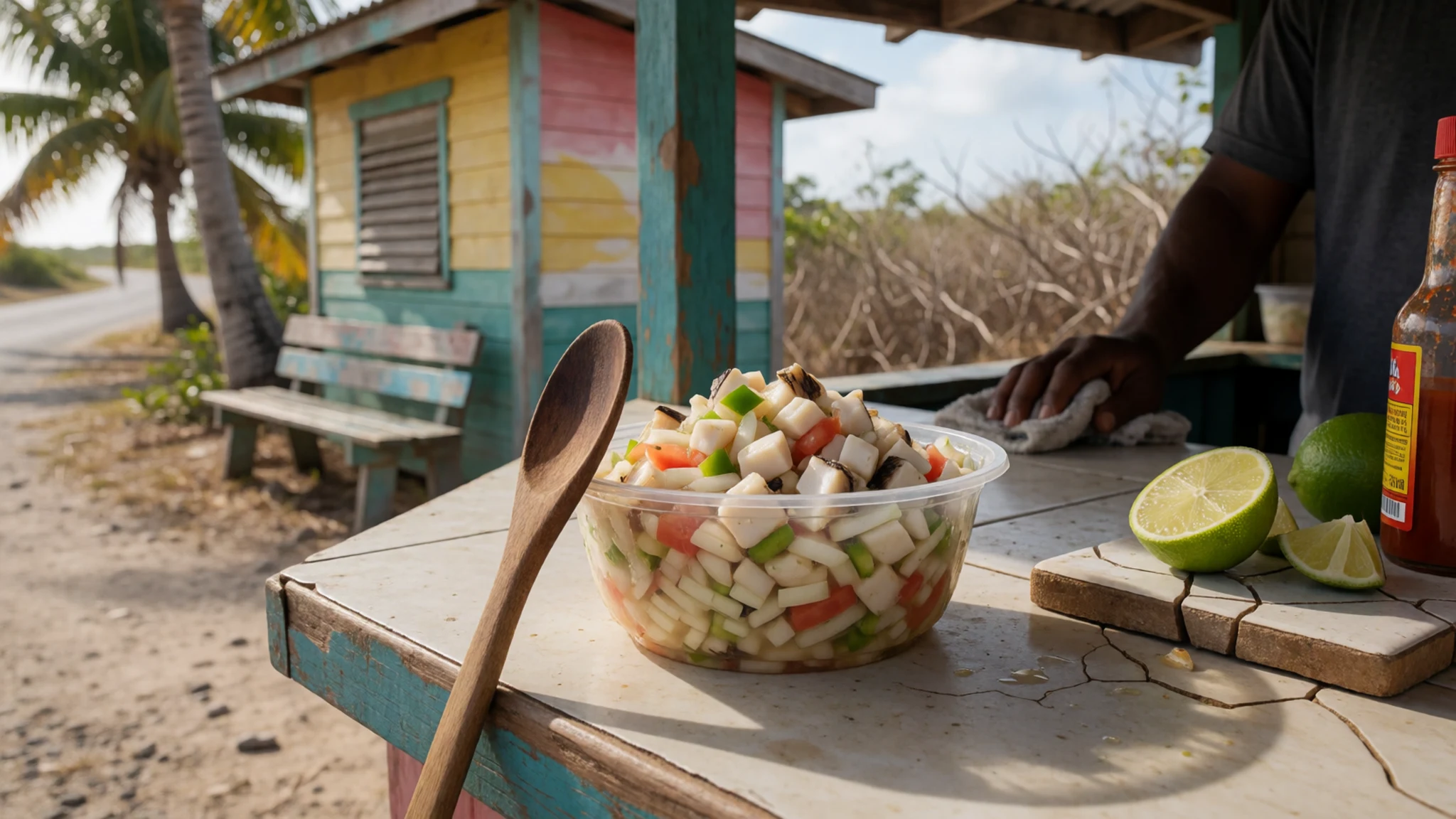
- Boiled fish — settlement eateries in New Bight and Arthur's Town
Boiled fish on Cat Island is a Bahamian breakfast: grouper or another firm fish simmered with salt pork, onion, potato and pepper, eaten with johnnycake. Settlement eateries around New Bight and Arthur's Town serve it in the morning. Come early; once the pot is gone, it is gone. - Peas and rice — cookshops along the Queen's Highway
Peas and rice on Cat Island is the plate that arrives beside almost everything: pigeon peas or beans cooked with rice, tomato, salt pork and thyme. Every cookshop along the Queen's Highway will have a pot. It is the staple, not a side you have to request. - Guava duff — home cooks and settlement eateries
Guava duff on Cat Island is a boiled sweet dough rolled around guava, sliced and served with a butter sauce when someone has made it. Home cooks and a settlement eatery offer it more often for Sunday than as a daily item. Ask rather than assume.
Plan it
Best time. December to April is the drier season on Cat Island, with easier seas. June to November is wetter and falls in the hurricane season, when flights and boats are easier to disrupt.
How long. 3–4
Getting there. Fly to Lynden Pindling International in Nassau, then on to New Bight or Arthur's Town on Cat Island. The mail boat from Nassau is the slower sea route. Check current schedules with the operator.
Budget. mid
Tips
- Book the Nassau to Cat Island flight early in the busy winter weeks; seats on small aircraft go quickly.
- Carry cash. Small shops and cookshops on Cat Island often cannot take cards.
- Start the Hermitage walk early, before the heat builds on the open path.
- Bring drinking water, sun cover and insect repellent; shade and supplies are sparse on the beaches.
Etiquette
- Greet people on Cat Island before you ask for a photo or a direction.
- Cover shoulders and knees for church, and do not wander into a service in beachwear.
- Do not climb on ruined walls at Armbrister or Deveaux House, or treat empty houses as a playground.
- Ask before you walk through a yard; family land is not a public footpath.
Nearby
Sources
- Wikidata (CC0)
- Wikipedia (CC BY-SA 4.0)
- Wikivoyage (CC BY-SA 4.0)
Wildlife
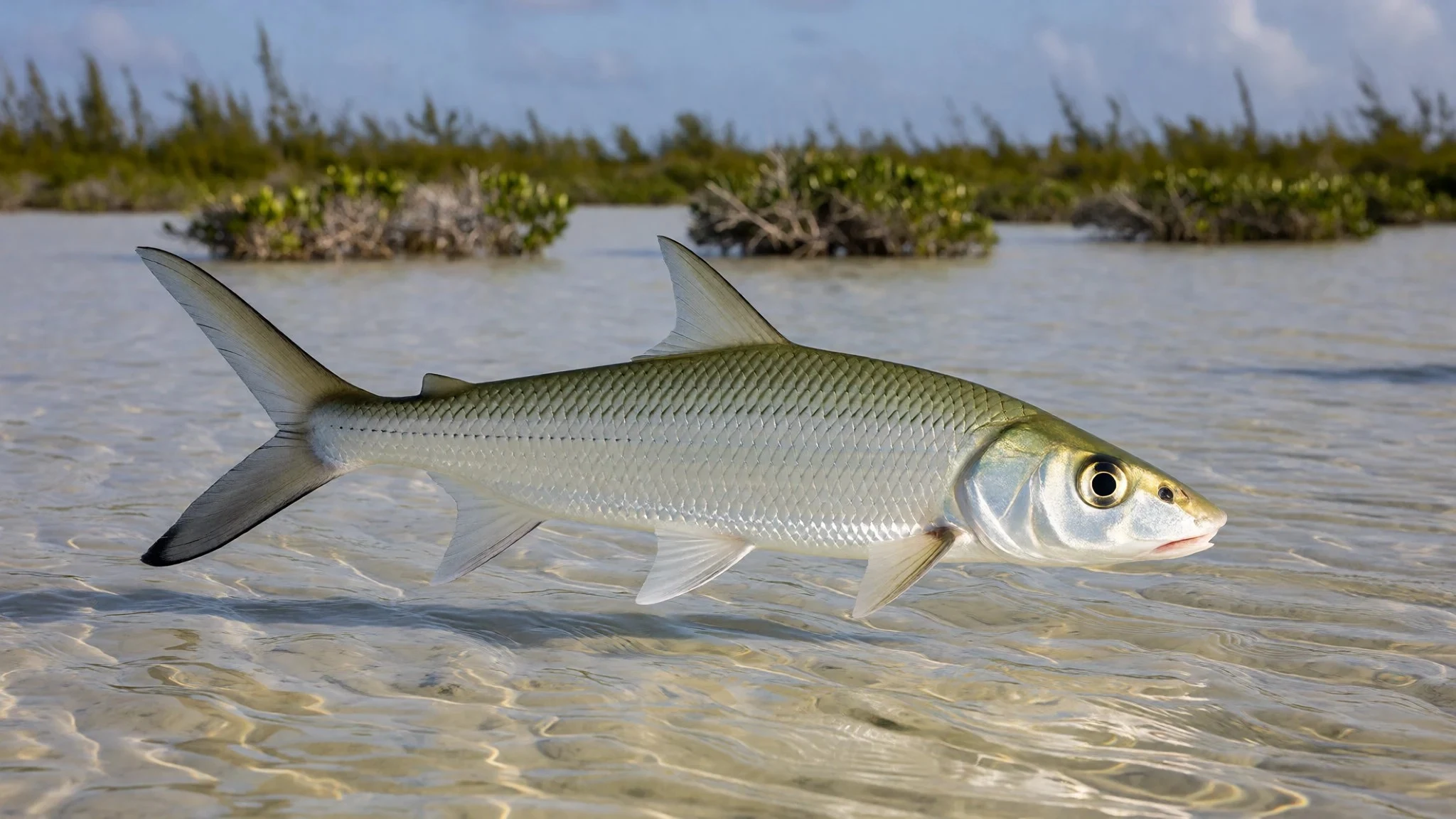
- Bonefish (animal)
The bonefish, sometimes called the bananafish, is the fish that lends its name to a whole family of relatives. On Cat Island, visitors look for it on the bonefish flats, which are a real draw for people who travel here. Nothing is known here about the best season or hour, so ask locally about timing. To watch well, keep your distance from the water, stay quiet, go with a guide who knows the flats, and never feed it.