Eleuthera
Eleuthera, The Bahamas
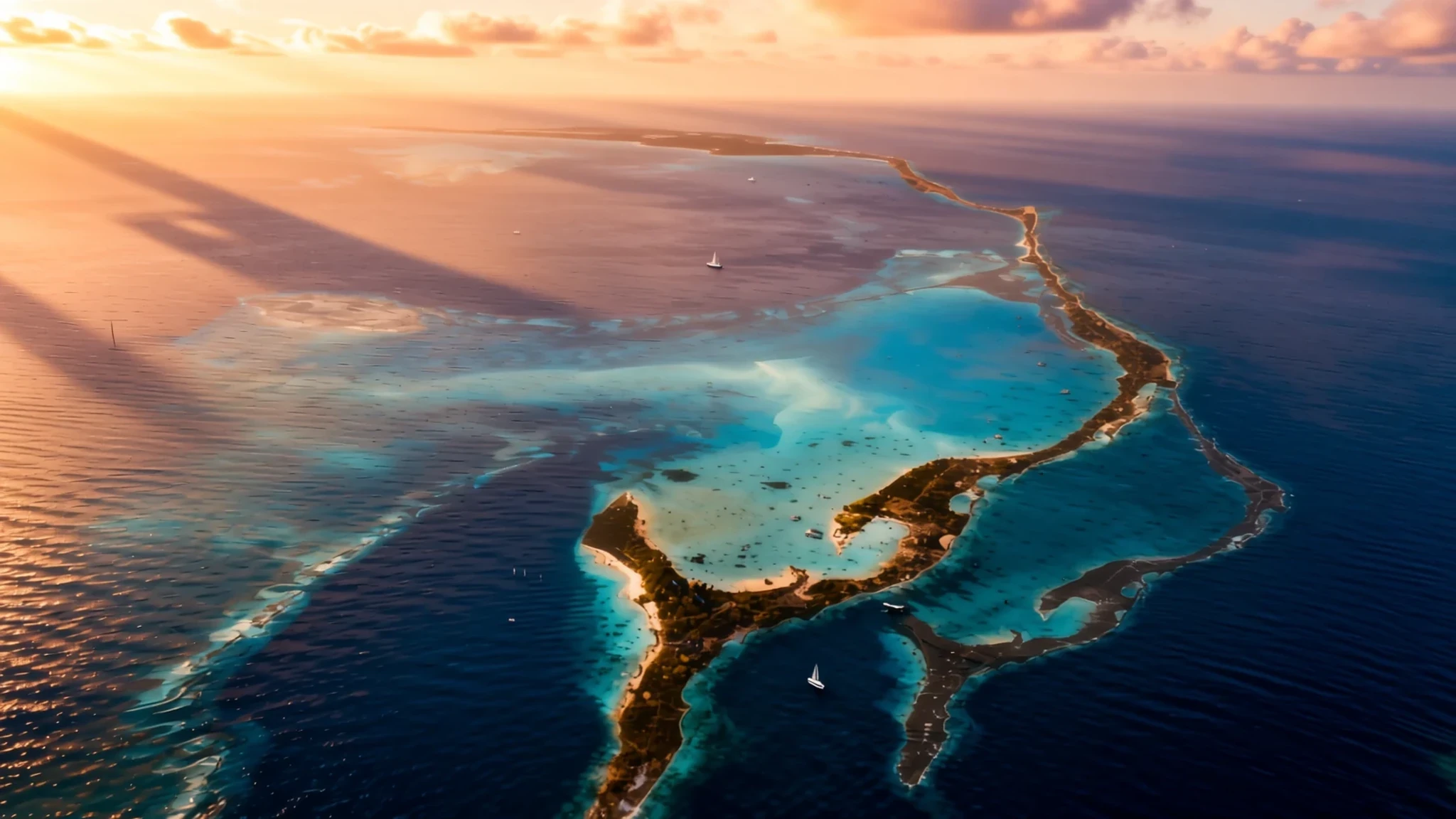
Eleuthera is a long Bahamian out-island of limestone shore, quiet settlements and water that shifts from pale bank to deep ocean.
The place
Eleuthera sits in the Bahamas as a narrow spine of limestone, running roughly north to south with the deep Atlantic on its eastern flank and the shallow Bahama Bank on the other. The land is low, rocky and bright: ironshore that cuts bare feet, pockets of sand, casuarina and coconut along the lee, and scrub where the soil is thin. Settlements are small and spaced along the main road. Spanish Wells and Harbour Island lie off the northern end, then Current, Gregory Town and the Hatchet Bay area; Governor's Harbour sits near the middle, and Tarpum Bay, Rock Sound and Bannerman Town run towards the south.
Life on Eleuthera moves at the pace of the mail boat and the school run. People fish, tend small plots, work in the few guesthouses and shops, and gather at church. This is not a city and not a resort strip. Much of the coast is empty between villages, and the night is dark enough for a clear sky. Trade winds cool the shore. In the storm months the same open exposure that makes the beaches fine also leaves the island feeling very exposed to weather.
Governor's Harbour is the practical centre, with a harbour and the denser cluster of services. Harbour Island, a short water-taxi hop from North Eleuthera, faces pink-tinged sand with cottages behind the dunes. Elsewhere the island is coves, a blue hole at Rock Sound, pineapple country around Gregory Town, and a narrow waist where ocean and bank water lie a short walk apart.
Its story
Eleuthera's name comes from the Greek word for freedom, and the island's written story begins with people who chose it for that idea. The Lucayan, a Taíno people, lived across these cays long before Europeans, fishing, farming and carving. A wooden duho, a low ceremonial seat found on Eleuthera and now in the British Museum, still stands for that older life. Spanish ships passed through the Bahamas after first contact, and the Lucayan communities were emptied by disease and enslavement. The island then sat thinly occupied for a long time.
A group of English Puritans, later called the Eleutheran Adventurers, left Bermuda after a falling-out over religious liberty and politics. Their ship wrecked on the northern reefs of Eleuthera. Survivors sheltered in a cave still called Preacher's Cave and tried to found a settlement of free worship. The colony struggled with thin soil, hunger and a split among the settlers. Some left for other Bahamian islands; the experiment never became the commonwealth they had imagined, but it left Eleuthera its name and the English story the island still tells.
Later years brought wrecking, small plantations and, after the American Revolution, Loyalists who arrived with enslaved Africans. Cotton failed on the limestone. After emancipation, Eleutherans turned to sponging, fishing, pineapple and the sea. Harbour Island and Spanish Wells grew as maritime communities, and Spanish Wells kept a markedly English-descended population that still stands somewhat apart. Pineapple around Gregory Town became a local pride, and the mail boat tied the island to Nassau.
What to see
- Glass Window Bridge — the narrow waist north of Gregory Town
Eleuthera narrows to a rocky neck at the Glass Window, Atlantic swell on the ocean side and calmer bank water on the other. A natural arch once spanned the cut; hurricanes took it, and a road bridge now carries the through-route. Wet rock is dangerous in a swell, because waves throw water across the pavement. People stop for the abrupt change in sea colour.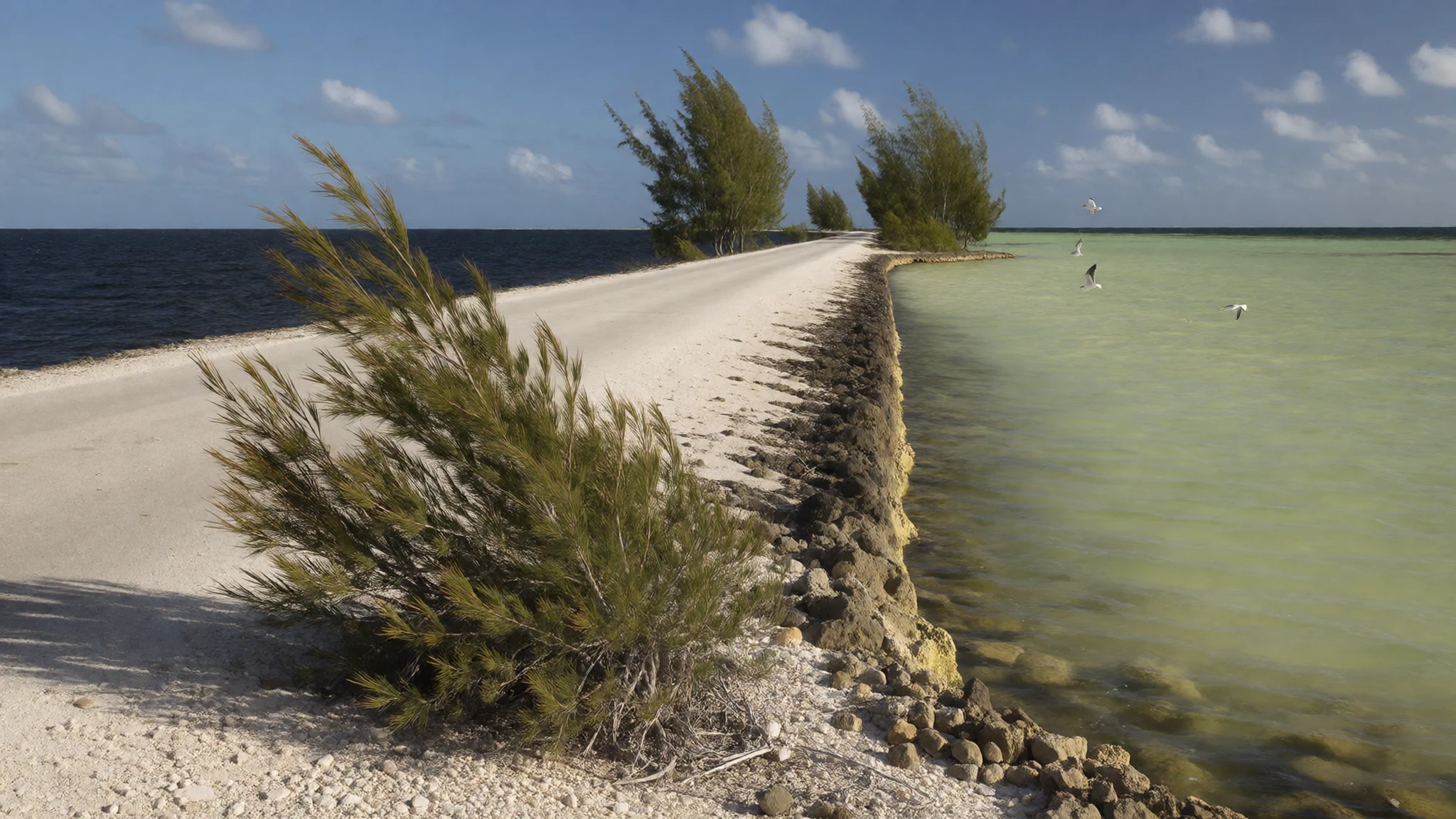
- Harbour Island — Dunmore Town, off northern Eleuthera
Harbour Island lies just off northern Eleuthera and is reached by water taxi from the North Eleuthera dock. Dunmore Town is a grid of narrow lanes, clapboard houses and flowered walls. The ocean side is a long beach of pink-tinged sand. Golf carts do most of the local trips, the beach is public, and the sun is hard at midday.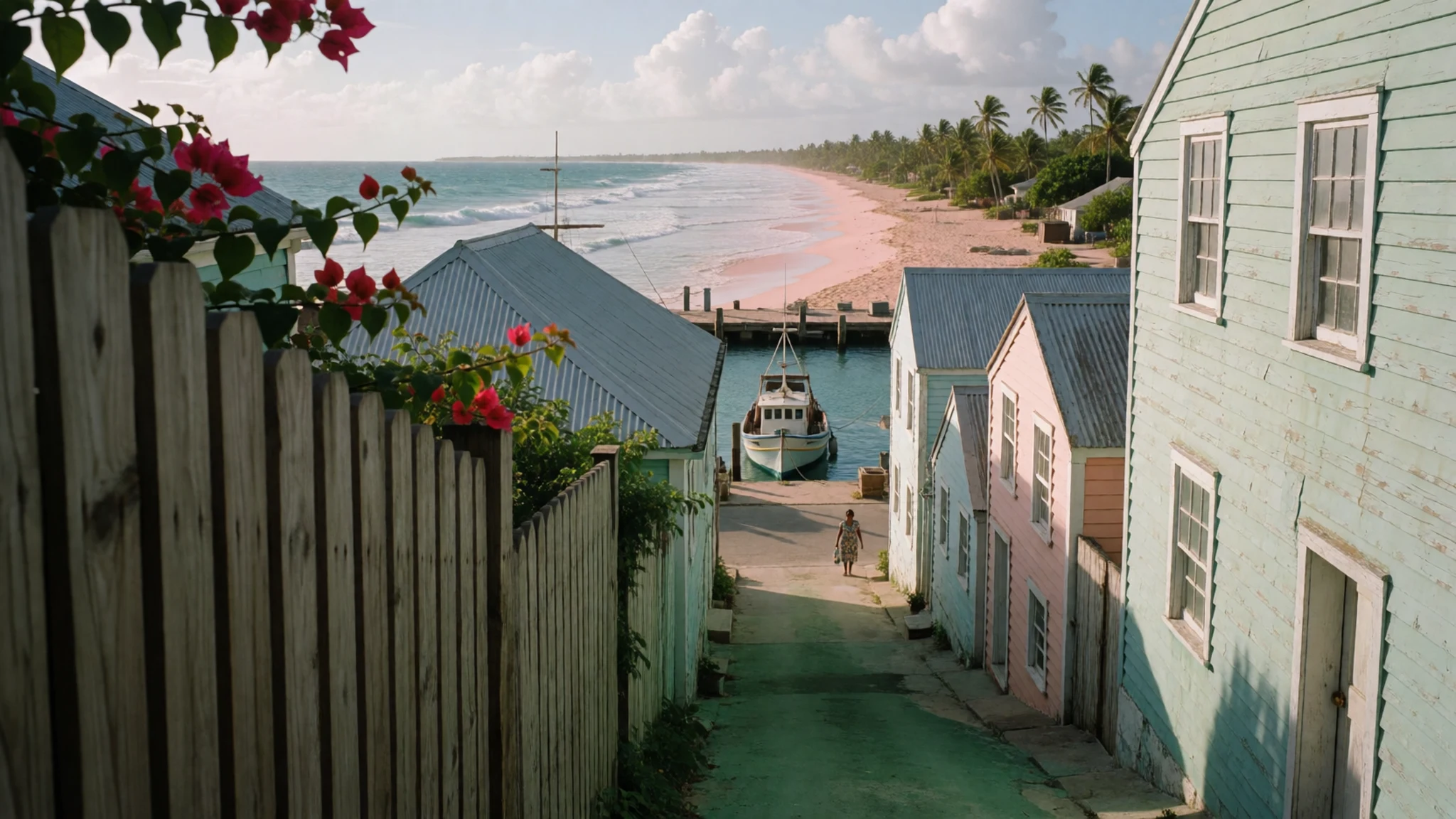
- Governor's Harbour — the middle of the island
Governor's Harbour, near the middle of Eleuthera, is the island's working centre: a curved harbour, houses on the ridge above it, and the services a long island needs. Cupid's Cay, joined to the settlement, holds a church and a quiet point over the water. Beaches sit a short ride to either side, so the town works as a base between north and south.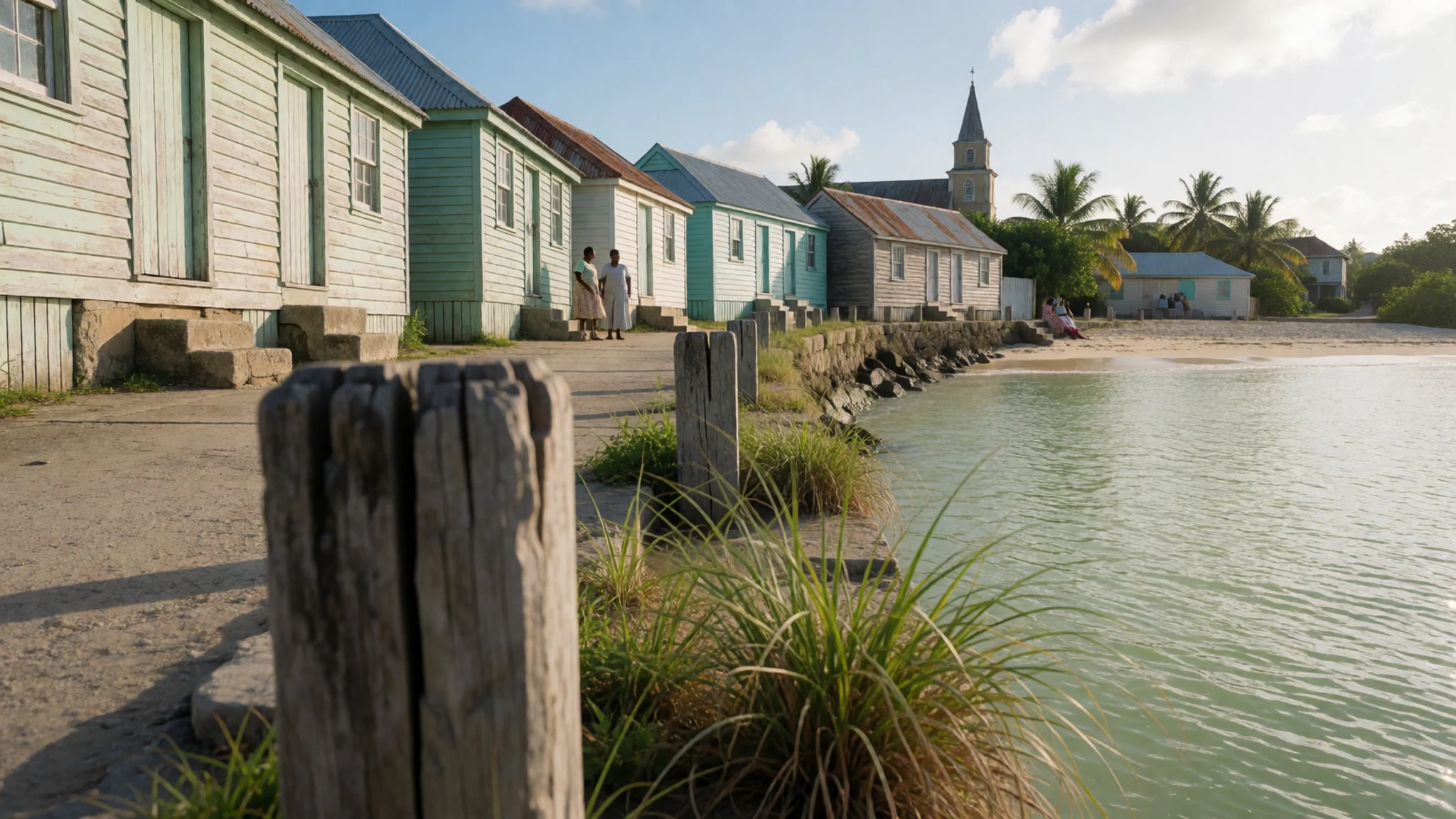
- Preacher's Cave — the northern end
Preacher's Cave, at the northern end of Eleuthera, is the limestone shelter where the Eleutheran Adventurers are said to have lived after their ship wrecked. Light falls through a hole in the roof, and a rough pulpit shape in the rock gives the cave its name. A sandy track through low bush leads in, with the sea a short walk beyond.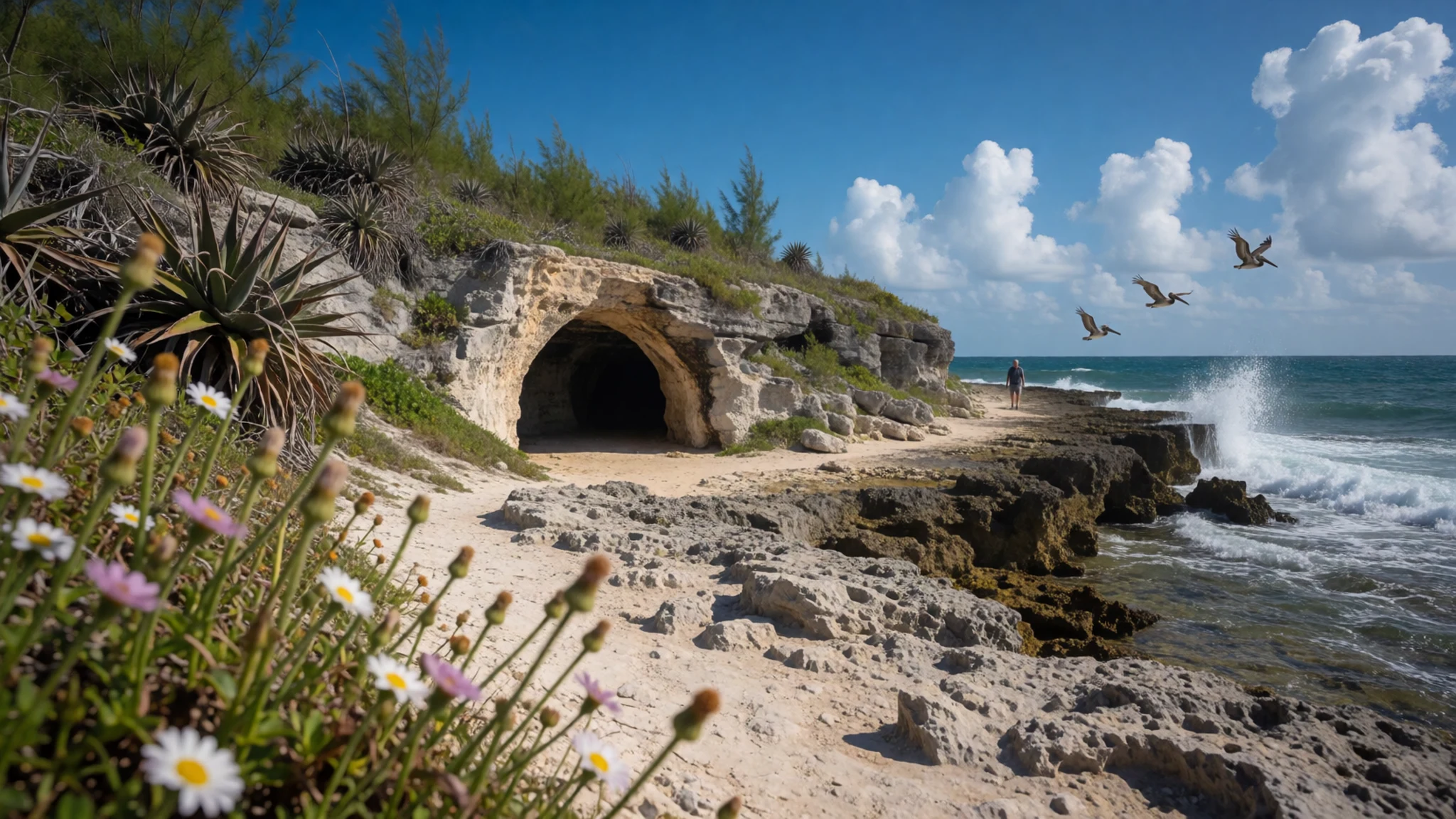
- Rock Sound Ocean Hole — Rock Sound, southern Eleuthera
Rock Sound, towards the southern end of Eleuthera, keeps a blue hole in town: an inland pool of clear salt water that people say links to the sea. Locals swim, fish move below, and nothing fences it off. Children jump and elders watch, and a visitor is simply another person in the water.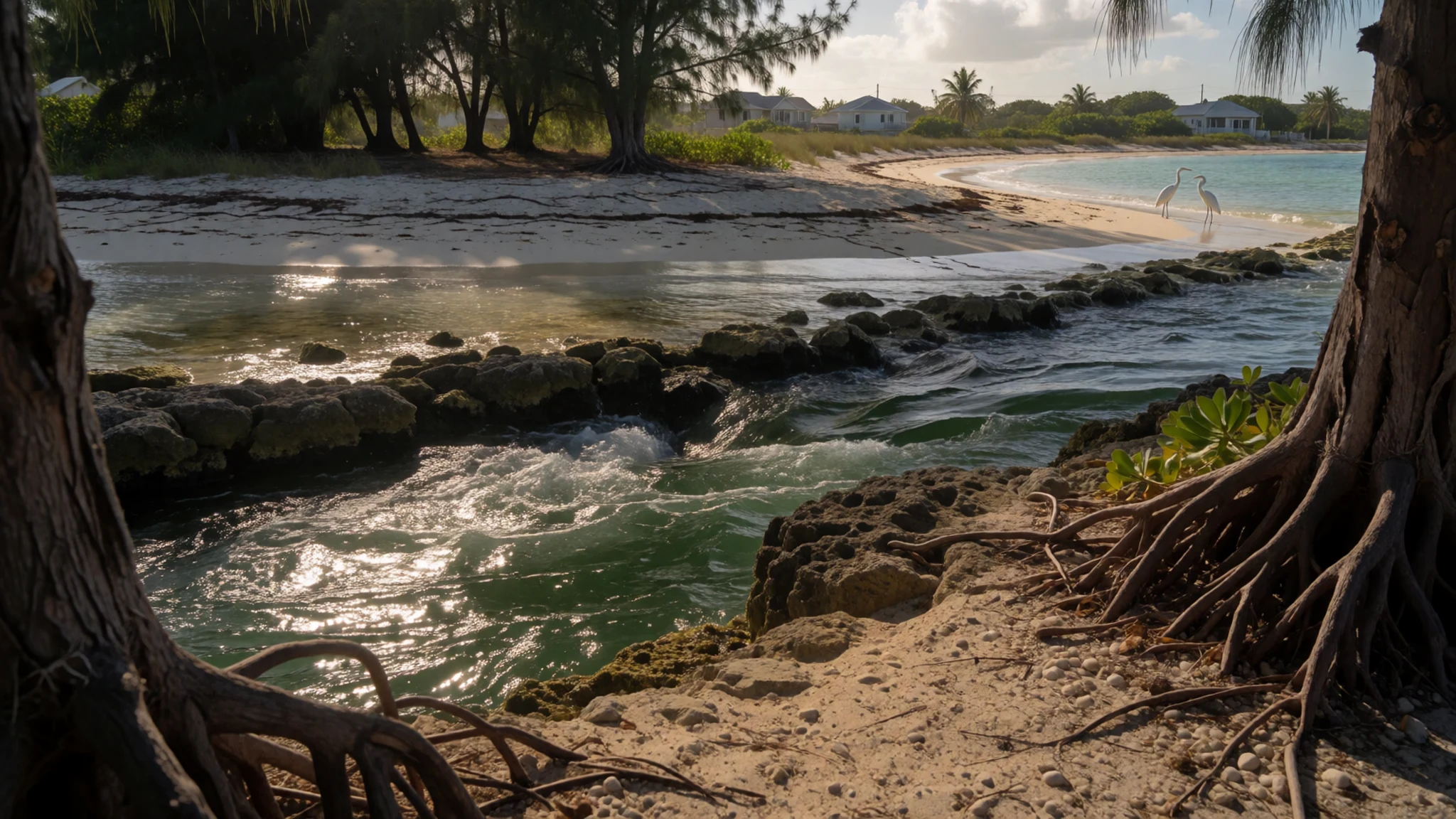
Culture
Eleuthera keeps the manners of a Bahamian family island, where people know one another and a stranger is noticed at once. Church is the social spine: Sunday services, hats and gatherings afterwards structure the week in a way a city visitor can miss. Junkanoo, the Bahamian parade of cowbells, goatskin drums and crepe-paper costume at Christmas, belongs chiefly to Nassau, yet the rhythm and the pride travel out to the family islands in music and in smaller rushes. Fishing talk, storytelling and a dry humour do as much social work as any festival. Most Eleutherans descend from Africans brought in the Loyalist period and from later movement between islands. Spanish Wells remains a largely white fishing settlement with a reputation for keeping to itself. That contrast is part of Eleuthera, and a visitor meets it best by not commenting on it. Greet people before you ask anything of them, ask before photographing a person or a yard, and cover up if you step into a church.
What to wear
Eleuthera has no court costume worn in daily life. What counts as traditional dress belongs to church and to festival. Junkanoo costumes, built on a frame and covered in fringed crepe paper, are the festival textile: bright, perishable and made to move with a drum. On Sundays, women often wear dresses and hats, and men a pressed shirt; that formality is its own local code. Among fishing families, especially around Spanish Wells, boots, caps and long sleeves are work clothes, not a heritage outfit. Androsia, the batik printed on Andros, appears in shirts and skirts here as a wider Bahamian cloth rather than an Eleutheran one. Day to day, Eleuthera dresses for heat: T-shirts, shorts, cotton dresses and sandals, with swimwear kept to the beach. A visitor needs the same split — light cotton that covers the shoulders in settlements, a hat, and shoes with a sole, because the ironshore cuts bare feet. A rash guard helps in the midday sun. Church, a funeral or a Sunday invitation calls for covered shoulders and a longer hem.
What to eat
- Conch salad — stands and cook-shops at fishing harbours
Conch salad on Eleuthera is raw conch diced with citrus, onion, pepper and sometimes tomato, sold from stands and small cook-shops. It is sharp, cold and meant to be eaten soon after it is made. Fishing harbours are the natural place for a cup of it.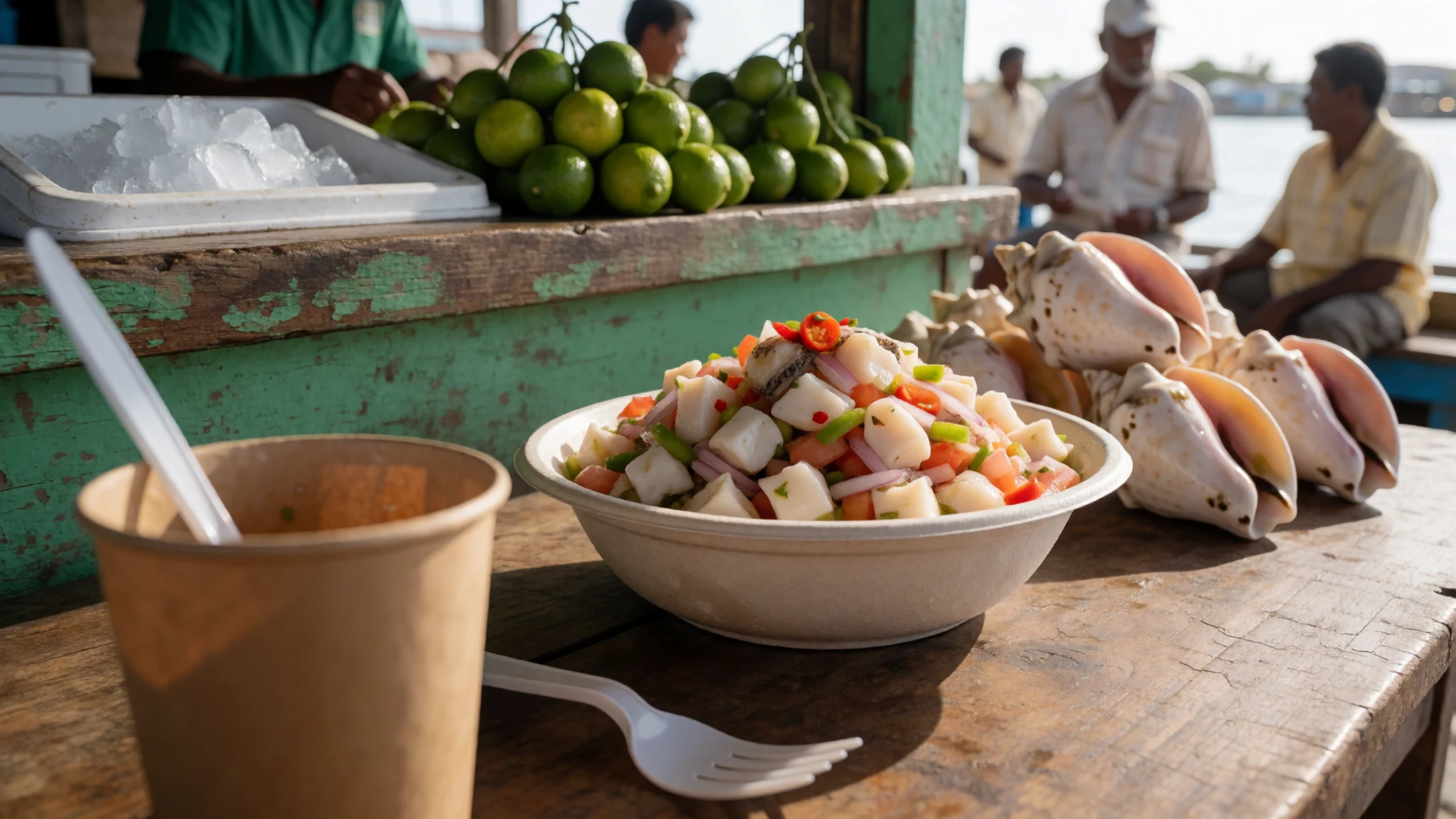
- Cracked conch — cook-shops and roadside bars from Governor's Harbour to Harbour Island
Cracked conch on Eleuthera is tenderised conch, battered and fried, usually beside peas and rice. Cook-shops and roadside bars from Governor's Harbour to Harbour Island serve it as a full lunch. It is a heavy fried lunch, not a light bite.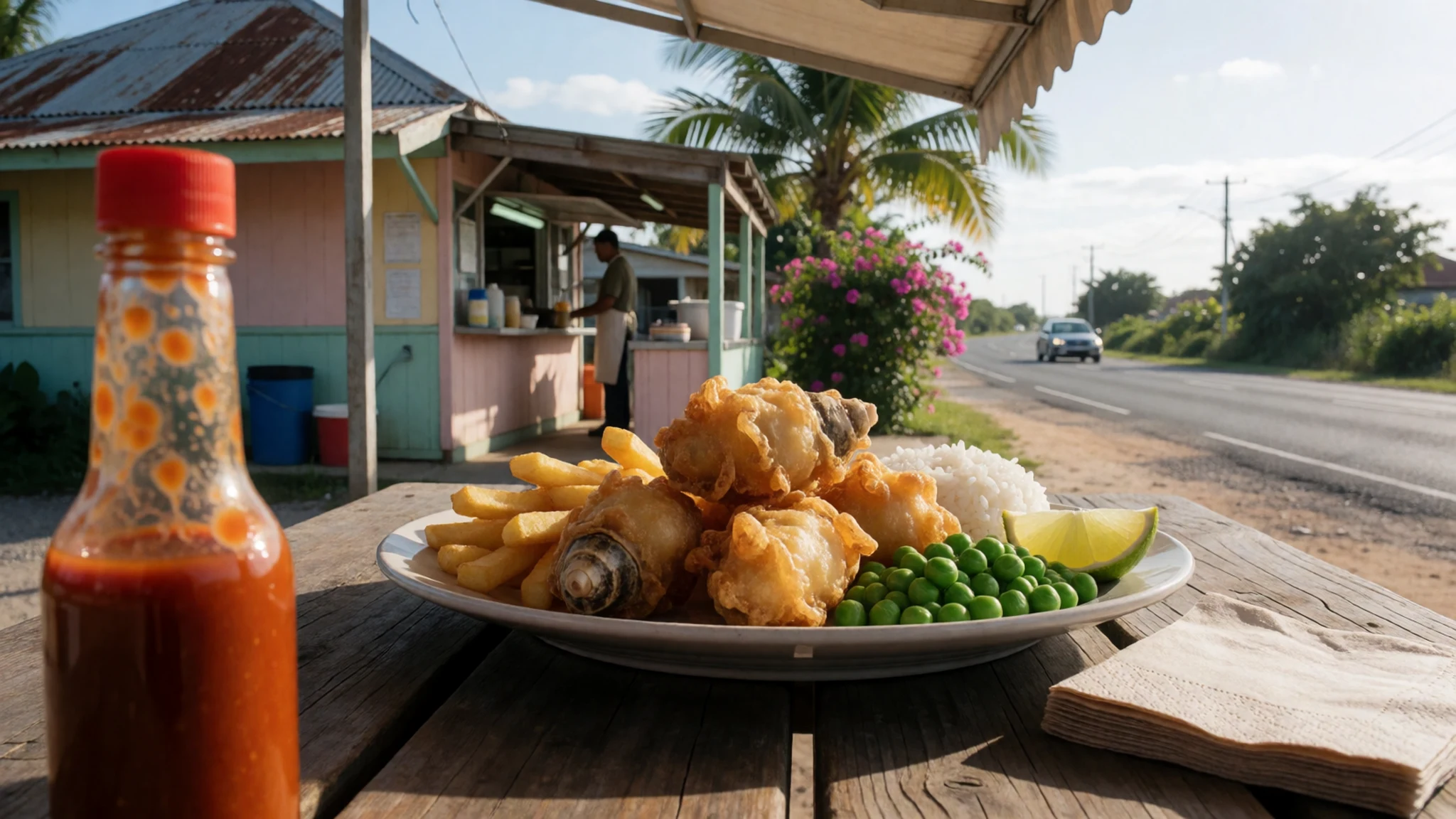
- Steamed fish with peas and rice — cook-shops in Governor's Harbour, Rock Sound and Harbour Island
Steamed fish on Eleuthera is the morning's catch — often grouper or snapper — cooked with onion, pepper and lime. Pigeon peas and rice make up the rest of the plate. Cook-shops in Governor's Harbour, Rock Sound and Harbour Island serve it. - Pineapple and johnnycake — stalls, bakeries and settlement shops around Gregory Town
Gregory Town, on Eleuthera, still treats pineapple as a local crop, and in season the fruit shows up at stalls. Johnnycake, a dense slightly sweet bake, sits beside fish or with butter. Both turn up at bakeries and settlement shops. - Guava duff — family tables and guesthouses in Governor's Harbour and Harbour Island
Guava duff on Eleuthera is a Bahamian steamed pudding rolled around guava, then sliced and sauced. It belongs to family tables and sometimes to a guesthouse dessert board. Governor's Harbour and Harbour Island are the places to ask after it.
Plan it
Best time. Drier, milder weather on Eleuthera runs from December through April, when the trade winds take the edge off the heat. Summer is hot and humid. From June into November the island sits in the hurricane belt, so plans need slack.
How long. 4–6
Getting there. Eleuthera is reached through North Eleuthera, Governor's Harbour or Rock Sound, usually via Nassau or Florida, then by car on the main road. Harbour Island is a water taxi from the North Eleuthera dock. Mail boats also link the island with Nassau. Check operators for current flights and boats.
Budget. mid
Tips
- Book small planes and Harbour Island rooms ahead for the winter.
- Rent a car for the length of Eleuthera; a golf cart is enough on Harbour Island.
- Carry cash for village shops and roadside stands.
- Fill the tank whenever you can, because fuel stops are widely spaced.
- Stay off the wet rock at the Glass Window in a high swell.
Etiquette
- Greet people before you ask a favour or raise a camera.
- Cover shoulders for church and keep quiet if a service is going on.
- Do not stand on coral or take shells and coral from the water.
- Give other drivers room on the narrow road, and wave as you pass.
Nearby
Sources
- Wikidata: Eleuthera (CC0)
- Wikipedia: Eleuthera (CC BY-SA 4.0)
- Wikivoyage: Eleuthera (CC BY-SA 4.0)