Blue Lagoon Island
Blue Lagoon Island, The Bahamas
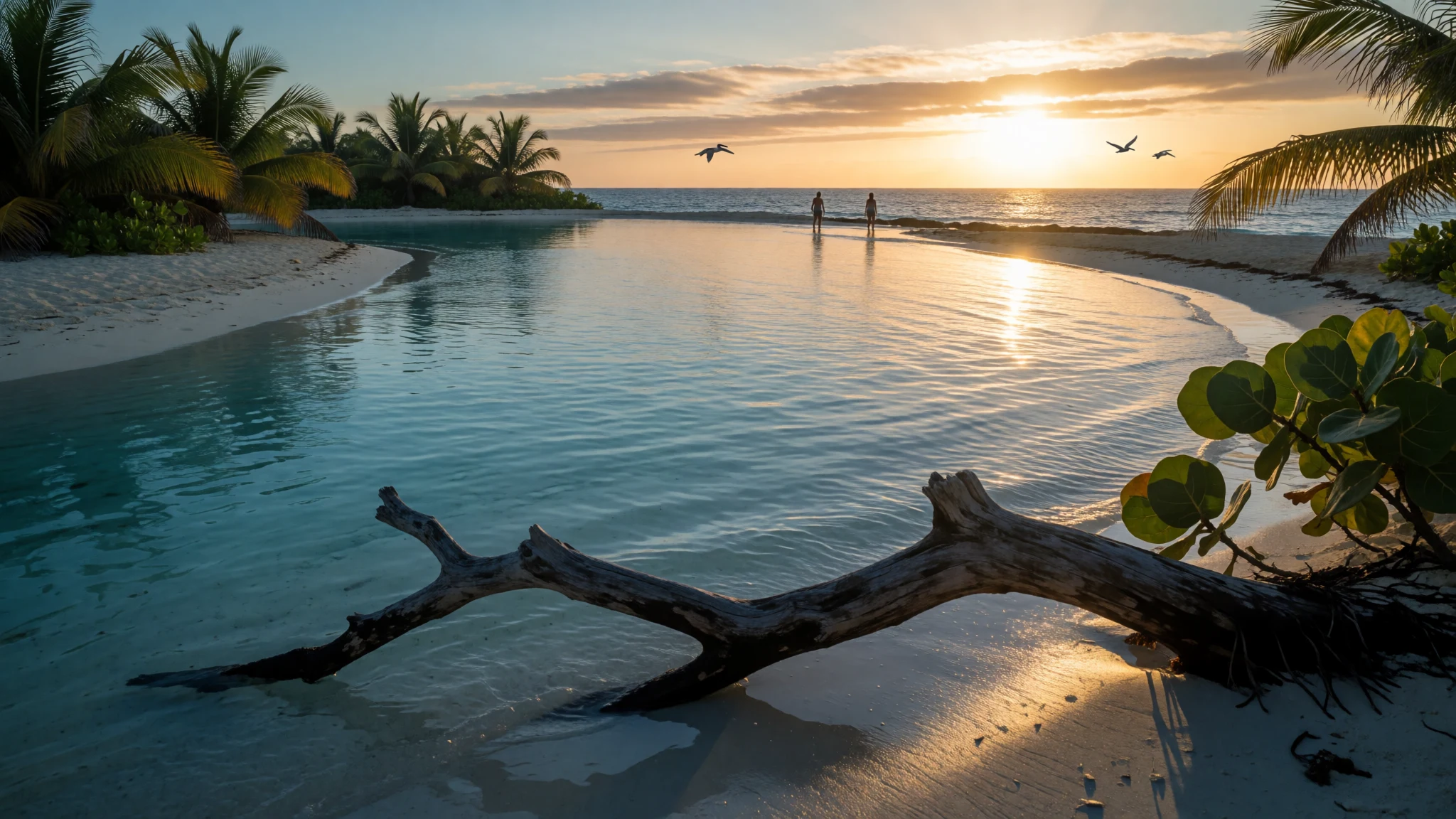
Blue Lagoon Island is a short boat ride from Nassau, a former pirate salt marsh turned into a easy day of beach, shade and sea animals.
The place
Blue Lagoon Island sits about 5 km from Nassau, the capital of The Bahamas, and is privately owned, which shapes everything about a visit. Nobody lives here in the ordinary sense. The island exists as a day destination, reached by boat from the Nassau side and left again by late afternoon. Its centrepiece is the lagoon that gives it the name, a sheltered pool of shallow, clear water separated from the open sea by low land and a channel. Around it are pale beaches, palm shade, and walkways laid out more than a century ago, now threaded between lounge chairs, hammocks and activity areas run by the operator. The lagoon looks vivid turquoise under a bright sky and turns grey-green under cloud, so photographs promise more on a sunny morning than on a squally afternoon. The island is flat and small enough to cross on foot in minutes, with a bridge joining its two halves. Expect it to feel organised rather than wild: set times for animal encounters, staffed beach areas, scheduled lunch service. On days when cruise ships are in port at Nassau, the beaches fill by late morning, and the quieter hours are at the start and end of the day. The sea is warm for most of the year, and the sun is strong even through haze. Anyone wanting a long, empty beach will do better on one of the Out Islands. Anyone wanting an easy swim, a few hours of shade and an encounter with marine animals will find this suits well.
Its story
Blue Lagoon Island has had more owners and names than most places its size. Until the late nineteenth century the lagoon was a salt marsh, listed in law as Salt Cay. Pirates and privateers found it useful: crews raked salt there to cure their provisions and anchored nearby while they sat out the delay before they could sail into Nassau's harbour. Early in the twentieth century a New Jersey manufacturer, Abraham Van Winkle, turned it into a garden. He had the marsh dredged, opened a channel to the sea, lined the shore with palms, laid winding concrete walks and stocked the grounds with monkeys, peacocks, parrots and iguanas. Visitors came over on his boat. In 1916 the island passed to the McCutcheon family, who kept it until 1979. John T. McCutcheon, a Chicago Tribune cartoonist and correspondent, bought it through the post without ever seeing it, and renamed it Treasure Island, a name Bahamians used for decades. The rough-and-ready living was part of its appeal. During World War II the Allies took the island for about a year as a secret training ground for British and American underwater demolition teams, who swam around it daily and set off charges offshore. The blasting is thought to have weakened the cliff until a small fort fell. L. A. Meister bought the island in 1979, and in 1991 a storm cut it in two at the lagoon's north-western corner, where a bridge now stands.
What to see
- The lagoon — Centre of the island
The lagoon is the reason for the island's name: a sheltered, shallow basin of clear water that stays calm when the open sea outside is rough. Once a salt marsh, it was dredged and opened to the sea more than a century ago. Mornings give the best colour and the least wind-chop, and the shallows suit weak swimmers and children.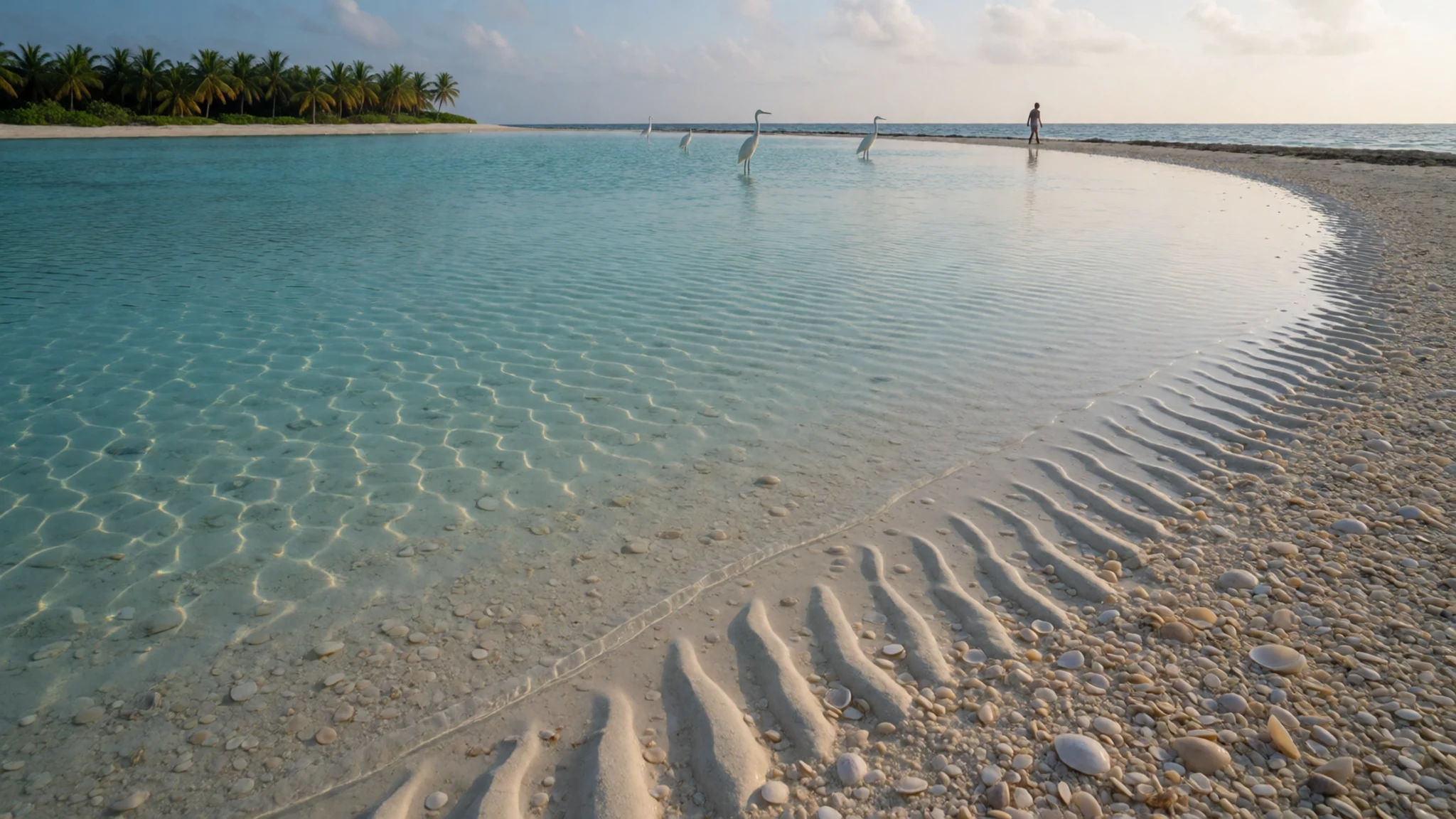
- The beaches — Shoreline around the island
Blue Lagoon Island's beaches are pale sand with palm shade behind and warm, shallow water in front. The spots near the landing fill first, so walking a few minutes along the shore usually finds more space. Cruise-ship days are busiest from late morning. A hat and reef-friendly sunscreen matter, because natural shade thins out fast around midday.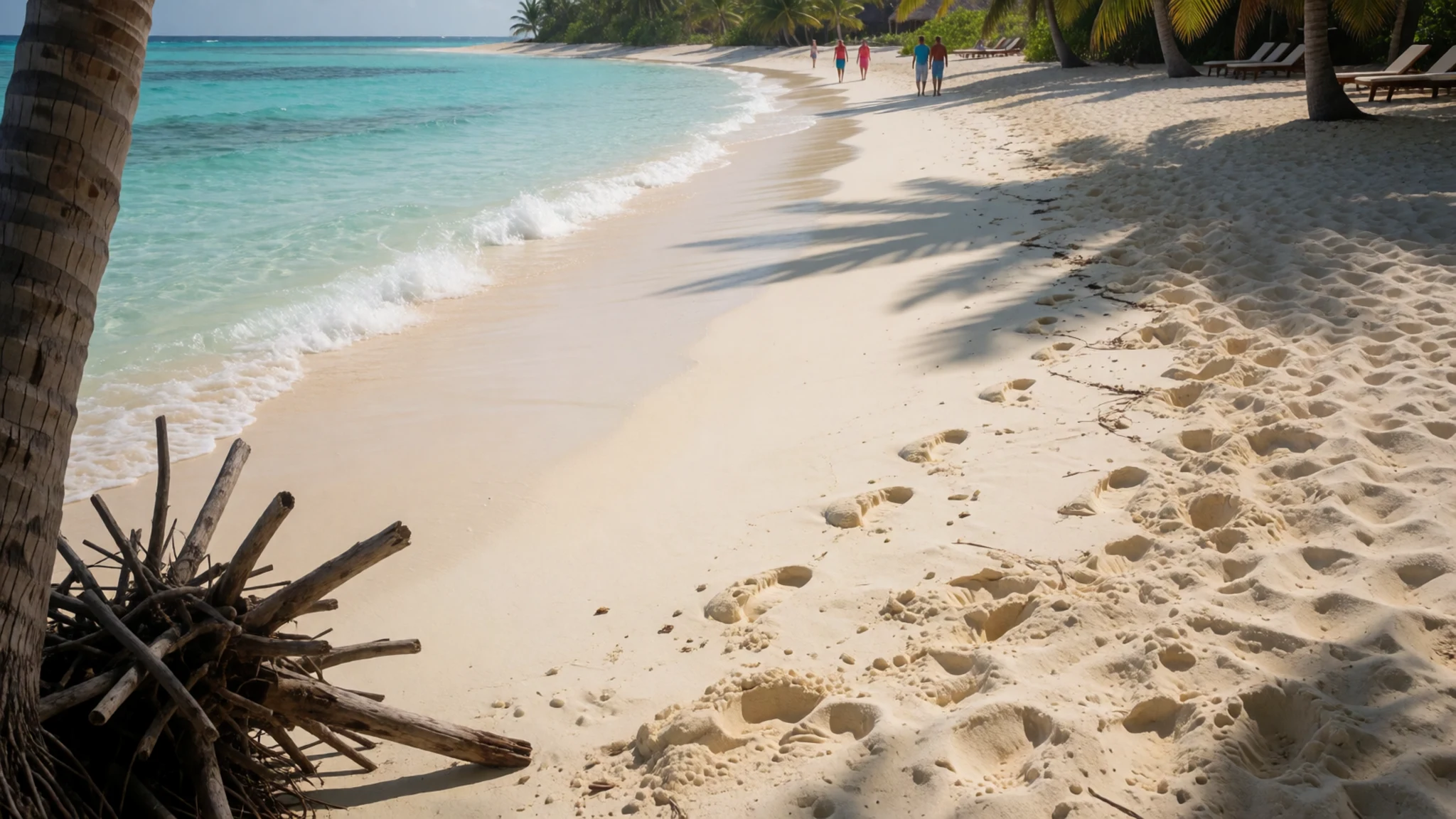
- The bridge at the 1991 breach — North-western corner of the lagoon
The bridge at the lagoon's north-western corner marks where a storm in 1991 split the island in two. It is a plain crossing rather than a spectacle, but it makes the island's history tangible: a small, low piece of land that the sea can reshape. Stopping mid-span gives a view of both halves.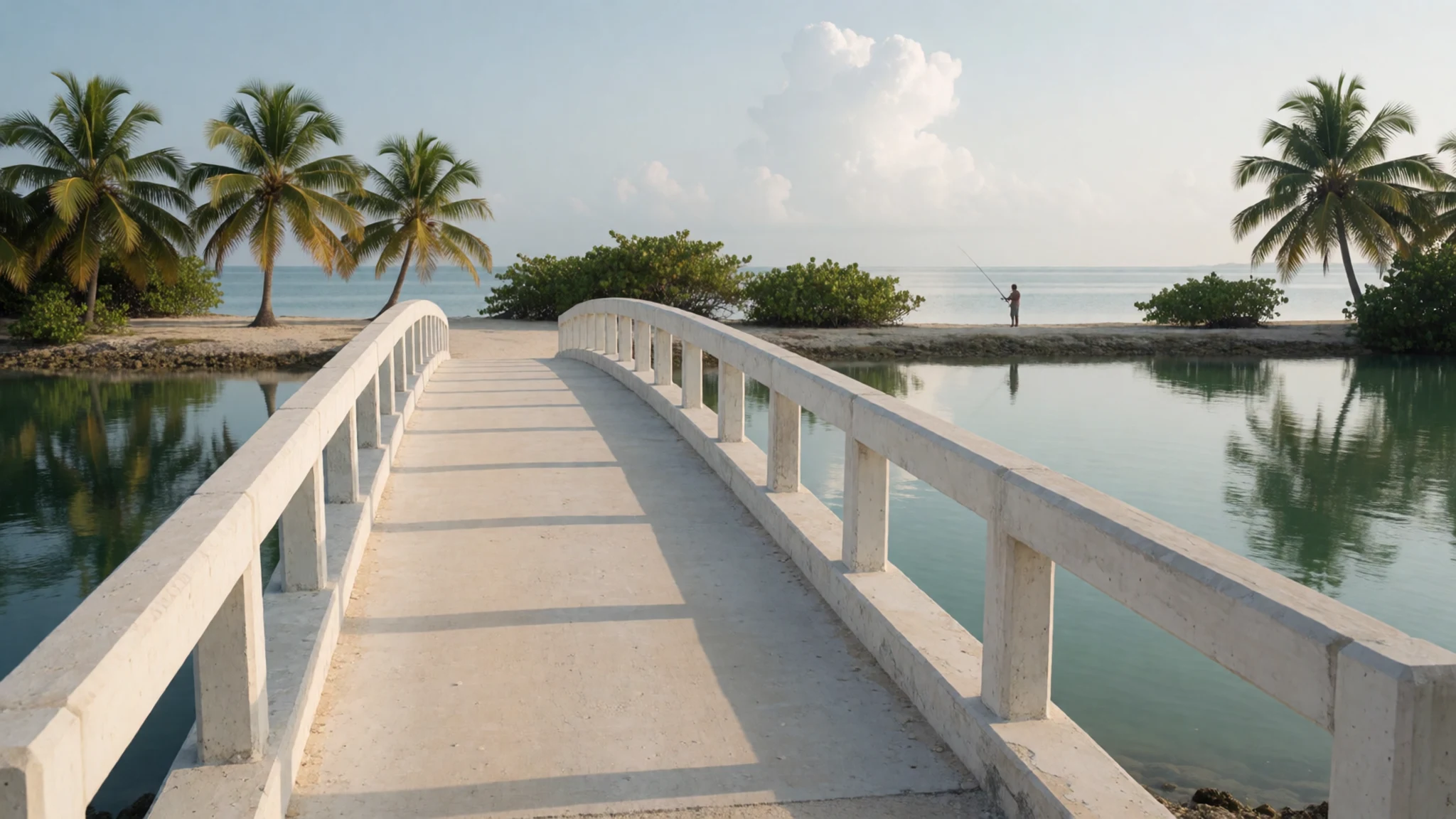
- Dolphin and sea-lion encounters — Operator-run areas of the lagoon
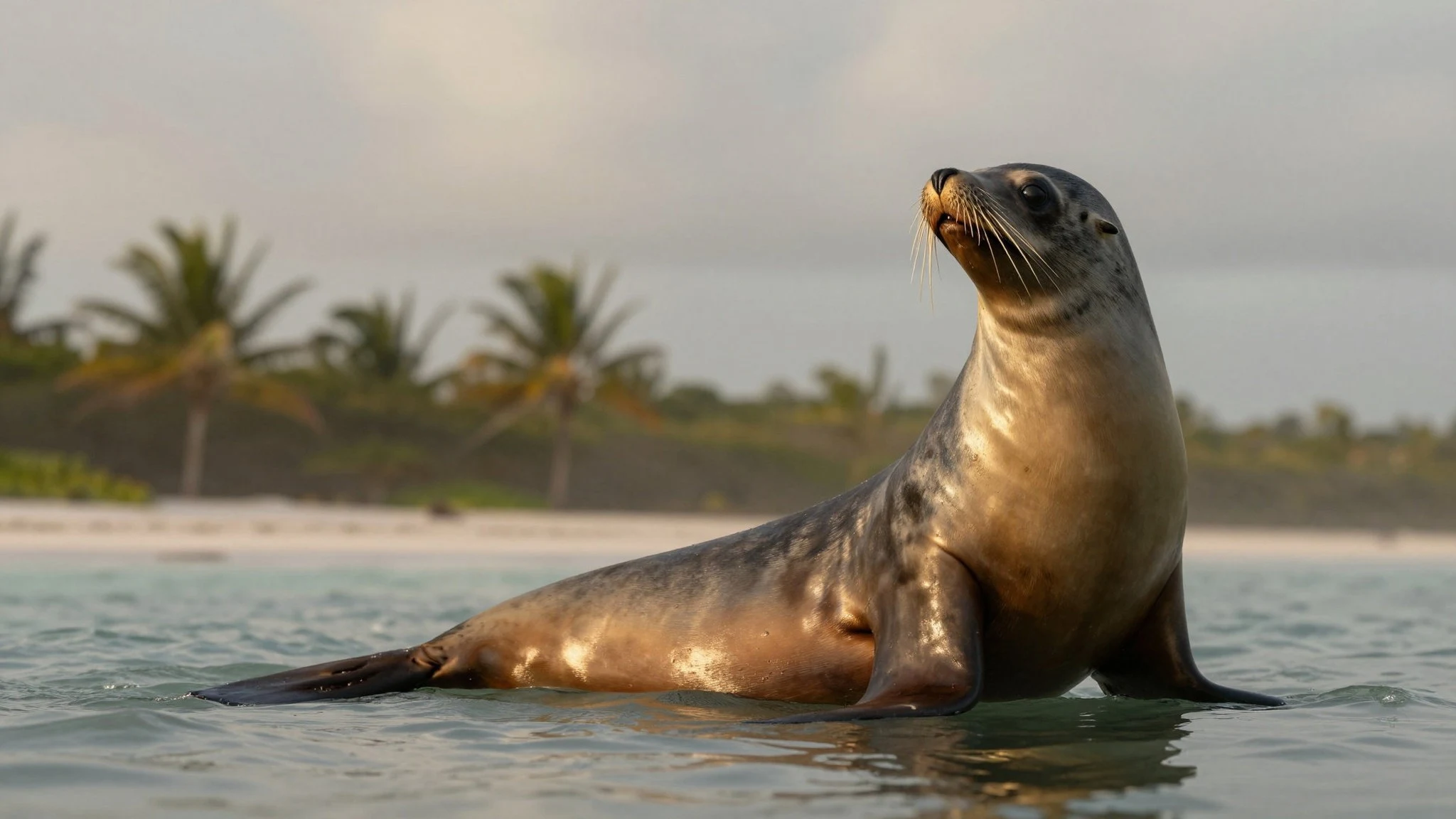
Marine-animal encounters are the main paid activity here, run by the island operator in the lagoon waters. Sessions are timed and taken in groups, so reserve ahead through the operator's official site and read its animal-welfare information first. Visitors who prefer not to take part can still swim, walk and rest on the beaches.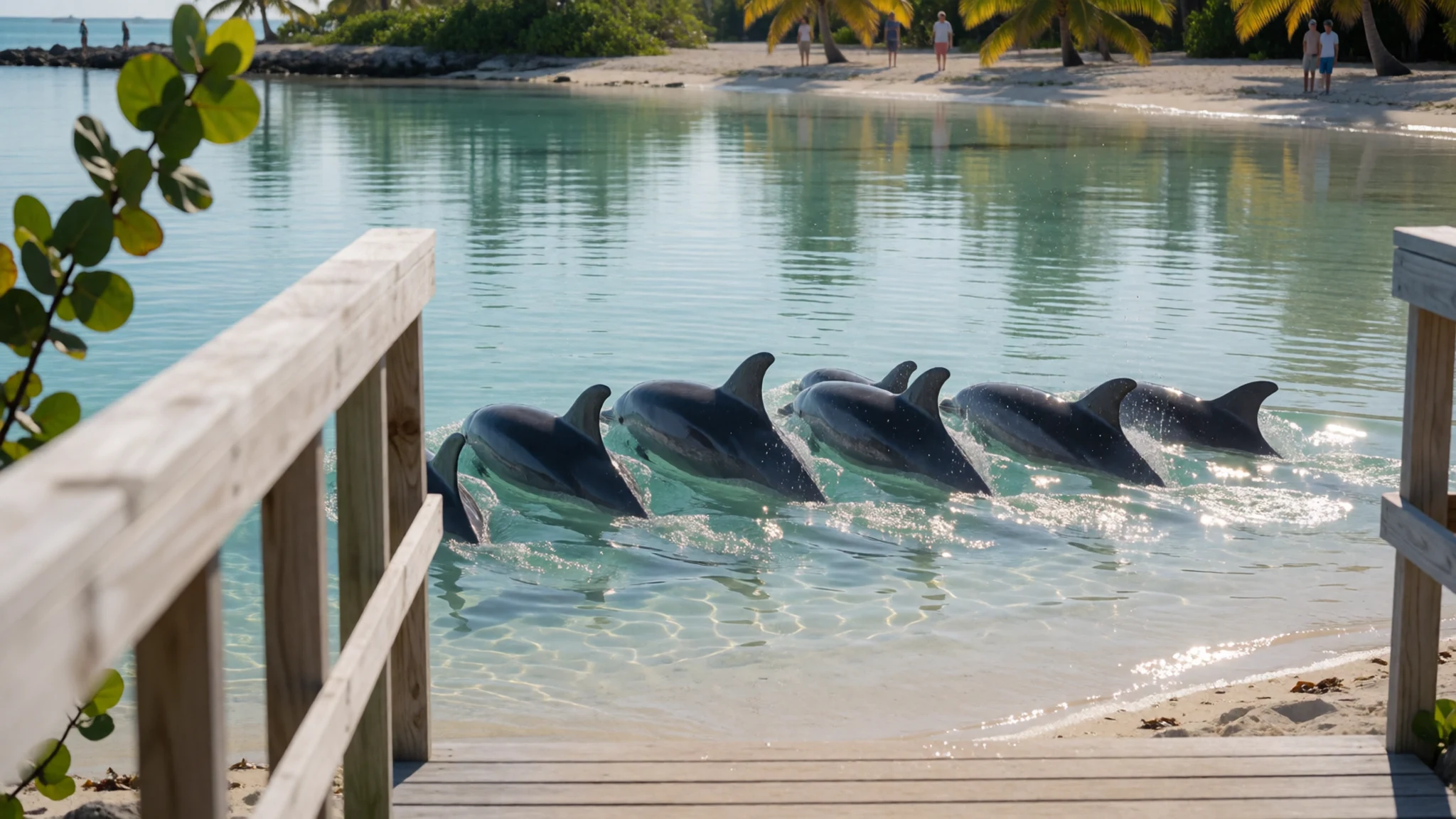
- The view back to Nassau — Southern shore and the boat crossing
From the island's shore, Nassau's skyline and harbour traffic sit on the horizon, a reminder of how close this quiet-feeling place is to the capital, about 5 km away. During the boat ride, cruise ships, ferries and small fishing boats cross the channel, and the water often deepens to a darker blue past the harbour mouth.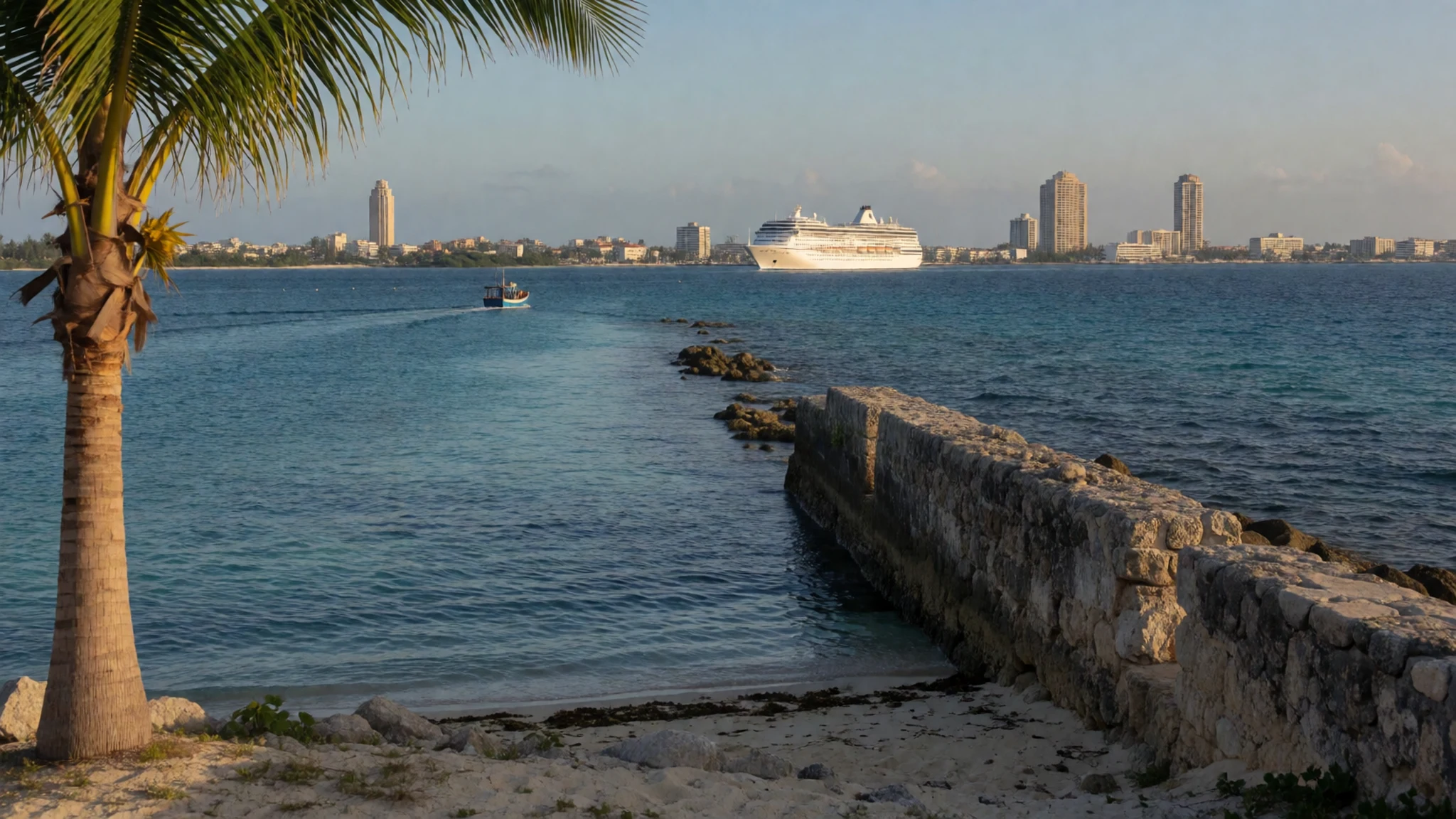
Culture
Blue Lagoon Island is a tourist site, so Bahamian culture shows up here in the staff, the music and the food more than in the place itself. The wider islands blend African, British and Caribbean threads, shaped by the colonial era and by independence from Britain afterwards. Junkanoo, the street parade of brass, cowbells, goatskin drums and huge paper costumes, is the clearest expression of that mix, and it takes over central Nassau around Boxing Day and New Year's Day. Rake-and-scrape, a folk music played on a saw, accordion and drum, can still be heard at local events, and goombay rhythms drift from beach bars on busy days. Church is central to community life, and Sunday mornings in Nassau are noticeably quiet, with many people dressed formally for services. Courtesy matters in daily dealings: a 'good morning' to a driver, shopkeeper or guide comes before any request, and skipping it can read as brusque. Tipping is customary for guides, drivers and beach staff, and some restaurant bills already include a service charge, so check the bill before adding more. The island's own history, from pirate anchorage to wartime training ground, tends to come up in guides' talk and is worth asking about. Greet staff and drivers with a 'good morning' or 'good afternoon' before asking for anything, and ask before photographing people, especially Junkanoo performers and market stallholders in Nassau.
What to wear
Traditional Bahamian dress is most visible at festivals and in craft. Junkanoo costumes are built from crepe paper, cardboard, glue and fringe, made over months by groups known as shacks and worn at the Boxing Day and New Year's Day parades. Straw work is the older everyday craft: palm fronds are plaited into hats, bags and baskets, sold at Nassau's Straw Market. Androsia, a batik cloth printed on cotton on Andros island, supplies the bright floral shirts and dresses seen across the islands. Day to day, Bahamians wear light cottons and linen, with smart clothes for church on Sundays, and short-sleeved Androsia shirts are common office wear in Nassau. Visitors to Blue Lagoon Island need swimwear, a cover-up, a wide-brimmed hat, sunglasses and reef-friendly sunscreen. Water shoes help on rocky edges and hot sand. In Nassau's streets, shops and restaurants, swimwear should be covered with a shirt or wrap, and a church service calls for covered shoulders and knees. A light rain jacket earns its space in summer, and a thin layer helps on winter evenings near the water. Quick-drying fabrics beat denim in the humidity.
What to eat
- Conch salad — Seafood stalls at Arawak Cay, Nassau
Raw conch cut small and mixed to order with onion, tomato, sweet pepper and citrus juice. It is sharp, fresh and slightly chewy, and it is the Bahamian dish most worth trying first. Watch it being made so the conch stays firm.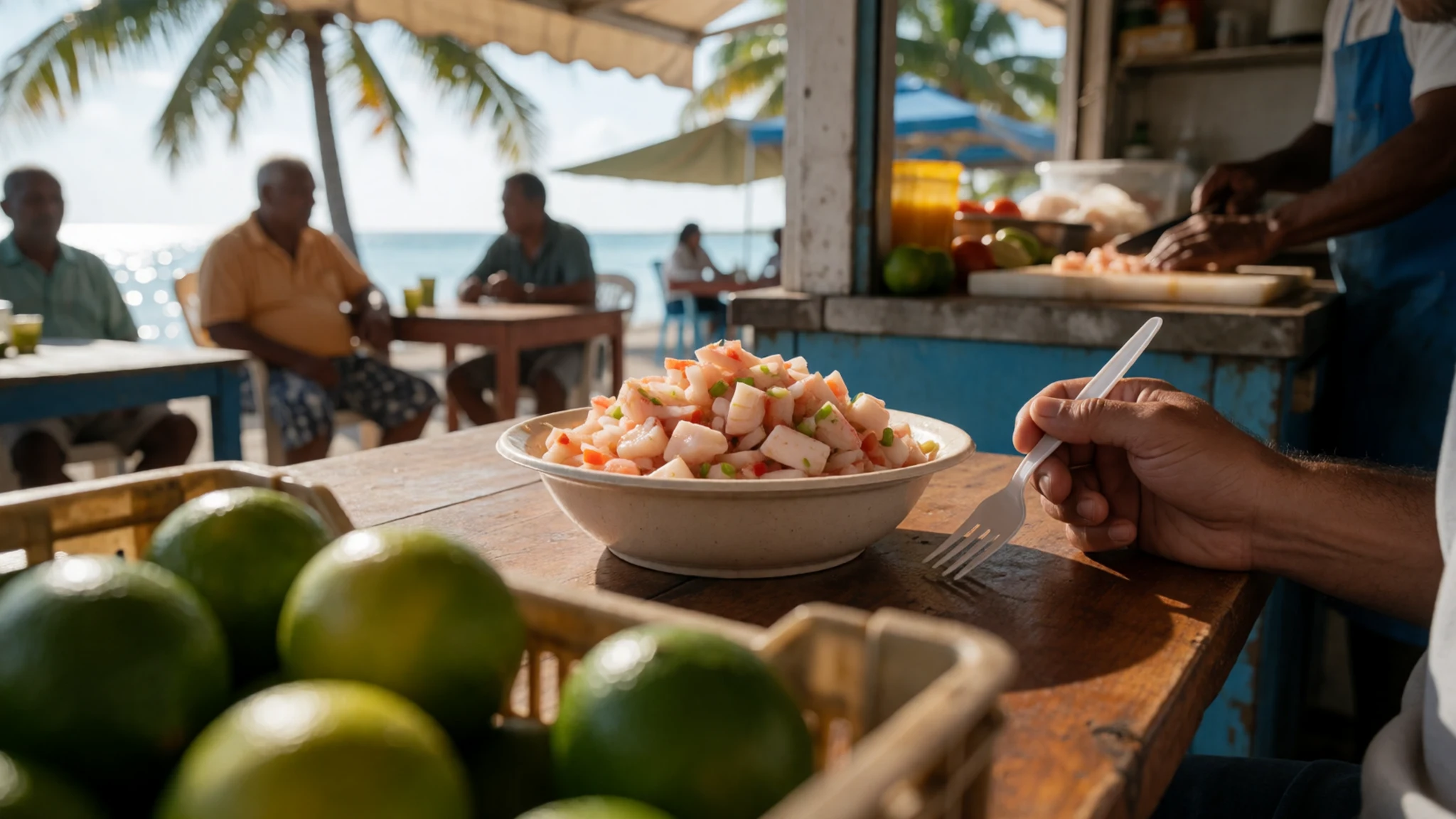
- Cracked conch — Casual seafood shacks and the Arawak Cay stalls
Conch pounded thin, battered and deep-fried until golden, usually served with lime and a spicy dipping sauce. It is richer and more filling than the salad, and a good choice for anyone wary of raw seafood.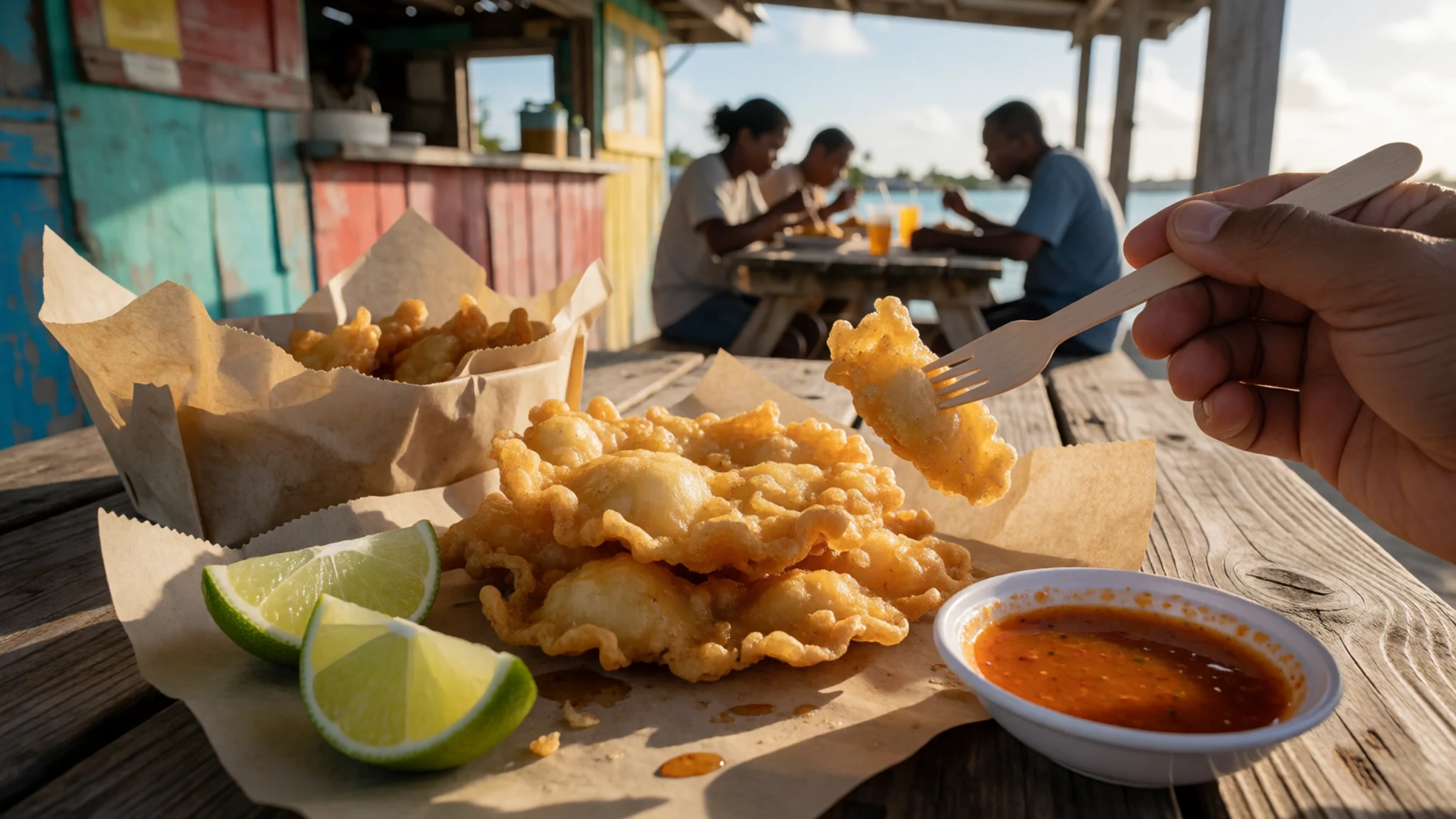
- Conch fritters — Beach cafés and roadside eateries around Nassau
Small, crisp balls of batter studded with chopped conch, onion and pepper, eaten hot with a tangy sauce. They suit sharing as a snack with a cold drink, and the quality depends on frying to order. - Peas 'n' rice — Local eateries serving a 'plate lunch' in Nassau
Rice cooked with pigeon peas, tomato, onion, thyme and sometimes salt pork, until the grains take on a savoury, slightly smoky depth. It comes alongside almost every plate of fried fish, chicken or stew. - Guava duff — Traditional Bahamian restaurants and bakeries in Nassau
A rolled, boiled pudding of soft dough filled with guava paste, sliced and served with a warm, buttery rum sauce. It is sweet and heavy, and traditionally a Sunday-meal dessert in Bahamian homes.
Plan it
Best time. December to May is the best window: drier, sunnier and less humid, with a warm sea. June to November is hurricane season, with heavy showers, high humidity and boat trips cancelled when the weather turns.
How long. 1
Getting there. Fly to Lynden Pindling International Airport in Nassau, then take a taxi to the harbour area and a boat across to the island; many visitors book the boat as part of an excursion with the operator.
Budget. mid
Tips
- Book the crossing and any animal encounter ahead through the operator's official site, since slots are limited
- Go on the earliest boat to enjoy the beaches before cruise-ship crowds arrive
- Carry small notes for tips to guides, drivers and beach staff
- Bring water, a hat and plenty of sunscreen, as shade thins out around midday
- Check the weather and the operator's cancellation policy before travelling in summer or autumn
Etiquette
- Greet staff and drivers before making any request
- Follow the animal handlers' instructions and do not touch marine animals unless invited
- Cover swimwear when leaving the beach for shops or restaurants in Nassau
Nearby
Sources
- Wikidata Q4929318 (CC0)
- Wikipedia — Blue Lagoon Island (rev 1366623496) (CC BY-SA 4.0)
- Wikivoyage — Nassau (CC BY-SA 4.0)
- Photo: Aerial Shot of Blue Lagoon Island — Dolphins (CC BY 3.0)
- Photo: map of east part of New Providence Island, Bahamas — Ordnance Survey (Public domain)
- Photo: Beach during cruise to Bahamas in June 2018 (2331) — Gregory Varnum (CC BY-SA 4.0)
- Photo: Beach during cruise to Bahamas in June 2018 (2333) — Gregory Varnum (CC BY-SA 4.0)
- Photo: Beach during cruise to Bahamas in June 2018 (2339) — Gregory Varnum (CC BY-SA 4.0)
- Photo: Beach during cruise to Bahamas in June 2018 (2342) — Gregory Varnum (CC BY-SA 4.0)
- Photo: Beach during cruise to Bahamas in June 2018 (2344) — Gregory Varnum (CC BY-SA 4.0)
- Photo: Beach during cruise to Bahamas in June 2018 (2389) — Gregory Varnum (CC BY-SA 4.0)


Wildlife
- Bottlenose dolphin (animal)
The common bottlenose dolphin, sometimes called the Atlantic bottlenose, is a sea mammal that belongs to a family of cousins sharing one genus name, Tursiops. Here at Blue Lagoon Island you meet it in the lagoon waters, through the encounters the island operator runs, which are the main paid activity. Nothing in our notes says which season or hour is best, so ask your guide. Stay with the guides, keep calm and quiet, give it space, and never feed it.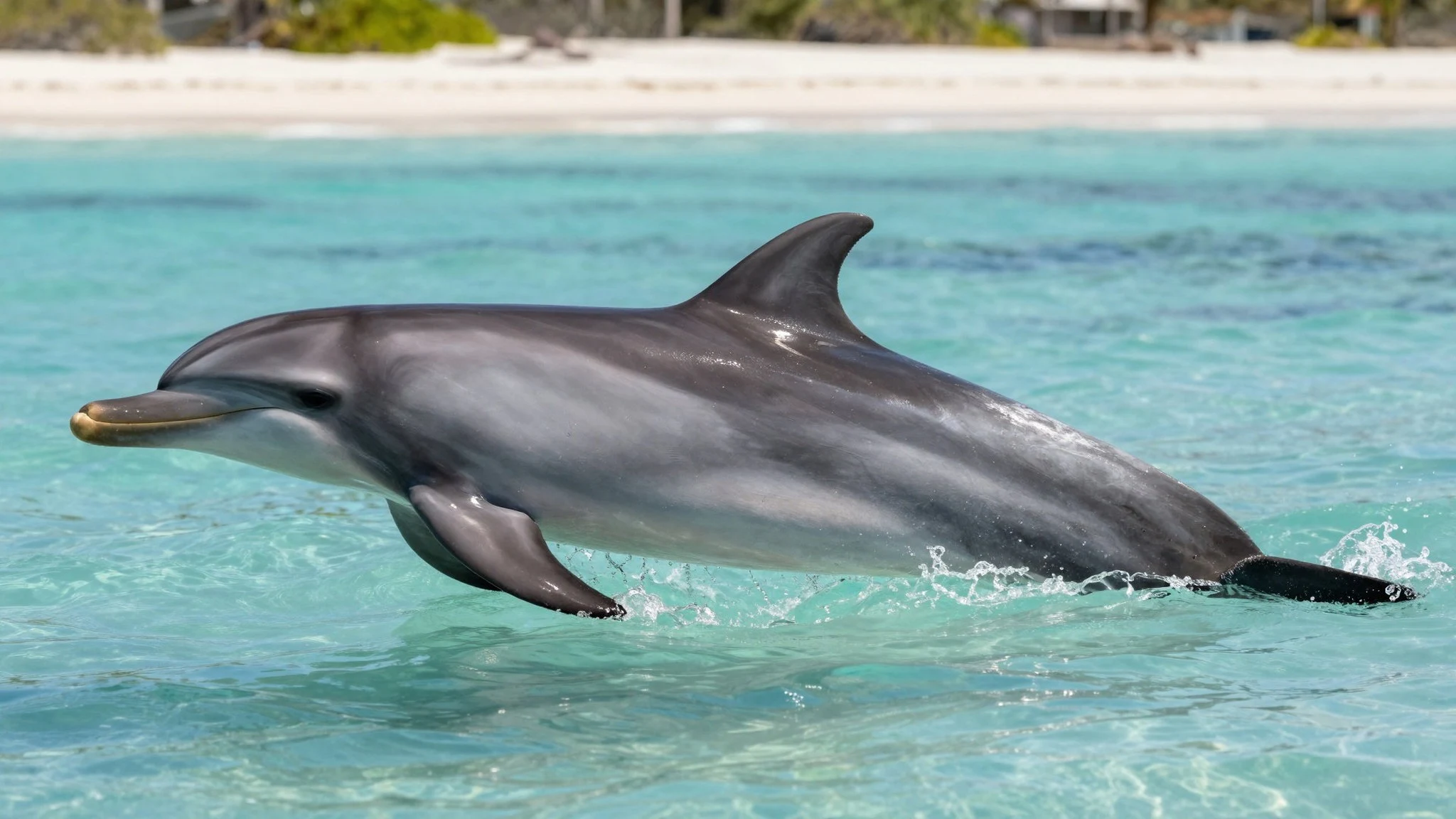
- Sea lion (animal)
The California sea lion is a seal with ear flaps, a swimmer whose males grow bigger and thicker-necked than the females. Its home is the western coast of North America, but at Blue Lagoon Island you meet it in the lagoon, in encounters led by the island operator. The notes give no season or time of day. Watch with a guide, keep your voice low, stay back from it, and never feed it, for it hunts its own fish and squid.