Conception Island
Conception Island, The Bahamas
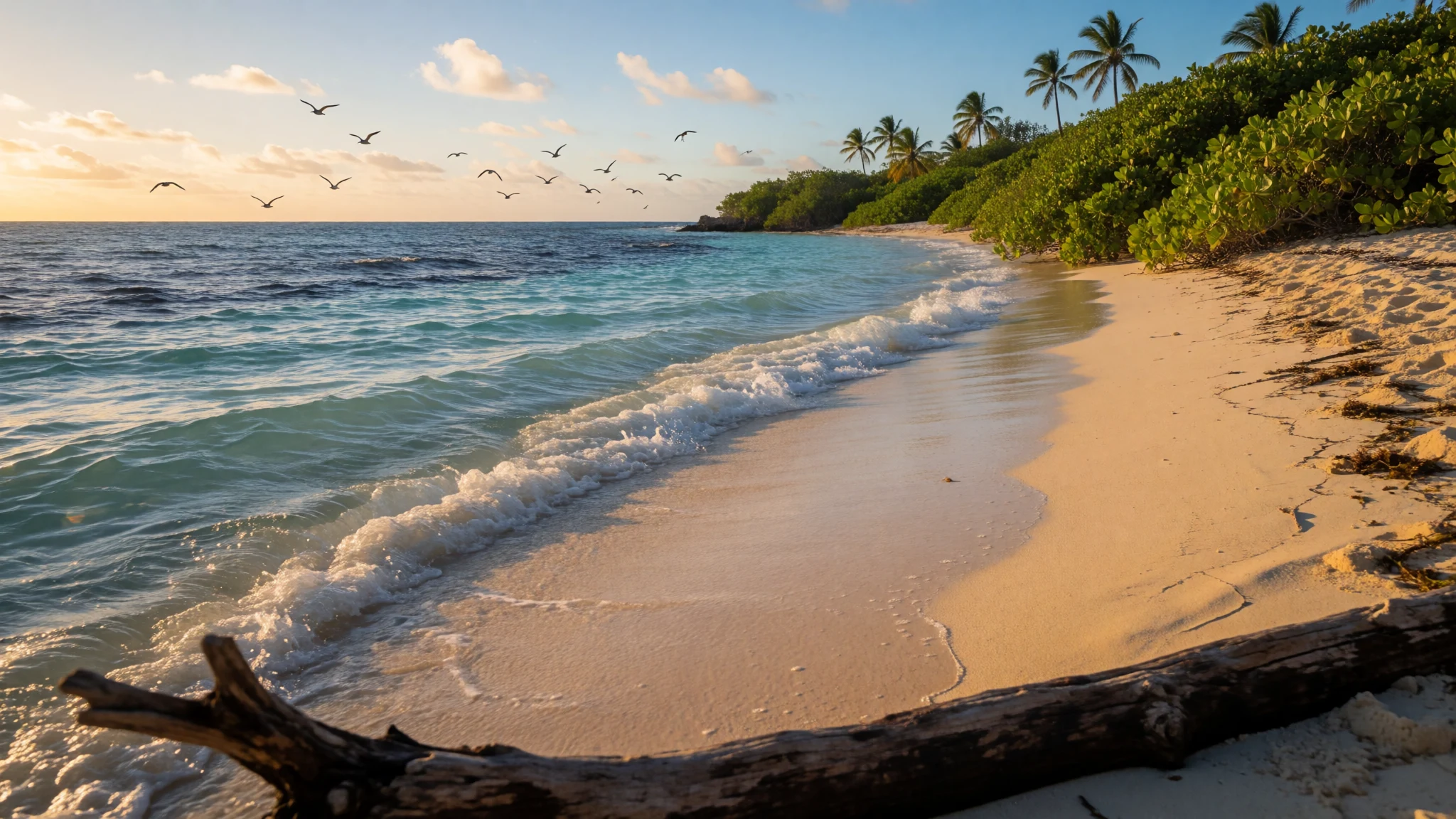
Conception Island is an uninhabited national park in the Bahamas, where turtles hatch, seabirds nest and the only way in is by boat.
The place
Conception Island lies in the central Bahamas, set between Cat Island and Rum Cay on a shallow shelf of seabed known as Conception Bank. It is the biggest island on that bank, and smaller islets are scattered around it: Booby Cay off the north-east, the South Rocks off the south-east, and a handful of other cays beyond. Nobody lives here. The whole island is a national park, protected for its wildlife rather than for visitors. Seabirds use it as a nesting colony, green turtles hatch on its beaches, and a snake known only from this bank, the Conception Bank silver boa, lives in the scrub. The land is low, with no hills worth the name, so from a boat the island shows as a thin green line resting on very pale water. Inside, a salty bay called Conception Creek cuts into the middle, and a group of brackish ponds lies in the north. These wet places are quiet and sheltered, and they matter more to the island's animals than any beach does. There is no village, no shop, no built landing and no drinking water on offer, so a trip here is a boat day or an anchored stay arranged from somewhere else, such as Cat Island or Rum Cay. Sun and wind exposure are real, and the weather decides everything. On a calm day the colour of the water is the draw. On a rough one, nobody lands.
Its story
Conception Island has no settlement history to tell, because nobody has ever lived there for long. What it has is a debate. When Columbus crossed the Atlantic and first came ashore in the New World, he landed on an island that the local Taíno people called Guanahani. The original log of the voyage survives only as a later summary, so historians have spent generations laying its descriptions against real Bahamian coastlines to decide which island he meant. The answer given in most accounts is San Salvador, which was renamed in the twentieth century to match. Other candidates include Samana Cay, Cat Island and Grand Turk. Rupert Gould and Steven Mitchell have argued that Conception Island is the one, noting that the log's descriptions of a reef, an inner lagoon and a low green shore match the island's actual shape. Most specialists remain unconvinced, and digging cannot close the argument, because no landing party left anything that has turned up. Whatever the verdict, the island's own story is older and quieter than any ship. A low platform of limestone, ringed by shallows, has served as a nesting and hatching ground for far longer than there have been maps. In modern times the Bahamas has put that function first, and the island is now run as a national park, left empty so that the birds, the turtles and the Conception Bank silver boa can carry on undisturbed.
What to see
- Conception Creek — Central bay of the island
Conception Creek is the salty bay that cuts into the middle of Conception Island. It is shallow and sheltered, so it is usually calmer than the open coast, and a small boat or kayak is the way to see it. Go on a quiet morning, keep engines slow and let the birds along the margins stay put.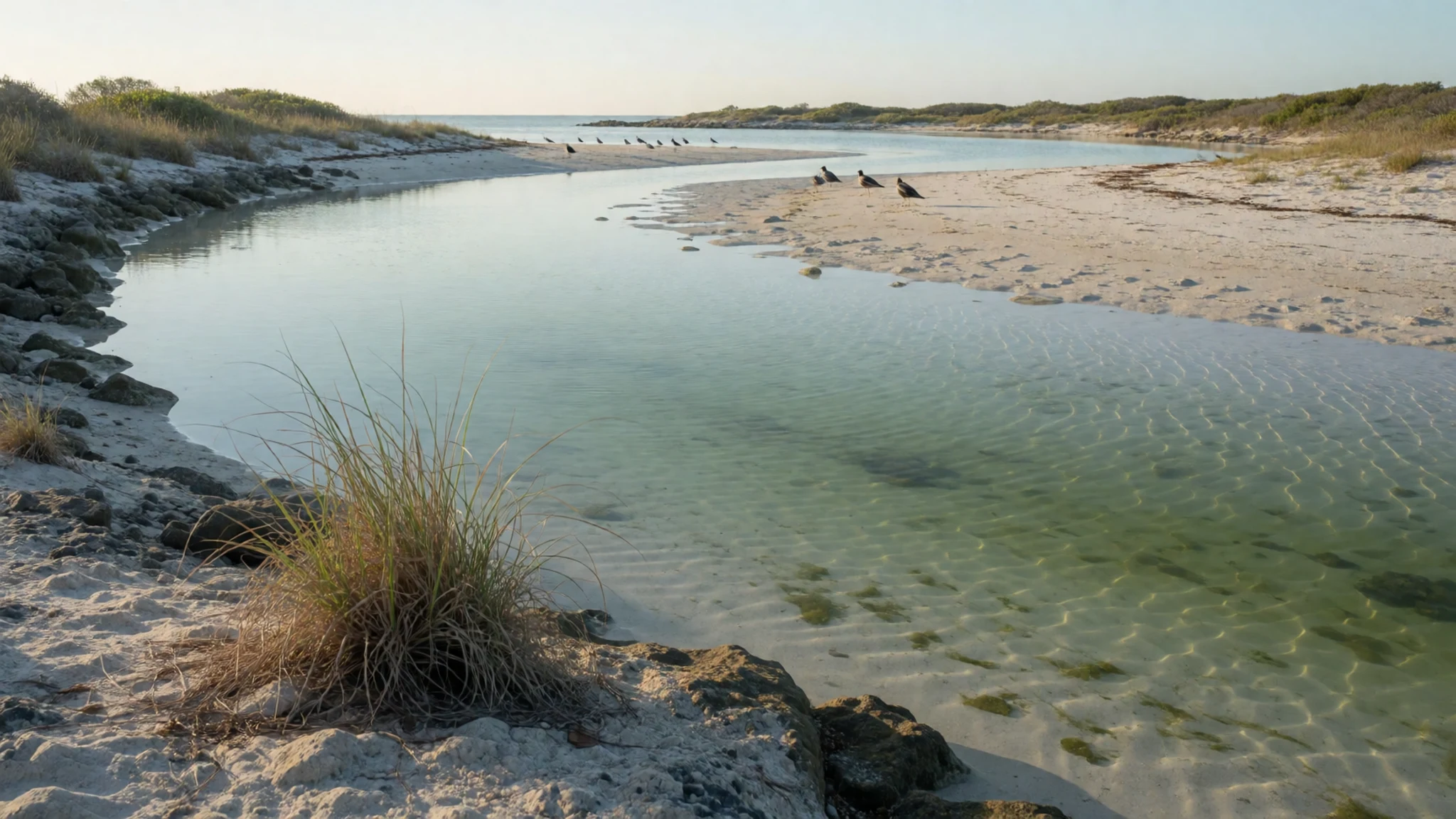
- The northern ponds — Northern part of the island
A string of brackish ponds lies in the northern part of Conception Island, set back from the sea. They are wildlife habitat rather than a walk, and the national park exists to keep them undisturbed. Look from the edge, bring binoculars, and do not push into the scrub, where nesting birds and the silver boa live.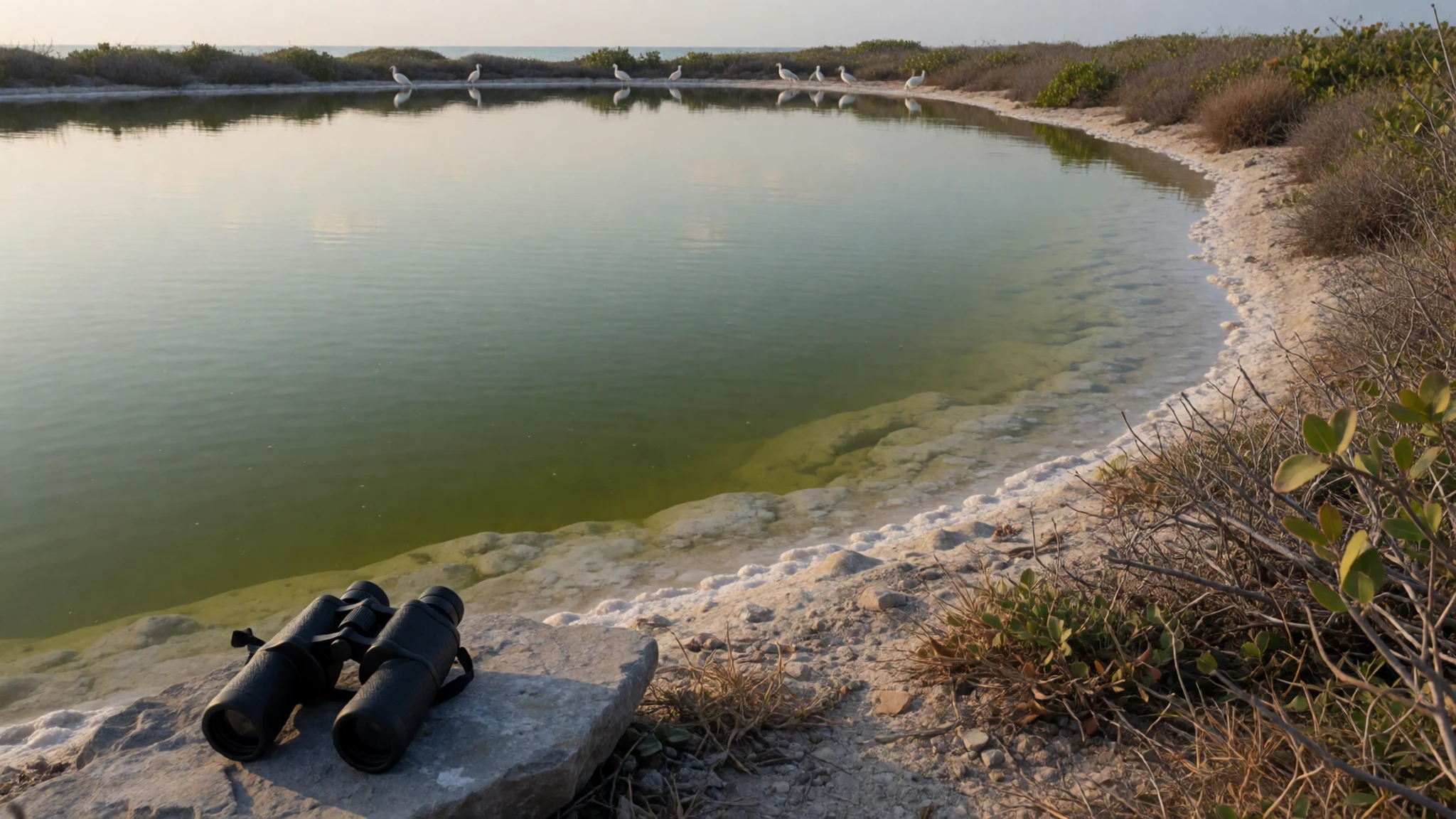
- The nesting beaches — Shoreline of the island
The sandy shores of Conception Island are where green turtles come to lay and hatch, and where seabirds nest in the vegetation behind. Stay below the high-tide line and keep to ground already trodden. Ask the boat captain or the Bahamas National Trust which stretches are off limits in the season you visit.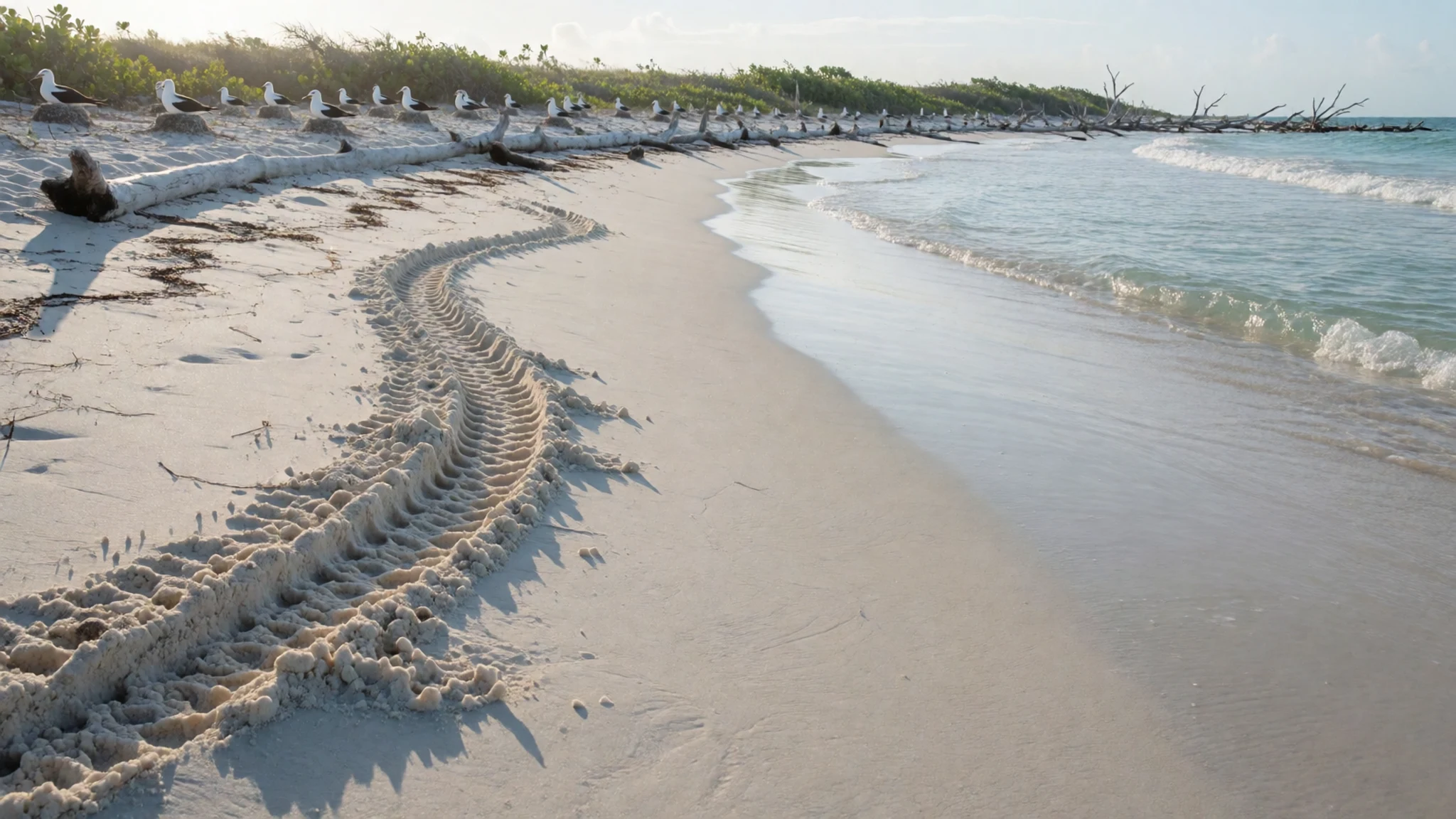
- Booby Cay and the South Rocks — Edges of Conception Bank
Booby Cay lies off the north-eastern end of Conception Island, and the South Rocks sit to the south-east. Both are small, rocky and best seen from the water, since seabirds use them and surf can make landing awkward. A calm day and a captain who knows the bank make this a short, scenic circuit.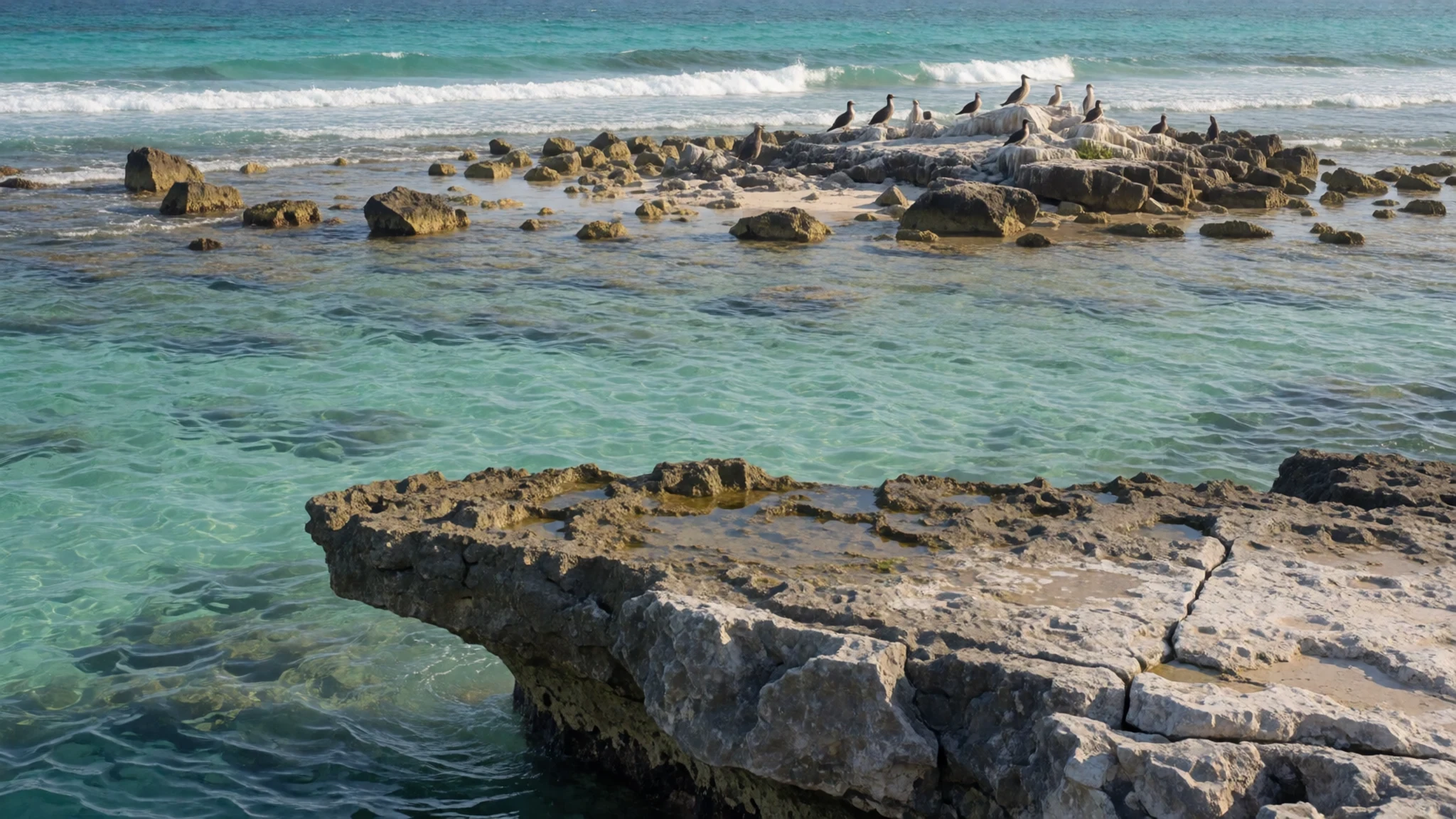
- The bank from the air — Central Bahamas
Conception Bank is easiest to grasp from above. Pale shallows spread around the island and the dark water of deeper channels begins at their edge, a pattern that shows clearly in satellite pictures of the Bahamas. A window seat on a domestic flight in the islands gives a taste of the same view.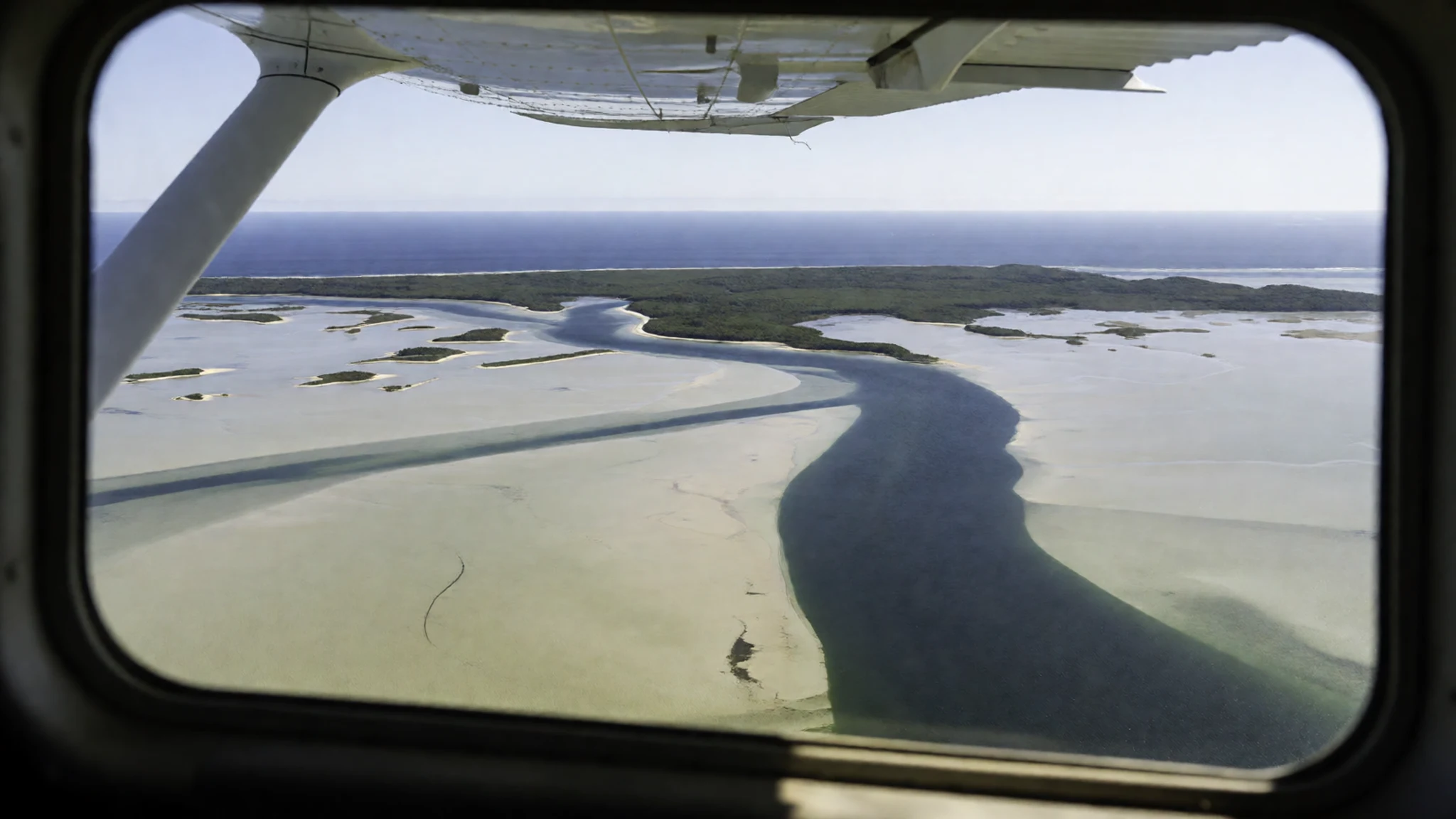
Culture
Conception Island has no culture of its own to observe, since nobody lives there, so its character comes from the Out Island communities around it and from the sea. Cat Island and Rum Cay, the nearest inhabited neighbours, are small, close-knit places where boats, fishing and church life shape the week, and where a greeting is expected before any request. Visitors who hire a local captain will find that the day follows weather and tide rather than a timetable, and that conversation on board is part of the service. Bahamian life has long depended on the shallows: conch, crawfish and reef fish feed families, and wooden sailing sloops carried goods between islands before roads and airstrips did. On Conception itself the relevant culture is conservation. The park exists because seabirds nest here and turtles hatch here, and the Bahamas National Trust, which looks after the national parks, expects visitors to behave as guests of those animals. Anchoring, landing and walking inland are all worth checking with a local operator beforehand. A calm manner, low voices and a willingness to turn back if birds take alarm are part of good manners here. Take all rubbish back to the boat, keep well away from nests and turtle tracks, and leave shells, coral and eggs exactly where they lie.
What to wear
Conception Island has no dress of its own, so the clothing story belongs to the wider Bahamas. The best-known traditional costume is the Junkanoo outfit, built from crepe paper, cardboard, foam and feathers, then fringed and glued into huge shimmering shapes for the parades on Boxing Day and New Year's Day. Everyday heritage is plainer: plaited palm straw, made into hats, bags and mats on the Out Islands, and bright cotton prints such as the batik called Androsia, which comes from Andros. What people wear now is light and practical: cotton shirts, shorts, sundresses, flip-flops and a hat, with a smarter shirt or dress for church on Sunday and for dinner in the larger settlements. Boat crews favour long-sleeved sun shirts and caps. For a visit, wear quick-drying clothes with a swimsuit underneath, a wide-brimmed hat, sunglasses and a long-sleeved UV shirt, because the island offers almost no shade and the water throws the sun back at you. Bring reef-safe sunscreen, and water shoes for rocky landings and shallow creeks; footwear that can get wet and be rinsed matters more than style. There are no religious sites here, but cover up with a shirt or wrap when walking through settlements on Cat Island or in Nassau, where swimwear looks out of place in shops and eateries. A light windproof layer helps on the crossing, when spray and breeze can chill even in the warm months.
What to eat
- Conch salad — Waterfront stands and harbours in Nassau and Out Island settlements such as those on Cat Island
Raw conch chopped with onion, tomato, pepper and citrus juice, mixed to order. It is the Bahamas' signature snack and tastes best eaten within minutes, standing by the water. Expect it with a little heat, and ask for the pepper on the side if unsure.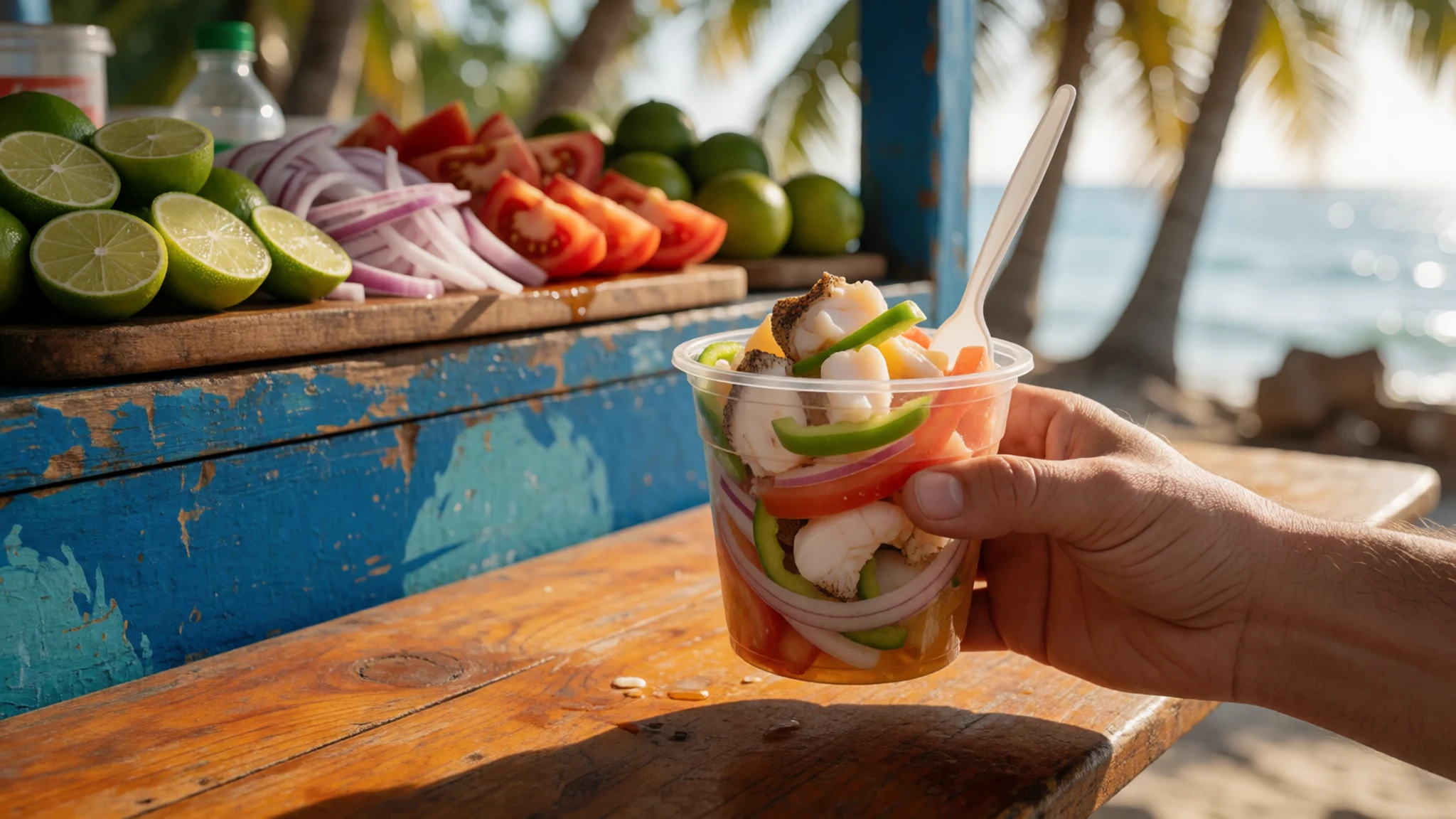
- Cracked conch — Fish fry spots and small local eateries in Nassau and the larger Out Island settlements
Conch meat tenderised, coated in a seasoned batter and fried until crisp, usually served with a squeeze of lime and a side of fries or rice. It is rich and filling, a good lunch after a long morning on a boat.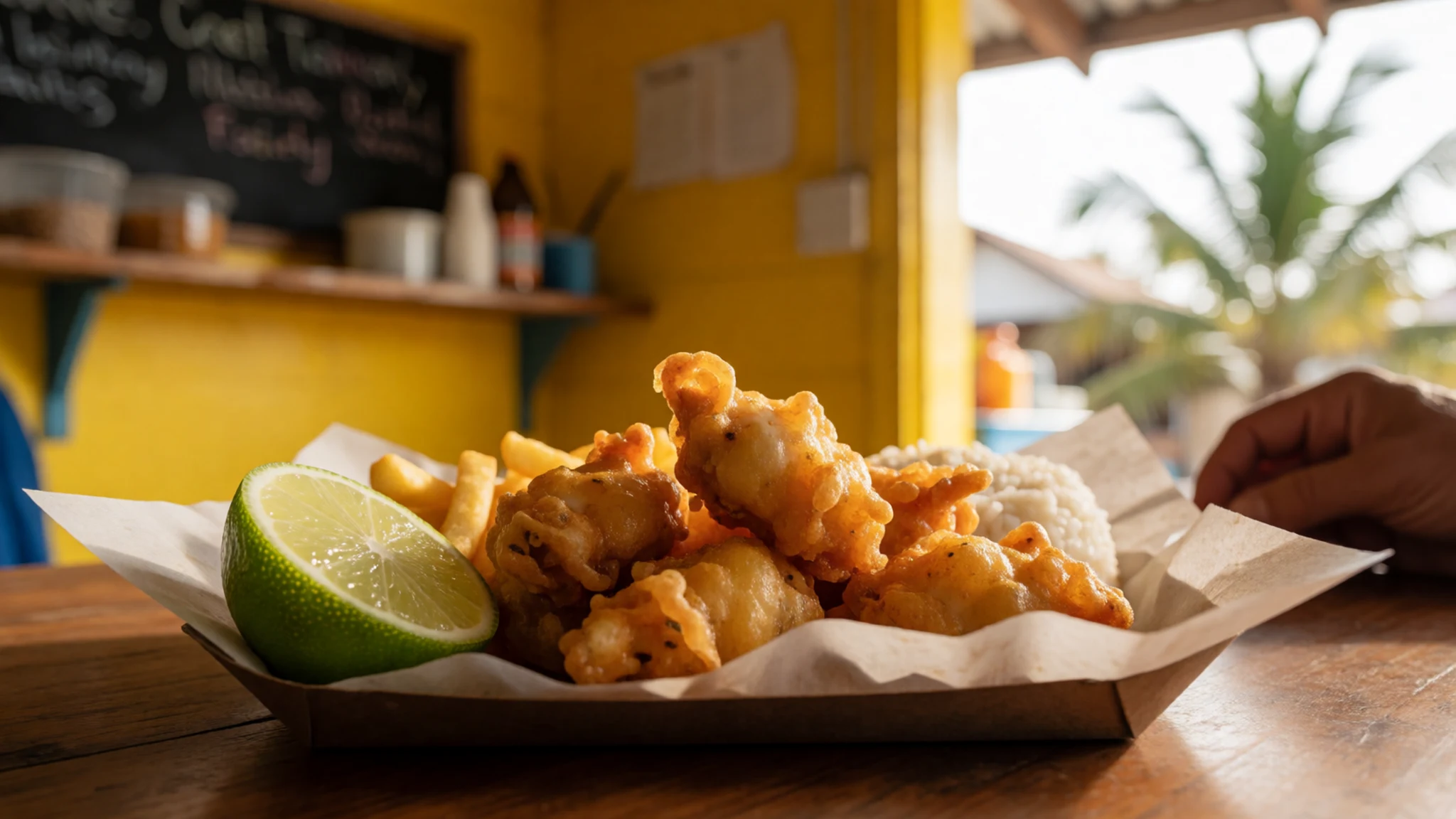
- Grilled or steamed snapper — Small settlement eateries and harbourside kitchens near the boat landings
Whole reef fish cooked with onion, sweet pepper and thyme, either grilled over a fire or steamed in a light broth. Portions are generous and the fish is often caught that morning, so what is on offer depends on the day's catch. - Peas and rice — Home-style eateries and church-day lunches across the islands
Pigeon peas cooked with rice, tomato, onion and thyme until the grains turn soft and savoury. It is the standard side dish with fish, chicken or conch, and a fixture of Sunday lunch in family homes and local restaurants. - Guava duff — Local bakeries and traditional restaurants in Nassau and the Out Islands
A rolled, boiled pudding filled with guava and served warm with a sweet, buttery sauce, often laced with rum. It is soft, sticky and unashamedly heavy, and local bakers tend to make it for celebrations as well as for visitors.
Plan it
Best time. March to May, when the weather is warm and mostly dry and the sea is often calm enough to land. Hurricane season runs from June to November, so those months carry the most risk of cancelled boats. Winter cold fronts can bring wind and chop.
How long. 1–2
Getting there. Fly to Nassau, then take a domestic flight to Cat Island or Rum Cay, and arrange a boat from there; private yacht charters are the other way in. The last leg is always by sea, and the crossing depends on weather, so confirm with a local operator.
Budget. high
Tips
- Book the boat and captain well ahead, and keep a spare day in case weather cancels the crossing
- Bring all water, food, sun protection and a first-aid kit, because the island has no facilities
- Carry cash for fuel, supplies and tips in the Out Island settlements, where cards are not always accepted
- Ask the operator or the Bahamas National Trust about current park rules before you land
- Start early, since mornings are calmer and cooler and wildlife is more active
Etiquette
- Take every piece of rubbish back to the boat
- Keep clear of nests, turtle tracks and the vegetation behind the beach
- Greet your captain and local hosts before getting down to business
Nearby
Sources
- Wikidata Q5158415 (CC0)
- Wikipedia: Conception Island, Bahamas (rev 1363906759) (CC BY-SA 4.0)
- Wikivoyage: The Bahamas (CC BY-SA 4.0)
- View of The Bahamas taken during ISS Expedition 11, Earth Science and Remote Sensing Unit, Lyndon B. Johnson Space Center, via Wikimedia Commons (Public domain)

Wildlife
- Green turtle (animal)
The green turtle is a large sea turtle that eats only seagrass. Its name comes from the green fat beneath its shell, not from its olive-to-black back. On Conception Island, baby turtles hatch on the beaches. The notes give no season or time of day, so ask your guide when your visit is likely to be best. Watch from a respectful distance, keep your voice low and your movements slow, and never feed or touch these gentle grazers.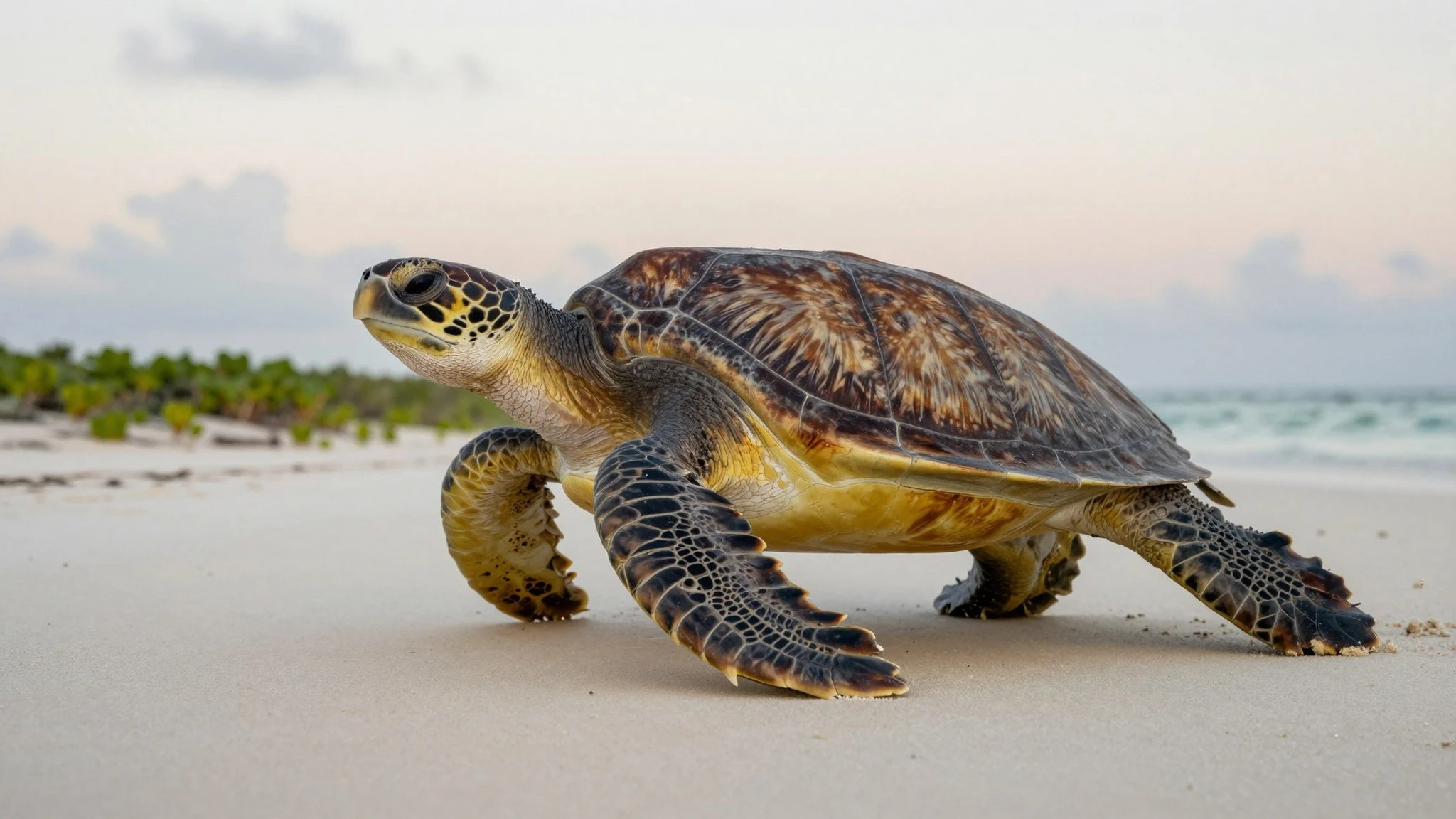
- Conception bank silver boa (animal)
The Conception Bank silver boa is a snake that lives nowhere else in the world except on this one bank, so meeting one is a rare treat. On Conception Island it makes its home in the scrub. The notes say nothing about season or time of day, so ask a local guide when to look. Stay well back, keep quiet and still, and never feed or handle it, however calm it seems.