Bimini
Bimini, The Bahamas
Bimini is a low, narrow chain of Bahamian islands just across the water from Florida, known for fishing, clear shallows and Hemingway's haunts.
The place
Bimini is the westernmost district of the Bahamas, a string of low islands about 80 km east of Miami. That makes it the part of the country closest to the American mainland, and the proximity shapes everything: the visiting boats, the weekend trade, the anglers who arrive from Florida in their own vessels. The district's main islands are North Bimini, South Bimini and East Bimini, with smaller cays such as Gun Cay and the Cat Cays scattered around them. North Bimini is about 11 km long and only 200 m wide, so water is in sight from almost anywhere on it. Alice Town, its main settlement, is a ribbon of shops, eateries and bars strung along the King's Highway, with the Queen's Highway running parallel behind. South Bimini is calmer. It has the airstrip, a small cluster of homes called Port Royale, and a marina, and it suits people who want less bustle than Alice Town offers. The district has 2,361 residents, and the land rises only about 11 m at its highest, so the sea is never far from the conversation. Nassau lies roughly 210 km away, and the district also includes the Cay Sal Bank, more than 100 km to the south, which is geographically separate from the Bimini chain. Seasons here run against the usual Bahamas pattern: visitors come mostly from April to July, when the seas are calm enough for fishing and diving, and the party scene is liveliest then.
Its story
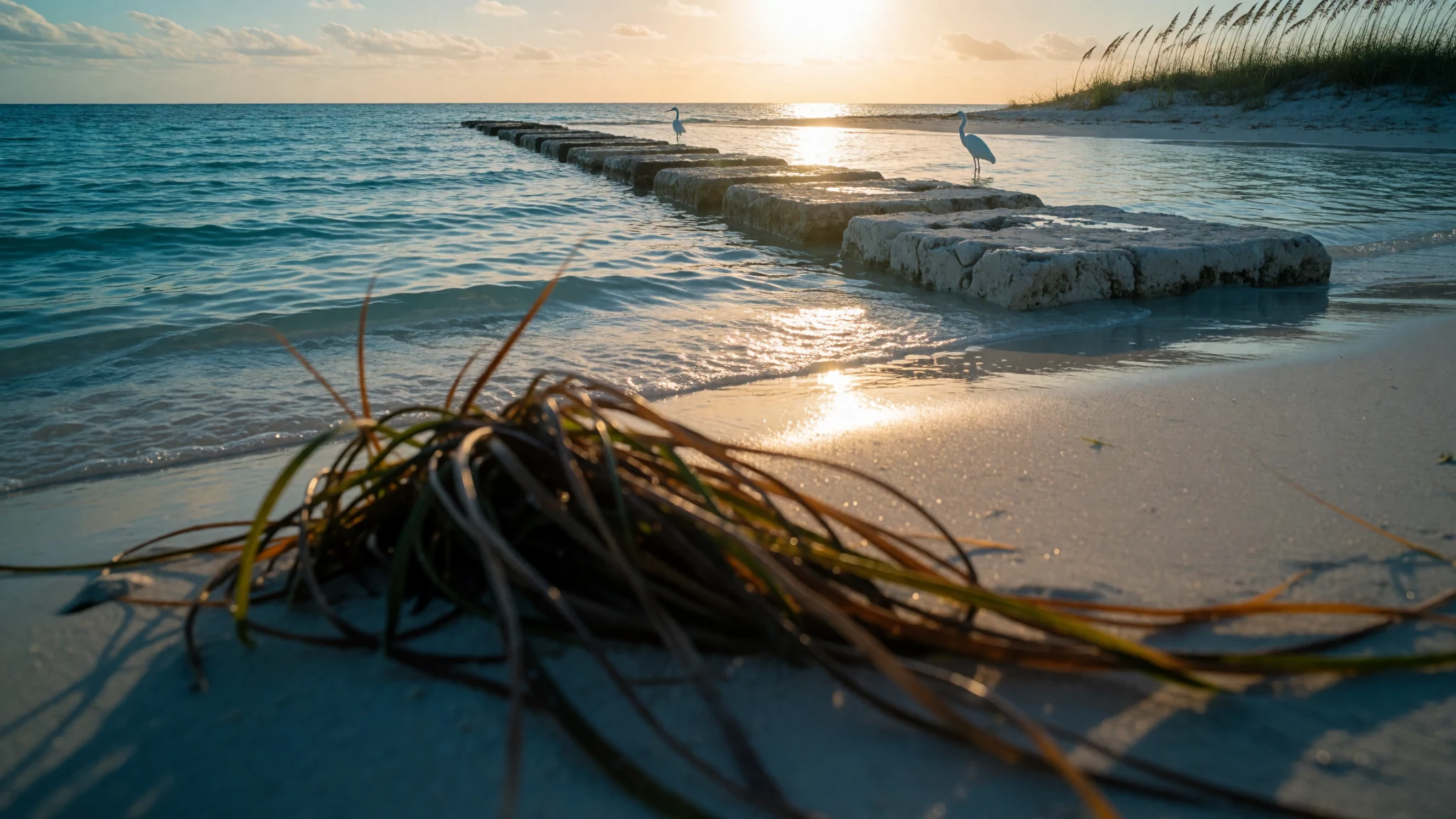
Bimini's recorded story begins with the Lucayans, its first inhabitants, whose language gave the islands their name, meaning roughly 'two islands' or 'the twins'. Centuries later, during Prohibition in the United States, the islands became a convenient base and supply point for rum-runners shipping liquor towards Florida. One popular tale credits a smuggler named William McCoy with inspiring the phrase 'the real McCoy', but the expression was already in print in the United States in 1908, so the claim sits among many folk explanations. Air links came early. From 1917, Chalk's seaplanes flew between Miami Harbour and the Bahamas, and the airline became part of island life. Because shipping pushed up prices on Bimini, residents often rode those flights to buy cheaper goods in Florida and carry them home. The sea has also taken lives: in 1922 a Miami Airways seaplane came down off the coast, and none of its five passengers survived. Writers followed the anglers. Ernest Hemingway spent several seasons fishing here, wrote part of one novel on the island and set another partly around it. Offshore lies the Bimini Road, a line of stones that some people read as a ruin and others as natural rock. Experts disagree, and the evidence is thin, so it is best treated as a puzzle rather than a fact.
What to see
- Bimini Museum — Alice Town, North Bimini
The Bimini Museum in Alice Town keeps artefacts and displays on the island's past, from its early settlers to the rum-running and fishing years. It is a good first stop before walking the King's Highway, because it gives the bars and docks some context. Check the official site for opening arrangements.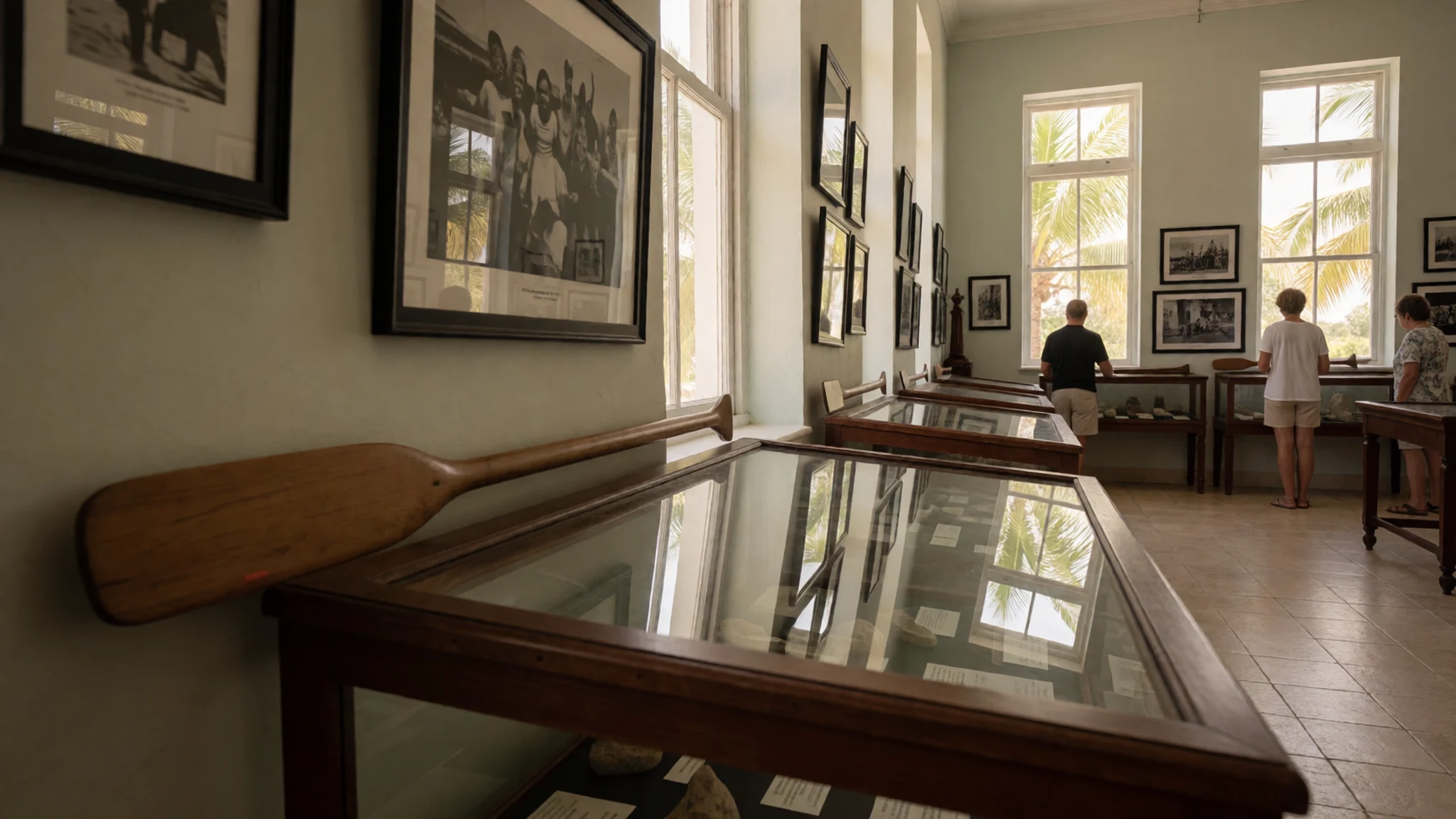
- Dolphin House Museum — Alice Town, North Bimini
Dolphin House is a small, homemade-feeling museum inspired by dolphins and whales, and it is one of the more unusual stops in Alice Town. Expect a personal, quirky collection rather than a polished institution. Opening times vary, so ask locally or check the official tourism site.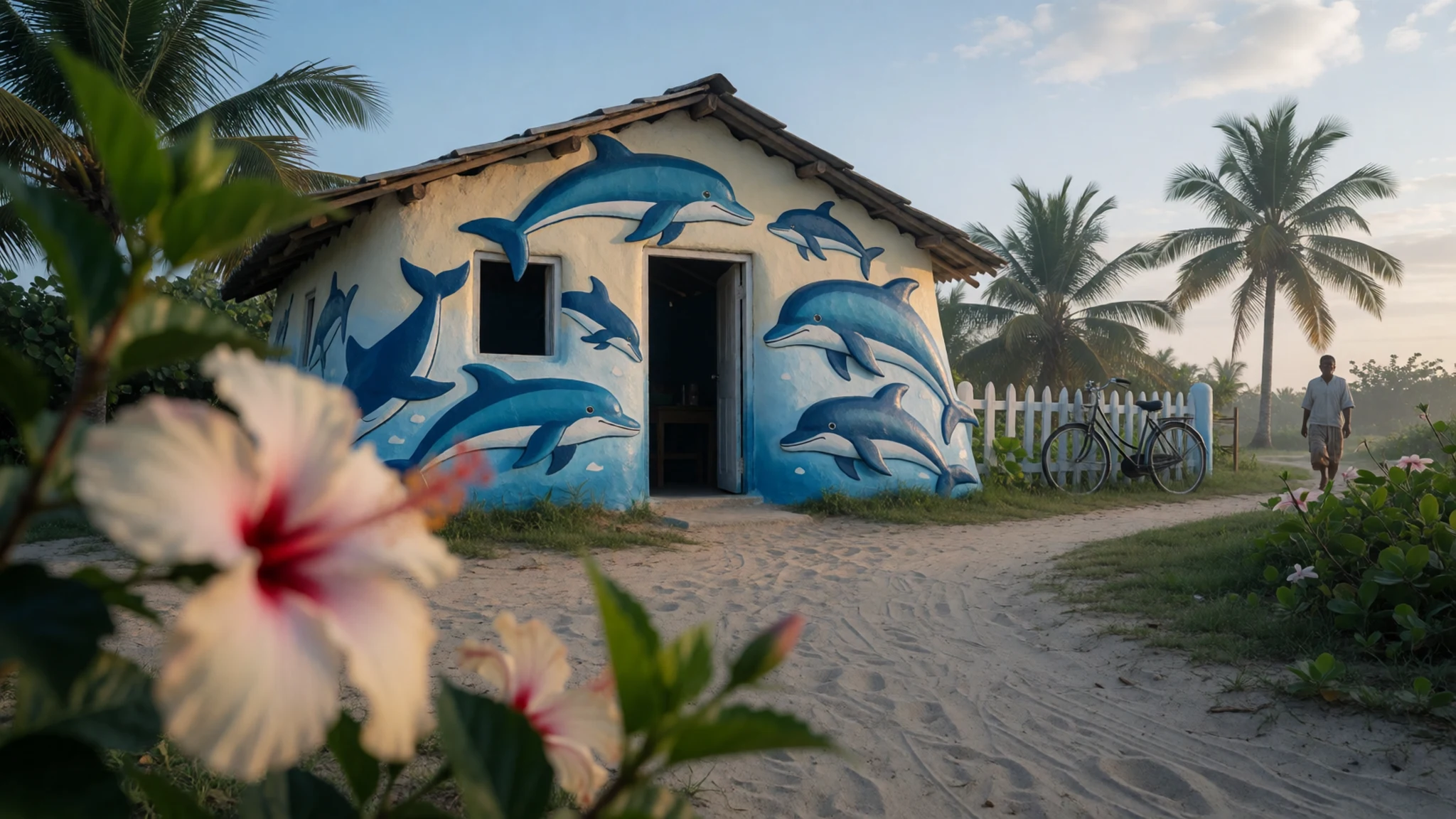
- Alice Town waterfront and fish docks — Alice Town, North Bimini
The Alice Town waterfront is where Bimini's fishing identity is easiest to see. Boats come and go, and black-and-white photographs of record catches decorate walls around the settlement. Overfishing has thinned the big game since those pictures were taken, so the images now read as history. Early mornings are best.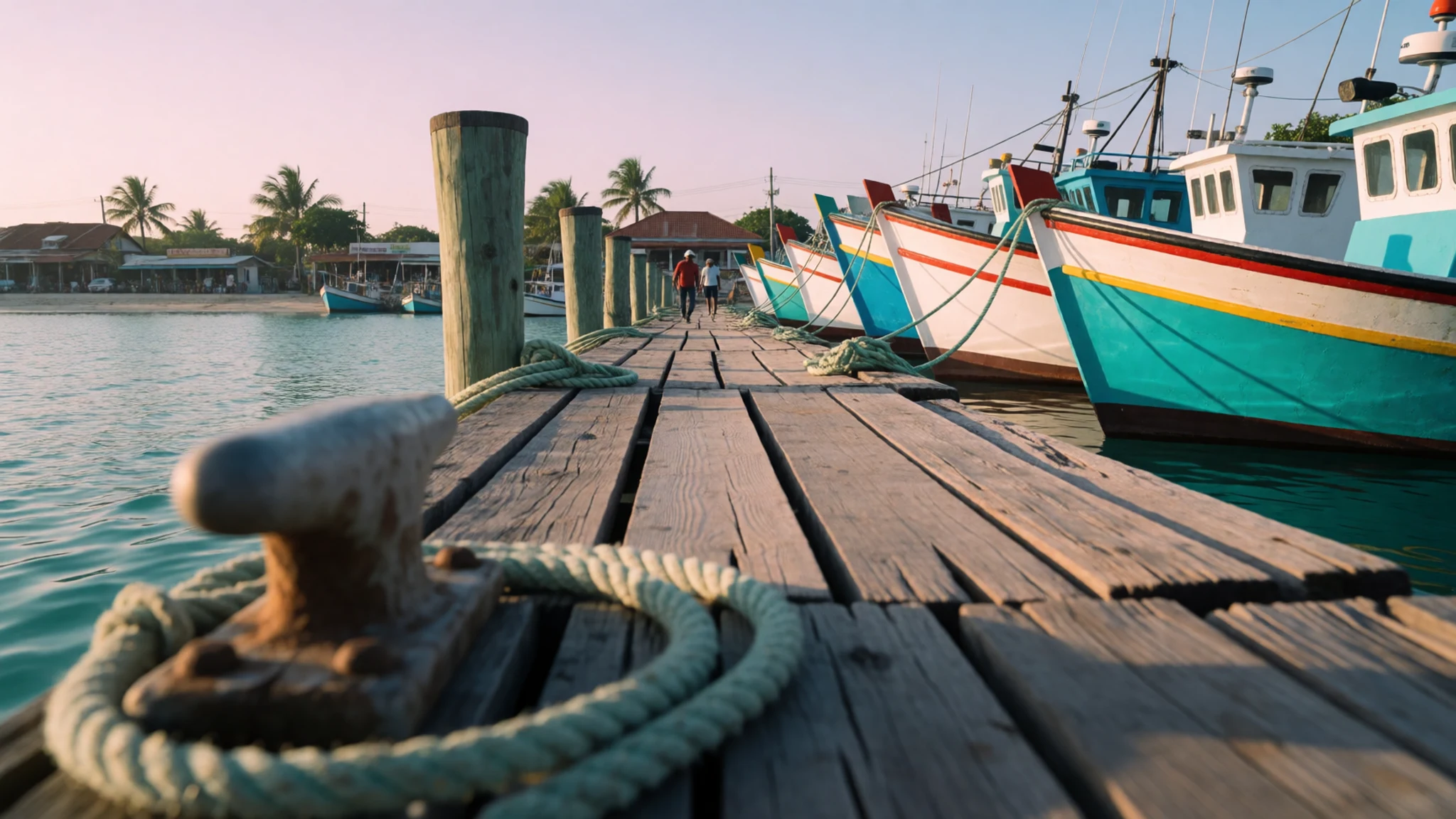
- Hemingway's Bimini — Alice Town, North Bimini
Hemingway fished these waters and wrote here, but the small museum and sign marking his stay burned down in 2006, along with the old Compleat Angler guesthouse where he once slept. What remains is the setting itself: the channel, the docks and the stories told in Alice Town bars.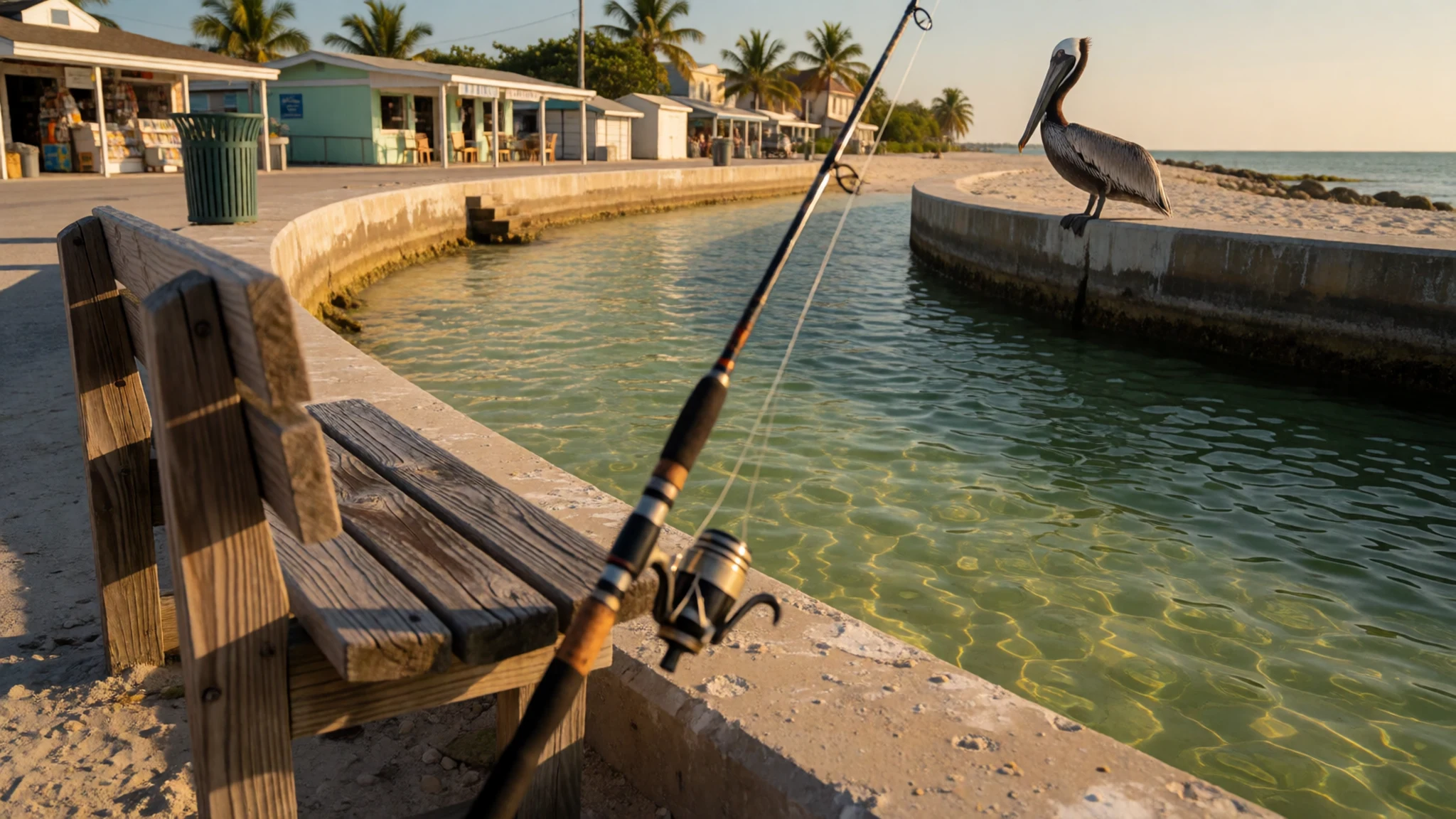
- Bimini Road — Offshore, North Bimini
The Bimini Road is a line of submerged stones off North Bimini that has fuelled decades of argument about whether people or nature made it. Specialists hold widely different views. It is a boat or snorkel trip, so arrange it through a local operator and ask what they actually think.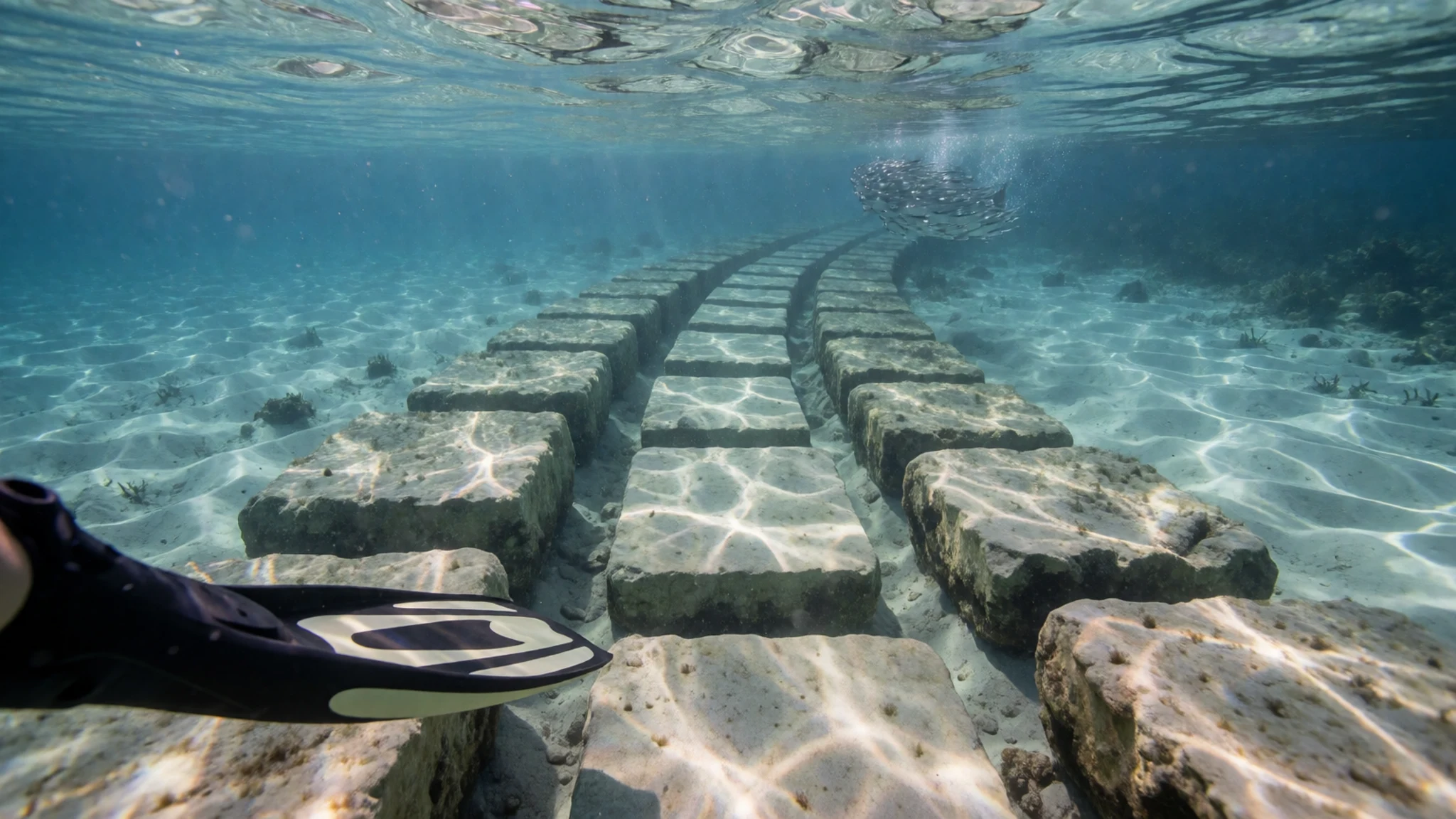
- Bailey Town lagoon — Bailey Town, North Bimini
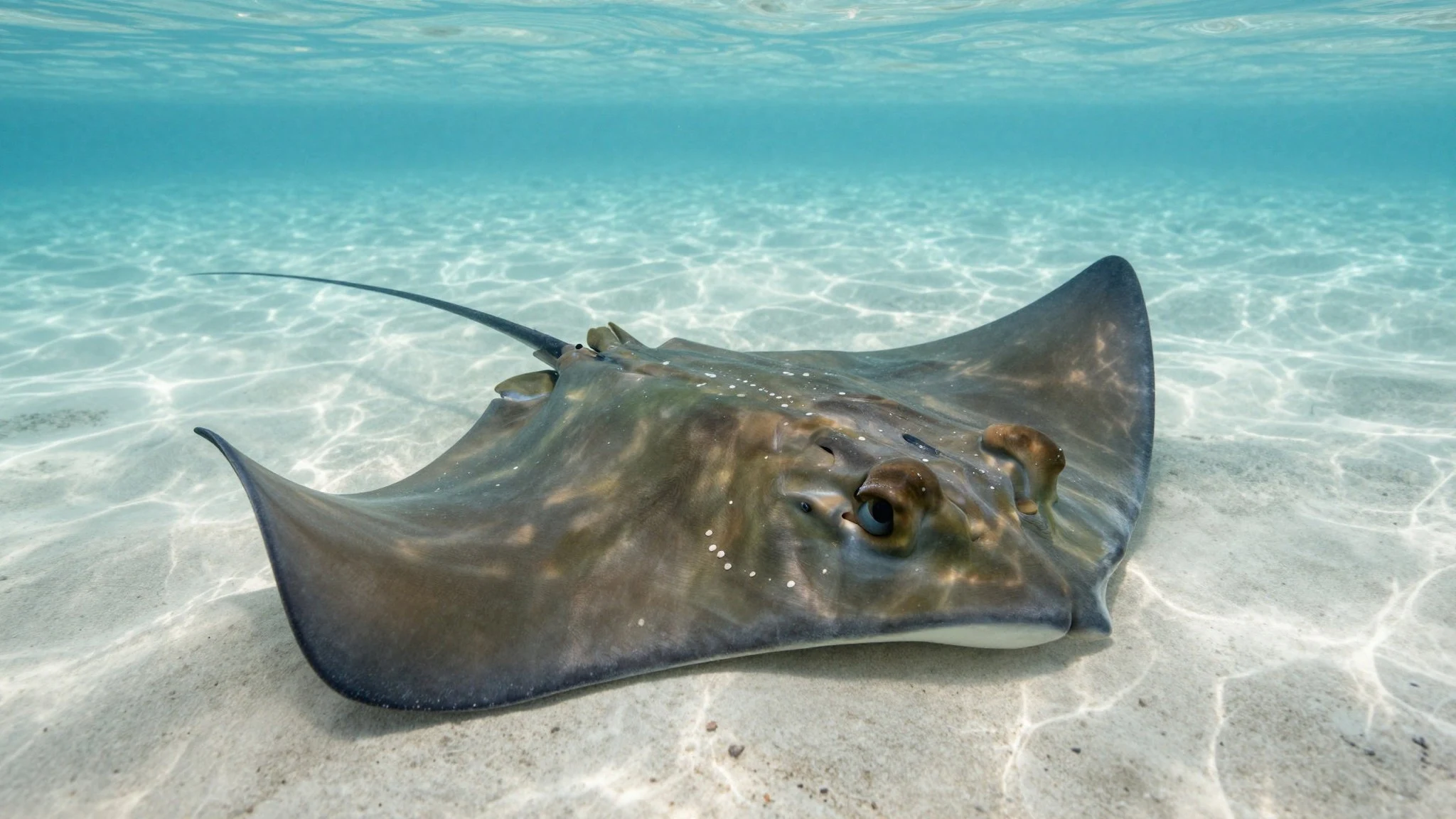
Bailey Town, south of Alice Town on North Bimini, looks out on a shallow lagoon where stingrays and water birds can be seen from the deck of a conch stand. It is a quiet, unhurried spot compared with the marinas, and suits a slow late-morning stop.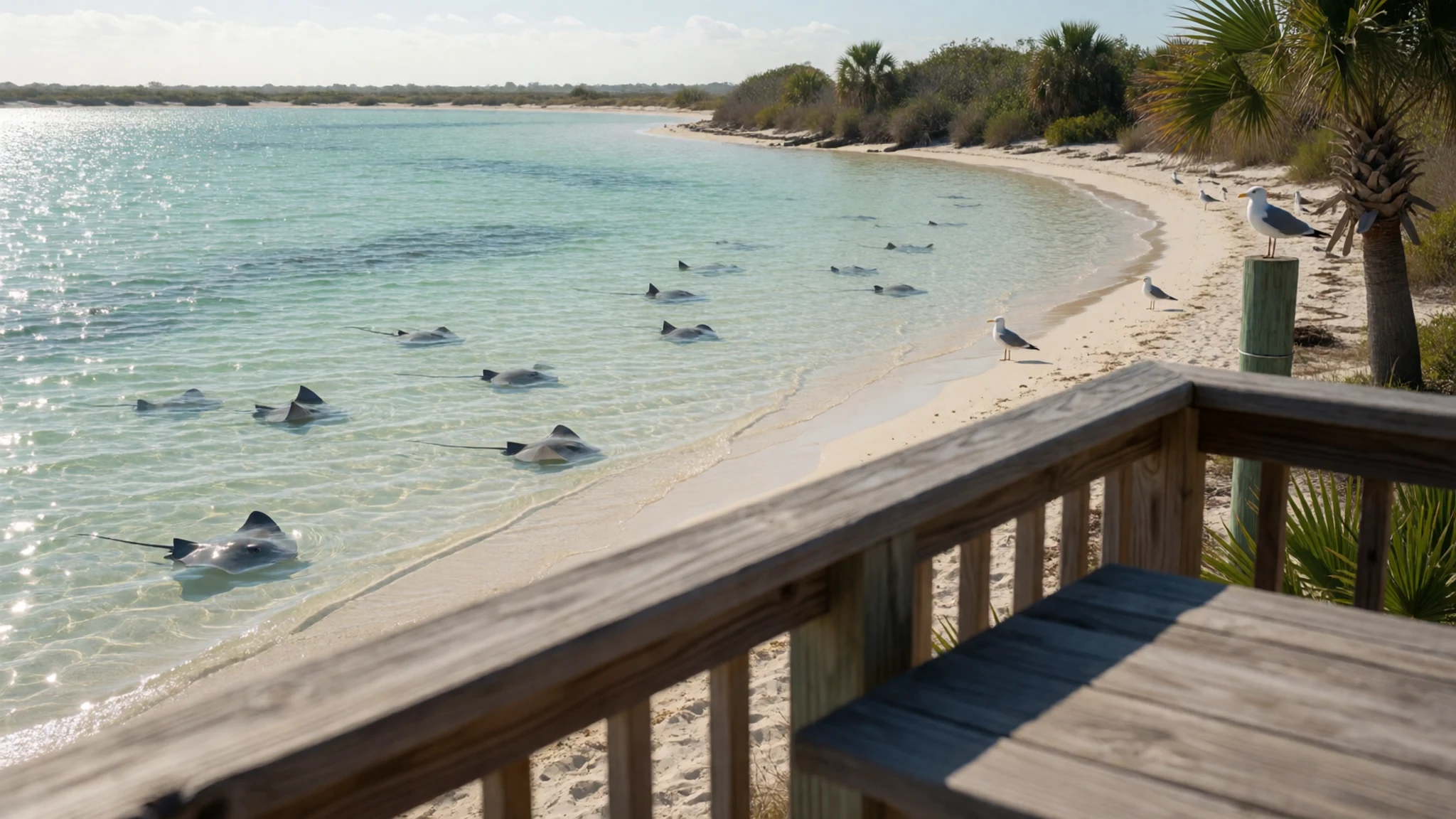
Culture
Bimini's culture is built around the water. Fishing has long been the local economy's backbone, and the island's reputation among game anglers still draws crews from Florida every season. Many local families have worked on boats, in marinas or in the businesses that serve visiting yachts, and the relationship with the United States is practical rather than abstract: people cross back and forth for supplies, work and family. Alice Town carries the clearest marks of that history, with weathered photographs of big catches, bars where old fishing stories are told and signs that nod to Hemingway's years on the island. Daily life is quieter than the bar scene suggests, especially on weekdays and away from the marinas, and many residents live in Bailey Town and other settlements beyond the main strip. Church, family and community events matter, and Bahamian hospitality tends to be direct and friendly, but also unhurried. Service in eateries can be slow, and shops may keep their own hours. It helps to think of Bimini as a small working community that welcomes visitors, rather than a resort built entirely for them. The island is also fragile: it sits so low that storms and rising seas are a constant concern, and local people are wary of careless visitors. Greet people when you enter a shop or step onto a dock, and ask before photographing fishermen, their catch or anyone's home.
What to wear
Bimini has no single formal costume that this reading can source, so the clearest traditional markers are Bahamian rather than strictly local. Plaited straw work, including hats and bags, is a long-standing craft across the islands, and Junkanoo, the festival parade held mainly in Nassau, is known for elaborate costumes made of paper and card. These are worn or seen on festive occasions, not as daily dress. What people wear now is practical island clothing: shorts, light cotton shirts, sandals, caps and sunglasses, with boat shoes and quick-dry gear on the marinas. Evenings in Alice Town are casual, and the bars and beach shacks do not expect anything smarter than clean shorts and a shirt. Visitors should dress for strong sun and warm, humid weather. Pack light, breathable fabrics, a wide-brimmed hat, reef-safe sun cream and a cover-up for walking through settlements and into eateries, since beachwear is not usual away from the shore. A light rain jacket helps during squalls. Flip-flops suit the beach, but closed shoes with grip are better on wet docks and boat decks. Cover shoulders and knees if you visit a church service, and carry a dry bag if you plan to be on a boat.
What to eat
- Conch — Conch stands in Bailey Town
Conch is the Bahamian staple, served as fritters, salad or cracked and fried. Bailey Town has conch stands with decks over the lagoon, where stingrays pass below. Order what the cook recommends that day, and expect it to be freshest earlier in the afternoon.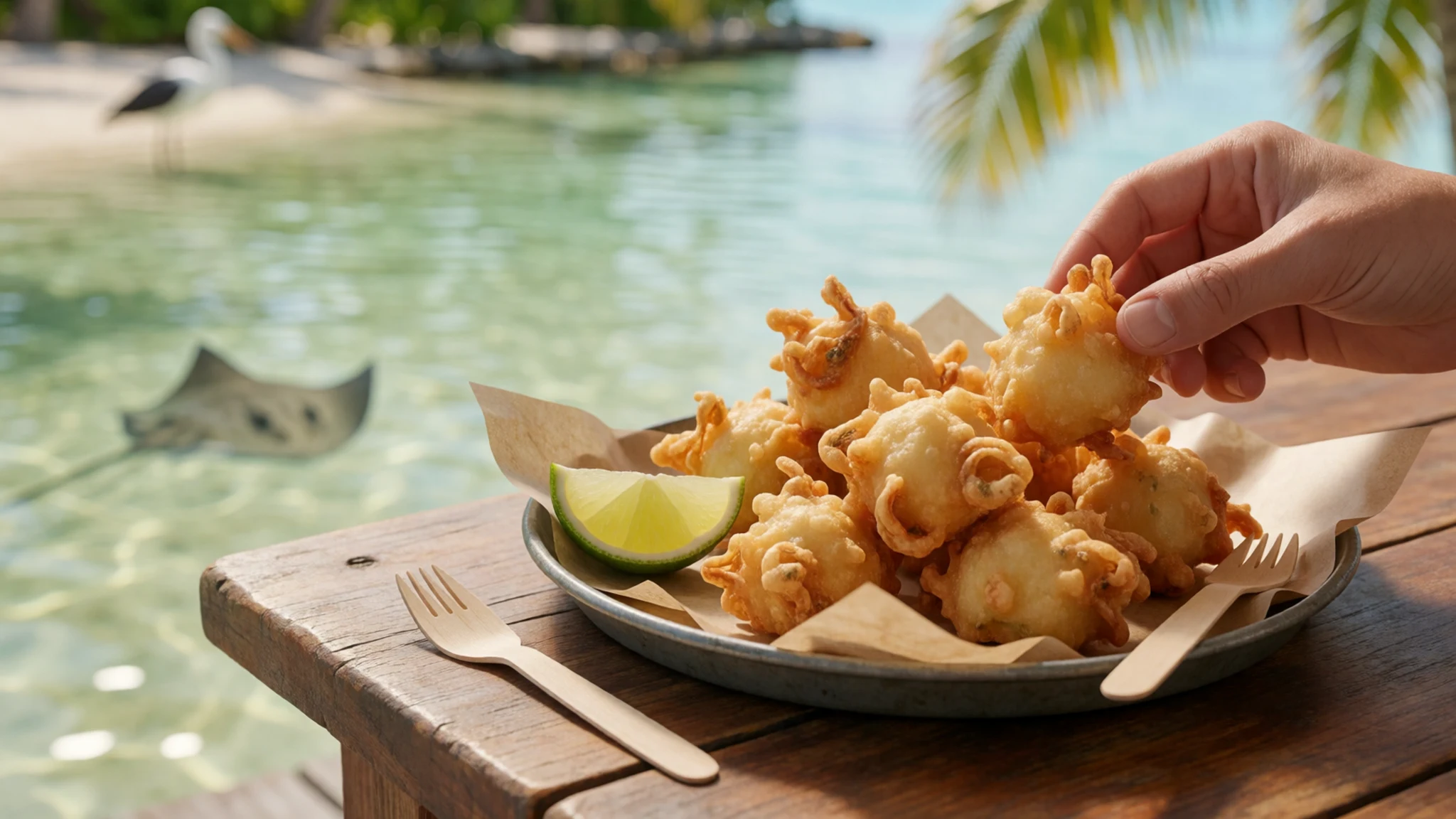
- Fresh island fish — Eateries around the Alice Town docks
Fish caught off Bimini turns up grilled, fried or in chowder at eateries near the docks. Ask what came in that morning. The catch varies with season and weather, and fish served quickly after landing is the better choice.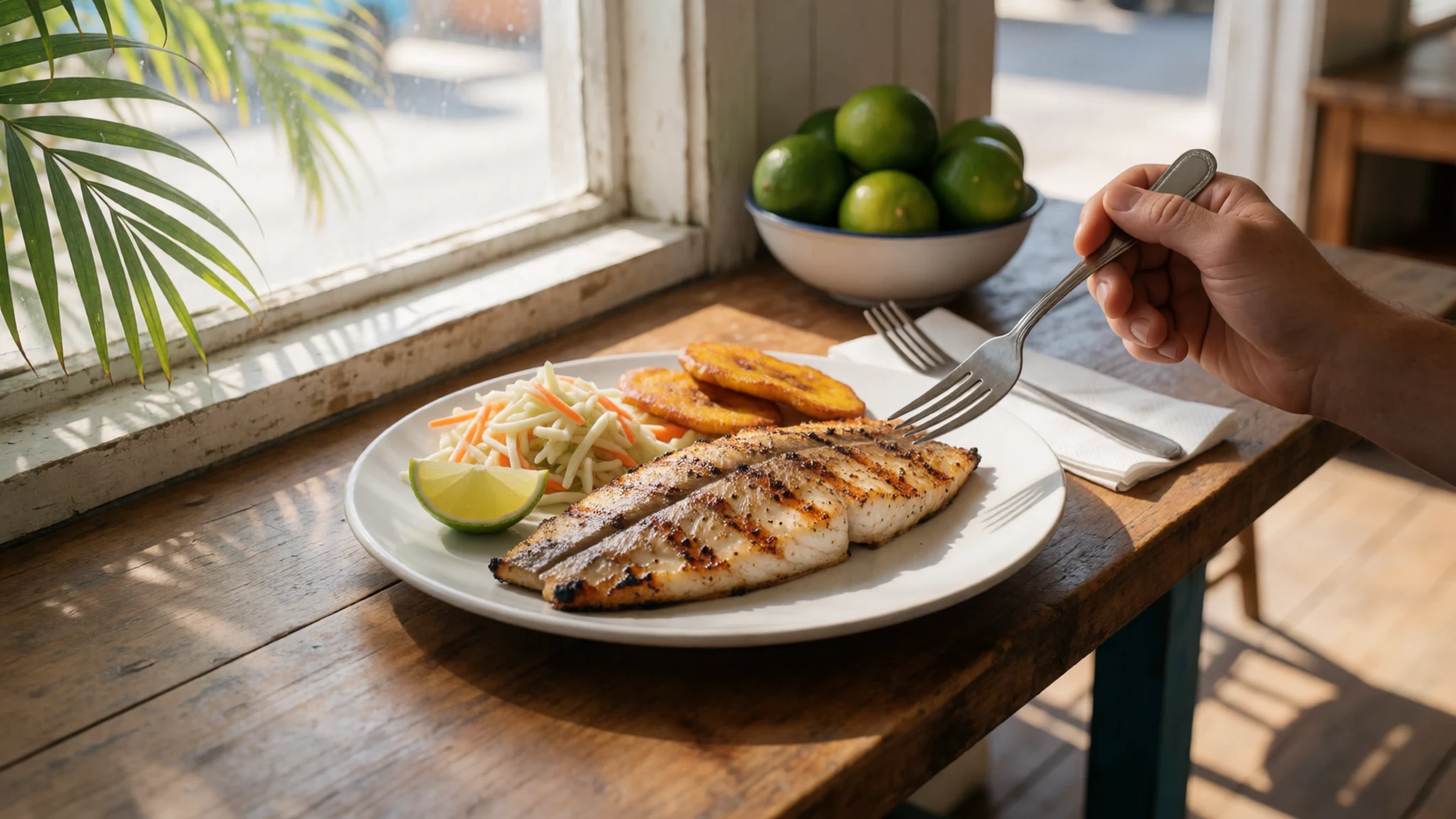
- Burgers from a beach shack — Takeaway shacks near the South Bimini marina
Simple takeaway shacks on South Bimini sell burgers and fried food at modest prices, a short walk from the marina. They suit a quick, cheap lunch between boat trips, though portions and opening arrangements are informal. - Pizza and dinner plates — Family-run eatery in Bailey Town
Bailey Town has a casual spot serving pizza and ordinary dinner plates, which is useful after a day on the water. It takes cash only, so bring enough notes with you instead of relying on a card machine. - Sushi with a view — Beach club on South Bimini
A beach club restaurant on South Bimini serves sushi alongside sea views, an unexpected find on a small island. It is aimed at marina visitors and day-trippers, so it can be busy when boats arrive. Book or ask ahead in the peak season. - Breakfast and lunch plates — King's Highway, Alice Town
Diner-style eateries along the King's Highway serve breakfast and lunch rather than dinner, with eggs, grits-style sides and sandwiches. Some accept cards, but small places may not, so carry cash as a safeguard.
Plan it
Best time. April to July is the usual season for calm seas, fishing and diving, and it is also when Bimini is liveliest. Heat and humidity build through summer, and storms can disrupt boat trips, so April and May balance weather and crowds best.
How long. 2–3
Getting there. Fly into South Bimini airstrip, where a short taxi and a ferry of about five minutes bring you to North Bimini. Alternatively take the ferry from Fort Lauderdale in the United States, or a mail boat from Nassau. Check the official site, visitbimini.org, for current routes.
Budget. mid
Tips
- Carry cash, as small eateries, stands and taxis often do not take cards
- Never swim around the Big Game Marina, where bull sharks gather for fish scraps, and ask locals before swimming at other marinas
- Book boats, fishing charters and rooms early for April to July
- Bring sun protection and water, since shade is limited on a narrow, low island
- Allow slack time in your schedule, because ferries, mail boats and service all run on island time
Etiquette
- Greet people before asking for anything in a shop or on a dock
- Ask before photographing people, boats or catches
- Keep noise down in residential settlements away from the bars
Nearby
Sources
- Wikidata Q863476 (CC0)
- Wikipedia: Bimini (rev 1373622764) (CC BY-SA 4.0)
- Wikivoyage: Bimini (rev 5426457) (CC BY-SA 4.0)
- Photo: Bimini Island (NASA) (Public domain)
- Photo: Bimini 7S41000501056 (NASA/USGS) (Public domain)
- Photo: Map of the Bahamas 2010 (Bimini) (CC BY 3.0)
- Photo: Admiralty Chart No 3006 (UK Hydrographic Office) (Public domain)
- Photo: Bahamas, Bimini, fish dock with day's catch (cropped), Albert M. Price (Public domain)
- Photo: Bahamas, Bimini, fish dock with day's catch, Albert M. Price (Public domain)
- Photo: Bimini panoramio, Oscar Flowers (CC BY 3.0)
- Photo: Bimini banner, Albert kok (CC BY-SA 4.0)


Wildlife
- Southern stingray (animal)
The southern stingray is a flat, kite-shaped fish that glides along the seabed like a soft, muddy-brown blanket with a pale belly. In Bimini, look to the shallow lagoon at Bailey Town, just south of Alice Town on North Bimini, where rays can be spotted from the deck of a conch stand. Ask locally about the best season and hour. Watch from the deck, speak softly, and never feed them. Its tail carries a venomous barb for defence, so keep well back.