Dean's Blue Hole
Dean's Blue Hole, The Bahamas
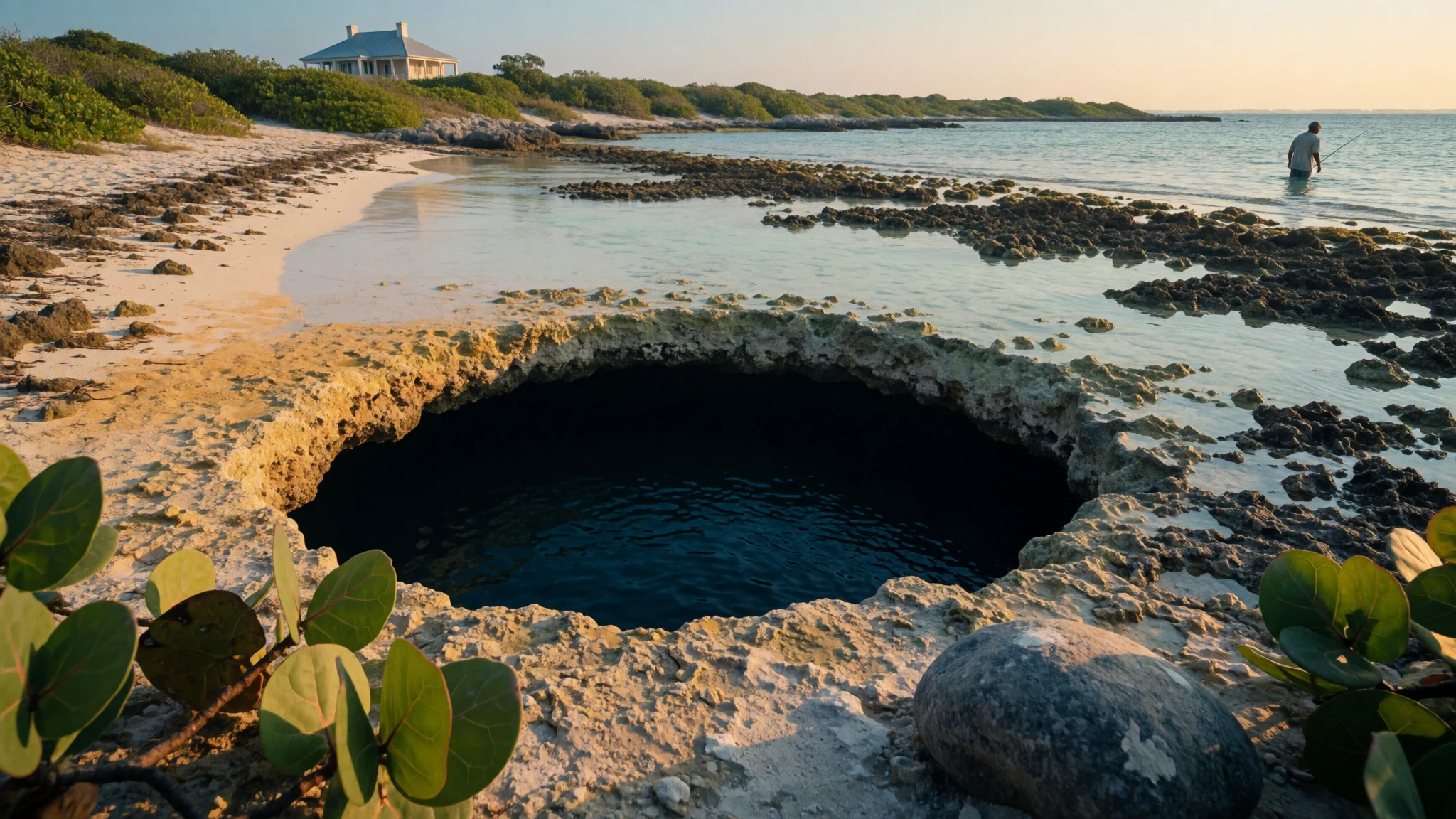
Dean's Blue Hole, on Long Island in the Bahamas, is a sheer-sided sinkhole of inky blue water that drops far below its sandy bay.
The place
Dean's Blue Hole lies on Long Island in the Bahamas, in a sheltered bay just west of Clarence Town. From the shore it looks like a dark disc set into pale, shallow turquoise water, and that contrast is the whole show. The opening at the surface is roughly 30 m across, but below the waterline the walls widen into a cavern about 100 m across, so the hole is far larger underwater than it appears from the rim. Its depth is 202 m, which Wikipedia ranks third among known blue holes, after the Taam Ja' Blue Hole in Chetumal Bay and Dragon Hole in the South China Sea. A blue hole is a water-filled sinkhole in limestone. The colour comes from the sudden change in depth: light plays on the sand and rock of the shallows around the edge, then fades into the shaft. Long Island is a long, thin island with surf and cliffs on its Atlantic side and calmer water on the other. The bay here is usually still enough for gentle swimming and snorkelling close to the edge. The setting is quiet and rural: a small beach, low scrub, limestone underfoot and the sound of water against the rock. There are few services at the site itself, so most visitors treat it as a half-day stop and use Clarence Town, a short drive away, for supplies. It rewards patience more than hurry, and the water looks different as the sun moves.
Its story
Dean's Blue Hole began as ordinary limestone. Over a very long time, rain and groundwater dissolved the rock and carved caves beneath the Bahamian islands. When the roofs of such caves collapsed, they left vertical shafts, and when the sea rose again they filled with salt water. That is the usual explanation for blue holes across the Bahamas, and Dean's is a particularly clear example, with a narrow mouth opening into a much wider chamber below. The process is one of slow geology rather than a single event. The human story is more recent and more modest. Long Island has long been a place of small settlements, fishing, farming and salt, and the bay near Clarence Town was local water before it was a destination. In recent decades the hole has drawn freedivers, who value calm, clear water close to shore and a drop that lets them go deep on a single breath. Competitions have been held here, and the site is now known to that community far beyond the Bahamas. For most visitors the reputation matters less than the view. Standing at the edge, the sense of scale is easy to feel even without going in: the pale shelf, the sudden dark, and the knowledge that the hole is much deeper than anything the eye can judge. Any claim about records here should be checked against current sources, because rankings of blue holes change as new ones are measured.
What to see
- The rim and the dark water — Dean's Blue Hole bay, west of Clarence Town
The main sight is the hole itself, best taken in slowly from the rocky edge. The pale shelf around the mouth gives way to deep blue within a few strokes, and the colour shifts with the sun's angle. Mid-morning light, when the sun is high but the bay is still calm, shows the contrast best.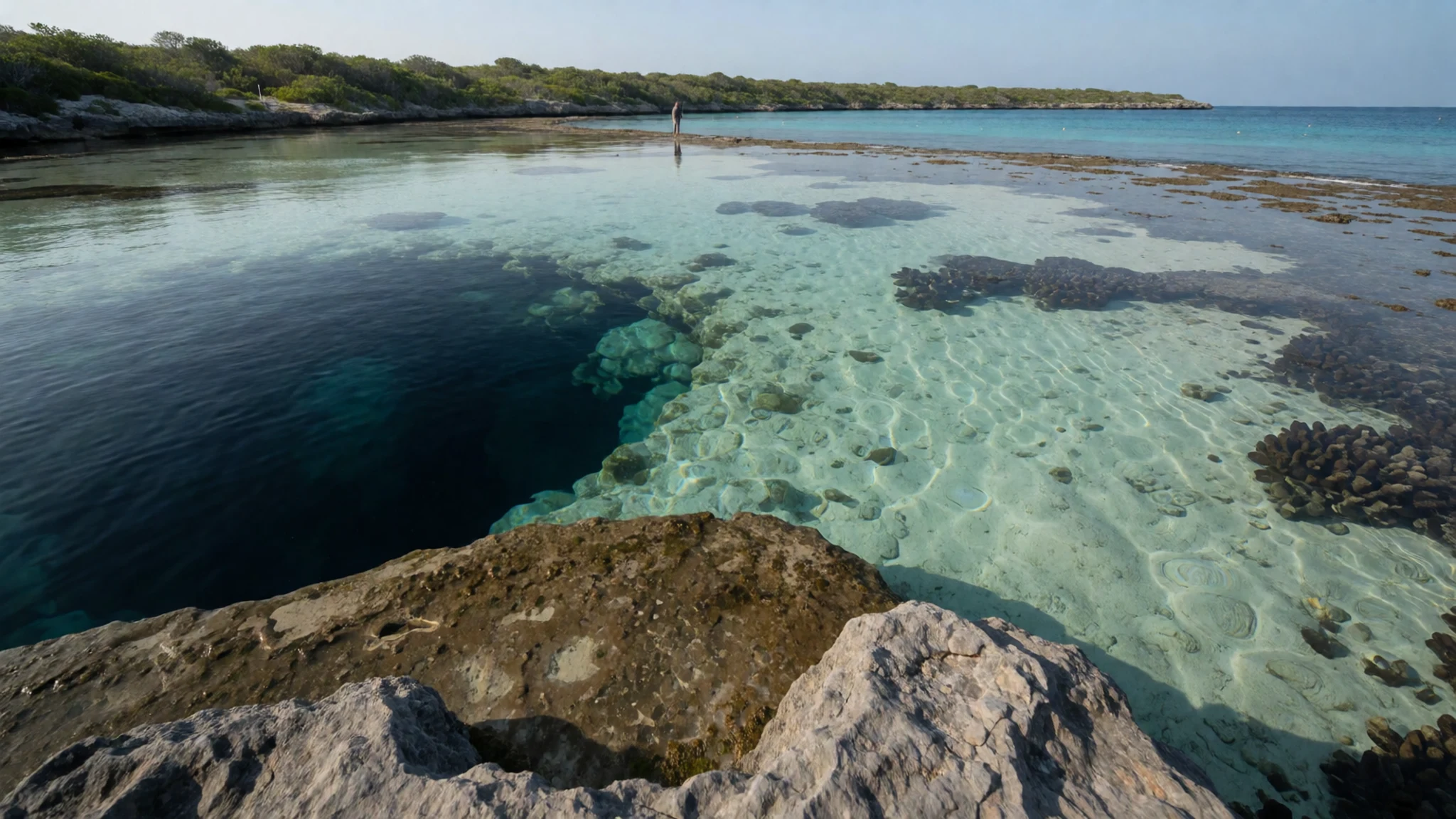
- The shallows and small beach — Beside the blue hole
A small sandy beach and shallow water sit beside the hole, and this is where most people swim or snorkel. The shelf is gentle and clear, with small fish near the rocks. Stay near the edge, bring your own gear, and treat the deeper water as a place for experienced freedivers only.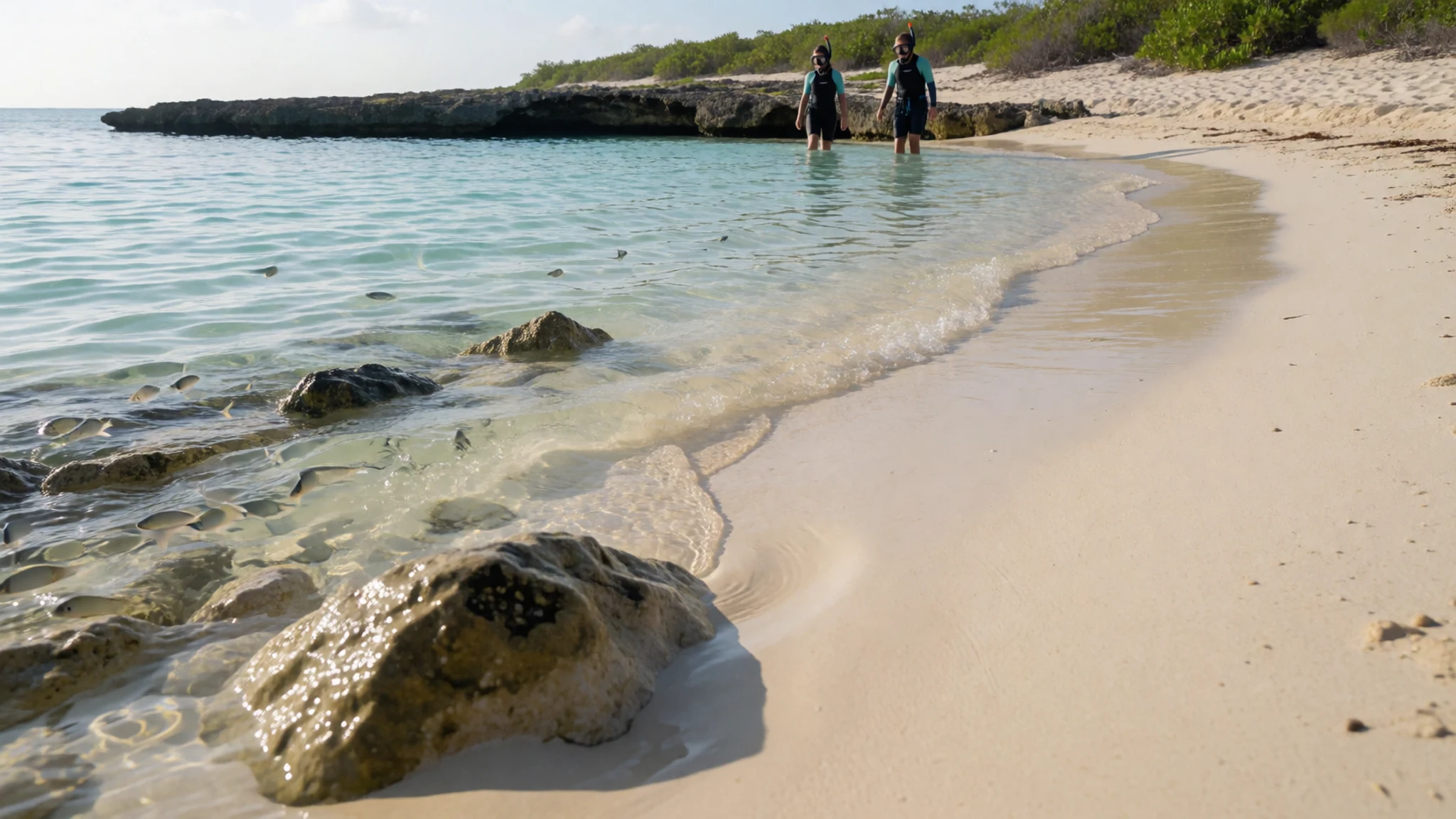
- Clarence Town — Clarence Town, east of the bay
The nearest settlement is a quiet harbour village that makes a sensible base for supplies and a meal. It shows everyday Long Island life: fishing boats, small shops, homes painted in soft colours and a slow pace. A short wander along the waterfront takes little time and gives context to the visit.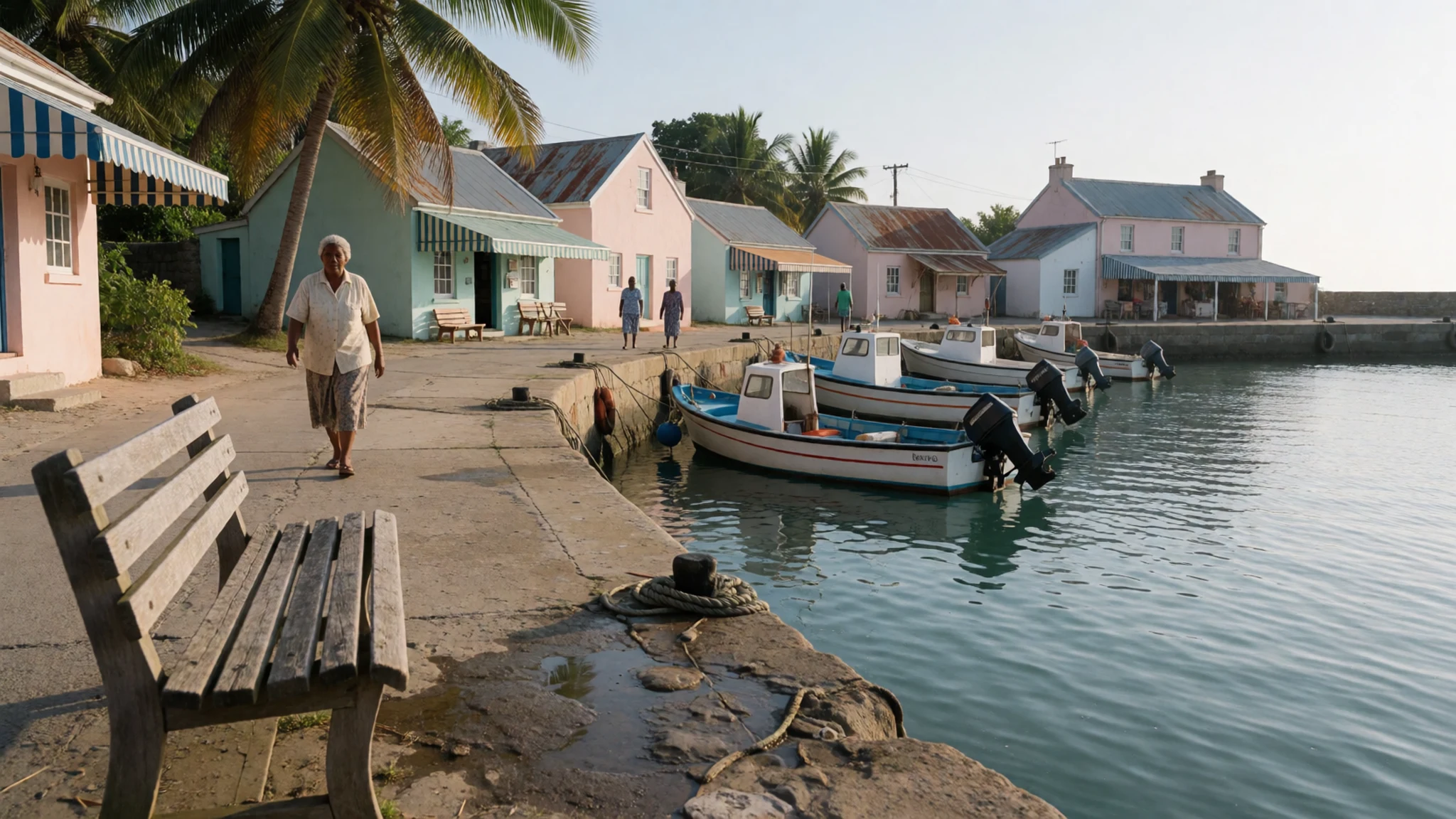
- The twin churches of Clarence Town — Clarence Town, above the harbour
Two hilltop churches stand close together above the harbour, built for different congregations and visible from the water. They are simple, whitewashed and carefully kept, and the hillside gives a wide view over the settlement and the sea. Visit outside service times, and respect any worship in progress.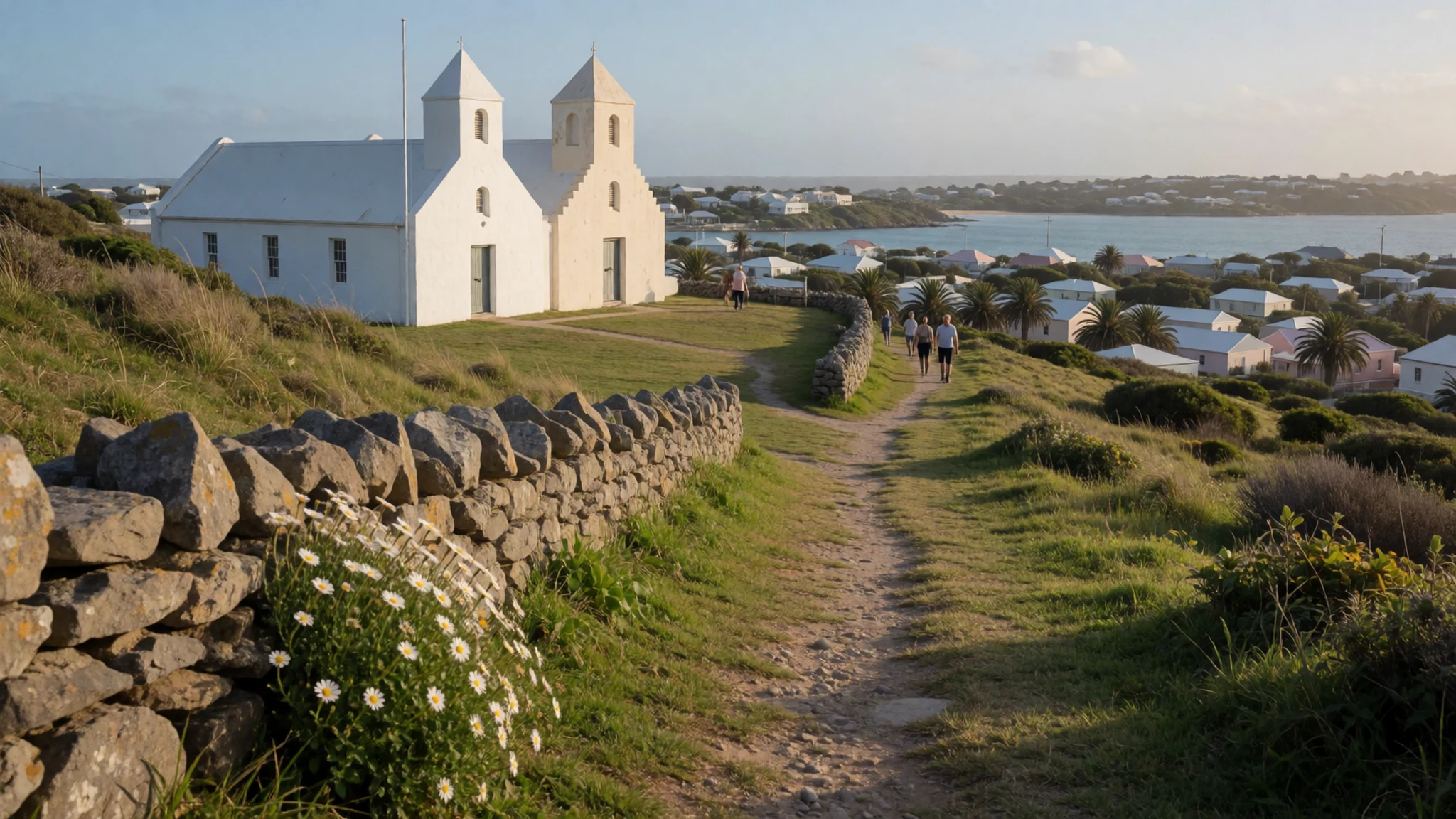
- Cape Santa Maria — North Long Island
At the island's northern end, a long curve of pale sand and shallow water offers a gentler beach day than the blue hole. It is a good way to balance the trip, with easy swimming and open views. Allow time for the drive, as Long Island is long and the road runs its full length.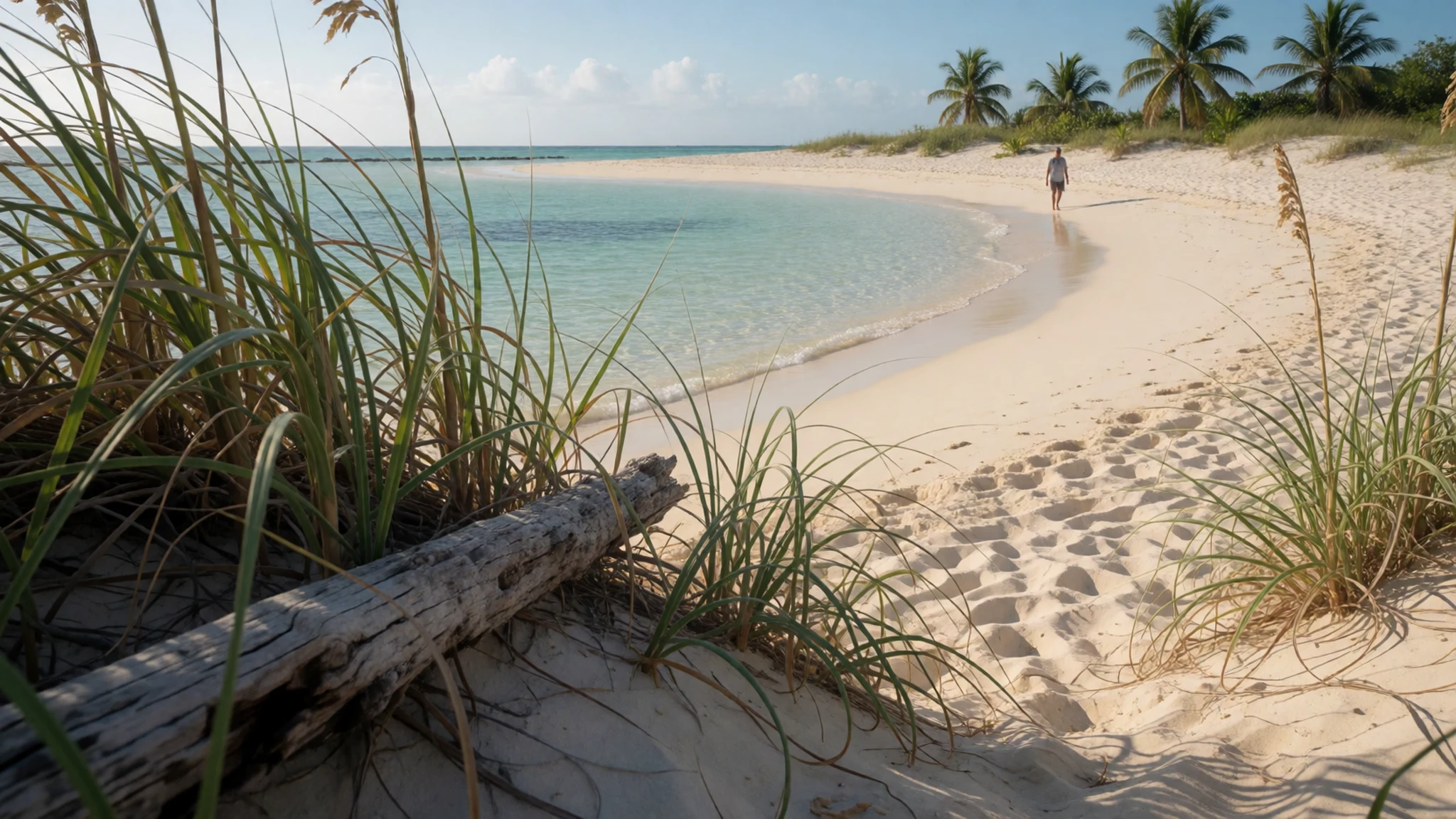
Culture
Dean's Blue Hole sits in a part of the Bahamas where life is local and unhurried. Long Island is one of the Family Islands, the name Bahamians use for the islands beyond Nassau and Freeport, and its communities are small, close-knit and often tied by family across several settlements. Fishing, small-scale farming and church life shape the week, and Sunday is generally quiet, with services central to the day in places like Clarence Town. Music and festivity still matter here: rake-and-scrape, played with a saw, goatskin drum and accordion, belongs to the Family Islands, and Junkanoo, the parade of costume and brass, is the national celebration, with community versions held across the islands. Bahamian English has its own rhythm and vocabulary, and people appreciate a friendly greeting before any question. Most islanders are welcoming to visitors, and the blue hole is part of the local landscape rather than a managed attraction, so it carries no ticketed show or formal entrance in the brief. That informality is its charm, but it also means visitors set the standard. There are few bins, little supervision and no rescue service in sight, so care for the place and for others falls to those who come. Spending a little in local shops and eateries in Clarence Town is the simplest way to give something back. Greet people with a good morning or good afternoon before asking anything, ask before photographing anyone, and take every scrap of rubbish away with you.
What to wear
Dean's Blue Hole is on an island where everyday dress is simple and practical, while festival dress is anything but. The best-known traditional clothing in the Bahamas is the Junkanoo costume, built from cardboard, crepe paper, foil and fringe, and worn at the parades held around Boxing Day and New Year. Straw work is the other long-standing craft: Family Island makers plait hats, bags and baskets from palm fibre, and the hats remain useful as well as decorative. Androsia, a bright batik cotton made on Andros, is widely worn in shirts and dresses and is the closest thing to a national print. Day to day, people on Long Island wear light cotton, shorts, sandals and caps, with a neat change for church, where Sunday best means pressed shirts, dresses and often hats. Visitors should dress for sun and water. Bring swimwear, a rash vest or light long-sleeved top, a wide-brimmed hat and reef-safe sunscreen. The limestone around the hole is sharp and uneven, so water shoes or sturdy sandals are far better than bare feet. In Clarence Town and any church, cover swimwear with a shirt and shorts or a skirt, and avoid walking through a settlement in a wet bikini. Light, quick-drying clothes work best in the heat, and a thin layer helps on the drive if the breeze is up.
What to eat
- Cracked conch — Roadside eateries and settlement kitchens in Clarence Town
Conch meat is tenderised, battered and fried until crisp, then served with lime and a spicy sauce. It is a staple of Bahamian cooking and a good first order. Look for it at small roadside eateries and settlement kitchens around Clarence Town.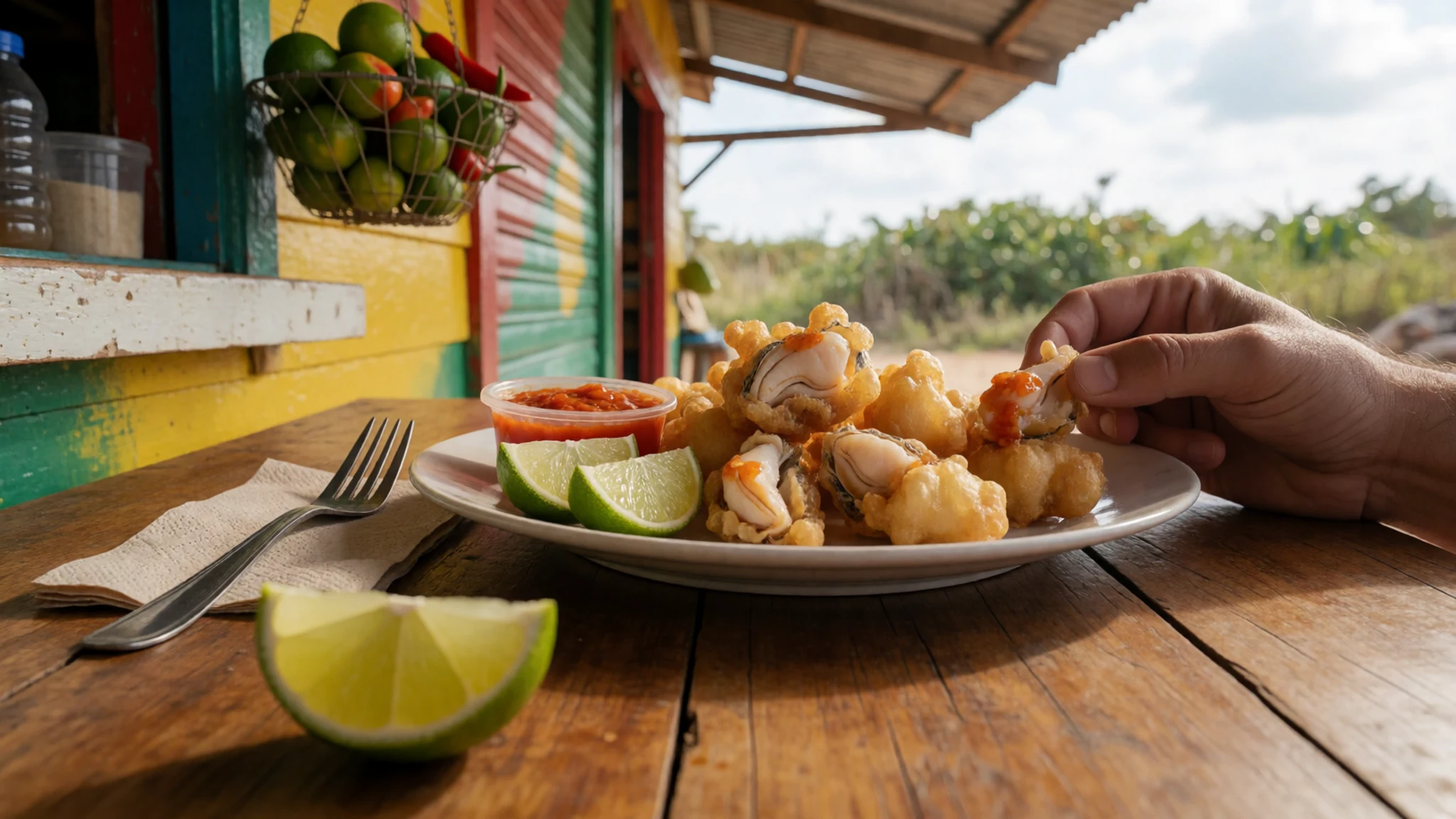
- Conch salad — Harbour-side stalls and fishing-boat landings
Raw conch is chopped with onion, pepper, tomato and citrus juice, and eaten fresh. It tastes bright and sharp, and is best when made to order. Stalls near the water and harbour often prepare it on the spot, which is a good sign of freshness.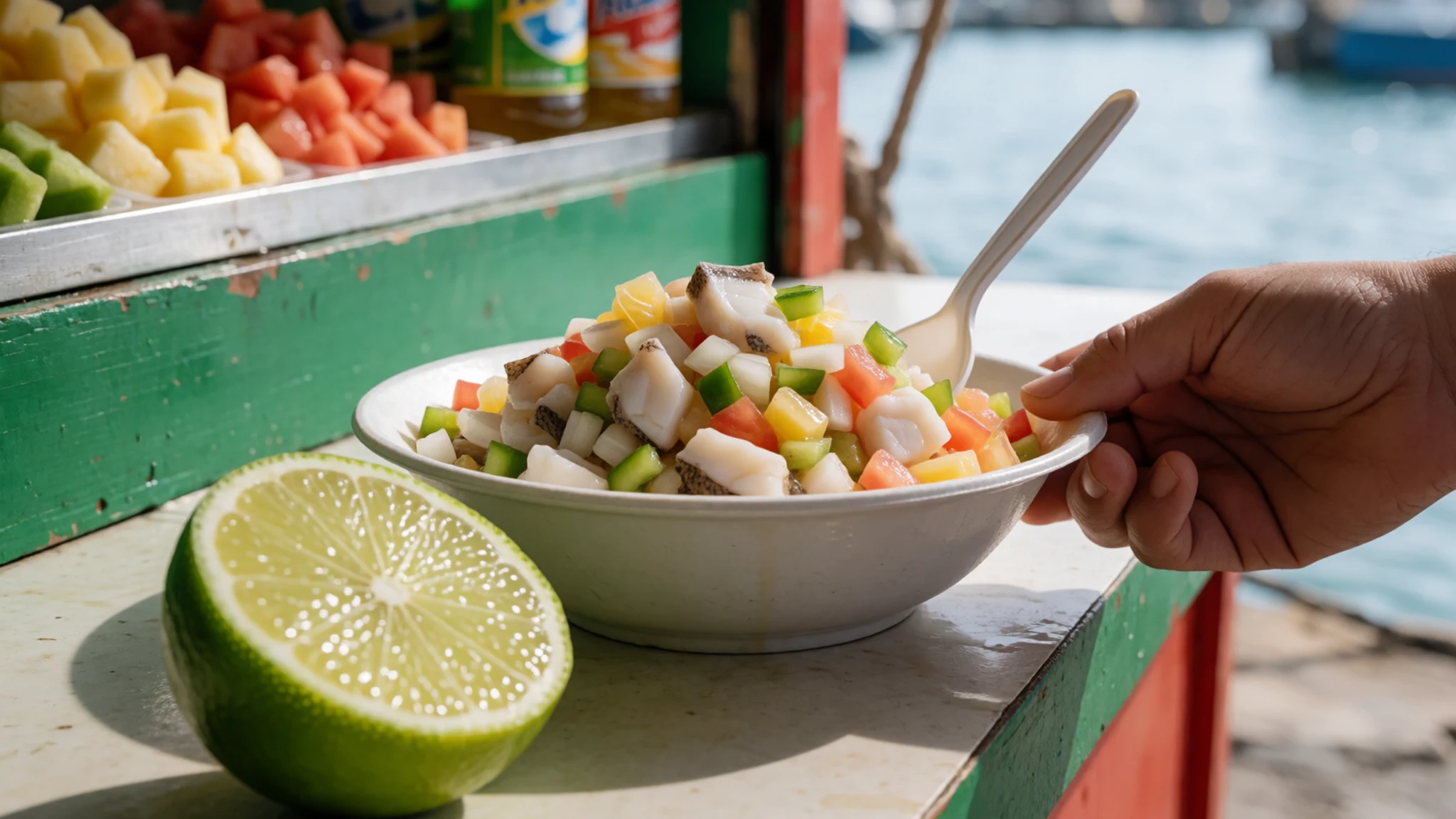
- Peas 'n' rice — Any local eatery on the island
Pigeon peas are cooked with rice, onion, tomato and thyme into a savoury side dish that appears with almost every plate. Each cook has a version, and it is usually served with fried or stewed fish or chicken. Order it at any local eatery. - Fried or steamed fish — Small restaurants and eateries near the fishing harbour
Local snapper or grouper is served whole, fried crisp or steamed in a peppery broth with onions and thyme, with sides such as peas 'n' rice and coleslaw. It is simple, filling and depends on what boats landed that day. - Johnnycake and guava duff — Home bakers and community kitchens in island settlements
Johnnycake is a dense, lightly sweet bread baked or fried and eaten with meals or alone. Guava duff is a rolled, boiled pudding filled with guava and served with a sweet sauce. Both are home-style foods found where cooks bake for the community.
Plan it
Best time. March to May is dry and warm, with calmer seas and good light on the water. June to November is the Atlantic hurricane season, with more rain, humidity and storm risk, so check forecasts and travel insurance.
How long. 2–3
Getting there. Fly from Nassau to Deadman's Cay Airport on Long Island, then hire a car for the road to Clarence Town and the signed track to the bay. Check airline timetables before booking, as Family Island services can change.
Budget. mid
Tips
- Hire a car in advance, as taxis and public transport are limited on Long Island
- Bring your own snorkel gear, drinking water, shade and food, as there are few services at the site
- Carry cash for small shops and eateries, and fill the fuel tank when you can
- Swim near the edge and never alone, as the water drops away sharply and there is no lifeguard
Etiquette
- Greet people before asking for directions or help
- Ask before photographing local people or their homes
- Take all rubbish away and do not disturb the rocks or marine life
Nearby
Sources
- Wikidata Q1181185 (CC0)
- Wikipedia: Dean's Blue Hole (rev 1361755992) (CC BY-SA 4.0)
- Wikivoyage: Long Island (Bahamas) (CC BY-SA 4.0)
- Photo: Dean's Blue Hole, Oceanwave77, via Wikimedia Commons (CC BY-SA 4.0)
