Grand Bahama
Grand Bahama, The Bahamas
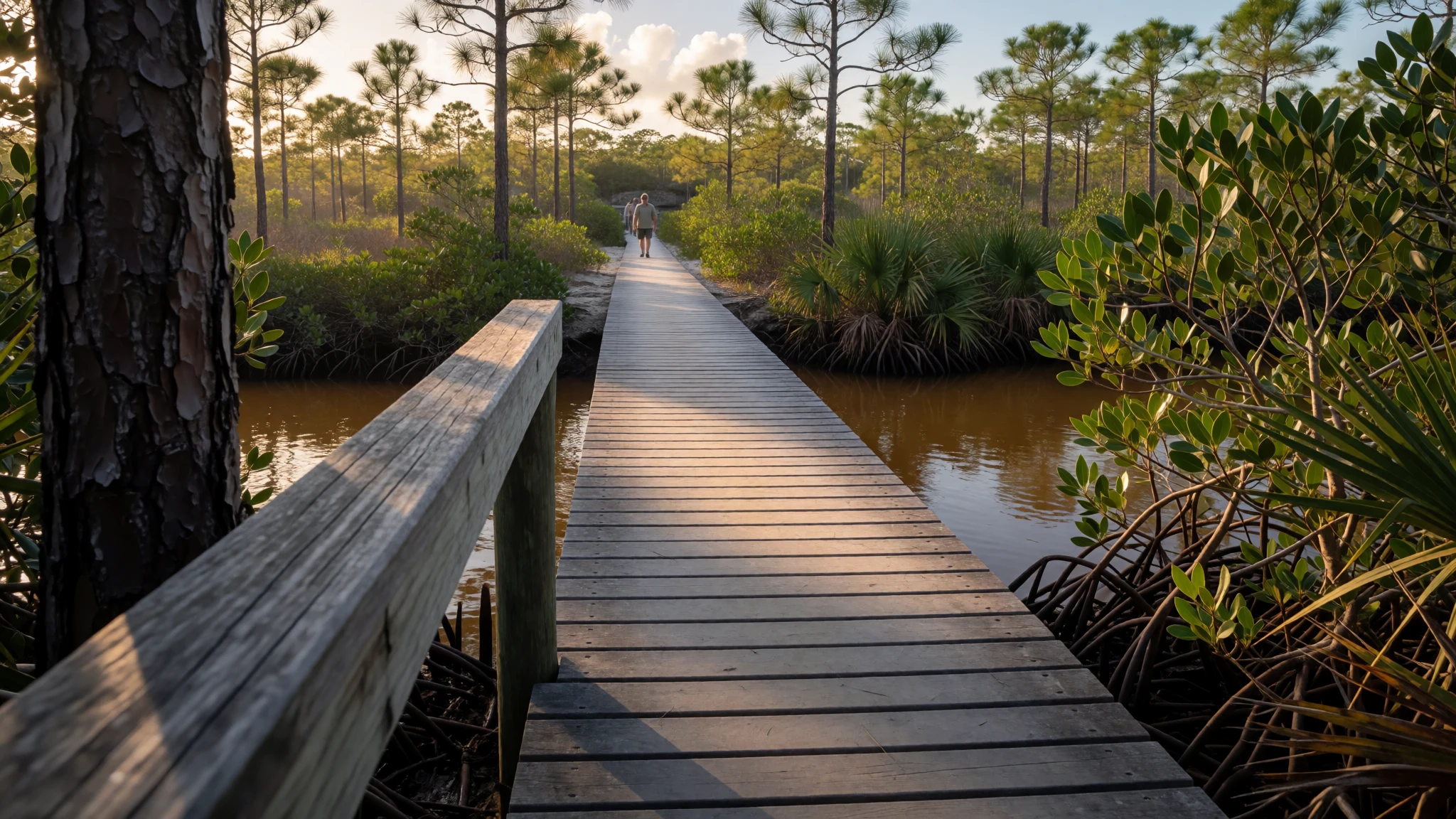
Grand Bahama pairs long pale beaches and pine-and-mangrove wilds with the easy resort town of Freeport and Lucaya.
The place
Grand Bahama lies in the northern Bahamas, a long, low ribbon of limestone on the Little Bahama Bank. The island is flat and sandy, with pale beaches along much of the south coast and a more broken reef shore to the north. Caribbean pine stands in open woodland over thin soil, then gives way to mangrove creeks, blue holes and caves where fresh groundwater meets salt water. Rain soaks into the rock, so there is almost no surface river.
Most residents live in Freeport and the beach district of Lucaya beside it. Freeport is a planned city laid out around a deep harbour and a broad commercial centre, with hotels and a marketplace facing the sea at Lucaya. Beyond that urban patch the island stretches east through pine forest and small settlements to Lucayan National Park, where a boardwalk crosses mangrove, caves carry the Lucayan name, and Gold Rock Beach runs as a long empty strand. To the west the land narrows towards West End, an older harbour community that predates the planned city and still works as a small boat settlement.
The water defines the place more than the land does. The bank around Grand Bahama is shallow, so the sea shifts from green over sand and grass to blue at the edge. Bonefish, reef fish and conch use the flats, coral heads and grass beds. Trade winds ease the heat for much of the year. The same low, open profile that makes the coast feel wide also leaves Grand Bahama in the path of tropical storms, and storm recovery is part of ordinary life here. The island holds a planned port and resort city beside a quiet limestone coast of pine, cave and sand.
Its story
Grand Bahama is a name often traced to the Spanish gran bajamar, a sailor's phrase for the great shallow sea, and the people who lived here before European charts were the Lucayans. They fished the flats, grew cassava and other crops in pockets of soil, and used the island's caves, including the system now inside Lucayan National Park. Their settlements were part of a wider Lucayan world across the Bahamas, linked by canoe.
European contact broke that world quickly. Spanish ships took Lucayan people from the islands into forced labour elsewhere in the Caribbean, and Grand Bahama, like much of the archipelago, was left thinly occupied. Later the island sat on the edge of British colonial life in the Bahamas: a useful coast for wreckers, coastal farmers, spongers and small crews who knew the banks, and a hiding ground when piracy and privateering moved through these channels. West End grew as a harbour for that older, maritime island, long before anyone drew a city plan.
The modern map is a different story. A company town was imagined at Freeport, tied to a deep port, industry and tourism, and granted unusual freedom to run its own development. Lucaya was added as the beach front of that plan. Cruise ships, hotels and a foreign resident community followed, and for a time the new city drew the northern Bahamas' visitor traffic to this harbour. Storms have repeatedly cut across that progress, closing hotels, flooding streets and pushing residents to rebuild. What remains is a layered island: Lucayan caves under a national park, a harbour town at West End, and a planned city whose fortunes still rise and fall with visitors and weather.
What to see
- Lucayan National Park — eastern south shore
Grand Bahama's Lucayan National Park protects a cross section of the island few resort streets show. A boardwalk threads mangrove and pine towards caves associated with the Lucayan people, and the path reaches Gold Rock Beach, a long southern strand with shallow water and almost no buildings. Go for the walk as much as the swim: the park is where the pine and cave interior meets the sea.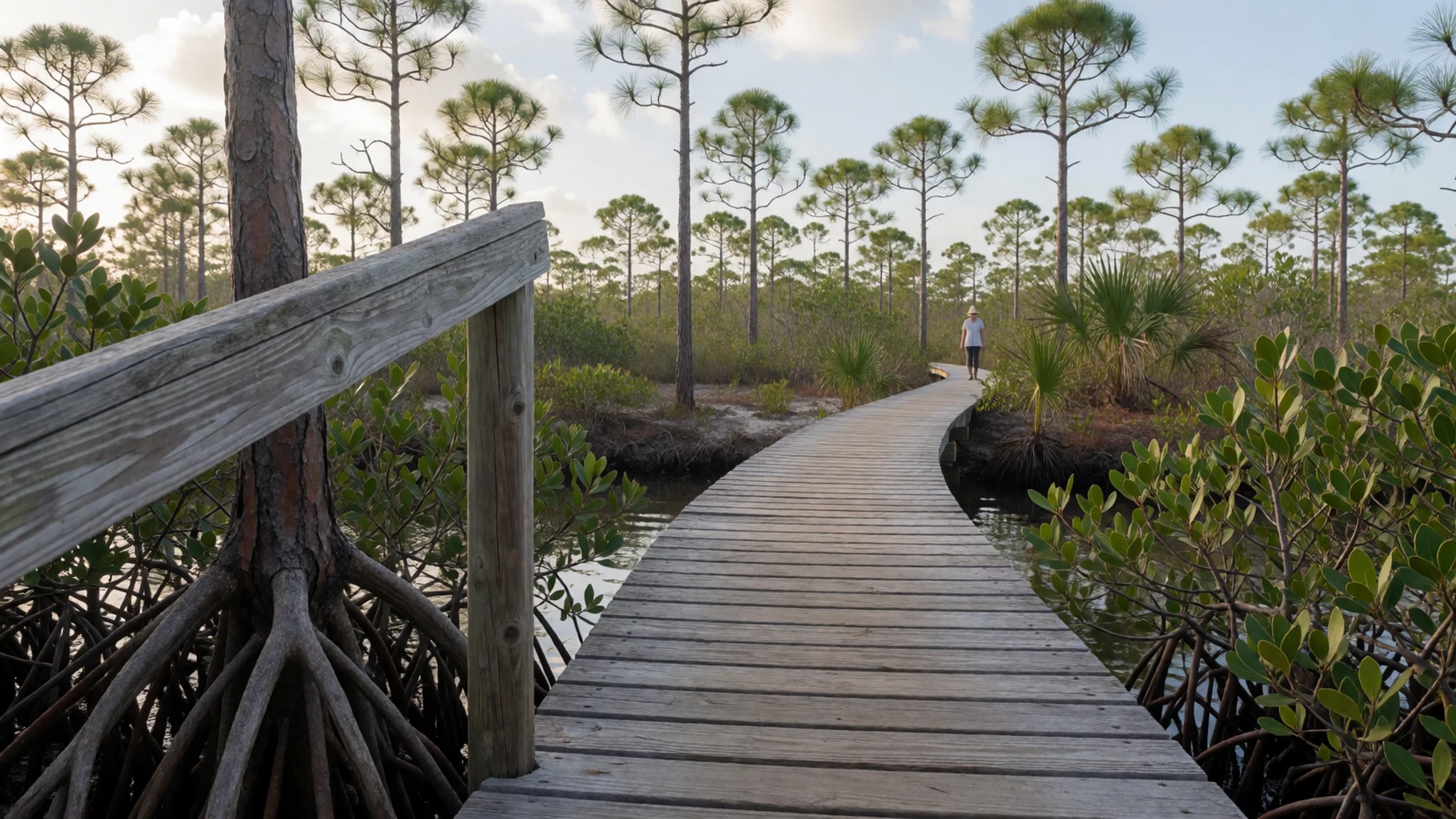
- Taino Beach — Lucaya
Taino Beach, on Grand Bahama's Lucaya shore, is a pale crescent with casuarinas and a gentle slope into clear water. Resort hotels sit nearby, yet the public beach remains the simple pleasure of the district: sand, shade and a view across the bank. Beach bars and small eateries line the back of the strand, so a swim can turn into a plate of fried fish without a long walk.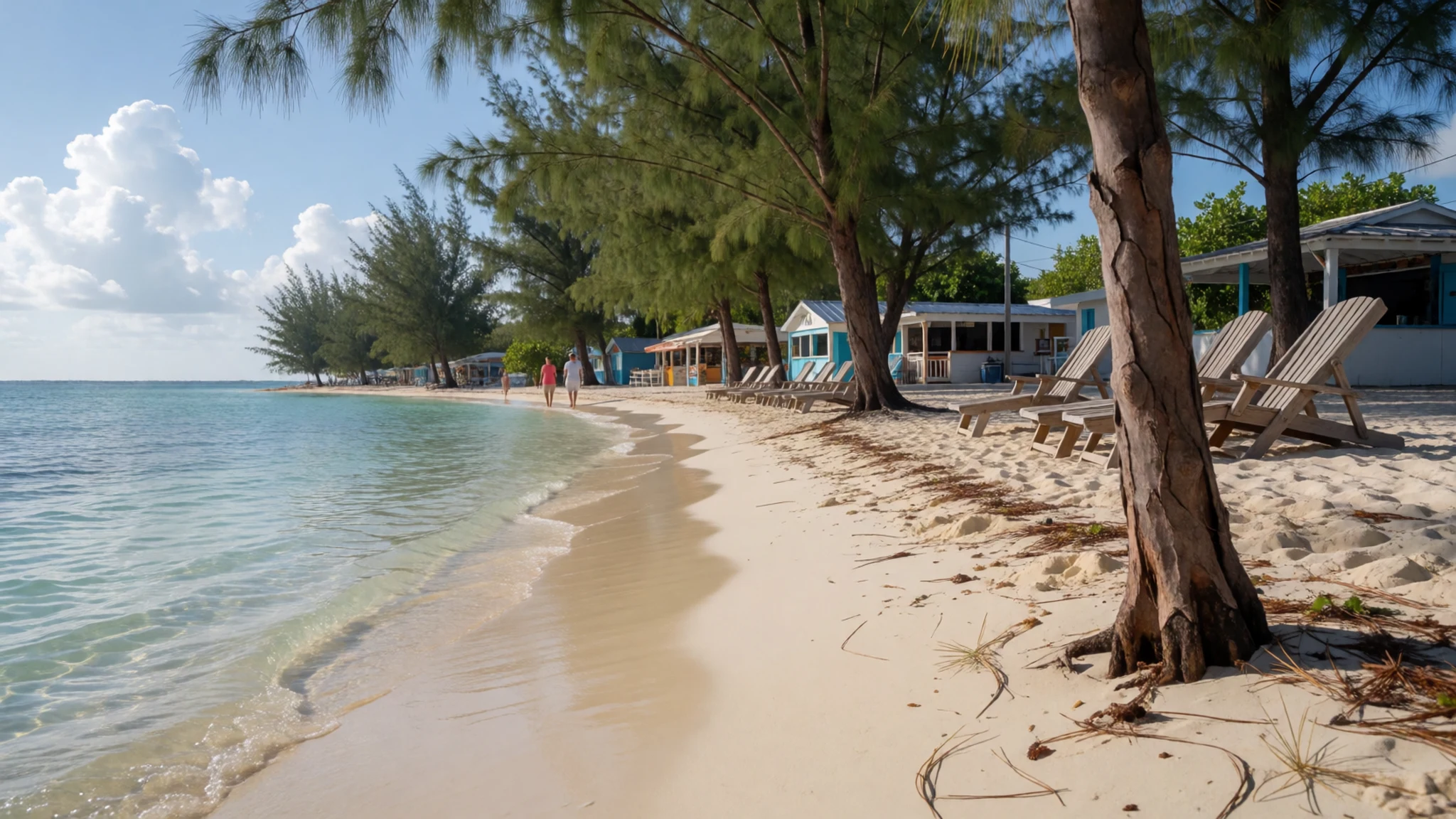
- Port Lucaya Marketplace — Lucaya
Port Lucaya Marketplace is the social centre of Lucaya on Grand Bahama, a waterfront cluster of stalls and open air eateries beside the marina. Visitors come for straw work, souvenirs and a meal with boats at the dock, and local musicians often set up in the square after dusk. It is a practical place to sample conch and to watch people in the same visit.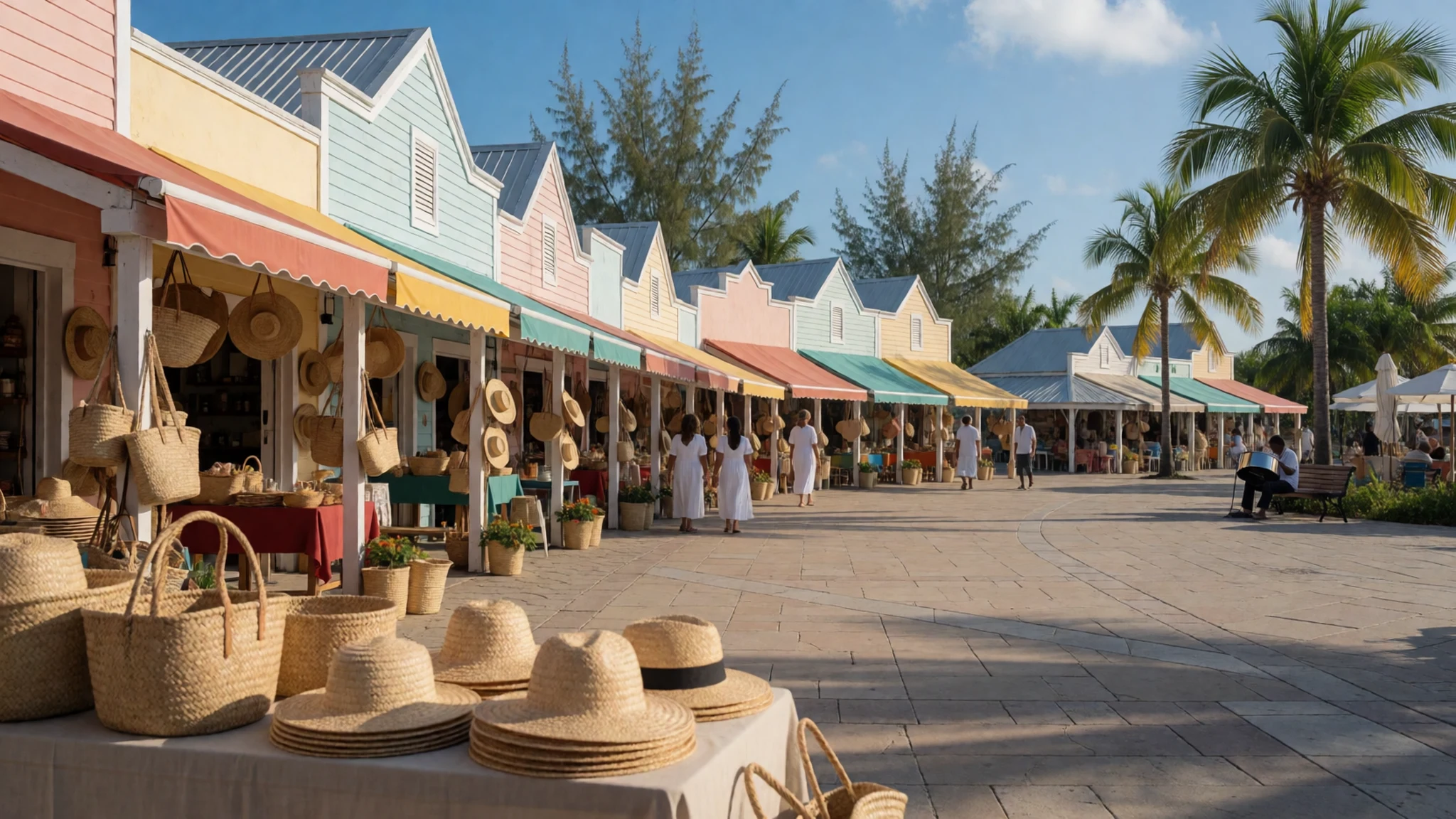
- International Bazaar — Freeport
The International Bazaar in Freeport, on Grand Bahama, is a labyrinth of shopfronts built to suggest markets from several countries. The island's tourist boom left this architectural relic, and today it is quieter than the old brochures implied, with open stalls, closed units and a square that still frames a photograph. Straw goods, jewellery and casual snacks are the reasons to wander through.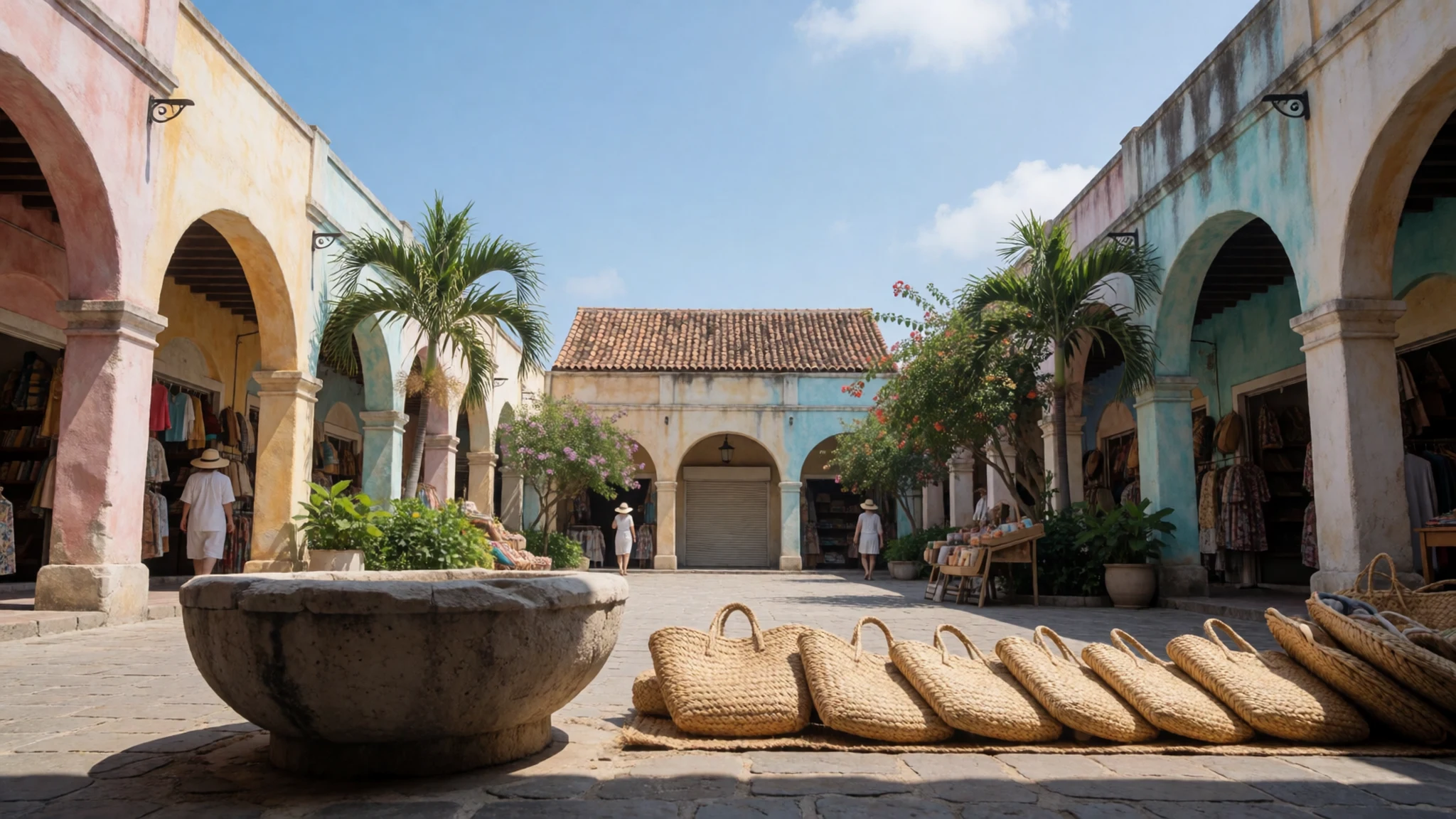
- Freeport — Freeport
Freeport is the planned heart of Grand Bahama, spread along wide roads between a commercial harbour and the beach at Lucaya. The city was laid out for ships, industry and visitors, so the scale feels more suburban and automotive than the harbour lanes of older Bahamian settlements. Container docks, a cruise berth and the airport sit on the practical side of town; the pleasure is mostly at the water.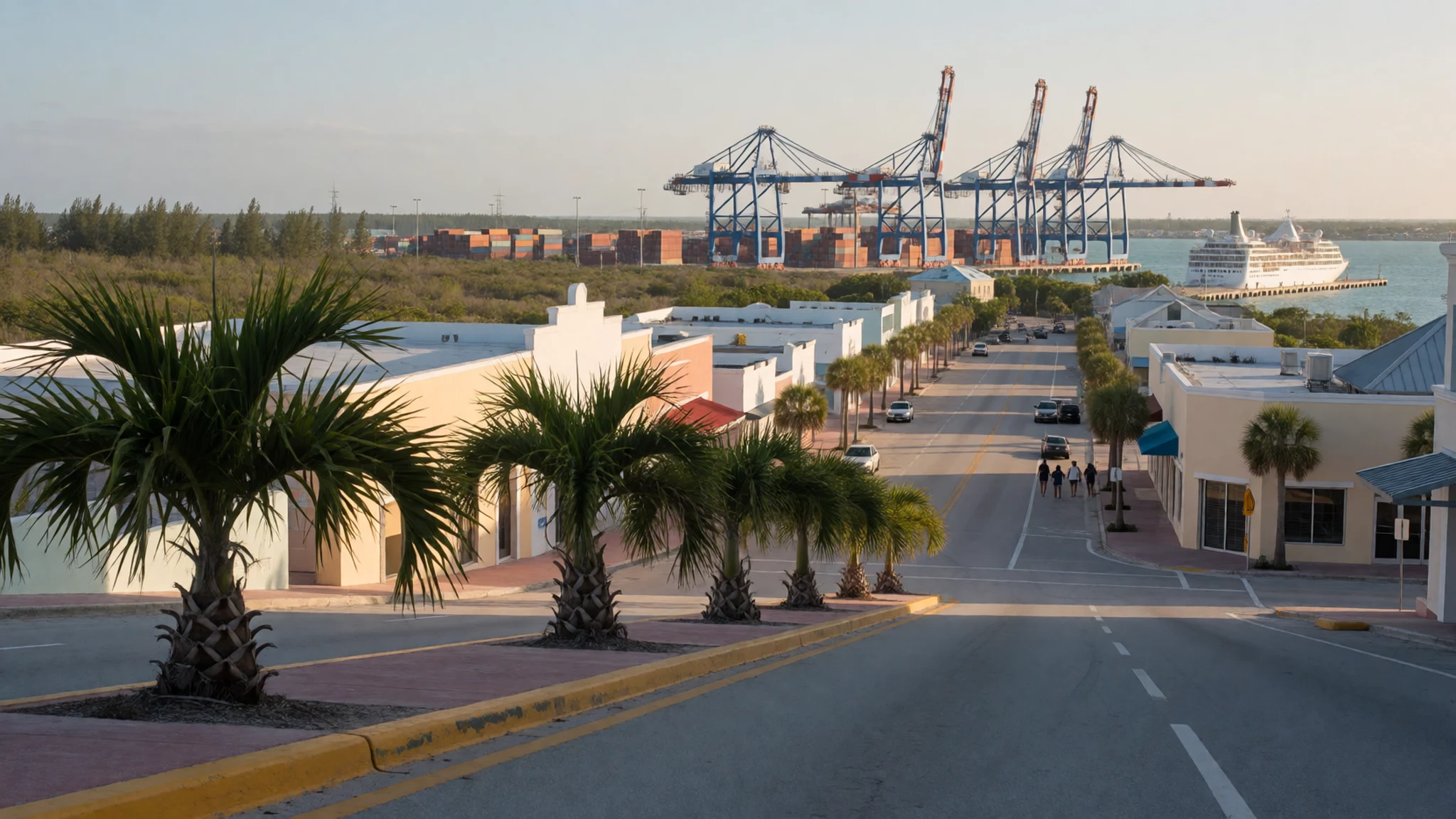
Culture
Grand Bahama shares the culture of the wider Bahamas and gives it a Freeport accent. English is the language of daily life, spoken in a Bahamian cadence that mixes British roots with West African rhythm and a vocabulary of its own; in town the American English of cruise passengers and hotel staff is common too. Church remains a social anchor. Sundays draw families into formal clothes and long services, and gospel music spills from doors that visitors are welcome to enter quietly.
The loud public face of that culture is Junkanoo. Around Christmas and New Year, crews parade in costumes built from crepe paper fringe over cardboard frames, moving to goatskin drums, cowbells and whistles. The tradition grew out of enslaved people's rare holidays and is now a national festival of the Bahamas, staged on Grand Bahama at a smaller scale than in Nassau but with the same rush of colour and noise. Between festivals, rake and scrape bands — saw, goatskin drum and accordion — still play for dances and for visitors at Port Lucaya. Straw plaiting, shell work and wood carving continue as market crafts, often sold by the people who make them.
The island also keeps the memory of the Lucayans in public view, because the national park interprets their caves and coastal life. Ask before photographing people at church, in a parade or at a market stall, and step aside rather than blocking a Junkanoo rush on Grand Bahama.
What to wear
Grand Bahama dresses for heat, church and carnival, not for a single folk costume worn every day. The clothes people point to as traditional are the Junkanoo suits: layered crepe paper cut into fringe, stretched over frames, in saturated colour, worn by parade crews at Christmas and New Year and then taken apart. Straw work belongs to the same craft tradition — hats, bags and mats plaited from palm — and it is still made and sold in Lucaya and Freeport. On Sundays the island's formal code appears: dresses, hats and suits for church, a sharpness that surprises visitors who have only seen the beach.
Weekdays look different. Residents wear light cotton shirts, shorts and sandals, with a collared shirt when work or a restaurant calls for it. Hotel staff and office workers in Freeport often wear polished casual or simple uniforms. The resort strip adds swimwear, linen and bright prints aimed at visitors, while the pine yards and harbours favour practical clothes that can take salt and dust.
Visitors should dress for sun and sudden rain. Swimwear belongs on the sand at Taino Beach or Gold Rock, and a shirt or wrap belongs over it in town, in markets and on buses. Churches expect covered shoulders and knees. Limestone and reef rock are sharp, so water shoes or sturdy sandals are the right footwear there, and trainers suit the park boardwalk. A hat and a light rain layer finish a sensible Grand Bahama day.
What to eat
- Conch salad — beach stalls and Port Lucaya
Conch salad, a Grand Bahama stall staple, is raw conch diced with citrus, onion, tomato, hot pepper and sometimes celery, served cold in a cup. It turns up at beach stalls and at Port Lucaya, often prepared at the stall. Order it there rather than as a formal restaurant plate.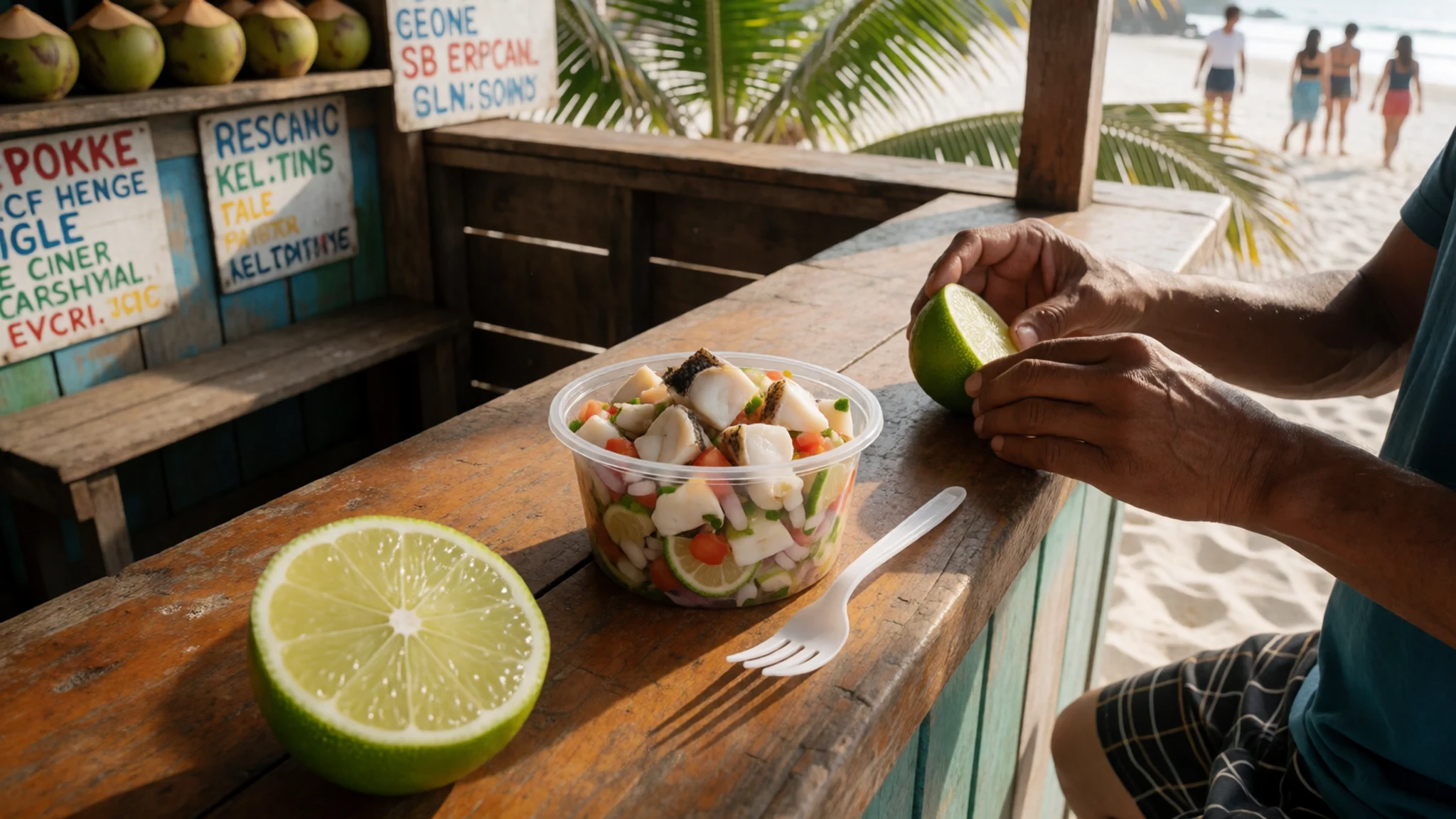
- Cracked conch — eateries in Freeport, Lucaya and the beaches
Cracked conch is a Grand Bahama everyday main: tenderised conch, battered and fried until the crust is deep gold, usually beside fried potatoes or peas and rice. Eateries around Freeport, Lucaya and the beaches serve it hot, with lime and pepper sauce on the table.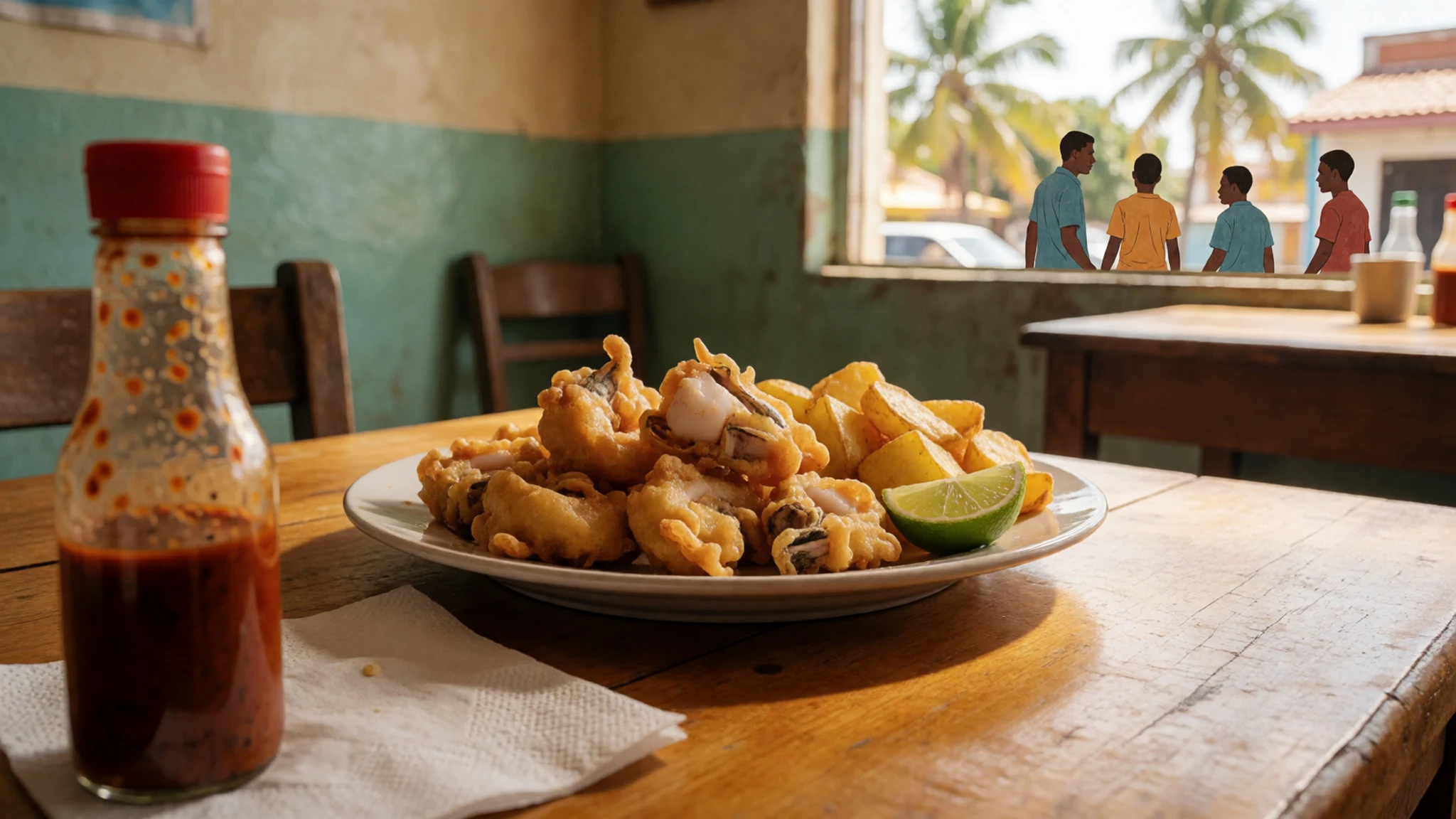
- Peas and rice with snapper — local eateries in Freeport and Lucaya
Peas and rice with snapper is everyday cooking on Grand Bahama: pigeon peas simmered into seasoned rice, served with steamed or fried snapper. Grouper and other reef fish replace the snapper when the boats have had a good day. Local eateries in Freeport and Lucaya plate it at lunch. - Conch fritters — Port Lucaya and beach shacks
Conch fritters on Grand Bahama are small fried balls of conch, pepper and batter, eaten by the basket while still hot. They are market and beach food, sold at Port Lucaya and from shacks behind the sand. A good fritter tastes of conch, not only of oil. - Guava duff — bakeries and family eateries in Freeport
Guava duff is a Grand Bahama home dessert: boiled sweet dough rolled around guava, sliced and served under a rum or guava sauce. Bakeries and family eateries in Freeport offer it when guava is in, and the crumb is dense, closer to a pudding than to a cake.
Plan it
Best time. November to April, the dry season, is drier and kinder for Grand Bahama's beaches and walks. May to October is the rainy season, hottest from June to August and wettest in September, and hurricane season is June to November, so plans may change at short notice.
How long. 3–4
Getting there. Fly to Grand Bahama International Airport in Freeport from Florida or Nassau, then taxi or transfer to Lucaya. Cruise ships use Freeport Harbour. Confirm any Florida ferry with the operator; there is no road from the mainland.
Budget. mid
Tips
- Book ahead for Christmas and Easter.
- Hire a car to reach the national park and West End.
- Start outdoor walks in the morning, before the heat.
- Carry cash for stalls; cards are usual in hotels.
Etiquette
- Ask before photographing people at church, in markets or at Junkanoo.
- Cover swimwear in town and dress modestly in church.
- Leave coral, shells and plants where they are.
Nearby
Sources
- Wikidata — Grand Bahama (CC0)
- Wikipedia — Grand Bahama (CC BY-SA 4.0)
- Wikivoyage — Grand Bahama (CC BY-SA 4.0)
Wildlife
- Bonefish (animal)
The bonefish, also nicknamed the bananafish, is a fish with a name you will not forget. In Grand Bahama it turns up over the flats, near coral heads and above beds of sea grass, so look in those places. Watch from a respectful distance, keep your voice low and your movements slow, and go with a local guide who knows the water. Never feed it; simply enjoy seeing it live its own life.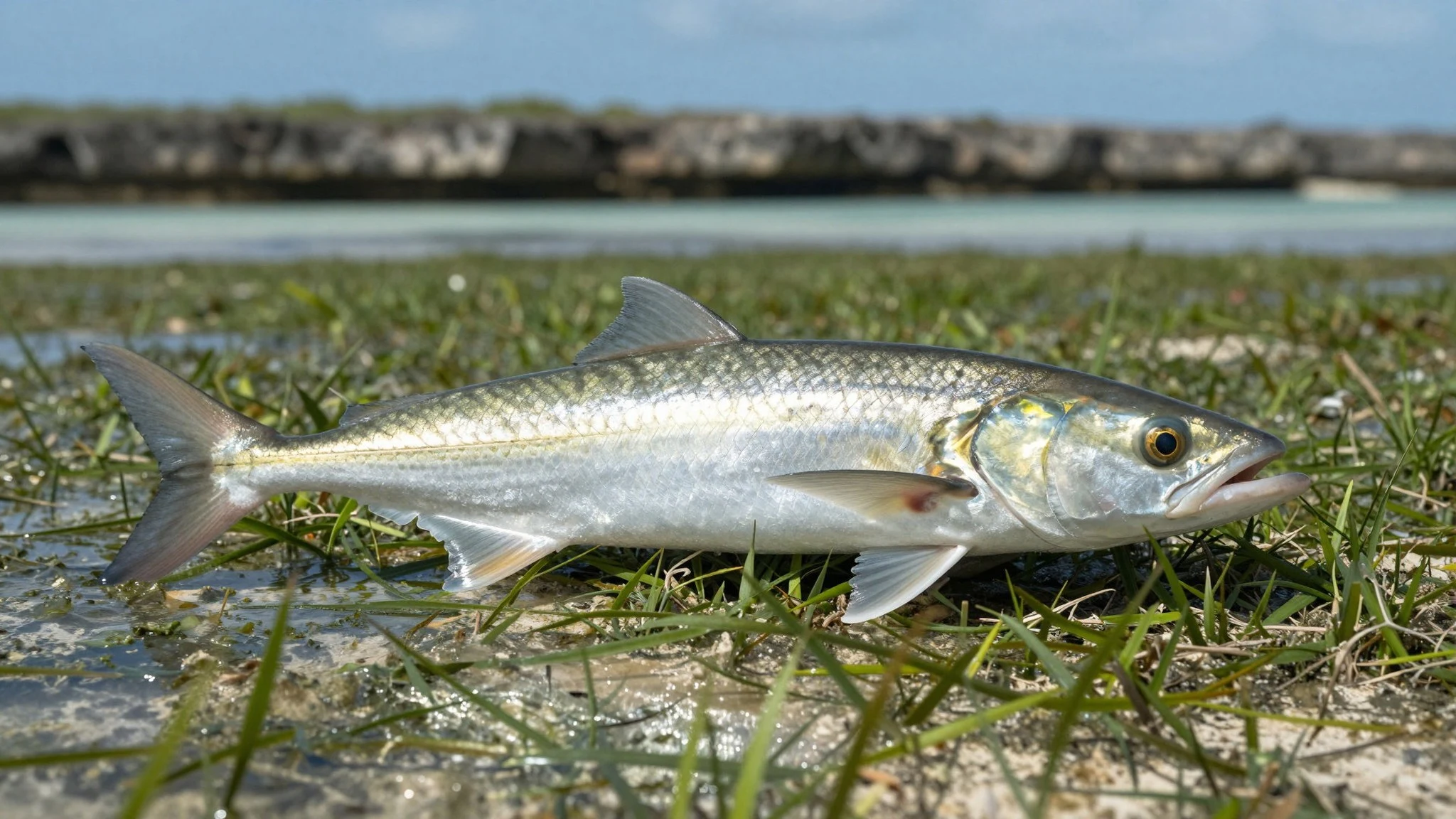
- Queen conch (animal)
The queen conch is a big sea snail that carries its home on its back as a shell. It is one of the largest molluscs of the Caribbean. In Grand Bahama it lives on the flats, by coral heads and in beds of sea grass. Look down gently from a distance, keep quiet, and go with a guide. Never feed it, and leave any living shell where you found it.