Marie-Galante
Marie-Galante, France
Marie-Galante is a flat, round Guadeloupe island of empty white beaches, old sugar windmills and rum, best enjoyed slowly.
The place
Marie-Galante is a round, low island lying south-east of the main Guadeloupe islands, and it counts as one of Guadeloupe's dependencies, which makes it part of France. Locals call it la grande galette, the big biscuit, and the nickname fits: from the air it is a nearly flat disc, with a gentle limestone plateau at its centre and only modest hills. The trade winds keep the air moving and take the edge off the heat, though cyclones and earthquakes are a real part of island life. The north is where the land finally does something dramatic, ending in a high cliff, while a fault line known locally as the Bar separates the northern part from the rest. Along the west, beaches and mangroves face the Caribbean Sea. Three communes share the island: Grand-Bourg, Saint-Louis and Capesterre-de-Marie-Galante. Wikidata gives a population of 11,528, so this is a place of villages, cane fields and quiet roads rather than resorts. Distances are short, public transport is thin, and the rhythm follows the sugar and rum calendar more than any tourist season. Most visitors cross by sea from the main island, stay a few nights, and fill them with beaches, old windmills and slow driving or cycling. Everyday talk is in French and Guadeloupean Creole, in which the island's name becomes Marigalant, and evenings are quiet.
Its story
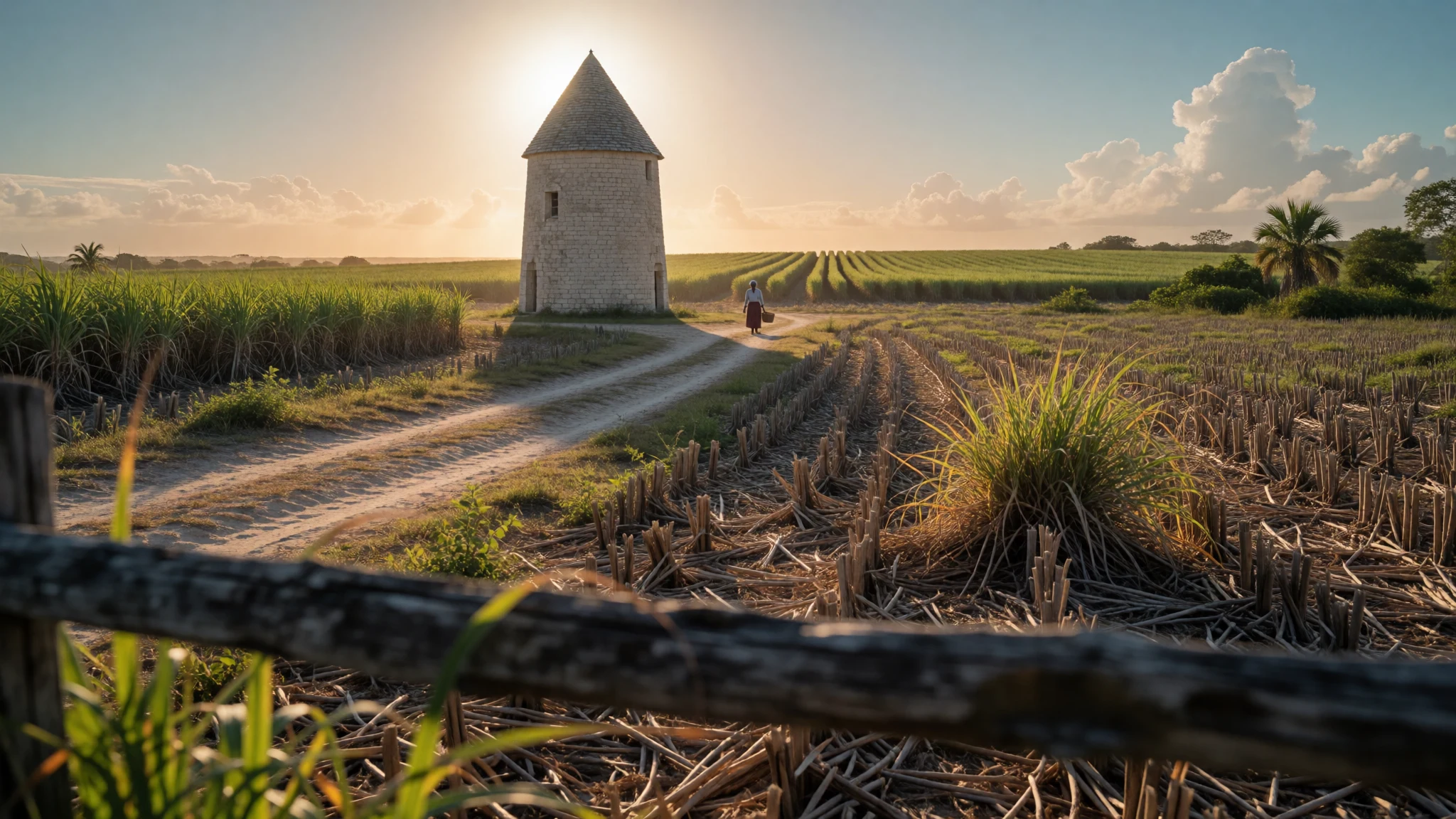
Marie-Galante was inhabited long before any European ship appeared. The oldest known occupants are called the Huecoids, followed by Arawak-speaking peoples and later the Island Caribs, who knew the island as Aichi; the Arawaks are recorded as calling it Touloukaera. Columbus sighted it on his second voyage to the Caribbean, as the second island of that crossing after Dominica, and he went ashore at a small bay near what is now Grand-Bourg. He named the island after his flagship, the Marigalante, roughly 'gallant Mary'. A Spanish writer a century later offered a different account, that a captain named it after his wife, so the origin of the name is not entirely settled. Spain registered the island as its own but did little with it. French settlement began in the middle of the seventeenth century, when the governor of Guadeloupe sent a party of men to a spot still called Vieux-Fort, the old fort. Soon afterwards Jacques de Boisseret bought the island from the company that held France's Caribbean claims, and it passed into private hands. Sugar followed, worked by enslaved Africans until abolition, and the windmills, estate buildings and rum distilleries scattered across the plateau are the physical remains of that economy. Today the story is carried by those ruins and by a Creole culture that blends African, European and, through the colombo curry, Indian influence.
What to see
- The west-coast beaches — West coast, around Saint-Louis
Marie-Galante's western shore faces the Caribbean Sea and holds long pale beaches backed by palms and mangroves. They are calm, shallow and rarely crowded outside French holiday weeks. Shade is limited, so bring a hat. Walk a little way along the sand and you will usually have a stretch to yourself.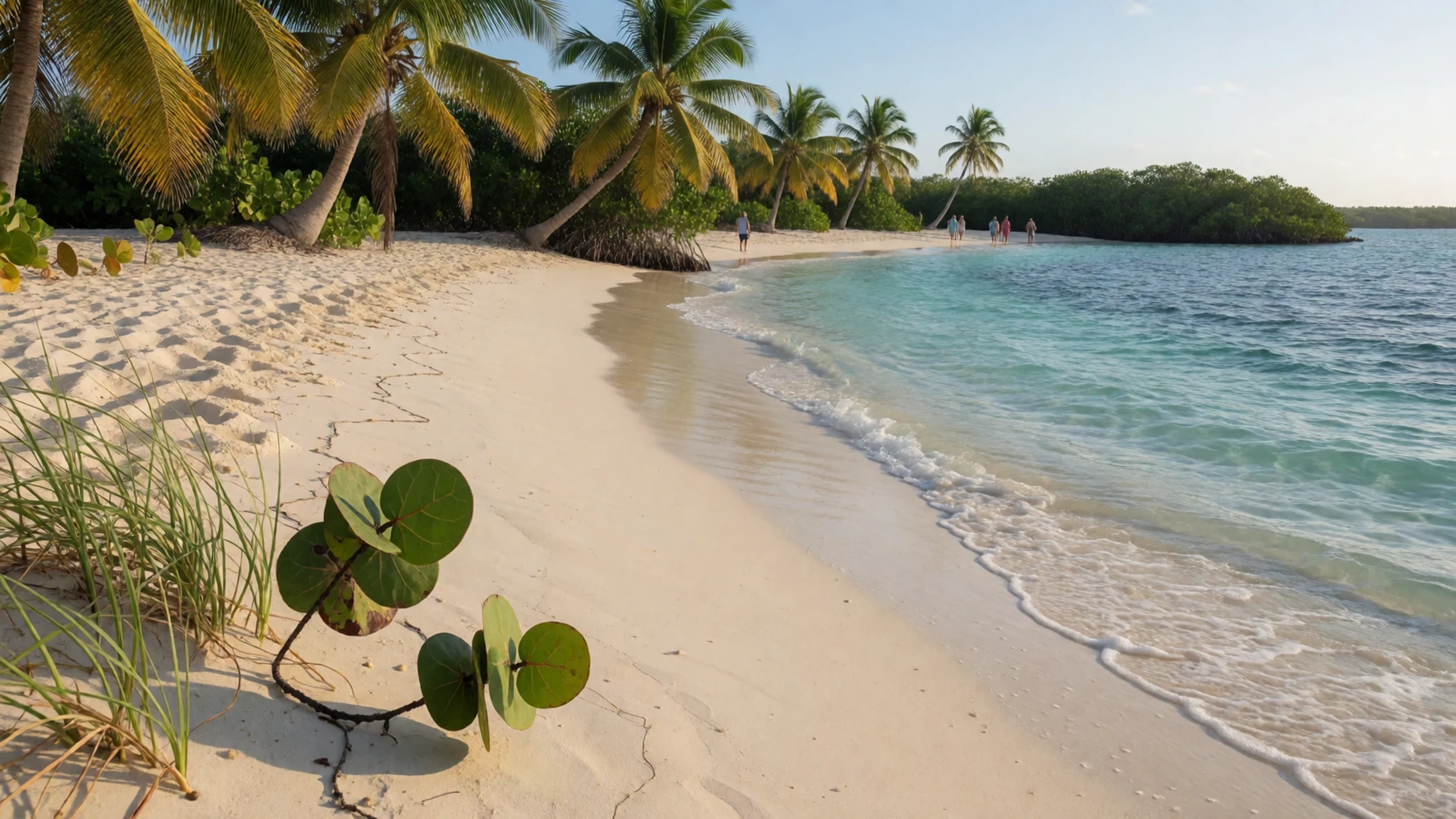
- Moulin de Bézard — Capesterre-de-Marie-Galante
One of the stone windmills that once crushed sugar cane across the plateau. The tower stands among fields and gives a clear sense of how the island was organised around sugar. Treat it as a short stop on a cycling or driving loop, and try for the softer light of late afternoon.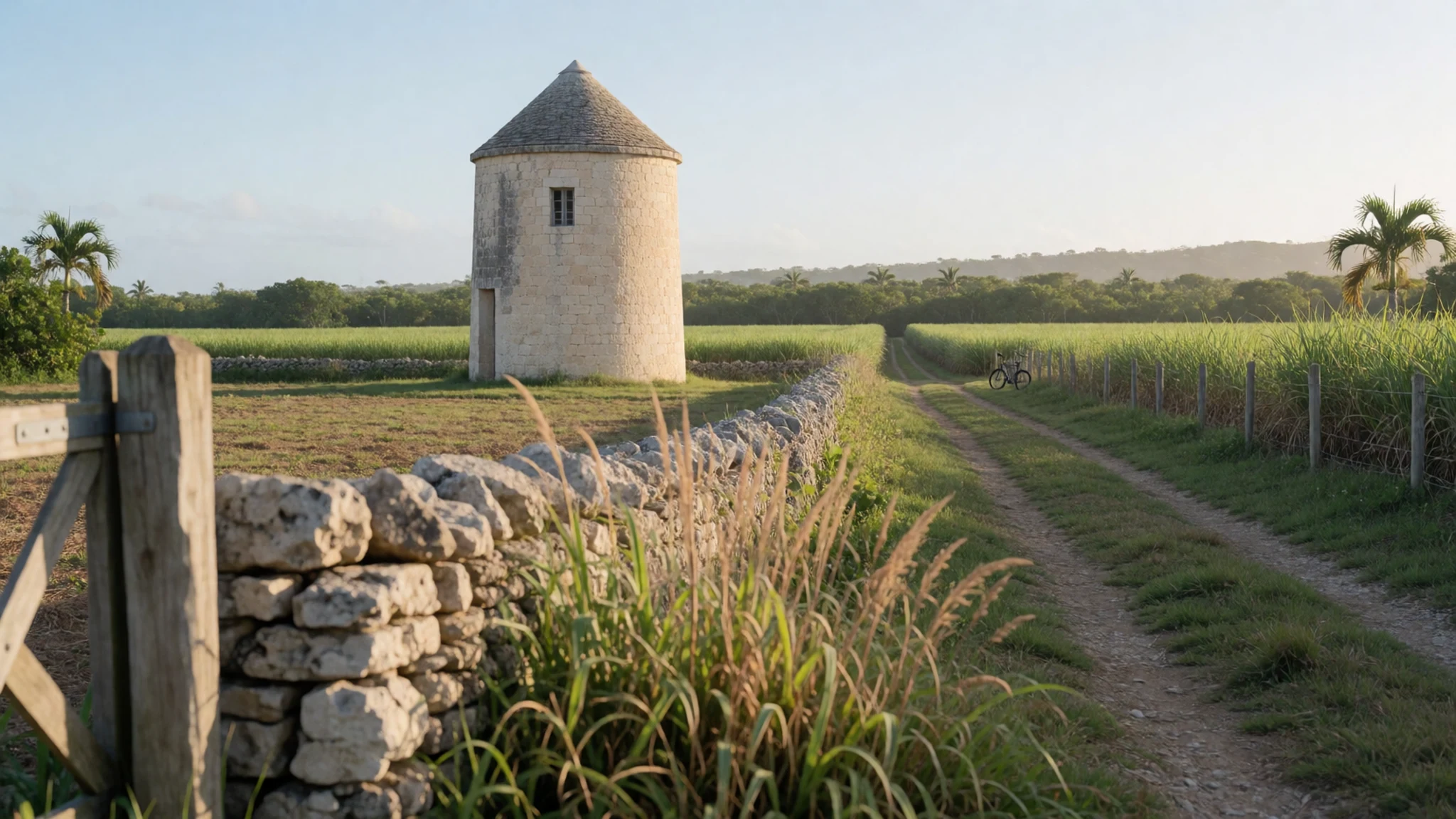
- Habitation Roussel-Trianon — Interior plateau
A former sugar estate now run as an ecomuseum. The mill and the stables are the main buildings still standing, and together they explain how cane, labour and animal power fitted together. It is a useful half-day for understanding why the island looks as it does. Check the official listing for opening days.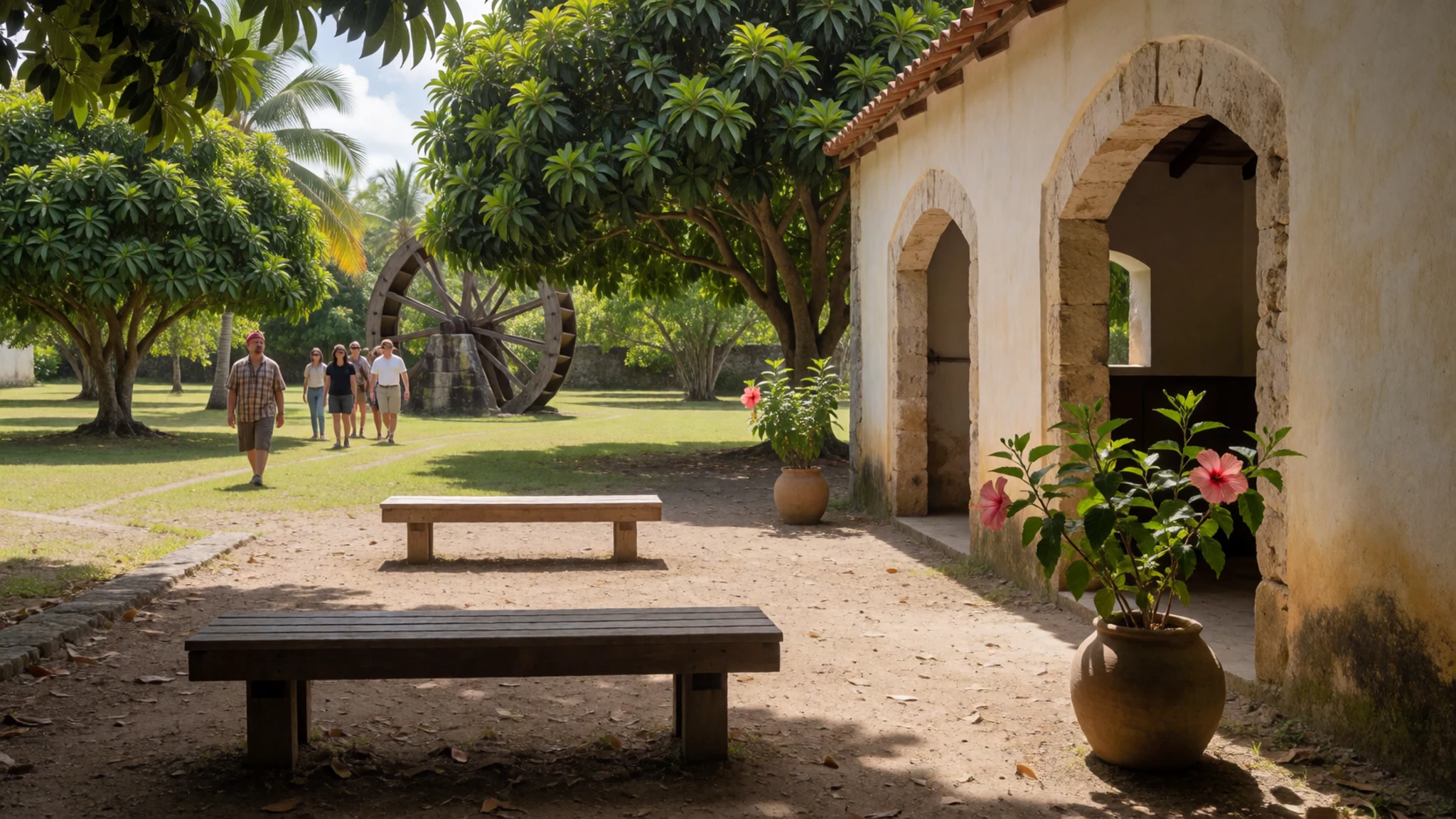
- Gueule Grand Gouffre — North coast cliffs
On the northern side, where the land ends in a high cliff, the sea has carved a deep hollow into the rock. Waves boom into it in rough weather. Keep well back from the edge, which is unfenced in places, and avoid going in strong wind or after heavy rain.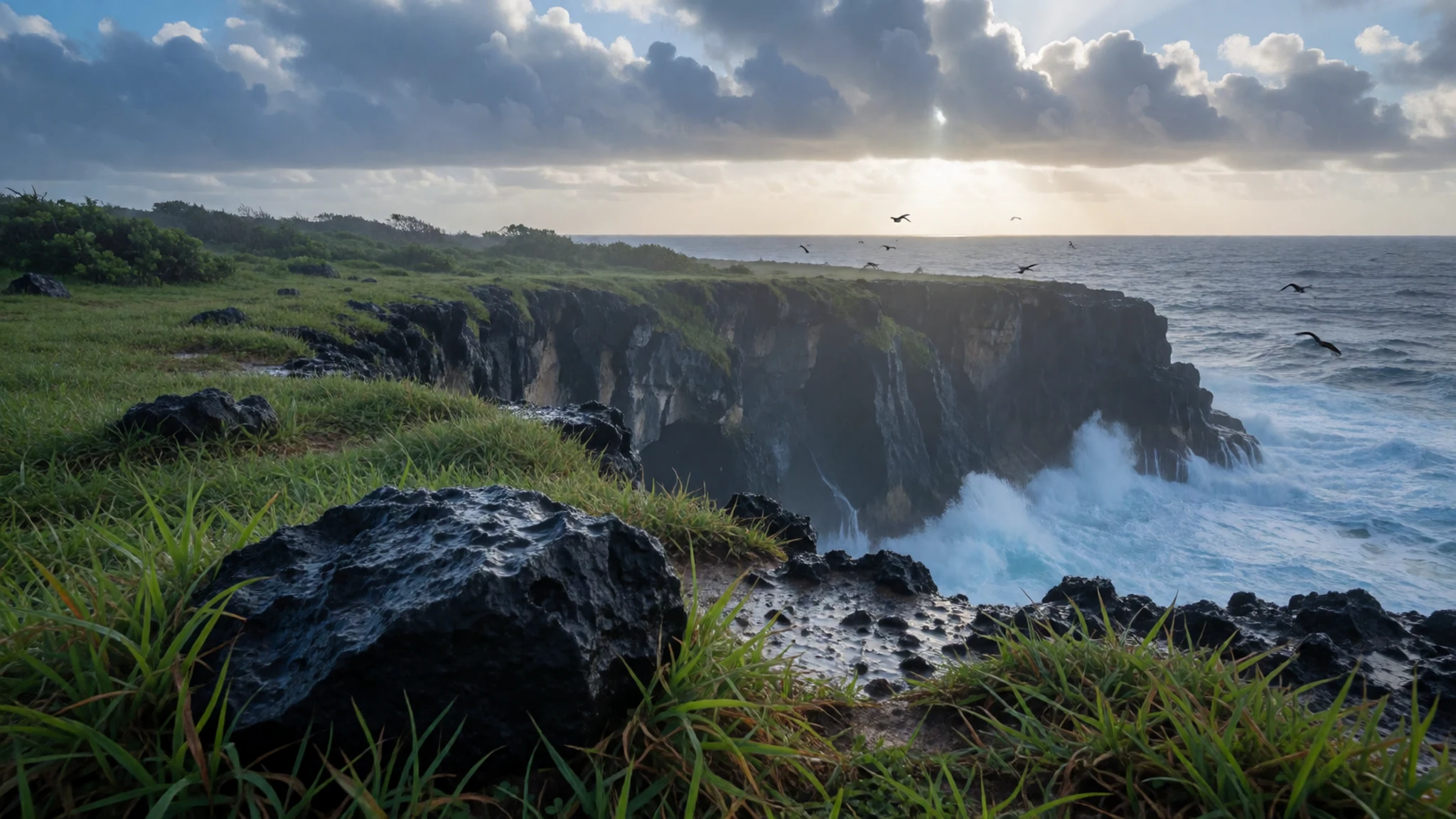
- Grand-Bourg and the turtle shallows — Grand-Bourg and nearby bays
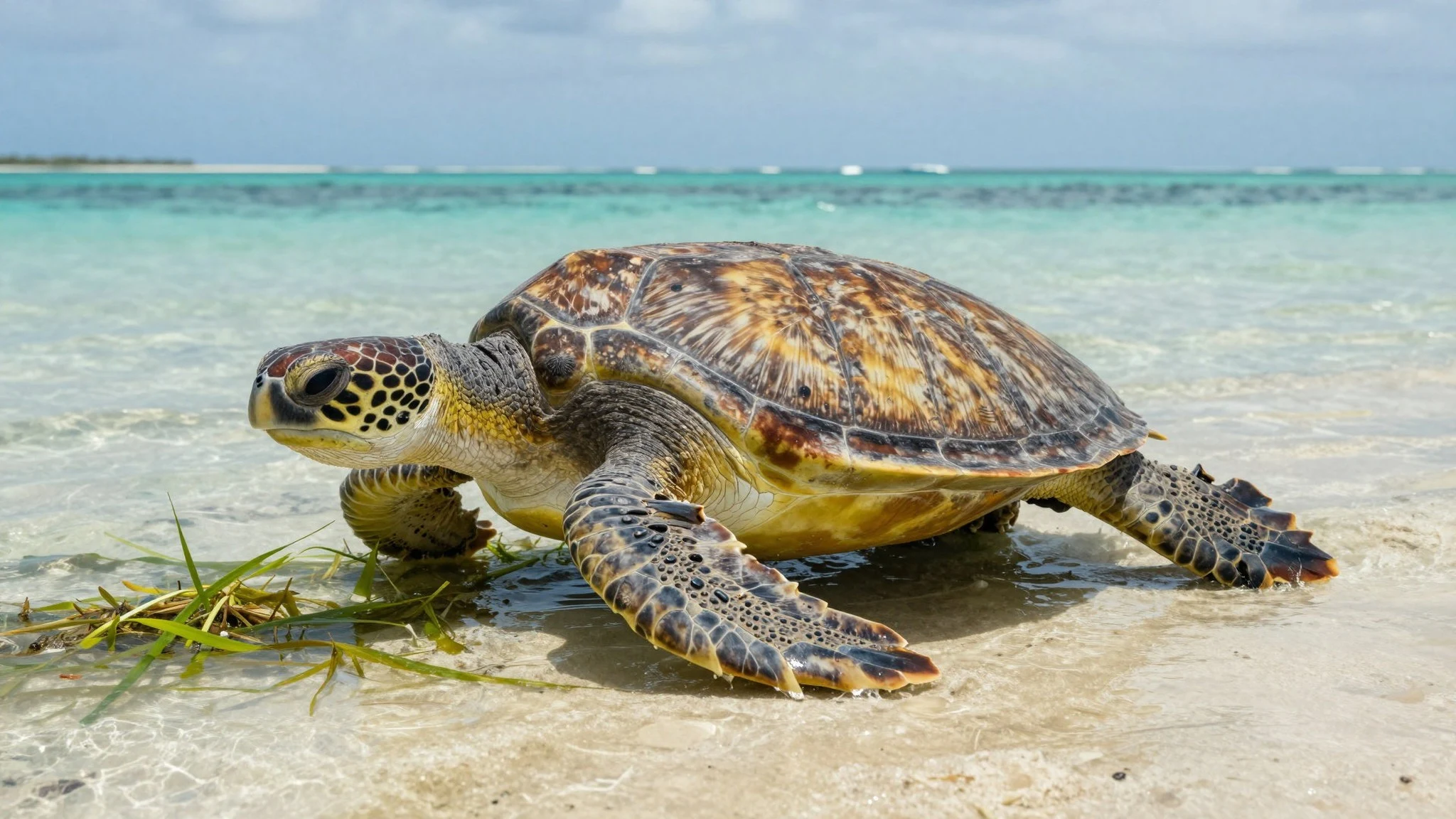
Grand-Bourg is the island's main town and the usual arrival point by ferry, with a market, bakeries and small shops. Turtles feed in the clear shallows along parts of the coast; watch from the water's edge or while snorkelling, without touching them or chasing them.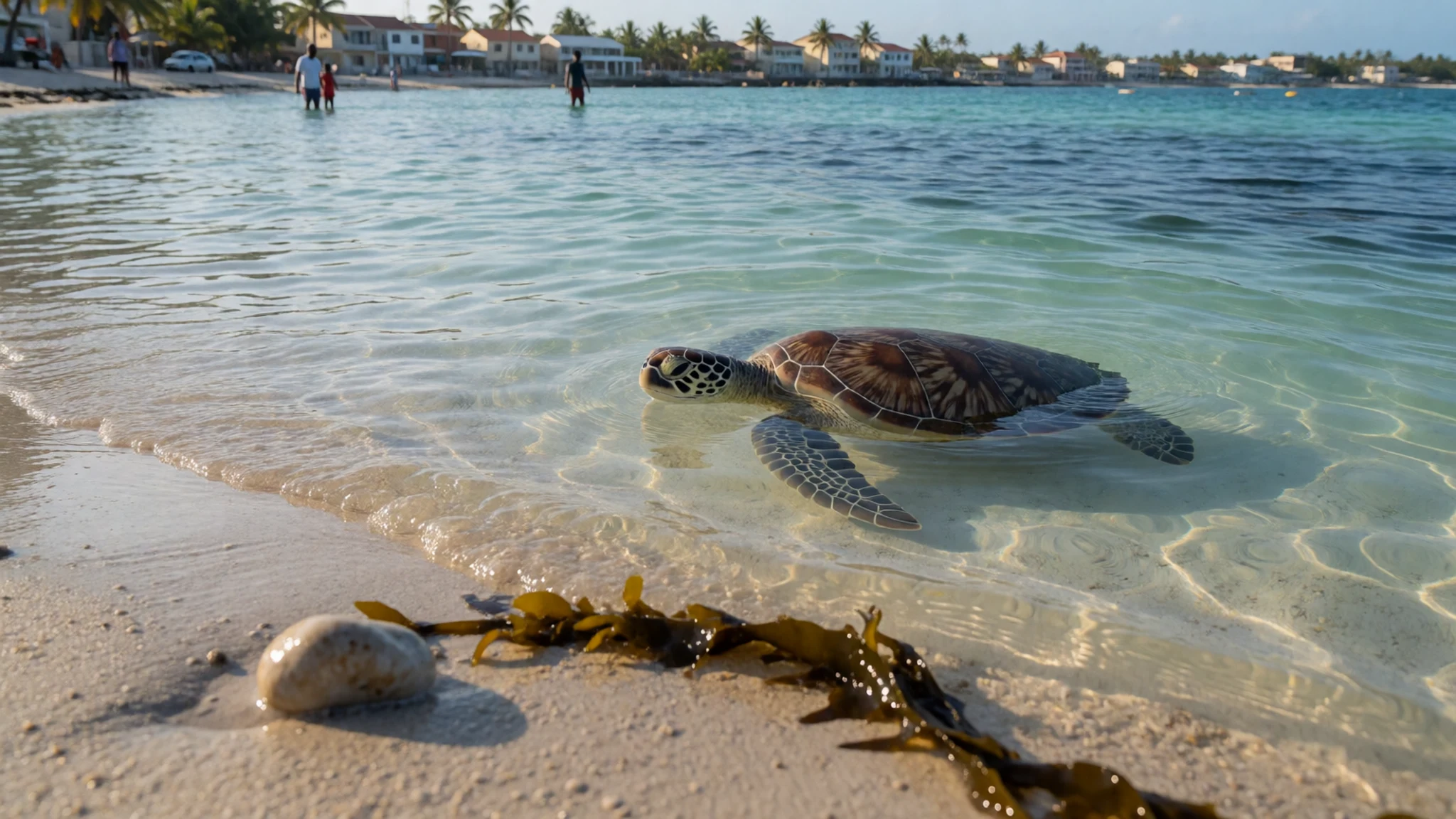
Culture
Marie-Galante's culture is Creole, shaped by the plantation past and carried on in food, music and festivals. The island's sense of calendar is strong. Around Christmas, families and friends gather for the chanté nowel, carol-singing evenings, and markets are organised in communities across the island. Carnival matters even more: troupes parade through the streets on Sunday afternoons from January until the main carnival days in February or March. At the end of January Grand-Bourg hosts a large parade under the name Woy Mi Mass, and it is worth planning around if you like drums, costume and noise. Beyond festivals, daily life is village-sized. Neighbours know one another, fishing boats are pulled up on the sand, and rum and cane remain part of conversation as much as of the economy. Language is French with Guadeloupean Creole underneath, and a few words of effort are noticed and welcomed. Religion is mostly Catholic, with village churches that anchor local events. The pace is slow by design, and being kept waiting at a counter is normal rather than rude. Greet people with a bonjour before asking anything in a shop, café or on the street, and ask before photographing anyone, especially during carnival.
What to wear
Marie-Galante's traditional dress belongs to the wider Guadeloupean Creole wardrobe, in which madras, a brightly checked cotton cloth, is the key textile. Women's festival dress traditionally combines a madras head-tie, a full skirt, a fitted bodice and a lace-trimmed blouse, finished with gold jewellery that is often handed down in families. It is worn mainly for carnival, folklore events and celebrations, and the way a head-tie is knotted has traditionally carried its own signals. Everyday clothing now is simple and suited to the heat: cotton or linen shirts, shorts, light dresses, sandals and sunglasses. Men often wear short sleeves and canvas shoes, and church on Sunday brings out smarter outfits. Beach wear stays on the beach, and visitors will see little formality elsewhere. As a visitor, pack for sun and humidity. Bring breathable fabrics, a wide-brimmed hat, high-factor sun protection and a light rain layer, since showers pass quickly through the trade-wind season. Reef shoes or sturdy sandals help on rocky shores and at the northern cliffs, while walking shoes suit cycle rides and estate visits. Cover shoulders and knees when entering a church, and put a shirt or wrap on when walking through towns after the beach.
What to eat
- Bébélé — Small Creole eateries in Grand-Bourg and village celebrations
The island's traditional dish, a hearty one-pot soup built on bananas, root vegetables and dumplings, often with offal or meat. It is a weekend and family meal, filling and strongly seasoned. Look for it at small Creole eateries and at local celebrations.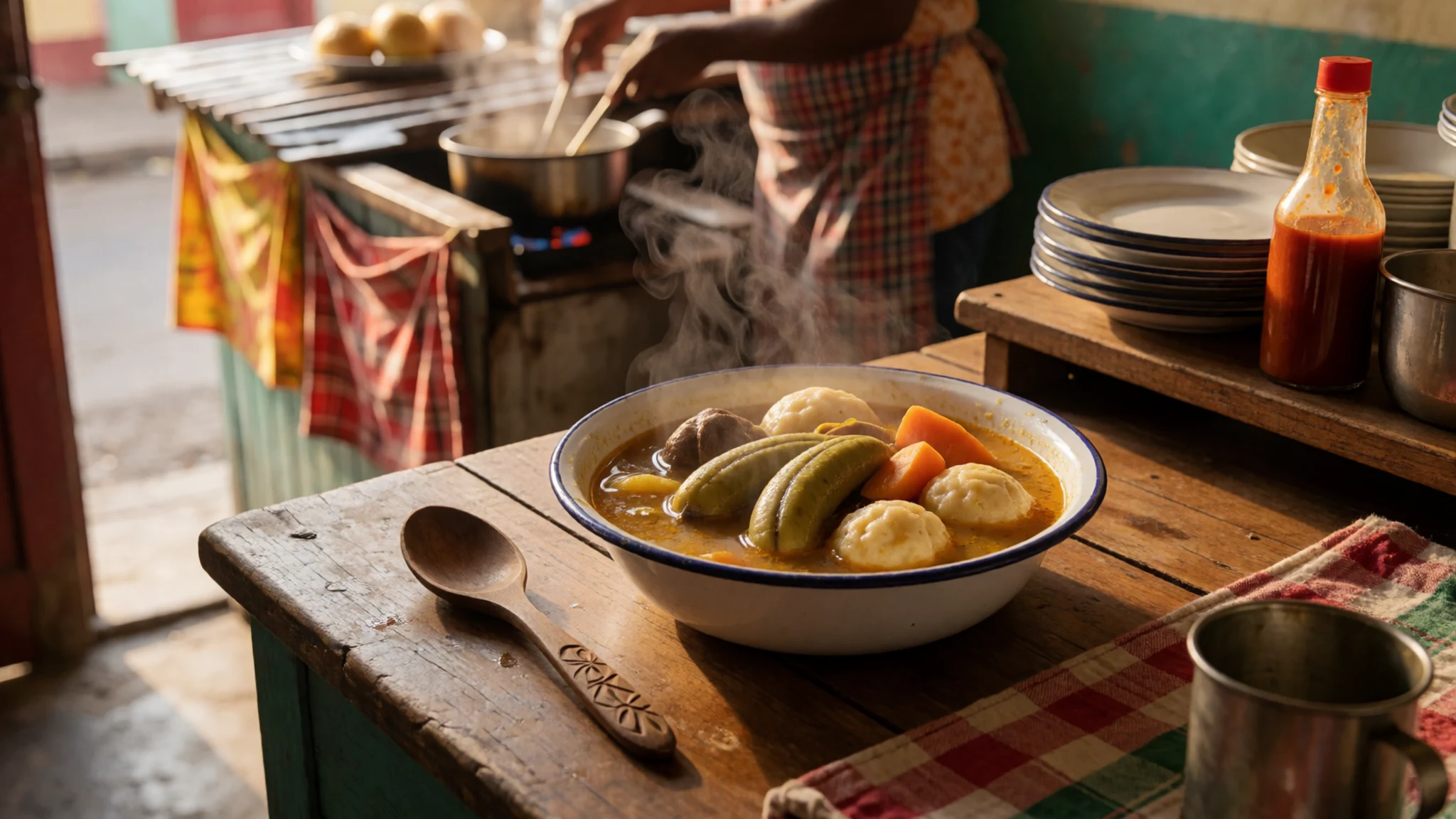
- Kilibibi — Village shops and home-style eateries
A delicacy said to be native to Marie-Galante, rarely found on mainland menus. Ask locally what is being made that day, since it tends to appear at family tables and in small shops rather than on printed menus.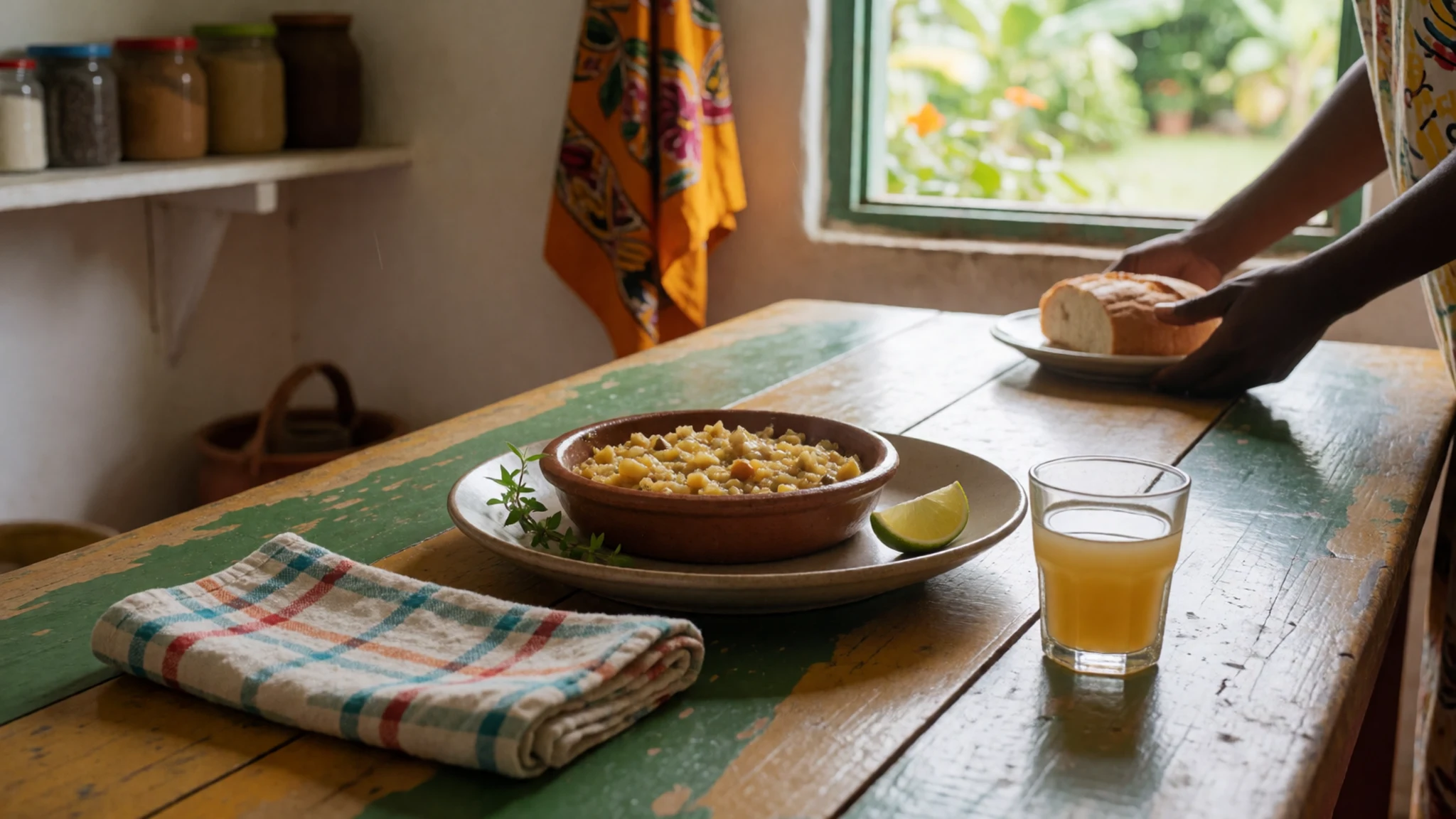
- Caca-bœuf — Bakeries in Grand-Bourg and Saint-Louis
A pastry eaten across the island and wider region, usually bought as a snack to carry to the beach. The name makes visitors smile, and it is best eaten fresh, so buy from a bakery early in the day. - Colombo — Beachside restaurants and roadside eateries
Chicken, rice and a mild curry blend brought to the Caribbean from India, now treated as a regional signature. It appears on nearly every Creole menu and is an easy, safe choice for first-time visitors. - Boudin créole — Markets and small snack counters
A spiced Creole black pudding, usually served hot as a starter or snack. It is richly seasoned, with a little heat, and often comes with a squeeze of lime. Best eaten fresh from the pan. - Féroce d'avocat — Creole restaurants and family-run eateries
An avocado-based spread, close to guacamole in style but seasoned with chilli, so the heat varies from cook to cook. Taste a little first. It is usually served with bread or cassava at the start of a meal.
Plan it
Best time. January to April is the drier, calmer stretch, with steady trade winds and lower rainfall. Cyclone season runs from May to November, with more rain, humidity and storm risk, so check forecasts and flexible bookings if you travel then. Carnival season in late winter adds colour but also crowds.
How long. 2–3
Getting there. Fly to Pointe-à-Pitre on the main Guadeloupe island, then continue by sea to Grand-Bourg on a passenger ferry, or by a short flight if one is running. Check operators and the official Guadeloupe tourism site for current crossings. Non-EU visitors should check entry rules for Guadeloupe in advance, since they differ from mainland France.
Budget. mid
Tips
- Book ferries and accommodation early for school holidays and carnival weekends
- Hire a bicycle, scooter or car on arrival, as public transport is limited and distances are short
- Carry some cash for markets, bakeries and small eateries, since not all accept cards
- Bring sun protection and drinking water to the beaches, where shade and shops can be scarce
- Allow slack in the day, as service is unhurried and many places close at midday
Etiquette
- Say bonjour when entering shops, cafés and offices
- Ask before photographing people, especially at carnival
- Take litter away from beaches and keep clear of turtles and nesting areas
Nearby
Sources
- Wikidata Q1334492 (CC0)
- Wikipedia: Marie-Galante (rev 1385369579) (CC BY-SA 4.0)
- Wikivoyage: Guadeloupe (rev 5413121) (CC BY-SA 4.0)
- Kijan Ay, Long white sand beach (CC BY 3.0)
- Moulin Bezard (CC BY 3.0)
- Bellin, Carte de l'isle de Mari-Galante (Public domain)
- Écomusée de Marie Galante, Habitation Roussel-Trianon (CC BY 3.0)
- LEATHAM Mikaël, Gueule Grand Gouffre (CC BY-SA 4.0)
- Valeriano Della Longa, Marie Galante on the beach (CC BY 2.5)
- Remi Jouan, Tortues à Marie-Galante (CC BY 4.0)
- Dominic Sherony, Red-billed Tropicbird (CC BY-SA 2.0)


Wildlife
- Green sea turtle (animal)
The green sea turtle is a big sea-going creature that carries its house on its back and eats only seagrass, rather like a cow of the ocean. On Marie-Galante it feeds in the clear, shallow water along parts of the coast. Observe from the shore's edge, or float quietly with a snorkel, and let it carry on undisturbed. Never touch it or chase it; simply enjoy the calm of watching it graze.