Maracas Beach
Maracas Beach, Trinidad and Tobago
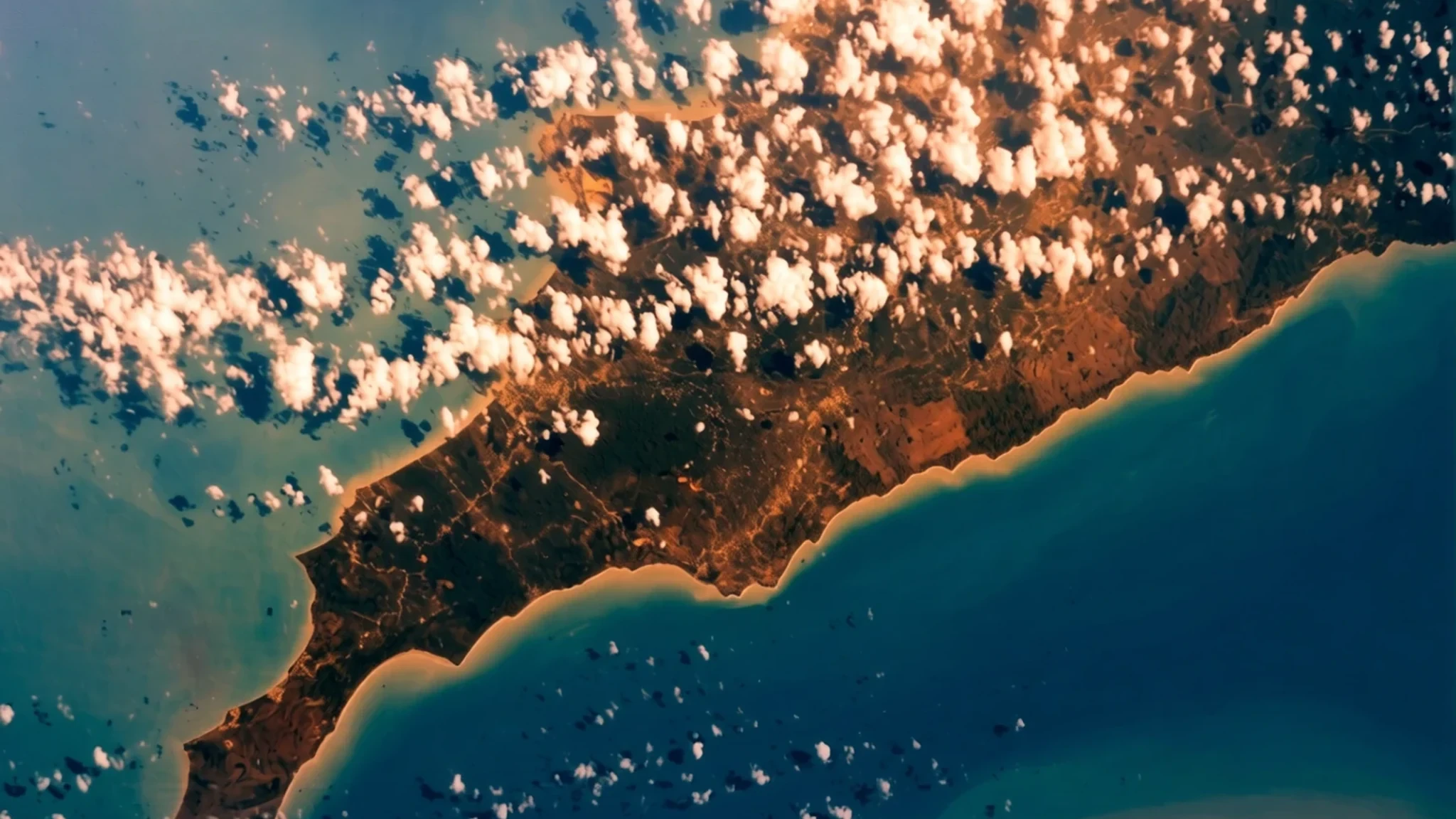
Maracas Beach is Trinidad's north-coast Sunday lime: a palm-backed bay, lively surf, and bake and shark eaten in the sea breeze.
The place
Maracas Beach is a wide sandy bay on Trinidad's north coast, held between steep forested headlands of the Northern Range. The approach is part of the place: the coast road leaves the capital's suburbs, climbs a ridge of thick secondary forest, and opens at a lookout where the whole crescent appears at once, pale sand, a line of coconut palms, and water that shifts from turquoise in the shallows to a deeper blue beyond the break. Down on the shore the beach is open to the Caribbean. Waves arrive with enough energy that swimming needs attention: the bottom shelves, and the surf breaks in a white line that moves with the tide and the trade wind. Behind the palms a loose row of huts and stalls faces the sea. This is where a Trinidad beach day actually happens: coolers on the sand, music from a parked car, children in the wash, and fryers working through the long lunch. Fishermen still use the bay, and small boats rest near the edges when the sea allows. The hills stay close. In the drier months the light is hard and the sea looks clear from the lookout; in the wetter months cloud sits on the ridge and short heavy showers sweep across, then leave the sand steaming. Maracas Beach is a public bay rather than a resort frontage: the vendors, the car park, and the mountain behind are the whole arrangement.
Its story
The story of Maracas Beach is mostly a story about a road and a recipe. For a long time the north coast of Trinidad was a line of estates, forest, and small fishing landings, separated from Port of Spain by the Northern Range. Cocoa and coconut were the crops of those slopes; the bay itself was a working shore more than a place for a Sunday outing. What changed the beach was the coast road over the ridge. Once cars could climb out of Maraval and drop towards the sea, Maracas Beach stopped being a distant name and became a bay the capital could reach in a day. The drive turned into a ritual: the lookout, the first sight of the bay, the descent, the queue for food. The dish that sealed that ritual is bake and shark. A fried fillet, slipped into a round of fried bread, then dressed with pepper, garlic sauce, tamarind, chadon beni, and whatever else is on the condiment table, became the meal people drove over the mountain to eat. Vendors along the back of the sand made a living from that appetite, and the beach's reputation on the island rests as much on the fryer as on the view. Around it, the older uses never fully left. Fishing continued. The palms are the descendants of coastal planting, not a decorative import. Families from different parts of Trinidad's mixed society — African, Indian, Chinese, European, and the Creole blends of all of them — share the same sand on a weekend, which is its own kind of history, lived rather than written up.
What to see
- The bay — the main sand, Maracas Bay
Maracas Beach is the crescent of sand inside the bay, with coconut palms along the back and the Northern Range rising behind them. The swimming is in open surf, stronger than the view from the lookout suggests, so people tend to stay in the wash rather than swim out. On a weekend the middle of the sand holds the crowd, while the ends stay quieter and closer to the rocks.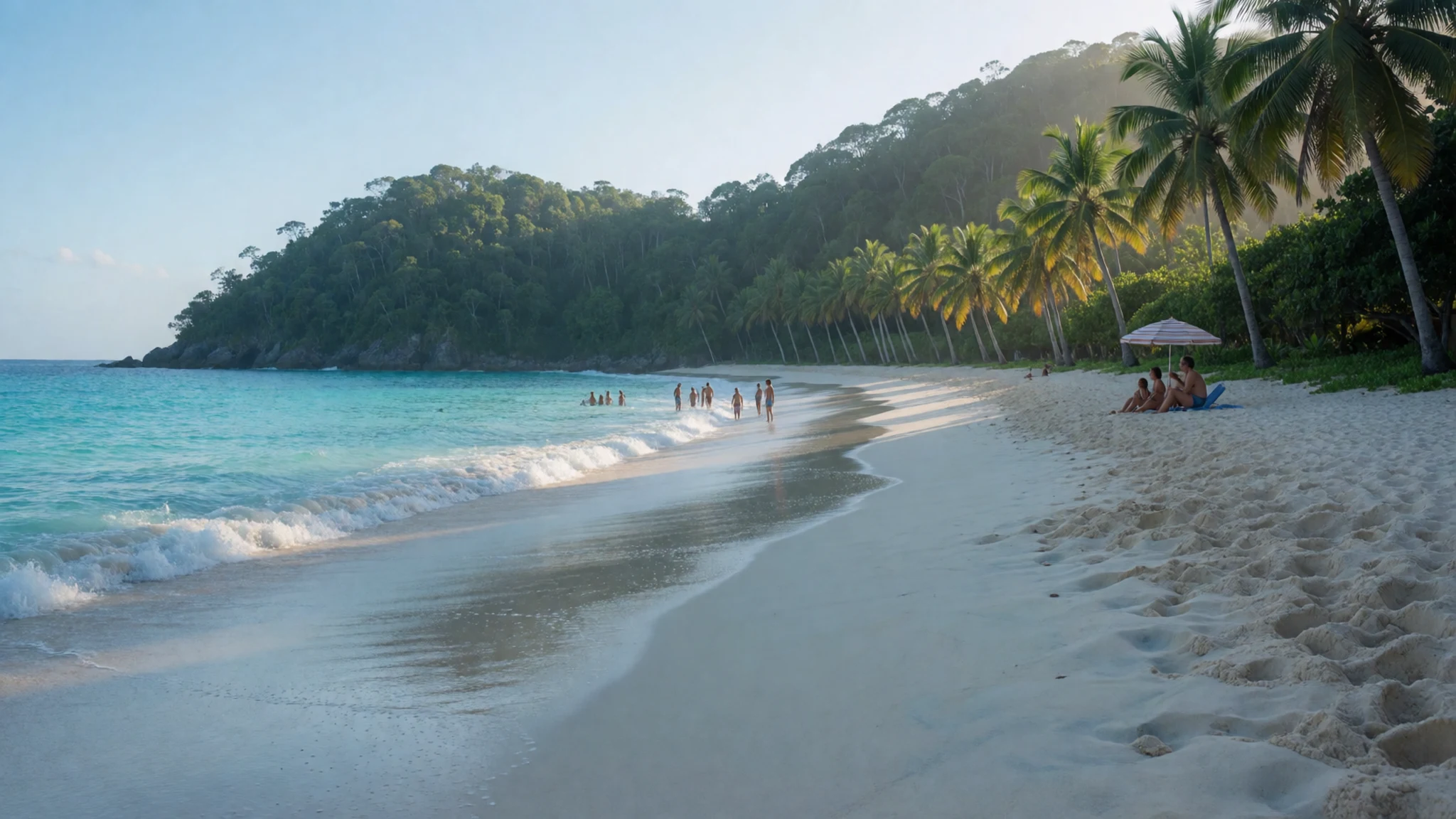
- The lookout — North Coast Road above the bay
The lookout on the North Coast Road is where Maracas Beach first shows itself: a pull-off above the bay with the crescent, the palms, and the breaking waves in one frame. Drivers stop here before the descent. On a clear day the headlands frame the water; in cloud the bay appears in pieces. The wind is stronger than on the sand, so it doubles as a surf check.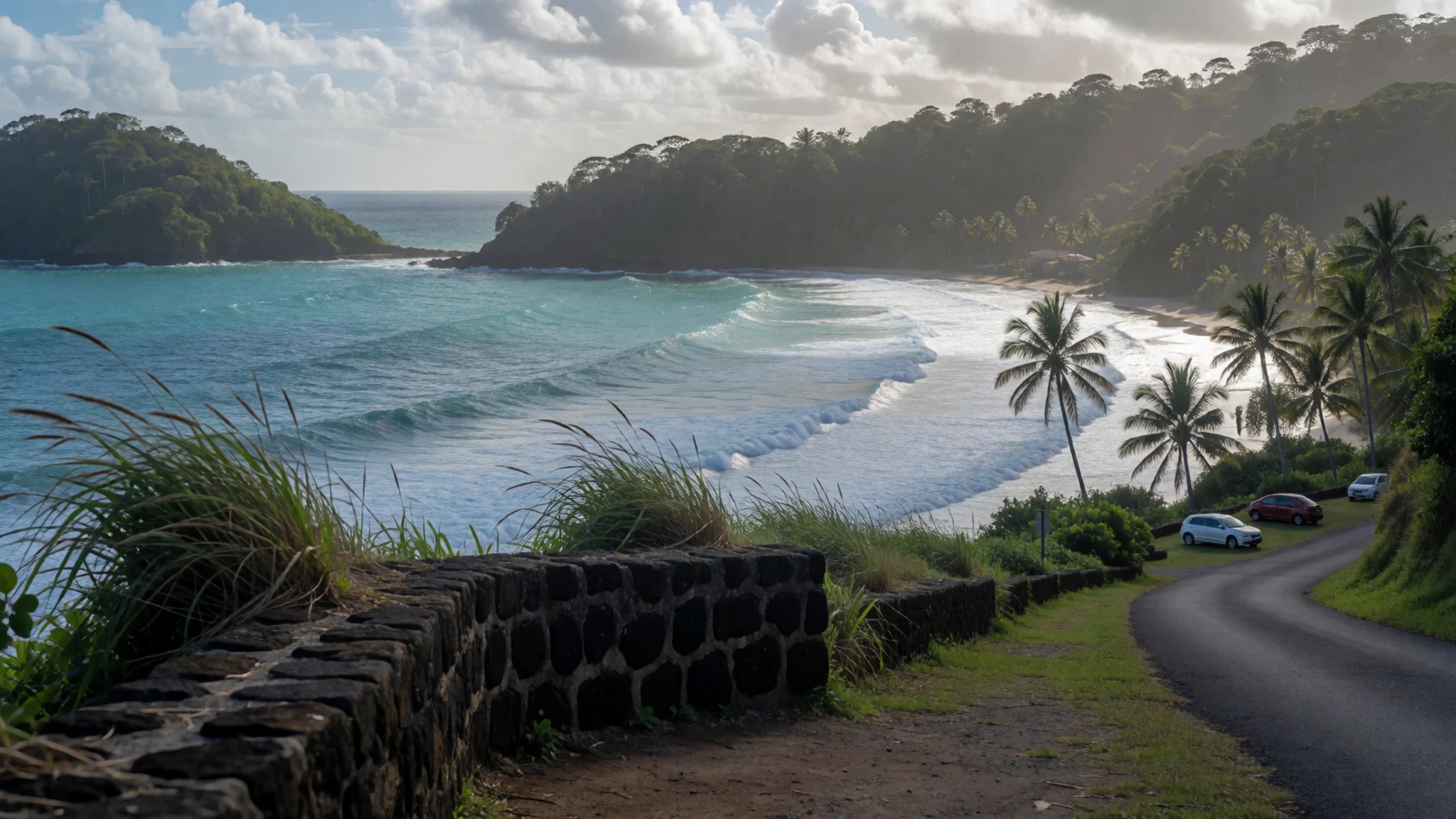
- The jetty — the shore of Maracas Bay
A short jetty runs from Maracas Beach into the bay, a thin line of structure against the open water. It is used more as a place to stand and look along the curve of the sand than as a working harbour, and the walk out gives a side-on view of the break that is hard to read from the shore. Footing can be wet with spray.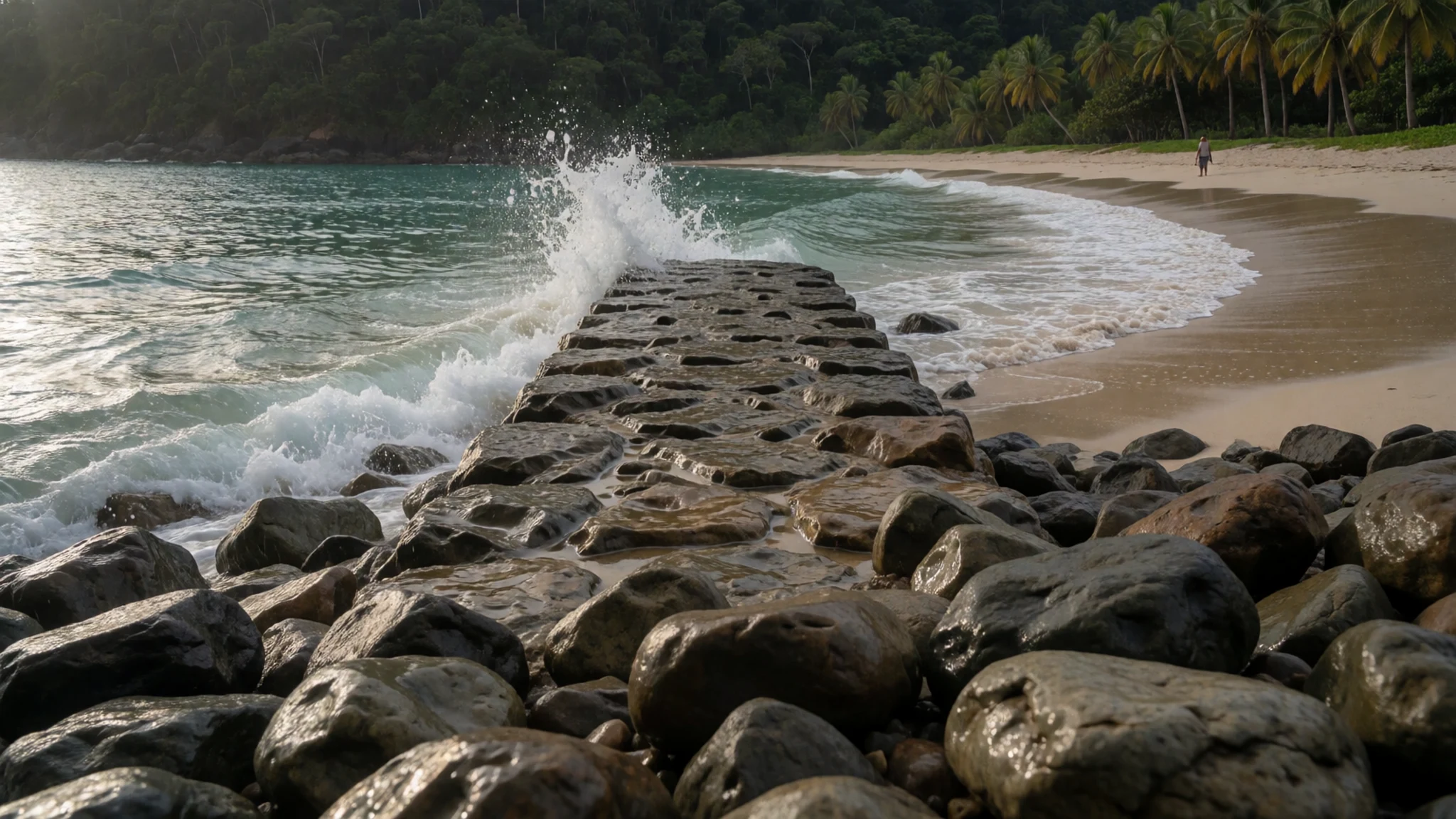
- The huts under the palms — under the palms behind the sand
Behind the coconut palms at Maracas Beach sits the row of huts that feeds the bay. This is the working edge of the beach: fryers, condiment trays, queues, and plastic tables in the shade. Bake and shark is the order that built the place's reputation, dressed to taste from a bar of pepper, garlic, tamarind, and chadon beni. The palms are the shade.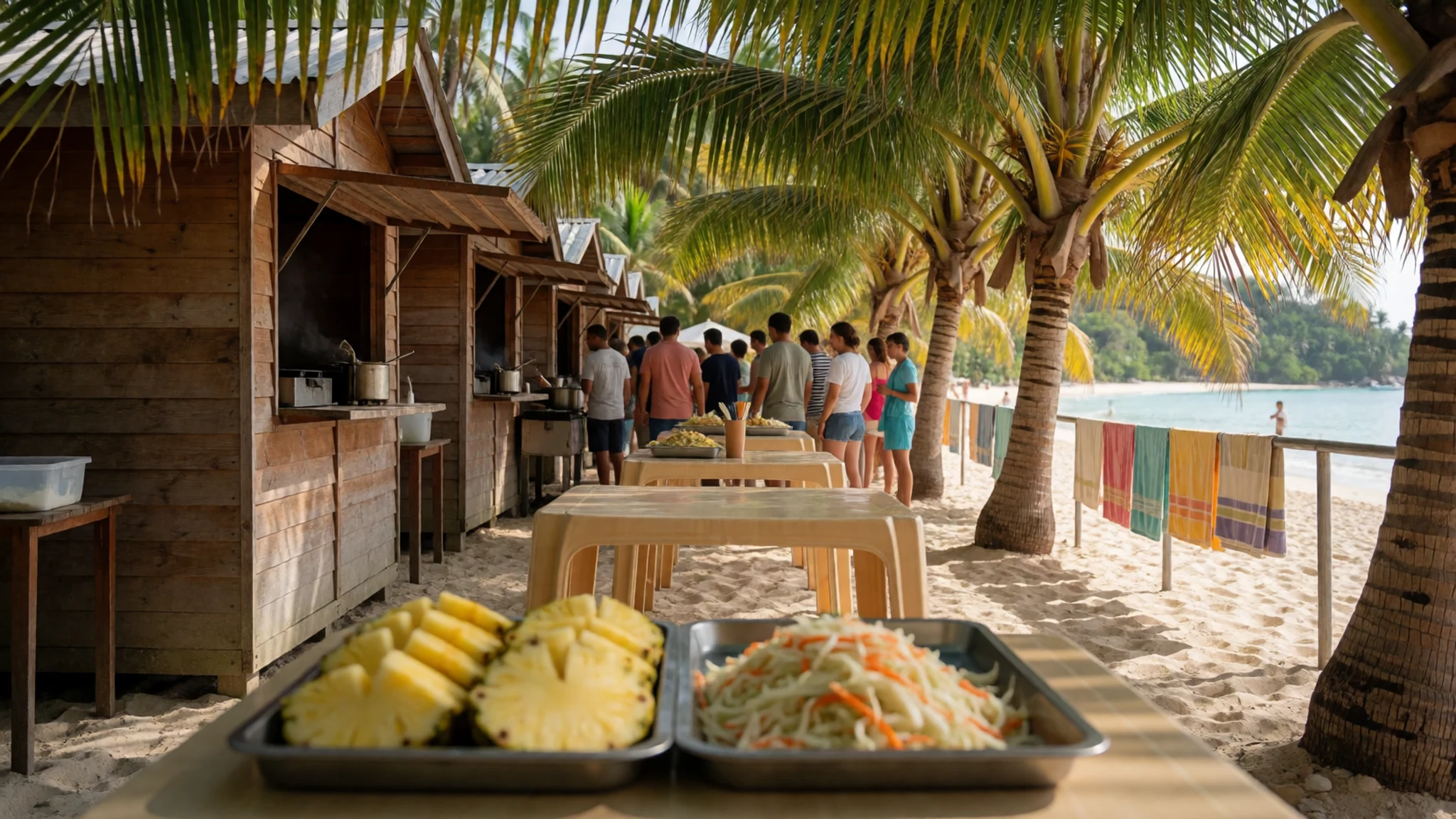
- The ends of the sand — the rocky ends of the bay
The ends of Maracas Beach feel different from the crowded middle. Towards the rocks the sand narrows and the hillside comes down close to the water. Small boats are pulled up here when the sea is workable, and the swim is less obvious, because currents and stone sit just under the surface. The walk towards the palms shows the curve of the bay without the thickest weekend crowd.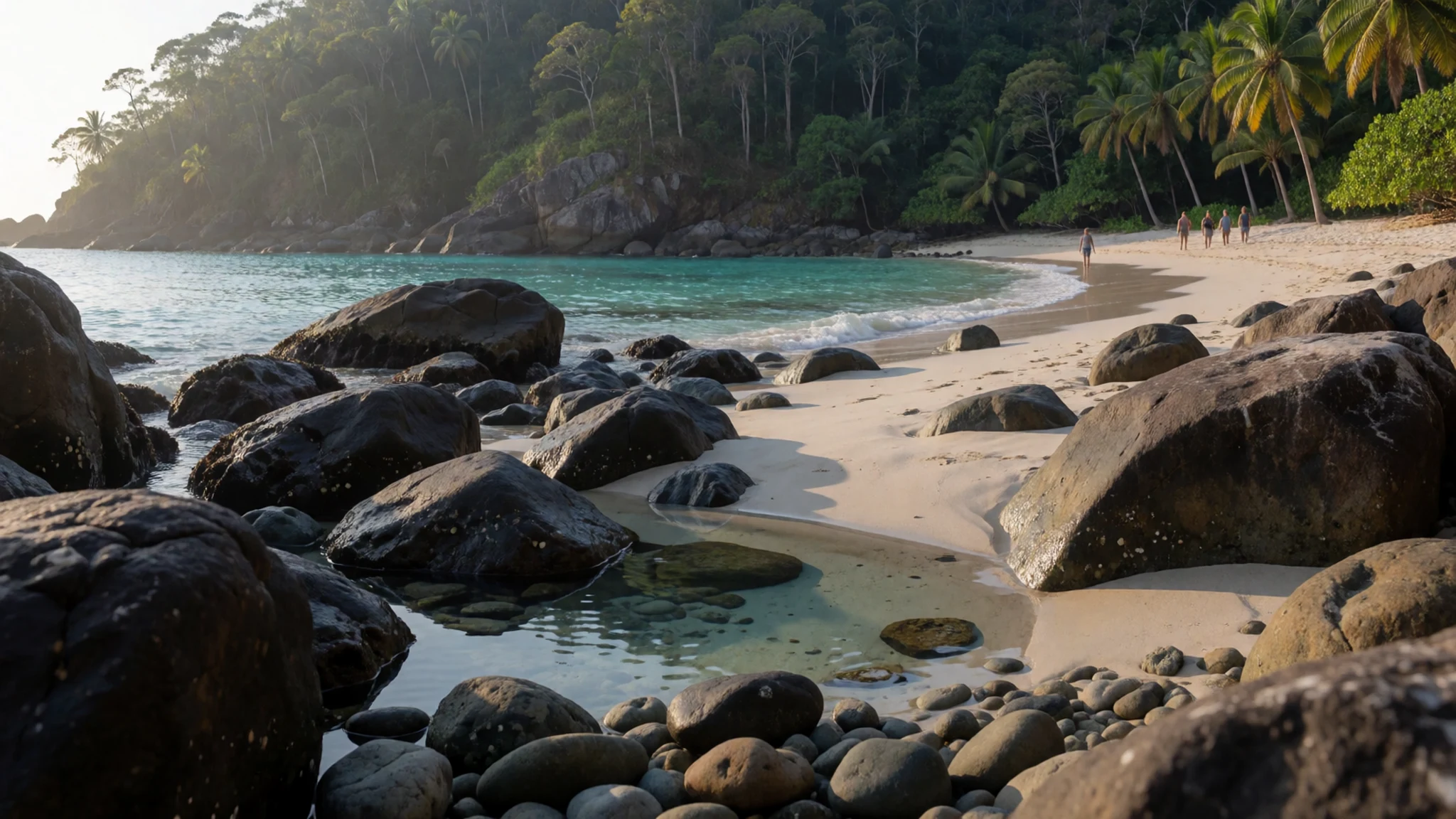
Culture
Maracas Beach is where Trinidad's beach culture shows itself plainly, because the whole day is public and shared. A lime here is not a ticketed event. It is a loose gathering of families, friends, and couples who have driven over the ridge with a cooler, a speaker, and time to spend. Soca and older calypso-descended rhythms turn up from car doors; so do the quieter days when people simply sit. Food is the social centre. Ordering bake and shark means standing at a hut, pointing at sauces, and comparing how much pepper is enough, which is a conversation Trinidadians have everywhere and enjoy especially at this bay. The crowd is mixed in the way the island is mixed: Creole, Indian, African, Chinese, European, and families that are several of those at once, all using the same sand. Sunday brings a heavier crowd than other days. A weekday can feel almost local, with fishermen and a thinner line of visitors. Shade, chairs, and a place in the queue are negotiated by presence rather than by booking. Rubbish blows quickly in the trade wind, and the bay has no hidden staff to clear it. Take every bottle and food container away with you, and ask before you photograph people who are eating or fishing.
What to wear
Maracas Beach has no costume of its own, because the bay is a shore rather than a ceremonial ground, yet the clothes on the sand still sit inside Trinidad's wider habits of dress. The island's ceremonial textile art is Carnival costume: printed cotton, beads, feathers, and wire-framed bands built over months for the streets of Port of Spain. That work stays in the city. It is almost never what people wear for a swim at this bay. The beach wardrobe is the practical descendant of the same hot climate: light cotton, a football jersey, board shorts, a swimsuit, and a shirt or wrap put back on once the water is finished. A sari, or a shalwar kameez with a dupatta, sometimes appears when a family has come on from a gathering, then comes off in favour of clothes that can take salt. Men swim in shorts and queue in a vest or no shirt; women wear a one-piece, a bikini, or shorts with a T-shirt, plus a sarong for the tables under the palms. Slippers — the local word for flip-flops — cope with sand, tarmac, and a wet step. A visitor does well to follow that pattern: a swimsuit, a covering shirt against the high sun, a hat, and sandals that can be rinsed of salt. A visitor who stops at a place of worship should cover shoulders and knees there.
What to eat
- Bake and shark — the huts behind the palms
Bake and shark is the dish Maracas Beach is known for: a fried fillet inside a round fried bake, then loaded from the condiment bar. Pepper sauce, garlic, tamarind, chadon beni, pineapple, and a slaw are the usual choices, mixed to taste rather than served as a fixed recipe.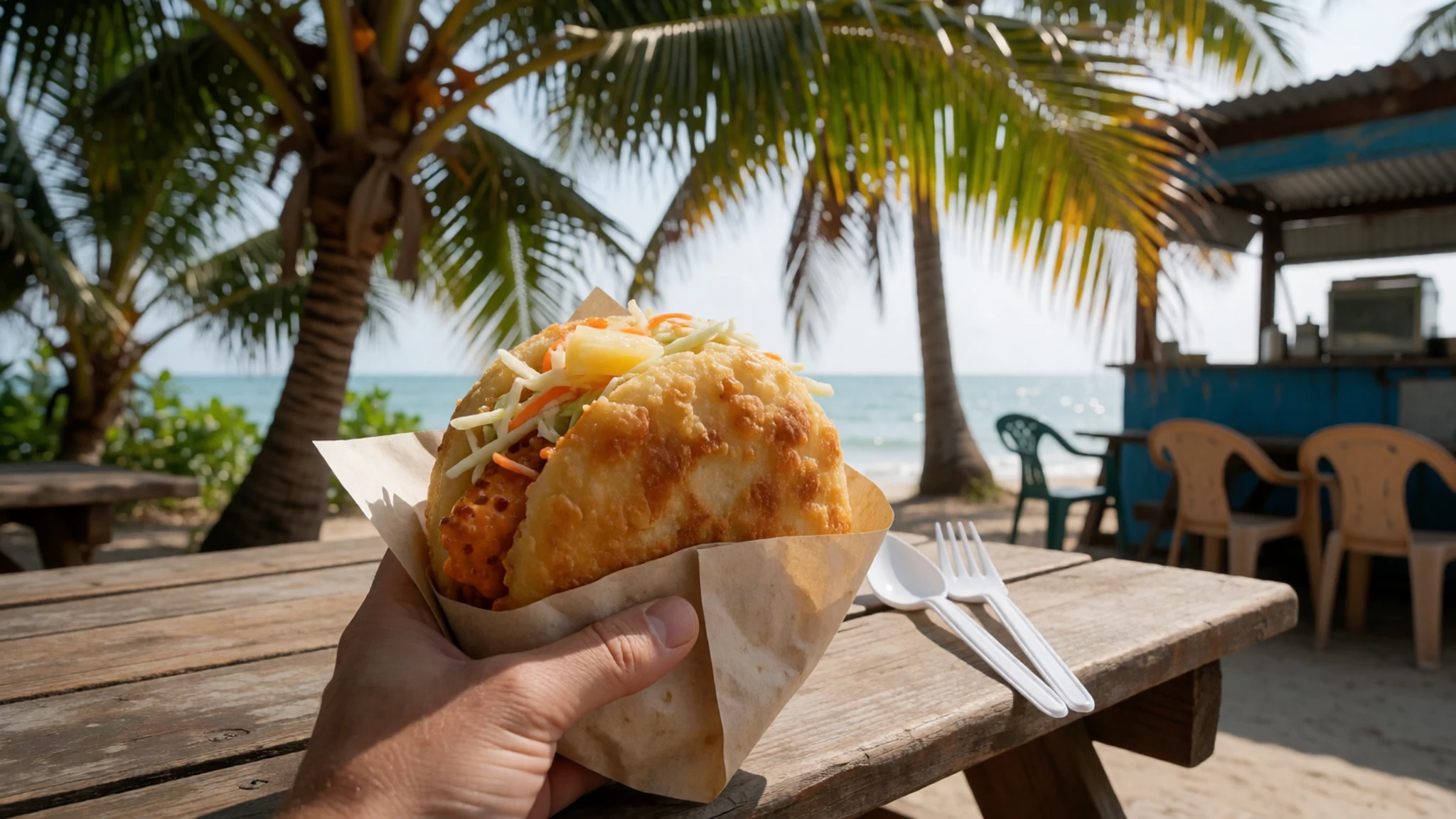
- Bake and kingfish — fish stalls behind the palms
When shark is scarce, the same huts at Maracas Beach fry kingfish or another firm local fish and put it in the same bake. The condiments do not change: pepper, garlic sauce, tamarind, and herbs still do the real seasoning.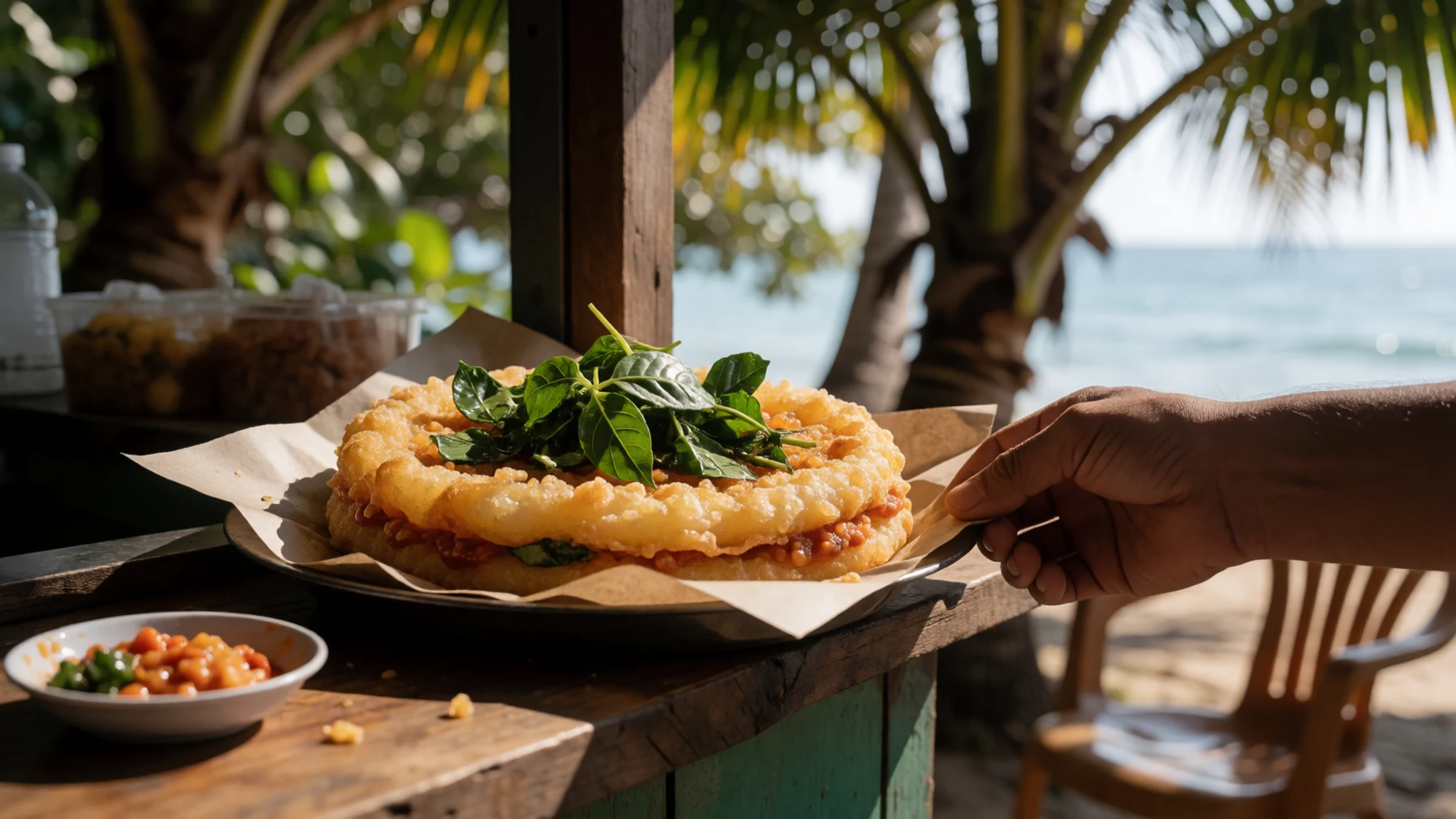
- Green coconut — vendors by the huts and the car park
Green coconut is the drink that belongs with the heat at Maracas Beach. A vendor opens the top and passes it over with a straw; the water is cool, faintly sweet, and easier on the thirst than a bottled soda in full sun. Jelly is scraped from the shell afterwards. - Chow — the beach huts, or from a cooler on the sand
Chow is the sharp snack that cuts through fried food at Maracas Beach. Green mango, pineapple, or cucumber is cut up and dressed with salt, garlic, pepper, and chadon beni, then eaten while it is still crunchy. It is sold in small bags from the same huts as the bake. - Pholourie — snack warmers at the beach huts
Pholourie are small split-pea fritters, fried until they blister, and they turn up at Maracas Beach as a snack while the shark is still in the oil. They are eaten with tamarind sauce or pepper, standing up, and they suit the wait in the queue.
Plan it
Best time. January to May is the drier stretch at Maracas Beach, with firmer sun and fewer long showers; June to December stays warm but the ridge and the beach catch heavy rain. Weekday mornings are quieter than Sundays and public holidays.
How long. 1–2
Getting there. Fly into Piarco, the airport that serves Port of Spain, then continue by road. The last leg is the North Coast Road from the Maraval side of the capital, over the Northern Range and down to Maracas Beach. The road is narrow and winding, so daylight and a calm driver matter.
Budget. mid
Tips
- Prefer a weekday morning if space on the sand matters; Sundays and public holidays fill the car park.
- Treat the surf as real: swim with other people, stay in the shallower wash, and leave the water if the pull strengthens.
- Carry cash for the food huts, and do not count on a card machine at every stall.
- The North Coast Road is slow and bending, so start back towards Port of Spain while daylight remains.
- Bring drinking water, a hat, and a cover for the skin, and keep valuables off the sand.
Etiquette
- Take bottles, food containers, and wrappers away; the trade wind moves rubbish onto the sand.
- Ask before photographing people, especially while they are eating or working.
- Leave fishing boats and gear where they were set, and do not block the way down to the water.
- Join the queue at the huts in the order people arrived, and keep music low enough for families to talk.
Nearby
Sources
- Wikidata (Maracas Beach) (CC0)
- Wikipedia (CC BY-SA 4.0)
- Wikivoyage (CC BY-SA 4.0)