Pigeon Point
Pigeon Point, Trinidad and Tobago
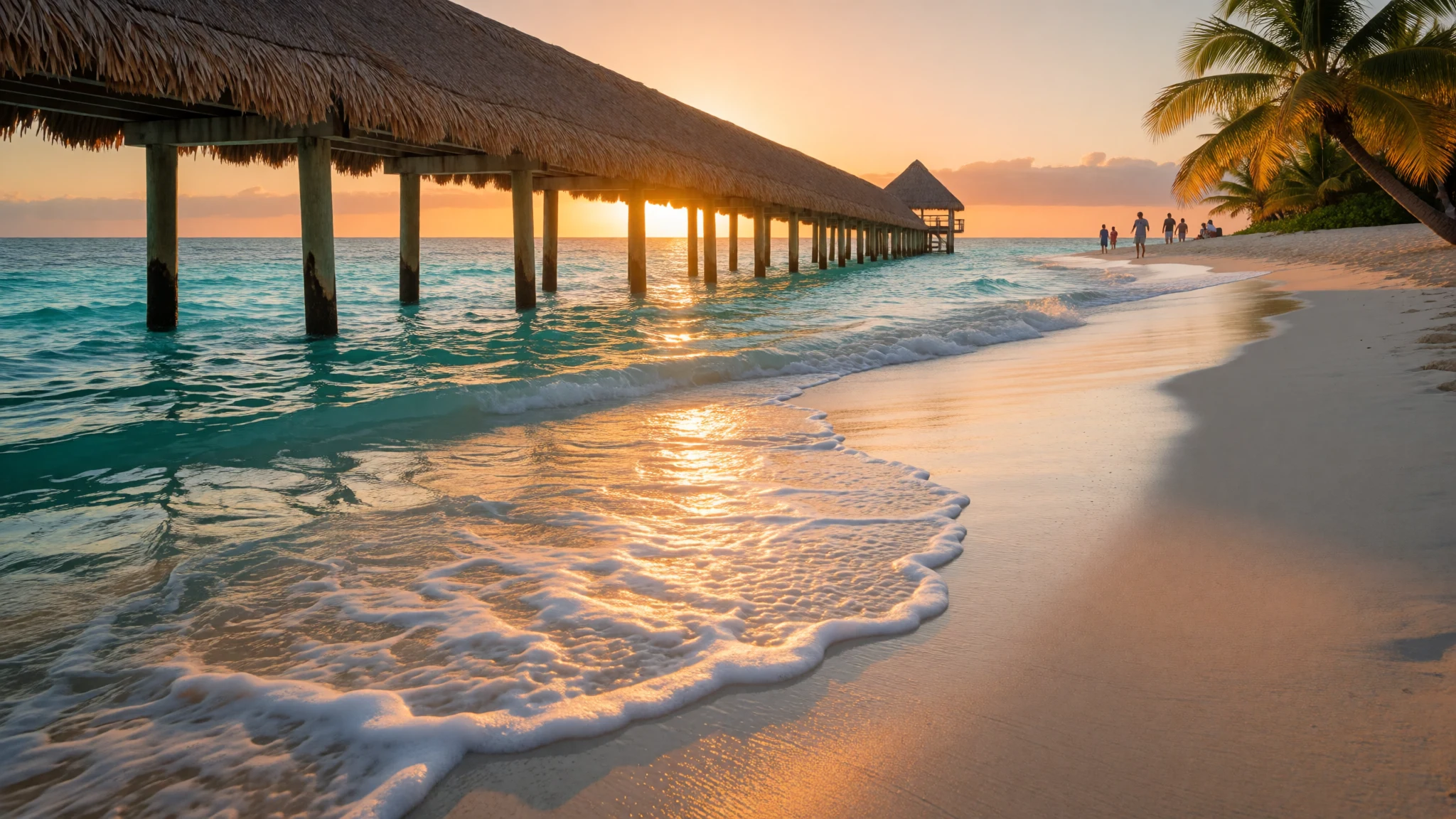
Pigeon Point is Tobago's postcard beach: pale sand, calm turquoise water and a thatched jetty, with showers, chairs and food close at hand.
The place
Pigeon Point sits on the south-western tip of Tobago, the smaller island of Trinidad and Tobago, a short way from the resort strip around Crown Point and Store Bay. It is a low peninsula run as a heritage park, and it supplies the picture most people carry of Tobago: pale sand, shallow aquamarine water, palms leaning over the shore and a thatched jetty reaching out to sea. This is the sheltered, Caribbean-facing side of the island, so the water is usually gentle. That suits families, slow swimmers and anyone who wants to float rather than surf. The Atlantic-facing coast is rougher and quieter.
Behind the sand are lawns and picnic spots, changing rooms, showers, bars, a restaurant, souvenir stalls and water-sports operators who rent kayaks and arrange boat trips. Chairs and umbrellas can be hired by the day. Because the park is managed, entry is charged at the gate, and the fee has long been a sore point locally. Rates and opening times change, so check with the Tobago House of Assembly or the park itself before going.
Weekends and public holidays bring Tobagonian and Trinidadian families with coolers and speakers, and the high-season weeks fill the sand with visitors staying nearby. The calmest hours are early morning and weekday afternoons. Natural shade is limited on the beach itself, and the sun is strong all year, so the trees near the car park and the rented umbrellas matter more than they look on a photograph.
Its story
Pigeon Point's recent history is mostly an argument about who may charge for a beach. The peninsula was privately held for years, and it passed to Anthony Sabga, founder and chairman of the Trinidad-based Ansa McAl group. He invested time and money in turning it into Pigeon Point Heritage Park, with the facilities, upkeep routines and layout that visitors still use.
Then the politics arrived. Many Tobagonians felt that a beach so tied to the island's identity should not sit in private hands, least of all those of a Trinidad-based company. The government promised to buy the property and said it would use compulsory purchase if the owner refused. In the end a sale was agreed, and the peninsula went to the Tobago House of Assembly, the island's own governing body, for a substantial sum in Trinidad and Tobago dollars.
The Assembly kept the park running on the systems Sabga had set up. The awkward part is that the entry fee, the original source of complaint, survived the change of owner. Some residents still ask why they pay to reach a beach the public purse bought back. The Assembly's answer is that a maintained park with toilets, showers and clean sand has running costs.
Meanwhile the thatched jetty has become shorthand for Tobago itself, appearing on tourism posters, brochures and holiday photographs far from the Caribbean. Tourism is central to a small island's economy, which is why a few hundred metres of sand have been fought over so persistently.
What to see
- The thatched jetty — Pigeon Point, south-west Tobago
The jetty is the reason most people come, and it is better at sunrise or late afternoon, when the light is soft and the day-trippers have thinned out. Walk to the end for the view back along the beach. Wooden boards and sea spray make it slippery, so wear shoes with grip.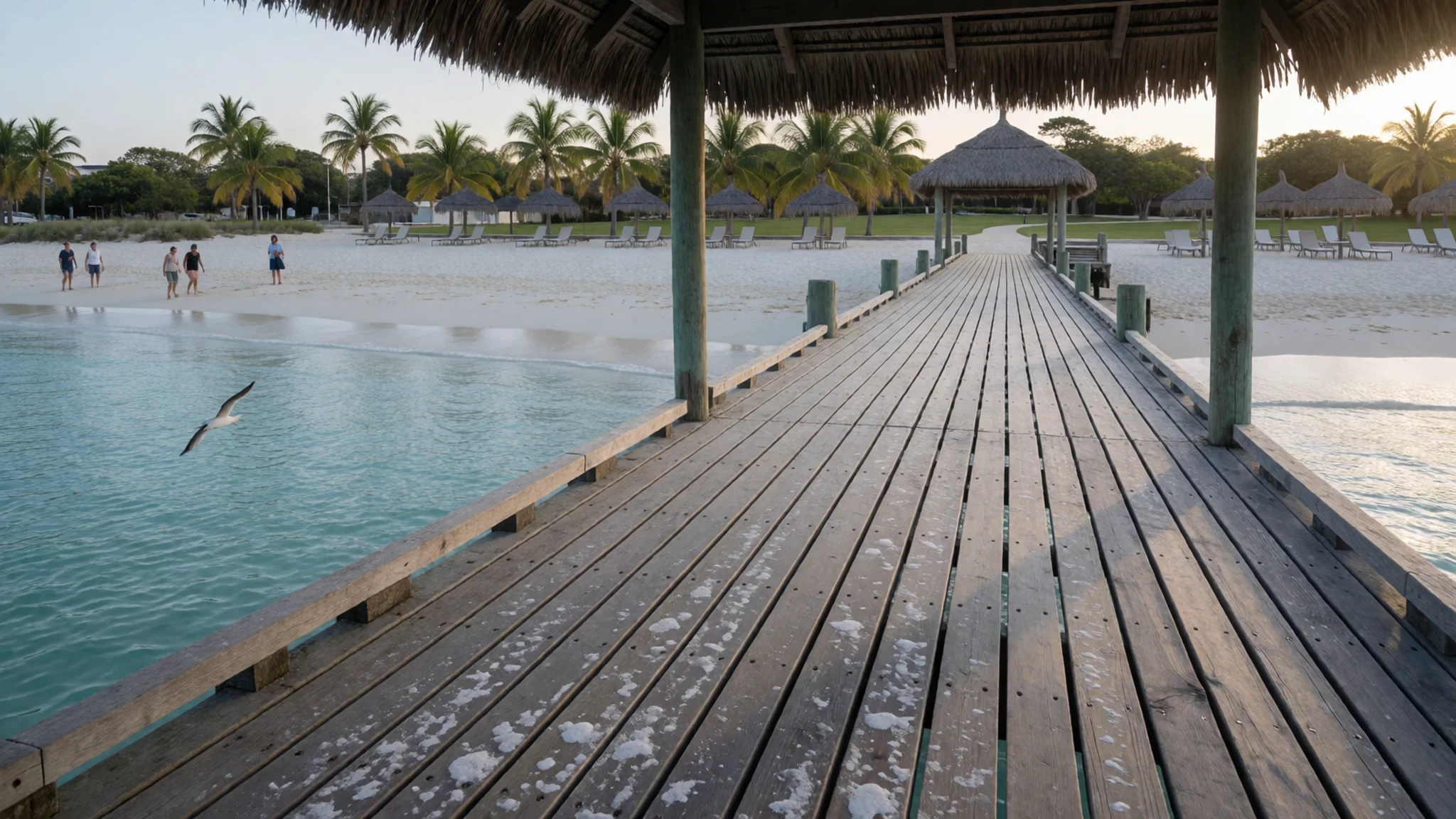
- The main beach — Pigeon Point Heritage Park
A long arc of white sand with clear, shallow water and little surf. It is good for easy swimming and for children. Sunbeds and umbrellas are rented near the facilities, while the stretches farther from the buildings are calmer. Arrive early on weekends, as the best patches of shade go first.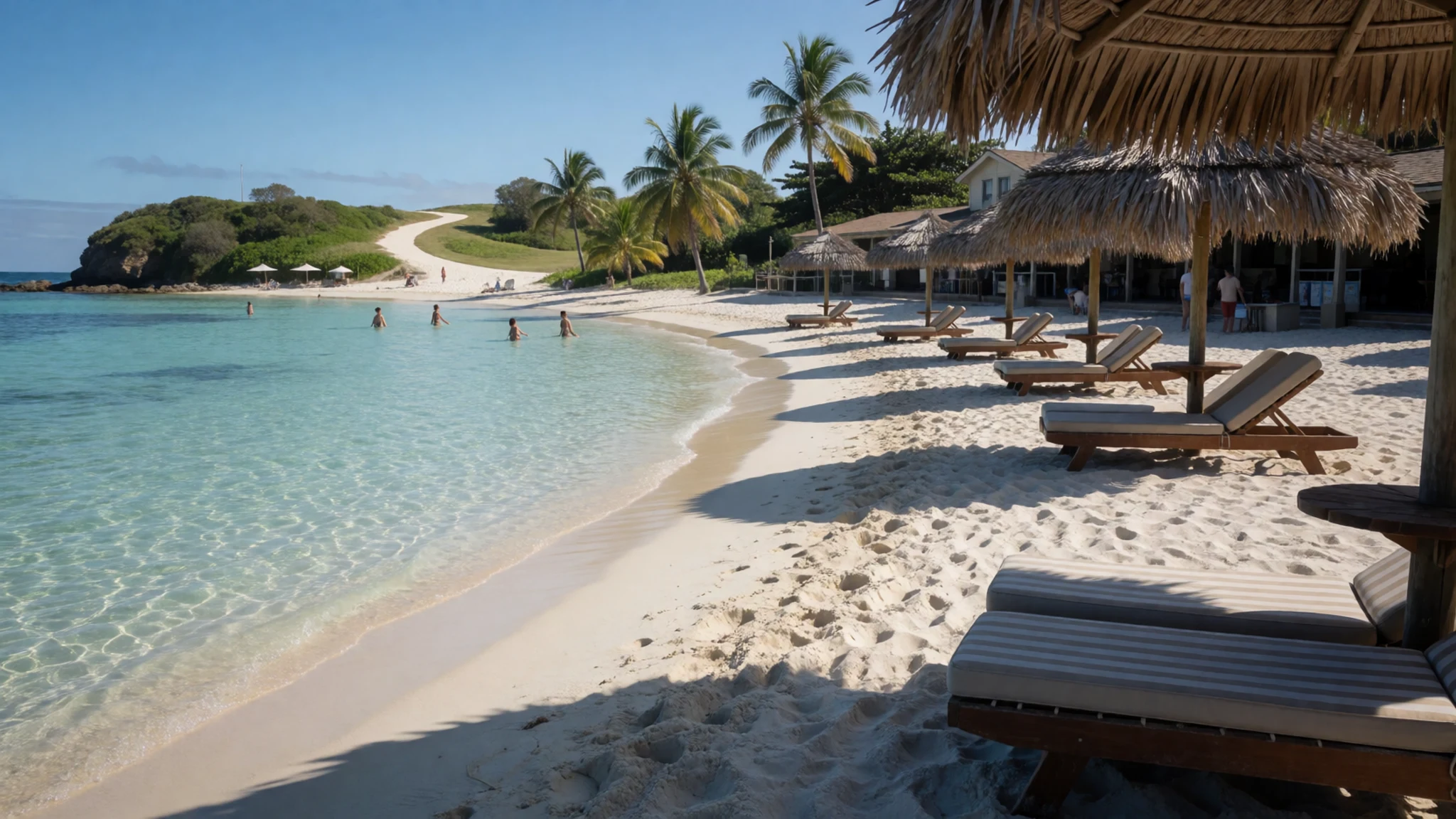
- Buccoo Reef boat trip — Offshore from Pigeon Point and Buccoo
Boat operators at the park and nearby beaches run short trips to Buccoo Reef, where snorkellers float over coral and reef fish in shallow water. Quality varies with the weather and with how many boats are out, so ask your operator about conditions. Wear a rash vest or reef-safe sunscreen.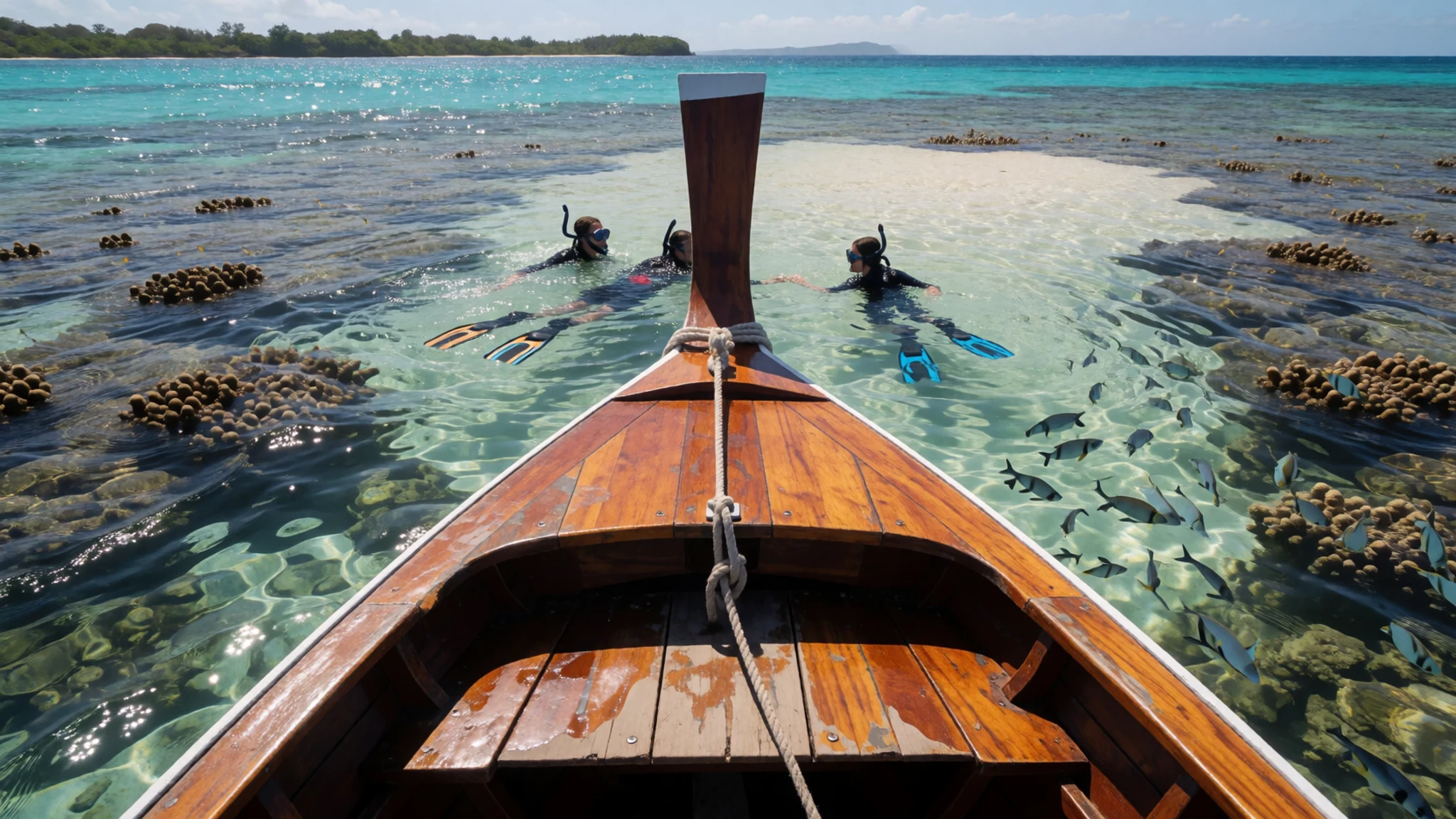
- Nylon Pool — Buccoo Reef, offshore
Out on the reef is a shallow sandbar where the sea is waist-deep and strikingly clear. Boat tours usually stop here for a swim, and the water looks pale green over white sand. It is a popular stop, so expect other boats around and sun with little shade.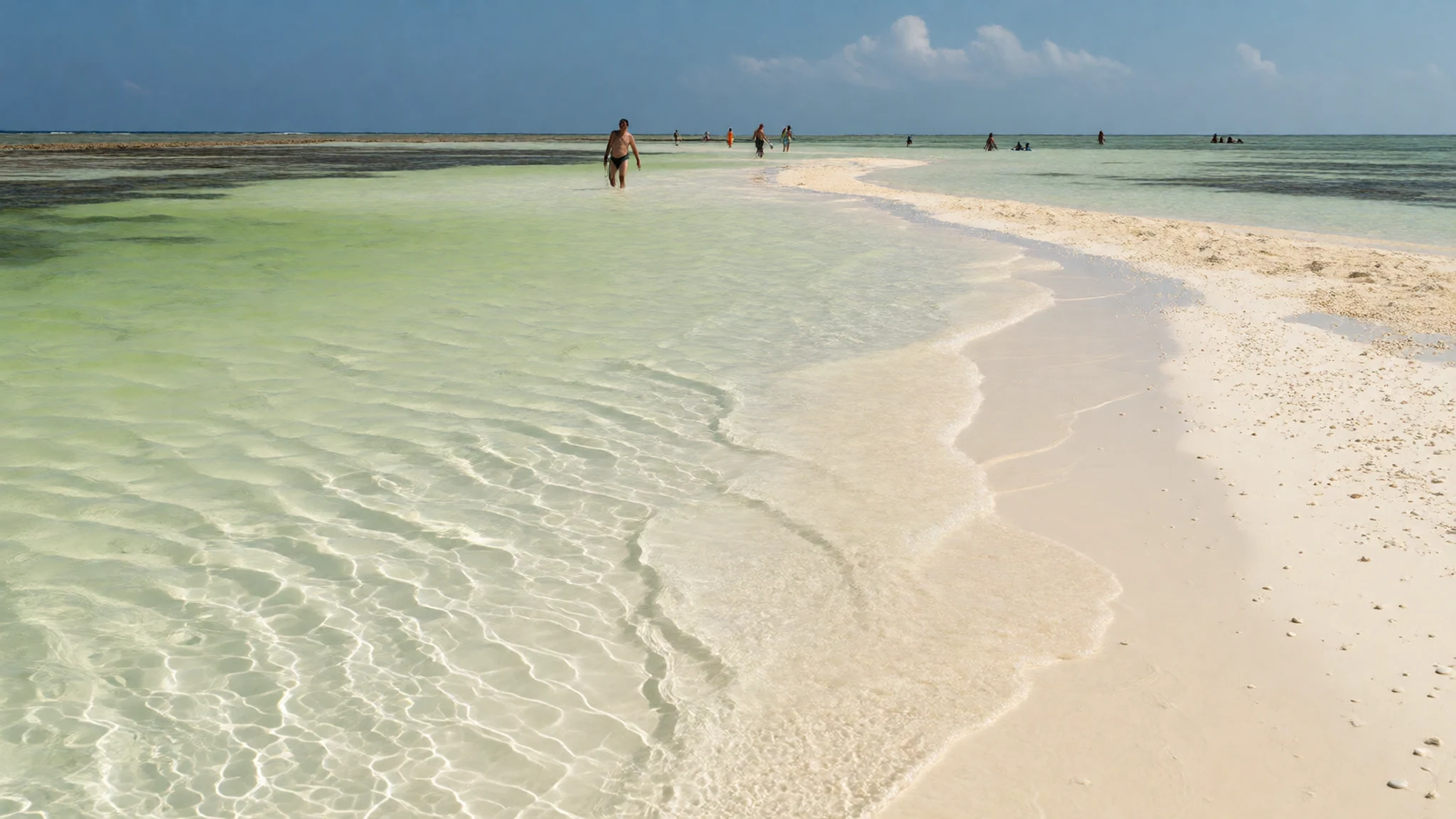
- Store Bay — Crown Point
A short drive or taxi ride along the coast, Store Bay is a busier public beach with fishing boats, craft stalls and food huts. It makes a good second stop for a meal after the quieter, tidier park. Cooking smells and drumming often drift across the sand at weekends.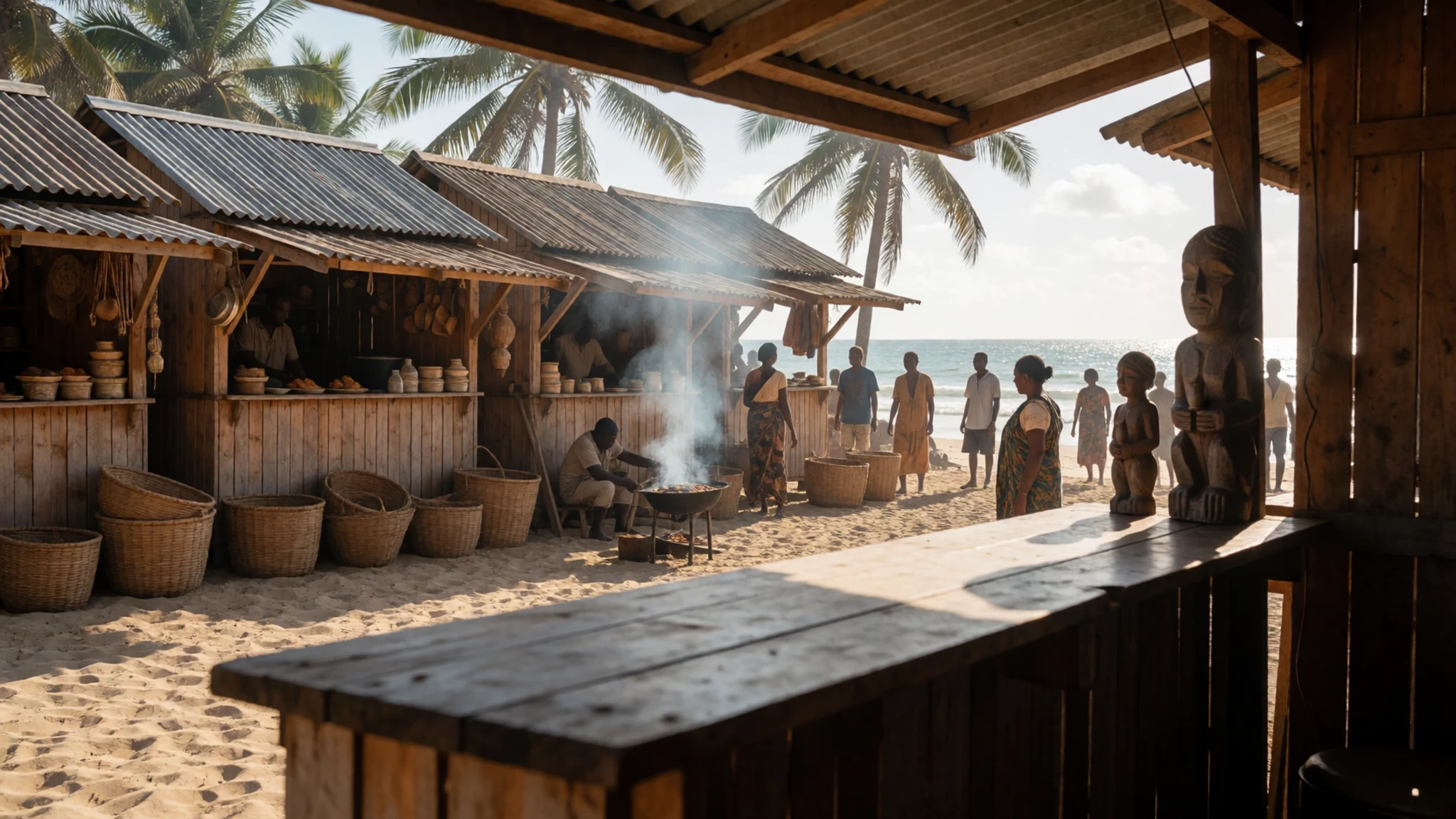
Culture
Pigeon Point belongs to Tobago, and Tobago has a culture distinct from busy Trinidad, with a slower pace, strong village identity and a reputation for friendliness. English is the official language, but everyday talk is in a Creole that sounds quicker and more musical than most visitors expect. A greeting before a question goes a long way.
Music and dance are woven into island life. Steelpan, calypso and soca are the soundtrack of Carnival season and of many weekend beach days, and Tobago has its own folk traditions, including the heel-and-toe dance performed at heritage events. At Easter the village of Buccoo is known for its goat and crab races, a local festival that draws a crowd. Sunday evenings at Buccoo have a long-running street-party reputation.
At the beach, the scene is relaxed and social. Families spread out blankets, share food and play music, and this is just as true of locals using their own beach as of visitors. The park also shows how closely islanders feel tied to public space, because the debate over its ownership and entry fee still comes up in conversation.
Religion is part of daily life, with churches full on Sundays, and many people dress up for services. Away from the beach the mood is modest and polite. Ask before photographing people, especially vendors, children and families at their picnics, and cover up with a shirt or wrap when you leave the sand for the road or a restaurant.
What to wear
Pigeon Point sits in a place where traditional dress is now mostly for festivals and performances. Tobago's heritage costume draws on Creole and West African influences, with women in long, full skirts, white cotton blouses and head ties in madras, a bright cotton plaid. Men may wear white shirts with simple trousers or sashes. These outfits appear at heritage festivals, folk dance shows and school or cultural events rather than on an ordinary day.
Everyday clothes are light and practical. People wear cotton and linen, shorts, sundresses, T-shirts and sandals or flip-flops, and the heat makes loose, breathable cloth the sensible choice. Carnival season brings feathers, sequins and bold colour, though that belongs to the street rather than the beach. Churchgoers dress smartly on Sundays.
For a visit, bring swimwear, a cover-up and a wide-brimmed hat, because shade on the sand is limited and the sun is strong all year. Pack reef-safe sunscreen, sunglasses and a rash vest if you plan to snorkel. Sandals with grip help on the jetty and on rocky ground, and water shoes are useful on boat trips. Swimwear is fine on the beach but not in shops, restaurants or villages, where a shirt or wrap is expected. Evenings can feel cooler with sea wind, so a light layer is worth carrying, and a small dry bag protects phones and cash from spray.
What to eat
- Crab and dumpling — Food huts at Store Bay and Buccoo
Tobago's best-known dish: crab cooked in a thick curry sauce, served with soft, chewy dumplings. It is messy, so expect to use your hands. Look for it at the food huts around Store Bay and in Buccoo, where the cooks make it fresh.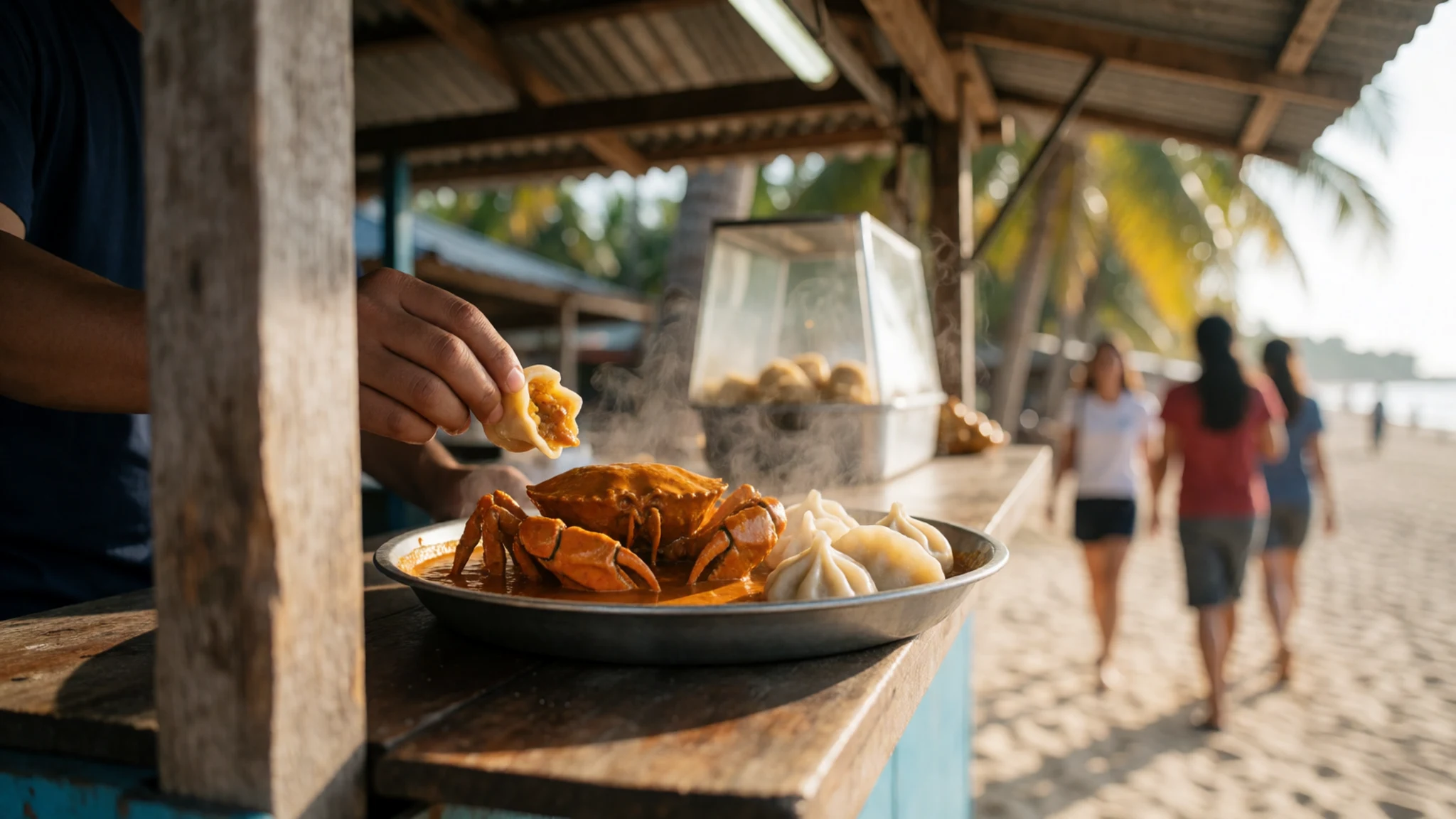
- Bake and shark — Beach food stalls, especially around Store Bay
A fried flatbread, known as a bake, filled with fried shark meat and dressed from a counter of toppings such as slaw, tamarind sauce, garlic sauce and pepper. It is a classic beach meal on both islands, eaten standing at a stall or on the sand.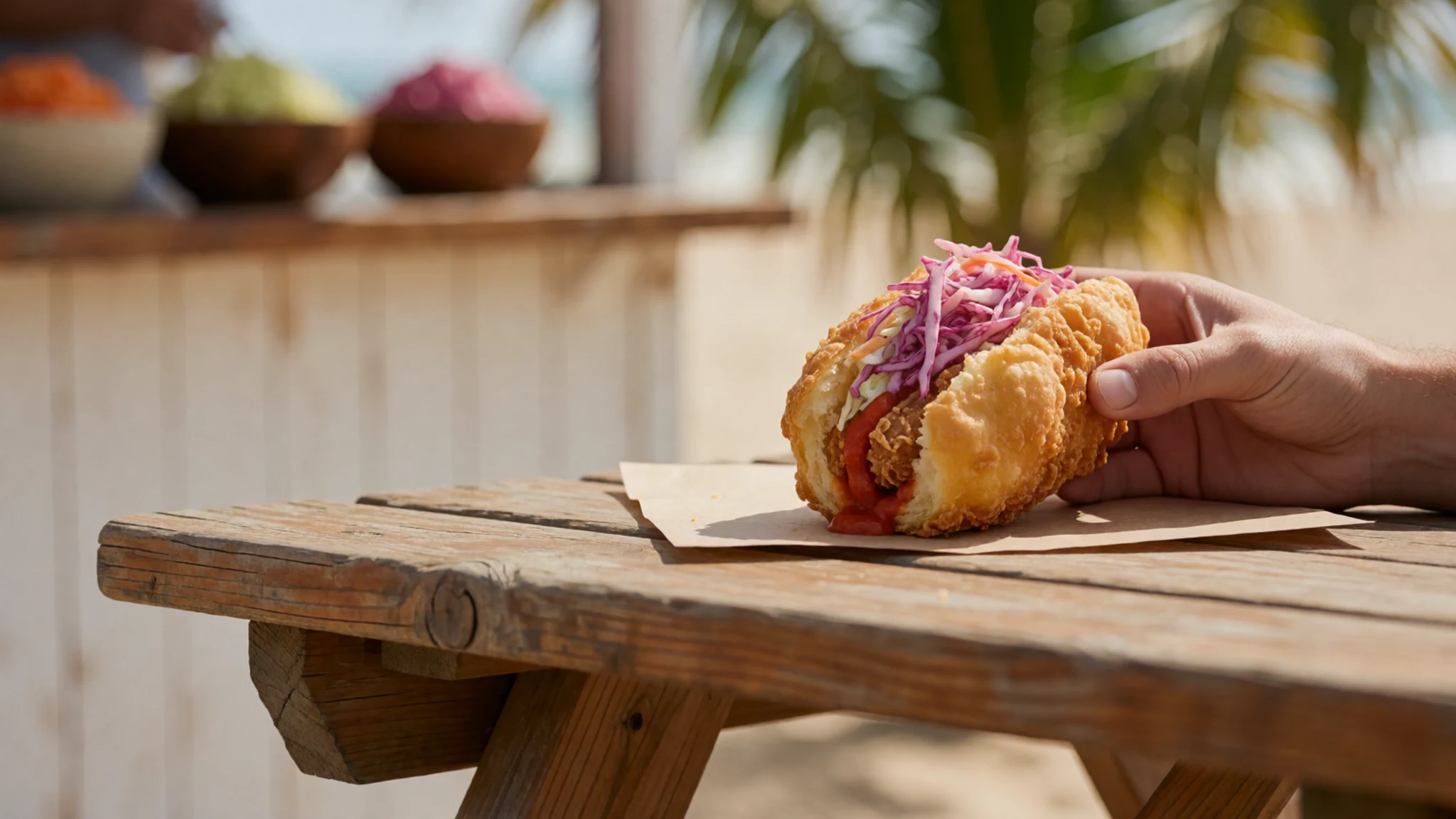
- Curry roti — Roti shops in Crown Point and Scarborough
A soft flatbread wrapped around curried chicken, goat, vegetables or channa and potato. It reflects the Indian roots of much Trinidad and Tobago cooking and is a filling, inexpensive lunch. Ask about the heat level, as pepper sauce is often on the side. - Fish broth — Village eateries and weekend stalls near the fishing beaches
A hearty Caribbean soup of fish with root vegetables, dumplings and seasoning, often served on weekends and after a night out. It is a gentle, homely dish that shows how closely island cooking follows the day's catch. - Fresh coconut water — Roadside vendors near beach entrances
Vendors chop the tops off green coconuts and hand them over with a straw, then split them so the soft jelly can be scooped out with a piece of husk. It is a cooling stop between swims on a hot afternoon.
Plan it
Best time. January to May is the drier season, with sunny days and calmer seas, which suits beach time and boat trips. June to December is wetter and more humid, with heavier showers, though the island is generally outside the main Atlantic hurricane track. Weekdays are quieter than weekends all year.
How long. 3–4
Getting there. Fly into A.N.R. Robinson International Airport at Crown Point, which is a short taxi ride from Pigeon Point. Ferries also run from Port of Spain in Trinidad to Scarborough, Tobago's main town, followed by a road transfer of the length of the island's south-west.
Budget. mid
Tips
- Check the current entry fee and opening times with the Tobago House of Assembly or the park before you go, as they can change
- Arrive early on weekends and public holidays to get shade and a quieter beach
- Carry some cash for stalls, drinks and boat operators, as not every small vendor takes cards
- Bring water, a hat and reef-safe sunscreen, because shade is limited and the sun is strong
- Agree the price and length of any reef boat trip before you board
Etiquette
- Ask before photographing local people, vendors or families
- Take litter away with you and do not step on coral or take shells and sea life
- Cover up with a shirt or wrap when leaving the beach for shops or restaurants
Nearby
Sources
- Wikidata Q15266287 (CC0)
- Wikipedia: Pigeon Point, Tobago (rev 1286074507) (CC BY-SA 4.0)
- Wikivoyage: Tobago (CC BY-SA 4.0)
- Pigeon Point beach — Kp93, via Wikimedia Commons (CC BY 3.0)
- Pigeon Point jetty — Kp93, via Wikimedia Commons (CC BY 3.0)

