Asa Wright Nature Centre
Asa Wright Nature Centre, Trinidad and Tobago
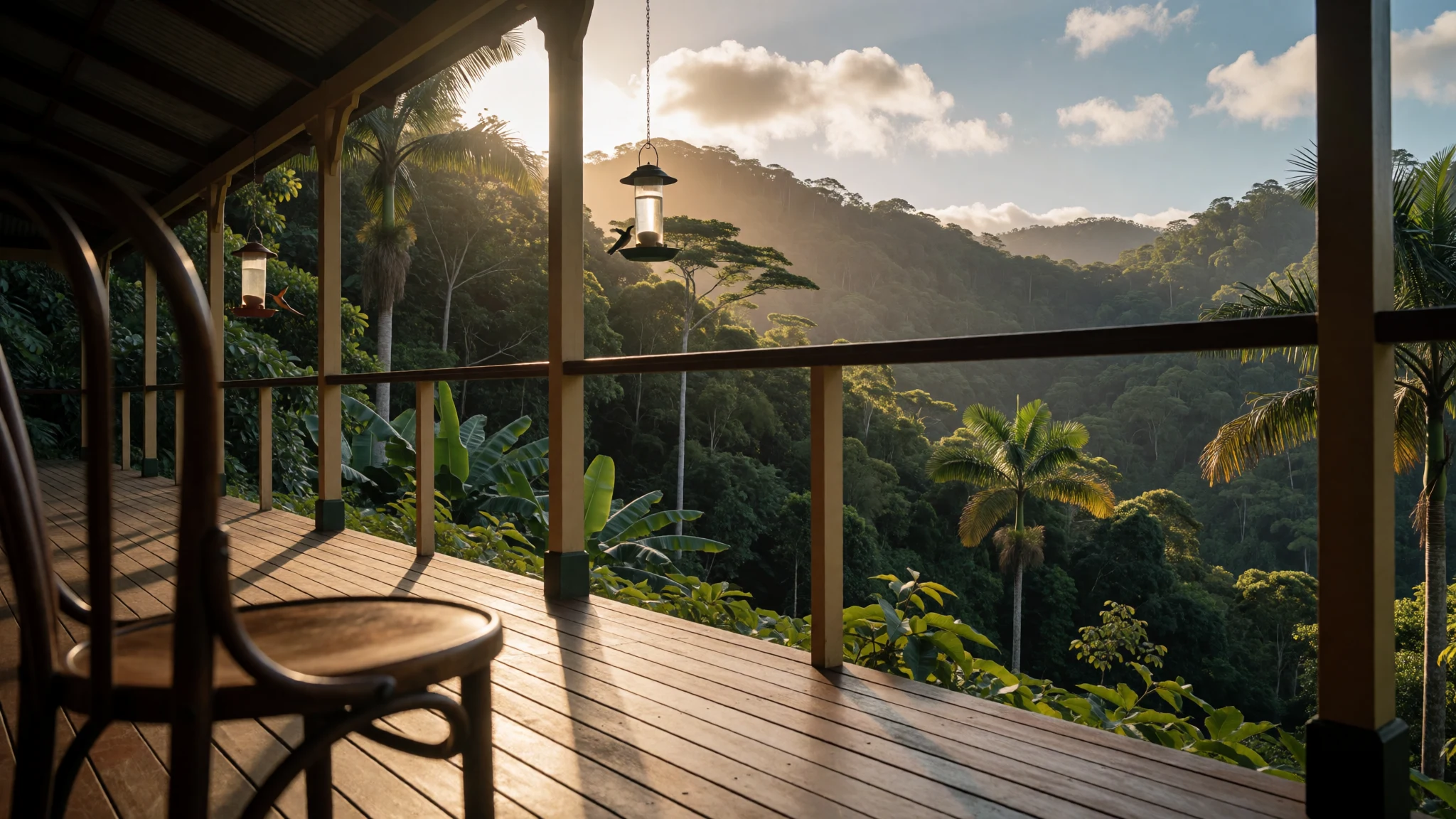
Asa Wright Nature Centre puts rainforest birds, from hummingbirds to bellbirds, within binocular range of a veranda rail in Trinidad's Northern Range.
The place
Asa Wright Nature Centre sits in the Arima Valley, high in the Northern Range of Trinidad. It lies near the capital, Port of Spain, so it works as a day trip as well as an overnight stay. It is a lodge, a research station and a nature reserve rolled into one, run by a non-profit trust rather than a company. The grounds cover 110 hectares of forested hillside, and the main building is an old estate house with guest rooms, a dining room and a long veranda facing the canopy. That veranda is the heart of the place. Feeders hang along it, and visitors sit with coffee and binoculars while hummingbirds, tanagers and honeycreepers come and go. Birders have logged 256 species across the property, which explains why the centre turns up on so many Caribbean wildlife itineraries. Beyond the house, trails drop into damp forest where the light is green and the ground is often slippery. The trust also holds land that is not joined to the main estate, including the old Spring Hill property and a neighbouring tropical research station called Simla. Meals at the lodge lean on vegetables from its own organic garden. Warmth and humidity last all year, showers arrive suddenly, and the pace is set by the birds rather than a timetable. Mornings are busiest at the feeders; afternoons are quieter and cooler under the trees.
Its story
The story of Asa Wright Nature Centre starts with a house and its guests. Newcombe and Asa Wright owned Spring Hill, an estate in the Arima Valley, and in 1949 they welcomed an unusual lodger: the American naturalist and explorer William Beebe. He had bought a neighbouring property called Verdant Vale and wanted to turn it into a base for studying tropical life. While engineers laid water pipes and electric lines to that site, further down the road, Beebe slept at Spring Hill. His old bedroom now serves as the manager's office, a small piece of history that visitors walk past without noticing. Beebe renamed his property Simla, after the hill town in India he had seen in 1910, and it became the William Beebe Tropical Research Station. The Wrights kept receiving scientists in the following decade. In the 1950s the British ornithologists David Snow and Barbara Snow stayed and carried out careful fieldwork on two birds that remain local celebrities: the oilbird, which nests in caves and feeds at night, and the bearded bellbird, whose ringing call carries through the forest. Their studies are part of why the valley has a scientific reputation as well as a scenic one. Over the decades the estate grew from a private house with famous guests into a centre held by a non-profit trust, with research, conservation and visitors sharing the same hillside.
What to see
- The veranda — Main house, Arima Valley
The veranda at Asa Wright Nature Centre is where most visits begin and many end. Seats face the forest canopy, with feeders hanging within easy binocular range, so newcomers pick up the common species just by watching what keeps returning. Bring patience and settle in early, since feeding is busiest soon after dawn.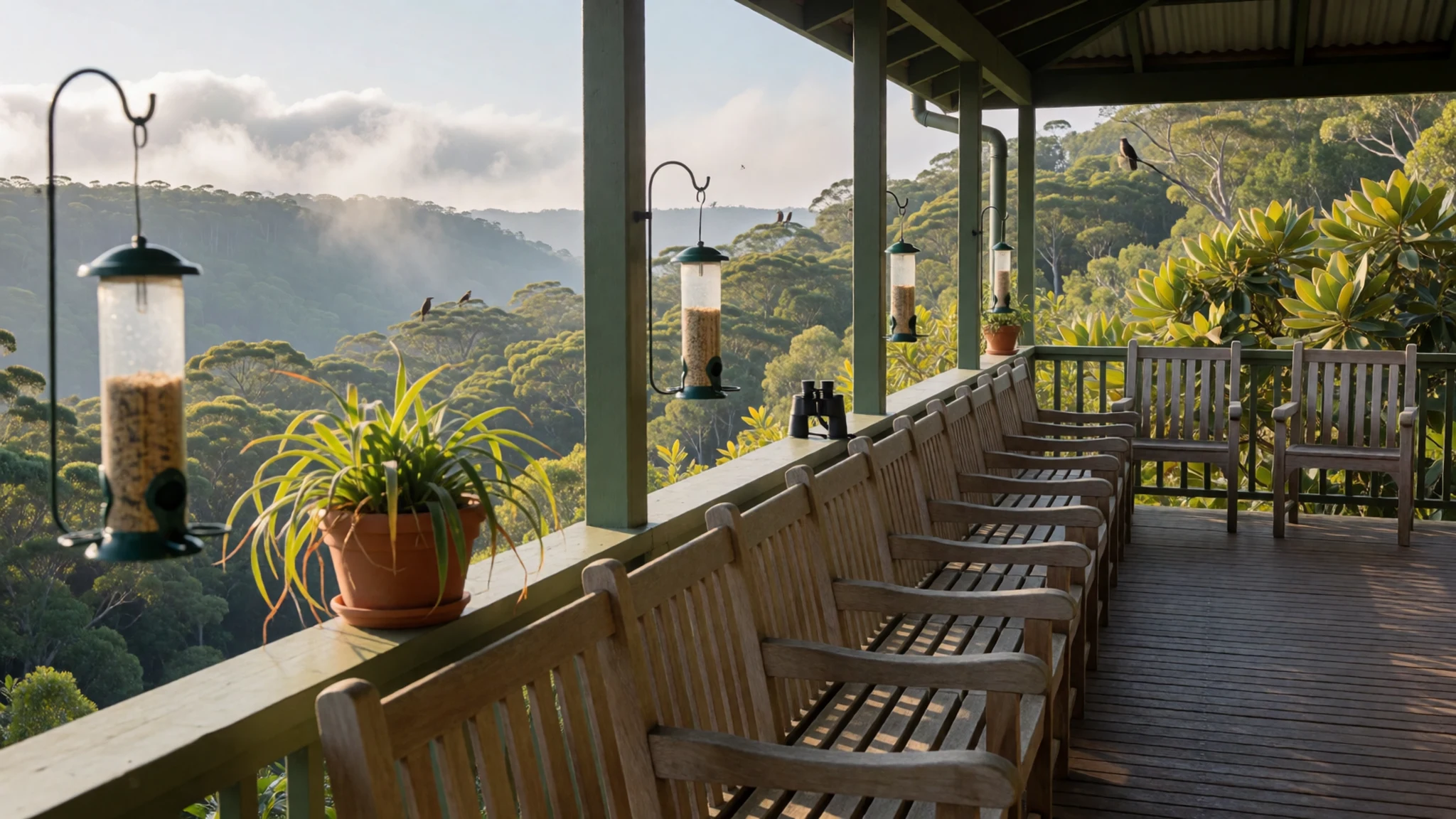
- Hummingbird feeders — Main house, Arima Valley
The hummingbird feeders at Asa Wright Nature Centre draw fast, glittering visitors, including the white-necked jacobin, a hummingbird with a blue hood and a white collar. Photographers do well here with a steady hand and a quick shutter, because the birds hover for only a moment before dashing off. Morning light is kind and the colours are strongest then.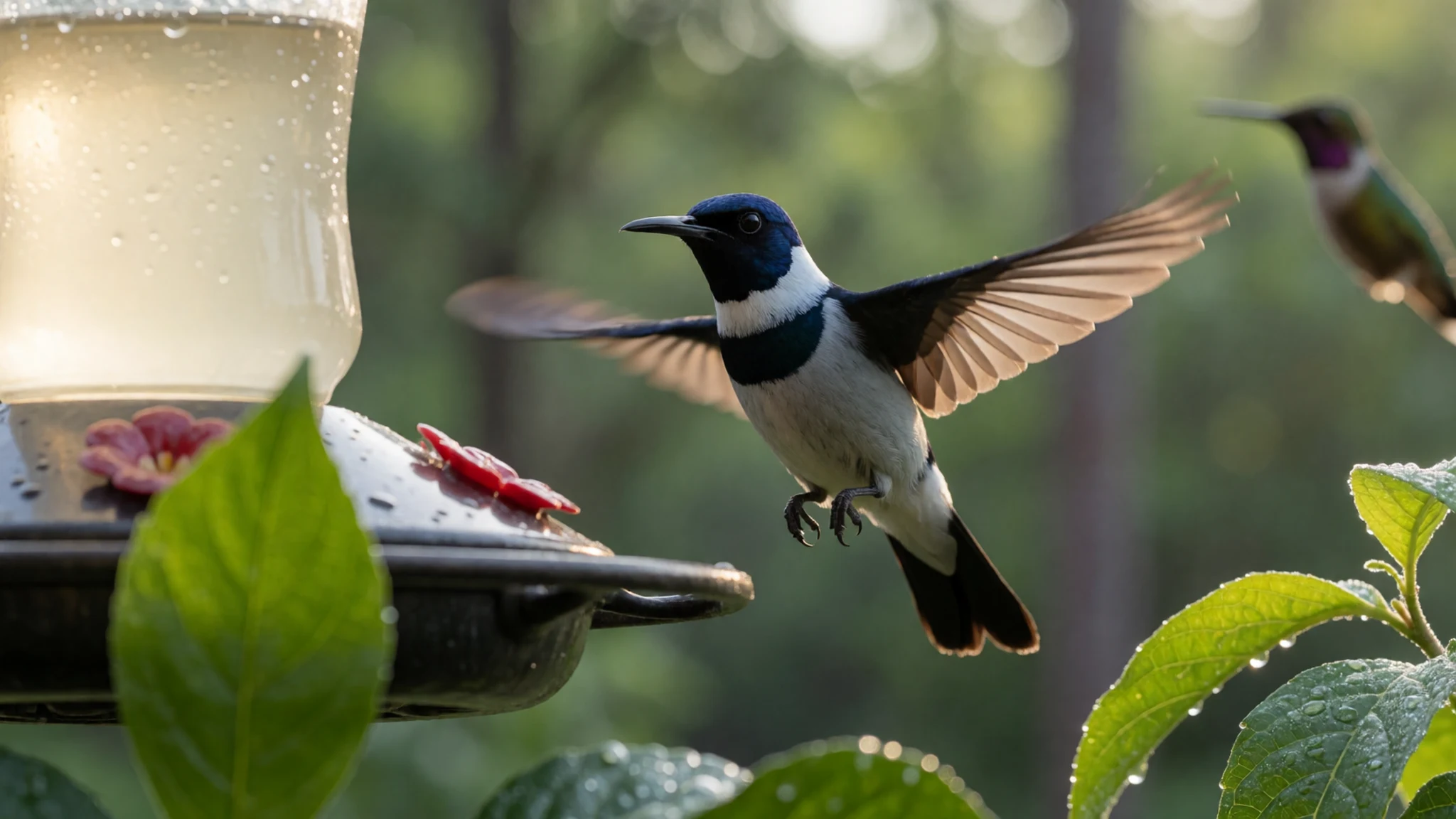
- Forest trails — Grounds around the estate house
The forest trails around Asa Wright Nature Centre lead down from the house into shaded, humid woodland full of broad leaves, ferns and calling birds. Paths can be muddy and steep in places, so sturdy shoes matter. Walking quietly with a guide reveals far more than striding alone, since many forest birds are heard long before they are seen.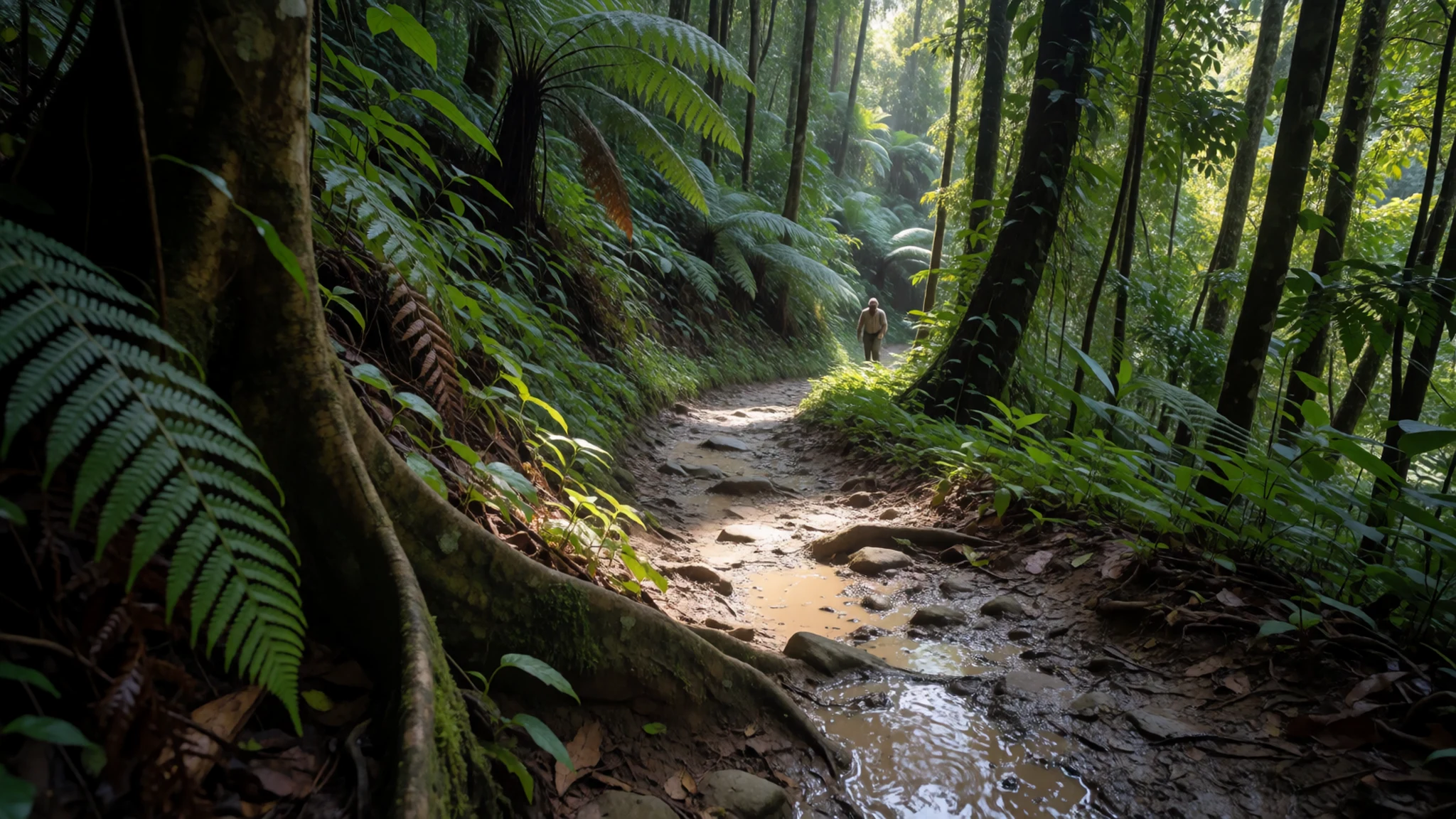
- The estate house — Spring Hill estate
The old estate house at Asa Wright Nature Centre is where the Wrights hosted visiting naturalists, and it still takes guests, with rooms and a dining room under one roof. William Beebe's former bedroom is now the manager's office. The house is worth a slow look for its history rather than for any grandeur; the veranda outside is the real draw.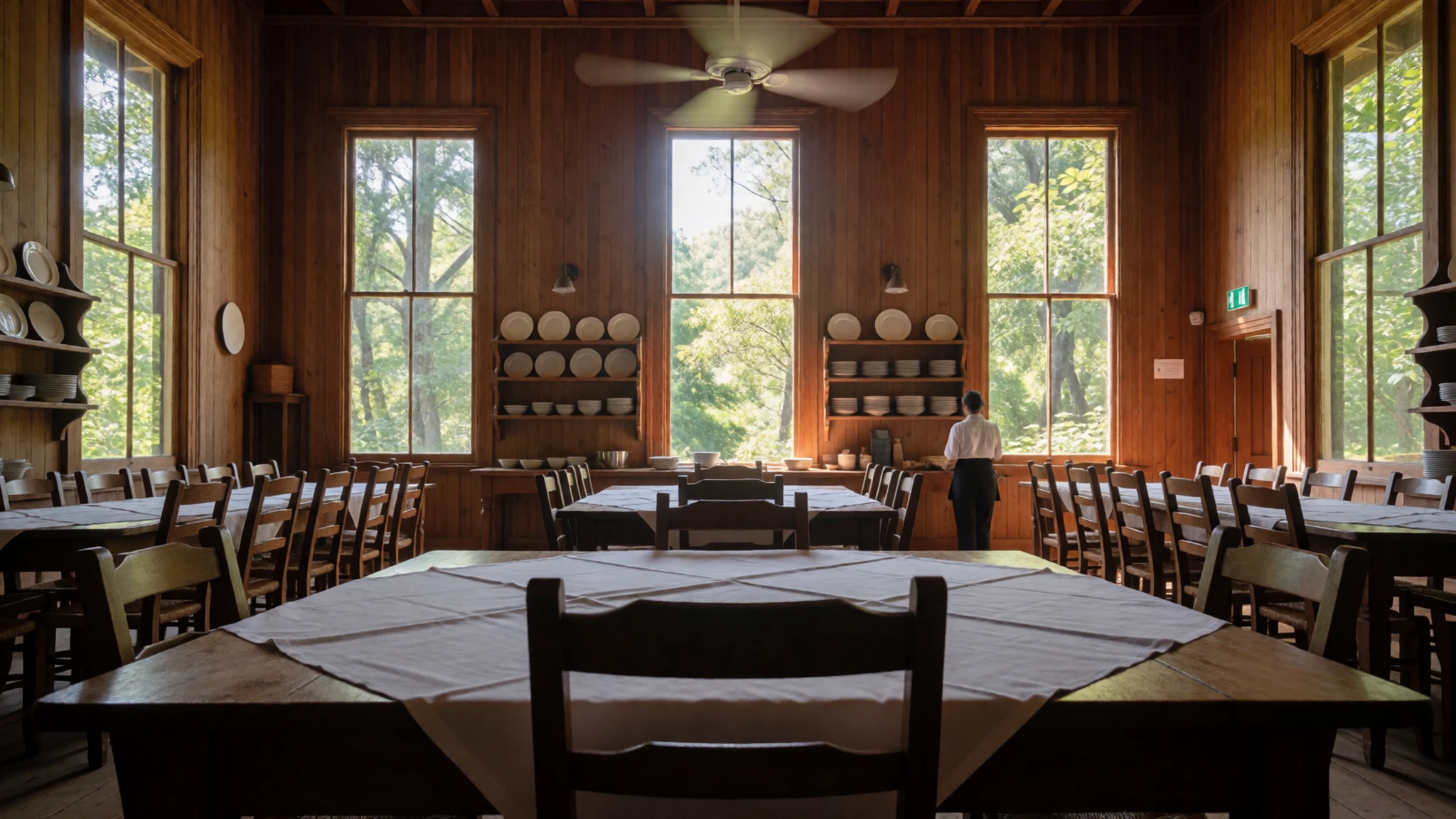
- Northern Range views — Viewpoints along the balcony and grounds
The Northern Range views from Asa Wright Nature Centre show forested ridges folding away under cloud. Early morning often brings mist in the valley, which clears as the sun climbs. A few minutes watching the ridgeline can bring parrots or hawks into view. Bring a light waterproof for the sudden showers.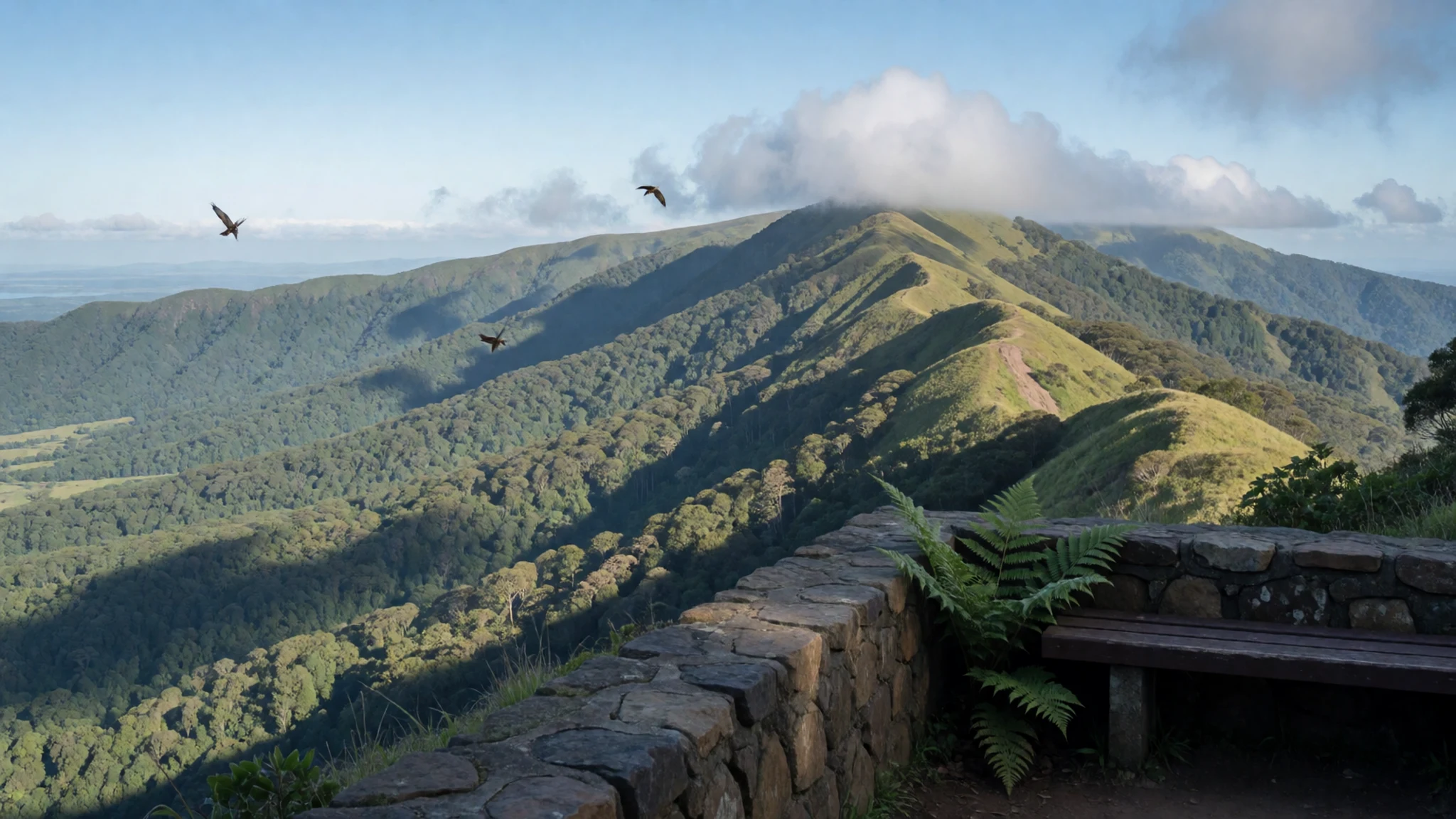
- Caroni Bird Sanctuary — Caroni Swamp, west Trinidad
The Caroni Bird Sanctuary lies in the Caroni Swamp on the west side of Trinidad and makes a natural second stop for birdwatchers based at Asa Wright Nature Centre. Scarlet ibis, a national bird of Trinidad and Tobago, is among the nesting species. Visits are usually by boat, so check with local operators first.
Culture
Asa Wright Nature Centre sits in a country whose culture is a blend of African, Indian, European and other roots, and the valley around it reflects that mix. Christianity is the majority faith in Trinidad and Tobago, with sizeable Hindu and Muslim communities, and people of different backgrounds generally rub along with a good deal of tolerance. Hospitality is a point of pride, and a friendly greeting before any question goes a long way. Small gifts are a welcome thank-you if a visit turns into an invitation home. Conversation often turns to cricket and football, an easy way into a chat with guides, drivers and fellow guests. Two festivals shape the calendar. Carnival fills the streets with dance, music and costume, and Divali, the Hindu festival of lights, falls in October or November, when small clay lamps called deyas are lit at homes and in public places; it is a public holiday. Inside the centre itself, the culture is that of birders and naturalists: early starts, low voices, shared binoculars and a habit of whispering the name of whatever has just landed. Visitors will meet trust staff, researchers and keen amateurs side by side on the same veranda. Keep your voice low on the veranda and trails, stay on the marked paths, and do not use recorded calls to lure birds into view.
What to wear
Asa Wright Nature Centre is a birding lodge, so clothing there is practical, but Trinidad and Tobago has dress traditions worth knowing. Indo-Trinidadian families wear the sari, lehenga and kurta in silk, cotton and chiffon for weddings, prayers and Divali, while Creole heritage dress often features checked madras cotton in head wraps and skirts. Carnival is the other big wardrobe: costumes of feathers, sequins and beads, made for the street rather than the forest. In daily life people dress for the heat, in light cotton shirts, shorts, summer dresses and trainers or sandals, with football and cricket shirts common on match days. For the centre, pack lightweight long-sleeved shirts and long trousers in muted greens, browns or greys, since bright colours can make birds wary and long sleeves help against insects and scratchy plants. Footwear matters most: choose closed shoes or boots with good grip, because the trails are damp and often slick. Bring a light waterproof, a hat and insect repellent. Elsewhere, cover shoulders and knees at Hindu temples and mosques and remove shoes at the door. Swimwear belongs on beaches only, as nude and topless bathing are not allowed anywhere in the country.
What to eat
- Callaloo soup — The dining room at Asa Wright Nature Centre; home-style eateries across the island
Callaloo is a thick green soup built on dasheen leaves, often with okra, coconut milk and sometimes crab. The lodge kitchen uses vegetables from the centre's own organic garden; elsewhere, look for it at Sunday lunch tables and home-style eateries.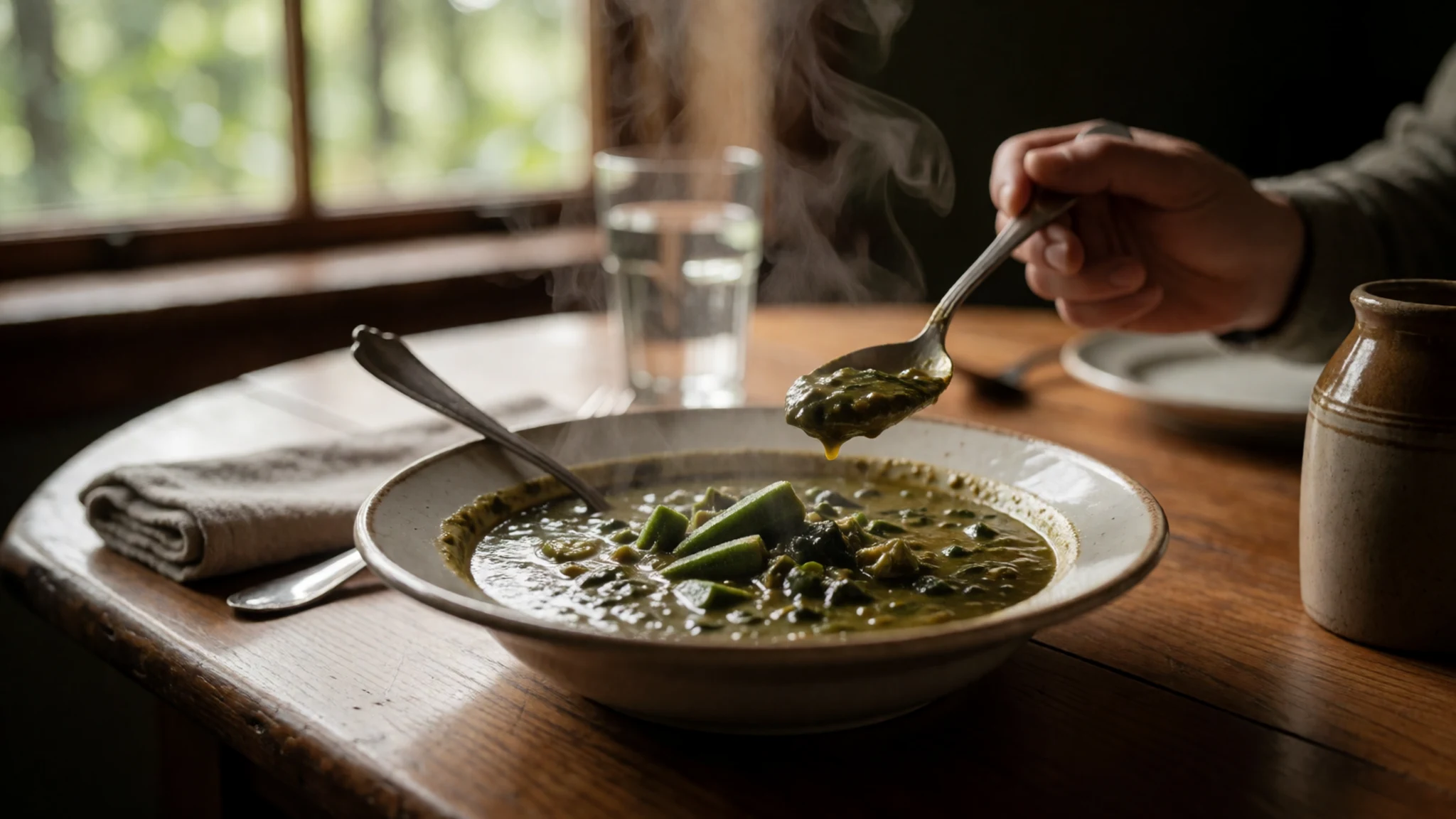
- Doubles — Roadside doubles stalls and market corners across Trinidad
Doubles are a staple fast snack: two soft fried flatbreads called bara folded around curried chickpeas, topped with chutneys and pepper sauce. Locals eat them standing at roadside stalls, often at breakfast. Ask for the pepper level you can manage, because the sauce can be fierce.
- Roti — Roti shops and family eateries in any Trinidad town
Roti is a flatbread of Indian origin, folded around curried chickpeas (channa) and a choice of meat or vegetables such as pumpkin. Buss up shut is the soft, torn version whose name refers to a ripped shirt, while dhalpouri holds ground yellow split peas. - Sada roti and choka — Breakfast stalls and roti shops in Arima and other valley towns
Sada roti is a plain, soft flatbread, often served at breakfast with choka, fire-roasted vegetables such as aubergine or tomato mashed with garlic and pepper. It is a filling start to the day and easy to find on the way to the hills. - Pelau — Family eateries and home cooking at Sunday lunch
Pelau is a one-pot dish of rice, pigeon peas and chicken or beef, coloured with caramelised sugar and simmered with coconut milk and vegetables. It is a Sunday and party staple, often served with coleslaw or salad.
Plan it
Best time. February–May is the drier stretch, with better odds of clear mornings on the veranda. The rainy months from June bring heavy showers, lusher forest and fewer visitors. Heat and humidity are constant all year.
How long. 2–3
Getting there. Fly to Piarco International Airport near Port of Spain, then take a taxi or pre-arranged transfer through Arima and up the hill road into the Arima Valley. Check the official site, http://www.asawright.org/, for visiting and transfer arrangements.
Budget. mid
Tips
- Book day visits or rooms ahead through the official site, http://www.asawright.org/, and check what is offered and when
- Arrive early, as the feeders are busiest soon after dawn
- Wear sturdy shoes and carry a light waterproof for sudden rain on slick trails
- Check entry rules before flying: a valid passport, an onward ticket and an address for your stay are asked for, and visa needs depend on nationality
- Bring binoculars and insect repellent, and drink water regularly in the humidity
Etiquette
- Keep voices low and stay on marked trails
- Greet people before asking them a question
- Do not add your own food for the birds or use recorded calls to attract them
Nearby
Sources
- Wikidata Q4803181 (CC0)
- Wikipedia: Asa Wright Nature Centre (rev 1362480768) (CC BY-SA 4.0)
- Wikivoyage: Trinidad and Tobago (rev 5399147) (CC BY-SA 4.0)
- Photo: Inside visitor centre and lodge, Tereva at English Wikipedia (Public domain)
- Photo: Asa Wright's home 1967, John Hill (CC BY-SA 4.0)
- Photo: White-necked jacobin, Grueslayer (CC BY-SA 4.0)
- Photo: Northern Range from the centre, Jimfbleak at English Wikipedia (CC BY 3.0)
- Photo: The balcony, Rictor Norton & David Allen (CC BY 2.5)
- Photo: The balcony, Rictor Norton & David Allen (CC BY 2.5)
- Photo: View from the balcony, Rictor Norton & David Allen (CC BY 2.5)
- Photo: Banana leaf, anaxmedia (CC BY-SA 2.0)


Wildlife
- White-necked jacobin (animal)
Remember the white-necked jacobin as the hummingbird in a blue hood and a white collar, small, quick and sparkling. Visitors to Asa Wright Nature Centre can find it at the hummingbird feeders, which attract these fast flyers. The notes do not say which months or hours are best, so a guide is the person to ask. Watch from a calm, respectful distance, keep your voice low and your movements slow, and never feed the birds yourself. - Bearded bellbird (animal)
The bearded bellbird is the bird with the ringing, metallic call, loud enough to echo through the trees. The male wears white with a brown head and black wings, with black wattles hanging at his throat; the female is smaller and green and yellow. Asa Wright Nature Centre is known for it, and its call carries through the forest. The notes give no season or time of day, so ask a guide. Stay quiet, keep well back, and never feed it. - White-necked jacobin (bird)
Remember the white-necked jacobin as the hummingbird in a blue hood and a white collar, small, quick and sparkling. Visitors to Asa Wright Nature Centre can find it at the hummingbird feeders, which attract these fast flyers. The notes do not say which months or hours are best, so a guide is the person to ask. Watch from a calm, respectful distance, keep your voice low and your movements slow, and never feed the birds yourself. - Bearded bellbird (bird)
The bearded bellbird is the bird with the ringing, metallic call, loud enough to echo through the trees. The male wears white with a brown head and black wings, with black wattles hanging at his throat; the female is smaller and green and yellow. Asa Wright Nature Centre is known for it, and its call carries through the forest. The notes give no season or time of day, so ask a guide. Stay quiet, keep well back, and never feed it.