Nariva Swamp
Nariva Swamp, Trinidad and Tobago
Nariva Swamp is Trinidad's big freshwater wetland, where manatees, caimans, howler monkeys and macaws live within reach of the east coast.
The place
Nariva Swamp lies on the east coast of Trinidad, a short way inland from Manzanilla Bay, and covers a little over 60 square kilometres. It is a freshwater wetland, which is unusual on an island better known for oil, carnival and steep northern hills. Four kinds of vegetation sit side by side inside it: mangrove forest near the coast, stands of palm, wooded swamp, and open freshwater marsh where the water is shallow and the grasses grow tall. That mix explains the wildlife tally. Surveys record 204 bird species, 45 mammals, 39 reptiles, 33 fish and 19 frogs, plus hundreds of insects. Manatees feed in the channels, caimans lie along the banks, and anacondas and boas stay hidden in the vegetation. Red howler monkeys and white-fronted capuchins live in the trees, and the parrots include blue-and-gold and red-bellied macaws. Herons and white storks work the marsh. The ground is flat, wet and largely roadless, so the swamp is seen from its edges or by boat, not on long walks. Bush Bush, a patch of higher ground within it, is the research core and is closed to casual visitors. Nariva is a place for patience: dawn and dusk matter, binoculars matter more than a phone camera, and many days show far less than the species list promises. It rewards people who treat it as a working ecosystem, not an attraction.
Its story
Nariva Swamp has been a protected landscape for decades, though protection on paper and on the ground have not always matched. In 1954 an area of 6,234 hectares was declared a forest reserve. Then came Bush Bush, 1,408 hectares of higher ground inside the swamp, which became a wildlife sanctuary in 1968. In 1989 it was upgraded to a prohibited area, reserved for local and international research, with no hunting or harvesting allowed in theory. Three laws now cover the swamp: the Forests Act, the Conservation of Wildlife Act and the State Lands Act. Cases that reach court are mostly about poaching and the felling of trees. The reality has been messier. Squatters kept moving onto the margins, and the Ramsar documentation itself admits the protections were not entirely successful. The swamp has since been named a Wetland of International Importance under the Ramsar Convention, which gives it recognition and a framework for management, though not a guarantee. The story of Nariva is therefore less about a finished conservation victory than about a long argument over who gets to use wet land on a small, crowded island: farmers, hunters, fishers, scientists and the animals that need the water. That argument is why guides, permits and local knowledge matter so much when visiting today.
What to see
- Bush Bush sanctuary — Inside Nariva Swamp, Nariva/Mayaro
Bush Bush is the raised, forested core of Nariva Swamp and a prohibited area, so entry is by official permission only. It is the main site for research and for howler monkeys and forest birds. Check with the Forestry Division before planning anything, and do not try to enter informally.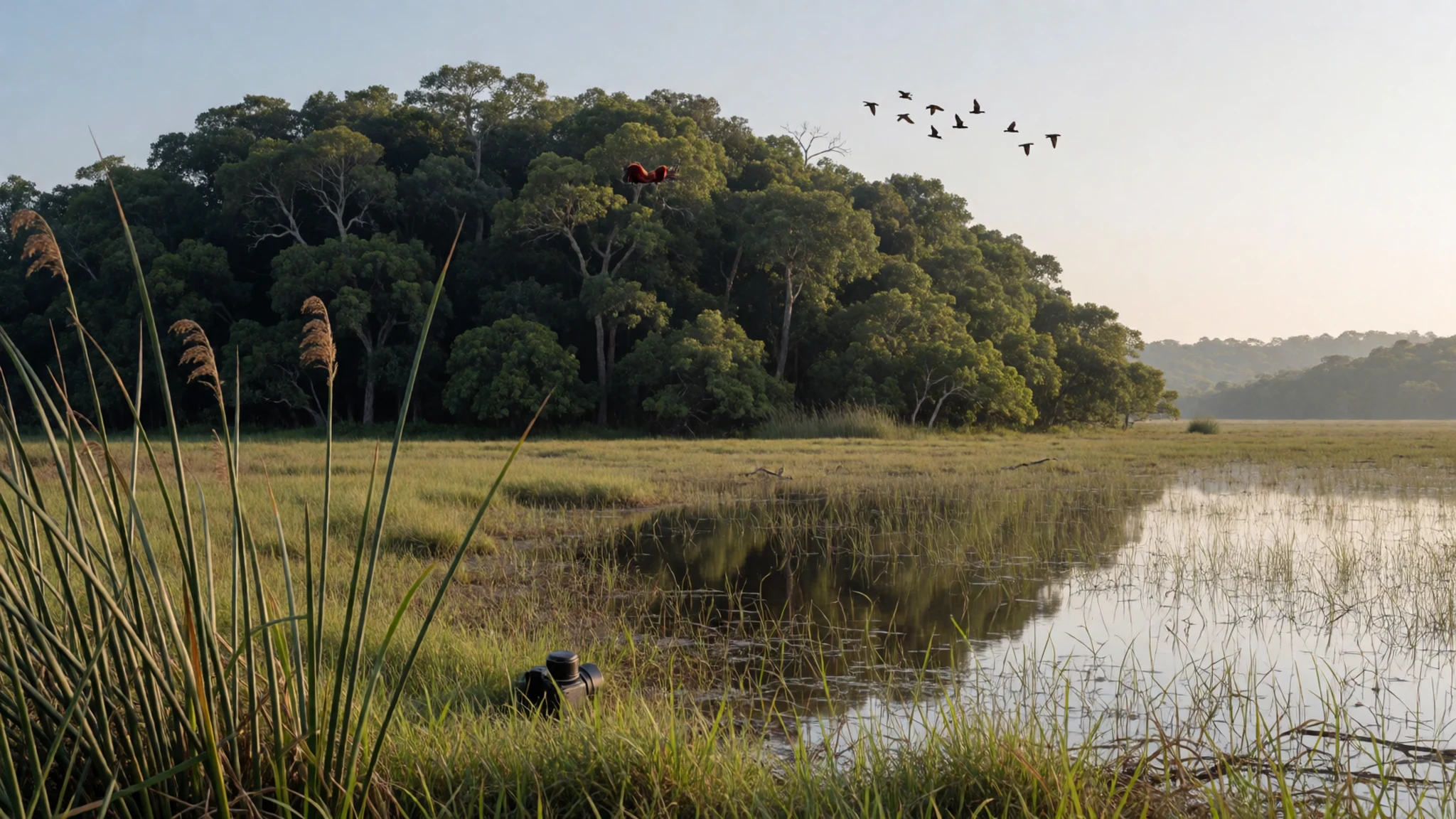
- Nariva River mouth at Cocos Bay — Cocos Bay, east coast
Where the Nariva River reaches the Atlantic at Cocos Bay, brown swamp water meets surf and a long beach lined with coconut palms. It is the easiest place to see the swamp's edge, with shorebirds at low tide and a sense of how the wetland drains.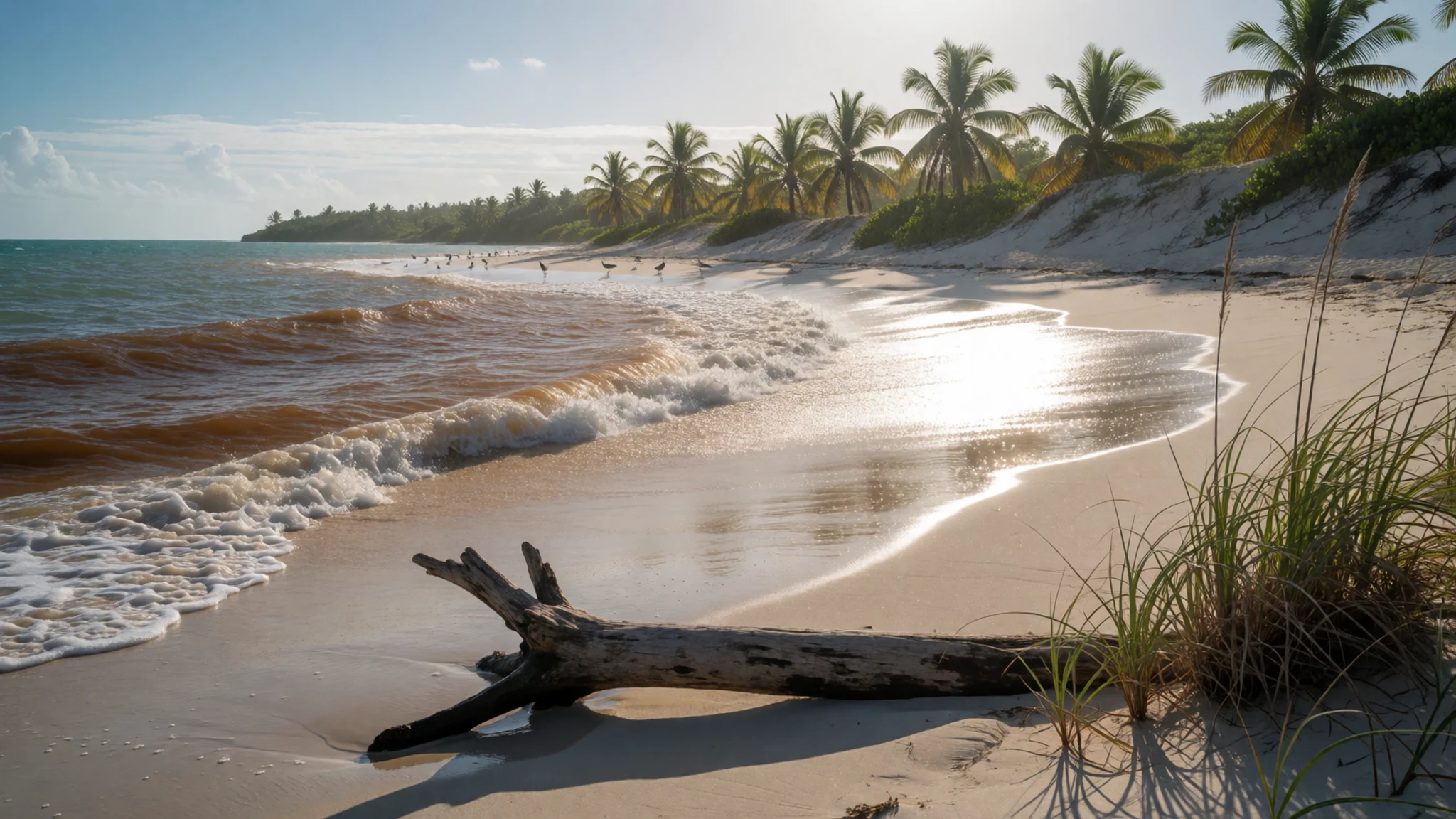
- The freshwater marsh — Central Nariva Swamp
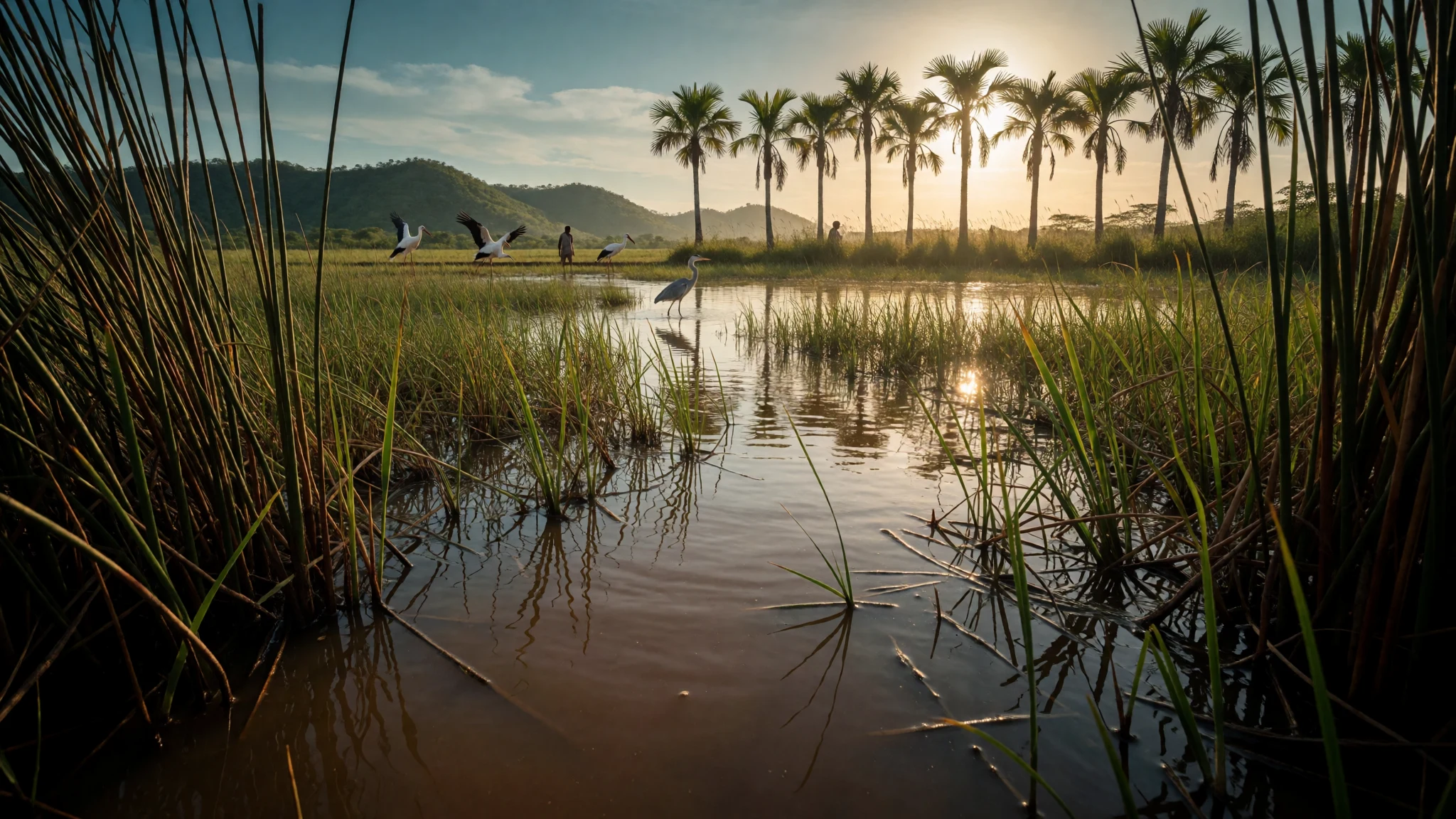
The open marsh is the postcard view of Nariva: flat water, reeds and grass stretching to low hills, with herons and egrets standing in the shallows. Boat trips through a licensed guide offer the best chance of caimans and, with luck and calm water, a manatee surfacing.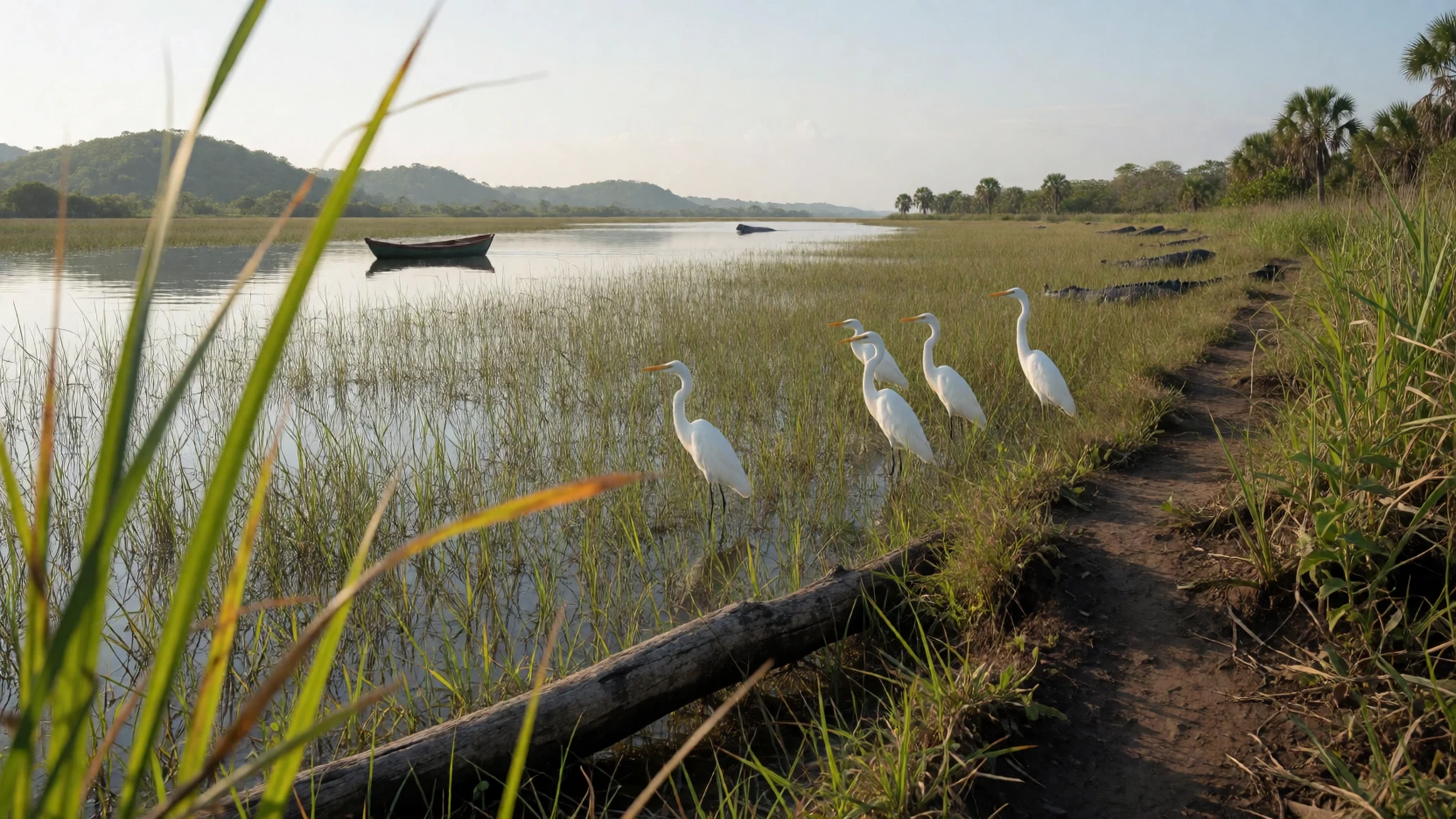
- Palm and swamp-wood forest edge — Margins of the swamp
Where the marsh gives way to stands of palm and wooded swamp, the birdlife changes. Parrots and macaws pass overhead in noisy pairs, usually at first light and again near dusk. Walk slowly, listen first, and expect to find them by sound before sight.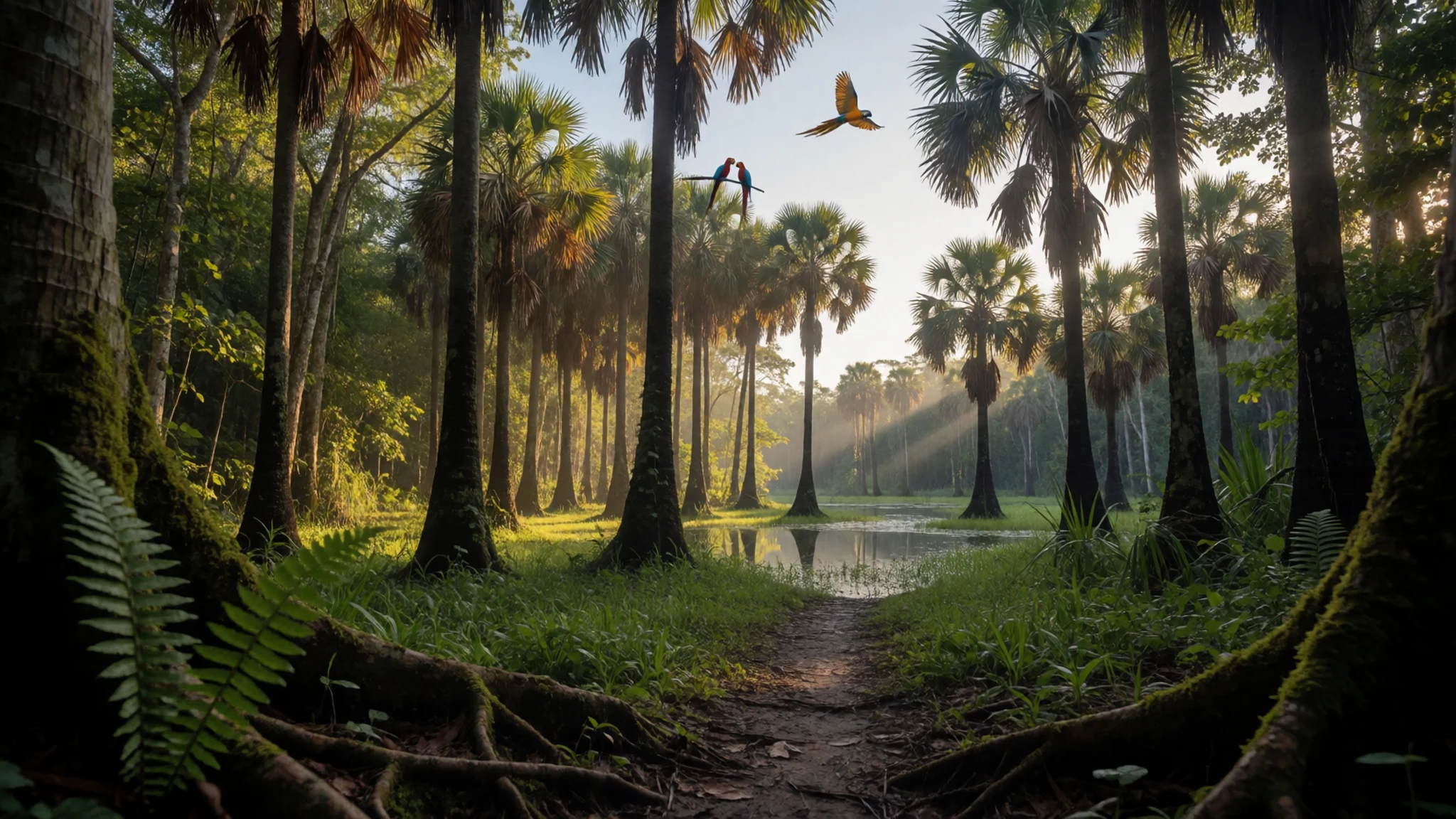
- Manzanilla Bay shoreline — Manzanilla, east coast
The Manzanilla coast, just beyond the swamp, is a long Atlantic beach backed by coconut groves. It suits a quiet morning walk before or after a swamp visit, though the surf can have strong currents, so paddle cautiously and watch local flags and advice.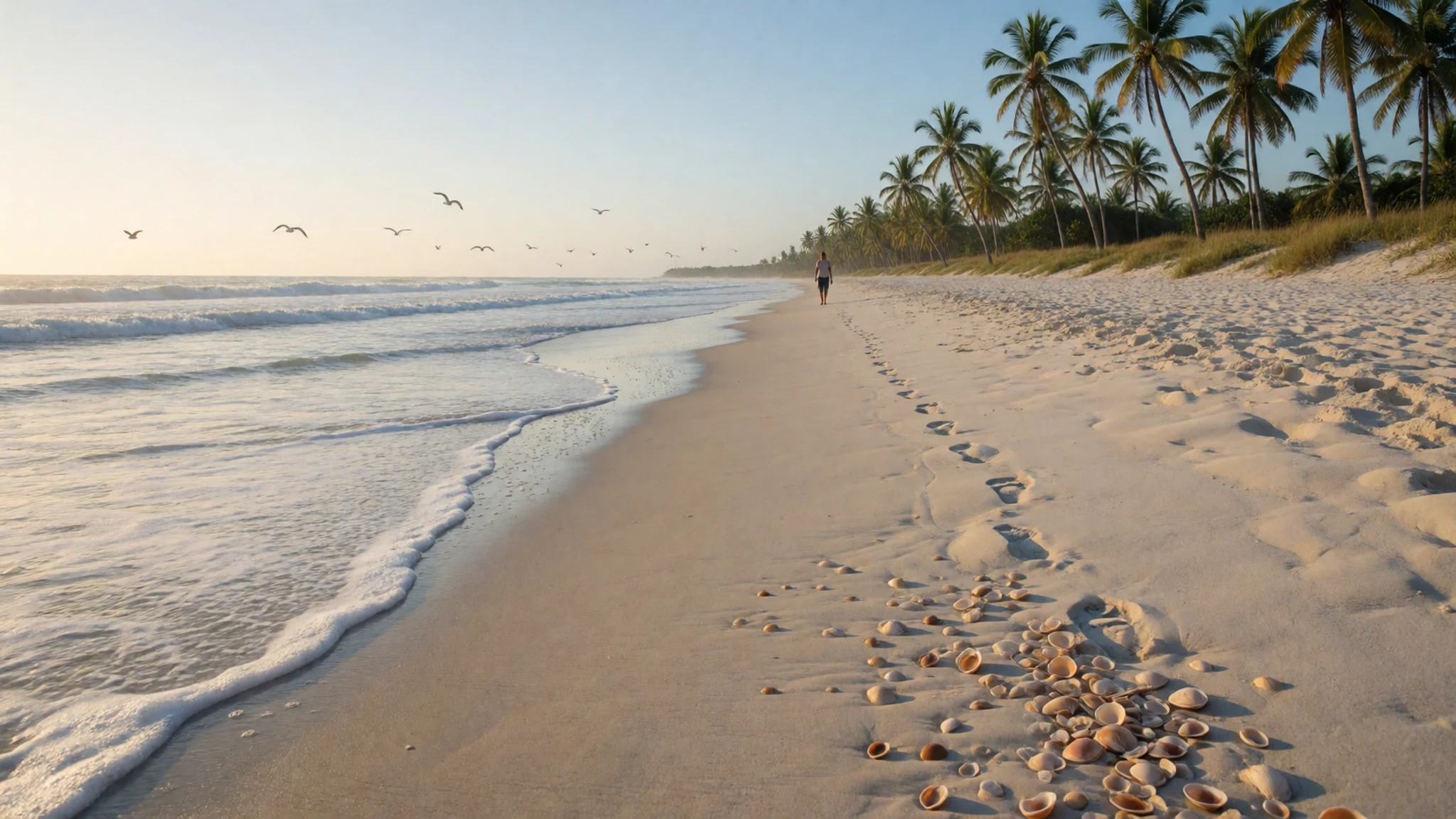
Culture
Nariva Swamp sits in the rural east of Trinidad, an area of small towns, coconut groves, farms and fishing communities far from the capital's bustle. Trinidad's population draws on African, Indian, European, Indigenous and other roots, and that mix shows in local speech, food, festivals and places of worship, even in quiet eastern districts. Many people here have a practical, long-standing relationship with the swamp, using nearby land and water for farming, fishing and, historically, hunting. That history explains some of the tension around protection: rules that look simple on a map can affect real livelihoods. Conservation workers, guides and researchers are the people most likely to share their knowledge with visitors, and hiring a local guide spends money where it supports that work. Conversations tend to be friendly and direct, and a greeting before a question is expected. Weekends bring beach picnics, music from car speakers and lime culture, the Trinidadian habit of gathering informally to talk and eat. Rural roads are narrow and shared with dogs, cyclists and slow vehicles, so travel unhurriedly. Respect for the swamp itself is a form of manners here: take rubbish out, keep distance from animals and move quietly. Never buy, accept or order bush meat, and always stay with a permitted guide, as Bush Bush and much of the swamp are protected and wildlife must not be disturbed, fed or touched.
What to wear
Nariva Swamp has no single local costume, so the dress of the region is Trinidad's wider mixture. Traditional clothing includes cotton and silk saris, kurtas and orhnis worn by Indo-Trinidadian families at Hindu weddings and festivals, and African-heritage headwraps and bright printed cottons for cultural events. Carnival costume, with feathers, beads and sequins, is the island's best-known dress, though it belongs to Port of Spain and the festival season, not the east coast. In daily life, people around the swamp wear what suits heat and humidity: light cotton shirts, shorts or knee-length skirts, caps, sandals and rubber boots for farm or fishing work. Beachwear is common along the Manzanilla coast, but people usually cover up in towns and villages. A visitor should dress for wet, hot, insect-heavy ground. Choose long, light, quick-drying trousers and long-sleeved shirts in neutral colours, a hat, and sunscreen. Wear closed shoes or rubber boots with grip, because paths are muddy and boats can be slippery. Carry a thin rain jacket, a dry bag for phone and camera, and insect repellent. For temples, mosques or churches on the way, wear modest clothing covering shoulders and knees, and be ready to remove shoes.
What to eat
- Doubles — Roadside stalls in Sangre Grande, Rio Claro and other east-coast towns, mornings
Two soft fried flatbreads holding curried chickpeas and chutneys, usually with pepper sauce on request. It is Trinidad's standard breakfast and street snack, eaten standing up from paper. Look for roadside stalls in town centres in the morning.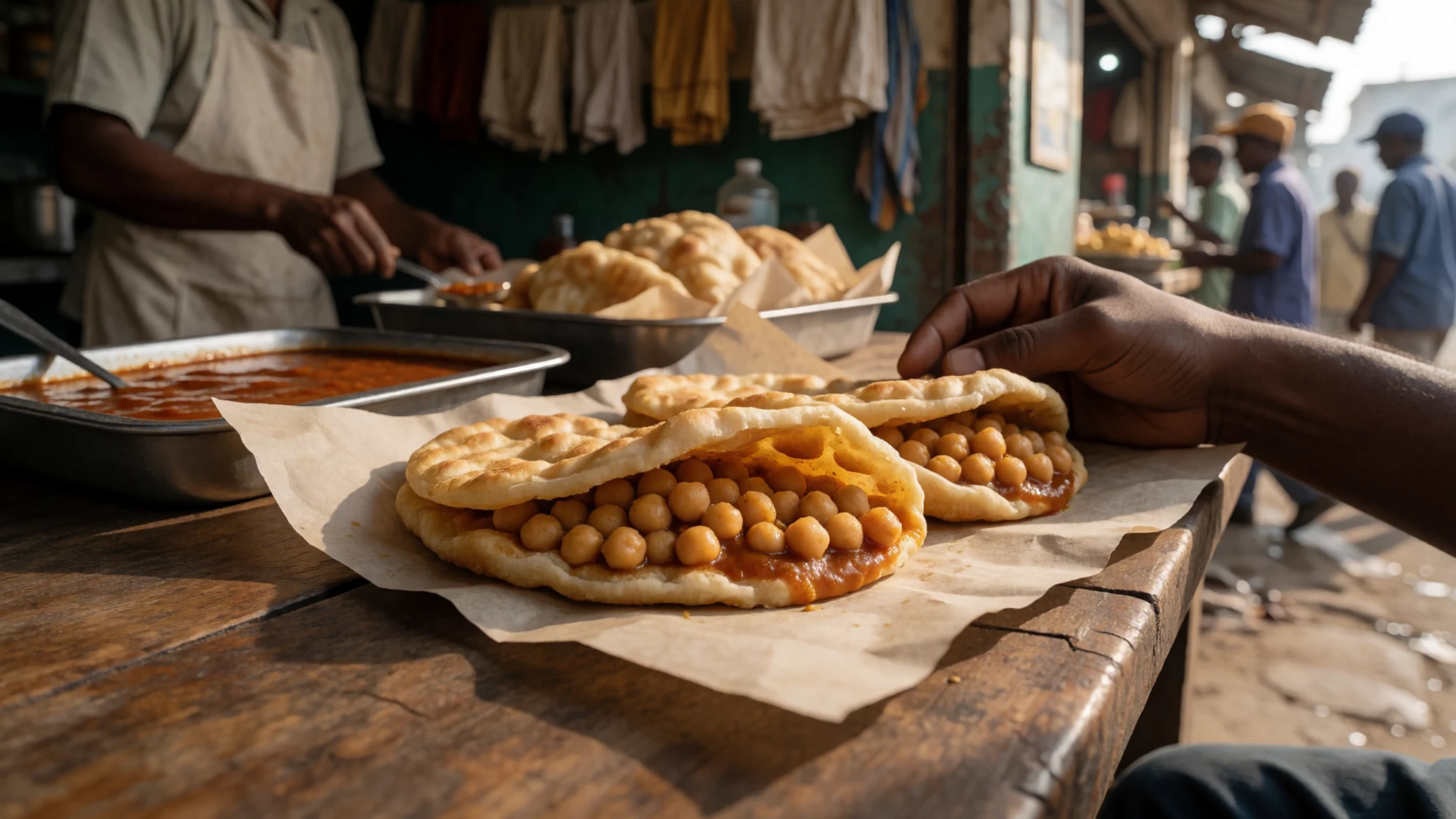
- Roti with curry — Roti shops and cookshops in small towns near the swamp
A soft flatbread folded around curried chicken, goat, or vegetables such as potato and pumpkin, often with chickpeas. Heavier than doubles, it makes a proper lunch before a boat trip. Ask for the heat level if you are unsure.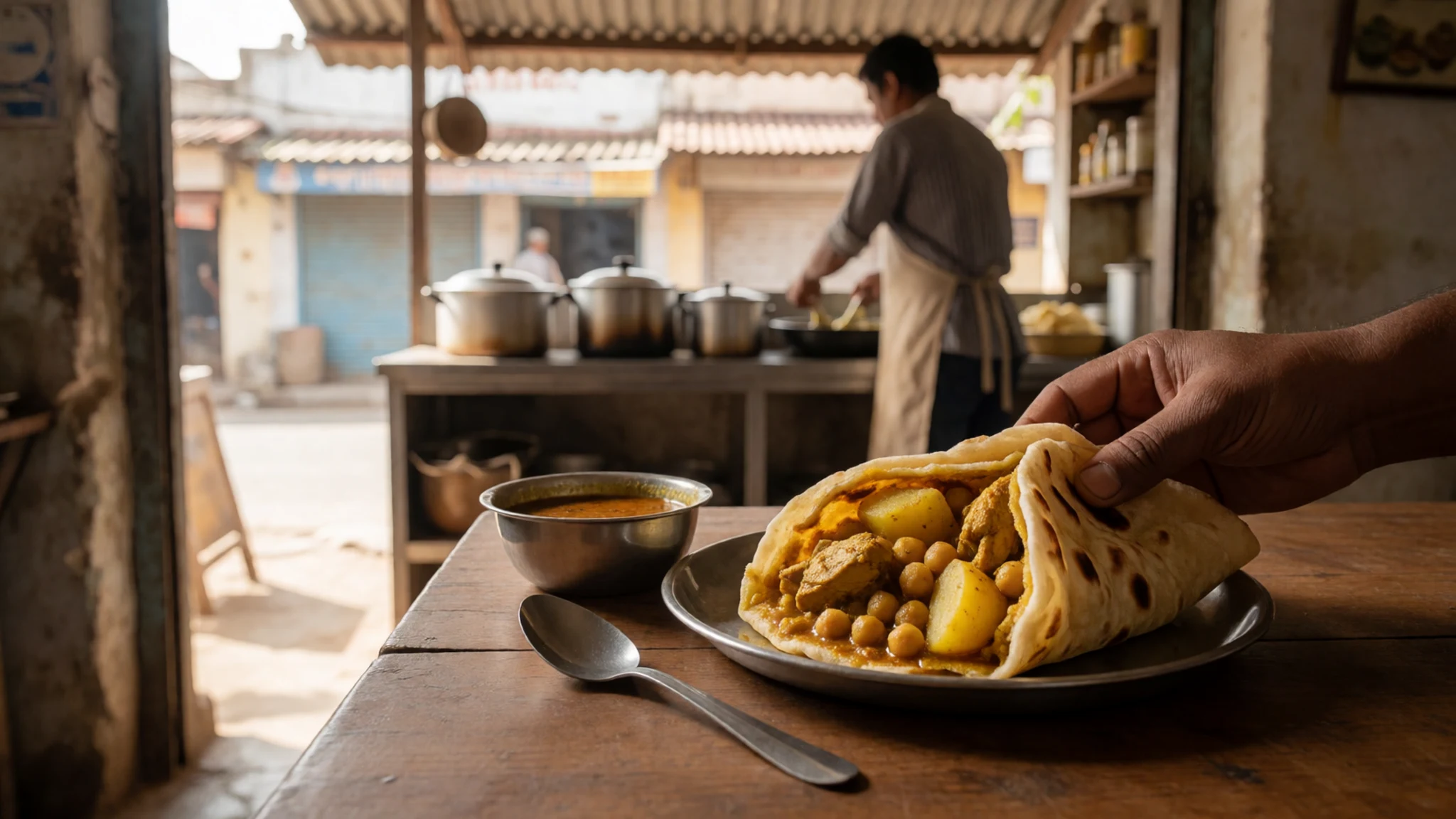
- Pelau — Local cookshops and village eateries, especially at weekends
One-pot rice with pigeon peas and meat, often chicken, cooked down with browned sugar, coconut milk and herbs until the grains turn savoury and slightly sweet. It is home cooking and a Sunday staple, more often found at family tables than menus. - Fried or stewed fish — Beach-side fish stalls and eateries along the Manzanilla–Mayaro road
Coastal communities along the Manzanilla and Mayaro shoreline sell fresh catch, fried with seasoning or stewed in a spiced sauce, with rice, provisions or bake. Ask what came in that morning, and choose whichever fish is freshest. - Coconut water — Roadside vendors near Cocos Bay and Manzanilla
Cold coconut water from a freshly cut green coconut is the sensible drink after a hot morning in the swamp, and the vendor will chop the shell open so the jelly can be scooped. The east-coast groves make it a local speciality.
Plan it
Best time. The drier months, roughly February to May, are the most comfortable for boat trips and walking, with firmer ground and fewer flooded tracks. The wet season, June to December, brings heavy rain, mud, more mosquitoes and sometimes flooded roads. Early mornings are best in any month for wildlife and cooler air.
How long. 1–2
Getting there. Fly to Piarco International Airport near Port of Spain, then drive east across the island towards Sangre Grande and the Manzanilla coast, about two hours depending on traffic. Public transport to the swamp edge is limited, so hire a car or arrange transfers with a guide.
Budget. mid
Tips
- Arrange access and a licensed guide in advance, since Bush Bush is a prohibited area and the Forestry Division controls entry
- Start at first light, when birds and monkeys are most active and the heat is manageable
- Carry water, insect repellent, sun protection and a rain layer, as there are few shops near the swamp
- Bring cash for small eateries and roadside vendors, as card machines are uncommon in rural districts
- Pair the swamp with a Manzanilla beach stop, but check surf conditions before swimming
Etiquette
- Follow your guide and stay on marked routes or boat channels
- Keep a safe distance from caimans, snakes and manatees and never feed wildlife
- Take all rubbish with you and do not buy bush meat or animal products
Nearby
Sources
- Wikidata Q6965994 (CC0)
- Wikipedia: Nariva Swamp (rev 1366460824) (CC BY-SA 4.0)
- Wikivoyage: Trinidad and Tobago (CC BY-SA 4.0)
- Nariva Swamp on the eastern seaboard of Trinidad — Shiv Trinidad Skey, via Wikimedia Commons (CC BY 2.5)
- Mouth of the Nariva River, Cocos Bay — Grueslayer, via Wikimedia Commons (CC BY-SA 4.0)
- Trinidad and Tobago shaded relief map, annotated — US-Central Intelligence Agency / Fowler&fowler, via Wikimedia Commons (Public domain)


Wildlife
- Red howler monkey (animal)
The red howler is a treetop monkey, one of a family of howlers that scientists once counted as a single kind. In Nariva Swamp it lives up in the trees, so look high into the canopy rather than along the ground. Our notes do not say which season or hour is best, so ask your guide. Keep a respectful distance, speak softly, use binoculars, and never offer food, because feeding wild monkeys does them harm.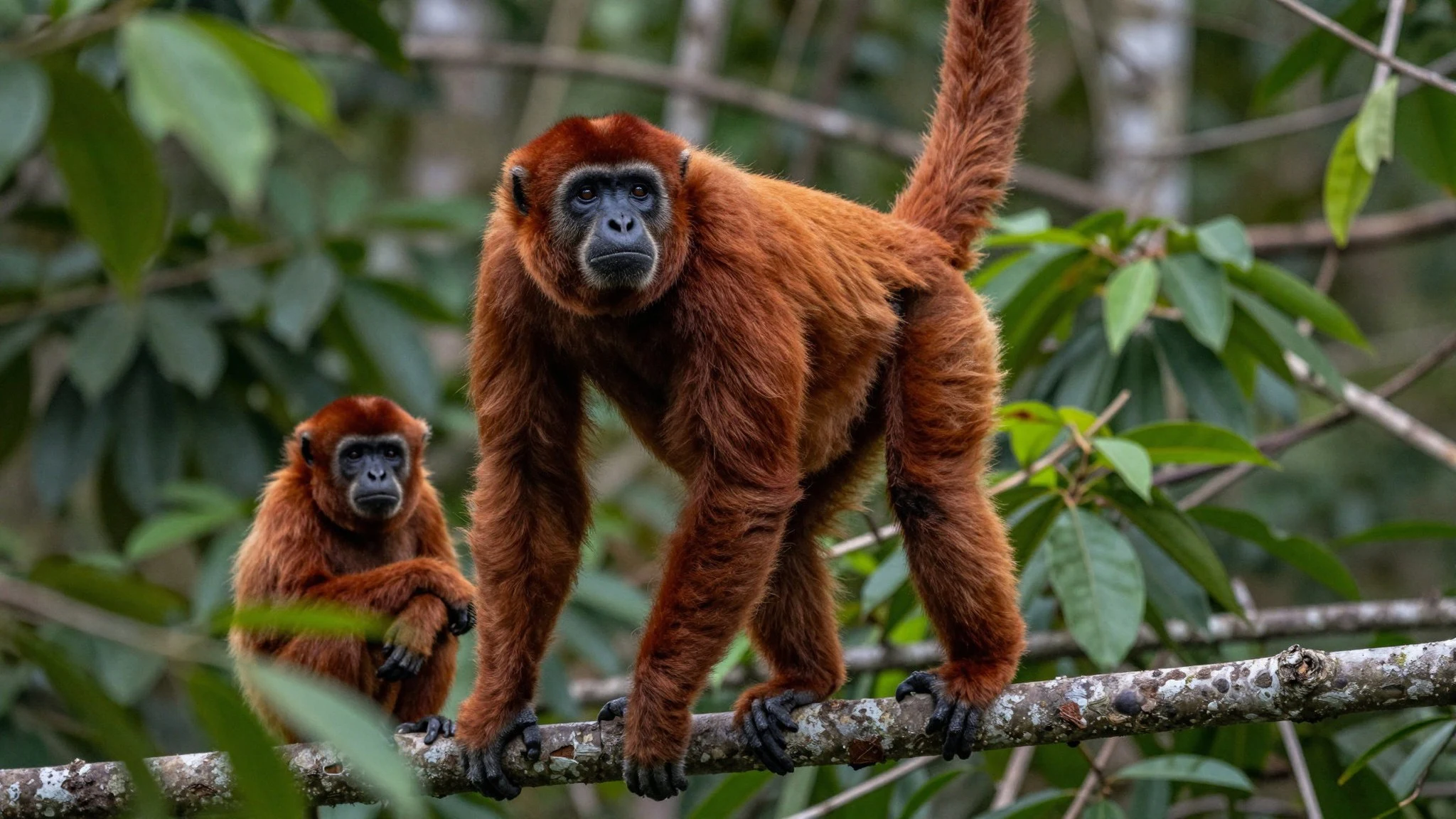
- Blue-and-yellow macaw (animal)
The blue-and-yellow macaw, also called the blue-and-gold, is a big parrot with a blue back and a sunny yellow-orange front, like a flying flag. It is among the parrots of Nariva Swamp, so scan the trees for it. The notes do not say which season or time of day suits it, so ask a local guide. Watch from afar with binoculars, stay quiet so it is not startled, and never feed it.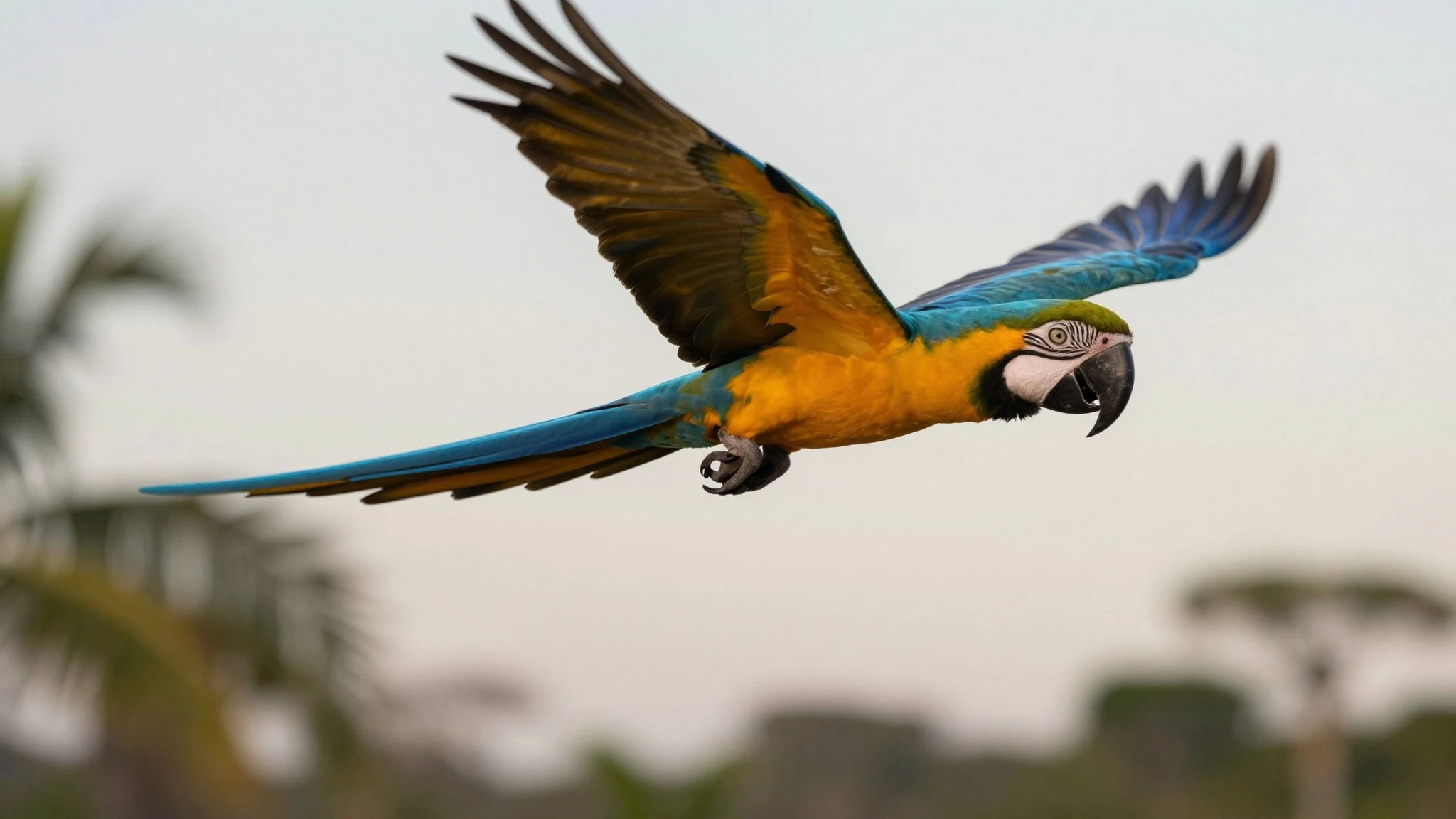
- Red-bellied macaw (bird)
The red-bellied macaw is a mostly green parrot with a maroon patch on its tummy, and it is the biggest of the little parrots known as mini-macaws. It is one of the parrots of Nariva Swamp. The notes give no season or hour for seeing it, so a guide's advice is your best help. Stay well back, keep voices low so it stays relaxed, use binoculars, and never offer it food.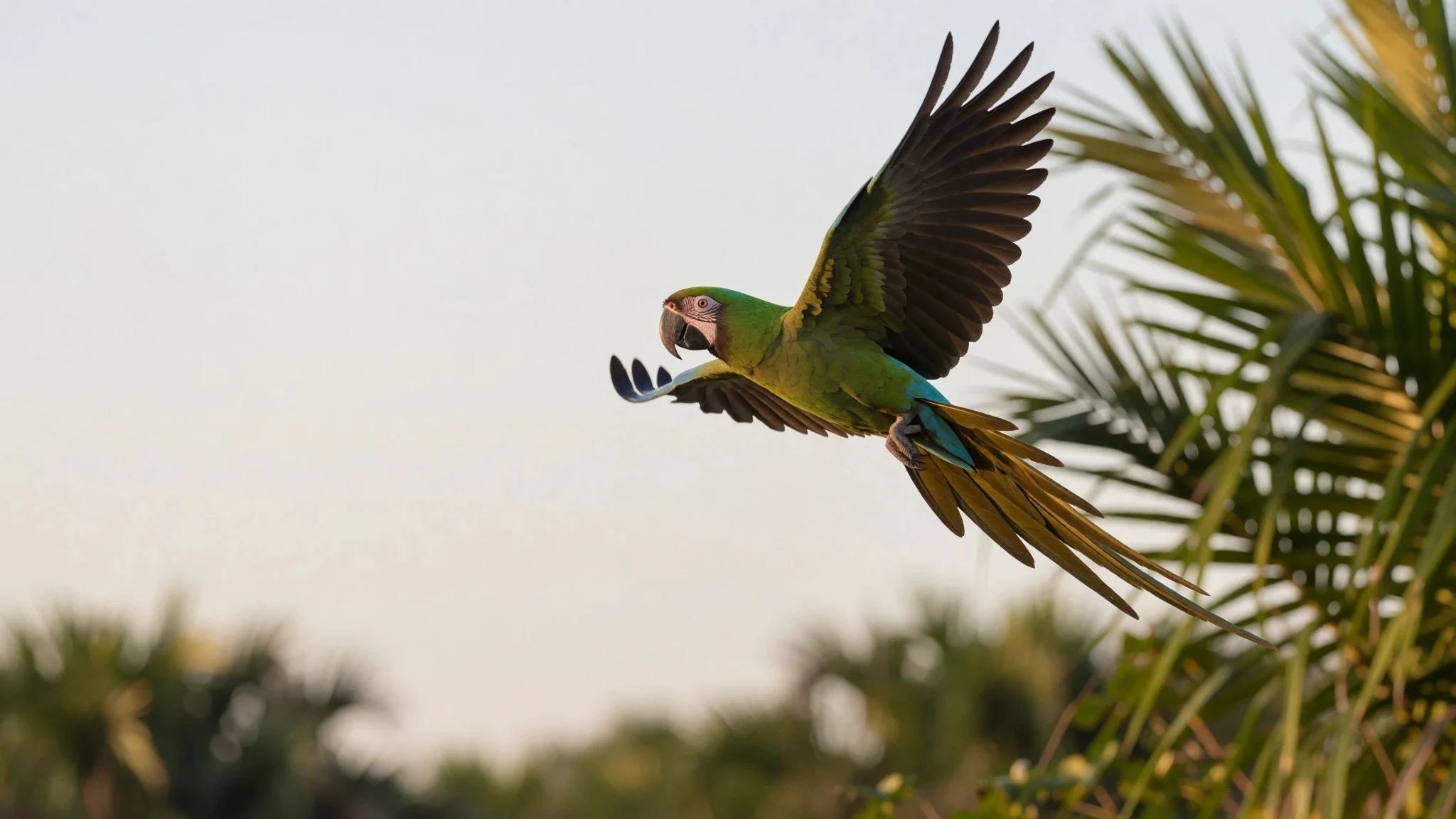
- White stork (bird)
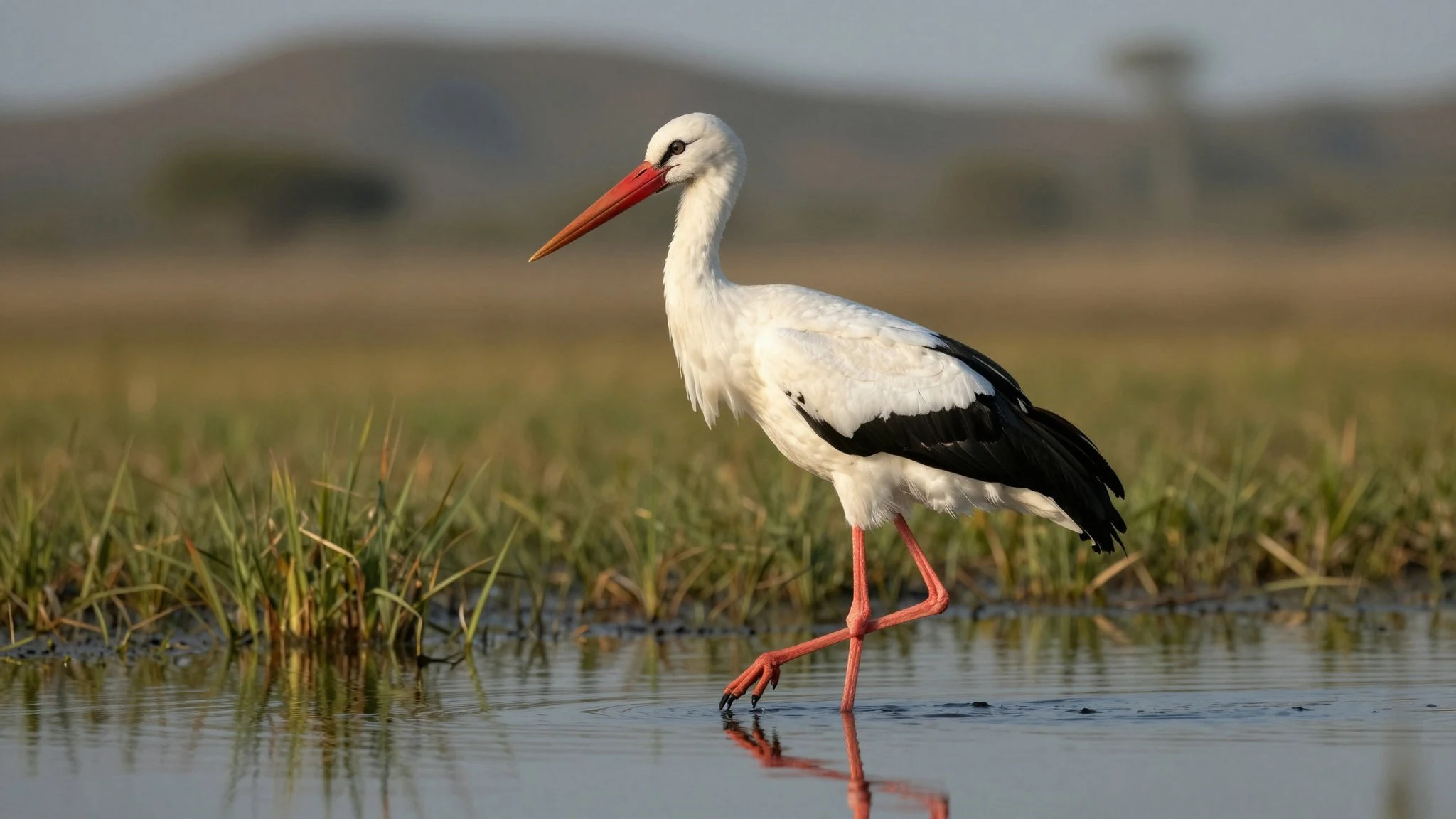
The white stork is a tall white bird with black on its wings, long red legs and a long pointed red beak, like a bird in bright red stockings. In Nariva Swamp it works the marsh alongside herons, so scan the open wet ground. The notes do not say which season or time of day to look, so ask your guide. Watch quietly from a distance, and never feed it.