Caroni Swamp
Caroni Swamp, Trinidad and Tobago
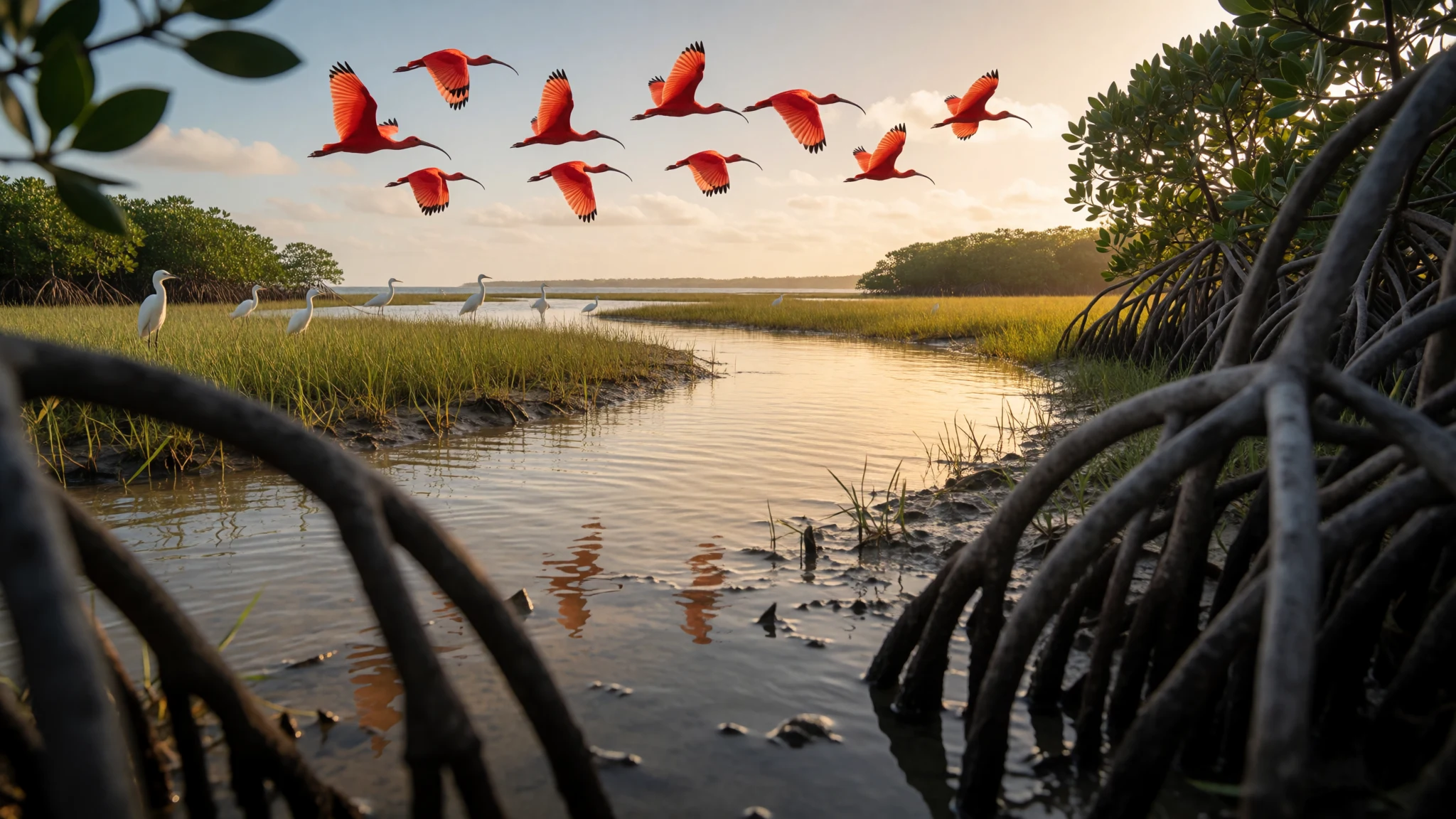
Caroni Swamp is a mangrove maze beside Port of Spain where, at dusk, flocks of scarlet ibis fly in to roost.
The place
Caroni Swamp sits on the west coast of Trinidad, just south of Port of Spain, where the Caroni River spills into the Gulf of Paria. It is a tangle of mangrove forest, grassy marsh, winding channels, brackish lagoons and wide mudflats that show at low tide. The mix of fresh and salt water is what makes it so productive. Fish and shellfish use it as a nursery before moving out to open water, and birds feed on whatever the tide leaves behind. The central core is a wildlife sanctuary, and the wider wetland is protected under the Ramsar Convention as a site of international importance. About 5,611 hectares of it is mangrove and marsh. Most visitors meet it from a flat-bottomed boat, drifting through narrow channels beneath arching roots, with the capital's towers sometimes visible across the flat horizon. It is not remote wilderness: the city, the highway and the towns of central Trinidad are all close, which is part of why it matters. The swamp soaks up floodwater, buffers the shoreline and gives a large urban population a living wetland within a short drive. Birds are the draw, with over 100 species recorded, but the smaller details reward attention too: crabs on the roots, oysters clinging at the waterline, and the brackish smell of mud warming in the afternoon sun.
Its story
The story of Caroni Swamp is mostly the story of one bird and the people who learned to protect it. The scarlet ibis, one of the national birds of Trinidad and Tobago, feeds along the coast and mudflats by day and returns in the late afternoon to roost on the mangrove islands. Its colour comes from the crustaceans it eats, so pale young birds turn scarlet as they mature. The swamp is recognised as the largest roosting place for the species. Boatmen who once knew the channels as fishing and crabbing routes became the guides who now carry visitors out to watch the flocks arrive, and that shift from harvesting to showing is a small conservation success. Protection came in layers: the central section was set aside as a wildlife sanctuary, and the wetland later gained Ramsar recognition. Pressure has not gone away. Nearby development, drainage, mangrove cutting and pollution carried down the Caroni River all affect a system that depends on the balance between river and sea. The ibis work as a barometer, because they follow food and safe roosts, and a poorly kept swamp would soon lose them. The evening boat trip is therefore more than entertainment. It is the main reason the neighbouring community, the city and visitors all have a stake in keeping the water healthy and the trees standing.
What to see
- The boat channels — Main visitor jetty, Caroni Swamp
The usual way into Caroni Swamp is a guided boat along narrow channels cut through the mangrove. The engine is cut in places and the boatman poles or drifts, so the roots, mud and quiet are all close. Look for tree-climbing crabs, herons and kingfishers on the way to the roosting area.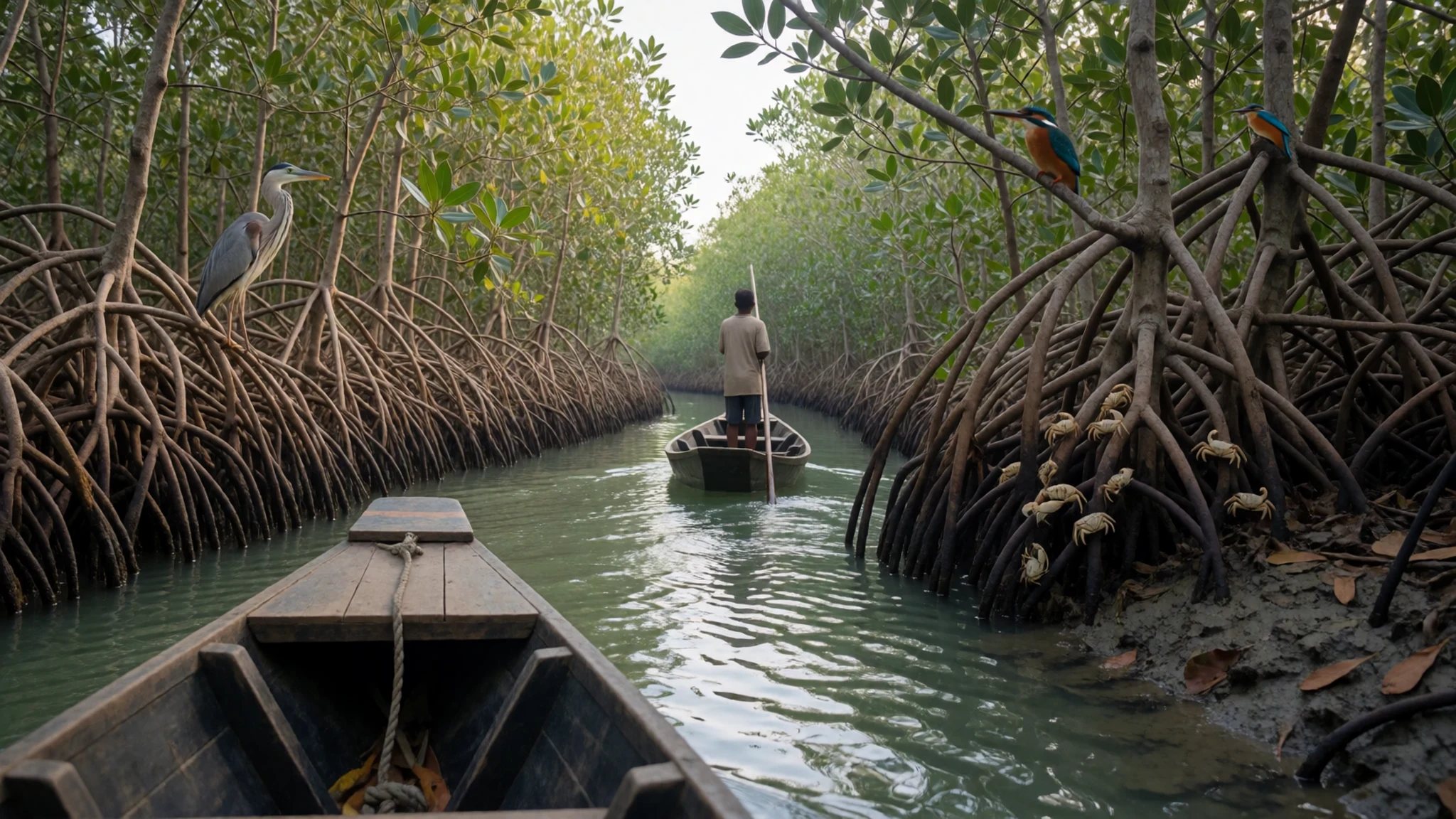
- The scarlet ibis roost — Roosting islands, sanctuary core
Towards sunset the ibis arrive in lines and V-shapes from the feeding grounds and settle in a few chosen mangrove islands until the greenery looks dotted with red. Boats keep a respectful distance and wait. The show lasts as long as the light does, so patience and binoculars both help.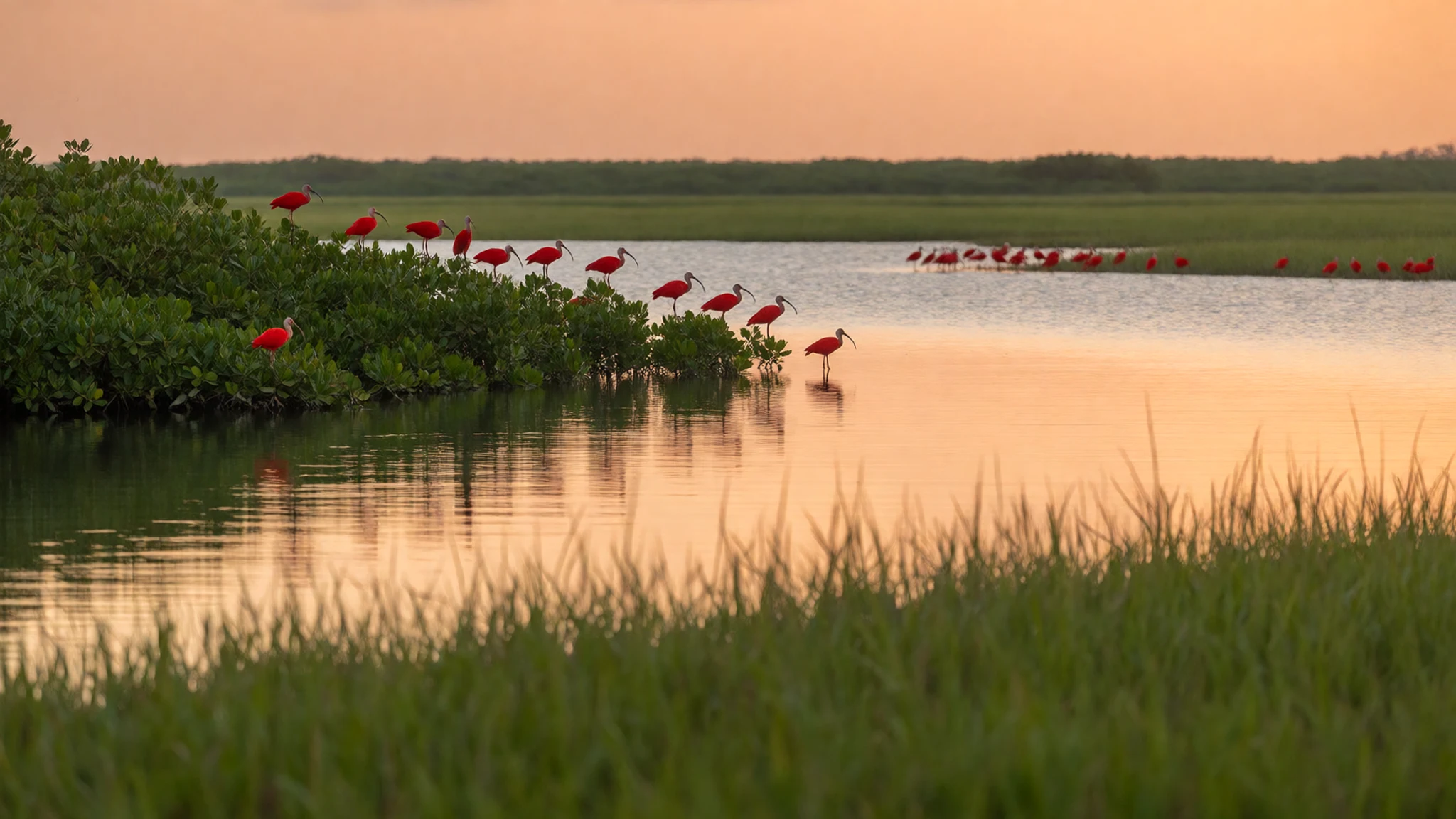
- Scarlet ibis up close — Mudflats and lagoon edges
In good light a single ibis feeding at the water's edge is as striking as the full flock, with its long curved bill probing the mud for crustaceans. Young birds show grey and white, adults a vivid red. A telephoto lens or a steady pair of binoculars brings out the detail without disturbing them.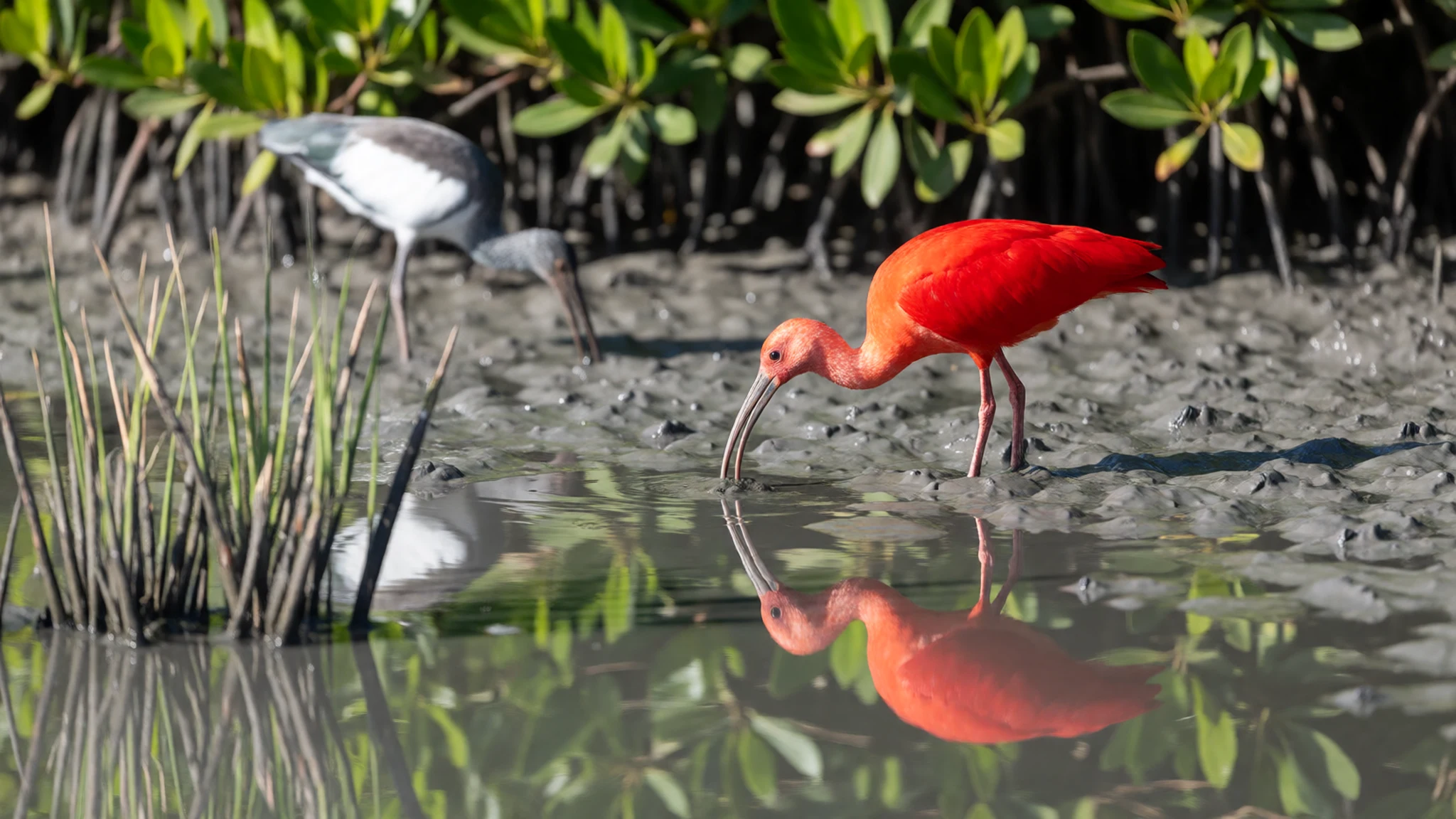
- Marsh and raptor watching — Marsh margins near the sanctuary
Away from the mangrove wall, the open marsh and drier margins suit birders. Yellow-headed caracaras strut along the ground and perch on posts, while herons, egrets and other waders work the shallows. Early morning is quieter than the tour hours, if a guide agrees to take a small group out.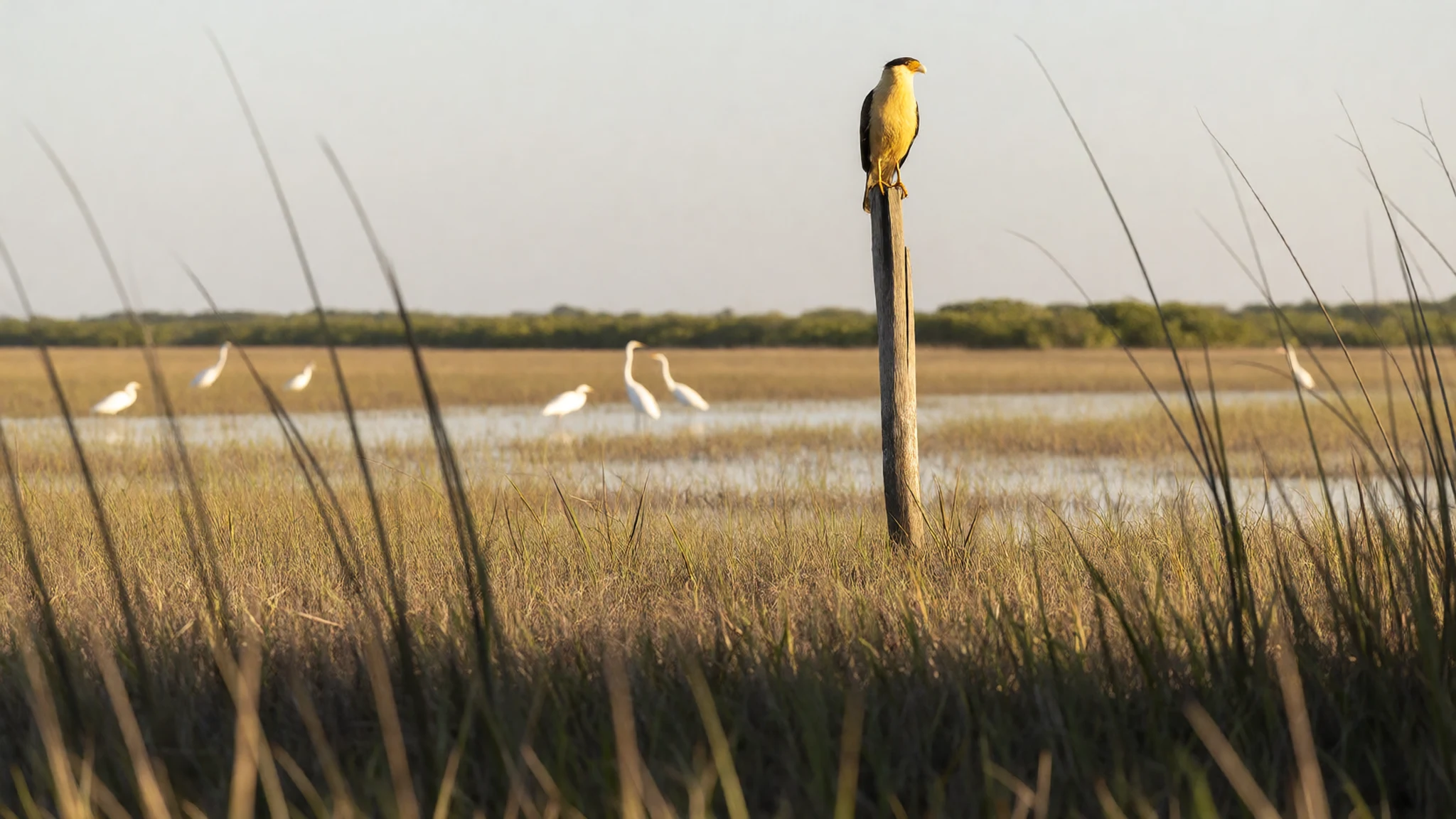
- The view across the water to Port of Spain — Open lagoons facing north
On a clear day the capital's towers stand on the horizon behind the mangrove, a reminder of how close a living wetland sits to a working city. The contrast works best from the open lagoons or from the air, where the green of the swamp meets the grey of the coast.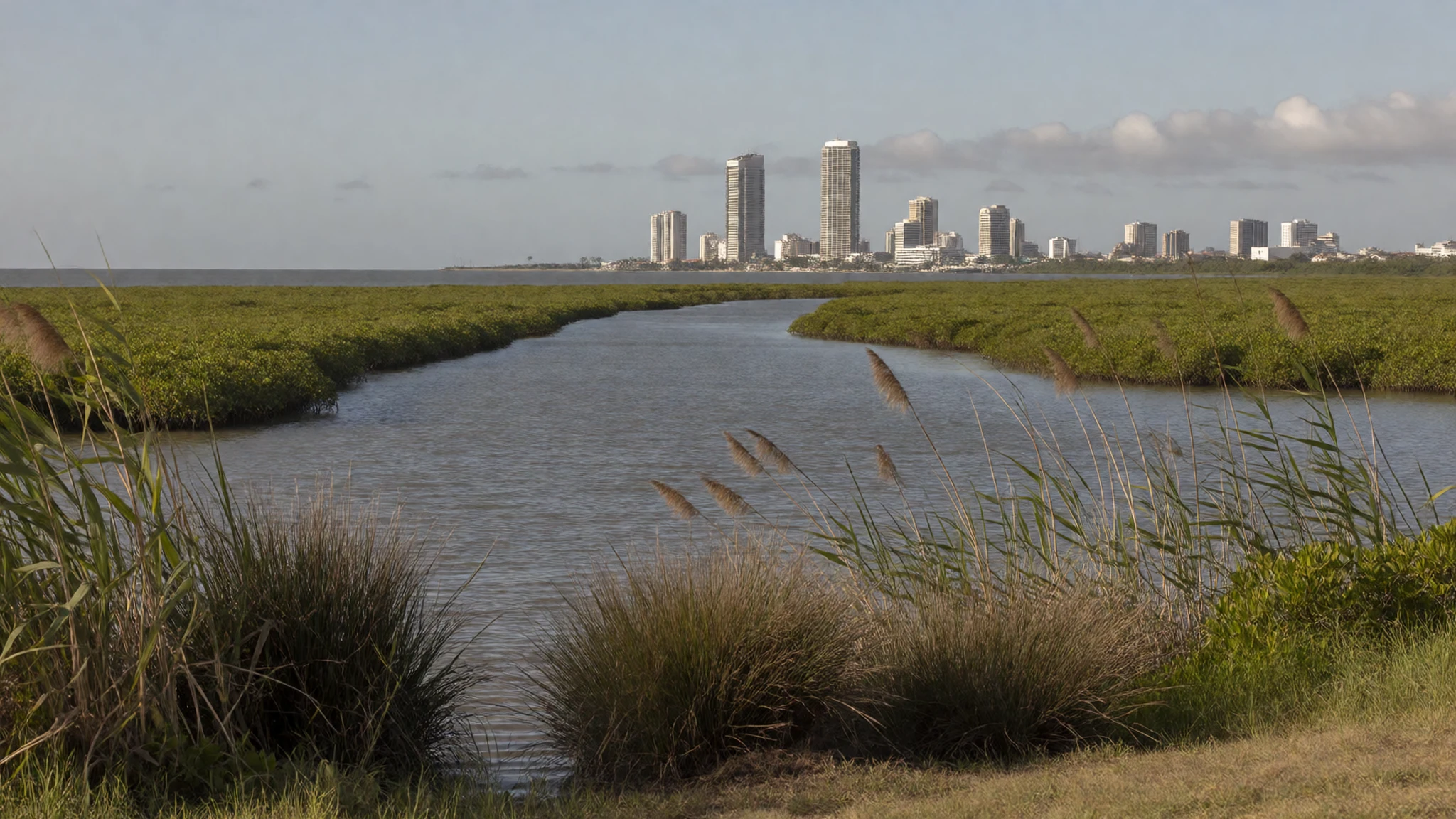
Culture
Caroni Swamp lies in a part of Trinidad shaped by many communities, and the people who live and work around it reflect that mix. Nearby towns have a strong Indo-Trinidadian presence alongside Afro-Trinidadian and other families, and the island's festivals follow suit: Divali lamps, Eid, Carnival, steelpan and chutney music all share the calendar. Food, language and humour move easily between these traditions, and a short taxi ride or a chat on the jetty often turns into a conversation about where somebody's family comes from. The swamp itself has its own culture of work. Fishing, crabbing and oyster gathering were long part of local life, and many guides grew up on these waters, learning the channels, tides and bird habits from relatives. Their knowledge is the real value of a boat trip, so ask questions and listen. Trinidadians also value the idea of liming, relaxed time spent with friends, so do not be surprised if a tour starts a little slowly or the boatman lingers to share a story. The ibis has national meaning, appearing on the country's coat of arms and in everyday talk, so people take pride in showing it well. On the boat, keep voices low, stay seated, and never feed, chase or whistle at the birds, because a spooked flock may abandon the roost.
What to wear
Dress in Trinidad draws on several traditions, and Caroni Swamp's neighbouring communities show most of them. Indo-Trinidadian families wear saris, lehengas, kurtas and shalwar suits in cotton, silk and chiffon for weddings, Hindu festivals and Divali, and many Muslim families dress formally for Eid in long tunics and scarves. Afro-Trinidadian heritage appears in madras checks, head-ties and cotton skirts for folk performance, while Carnival costumes use feathers, beads and sequins in a bold, theatrical style. Everyday clothing is far simpler. Around the swamp people wear light cotton shirts, shorts, jeans, sports tops and rubber boots or sandals, chosen for heat and mud rather than show. Offices in Port of Spain lean towards neat, short-sleeved shirts or lightweight business wear. A visitor should dress for a hot, humid and buggy boat trip. Wear a long-sleeved, quick-dry shirt and light trousers to protect against sun and mosquitoes, a hat, sunglasses and closed shoes with grip for the wet jetty and boat floor. Pack a thin rain jacket in the wetter months and put valuables in a dry bag. Muted greens, greys and browns blend in with the scenery and bother the birds less than bright colours. For visits to temples or mosques elsewhere on the island, carry a scarf and cover shoulders and knees.
What to eat
- Doubles — Street stalls and roadside vendors around Port of Spain and Chaguanas
Two soft fried flatbreads called bara hold spiced chickpea curry, topped with chutneys and a little pepper sauce. It is the island's best-loved breakfast and late-night snack, eaten from paper in minutes. Ask for slight pepper first, since the sauce can be fierce.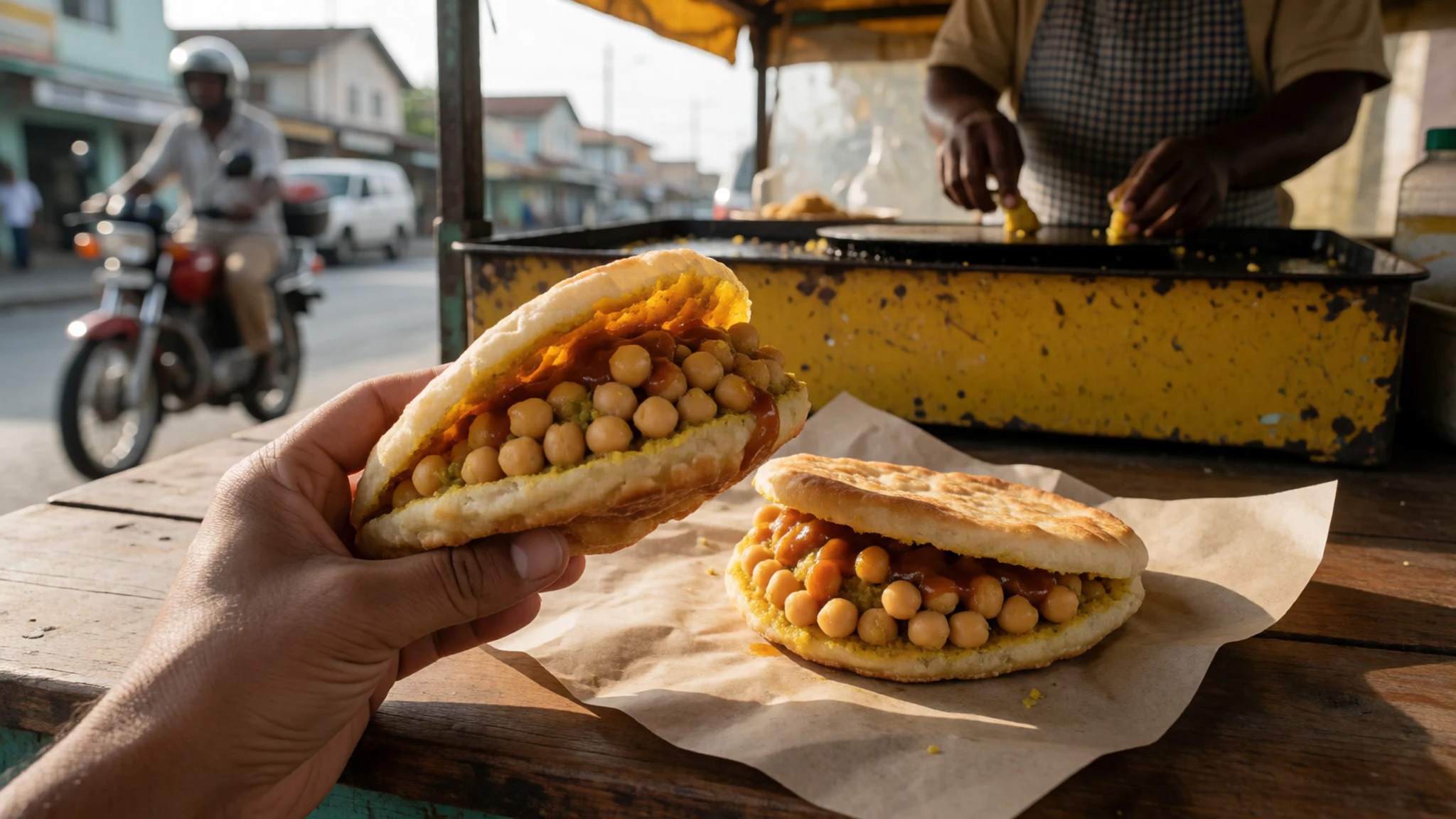
- Roti with curry — Roti shops and small eateries in the towns around the swamp
A soft flatbread wrapped around curried chicken, goat, duck or vegetables with potato and chickpeas. The paratha version, often torn into shreds, is called buss-up-shut. It makes a filling lunch before or after the boat trip, and vegetarian fillings are easy to find.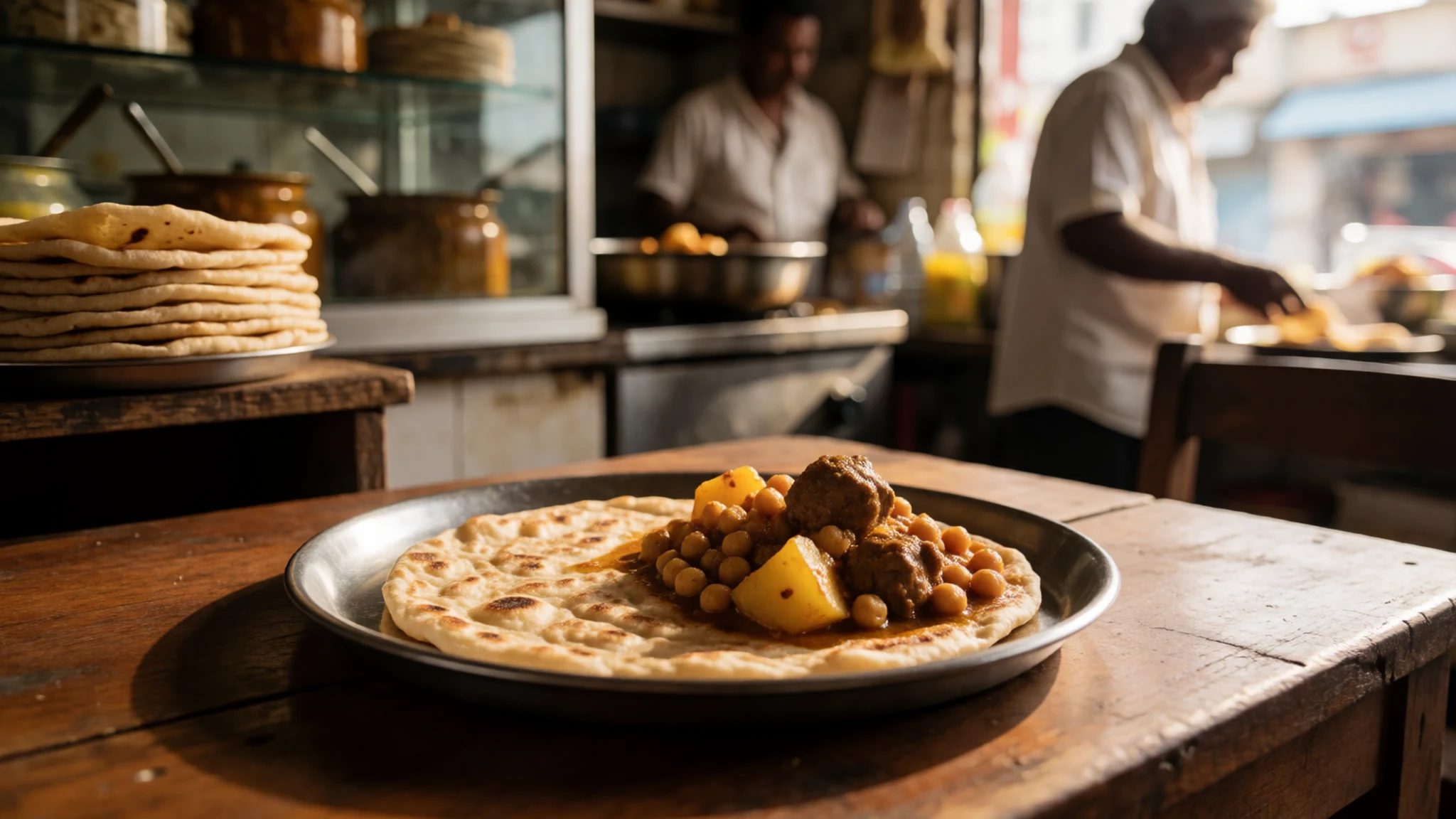
- Pholourie — Roadside snack stalls and market vendors
Small, golden fried dumplings made from split-pea flour and spices, served hot with sweet, sour or spicy chutney such as tamarind or mango. They are a street snack to share while waiting for a lift or a tour, and they cost little. - Pelau — Home-style cook shops and Sunday family tables
A one-pot dish of rice, pigeon peas and chicken or beef, browned in caramelised sugar and cooked with coconut milk, vegetables and herbs. It is common at family lunches and gatherings, and sold by the plate at many local eateries. - Coconut water — Roadside carts near the swamp and in Port of Spain
Vendors chop open green coconuts with a cutlass, hand over a straw, and scoop out the soft jelly when you finish. It is cheap, cold and a welcome relief after hours in the humid swamp air.
Plan it
Best time. February to May is the drier part of the year, with steadier skies for the late-afternoon boat trip. June to January is wetter, and heavy showers can shorten tours, although the ibis still come to roost. Expect heat and humidity all year.
How long. 1
Getting there. Fly into Piarco International Airport, Trinidad's main airport, and travel by road towards Port of Spain and the swamp, by taxi or as part of a pre-booked tour. The last leg is a short walk to the visitor jetty and then a boat into the channels.
Budget. mid
Tips
- Book a late-afternoon boat tour in advance, because the ibis come in towards sunset
- Bring insect repellent, sun protection and drinking water, as shade is limited and mosquitoes are active at dusk
- Carry binoculars and a camera with a zoom lens, as the roosting birds stay at a distance
- Take some cash and confirm with the operator how payment works
- Check with the operator about weather and tide conditions before travelling
Etiquette
- Follow your guide's instructions and keep to the channels and the boat
- Do not feed, chase or whistle at the birds, and keep noise down near the roost
- Take all rubbish with you, as litter harms the mangrove and wildlife
Nearby
Sources
- Wikidata Q3848108 (CC0)
- Wikipedia: Caroni Swamp (rev 1366460605) (CC BY-SA 4.0)
- Photo: Caroni Swamp, Trinidad (aerial) — Bas Leenders (CC BY-SA 2.0)
- Photo: Panoramic view of Caroni Bird Sanctuary — Chris Fitzpatrick (CC BY 3.0)
- Photo: Downtown Port of Spain — Grueslayer (CC BY-SA 4.0)
- Photo: View of Trinidad and Tobago, ISS Expedition 25 — NASA (Public domain)
- Photo: Scarlet ibis — Charles J. Sharp (CC BY-SA 4.0)
- Photo: Scarlet ibis roosting — Charles J. Sharp (CC BY-SA 4.0)
- Photo: Caroni Swamp, Trinidad — Jimfbleak (CC BY 3.0)
- Photo: Yellow-headed Caracara — Mike's Birds (CC BY-SA 2.0)
- Wikivoyage (CC BY-SA 4.0)


Wildlife
- Scarlet ibis (animal)
Picture a flock of bright red birds gliding home as the light fades: that is the scarlet ibis. Caroni Swamp is a maze of mangroves beside Port of Spain, and at dusk the ibis fly in to roost there. The sight is best enjoyed with a local guide, who will know where to wait. Keep your voice low, stay well back so the birds are not disturbed, and never feed them.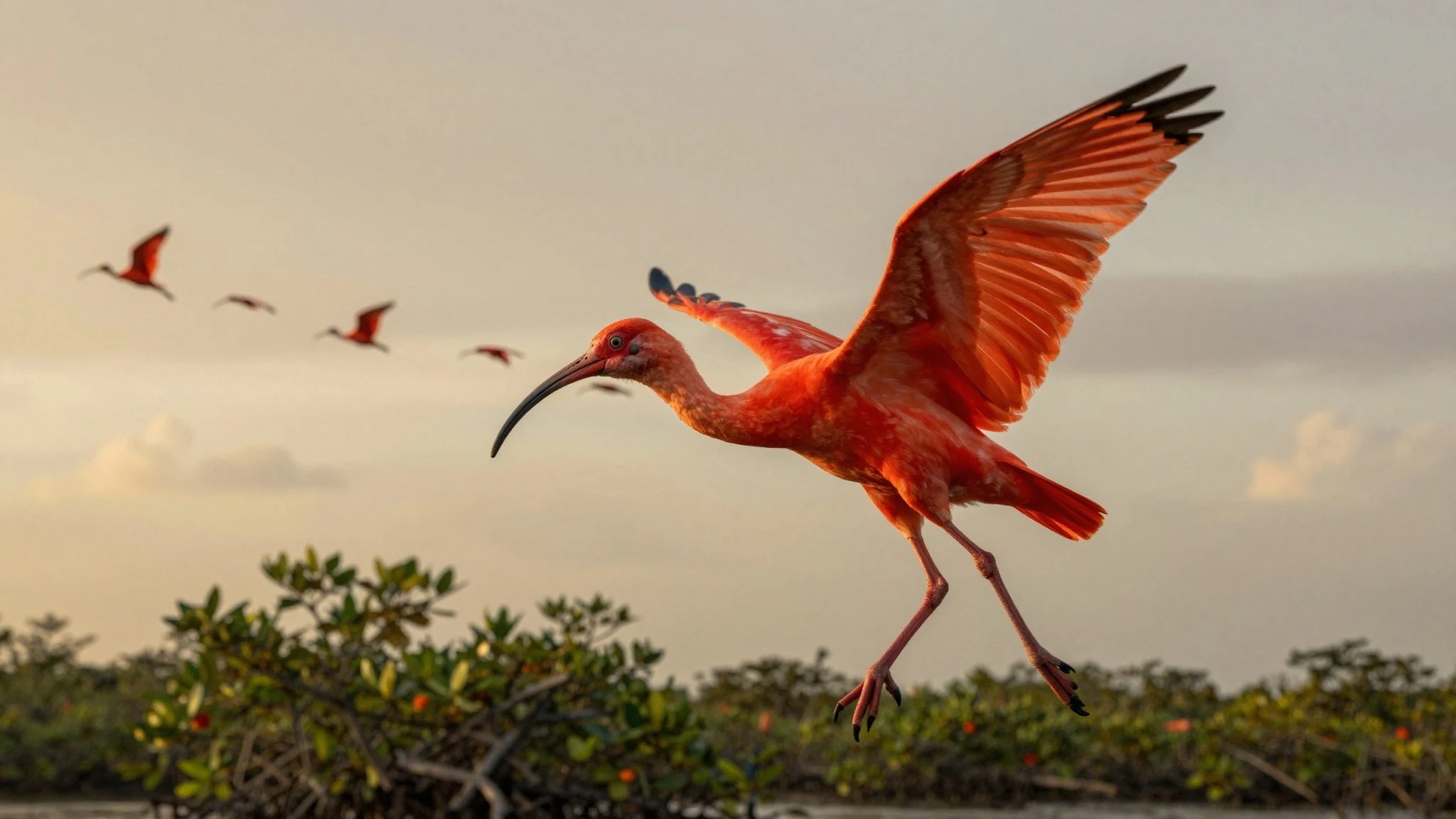
- Scarlet ibis (bird)
Picture a flock of bright red birds gliding home as the light fades: that is the scarlet ibis. Caroni Swamp is a maze of mangroves beside Port of Spain, and at dusk the ibis fly in to roost there. The sight is best enjoyed with a local guide, who will know where to wait. Keep your voice low, stay well back so the birds are not disturbed, and never feed them. - Yellow-headed caracara (animal)
Think of the yellow-headed caracara as a falcon relative that prefers to walk. This bird of prey struts along the ground and perches on posts, so scan low as well as high. Close by, herons, egrets and other waders busy themselves in the shallows. Use binoculars rather than moving closer, stay calm and quiet, ask your guide to point it out, and never try to feed it. - Yellow-headed caracara (bird)
Think of the yellow-headed caracara as a falcon relative that prefers to walk. This bird of prey struts along the ground and perches on posts, so scan low as well as high. Close by, herons, egrets and other waders busy themselves in the shallows. Use binoculars rather than moving closer, stay calm and quiet, ask your guide to point it out, and never try to feed it.