Port of Spain
Port of Spain, Trinidad and Tobago
Port of Spain is a working Caribbean capital where roti, steelpan and Carnival make a few days of heat and noise worth it.
The place
Port of Spain sits on the Gulf of Paria, on the north-west coast of Trinidad, about 3 metres above sea level. It is the capital of Trinidad and Tobago, yet the city proper holds only about 49,000 people. The number swells on weekdays, when commuters arrive from the chain of towns that runs east to Arima and west towards Chaguaramas. That daytime crowd explains the feel of the place: offices, banks, shops and government departments fill the downtown grid, and much of it goes quiet after dark. The Laventille Hills form the eastern edge. The sea lies to the west, but the working waterfront belongs mostly to shipping and the container port, so the public can reach very little of it. North of the centre, the open ground of Queen's Park Savannah acts as the city's lung, ringed by colonial-era houses, the Botanic Gardens and the zoo. Woodbrook and St Clair hold many of the restaurants and bars where office workers go in the evening, and St James is the late-night strip. Piarco, the island's main airport, lies a drive away to the east. It is fair to say the city is hot and humid, traffic is heavy at rush hours, and a day or two of wandering suits it better than a week of sightseeing. Its real pull is the mix of peoples, which shows in the food, the music and the festivals, and above all in Carnival, when the whole country seems to converge on the capital.
Its story
Port of Spain began as a Spanish port, Puerto de los Españoles, later shortened to Puerto de España. The first settlers chose a spot close to Cumucurapo, an Amerindian fishing village whose name is usually glossed as 'place of the silk cotton trees'. It lay in what is now Mucurapo, just west of the modern centre. Early records also mention Conquerabia, and historians cannot say whether that was a separate village, a second name for Cumucurapo, or a Spanish misunderstanding. By 1560 a Spanish garrison stood near the foot of the Laventille Hills, which now mark the city's eastern boundary. The ground nearest the sea in today's downtown was then tidal mud and mangrove. Early buildings were open huts called ajoupas, plastered with mud and scattered among big silk cotton trees. The fort was little more than a mud-walled yard with a shack, a flagpole, a couple of cannon and a handful of soldiers. A post that weak fell easily when Walter Raleigh's expedition arrived in April 1595. The Caribs around the gulf were mobile people who crossed to the mainland and travelled up the Orinoco, and they left no lasting town behind. When the French naval commander Comte d'Estrées called in 1680, he found nothing that deserved the name of a port town. Real weight came later: the settlement has been the island's capital since 1757, and its long role as administrative and commercial centre grew from that decision.
What to see
- National Academy for the Performing Arts — Downtown, near Queen's Park Savannah
The Academy opened at the end of 2009. Its shape is meant to recall the national flower, and its construction was dogged by allegations of corruption, so opinion on the design is split. It is a venue for concerts and theatre, so check the programme, and look at the building from the open ground around it.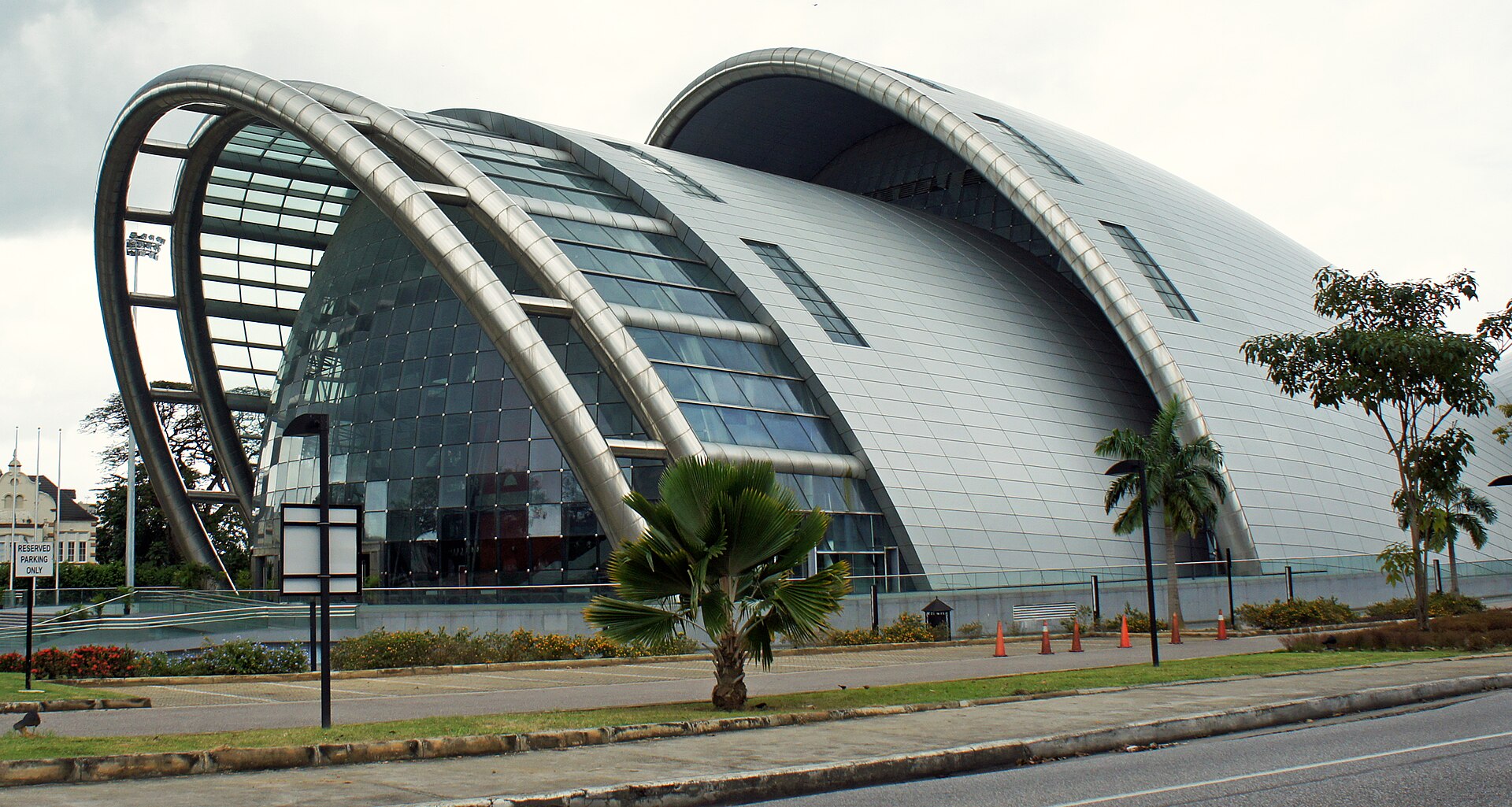
- Royal Victoria Institute — Near Queen's Park Savannah
The Royal Victoria Institute houses the National Museum and Art Gallery of Trinidad and Tobago. It makes a sensible hour or two on a wet or very hot afternoon, with local history and art under one roof. Opening times change, so check the official city site at https://www.pos.gov.tt/ before going. - Royal Botanic Gardens — Northern edge of the city, beside the Savannah
The Royal Botanic Gardens are a shaded place for a slow walk among mature trees, many of them native to the islands. Go in the early morning, before the heat builds and while joggers and dog-walkers still have the paths to themselves. The zoo sits right next door, so the two pair easily. - Emperor Valley Zoo — Beside the Botanic Gardens
This is the only zoo in Trinidad and Tobago, and it is compact enough to see in a couple of hours. Tropical species fill the enclosures, among them monkeys, birds, fish and big cats. It suits families and anyone curious about local wildlife, with plenty of shade between the paths. - Whitehall and Queen's Park Savannah — Queen's Park Savannah
Whitehall, the Prime Minister's office, is one of the large old houses that face the Savannah, with Government House nearby. The wide open ground is the city's common: walkers, cricketers and footballers use it daily, food and coconut vendors line the edges, and Carnival events gather here. The grand houses are best admired from the pavement.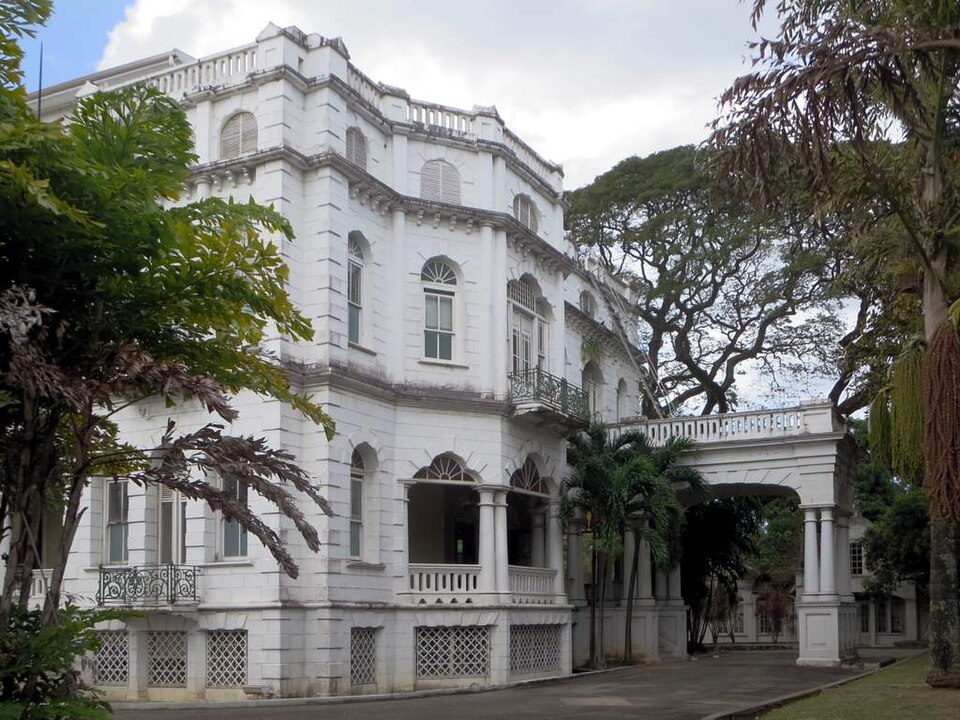
- Rosary Church — Corner of Henry Street and Park Street
The Gothic-styled Rosary Church stands at the corner of Henry and Park Streets, a pointed-arch building in a tropical downtown of concrete and zinc roofs. It is a working church, so visit outside service times when possible, keep voices low, and cover shoulders and knees.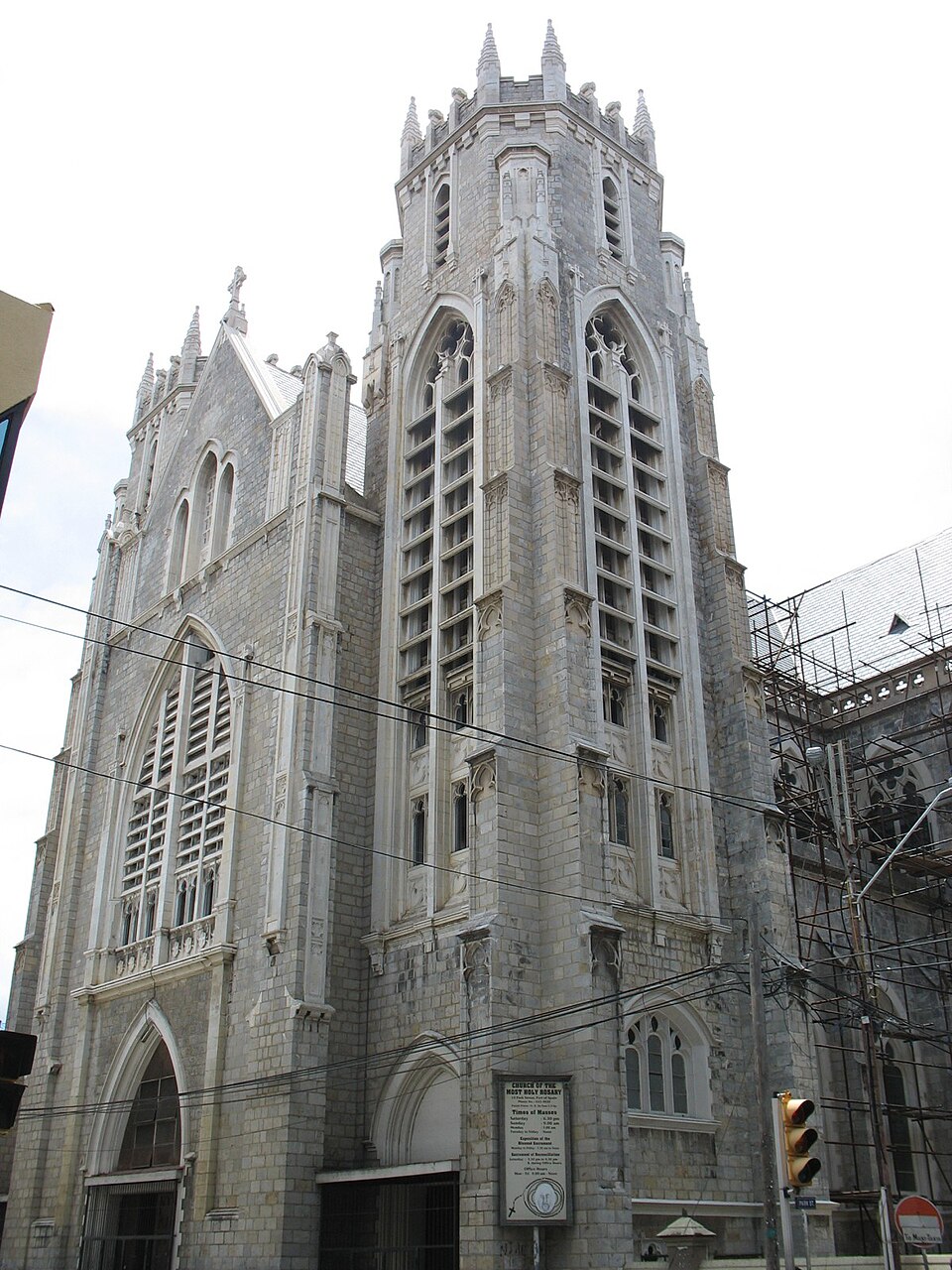
Culture
Port of Spain is the capital of a small island that holds far more traditions than its size suggests. People of African, Indian, European, Chinese and Middle Eastern descent have shaped its music, religion and cooking, and the calendar is full of festivals that follow different faiths. Carnival, held before Lent, is the best known. Calypso, soca and steelpan music, masquerade bands and street parties fill the weeks around it, and a great deal of the year's creative effort goes into it. Away from Carnival, evenings drift towards Woodbrook, St Clair and St James, where bars, sports lounges and restaurants have multiplied as offices moved into formerly residential districts. The old shopping streets around Frederick Street have lost some of their after-dark pull. Sport matters too: the Queen's Park Oval, Hasely Crawford Stadium and the playing fields on the Savannah are where crowds gather for cricket, football and athletics. Conversation is quick, humorous and often loud, and teasing is a form of friendliness. Greeting people before asking for anything is the normal courtesy. Religious buildings across the city, whether churches, temples or mosques, are active places of worship and not only sights. Ask before photographing anyone in costume or at a religious ceremony, and open with a friendly 'good morning' to stallholders and taxi drivers before asking for anything.
What to wear
Traditional dress in Port of Spain reflects the island's mixed heritage. Indo-Trinidadian families wear saris, kurtas and shalwar kameez, in cotton, silk and chiffon, for weddings, Diwali and other festivals. The older Afro-Trinidadian tradition includes the wrapped madras-cotton headtie and the full-skirted Creole dress, now seen mostly at heritage events, folk performances and cultural days. Carnival has its own costume language, called mas: beaded and feathered costumes with sequins for the big bands, and paint, mud or oil for the older J'ouvert characters. Day to day, people dress for the heat in light cotton shirts, linen, sundresses, shorts, sandals and trainers, with smarter office wear in air-conditioned buildings and team jerseys on match days. Evenings out call for more effort than many visitors expect, with fitted outfits and polished shoes in the bars and clubs of Woodbrook and St James. A visitor should pack breathable cotton or linen, a hat, sun cream and a light rain jacket or small umbrella, since downpours come in any season and are heaviest in the wet months. Closed, comfortable shoes suit crowded and uneven pavements, while sandals do for the Savannah. For churches, temples and mosques, cover shoulders and knees and carry a light scarf. Swimwear belongs on the beach, not in town.
What to eat
- Doubles — Street stalls downtown and along Western Main Road in St James, busiest at breakfast and late at night
Two soft fried flatbreads, called bara, folded around curried chickpeas and topped with pepper sauce and chutney such as tamarind or cucumber. It is a breakfast and late-night staple eaten standing at the stall, sold all over the island. - Roti — Roti shops downtown and in St James
A soft flatbread wrapped around curry, with potato, chickpeas, vegetables, chicken or goat. Dhalpuri has a split-pea filling, and buss-up-shut is a torn, buttery paratha served beside the curry. It is eaten with the hands and makes a filling lunch. - Bake and shark — Beach stands on the north coast, a drive from the city
Fried shark served in a fluffy fried bread called bake, then dressed at the counter with garlic sauce, tamarind, pepper and fresh toppings. It is traditionally a beach meal, so combine it with a swim on a day trip out of town. - Chow — Fruit vendors around the Savannah and downtown streets
Chopped green mango or pineapple tossed with garlic, hot pepper, salt and fresh herbs. It is sharp, salty, sweet and sour at once, and a cooling snack in the heat. Ask for the pepper on the side if unsure. - West Indian curry — Lunch counters and neighbourhood eateries downtown
A home-style curry of chicken, goat, duck or chickpeas with potato, cooked with curry powder and fresh green seasoning. It is served with rice or roti and a little pepper sauce. Lunchtime is when these counters are busiest. - Pelau — Local eateries, and family Sunday lunches
A one-pot dish of rice, pigeon peas and browned chicken or beef, cooked in coconut milk with herbs and a touch of caramelised sugar. It is a Sunday-lunch classic, filling and mild, and a good counterweight to the pepper elsewhere.
Plan it
Best time. January to May is the drier season and the most comfortable for walking; Carnival falls in February or March, when the city is at its liveliest and hotels fill and raise their rates. June to December is wetter, with heavy showers and humid heat. It is warm all year.
How long. 2–3
Getting there. Piarco International Airport is the island's main airport, east of the city. A weekday coach and local taxis run into town, and maxi-taxi minivans also reach City Gate, the main bus terminal downtown. From Tobago there are frequent short flights, which can fill up quickly.
Budget. mid
Tips
- Book Carnival accommodation many months ahead and expect higher rates
- Do sightseeing early in the morning, before the heat and traffic build
- Carry some cash for market stalls and street food, and cards for larger places
- Drink plenty of water and carry sun protection and a light rain jacket
- Use licensed taxis, especially after dark, and ask your accommodation about areas to avoid
Etiquette
- Greet people before asking a question or making a request
- Ask before photographing people in costume or at religious events
- Cover shoulders and knees in churches, temples and mosques
Nearby
Sources
- Wikidata Q39178 (CC0)
- Wikipedia: Port of Spain (rev 1383999435) (CC BY-SA 4.0)
- Wikivoyage: Port of Spain (rev 5414816) (CC BY-SA 4.0)
- Photo: Port of Spain in august 2024, Itrydisrespxtsmtsep (CC0 1.0)
- Photo: PoS at night, DizzyNN (CC BY-SA 4.0)
- Photo: Academy for the Performing Arts, Mariordo (Mario Roberto Duran Ortiz) (CC BY 3.0)
- Photo: Whitehall, David Stanley (CC BY 2.5)
- Photo: Cathedral of the Holy Trinity, rear view, Grueslayer (CC BY 3.0)
- Photo: Government House, Trinidad, Algernon E. Aspinall (CC BY-SA 2.0)
- Photo: Queen's Royal College Clock Tower, Chris Fitzpatrick (CC BY-SA 4.0)
- Photo: Rosary Church, Henry Street, Christianwelsh (Public domain)


