Manjanggul
Manjanggul, South Korea
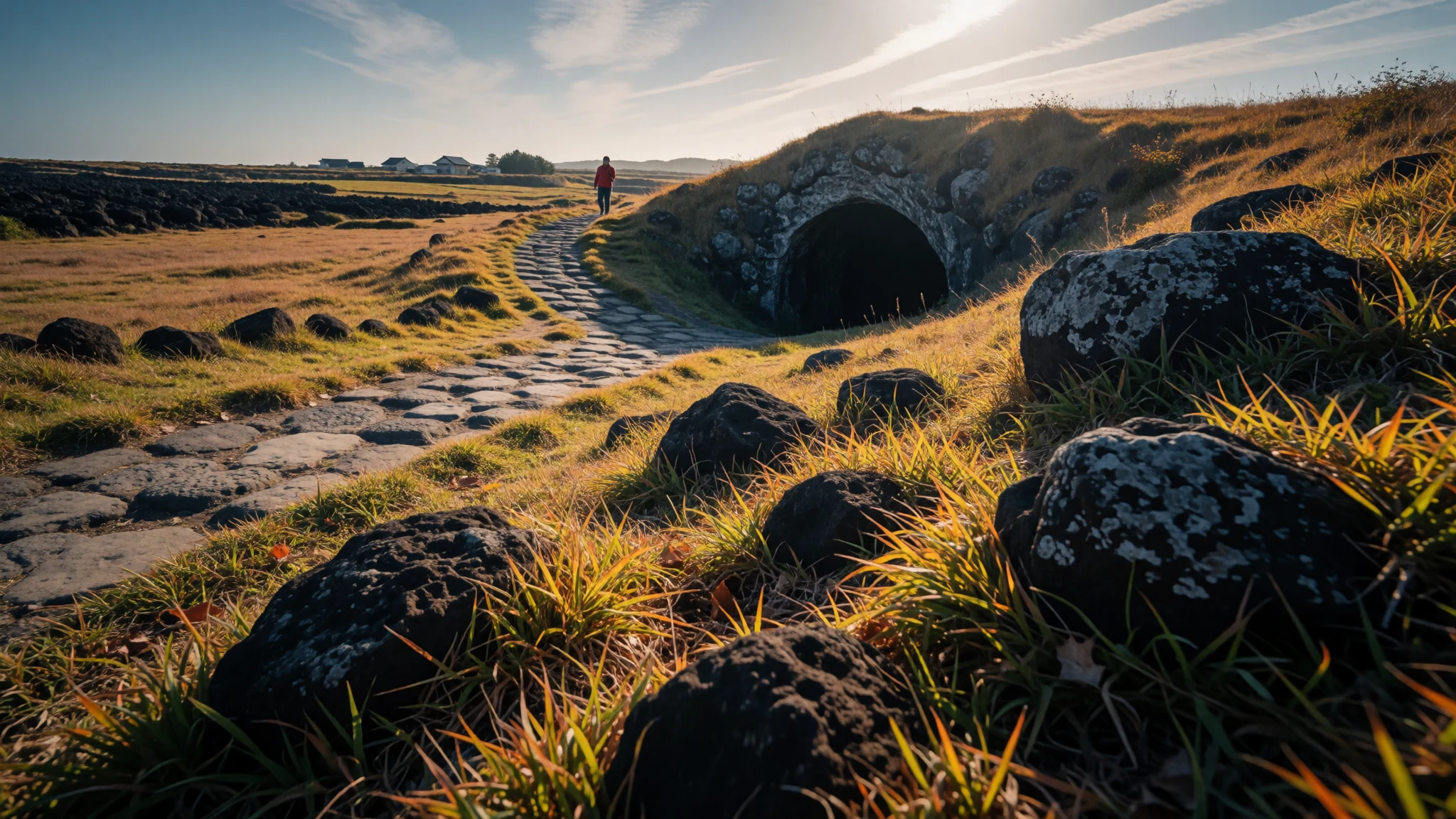
Manjanggul is a lava tube on Jeju where a river of molten rock drained away, leaving a vast, cool tunnel to walk through.
The place
Manjanggul is a lava tube in Gimnyeong-ri, close to the north-east coast of Jeju Island, South Korea. It formed when a stream of molten basalt crusted over on top and then drained out from underneath, leaving a long, tunnel-shaped cave with a rubble floor and a ceiling that rises to the height of a tall building in places. At its broadest the passage could swallow a lorry with room to spare, and the walls still carry the ripples and drip marks of the flow that carved them. Only a modest stretch is open to the public. The visitor walk runs about 1 km in from the southern-facing entrance and takes in the famous lava column, while the rest of the tube, which is far longer in total, is closed to protect it. The cave belongs to the Geomunoreum lava tube system and is the only part of that system that visitors can enter. Inside, the air is cool and damp, the floor is uneven and often wet, and the lighting is low. The tube also shelters wildlife. A lower level between the first two entrances holds most of the cave's animals, among them the Jeju cave spider, and the third entrance has the most favourable conditions for them, which is one reason so much of the tube stays off limits. Above ground the setting is flat farmland and low woodland rather than dramatic peaks, so the cave comes as a surprise: a collapsed hollow in the ground with steps leading down into the dark. Most visitors treat it as a half-day trip from Jeju City, often paired with the east coast.
Its story
Manjanggul's story begins with a volcano. Eruptions built Jeju from basalt, and the Geomunoreum cone sent rivers of lava running downhill towards the sea. The surface of each flow cooled and hardened first, forming a roof, while molten rock kept moving underneath. When the eruption faded and the supply dried up, the liquid drained away and left an empty pipe. In time, stretches of the roof fell in, which is how daylight, and later people, found a way inside. The tube still keeps a record of those last hours. Lava dripped from the ceiling and set into stalactite-like points, stalagmites rose beneath them, and ledges along the walls mark the stages at which the flow sank. Smooth flowstone, shelves and rafts of floating crust are all preserved. The best-known feature is a lava column about 7.6 metres tall, formed where a drip from above met a growing mound below and joined with it; it is reported as the largest known lava column in the world. Jeju has long treated its volcanic landscape as part of its identity. Island folklore fills the coast with giants and dragons, such as the water dragon said to have been turned to stone at Yongduam Rock beside Jeju City. Manjanggul sits in the same mix of geology and legend, though its present status is a protected natural monument, and its management is largely about limiting how many people walk through the tube and how far they go.
What to see
- The main tube — Gimnyeong-ri, Jeju City
Manjanggul's public walk follows the floor of the main tube, a broad, arched passage whose scale is clearer in person than in photographs. The ground is rough basalt, often damp, and the ceiling dissolves into darkness. Walking slowly helps, since the size only registers when another visitor's torch shows how small people look against the walls.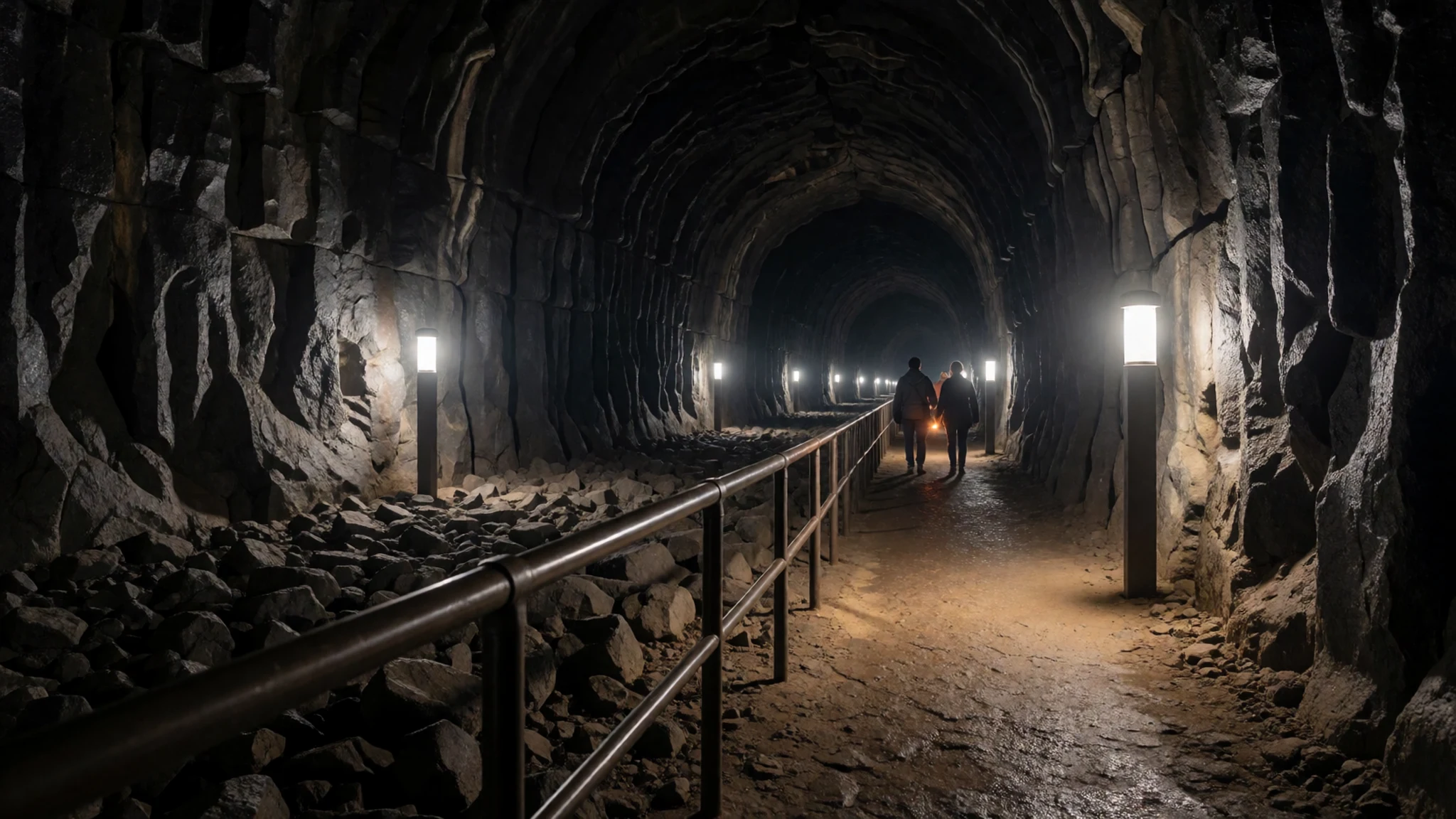
- The lava column — Gimnyeong-ri, Jeju City
Near the far end of the visitor section, Manjanggul's lava column rises about 7.6 metres. It formed where molten drips from the roof built up and met a mound growing on the floor. It is reported as the largest known column of its kind in the world. A barrier keeps people back, and there is often a short wait for photographs.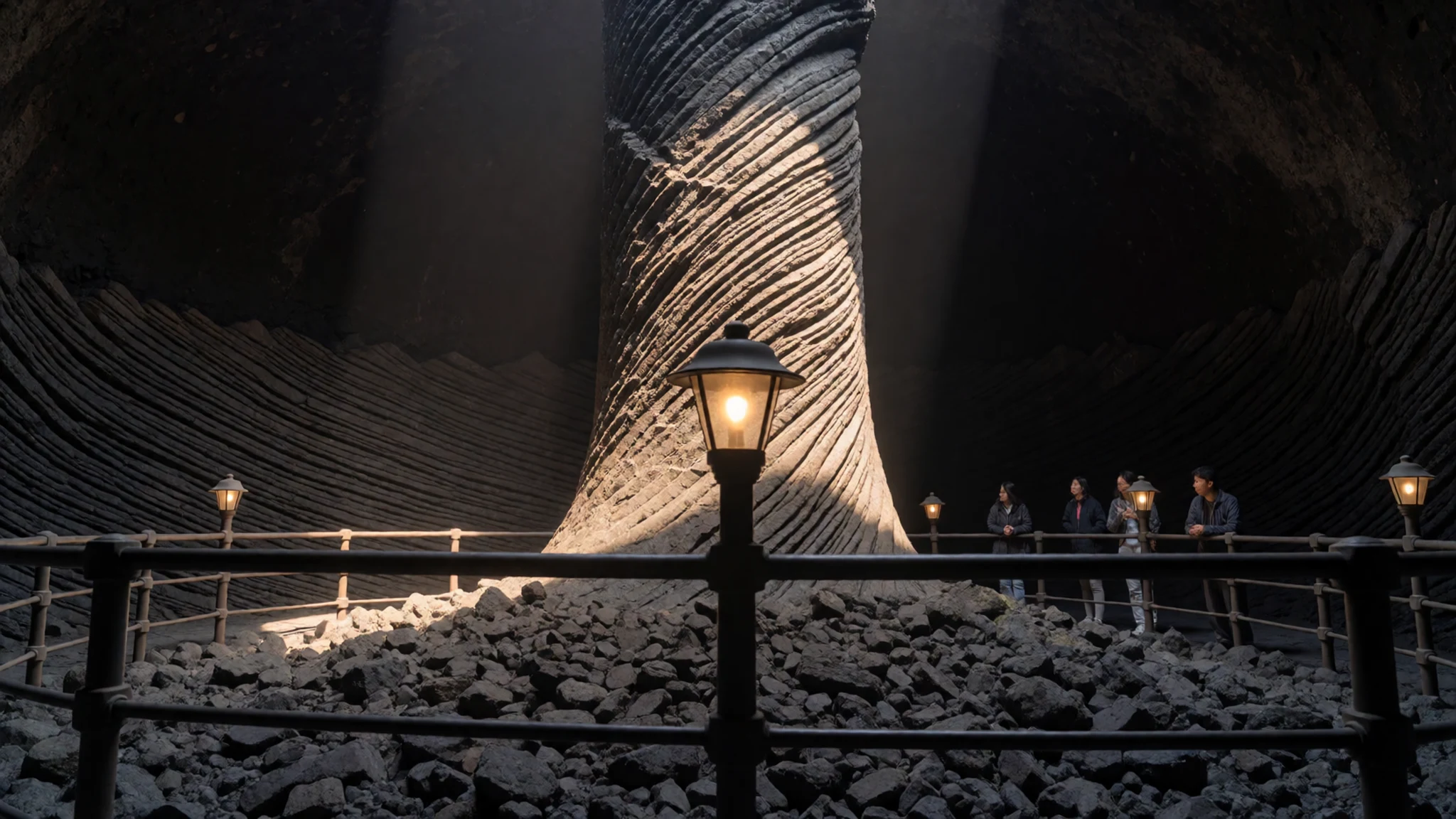
- Lava walls and drip patterns — Gimnyeong-ri, Jeju City
Along the walls of Manjanggul, ledges, ribs and rounded drip marks record how the lava level sank. Smooth flowstone looks as if it were poured, and stalactite-like points hang from the roof. These details reward a slow look, and they are fragile, so every one of them is for looking only.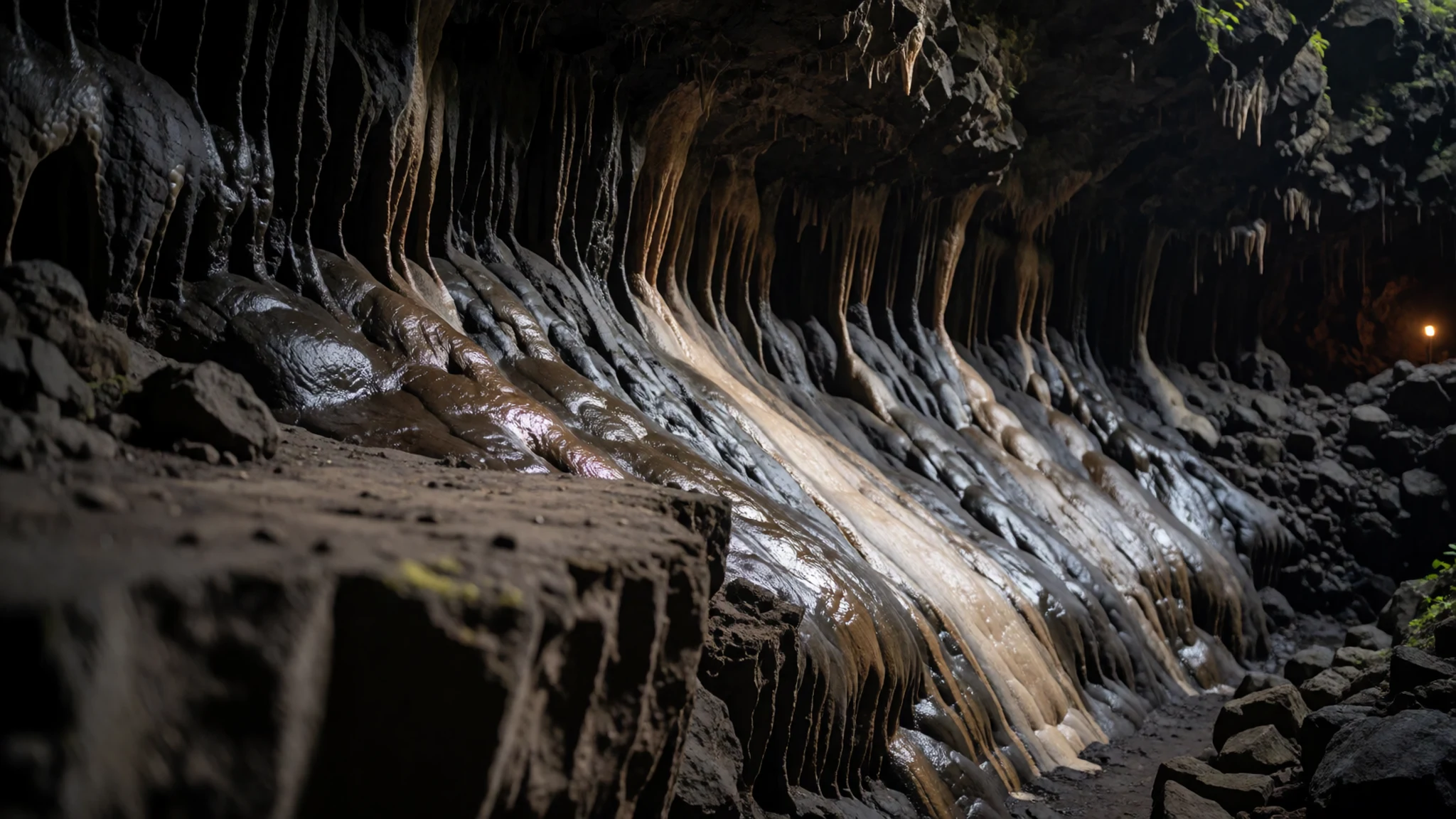
- The exit hollow — Gimnyeong-ri, Jeju City
The way out of Manjanggul climbs steps to a green hollow where the roof once fell in, and the daylight after the long dark is a pleasure in itself. The ground around it is quiet and shaded, and it makes a useful place to rest, especially on a hot day before the walk back.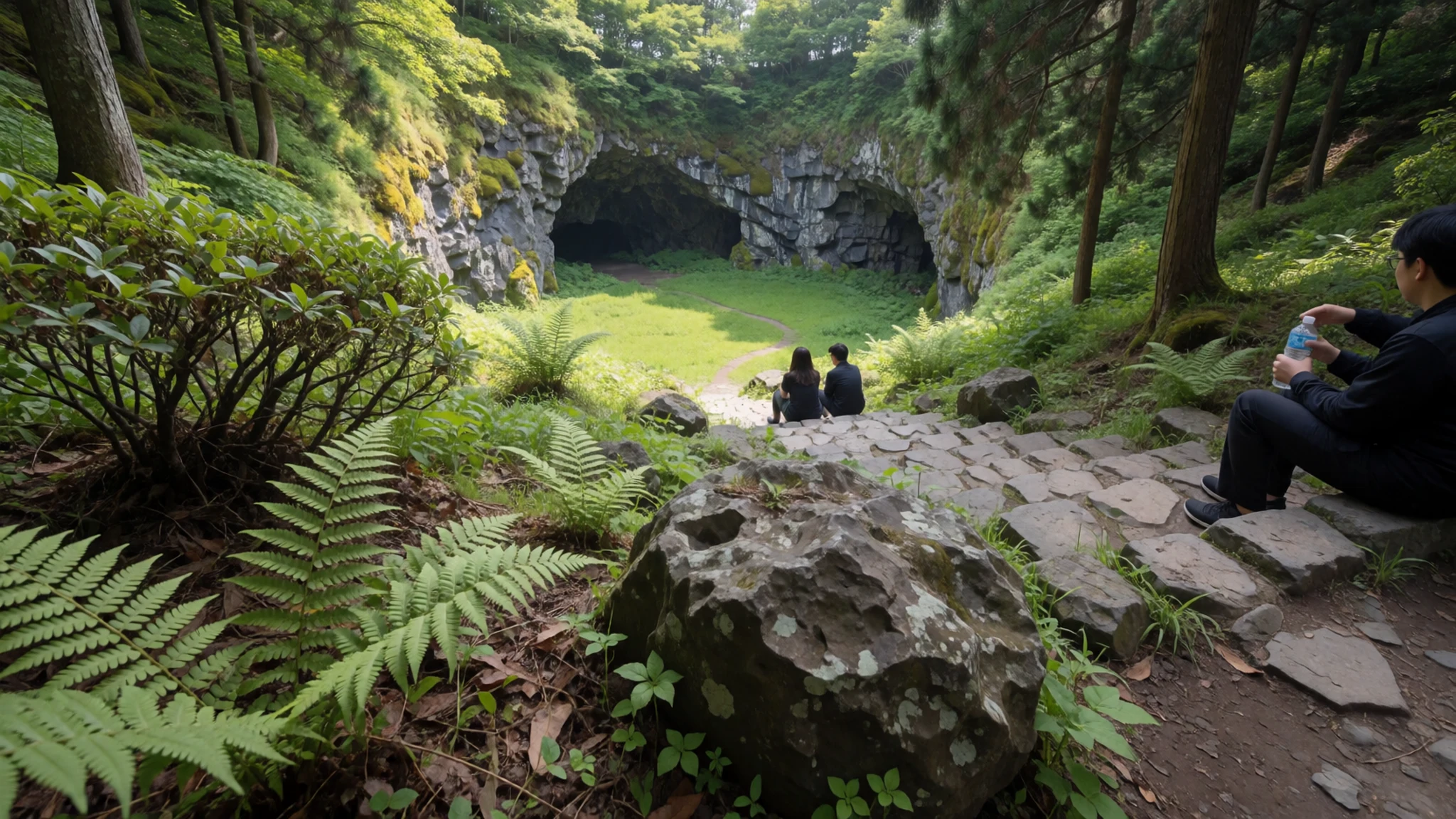
- Bijarim Forest — East of Jeju City
Bijarim is a forest of old nutmeg trees on flat gravel paths, a short drive from the cave towards the east coast, with a very old Japanese Torreya at its centre. It is shaded, level and quiet, a gentle second stop after the cave's uneven floor, and it works well in light rain.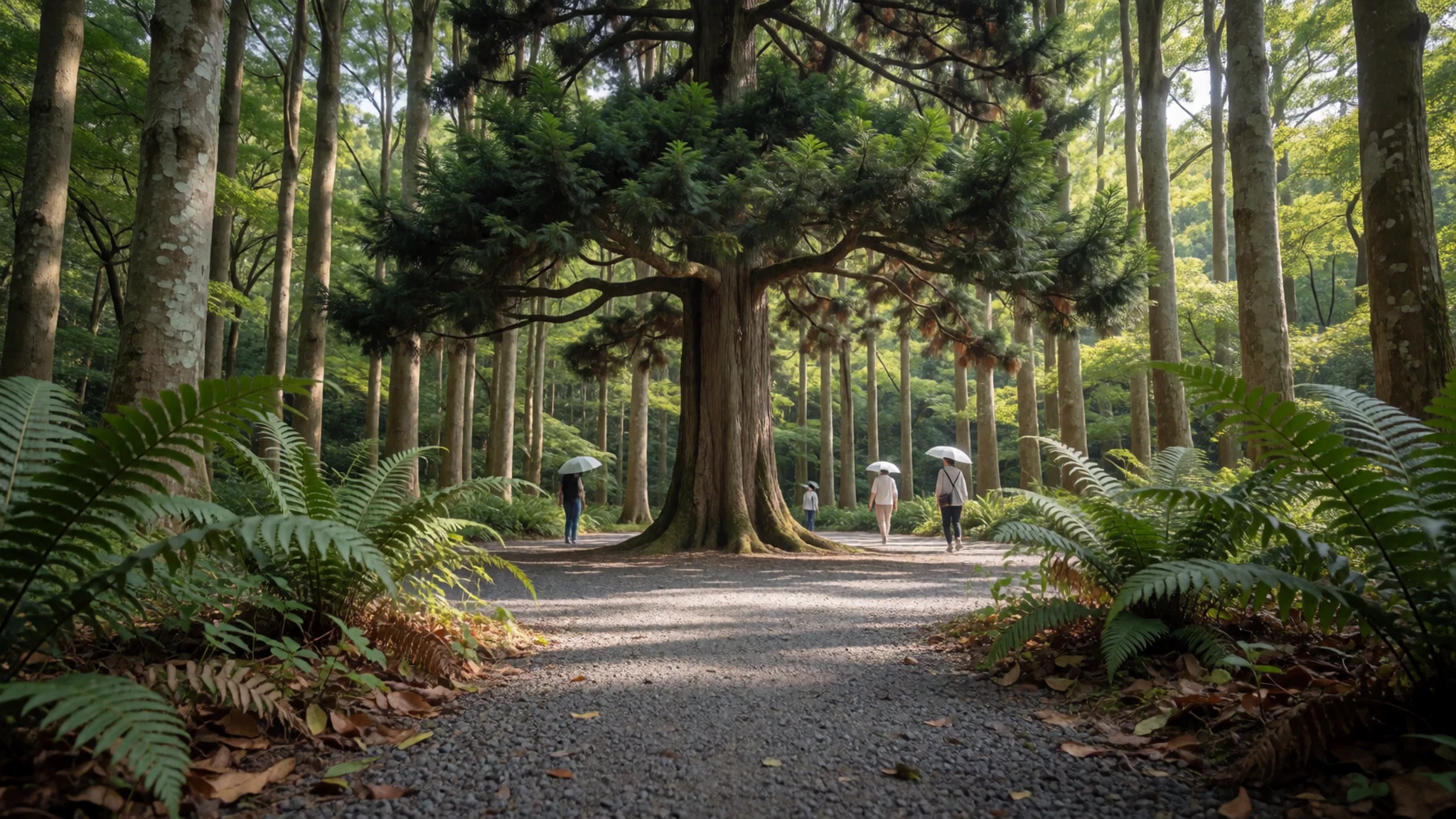
- Haenyeo Museum — North-east coast, Jeju
The Haenyeo Museum on Jeju's north-east coast is dedicated to the island's female divers, who gather seafood from the seabed. It is small but informative, and it gives context for the abalone and shellfish on local menus. It pairs naturally with a coastal drive after the cave.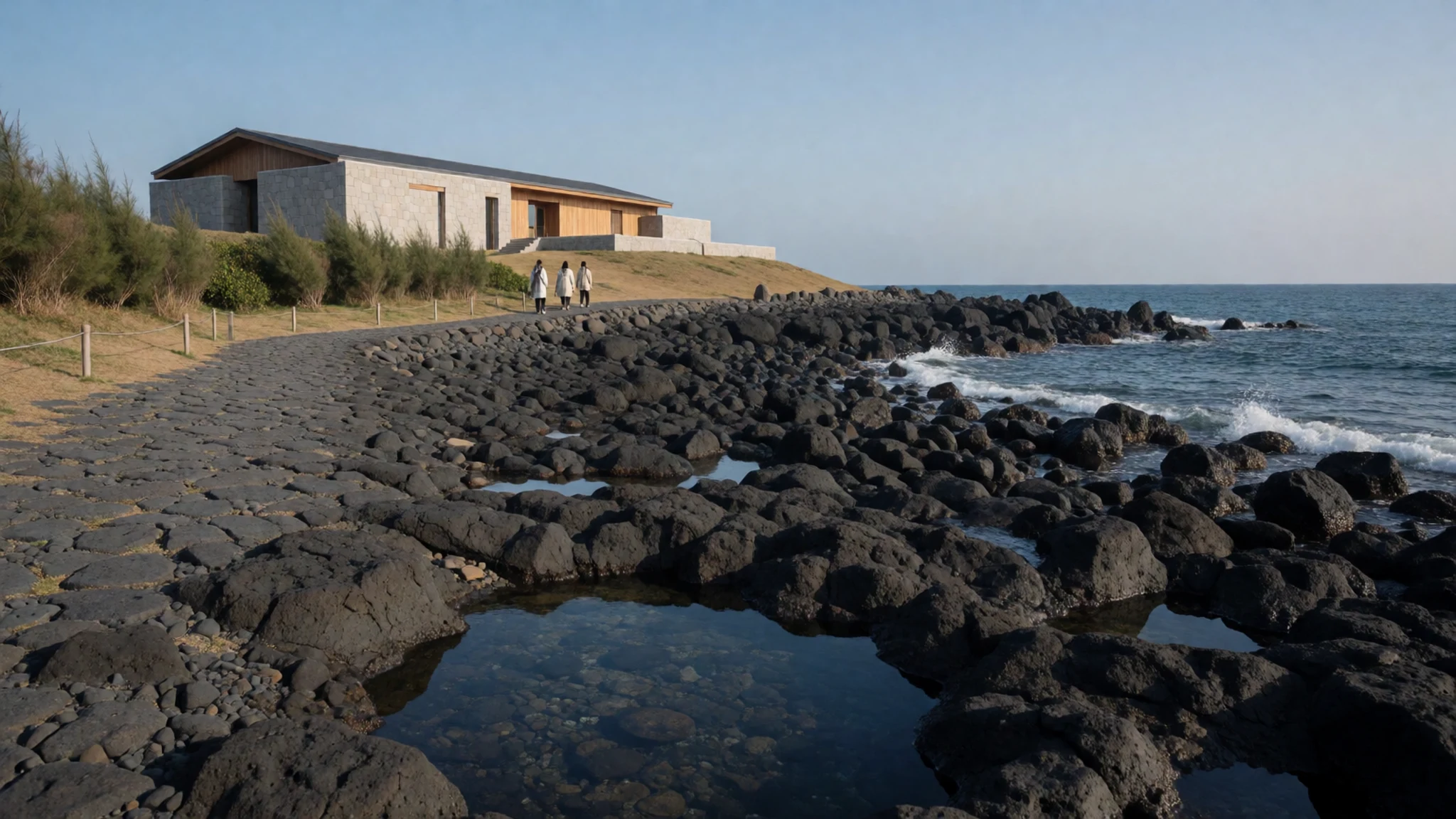
Culture
Manjanggul sits in a part of Jeju where nature and belief are closely woven together. The island has its own dialect, its own folklore, and a long habit of treating volcanic features as living presences: giants shaped the hills, and dragons turned to stone on the shore. Stone figures with round faces and wide hats, called dol hareubang, stand at gates and crossroads across the island as guardians. The haenyeo, women who dive for shellfish without breathing apparatus, are the best-known expression of Jeju's independent character, and their work is still visible along the north-east coast, where a museum is dedicated to them. Households traditionally lived from the sea and from small farms on volcanic soil, and that thrift shows in the food and in a habit of using everything. A cave outing is often a family day out in Korea, with grandparents, children and school groups all common, so weekends and holidays are lively while weekday mornings are calmer. Large parts of the tube are closed to protect its animals and its fragile formations, and the open stretch is managed with that in mind. In the cave, stay on the marked path, keep your hands off the walls and formations, and speak quietly so the animals living there are not disturbed.
What to wear
Manjanggul is a cave visit, so most people dress for the walk, but Jeju has its own clothing traditions. Korea's national dress, the hanbok, pairs a short jacket (jeogori) with a wide wrapped skirt (chima) for women, or a jacket with trousers for men. It is made in silk for celebrations and in ramie or hemp for summer, and today it appears at Seollal, Chuseok and weddings, and in rental shops near the old palaces. Jeju's working clothes were different: galot, loose cotton garments dyed brown with unripe persimmon juice, which stood up to sun, sweat and salt water. Haenyeo once dived in plain cotton suits, long before modern wetsuits. Nowadays people on Jeju dress much like the rest of Korea, in neat casual wear, hiking-style jackets, trainers, and sun visors and light cover-ups on the coast. Visitors should wear closed shoes with real grip, because the cave floor is uneven and often wet. A light jacket or fleece is worth carrying even in summer, since the tube stays cool inside, and a cap helps with drips from the ceiling. Outside, the island's wind and sudden showers call for a packable rain layer. No special modest dress is needed at the cave, though covered shoulders and knees are courteous at any temple elsewhere on the island.
What to eat
- Heukdwaeji (black pork) barbecue — Black pork streets and barbecue restaurants around Jeju City
Jeju's black pork is grilled at the table and eaten wrapped in lettuce or perilla leaves with garlic and salted shrimp paste. The meat is firm and rich, and portions are made for sharing, so a group makes it easier.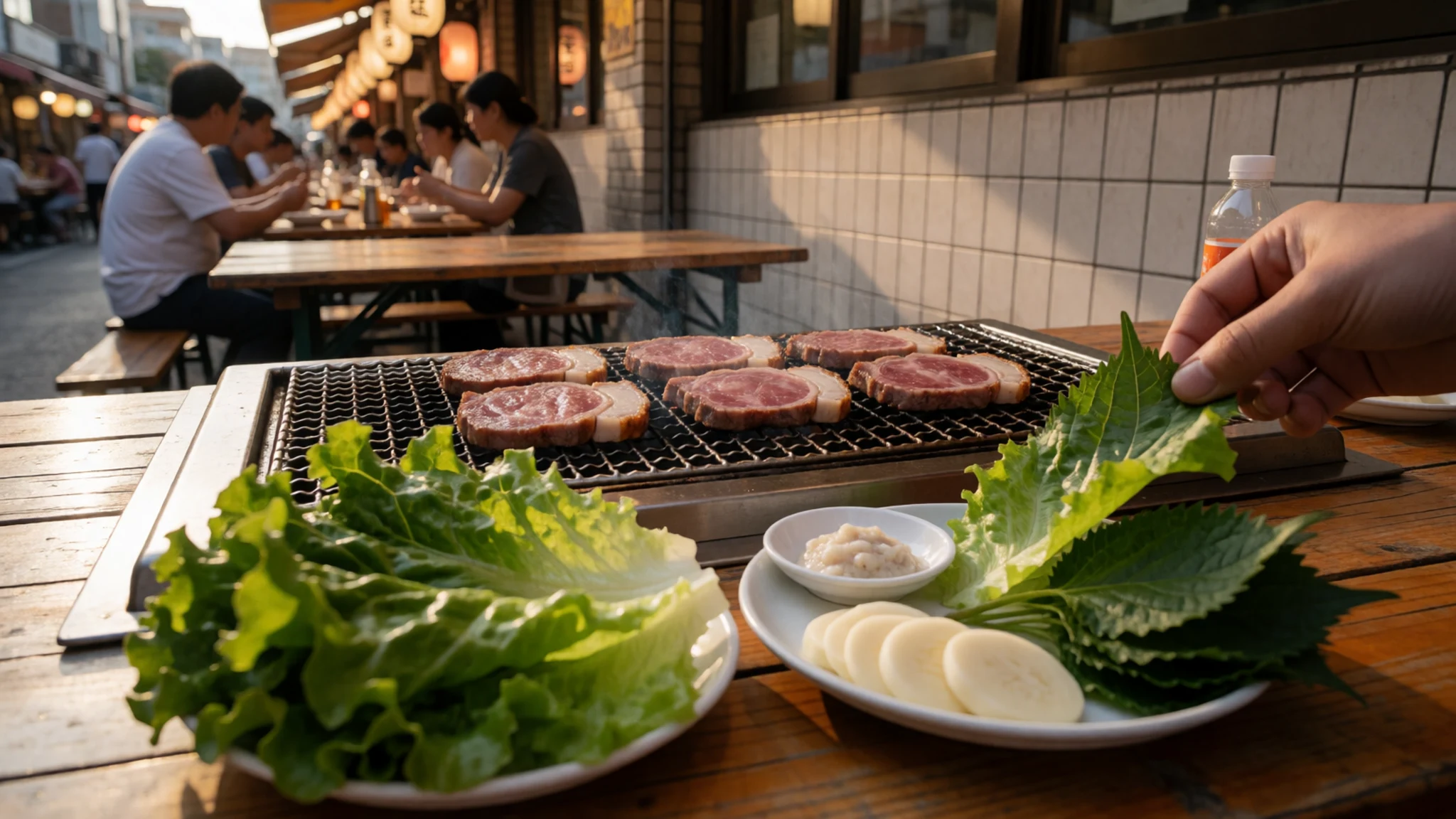
- Gogi guksu (meat noodles) — Neighbourhood noodle shops in Jeju City
A bowl of wheat noodles in a strong pork broth, topped with slices of boiled pork. Locals treat it as an everyday meal, and it is quick to eat before or after a morning at the cave.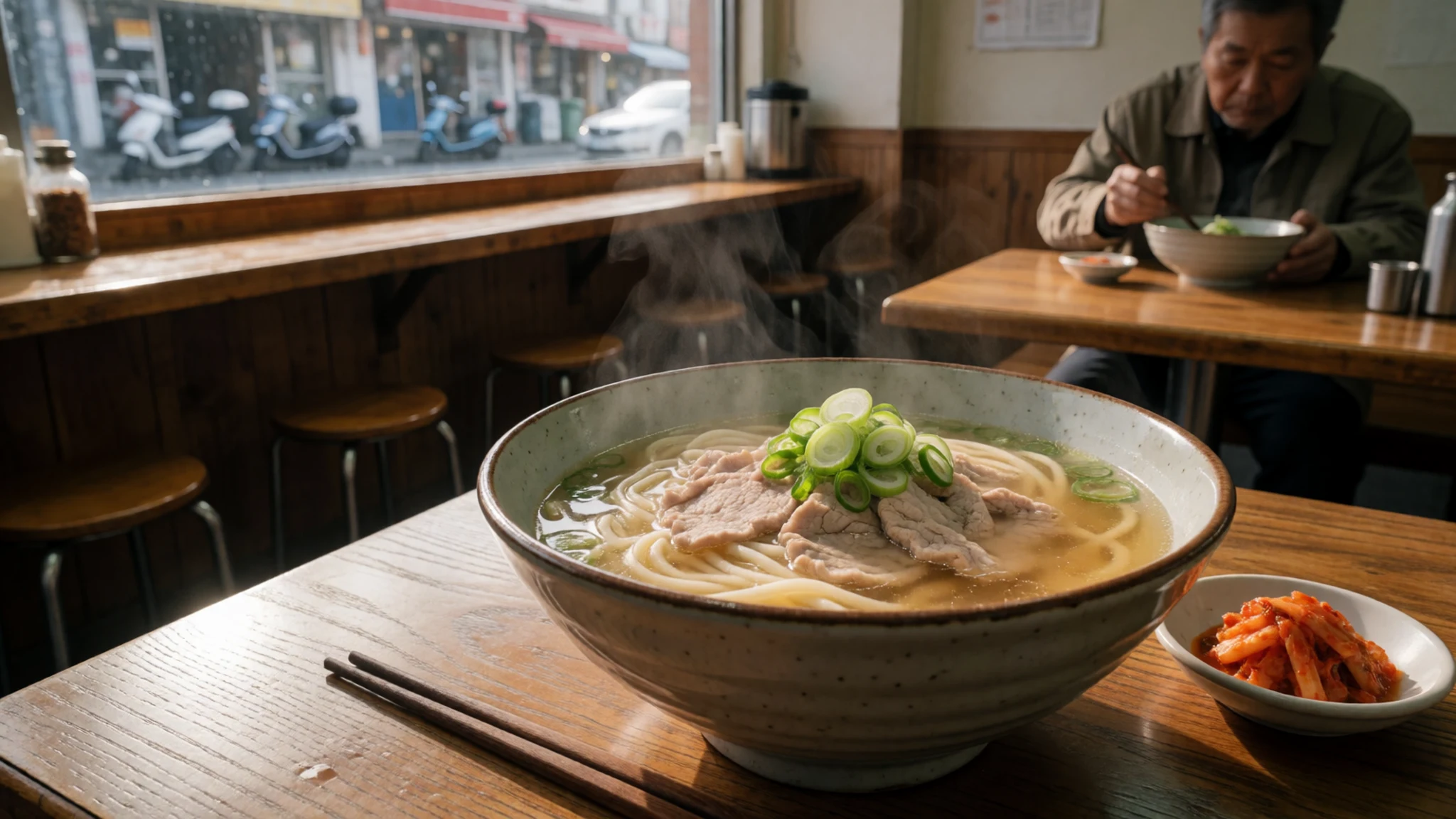
- Jeonbokjuk (abalone porridge) — Seafood restaurants along the north-east coast
Rice simmered with abalone into a soft, savoury porridge, often with a green tinge from the innards that gives it depth. It is a gentle, warming meal after the cool air of the cave. - Galchi jorim (hairtail stew) — Coastal restaurants and the traditional markets of Jeju City
Silver hairtail braised with radish in a spicy, soy-based sauce, a common Jeju home dish. The fish is soft and mild, and the sauce is made for spooning over rice. - Gamgyul (Jeju tangerines) — Roadside stalls and traditional markets across the island
The island's citrus is sold from roadside stalls and markets, and the fruit is best in the cooler months. A bag of small, sweet tangerines is an easy snack for the bus or car.
Plan it
Best time. April–May and October–November bring mild days that suit the walk to and from the cave. Summer is hot and humid on the surface, although the tube itself stays cool, and winter is cold and windy, so bring layers.
How long. 2–3
Getting there. Fly to Jeju International Airport (CJU) in Jeju City, with domestic flights from Seoul and international flights from cities including Tokyo Narita, Osaka Kansai, Beijing, Shanghai Pudong and Hong Kong. From the airport, take a taxi or hire car to Gimnyeong-ri, or use local buses from Jeju City; ask at the airport tourist desk for the current bus route.
Budget. mid
Tips
- Check the official Jeju tourism site before travelling, because sections of the cave can close and opening days change
- Go on a weekday morning to avoid school groups and holiday crowds
- Wear grippy closed shoes and a light layer, as the floor is wet and the air cool
- Carry a rain layer, because Jeju's weather turns quickly
- Cards are widely accepted, but keep some cash for market stalls
Etiquette
- Stay on the marked path and never touch the lava formations
- Keep your voice low, since animals live in the tube
- Take all litter with you
Nearby
Sources
- Wikidata Q6750353 (CC0)
- Wikipedia: Manjanggul (rev 1383767915) (CC BY-SA 4.0)
- Wikivoyage: Jeju City (rev 5430394) (CC BY-SA 4.0)
- Gary Cycles, Manjanggul Lava tube (CC BY 2.5)
- AhmadElq, Manjanggul lava column, largest in the world (CC BY-SA 4.0)
- Marcella Astrid, Jeju Manjanggul Cave (CC BY 3.0)
- AhmadElq, Manjanggul caves 09 (CC BY-SA 4.0)
- AhmadElq, Manjanggul caves exit (CC BY-SA 4.0)
- Republic of Korea, Dangcheomuldonggul Lava Tube (CC BY-SA 2.0)
- Seongbin Im, Geology of South Korea, Turtle Ceiling (CC BY-SA 2.0)
- Paul Evans, Jeju LavaTube (CC BY 3.0)


Wildlife
- Jeju cave spider (animal)
The Jeju cave spider is a small spider that makes its home in the dark, far from the sunshine. Most of Manjanggul's creatures live on a deeper floor lying between the cave's first two openings, and this spider is one of them. Conditions near the third opening suit these animals best, which is partly why so much of the tube is closed to visitors. Respect those boundaries, stay on the open route, and be glad that the spider's home is being protected.