Maisan
Maisan, South Korea
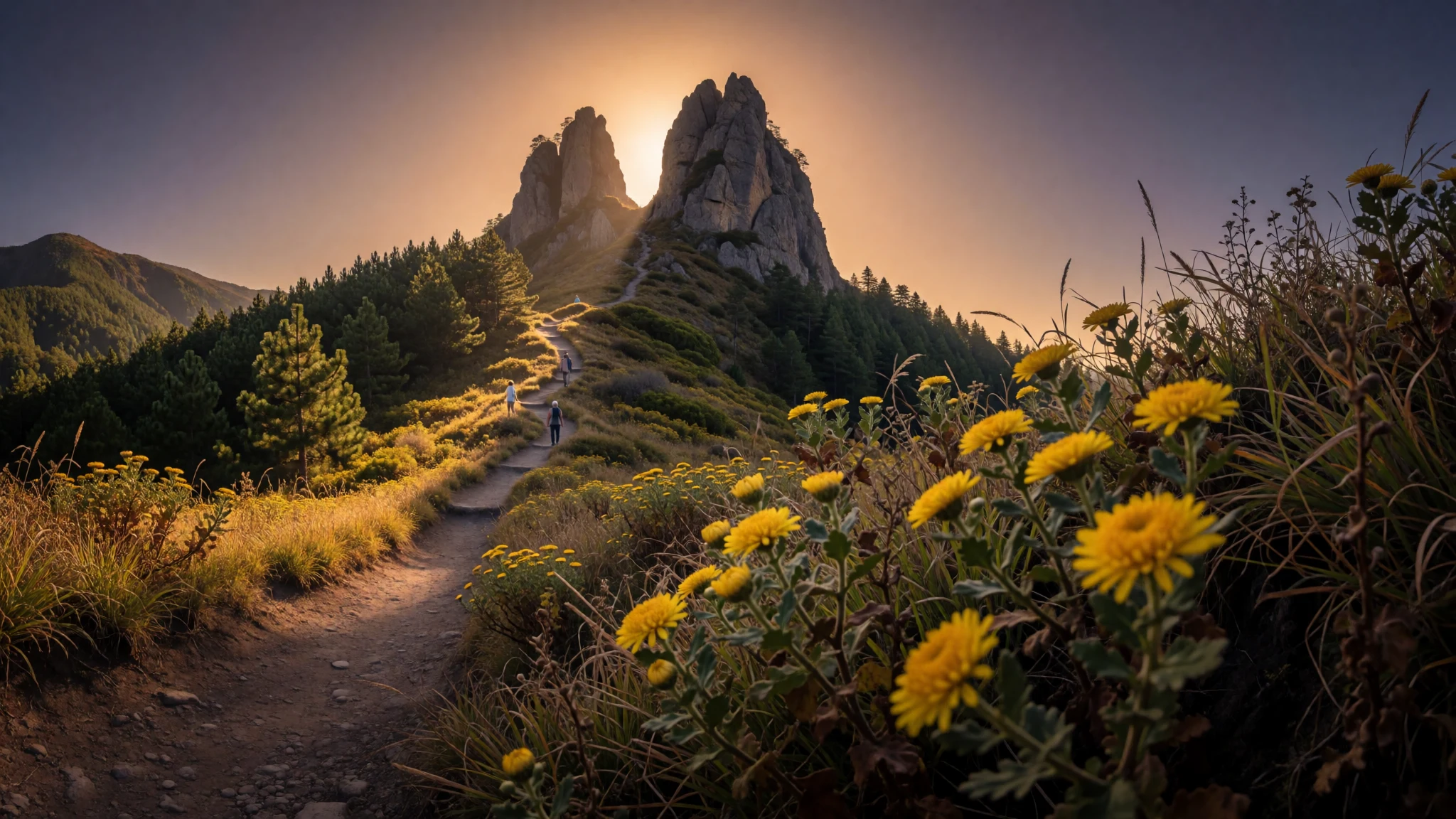
Maisan, in North Jeolla, is a pair of rock summits shaped like horse ears, with a temple of hand-stacked stone towers at their feet.
The place
Maisan stands 673 metres high in Jinan County, North Jeolla Province, in the hill country of south-western South Korea. Its name (마이산) means 'horse-ear mountain', and the shape earns it: a pair of smooth, steep summits sit side by side, tilted slightly apart like the ears of a horse pricked forward. Locals give them separate names, Sumaisan and Ammaisan, usually explained as the male and female peaks.
The rock is a conglomerate, a natural concrete of pebbles and cobbles cemented together, laid down in an inland basin during the Cretaceous and later lifted and worn by weather. Rain and frost have pitted the cliffs with hollows, so the faces look cratered rather than sheer. The mountain also belongs to the Honam ridge, one of the lines of high ground that decide which way rivers run, and the area falls within the Jinan–Muju National Geopark, whose signboards explain the geology near the main entrances.
Maisan is not wilderness. It is a compact, well-trodden mountain with temples at its foot, paved approaches, food stalls and car parks, set among orchards and farmland. That makes it easy, but it also means blossom weekends and autumn-colour weekends bring coach parties and slow queues on the narrow paths. Midweek and early starts are noticeably calmer. Summers are hot and humid, winters are cold, and steeper sections can be icy. Most visitors give the mountain half a day, or a full day if they walk the longer trails, and it combines naturally with Jeonju and Namwon, which have the nearer rail connections.
Its story
Maisan's story starts in the Cretaceous period, when a basin in what is now North Jeolla filled with gravel and sand washed down from surrounding hills. Over time the sediment hardened into the conglomerate beds that geologists group as the Jinan Group. Later uplift and erosion left the toughest blocks standing as the twin summits above softer ground. That layered history is the reason the geopark was drawn around the mountain, and why its boards show close-up photographs of the rock.
The human story is mostly one of devotion. The peaks have long been treated as sacred, and Buddhist temples grew up at their foot, among them Tapsa and Eunsusa. Local tradition tells of a recluse, remembered as Yi Gap-yong, who settled in the valley and spent years stacking stones into slender towers, praying as he built. The towers are said to have stood through gales that should have toppled them. Whether the tale is exact or polished by retelling, the towers are real, and they are what draw many Korean families here.
Today the story has a conservation chapter too. Paths, steps and rails keep foot traffic off the fragile cliffs, and not every route is open at all times, so it is worth asking at the entrance before setting out. The mountain remains a landmark for the farming villages around it, and a weekend outing for people from Jeonju and beyond.
What to see
- Sumaisan and Ammaisan, the twin summits — Jinan County, North Jeolla
The twin summits are the reason for the trip, and the best views come from the valley floor and the approach roads rather than from up close, where the cliffs fill the sky. Go early or late in the day, when low light picks out the pitted conglomerate and the crowds thin.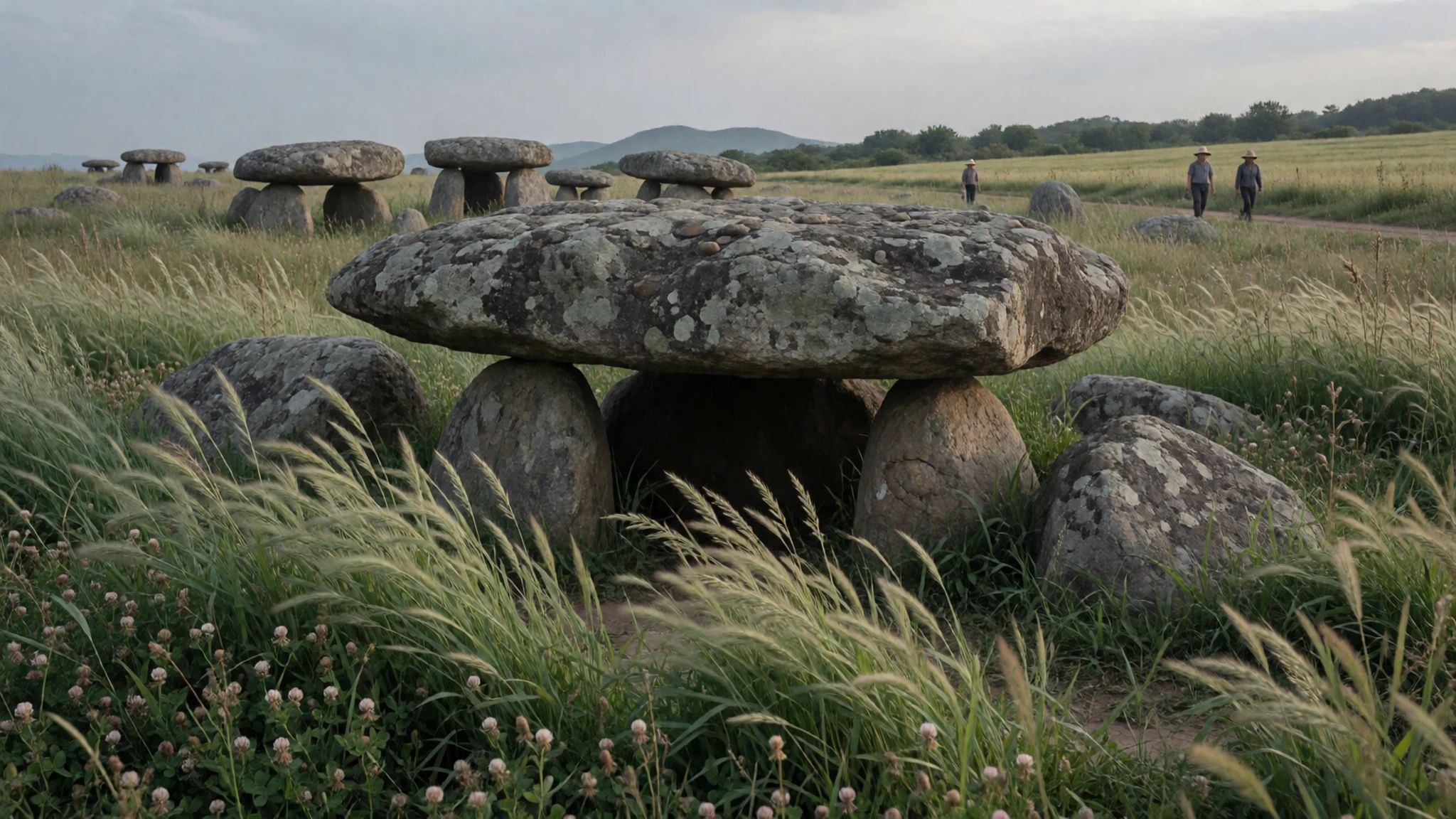
- Tapsa Temple — Foot of Maisan, Jinan County
Tapsa sits in a cleft at the foot of the peaks, and its main draw is the cluster of tall stone towers, said to be stacked without mortar, tapering upward from rough boulders against the cliff. The temple halls stand behind. Allow time to walk around them slowly, and keep to the marked paths.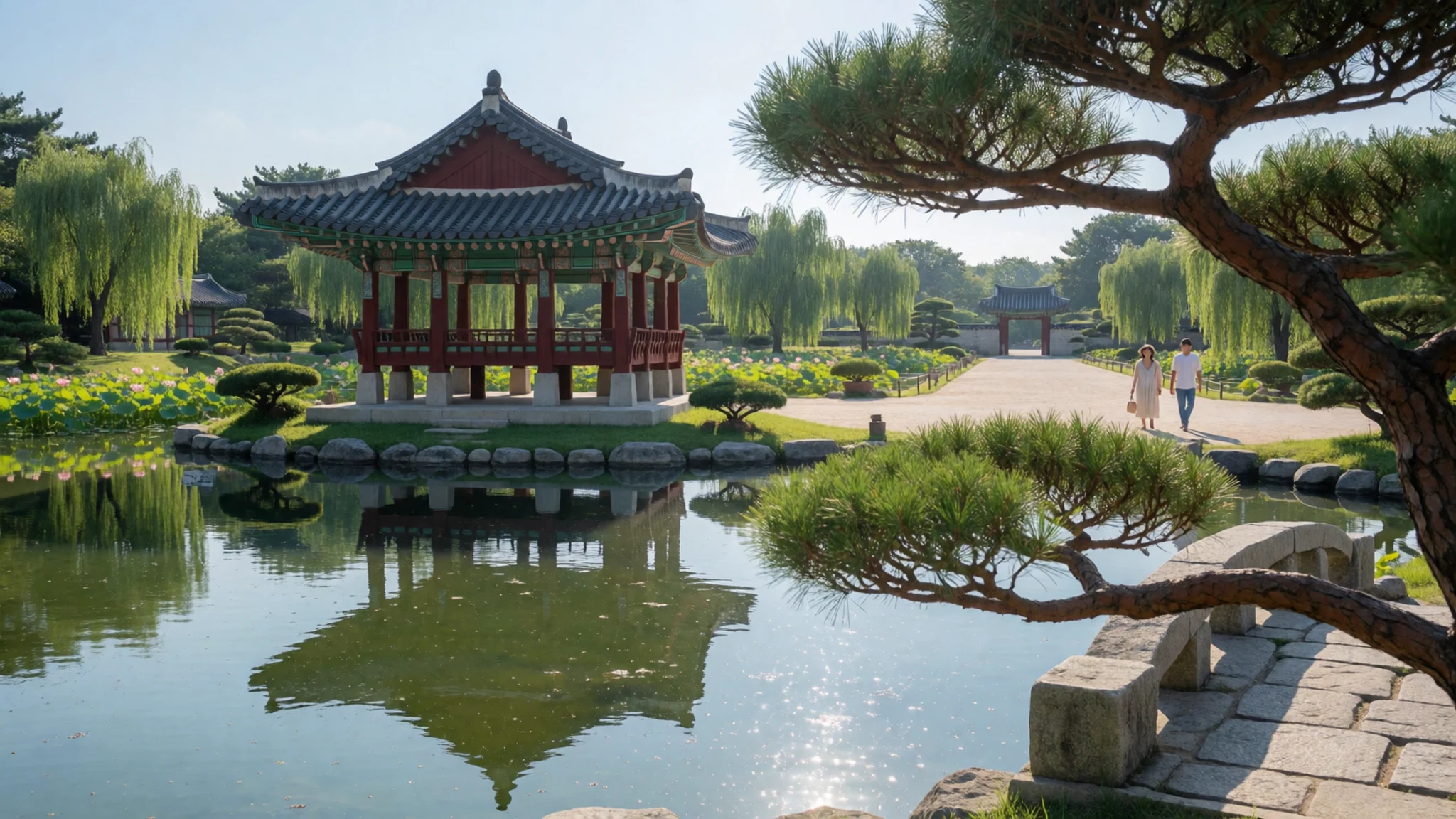
- Eunsusa Temple — Foot of Maisan, Jinan County
Eunsusa is a quieter temple below the peaks, known locally for spring blossom. The walk from the main car park is gentle and mostly paved, which suits families and older visitors. Check at the entrance for what is open that day, and expect tour groups at weekends.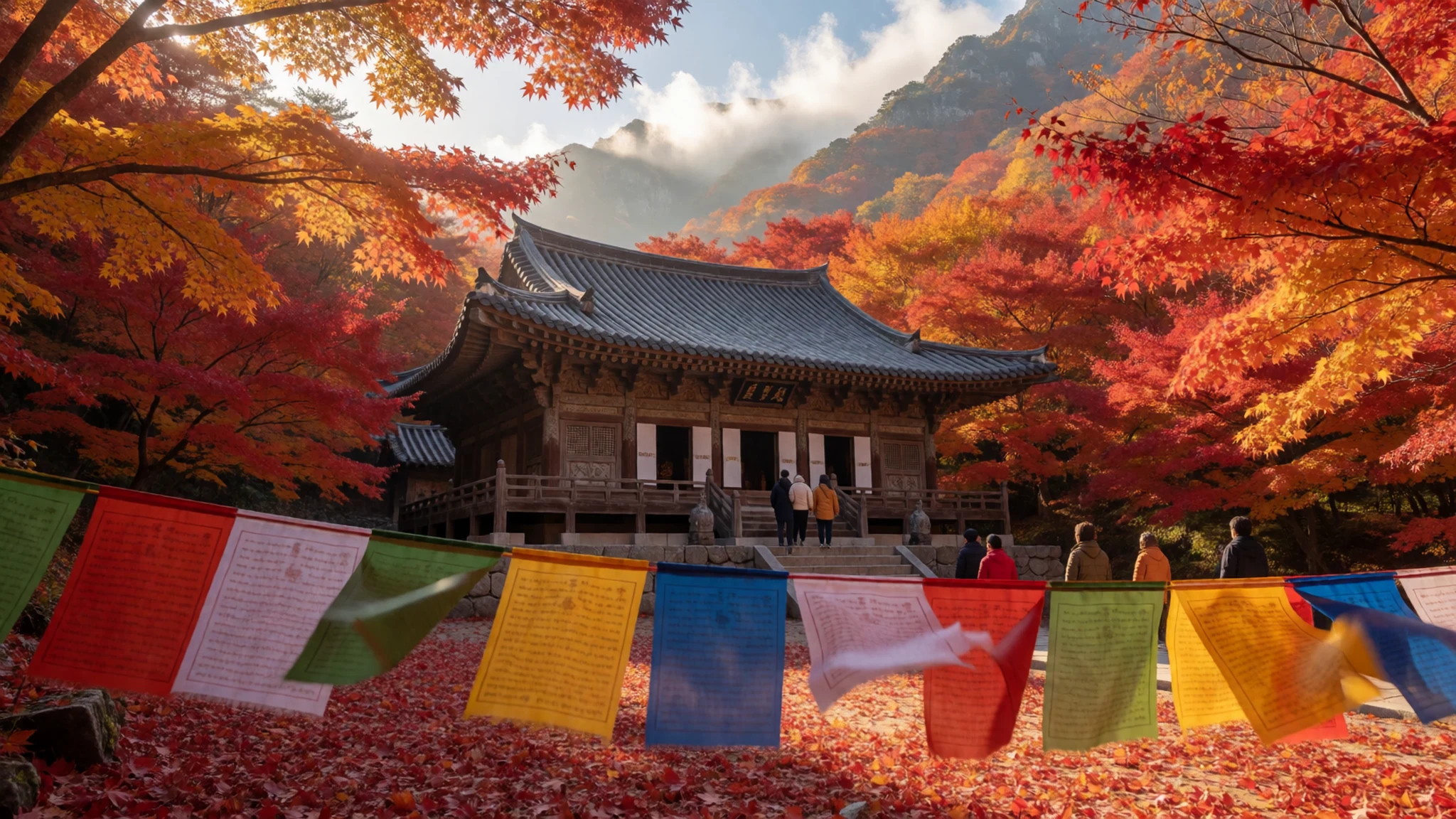
- Jinan–Muju National Geopark boards — Maisan entrances, Jinan County
The geopark signboards around Maisan explain how the rock formed, with maps and photographs of the conglomerate cliffs. Take a few minutes to read one before walking, then look for the embedded pebbles in the stone beside the paths. The geology is easier to spot than it sounds.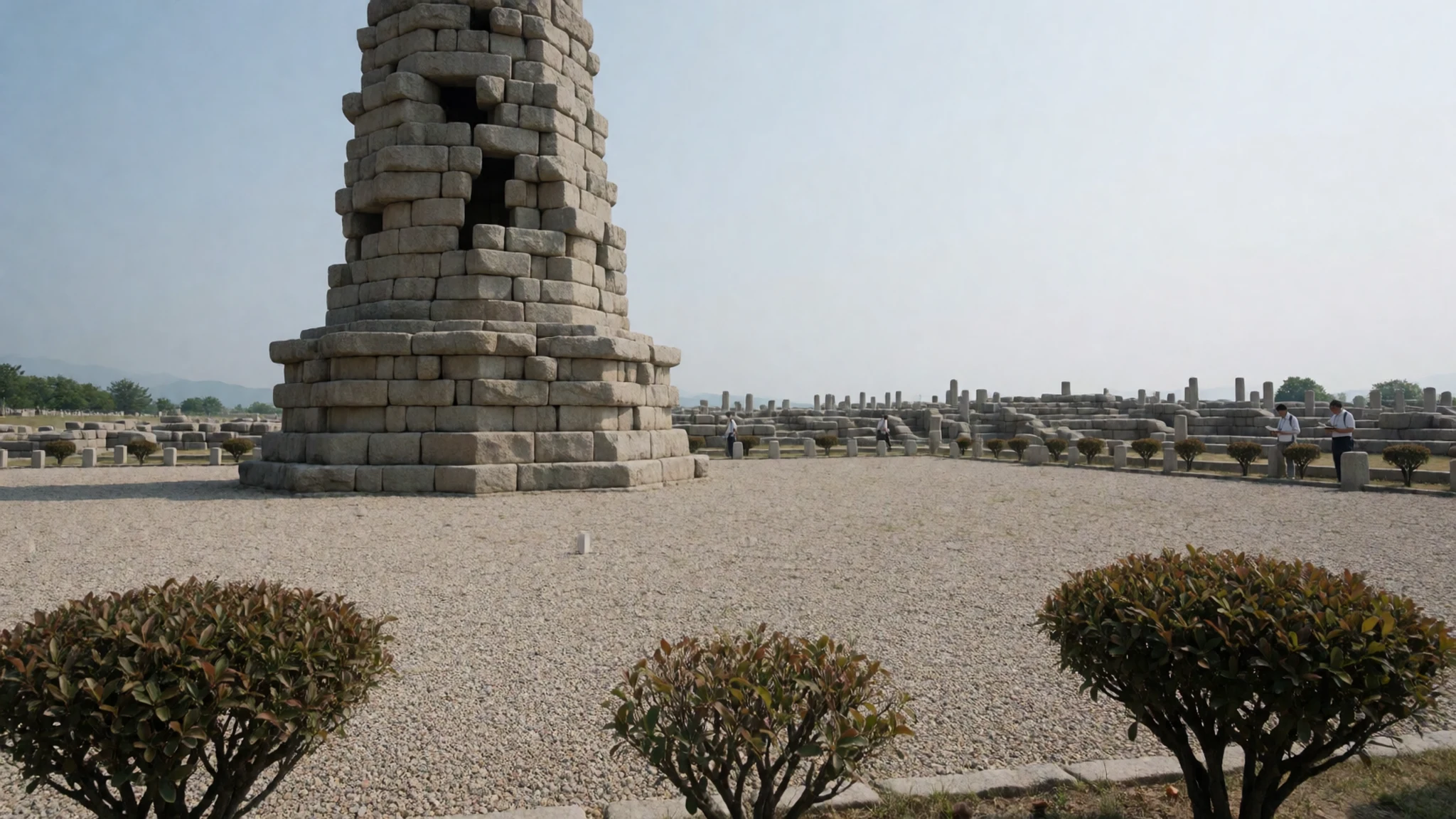
- Gwanghallu garden, Namwon — Namwon, North Jeolla
Gwanghallu is a pavilion garden in Namwon, built in the Joseon period, and the setting where the folk-tale lovers Chunhyang and Lee Mong-ryong are said to have met. It makes a gentle second stop on a day trip by road or a longer regional tour. Check opening arrangements before going.
Culture
Maisan is above all a place of folk and Buddhist devotion, and that shapes how Koreans visit it. Families walk up to the temples to pray for health, exam results or a good harvest, then eat together at the stalls near the foot of the mountain. The outing is as much social as spiritual. The stone towers at Tapsa carry the strongest atmosphere. Monks and lay visitors treat them as an act of faith rather than a curiosity, and some bow quietly or leave small offerings.
Korean mountains are traditionally thought to have guardian spirits, and Buddhist temples often keep a small shrine to the mountain spirit (sansin) beside the main hall. Hiking is also a national pastime, and groups in matching outdoor clothing, sharing fruit and snacks on the way, are a familiar sight on any trail. Seasons set the rhythm: spring blossom and autumn foliage draw the largest crowds, while winter brings a stillness that regulars prize.
North Jeolla has a reputation across the country for generous food, and a meal of many small side dishes after a walk is part of the custom, often with a bowl of makgeolli, the milky rice wine, passed around. Visitors are welcome at the temples, and a little quiet goes a long way. At Tapsa, keep to the marked paths, never climb on or add stones to the towers, and speak softly near the temple halls.
What to wear
Around Maisan, the traditional dress is the hanbok: a short jacket (jeogori) worn over a full wrapped skirt (chima) for women, and the same style of jacket over loose trousers (baji) for men, sometimes with a long overcoat (durumagi). Summer hanbok is cut from ramie or hemp, which are light and breathable, while cotton and silk are used for cooler weather and festive occasions. People wear hanbok at Seollal (Lunar New Year), Chuseok, weddings and family milestones. At Maisan itself it is rare, though hanbok hire is popular in nearby Jeonju.
What people wear now on the mountain is outdoor clothing. Walkers of all ages arrive in technical trousers, windproof jackets, caps and good boots, often in bright colours, because hiking in Korea is taken seriously even on short trails. Away from the mountain, everyday dress is casual and neat, with jeans and layers.
A visitor should dress for the weather and the terrain. Wear sturdy shoes with grip, since paved and stone steps are steep and slippery when wet, and carry layers: summers are hot and humid, so bring a hat, sunscreen and a light rain jacket, while winter calls for warm layers and, in icy spells, shoe traction. At the temples, cover shoulders and knees, and favour shoes that slip off easily, as footwear comes off at hall doors.
What to eat
- Chueotang (loach stew) — Namwon, specialist stew eateries
A thick, peppery stew of minced loach with mushrooms and greens, a speciality of nearby Namwon. It tastes earthy rather than fishy and is warming after a cold walk. Look for it at old-style stew eateries in Namwon town.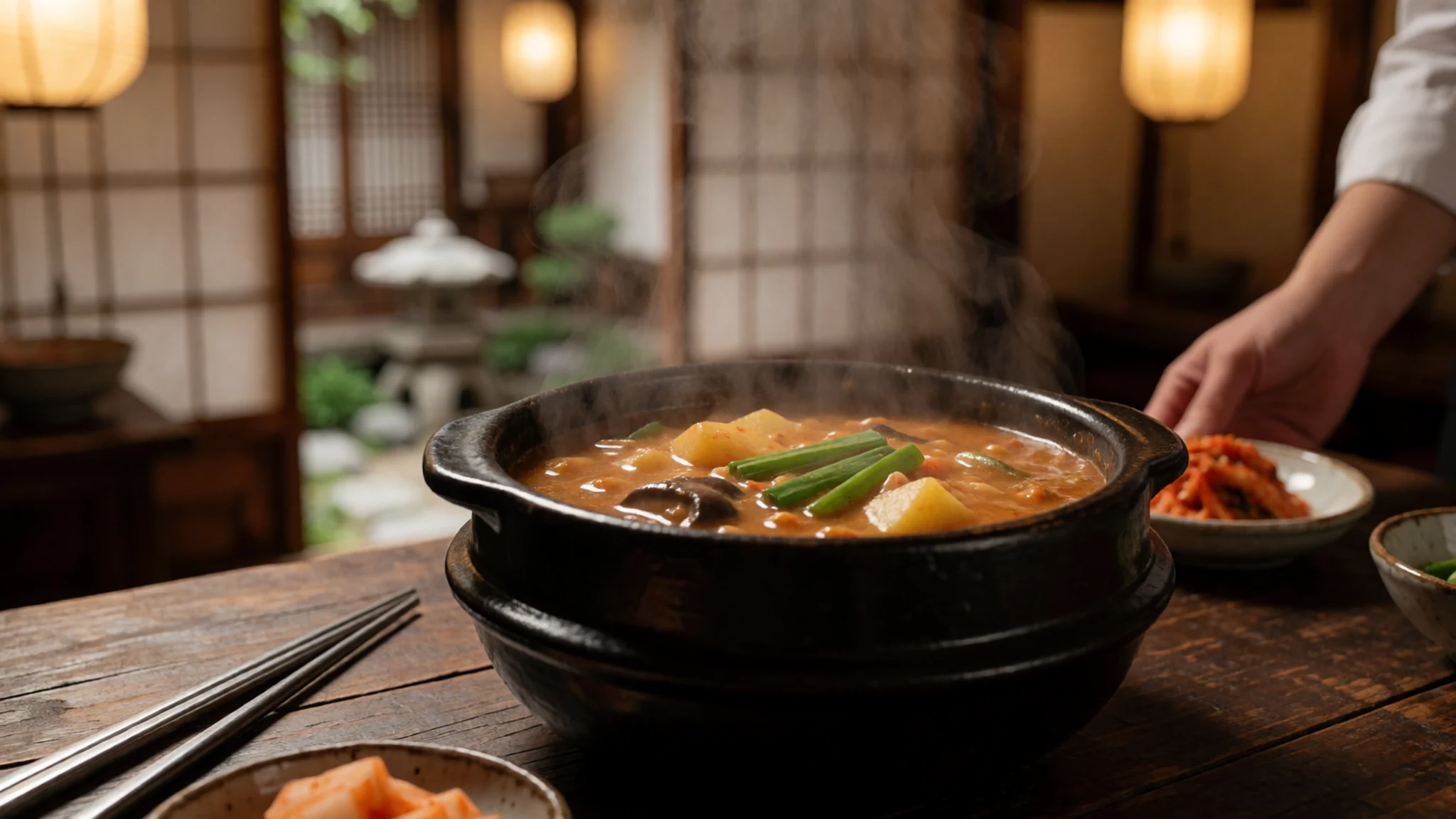
- Jeonju bibimbap — Jeonju, eateries around the hanok village
Rice topped with seasoned vegetables, egg and chilli paste, mixed at the table. Jeonju is closely associated with the dish, and it is a sensible meal before or after a day on Maisan. Many eateries around the old hanok quarter serve it.
- Sanchae jeongsik (mountain-vegetable meal) — family eateries near the Maisan entrances
A set meal of wild and cultivated mountain greens, roots and pickles, served with rice, soup and many small side dishes. It suits a day of walking and reflects the farming valley around Maisan. Family-run eateries near the foot of the mountain serve it. - Pajeon with makgeolli — stalls and eateries along the approach to Tapsa
A crisp spring-onion pancake paired with cloudy rice wine, a favourite of hikers coming down the mountain. Share a plate between a few people, and ask for it mild if chilli is a worry. - Kongnamul gukbap — morning eateries in Jeonju
A bowl of rice in clear bean-sprout soup, often topped with a raw egg and chilli flakes, and a familiar breakfast in the region. It is light, quick and a good start before an early walk.
Plan it
Best time. April for blossom and late October–November for autumn colour; May and September–October are also pleasant. July–August is hot, humid and wet, and winter is cold with ice possible on the steeper paths.
How long. 1–2
Getting there. Fly into Incheon and reach Seoul, then take the KTX from Yongsan Station on the Honam line to Jeonju (or Namwon on the Jeolla line); from Jeonju, continue by intercity bus or taxi to Jinan and the mountain. Gunsan Airport has flights from Jeju. Check current timetables before travelling.
Budget. low
Tips
- Go early on weekends in April and the autumn-colour weeks, when paths and car parks fill up
- Carry some cash for small stalls and a card for everything else
- Bring water and a snack, as stalls are mostly at the foot of the mountain
- Wear shoes with grip, since wet conglomerate and stone steps are slippery
- Ask at the entrance which trails are open on the day
Etiquette
- Keep to marked paths and never climb on or add stones to the towers at Tapsa
- Remove shoes before entering temple halls and dress modestly
- Take litter with you or use the bins provided
Nearby
Sources
- Wikidata Q562938 (CC0)
- Wikipedia: Maisan (rev 1355771888) (CC BY-SA 4.0)
- Wikivoyage: North Jeolla (rev 5386481) (CC BY-SA 4.0)
- Photo 01-maisan.jpg, Joachim Dirauf (CC BY 3.0)
- Photo 02-honamjeongmaek.jpg, Dittwjfsdgkvkdjg (CC BY 3.0)
- Photo 03-jm-natl-geopark.jpg, Dittwjfsdgkvkdjg (CC BY 3.0)
- Photo 04-jn-maisan-tb1.jpg, Dittwjfsdgkvkdjg (CC BY-SA 4.0)
- Photo 05-jn-maisan-tb2.jpg, Dittwjfsdgkvkdjg (CC BY-SA 4.0)
- Photo 06-jn-maisan-tb3.jpg, Dittwjfsdgkvkdjg (CC BY-SA 4.0)
- Photo 07-jn-maisan-tb4.jpg, Dittwjfsdgkvkdjg (CC BY-SA 4.0)
- Photo 08-jn-maisan-tb5.jpg, Dittwjfsdgkvkdjg (CC BY-SA 4.0)


