Lusail
Lusail, Qatar
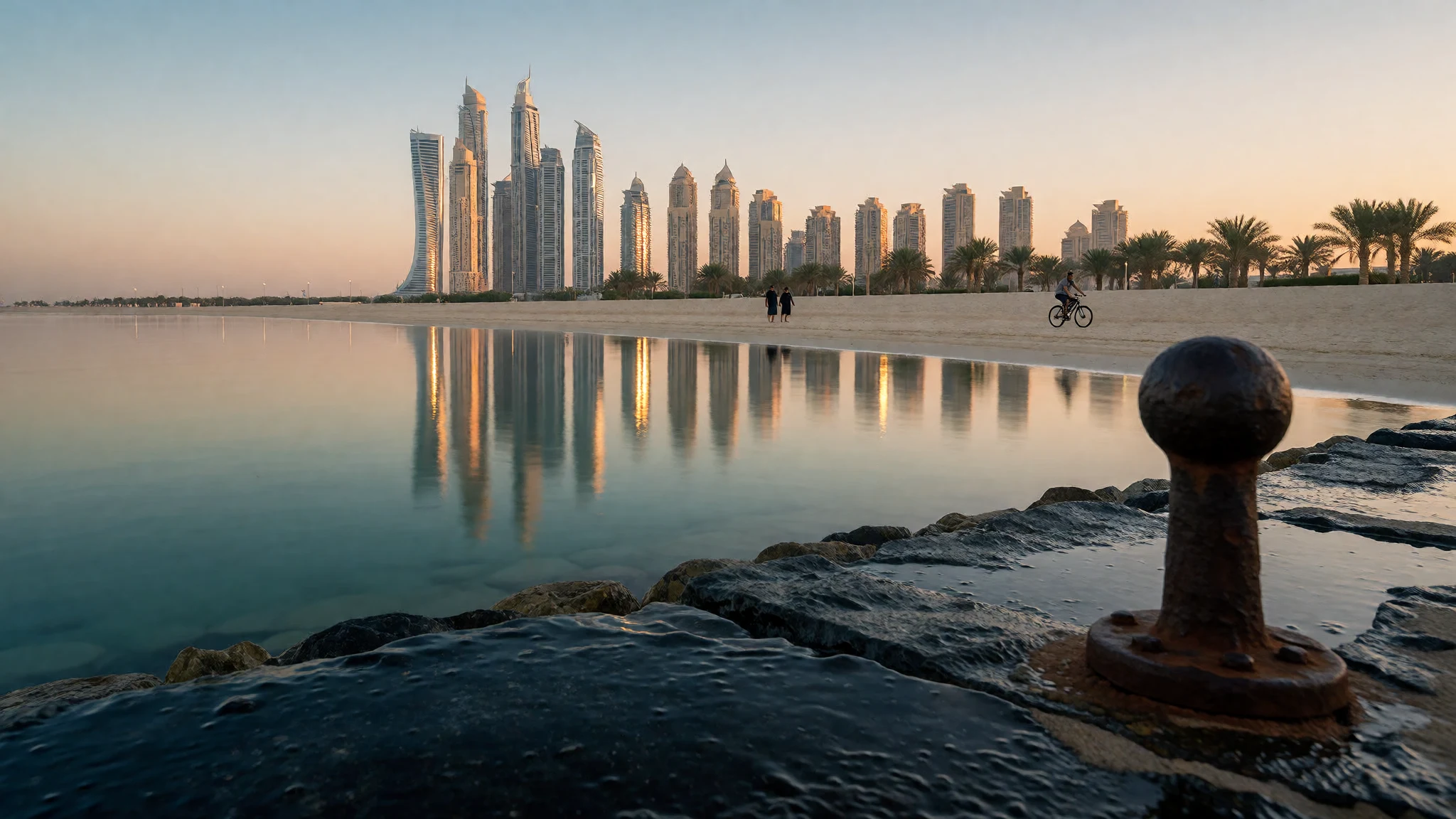
Lusail is a planned coastal city just north of Doha, with a marina, new towers and a football stadium.
The place
Lusail stands on the Qatar coast just north of Doha, a planned city whose marina, towers and roads were set out together. The skyline, seen from the water, is a row of pale high-rises gathered around Lusail Marina, with the Lusail Marina Iconic Development among them and boats lying in the basin. Qetaifan Island faces that view, so the first impression is of a waterfront still being completed, not of an old harbour town. The land is flat coastal plain: hard light, little natural shade, and the Gulf on one side. The Lusail Expressway is the seam with Doha: beyond it lies West Bay Lagoon, and the road itself is how the new district plugs into the capital. Crossing it, the change is in the age of the buildings more than in the landscape. Streets are wide, blocks are large, and distances between the marina, the plaza towers and the stadium are the distances of a new city, not of a walkable old quarter. Al Wahda Arches, monumental arches designed by Erik Behrens, read as civic artwork placed in that open plan. In 2011, a camera in a Doha hotel caught the coast while the plan was still mostly bare worksites. As late as 2022 the plaza towers still had unfinished floors, while boats already filled the marina. Lusail is best understood through that gap: a city assembled in the open, district by district, with cranes and finished waterfront in the same frame. Visitors come for the sea edge, the stadium and the new towers, and they move by car along wide roads rather than by wandering a dense centre.
Its story
Lusail's story is the story of a city decided on a plan and then built, rather than of a town that thickened over centuries. On the northern edge of Doha's coast, the site was open coastal ground until work began to raise a whole urban district: marina, residential towers, roads and a stadium, conceived as one project. A 2011 view from Doha shows how literal that starting point was. From a hotel window the future city is construction: bare plots, early structures, and a horizon that does not yet read as a skyline. The years after that photograph are the years in which Lusail became a place with a name people drive toward. The Lusail Expressway tied the new district to West Bay Lagoon and the rest of Doha, so the city grew as an extension of the capital's northward push as much as a settlement with its own old centre. It is not a town that thickened over centuries, though the site once held a small village of stone and mud houses, a fort, and a mosque. What it has is a sequence of projects: a marina cut into the coast, islands such as Qetaifan facing the towers, plaza towers beside a football stadium, and public art, the Al Wahda Arches of Erik Behrens, set down as a monument where none had stood. By 2022 the plaza towers had not yet been finished, which is the honest middle of this story. Planned cities stay provisional for a long time: residents and offices arrive while cranes remain, and the view includes both the boats in the marina and the incomplete floors above them. Lusail remains a coastal city of the present, tied to Doha by a short drive, shaped by large-scale building and by Gulf light, and still adding pieces.
What to see
- Lusail Marina — Lusail waterfront
Lusail Marina is the waterfront basin below the new skyline, with boats docked in rows and towers close behind them. The Lusail Marina Iconic Development rises among those towers, and photographs of the marina catch both finished quays and work still underway. The walk is along open water, with the Gulf on one side and glass on the other.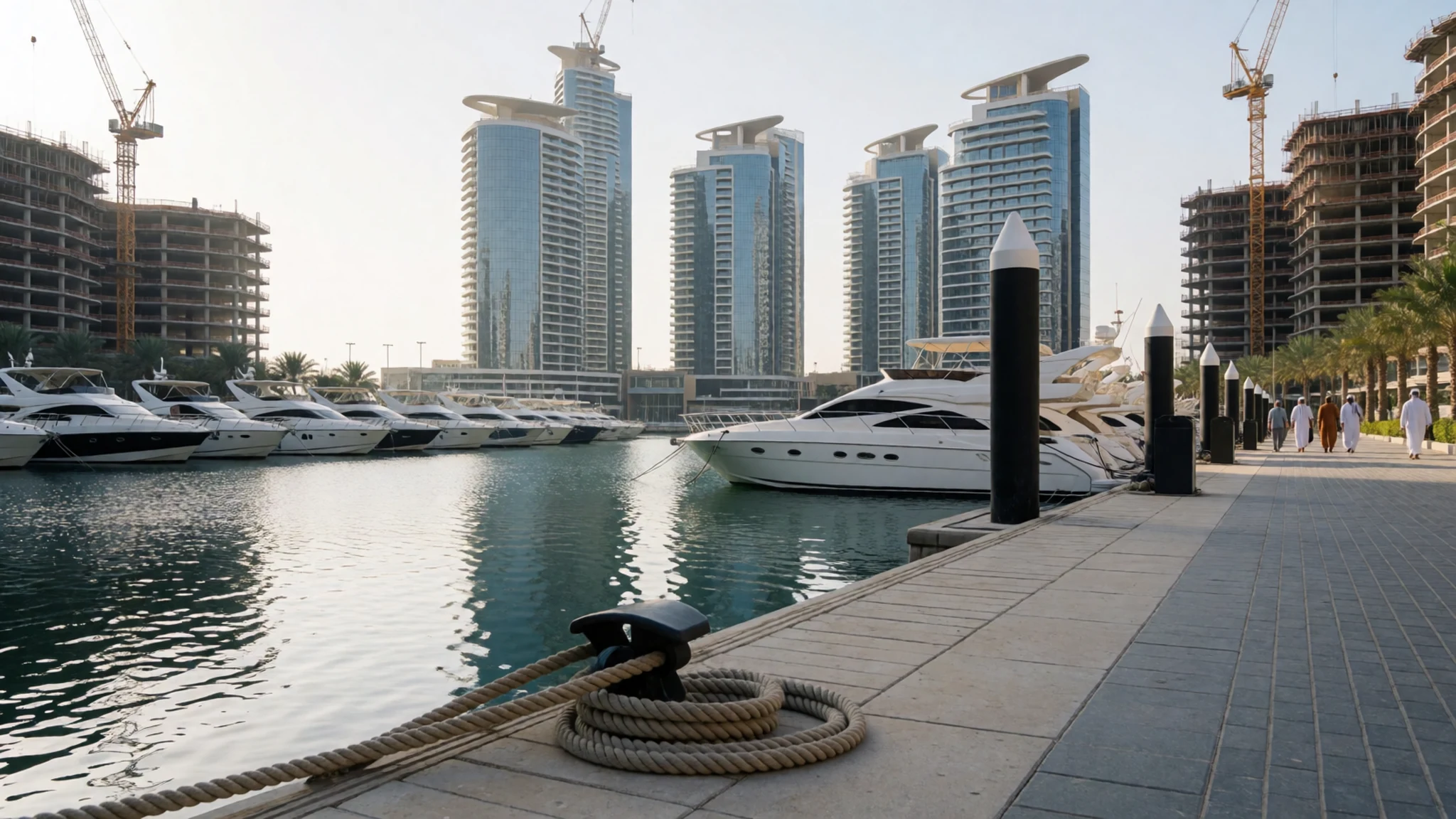
- Qetaifan Island — Qetaifan Island
Qetaifan Island gives the long view back to Lusail, the angle from which the city's skyline reads as one composition rather than as separate towers. Across the water the high-rises, the marina and the low coast sit in hard daylight, with the Gulf in the foreground. The island belongs to the plan, and the opposite shore is a skyline still filling in.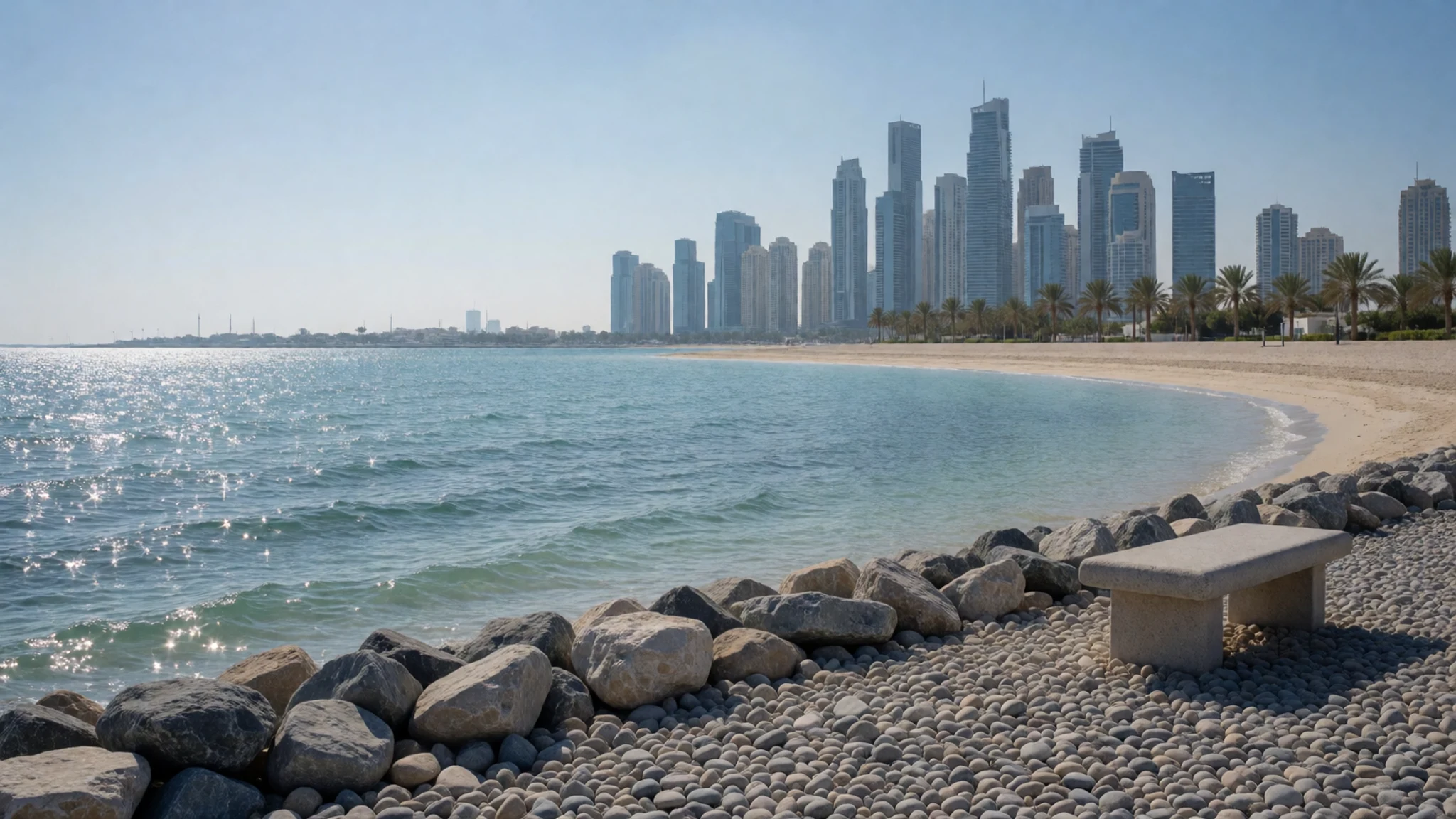
- Lusail Plaza Towers — beside Lusail Stadium
Lusail Plaza Towers are the cluster of high-rises that stand next to the football stadium. A 2022 aerial frame still catches unfinished upper floors, even as the roads around them already read as a district. They mark the vertical centre of Lusail, easy to pick out from the expressway, and they show a skyline still in phases.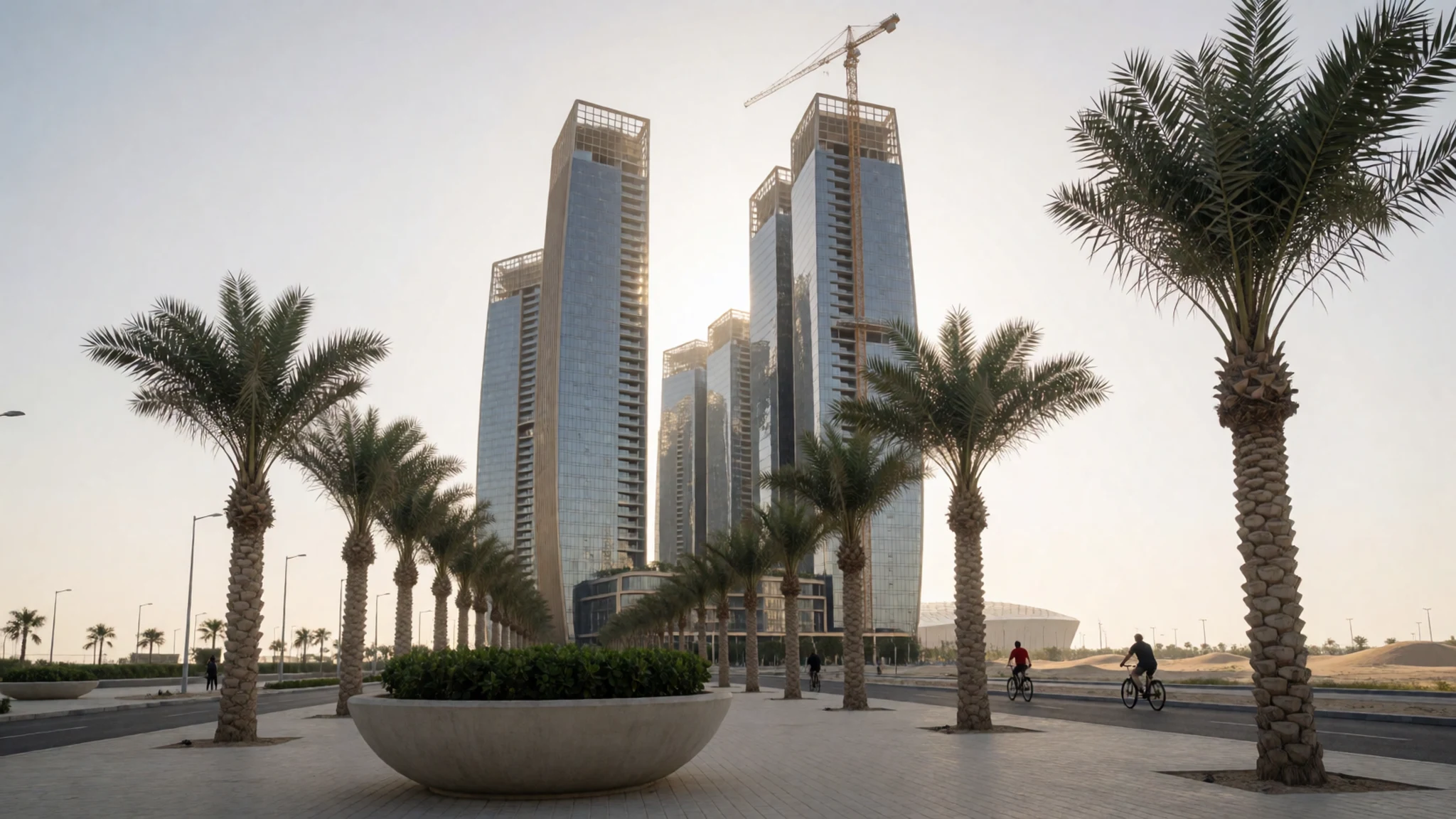
- Lusail Stadium — beside the plaza towers
Lusail Stadium is the city's large football bowl, set in the same new district as the plaza towers. It was planned with the roads and the waterfront rather than fitted into an older neighbourhood. On a quiet day the exterior and its wide approaches are the visit: a building sized for crowds in a district that can feel empty.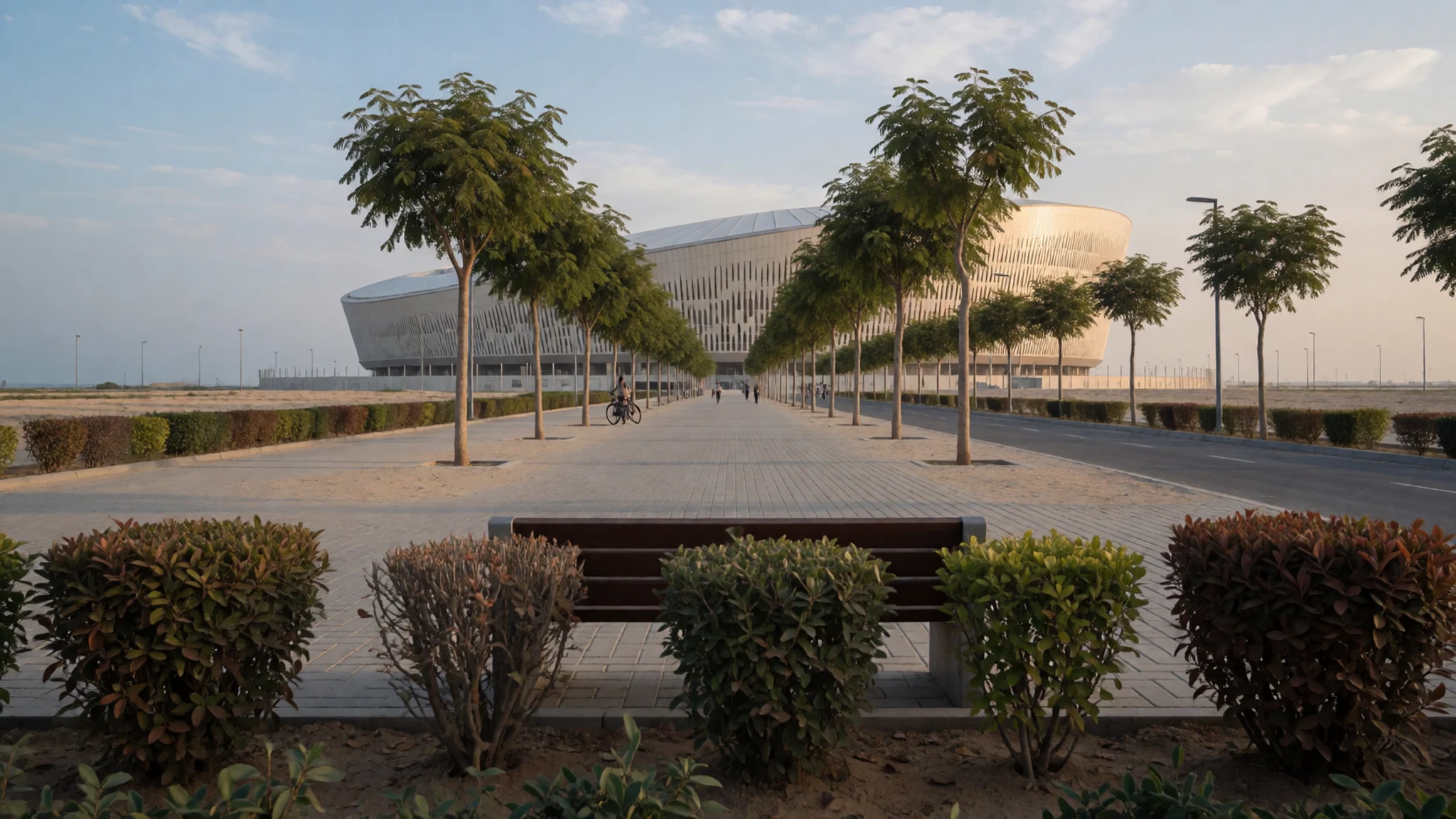
- Al Wahda Arches — Lusail
Al Wahda Arches are a public monument in Lusail, a group of arches designed by the architect Erik Behrens and meant to be read from the ground and from the air. They are not a restored gate from an old city. They are new civic artwork, placed in the open so that the form is the whole point: repetition, height and a frame of sky.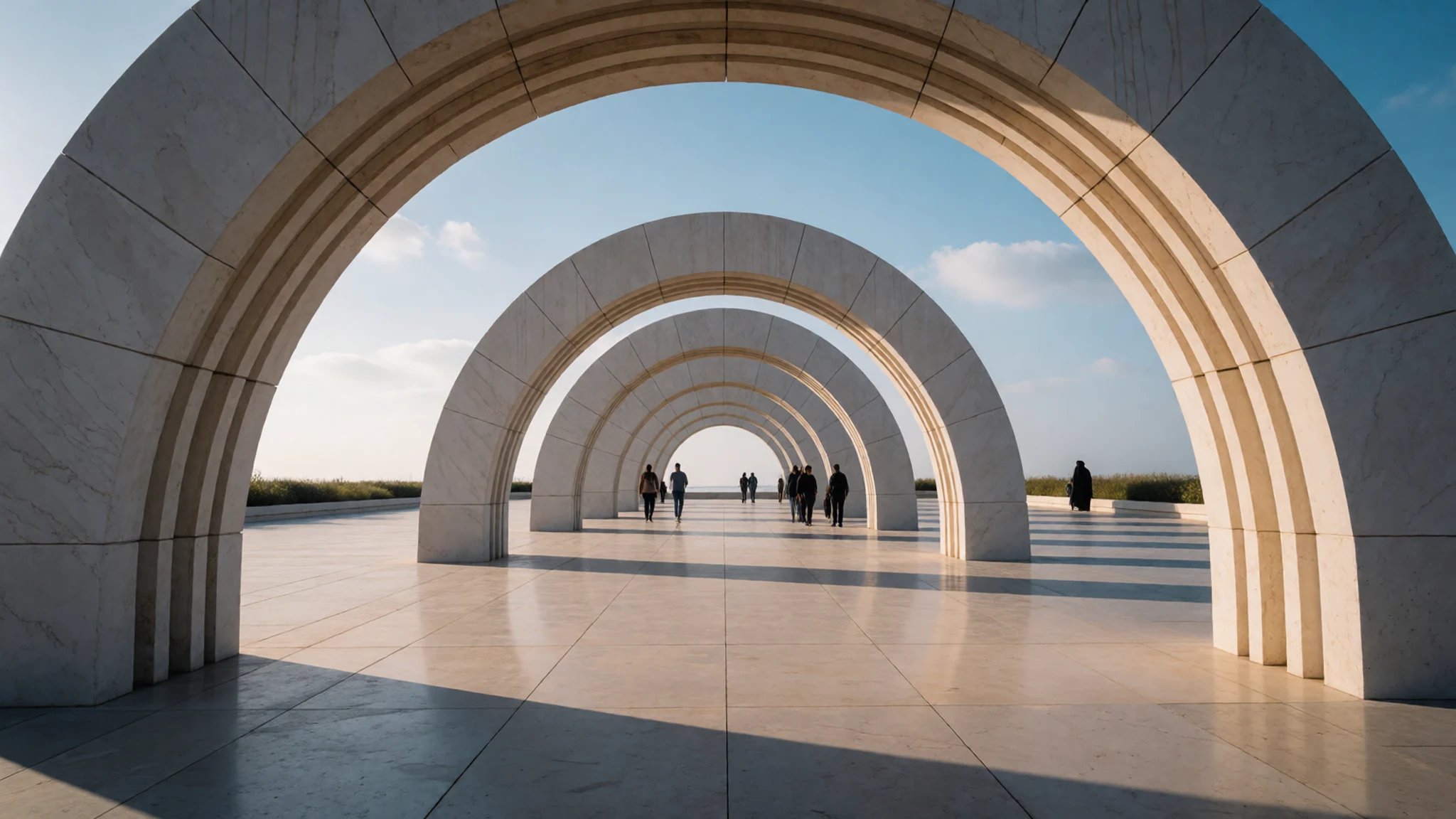
Culture
Lusail's public life follows Qatari custom inside a city that has almost no old streets to hold it. Arabic is the language of home and of the state, English is everywhere in malls, stadium crowds and marina cafés, and the week turns on Friday, when many families keep the middle of the day for prayers and a long meal. Hospitality is still expressed the old way even in new towers: Arabic coffee, gahwa, poured in small cups, and dates offered before business or conversation. Ramadan changes the rhythm of the whole district. Days are quieter, cafés may be screened, and the evening meal breaks the fast in restaurants and at home with a fullness the rest of the year does not match. Because Lusail was built for residents and for visitors from Doha, culture here is less a set of monuments than a way of using new public space. People dress in national clothes beside international fashion, gather for football at the stadium, and walk the marina in the evening once the heat drops. What a visitor meets is contemporary Qatar: a young city, a formal sense of welcome, and a clear line between private family life and the boulevard. Dress modestly on Lusail's streets and at the stadium, and ask before you photograph people.
What to wear
In Lusail, traditional dress is still ordinary daywear, not costume. Qatari men wear the thobe, a long white robe, with a ghutra headcloth held by a black agal; for weddings, National Day and formal visits they add a bisht, a cloak often in camel wool or fine cloth with gold embroidery along the edges. Women wear the abaya, usually black, over their clothes, with a shayla or hijab; for celebrations the abaya may be cut closer and worked with colour and beadwork. These clothes suit a hot coast: loose cotton, a layer that covers, and cloth that can be immaculate at a majlis in the evening. On Lusail's marina and in its malls the picture is mixed. Many residents keep the thobe or abaya all day; others wear tailored shirts, trainers and international brands, especially younger people and the large expatriate population who live and work in the new towers. Visitors should dress for strong sun and strong air conditioning, and for a modest public standard. Light trousers or a long skirt, covered shoulders and a scarf in a bag will do for the marina and the stadium precinct; add the scarf at a mosque. Choose shoes that can handle long paved quays, and take a layer for cold interiors. Leave beachwear for the pool or the beach, not the boulevard.
What to eat
- Machbous — family restaurants along the marina and mall food halls
Machbous, served widely in Lusail, is spiced rice with chicken or lamb, tomato, onion and dried lime, on a shared tray. It turns up in family restaurants along the marina and in mall food halls, where it is ordered for the table rather than as a quick snack.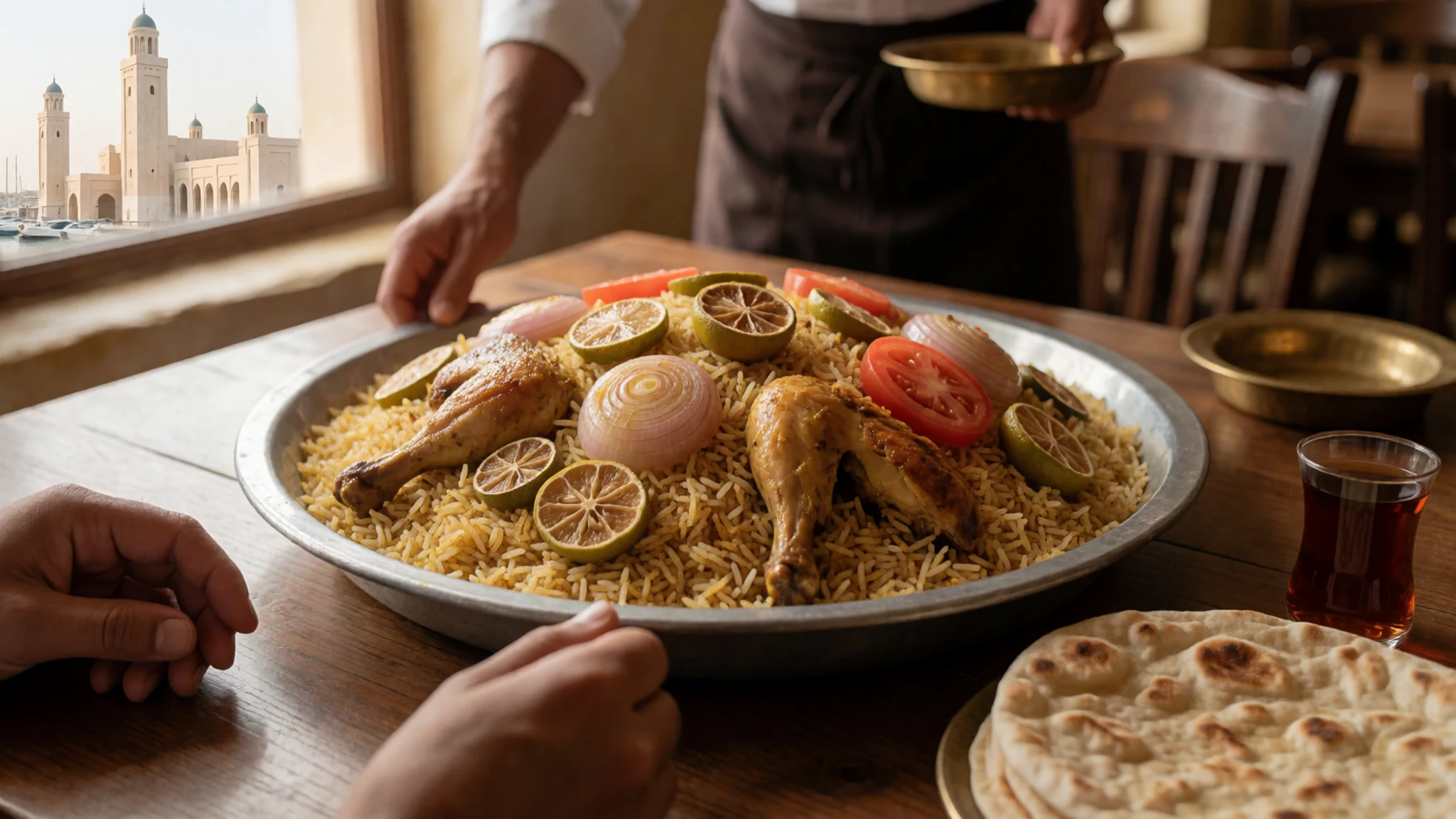
- Harees — family restaurants
Harees is wheat and meat cooked down until it becomes a smooth, peppered porridge, finished with ghee. Lusail kitchens serve it in the cooler months and through Ramadan, especially at large family gatherings. Eat it with the flatbread on the table.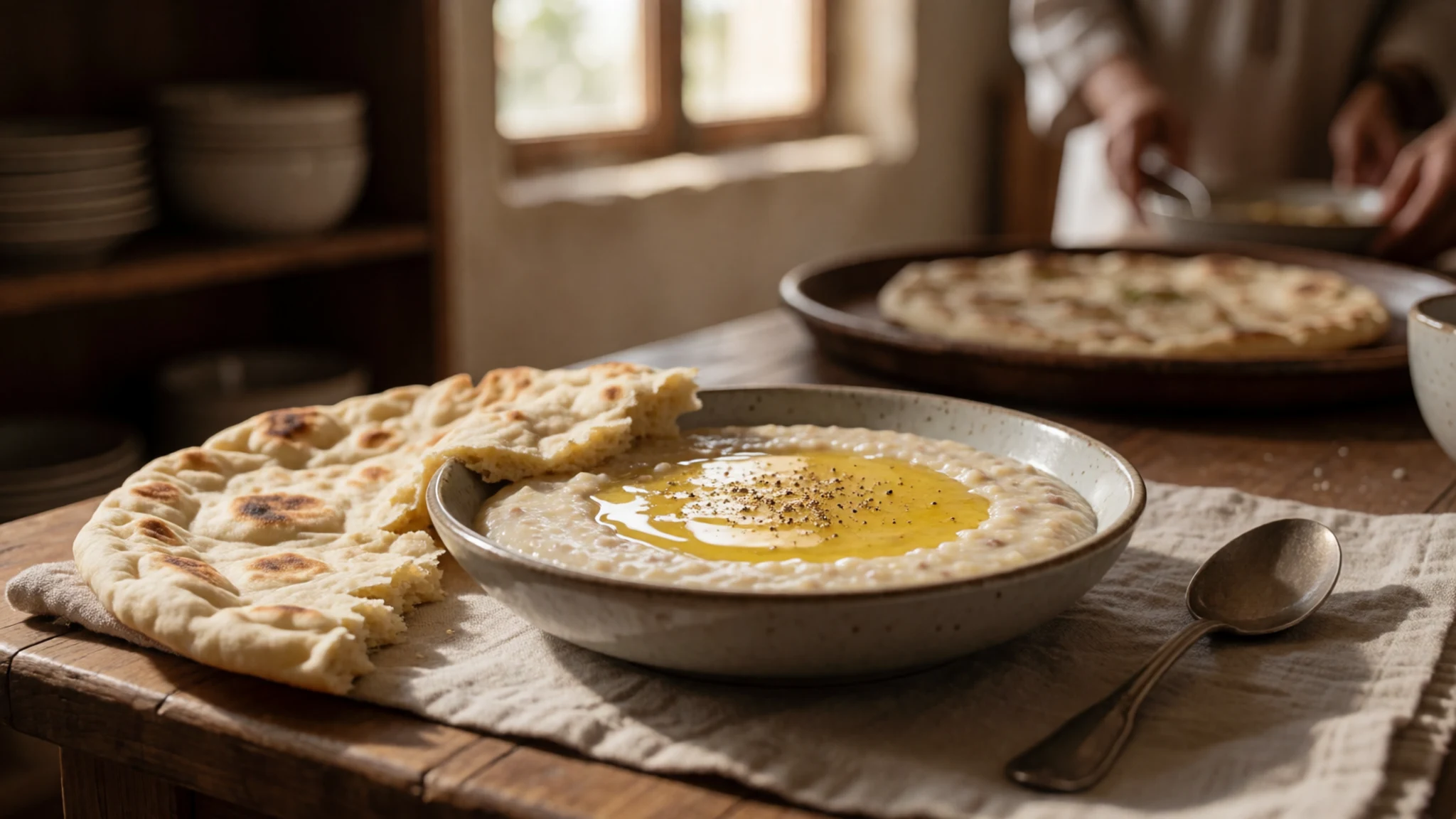
- Balaleet — café counters serving Qatari home cooking
Balaleet is sweet vermicelli, tinted with saffron and cardamom, tossed with onion and topped with a thin omelette. It is a breakfast and a Ramadan pre-dawn dish, and in Lusail it shows up at café counters that serve Qatari home cooking rather than only pastries. - Luqaimat — dessert counters in the malls and evening stalls near the marina
Luqaimat are small balls of fried dough, crisp outside and soft inside, soaked in date syrup and sometimes sesame. They are the sweet that appears with Arabic coffee at the end of a meal and at Ramadan night markets. Share a plate; they are richer than they look. - Grilled hammour — marina restaurants
Grilled hammour, a firm Gulf fish, is a standard grill on local menus: simply seasoned, with lime and rice or salad. Lusail's marina restaurants are the place for it, a long lunch with the boats in view. It suits a shared table.
Plan it
Best time. Lusail is easiest outdoors from November to March, when days are warm and evenings are easy; April and October work if you stay off the quays at midday. May to September is extremely hot, with the peak heat in July and August, and summer humidity sits on the marina. The light is usually hard and clear.
How long. 2–3
Getting there. Fly into Doha and continue north to Lusail. The Lusail Expressway is the last leg, and aerial photographs show it forming the border between Lusail and West Bay Lagoon. Allow a short cross-city ride from central Doha; the district is not a walk from the capital's older hotels.
Budget. high
Tips
- Do outdoor walking early or after sunset; midday on the marina and the plaza is harsh for much of the year.
- The sights sit far apart, so plan the marina, the towers and the arches as separate stops rather than one stroll.
- Carry water; new streets have little shade.
- Friday midday is given over to prayer, and many eateries slow down until afternoon.
- For stadium entry on event days, check the official organiser's site before you travel.
Etiquette
- Dress so shoulders and knees are covered in public, and carry a scarf for mosques.
- Ask before photographing people, especially families.
- Do not eat, drink or chew in public during Ramadan daylight hours.
- Remove shoes before stepping into a mosque or a home.
Nearby
Sources
- Wikidata (CC0)
- Wikipedia (CC BY-SA 4.0)
- Wikivoyage (CC BY-SA 4.0)