Petra
Petra, Jordan
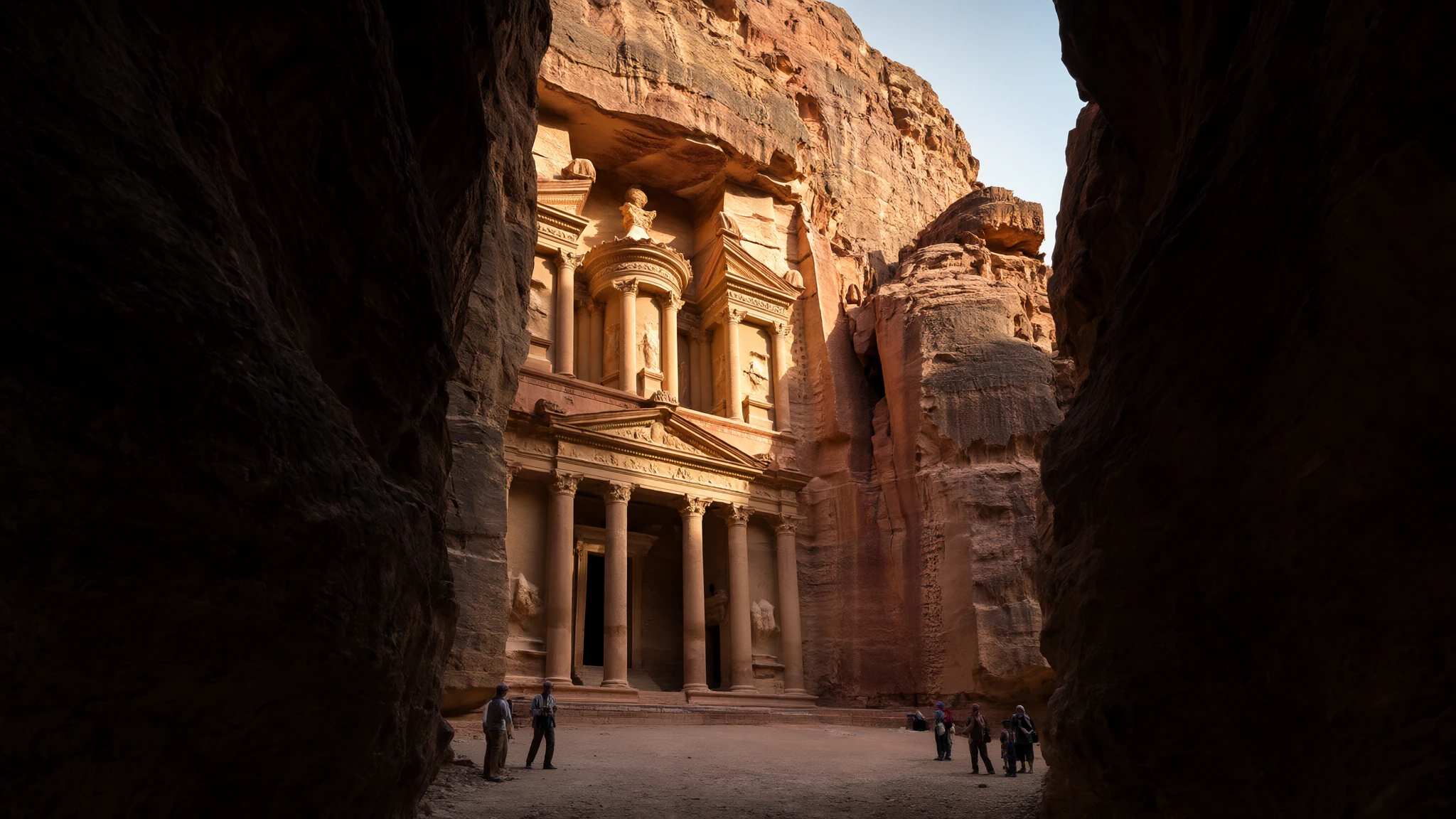
Petra is an extraordinary rose-red ancient city carved deep into southern Jordan's sandstone cliffs, blending monumental architecture with ingenious desert water systems.
The place
Petra, known historically as Raqmu to its early inhabitants, sits hidden among the rugged mountains of southern Jordan. Often called the Rose City due to the warm, dusky hues of the native sandstone, this ancient settlement is one of the world's most captivating archaeological wonders. The landscape is a maze of sheer cliffs, deep canyons, and arid plateaus sitting high above sea level. Visitors approach the site through a narrow, winding cleft in the rock known as the Siq, which opens dramatically to reveal monumental facades hewn straight from the living stone. The surrounding terrain is dry and unforgiving, yet the ancient builders mastered this arid environment through sophisticated channels, dams, and terracotta pipes that channelled precious rainwater across the dry valleys. Despite the harsh desert climate, the location offered natural protection and strategic placement along ancient trading tracks, turning a secluded mountain retreat into a bustling desert metropolis. Today, the ruins span a vast archaeological park where monumental tombs, carved staircases, and colonnaded streets emerge from the dust and shadow. Walking through the site reveals an intricate blend of architectural styles reflecting centuries of exchange between nomadic tribes, Near Eastern kingdoms, and Mediterranean empires. The sheer scale of the rock-cut engineering leaves a lasting impression on travellers who journey into this remote southern corner of Jordan.
Its story
Human history in the Petra region stretches back deep into antiquity, with early farming communities settling nearby long before the great monuments appeared. During the Bronze and Iron Ages, the area saw occupation by groups including the Edomites, who utilised the natural mountain stronghold to store water and manage local trade in wine, olive oil, and timber. The true architects of Petra's golden age were the Nabataeans, a northern Arabian nomadic tribe who settled the area and transformed it into the thriving capital of their kingdom. Capitalising on their intimate knowledge of desert survival and proximity to lucrative incense routes, they amassed vast wealth and regional influence. Petra flourished immensely during the first century, marked by monumental building projects and a large resident population. However, changing geopolitical tides brought Roman annexation, shifting trade away from overland caravan routes toward maritime alternatives. A severe earthquake dealt another heavy blow, shattering many of the city's grandest structures. Throughout the Byzantine era, Christian communities maintained a presence, building several churches adorned with mosaics before the city gradually fell into relative silence. By the early Islamic period, the grand trading hub was largely abandoned by all save a few local nomads, hiding its sprawling rock-cut wonders from the wider world until its modern rediscovery.
What to see
- The Siq
The dramatic entrance to Petra is a long, winding sandstone canyon stretching about two kilometres between towering cliffs. Walking through the shadowy fissure reveals rare ancient carvings, niches, and ancient water channels cut directly into the rock walls before opening out.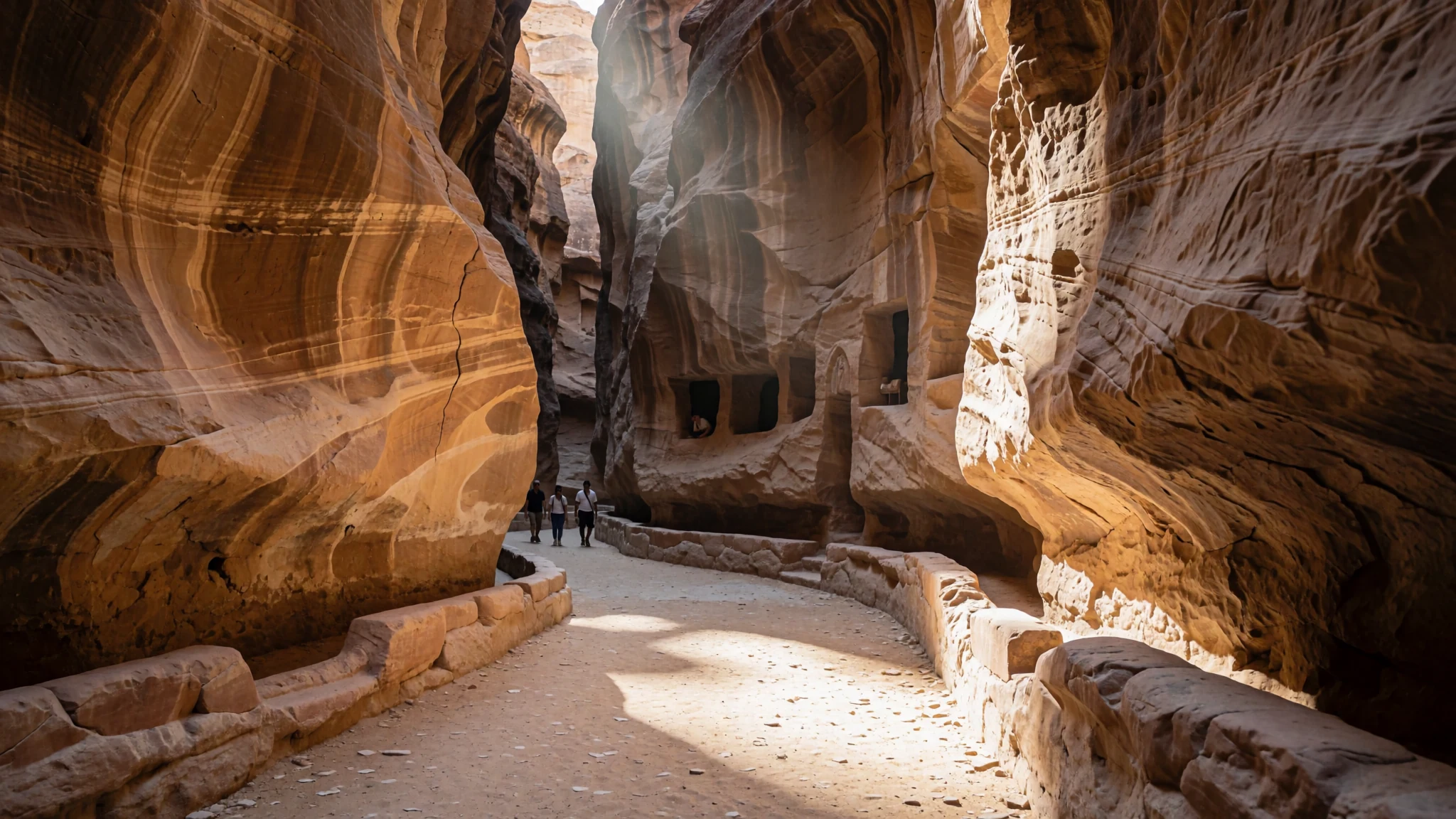
- The Treasury
Upon exiting the narrow gorge of the Siq, visitors face this jaw-dropping masterpiece carved into the rose-tinted rock face. Believed to have served as a royal mausoleum, its intricate Hellenistic columns and the mysterious stone urn atop continue to draw wide acclaim.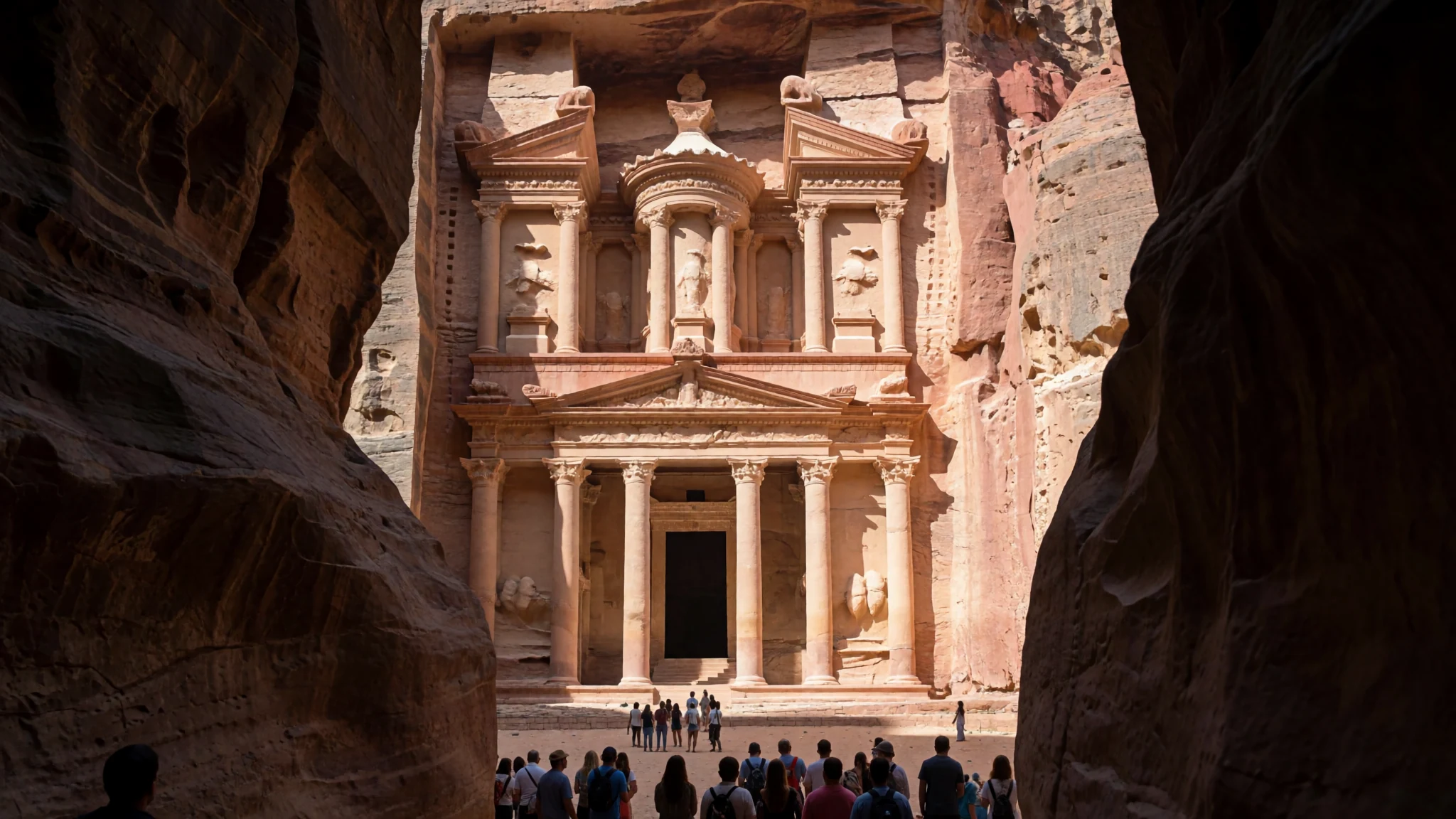
- Street of Facades
Just past the Treasury, the canyon widens into a broad avenue lined with a dense sequence of monumental rock-cut tomb facades. These burial sites display varied architectural influences, rising in tiered rows along the cliff edges.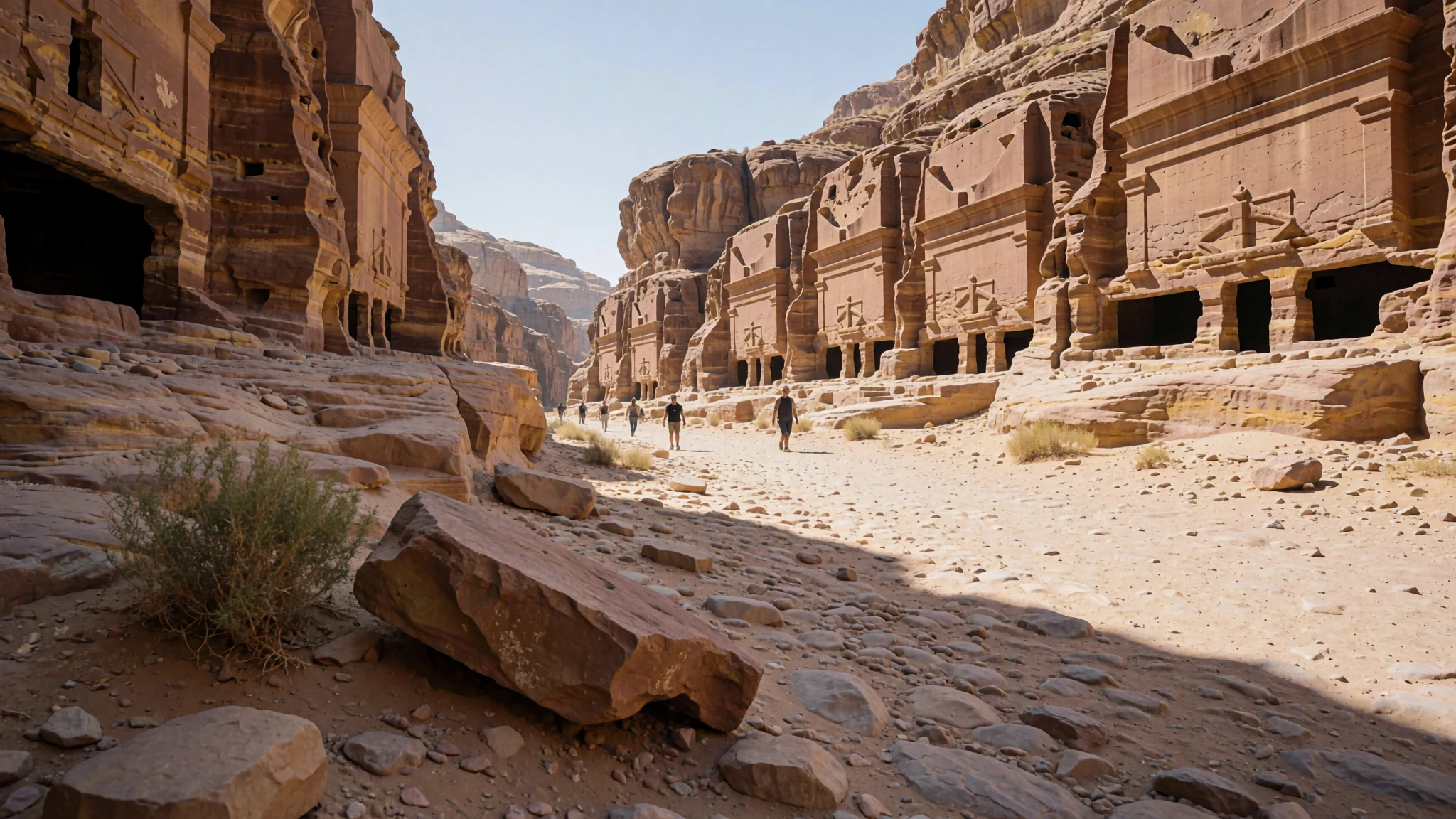
- Nabataean Theatre
Hewn directly into the hillside, this massive stone theatre was originally carved by the Nabataeans and later expanded during the Roman period. Capable of holding thousands of spectators, it cuts deeply into the rock where the valley opens out.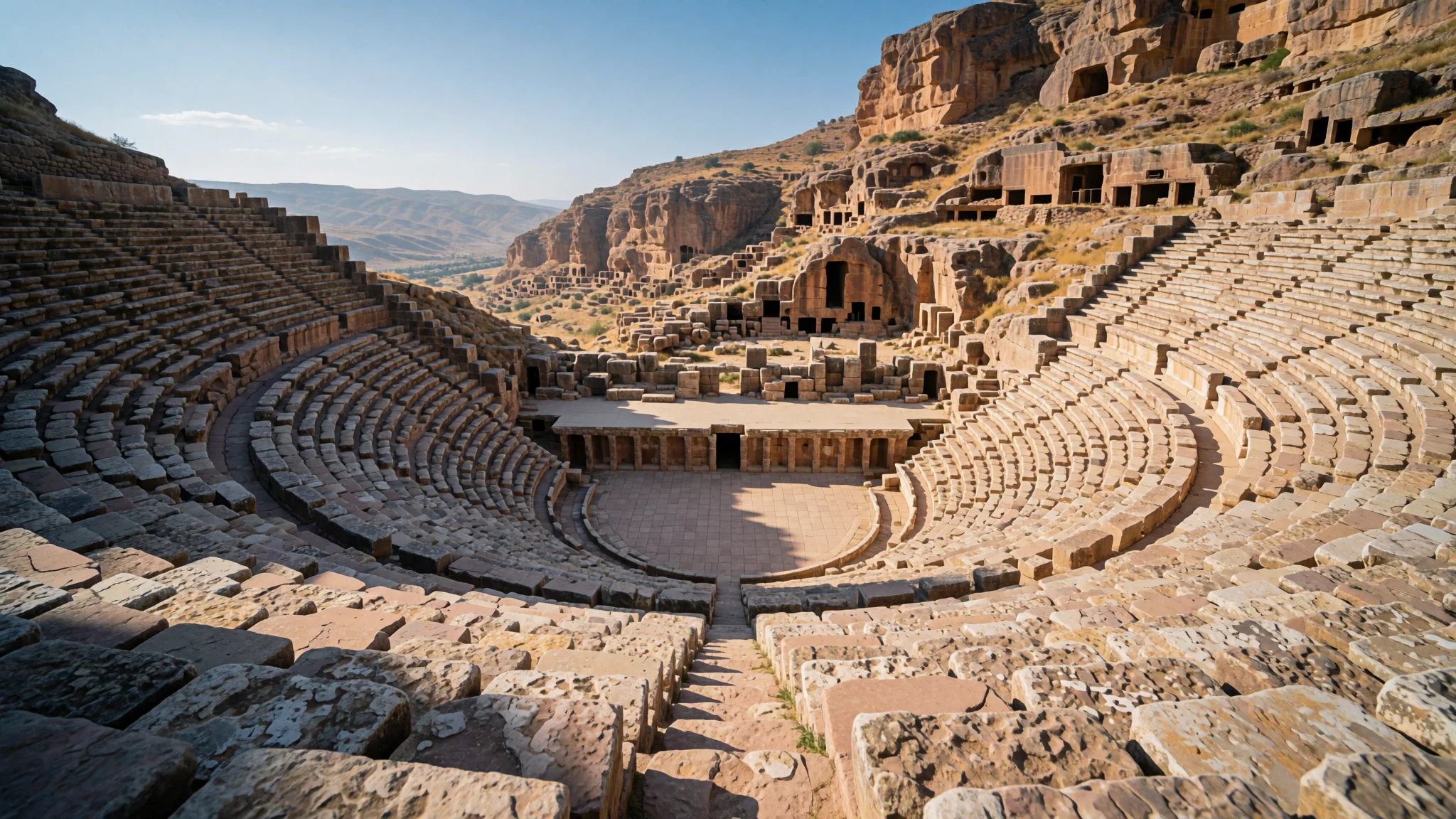
- Royal Tombs
Perched high on the eastern cliff face opposite the theatre, this grand collection of imposing mausoleums features soaring facades and richly decorated burial chambers. The climb rewards visitors with panoramic views across the ancient city centre.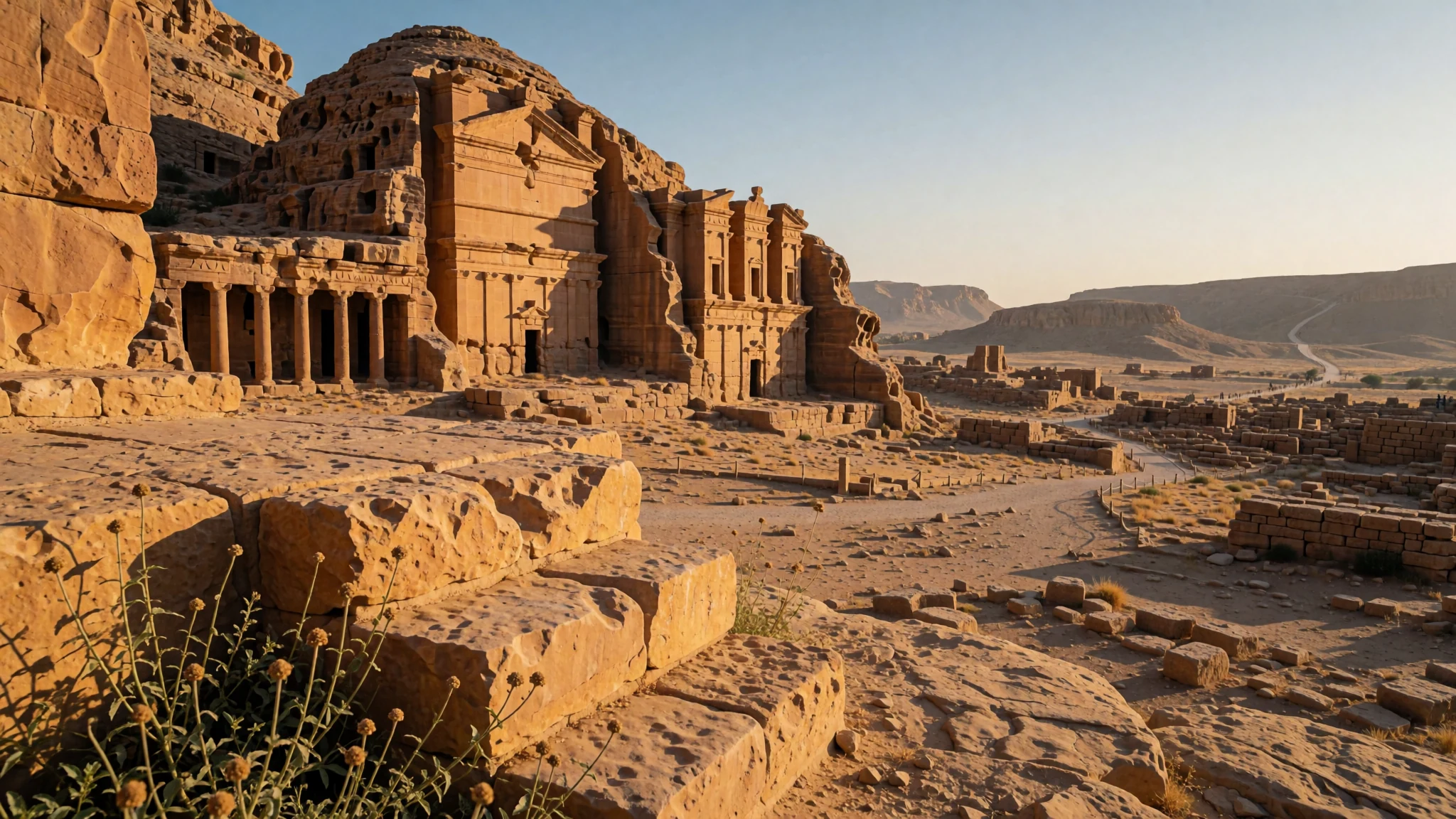
- The Monastery
Sitting high in the hills above the main site, this is the largest carved monument in Petra. Reached by climbing a long series of stone steps, its austere yet immense facade rivals the Treasury in scale and architectural ambition.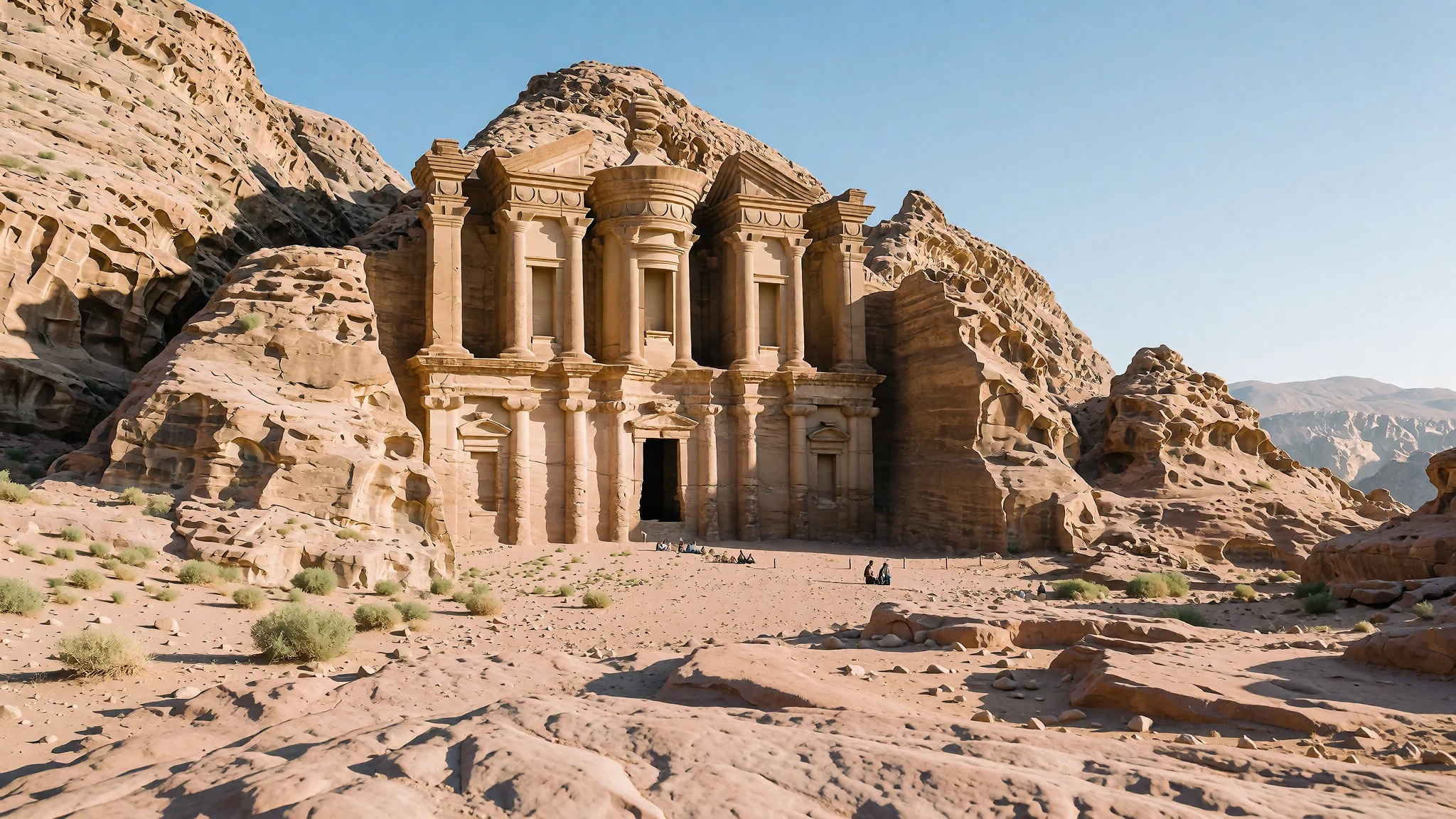
Culture
The cultural heritage of the Petra region is deeply rooted in the traditions of local Bedouin communities, particularly the Bdul tribe who historically inhabited the caves and valleys of the archaeological site before moving to nearby settlements. Hospitality remains a core pillar of daily life here, with coffee and tea offered as traditional gestures of welcome to travellers. Islamic traditions guide local social norms, family life, and public observances across Jordan, blending seamlessly with contemporary daily routines in the nearby town of Wadi Musa. Visitors will find people warm, conversational, and proud of their deep ancestral ties to the surrounding landscape. Traditional music, storytelling, and craftsmanship, including woven wool carpets and silver jewellery, continue to be passed down through generations. When exploring towns or interacting with local residents outside the archaeological zone, dress modestly with shoulders and knees covered, and always ask permission before taking photographs of individuals.
What to wear
Traditional dress in southern Jordan reflects practicality against the desert climate, historically consisting of loose, flowing robes and garments crafted from durable cotton and wool to protect against sun and wind. Bedouin men traditionally wore patterned headscarves secured with woollen agal ropes, while women adorned themselves with embroidered dresses and distinctive silver jewellery that doubled as portable wealth. Today, most urban Jordanians and residents of Wadi Musa wear contemporary Western attire for daily work and commerce, though traditional garments remain common during celebrations, weddings, and formal gatherings. For travellers exploring Petra, practical considerations take precedence over fashion due to the immense walking distances and exposed terrain. Lightweight, breathable layers are essential to manage shifting desert temperatures, alongside a sturdy sun hat and scarf. Most importantly, sturdy walking shoes or hiking boots with good grip are required to navigate uneven stone steps, sandy paths, and steep mountain trails safely.
What to eat
- Mansaf — Local traditional restaurants in Wadi Musa
Jordan's national dish features tender lamb cooked in fermented dried yoghurt, served over a large bed of turmeric-infused rice and flatbread, topped with almonds and pine nuts. It is traditionally shared communally from a large platter.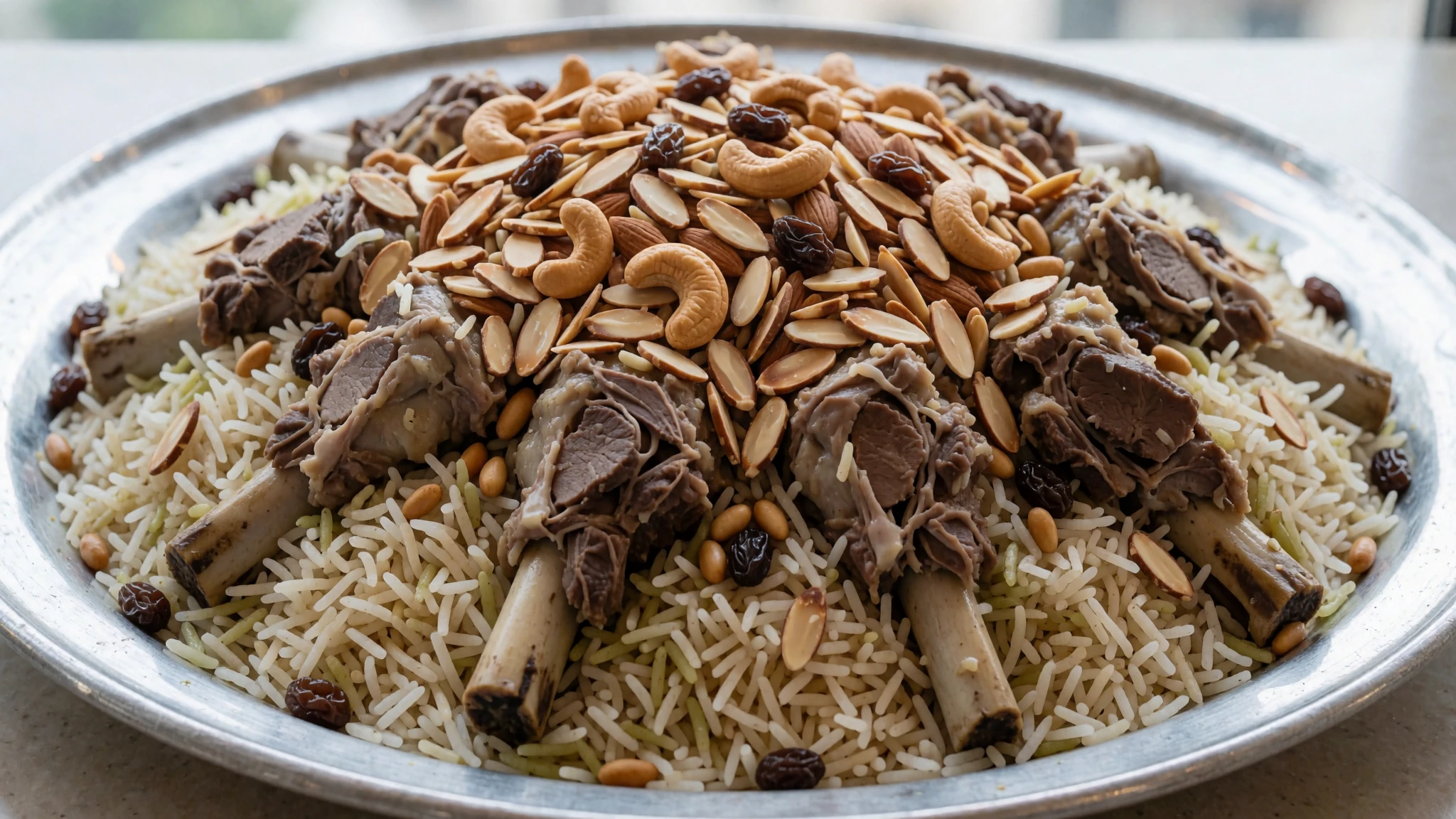
- Zarb — Bedouin camps and local eateries near Petra
A traditional Bedouin barbecue where meat and vegetables are slow-cooked in an underground pit filled with hot coals, giving the food a distinct smoky flavour. It is typically prepared in desert camps.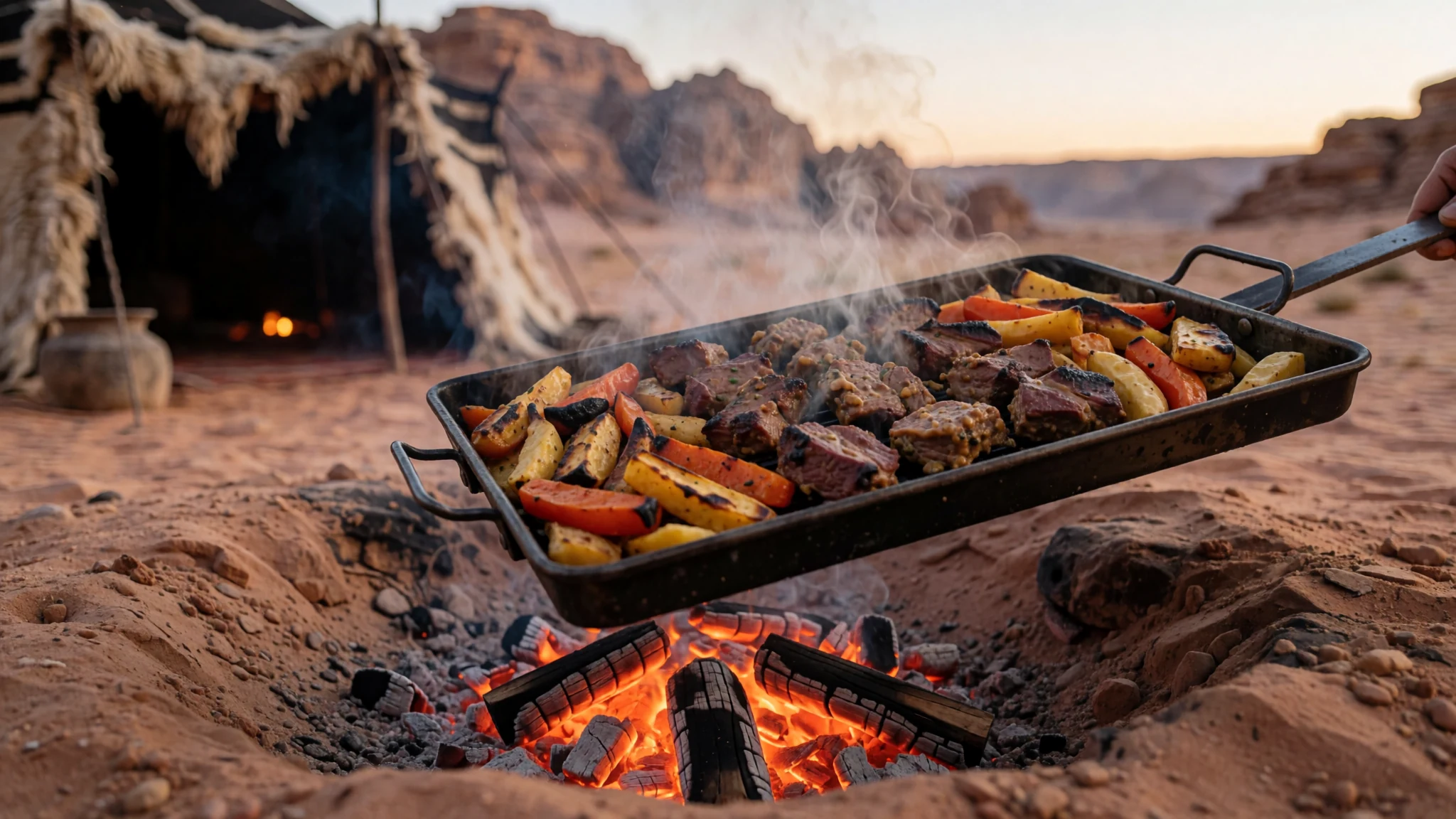
- Falafel and Hummus — Street-side bakeries and small cafes in Wadi Musa
Crispy fried chickpea fritters served alongside smooth, creamy chickpea paste drizzled with olive oil and warm flatbread. This is a staple breakfast or light lunch across Jordan.
- Traditional Baklava and Sweets — Al-Janoub Sweets and local bakeries in town
Sweet pastry layers filled with chopped nuts and honey, alongside regional cheese-filled pastries and warm rolled sweets flavoured with orange blossom water. - Bedouin Sage Tea — Tea stalls inside the Petra archaeological site
Hot black tea infused with fresh local sage leaves or desert herbs, heavily sweetened and offered as a universal gesture of hospitality throughout the region.
Plan it
Best time. March and November offer the most pleasant daytime temperatures for extensive walking, while April and October can already reach around 35°C, June to September is intensely hot, and winter nights in the mountains turn cold.
How long. 2–3
Getting there. Fly into Amman or Aqaba, then travel south by bus or taxi to the town of Wadi Musa, which serves as the immediate gateway to the archaeological site.
Budget. mid
Tips
- Arrive at the main gate right at opening time to experience the Siq and Treasury before the tour groups arrive
- Wear broken-in hiking boots with reliable grip for walking several kilometres over uneven rock
- Carry cash in local currency for small purchases, snacks, and tips at the site
- Pack plenty of drinking water and sun protection as shade is sparse along many trails
Etiquette
- Dress modestly covering shoulders and knees when visiting towns and populated areas
- Always ask permission before photographing local residents and vendors
Nearby
Sources
- Wikidata Q5788 (CC0)
- Wikipedia (CC-BY-SA 4.0)
- Wikivoyage (CC-BY-SA 4.0)