Dukhan
Dukhan, Qatar
Dukhan is where Qatar's oil story began, a gated company town on the west coast with quiet beaches and strange rock country nearby.
The place
Dukhan sits on the west coast of Qatar, roughly 80 kilometres from Doha, in the municipality of Al-Shahaniya. Its Arabic name means smoke, a fitting label for a town that exists because of oil. It is run by the state energy company QatarEnergy rather than by a city council, and industrial work inside the town falls under a dedicated operations department. That matters for anyone planning a trip: entry needs a gate pass issued by the company, and the town is in practice open only to employees and their guests. Wandering the streets as a casual sightseer is not on offer.
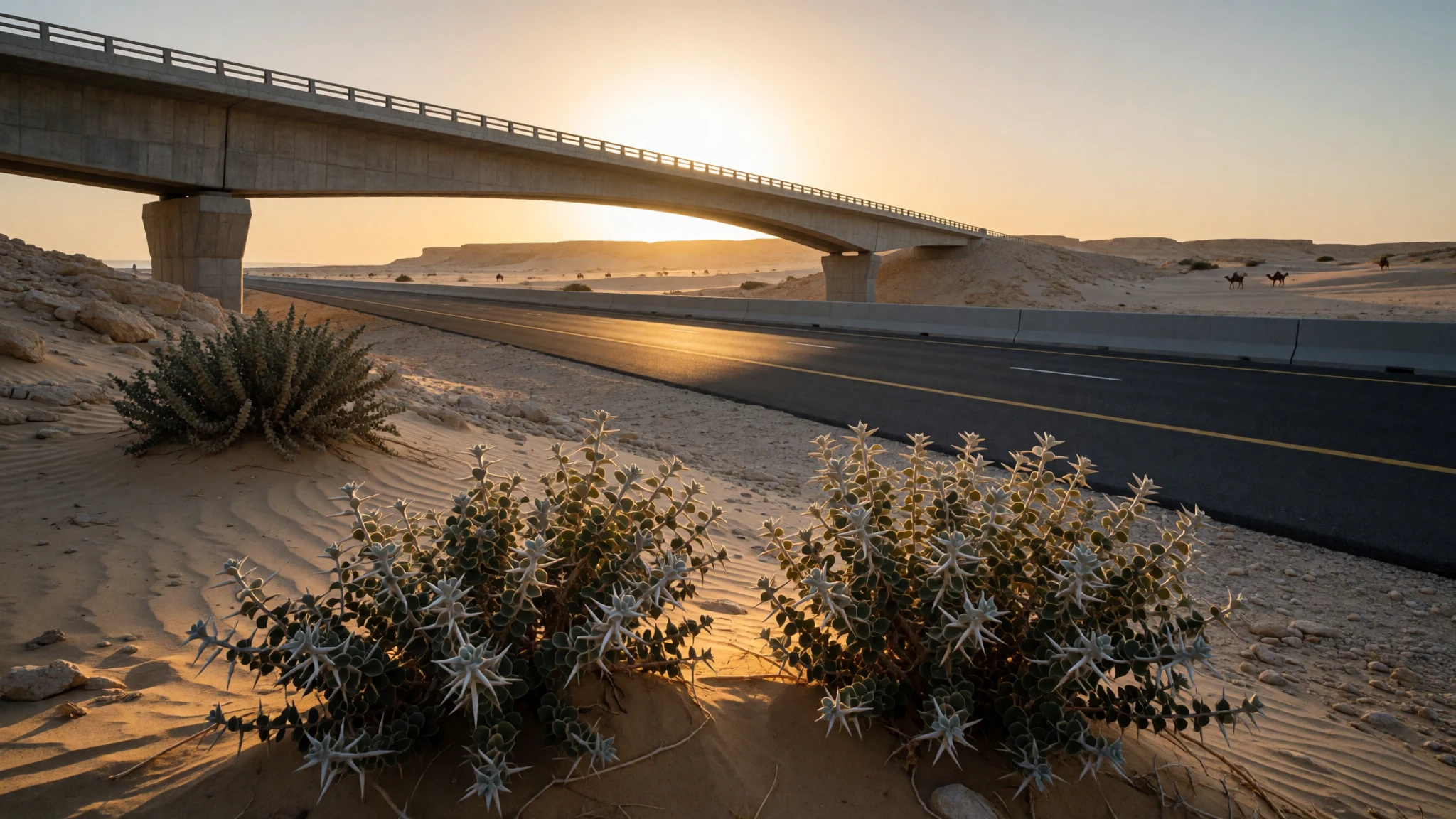
The land around it is more varied than the flat-desert image suggests. Low ridges of limestone run parallel to the coast. Inland, the ground is a stony lowland cut by dry riverbeds, with shallow hollows where plants collect after rain; Wadi Diab is one of the larger channels. In the north, salt flats known as sabkha dip below sea level. Qatar counts this area among its five main regions.
On the ground, Dukhan feels like a working settlement: pipelines, refinery plant on the horizon, a mosque with a tall minaret, and a small shopping centre with fast food and a supermarket. There is nowhere to sleep in the town itself. Most visitors treat the area as a day trip from Doha along a four-lane motorway, using the beaches and the rock country near Zekreet as the real destinations. More recently the area has also been chosen for a large solar power project, a sign of where Qatar's energy planning is heading.
Its story
Dukhan's story is the story of oil arriving in Qatar. Exploration began here in the mid-1930s, and in 1937 oil was found, the first major reserve in the country. At the time the economy still leaned on pearling, a trade that was fading, and the discovery pointed to a very different future. The first well took about a year to build, starting in 1939, and the settlement grew up as a camp for the staff of the Qatar Petroleum Company, today QatarEnergy. The Second World War then paused operations.
Supplies had to come in by sea. Bahrain was the lifeline: boats brought water, food and equipment into the shallow harbour at Zekreet, a little to the north, and everything was carried on from there. Once work resumed, the first export left at the very end of 1949. A major blaze at one well in March 1953 showed how risky the work was, and by 1954 the oil fields were fully developed.
Infrastructure followed. A power station opened in 1958, and the next year gas was found deep underground in the Khuff reservoir. Growth carried on at a steady pace through the decades afterwards, including after Qatar took control of its oil industry in the 1970s. The town still bears the marks of its origins: a company settlement planned around work, with services provided by the employer rather than grown up around a port or a market, as most older Gulf towns did.
What to see
- Dukhan Beaches — Coast, west of the town
The shoreline on either side of the water sports club is the part of Dukhan that most visitors actually come for. Swimmers and surfers use it, though the club itself is for company staff and their guests. Facilities are thin, so bring water and shade, and expect the heat to shape the day. Winter mornings are the pleasant window.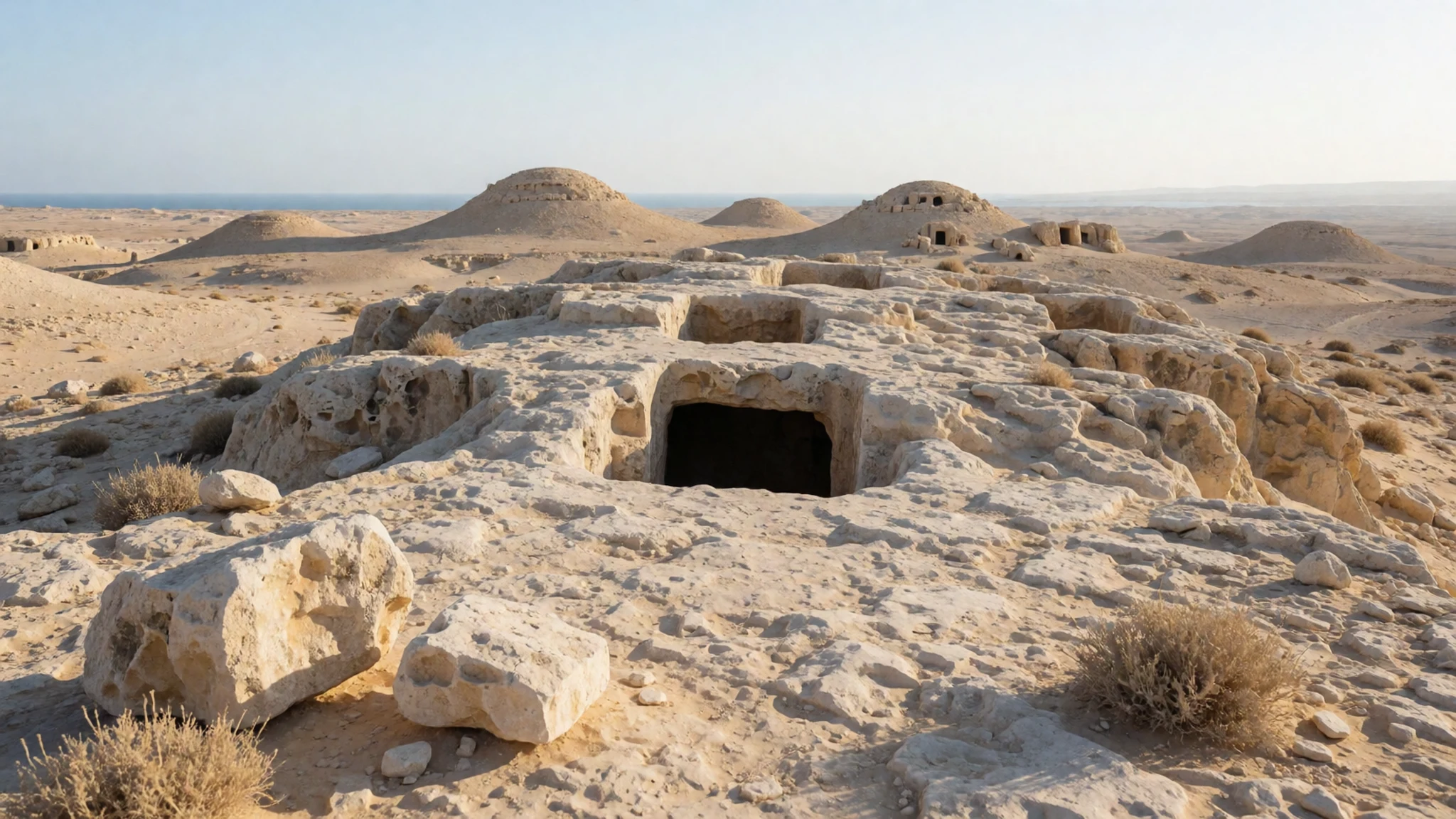
- Dukhan Masjid — Town centre
The town's main mosque is easy to spot from the road, thanks to its tall minaret and a dome set above a broad archway. It is a working place of worship, so it is best admired from outside unless someone invites a visitor in. The view from Dukhan Western Road gives a good sense of the town's scale.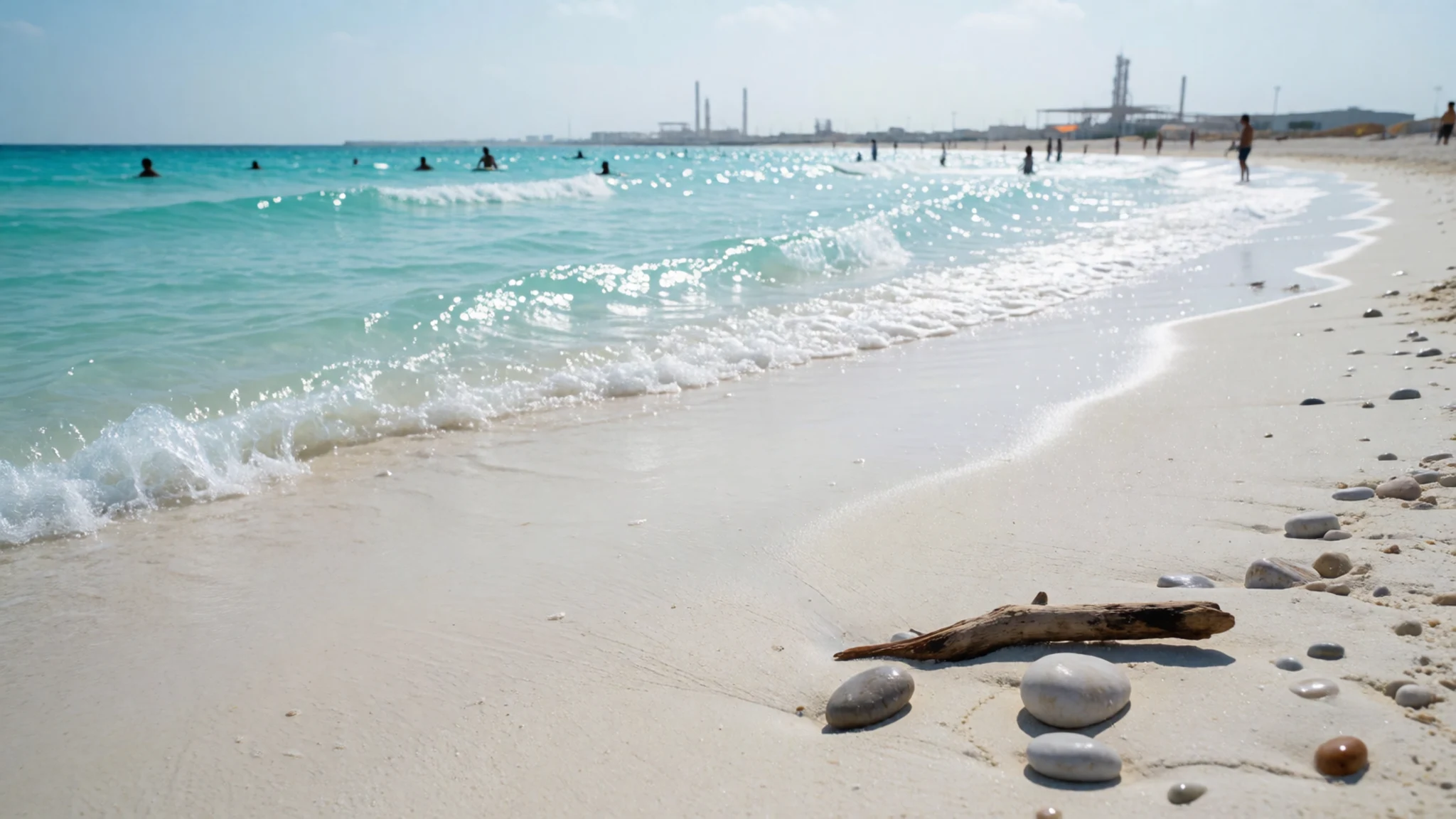
- Zekreet (Zekrit) — North-east of Dukhan
Zekreet is an old village with historic links to Bahrain, set in rugged country north-east of Dukhan. A small hill beside it holds prehistoric graves cut into the bedrock, and burial mounds lie on neighbouring hilltops. The eroded rock formations here are the most photographed scenery in the area. Go early or late, as shade is scarce.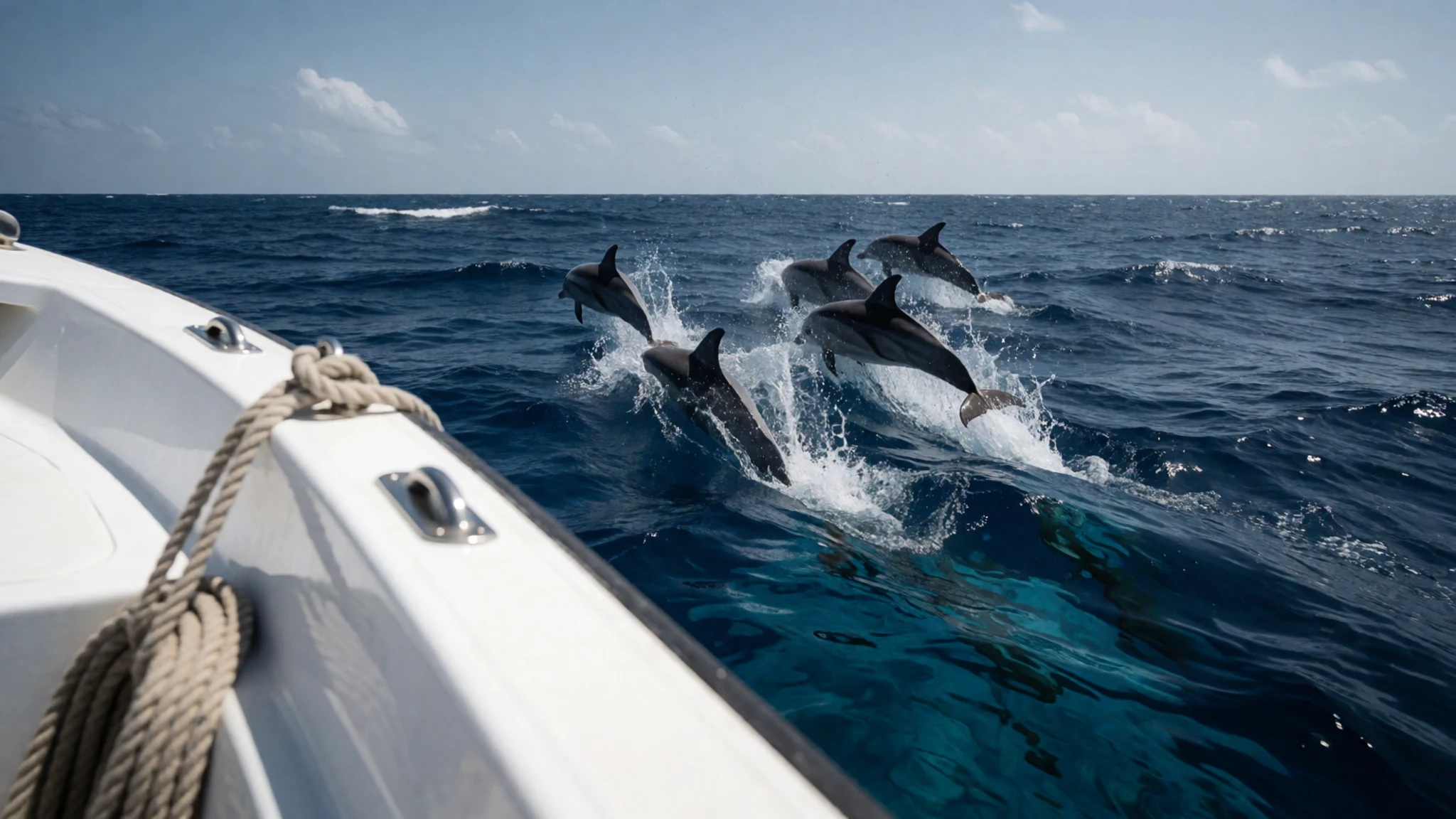
- Film City — Northern Qatar, beyond Zekreet
Film City is a large building once used as the set for a Qatari television series, with a small constructed village a short way to the north. It is an odd stop, best treated as a curiosity on the northern stretch of road rather than a destination in itself. Conditions on site can change, so ask locally before detouring.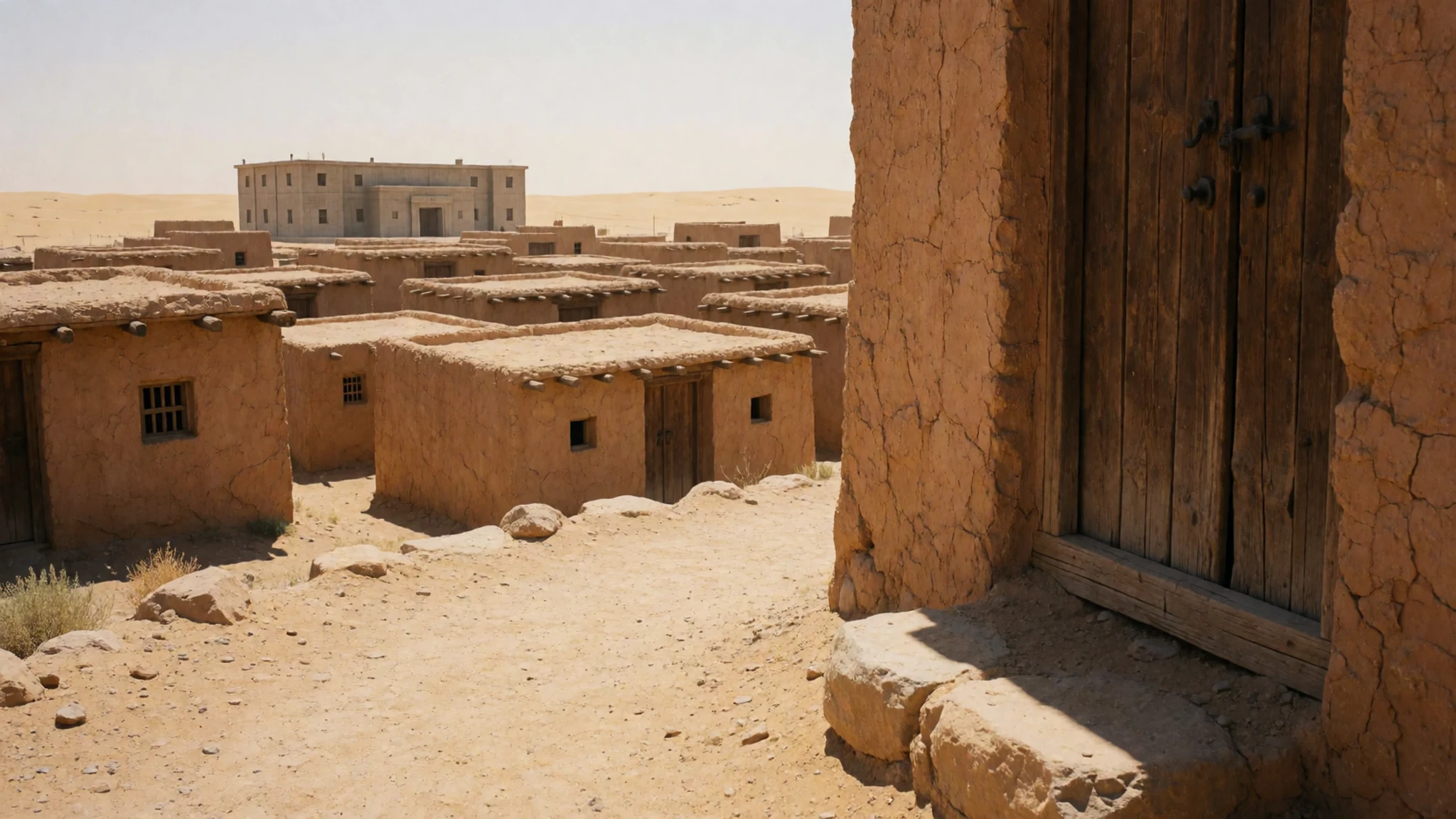
- Dolphin Reef — Offshore, west coast
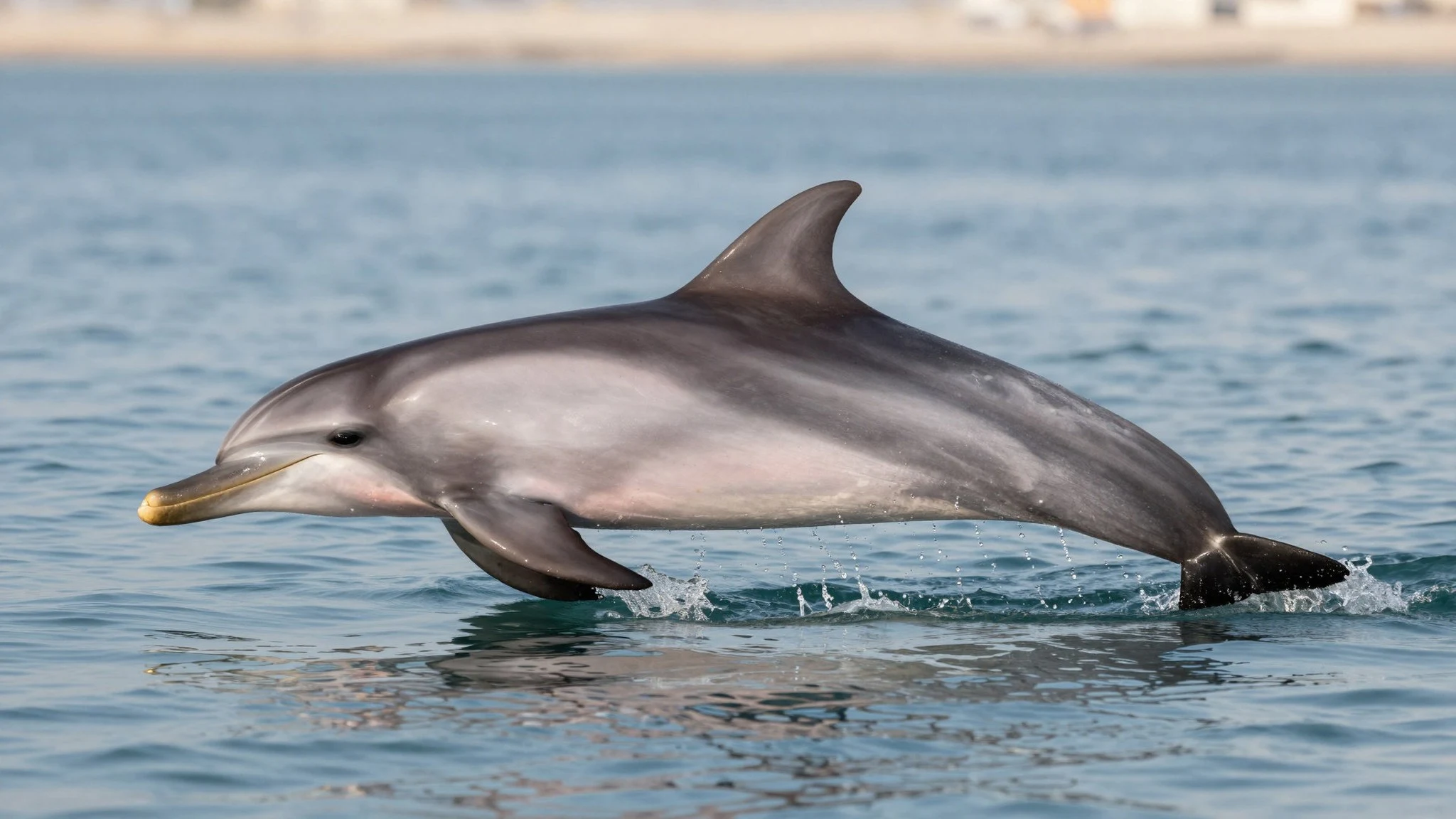
Dolphin Reef is an artificial dive site off this coast, known for attracting dolphins. It cannot be reached from the shore: divers need their own boat or a guided trip arranged through one of the dive groups based in Doha. Sightings are never guaranteed, so treat any dolphins as a bonus rather than the plan.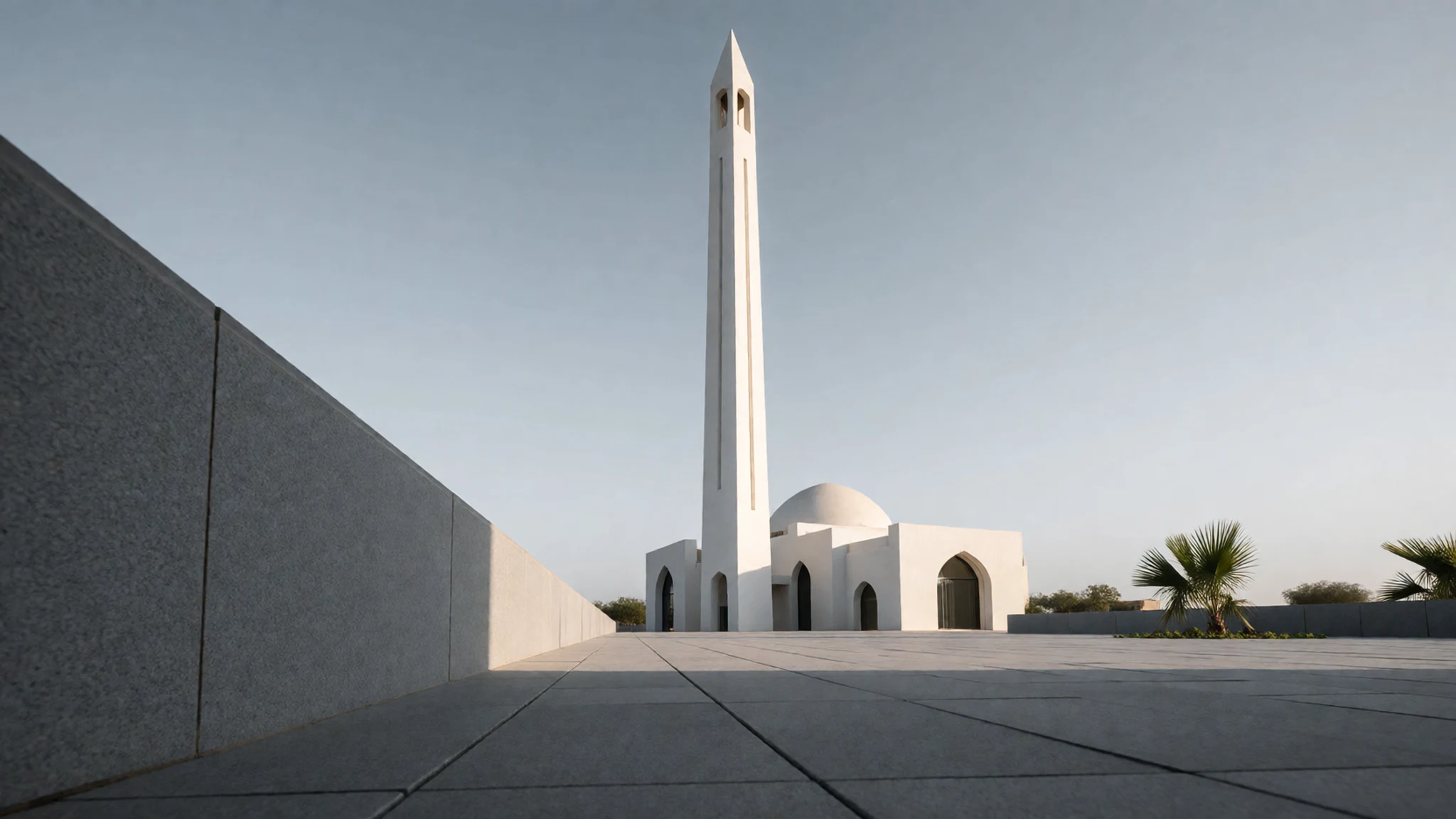
Culture
Dukhan is a Qatari company town, and its culture is shaped by two things: Islamic practice and the rhythm of shift work. Daily life follows the call to prayer, with the mosque near the centre of the settlement, and prayer times slow the pace of errands. Friday is the weekly day of congregational prayer in Qatar, and the town is noticeably quieter then.
Behind the oil era lies a Bedouin and coastal heritage. Herders still move camels across the plains around Dukhan, and the nearby village of Zekreet reflects older sea ties with Bahrain, from the time when boats carried everything the oil camp needed. Pearling, which once carried the national economy, lives on in songs, stories and family memory, and it remains part of how many Qataris describe their own history.
The community inside the town is a mix of Qatari employees and workers from many countries, living in company housing and sharing facilities such as the shopping centre and the sports club. Hospitality is a strong value across Qatar: tea or coffee offered by a host is normally accepted, and conversation begins slowly, with greetings and questions about family before anything practical.
During Ramadan, eating, drinking and smoking in public in daylight hours is discouraged, and opening times shift, so plans need more slack. Ask permission before photographing anyone, especially women, and do not photograph the oil installations or the gate area, which are security-sensitive.
What to wear
Traditional dress in Qatar, and so around Dukhan, is built for sun and wind. Men wear the thobe, an ankle-length robe, usually white and made of light cotton in the hot months, with heavier wool-blend versions in winter. On the head goes the ghutra, a square cotton cloth held in place by a black cord ring called the agal. Women wear the abaya, a loose black cloak, with a shayla scarf over the hair; some add embroidered or beaded edging for celebrations. Many Qataris wear these every day, and everyone dresses up for Eid and family gatherings.
What people wear now is mixed. Qatari staff often come to work in thobes or abayas, while colleagues from abroad wear practical workwear, with high-visibility vests and hard hats on industrial sites, and ordinary casual clothes in the shopping centre. At the beach, swimwear is normal on the sand and in the water, usually with a cover-up for the walk.
Visitors should dress for heat and modesty together. Loose, long-sleeved cotton or linen, trousers or long skirts, and a light scarf for sun or a mosque visit all work well; shoulders and knees should be covered away from the beach. Closed shoes suit the rocky ground at Zekreet, and sandals are fine on the sand. A hat, sunglasses and sunscreen matter from spring to autumn, and in winter a light jacket helps with windy evenings.
What to eat
- Machboos — Family-run Qatari eateries in Doha
Spiced rice cooked with meat or fish, flavoured with dried lime, cardamom and other warm spices, and served on a shared platter. Dukhan itself offers only fast food and a supermarket at its shopping centre, so look for it in Qatari family eateries in Doha.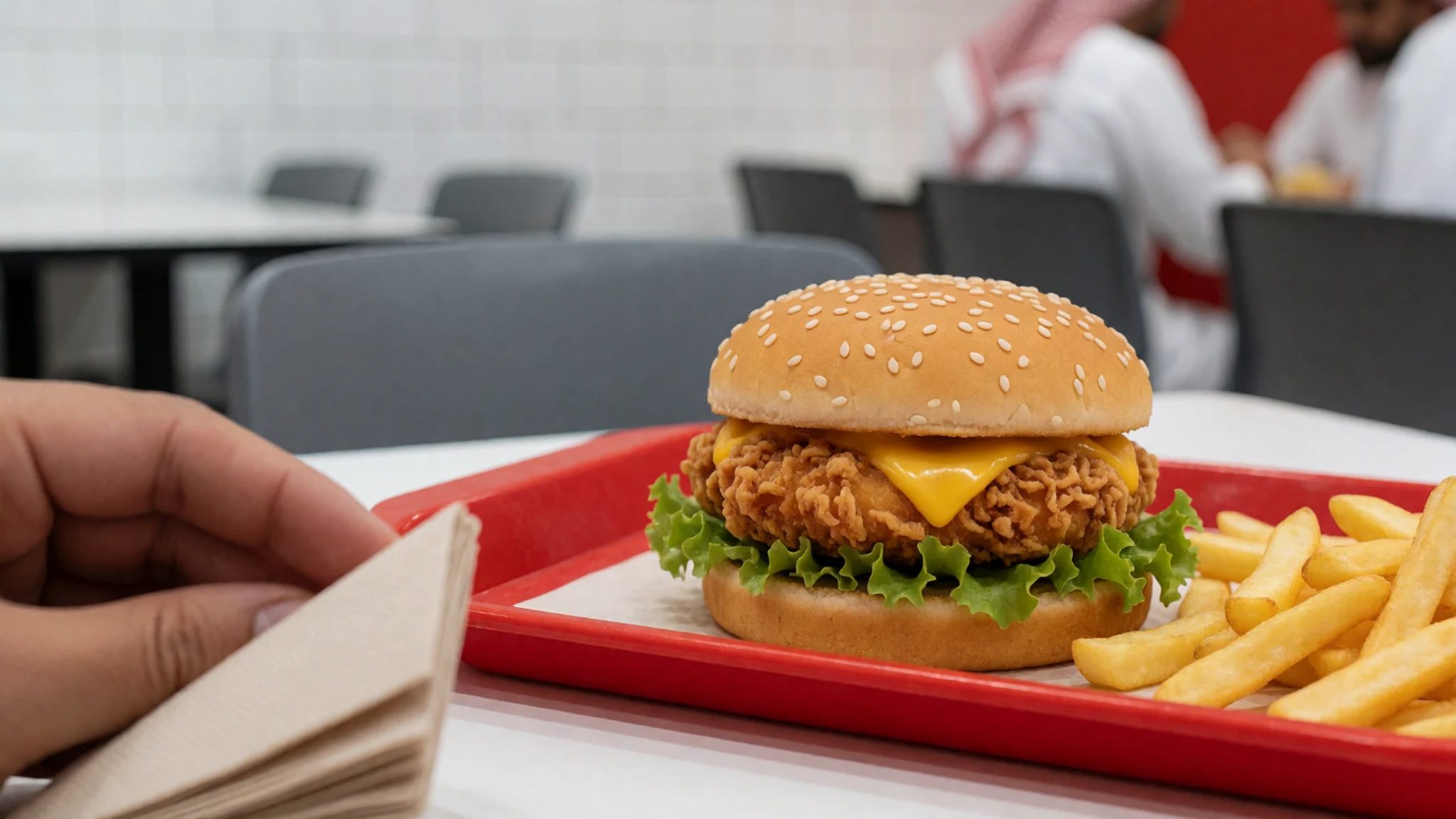
- Harees — Restaurants serving Qatari food in Doha, especially in Ramadan
Wheat and meat cooked slowly until the mixture turns into a soft, savoury porridge, often finished with a little ghee. It is closely tied to Ramadan evenings and festive meals, so it appears most reliably during those times of year.
- Balaleet — Qatari breakfast cafés in Doha
A breakfast of sweet vermicelli scented with cardamom and saffron, topped with a thin savoury omelette. The mix of sweet and salty surprises first-timers and suits a long morning drive west towards the coast. - Karak chai — Small tea stalls and cafés on the road out of Doha
Strong black tea boiled with milk, sugar and cardamom until it turns thick and sweet. It is the usual fuel for road trips across the peninsula, drunk from small paper cups, and the easiest local taste to find on the way. - Luqaimat — Café stalls in Doha's souq areas and festival markets
Small fried dough dumplings, crisp outside and soft within, drizzled with date syrup or honey. They are a common sweet at gatherings and festivals, and a good reward after a hot morning among the rocks.
Plan it
Best time. November to March, when days are mild and the sea breeze makes beaches and rock-country walks comfortable. Summer is extremely hot and humid and best avoided.
How long. 1
Getting there. Fly into Hamad International Airport in Doha, then drive west on Dukhan Highway, about an hour by car. Buses on routes 104 and 104A run from Doha's Al Ghanim Bus Station and take a little over two hours; timetables differ between Saturday–Wednesday, Thursday and Friday, so confirm with Mowasalat. Entering the town needs a QatarEnergy gate pass, while the beaches and Zekreet lie outside it.
Budget. mid
Tips
- Arrange a QatarEnergy gate pass through a host before going if you want to enter the town itself
- There is nowhere to stay in Dukhan, so base yourself in Doha, or camp south of the town towards Umm Bab or near Zekreet
- Carry water, snacks and sun protection, as services are sparse beyond the shopping centre
- Hire a car if you can, since bus timetables are limited and service changes happen
- Check the official site, http://www.dukhan.com.qa/, for current access information
Etiquette
- Dress modestly away from the beach, with shoulders and knees covered
- Do not photograph oil installations, pipelines or the gate area
- Ask before photographing people, and avoid eating or drinking in public in daylight during Ramadan
Nearby
Sources
- Wikidata Q3296633 (CC0)
- Wikipedia: Dukhan (rev 1379606018) (CC BY-SA 4.0)
- Wikivoyage: Dukhan (rev 3701884) (CC BY-SA 4.0)
- Welcome to Dukhan sign on Zekreet Bridge (bobbyqat @ Mapillary.com) (CC BY-SA 4.0)
- View of Dukhan Central Mosque from Dukhan Western Road (kaart_2 @ Mapillary.com) (CC BY-SA 4.0)
- Dukhan pipelines (Douglas Perkins) (CC BY 2.5)
- Shopping center in Dukhan, Qatar (Vincent van Zeijst) (CC BY 3.0)
- Zekreet (Steven Byles) (CC BY-SA 2.0)
- Nomadic herding of camels in Dukhan, Qatar (James Davenport) (CC BY 2.5)
- Dukhan Mosque (Nick Leonard) (CC BY-SA 2.0)
- Rainbow in Dukhan (Alex Sergeev) (CC BY 3.0)


Wildlife
- Indo-pacific bottlenose dolphin (animal)
The Indo-Pacific bottlenose dolphin is a sleek, dark-grey swimmer with a pale belly, a bit like a friendly submarine with a smile. In Dukhan, look to Dolphin Reef, a man-made dive site known for drawing wild dolphins. Timing is not recorded here, so ask your guide when they visit. Watch from a respectful distance, keep voices and engines low, and go with a guide who knows the site. Never feed them; wild dolphins should stay wild.