Katara Cultural Village
Katara Cultural Village, Qatar
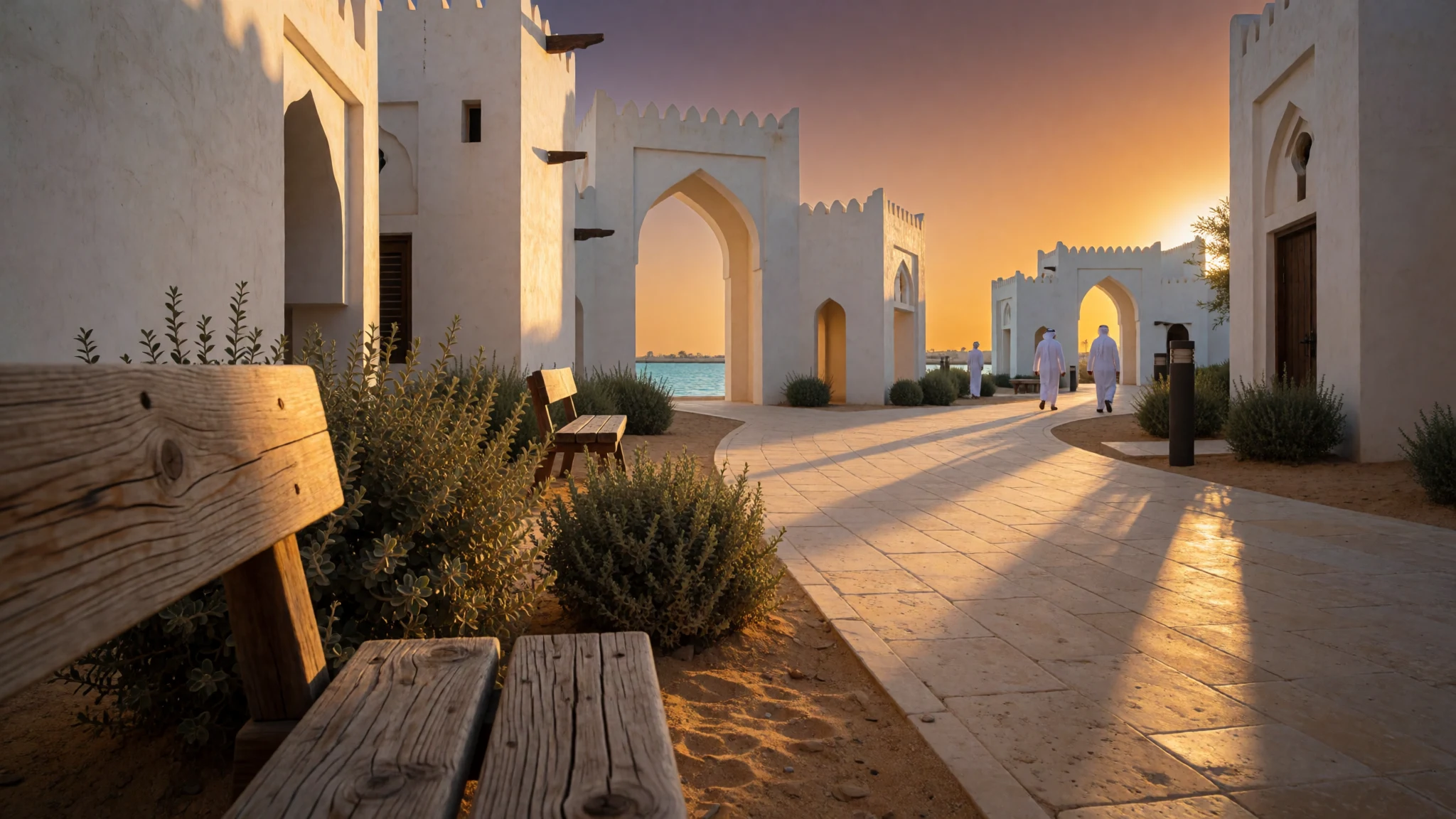
Katara Cultural Village is a walkable Doha waterfront of theatres, galleries, a mosque and cafés, best on a cool evening.
The place
Katara Cultural Village is a waterfront quarter in Doha, Qatar, built to hold theatres, galleries, workshops, eateries and open plazas in one walkable site. It lies on the Gulf-facing coast, between the glass towers of West Bay and the island development known as the Pearl. The architecture is traditional in flavour: low sand-coloured buildings, narrow lanes, small courtyards and decorative pigeon towers, all arranged so that shade and sea breeze matter. In practice it is a modern creation, dating from 2010, and the old-town look is a design choice rather than a survival. That honesty helps a visit. Katara is not a historic district; it is a cultural campus where Qatar presents its own arts, crafts and festivals to residents and visitors, and where families come out in the evening to stroll. The site mixes the serious and the casual. An amphitheatre and an opera house share ground with art studios, a mosque, a beach and a row of cafés. Crowds depend on the calendar. Weekday mornings are quiet, while winter evenings, weekends and festival periods fill the plazas. Summer is another matter, with heat and humidity pushing people indoors or into the late hours. The official website, http://www.katara.net/en/, lists current exhibitions and events, and it is worth checking before going because programming changes. For anyone staying in Doha, Katara works as an easy half-day, and it pairs naturally with a seafront walk.
Its story
Katara Cultural Village grew out of a decision to give Doha a dedicated home for the arts at a time when the city was building quickly in every direction. The site opened to the public in 2010, and its first big moment came with the Doha Tribeca Film Festival, a fitting debut for a place meant to host screenings, performances and exhibitions. From the start the idea was to gather several art forms in one compound rather than scatter them across the city: theatre, music, painting, photography, poetry and craft, each with its own building or studio. The look borrowed from the region's older towns, with courtyards, lanes and towers for pigeons, though everything was built new. Over the years the village became a regular venue for annual events, among them gatherings devoted to traditional dhow sailing, which tie the place back to Qatar's maritime past of pearling and fishing. The shoreline setting helps that story along, since boats and sea air are part of the scenery. Katara also reflects a wider pattern in the Gulf, where states use purpose-built districts to present heritage and to host international guests. Whether that makes it authentic is a fair question. Many visitors find it more useful as a stage for living culture, with real musicians, artists and craftspeople at work, than as a museum of the past. Founded in 2010, it is recent enough that the village is still finding its habits.
What to see
- Katara Mosque — Central Katara
Katara Mosque stands near the middle of the village and is easy to spot from the plazas. Its patterned tilework and slender minaret make it a calm contrast to the arts venues around it. It is a working place of worship, so admire it respectfully and follow the signs and staff directions.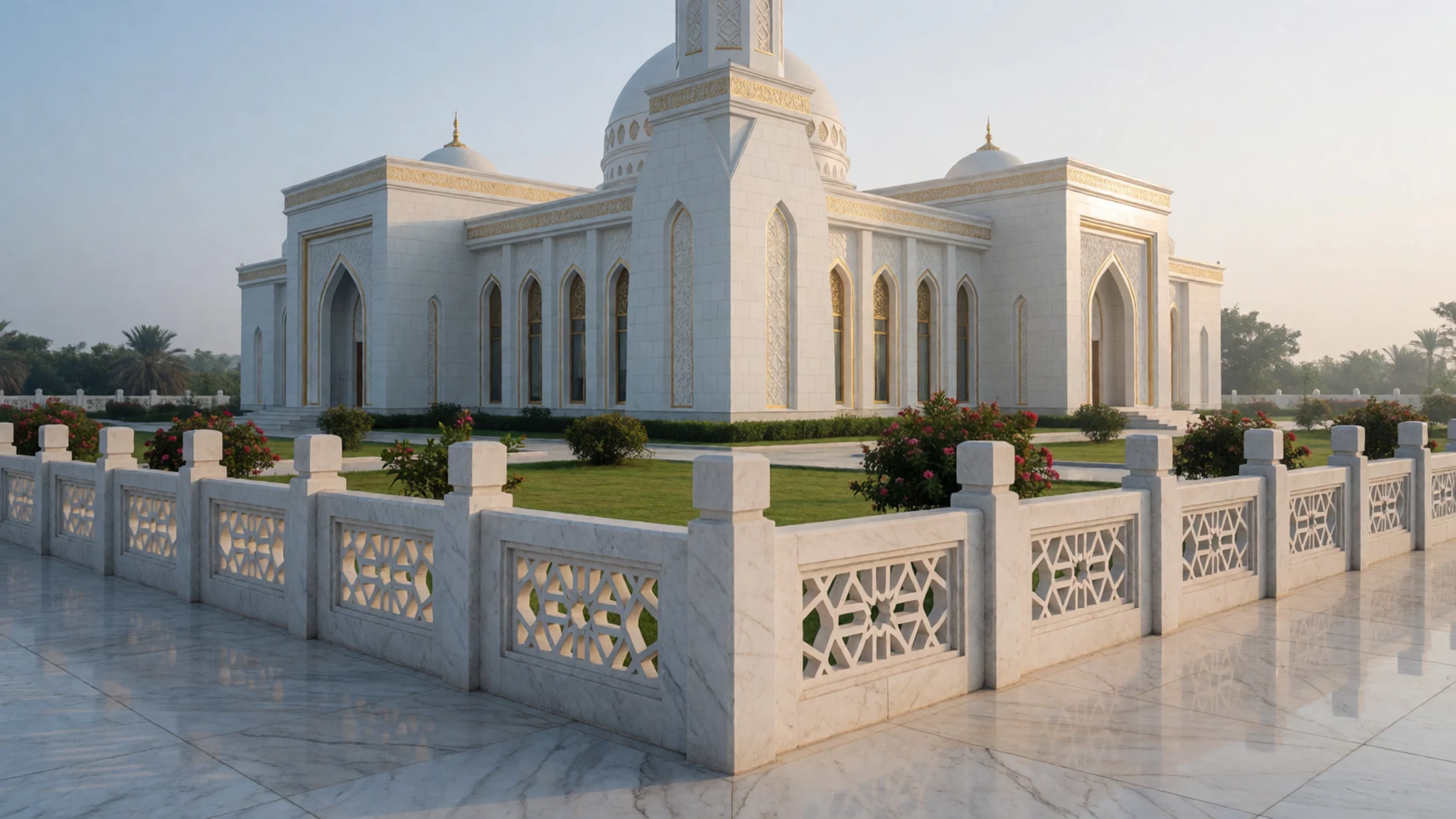
- The main plaza and amphitheatre — Central Katara
The plaza at Katara Cultural Village is the village's open living room, ringed by arcades, cafés and shaded walkways. Nearby, the amphitheatre hosts concerts and performances, mostly in cooler months. Even without a ticket, the evening atmosphere, with families, buskers and sea breeze, is the main draw.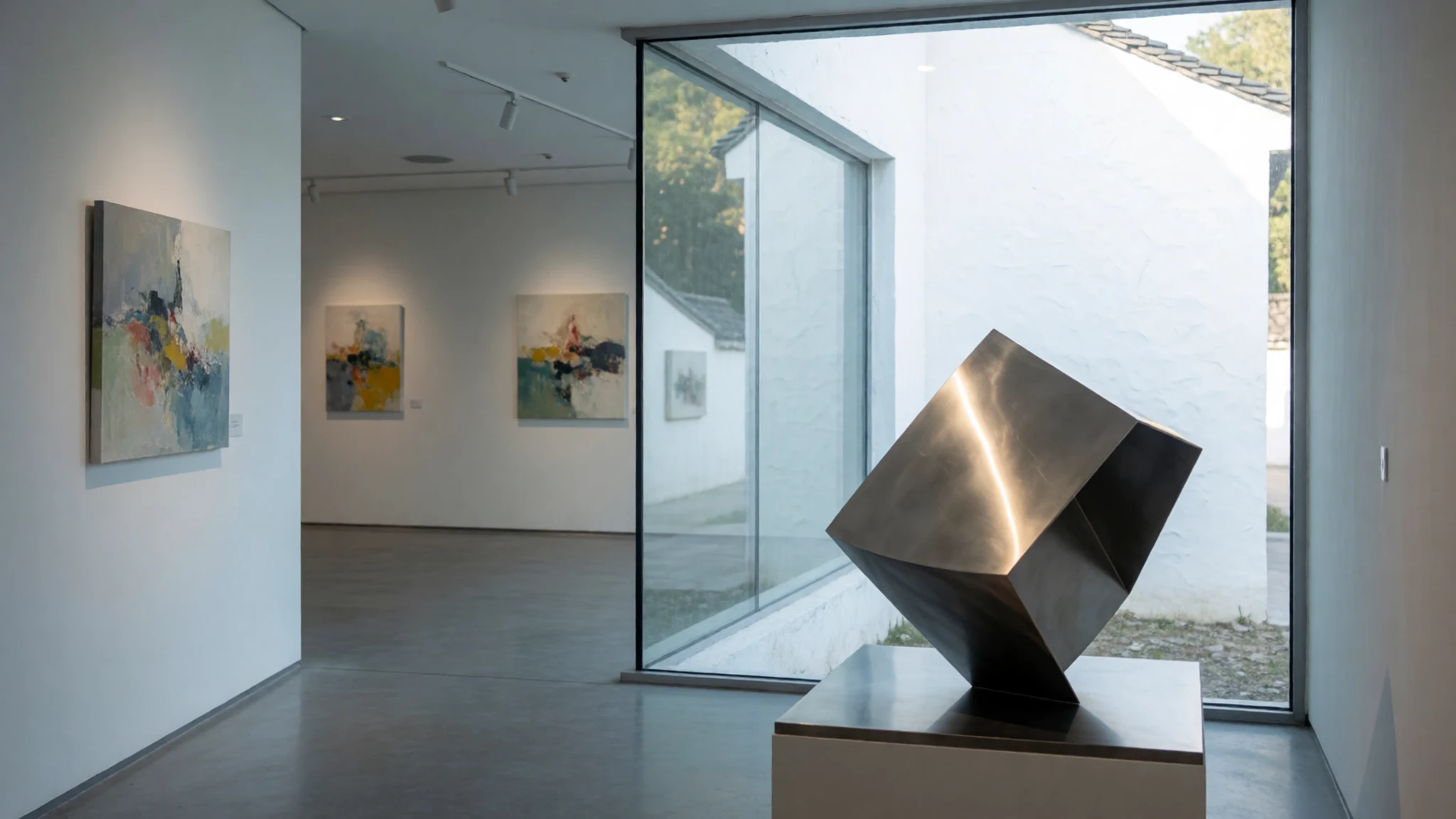
- Visual Art Centre — Katara art quarter
The Visual Art Centre in Katara Cultural Village shows exhibitions of painting, photography and mixed media, often by Qatari and regional artists. Displays change, so check the official site before going. It suits a cool, quiet hour away from the heat, and a short visit is enough for most people.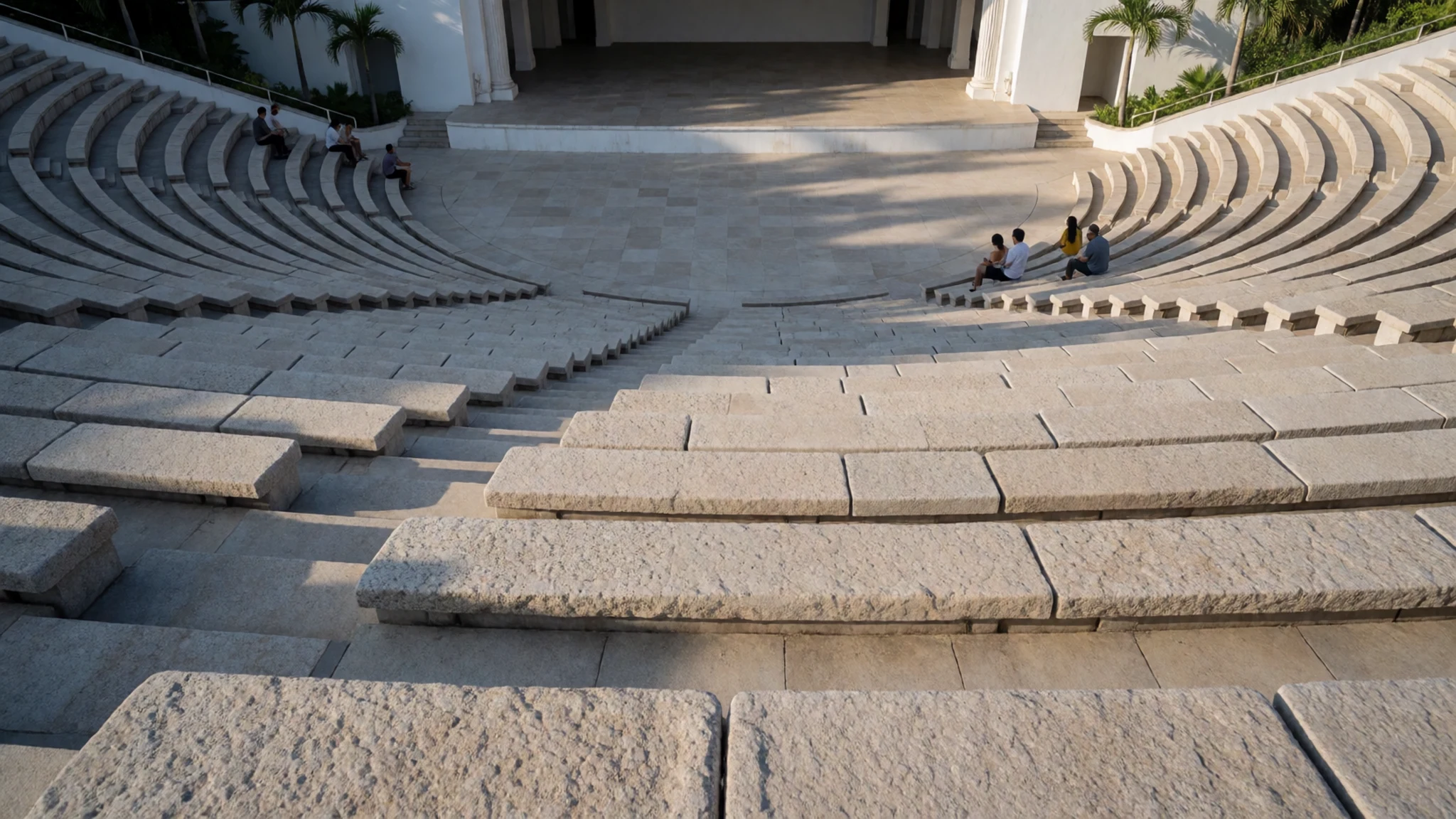
- Dhow harbour — Katara waterfront
Traditional wooden dhows moor along the village waterfront, a reminder of Qatar's seafaring past. The harbour is liveliest during dhow-themed events, when crews and sailing demonstrations draw crowds. On ordinary days it is a pleasant place to watch boats and the Gulf light change toward sunset.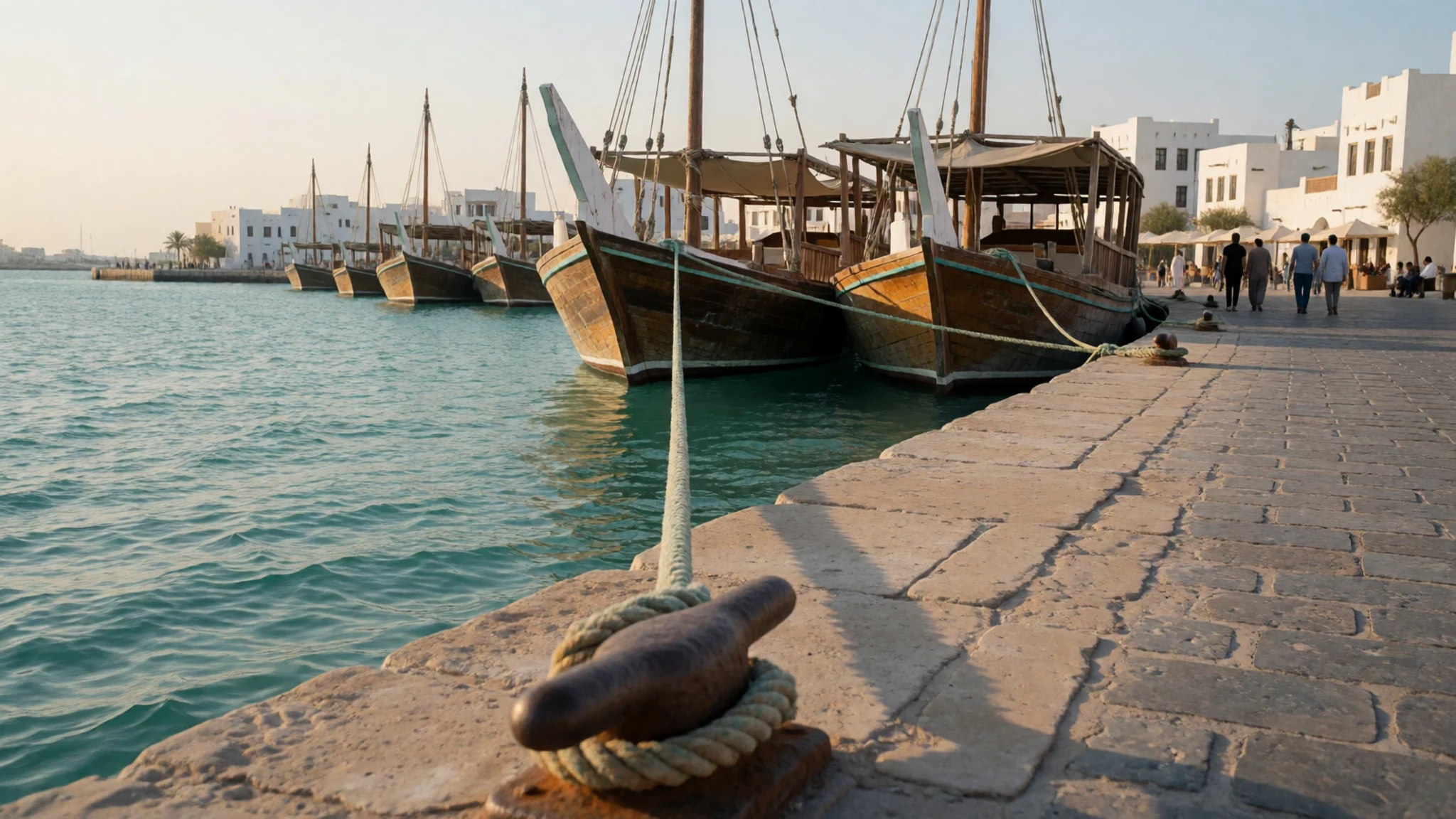
- Park paths and water channel — Katara park area
Beyond the built-up core, Katara Cultural Village has landscaped paths, lawns and a water channel running between buildings. It is the gentlest part of the site, good for an unhurried walk in the cooler months. Shade is limited at midday, so go early or late.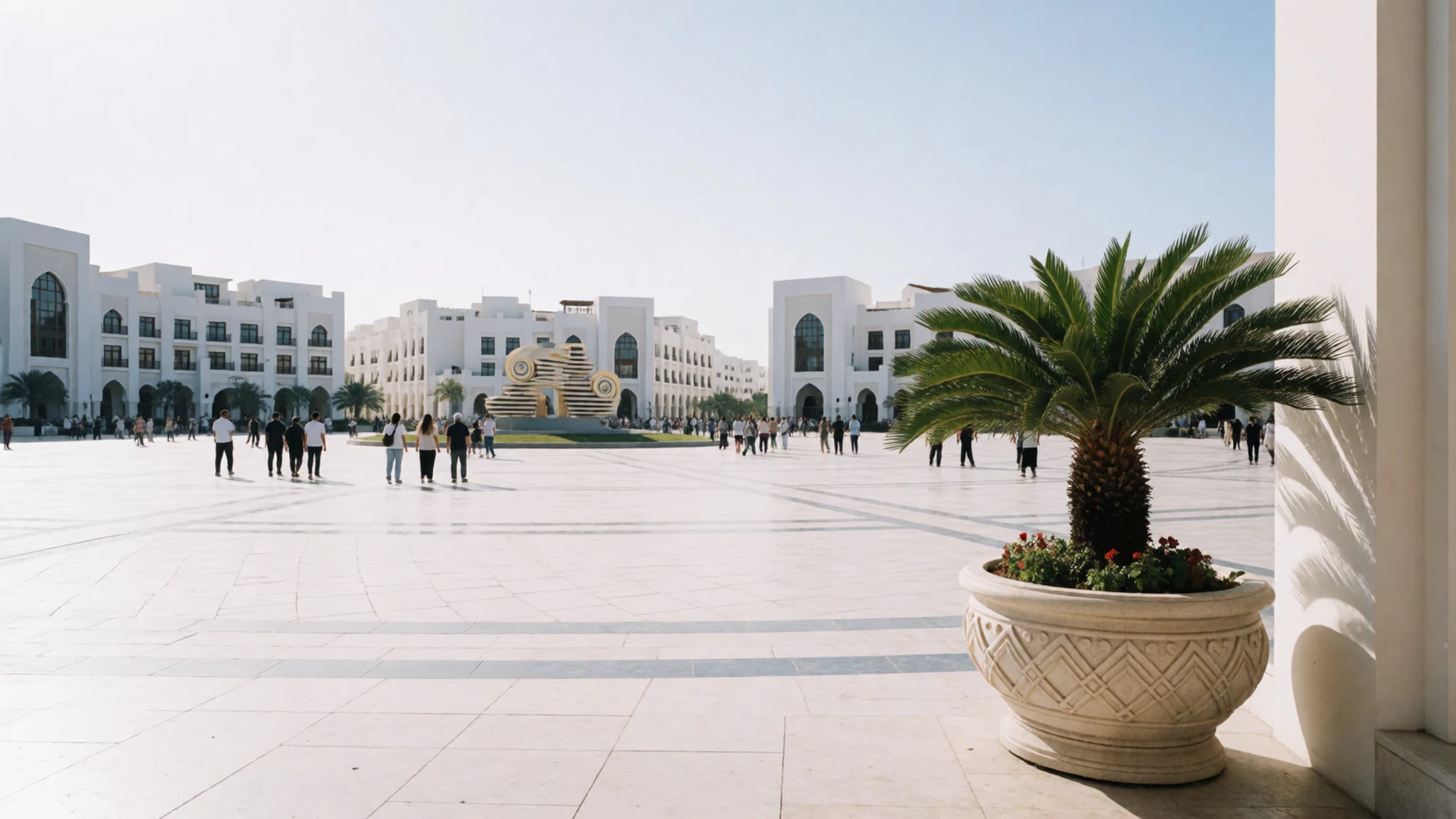
Culture
Katara Cultural Village is a good place to meet everyday Qatari and wider Arab culture in a relaxed setting. Qatar is a Muslim country, Arabic is the main language, and English is widely understood wherever visitors are served. Hospitality matters: coffee and dates are often offered as a welcome, and accepting with the right hand is polite. The village is used by residents of many nationalities, so evenings feel mixed and family-oriented, with parents, children and groups of friends sharing the plazas. Cultural programming leans on poetry, calligraphy, music, theatre and maritime heritage, and events often follow the Islamic calendar. During Ramadan the mood changes: daytime eating and drinking in public is discouraged, and the evenings become the busy hours. The mosque on site is a working place of worship as well as a landmark, and prayer times shape the rhythm of the day, with a call to prayer carrying across the plaza. Public displays of affection sit poorly with the family atmosphere, and so does loud behaviour. Poetry readings and music nights are often given in Arabic, but the atmosphere carries even when the words do not. Ask before photographing people, especially women and families, and if you visit the mosque, cover shoulders and knees, remove your shoes at the door and follow staff directions.
What to wear
Katara Cultural Village shows Qatari dress in everyday use as much as on stage. Traditionally, men wear the thobe, a long white robe usually of cotton, with a ghutra headcloth held in place by a black cord called the agal. Women wear the abaya, a loose outer robe, usually black, with a shayla scarf over the hair. Fabrics are chosen for heat: light cotton for robes, heavier wool or embroidered cloth for formal and festive wear. National dress is worn daily by many Qataris, and especially at work, at prayer and during celebrations. Alongside it, people at Katara wear whatever suits a warm climate: linen shirts, long dresses, jeans in air-conditioned spaces, and sportswear for walks along the waterfront. Abayas now come in many cuts and colours, often worn over modern clothes. A visitor should dress modestly: shoulders and knees covered for both men and women, in loose, breathable cotton or linen. Women need a light scarf to hand for the mosque. Air-conditioned venues can be cold, so carry a thin layer. Comfortable closed shoes or sandals suit the paved plazas and park paths, and a hat and sunglasses help at midday, especially outside the cooler months.
What to eat
- Machboos — Gulf-cuisine restaurants and family eateries in and around Katara
Machboos is a spiced rice dish cooked with chicken, lamb or fish, scented with dried lime and warm spices. It is a staple of Gulf home cooking and a good first order when eating Qatari food.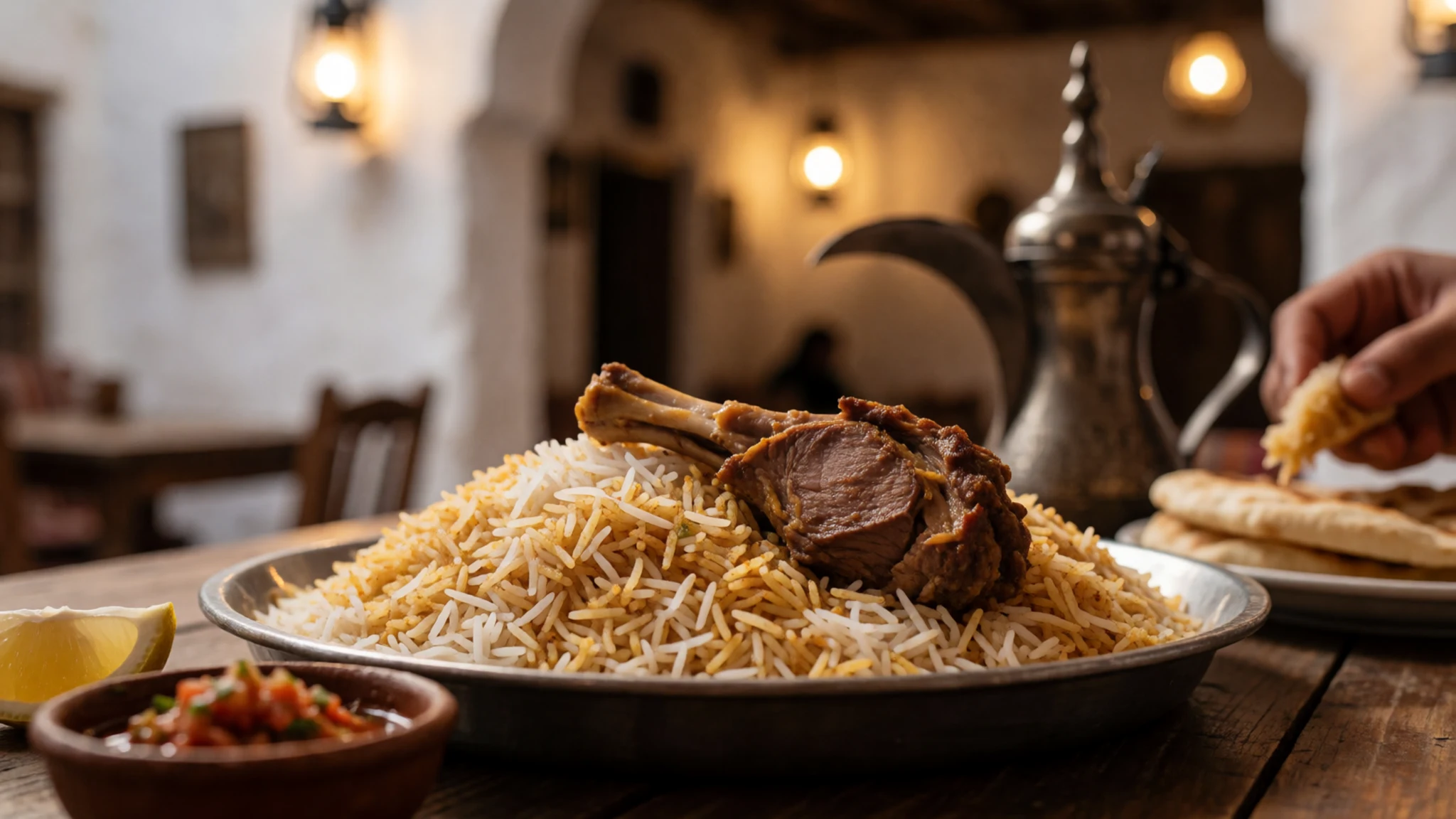
- Harees — Traditional Qatari eateries, especially during Ramadan
Harees is a slow-cooked porridge of wheat and meat, beaten until soft and smooth. It is closely linked to Ramadan and festive meals, so it is easiest to find in the evenings during that season.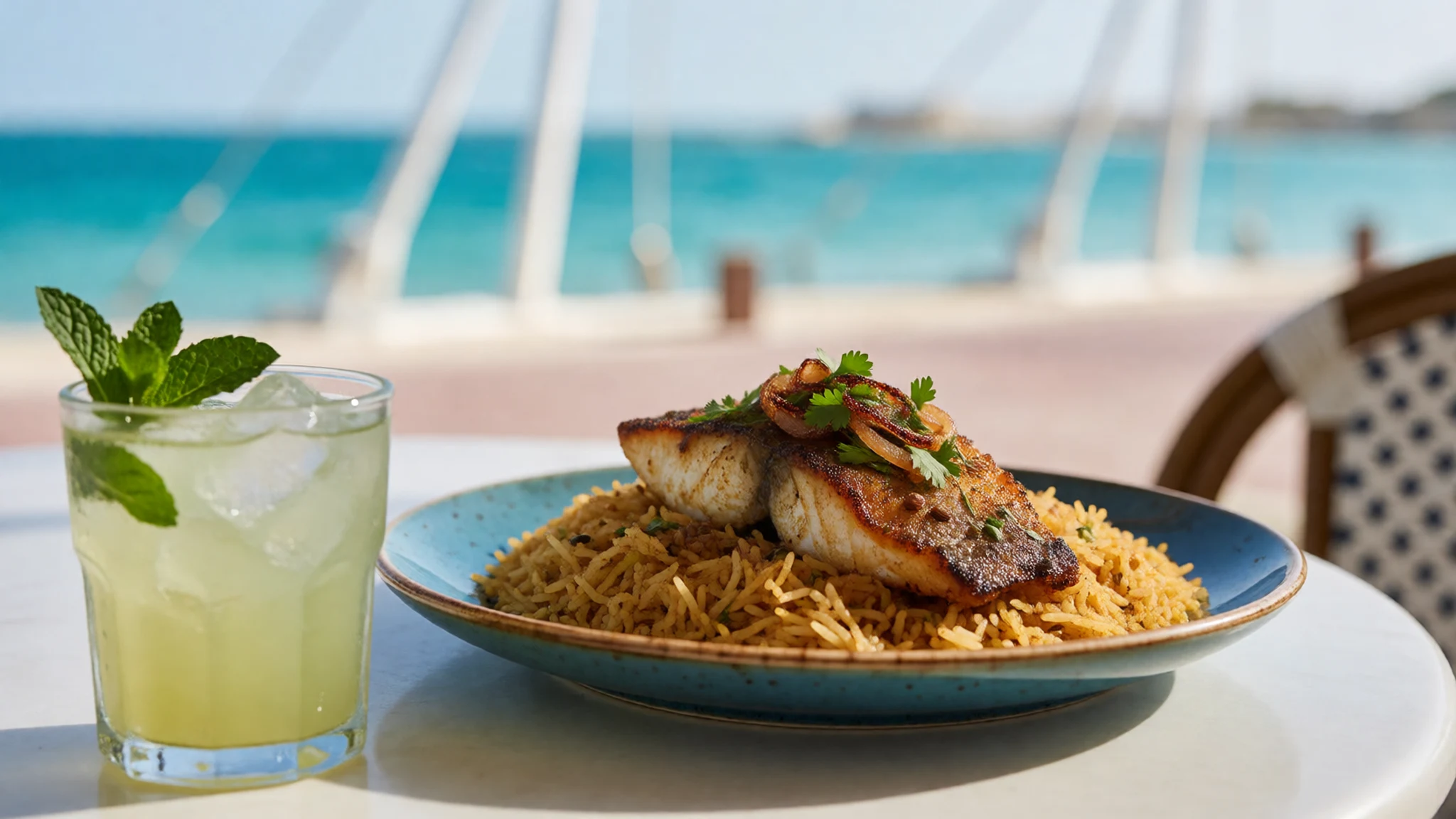
- Luqaimat — Dessert stalls and cafés at Katara, and festival food stands
Luqaimat are small fried dough balls, crisp outside and soft within, drizzled with date syrup. They are a popular sweet at festivals and make an easy snack to share while walking the plazas. - Karak chai — Small tea kiosks and cafés across Doha
Karak is strong black tea simmered with milk and cardamom, sweet and warming. It is an everyday drink across Qatar and a cheap, easy way to join local habits in the evening. - Balaleet — Gulf-style breakfast cafés in Doha
Balaleet is a breakfast dish of sweet vermicelli scented with saffron and cardamom, topped with a thin omelette. The mix of sweet and savoury surprises first-timers and is worth trying once.
Plan it
Best time. November to March, when Doha is mild enough to walk outside in the evening; summer is very hot and humid, so most people then move indoors or go late.
How long. 1
Getting there. Fly to Hamad International Airport, then take a taxi or ride-hailing car along the coast to Katara. The Doha Metro also serves the area, so check the current network map.
Budget. mid
Tips
- Go in the late afternoon and stay for sunset, when the plazas are cooler and livelier
- Check the official site at http://www.katara.net/en/ for current exhibitions, festivals and opening arrangements
- Carry a card and a little cash, and bring water for the open-air stretches
- Weekends and festival evenings are busy, so arrive early or visit midweek for quieter plazas
Etiquette
- Dress modestly, with shoulders and knees covered
- Ask before photographing people
- Follow staff directions at the mosque and during prayer times
Nearby
Sources
- Wikidata Q6375126 (CC0)
- Wikipedia: Katara Cultural Village (rev 1381876754) (CC BY-SA 4.0)
- Wikivoyage: Doha (CC BY-SA 4.0)
- Katara village, Davide Mauro (CC BY-SA 4.0)
- Katara Mosque in Doha, Qatar, Chainwit. (CC BY-SA 4.0)
- Plaza of Katara Cultural Village, Doha, Qatar, Zairon (CC BY 4.0)
- Walking path in the park area of Katara cultural village, km2bp @ Mapillary.com (CC BY-SA 4.0)
- Visual Art Centre in Katara Cultural Village, errorval1 @ Flickr (CC BY 2.5)
- Teamwork at Dhow Show, Tmqtar (CC BY-SA 4.0)
- A scale model of Katara Cultural Village, Cancillería del Ecuador (CC BY-SA 2.0)
- Overview of buildings and a water stream in Katara cultural village, km2bp @ Mapillary.com (CC BY-SA 4.0)


