Zekreet
Zekreet, Qatar
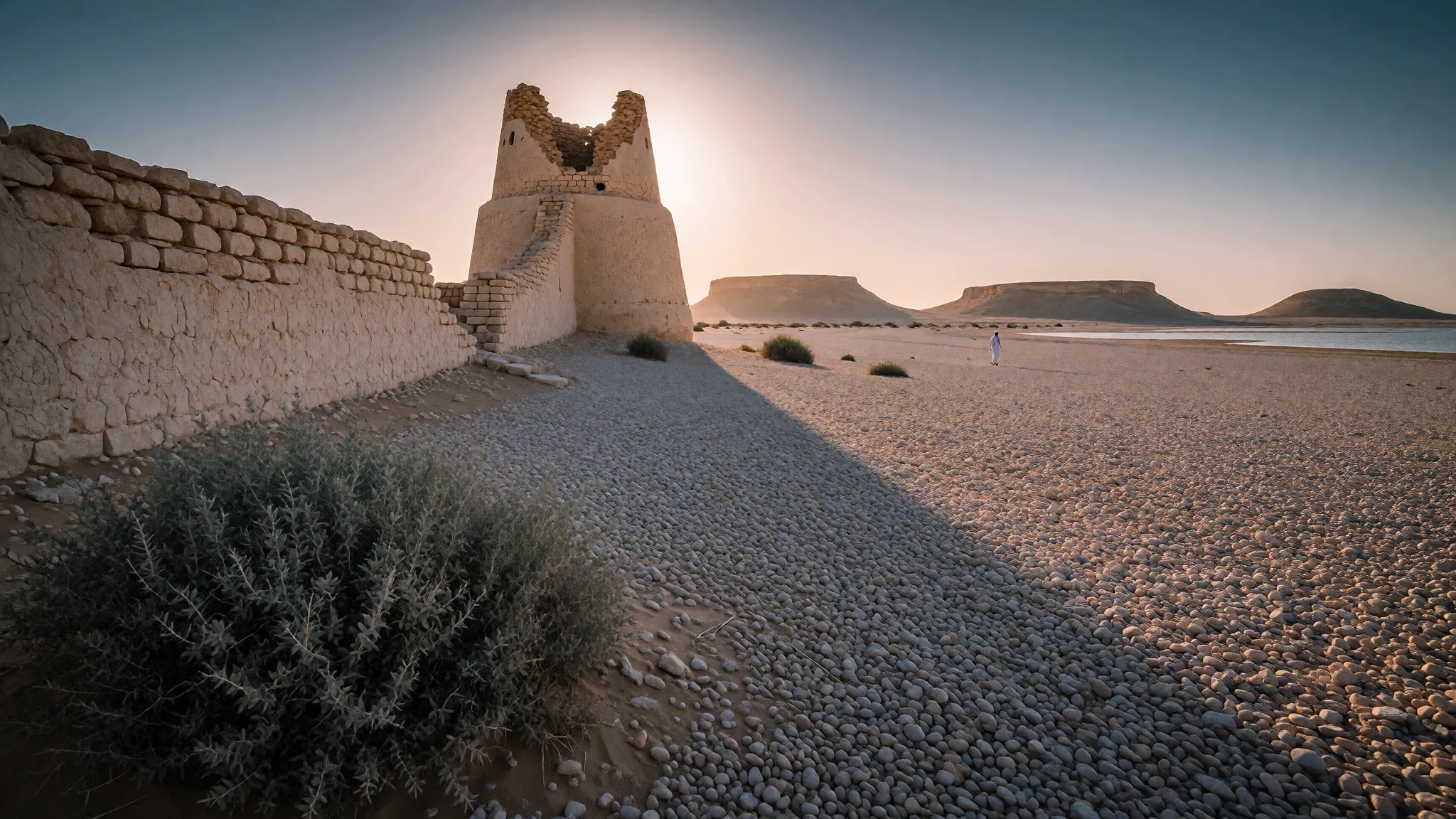
Zekreet is a quiet half-day beyond Doha, where a ruined fort, eroded limestone mesas and an empty bay show a Qatar older than its skyline.
The place
Zekreet is a village on Qatar's north-western coast, about 80 km from Doha and not far from Dukhan, the nearest town of any size. It sits near the base of the Zekreet Peninsula, a finger of land pushing into the Gulf, with Ras Abrouq at its far northern tip. West of the village lies the Bay of Zekreet, a half-moon of shallow water that was once joined to the long salt flat known as the Dukhan Sabkha. A small headland, Ras Zekreet, juts into the bay. The land looks nothing like Doha's glass towers. Wind and rare rain have worn the limestone into mesas, low foothills and flat-topped outcrops, with pale gravel plains between them. The colour shifts through the day: bleached at noon, amber and rose near sunrise and sunset. The village itself is small and low-built, a scatter of houses that grew up after oil work began in the 1940s. The ruined fort stands just north of it, and for most visitors that is the main reason to come. Beyond the fort the peninsula is open desert with very few services, so this is a place for a slow half-day of looking rather than a packed itinerary. There is nowhere to stay in the surrounding municipality, which is why nearly everyone visits from Doha, driving west along the Dukhan Highway. Shade is scarce, the wind can be strong, and the real attraction is simply the space and the quiet.
Its story
Zekreet's written history is thin. The settlement was probably lived in during the decades around 1800, when Zubarah and Al Huwaila further north were also growing. The British writer J. G. Lorimer recorded a fort here and credited it to Rahmah ibn Jabir al-Jalahimah, the pirate ruler of Qatar, around 1800. The village may have been given up around 1811, about the time Zubarah was sacked. Little then is known until oil. Crude was found in 1936 at Jebel Dukhan, to the south, and the western side of the Bay of Zekreet became the country's first shallow-water harbour for oil companies, landing equipment, food and fresh water brought from Bahrain. A Bahraini architect, Abdulla bin Ali Al-Mal, planned it. Seawater had been seeping into coastal groundwater, so the modern village was set inland, on the far side of the bay, close to existing wells. The harbour lost its purpose when Mesaieed took over in 1952 and was decommissioned by the 1960s. Families from the Al Muhannadi, Bani Hajer and Na'im tribes arrived for oil work, and in 1957 Zekreet opened the first formal school in its region, for boys, with a girls' school following. Later the government concentrated western services in Dukhan, the schools closed in the 1970s, and by 1990 only about 50 households remained.
What to see
- Zekreet Fort — North of Zekreet village
The ruined fort stands just north of the village, its low walls and rooms built from local stone and now worn soft by wind. Little is firmly documented about who built it. Go at sunrise or late afternoon, when the light picks out the masonry and the heat is bearable.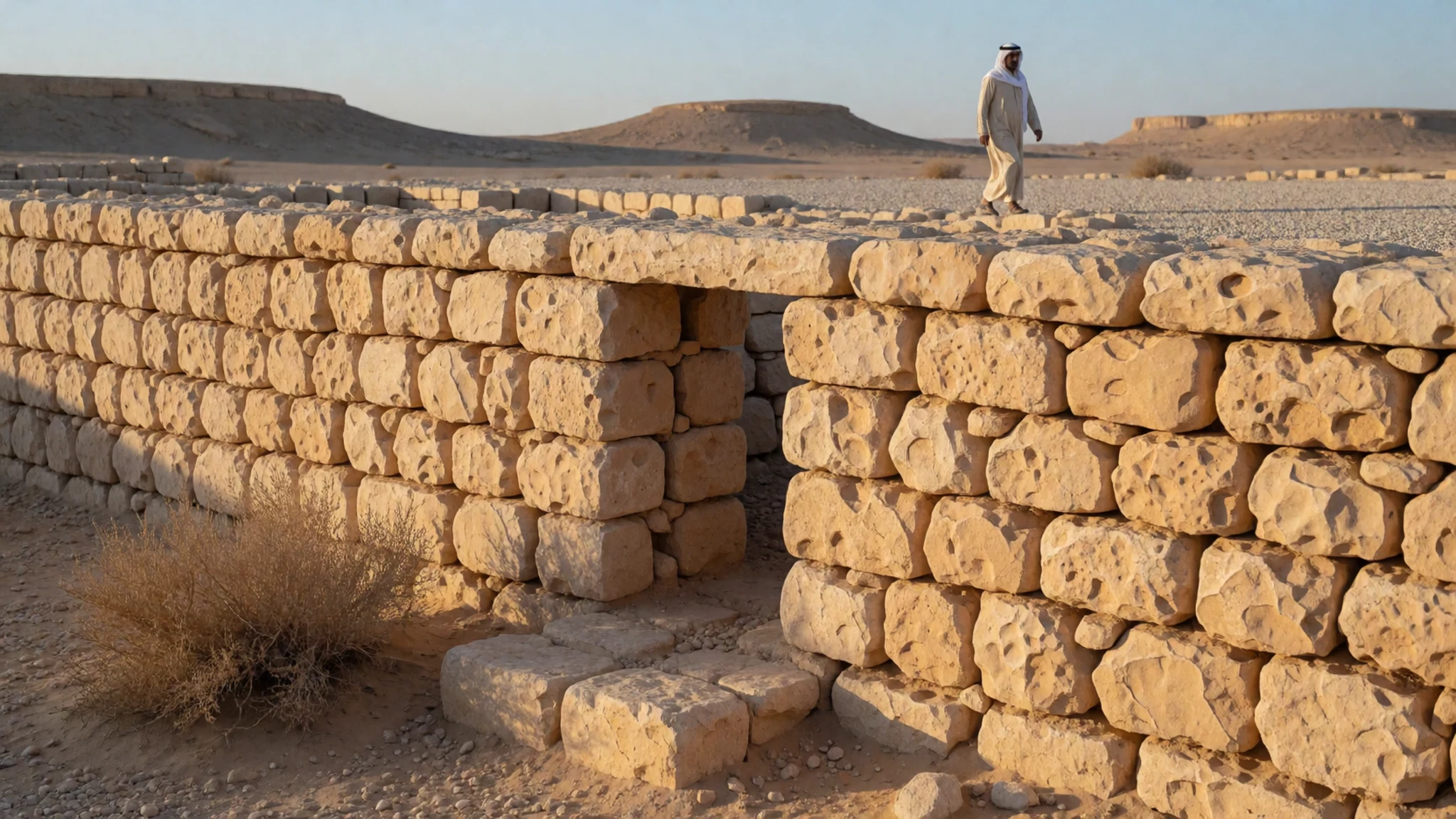
- Bay of Zekreet — West of Zekreet village
West of the village, this half-moon bay was once an arm of the Dukhan Sabkha. The water is shallow and calm, the shoreline flat and quiet. It is a good place to walk, watch birds if the season suits, and see where the old oil harbour once stood on the far side.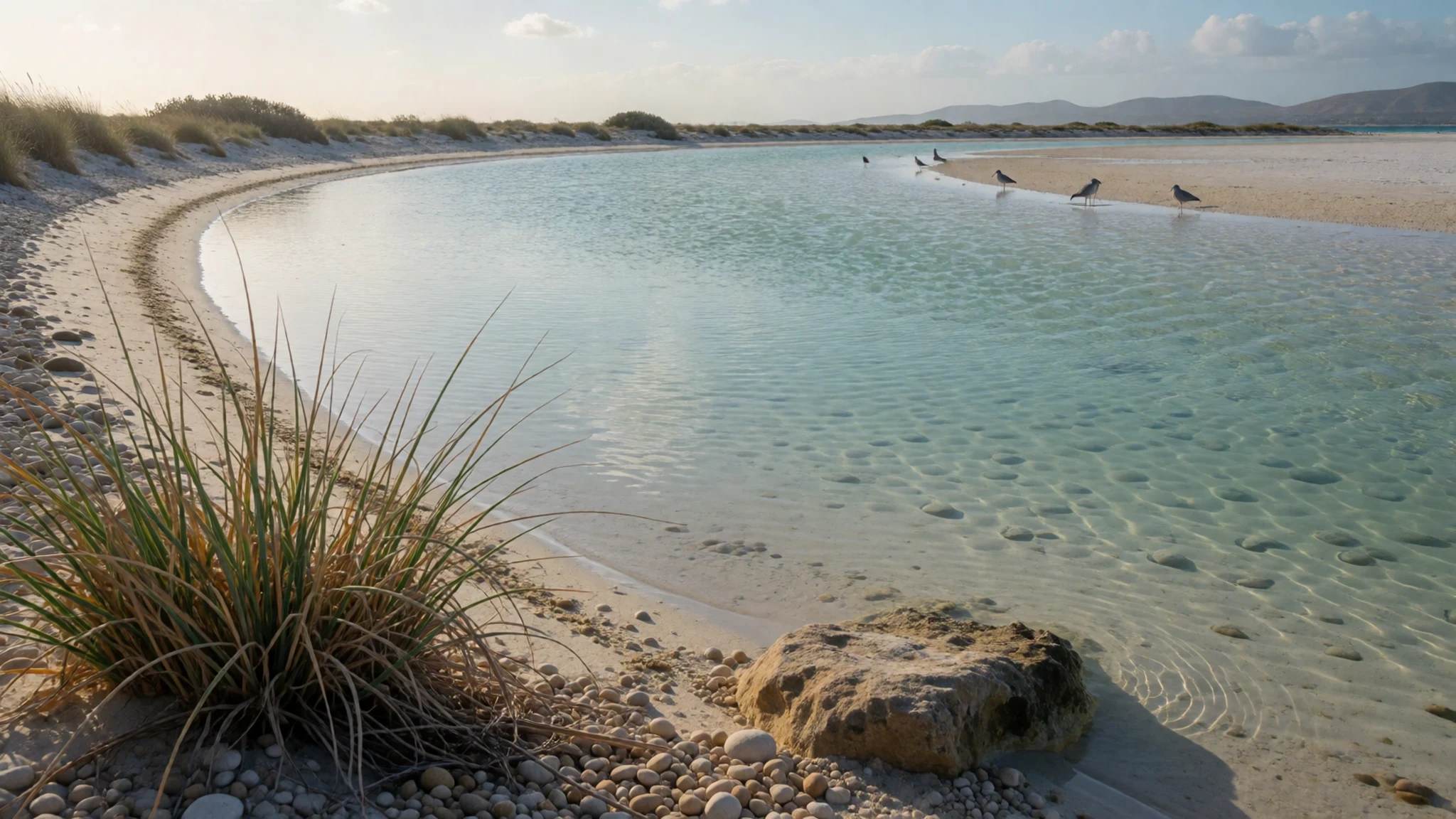
- Ras Abrouq desert and mesas — Northern Zekreet Peninsula
Towards the northern tip of the peninsula, wind has carved limestone into mesas, ridges and flat-topped outcrops. The area is recognised for its cultural and natural heritage. Tracks are rough and unsigned in places, so a high-clearance vehicle, a charged phone and a local guide or experienced driver are sensible.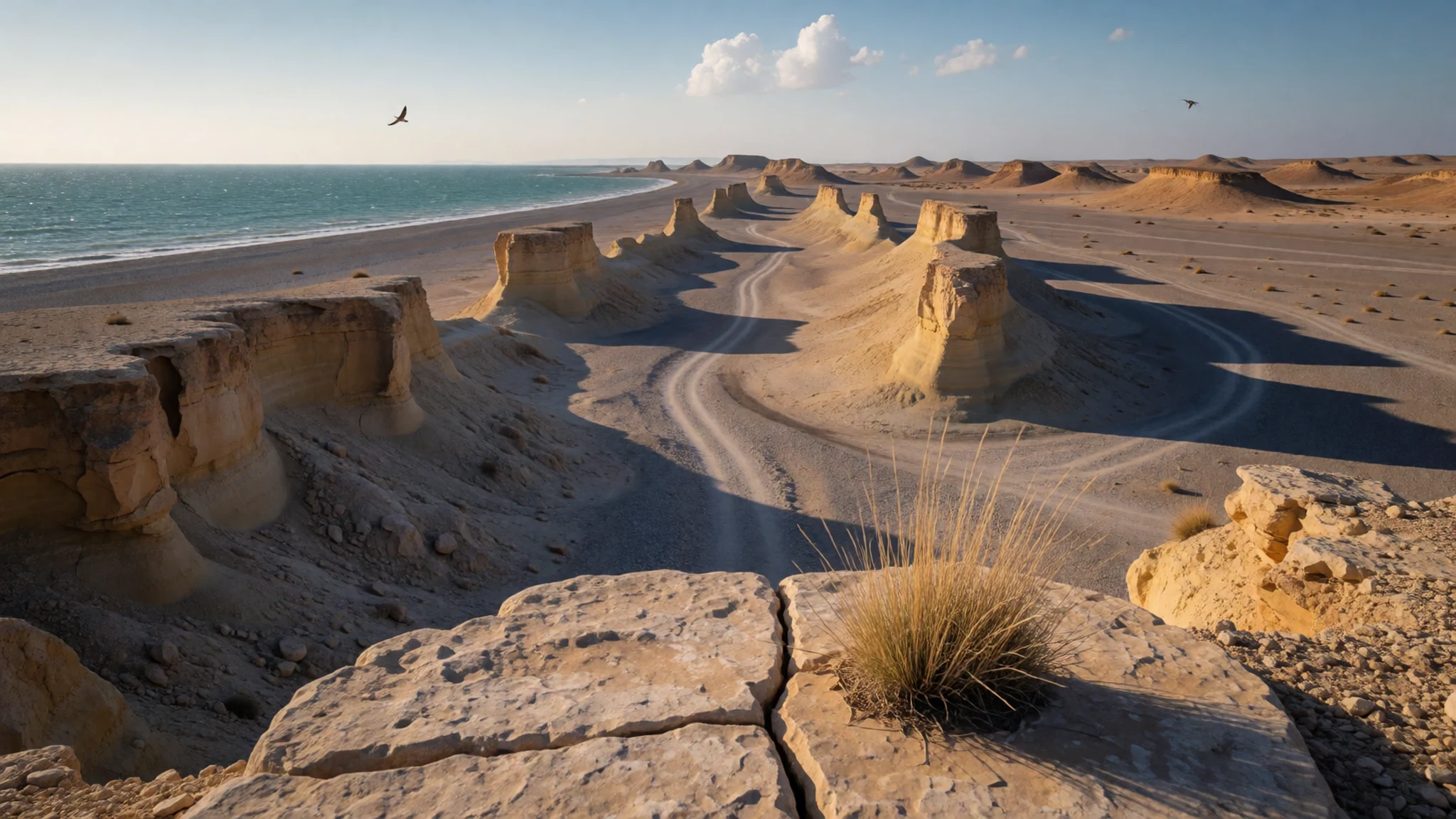
- Old oil harbour site — Western shore of the Bay of Zekreet
On the far side of the bay lies the site of Qatar's first shallow-water oil harbour, where equipment and supplies were landed in the 1930s and 1940s. Little remains to read like a museum, but it explains why a village appeared here at all. View it from across the water.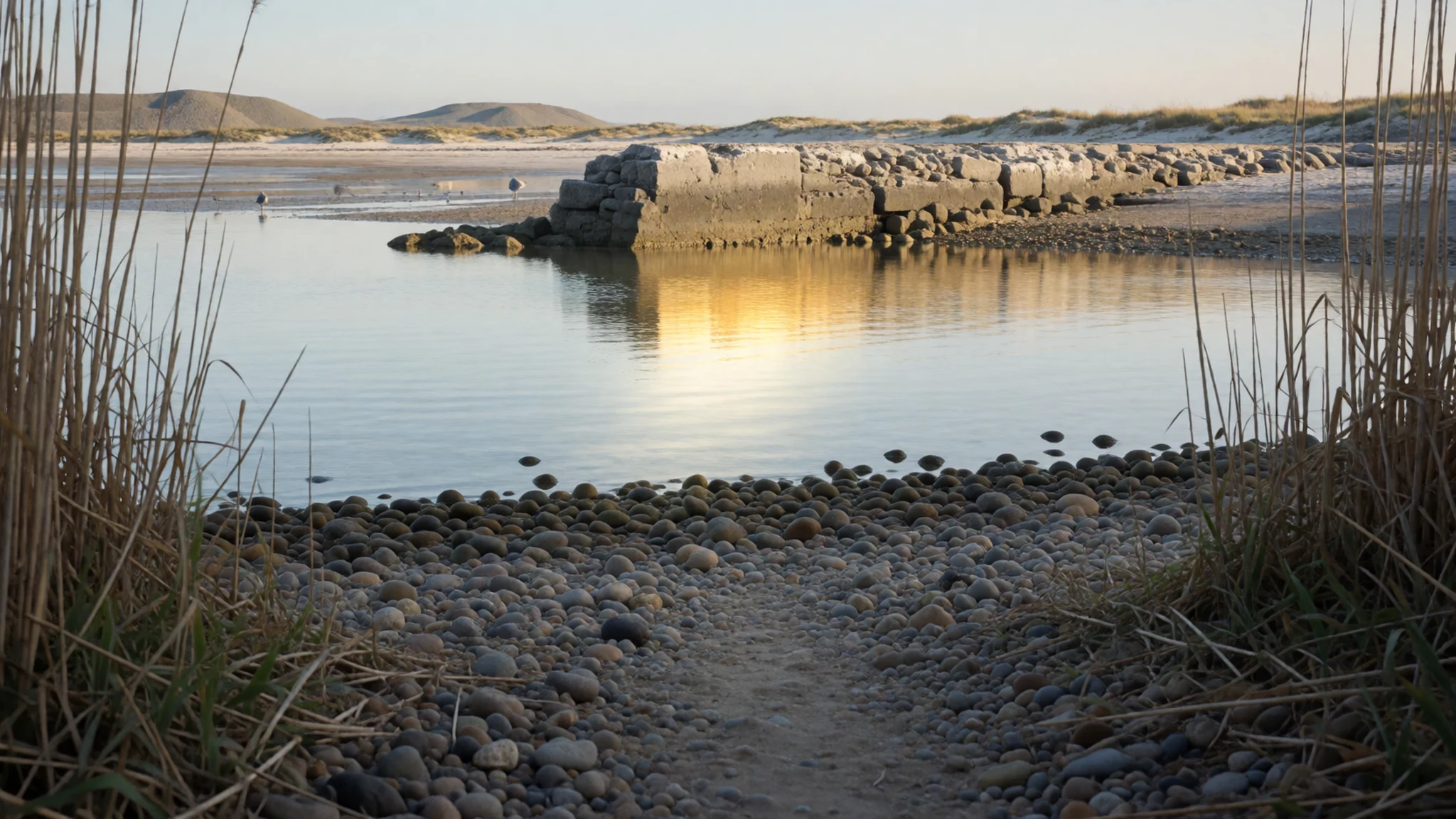
- Camel racing near Al Shahaniyah — Al Shahaniyah, on the road west from Doha
On the way from Doha, a long race track hosts camel races, and the nearby stables can be visited. Racing follows a seasonal calendar, so check before planning around it. Many spectators follow the animals by car along the track, which is part of the spectacle.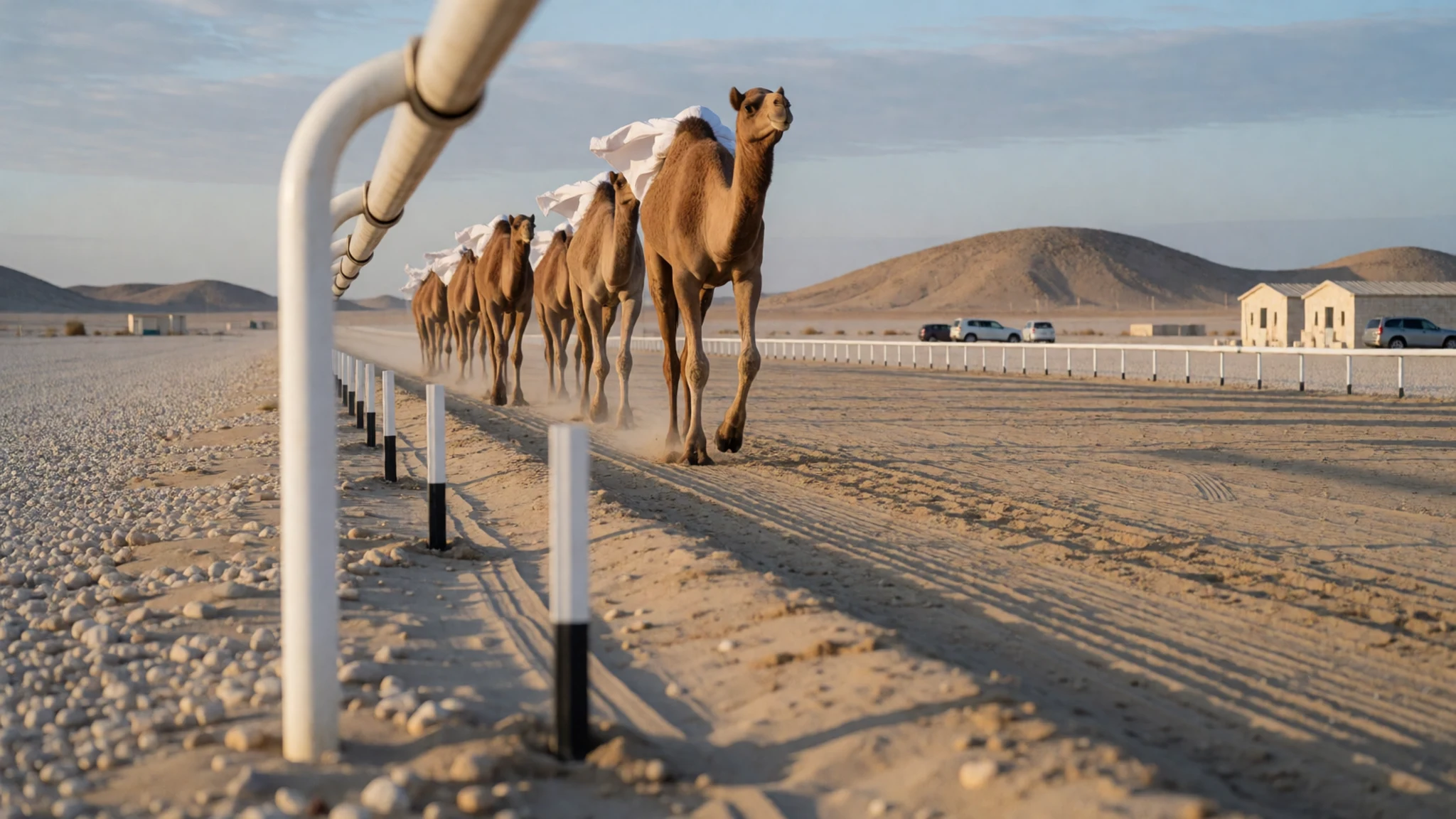
- Arabian Oryx Breeding Centre — Al Shahaniyah area
This sanctuary breeds the Arabian oryx, an antelope once hunted almost to extinction. Visitors are welcome but must arrange a visit through a Doha-based tour company rather than turning up. It pairs well with the fort as part of a longer day out west of the capital.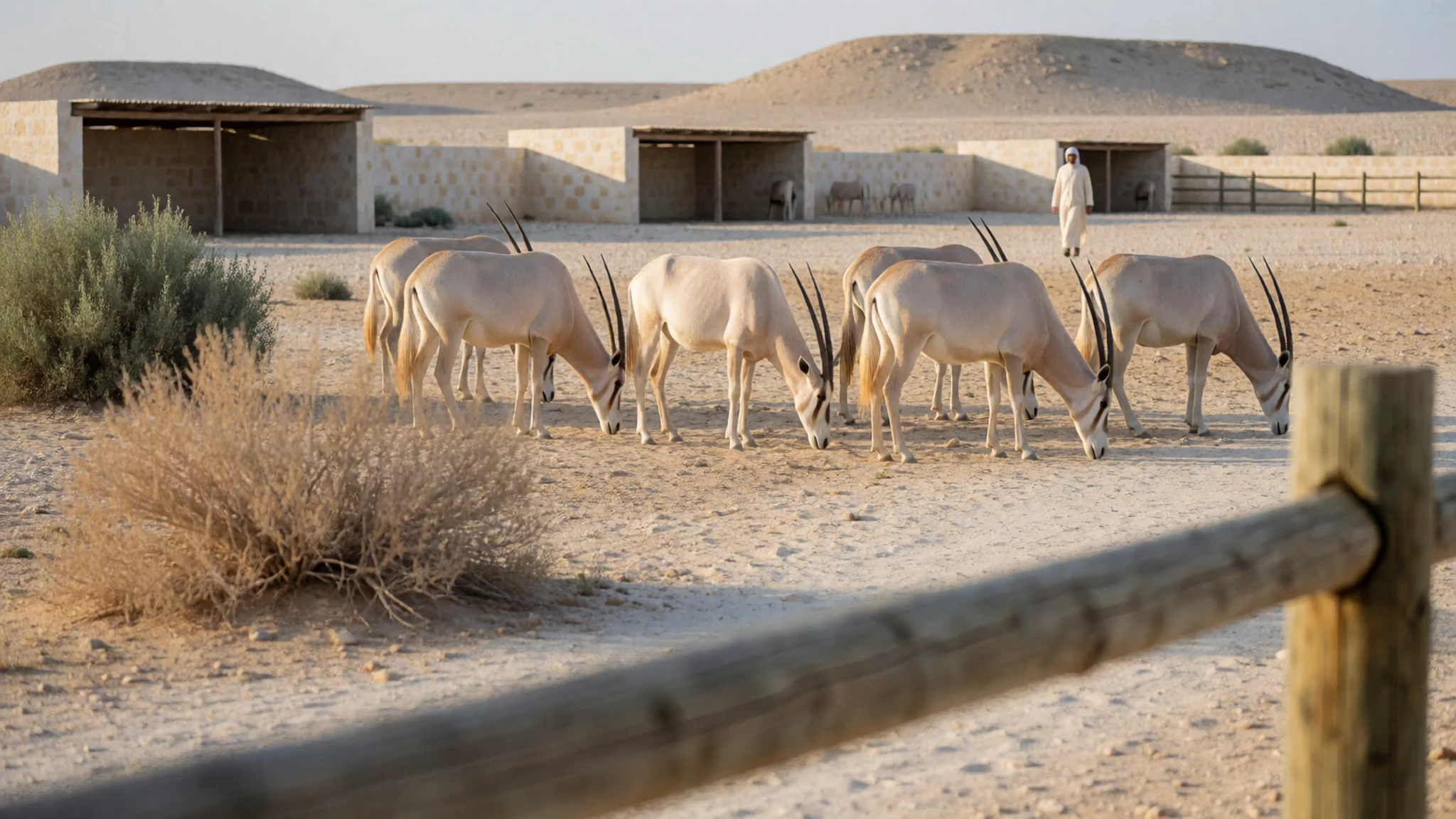
Culture
Zekreet's culture is the culture of Qatar's western desert and coast: tribal families, herding, fishing, pearling in the wider Gulf, and then oil. Before the 1940s people here lived by what the land and water allowed, and wells mattered more than anything. The oil years pulled in workers from other parts of Qatar, which is why family names such as Al Muhannadi, Bani Hajer and Na'im belong to the village's story. Today the place feels more like a memory of that world than a living town, since services moved to Dukhan and many households left. Visitors will find Qatari society conservative, courteous and hospitable. Islam shapes the week, with Friday the main day of prayer, and the calendar shifts during Ramadan, when eating and drinking in public by day is discouraged and opening patterns change. Coffee, dates and tea are offered as gestures of welcome, and accepting at least a small cup is polite. Heritage is taken seriously: ruins, mesas and the peninsula's protected areas are part of a national story about the desert, not just scenery. Qataris also value privacy, so the open emptiness around Zekreet should not be read as permission to wander anywhere, especially near farms, camps and private land. Keep to marked tracks, and take your rubbish with you. Ask permission before photographing local people, especially women, and never photograph families or private homes without it.
What to wear
In Zekreet, as across Qatar, traditional dress is shaped by heat and modesty. Men wear the thobe, a loose ankle-length robe, usually white cotton in the warm months and heavier wool or darker cloth in winter, with a ghutra headcloth held by a black agal cord. Women traditionally wear the abaya, a long loose black overgarment, with a shayla scarf over the hair; embroidered or beaded edging is common. Older Bedouin households also had woven wool tents and rugs, but the village is no longer a dress-up place. Today most Qataris wear thobes and abayas for daily life and formal occasions, while expatriate workers and Doha visitors wear ordinary trousers, shirts and trainers. At Zekreet nobody is dressed for show: practicality rules. A visitor should wear light, loose, long-sleeved cotton or linen that covers shoulders and knees, because the sun is fierce and local norms are modest. A wide-brimmed hat, sunglasses and a scarf for wind-blown sand help. Footwear matters more than fashion: closed, sturdy shoes with grip for rocky ground, loose gravel and uneven ruins, since sandals let in grit and offer little protection. Winter evenings can turn cool and breezy, so carry a light jacket. Swimwear belongs at resorts, not at village beaches or heritage sites.
What to eat
- Machboos — Qatari restaurants and eateries in Doha
A spiced rice dish cooked with lamb, chicken or fish, scented with dried lime, cardamom and saffron. It is the everyday Gulf meal and the one most worth trying. Look for it at Qatari restaurants and family-run eateries in Doha before or after the drive.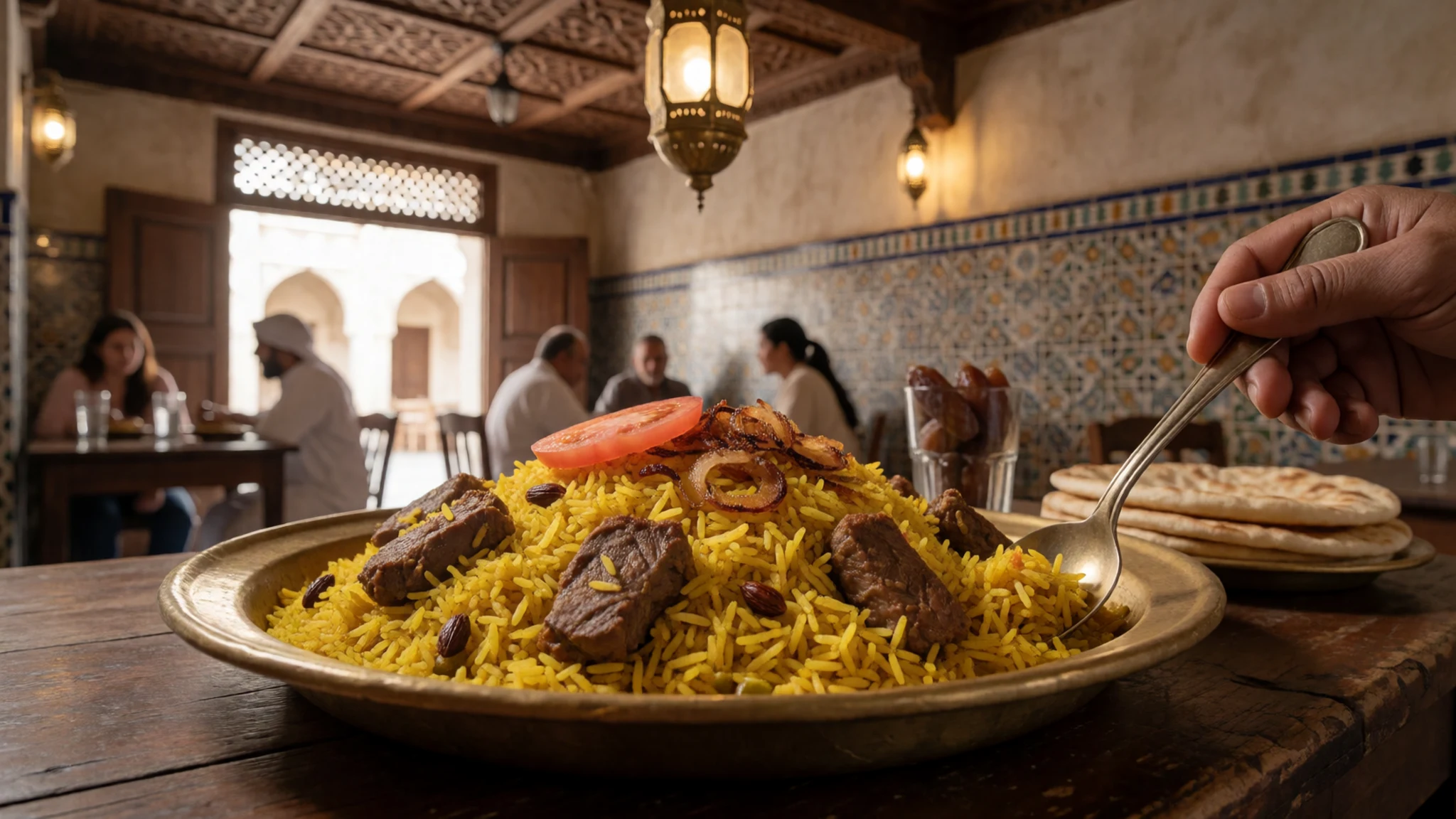
- Harees — Traditional restaurants in Doha, especially in Ramadan
Wheat and meat slow-cooked until the two merge into a soft, savoury porridge, often topped with ghee. It is comfort food, common at gatherings and especially in Ramadan. Expect it at traditional Qatari restaurants in Doha rather than anywhere near the desert.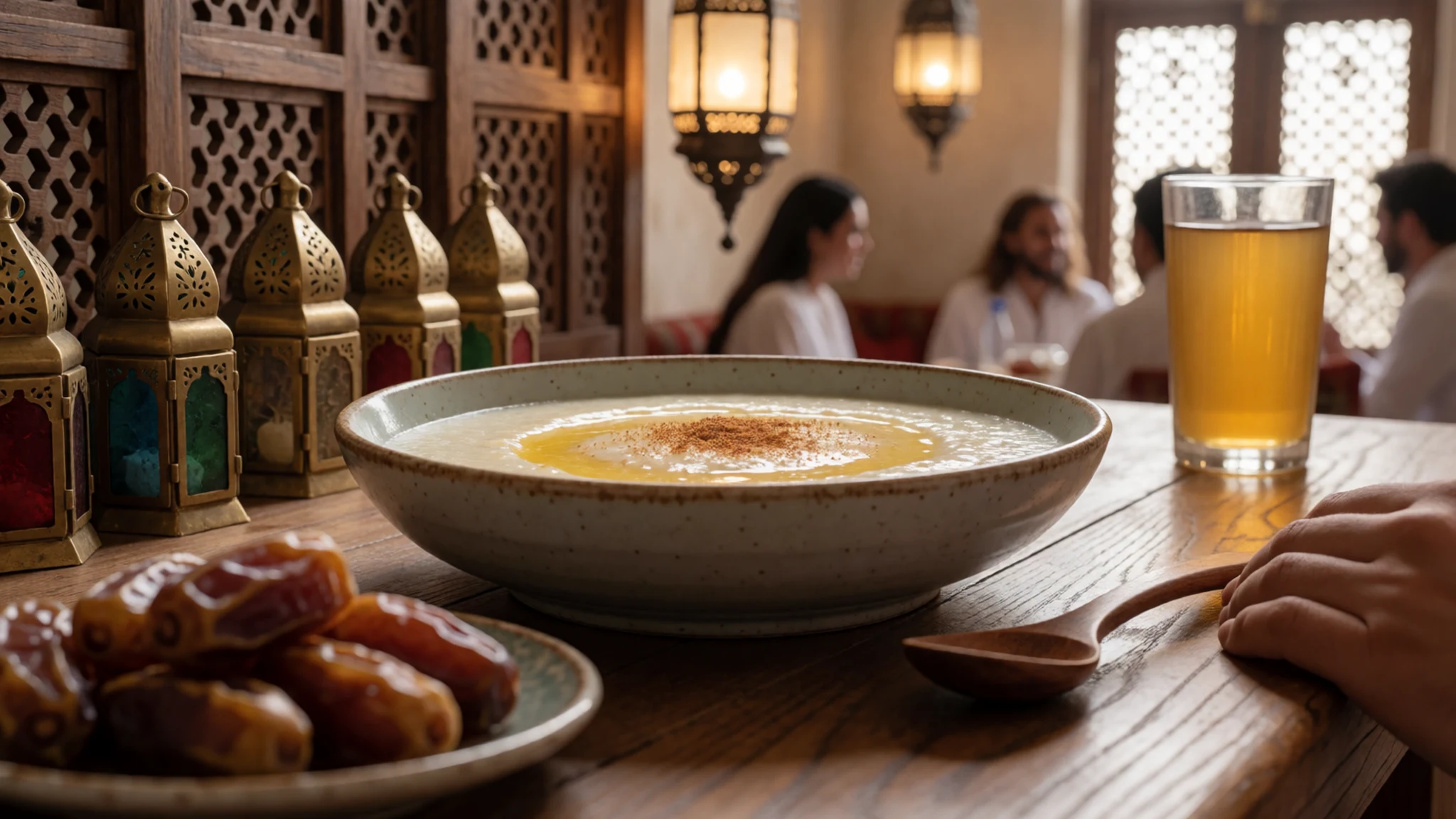
- Grilled hammour and local fish — Fish restaurants and markets near Doha's waterfront
Fish from Gulf waters, often hammour, is grilled or fried with lemon and spices, and served with rice or flatbread. Seafood is the nearest thing to a coastal tradition here. Look at fish counters near Doha's harbour areas for the freshest catch. - Balaleet — Qatari breakfast cafés in Doha
A sweet-savoury breakfast of vermicelli sweetened with sugar and flavoured with cardamom and saffron, topped with a thin omelette. It surprises first-timers but works. Order it at breakfast cafés serving Qatari food in Doha, ahead of an early start west. - Luqaimat — Market stalls and sweet shops in Doha
Small deep-fried dough balls, crisp outside and soft within, soaked in date syrup. Often served warm at festivals and gatherings. Buy them from market stalls and sweet shops in Doha, and carry some for the road; they do not travel well in heat. - Karak chai — Roadside cafeterias and tea shops along the highway
Strong black tea simmered with milk, cardamom and sugar, sold in small cups. It is cheap, hot and hugely popular, and a good fuel stop on a long drive. Roadside cafeterias along the highway out of Doha usually serve it.
Plan it
Best time. November to March, when days are mild and the desert is comfortable to walk. Summer is extremely hot with little shade, so avoid the middle of the day then, and visit at sunrise or sunset if you must go.
How long. 1
Getting there. Fly into Hamad International Airport in Doha, then drive west on the Dukhan Highway (Q3), about a half-hour from the city by road. Without a car, the Route 104 or 104A bus towards Dukhan runs roughly hourly from Al Ghanim Bus Station in Doha and takes just under an hour; timetables differ by day, so confirm with Mowasalat. The fort and other sights are spread out, so a car or a driver is far easier.
Budget. mid
Tips
- Go at sunrise or late afternoon for cooler air and softer light
- Carry more water than seems sensible, plus sun protection; there is little shade or shopping near the fort
- Fill the tank and charge your phone in Doha, and download an offline map before you leave
- Visit as a day trip, since there is no accommodation in the nearby municipality
- Check with a Doha tour company for the oryx centre, which needs advance arrangements
Etiquette
- Dress modestly: shoulders and knees covered
- Ask before photographing people, especially women and families
- Do not climb on the ruins or take stones, and take your rubbish with you
Nearby
Sources
- Wikidata Q124939622 (CC0)
- Wikipedia: Zekreet (rev 1378501590) (CC BY-SA 4.0)
- Wikivoyage: Al Shahaniyah (rev 5348048) (CC BY-SA 4.0)
- Photo: Zekreet fort, Adnanak81 (CC BY-SA 4.0)
- Photo: Panoramic Zekreet Fort, Mohamod Fasil (CC BY 2.5)
- Photo: Zekreet ruined fortress 4, Vincent van Zeijst (CC BY 3.0)
- Photo: Zekreet ruined fortress 5, Vincent van Zeijst (CC BY 3.0)
- Photo: Zekreet signpost, Vincent van Zeijst (CC BY 3.0)
- Photo: The desert of Zekreet, Youssef.ma.o (CC BY-SA 4.0)
- Photo: The Fort at Zekreet, Steven Byles (CC BY-SA 2.0)
- Photo: Zekreet Fort exterior, Mohamod Fasil (CC BY 2.5)


