Umm Bab
Umm Bab, Qatar
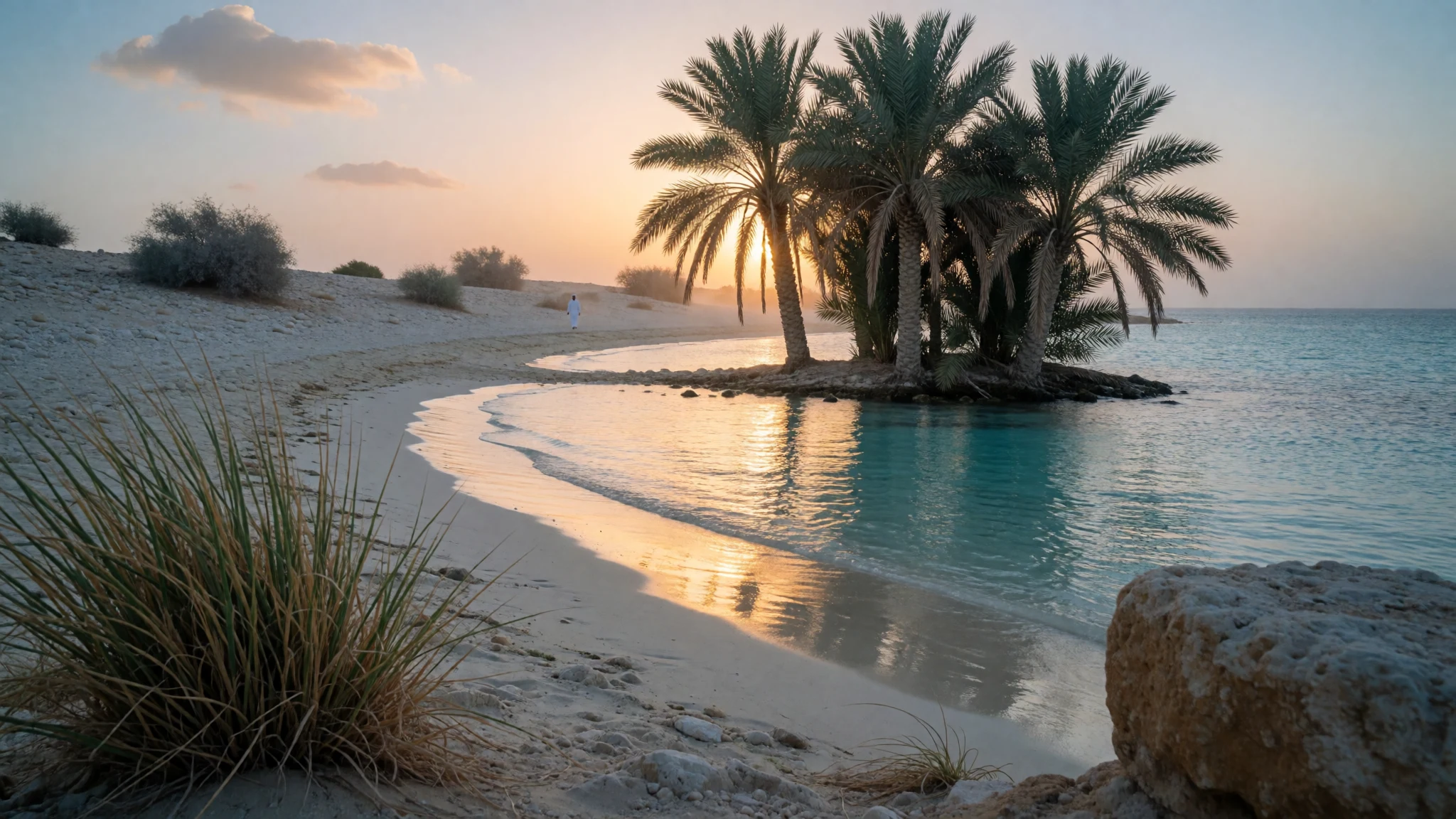
Umm Bab is a quiet western Qatar shoreline of pale sand, lone palms and desert stars, set beside working industry.
The place
Umm Bab is a small settlement on the western side of Qatar, today administered from the municipality of Al-Shahaniya, though it has sat under Al Rayyan and, before that, Al Jemailiya as boundaries were redrawn. The road from Doha covers about 85 km, and Dukhan, the oil town on the same coast, lies about 25 km away. Almost nobody comes here as part of a standard Qatar itinerary, and that shapes the experience. The ground is flat, pale and stony, dotted with thorny acacia, and the Gulf shore is sandy and shallow. The local landmark is Al Khraij Beach, called Palm Tree Beach because a few palms stand just offshore, a surprising patch of green against the sand and water. Industry is part of the scene as well. A cement works opened in 1969 and was the country's first major business outside oil, and smaller plants separating oil and gas operate nearby. Chimneys and storage tanks therefore share the horizon with desert, and the place suits travellers who enjoy working landscapes more than polished resorts. There are no ticketed sights, no queues and very little shade. What Umm Bab offers is quiet, wide skies, odd desert plants on the shore, and dark nights well away from the lights of Doha. Summer heat is punishing, so this is a destination for the cooler months, and a car is close to essential because public transport is sparse and facilities are few. Bringing water, food and a full tank from Doha is simply sensible.
Its story
Umm Bab's modern story begins with oil rather than with the sea. Once wells started at Dukhan in 1948, new homes went up immediately south of Umm Bab, taking in both oil company employees and families who already lived on this stretch of coast. A road joining Umm Bab to Dukhan was built the same year, tying the settlement to the new industry. Schooling arrived in 1961, when the government opened a boys' school in the village. By 1990 the housing area counted roughly 50 households and about 1,000 people, most of them from the Al Murrah, a Bedouin tribe, and most of them working for Qatar Petroleum. That pattern, a tribal community settling beside an industrial employer, repeats across the Gulf in the twentieth century, as families who had once moved with the seasons took up regular wages and permanent houses. The cement works of 1969 added a second pillar to the local economy. Cement-making needs bulk raw materials such as clay, and the clay quarry that now draws night-sky photographers belongs to this same industrial landscape. Nothing here is a ruin or a monument in the usual sense. The history is in the layout: a road built for oil, a school, a village of company-era housing, and chimneys beside a beach. Anyone interested in how Qatar changed within a single lifetime will find Umm Bab a plain but honest example.
What to see
- Al Khraij (Palm Tree) Beach — Umm Bab coast
Al Khraij Beach is the local name to know. A few palms stand just off the shore, and the sand is soft and pale. It is a place for a quiet walk or a picnic in the cooler months. Expect no shade, no kiosks and plenty of wind.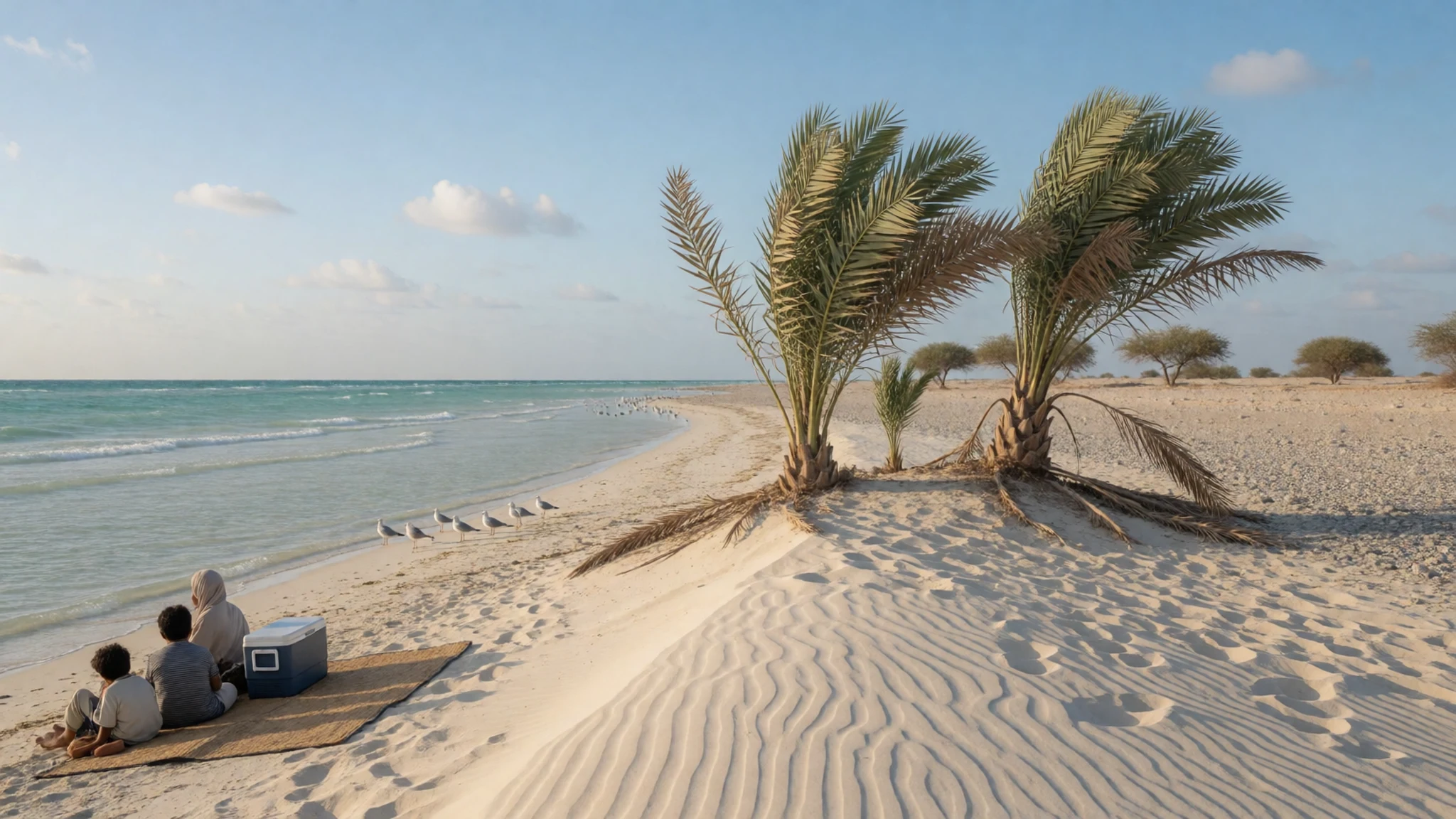
- Palm cluster near the beach — Umm Bab coast
Close to the main beach, a tight group of palms gives the shoreline its nickname. It photographs best in early morning or late afternoon, when the low light warms the sand. Heat midday is fierce, so plan the visit around it and bring water for everyone.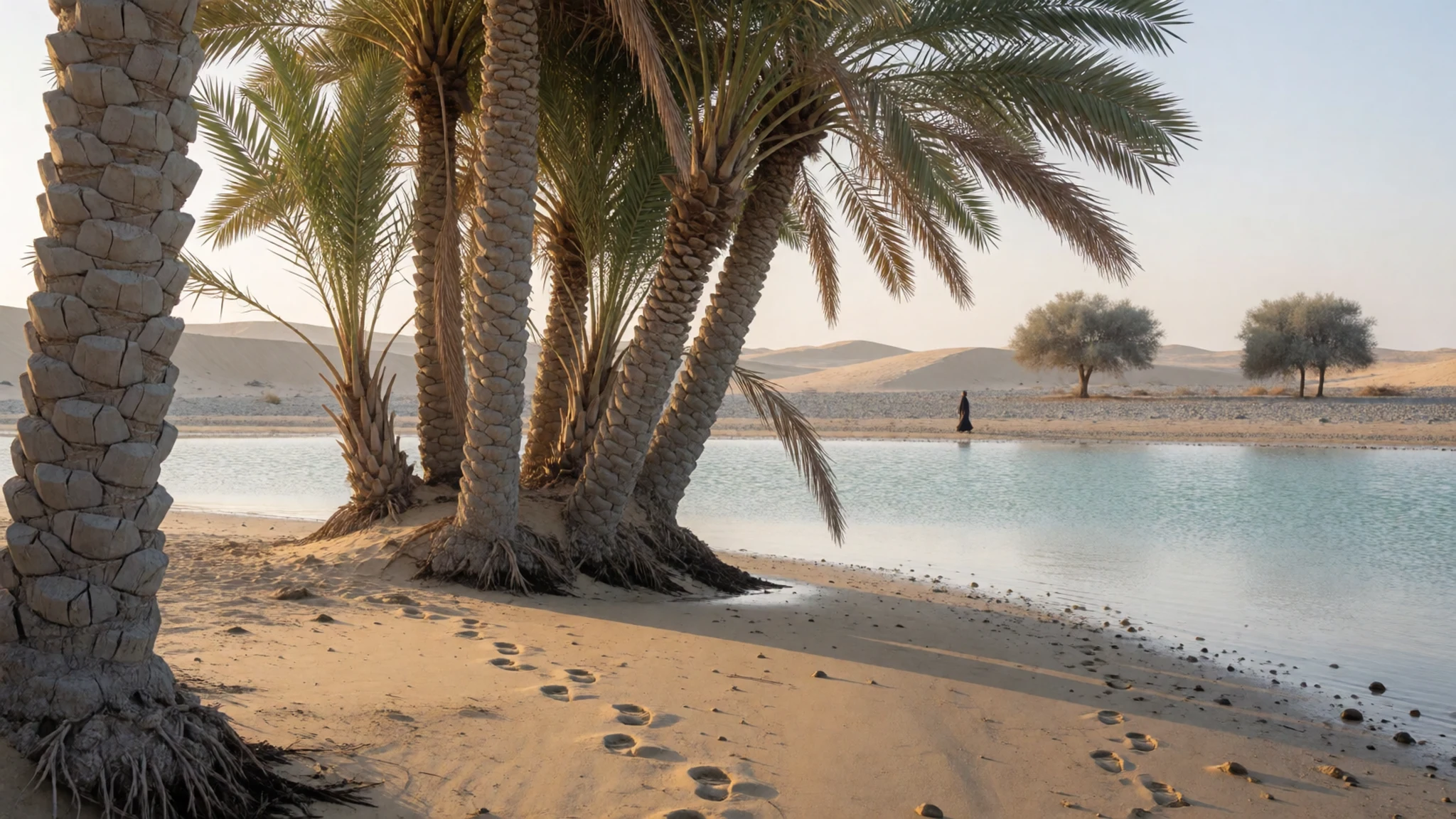
- Al Hamlah well and shore — Shore near Al Hamlah
The old water well at Al Hamlah sits near beaches of fine sand. On the sand grows the desert thumb, a strange red parasitic plant that locals call tartouth. Keep to existing tracks, look without picking anything, and treat the shoreline gently, because the vegetation is sparse and slow to recover.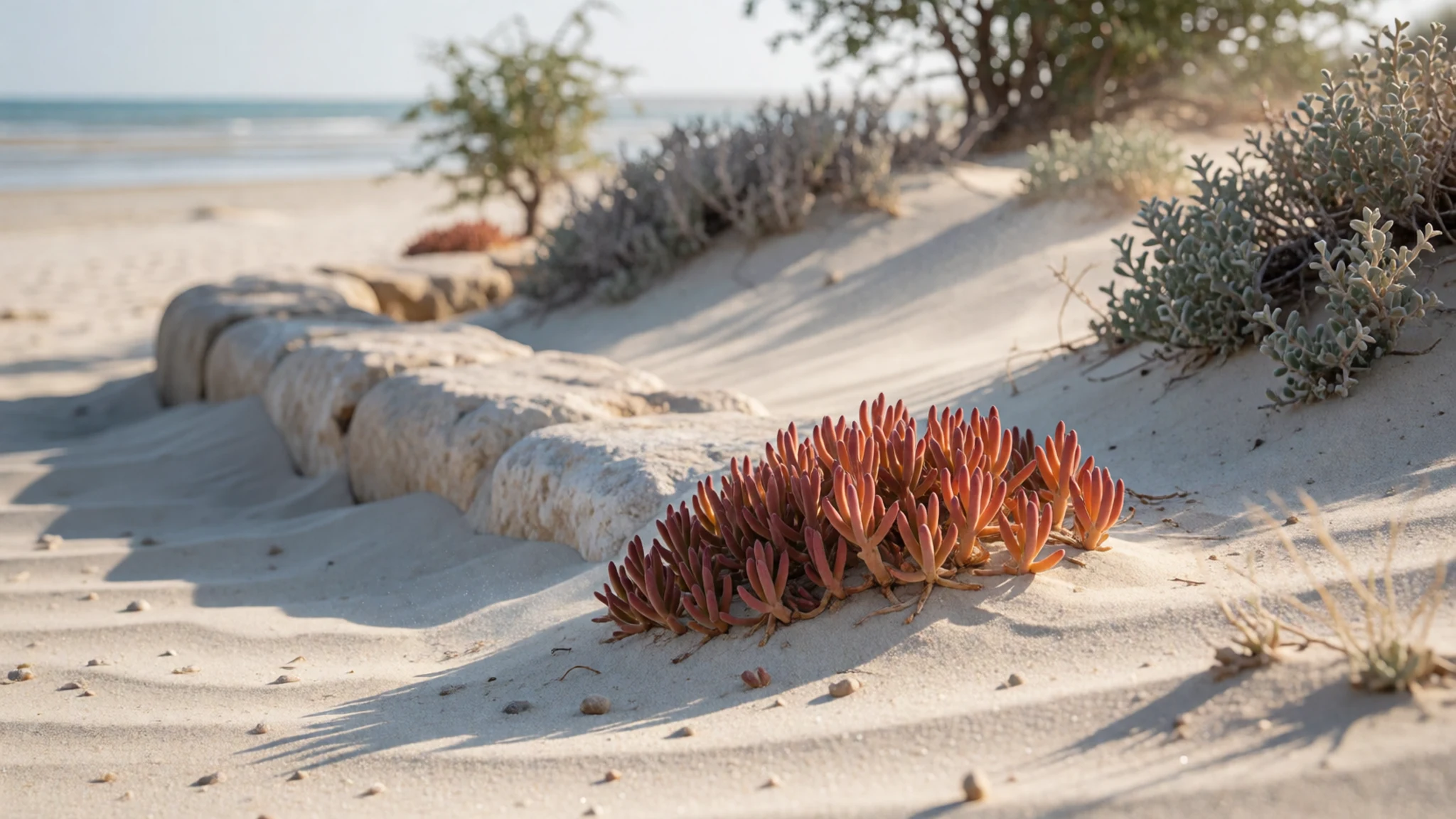
- Umm Bab Clay Quarry at night — Quarry area, Umm Bab
Away from city lights, the quarry area has some of the darkest skies within reach of Doha. Thorny acacia trees make a good foreground for star photographs. Go with a companion, a charged phone and a torch, tell someone your plan, and keep clear of any working or fenced areas.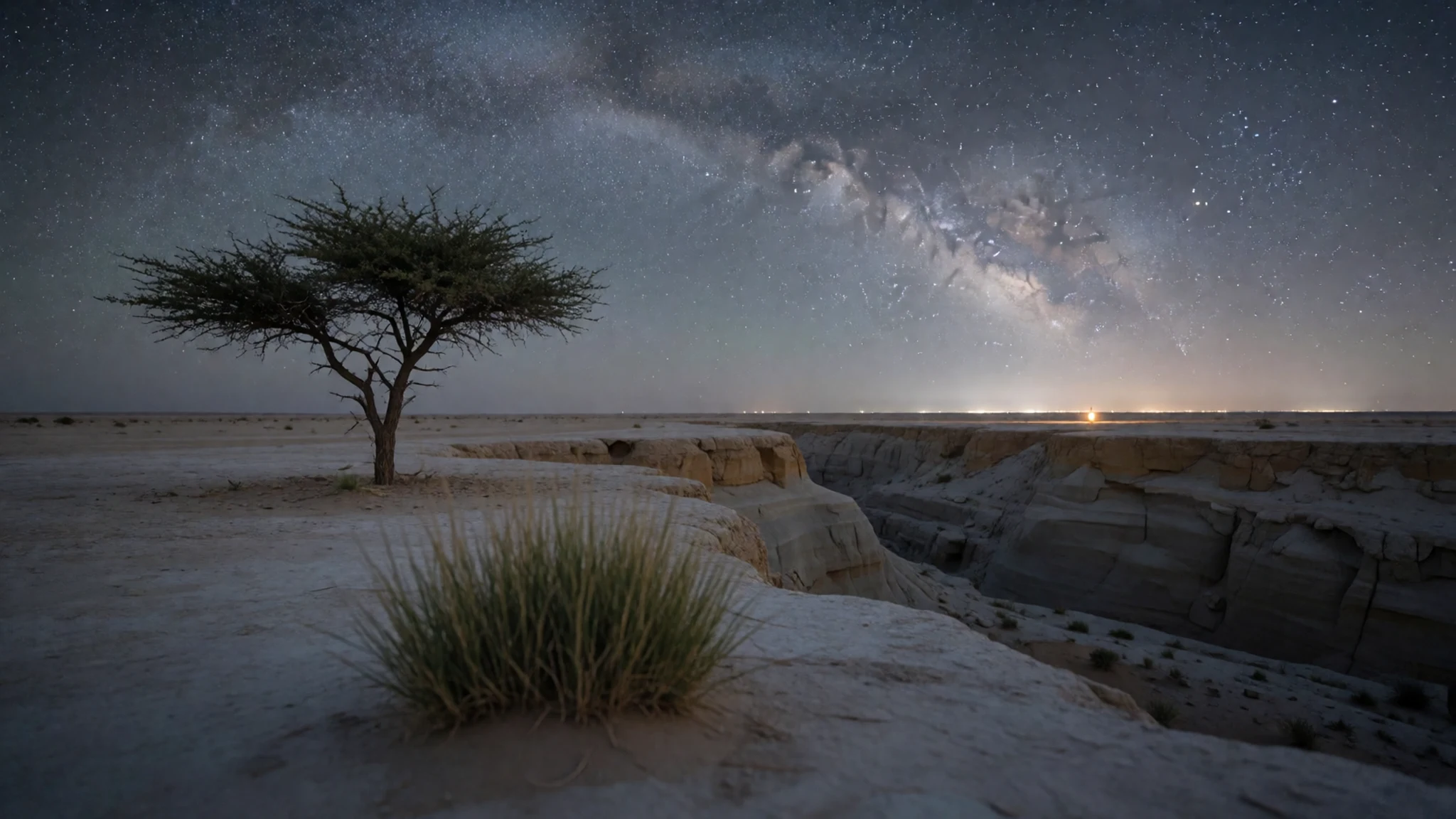
- Rocky desert with acacia — Desert inland of Umm Bab
Inland, the land is stony and lightly vegetated, with single Acacia tortilis trees standing alone for miles. It is a calm, spare landscape that rewards slow looking rather than ticking off sights. Tracks can be rough, so a higher vehicle helps, and mobile signal may be patchy.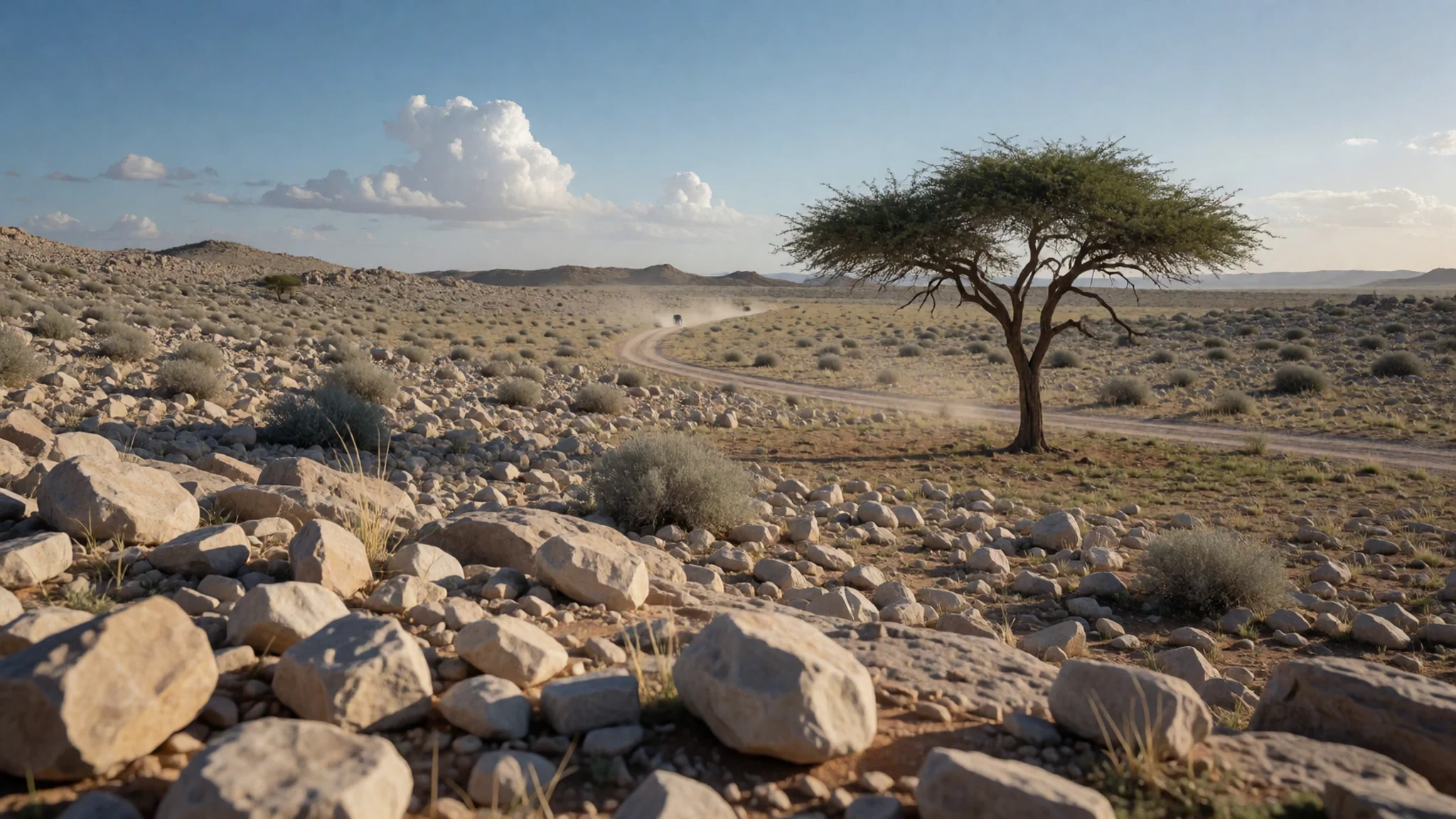
Culture
Umm Bab sits within the wider culture of Qatar, which shares its manners and values with much of the Arab world. Hospitality is central: guests are offered Arabic coffee and dates, and refusing the first cup too firmly can feel cold. This stretch of coast has a strong tribal heritage, and the Al Murrah, a Bedouin tribe, have long been associated with the village, so family standing and reputation matter. Honour and saving face shape everyday conversation. Voices stay level, criticism is made privately, and joking about someone in public or on social media can cause real offence and, under Qatari law, legal trouble. Qataris are distinct from their Gulf neighbours, so avoid comparing the country with Bahrain, the UAE or Saudi Arabia. Work and worship follow the rhythm of prayer, and in the cooler months families often camp or picnic on the coast at weekends, so a beach that looks empty on Tuesday may be busy on Friday. Industrial sites nearby are working places with their own security, and photographing plant gates, workers or fenced installations can attract questions. Greet people politely, accept offered tea if invited, and let local residents set the pace of conversation. Ask before photographing anyone, especially women and families, and never point a camera at the fenced industrial sites.
What to wear
Traditional dress in Umm Bab is the dress of Qatar generally. Men wear the thobe, a long, loose robe, usually white in the heat and sometimes in darker wool for winter, with a ghutra headcloth held by a black cord called the agal. Women wear the abaya, a long black cloak, with a shayla scarf over the hair; many add a lighter coloured dress beneath for private gatherings. Cotton and light wool dominate because they breathe and shed dust. Today most people still wear this dress in public, especially around work, mosque and family occasions, while younger Qataris and the many foreign workers wear shirts, trousers, jeans and trainers off duty. On the coast, practical clothing counts for more than style. For a visit, wear light, loose, long-sleeved cotton or linen to guard against sun and wind, plus a hat, sunglasses and high-factor sun cream. Shoulders and knees should be covered for both men and women when passing through villages or near families, and beachwear belongs at the water's edge, not on the road. Closed shoes or sturdy sandals suit the stony ground and thorny acacia, and a scarf is useful against blown sand. Evenings in winter can be cool by the sea, so pack a light layer.
What to eat
- Machboos — Roadside eateries and family restaurants on the Doha–Dukhan road
Spiced rice cooked with chicken, lamb or fish, flavoured with dried lime, onions and warm spices. It is the dish most often served for family meals in Qatar. Look for it at roadside eateries and family restaurants on the road between Doha and Dukhan.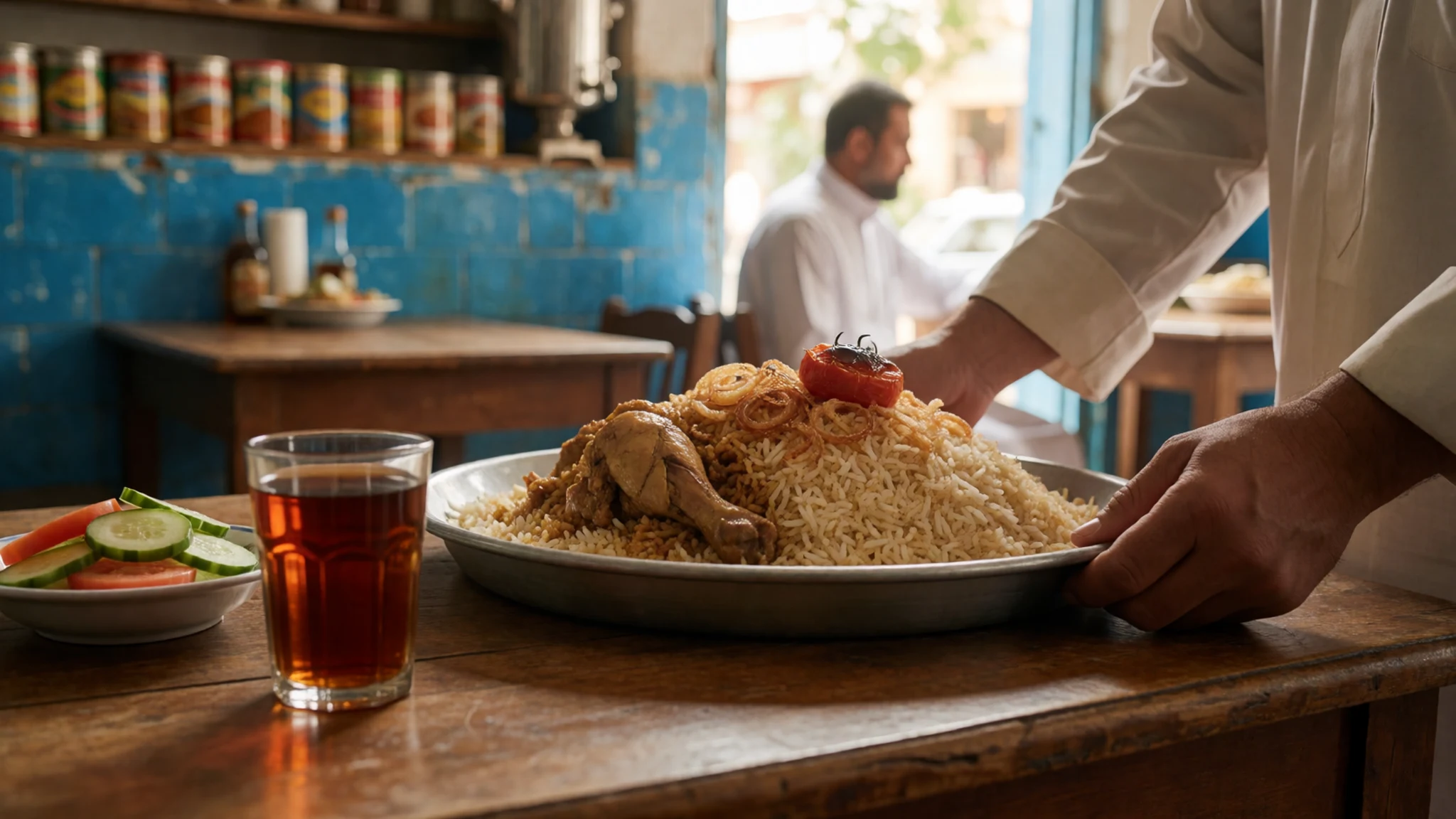
- Harees — Traditional Qatari restaurants and Souq Waqif in Doha
A porridge of wheat and meat cooked slowly until smooth, often topped with a little ghee. It is comfort food, especially popular in the cooler months and during Ramadan. Ask for it at traditional Qatari restaurants in Doha.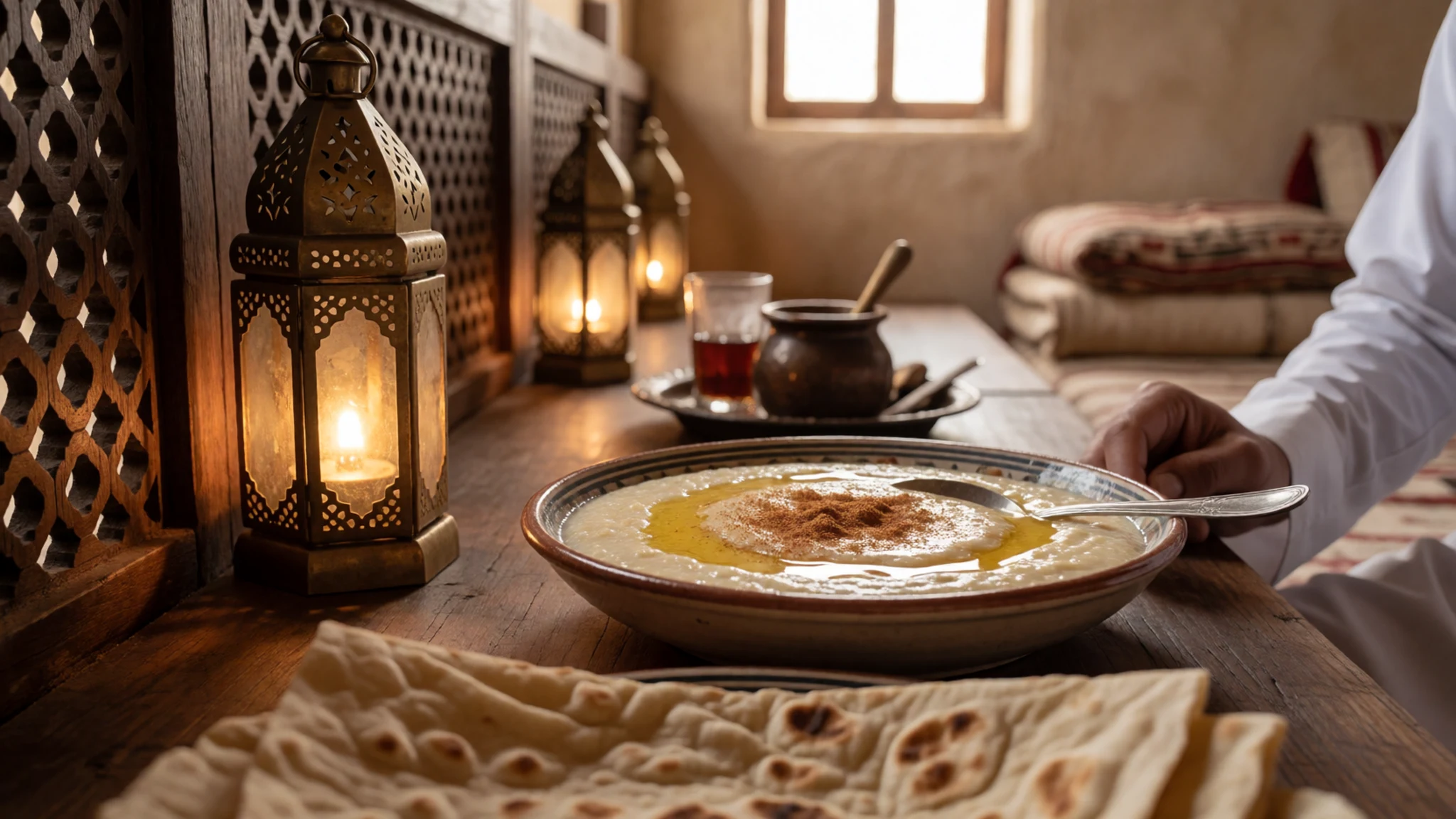
- Arabic coffee and dates — Offered in homes and majlis gatherings; cafes in Doha
Gahwa is a pale, cardamom-scented coffee served in small cups, nearly always with dates. It is how guests are welcomed. Take a small amount, and shake the cup gently when you have had enough. - Fresh grilled fish — Fish markets and seafood eateries in Doha and coastal towns
Gulf fish such as hamour is grilled, fried or cooked in spiced rice. Coastal Qatar has long relied on the sea, and fish is a sensible order near the water. Check what is fresh that day with the seller. - Karak tea and Indian-style eateries — Small eateries and tea stalls near Dukhan and Al Shahaniya
Strong, sweet, milky karak tea is sold nearly everywhere, along with South Asian dishes such as biryani and parathas. Small eateries serving workers are friendly, filling and economical, and they are often the only choice near industrial areas.
Plan it
Best time. November to March, when days are warm rather than punishing and the sea breeze is pleasant. June to September is extremely hot and humid, and midday on the open coast is hard work.
How long. 1
Getting there. Fly to Hamad International Airport in Doha, then drive west by hire car or taxi for about 85 km. Umm Bab lies off the road towards Dukhan, with little public transport on the last leg.
Budget. mid
Tips
- Hire a car in Doha and fill the tank first, as services near Umm Bab are few
- Carry plenty of water, snacks, sun protection and a charged phone
- Go early morning or late afternoon for light and cooler air
- Check Qatar's official visa and entry rules before travelling, as they depend on nationality
- Tell someone your plan before visiting the quarry or desert tracks at night
Etiquette
- Dress modestly in long, loose clothing when away from the water
- Ask permission before photographing people, and avoid photographing industrial sites
- Take all litter home and keep to existing tracks to protect the fragile desert
Nearby
Sources
- Wikidata Q3296219 (CC0)
- Wikipedia: Umm Bab (rev 1377144861) (CC BY-SA 4.0)
- Wikivoyage: Qatar (rev 5414941) (CC BY-SA 4.0)
- Photo: Umm Bab beach, Mahomod Fasil (CC BY 2.5)
- Photo: Entrance to Umm Bab on Umm Bab Road, bobbyqat @ Mapillary.com (CC BY-SA 4.0)
- Photo: Umm Bab Clay Quarry at night, Alwaleed Khaled (CC BY 4.0)
- Photo: Beach sands near Umm Bab, Alex Sergeev (CC BY 3.0)
- Photo: Cement industries off Umm Bab Road, bobbyqat @ Mapillary.com (CC BY-SA 4.0)
- Photo: Desert thumbs on Umm Bab beach, Alex Sergeev (CC BY 3.0)
- Photo: Palm tree cluster near Umm Bab beach, Alex Sergeev (CC BY 3.0)
- Photo: Rocky desert in Umm Bab with Acacia tortilis, Alex Sergeev (CC BY 3.0)


