Fuwayrit
Fuwayrit, Qatar
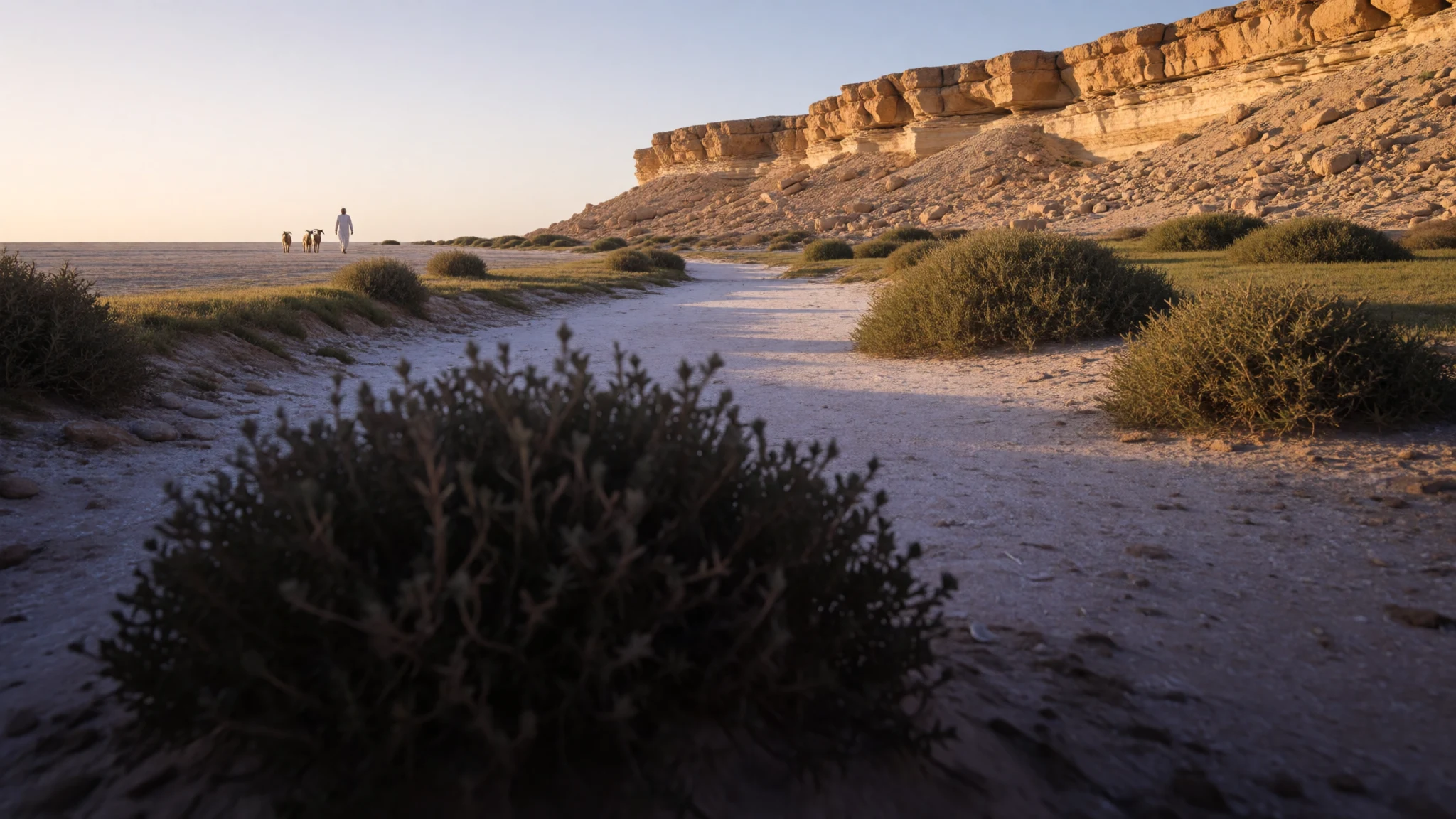
Fuwayrit is a quiet northern Qatari village with a windy kiteboarding beach, mangroves, ancient rock carvings and abandoned pearling-era fishing villages close by.
The place
Fuwayrit is a coastal village in Qatar's far north, in the Ash Shamal municipality, about 90 km from Doha by road. It sits on a low headland of silty sand, with sandspits along the eastern side holding the village back from open water. Inland the ground turns to sabkha, a salt flat with grassy hollows, and a narrow channel of it marks where the old settlement ended. Beyond that the land lifts into a rocky upland, Jebel Fuwayrit, which is modest by any mountain standard but stands out on a coast this flat. The plain around it is scrubby, with hardy shrubs such as Taverniera and Soda inermis rather than anything resembling green fields. Fuwayrit matters to Qatar for two quite different reasons. It has a role in the oil industry, and the history of the ruling Al Thani family runs through it. For visitors it is now better known for the long beach on the village outskirts, where steady winds have made it a base for kiteboarding, and a resort aimed at kite riders opened here in recent years. Away from the beach the pace is slow. Old fishing hamlets lie scattered along the northern coast, some half empty, and the mangroves and shallow water are good for an unhurried walk. Most people come as a day trip from Doha, although kiteboarders stay longer. Summer heat is severe and shade is scarce, so the cooler months are the time to come.
Its story
Fuwayrit's past is tied to the families who shaped Qatar's peninsula. Settlement here may reach back to around the sixteenth century, though the evidence is thin. During the seventeenth and eighteenth centuries the Al Musallam, who kept their main fort at Al Huwaila, used Fuwayrit as a principal residence, and the Banu Ali also had homes in the village. Family tradition says the Al Thani left Zubarah, then a major town, and settled in Fuwayrit in the later eighteenth century. Mohammed bin Thani, remembered as the founder of the line that rules the modern state, is said to have been born here. The Al Thani moved south to Al Bidda, now Doha, in 1847, and Fuwayrit lost its standing. An early British survey of the Gulf, made in the early nineteenth century, described it as a modest fishing settlement of about one hundred and fifty men from the Abookara and Uttoobee tribes, tied to Bahrain, where a little water and a few cattle could be had and small hills nearby helped sailors recognise the place. Not long afterwards a quarrel broke out between Fuwayrit and Doha. Men from the village had robbed a family close to the Al Thani, whose fortune came from pearl trading, and the money at the heart of the dispute had been invested for a young heir who then started a business in Fuwayrit. Pearling, fishing and trade shaped this coast until oil and gas changed the economy in the late twentieth century, leaving the old villages around Fuwayrit empty.
What to see
- Al Jassassiyeh Carvings — South-east of Fuwayrit
Jebel Fuwayrit is a rocky outcrop covered in hundreds of petroglyphs. Boats and animals are cut into the stone, beside rows of small cup-shaped hollows thought to be boards for traditional games played with stones as counters. Go early or late, because the rock gives no shade and midday glare flattens the carvings.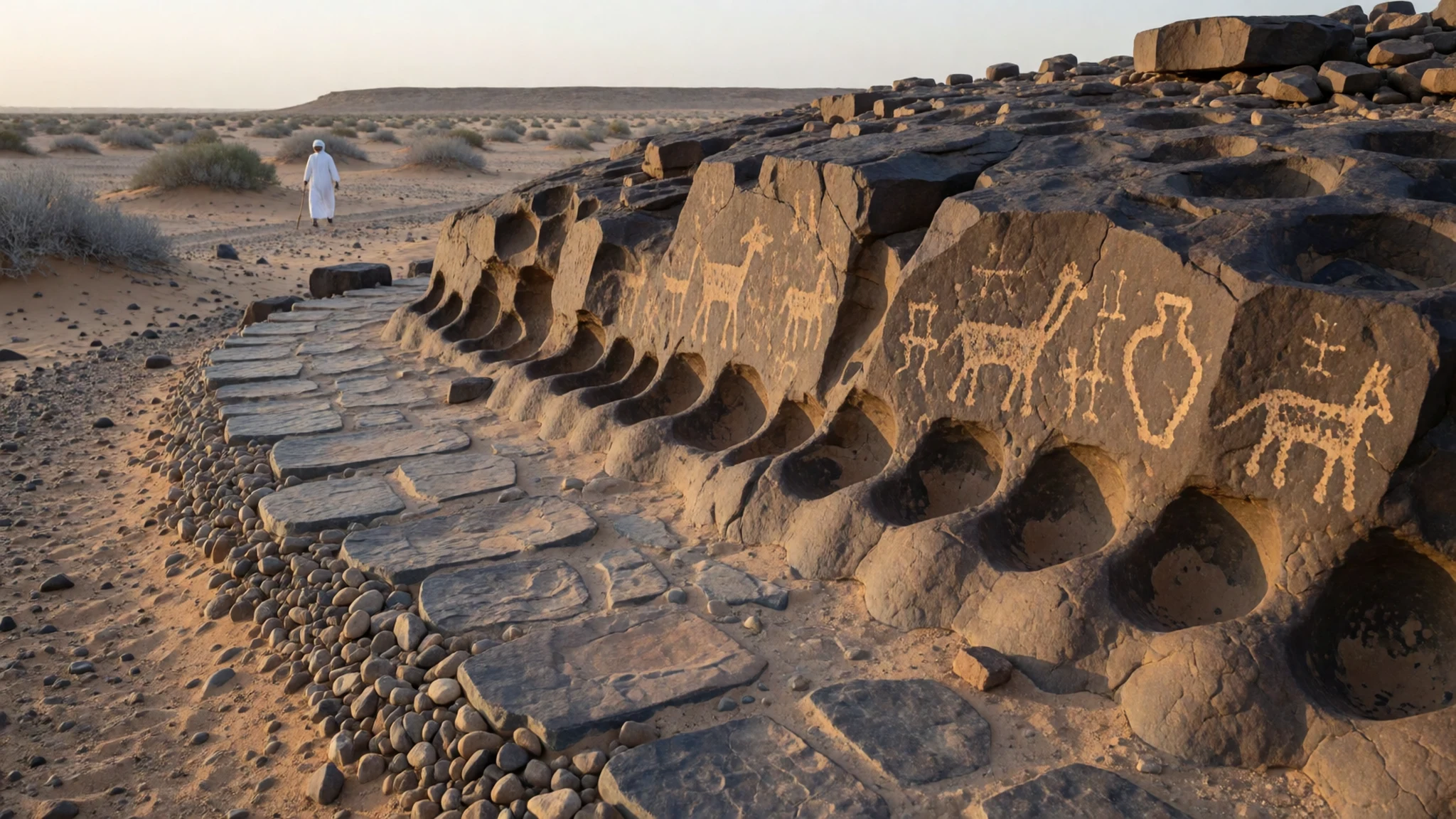
- Jebel Fuwayrit — Just north of the village
Jebel Fuwayrit is the rocky ridge just north of the village, a modest rise that looks bigger because everything around it is flat. Cliffs face the plain, and rosette-patterned cup marks have been photographed on the rock. It is best at dusk, when the light turns warm and the heat eases. Sturdy shoes matter on loose stone.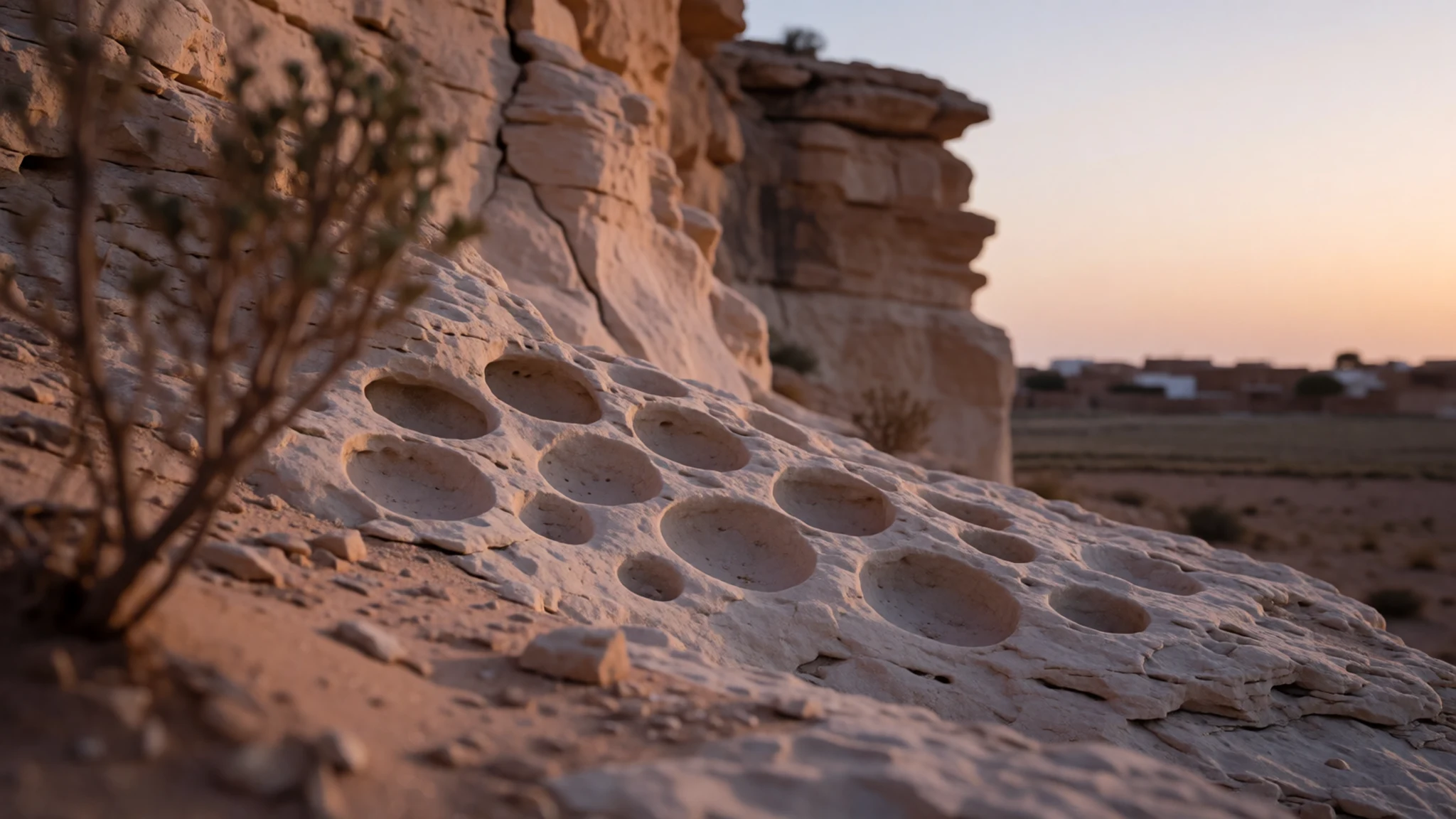
- Fuwayrit beach and mangroves — Village coast and outskirts
The shoreline at Fuwayrit has pockets of mangrove in calm, shallow water behind the sandspits, which make an easy walk and a good place for quiet photography. The wide beach on the village outskirts is where kiteboarders gather, so open sand and sheltered water offer two very different moods within a short distance.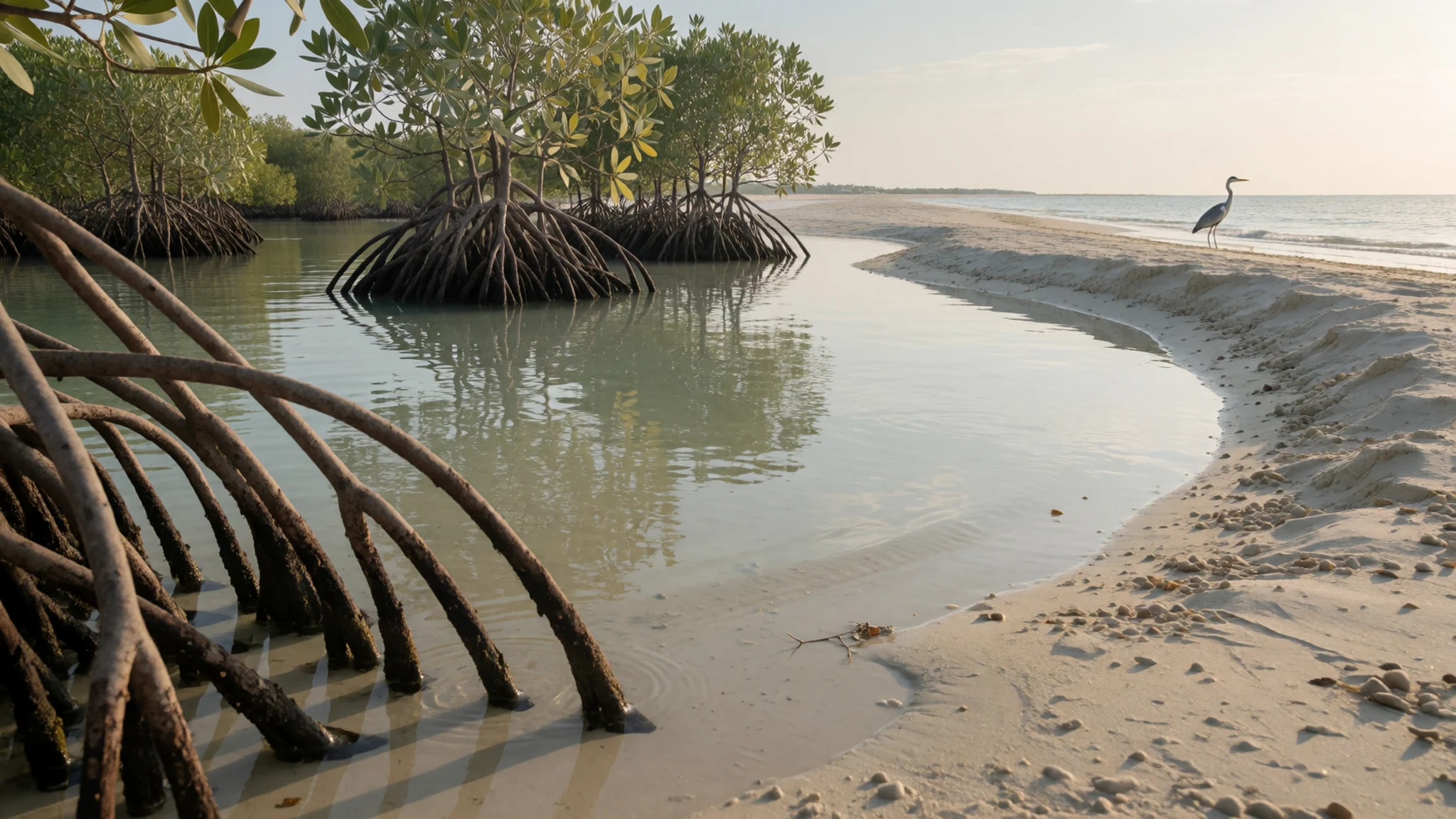
- Al Ghariya — North of Fuwayrit
Al Ghariya is a partly abandoned fishing village from the pearling years, just north of Fuwayrit. Low houses and ruined walls make it a photogenic stop, and a good beach with casual fishing spots lies a little further north near the old scout camp. Treat the ruins with care: do not climb walls or take stones.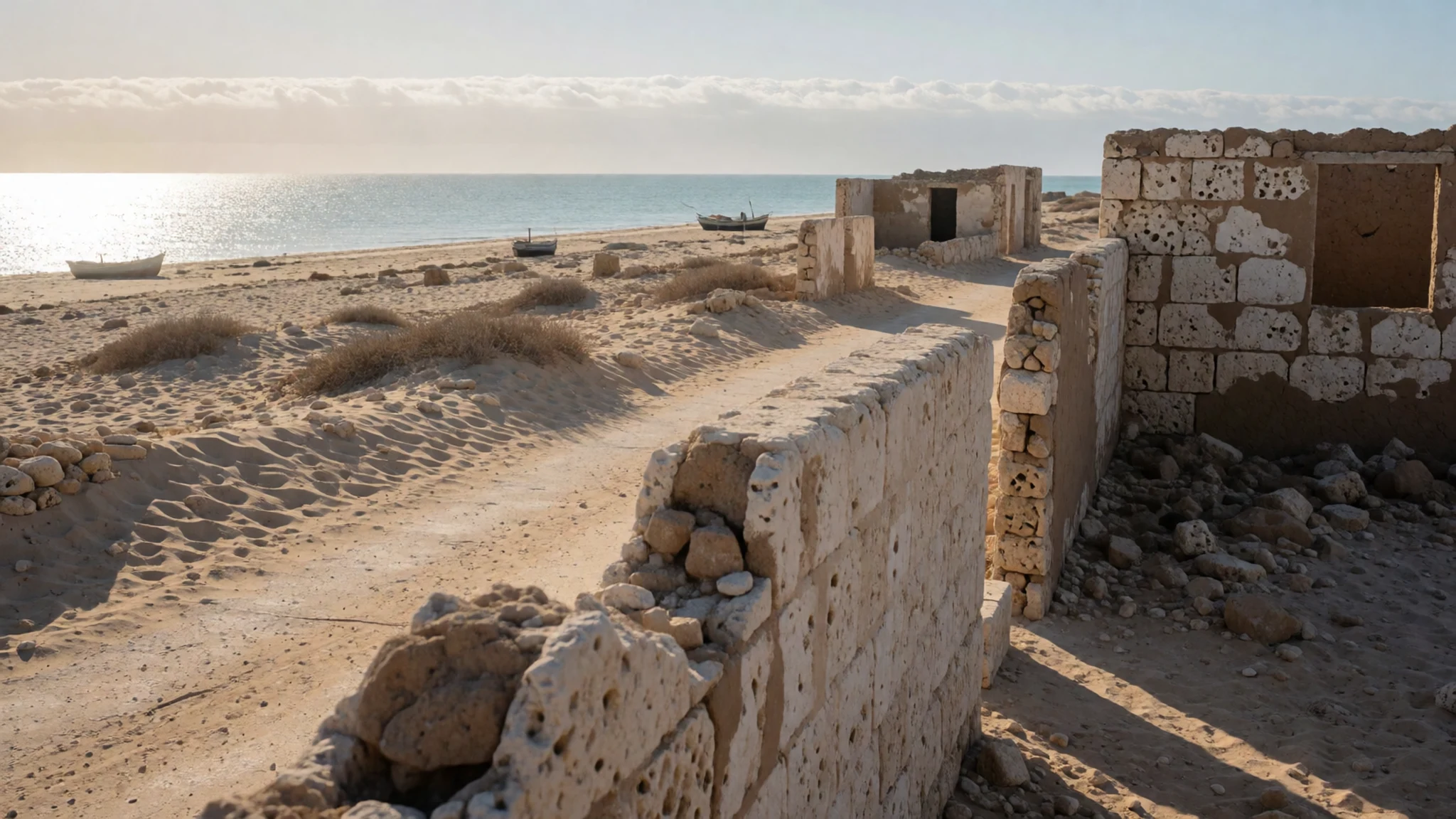
- Al Jemail — North-west coast
The coast features abandoned fishing villages from the pearling era, which became empty by the late twentieth century when Qatar's economy turned to oil and gas. Its ruined lanes give a clear sense of how lean coastal life was. Bring water, a hat and sturdy shoes, and do not expect shops.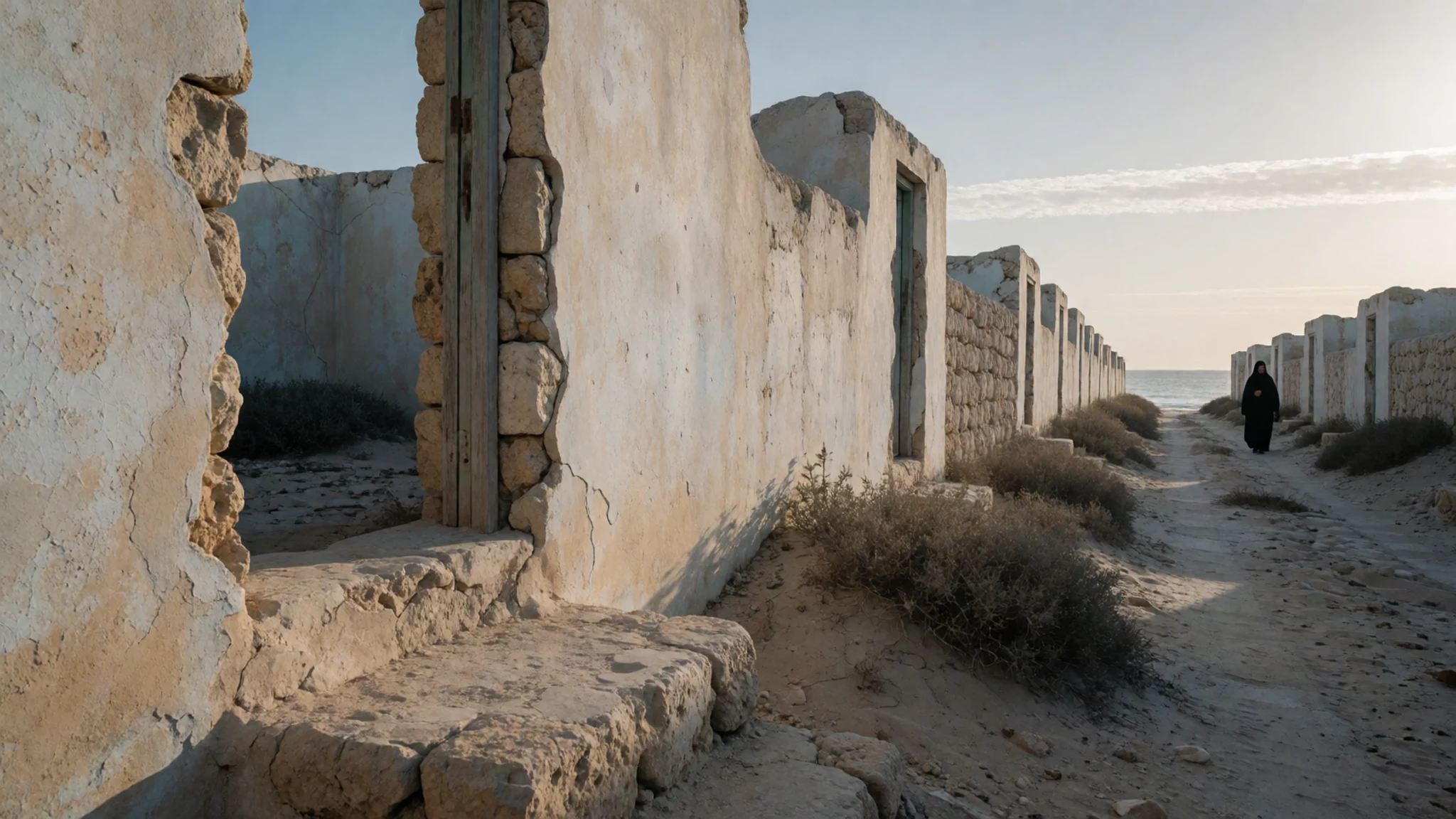
- Al Zubarah Fort — North-west coast
Al Zubarah Fort stands on the north-west coast beside the old town that, by family tradition, was the Al Thani's home before they moved to Fuwayrit. The fort now doubles as a museum. Ask locally or check an official source for current opening arrangements before driving out, because it is a long run from the village.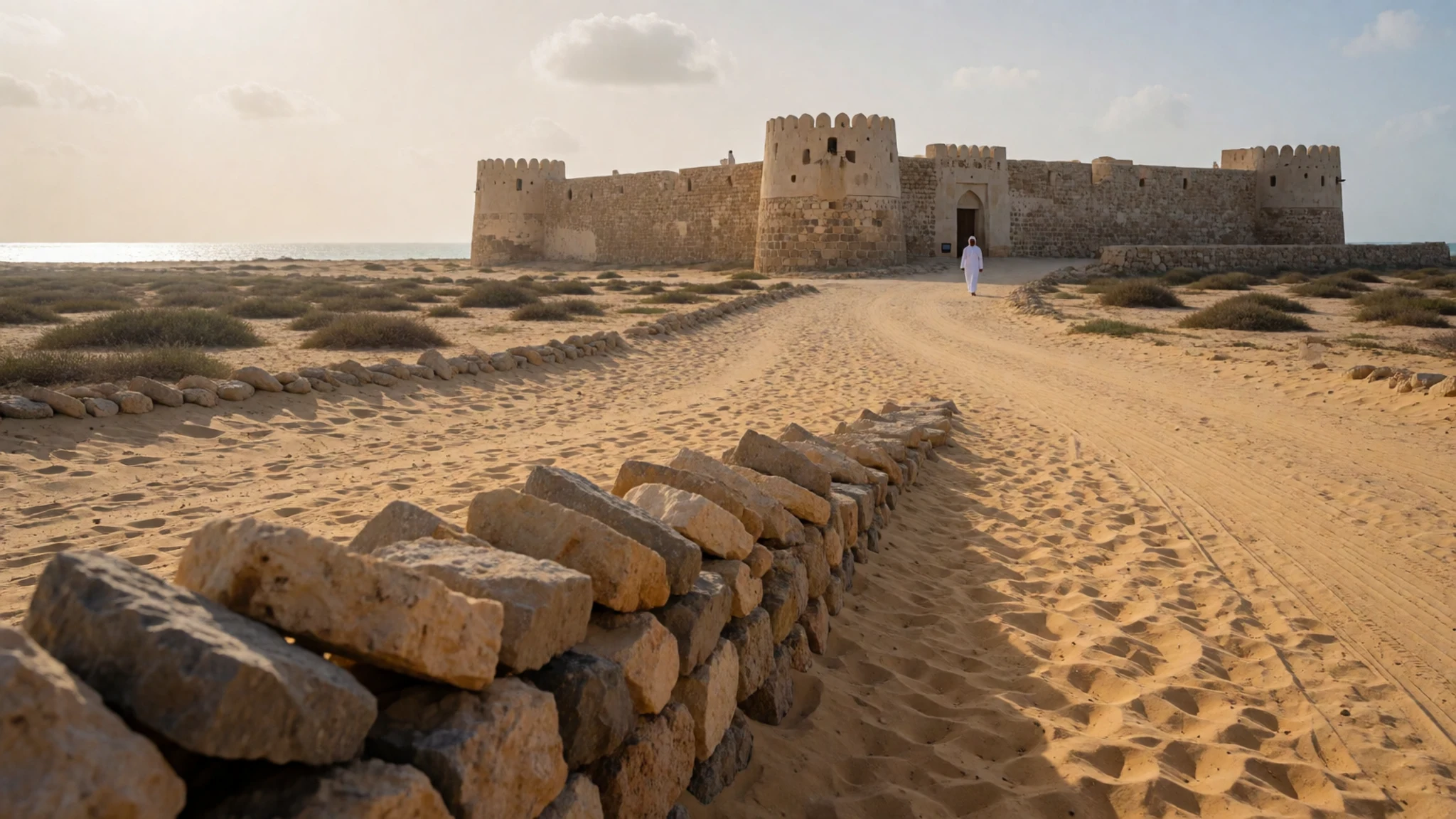
Culture
Fuwayrit shows the older face of Qatar, shaped by fishing, pearling and the movement of tribes along the Gulf coast. Before oil, families here lived from the sea and from small herds, and the abandoned villages nearby are a record of that way of life. The Al Thani family's link to the village gives it a quiet place in the country's story, and local people take pride in that history. Today life is calm and largely Muslim, with Qatari families living alongside workers from South Asia and the wider Arab world. Hospitality matters. A guest may be offered Arabic coffee in small cups with dates, and it is polite to accept at least one cup. Prayer times and the working week shape the day, and Fridays are quieter than other days. During Ramadan, eating or drinking in public in daylight hours is discouraged and opening times shift, so plan around it. Alcohol is not part of village life. Visitors can expect friendliness but also privacy, especially around family homes and women. The ruins and rock art are fragile and are treated as shared heritage. Ask permission before photographing local people, particularly women, and leave carved rock and ruined walls exactly as you found them.
What to wear
Traditional dress in Fuwayrit is the Gulf Arab dress found across Qatar. Men wear the thobe, a long loose robe, usually white and made of cotton for the hot months, with heavier wool or darker cloth in winter. On the head goes a ghutra, a square of cotton, held by a black cord called an agal. Women wear the abaya, a long black cloak, with a shayla scarf over the hair, and many wear colourful embroidered dresses at home or at family gatherings. Formal dress is worn for Friday prayers, festivals and weddings. Day to day, what people wear now is much the same, since the thobe and abaya are practical in the heat and expected in public. Younger Qataris often mix them with trainers, sunglasses and smart watches, and workers on the coast wear overalls or ordinary shirts and trousers. Kiteboarders on the beach wear wetsuits or rash vests and shorts, which is accepted at the water's edge. Visitors should dress for sun and modesty. Light, loose clothes that cover shoulders and knees work best in the village, and a wide-brimmed hat and sunglasses are essential. Women do not need to cover their hair, though a light scarf is useful. Wear closed shoes with grip for rocky ridges and ruins, and bring a windproof layer for winter evenings on the beach.
What to eat
- Fatayer — Bakeries and small cafés in the Ash Shamal towns
Fatayer are small baked pastries filled with cheese, spinach or spiced meat, eaten warm as a quick breakfast or snack. Look for them at the small bakeries and cafés along the main road through the Ash Shamal towns, where they come straight from the oven.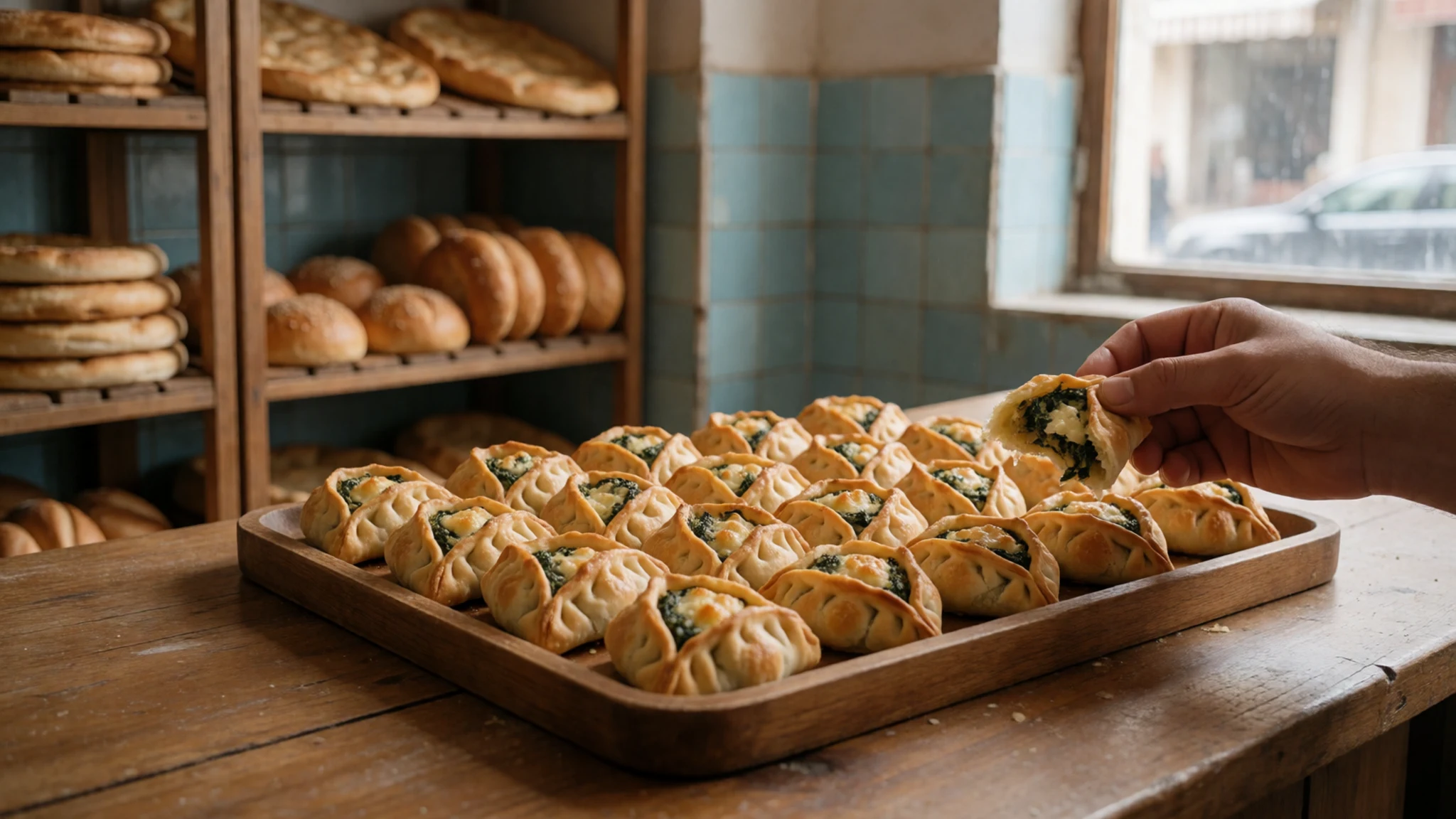
- Shawarma — Small grill counters and roadside eateries
Shawarma is sliced roast chicken or lamb wrapped in flatbread with pickles, garlic sauce and salad. It is the easy lunch on this coast, cheap compared with sit-down meals and ready quickly. Choose a counter with a busy turnover of meat on the spit.
- Machboos — Qatari family restaurants, mostly in Doha
Machboos is the Gulf's spiced rice dish, cooked with chicken, lamb or fish and flavoured with dried lime, cardamom and cloves. It is a family meal, usually shared from a large platter, and the best version is the home-style one made by Qatari cooks. - Grilled fish — Coastal eateries near fishing harbours
Fish remains the local food of a fishing coast. It is commonly grilled whole with spices and served with rice and a tomato salad. Ask what came in that morning, and choose eateries near the harbours or on the coast road, where the catch is fresh. - Karak chai and dates — Roadside kiosks and small cafés
Karak is strong tea boiled with milk, sugar and cardamom, poured into paper cups at roadside kiosks and drunk all day. Pair it with dates, or with Arabic coffee when offered as hospitality. It is a useful way to rest between ruins.
Plan it
Best time. December to February, when days are most comfortable and the sea breeze suits kiteboarding. Summer is very hot and humid, with little shade at the ruins and carvings.
How long. 1–2
Getting there. Fly into Hamad International Airport at Doha, then drive about 90 km north along the Al Shamal Road to Fuwayrit. Buses run from Al Ghanim Bus Station in Doha to Al Ruwais and nearby towns, but call Mowasalat to confirm times and expect a taxi or hire car for the last stretch to the beach and the ruins.
Budget. mid
Tips
- Hire a car if you want to see the abandoned villages and carvings, as public transport does not reach them easily
- Carry plenty of water, a hat and sun cream, and start early because shade is scarce
- Fill the fuel tank in Doha or a larger town before heading north
- Check wind forecasts if you plan to kiteboard, and ask the resort about lessons and gear
- Download offline maps, since mobile signal and signs can be patchy near the ruins
Etiquette
- Dress modestly in the village, with shoulders and knees covered
- Ask before photographing local people, especially women and families
- Do not climb on ruined walls or touch the rock carvings
Nearby
Sources
- Wikidata Q5510945 (CC0)
- Wikipedia: Fuwayrit (rev 1378967231) (CC BY-SA 4.0)
- Wikivoyage: Al Shamal (rev 5237297) (CC BY-SA 4.0)
- Beach near Fuwayrit, Qatar — Alex Sergeev (CC BY 3.0)
- Coastline of Fuwayrit — Dr Colleen Morgan (CC BY 2.5)
- Jebel Fuwayrit cliffs — Alex Sergeev (CC BY 3.0)
- Mangroves in Fuwayrit — Dr Colleen Morgan (CC BY 2.5)
- Rocky ridge of Jebel Fuwayrit — Alex Sergeev (CC BY 3.0)
- A water dam in Fuwayrit — Alex Sergeev (CC BY 3.0)
- Rosette-patterned cup marks in Jebel Fuwayrit — Alex Sergeev (CC BY 3.0)


