Muscat
Muscat, Oman
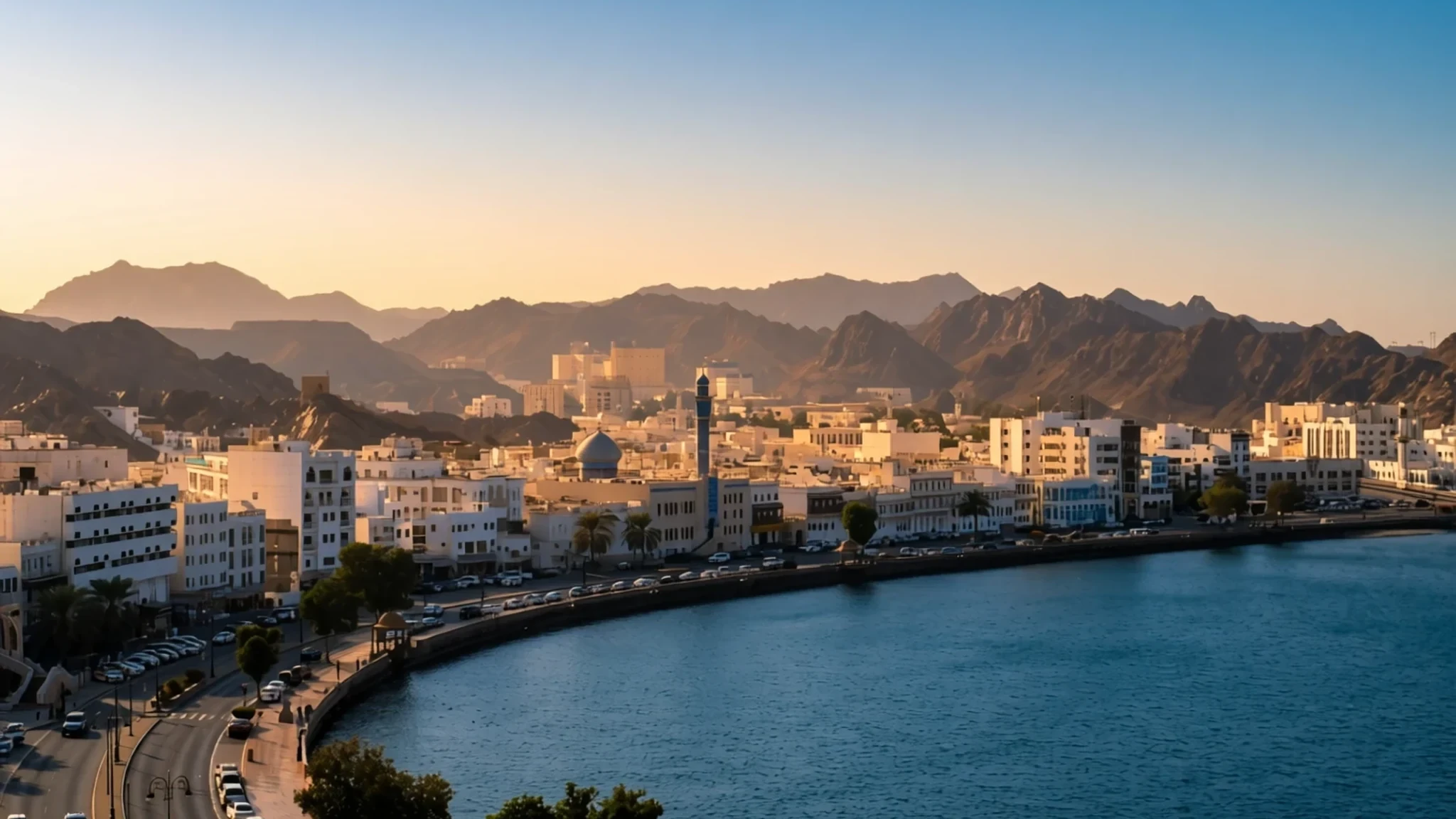
Muscat offers an extraordinary coastal capital where stark desert mountains plunge directly into clear gulf waters alongside ancient maritime forts and quiet souks.
The place
Muscat is the capital and largest city of Oman, sitting quietly along the blue waters of the Gulf of Oman near the strategically vital Strait of Hormuz. The metropolitan area spans several provinces, cradled tightly between the sea and the jagged, towering ridges of the Hajar Mountains, which dominate every distant view. Unlike the glittering glass-tower skylines seen elsewhere in the region, Muscat maintains a strict architectural identity characterised by low-lying white buildings, flat roofs, and intricate lattice windows that give the settlement an intimate, traditional silhouette. The urban layout stretches along a coastal strip, dividing into distinct neighbourhoods such as the historic walled enclave of old Muscat, the commercial harbour district of Muttrah with its palm-shaded corniche, and modern sprawling commercial avenues lined with neat landscaping. The harbour has served as a safe maritime haven since antiquity, sheltering wooden dhows and modern vessels alike from rough open-water swells. Because the municipality covers a broad coastal valley system rather than a dense vertical core, daily life moves at a measured pace, anchored by maritime trade, government administration, and the petroleum sector. Visitors exploring the city will find clean streets, peaceful residential quarters, and an urban environment shaped profoundly by its dramatic natural topography, where arid rock meets deep marine blue.
Its story
The human story of Muscat reaches back deep into prehistory. Archaeological discoveries at Ras al-Hamra, dating to the sixth millennium BCE, reveal early coastal communities of fishermen who maintained formal burial rituals along these shores. Centuries later, trade links extended as far as the Indus Valley civilisation, evidenced by ancient pottery fragments unearthed south of the city. Classical geographers recognised the natural harbour early on; Ptolemy called it the Hidden Port, while Pliny the Elder recorded it under another classical name. During the third century CE, Sassanid forces invaded the port, integrating it briefly into their regional empire before Islam took root across the region in the seventh century. Over subsequent centuries, local tribal leadership under the Azd dynasty and the establishment of the early Ibadi state helped unify disparate factions, though political control remained contested. Foreign powers were drawn to its strategic anchorage; the Portuguese occupied the settlement in the sixteenth century, constructing imposing stone fortifications that still command the harbour entrance. By the eighteenth century, Muscat had transformed into an independent regional military power whose influence stretched across the ocean to East Africa and Zanzibar. Throughout these eras, the port welcomed diverse waves of settlers and merchants from Persia, Baluchistan, and Sindh, creating a cosmopolitan maritime culture that persists beneath the modern civic surface.
What to see
- Al Jalali Fort — Old Muscat harbour
Perched dramatically on the rocky coastal cliffs, this formidable stronghold was constructed by the Portuguese during the late sixteenth century as a military prison. Today, the restored stone fortress functions as a heritage museum celebrating Omani culture, though its exterior views from the harbour remain the primary attraction for visitors walking along the waterfront.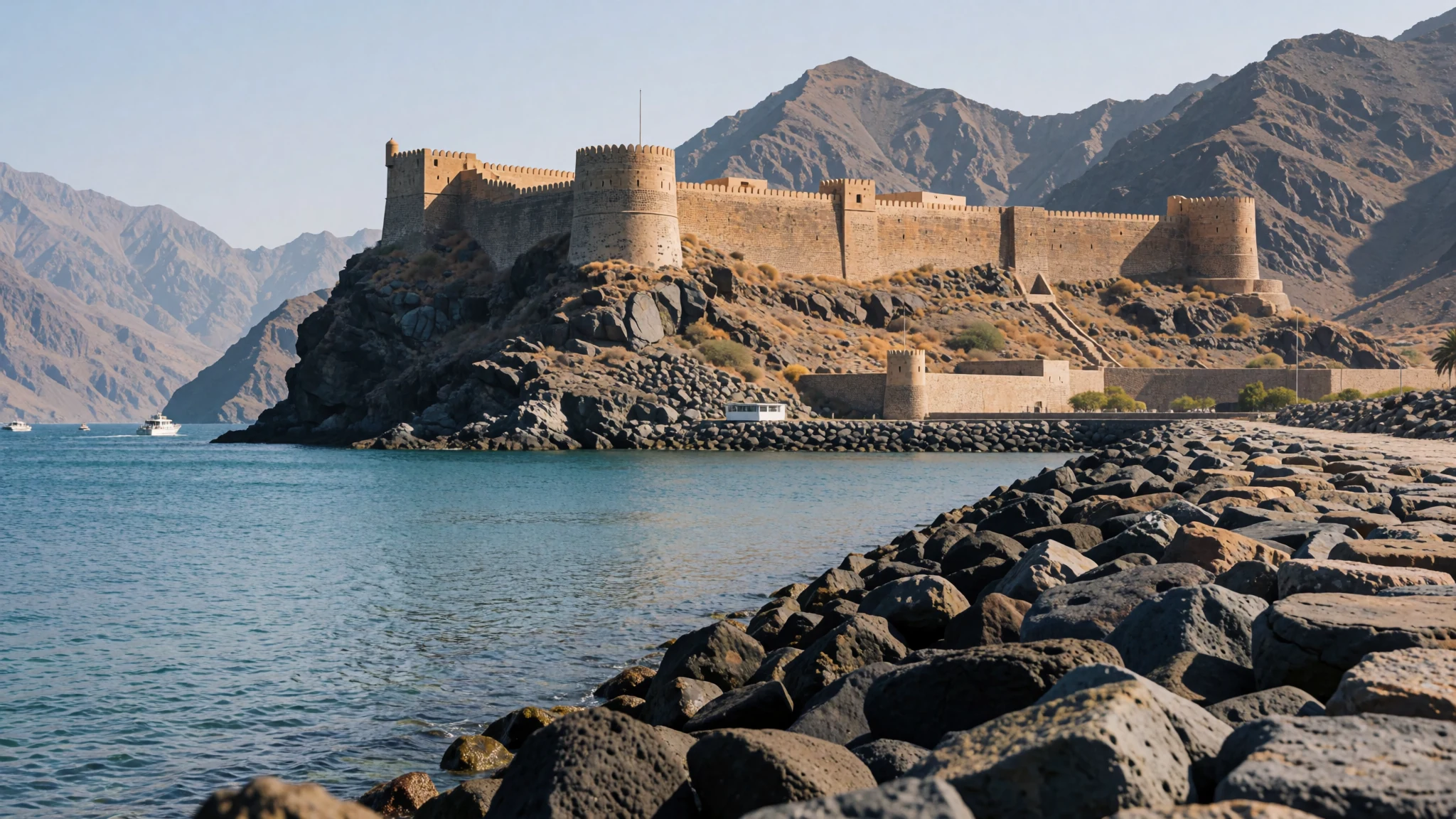
- Al Mirani Fort — Old Muscat harbour
Facing its twin fortress across the deep natural water basin, this defensive installation shares a colonial-era origin from the Portuguese period. While the interior is closed to the general public, the weathered stone bastions provide a striking photographic foreground against the backdrop of the dark mountain ridges behind the capital.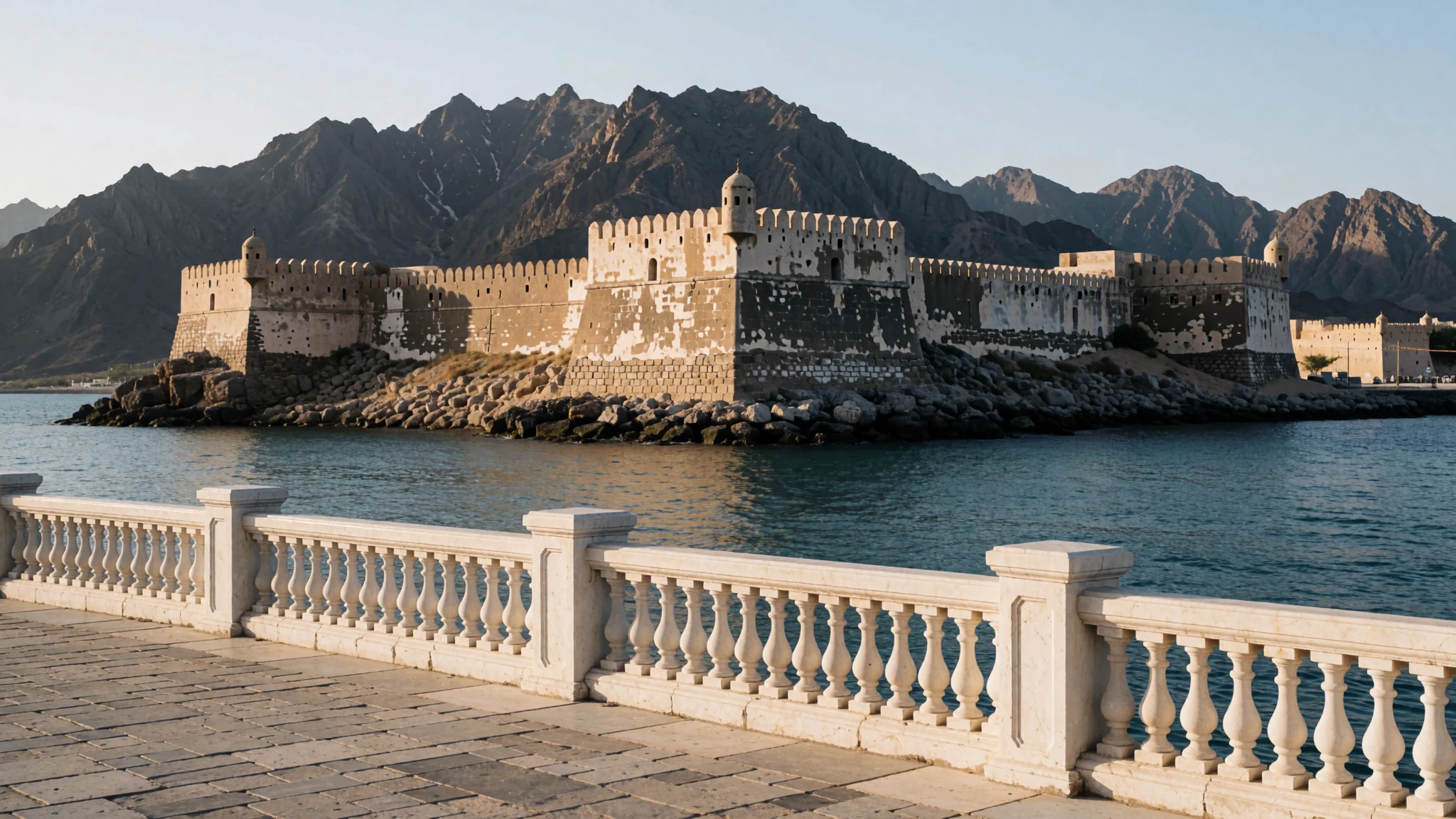
- Qasr Al Alam Royal Palace — Old Muscat
Serving as the official ceremonial office for the ruler of Oman, this architectural landmark stands proudly at the head of the harbour. The palace features a distinctive colonnade of blue and gold pillars surrounded by immaculate gardens, flanked closely by the historic fortifications guarding the bay entrance.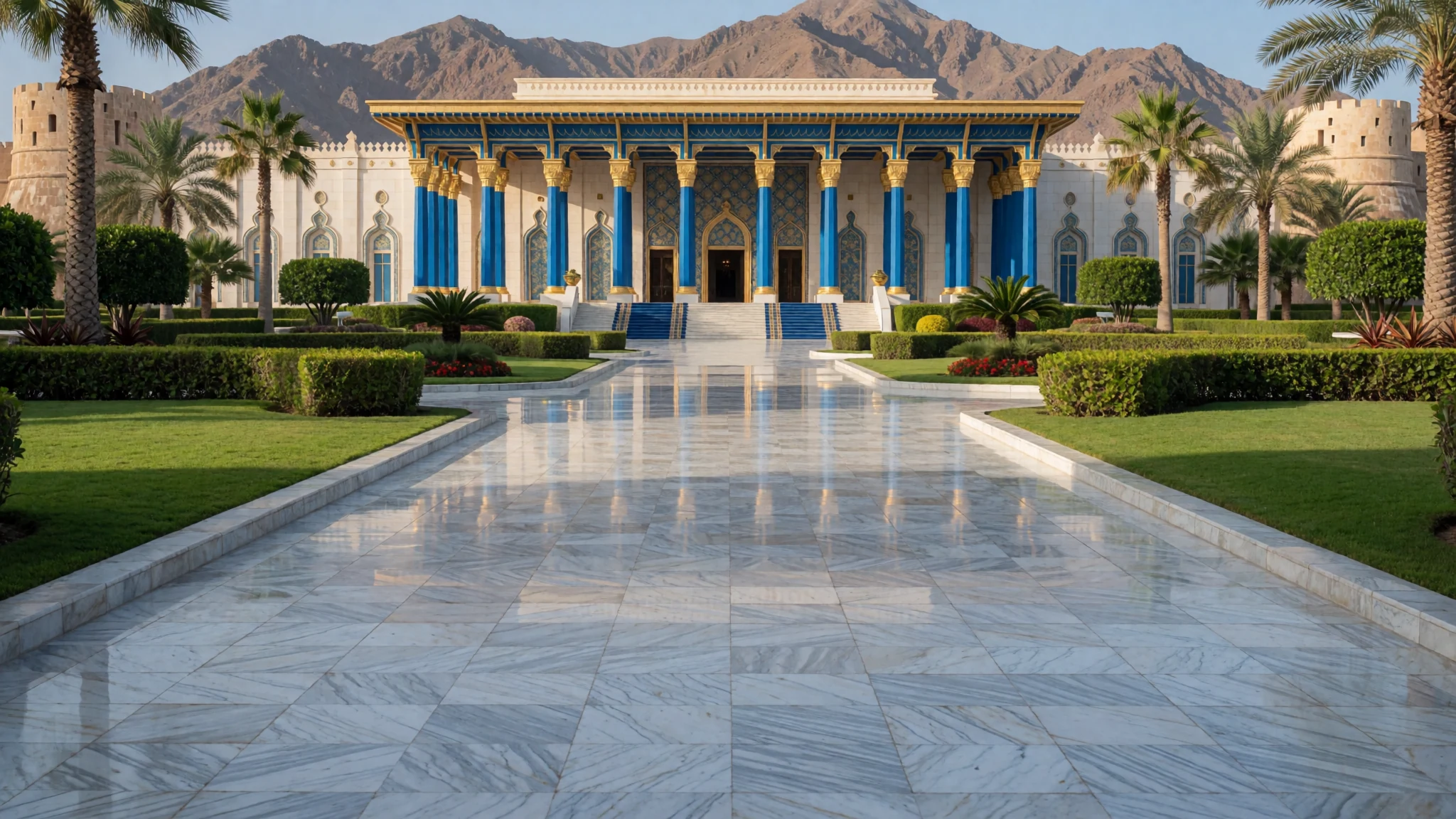
- Bait Al Zubair Museum — Al Alam Street, old Muscat
Housed in a thoughtfully designed cultural complex, this private museum presents extensive collections detailing Omani social history, traditional weapons, historic costumes, and domestic artifacts. Guided tours also allow visitors to explore a meticulously reconstructed traditional Omani townhouse situated right next door.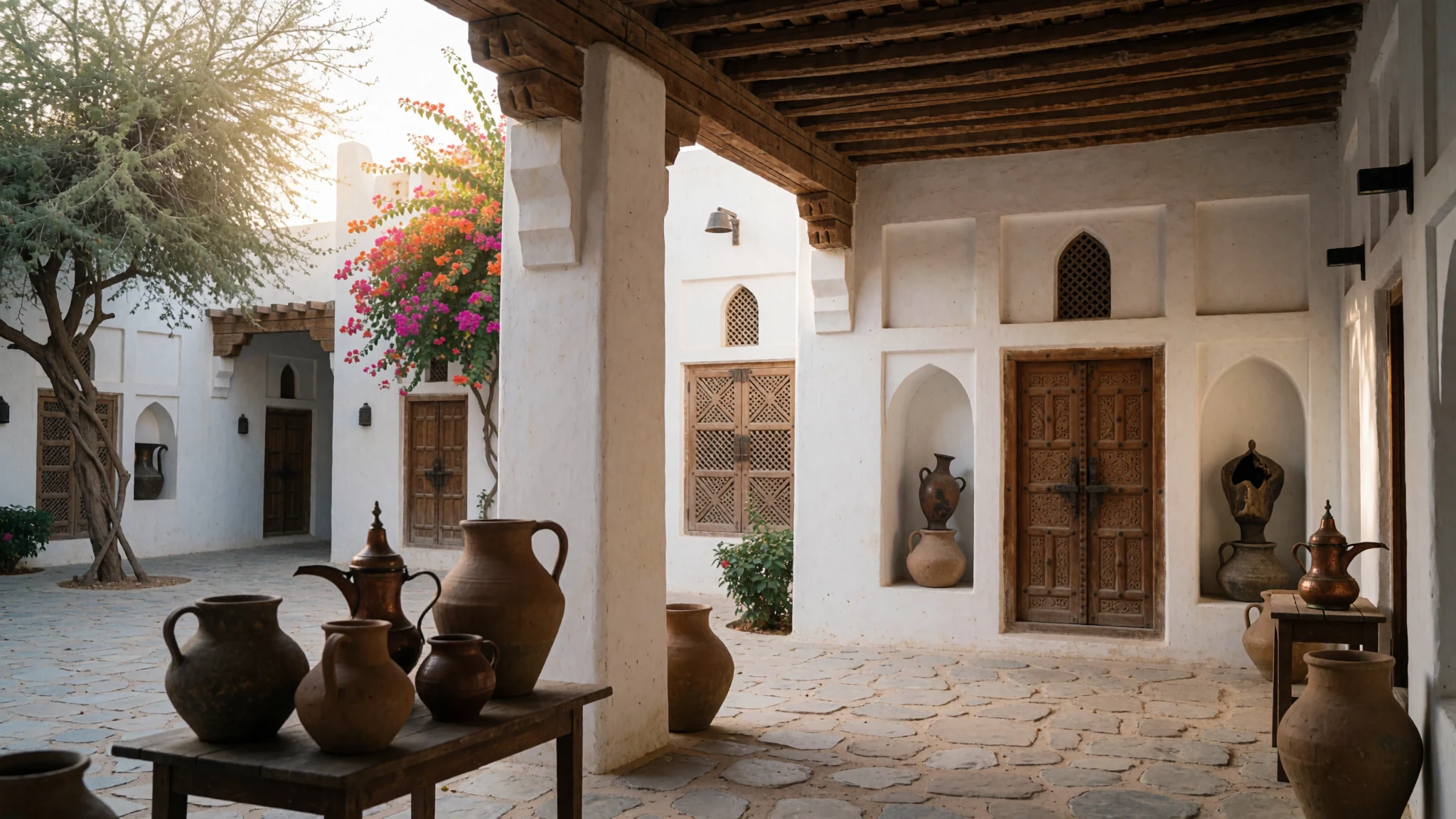
- Muscat Gate Museum — Old Muscat approach
Straddling the main roadway leading into the historic old town, this modest museum marks the exact boundary of the ancient city walls. Inside the stone arch structure, exhibits illustrate the urban evolution of the capital alongside the original wooden city gates that controlled access until recent decades.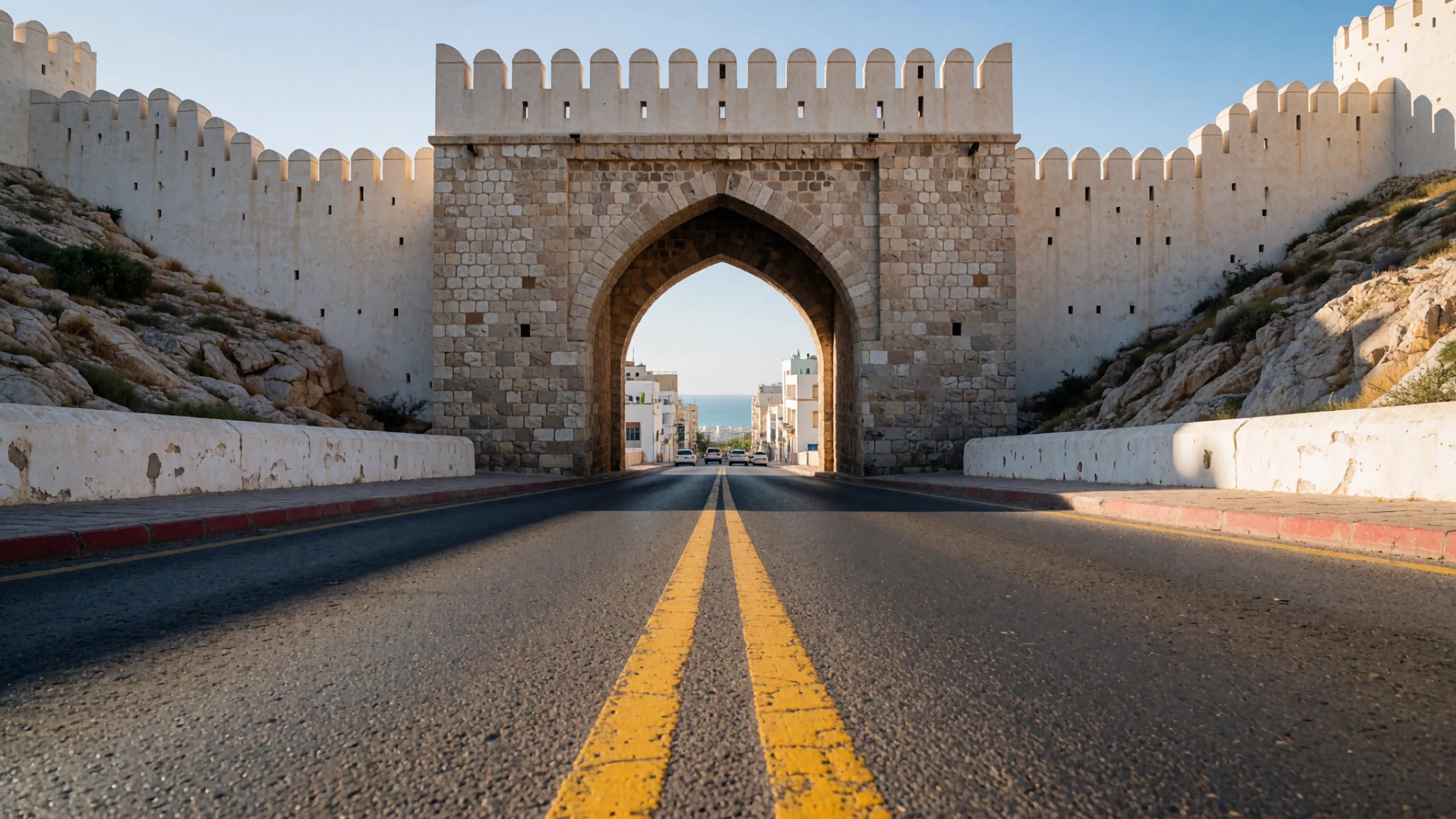
Culture
While Muscat shares broad linguistic and religious foundations with its neighbours in the Gulf Cooperation Council, Omani society possesses a distinct character shaped by centuries of oceanic exploration and historical ties to East Africa and the Indian Ocean. This outward-looking maritime history fostered a society noted for quiet hospitality, tolerance, and cultural heterogeneity. Shipbuilding remains an esteemed traditional craft, particularly in coastal towns like Sur where master carpenters spend a full year constructing traditional wooden Al Ghanja sailing vessels entirely by hand without modern blueprints. Daily life follows Islamic traditions respectfully, infused with a calm dignity that avoids the hyper-vertical extravagance found elsewhere in the region. Visitors will encounter polite locals who appreciate respectful engagement, modest attire, and an acknowledgment of local customs. Always ask permission before photographing local residents, particularly women, and ensure your shoulders and knees remain covered when walking through public residential neighbourhoods or visiting cultural sites.
What to wear
Traditional Omani attire for men is exceptionally elegant and uniform: the dishdasha, a simple, ankle-length, collarless robe usually in white or subtle earthy tones, paired with a finely woven kumma cap or an embroidered mussar turban tied around the head. A decorative ceremonial dagger known as the khanjar is worn at the waist during formal occasions and national holidays. Women traditionally wear colourful embroidered dresses over trousers, complemented by a black abaya and a matching headscarf when out in public. In contemporary urban daily life, younger generations and professional workers in Muscat frequently blend modern Western office wear with traditional garments, keeping the national dress visible in all professional and social contexts. For visitors, the dress code is straightforward and rooted in local modesty norms. Travellers should pack lightweight, loose-fitting cotton clothing that covers both shoulders and knees to ensure comfort in the warm climate while remaining respectful of local sensibilities. Swimwear is strictly reserved for hotel pools and private beach resorts, and comfortable walking sandals are essential for exploring uneven stone pathways and sandy souks.
What to eat
- Traditional Omani Platters — Traditional restaurants in the Al Khuwair district
Slow-cooked spiced meat dishes served over aromatic rice flavoured with cardamom, saffron, and cloves, reflecting centuries of spice route trade.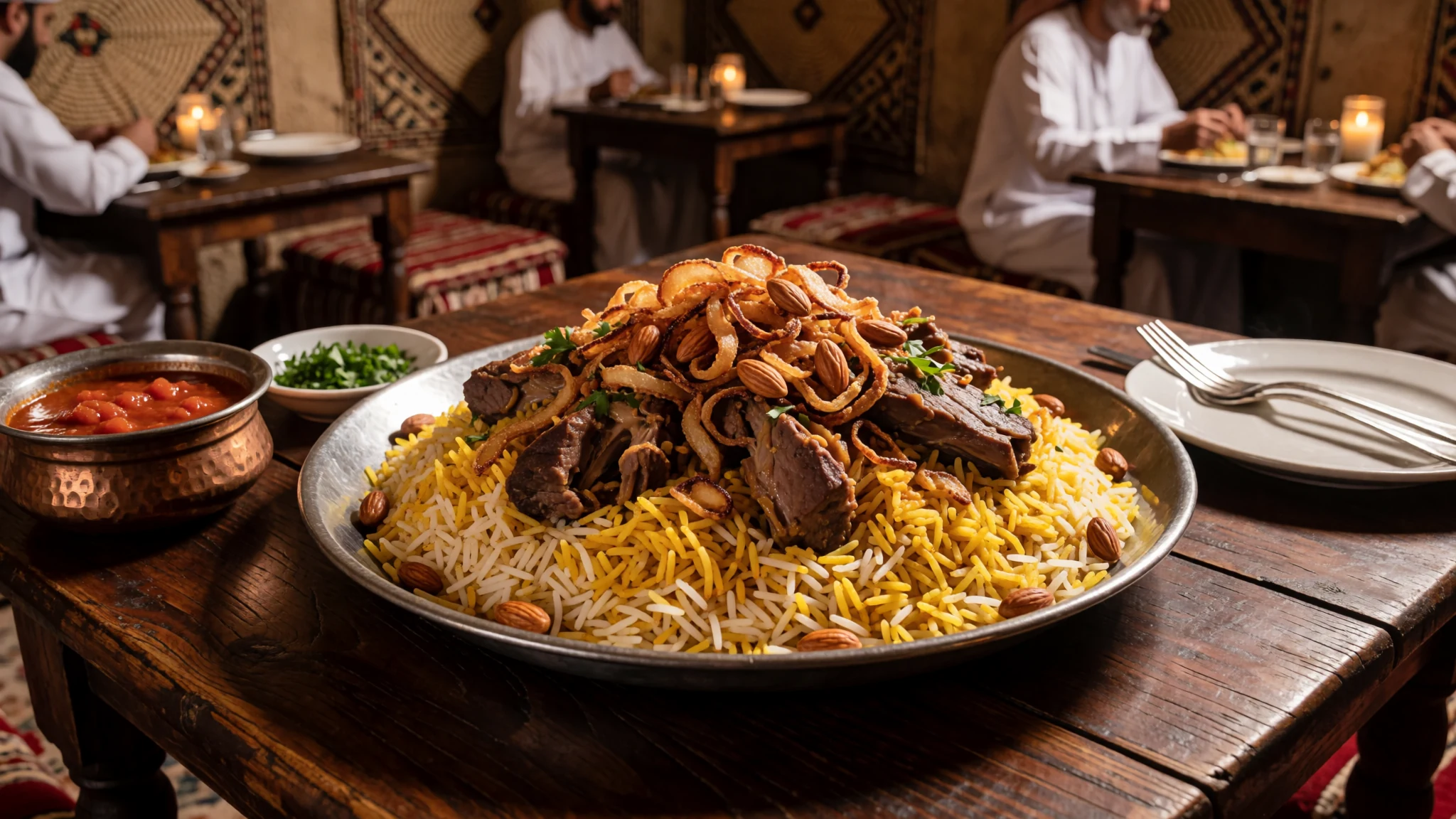
- South Indian Vegetarian Tiffins — Local canteens throughout Al Khuwayr
Crisp dosas, fluffy idlis, and spiced lentil broths served quickly on steel plates by long-established neighbourhood eateries catering to local workers.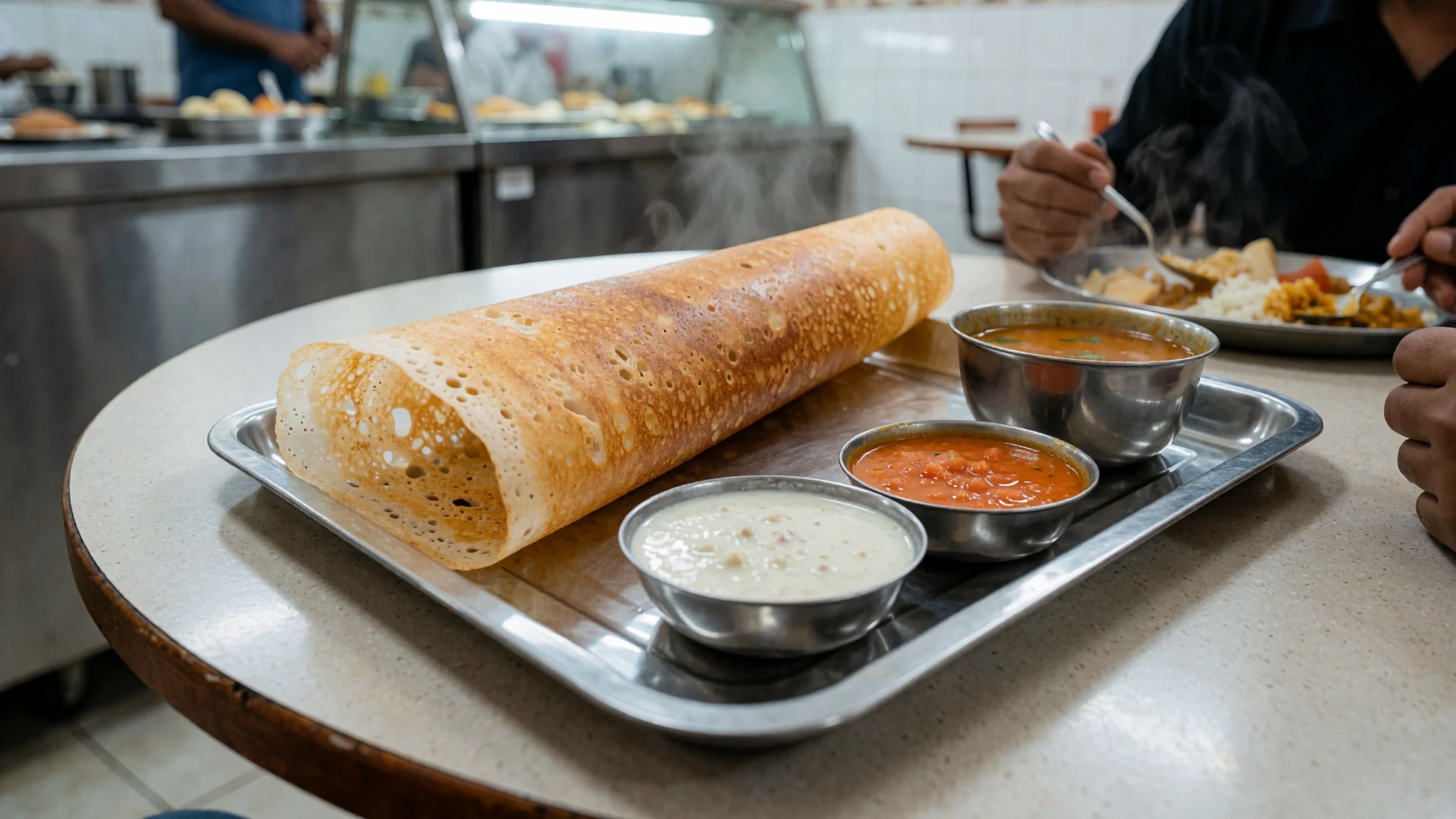
- Pakistani Biryanis and Curries — Local eateries in central Muscat
Fragrant layered rice dishes and slow-simmered meat curries prepared in simple, unassuming neighbourhood diners with counter seating.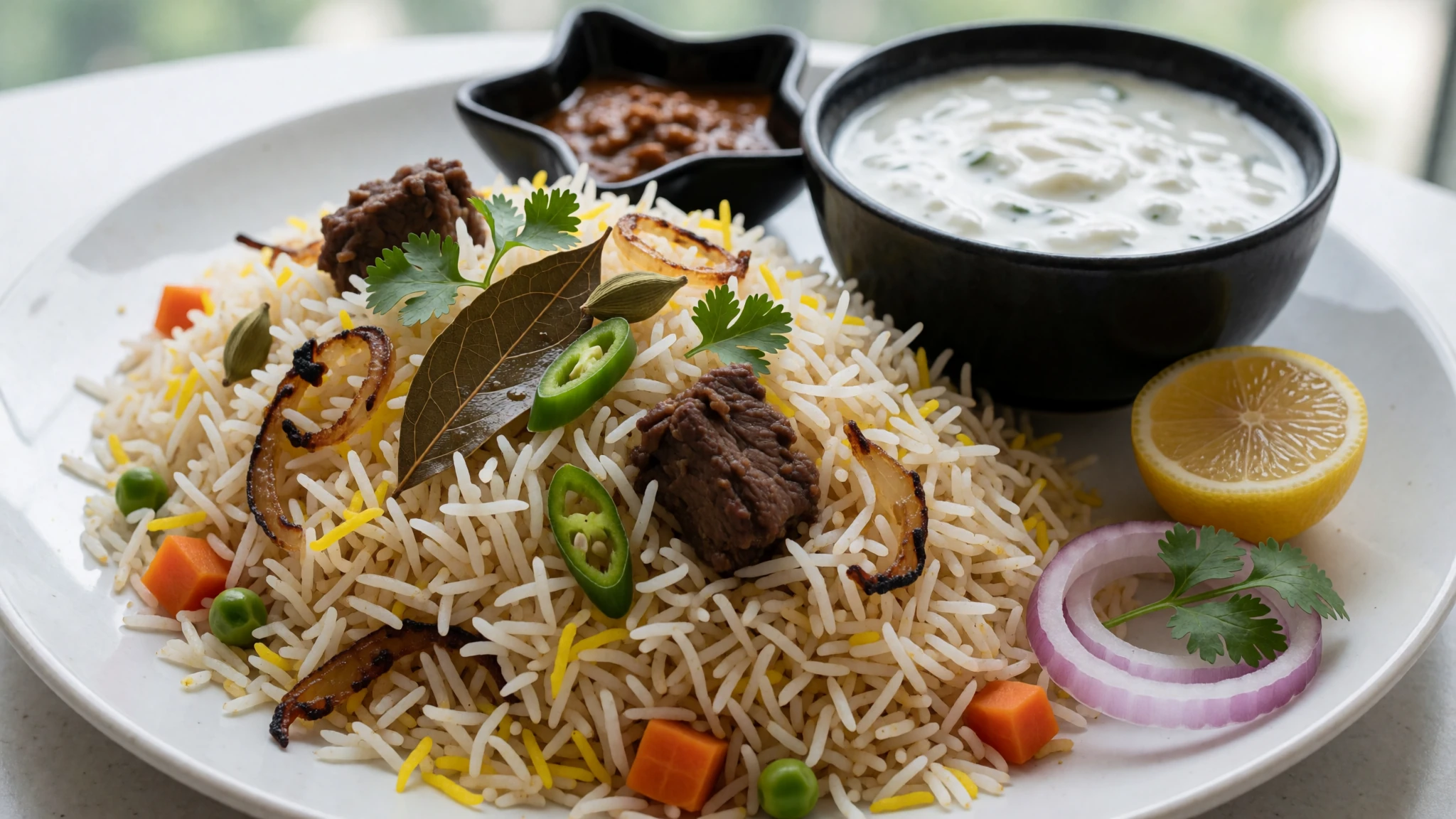
- Arabian Grill and Shawarma — Takeaway counters across the city districts
Marinated chicken and lamb cooked on vertical spits, wrapped in thin flatbreads with garlic paste and pickles for a quick meal. - Fresh Coastal Seafood — The Muttrah fish market stalls
Catch of the day grilled simply over open flames, seasoned with local lime and spices, reflecting the capital's deep maritime heritage.
Plan it
Best time. November to March offers pleasant daytime temperatures and cool evenings, making it ideal for exploring outdoors; summer months are exceptionally hot and humid.
How long. 2–3
Getting there. Fly into Muscat International Airport, then take an official taxi from the -1 floor or book a ride using the OTaxi app for fixed, reliable fares.
Budget. mid
Tips
- Agree on taxi fares before starting your journey if not using a rideshare app
- Carry cash in Omani Rials for small purchases in the traditional souks
- Drink plenty of bottled water throughout the day to combat the desert heat
- Start your outdoor sightseeing early in the morning before daytime temperatures peak
Etiquette
- Dress modestly with covered shoulders and knees in public spaces
- Always ask permission before taking photographs of local residents
Nearby
Sources
- Wikidata Q3826 (CC0)
- Wikipedia (CC BY-SA 4.0)
- Wikivoyage (CC BY-SA 4.0)