Al Rayyan
Al Rayyan, Qatar
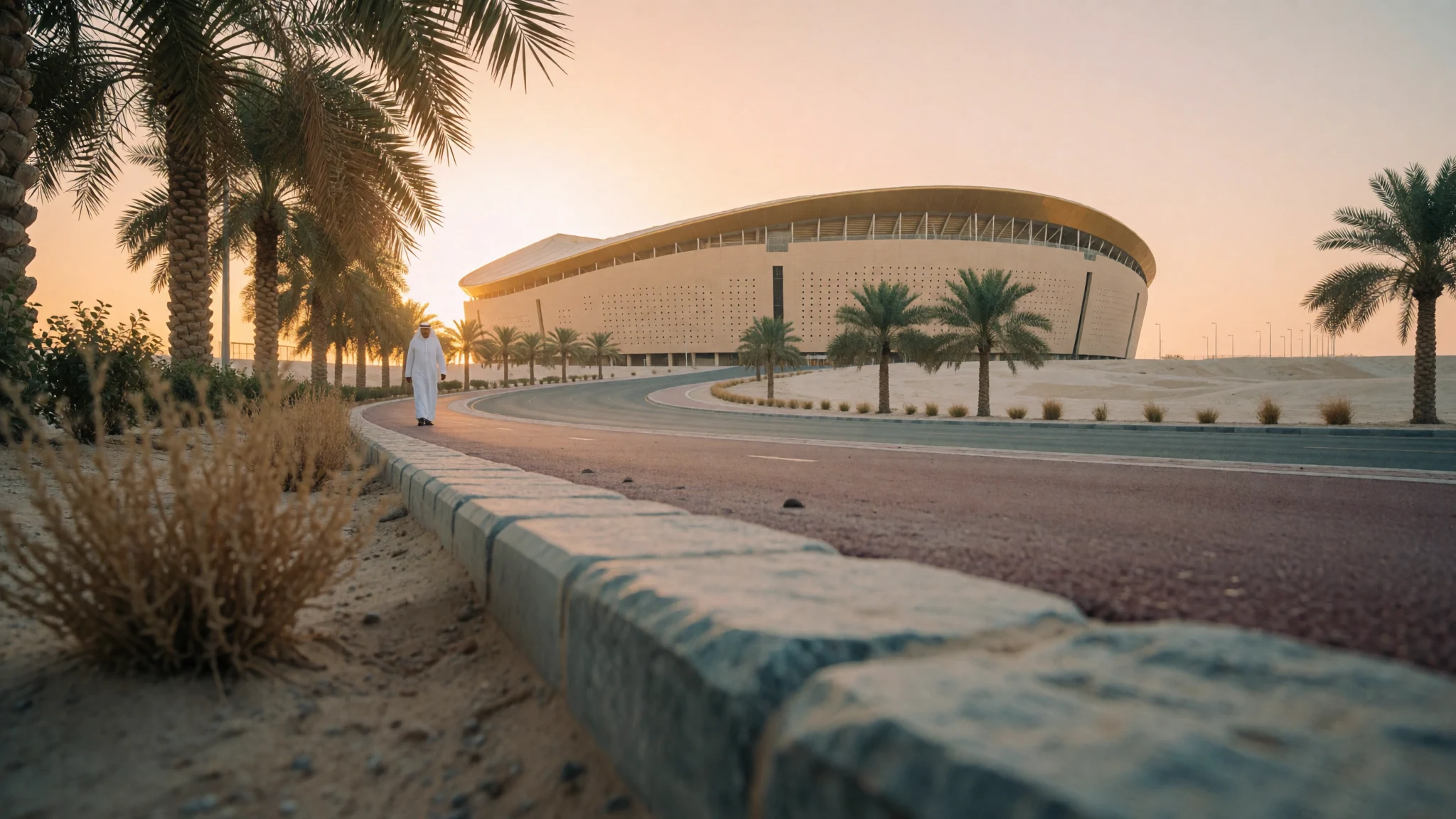
Al Rayyan is Doha's football-minded western suburb, worth a half-day for a modern Gulf stadium, desert edges and a look at how Qatar lives now.
The place
Al Rayyan is a municipality on the western side of Doha's urban sprawl in Qatar, and its name now reaches most visitors through football. The Ahmad bin Ali Stadium, popularly called Al-Rayyan Stadium, stands in the Rawdat Al Jahhaniya district, about 9 km north-west of the centre of Al Rayyan and roughly 20 km west of Doha. It is the home ground of Al-Rayyan Sports Club. Around it the land is flat, pale and open, and the desert is never far from the edge of the suburbs. Expectations need setting honestly. Al Rayyan is not an old walled town with a tangle of lanes; it is a modern, car-dependent stretch of villas, ring roads, malls and sports grounds, and distances between things are longer than a map suggests. Qatar itself is a small peninsula with outsized wealth built on natural gas, and in recent years it has pushed into education, aviation and media. That money shows in the air-conditioned malls and the stadium architecture, and it sits beside a large migrant workforce whose pay and treatment have drawn serious criticism. Summers are fierce, and midday walking is unpleasant, so outdoor plans belong to the cooler months or to the evening. A visit works best as a half-day alongside Doha: a look at the stadium or a match, a museum, supper in a souq, then back to the city.
Its story
Al Rayyan's football story rests on a ground with a short history. An earlier stadium opened here in 2003 with seats for 21,282 and was pulled down in 2015 to make way for a larger replacement. The new Ahmad bin Ali Stadium holds 45,032 and is named after a former emir of Qatar, Ahmad bin Ali Al Thani. It is home to Al-Rayyan Sports Club. Behind a stadium so recent lies a far older peninsula. Evidence points to Bedouin and Canaanite groups living in Qatar from about 4000 BCE, though little built from those centuries survives, and archaeologists keep finding sandstone buildings and mosques beneath the sand. The Al-Jassassiya rock carvings in the north-east, around 900 petroglyphs thought to date to the 15th century BCE, give the clearest sense of how early people lived and marked the land. Zubarah, a ruined port town with a fort that now works as a museum, shows the later trading life of the coast. Over the centuries the peninsula was dominated by a succession of eastern and western powers, and then gas wealth turned it into the compact, influential state of today. Al Rayyan's own story is part of that change: from desert edge to a suburb of stadiums, schools and malls, within a single lifetime.
What to see
- Ahmad bin Ali Stadium — Rawdat Al Jahhaniya
The home of Al-Rayyan Sports Club is the obvious first stop, a modern football ground in the Rawdat Al Jahhaniya district. Seeing it on a match night gives the best sense of local life; otherwise treat it as an architecture stop and check the club's official channels for events.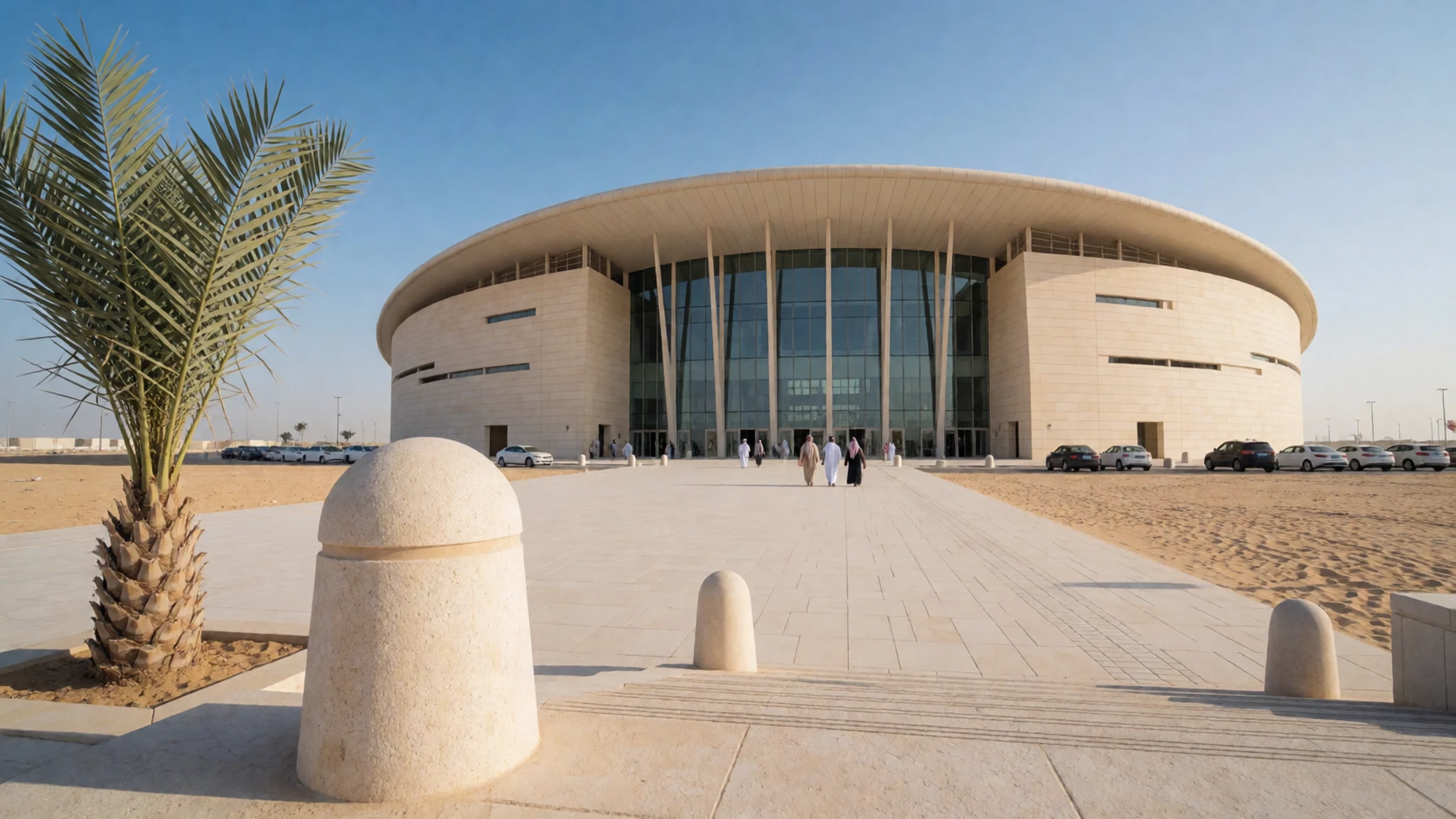
- Museum of Islamic Art, Doha — Doha Corniche
A calm, well-organised museum on Doha's waterfront, covering Islamic metalwork, ceramics, textiles and manuscripts from a wide geographic spread. It makes a good cool-hours counterpoint to the stadium and is easy to combine with a corniche walk. Check the official site for opening times.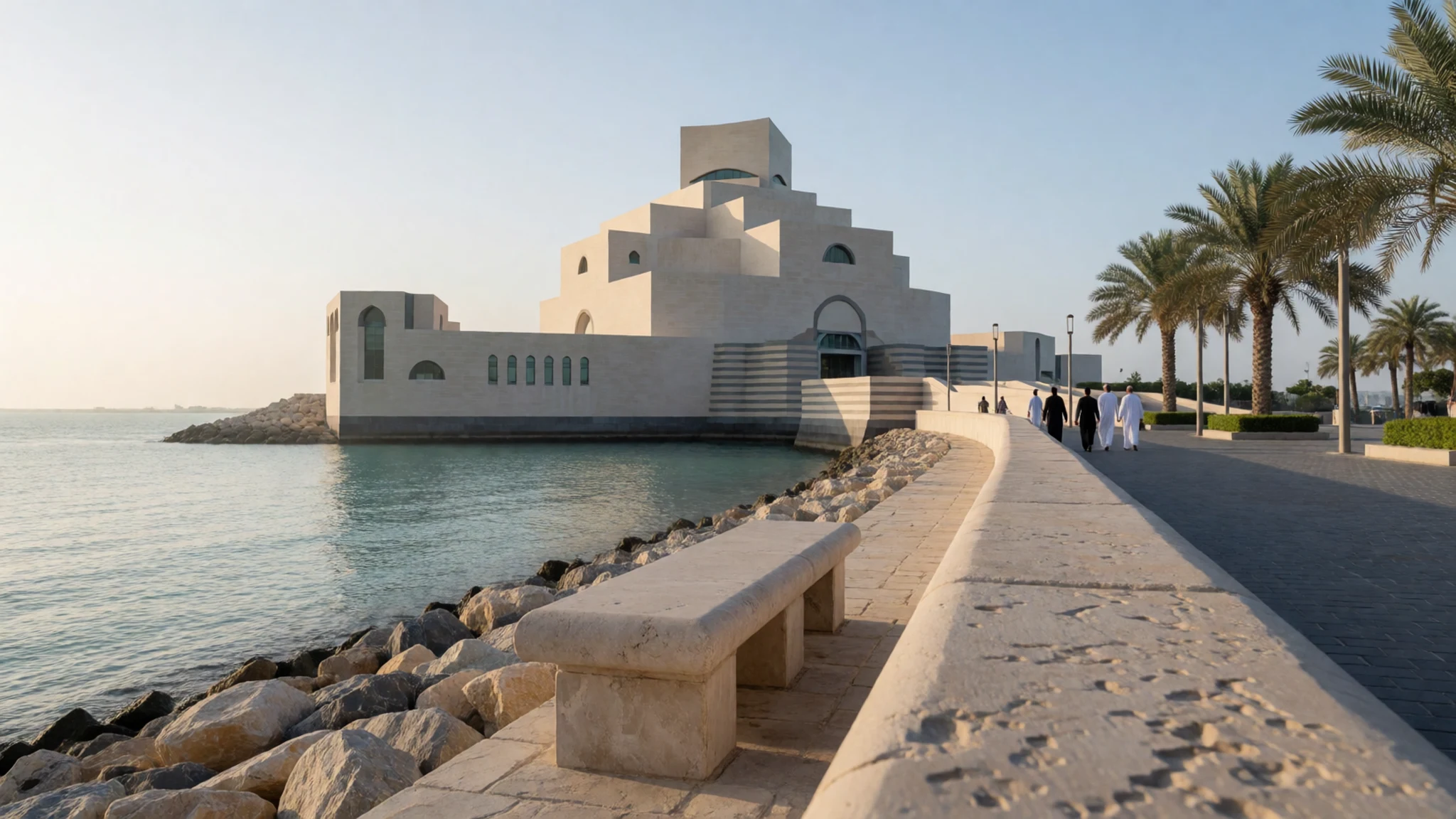
- National Museum of Qatar — Doha
The building is shaped like a desert rose, the crystal-like formation found in Gulf sands, and the galleries tell the story of the peninsula from its early inhabitants to the present day. Allow a good half-day, and confirm hours and ticketing on the official website before going.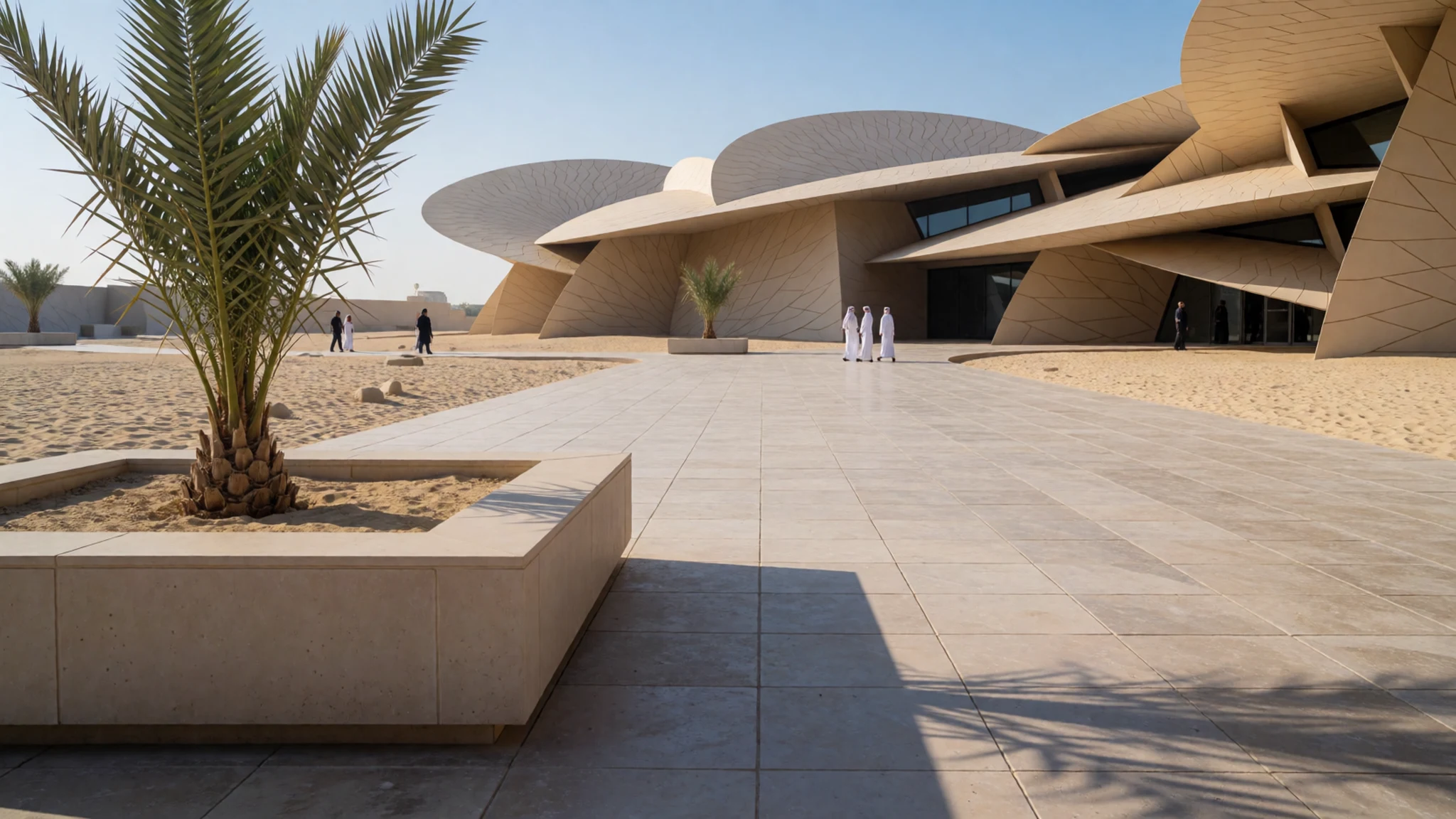
- Souq Waqif — Central Doha
The traditional marketplace of Doha, rebuilt in an old style, sells spices, textiles, handicrafts and everyday goods, with many eating places that fill up after dark. Many shops pause in the afternoon, so go in the evening. Bargaining is normal on souvenirs.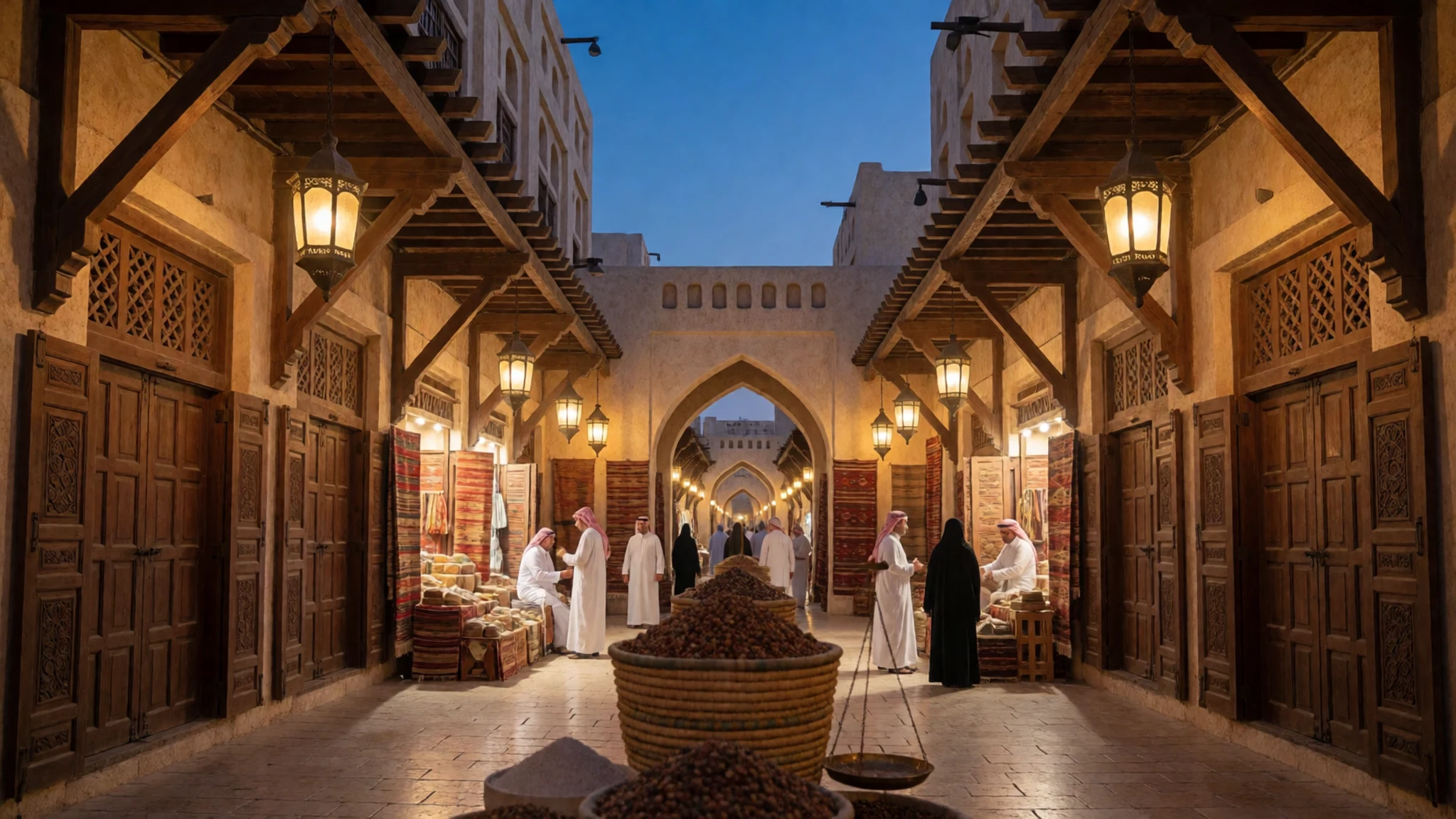
- Al Koot Fort — Central Doha
A restored fort in the middle of Doha that now houses traditional handicrafts, and a short walk from the souq. It is a small, quick stop, and a reminder that defensive towers and forts were once part of life across the whole peninsula.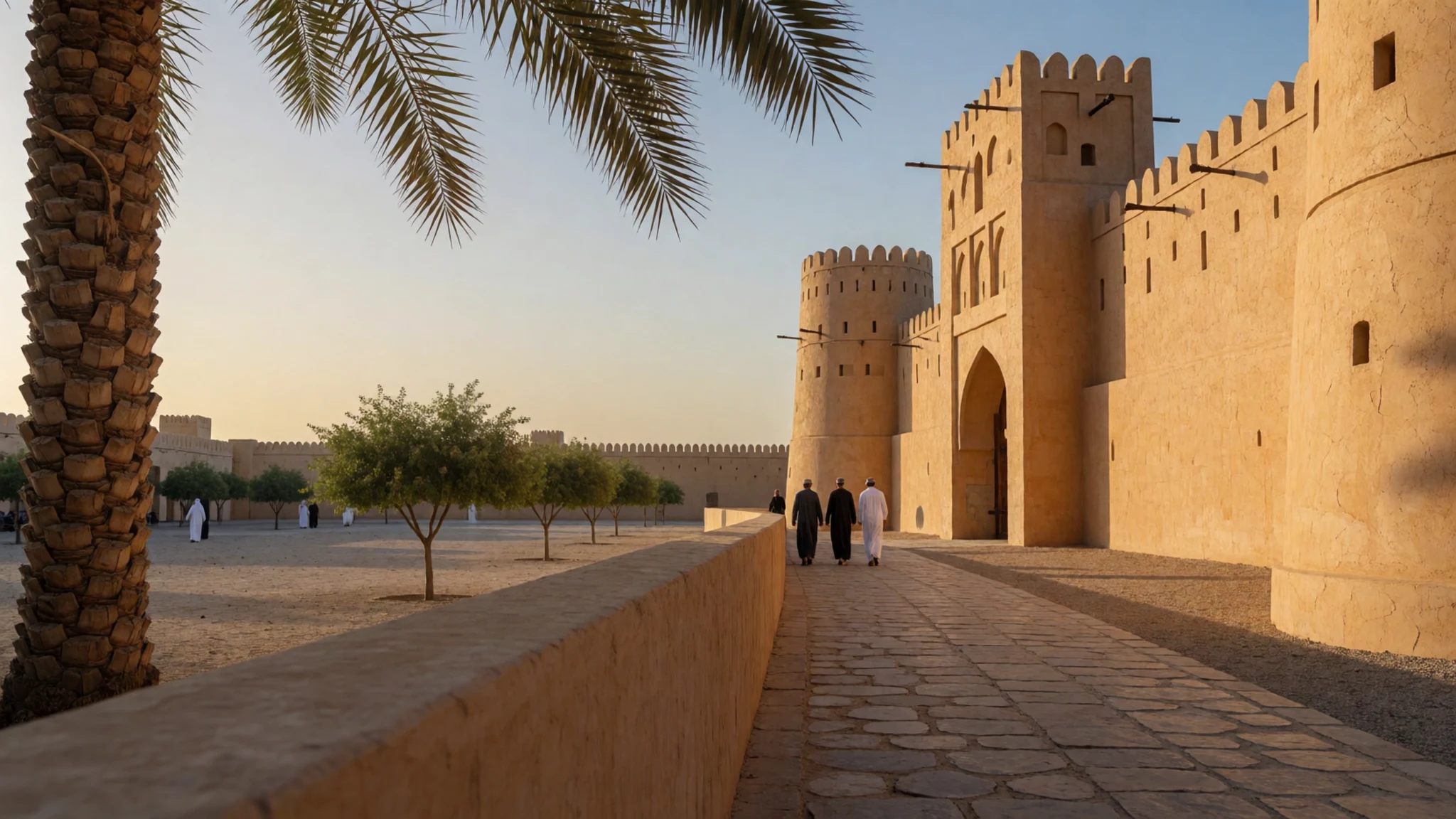
Culture
Al Rayyan shares the customs of the wider Arab Gulf, and Qatari social life runs on honour, family and reputation. Qataris are a distinct people, not interchangeable with their neighbours in Bahrain, the UAE or Saudi Arabia, and comparing the countries is a poor opener. Tribal and family ties still matter, and speaking badly of someone's relatives lands hard. Public insults, including online ones, can be prosecuted, so disagreements are better settled quietly and in private. Hospitality is real but mostly happens at home, which is why traditional Qatari cooking is more often met through an invitation than in a restaurant. Alcohol is tightly restricted, sold only in a few licensed venues, and public drunkenness carries heavy penalties. Friday is the weekly day of prayer, and the call to prayer shapes the rhythm of the day. Football gives Al Rayyan a more relaxed public face, with club colours, family crowds and match-night noise all part of local life. Alongside this sits a large community of South Asian and other migrant workers, whose eateries and shops are a big part of how the area actually feeds and runs itself. Always ask before photographing any person, especially a woman, because street photography without consent is strongly frowned upon.
What to wear
In Al Rayyan, traditional Qatari dress is the thobe for men, a long robe usually in white cotton or lighter blends, worn with a ghutra headcloth held in place by a black cord called an agal. Women wear the abaya, a long black cloak, often with a shayla headscarf, and some also cover the face. These are everyday clothes rather than costume, and they are worn year-round, with heavier fabrics in the cooler months. Today many Qatari men still wear the thobe daily, while abayas range from plain black to carefully tailored designs. The wider population is mixed, so shirts, kurtas, saris, jeans and football shirts all appear, especially on match days. Visitors should dress for heat and for modesty. Light, loose cotton or linen that covers shoulders and knees is comfortable and avoids unwanted attention in malls and souqs. Women do not need to wear an abaya, but a light scarf is useful for mosques, where hair, arms and legs should be covered for everyone. Malls and stadiums are strongly air-conditioned, so carry a thin layer. Comfortable closed shoes suit stadium walks and dusty ground, and a hat and sunglasses matter from late spring to early autumn.
What to eat
- Machboos — Family homes; Gulf-style restaurants in Doha
Spiced rice cooked with meat or fish, the dish most associated with Gulf home cooking. Traditional Qatari food is rare in restaurants, so the best chance is an invitation to a local home, or a Gulf-style eatery in Doha.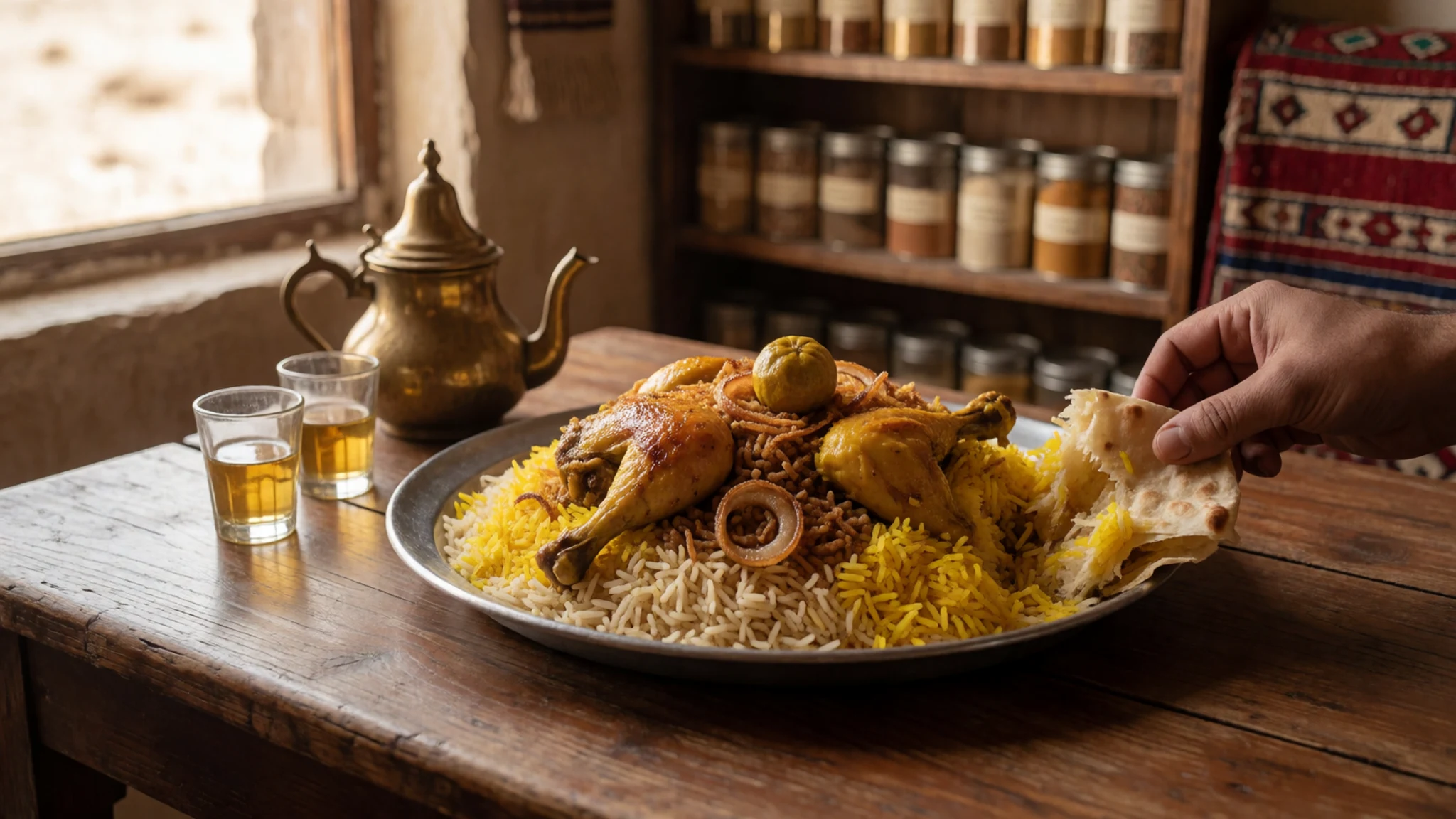
- Shawarma and kebabs — Takeaway counters along the main roads
Sliced, spiced meat in flatbread, or grilled skewers with bread and salad. Many of the plainest-looking takeaways serve the best versions, and they are a cheap, quick meal around Al Rayyan's main roads.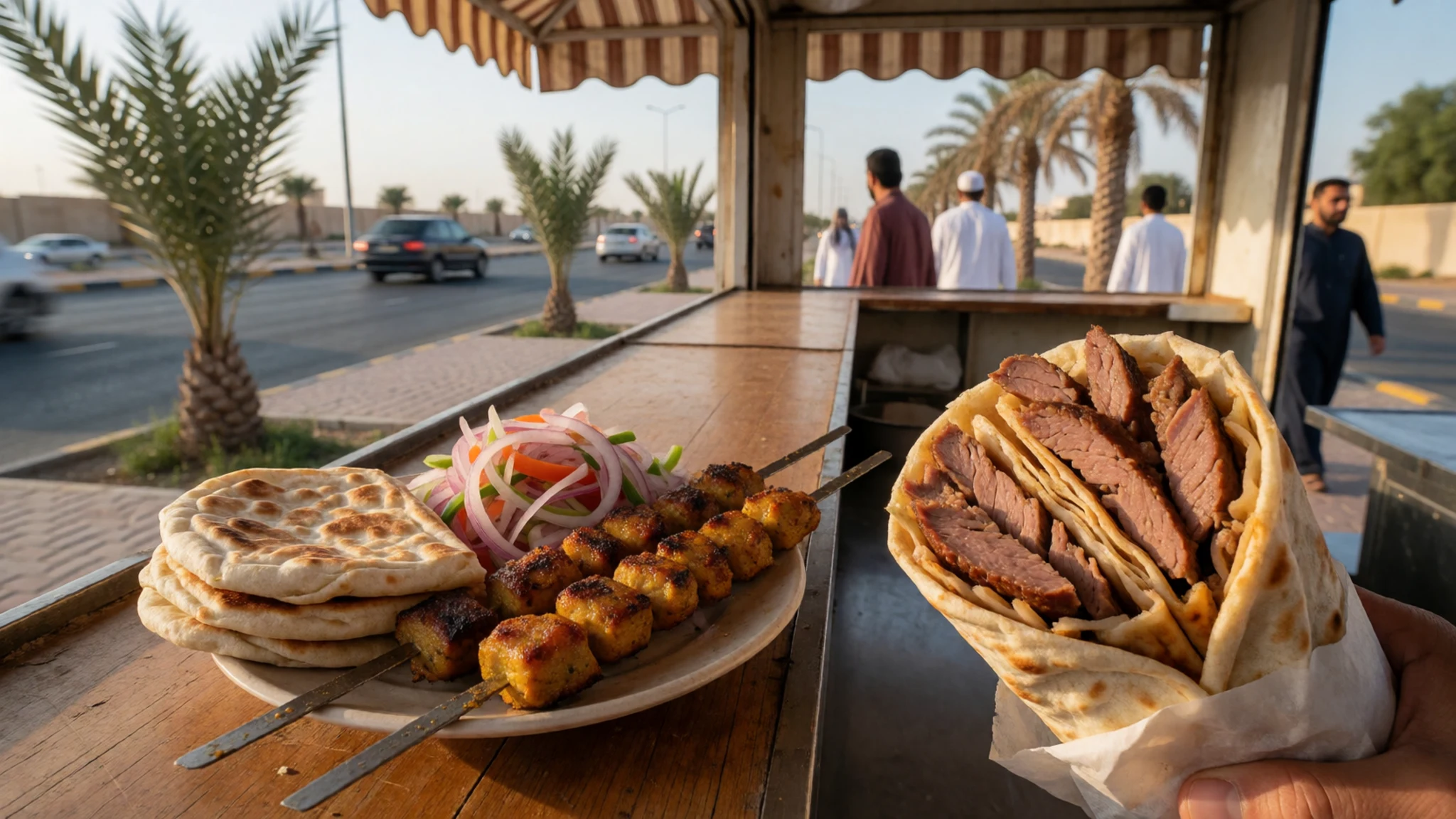
- Hummus and flatbread — Lebanese and Levantine restaurants; souq eating places
Chickpea and sesame dip with warm bread, often with olive oil and a plate of pickles. It is a reliable meal-starter at any Middle Eastern restaurant and works well for vegetarians. - Biryani and curries — Worker eateries and family restaurants across the suburbs
Indian and Pakistani cooking is everywhere here, from family restaurants to plain eateries serving workers. Expect some curious looks in the simplest places, but also a warm welcome and good value. - Karak chai — Roadside tea counters and small cafés
Strong tea boiled with milk, sugar and cardamom, served in small cups and popular across the Gulf. It suits the evenings after a match or a souq walk, and Indian visitors will find it familiar.
Plan it
Best time. November to March, when days are warmer rather than punishing and evenings are comfortable for the souq and stadium; summer is very hot and best spent indoors.
How long. 1–2
Getting there. Fly into Hamad International Airport in Doha, then continue by road; Al Rayyan lies about 20 km west of the city, and the stadium is a further short drive north-west.
Budget. mid
Tips
- Check entry rules for your passport before booking, as visa-free stays differ by nationality
- Book match tickets and museum entry through official sources and check opening times on the official site
- Plan outdoor time for mornings or evenings and carry water at all times
- Expect to use taxis or ride-hailing, as distances are long and the suburbs are built around cars
- Keep alcohol out of your luggage, as bottles are confiscated at the airport
Etiquette
- Ask permission before photographing people, especially women
- Dress modestly in malls, souqs and mosques
- Avoid public criticism or jokes about individuals or families, in person or online
Nearby
Sources
- Wikidata Q401643 (CC0)
- Wikipedia: Ahmad bin Ali Stadium (rev 1385236848) (CC BY-SA 4.0)
- Wikivoyage: Qatar (rev 5414941) (CC BY-SA 4.0)