Mljet
Mljet, Croatia
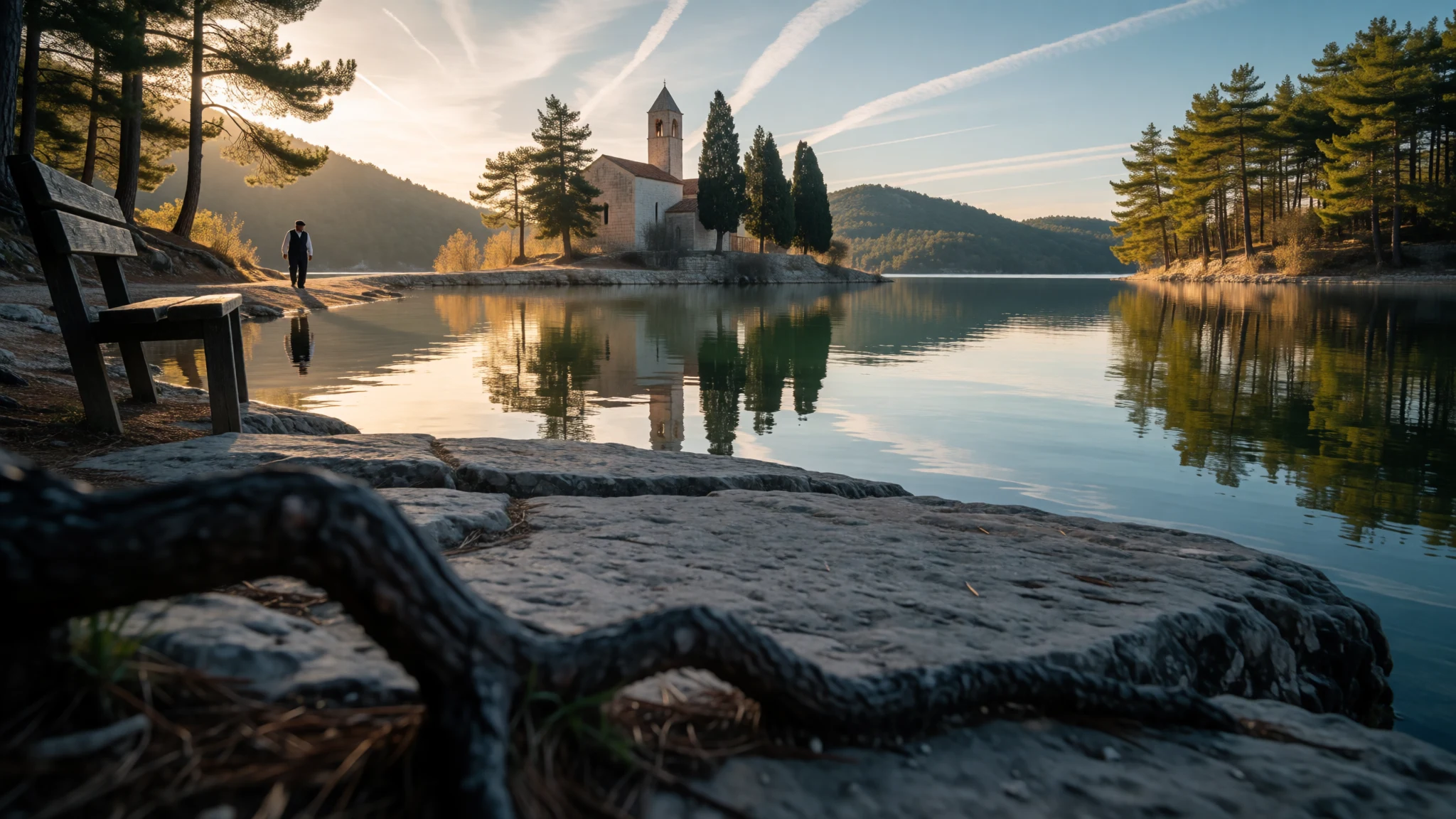
Mljet is a forested Adriatic island of linked lakes, a monastery on an islet and quiet coves, where days run slowly and mostly without cars.
The place
Mljet is a long, narrow island at the southern end of the larger Croatian islands in the Adriatic, lying south of the Pelješac peninsula and separated from it by the Mljet Channel. It stretches about 37 km from end to end but averages only about 3.2 km across, so the sea is rarely out of sight. More than 84% of the surface is forest, which is why Croatians sometimes call it the green island. Underneath, limestone and dolomite form the ridges and slopes, and a few hollows sit below sea level, filling with brackish water to make seasonal lakes that locals call blatine or slatine. The western end is protected as Mljet National Park, established in 1960, and it holds the two connected lakes that draw most visitors. Settlements are small and scattered. Polače, Pomena and Sobra are the ferry ports, and the island has a population of 1,088. The highest ground reaches 514 m. Lodging is thin on the ground: one large property stands in the north-west corner near Pomena, and the rest is rooms and apartments in the villages. The climate is Mediterranean, with January averaging about 9 °C and July about 24 °C, so summer is warm rather than punishing, although sun on bare rock can feel fierce by midday. Nightlife is close to non-existent, and that is much of the appeal. Mljet suits people who want swimming, cycling and walking among pines rather than bars and beach clubs. Getting around without a car or a bike takes planning, because distances are longer than the map suggests and public transport is limited.
Its story
Mljet appears in some of the oldest written descriptions of the Adriatic. Greek and Roman geographers called it Melita, and a text attributed to Scylax of Caryanda, dated to the 6th century BC, is usually cited as the first. The name is often linked to the Greek word for honey, and over the centuries it shifted into the Slavic form Mljet. Ancient writers also connected the island with a small breed of dog, the Melitean lapdog, though others argued the dogs came from Malta, which was also called Melite. Roman history touches Mljet less kindly. According to Appian, islanders accused of piracy rebelled against Rome and were put down during Octavian's Illyrian campaigns, with the young men killed and the rest enslaved. Later, the emperor Septimius Severus is said to have banished a man named Agesilaus here. By about 950 the Byzantine emperor Constantine VII listed Mljet among the islands held by the Narentines, and ownership was disputed with neighbouring Zachlumia. The same emperor, in the 10th century, was the first to argue that Mljet was the Melita on which Saint Paul was shipwrecked in the Acts of the Apostles, an identification that Malta also claims. Another tradition places Odysseus here: a sea cave on the southern coast carries his name, and the legend says he sheltered inside after a wreck. None of this can be proved, but it shows how long sailors have treated the island as a refuge.
What to see
- Mljet National Park lakes — Western Mljet, near Pomena and Polače
Mljet National Park covers the island's western end and is built around two linked lakes, the larger Veliko Jezero and the smaller Malo Jezero. Pine woods reach the water, and a path circles the shores, popular for cycling and swimming. Snorkellers look for large mussels in the smaller lake. Check the park's official pages for entry arrangements.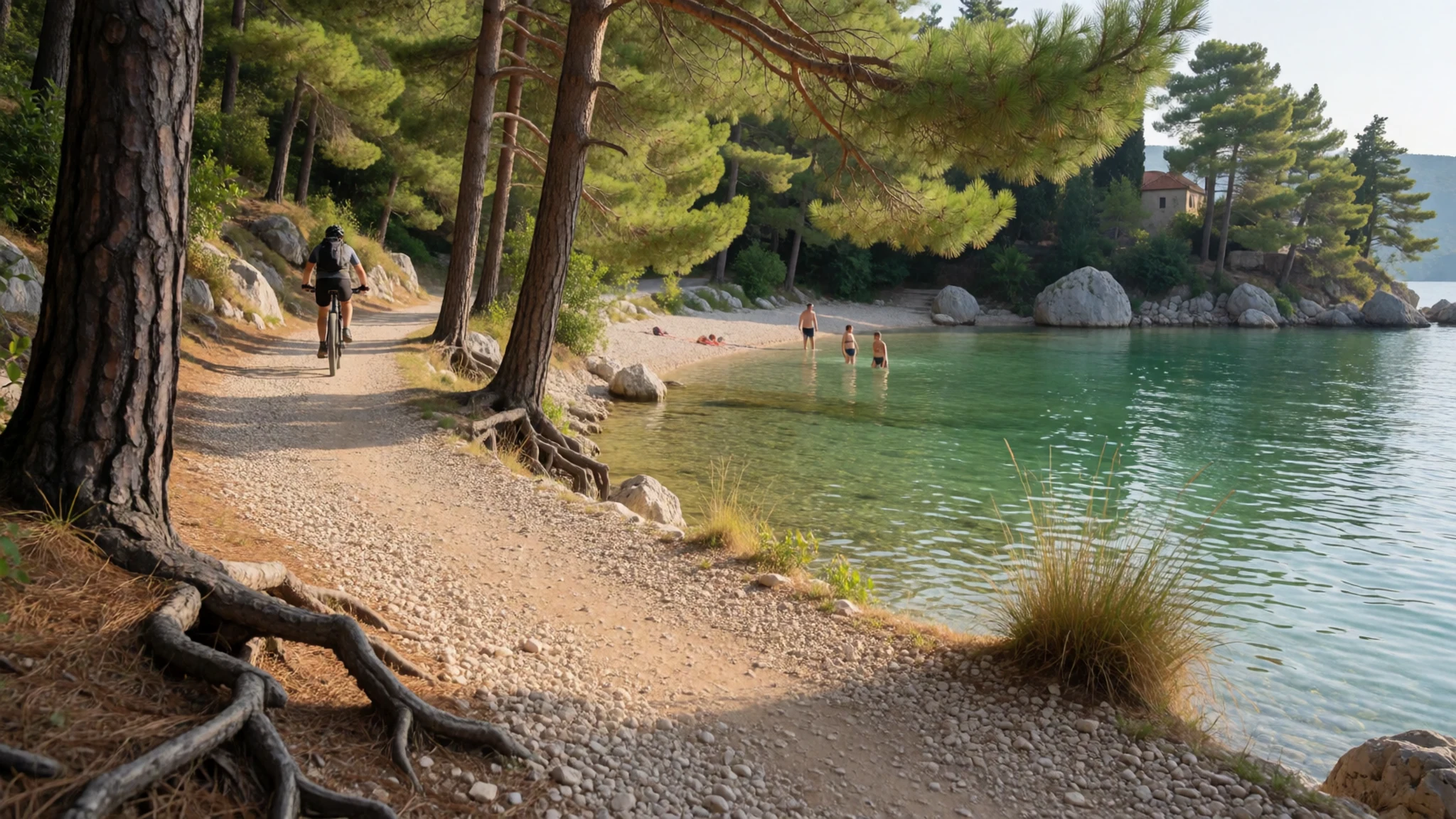
- St Mary's islet and its monastery — Inside the larger lake, Mljet National Park
Mljet has a monastery on a small islet in the middle of the larger lake, reached by boat from the shore. Boats run roughly hourly in season, but schedules shift, so confirm the last return crossing at the park before heading out. A restaurant also operates on the islet, and the whole place can be walked round in minutes.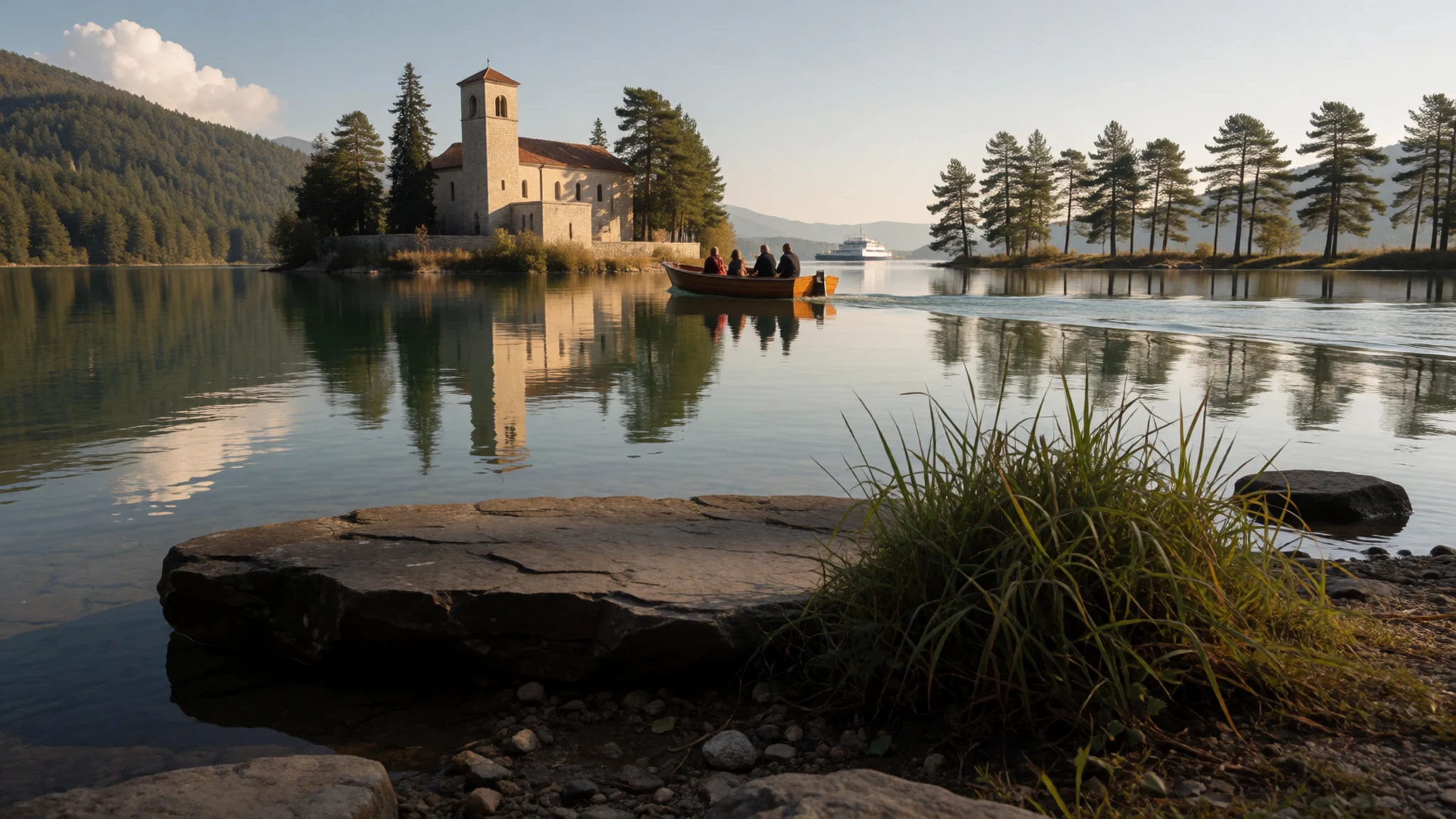
- Saplunara beaches — Eastern tip of Mljet
Saplunara, near the eastern tip of Mljet, has three sandy beaches, a change from the rock and pine elsewhere on the island. The bay itself is easy to overlook, but walking on leads to Blace, a secluded stretch of about 800 m. Facilities are modest, so bring water, snacks and something for shade.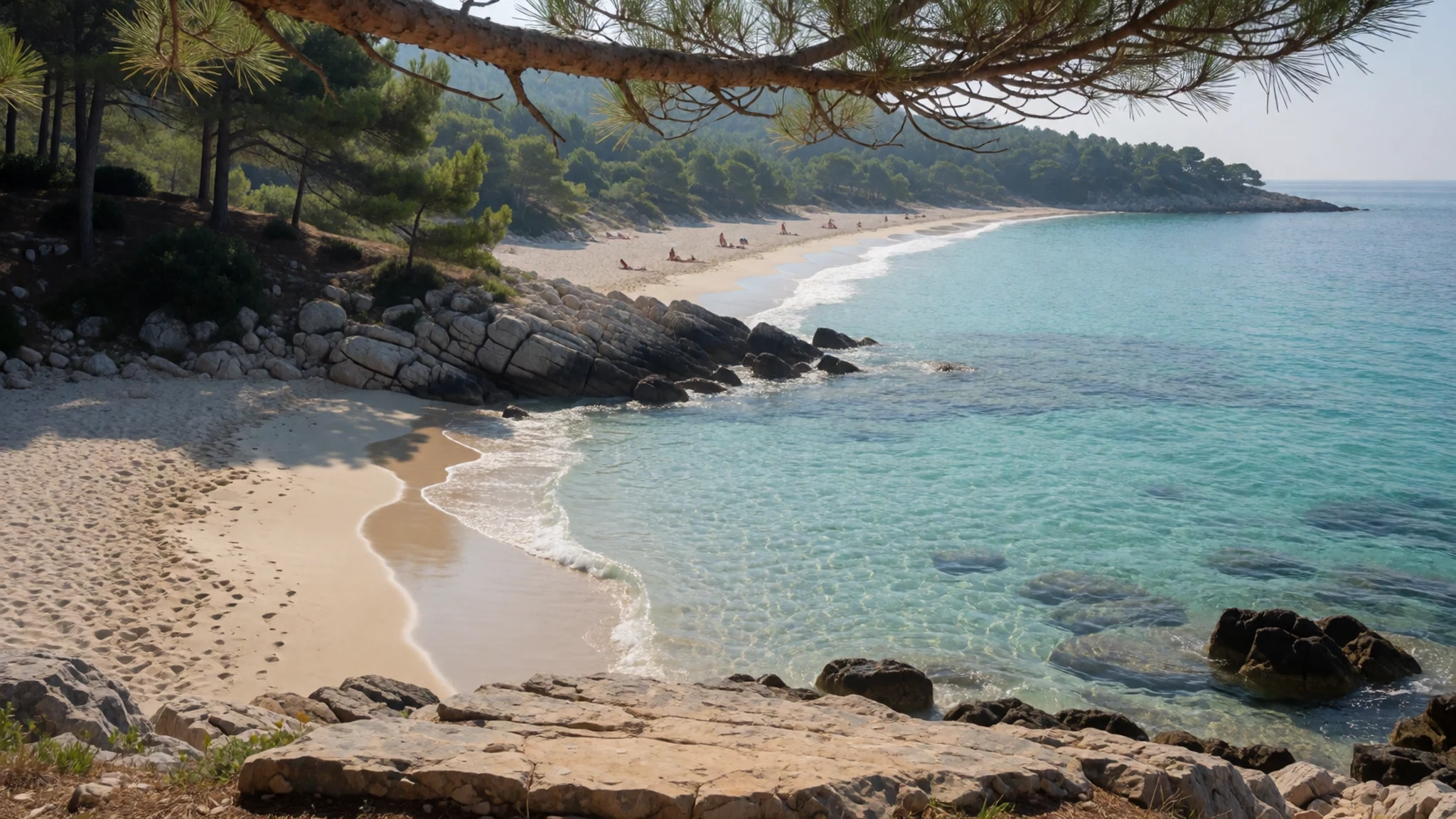
- Odysseus's Cave — Rocky southern coast of Mljet
Odysseus's Cave, also written Ulysses' Cave, is a large egg-shaped chamber in the rocky southern coastline, entered through a tunnel of about 30 m that local fishermen use as a harbour. Visitors swim in or abseil down the cliff. Legend says Odysseus sheltered here after a shipwreck. Go with a local operator, and avoid it in rough seas.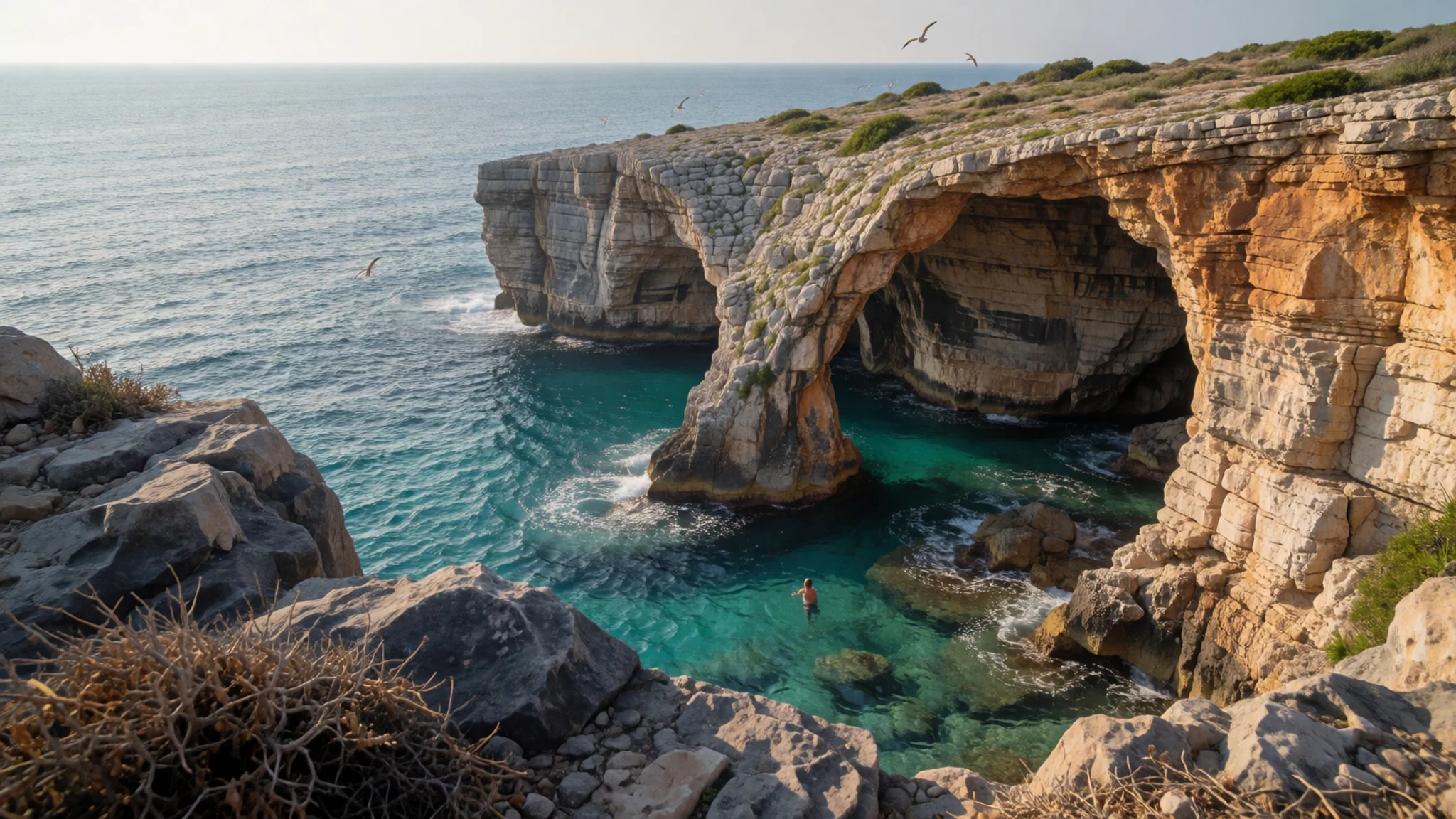
- Veliki Grad trail — Babino Polje, central Mljet
Veliki Grad is the highest hill on Mljet, at about 514 m, and the trail begins in Babino Polje, the long gorge-like depression that links the north and south of the island. The climb gives views over forest, channel and neighbouring islands. Start early in warm months, wear proper shoes on the limestone and carry plenty of water.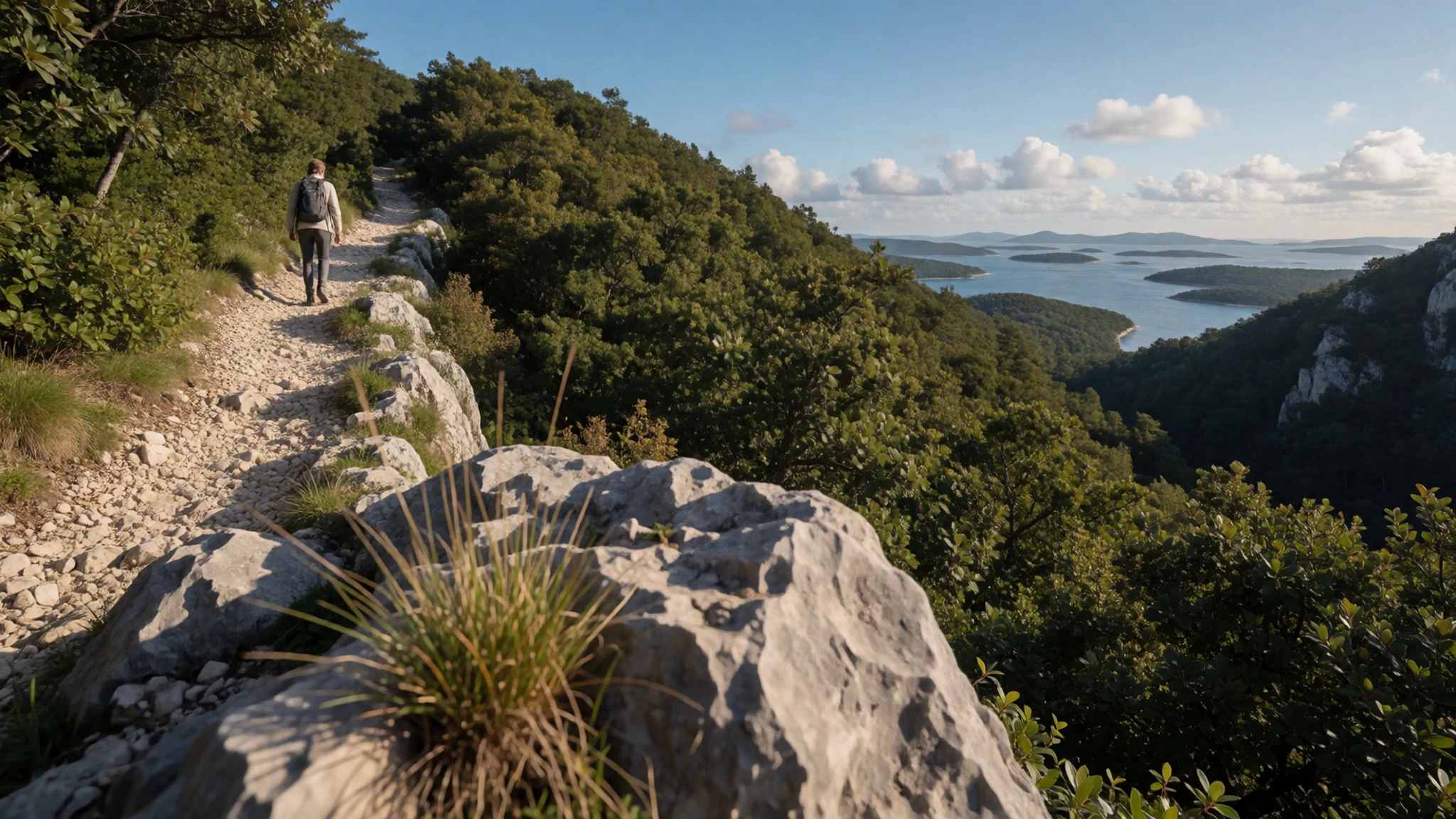
Culture
Mljet is a place where island life still runs on a small scale. With just over a thousand residents, villages such as Polače, Pomena and Sobra are quiet for much of the year, and the ferry timetable shapes the day more than the clock does. Fishing and small farming sit beside a growing trade in hosting visitors, and many families rent rooms or run a simple eatery. Because the western end is a national park, everyday habits are tied to protection: paths are marked, building is restricted, and people tend to talk about the forest and the lakes with a kind of proprietary care. Catholic tradition runs through Croatian coastal life, and village chapels and the monastery on the lake islet belong to the cultural landscape. Local identity also leans on old stories. The name is said to come from the Greek word for honey, Odysseus is said to have sheltered in a sea cave, and some hold that Saint Paul was shipwrecked on these shores. Evenings are low-key, with little nightlife beyond a drink on a harbour terrace or a table by the water. Anyone arriving for a party will be disappointed, while those who want quiet will find plenty of it. Keep to the marked paths in the national park, take your rubbish away with you, and keep your voice down in the villages after dark, when sound carries and most households settle early.
What to wear
Mljet has no single island costume that visitors are likely to see in daily life, and detailed local patterns are not well documented in common travel sources, so what follows is general Dalmatian practice. Traditional dress there is built on wool and linen: embroidered blouses and aprons for women, dark waistcoats and caps for men. It is mostly brought out for festivals, church feast days and folklore performances rather than worn day to day. What people actually wear now is practical and unfussy. Fishermen and farmers wear work clothes and sturdy boots, while in summer residents and visitors alike live in cotton or linen shirts, shorts, swimwear and sandals, with a light jacket for evenings on the water. As a visitor, plan for sun and rock. July averages about 24 °C, so bring a hat, sunglasses, high-factor sunscreen and a light long-sleeved layer for midday on exposed paths. Shoes matter more than clothes: trainers or light walking shoes suit the limestone trails and the lake path, and cheap water shoes help at rocky swimming spots where sea urchins can lurk. Keep swimwear for the beach and cover shoulders and knees when stepping into a village chapel. In winter, when January averages about 9 °C, pack a windproof jacket, because ferry decks are exposed and gusty.
What to eat
- Grilled fresh fish — Harbourside eateries in Pomena
Mljet's fish is grilled whole and served simply with olive oil and lemon. Many eateries around the Pomena harbour cater to visiting yachts and specialise in very fresh catch. Ask what came in that day, and choose by the fish rather than the menu.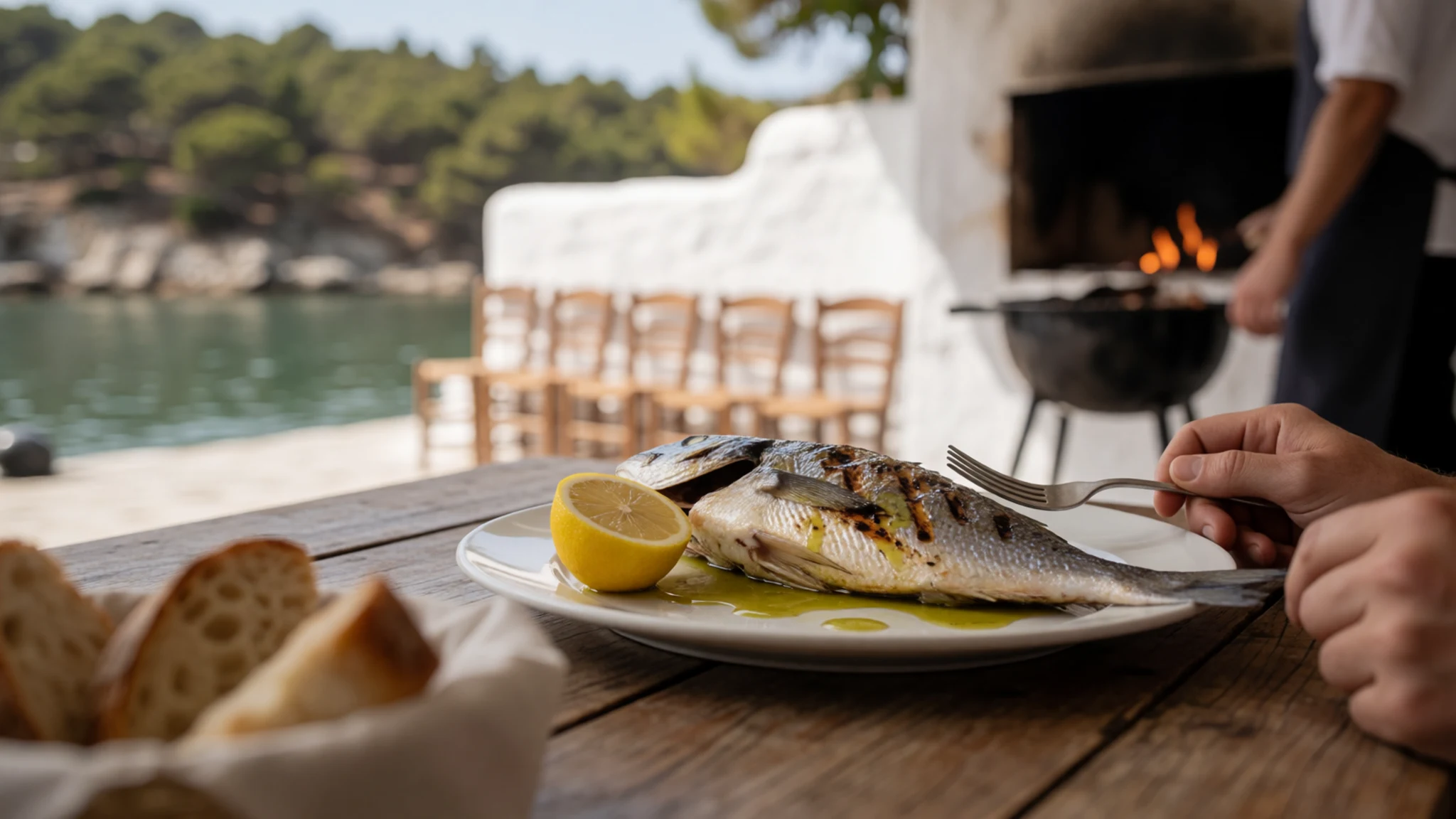
- Live-tank shellfish and crustaceans — Pomena harbour restaurants
Several restaurants around Pomena keep live seafood in tanks beside the entrance, so you can see what is on offer before ordering. Shellfish and crustaceans are usually grilled or steamed. Ask how it is cooked and how it is priced before choosing.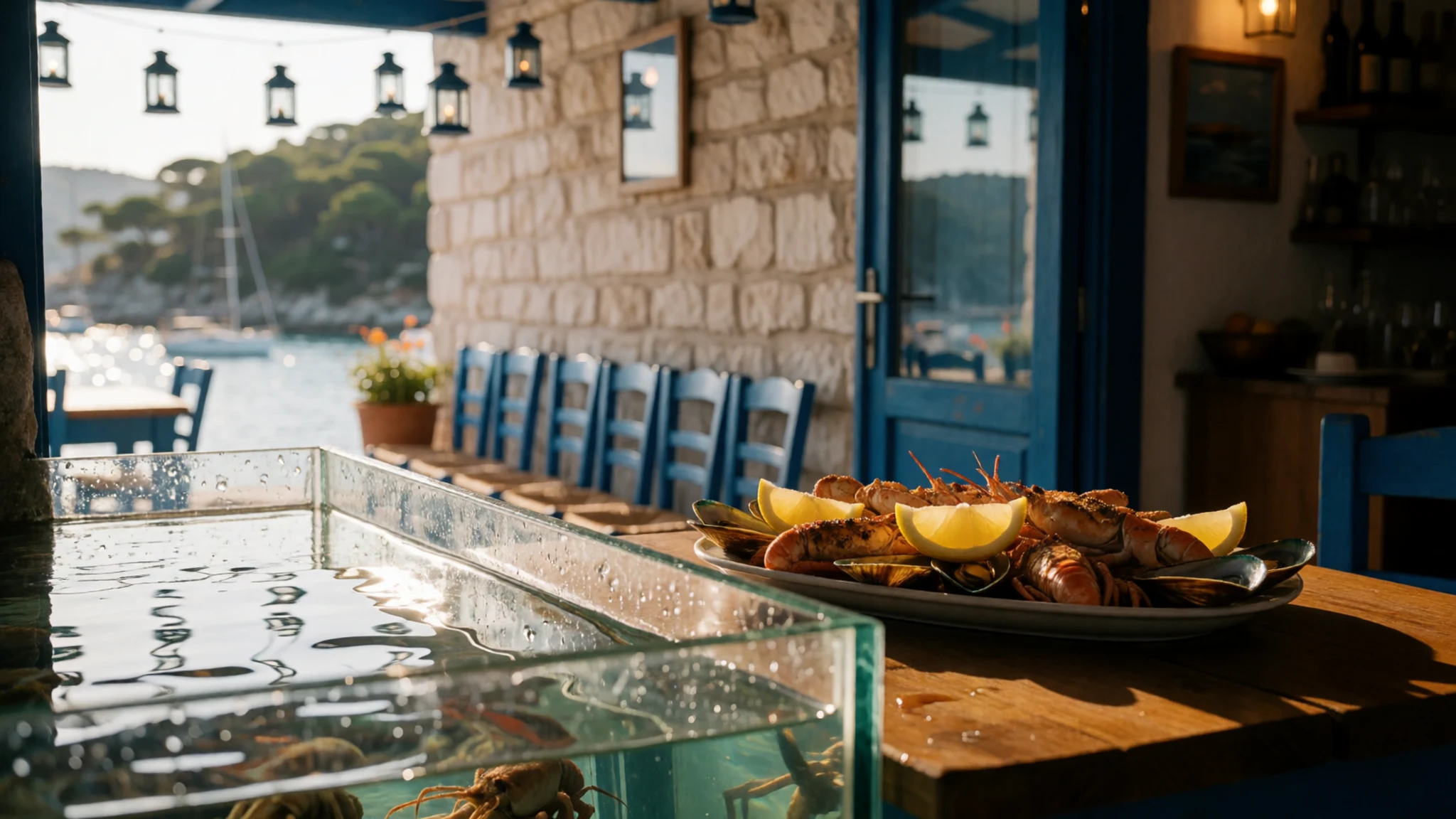
- Barbecued fish at a family-style eatery — Between the Pomena harbour and the lodging block
Between the harbour and the large lodging in Pomena stands an eatery that looks like a private house with a big barbecue area built on. It is known locally for well-cooked barbecued fish. Go early in high season, as seating can fill quickly. - Black cuttlefish risotto — Village restaurants in Polače, Soline and Babine kuće
Black risotto, coloured and flavoured with cuttlefish ink, is a standard of the Dalmatian coast and turns up on island menus. Look for it at the village restaurants in Polače, Soline and Babine kuće, and expect a rich, briny plate. - Dalmatian fish stew (brudet) — Village restaurants across the island
Brudet is a slow-cooked Dalmatian stew of mixed fish with tomato, onion and wine, usually served with polenta or bread. It is not always on the menu, so ask a village eatery whether it can be made that day.
Plan it
Best time. May–June and September–October for warm sea, comfortable walking and fewer people; July and August are warmest, at about 24 °C on average, and busiest. January averages about 9 °C and ferry services are reduced, so winter suits only those who want solitude.
How long. 2–3
Getting there. Fly to Dubrovnik, then take the catamaran or fast ferry to Polače, Pomena or Sobra. Polače is nearer the national park than Sobra. A car ferry also runs from Prapratno on the Pelješac peninsula to Sobra. Services change by season, so check the operators' websites and the island's official site, otokmljet.com.
Budget. mid
Tips
- Book car ferry places ahead in July and August, and check the return crossing before you leave the mainland
- Choose your arrival port with care: Polače and Pomena are close to the national park, while Sobra is a long way from it
- Carry cash and water, as shops and cash machines are few outside the main villages
- Hire a bicycle for the lake circuit and start early to avoid midday heat and the busiest boat times
- Confirm the boat to the monastery islet and the last return at the park before you go
Etiquette
- Stay on marked paths in the national park and take all rubbish with you
- Keep noise down in villages in the evening
- Cover shoulders and knees before entering a chapel or monastery
Nearby
Sources
- Wikidata Q211306 (CC0)
- Wikipedia: Mljet (rev 1384066387) (CC BY-SA 4.0)
- Wikivoyage: Mljet (rev 5411305) (CC BY-SA 4.0)
- Great Lake, Island of Mljet, Croatia — Neoneo13 (Public domain)
- Sunset over the lakes on the island of Mljet — Jaganjac (CC BY 3.0)
- Convent on Mlet island — Andres rus (assumed) (CC BY-SA 2.0)
- Seaside of Pomena — Martin Ortmann (CC BY-SA 2.5)
- Goli rat, westernmost point of Mljet — Jaganjac (CC BY 3.0)
- Prožurska Luka — Jaganjac (CC BY 3.0)
- Sobra Mljet — unknown author (Public domain)
- 5 islands in the Pelješac channel with Mljet in background — Quahadi Añtó (CC BY 3.0)


