Liwa Oasis
Liwa Oasis, United Arab Emirates
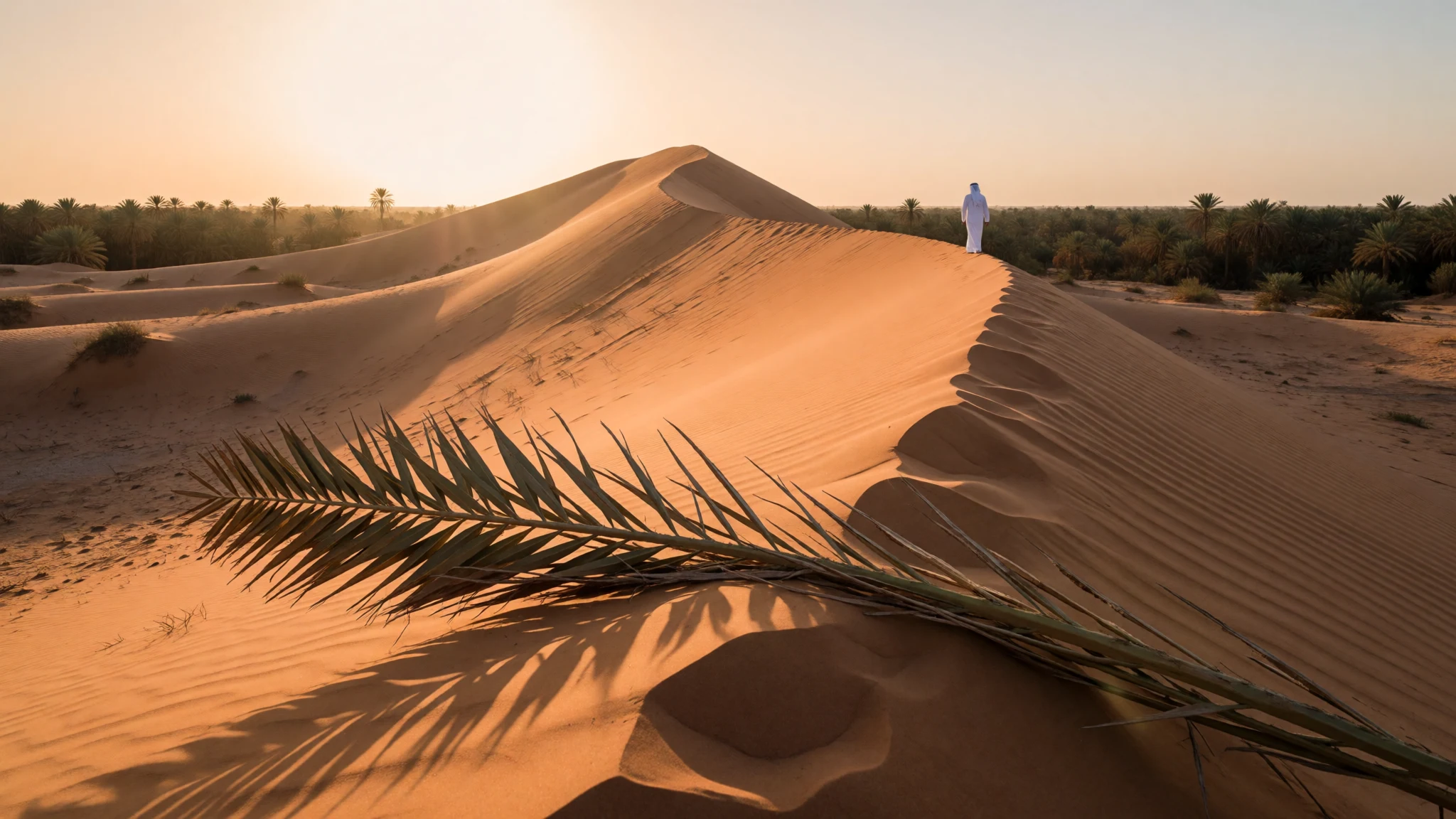
Liwa Oasis is a crescent of date-palm villages pressed against the dunes of Abu Dhabi's far desert.
The place
Liwa Oasis lies in the southwest of the emirate of Abu Dhabi, on the northern fringe of the Rub' al-Khali. It is not one town with a single centre. It is a long arc of villages, each a cluster of houses and date groves, set where groundwater once made permanent settlement possible. Mezaira'a acts as the local hub, with the shops and services the smaller hamlets rely on, while Madinat Zayed, farther north, is the administrative town of the wider Al Dhafra region.
The ground changes character within a short walk. Inside the groves the light is broken by palm trunks and the air feels slightly cooler. South of the groves the land lifts into dunes: long ridges, knife-edged crests and rippled hollows that shift colour from cream at noon to copper near sunset. North of the villages the country flattens toward gravel and salt flat, the sabkha that separates this inland world from the Gulf coast. Green is narrow and deliberate. Sand is the rest.
People live here year round, though the rhythm is seasonal. In the cooler months families sit outside, children use the open ground, and visitors from Abu Dhabi and Al Ain drive down for the dunes. In summer the heat confines the day to early morning, vehicles and air-conditioned rooms. The resorts built into the sand have added a second population at weekends: guests who come for silence, a pool and a view of ridges that block the horizon.
Roads between the villages are sealed and straightforward. Tracks onto the dunes are not. Liwa Oasis is large in the way desert places are large: not because of dense streets, but because village, grove and dune repeat until the pattern itself becomes the memory.
Its story
The story of Liwa Oasis belongs to the Bani Yas, the tribal confederation that treated these palm groves as a home ground long before the coast became a city. Families kept gardens, wells and camel herds, and they moved with the seasons between the inland shade and the pearling towns. The Al Nahyan, rulers of Abu Dhabi, come from the Al Bu Falah branch of that same confederation, so the oasis sits inside the origin story of the emirate, not at its edge.
Daily life was a craft of scarcity. Dates fed the household and travelled as a trade good. Rain was never promised. Knowledge of which ridge hid a path, and which well was sweet, mattered as much as ownership of land. Children learned the names of dunes the way other children learn street names. Falconry belonged to the same education: a way of reading wind, distance and prey in open country.
The oil decades redrew the map without erasing it. Roads, schools, clinics and piped water tied Liwa Oasis to Abu Dhabi, and many families now keep a house in the villages and another in the city. The groves are still worked. National occasions and winter gatherings fill the guest rooms. On the sand slope known as Moreeb Dune, a motorsport meeting has turned an old crossing-ground into a public festival, with camps, engines and a temporary town of spectators.
What holds the story together is kinship. A family name still places a person more exactly than a map pin. Hospitality is still the public face of that kinship: dates, coffee, and time given to a guest. Liwa Oasis is a landscape with a memory of who planted it, and the memory is still in the room.
What to see
- The palm villages — The Liwa crescent
The palm villages of Liwa Oasis are the inhabited line: houses, small mosques and dense date groves repeating along the edge of the sand. Mezaira'a is the practical centre, with services the hamlets share. Walking a grove in the morning shows how narrow the green world is, and how quickly it gives way to open dune.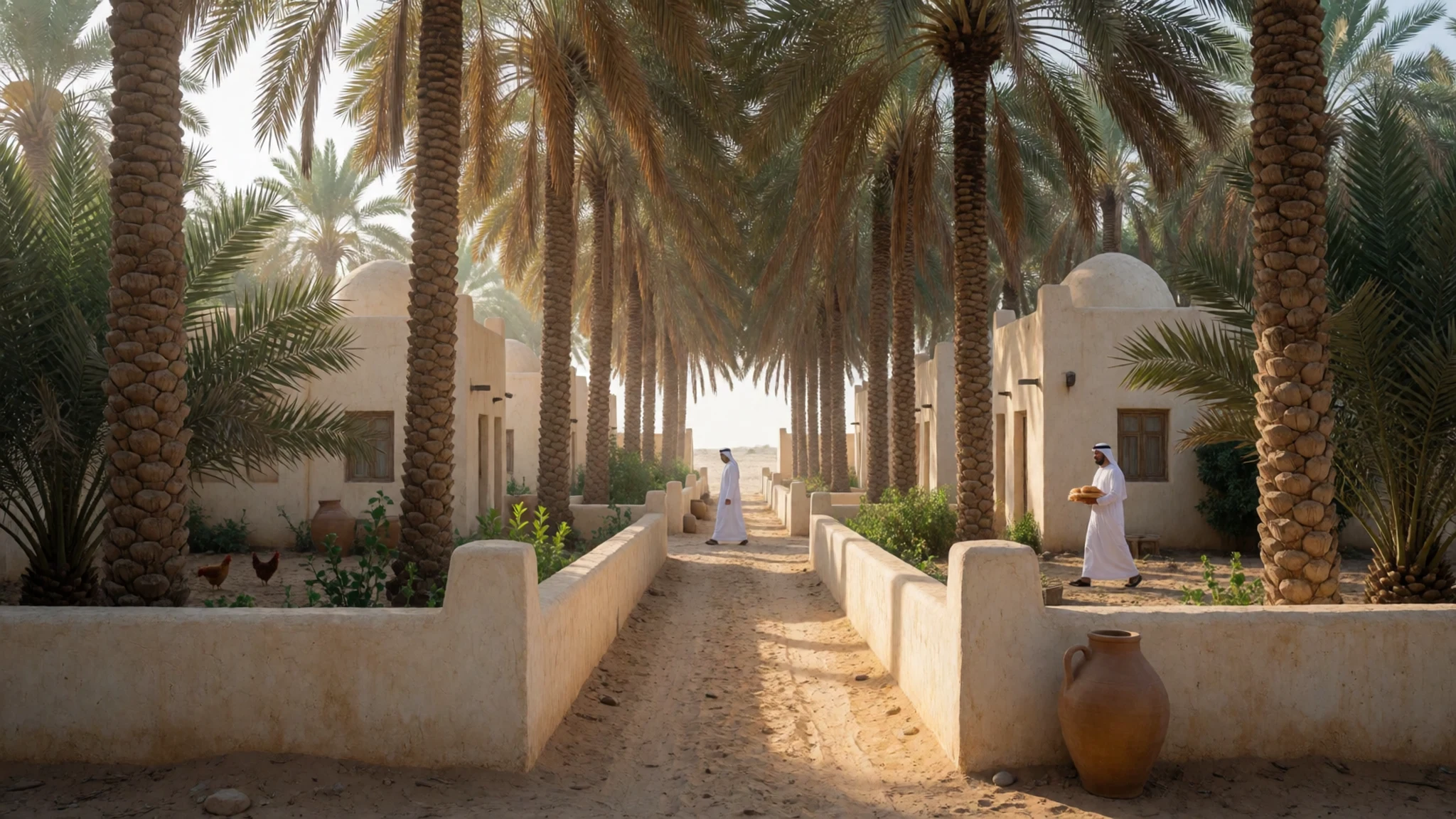
- The dune ranges — South of the villages
South of the villages, Liwa Oasis becomes a field of dune ranges rather than a single slope. Ridges overlap, and smaller ripples climb the flanks of larger forms, so the view changes within a short walk. Morning light picks out every crest. By afternoon the hollows hold shadow, and in the warmer months the sand is too hot for bare feet.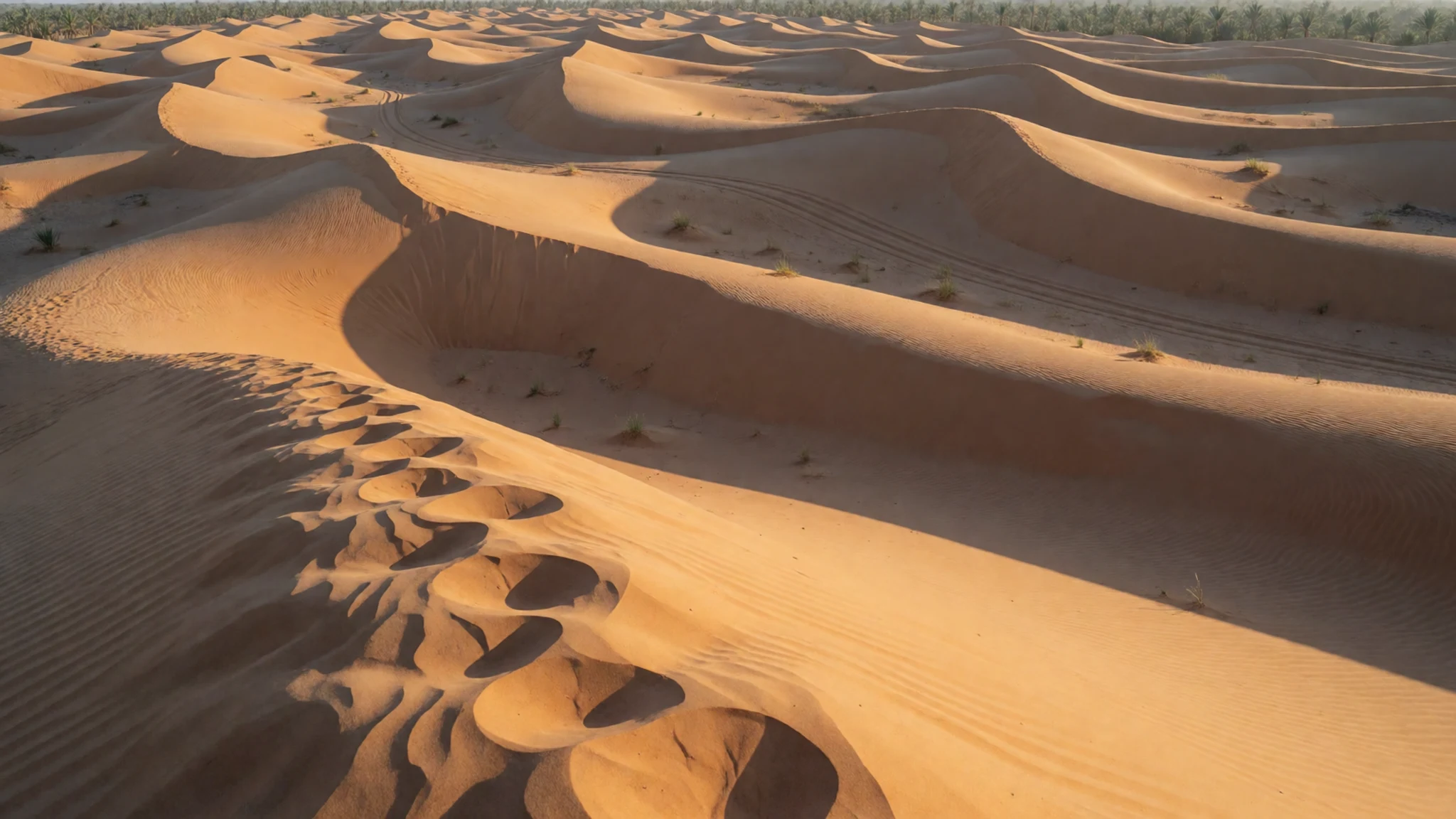
- The desert road — Approach roads from the north
The desert road into Liwa Oasis is part of the visit, not a delay before it. The carriageway runs straight toward a wall of dunes that grows as the car closes the distance. Light is best early or late, when the slopes turn copper and the road itself falls into shade.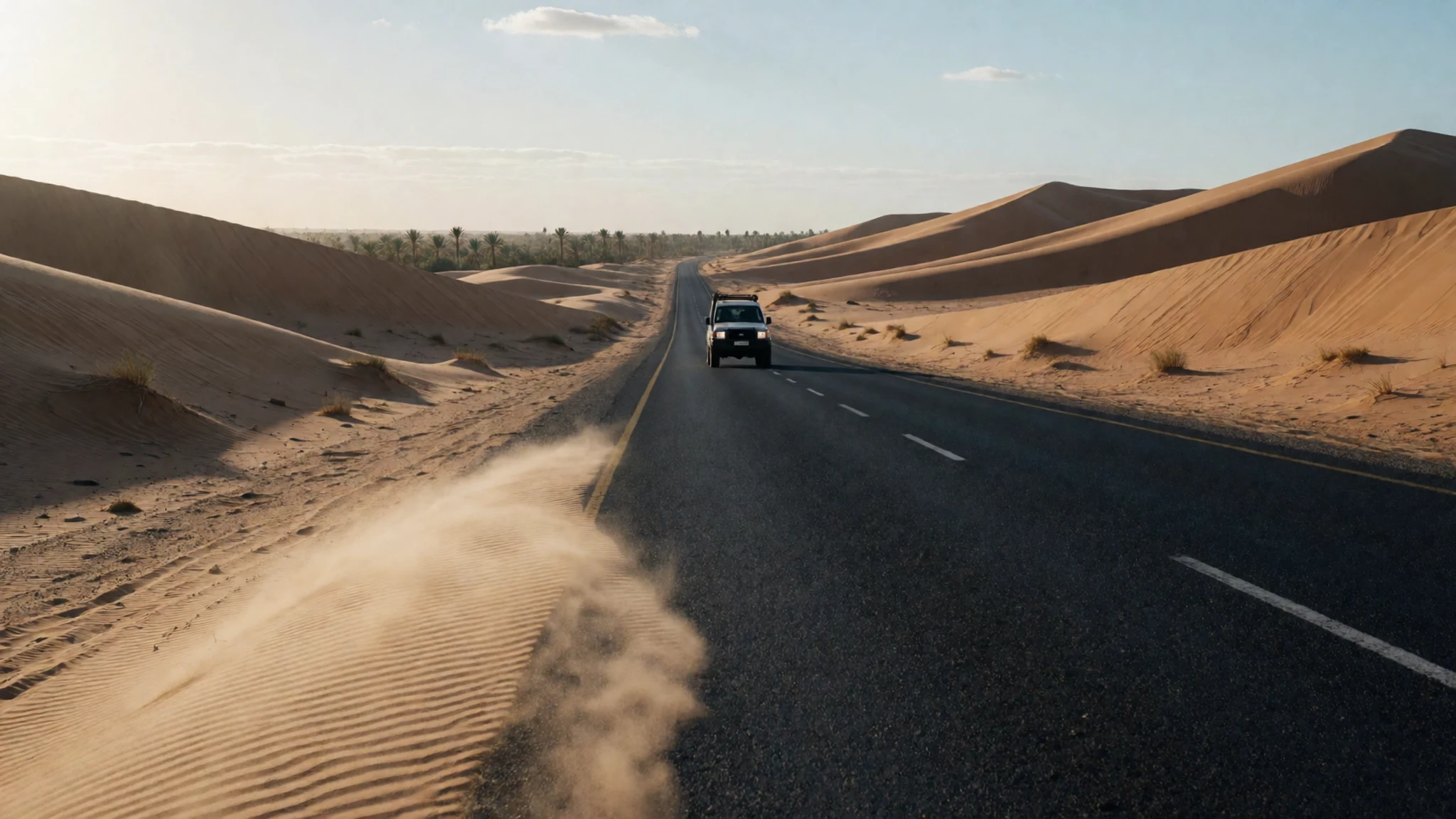
- Sand ripples — Open dune faces near the villages
Close to the ground, the dunes of Liwa Oasis resolve into ripples aligned with the last wind. They are easiest to read in the early morning, before feet and tyres cross them. Faces that look smooth from the road are finely textured at standing height. The pattern breaks under a single crossing, so the polite view is from the edge of an existing track.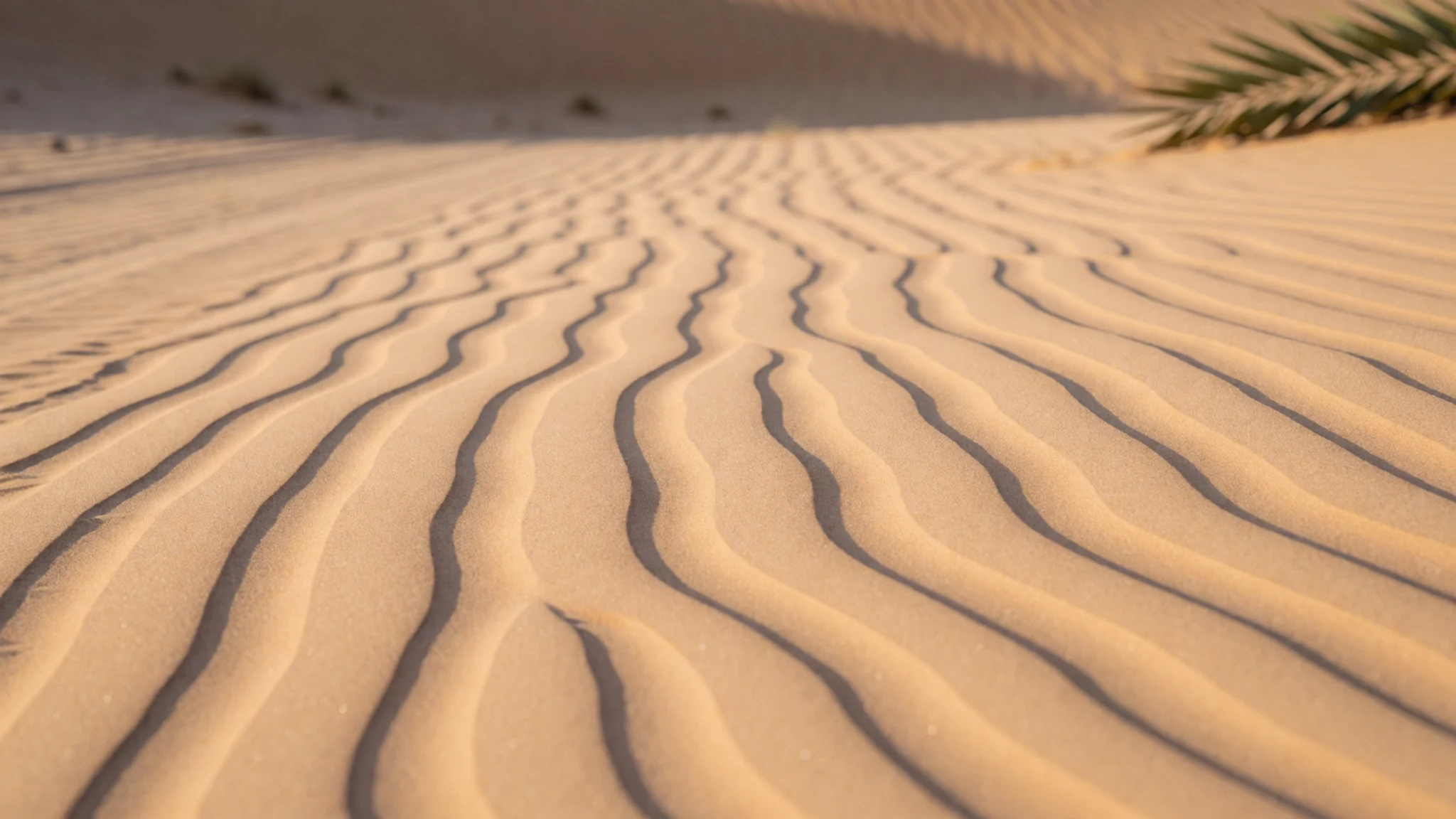
- The open sand — South and west of the crescent
Beyond the last groves, Liwa Oasis opens into the Empty Quarter side of Abu Dhabi: broad sand, long sightlines and almost no shade. This is touring country for a prepared vehicle, not a casual stroll off the tarmac. The pleasure is the scale, the colour shift through the day, and the quiet once the engine stops.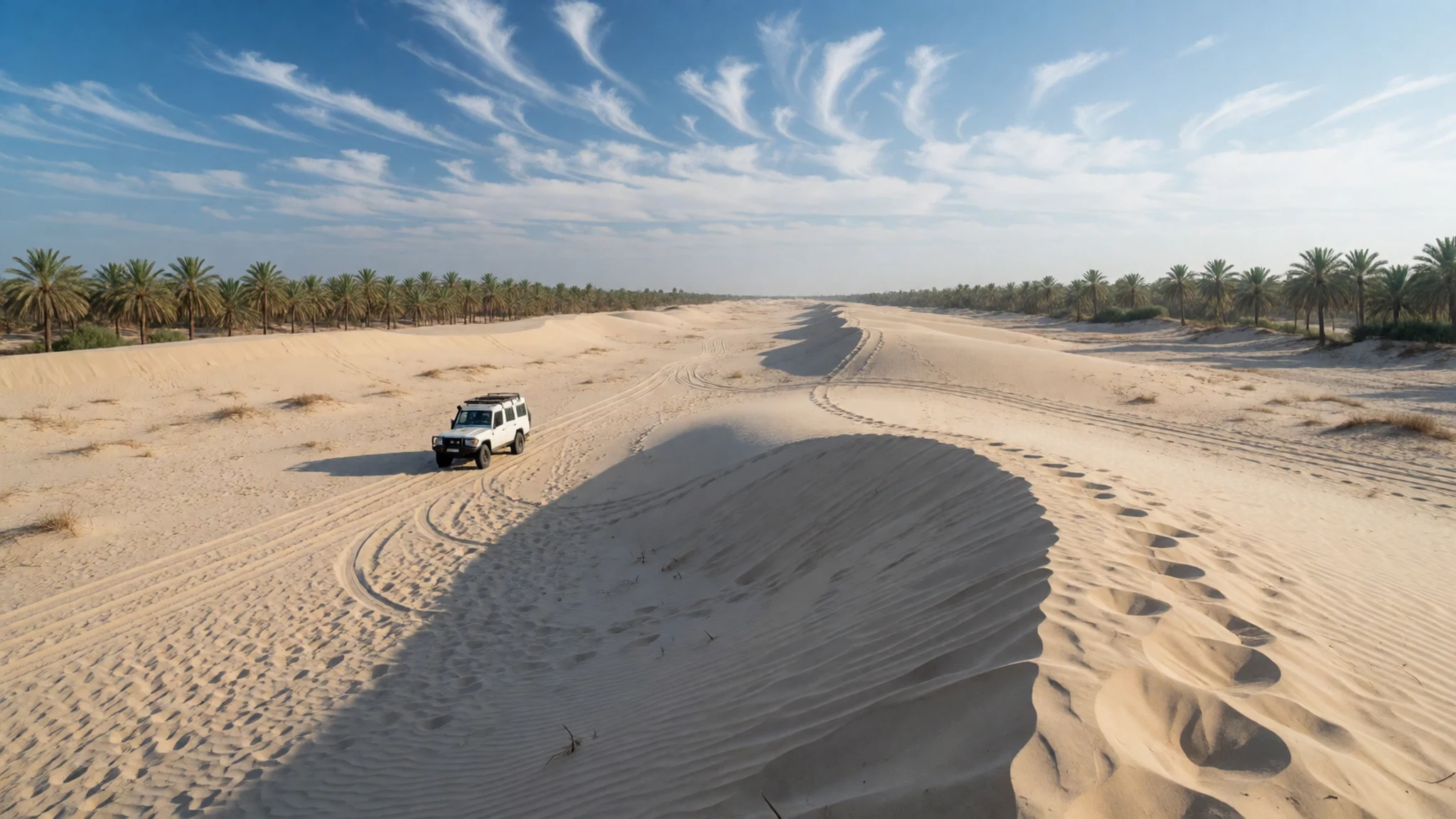
Culture
Culture in Liwa Oasis is inland Emirati life: Islamic, family-centred, and paced by hospitality rather than by a visitor timetable. Arabic is the language of the home and the majlis. English is there when it is needed, in a resort lobby or a shop used to weekend traffic from the city. Friday gathers people for prayer, and the afternoon that follows is for relatives. A guest is met with Arabic coffee, lightly roasted and cardamom-scented, and with dates from the groves. The first cup is accepted; a little left in it signals that the guest has had enough.
Falconry, camel keeping and the date harvest are the cultural calendar people still talk about in detail. Birds are flown in the cooler months. Camels carry status as well as milk, and conversation about lineage, of birds or of animals, can run longer than conversation about scenery. Poetry remains a respected skill. Older residents will place a dune or a well by a story, and that story is the archive.
National dress is normal weekday clothing for many adults, not a costume kept for festivals. Younger residents move between that code and global casual dress without treating either as a statement.
Ask before you photograph anyone, and take a refusal as final; in the villages, cover shoulders and knees, and do not wander into a family courtyard or a prayer space.
What to wear
Fashion in Liwa Oasis is built around the kandura and the abaya, clothes for sun and for a public life that runs through the mosque and the majlis. Men wear the kandura, an ankle-length robe usually in white cotton or a light blend. The ghutra or shemagh, a square headcloth, is kept in place by a black agal. In winter the bisht, a cloak of wool or wool blend with gold trim, comes out for Friday prayer and formal visits. Women wear the abaya, typically black, over their own clothes, with a shayla over the hair. At weddings and Eid, embroidery and the quality of the weave carry the occasion.
In Mezaira'a the same people also dress as the city does after hours. Trainers, sunglasses and light jackets appear once the heat drops, and younger women pair the abaya with contemporary clothes underneath. Resort terraces look more international: linen, sportswear, sandals.
Visitors should dress for glare, wind-blown sand and modest company. Loose pale trousers and long sleeves are kinder than dark denim in the sun. Shorts and bare shoulders fit a private resort pool and sit awkwardly in a village shop or near a mosque. Strapped sandals or closed shoes cope with dune slopes; a scarf keeps dust off the mouth when the surface lifts. For a majlis, choose clothes that are clean and covering, and shoes that slip off easily at the door.
What to eat
- Gahwa and dates — A majlis, a home, or cafés in Mezaira'a
Arabic coffee in Liwa Oasis is pale, cardamom-heavy and poured in small cups, always with dates from the local groves. It is the welcome in a majlis, a home and many cafés in Mezaira'a. The dates themselves vary by palm and season; hosts notice which variety they are serving.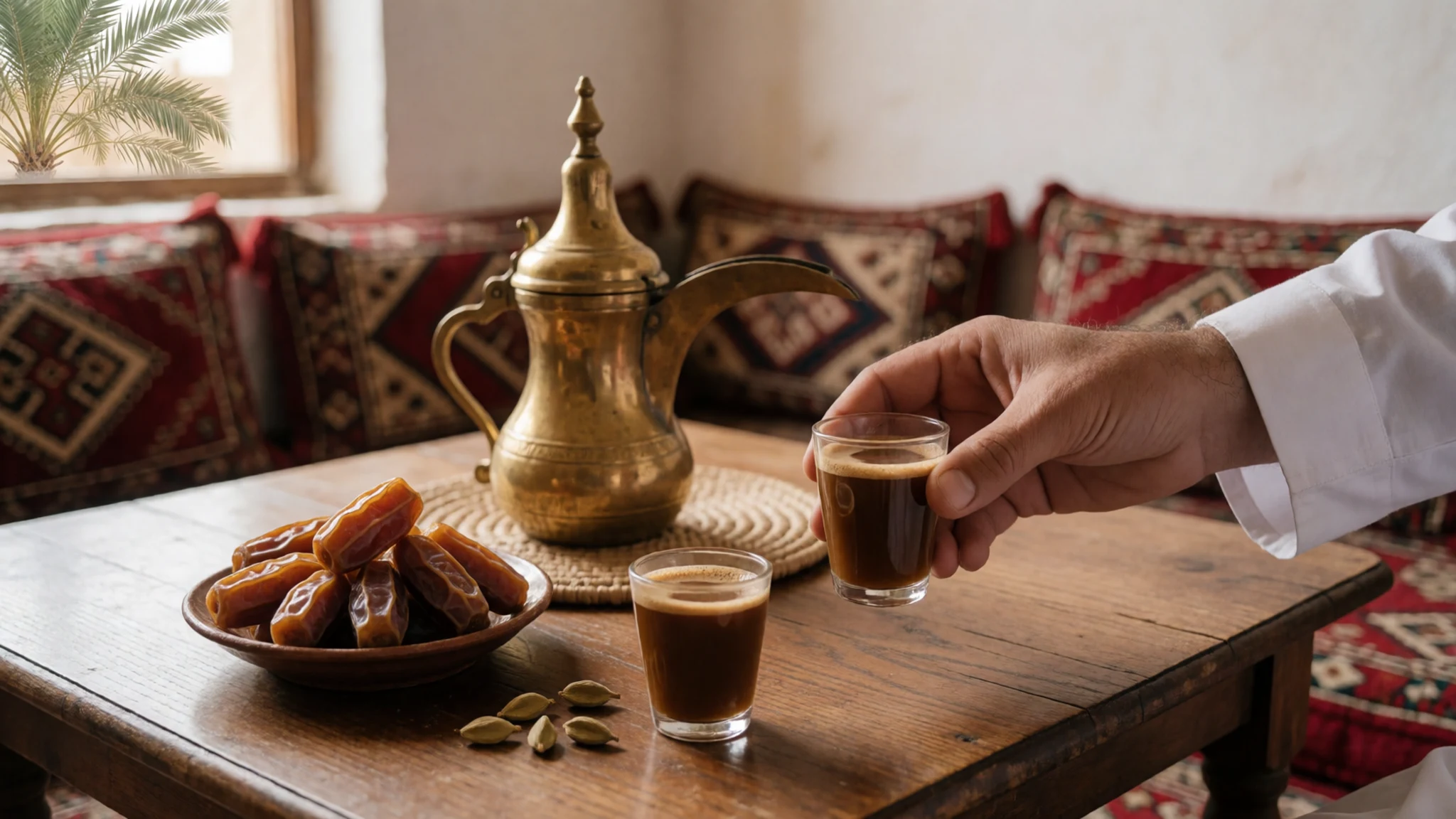
- Machboos — Home kitchens and simple restaurants in Mezaira'a
Machboos, spiced rice with chicken or lamb, is the festival and Friday dish of Liwa Oasis. The rice carries baharat, dried lime and tomato, and the meat is often piled on top at the table. Households still set the standard; simple restaurants around Mezaira'a serve a weekday version at lunch.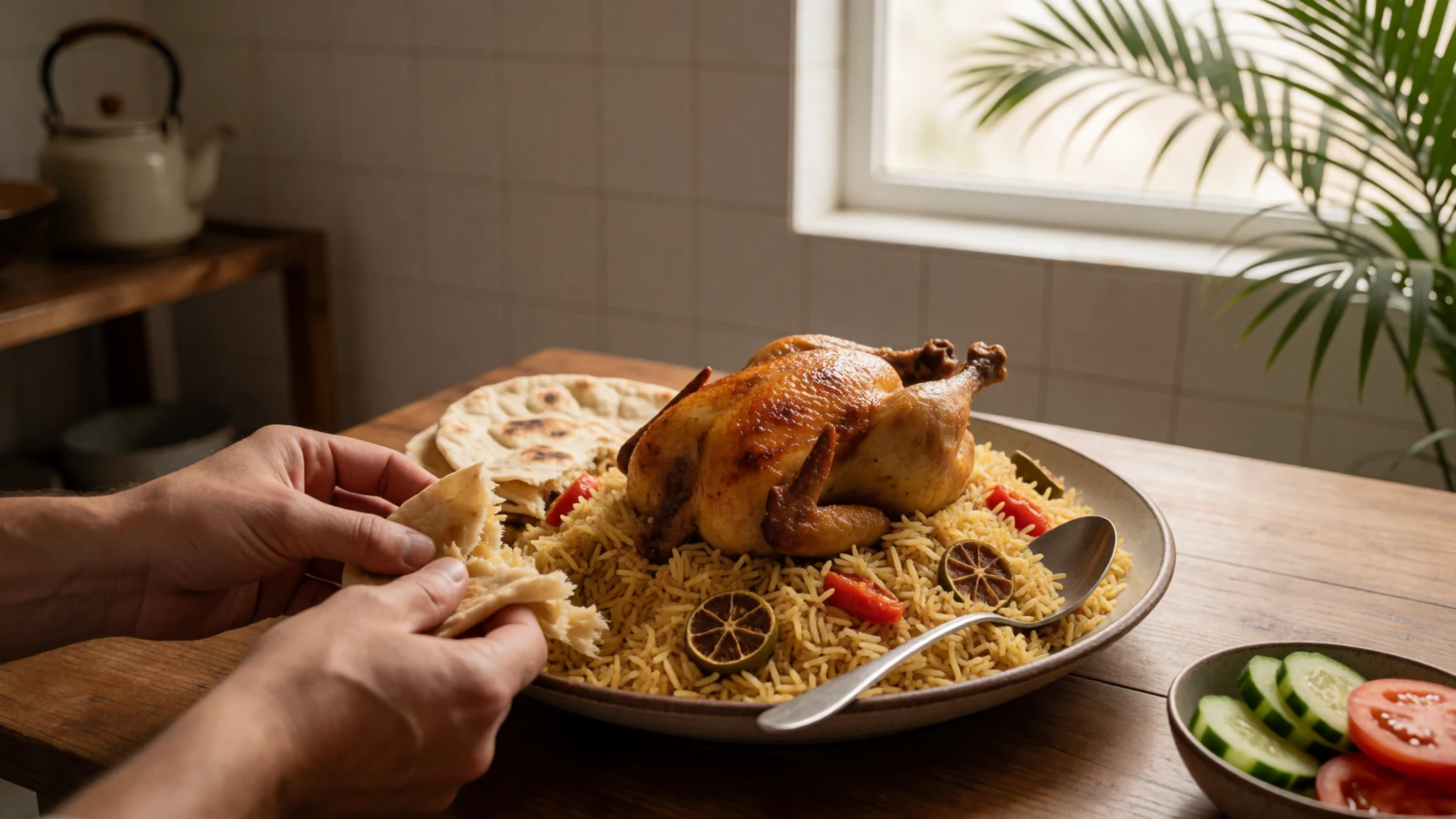
- Harees — Home-style eateries and wedding tents in the villages
Harees is wheat and meat beaten together until they become a single savoury porridge, finished with ghee. In Liwa Oasis it appears at Ramadan iftars, weddings and large family lunches. Home-style eateries in the villages serve it in Ramadan, and at wedding tents. - Luqaimat — Café counters in Mezaira'a and Ramadan gatherings
Luqaimat are small fried dough balls, crisp outside and soft inside, soaked in date syrup or honey. In Liwa Oasis they turn up at Ramadan nights, weddings and café counters in Mezaira'a, often beside a pot of coffee. They are a sweet to share, not a plated dessert. - Grilled chicken and lamb — Grill restaurants on the Mezaira'a strip
Chicken and lamb are the everyday grill in Liwa Oasis, seasoned simply and served with rice, bread and salad. Camel appears less often and is ordered by people who grew up with it. A plain grill restaurant on the Mezaira'a strip fills up after sunset in the cooler months.
Plan it
Best time. November to March is the kind season at Liwa Oasis, when the days are mild enough for dunes and outdoor coffee; April and October are warmer shoulders; from May to September the heat is severe and the oasis is best seen from a vehicle or an air-conditioned room.
How long. 2–3
Getting there. Liwa Oasis is reached via Abu Dhabi International Airport, then by road southwest through Madinat Zayed to Mezaira'a and the villages. There is no rail. Sealed roads reach the settlements; a four-wheel-drive is for tracks off the tarmac, and a resort can arrange that if you are not equipped.
Budget. mid
Tips
- Set out for the dunes at first light; the sand is kinder and the ridges hold their shadows.
- Fill the fuel tank in Mezaira'a or Madinat Zayed before any off-road detour.
- Carry more drinking water than a short stop suggests, including in winter.
- Book resort stays ahead for winter weekends and any festival period; the villages themselves need no ticket.
- Keep to sealed roads unless you have a four-wheel-drive and know how to use it in soft sand.
Etiquette
- Dress so that shoulders and knees are covered in villages and near mosques.
- Ask before photographing people, and accept a refusal at once.
- Remove shoes when entering a home or a carpeted majlis.
Nearby
Sources
- Wikidata (CC0)
- Wikipedia: Liwa Oasis (CC BY-SA 4.0)
- Wikivoyage: Liwa Oasis (CC BY-SA 4.0)