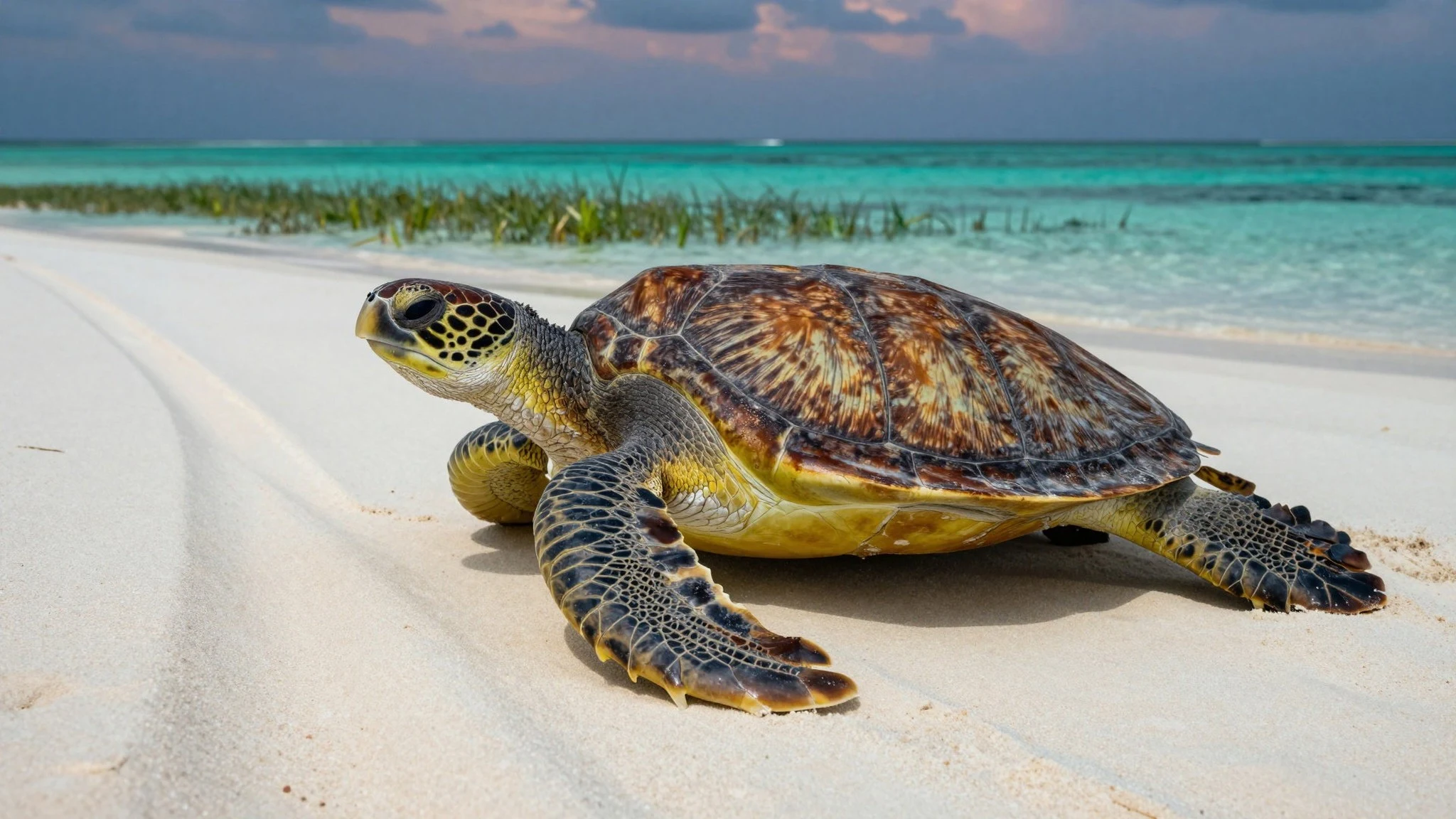
Bu Tinah Island
Bu Tinah Island, United Arab Emirates
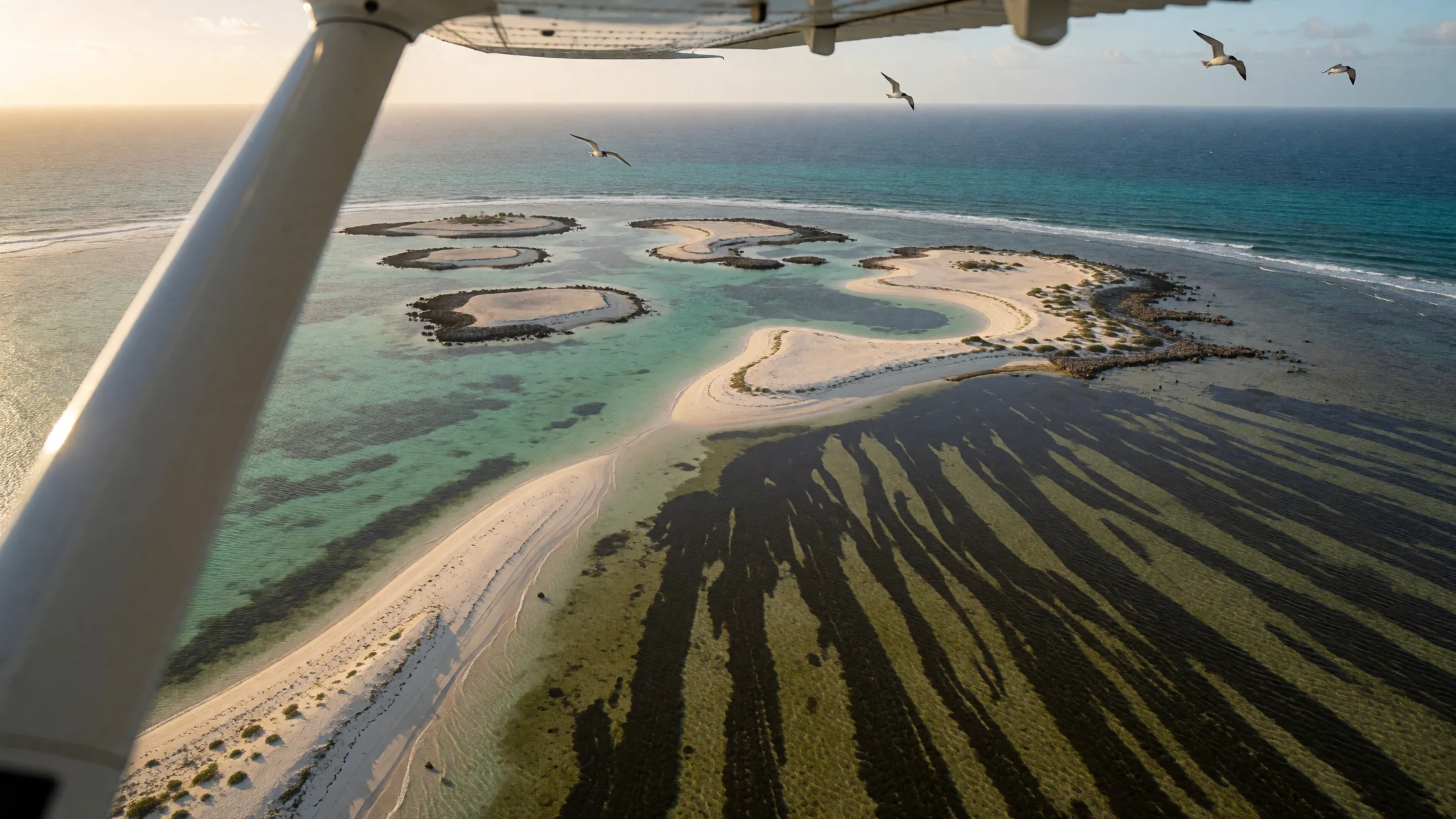
Bu Tinah Island is a protected Gulf archipelago of coral and seagrass that can only be admired from a distance, which is its point.
The place
Bu Tinah Island is a small archipelago in the waters of Abu Dhabi, in the United Arab Emirates, set among coral formations and wide seagrass beds. It lies roughly 25 km south of Zirku and 35 km north of Marawah, far enough from the mainland that it never turns up in an ordinary day out. Low, pale and fringed with shallow water, it is better read from a map or an aerial photograph than from a beach towel.
The islands sit inside the Marawah Marine Biosphere Reserve, an area of more than 4,000 square kilometres, and the archipelago itself is run as a private nature reserve. Public access is closed. Fishing is prohibited, collecting turtle eggs is prohibited, and patrols enforce both rules. An Environment Agency – Abu Dhabi ranger station stands on the island, which makes its purpose plain: watching over wildlife rather than hosting guests.
The honest advice for travellers is short. There is no ferry, no beach club and no landing, and anyone who promises otherwise should be doubted. What the place offers is knowledge: that the Gulf coast here still holds shallow reefs and seagrass meadows full of marine life, and that a country better known for towers and malls sets aside real stretches of sea for animals. Those who want to feel the region's marine side can do so from Abu Dhabi's mangroves and waterfront, and let Bu Tinah remain a name on the map.
Its story
The story of Bu Tinah Island is a story of protection rather than settlement. Nobody builds resorts here and nobody lives here, except the rangers. Its value lies in what the surrounding shallows hold: coral, seagrass meadows and the turtles that come ashore to lay eggs.
For generations, people on this coast lived by the sea, fishing, sailing and diving for pearls long before oil changed the Gulf. Eggs and fish were taken from islands like this one as a matter of course. The modern approach reversed that habit. Today the same waters are guarded, and the ban on fishing and egg collection is backed by patrols rather than left to goodwill.
The wider area was recognised by UNESCO in 2001 as the Marawah Marine Biosphere Reserve, described in the source we draw on as the first marine biosphere reserve of its kind in the region. Bu Tinah is one of the islands within it, and the ranger station there is the practical end of that designation: someone is present, records are kept, and rules are applied.
It is an unglamorous kind of history, made of patrol boats, logbooks and closed gates. That quietness is also why the archipelago still looks the way an aerial photograph shows it: pale land, bright water, and very little in between.
What to see
- Bu Tinah from the air — Western coast of Abu Dhabi emirate
Bu Tinah Island is best seen in the public-domain aerial photograph, where pale islets float in shallow turquoise water over seagrass and coral. The patterns of the sea floor are the real subject. It is a good picture to study before visiting the mainland coast.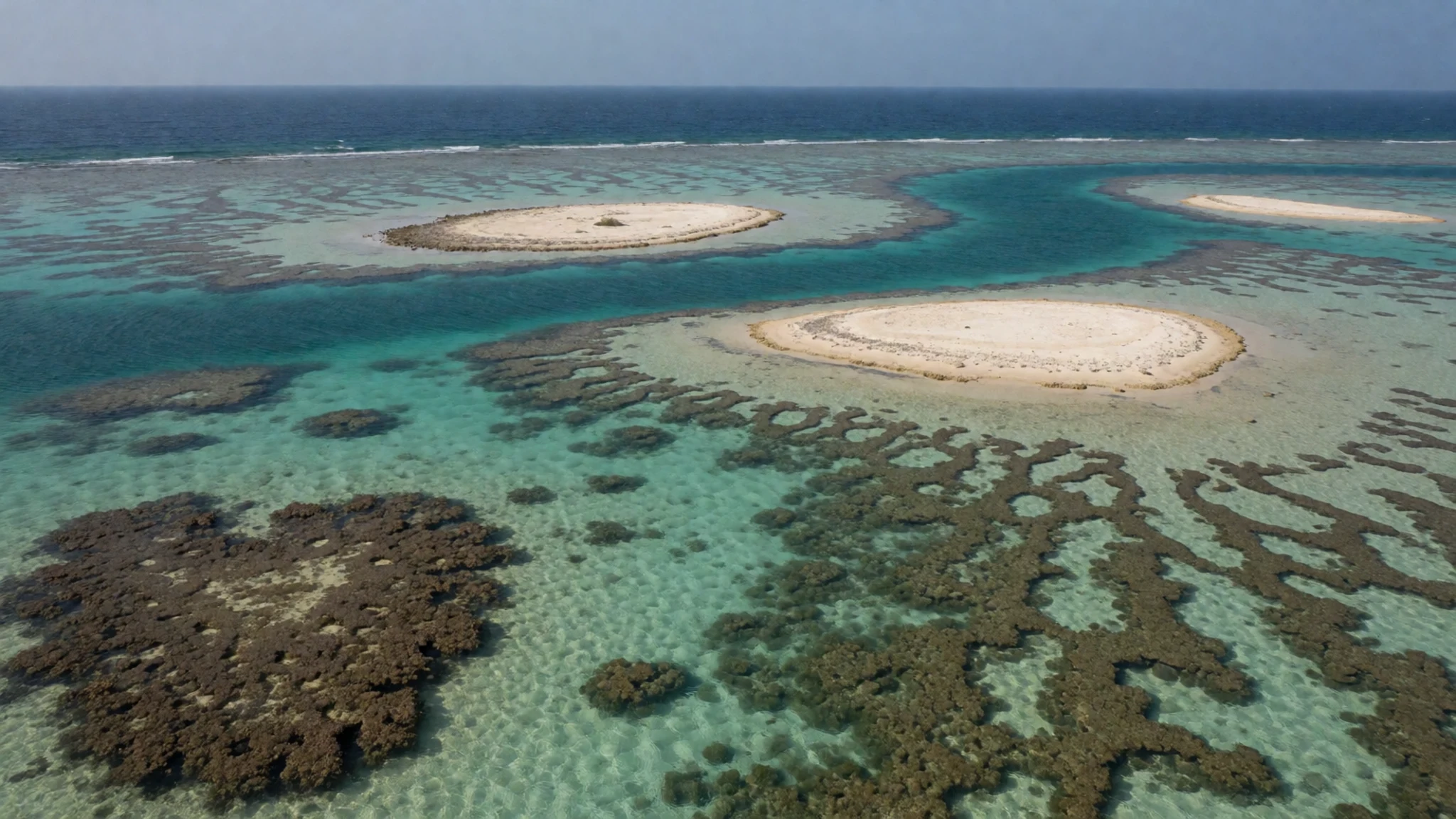
- Marawah Marine Biosphere Reserve — Offshore, western Abu Dhabi
Bu Tinah Island lies within this reserve, and the reserve is the context that matters. Access to the islands is restricted, so the sensible way to engage is through the protected status, published conservation material and the Environment Agency – Abu Dhabi, rather than a boat trip.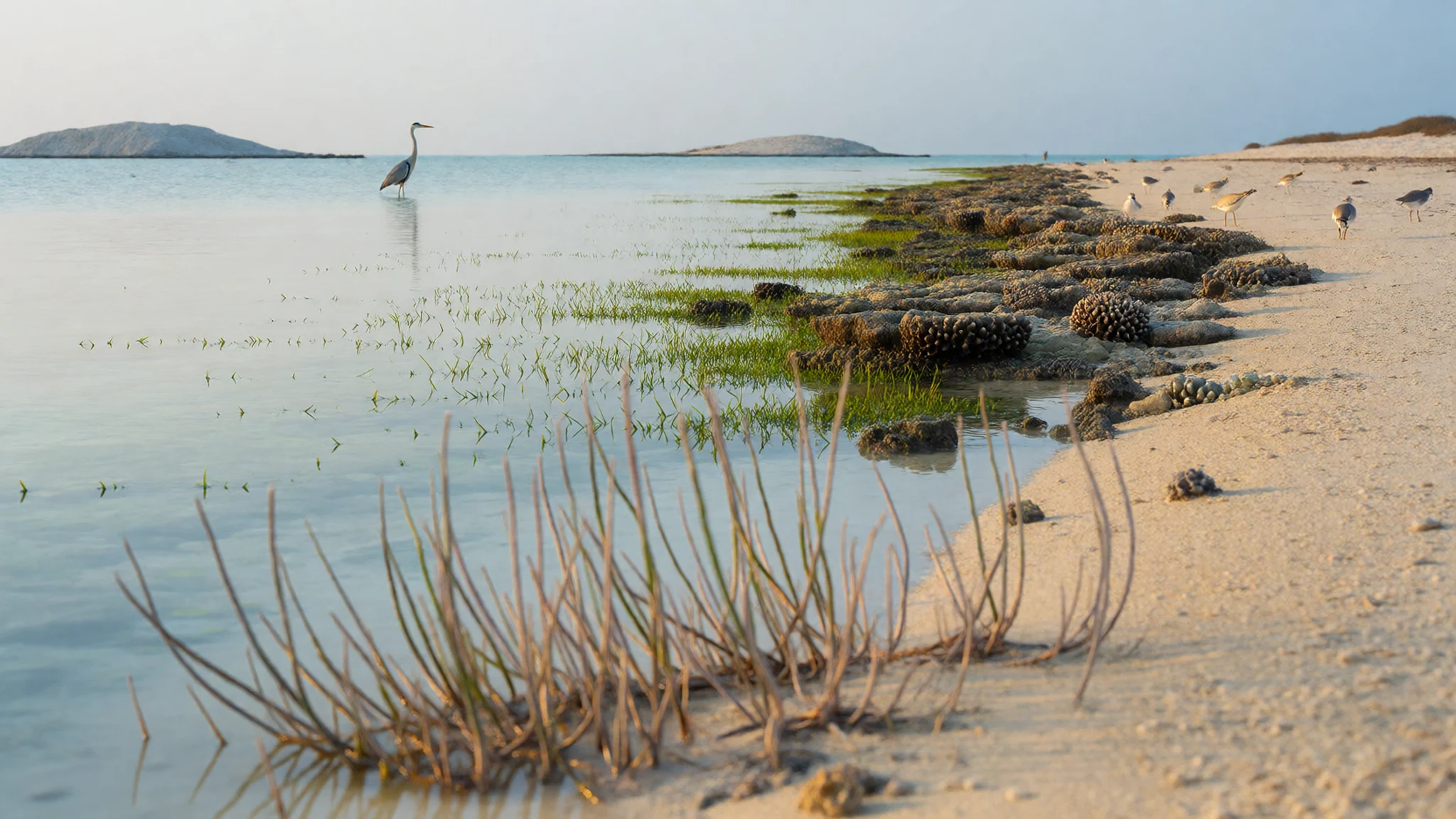
- Abu Dhabi Corniche — Abu Dhabi city waterfront
Far from Bu Tinah Island, the Corniche gives a feel for the same Gulf water: shallow, warm and pale green near the shore. It is a long, easy waterfront for walking early or after sunset, when the heat eases and families are out.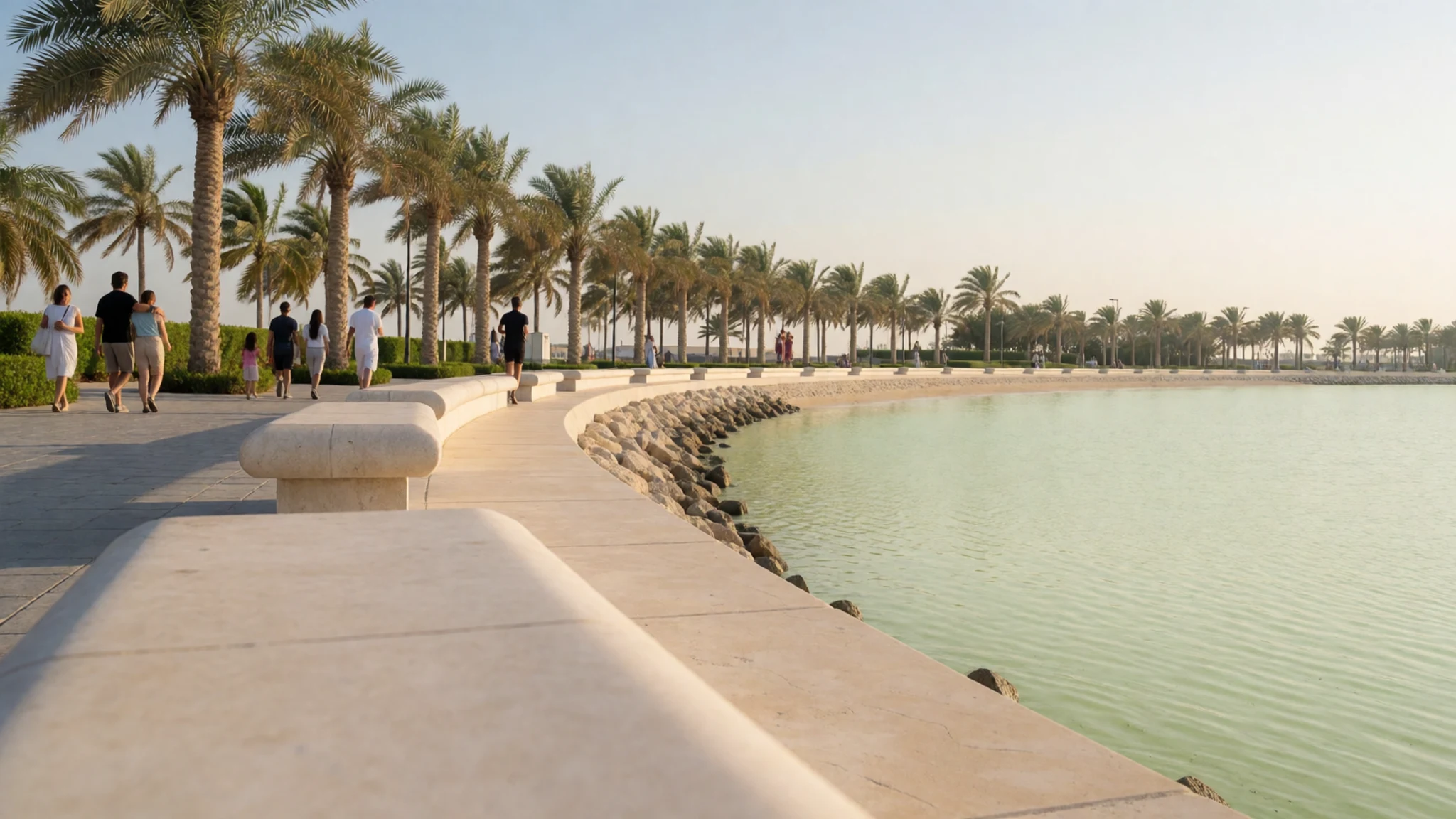
- Eastern Mangroves — Abu Dhabi city, eastern shore
For a hands-on look at Abu Dhabi's coastal ecology, the mangrove channels near the city are the accessible choice. Paddling tours are run by licensed operators. Mangroves, like seagrass beds, shelter young fish and birds, so this is the closest reasonable stand-in for Bu Tinah's world.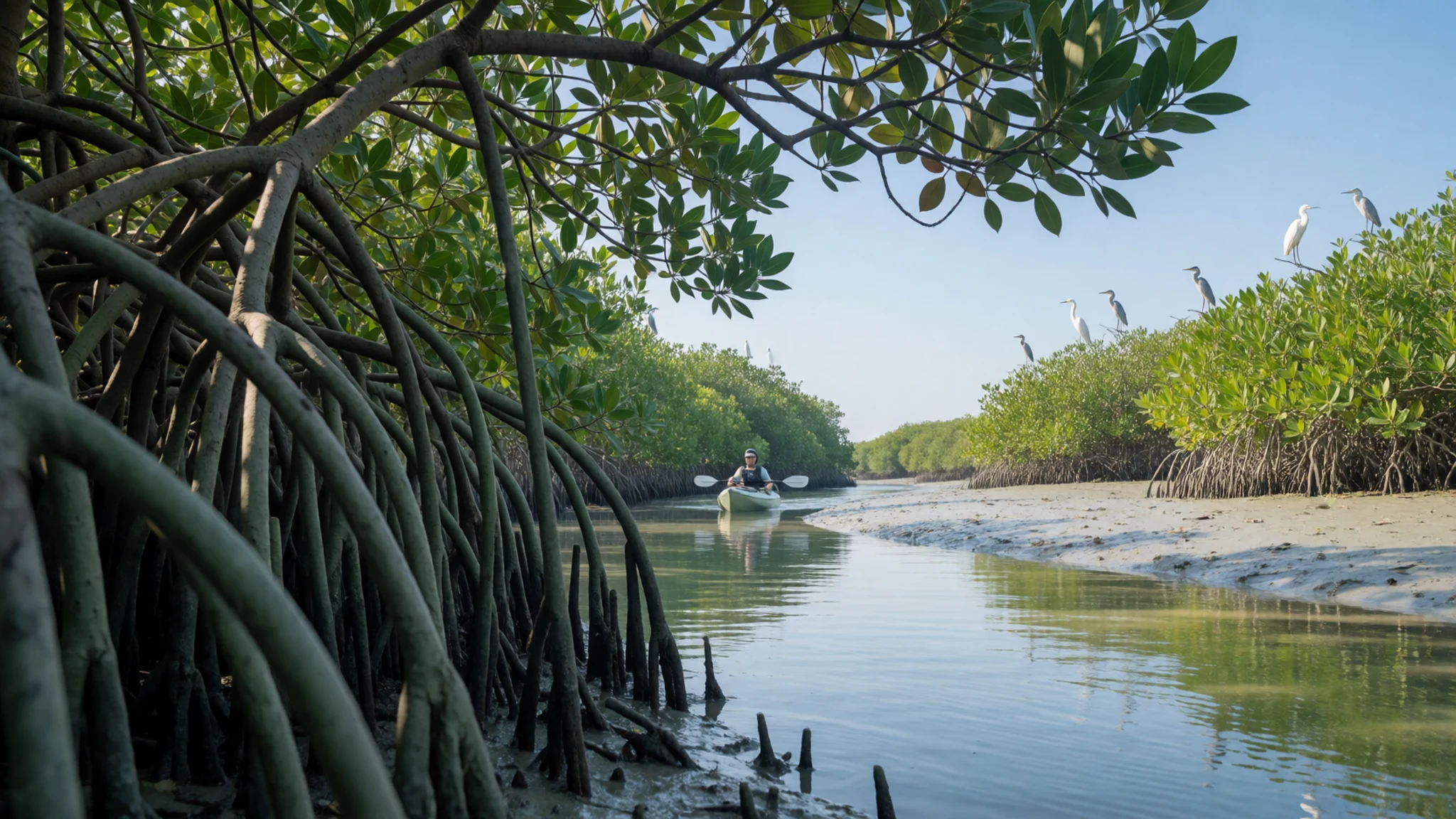
Culture
Bu Tinah Island has no village and no festival calendar, so its culture is the culture of the coast around it: a maritime Emirati world built on fishing, pearling and sailing in wooden dhows. Older families on the Abu Dhabi coast still speak of the sea as a workplace, a larder and a hazard, and that respect shows in how the waters are now protected.
Hospitality is the other thread. Visitors to Abu Dhabi are often offered Arabic coffee, poured in small cups and sweetened with dates. Accepting the first cup is polite, and a gentle shake of the cup signals that you have had enough. Islam shapes the rhythm of the day, with prayer times, a quieter Friday morning and a markedly different mood during Ramadan, when eating and drinking in public during daylight hours is discouraged.
Conservation has become part of national pride too. Rangers, scientists and the Environment Agency – Abu Dhabi treat places like Bu Tinah as heritage in the same sense as forts and old towns. The ban on taking turtle eggs reflects a real change in habit, since gathering eggs was once ordinary on these islands.
Visitors should not try to land on Bu Tinah Island or pay anyone for a boat to take them there, because the reserve is closed to the public and patrolled.
What to wear
Traditional dress around Bu Tinah Island, meaning the Emirati coast, is built for heat and sun. Men wear the kandura, an ankle-length robe usually in white cotton, with a ghutra headcloth held by a black cord called an agal. Women wear the abaya, a long black cloak, with a shayla headscarf. Older women in some families also wear a stiff face mask, the batoola, although this is now rare. Lightweight cotton and fine synthetic blends dominate because they breathe.
What people wear now is a mix. Many Emirati men and women still wear kandura and abaya for work and daily life, often with a sharp, modern cut, and keep them for Fridays and formal occasions. Expatriate residents, who are a large part of Abu Dhabi, wear everything from office shirts to sports kit. Malls are air-conditioned to a chill, so a light layer is handy.
Visitors should dress for sun and for modesty. Loose cotton or linen that covers shoulders and knees is comfortable and respectful in public places, and it is expected at mosques, where women also cover their hair. A wide-brimmed hat, sunglasses and strong sunscreen matter from spring to autumn. Sandals suit the city, while closed deck shoes with grip are better on any permitted boat trip.
What to eat
- Machboos — Emirati restaurants and family-run eateries in Abu Dhabi
Machboos is the Gulf's everyday rice dish, with chicken, lamb or fish cooked in spiced stock until the grains turn amber. Dried lime gives it a sour edge. It is usually served on a shared platter with a tomato sauce on the side.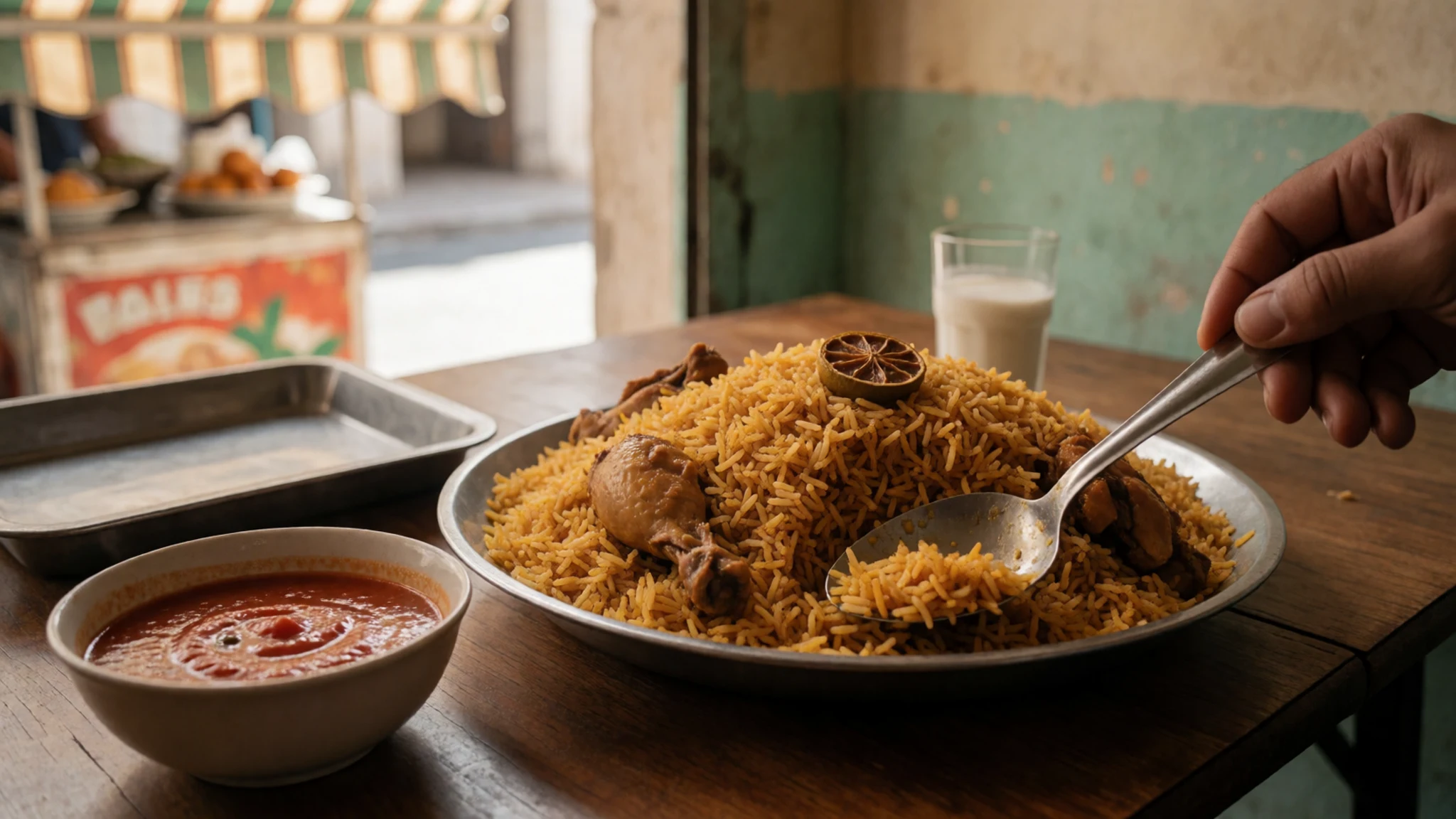
- Grilled hammour — The fish market and waterfront eateries in Abu Dhabi
Hammour is a local reef fish, often grilled whole or served as thick fillets with lemon, rice and a spicy red sauce. It connects directly to the sea around places like Bu Tinah. Ask what was landed that morning, and choose the freshest.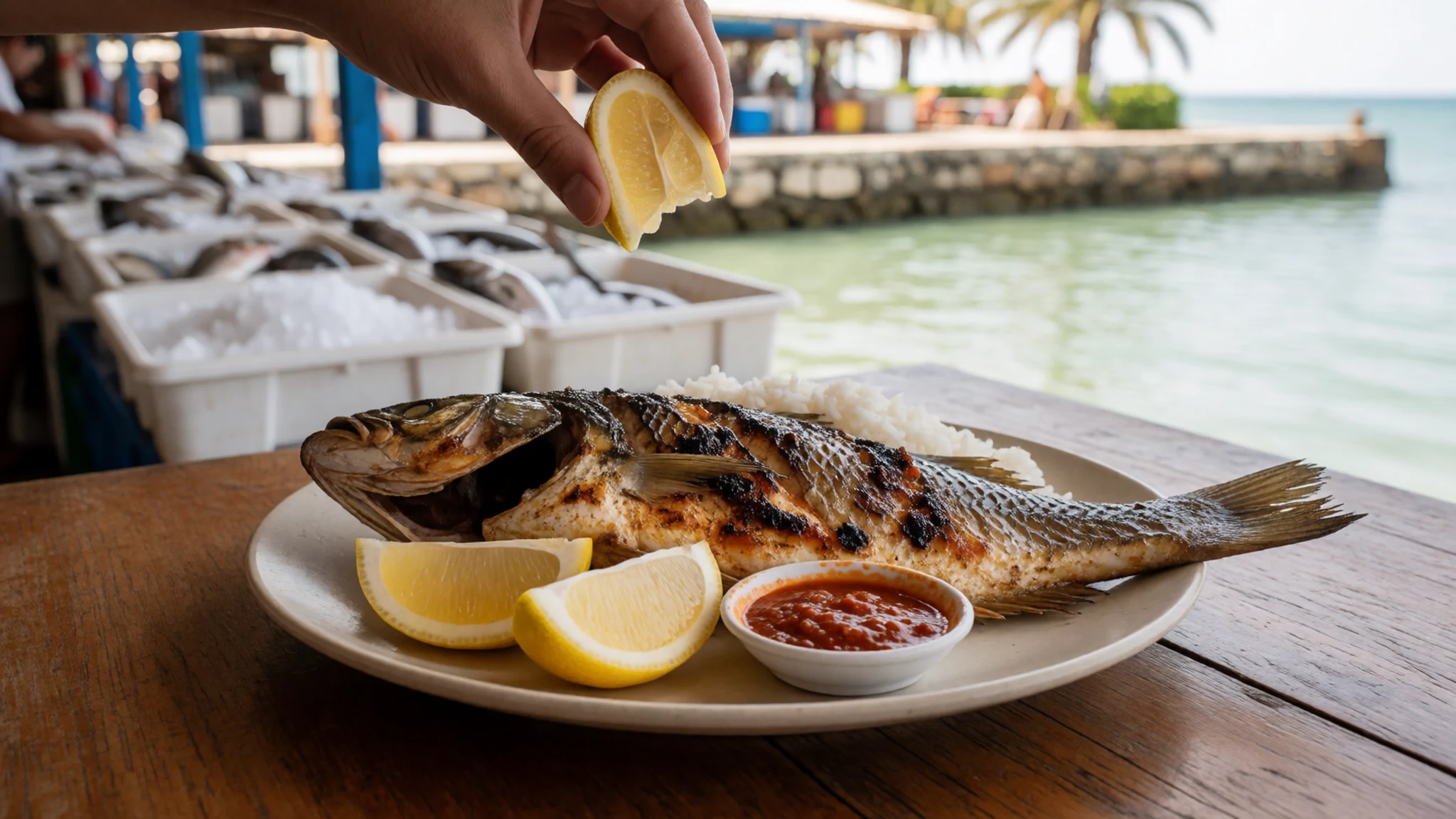
- Harees — Traditional Emirati restaurants, especially during Ramadan
Harees is a slow-cooked porridge of wheat and meat, beaten until smooth and soft, with a little ghee on top. It is plain, filling and strongly tied to celebrations and Ramadan evenings. Expect comfort food rather than spice. - Luqaimat — Dessert stalls, heritage markets and cafes across Abu Dhabi
Luqaimat are small, round, deep-fried dumplings, crisp outside and soft inside, then drenched in date syrup. They are eaten warm, often with cardamom-scented tea or coffee. Order a small portion to share, because they are rich and sweet. - Gahwa with dates — Hotel lobbies, majlis-style cafes and cultural centres
Gahwa is pale Arabic coffee flavoured with cardamom, sometimes saffron, served in small handleless cups alongside dates. It is as much a gesture of welcome as a drink. Take the cup in your right hand and sip slowly.
Plan it
Best time. November to March, when Gulf air is mild enough for waterfront walks and mangrove paddling; June to September is very hot and humid, so sea and shore plans suffer.
How long. 1–2
Getting there. Bu Tinah Island itself has no public access. Fly into Abu Dhabi International Airport, then use taxis or a hire car around the city; for the reserve, check the Environment Agency – Abu Dhabi website for any permitted programmes.
Budget. mid
Tips
- Do not plan to land on Bu Tinah Island; it is closed and patrolled
- Book any licensed mangrove or marine tour ahead, and check the operator's permit
- Do outdoor activities early morning or near sunset, and carry water
- Carry a card, but keep a little cash for small cafes and markets
- Bring a light layer, since indoor air-conditioning is strong
Etiquette
- Dress modestly in public places and cover shoulders and knees
- Do not photograph local people, especially women, without asking
- Do not eat or drink in public during daylight in Ramadan
Nearby
Sources
- Wikidata Q2724986 (CC0)
- Wikipedia, Bu Tinah (rev 1362704718) (CC BY-SA 4.0)
- Wikivoyage, Bu Tinah (CC BY-SA 4.0)
- Aerial view of Bu Tinah Island, Aenaon (Public domain)
- United Arab Emirates relief location map, NordNordWest / Uwe Dedering (CC BY 3.0)


Wildlife
- Green sea turtle (animal)
The green sea turtle is a big sea turtle that eats only seagrass, so it gets its name from the greenish fat beneath its shell, not its olive-to-black back. Around Bu Tinah Island, look in the surrounding shallows, rich in coral and seagrass, where turtles also come ashore to lay eggs. Ask your guide about the best season and hour. Keep a respectful distance, stay quiet and calm, let the turtle go its own way, and never feed it.