Al Wathba Wetland Reserve
Al Wathba Wetland Reserve, United Arab Emirates
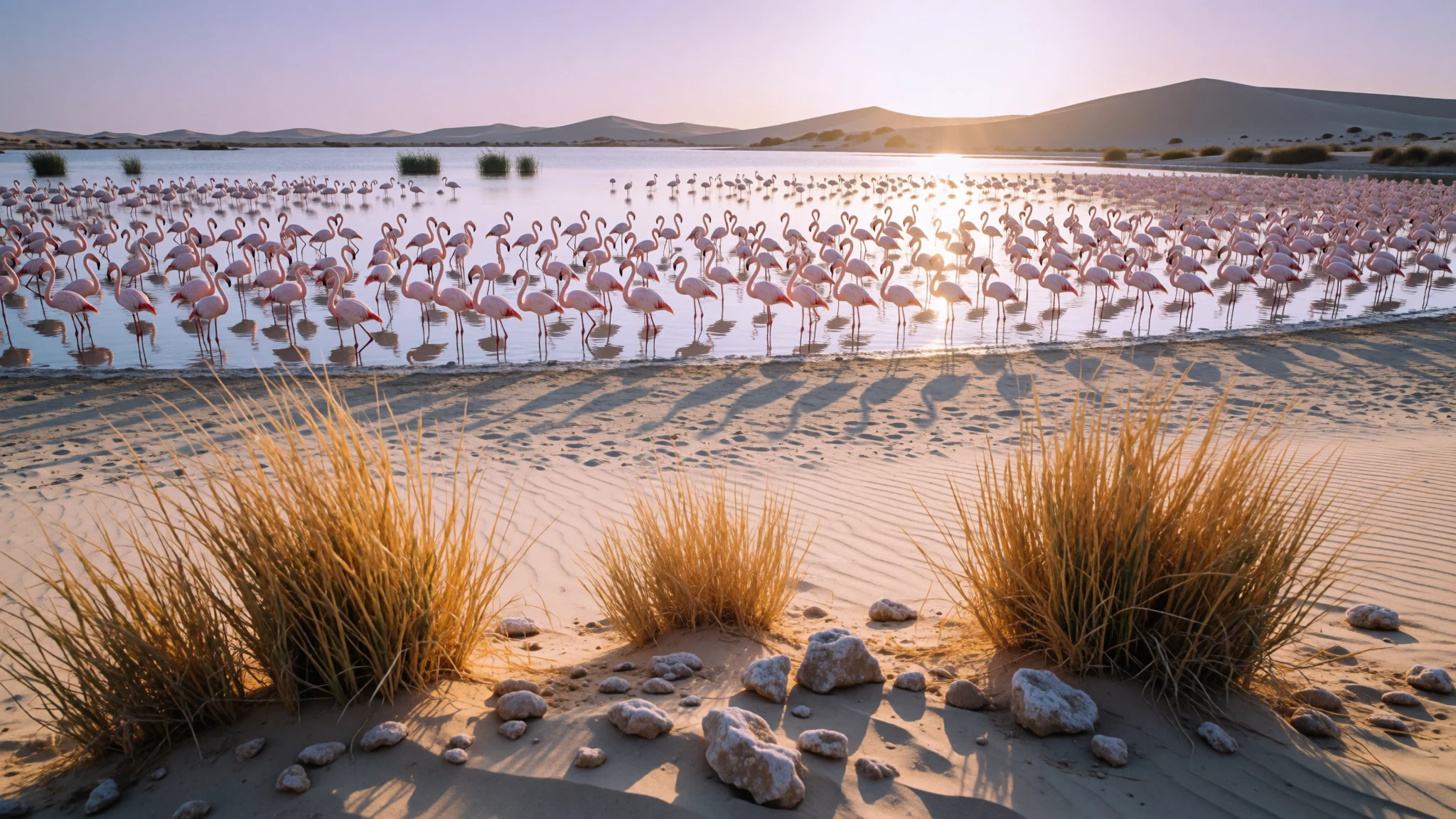
Al Wathba Wetland Reserve is a calm sheet of reed-fringed water in the Abu Dhabi desert, where flamingos and other waterbirds can be watched at leisure.
The place
Al Wathba Wetland Reserve sits on the edge of Abu Dhabi, in the United Arab Emirates, a short drive from Zayed International Airport. It takes its name from Al Wathba, a suburb that grew at the city's fringe, and the contrast is the whole point: pale desert, then a sheet of shallow water edged with reeds, with the roads never far behind. Wikidata files it simply as a nature reserve, and that is the right way to approach it, as a place for watching birds rather than ticking off sights. Water in this climate draws life in a way that is easy to see. Flamingos wade in the shallows, small waterbirds slip in and out of the reed beds, and the light on the surface changes through the morning. Beyond the water, low ridges of fossil dunes record a time when the sand behaved differently. Expect flat ground, wide skies and long views rather than shade or anything to climb. It suits a quiet half-day outing from the capital, not a stay of several days. Access to reserves in the Emirates is controlled and the rules change, so confirm current arrangements with the Abu Dhabi authorities before setting out rather than assuming a gate will be open. The neighbouring suburb also hosts the Sheikh Zayed Festival, which gives the area a second identity as a gathering place for Emirati heritage.
Its story
Al Wathba Wetland Reserve owes its surroundings to a planning decision. After Sheikh Zayed bin Sultan Al Nahyan became Ruler of Abu Dhabi in 1966, he put money into healthcare, schools and infrastructure and set about reshaping the emirate. In the 1980s he invited the British planner Sir William Sydney Atkins, whose firm, W.S. Atkins and Partners, was asked to lay out the city's growth. The plan relied on satellite towns, Al Wathba, Al Shahama and Baniyas, where Bedouin families and settlers from elsewhere on the Arabian Peninsula had already begun to make homes with the ruler's encouragement. That history explains the character of the suburb beside the reserve. It is a planned community, built to offer housing and services to people who had lived a more scattered, mobile life, rather than an ancient town that grew by accident. The wetland tells a different story, in birds rather than documents. Fossil dunes nearby show that the ground was shaped over very long stretches of time, and the water now draws flamingos and other species. The festival named for Sheikh Zayed, held in the suburb, ties the place back to the ruler's memory and to Emirati heritage. Seen this way, the area has two layers: a deliberate modern settlement with a known founder, and a natural refuge that sits quietly inside it.
What to see
- The flamingo shallows — Main lagoons
Greater flamingos are the reserve's signature residents, and the shallow water at Al Wathba Wetland Reserve is where they wade and feed. They tend to keep their distance from the bank, so binoculars or a long lens make the difference between pink smudges and birds with visible bills. Early morning gives calmer water and softer light.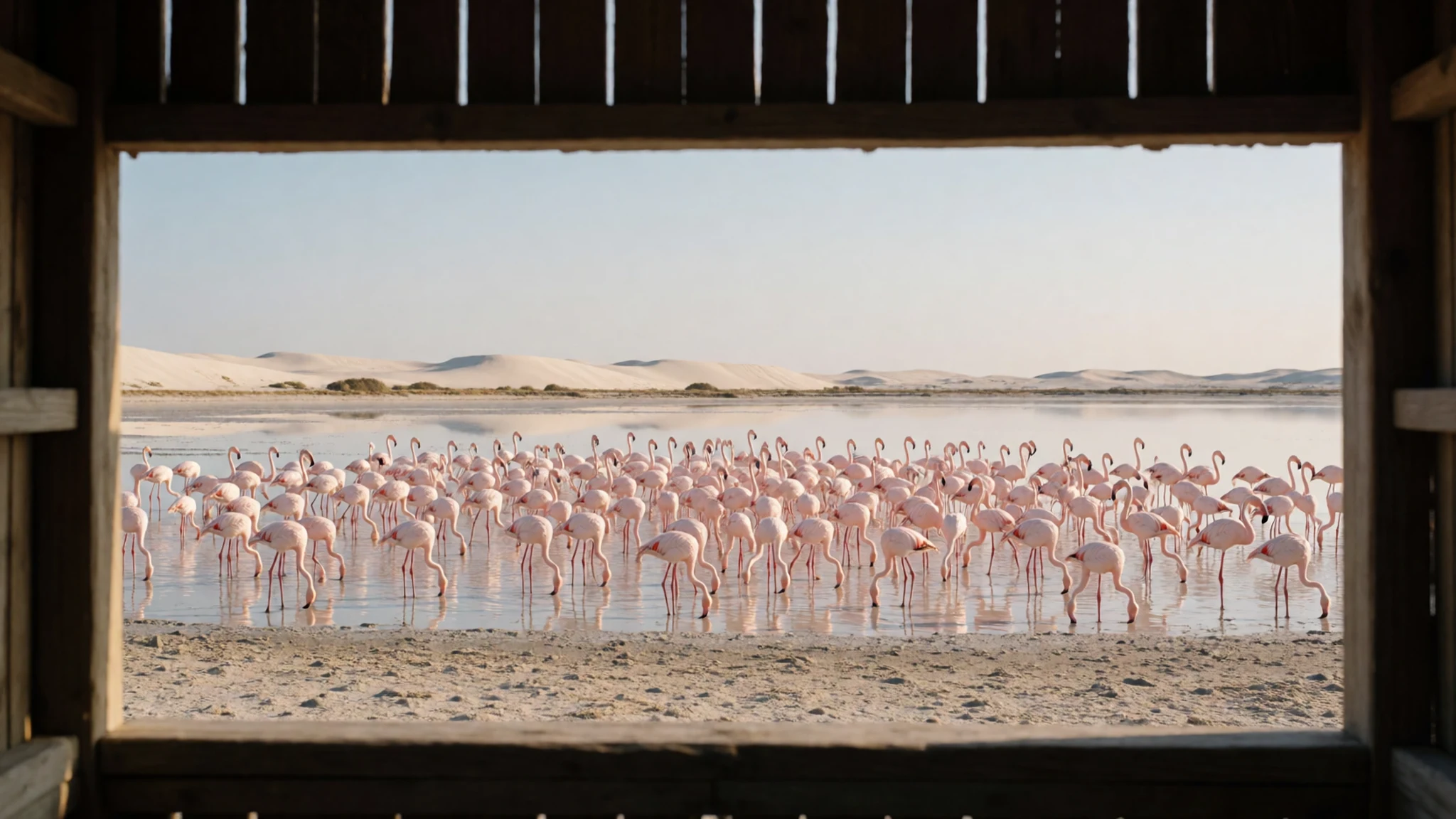
- Reed beds and little grebes — Lake margins
Along the edges of the lake, dense reeds shelter smaller waterbirds that are easy to miss. A little grebe may show only as a dark shape among the stems, then dive and reappear elsewhere. Patience and a quiet approach matter more here than equipment, and the reeds reward a slow scan.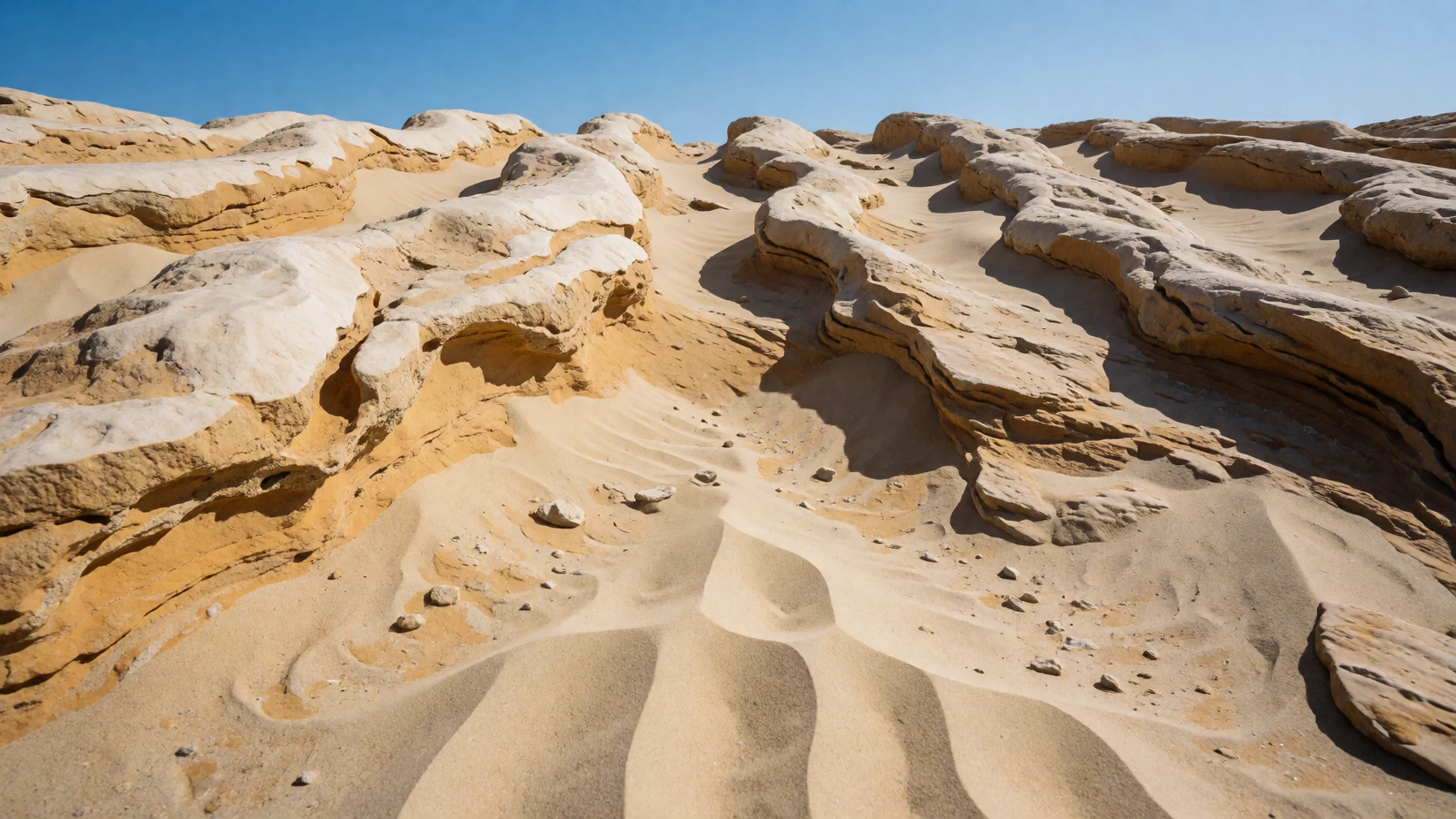
- Fossil dunes — Land beyond the water
Low ridges of hardened sand rise over Al Wathba, the frozen remains of dunes shaped over very long periods. They give the otherwise flat landscape a gentle profile and make a fine backdrop at either end of the day, when the sun rakes across the surface and picks out the layering.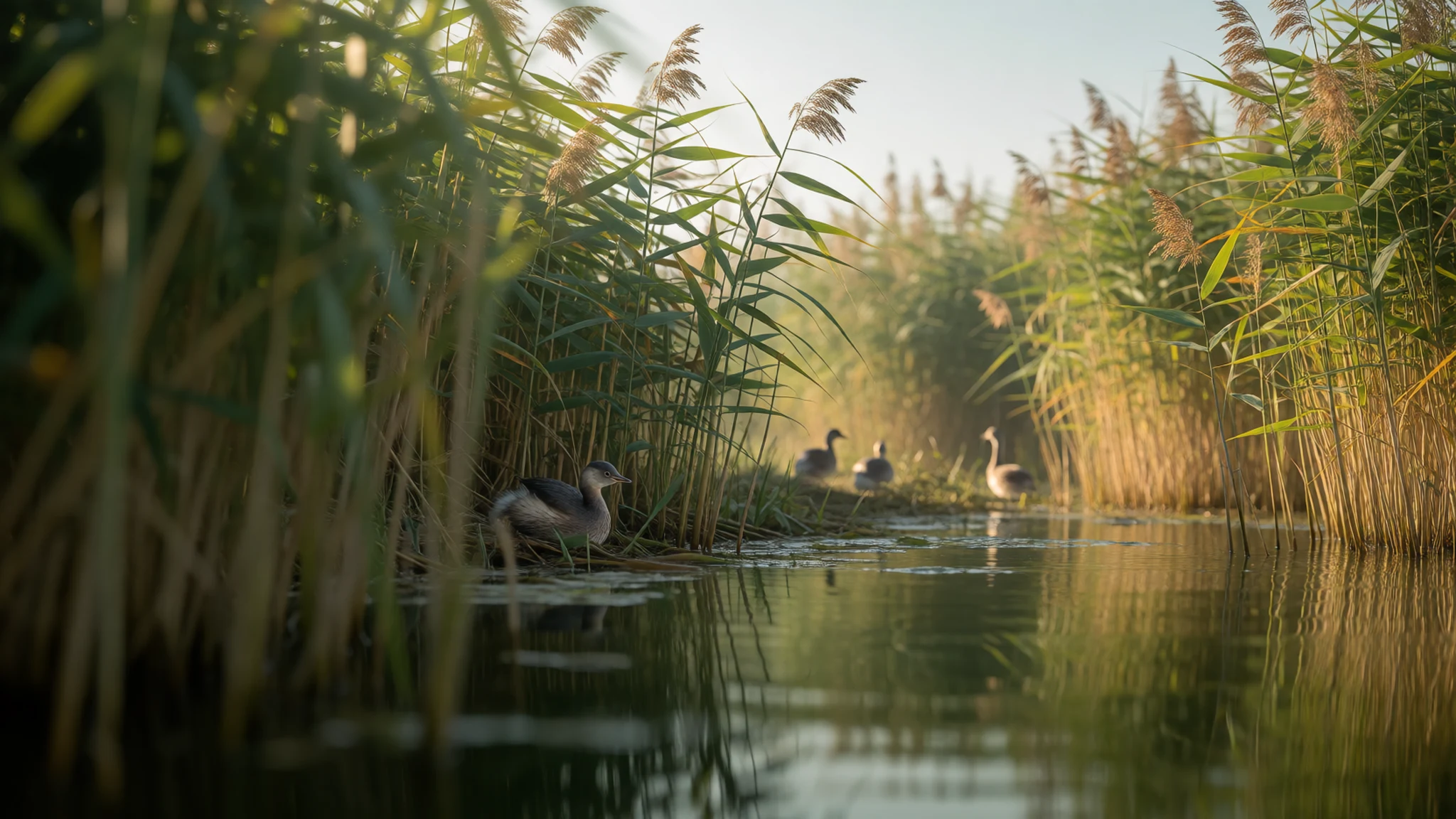
- The lakeside drive — Banks of the wetland
A calm road runs along the banks of the wetland, and for many visitors it is the main way to take in the scene. Driving slowly with the windows down and stopping at pull-offs lets you watch birds without startling them. Keep to marked routes and follow any signs.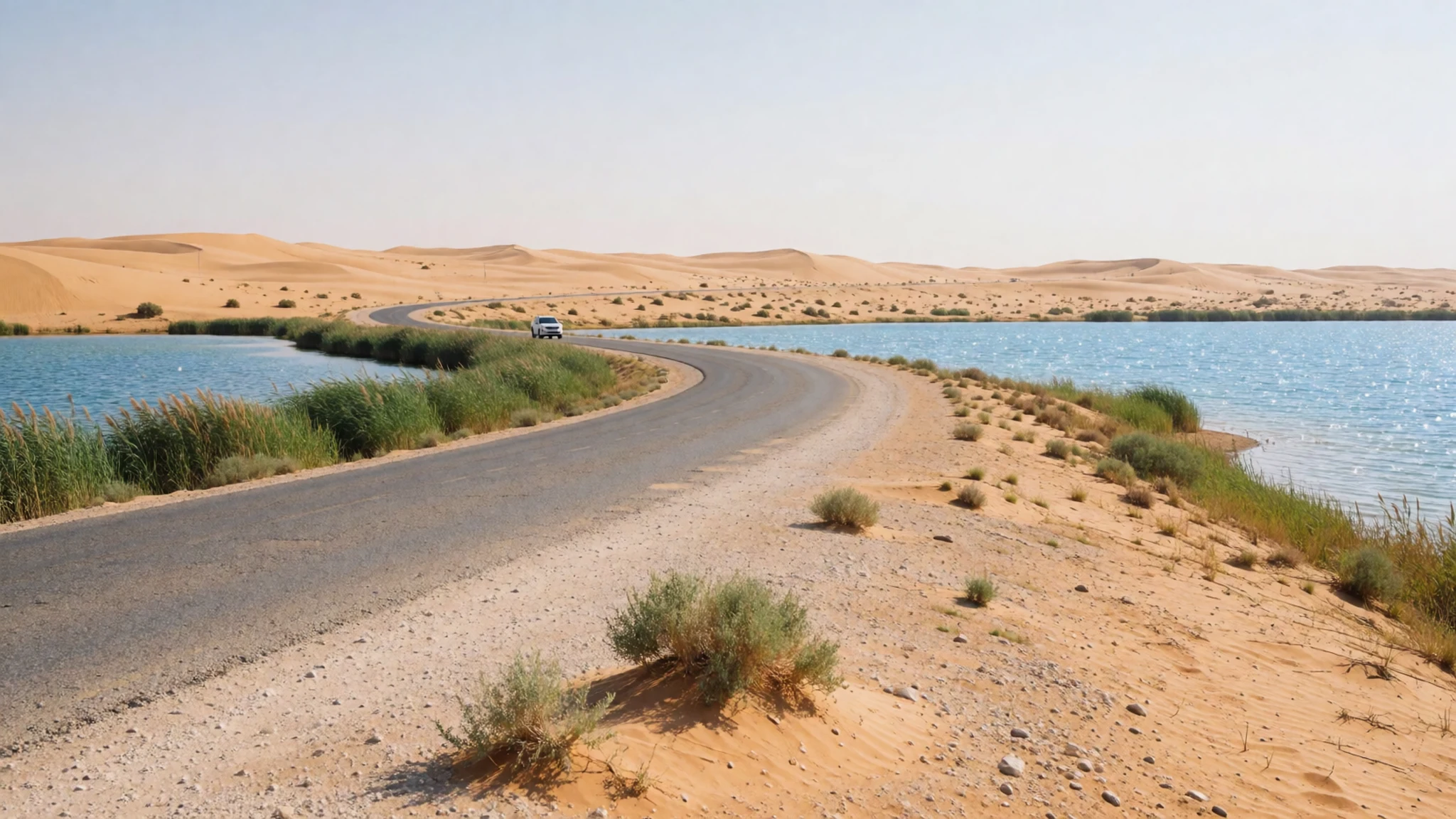
- Zayed Festival village — Al Wathba suburb
The suburb of Al Wathba is also known as Zayed Festival village, after the Sheikh Zayed Festival held there. The festival focuses on Emirati heritage. Check the dates and entry arrangements on official channels before planning a visit around it, as the programme can vary from year to year.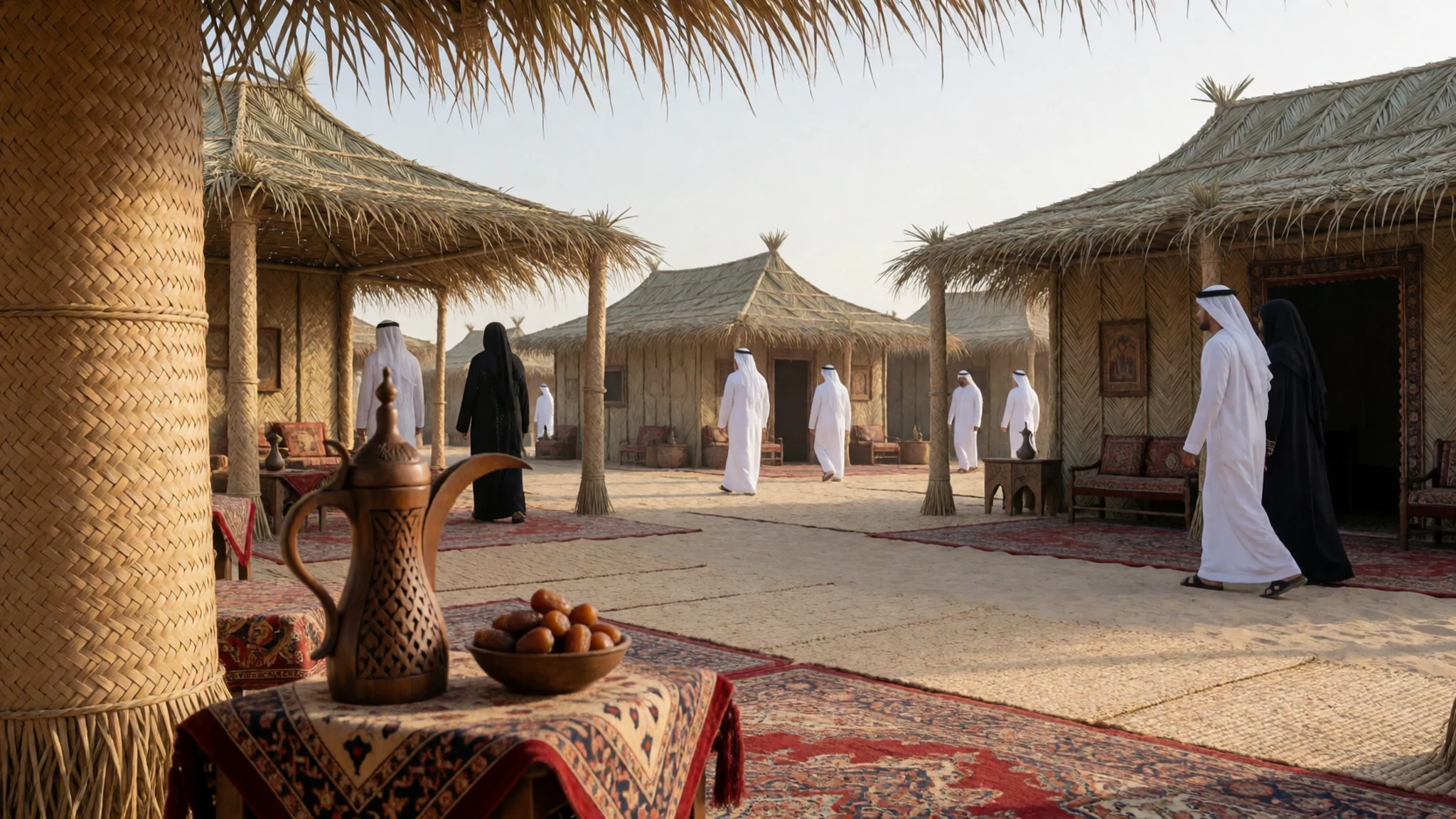
Culture
Al Wathba Wetland Reserve lies in a country where Bedouin heritage is a point of national pride, and the surrounding suburb was shaped by Sheikh Zayed's policy of settling Bedouin families and others from the Arabian Peninsula in planned towns. That background matters for how the place feels today. Hospitality is a deep value in Emirati life: coffee and dates are offered as a matter of course, and a guest is expected to accept at least a small cup. Arabic coffee, known as gahwa, is poured in small measures, and shaking the cup gently from side to side tells the host you have had enough. Islam shapes the rhythm of the week, with Friday as the main day of congregational prayer, and the call to prayer is heard across the suburb. During Ramadan, eating, drinking and smoking in public during daylight is discouraged out of respect for those fasting, and visitors should plan food and water accordingly. Heritage events such as the Sheikh Zayed Festival present falconry, camel culture, crafts and poetry, and they are worth attending if timing allows. Families are a large part of the weekend crowd at outdoor sites like this one, and privacy is valued. Ask permission before photographing people, especially women and families, and keep your voice low so you do not disturb the birds or other visitors.
What to wear
Al Wathba Wetland Reserve sits in a country with a clear national dress, and it is worth knowing before you go. Emirati men traditionally wear the kandura, a long, loose robe usually made of white cotton or a light blend, with a ghutra headcloth held in place by a black cord called an agal. Women wear the abaya, a flowing black outer robe, with a shayla scarf over the hair; fabrics range from light crepe to heavier cloth, and some carry embroidery at the cuffs and hem. Many Emiratis wear this dress daily, and it is standard at work, formal occasions and national celebrations. Most residents of the area are not Emirati, and everyday clothing is mixed: office wear, sportswear, saris, shalwar kameez and casual international styles all appear. Heritage events bring out traditional dress in force. For a visit, think about sun and ground before fashion. Choose light, loose, long-sleeved cotton or linen in muted colours that will not stand out to birds, and cover shoulders and knees, which is the local norm in public. A wide-brimmed hat, sunglasses and sunscreen matter at any time of year. Wear closed, comfortable shoes with grip, since the paths and verges can be dusty, uneven or sandy. In the cooler months a light layer helps early in the morning, when the air near the water can feel cold.
What to eat
- Machboos — Emirati restaurants in Abu Dhabi and festival food stalls
A spiced rice dish cooked with meat, chicken or fish, flavoured with dried lime, saffron and warm spices. It is a staple of Emirati homes and appears at festivals and family gatherings. Look for it at Emirati restaurants in Abu Dhabi and at food stalls during heritage events.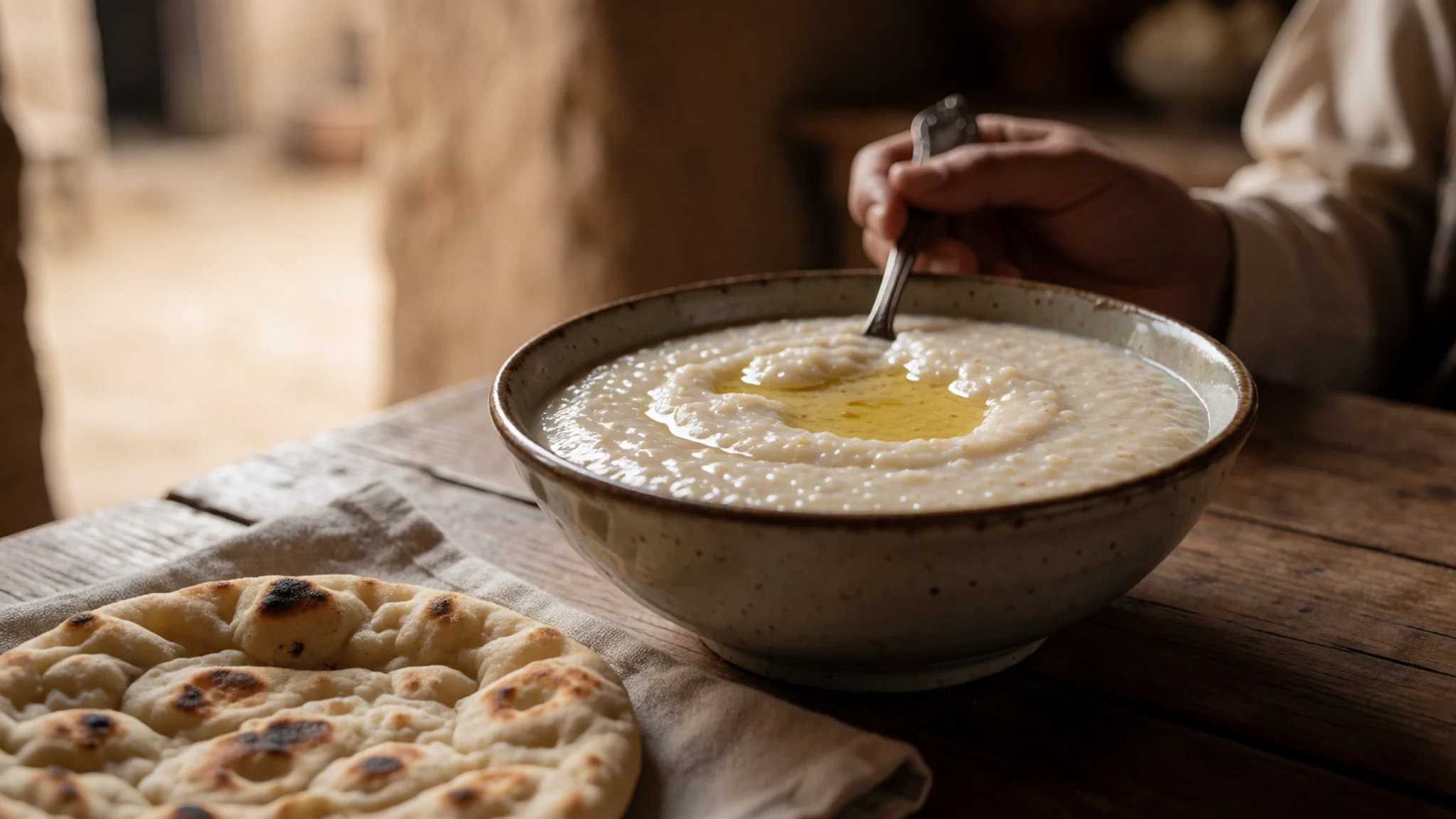
- Harees — Traditional Emirati eateries in Abu Dhabi, especially during Ramadan
A smooth, slow-cooked porridge of wheat and meat, beaten until it holds together, often served with a little ghee. It is closely linked with Ramadan and celebrations. Ask at traditional Emirati eateries in the city, where it tends to be offered in the evenings during the fasting month.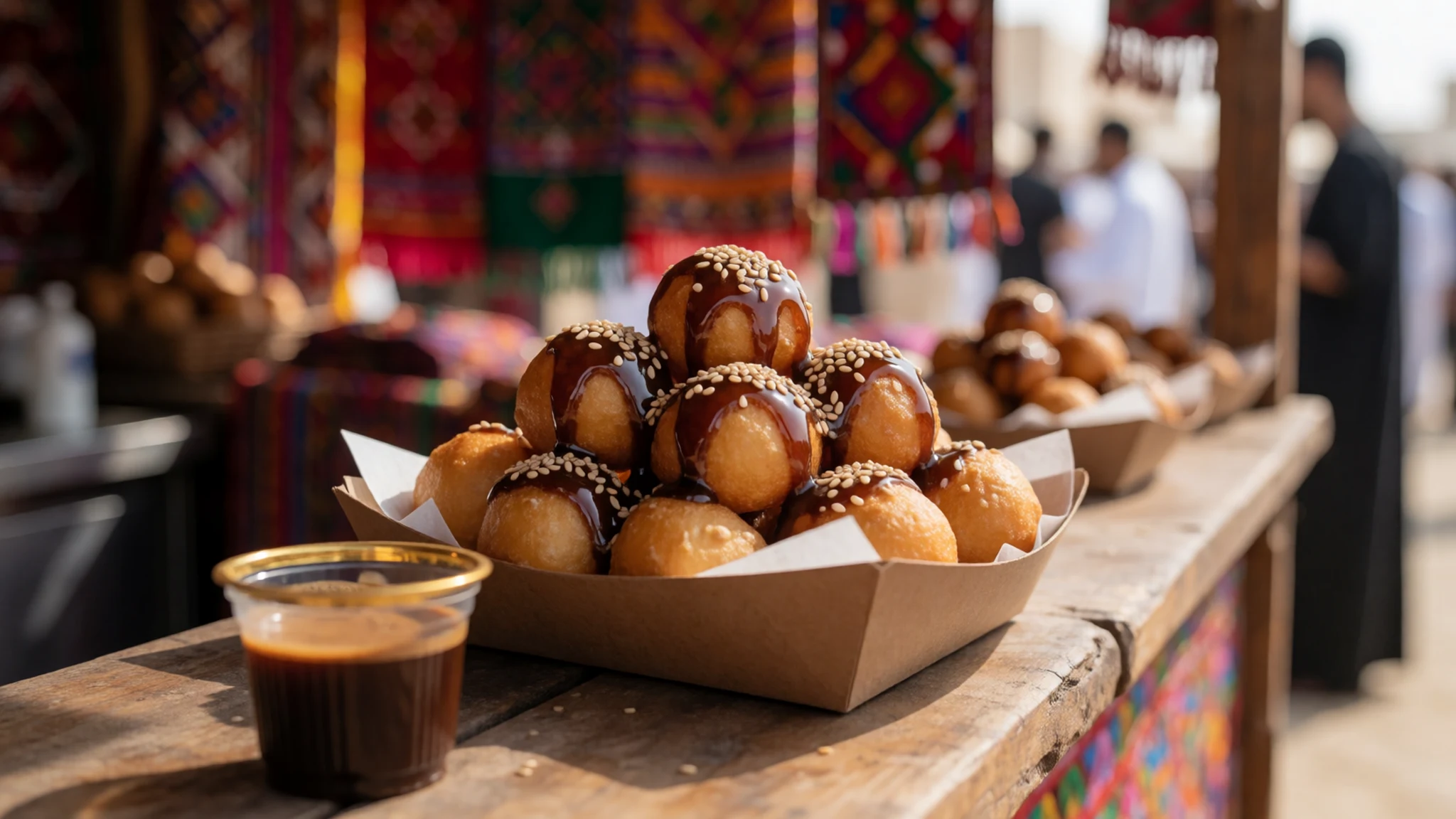
- Luqaimat — Cafés and heritage festival stalls
Small fried dough dumplings, crisp outside and soft inside, dressed with date syrup or honey. They are sold as a snack and a sweet, and they make a good pairing with coffee after time outdoors. Heritage events and local cafés are the easiest places to find them. - Karak chai — Roadside tea counters and small cafés
Strong tea boiled with milk, sugar and cardamom, widely loved across the Emirates and served in small cups. It is cheap, quick and warming on a cool morning by the water. Roadside tea counters and small cafés in Al Wathba and Abu Dhabi serve it all day. - Gahwa with dates — Heritage villages, traditional cafés and festival tents
Arabic coffee is pale, lightly spiced with cardamom and sometimes saffron, served in tiny handleless cups alongside dates. Accepting a cup is a gesture of friendship. You will meet it at Emirati majlis-style gatherings, heritage villages and many traditional cafés.
Plan it
Best time. November to March, when the days are mild and comfortable for walking and watching birds. Summer is very hot and humid, and midday heat makes time outdoors unpleasant.
How long. 1
Getting there. Fly into Zayed International Airport in Abu Dhabi, which is not far from Al Wathba. For the last leg, hire a car or take a taxi or ride-hailing service from the airport or the city; public transport to the reserve is limited, so check options in advance.
Budget. mid
Tips
- Confirm access arrangements and any permits with the Abu Dhabi authorities before you travel, as rules can change
- Go early in the morning for cooler air, calmer water and more active birds
- Bring binoculars or a camera with a long lens, since many birds stay far from the bank
- Carry plenty of water, a hat and sunscreen, and keep some cash in case card payment is unavailable
Etiquette
- Stay on marked routes and follow any signs or staff instructions at the reserve
- Keep noise low and do not approach, feed or flush the birds
- Dress modestly, covering shoulders and knees, and ask before photographing people
Nearby
Sources
- Wikidata Q63975891 (CC0)
- Wikipedia: Al-Wathba Wetland Reserve (rev 1375845895) (CC BY-SA 4.0)
- Photo: Location map of the United Arab Emirates (Uwe Dedering, NordNordWest) (CC BY 3.0)
- Photo: Relief location map of Asia (Uwe Dedering) (CC BY 3.0)
- Photo: Greater Flamingos (AhmedAlAwadhi7) (CC BY-SA 4.0)
- Photo: Al Wathba wetland drive (Nakshatraprem) (CC BY-SA 4.0)
- Photo: Al Wathba Wetland Reserve (gordontour) (CC BY-SA 4.0)
- Photo: Beautiful Fossil Dunes Al Wathba (Sharia.Absar) (CC BY-SA 4.0)
- Photo: Fossil dunes over Al Wathba (Sharia.Absar) (CC BY-SA 4.0)
- Photo: Little grebe in reeds (Angela Manthorpe) (CC BY-SA 4.0)
- Wikivoyage (CC BY-SA 4.0)


Wildlife
- Greater flamingo (animal)
Picture the largest flamingo of all, standing on long legs in the shallows: that is the greater flamingo. Al Wathba Wetland Reserve is famous for its big flocks, which rest and breed on the shallow lakes. The notes give no season or time of day, so ask your guide when the birds are most active. Watch from a distance, stay quiet and move slowly so you do not unsettle breeding birds. Never offer food.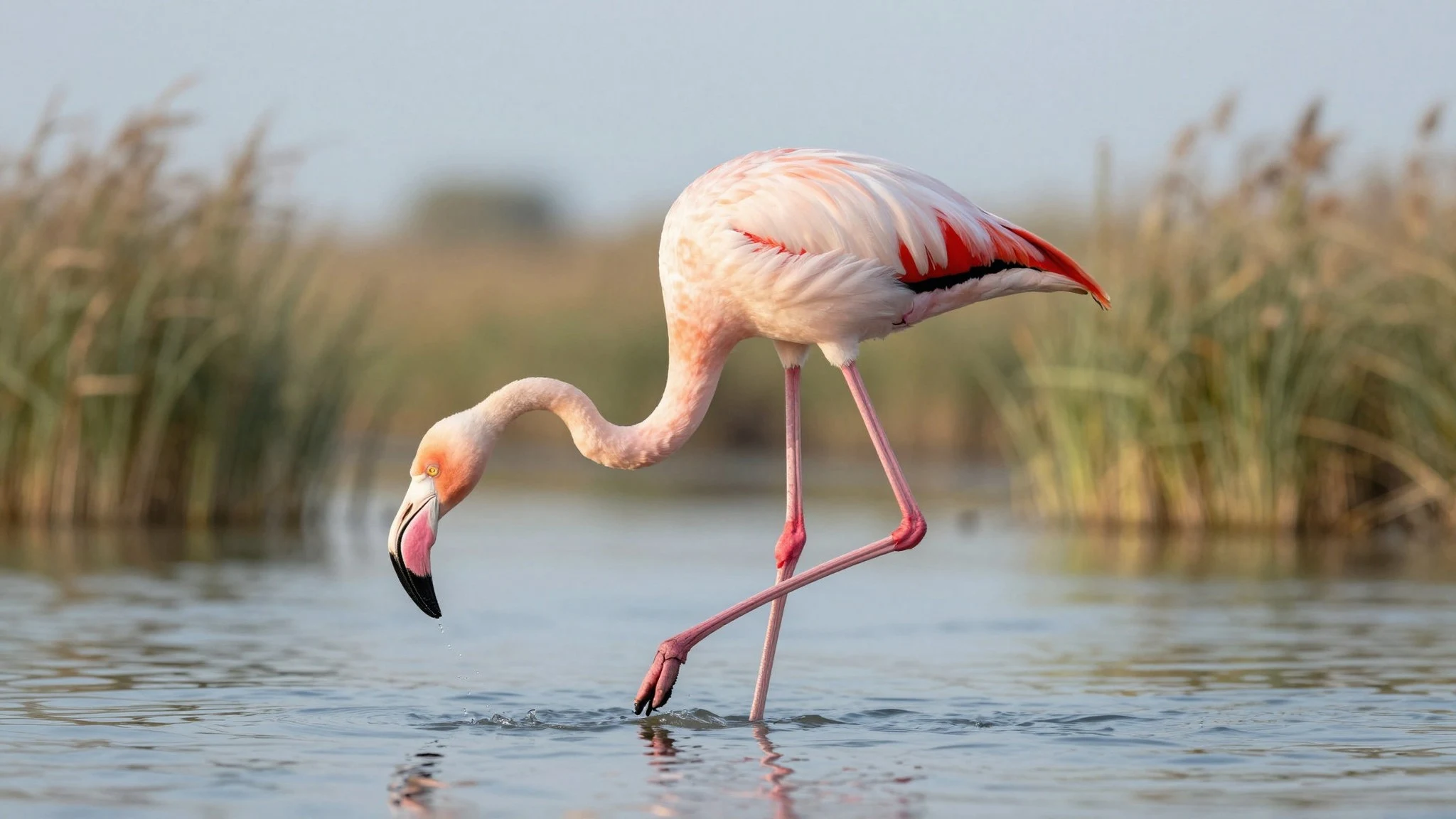
- Little grebe (animal)
The little grebe is a small, shy water bird whose name hints at quick dives beneath the surface. At Al Wathba Wetland Reserve it lives among the dense reed beds alongside other small birds, so look near the reeds rather than on open water. The notes do not give a season or hour. Be patient, stay quiet and keep your distance, ideally with a guide to help you find it. Never feed it.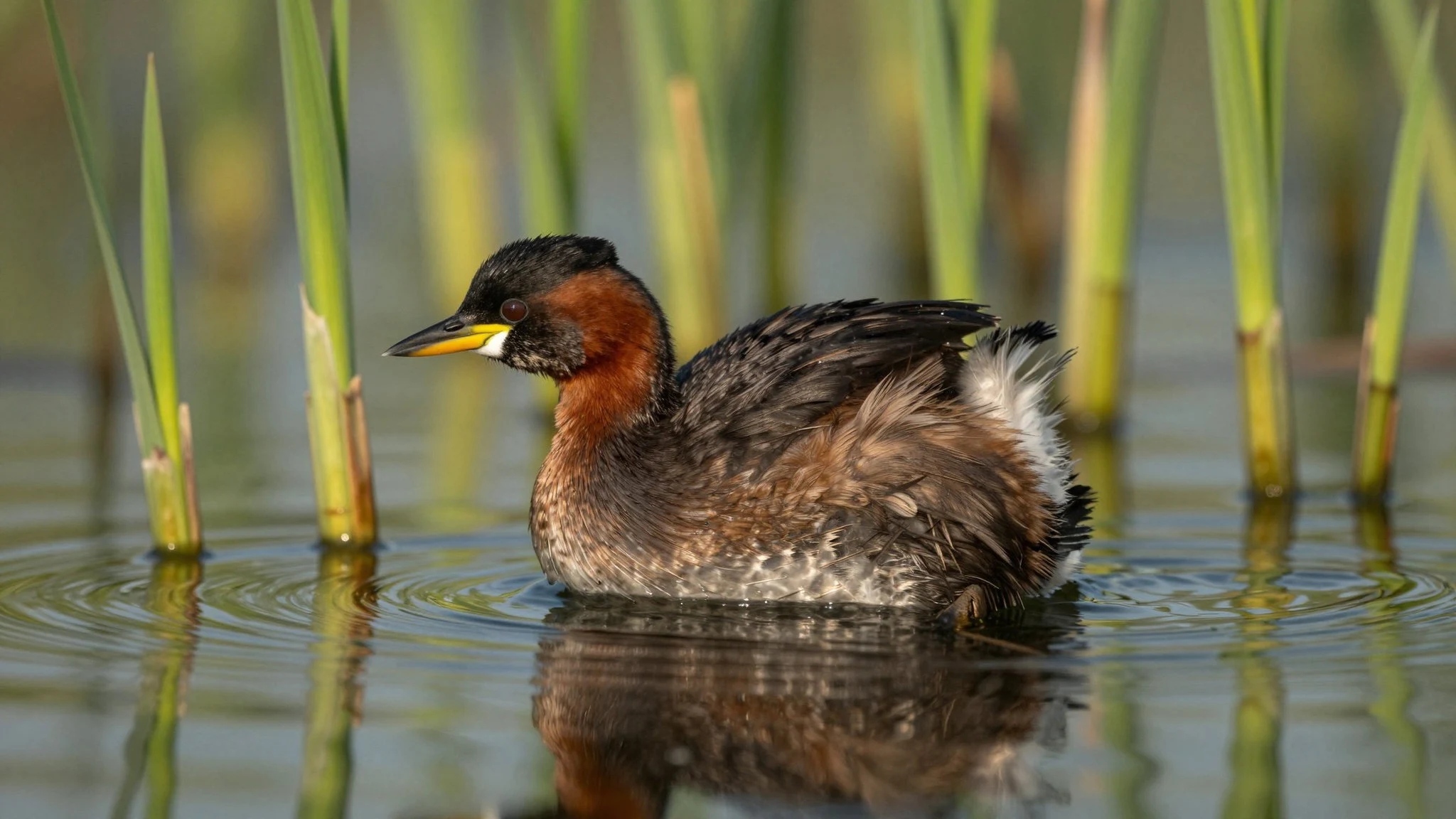
- Greater flamingo (bird)
Picture the largest flamingo of all, standing on long legs in the shallows: that is the greater flamingo. Al Wathba Wetland Reserve is famous for its big flocks, which rest and breed on the shallow lakes. The notes give no season or time of day, so ask your guide when the birds are most active. Watch from a distance, stay quiet and move slowly so you do not unsettle breeding birds. Never offer food. - Little grebe (bird)
The little grebe is a small, shy water bird whose name hints at quick dives beneath the surface. At Al Wathba Wetland Reserve it lives among the dense reed beds alongside other small birds, so look near the reeds rather than on open water. The notes do not give a season or hour. Be patient, stay quiet and keep your distance, ideally with a guide to help you find it. Never feed it.