Palm Jumeirah
Palm Jumeirah, United Arab Emirates
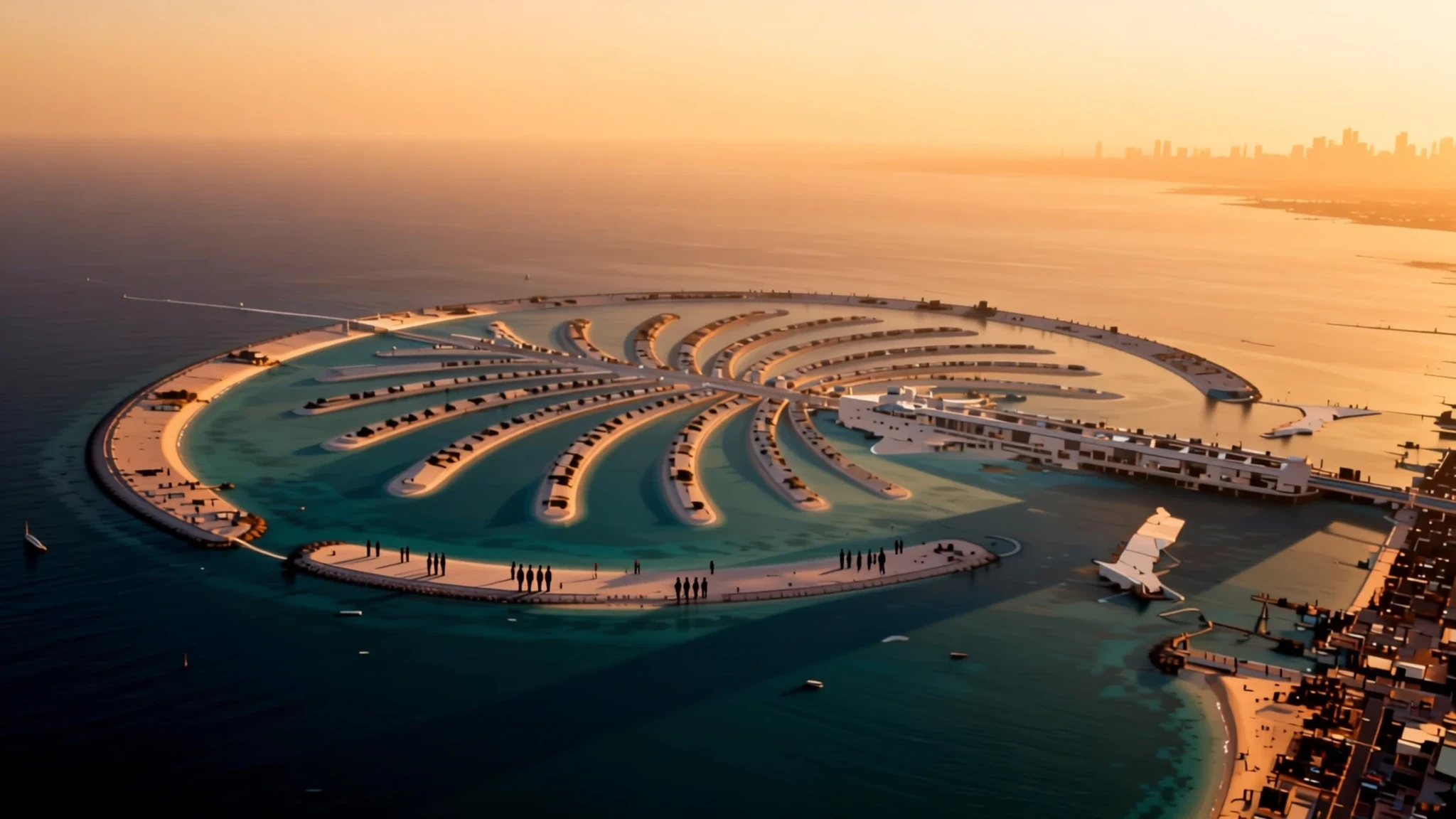
Palm Jumeirah is a Dubai-style ‘you can’t unsee it’ coastline—an artificial island built for sea views, beach time and skyline drama.
The place
Palm Jumeirah sits off Dubai’s coast in the Persian Gulf, part of the wider Palm Islands project that also includes Dubai Islands (formerly Palm Deira) and Palm Jebel Ali. Together, these are three artificial archipelagos built alongside another big offshore concept in the area, The World Islands. It’s the kind of place where the planning shows immediately: the landform is engineered into a palm-frond shape, with a layout that makes for strong sightlines from boats, from above, and across the water.
On a practical level, Palm Jumeirah is easiest to understand as a mix of everyday living and luxury resort style—residential fronds and villas, and the outer crescent lined with upscale resorts. Some sections feel open and breezy, while other stretches are clearly designed around private beach access and controlled entries. The experience is therefore less about wandering through everyday neighbourhood life, and more about moving between viewpoints, beach edges, and the occasional promenade-style area where you can pause for photos.
Even the broader setting is part of the story. The UAE is a modern state on the coast, but it grew out of much older fishing-village rhythms and tribal social structure; now it’s shaped by megaprojects and international investment. Palm Jumeirah is one of those projects made visible—sea views as a product, not just scenery.
Crowds tend to cluster around arrival points, viewpoints, and popular beachfront stretches, so timing matters. Late afternoons can be busy, especially with day visitors, and midday heat can make long walks feel like hard work—plan for short bursts and shade breaks.
Its story
Palm Jumeirah is one of Dubai’s most famous pieces of “made by people, lived on by people” geography. It exists because the Palm Islands were constructed off the coast as a group, with Palm Jumeirah being the best-known name in that trio. The idea is simple to describe and harder to forget once you’re there: land reclaimed from the sea, arranged into an instantly recognisable palm-inspired outline, and then filled with the life of a resort coastline.
What makes the story interesting is that Palm Jumeirah is not an isolated island concept. It’s part of a bigger pattern of offshore development in the area, happening at roughly the same time as The World Islands. That means the view from the mainland isn’t a single landmark; it’s a whole set of artificial shapes changing the skyline and stretching into open water.
There’s also the environmental side of the tale: the construction has had impacts on ocean sediment and local wildlife in the surrounding area. That doesn’t take away from the fun of visiting, but it does add a layer of thoughtfulness—this is engineering at scale, not just a pleasant beach.
On the ground, the day-to-day experience can feel split. One half is the calm, slow rhythm of sea and shade; the other is the pace of a high-demand resort island, where people come for views, swimming time, and the “wow” factor you get when you’re standing on land that wasn’t there before.
For many travellers, the best part is the movement: arriving, getting a viewpoint angle (especially from above), then walking the edges where the water is closest and the geometry of the island shows most clearly.
What to see
- Palm Islands from above
Palm Jumeirah looks like a palm plan drawn on the sea, and the “shape” only fully clicks from higher viewpoints or aircraft-style angles. It’s a great way to understand the scale and engineering before heading back down to the waterline.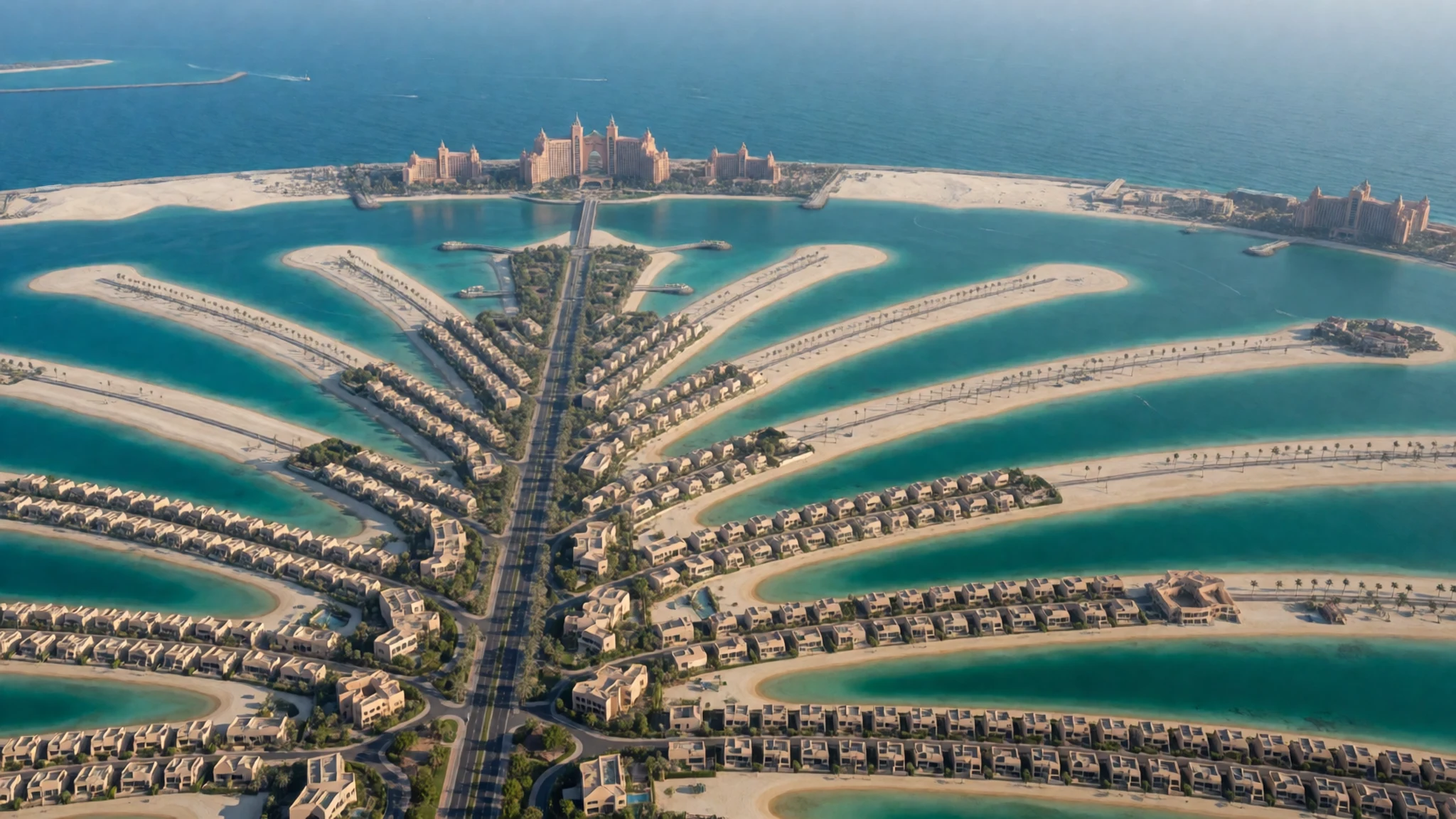
- Beachfront edges & viewpoints — coastline viewpoints on Palm Jumeirah
Palm Jumeirah’s best moments are along the coastline—short walks where you can see the water curve away and the island’s engineered edges catch the light. Go when the light is gentler and expect other people doing the same.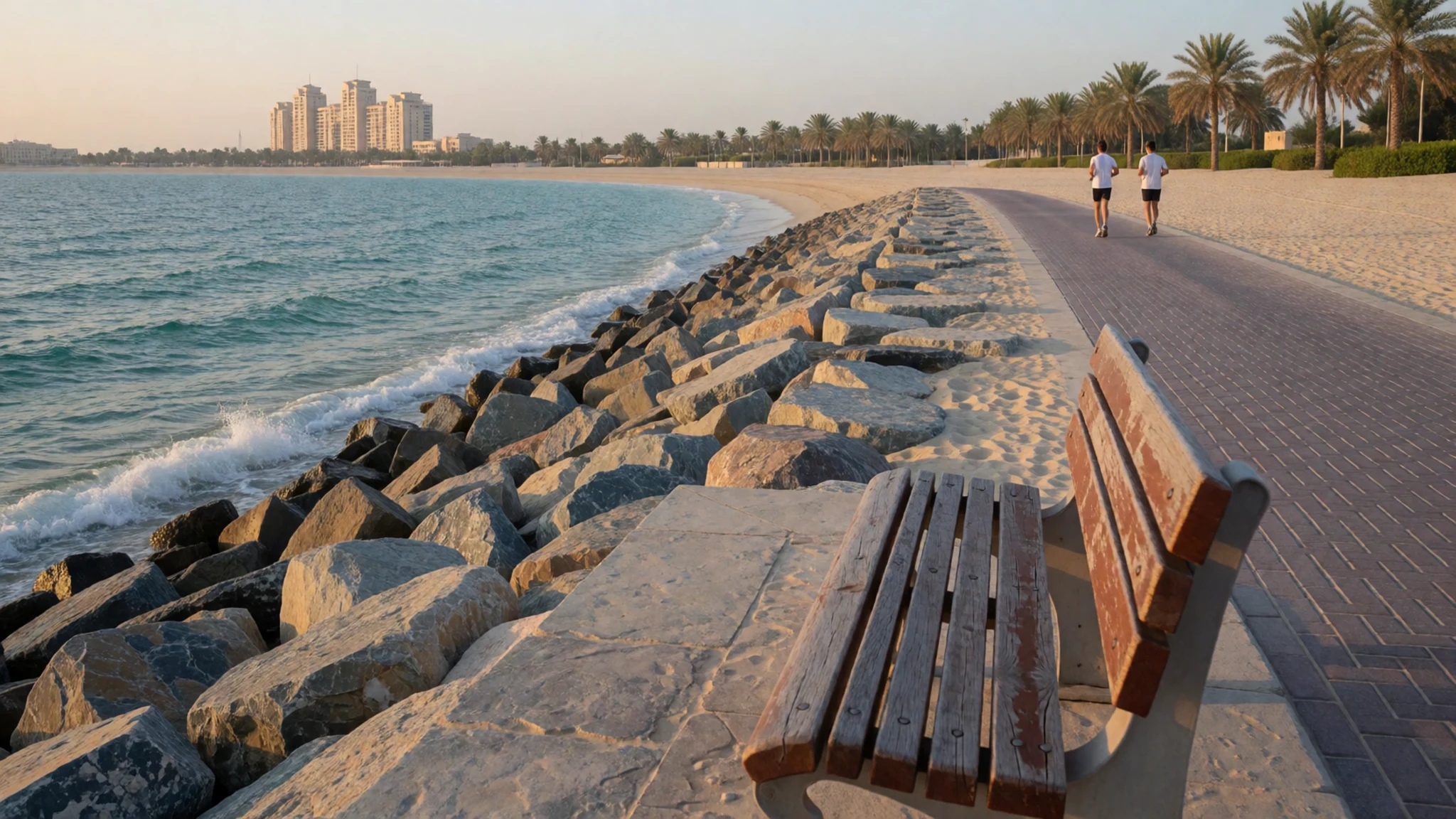
- Resort frontage on the island — main resort frontage areas
Palm Jumeirah is strongly shaped by resorts, so the frontage areas give you the classic ‘island holiday’ look—palm-lined promenades, seafront terraces and photo-friendly angles. Even if accommodation isn’t on the agenda, the exterior scenes are the draw.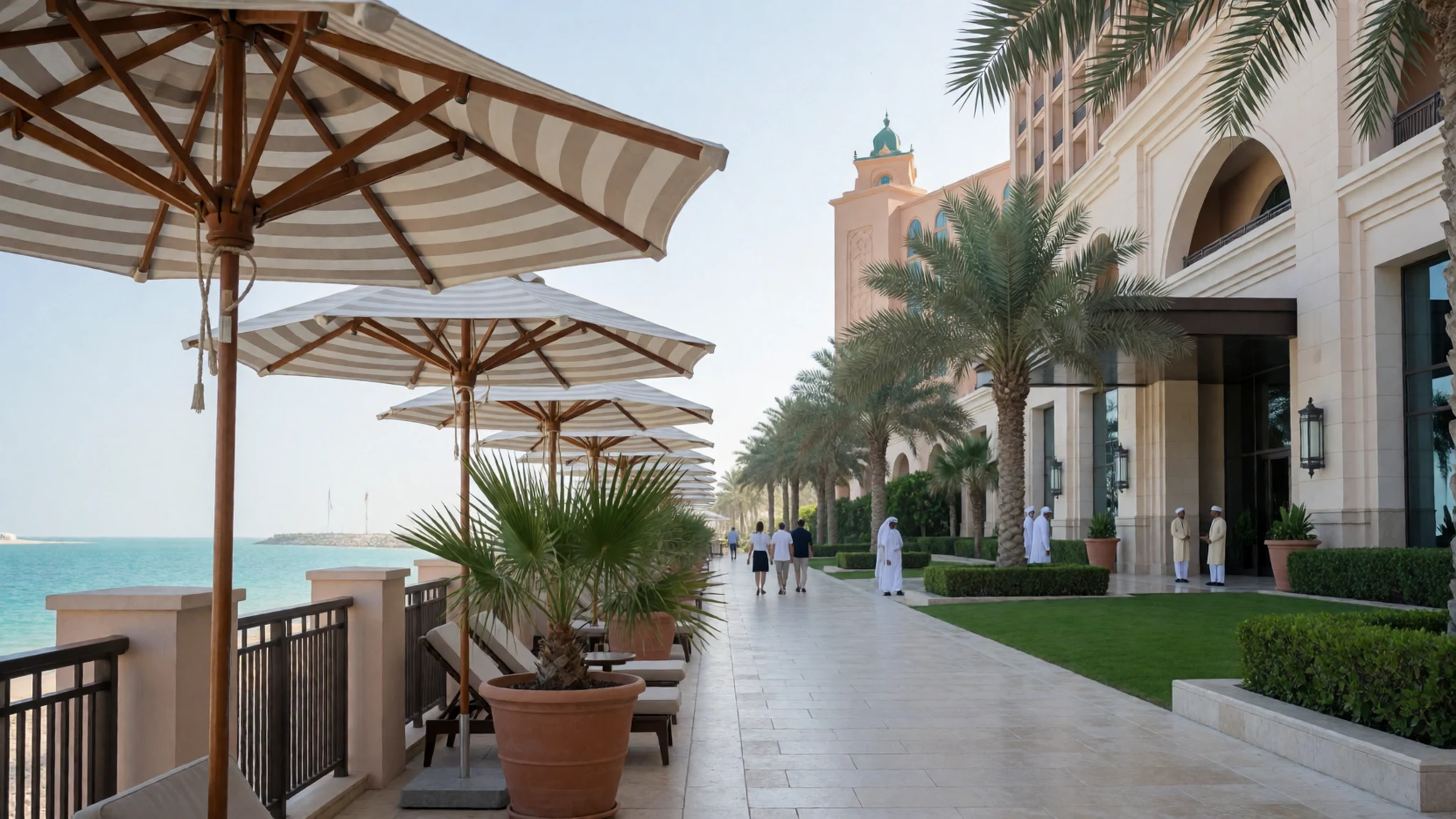
- Big-islands context: The World area view — Persian Gulf waters off Dubai
Because Palm Jumeirah sits in the same offshore development universe as The World Islands, it helps to frame the view with that wider context. Watching the cluster of artificial island shapes makes the Dubai coastline feel like an intentional design project, not scattered development.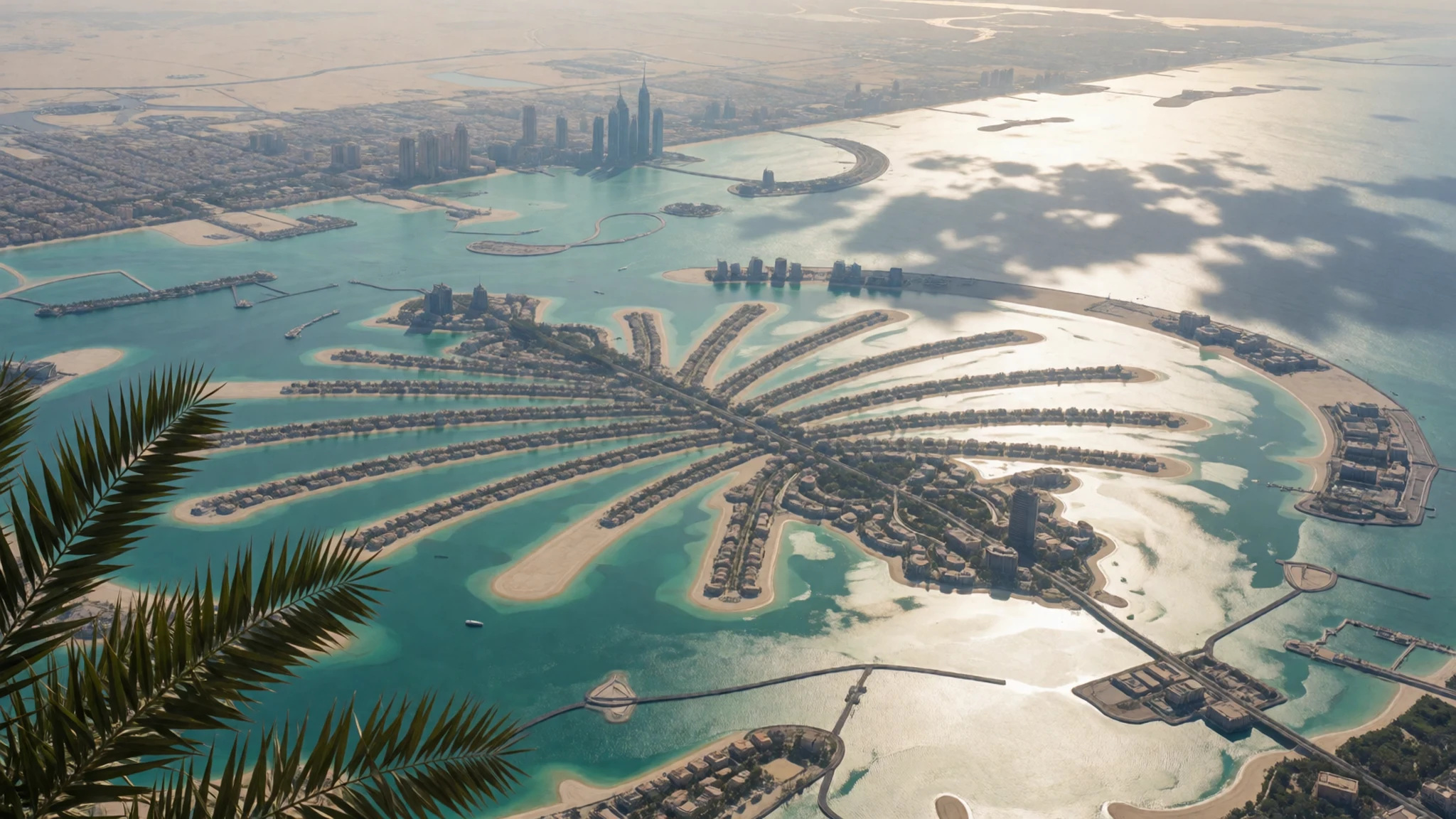
Culture
Palm Jumeirah is an island experience inside the UAE, so most manners are the same as you’d use anywhere across the Arab world—respectful, calm, and aware that local culture can be conservative. Emirati society places strong emphasis on family honour, so avoid negative talk about people’s family members. Away from formal settings, people can be friendly and civil, but the social tone is still generally polite rather than loud.
For visitors, the practical cultural takeaway is modesty and discretion in public spaces. Tank tops and shorts can be frowned upon, and clothing that feels too revealing may attract attention—especially away from beach club contexts. When visiting mosques or religious sites, modest clothing is needed.
Dress codes in resort areas are more forgiving than at religious places, but it still pays to dress slightly more covered than you might at home if you’re moving between beach time, promenades and restaurants.
Finally, remember that the UAE is designed for international visitors, so you’ll see many styles—but “comfortable for tourists” is not the same as “appropriate everywhere.” Choose outfits that fit the setting, keep conversations respectful, and be mindful with photography around people.
Visitor etiquette: Keep clothing modest in public beyond pure beachwear, and avoid speaking negatively about anyone’s family.
What to wear
Palm Jumeirah visitors usually dress for heat and sea breezes, but the UAE’s broader conservative streak still matters. Traditional dress in the UAE is closely associated with local identity: local men often wear a kandoura (a long robe, typically white) with a ghutra (a red-checked or white headdress). Local women typically wear an abaya (a black robe-like garment) with a shayla (a black head scarf).
What people wear now on Palm Jumeirah is more varied. You’ll see resort casual—light tops, swimwear by the water, and linen-type outfits around dining and promenades. Still, revealing styles like very short shorts and tank tops can be discouraged, particularly outside strictly resort-controlled beach settings.
For a visitor, pack breathable layers that allow comfort without oversharing skin. A lightweight shirt or cover-up over swimwear is a simple win for walking between beach and restaurants. If plans include mosque or religious-site visits in Dubai, bring clothing that covers shoulders and knees and enough fabric for modest head covering if required. Closed-toe sandals or grippy footwear are handy too, because promenades and pathways can get hot and uneven, especially when the sun is high.
What to eat
- Emirati rice and slow-roasted meats — Emirati-style restaurants across Dubai
Emirati cuisine often features fragrant rice topped with slow-roasted lamb, camel meat, chicken or fish. This style is easiest to find at Emirati-focused eateries and cultural dinner setups rather than ordinary fast-food counters.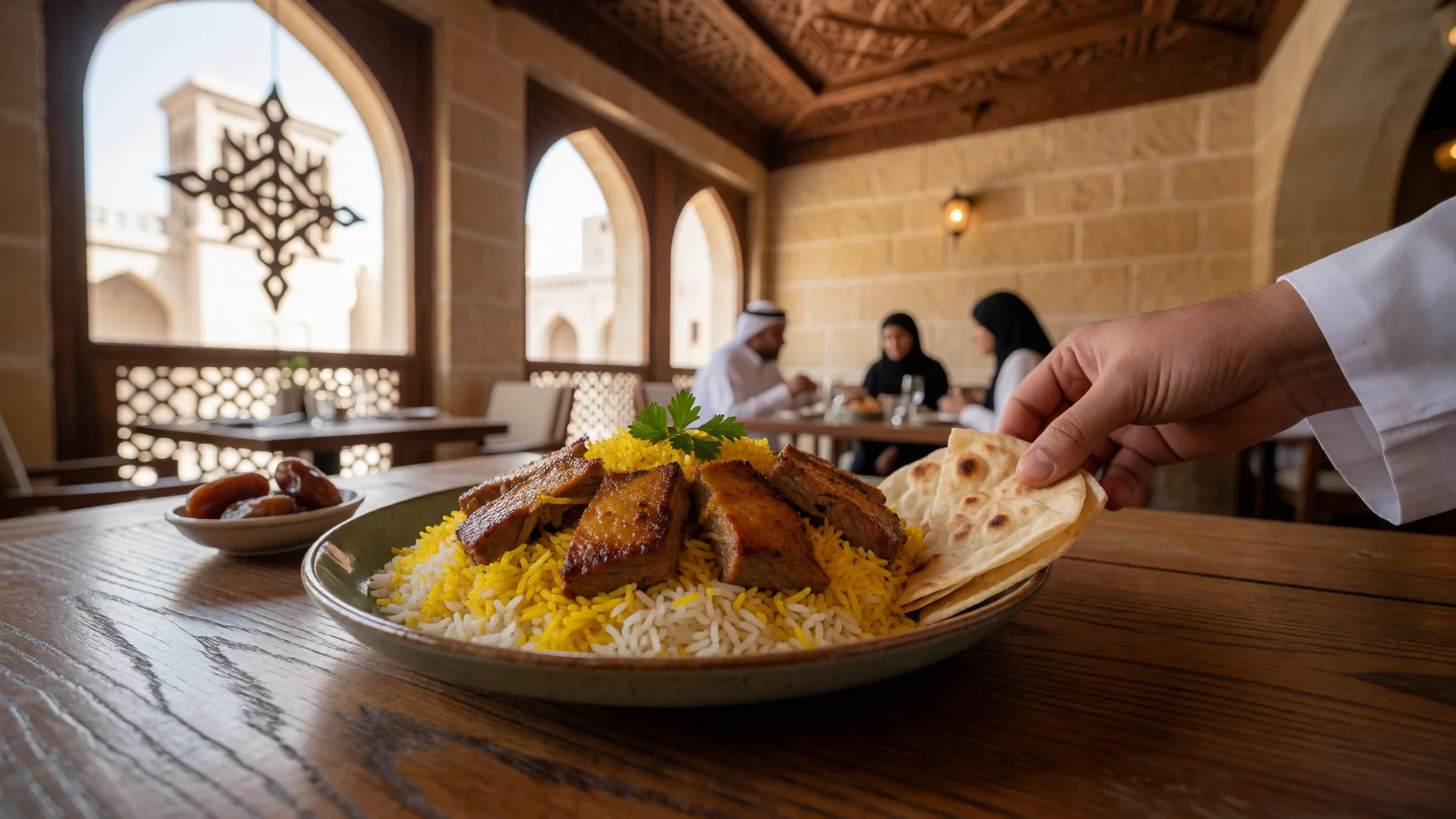
- Eastern Arabian grilled and spiced platters — neighbourhoods with Eastern Arabian cuisine options
Eastern Arabian dining in the UAE commonly brings grilled and spiced dishes to the table as shared platters, alongside rice and dips. Look for restaurants offering Eastern Arabian cuisine, especially in areas with many international eateries.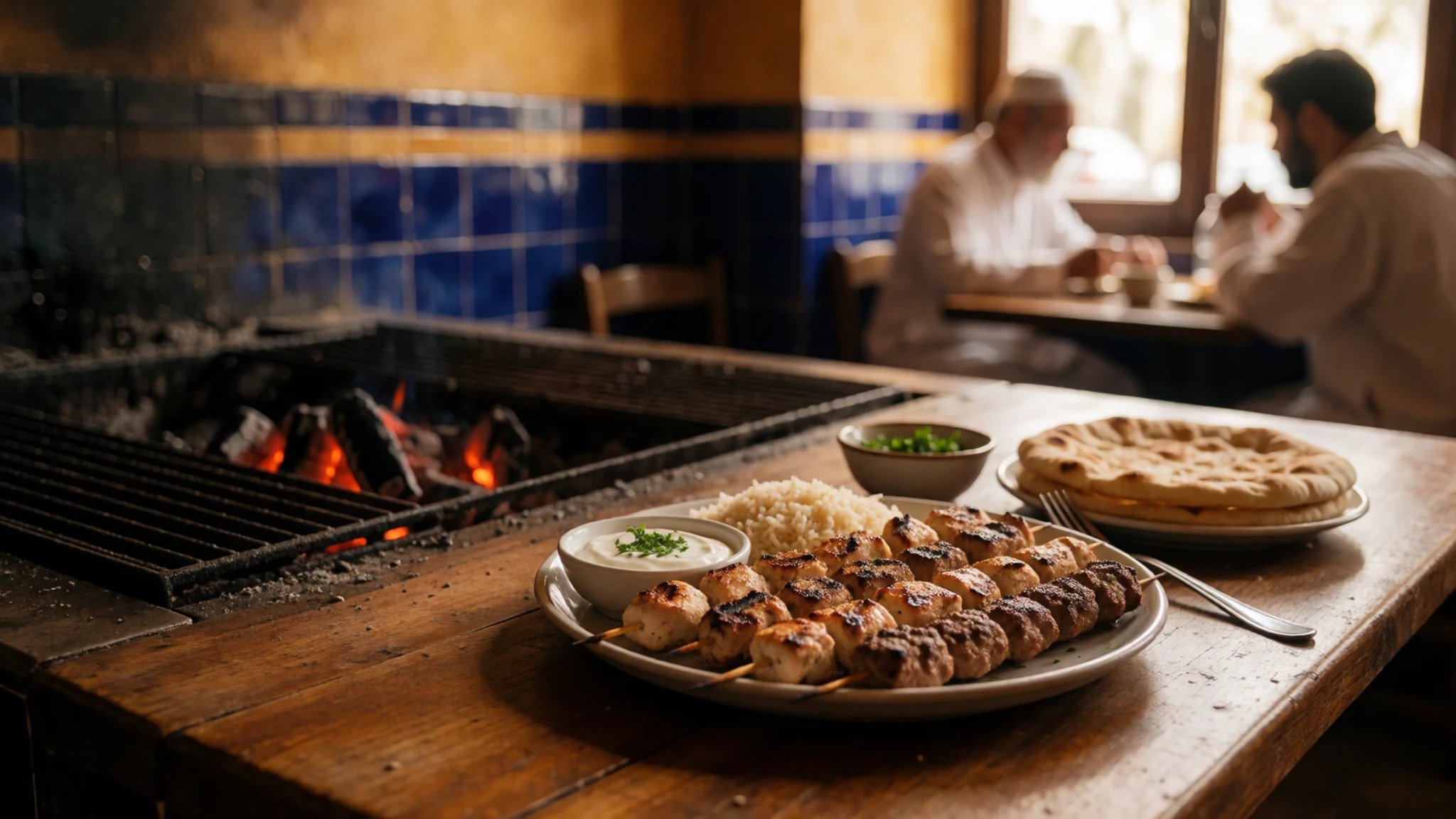
- Emirati-style rice platters — traditional-cuisine menus in the UAE
A typical Emirati plate is built around rice as the base, then topped according to what’s on offer that day—often with roasted or slow-cooked meat or seafood. It’s a good ‘start small’ way to taste the traditional flavour profile. - Café snacks for global comfort food — around major tourist areas in Dubai
Because the UAE hosts many nationalities, it’s simple to switch from traditional to global comfort foods—think pasta, burgers, wraps and salads—when the beach day demands something quick. You’ll find this everywhere in Dubai, including near tourist strips. - Family-style home-invites (best when available) — private homes through local invitations
If Emirati friends invite travellers home, that’s often where you’ll taste traditional dishes in the most authentic, generous way. It’s not a repeatable ‘where’ for everyone, but it’s the cultural route that locals value.
Plan it
Best time. January–February and December for the most comfortable conditions, since highs are lower and humidity/rain are higher than the mid-year dry stretch; the hottest months are July and August, while the wettest months are January and December—avoid long midday walks in July and August.
How long. 2–3
Getting there. Fly into Dubai, then use a taxi or rideshare to reach Palm Jumeirah from the city; the last leg is a short drive across Dubai’s main road network to the island entry points.
Budget. mid
Tips
- Plan viewpoints and coastline time for earlier in the day to reduce discomfort and keep photos cleaner.
- Expect crowds on popular beachfront edges; go slightly off-peak for quieter stretches.
- Treat Palm Jumeirah as a ‘short walk, big views’ place—aim for small loops rather than all-day strolling.
- Carry water and a light layer even on sunny days, and keep sunscreen handy.
- If you want the island shape in photos, schedule one moment with a higher-angle view (or an early arrival to catch clearer light).
Etiquette
- Keep swimwear for beach areas and dress more modestly when moving into dining and public spaces.
- Be respectful with photography of people in resort areas—avoid filming up close or without consent.
- Use a friendly, non-confrontational tone, especially if a conversation drifts towards sensitive topics about families.
Nearby
Sources
- Wikidata Q211844 (CC0)
- Wikipedia (rev 1382427181) (CC BY-SA 4.0)
- Wikivoyage (rev 5422047) (CC BY-SA 4.0)
- Photo photos/01-dubai-palm-islands-from-the-air.jpg (CC BY-SA 4.0)
- Photo photos/02-dubai-new-developments.png (CC BY-SA 4.0)
- Photo photos/03-palm-island-resort.jpg (Public domain)
- Photo photos/04-iss059-e-113892-view-of-united-arab-emirates-the-world-islan.jpg (Public domain)
- Photo photos/05-dubai-bauprojekte-crop.png (CC BY 3.0)
- Photo photos/06-dubai-bauprojekte.png (CC BY 3.0)
- Photo photos/07-dubai-travel-map.png (CC BY 3.0)
- Photo photos/08-dubaiworld-ast-2004318-lrg.jpg (Public domain)


