Al Ain
Al Ain, United Arab Emirates
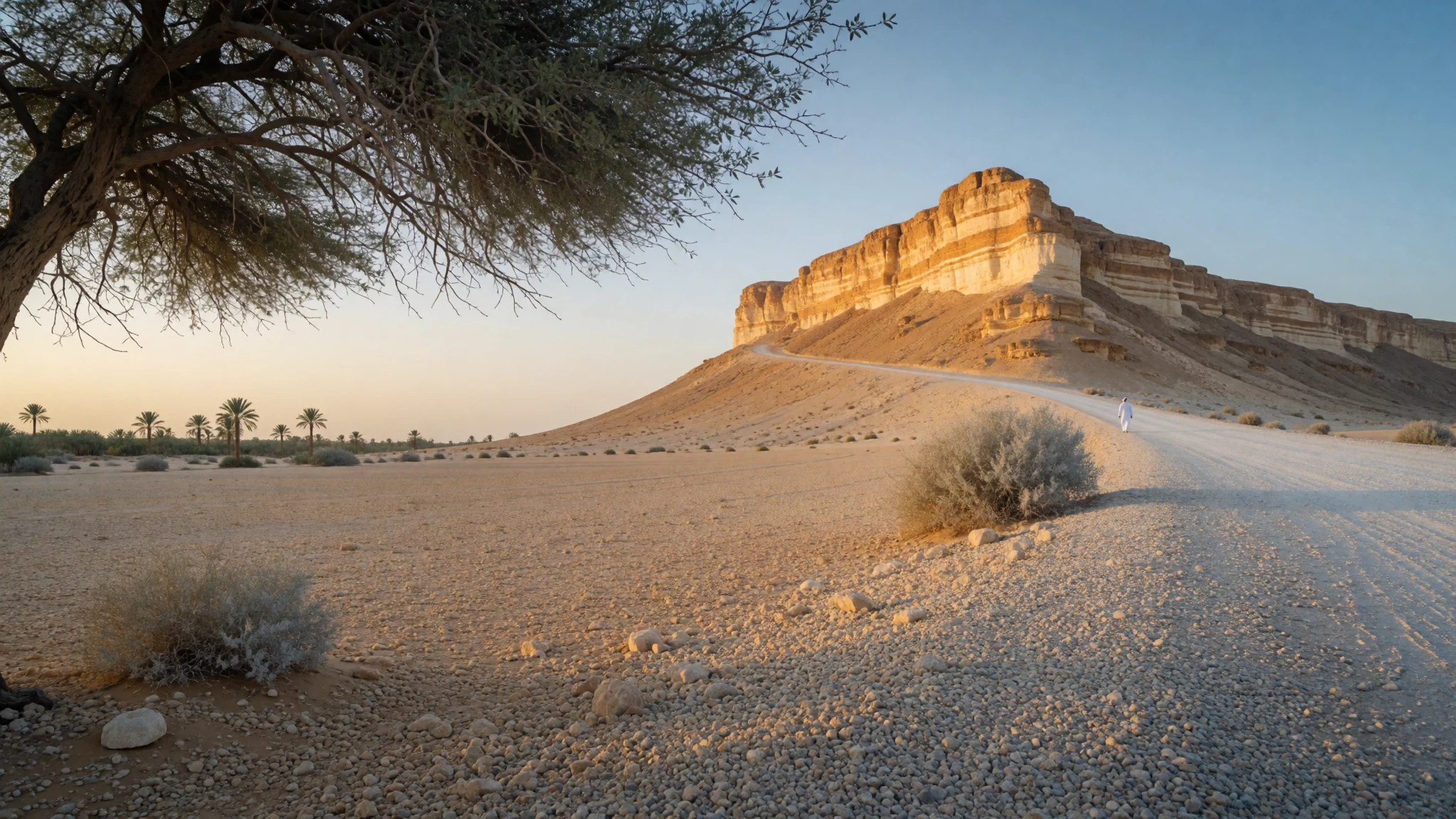
Al Ain is a palm-shaded oasis city beneath a bare mountain, with Bronze Age tombs and a calmer pace than the coast.
The place
Al Ain sits in the east of the Emirate of Abu Dhabi, pressed against the Omani border, with the town of Al-Buraimi starting just across the line. Its Arabic name means 'The Spring', and water explains almost everything about the place. Roughly 767,000 people live here, at an elevation of 292 metres, so the air is a little less heavy than on the Gulf coast, though summer is still fierce. The city forms the inland corner of a triangle with Abu Dhabi and Dubai, and the motorways linking the three run for roughly 130 km each. Locals call it the Garden City, and the name holds up: tree-lined avenues, parks, decorative roundabouts and old date-palm oases run through the street grid, and new buildings are kept low, so the skyline feels open rather than glassy. To the south, Jebel Hafeet rises as a pale limestone mass out of flat plains and gives the city a landmark visible from most streets. The pace is gentler than on the coast. Families gather in the parks in the evening, and the older quarters hold forts and shaded walkways between plantations. Mauteredh and the streets around Khalifa Street are where cafeterias and restaurants cluster, serving a mixed population of Emiratis, South Asians, Arabs and others. Al Ain works as a day trip from Dubai or Abu Dhabi, but a night here lets the evening light on the mountain and the cooler morning in the oasis do their work.
Its story
Al Ain has been settled for nearly 8,000 years, and much of the evidence still lies in the ground around it. Rumailah, Hili and the slopes of Jebel Hafeet all hold traces of early farmers and herders. People of the Hafit period built small beehive-shaped tombs on the ridges, and later Bronze Age communities reused stones from older graves when raising their own, as at the communal tomb at Qattara Oasis. Finds from that era include chlorite bowls, short swords and carnelian jewellery that hints at trade with the Indus Valley, along with a small pendant of two entwined horned animals. Water made all this possible: wells and channels fed date gardens here long before oil. The Buraimi Oasis, shared today between Al Ain and Oman, also appears in early Islamic history, and a geographer writing in 985 CE described palm-rich Tuwwam in this region. In the twentieth century the oasis mattered to Sheikh Zayed bin Sultan Al Nahyan, who spent much of his life here from 1927 until he became Ruler of Abu Dhabi in 1966, and who later led the founding of the UAE. In the 1950s he drew a Danish team's attention to the old tombs, and they excavated in 1959. Al Ain Museum, built in 1971, was created to hold what was found. Some claim the country's oldest mosque stands within the grounds of the Sheikh Khalifa Mosque, though that remains uncertain.
What to see
- Jebel Hafeet — South of the city
Jebel Hafeet rises south of Al Ain as a bare limestone ridge, an outlier of the Hajar range, with flat plains on three sides. A road climbs towards the top, and sunset is the usual reason to go: city lights come on below and the desert fades. Expect wind, and carry a layer in winter.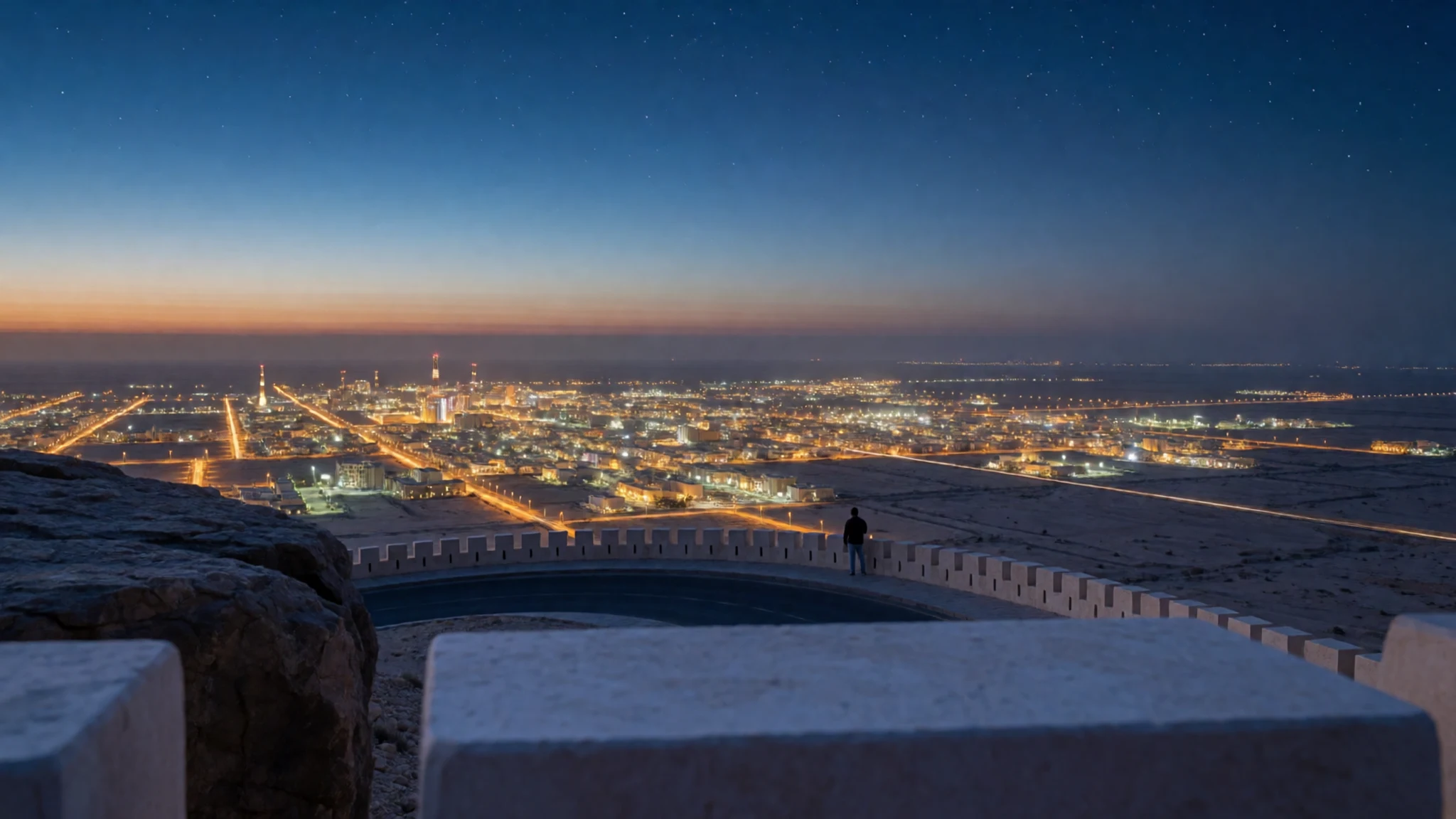
- Al Ain Oasis — Central Al Ain
Al Ain Oasis is a grove of thousands of date palms, threaded with shaded paths and water channels, set between the downtown souq area and Al Ain Street. It shows plainly why people settled here. Go in the morning, wear flat shoes, and keep voices low among the working plantations.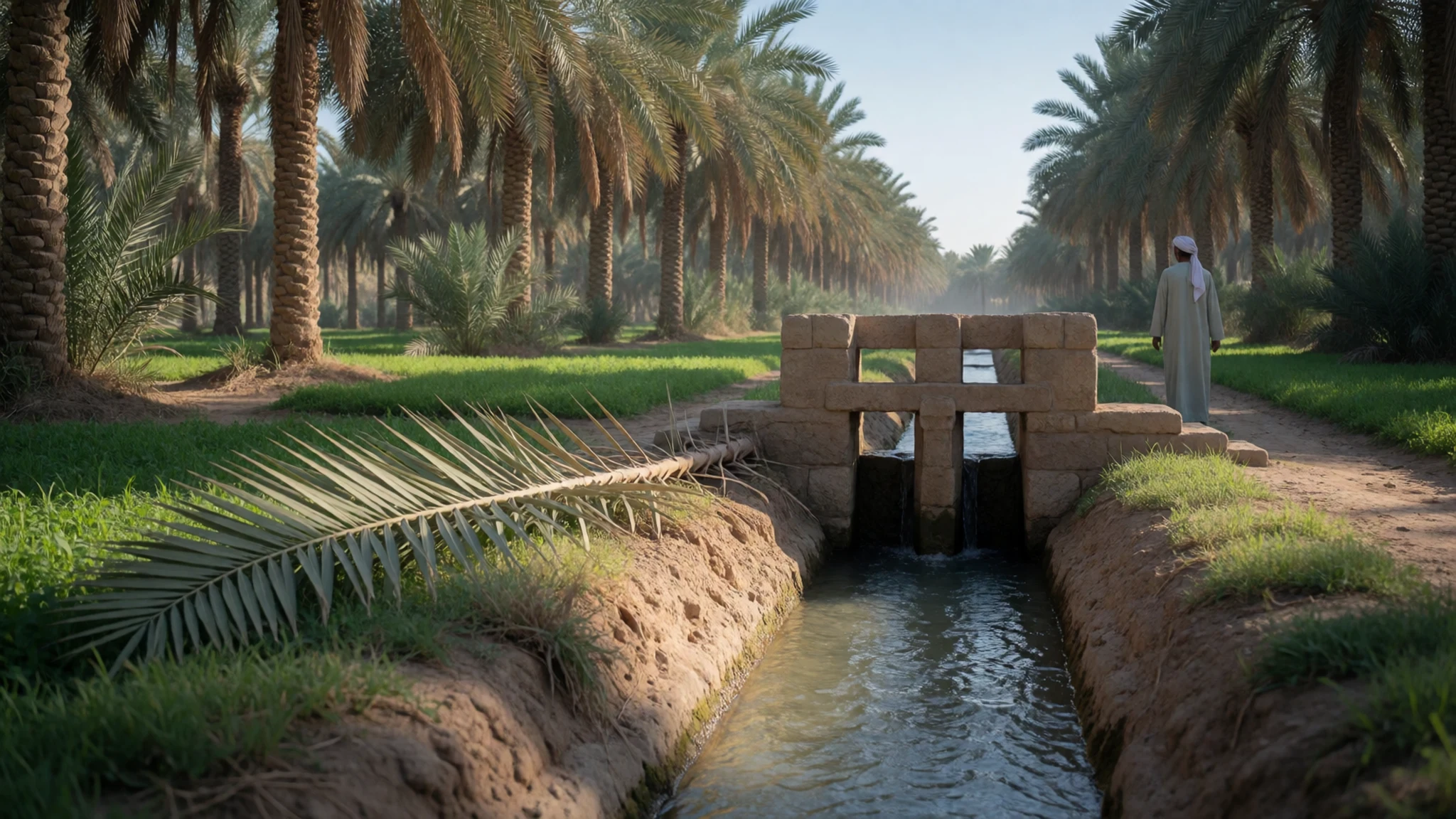
- Al Ain Museum and Fort — Al Ain Street, central Al Ain
Al Ain Museum and Fort stand on Al Ain Street, which locals call Main Street. The fort was built to guard the oasis against raiders, and the museum beside it, opened in 1971, displays finds from the area's tombs and settlements, including Bronze Age material. Check the official site for opening days before going.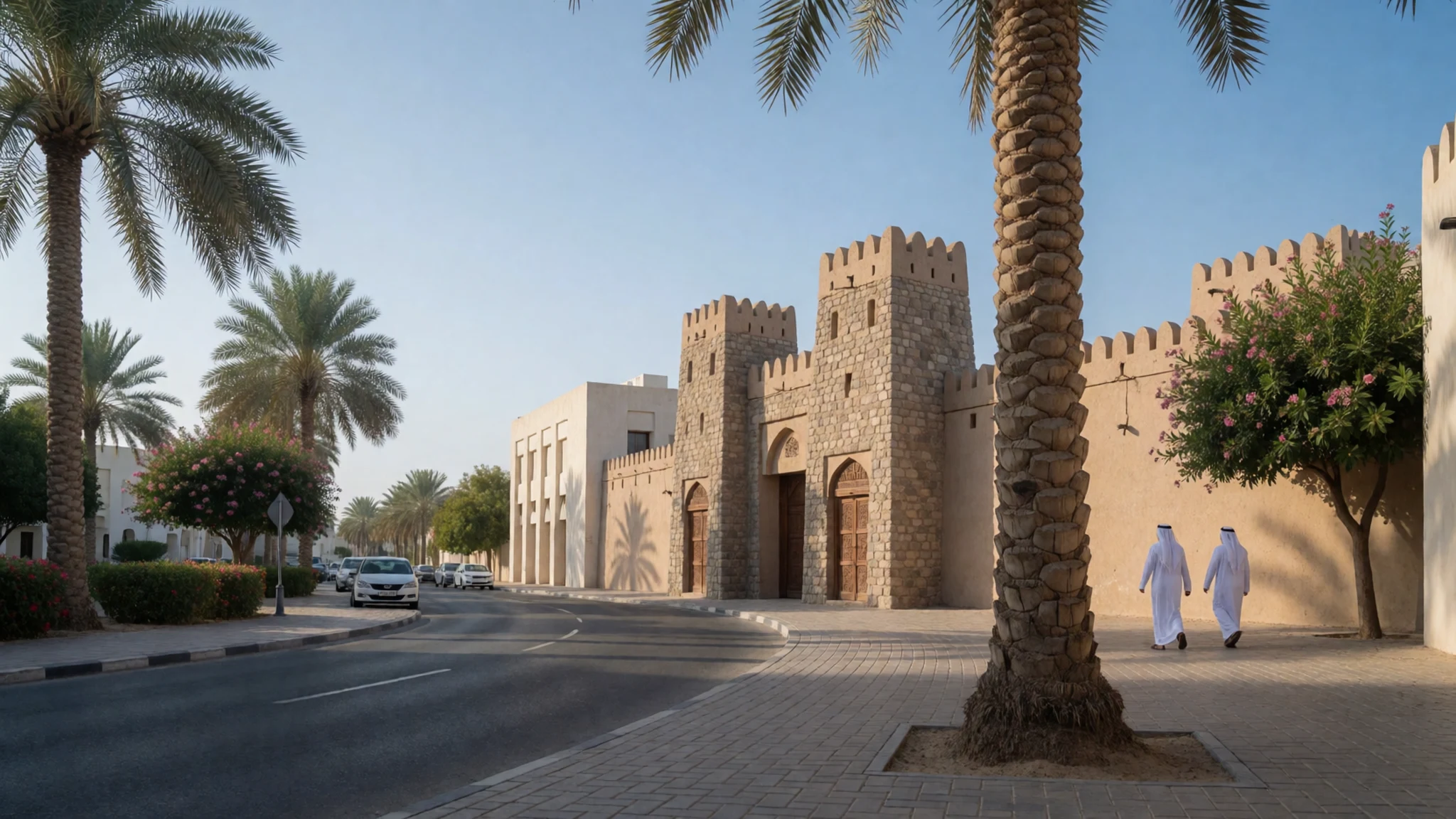
- Hili Archaeological Park — Hili, north of the centre
Hili Archaeological Park in Al Ain gathers Bronze Age remains from one of the places where early settlement has been uncovered. Tombs and traces of farming show how long people have worked this land. Shade is thin, so go in the cool of the morning, carry water and check the official site for current access.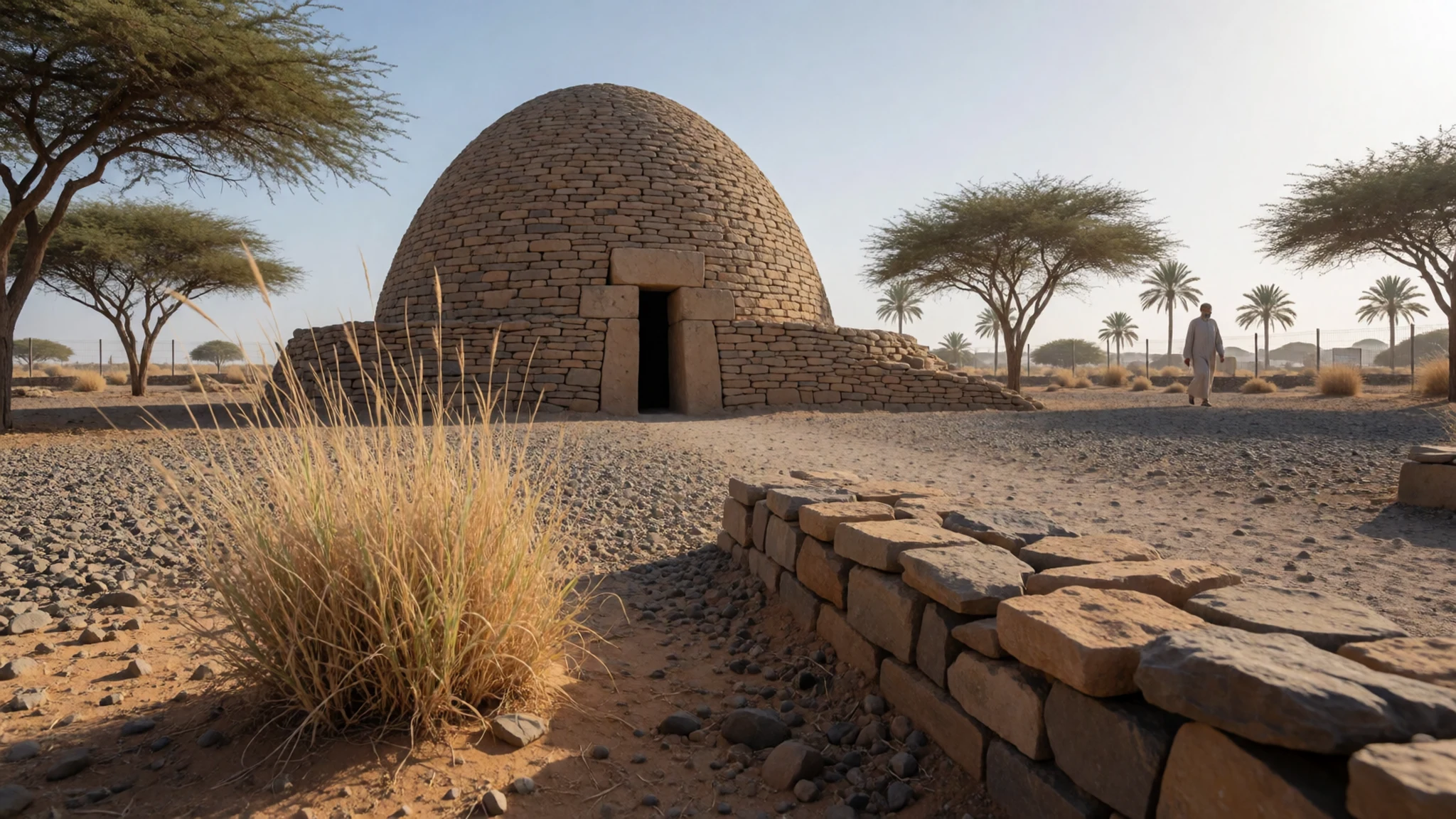
- Camel Souq — Meyzad, south of the city
Al Ain's camel souq in the Meyzad area, a short drive south of the centre near the Oman border, is a working market open daily, where hundreds of camels are bought and sold. Watch from the edges, ask before photographing owners or handlers, and dress conservatively. Mornings are cooler.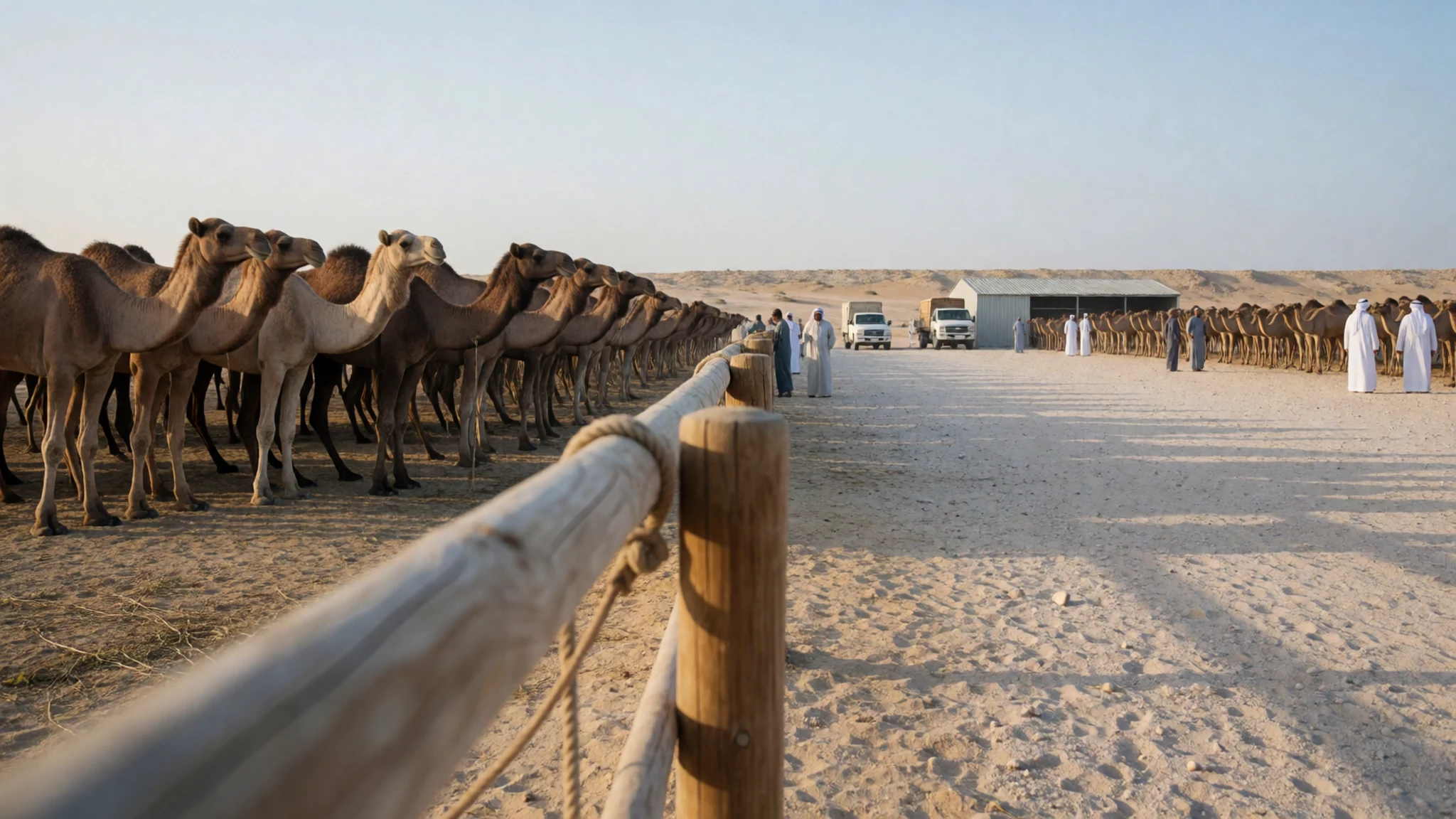
- Qasr Al Muwaiji — Al Ain
Qasr Al Muwaiji is a fort in Al Ain known as the birthplace of Sheikh Khalifa bin Zayed Al Nahyan, Ruler of Abu Dhabi and President of the UAE. Its walls and courtyard give a sense of how a ruling family lived in the oasis era. Check the official site for visiting arrangements.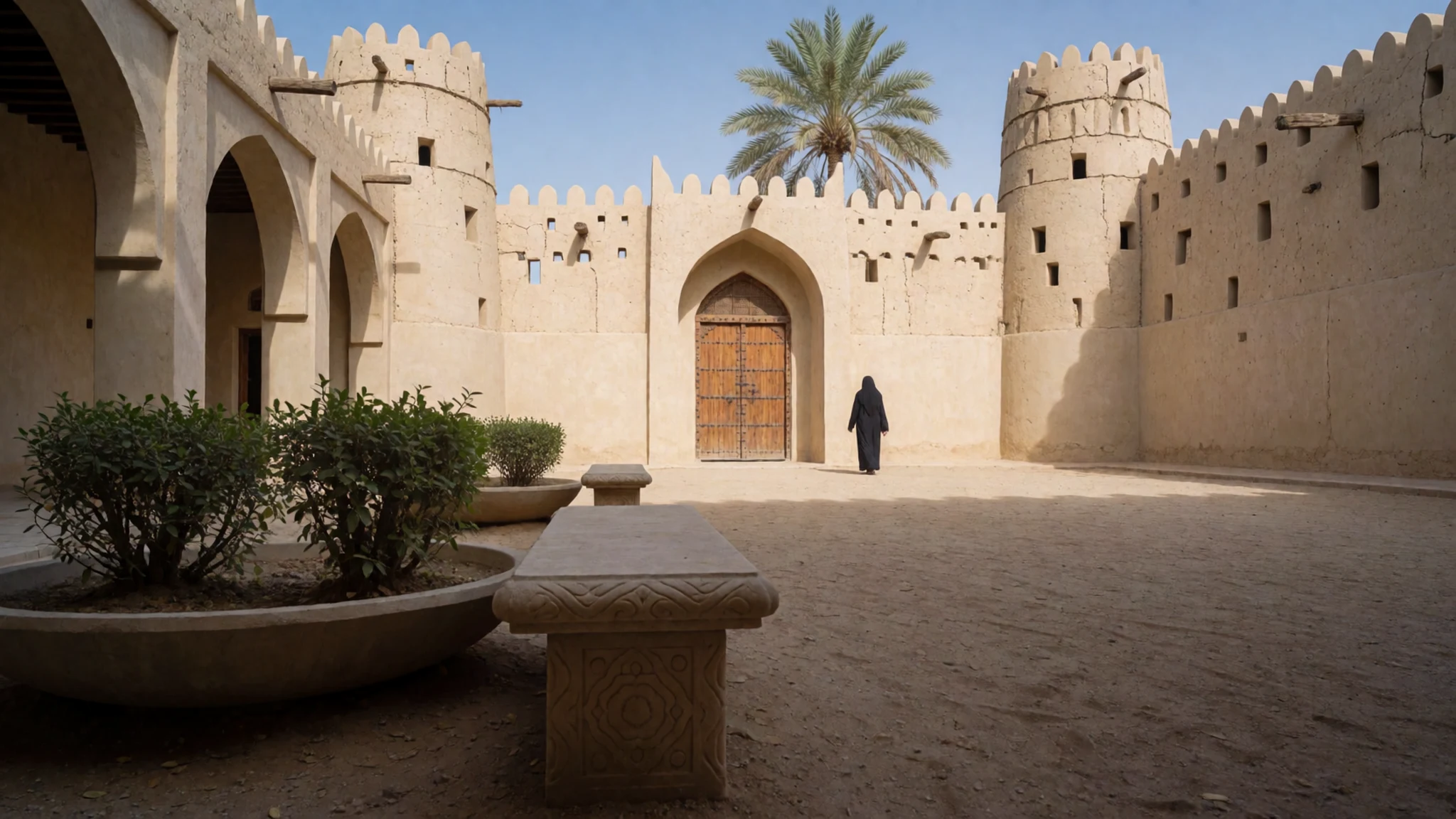
Culture
Al Ain's culture is Emirati and Gulf Arab at its core, shaped by oasis farming, camel herding and Bedouin habits of hospitality, and layered over by a large resident community from South Asia, the wider Arab world and beyond. Date palms are the symbol of the place: the oases were the farmland, and the harvest in the heat of summer was a family and community effort. Camels remain a point of pride, which is why the souq in Meyzad still draws crowds of buyers and onlookers. The city also carries a strong sense of national memory, because Sheikh Zayed, founder of the UAE, spent many years here, and forts, museums and street names keep that story close. Hospitality is real and unforced. Guests are traditionally offered Arabic coffee, poured in small cups, with dates, and it is polite to accept at least one cup. The week follows prayer times and the Islamic calendar: Friday is the main day of congregational prayer, and during Ramadan many cafes close in daylight and eating or drinking in public is discouraged, with the city coming alive after sunset. Alcohol is served only in licensed venues, and being drunk in public is illegal. Public displays of affection are best avoided. When visiting a mosque or the camel souq, dress modestly and ask before photographing anyone, especially women.
What to wear
Al Ain's traditional dress follows Gulf Arab custom. Men wear the kandura, an ankle-length robe, white in cotton for the hot months and sometimes in heavier wool and darker shades in winter. A ghutra headcloth is held in place by a black cord called an agal. A bisht, a fine cloak, is reserved for weddings and formal occasions. Women wear the abaya, a long loose cloak, usually black, with a shayla scarf over the hair. Bedouin women traditionally wove sadu, a strong striped cloth of sheep, goat and camel hair, for tents, saddle bags and rugs, and its patterns now appear on cushions, bags and trims. Today Emiratis wear the kandura and abaya daily, often cut with careful tailoring, while the wider population mixes everyday Western clothes with shalwar kameez, saris and other regional dress. Offices and malls are strongly air-conditioned, so a light layer helps. Visitors should choose loose, light, long clothing in cotton or linen, with shoulders and knees covered for both men and women; this matters most at mosques, the camel souq and heritage sites. Women need a scarf for mosque visits. Add a hat and sunglasses, and sturdy closed shoes with grip for Jebel Hafeet and archaeological sites, where ground is stony and pavements get hot. Swimwear belongs at the pool only.
What to eat
- Machboos — Emirati restaurants and family-run eateries
Machboos is a Gulf rice dish cooked with meat or fish, dried lime and warm spices, so the grains take on the flavour of the pot. It is a staple of Emirati family meals and appears on the menus of Emirati restaurants in Al Ain.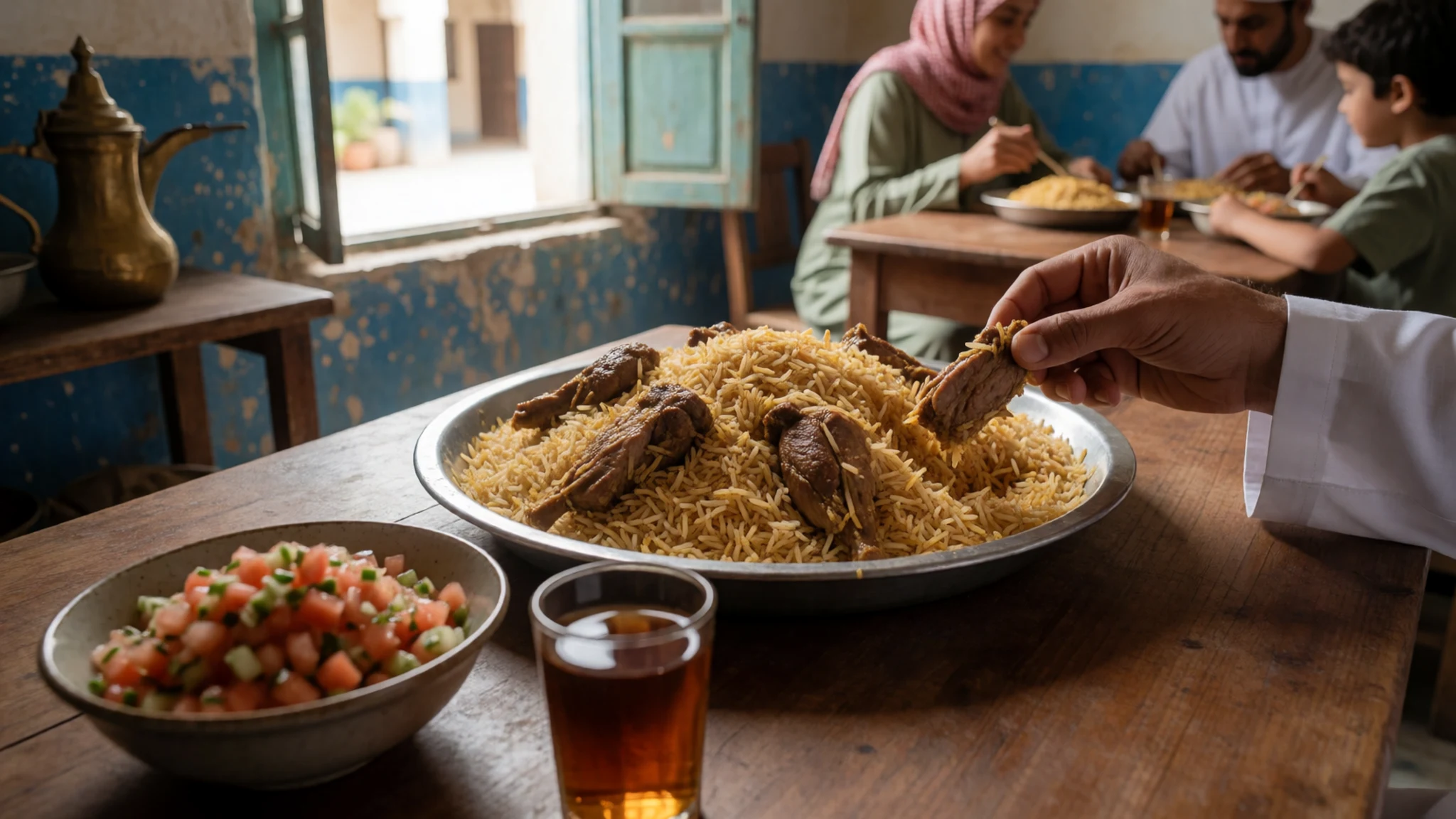
- Harees — Emirati restaurants during Ramadan
Harees is a smooth porridge of wheat and meat, cooked slowly until the two merge into a soft, savoury dish. It is most closely linked with Ramadan, when it turns up at the evening meal in Emirati homes and restaurants across Al Ain.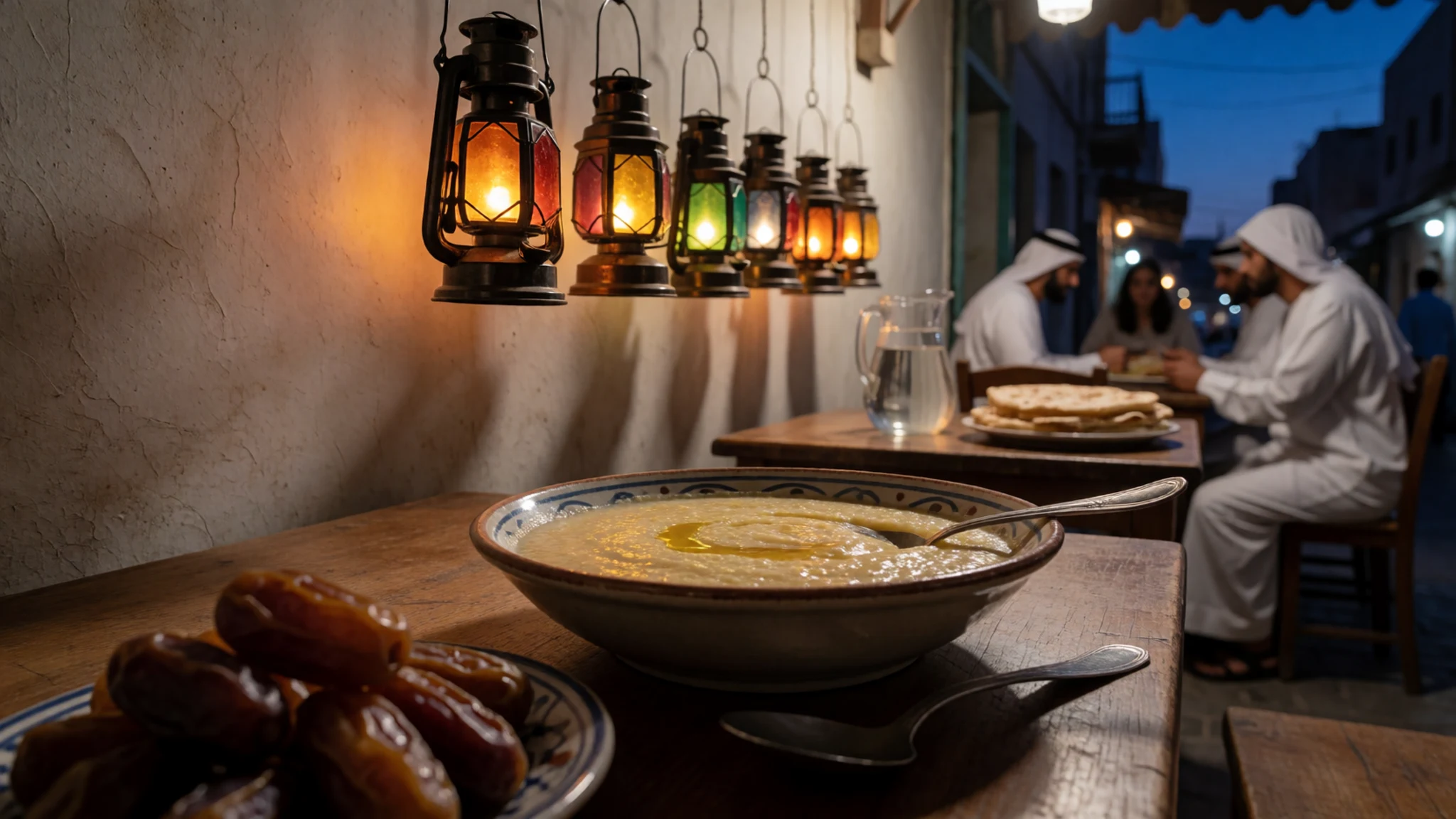
- Mezze and grills — Cafeterias on the main street of Mauteredh and restaurants along Khalifa Street
Lebanese and Arabic food is a reliable choice in Al Ain: hummus, smoky aubergine dips, fresh salads, flatbread and charcoal-grilled meats. It is usually among the more affordable options, and portions suit sharing among a table. - Biryani and vegetarian thali — Indian restaurants and cafeterias across the city
Indian eateries are a strength in Al Ain, with generous portions of biryani, curries, breads and fully vegetarian thalis. Vegetarians are well served here, and many places also handle vegan requests if asked clearly at the table. - Dates and Arabic coffee — Stalls and shops around the oasis and downtown souq
Al Ain grew up around date palms, so fresh and dried dates are the local snack to try, ideally with a small cup of cardamom-scented Arabic coffee. Sellers will usually let customers sample before buying.
Plan it
Best time. November to March, when days are warm rather than punishing and evenings are cool enough for the oasis and Jebel Hafeet at sunset. From June to September the heat is severe: start early and spend midday indoors.
How long. 1–2
Getting there. Fly into Abu Dhabi or Dubai, then go by road to Al Ain: it is roughly 160 km east of Abu Dhabi and about 120 km south of Dubai, by taxi, hired car or intercity bus. From Oman, non-GCC nationals must use the Khatam Al Shukla border post, with a daily Mwasalat bus from Buraimi; check current rules before travelling.
Budget. mid
Tips
- Carry water everywhere and avoid midday walking outdoors from late spring to early autumn
- Time Jebel Hafeet for late afternoon so the sunset is covered, and take a layer for the wind
- Bring some cash for souq stalls and small cafeterias, though larger places take cards
- A car or taxi makes the spread-out sights much easier than walking
- Check the official tourism site (https://www.dmt.gov.ae/aam) for opening days and access to forts, the museum and Hili
Etiquette
- Dress modestly in public places, with shoulders and knees covered
- Ask before photographing people, especially women and camel handlers
- Avoid eating or drinking in public during daylight in Ramadan
Nearby
Sources
- Wikidata Q234600 (CC0)
- Wikipedia: Al Ain (rev 1385632858) (CC BY-SA 4.0)
- Wikivoyage: Al Ain (rev 5271561) (CC BY-SA 4.0)
- Photo: Qasr Al Muwaiji (Michael Peter Glenister) (CC BY-SA 4.0)
- Photo: Jebel Hafeet (Shahinmusthafa Shahin Olakara) (CC BY 3.0)
- Photo: Abu Dhabi University Al Ain Campus (Emad Alsharif 88) (CC BY-SA 4.0)
- Photo: Desert near Al Ain (Rokaszil) (CC BY 3.0)
- Photo: United Arab Emirates relief location map (NordNordWest, Uwe Dedering) (CC BY 3.0)
- Photo: Persian Gulf relief location map (Uwe Dedering) (CC BY 3.0)
- Photo: West Asia non political with water system (DEMIS Mapserver, पाटलिपुत्र) (CC BY 3.0)
- Photo: View over Al Ain (unknown author) (CC BY 3.0)


