Abu Dhabi
Abu Dhabi, United Arab Emirates
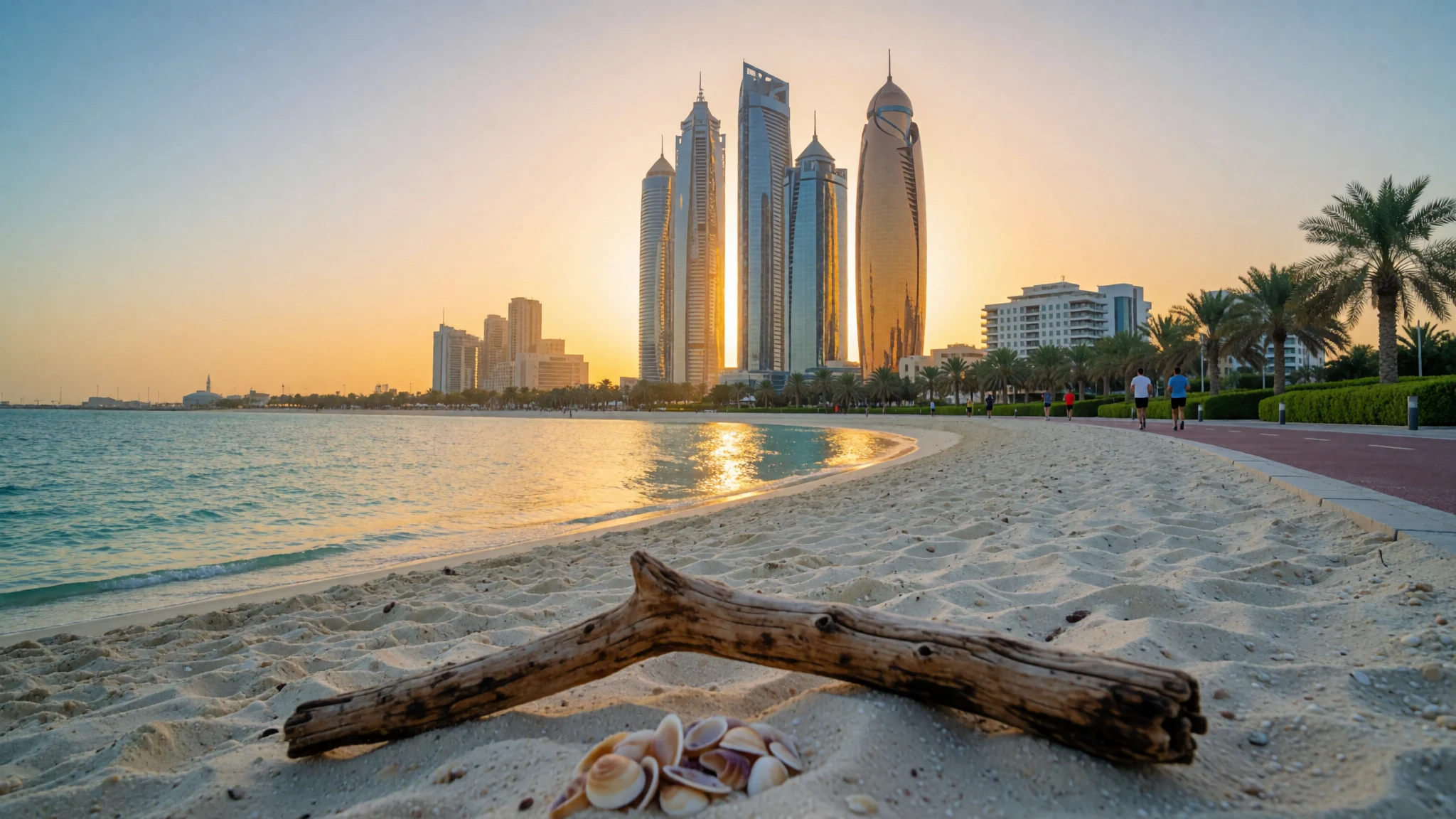
Abu Dhabi is the UAE's capital, a Gulf city of glass towers, grand mosques and a long waterfront that suits winter walks.
The place
Abu Dhabi is the capital of the United Arab Emirates and of the emirate that bears its name. Abu Dhabi occupies a T-shaped island in the Persian Gulf, positioned off the UAE's central west coastline, while its broader emirate stretches onto the mainland connecting to the rest of the country. With about 2.5 million residents in its urban area, the city is the UAE's second most populous after Dubai. Government is a large part of its life. Federal and local offices are based here, the Supreme Council for Financial and Economic Affairs meets here, and the UAE's president, a member of the Al Nahyan family, is based in the capital. The city is also a financial hub, and the Abu Dhabi Investment Authority, one of the world's largest sovereign wealth funds, is headquartered here.
Much of what visitors see is recent. Wide avenues, glass towers and irrigated gardens line the Corniche, a waterfront road with beaches, promenades and cycle paths. The older streets near the fort are lower and more intimate, a useful contrast to the towers.
Heat shapes the day. Summer afternoons are hot and humid, so outdoor sightseeing works best in the early morning or after sunset, while the middle of the day suits museums, malls and long lunches. The cooler months bring a more relaxed rhythm, when the mosques, the waterfront and the island attractions are easiest to enjoy.
Yas Island brings a different side of the city, with a Formula 1 circuit, a Ferrari-themed park and other entertainment venues. Abu Dhabi is less about one headline sight than about a set of large, carefully planned places spread across a modern capital.
Its story
Abu Dhabi's surroundings hold evidence of much older communities. The Umm Al Nar culture, which dates to the third millennium BC, left remains on the island and elsewhere in the emirate, and other settlements have been found beyond the modern city in the eastern and western regions. The town that became the capital is much more recent. The Bani Yas, a tribal grouping that includes the Al Nahyan family, was first settled in the Liwa Oasis in the west of the emirate, and its many subsections were the dominant force in the area. In 1761, a party under Sheikh Dhiyab bin Isa Al Nahyan found fresh water close to the coast, and a settlement grew up there. A popular story says the group had been chasing a gazelle, which gave the place its name. The Arabic words abu and dhabi mean father and gazelle, so the city's name translates roughly as father of the gazelle.
The modern state took shape much later. On 2 December 1971, Abu Dhabi joined five other emirates to form the United Arab Emirates. The union created a federal government, and Sheikh Zayed bin Sultan Al Nahyan was appointed its first President. Abu Dhabi became the seat of federal and local government, and its skyline has grown quickly since. The old fort, a royal palace until 1966, now stands as a reminder of the small coastal settlement the capital grew from.
What to see
- Sheikh Zayed Grand Mosque — The mainland, south-east of the centre
Sheikh Zayed Grand Mosque is a very large mosque on the mainland, set in broad gardens and reflecting pools, with its white domes visible from some distance. Fridays are reserved for worshippers, so sightseers should plan a visit on another day and check the official site for current hours. Dress modestly, with covered shoulders and knees, and women usually cover their hair. Public buses serve the site, but a taxi is simpler for the return journey.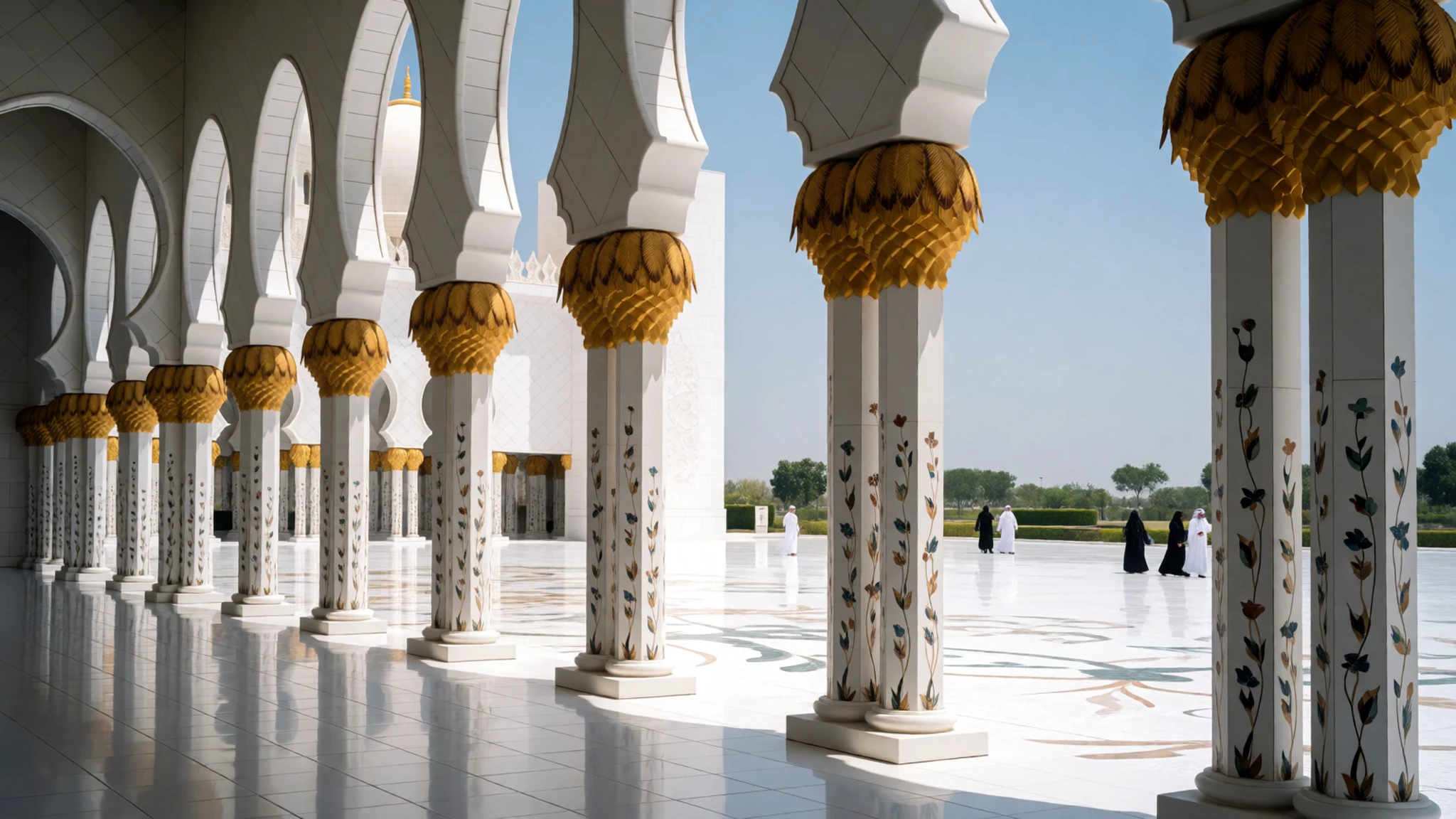
- Qasr Al Watan — West of the centre
Qasr Al Watan is a presidential palace used for diplomatic visits, and it opened to the public in part of its complex. The interiors are opulent, with ornate Islamic-style architecture and grand halls that show the ceremonial side of the state. Access is controlled and the rules are strict, so check the official site for tickets, hours and any dress requirements before you go.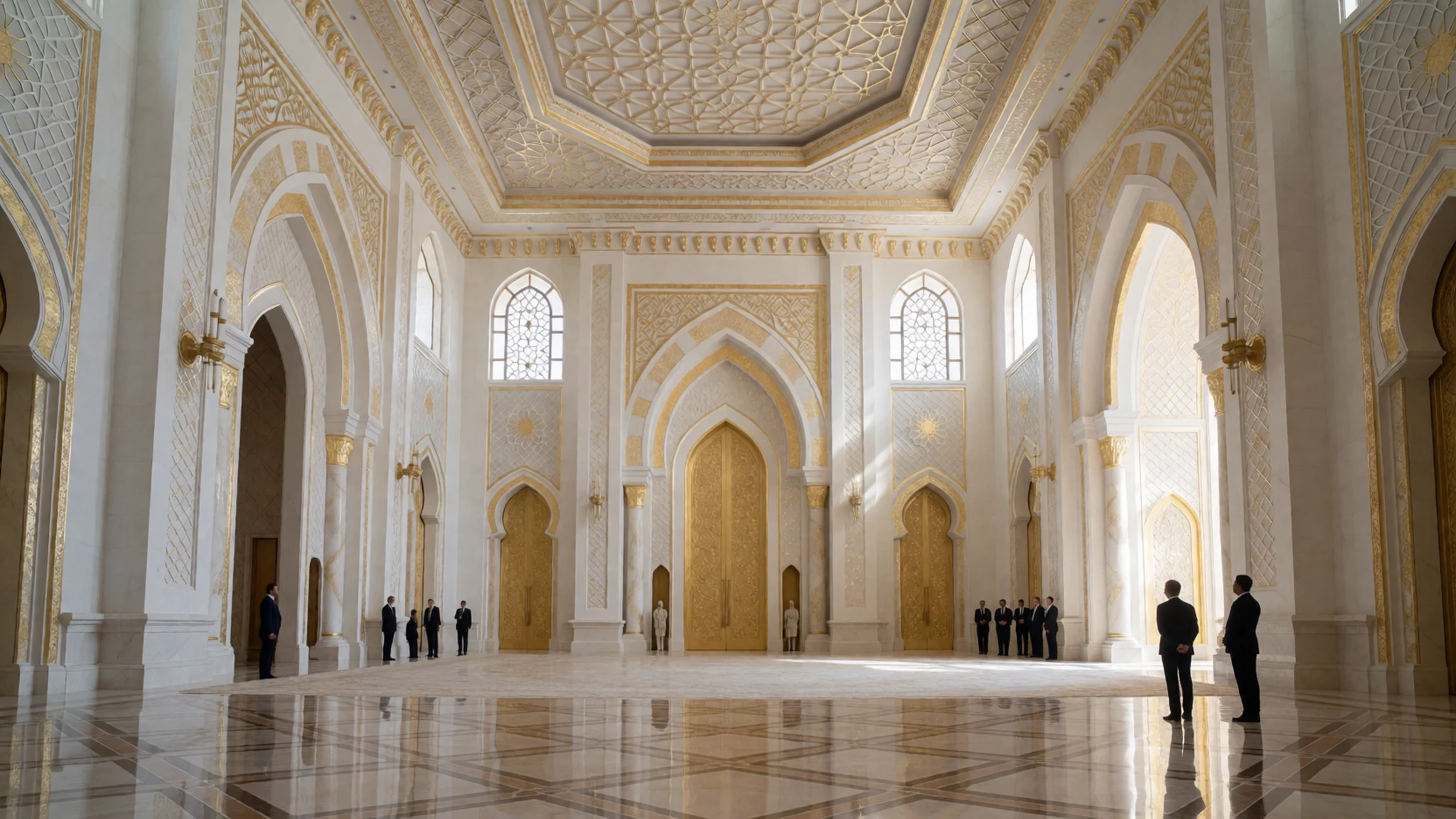
- Qasr al-Hosn — The old town, close to the centre
Qasr al-Hosn is described as the oldest stone building in Abu Dhabi, a compact fort first built in 1761. It later served as the royal palace until 1966. Its thick walls and watchtowers are small enough to see in an hour or so, and the fort sits close to the old centre, making it an easy stop between other sights.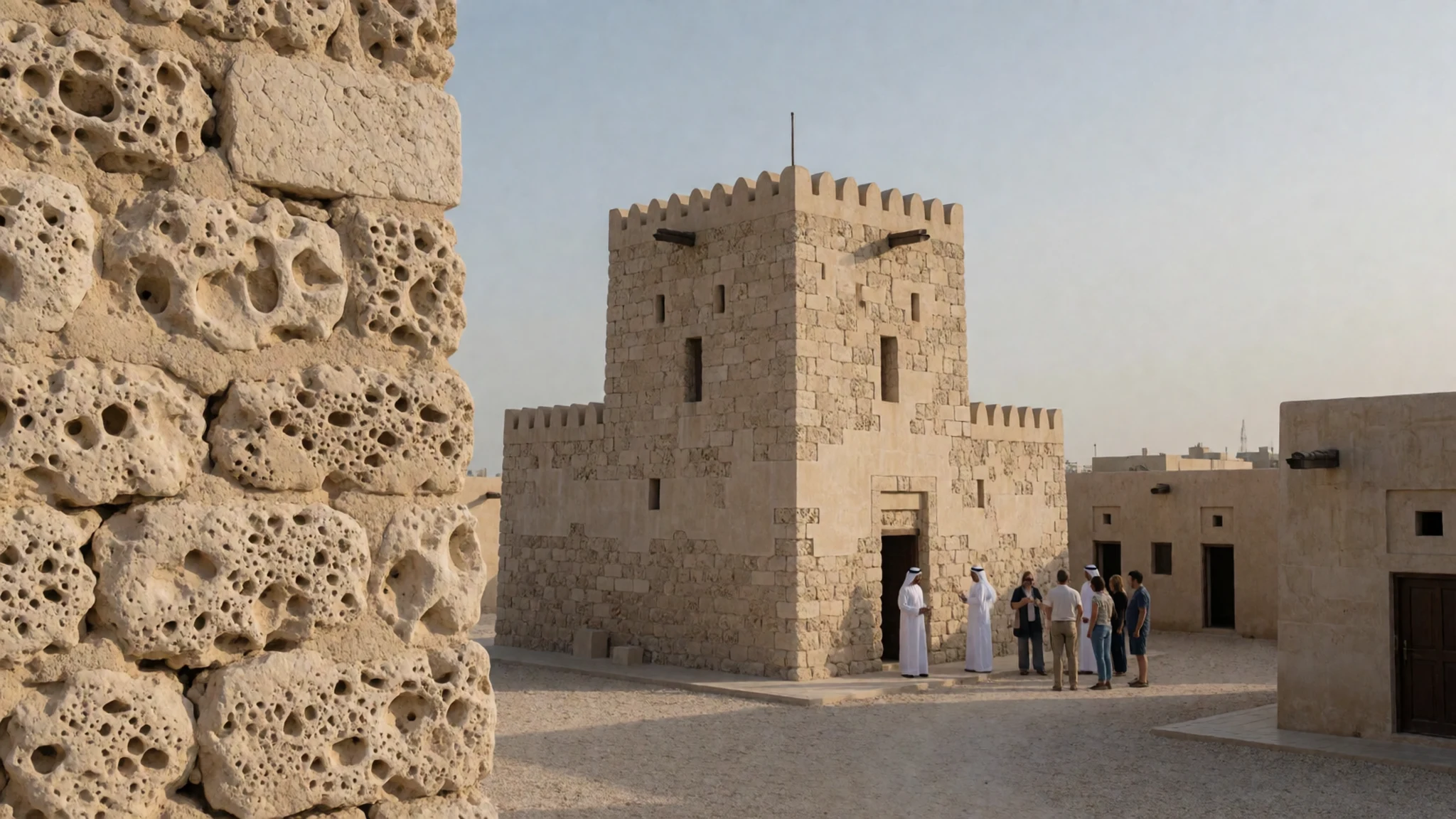
- Corniche Road — The waterfront, from Marina Mall towards Mina Zayed port
Corniche Road is the city's main avenue, curving around the coastline from the breakwater near Marina Mall almost to Mina Zayed port. Its beaches, promenades and cycle paths make it a natural place for an evening walk. Early evening is the best time, when the sea breeze arrives and the lights come on. Cycling, jogging and café stops are common here, but the road itself carries heavy traffic.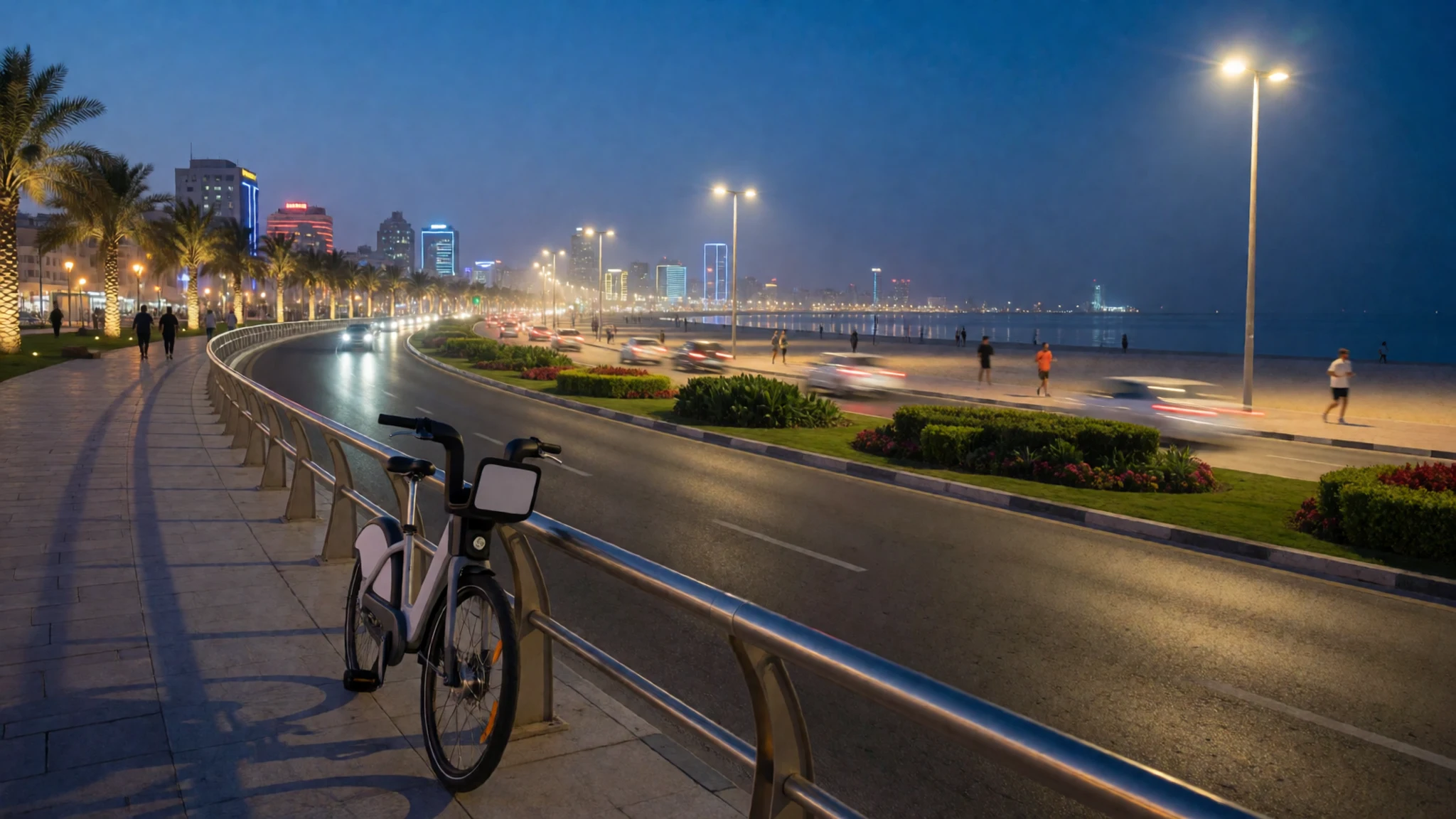
- Yas Island — East of the city
Yas Island is a leisure island with a Formula 1 circuit and Ferrari World, a park built around the Ferrari brand and known for a very fast roller coaster. Theme parks and entertainment venues cluster here, so the island suits a full day or a race weekend rather than a quiet afternoon. Plan around the heat, and check the official site for event dates and park opening times before travelling out.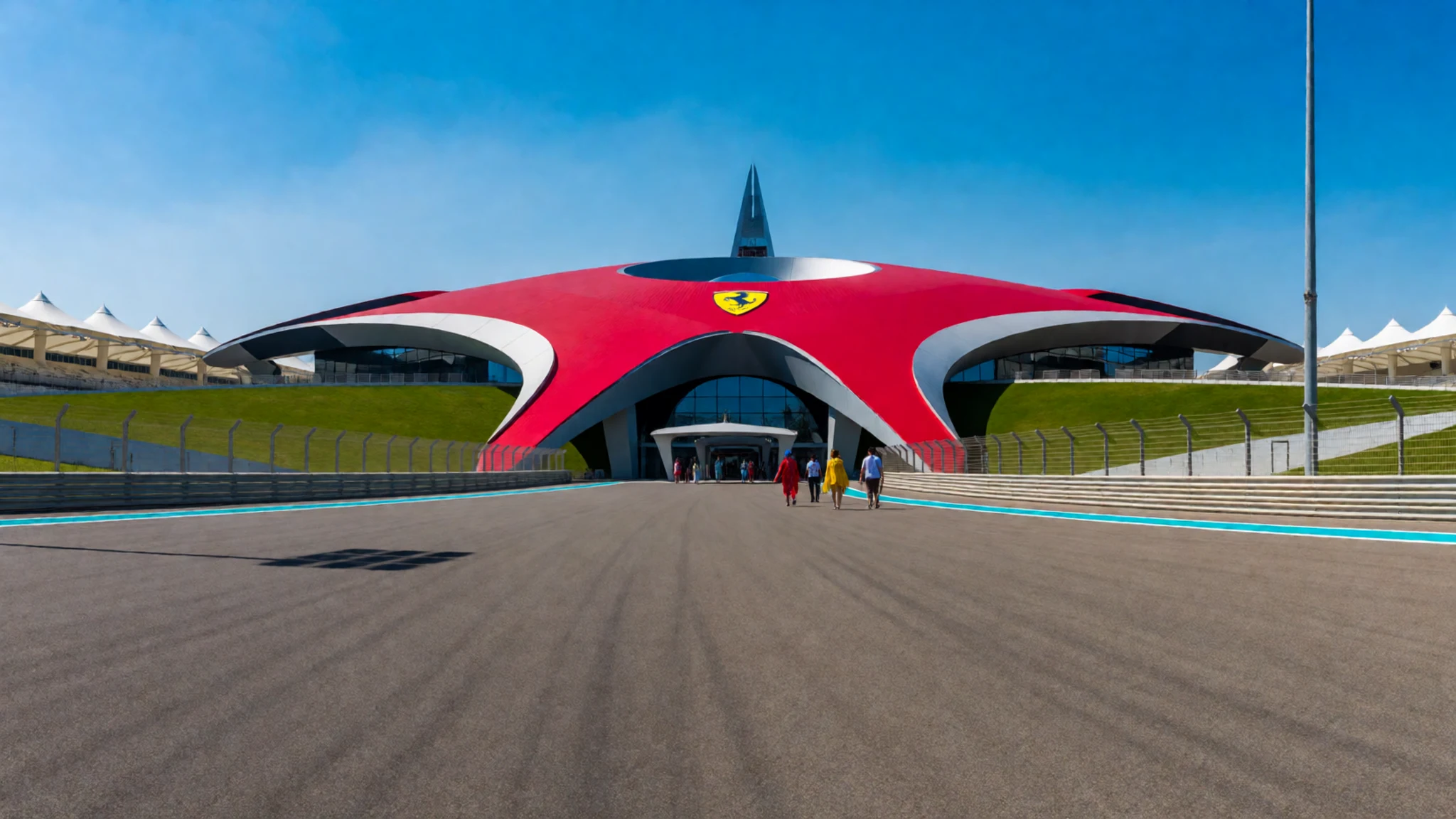
Culture
Abu Dhabi is one of the more tolerant cities in the Gulf, though it remains a conservative Muslim society with its own customs. Its population is very mixed. Most residents are expatriates from South Asia, the Arab world, Europe and elsewhere, and that mix shows up in restaurants, shops and workplaces. The city's history as a small pearling community has given way to this wider society, but it is not free of tension. Migrant workers, who often live on low pay and in difficult conditions, form the lower tier of a class-based system, and visitors will see that contrast in daily life.
Major holidays shape the calendar. Eid al-Fitr marks the end of Ramadan, Eid al-Adha marks the end of the Hajj, and National Day on 2 December marks the formation of the UAE. During Ramadan, eating, drinking and smoking in public during daylight hours are restricted, and many places keep shorter hours. Alcohol is served only in licensed hotels and venues, and public displays of affection are best kept low-key. Dress modestly in mosques and public places, and ask permission before photographing anyone, especially women and workers.
What to wear
Abu Dhabi's traditional dress is worn most often by Emirati men and women, though it is common across the Gulf. Men traditionally wear the kandura, a long ankle-length robe usually in white cotton, with a white or checked headcloth called a ghutra held in place by a black cord. Women have traditionally worn the abaya, a loose black cloak worn over everyday clothes, often with a light scarf. Some women wear embroidered or richly decorated abayas for weddings and festivals, and fine fabrics with gold or silver thread are used for special occasions.
In daily life the mix is wide. Many Emirati men still wear the kandura, and many women wear the abaya in lighter or more decorative styles. Expatriates wear everything from office suits to jeans, and in malls and on beaches the dress code is relaxed outside prayer times and religious sites.
For a visitor, climate and modesty matter most. In summer the heat rules, so pale, loose cotton or linen with light sleeves is the sensible choice. Shoulders and knees should be covered in mosques and government buildings, and women should carry a light scarf for their hair. Comfortable closed shoes suit paved walking, and slip-on shoes help, because you take them off at some religious sites.
What to eat
- Grilled fish at the Fish Market — The Fish Market, a seafront market with restaurants attached
Pick a fish from the counter, then choose the seasoning, sauce and sides, and the kitchen cooks it to order. Grilling keeps the flavours simple and lets the fish speak for itself. The price depends on the fish you choose, so ask before you order. It is one of the easiest ways to try local seafood in a relaxed setting.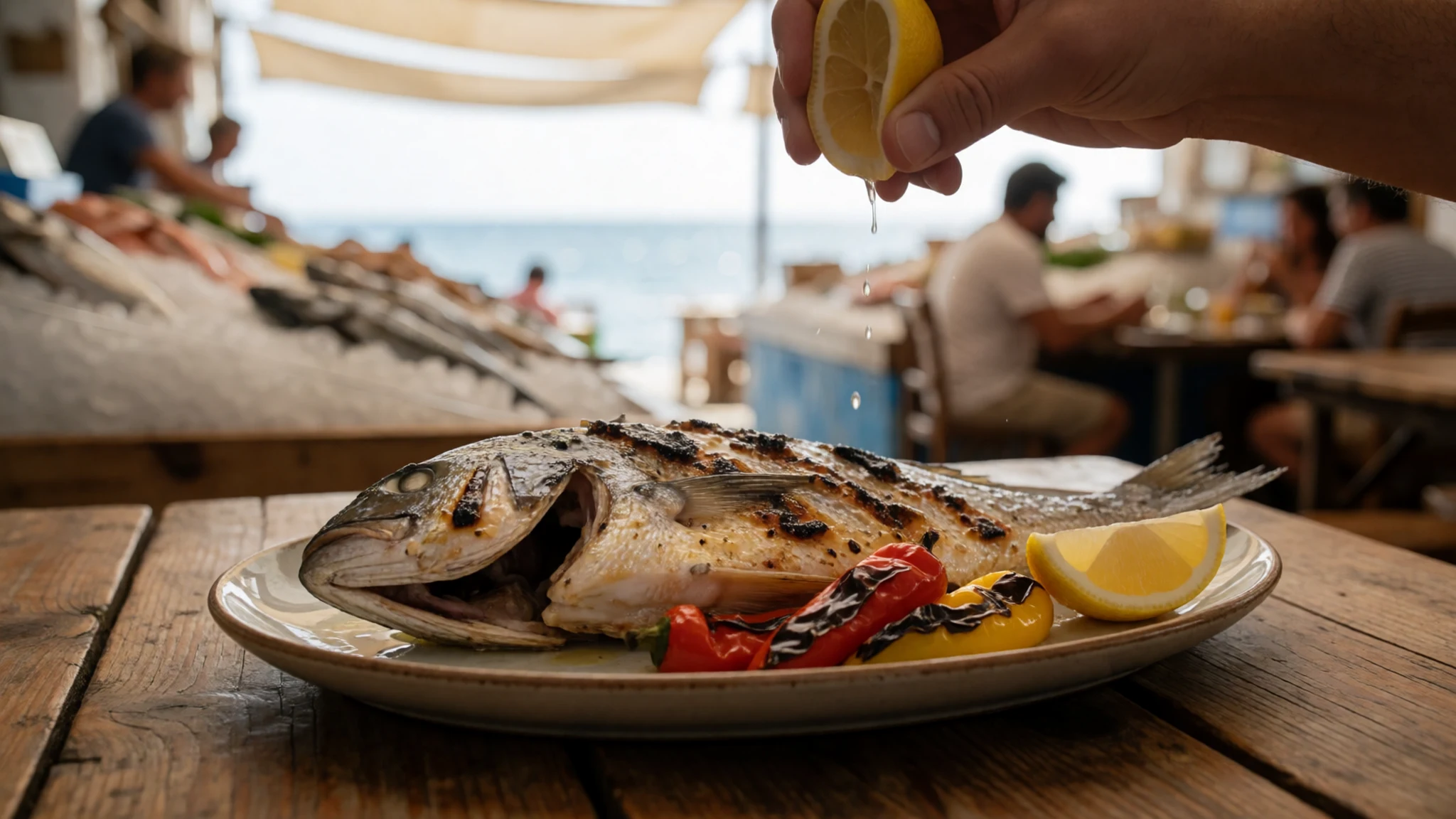
- Levantine mezze and grills — Al Khalidiya, where many small restaurants cluster
Hummus, tabbouleh, fattoush and grilled chicken or lamb skewers make up most Levantine tables. Order a spread of small plates to share, then add a grill. Al Khalidiya has a dense cluster of these eateries, and the menus are reliable for a mid-priced evening meal.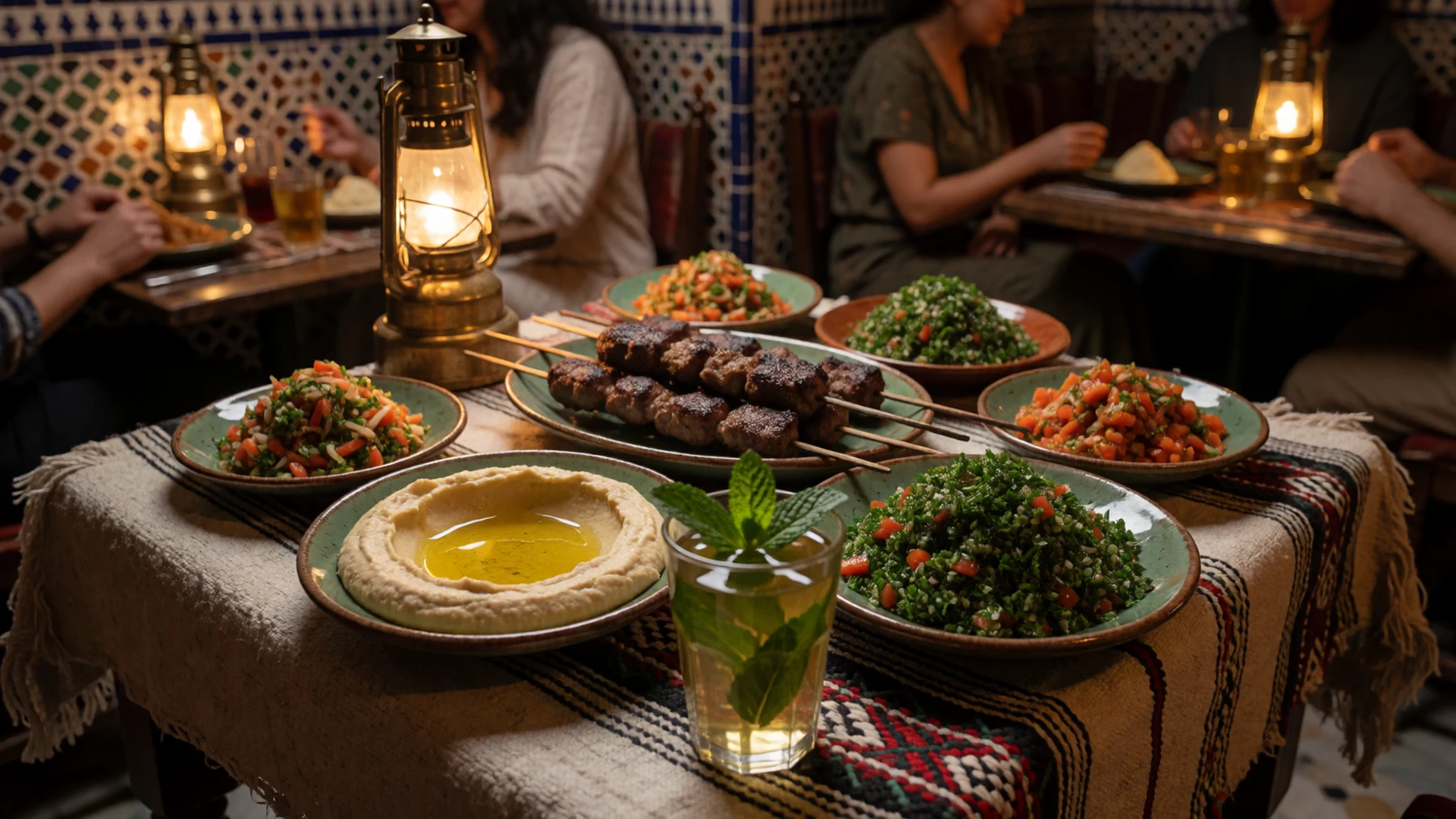
- Aappam and South Indian curries — South Indian eateries across the city, often on busy commercial streets
Aappam is a soft rice pancake with a lacy edge, served with stew or coconut-based curry. Chettinad dishes bring deep, peppery spice. Indian food is generally good value, and these casual eateries fill up at lunchtime with office workers. Go early for the widest choice of breads.
- Chicken adobo and rice — Filipino eateries in Al Khalidiyah
Adobo is chicken braised slowly in vinegar, soy and garlic until tender, then served over steamed rice. Filipino eateries in Al Khalidiyah also serve noodle dishes and sweet, saucy fried plates. Portions are generous, and the rice makes the meal filling for a lunch stop. - Shawarma and fresh juice — Neighbourhood eateries, called cafeterias locally, across the city
Chicken or lamb shawarma is shaved from a vertical spit and wrapped in flatbread with garlic sauce and pickles. Ask for the day's fresh fruit juice to go with it. These quick, inexpensive eateries are popular with workers, and they show how everyday food in the city is served.
Plan it
Best time. December to February for mild days and comfortable evenings by the water. Summer, from June to September, is very hot and humid, so plan indoor afternoons and outdoor sightseeing before mid-morning or after sunset.
How long. 2–3
Getting there. Fly into Dubai International (DXB) or Sharjah International (SHJ), then continue by taxi or bus. The E11 motorway from Dubai is the country's busiest route, and the drive takes a little over an hour in good traffic and much longer at peak times. Etihad Rail passenger services run from MBZ City on the edge of Abu Dhabi, but the timetable is limited, so check before relying on it.
Budget. mid
Tips
- Visit the mosque on a weekday morning and check the official site for current hours
- Go to outdoor sites early in the morning or after sunset in summer
- Take taxis between sights, since public buses are slower
- Carry cash for small eateries, though cards are widely accepted in malls and hotels
- Drink water constantly in the heat, and use malls and museums to cool down
- Check the official site for tickets and hours at Qasr Al Watan and Qasr al-Hosn
Etiquette
- Dress modestly for mosques and government buildings, with covered shoulders and knees
- Ask permission before photographing people, especially women
- Avoid eating, drinking or smoking in public during daylight hours in Ramadan
- Keep public displays of affection low-key
Nearby
Sources
- Wikidata Q1519 (CC0)
- Wikipedia (rev 1382756965) (CC BY-SA 4.0)
- Wikivoyage (rev 5393466) (CC BY-SA 4.0)
- Photo: Абу-Даби (Abu Dhabi), Валерий Дед (CC BY 3.0)
- Photo: Abu Dhabi's skyline in December 2014, Wadiia (CC BY-SA 4.0)
- Photo: Emirates Palace, Chris Down (CC BY 4.0)
- Photo: Ferrariworld in Abu Dhabi, Floness (CC BY-SA 4.0)
- Photo: Abu Dhabi – Chancery Office Building, 1987, U.S. Department of State (DPLA) (Public domain)
- Photo: Abu Dhabi, 27 January 2019, European Space Agency Copernicus Sentinel-2 (CC BY-SA 2.0)
- Photo: Abu Dhabi, Adilamin786 (Shades of Abu Dhabi afternoon) (CC BY-SA 4.0)
- Photo: 180° view from Marina Village – Abu Dhabi (CC BY 3.0)


