Jebel Hafeet
Jebel Hafeet, United Arab Emirates
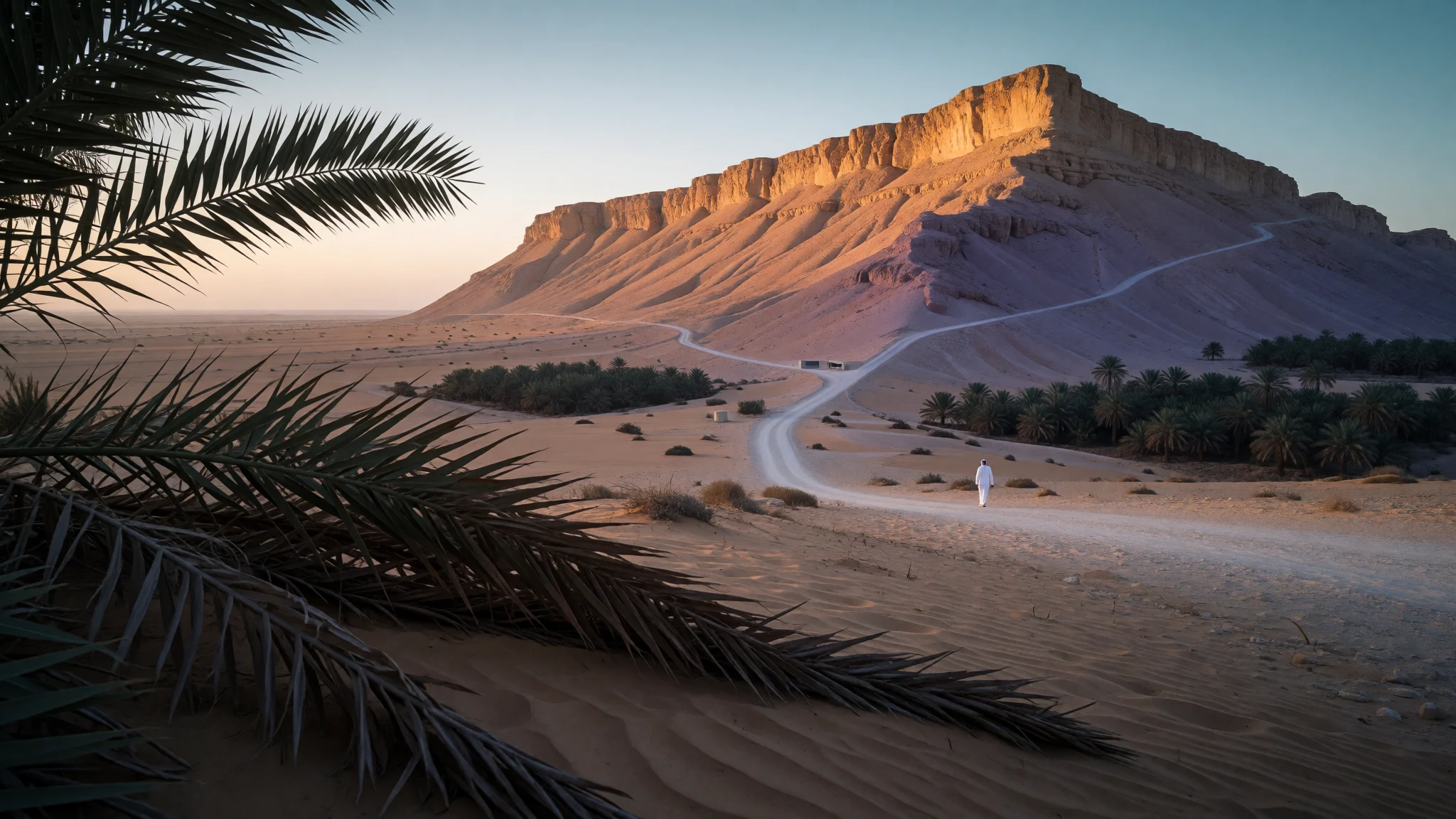
Jebel Hafeet is a lone desert mountain beside Al Ain, with a winding road, cooler evening air and a wide view over two countries.
The place
Jebel Hafeet, also written Jabal Hafit (جبل حفيت), rises to 1108 metres on the border between the United Arab Emirates and Oman, just south of the city of Al Ain. The name is usually explained as "empty mountain", and from the plain it is easy to see why: a long, pale ridge of bare rock, with no forest and no village on its flanks, standing alone above flat desert and farmland. Geographers tend to treat it as an outlier of the Hajar range, which runs through Oman and eastern Arabia, although it sits apart from the main chain. It is the only mountain in the emirate of Abu Dhabi, so it dominates the horizon in a way that taller peaks in crowded ranges never could. Al Ain lies to the north, and the Omani town of Al-Buraimi runs into it across the border. The climate is hot desert, with little rain in a typical year. The summit is noticeably cooler than the city at its foot, which is why families drive up on summer evenings. The upper slopes are stony, dry and steep, cut by dry watercourses that only run after rare storms. Much of the mountain lies inside a national park that belongs to the Sheikh Zayed Network of Protected Areas. Most visitors come for the road and the view, but the foothills hold older interest, and Al Ain's oasis and forts make an easy pairing for a single day out.
Its story
Jebel Hafeet has lent its name to a whole chapter of the region's past. When archaeologists found a cluster of beehive-shaped stone tombs at the foot of the mountain, the site became the reference point for the early Bronze Age phase of the UAE, now called the Hafit Period. The tombs are built of dry stone, round and tapering, and they held the dead of communities who farmed and herded around the springs of what is now Al Ain. That settlement history matters, because the oasis beneath the mountain is one of the old anchors of eastern Abu Dhabi, a green pocket where date palms and irrigation channels let people stay put in a dry country. Later centuries brought forts to guard the palms from raiders, and the museum in Al Ain now reconstructs that earlier way of life. The wider story of Abu Dhabi turned on the coast: pearling first, then offshore oil, which reshaped the emirate's fortunes and paid for the roads, parks and cities that visitors see today. The mountain itself stayed quiet through all of this. In recent years it has been formally protected, first as a national park and then within the Sheikh Zayed network, so its newest chapter is about conservation rather than conquest. The emptiness in its name is, in that sense, now a policy as well as a description.
What to see
- The summit road and viewpoints — Jebel Hafeet, above Al Ain
A winding road climbs the mountain from Al Ain, with pull-offs where the city, its palm groves and the desert beyond spread out below. It is best driven in the late afternoon, when the light softens and the rock turns gold. Weekends bring traffic and crowded car parks, so a weekday is calmer.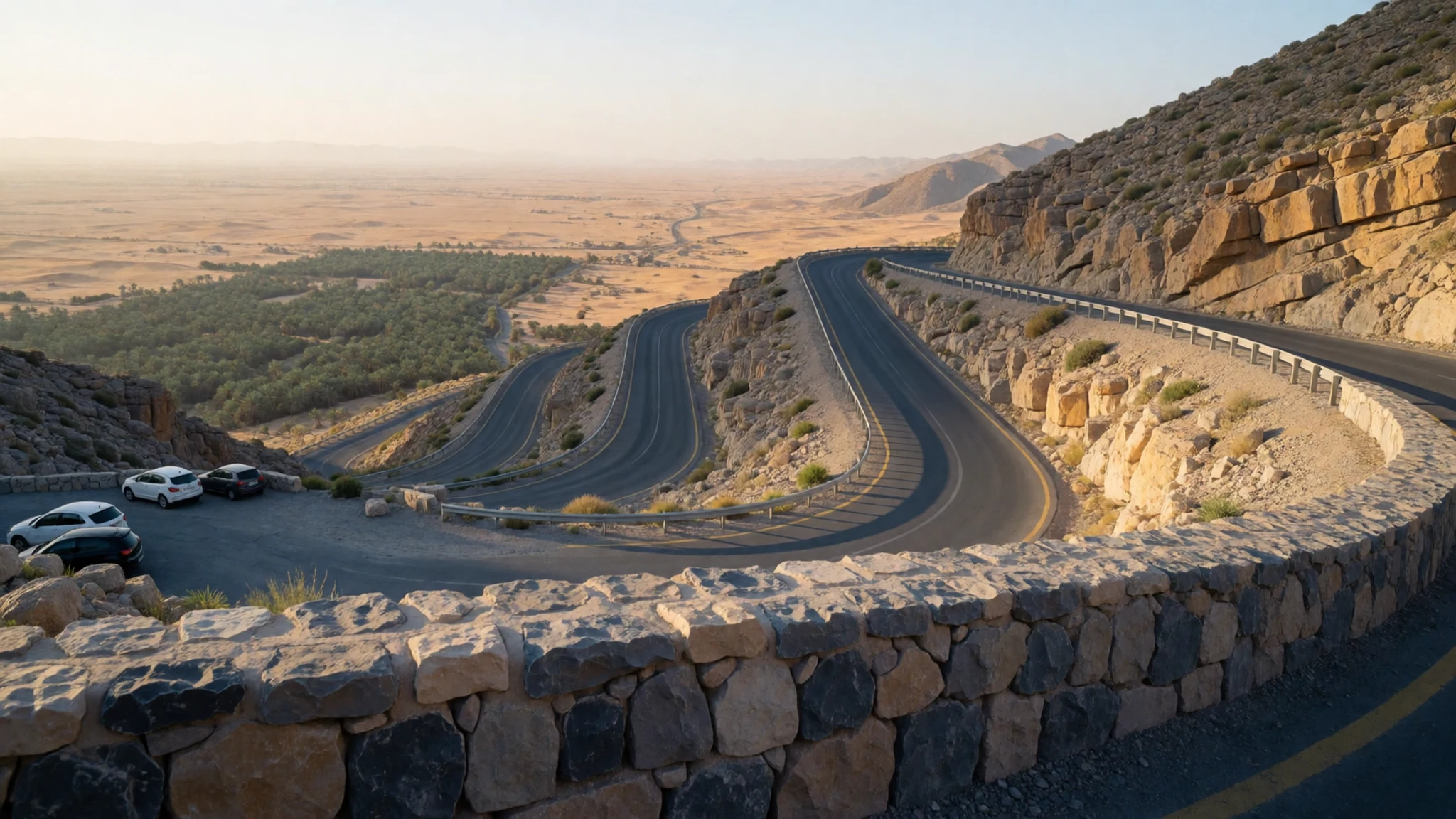
- The mountain from the air side — Northern foothills, Al Ain
Seen from above or from a distance on the plain, Jebel Hafeet shows its real character: a single long ridge with a steep face and pale, folded rock. Photographs from the north and east make the best introduction. On the ground, the clearest wide views come from the edge of Al Ain.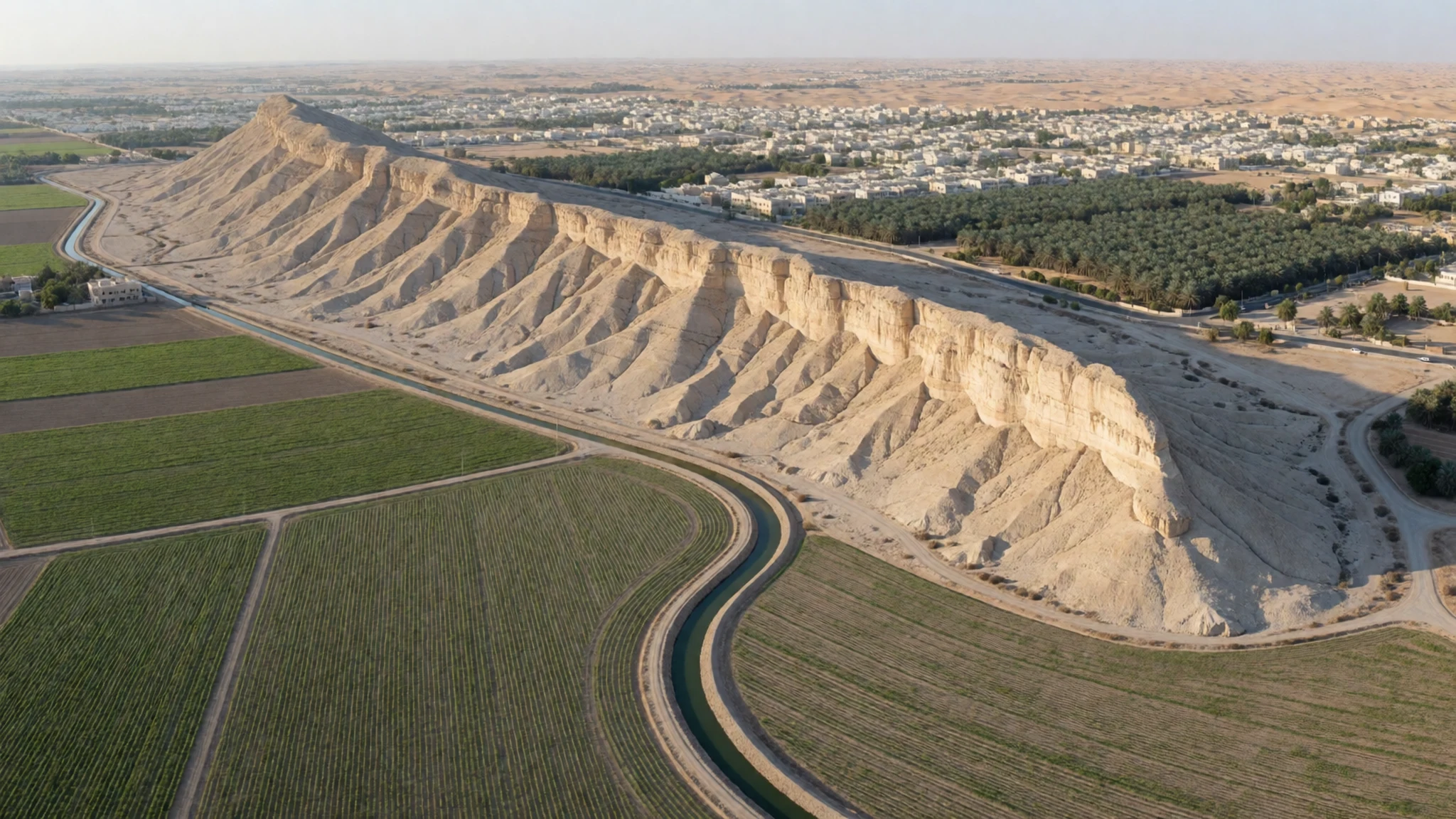
- Beehive tombs of the Hafit Period — Foothills of Jebel Hafeet
At the foot of the mountain stand rows of round, stacked-stone tombs from the Bronze Age, the finds that named an entire period of UAE history. They are low and plain, and the setting does the work: dry ground, bare rock behind. Check locally for access before setting out.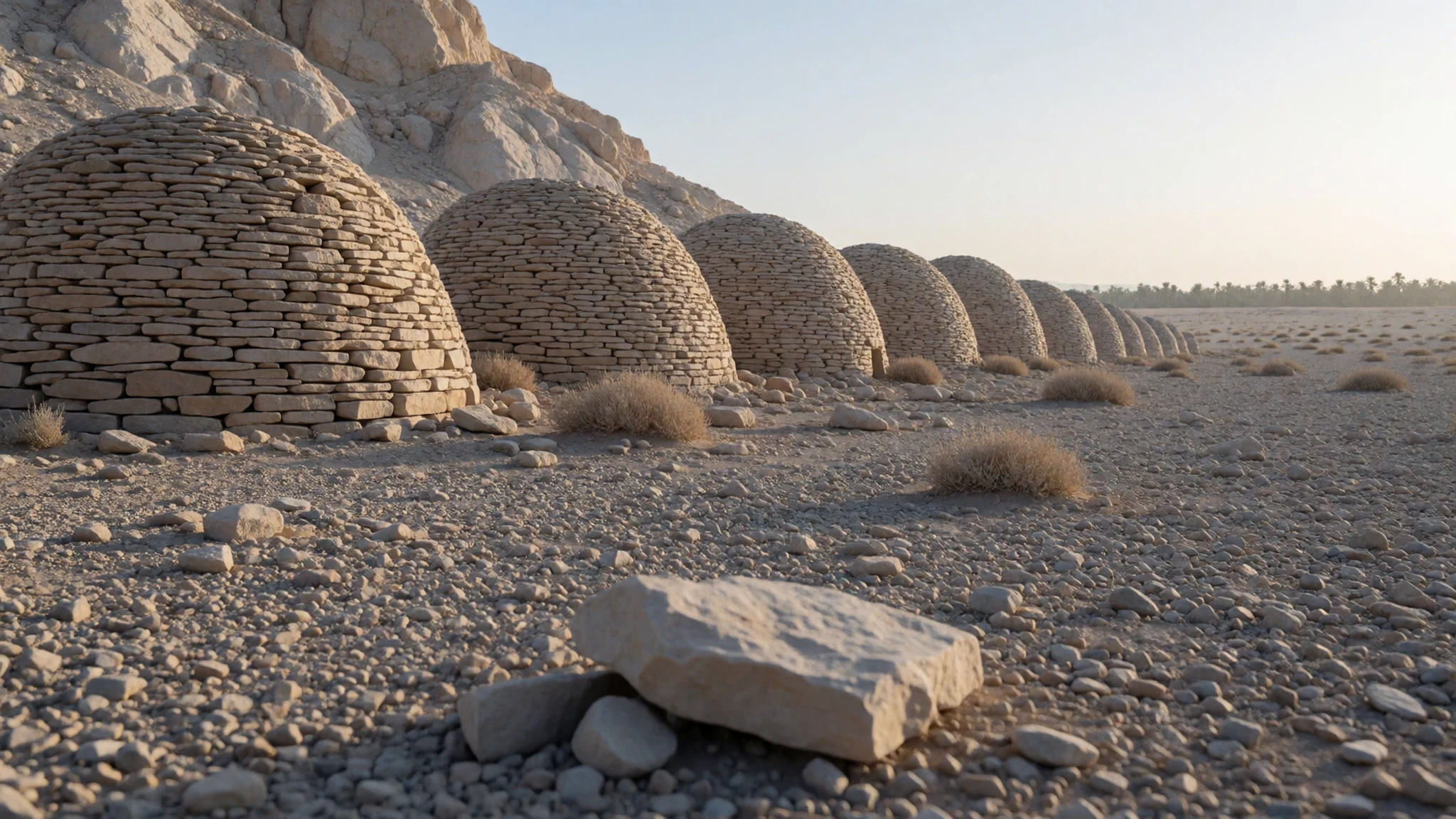
- Al Ain Oasis — Central Al Ain
A walk among thousands of date palms, along shaded paths and old irrigation channels, shows why people settled here long before roads or oil. The air is cooler and damper under the fronds. It is one of the easiest ways to spend a hot morning before heading up the mountain.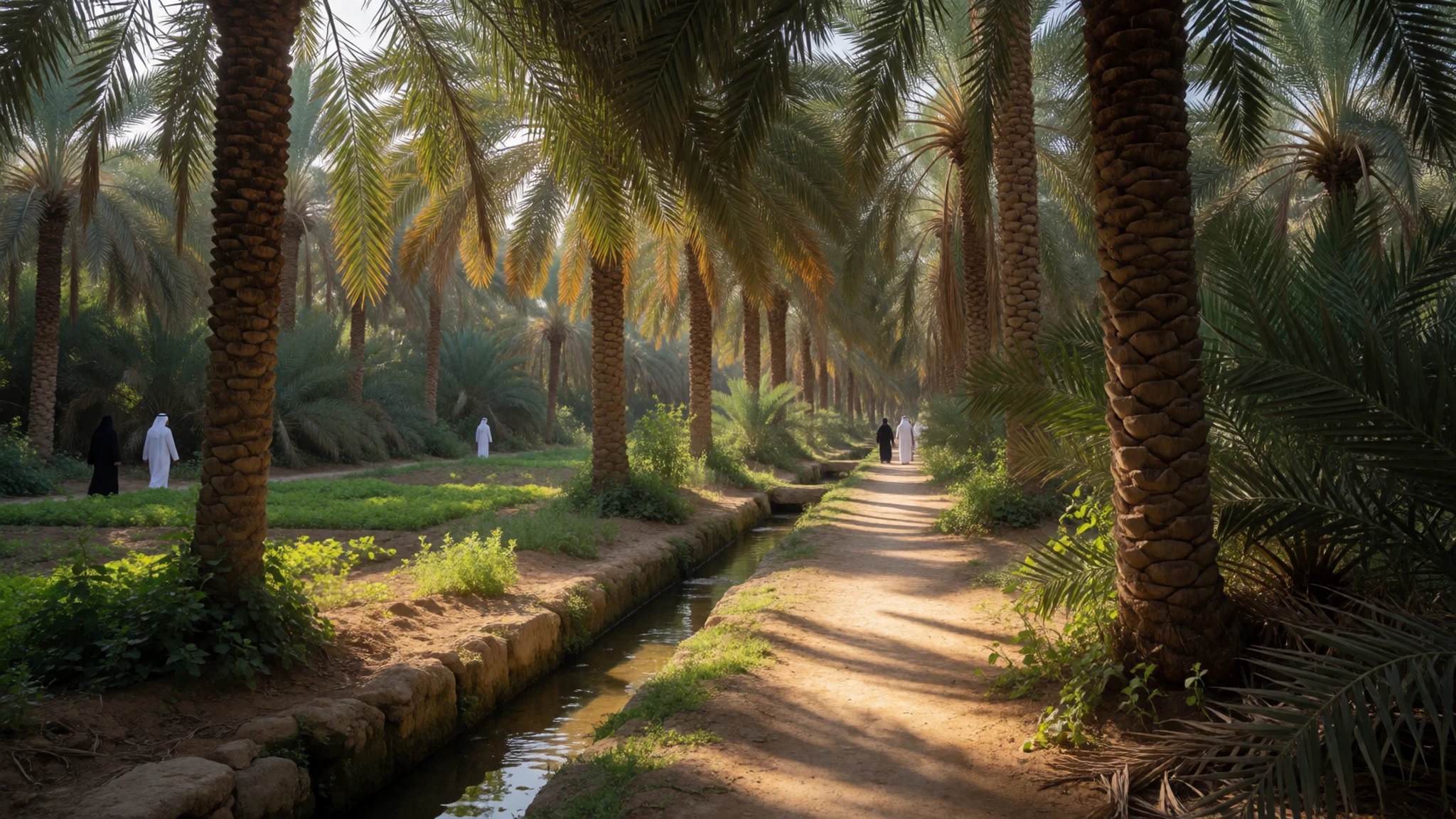
- Al Ain Museum and Fort — Central Al Ain
The fort was built to guard the oasis from raiders, and the museum beside it recreates how people in the region lived before the UAE existed. It is a useful short stop for context on the tombs and the oasis. Check the official listings for opening times.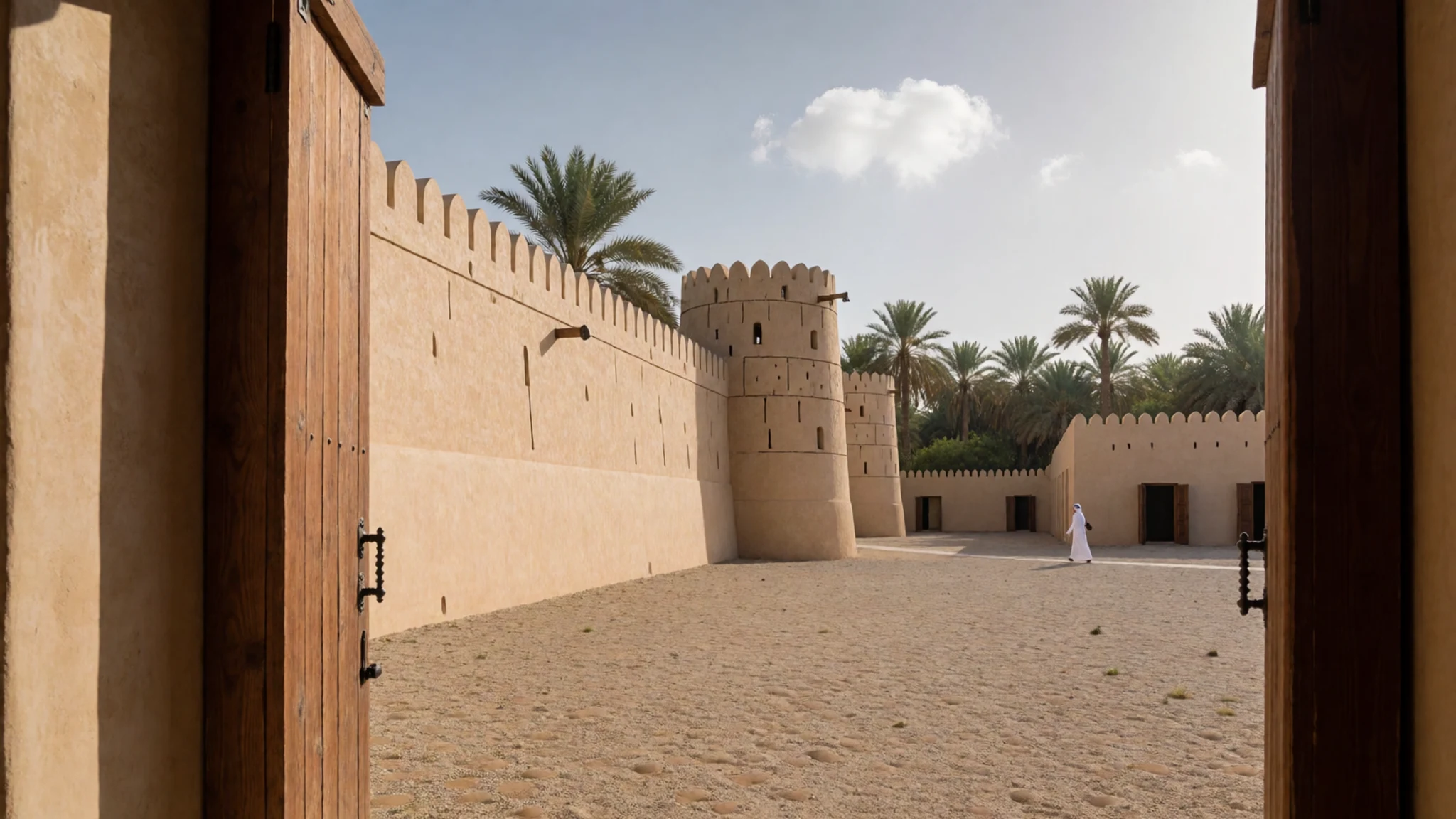
- Camel Souq — South of Al Ain
South of the town centre, hundreds of camels are gathered for buying and selling. It is a working market, not a staged show, so expect dust, noise and groups of men negotiating. Visitors are tolerated, but ask before photographing people or animals' owners.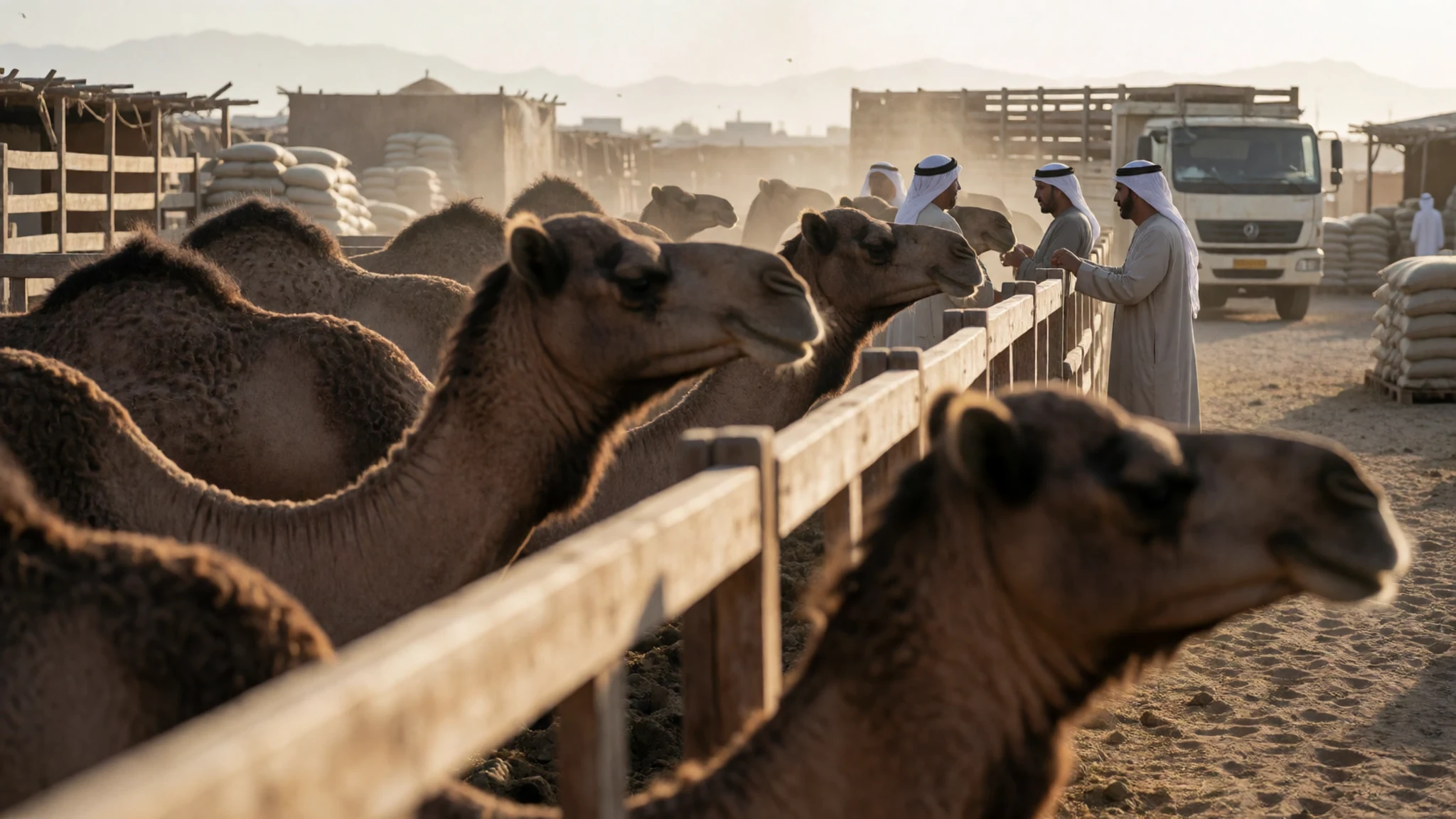
Culture
Jebel Hafeet sits in a part of the UAE where Emirati and Omani communities share a long border, and daily life around Al Ain follows Gulf Arab customs. Hospitality is central: coffee, dates and sweets are offered to guests, and refusing the first cup is slightly awkward, so accept a small amount and shake the cup gently when you have had enough. Family and the extended household matter, and many Emirati families come to the mountain in the evenings to sit, eat and look at the lights. Friday is the main day of prayer, and the rhythm of the week bends around it. During Ramadan, eating, drinking and smoking in public during daylight is discouraged out of respect for those fasting, and some eateries close until sunset. Older heritage here is tied to the oasis and to tribal history, which is why forts and date groves feature in the city's identity. Public behaviour tends to be quiet and courteous; raised voices, loud music and displays of affection are noticed. Alcohol is regulated, so check the rules before bringing any to a picnic spot. Dress and conduct should be modest in public places. Before photographing local people, especially women or families, ask permission first, and respect a refusal without argument.
What to wear
Around Jebel Hafeet, traditional Emirati dress is the kandura for men, a long, loose, usually white robe made of light cotton or similar fabric, worn with a ghutra headcloth held by a black cord. Women wear the abaya, a long black cloak, often with a shayla headscarf, and some embroidered or decorated styles are for special occasions. Both are suited to heat and sun, and both appear at weddings, festivals and Friday prayers. Today, most Emiratis in Al Ain wear national dress for work, mosque and formal events, while younger people mix it with trainers and casual wear. Expatriate residents, who make up a large part of the population, wear everything from office clothes to sportswear. Visitors should dress for strong sun and modest public norms. Loose, light cotton or linen covering shoulders and knees is comfortable and respectful, and a hat and sunglasses help. Women do not need to cover their hair, except when visiting a mosque, where a scarf and long sleeves are expected. Footwear matters on the mountain: wear closed shoes with grip if walking on stony ground, and carry a light layer for the cooler, breezier summit in the evening, especially between October and March.
What to eat
- Machboos — Emirati and Gulf restaurants in Al Ain
A spiced rice dish cooked with lamb, chicken or fish, flavoured with dried lime and warm spices. It is a staple of Gulf home cooking and appears on the menus of Emirati and Gulf restaurants in Al Ain. Order it as a shared main.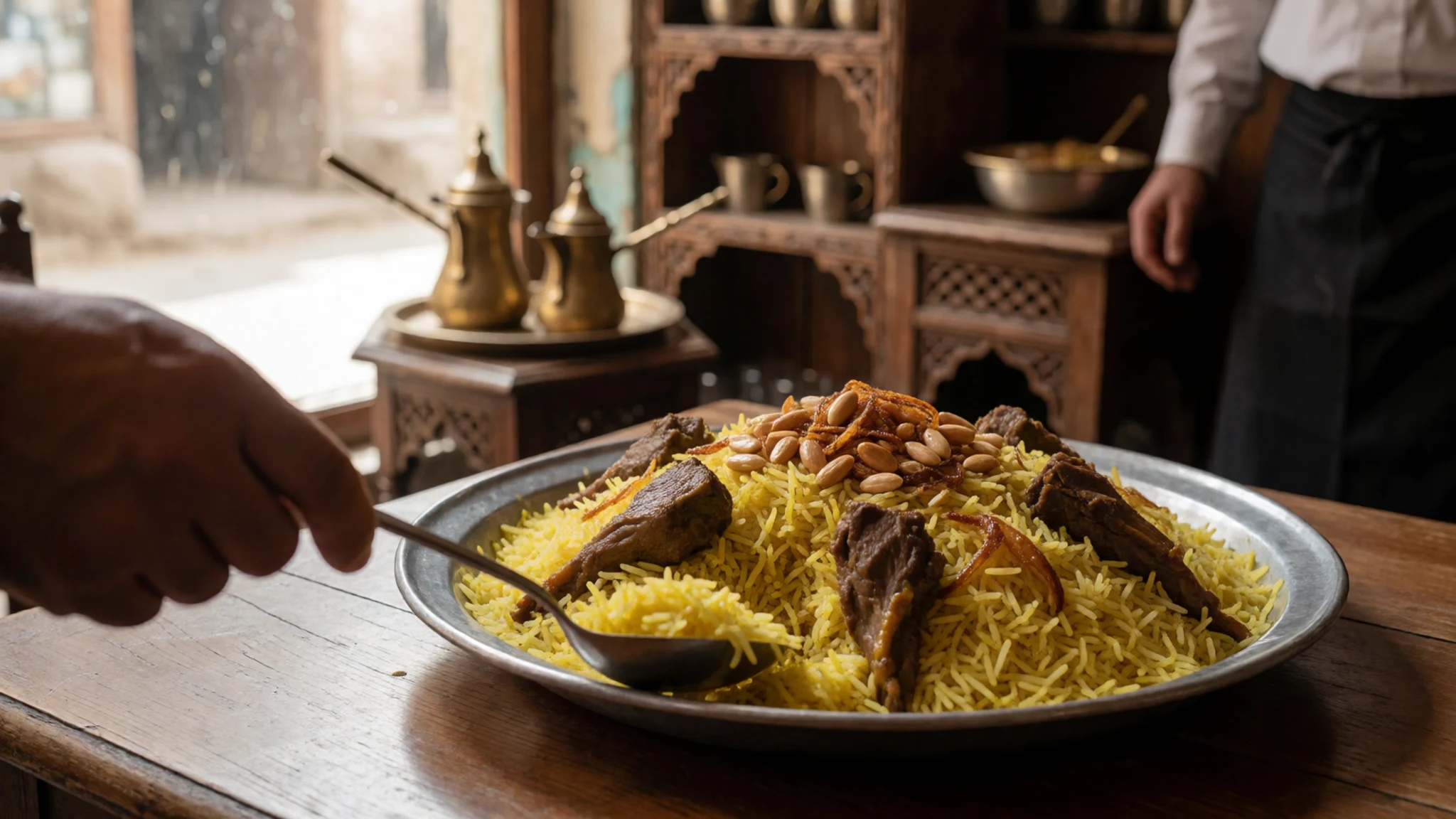
- Harees — Traditional Emirati eateries, especially in Ramadan
A porridge of wheat and meat cooked slowly until smooth, often served during Ramadan and festivals. It is simple, filling and mildly savoury. It is easiest to find in traditional restaurants or at community food stalls around the holy month.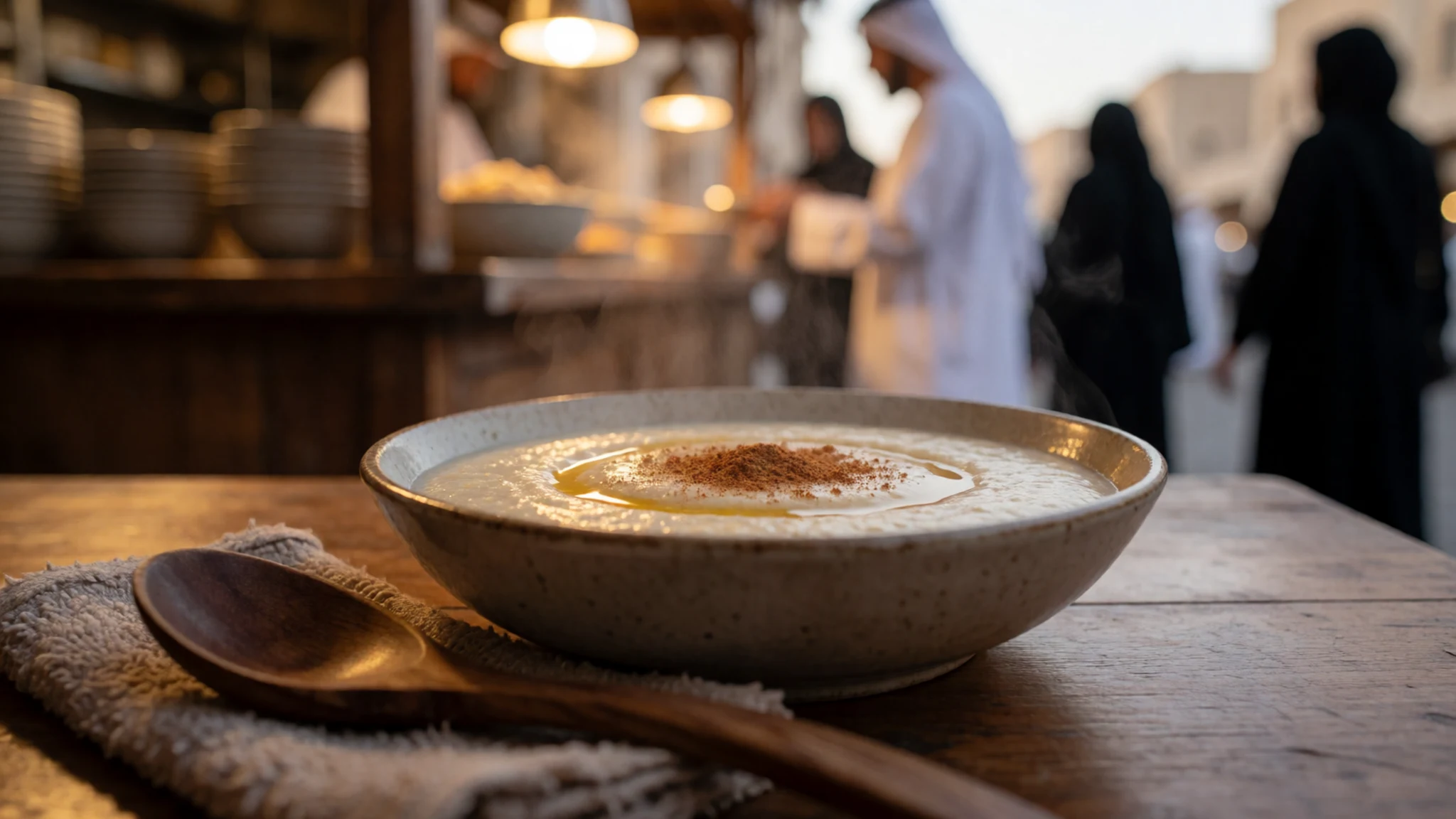
- Luqaimat — Heritage events and local dessert cafés
Small fried dough balls, crisp outside and soft inside, usually drizzled with date syrup. They are sold warm and eaten as a snack or dessert. Look for them at heritage events, festivals and cafés that serve local sweets. - Arabic coffee with dates — Cultural centres, majlis-style cafés and the oasis area
A pale, cardamom-scented coffee poured in tiny cups, served with dates. It is a gesture of welcome, not just a drink. Al Ain's date groves make the fruit especially fitting here. - Shawarma and fresh bread — Takeaway counters in central Al Ain
Sliced marinated meat in flatbread with salad and sauce, a cheap and quick meal across the Gulf. It suits a day of sightseeing and a mountain picnic. Grab one from a busy takeaway counter, where turnover keeps it fresh.
Plan it
Best time. October to March, when the days are cooler, with temperatures usually staying below the summer extremes and evenings pleasant at the summit. Summer is very hot, although the mountain top offers some relief after sunset. Rain is rare and light.
How long. 1–2
Getting there. Al Ain has its own airport, and Abu Dhabi's larger airport has far better connections. Dubai is also a workable gateway, with roads to both Abu Dhabi and Al Ain. From Al Ain, the last leg is a short drive or taxi ride up the mountain road.
Budget. low
Tips
- Go in the late afternoon for softer light and cooler air, and stay for sunset
- Avoid summer midday visits; carry plenty of water at any time of year
- Weekends and holidays are busy, so choose a weekday for quieter viewpoints
- Check the official listings for the museum, fort and any park access before heading out
- Combine the mountain with the oasis and fort in one day, using a car or taxi
Etiquette
- Dress modestly in public places, and cover shoulders and knees
- Ask permission before photographing people, especially women and families
- Keep noise low at viewpoints and leave no litter in the park
Nearby
Sources
- Wikidata Q1261870 (CC0)
- Wikipedia: Jebel Hafeet (rev 1381306289) (CC BY-SA 4.0)
- Wikivoyage: Abu Dhabi (emirate) (rev 5416681) (CC BY-SA 4.0)
- Jebel Hafeet, United Arab Emirates — Shahinmusthafa Shahin Olakara (CC BY 3.0)
- Aerial view of the mountain Jebel Hafeet — Nicolascornet (CC BY-SA 4.0)
- Location map of the United Arab Emirates — NordNordWest, Uwe Dedering (CC BY 3.0)
- Location map of the Persian Gulf — Uwe Dedering (CC BY 3.0)
- West Asia non political with water system — DEMIS Mapserver, पाटलिपुत्र (CC BY 3.0)
- Aerial picture of Jebel Hafeet from the east — User:إماراتي 1971 (Public domain)
- Al Nakfa Hotel Al-Ain — haroon_tt (CC BY 3.0)
- Alain UAE 46 — Rizwan Ullah Wazir (CC BY 3.0)


