Sharjah
Sharjah, United Arab Emirates
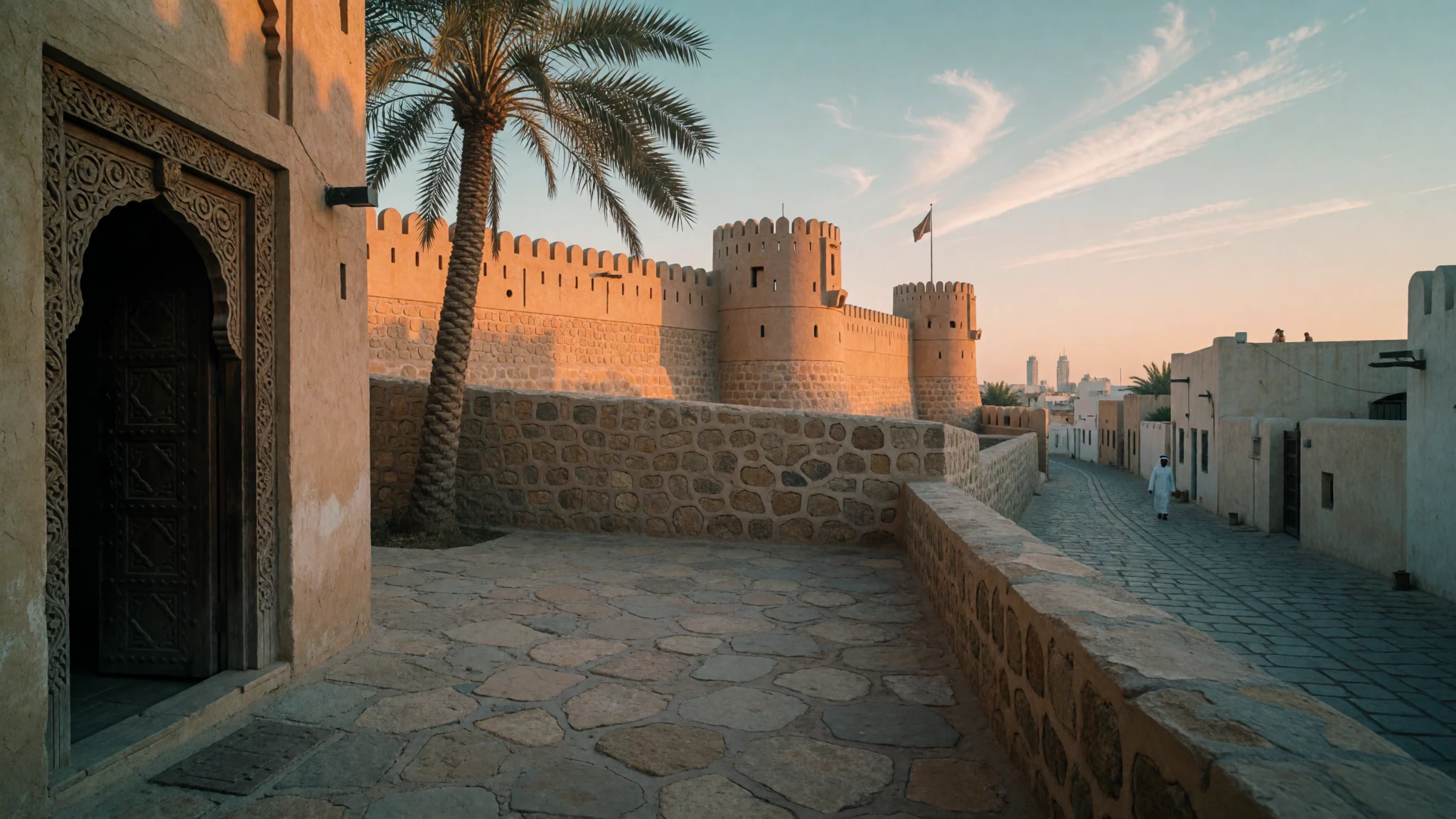
Sharjah is the Gulf city to choose for museums, restored courtyards and calligraphy, at a calmer, more traditional pace than neighbouring Dubai.
The place
Sharjah sits on the Gulf coast of the United Arab Emirates, a port city of about 1.2 million people and the capital of the emirate that carries its name. It is the third most populous city in the country after Dubai and Abu Dhabi, and in practice it merges with Dubai and Ajman into one long urban strip. The ground is flat and low, only about 14 metres above sea level, so the skyline is built from towers and minarets rather than hills.
What sets Sharjah apart from its glossier neighbour is its emphasis on culture. Museums, a restored old quarter and a bookish reputation give the centre a slower, more reflective feel, and the emirate has been ruled by the Al Qasimi family since the eighteenth century. It is also a dry emirate, with no alcohol sold, which shapes the evenings and draws many families and observant Muslim visitors.
Day to day the city feels residential and hard-working: shawarma counters, souqs, creekside promenades, and long queues of traffic towards Dubai at rush hour. Treating Sharjah as a Dubai day trip misses the point. The heritage district rewards a slow morning, and the waterfront, with its lagoon lit up after dark, rewards an evening. Heat decides the rhythm of everything, so much of life happens early or late, and indoors in between.
Its story
Sharjah has a long past that predates the modern city. People have lived on this stretch of coast for many thousands of years, and the town was once counted among the wealthier settlements of the region, living off the sea through fishing, pearling and trade. Wikidata gives 1793 as its founding date, but the political story really starts a little earlier, when the Huwayla branch of the Qawasim clan made Sharjah its seat and declared it independent.
The town's position on the sea route to India made it matter to outside powers. In the early nineteenth century Sheikh Sultan I signed a maritime treaty with Britain, accepting protection partly to keep the Ottomans out. Sharjah and its neighbours on the coast were treated as salute states, and Sharjah sat in the lowest class of that ranking.
An English traveller, James Silk Buckingham, sailed past in the late 1820s and described a small town on a sandy beach with only a few hundred inhabitants, a useful reminder of how modest the place once looked. As the twentieth century approached, the settlement spread inland towards what is now the Wasit suburb, while the tribes of the interior controlled the land beyond.
The old centre was later neglected as the city grew outwards, then rescued by the Heart of Sharjah project, which restores the historic quarter to something close to its mid-century appearance.
What to see
- Al Hisn Fort — Heritage District, Heart of Sharjah
Al Hisn Fort, also called the Sharjah Fort Museum, anchors the Heritage District. The fort has been carefully restored by the ruling sheikh, and its museum gives a good sense of the emirate's social history. Visit early, when the courtyards are cool, then wander the lanes around it.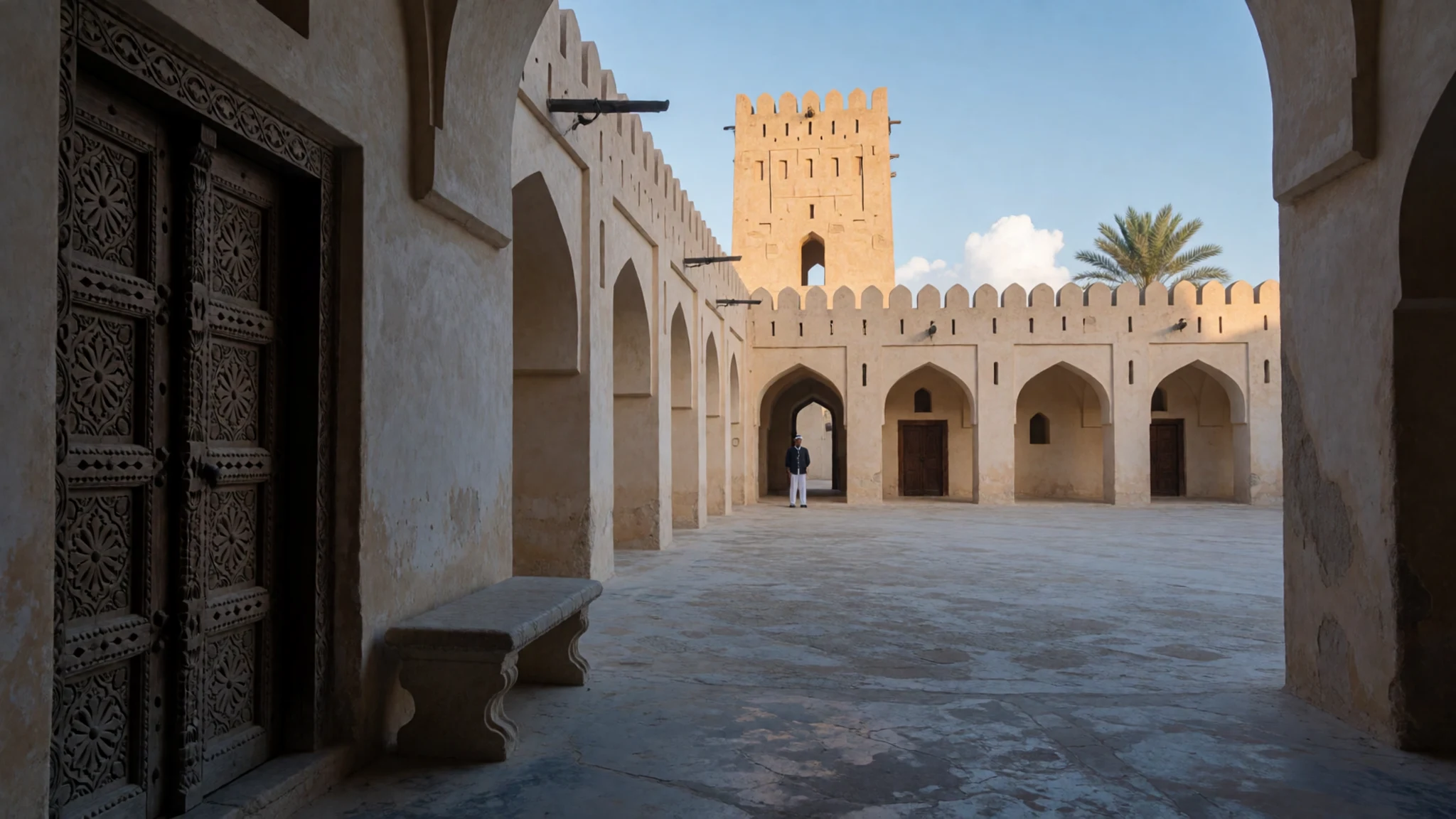
- Sharjah Museum of Islamic Civilisation — Heart of Sharjah
This museum suits anyone curious about the history of Islam. Its collection includes handwritten Qur'ans, letters from the Prophet Muhammad to other leaders, and a range of artefacts. It is air-conditioned, which helps in summer, and it needs more than a quick walk-through. Check the official site for opening times.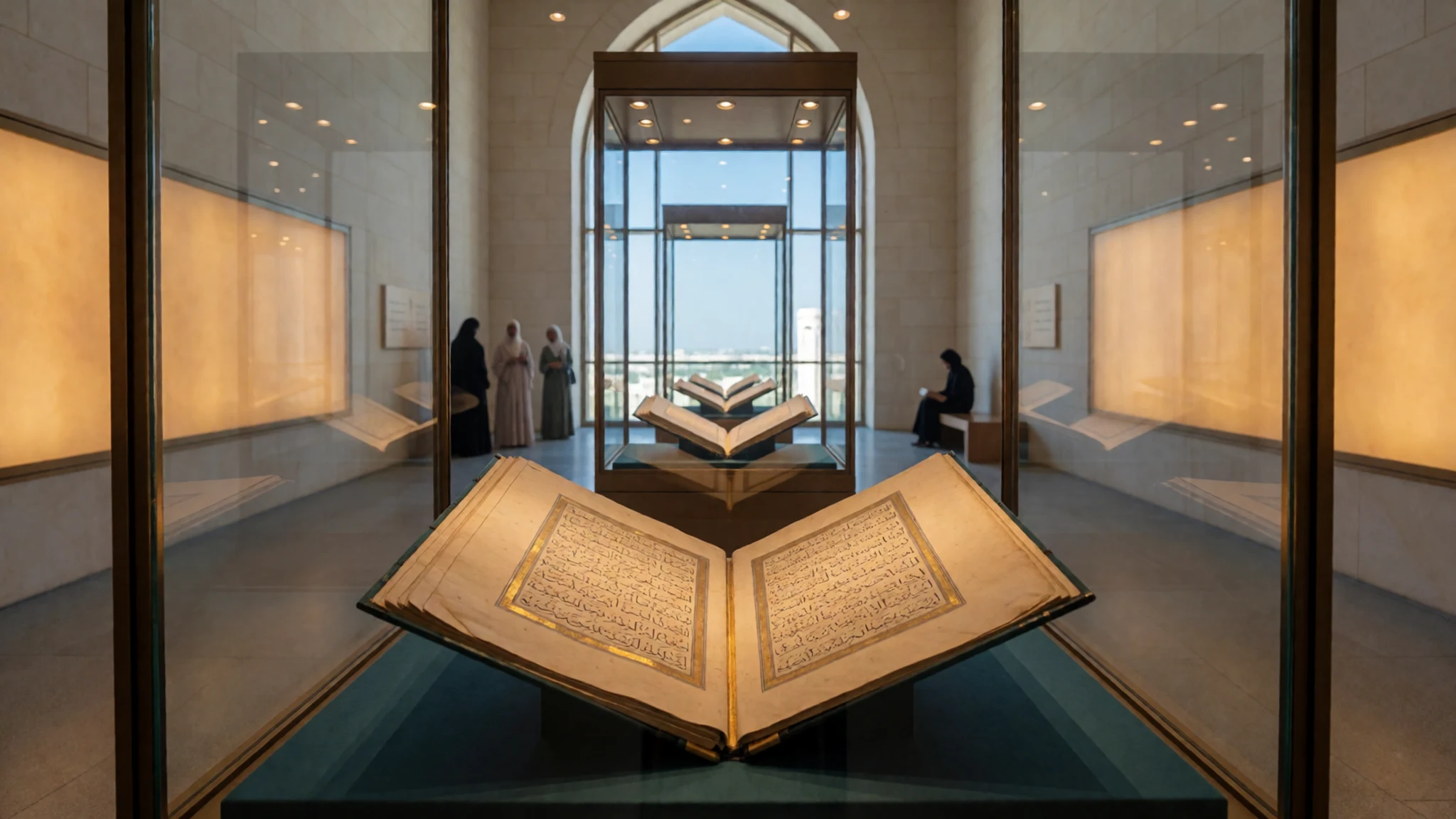
- Bait al-Naboodah — Heart of Sharjah
Bait al-Naboodah is a traditional family house in the old quarter, built around a shaded courtyard in the manner of the old Gulf. Rooms open off the yard, and the layout shows how households kept cool and private before air conditioning. It is small enough to see in under an hour.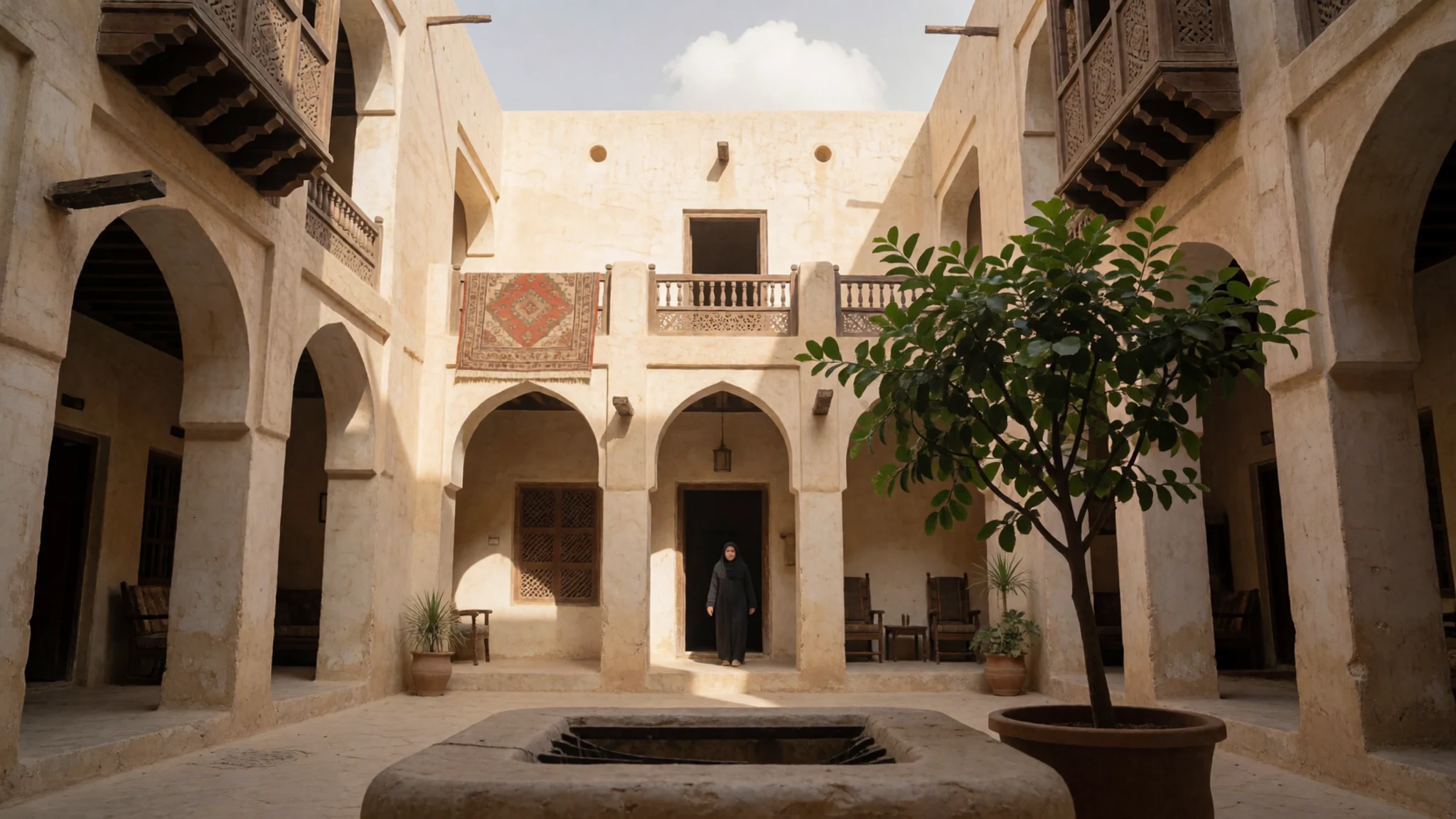
- Souq al-Arsah — Heart of Sharjah
Souq al-Arsah is a covered market of narrow lanes in the heritage quarter, selling spices, perfumes and souvenirs. The traditional coffee house there is a good place to rest with tea and dates. Quieter and slower than the big Dubai markets, it is best visited in the morning or late afternoon.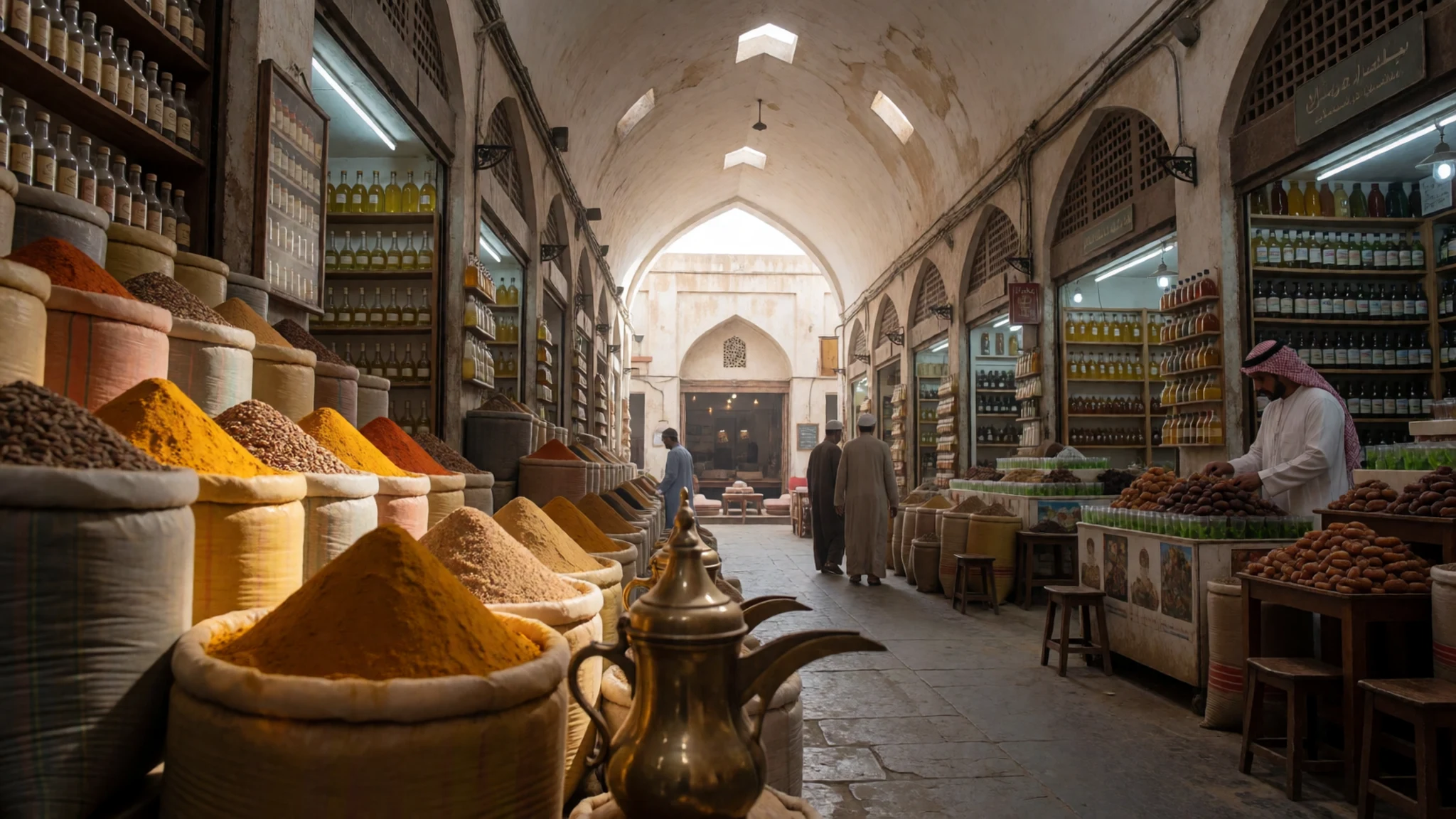
- Sharjah Calligraphy Museum — Heart of Sharjah
A small museum devoted to calligraphy, with fine pieces by Persian, Arabic and Turkish artists. A workshop on site trains students in the craft, which gives the display a living context. Even without reading Arabic script, the control of line and proportion is easy to appreciate.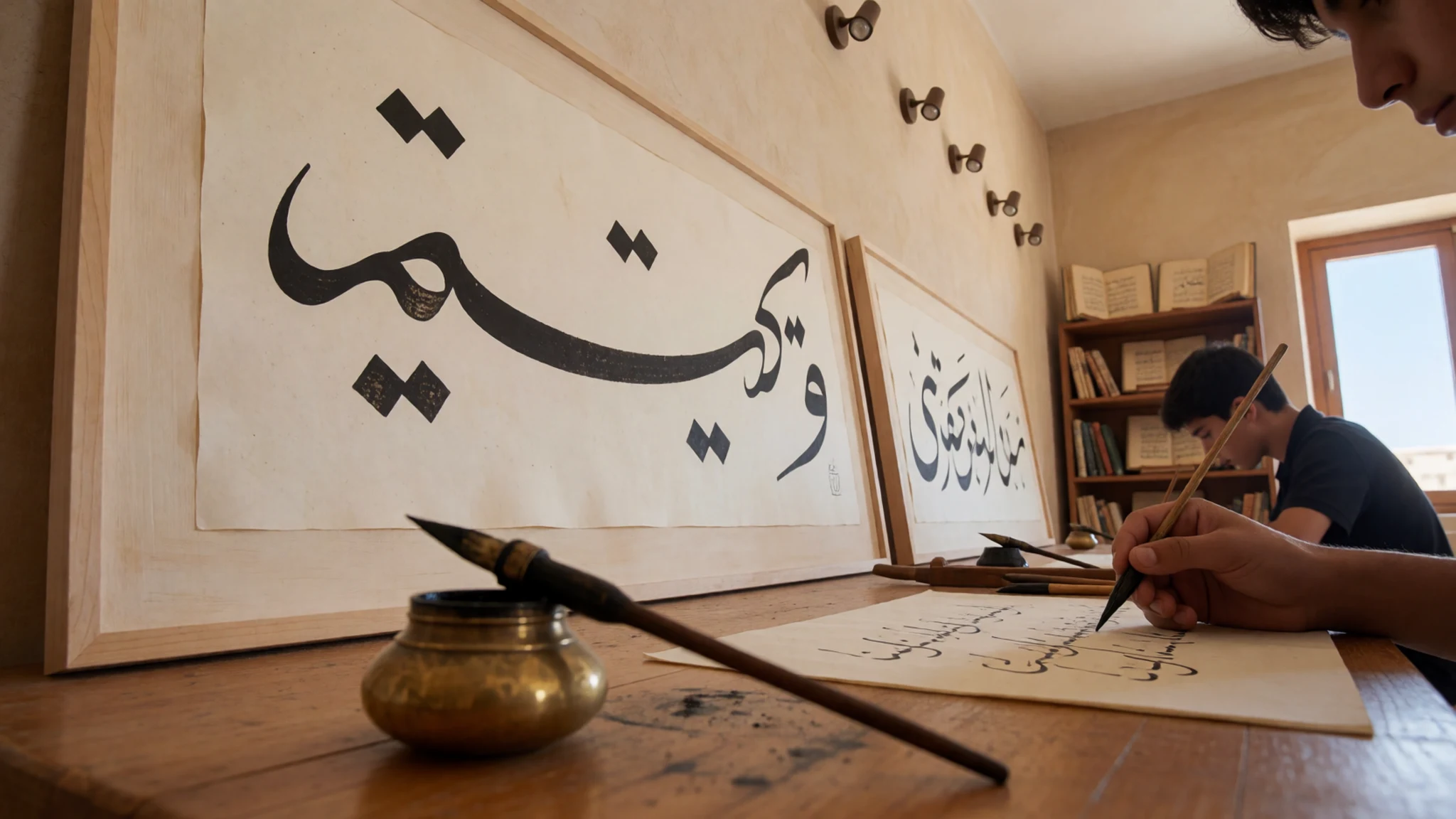
- Al Qasba — Al Qasba canal waterfront
Al Qasba is a waterfront district built around a canal, with promenades, cafés and views across the water that are at their best in the cooler evening hours. It is a relaxed, family-oriented place to end a day of museums, and the lights come on after sunset.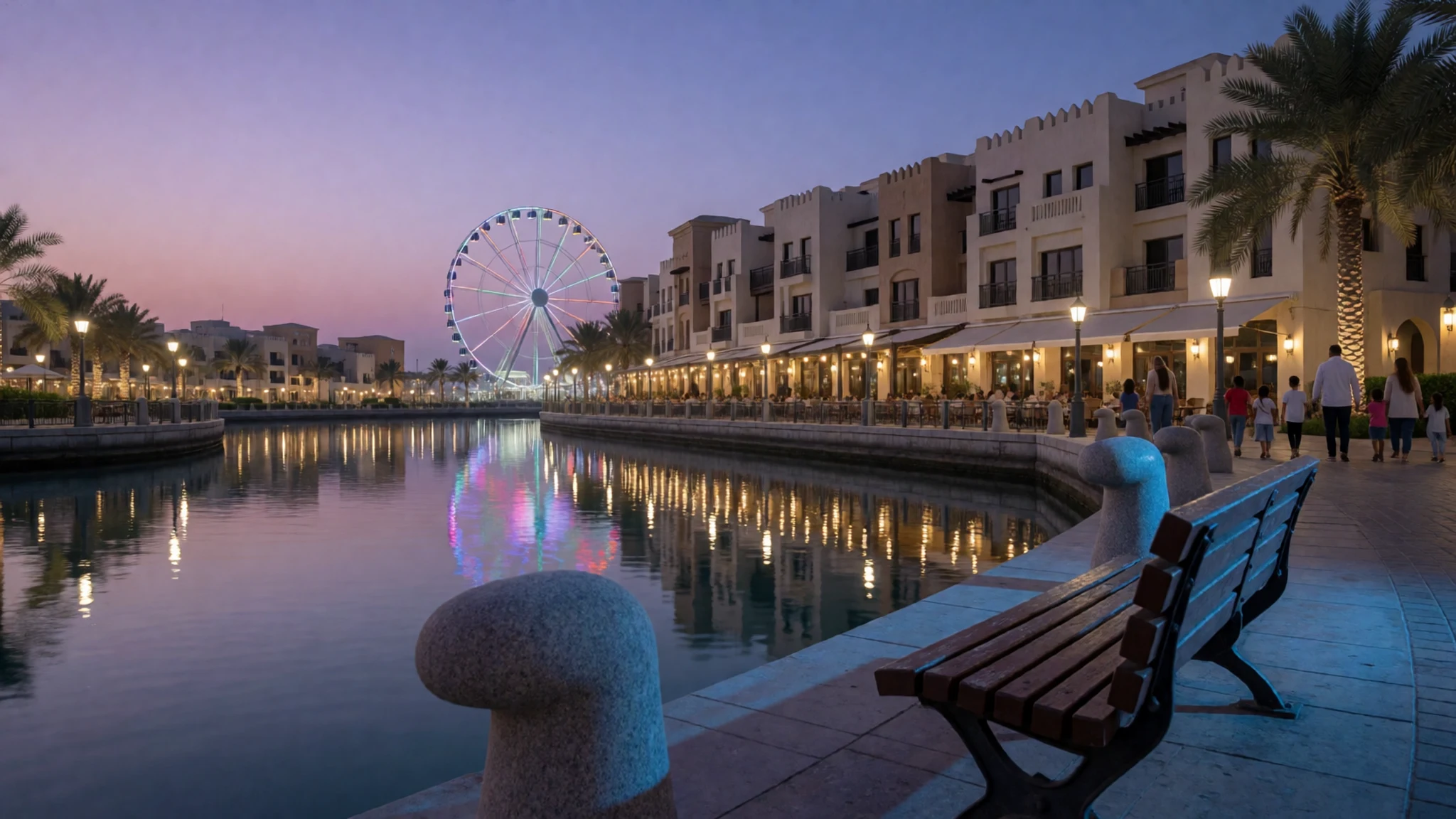
Culture
Sharjah is a place where Islam and Arab tradition shape everyday life, from architecture and dress to food and the rhythm of the week. Mosques call the faithful to prayer five times a day, and the weekend falls on Friday and Saturday, a compromise adopted in the UAE to respect Friday's importance while staying in step with international business.
The emirate is more conservative than Dubai. Alcohol cannot be sold or consumed without a licence and is not served in restaurants or other outlets, and this has helped Sharjah attract Muslim visitors and families. The city leans into learning: UNESCO named it World Book Capital for 2019, and its museums, book fairs and arts programmes are a real part of civic identity, not just a tourism pitch.
The Heart of Sharjah project has restored the old town to something close to its appearance in the 1950s, so a walk through the heritage district gives a fair picture of how the town looked before the oil years. Courtyard houses, wind-catcher details and quiet lanes set the tone, and many of the people working in the museums and shops come from across the Arab world and South Asia, so languages and customs mix.
Etiquette line: Dress modestly, avoid public displays of affection, and ask before photographing local people, especially women, in the souq and around mosques.
What to wear
Traditional dress in Sharjah follows the wider Emirati pattern. Men wear the kandura, a long white robe usually made of cotton or lightweight blends, with a white or checked headcloth held by a black cord. Women wear the abaya, a loose black cloak, often with a headscarf, and some older women also wear a face covering. Embroidery, braid trim and lighter fabrics are common on formal or festive occasions, and traditional dress is the norm at weddings, on Fridays and at national celebrations.
What people wear day to day is a mixture. Many Emirati men and women dress traditionally in public, while the large expatriate population wears everything from office clothes to South Asian shalwar kameez and sarees. In shopping malls and on the waterfront, jeans and shirts sit alongside abayas, and sportswear is common near the lagoon in the evening.
Visitors should dress more conservatively than they might in Dubai. Shoulders and knees should be covered for both men and women, and loose, light cotton or linen is the sensible choice in a hot desert climate. Women do not need to cover their hair except when entering a mosque, where a scarf is required and may be lent. Carry a light layer for fierce air conditioning inside museums and malls. Comfortable closed or sturdy sandals suit the heritage lanes, and sun protection matters more than fashion outdoors.
What to eat
- Shawarma — Small shawarma counters in any neighbourhood, especially around the central souq
Shawarma is the everyday street meal in Sharjah, with sliced marinated chicken or lamb rolled in flatbread with pickles and sauce. It is filling, quick and cheap, and nearly every neighbourhood has a counter, so follow the queues of workers at lunchtime.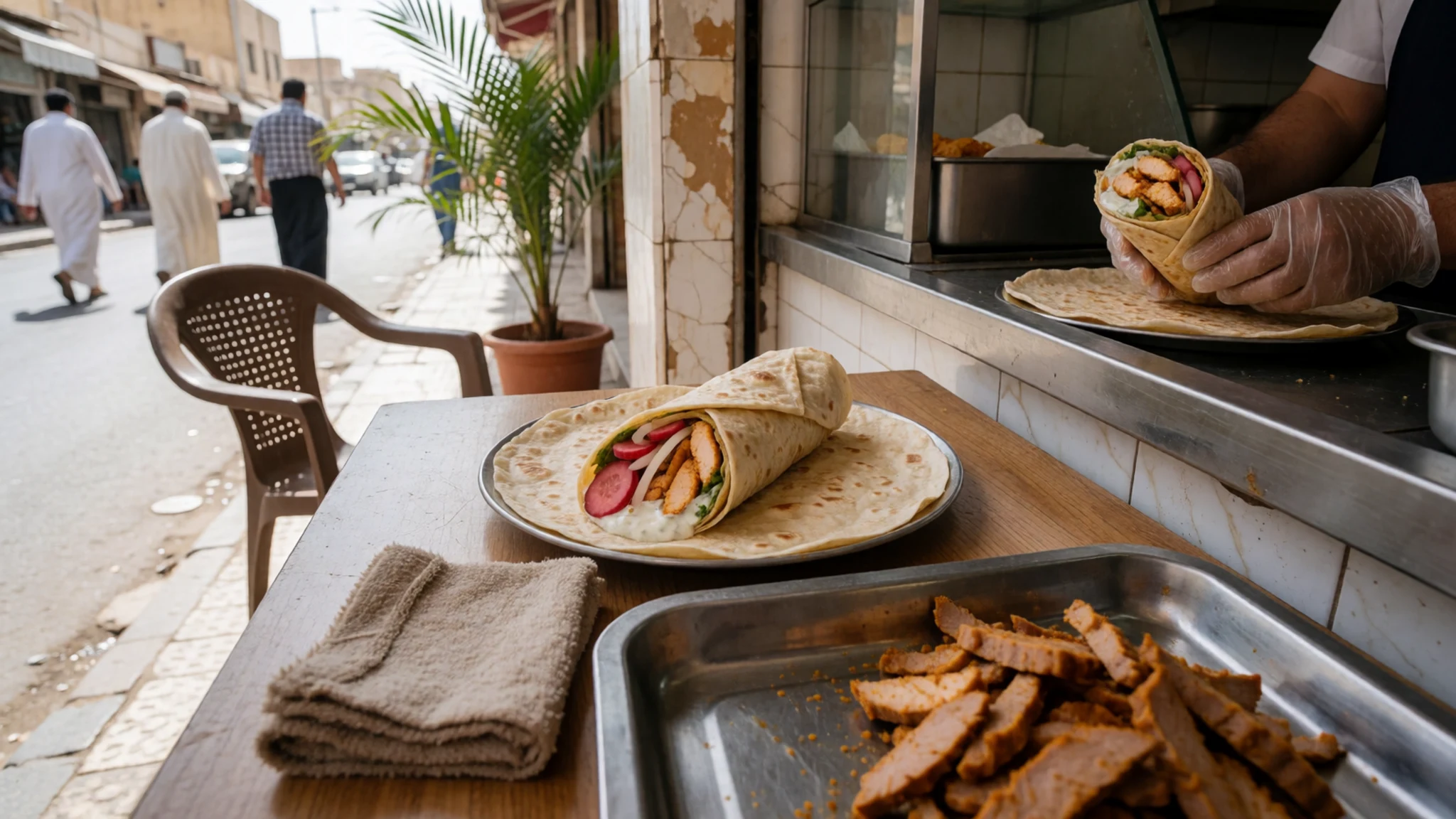
- Grilled fish and seafood — Seafood restaurants near the waterfront and corniche
Because Sharjah is a port, grilled or fried fish features on many menus, including hammour, tuna and shrimp, often served with rice or as a mixed seafood platter. It is the closest thing to a local coast flavour, and the fish is usually fresh.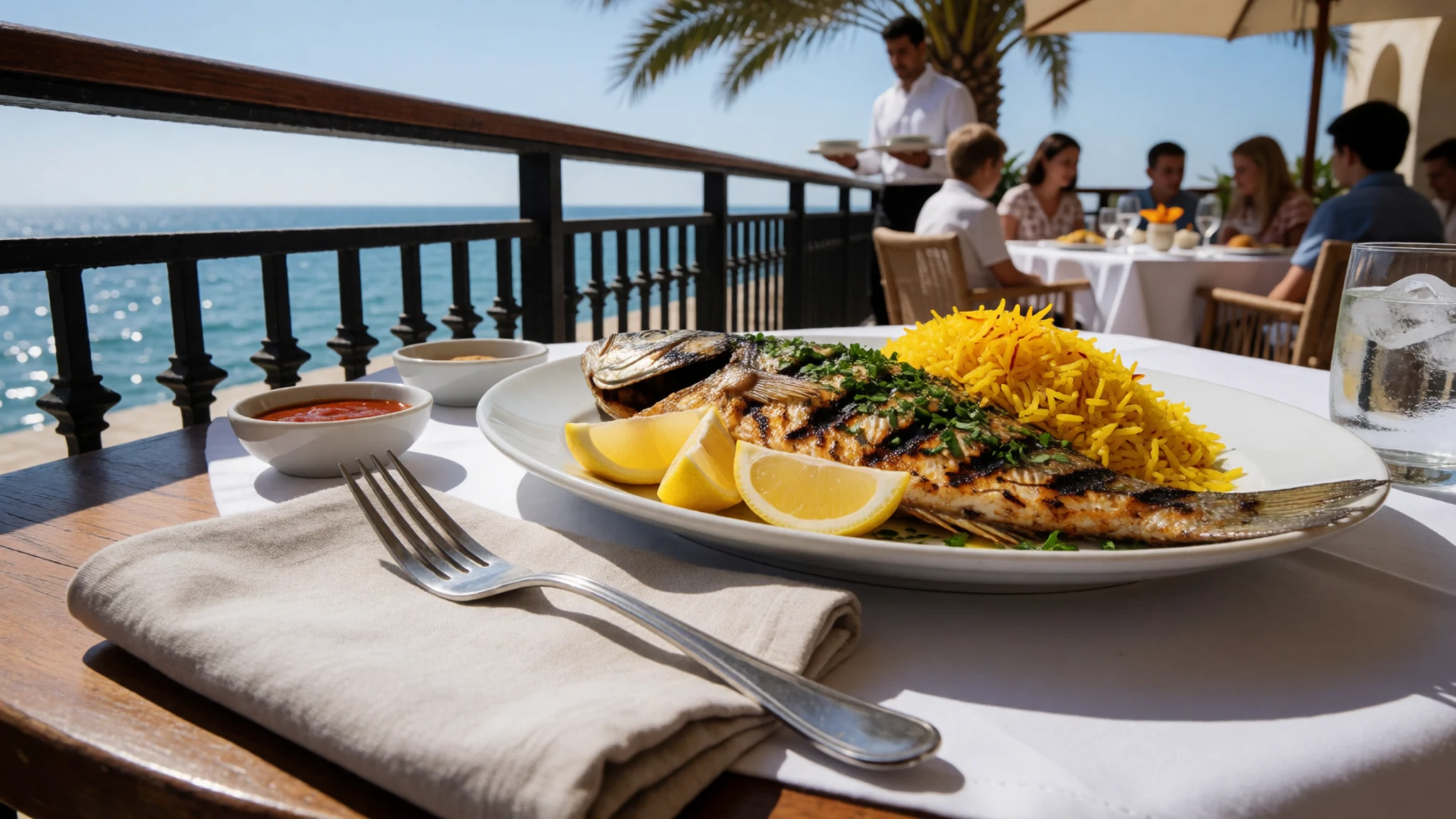
- Arabic grills — Grill restaurants in the central districts
Mixed grills of lamb, chicken and kebab pieces, served with flatbread, hummus and salad, are a staple of Gulf dining. Portions are generous and meant for sharing, and families often order a large platter in the evening. - Biryani — South Asian eateries around the central souq and residential areas
South Asian cooking is a big part of Sharjah's food scene. Biryani, with spiced rice layered with meat and served with raita, is a common order at lunch and dinner, and the dish reflects the large Indian and Pakistani communities. - Pakistani barbecue — Pakistani barbecue restaurants and food streets in the city
Charcoal-grilled skewers, tikka and kebabs from Pakistani barbecue restaurants are popular for a casual night out. Tear off pieces of fresh bread to eat them with, and expect plenty of spice and smoke. - Khuboos — Neighbourhood bakeries
Khuboos is simple wheat flatbread, baked fresh and sold very cheaply. It accompanies nearly every meal and works as a wrap for fillings. Buying it warm from a small bakery is one of the most basic pleasures of eating in Sharjah.
Plan it
Best time. November to March, when days are warm rather than punishing and evenings are pleasant for the waterfront. Summers are extremely hot, and July and August can push well past the low forties, so museums and malls become the only comfortable option. Rain is light and erratic, with most of it falling in February and March.
How long. 2–3
Getting there. Fly into Sharjah International Airport, or into Dubai and continue by road. Inter-emirate buses run from Dubai to Al Jubail bus station, close to the Central Souk, and a regular airport bus also serves it. Taxis cover the last leg to the heritage district. Check visa rules on the UAE page and the official site, https://www.sharjah.ae/.
Budget. mid
Tips
- Do outdoor sightseeing in the early morning or after sunset, and keep midday for museums
- Carry some cash for buses and small shops, and check fares locally rather than relying on old figures
- Drink water often and carry a bottle, even on short walks
- Remember it is a dry emirate, so do not expect alcohol at restaurants or hotels
- Check the official site for museum opening hours, as some close on certain days and around prayer times
Etiquette
- Dress modestly, with shoulders and knees covered
- Avoid public displays of affection
- Ask before photographing people, and do not photograph women without permission
Nearby
Sources
- Wikidata Q289693 (CC0)
- Wikipedia: Sharjah (rev 1383550713) (CC BY-SA 4.0)
- Wikivoyage: Sharjah (rev 5430245) (CC BY-SA 4.0)
- Photo: Sharjah city skyline in 2015, Mueed Ahmed (CC BY-SA 4.0)
- Photo: Al Khan Lagoon by Night, Wurzelgnohm (CC0 1.0)
- Photo: Al Qasba, Firoze Edassery (CC BY 3.0)
- Photo: Sharjah Heritage Area, yeowatzup (CC BY 2.5)
- Photo: Blue Souk, Sharjah, UAE, yeowatzup (CC BY 2.5)
- Photo: United Arab Emirates relief location map, NordNordWest / Uwe Dedering (CC BY 3.0)
- Photo: Persian Gulf relief location map, Uwe Dedering (CC BY 3.0)
- Photo: Sharjah Heritage, Maricar1977 (CC BY-SA 4.0)


