Linosa
Linosa, Italy
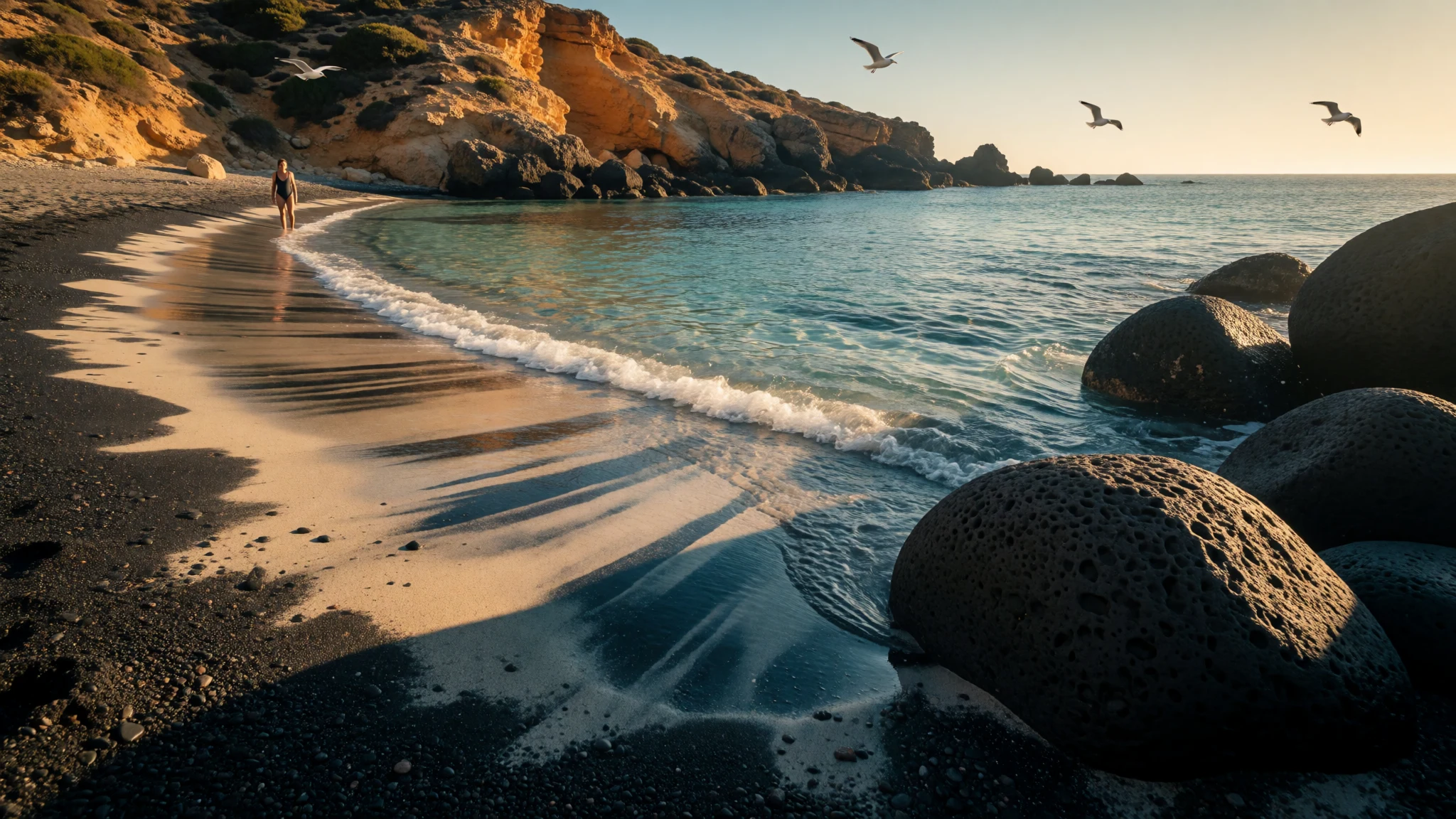
Linosa is a small black volcanic island far out in the Sicily Channel, with a quiet village, dark sand coves and almost no tourist infrastructure.
The place
Linosa is a small volcanic island in the Sicily Channel, the northernmost of the three Pelagie Islands. It is administered as part of the comune of Lampedusa e Linosa, in the province of Agrigento in Sicily. Only about 490 people live here, and the island covers roughly five and a half square kilometres, so everything is close together and nothing feels hurried.
The landscape is a cluster of extinct craters. Monte Vulcano, at 195 metres, is the high point, and its slopes are dark, scrubby and dotted with small farm plots. The coast is a mix of black lava shelves, little coves and sea stacks. Geologically the island sits on the African plate, which surprises people who assume anything Italian belongs to Europe.
Lampedusa, the nearest land, is about 43 km to the south. Malta, Sicily and Tunisia are all more than a hundred kilometres away. That isolation shapes daily life. There is no airport, and as of the brief's latest information no hotels or banks, so the island runs on guesthouses, rentals, farming and a short summer season.
The village is the only settlement: bright painted houses around a small port, a few trattorias and cafés, and a pace that suits people who like walking, swimming and doing little else. It is a place for slow days rather than sightseeing lists, and it is worth knowing that the sea can cut it off when the weather turns.
Its story
Linosa spent most of its history empty. The Romans used it as a supply station during the Punic Wars, and around 150 of the cisterns they built to store rainwater survive. Later centuries brought Saracen, Norman, Angevin and Aragonese control, though none left a lasting community.
During the Napoleonic Wars the British looked at taking Linosa, along with Pantelleria and Lampedusa, as a way of supplying Malta. A Royal Commission report of 1812 judged the scheme too difficult, and the island stayed as it was.
Permanent settlement came only in 1843, when Ferdinand II of the Two Sicilies sent a naval captain to colonise it. The first thirty colonists were artisans from Ustica, Agrigento and Pantelleria, joined by a mayor, a priest and a doctor. They arrived on 25 April 1845 and began farming the volcanic soil.
For over a century afterwards the island stayed remote and overlooked. Modern services came late: a telephone exchange in 1963, a power station in 1967 and a school with a nursery in 1968. A desalination plant in 1983 finally gave Linosa a steady supply of drinking water, which had always been the island's limiting problem and the reason the Roman cisterns mattered.
Tourism only began to develop in the 1970s, and it remains small, which is much of the island's appeal today.
What to see
- Monte Vulcano — Island interior
The island's highest point at 195 metres is reached on foot and rewards the effort with views over the crater landscape and the surrounding sea. Go early or late in the day, because the slopes are open and the summer sun is strong.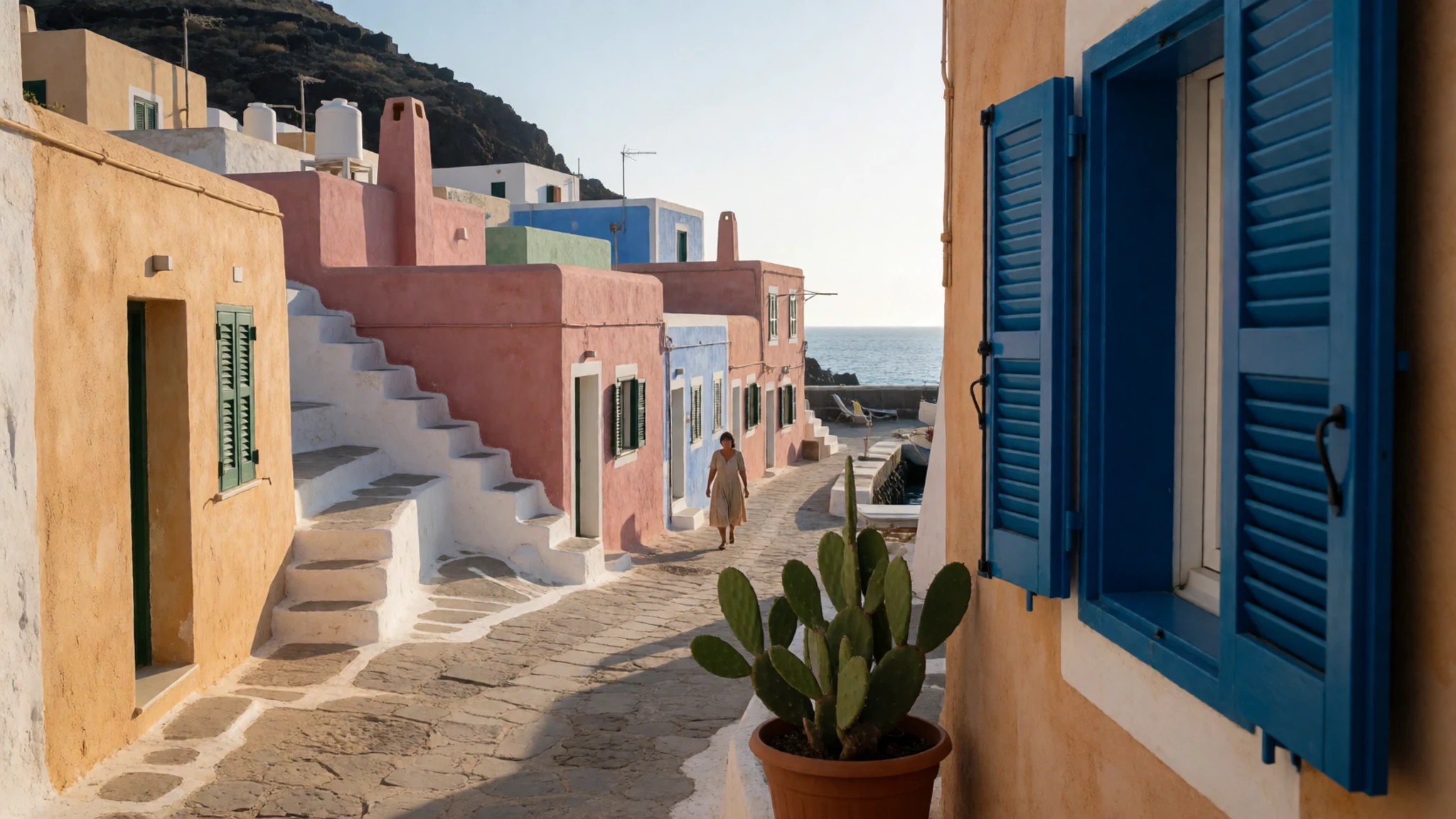
- Village of Linosa — Port and village
The village is the island's only settlement, with colourful houses, a small port and an unhurried feel. It is the natural base for everything else, and an evening walk around the harbour is as good an introduction as any.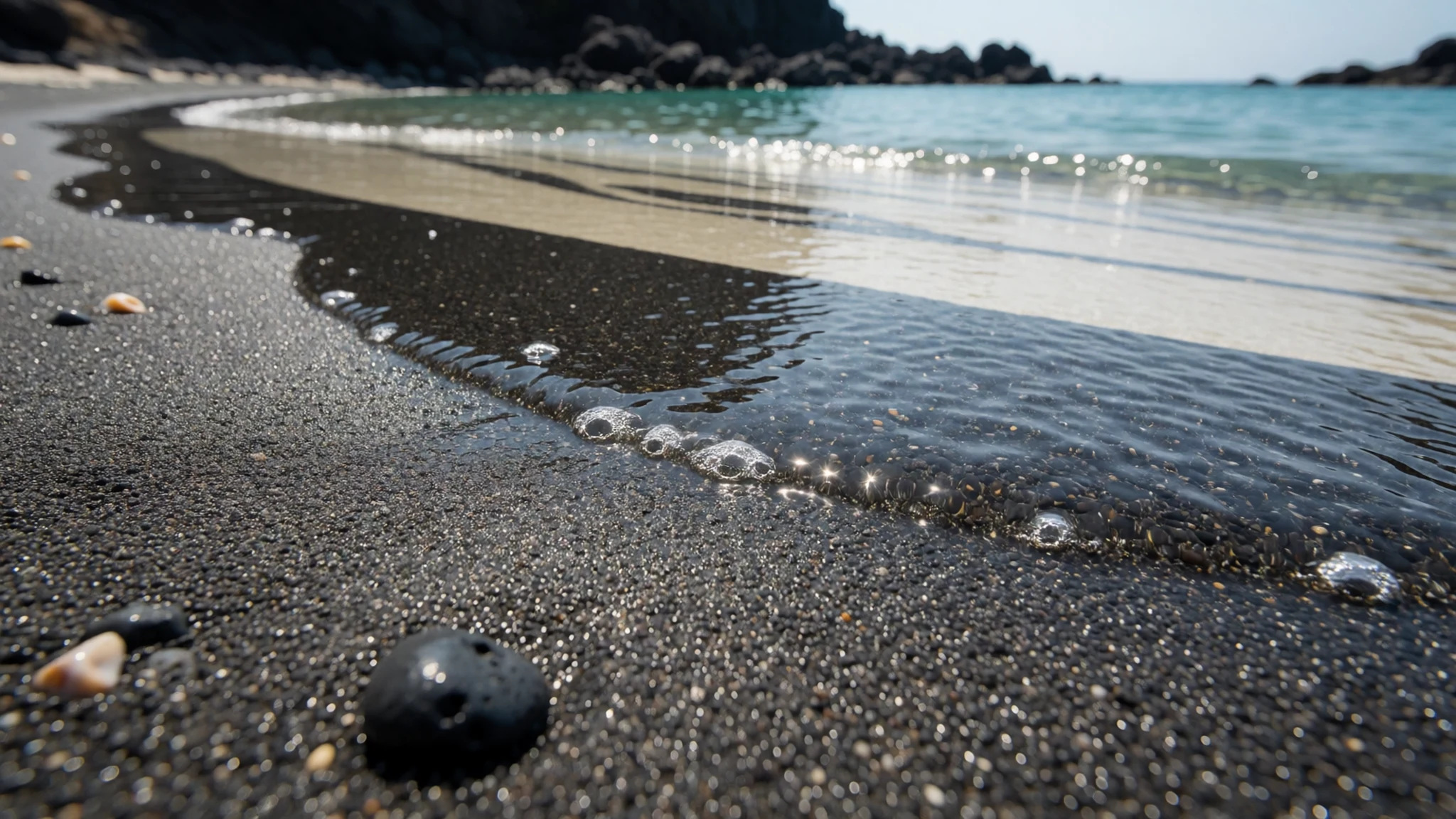
- I Faraglioni — Eastern coast
These sea stacks of volcanic rock stand just off the eastern coast, shaped by old lava flows and erosion. They look best at sunrise or from a boat that circles the island, which also shows the cliffs and caves.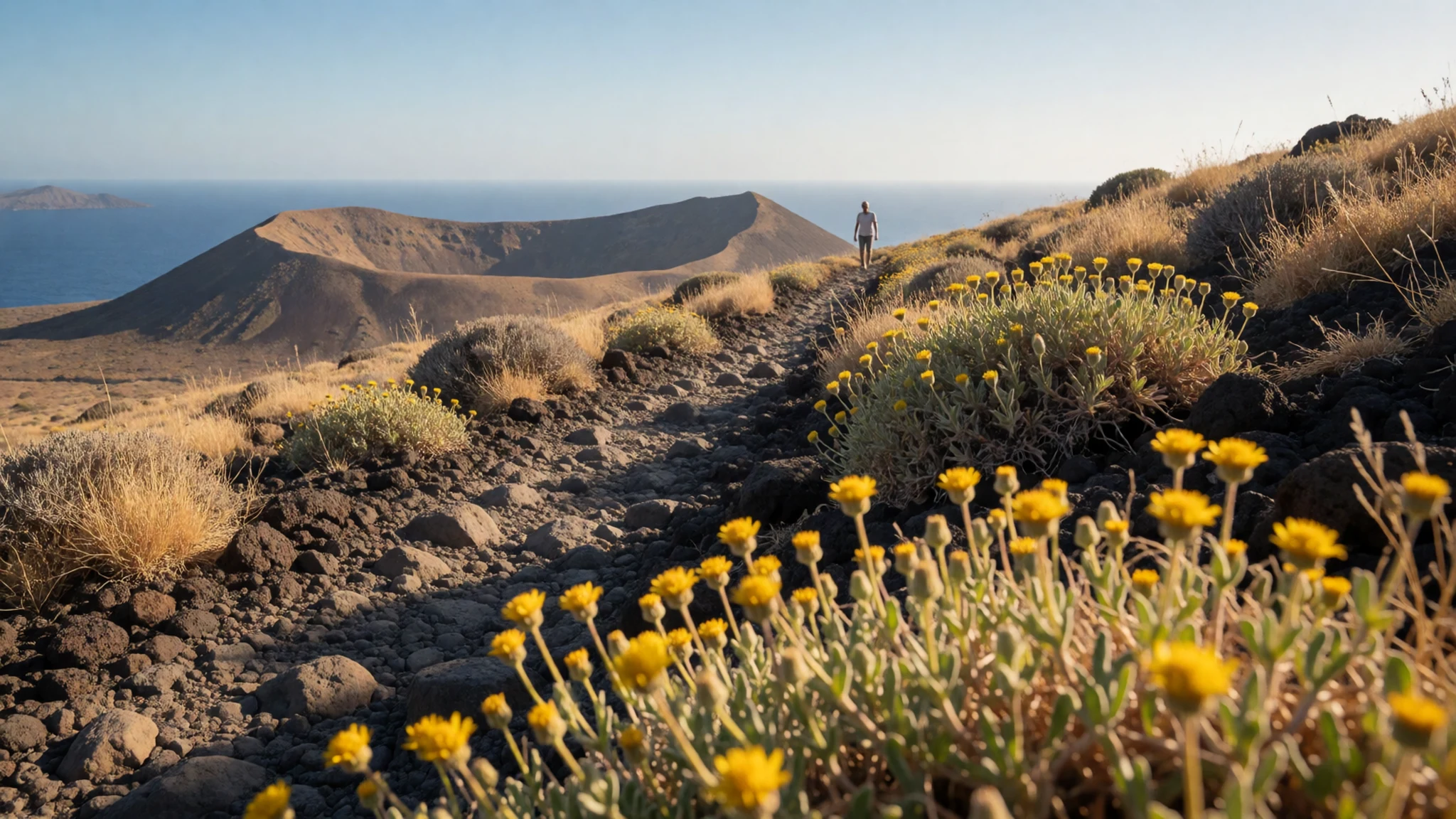
- Cala Pozzolana di Ponente — Western coast
Linosa's best-known beach has dark volcanic sand and clear, calm water. The black sand heats up fiercely at midday, so bring sandals, and expect a quiet shore rather than loungers and bars.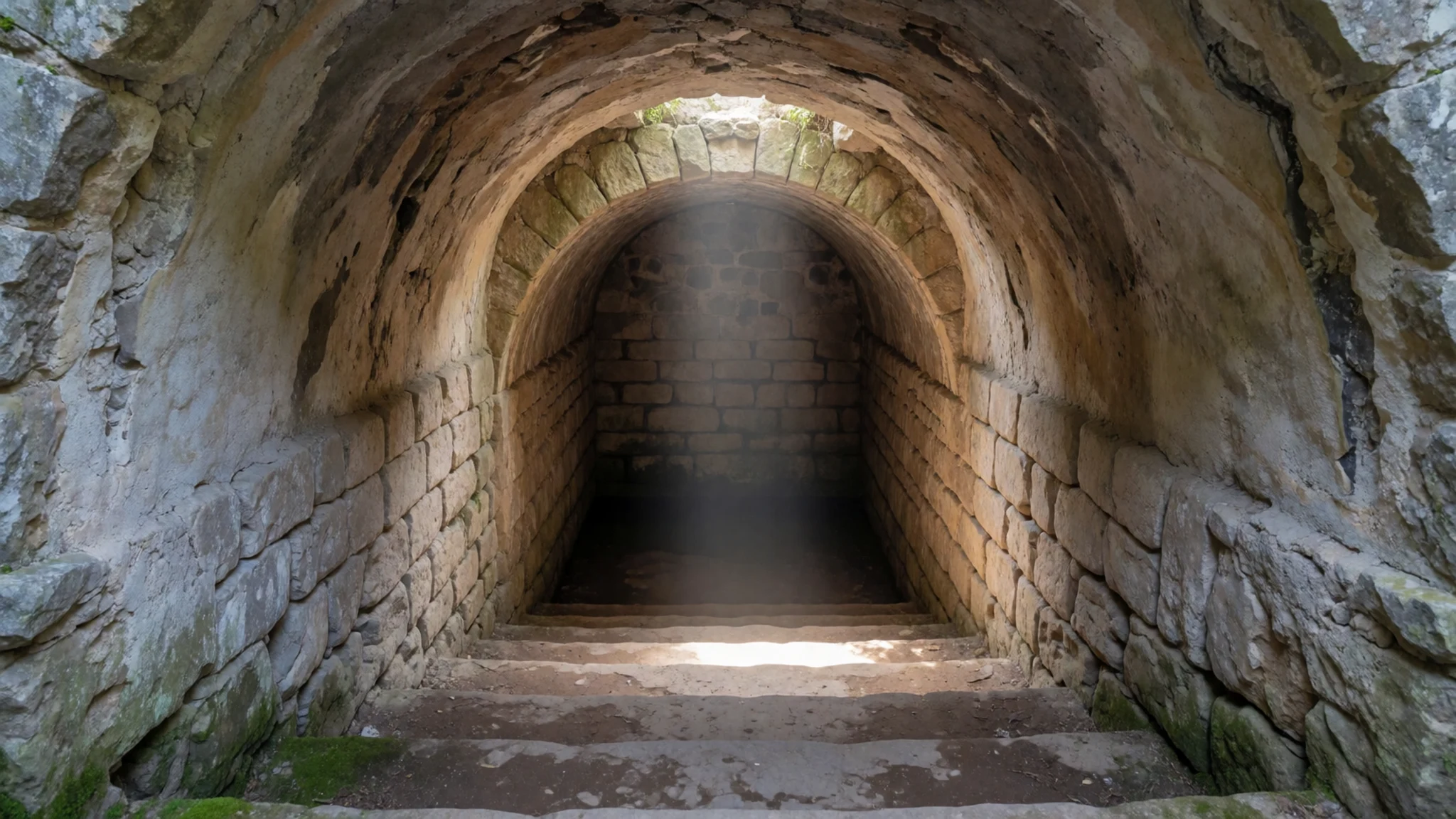
- Roman cisterns — Around the island
More than 150 cisterns built by the Romans to hold rainwater can still be found around the island, some more easily visible than others. They explain how anyone lived here at all, and make a good reason for a slow walk.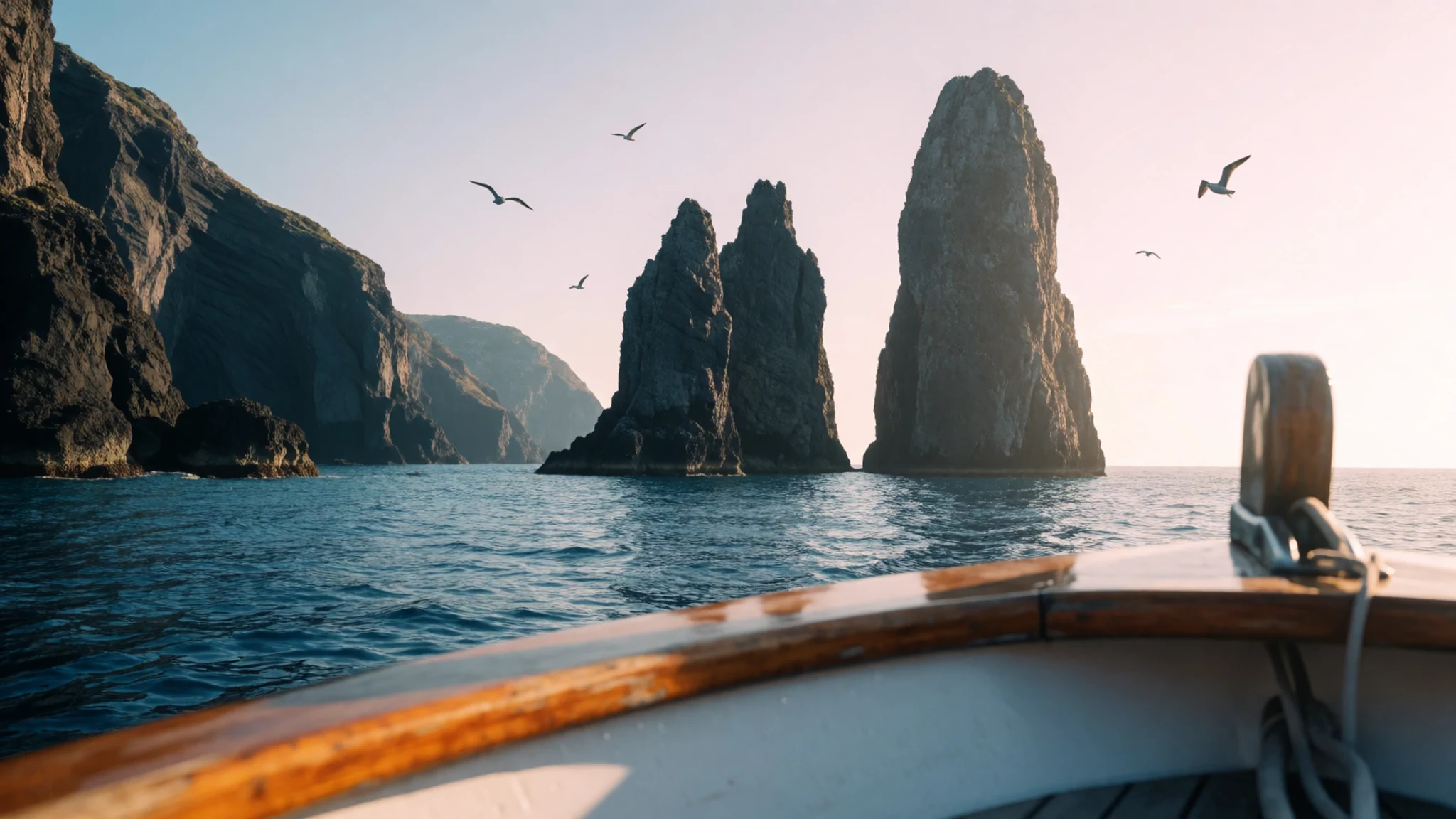
- Punta Paranzella — North-west coast
This rocky headland in the north-west gives open sea views, rugged cliffs and seabirds nesting on the volcanic slopes. It is a peaceful place for a walk or photographs, and best away from the midday heat.
Culture
Linosa's culture is that of a small, close community that arrived only in the nineteenth century. The first settlers came from Ustica, Agrigento and Pantelleria, so island life blends Sicilian traditions with the habits of people who had to make a hard, dry place work. Farming and fishing shaped the calendar, and in the village everyone seems to know everyone.
The pace is slow. Shops and eateries keep their own hours, the afternoon is quiet, and evenings gather around the harbour and the small square. Conversation is in Italian and Sicilian, and a few words of Italian go a long way with hosts who run guesthouses and trattorias by themselves.
Art has a modest presence too. A modernist monument to the island's fallen by the sculptor Pietro Consagra stands near the port, and a contemporary sculpture called Opera Mater sits by the waterfront, a reminder that even a tiny place has its public memory.
The island's fragile water and waste systems shape manners as well. Residents are used to conserving what they have, and a visitor who does the same is quietly appreciated.
Please use water sparingly, take all rubbish away from the beaches and coves, and greet people in the village with a friendly buongiorno before asking for anything.
What to wear
Linosa has no distinctive traditional costume or famous textile of its own. The settlers of the nineteenth century were farmers and artisans from other Sicilian islands, and their everyday working clothes were plain cotton, linen and wool, made for sun, wind and field work rather than display. Fishermen's caps and straw hats remain the nearest thing to a local look.
Today people on Linosa dress very simply. Residents wear shorts, T-shirts, light shirts and sandals in summer, with a fleece or windproof jacket for evenings and winter, when the wind off the channel can feel cold. Nobody dresses up, and the village is casual from morning to night, with swimwear fine on the beach but not on the village streets.
Visitors should pack for sun, sea and rough ground. Bring a wide-brimmed hat, sunglasses, light long sleeves for strong sun and a layer for breezy evenings, plus a lightweight rain jacket outside summer. For the black lava coves and the climb up Monte Vulcano, sturdy sandals or trainers with a good grip are better than flip-flops, and water shoes help on rocky entries. The island's small church is the one place to cover shoulders and knees. Otherwise, modest casual clothing is entirely at home here.
What to eat
- Fresh grilled fish — Family-run trattorias in the village
Fish caught around the island is the natural choice, usually simply grilled or baked with olive oil, lemon and herbs. Ask what came in that morning rather than choosing from a fixed list.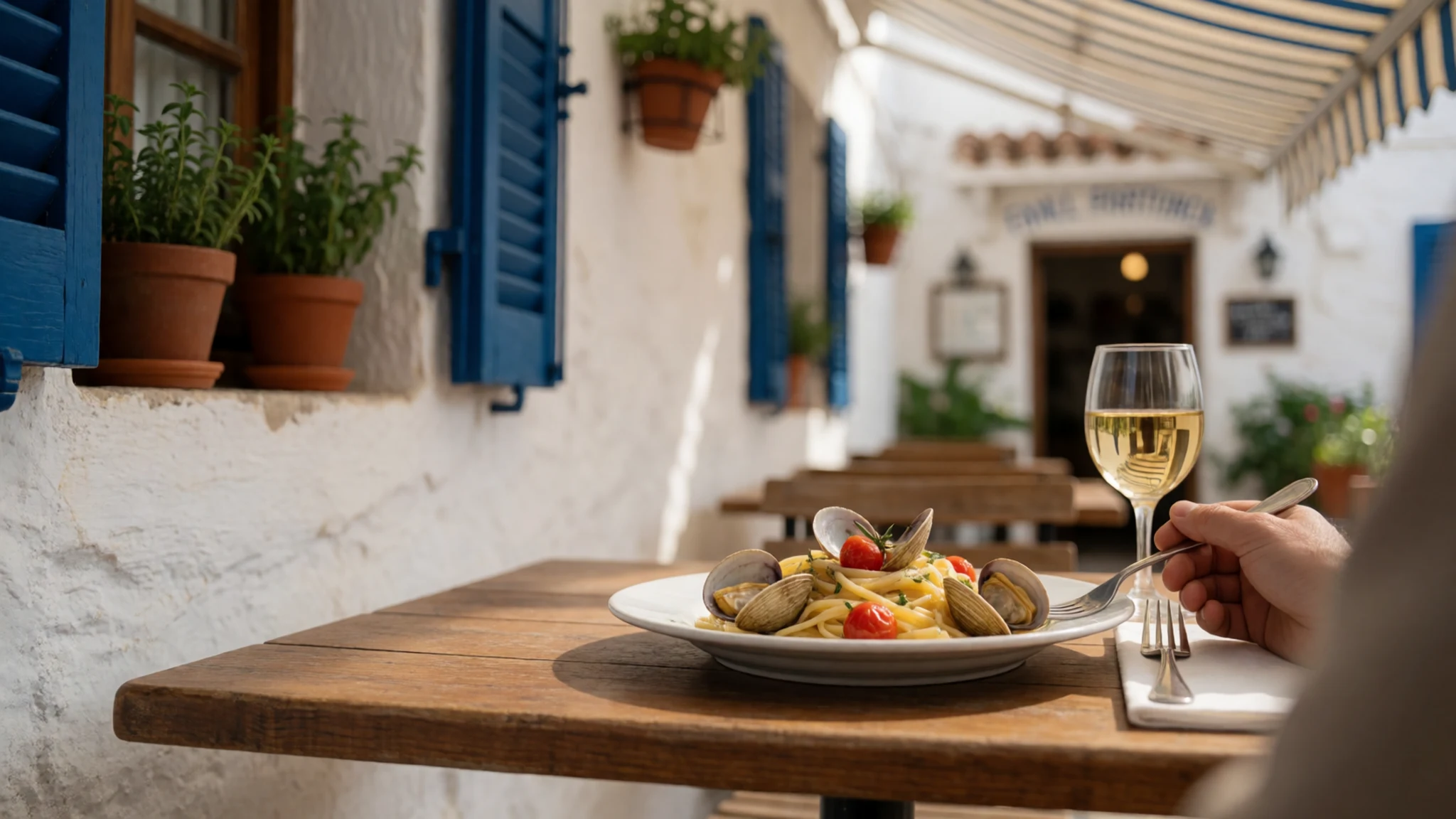
- Pasta with seafood — Village trattorias near the port
Pasta dressed with local seafood, often with tomato, garlic and parsley, is a staple of Sicilian island kitchens. Portions are generous and flavours are straightforward, which suits eating after a day on the water.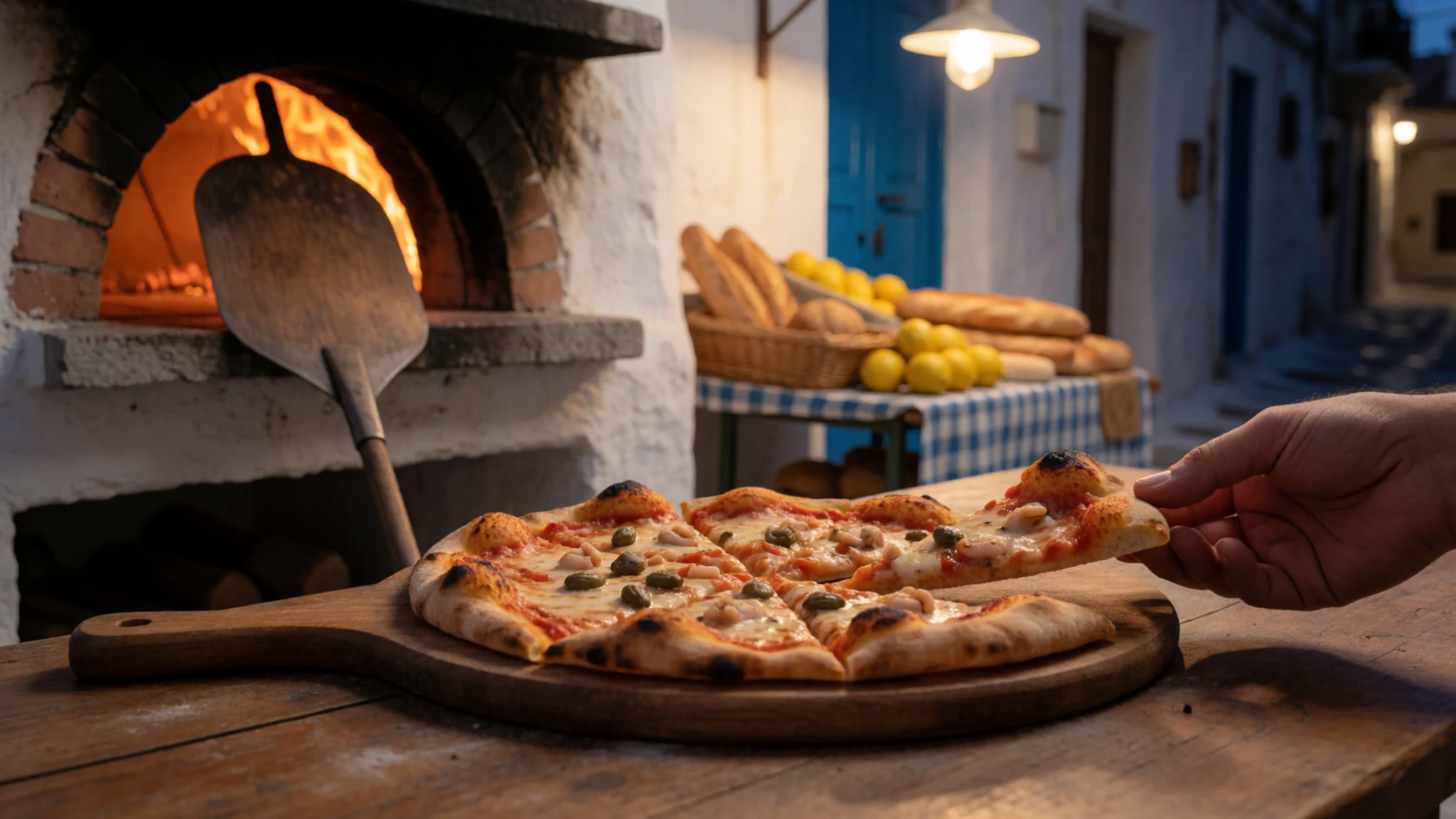
- Pizza — Pizzerias in the village
A few village pizzerias bake simple pizzas, a reliable and relaxed evening meal when you want something easy. Toppings lean on tomato, cheese and local produce, and the atmosphere is informal and family-run. - Local vegetables and produce — Village eateries and guesthouse tables
Small farms on the volcanic soil supply vegetables, and home-style Sicilian cooking relies on them, from tomato salads to stewed vegetables. Expect simple dishes made with what is in season on the island. - Local wine and aperitifs — Village bars and beach kiosks
Wine and light aperitifs are served at relaxed bars and beach kiosks, often with small snacks. It is an easy way to end a day, watching the harbour light fade over the village. - Coffee and a pastry — Cafés around the port and village square
Mornings start at a low-key café with coffee, often standing at the counter in the Italian way, with a simple pastry. Cafés are small and few, so it is a good place to hear village talk.
Plan it
Best time. May–June and September–October, when the sea is warm enough for swimming and the heat is gentler. July and August are the busiest and hottest months, and booking ahead matters then. Winter can be windy, and rough seas sometimes disrupt boats.
How long. 2–4
Getting there. Linosa has no airport. Fly to Lampedusa or Sicily, then take the hydrofoil from Lampedusa (about 45 minutes) or the ferry from Porto Empedocle near Agrigento, usually overnight. Check current timetables with the operators, as sea conditions can change sailings.
Budget. mid
Tips
- Book guesthouses or rentals well ahead for summer, as there are no hotels
- Bring cash, as there are no banks on the island
- Pack sunscreen and mosquito repellent
- Allow spare days around your return, since rough seas can cancel boats
- Wear sturdy footwear for lava rock and the Monte Vulcano climb
Etiquette
- Take all rubbish away from beaches and coves
- Use water sparingly, as supplies depend on desalination
- Greet people in the village politely and keep noise down at night
Nearby
Sources
- Wikidata Q497321 (CC0)
- Wikipedia: Linosa (CC BY-SA 4.0)
- Wikivoyage: Linosa (CC BY-SA 4.0)
- Linosa (michele rossi) (CC BY 2.5)
- linosa_2 (Sicilia!) (CC BY 2.5)
- View of the village of Linosa (Laurom) (CC BY 3.0)
- Linosa (Giulia Raciti) (CC BY 2.5)
- Apollo-Soyuz Test Project photo (NASA) (Public domain)
- Linosa (_topo_) (CC BY 2.5)
- Faraglioni panoramic photo (LFM2182) (CC BY-SA 4.0)
- Aerial (Jose A.) (CC BY 2.5)


