Lake Khuvsgul
Lake Khuvsgul, Mongolia
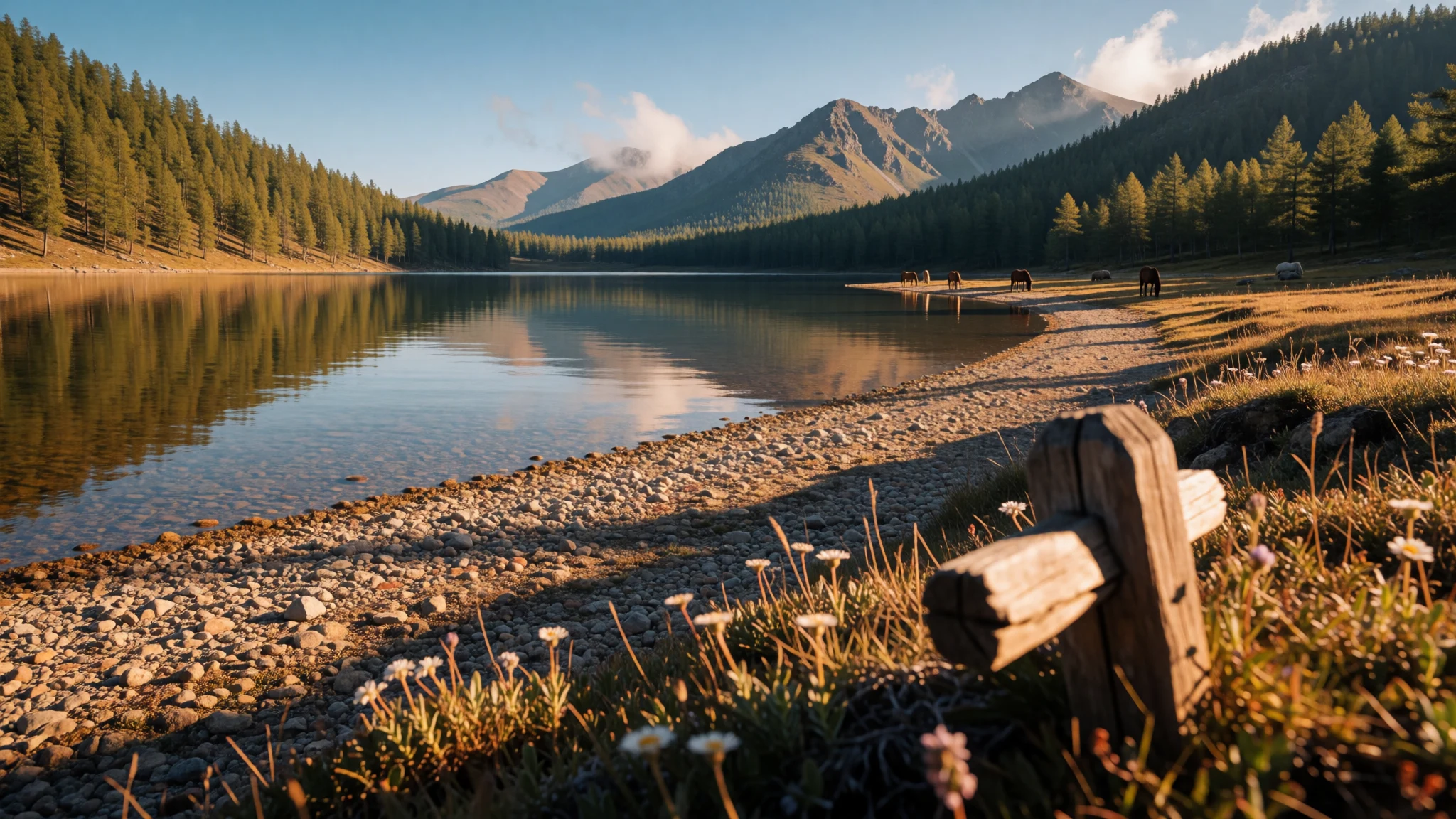
Lake Khövsgöl is Mongolia's Mother Sea: a vast, cold, forest-rimmed lake near the Russian border, best explored on horseback and by boat.
The place
Lake Khövsgöl (Хөвсгөл нуур) lies in the far north-west of Mongolia, close to the Russian border, at 1,645 metres above sea level. Mountains of the eastern Sayan range close in around it, and the land to the north shades into Siberian taiga, where the Siberian larch is the tree that defines the forest. Mongolians call the lake Dalai eej, Mother Sea, and the name suits the scale. It runs about 136 km from one end to the other and reaches 262 m deep. By volume it is the biggest freshwater lake in the country, and it holds roughly 70% of Mongolia's fresh water. The basin is a rift, so in places the shore drops away steeply instead of shelving gently. The small town of Hatgal at the southern tip is where most journeys arrive, with canteens, guesthouses and onward transport to the camps strung along the shore. Beyond the camps there is little built: larch forest, open meadow, horses, yaks and cows grazing near the water, and very few proper roads. The lake sits in a permafrost zone, so swimming is rarely attempted without specialist gear. Summers are short and bright, with cold evenings. In winter the whole surface freezes solid and the region goes very quiet, and most camps close.
Its story
Lake Khövsgöl has a story built around water that keeps moving. Its catchment is small and the streams feeding it are minor, yet the lake drains at its southern end into the Egiin Gol. That river joins the Selenge, which eventually reaches Lake Baikal in Russia. The water winds more than 1,000 km to cross a straight-line gap of only about 200 km, dropping a long way on the journey. The lake also marks a boundary of sorts. This is where Siberian forest meets the steppe country to the south, and the north-west corner of Mongolia feels closer to Siberia than to the Gobi. For generations the frozen surface worked as a winter highway, and trucks took shortcuts across the ice. Several broke through, and with the risk of fuel leaking into the water the practice is now banned. A rounded island called Wooden Boy sits in the middle of the lake. Further north and west, near Tsagaannuur, reindeer-herding families live in the taiga, and their animals are among the few reasons visitors head so far from the shore. Tourism here is seasonal and fairly small. Camps appear for the summer, a few flights run only in high season, and the lake still feels more like a pasture than a resort.
What to see
- Hatgal and the southern shore — Southern end of the lake
Hatgal is the gateway town at the lake's southern end and the usual place to arrive, stock up and arrange rides. It is a plain, working settlement rather than a pretty one, but the first view of the water from its edge is a good introduction. Boats and horses can be organised here.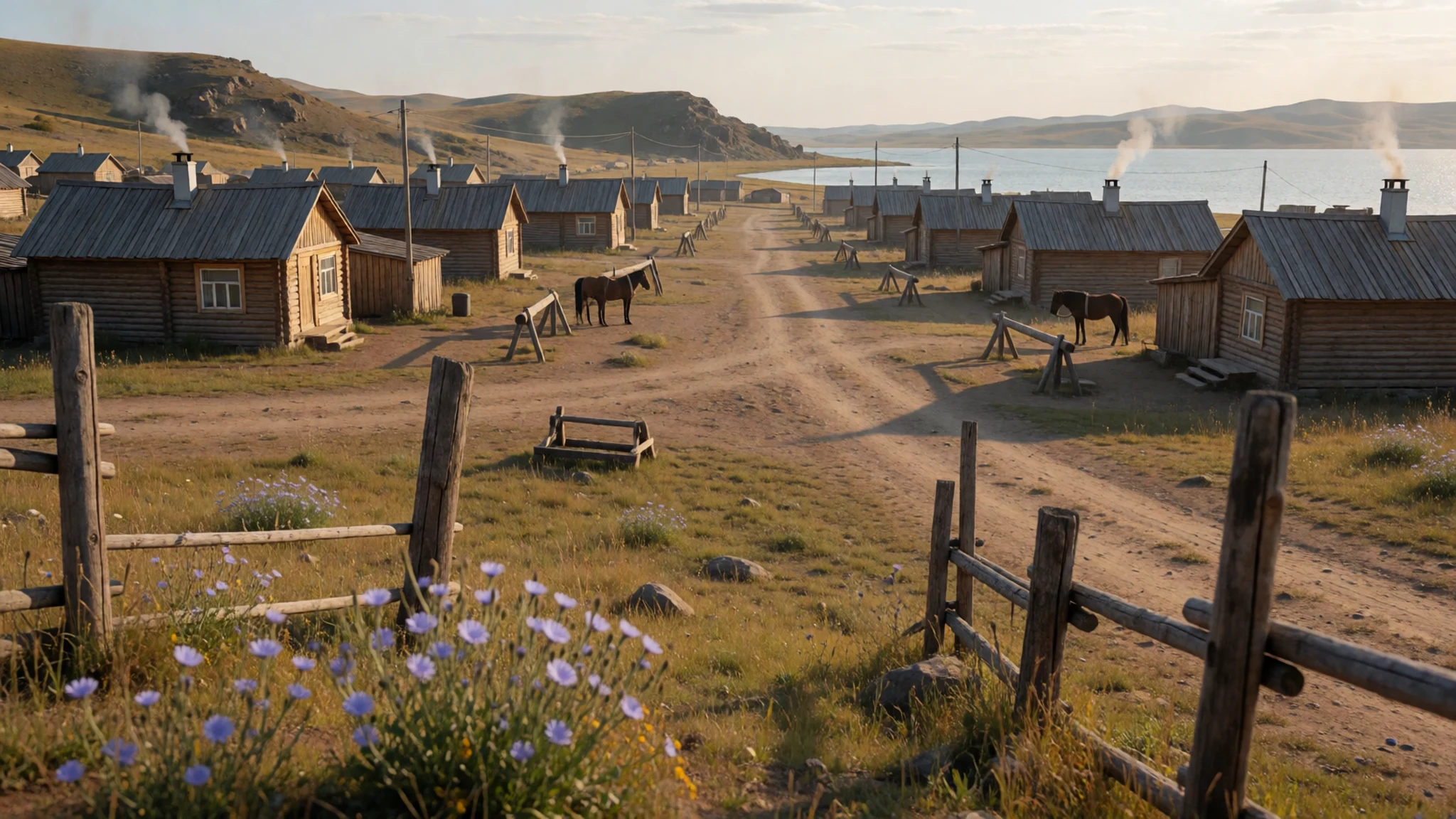
- Ger camps on the western shore — Western shore
Most visitors sleep in tourist camps of traditional felt tents set among larch and meadow on the shore. Many offer boat trips to nearby beaches and islands, and horse or yak rides by the hour. Staff at most camps speak some English, which makes arranging days out easy.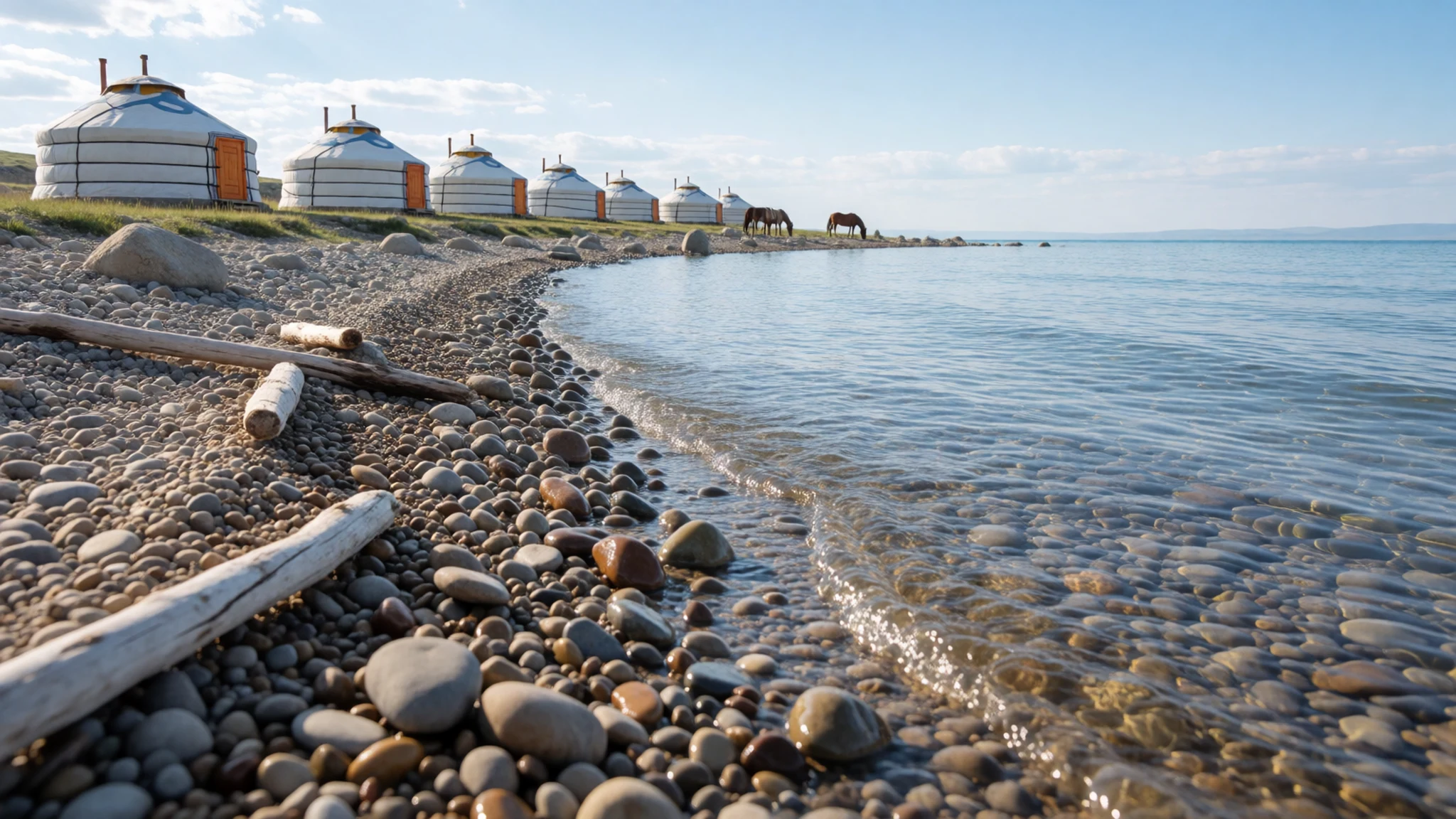
- Horse and hiking trails through the forest — Hills around the lake
Forest surrounds almost the whole lake, which makes riding or walking the natural way to see it. Trails climb from the shore to ridges where the whole lake opens out beneath the mountains. Multi-day horse treks are a popular choice, though the ground can be boggy and the weather changes quickly.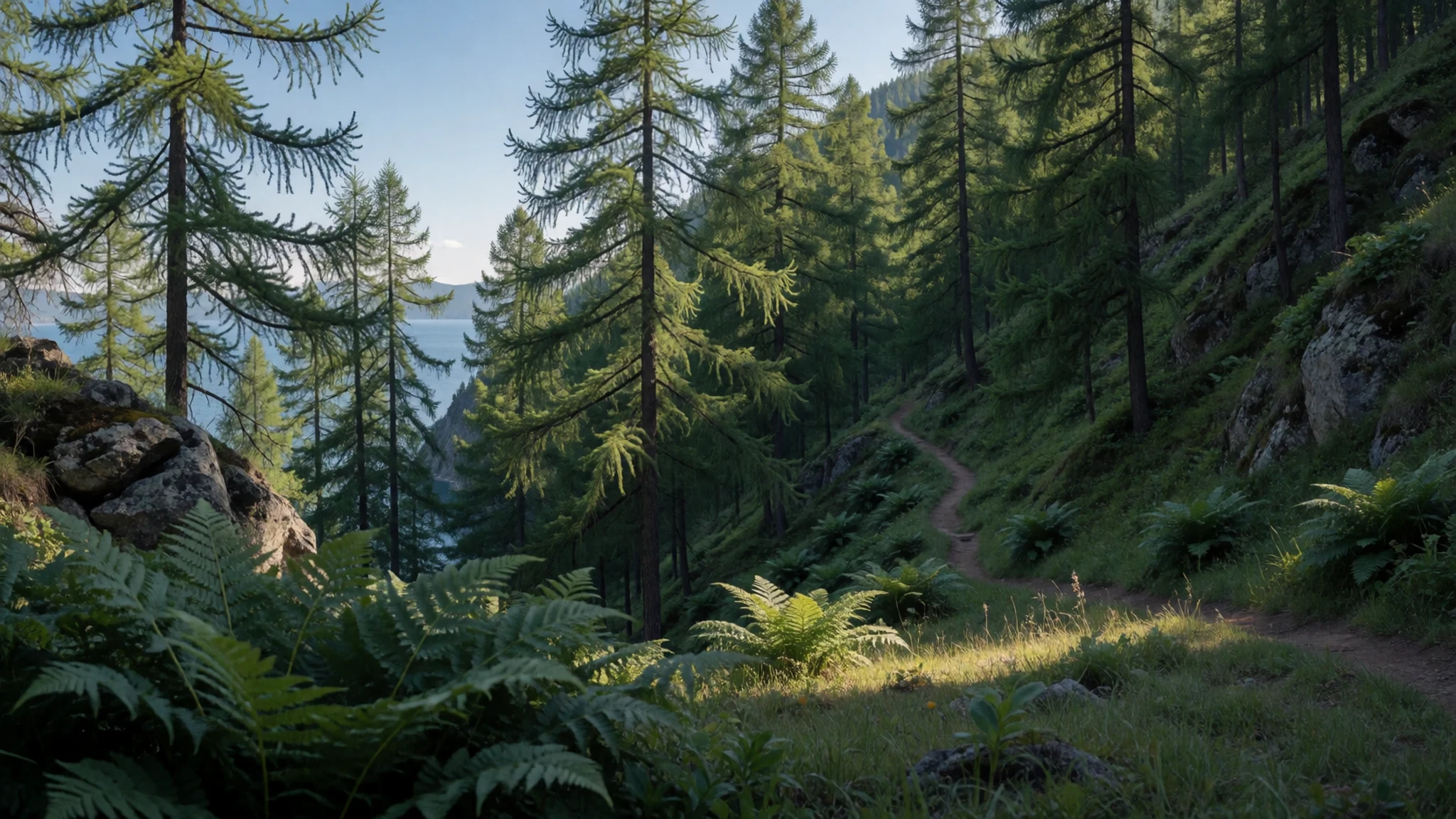
- Wooden Boy Island — Middle of the lake
Wooden Boy Island is a roughly oval patch of land out in open water, reached by boat from a camp rather than by any road. A trip across gives a sense of how big the lake is, and the water, forest and distant ranges all show clearly from the middle.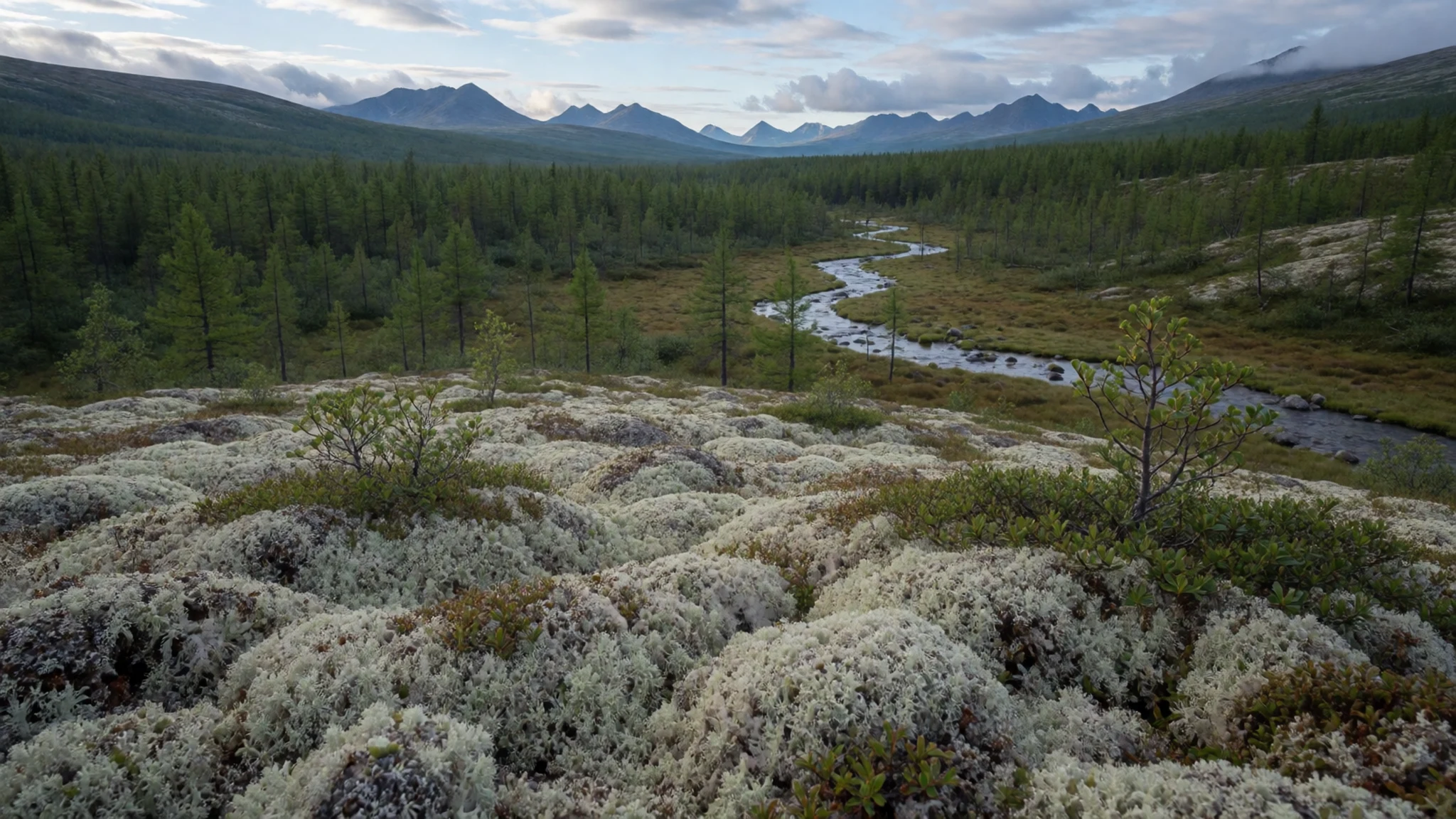
- Tsagaannuur and the reindeer herders — North-western taiga
Tsagaannuur is the settlement to head for to see reindeer, which are rare in Mongolia and not guaranteed on every visit. The journey is long and rough, and is best arranged through a camp or guide. Go for the landscape and the chance to meet herding families, not for a fixed attraction.
Culture
Lake Khövsgöl is herding country, and life around it follows the animals. Families move between seasonal pastures with horses, yaks and cows, living in the round felt tents called gers. The lake itself is treated with respect as Mother Sea, and local custom still discourages polluting or carelessly disturbing the water. Cairns of stones and cloth, known as ovoo, mark passes and high points. They are offerings to local spirits and reflect a mix of shamanic and Buddhist belief that runs through northern Mongolia. Hospitality is central. A passing visitor to a herder's ger is normally offered salted milk tea and dairy products, and the offer is a courtesy, not a transaction. Mongolians also take pride in fermented mare's milk, airag, which is sold by local stands in the warm months. In the northern forests, the Tsaatan reindeer herders keep a distinctive way of life, and their communities are small and easily overwhelmed by visitors. Many people along the shore work in tourism now, running camps, guiding riders and driving the long tracks, but the rhythm of the herding year still sets the pace. Outside the camps, mobile signal is patchy and distances are large, so plans that depend on tight schedules tend to loosen. When invited into a ger, do not step on the threshold, and accept any bowl offered to you with your right hand or both hands.
What to wear
Traditional dress around Lake Khövsgöl centres on the deel, a long wrapped coat that fastens at the side and is held with a wide sash. Summer versions are cotton or silk, often in deep blue, green or burgundy, while winter deels are lined or made of sheepskin and wool and are warm enough for herding in hard frost. Soft leather boots with upturned toes and felt or fur hats complete the outfit. Deels are worn daily by many herders and appear in bright, formal versions at festivals and family occasions. Day to day, most people in Hatgal and the camps wear practical modern clothes: jeans, fleeces, waterproof jackets and rubber or leather boots, with a deel over the top when the weather or occasion calls for it. Visitors should dress for a mountain climate, not a beach. Pack layers, because mornings and evenings are cold even in summer, plus a waterproof shell, a warm hat and a sun hat. Sturdy, broken-in boots suit forest trails and damp meadows, and long trousers help against insects and brush. There is no strict modesty code at the lake, but covered shoulders and knees are a courtesy at an ovoo, in someone's home or at any temple or monastery on the road in.
What to eat
- Airag (fermented mare's milk) — Local stands in the warm months, around Hatgal and along the roads
Airag is lightly sour, fizzy and mildly alcoholic, and it is the drink most associated with the Mongolian summer. It is sold from roadside stands and herders' tents from June to October, and gets stronger in autumn. Try a small bowl first; the taste surprises many.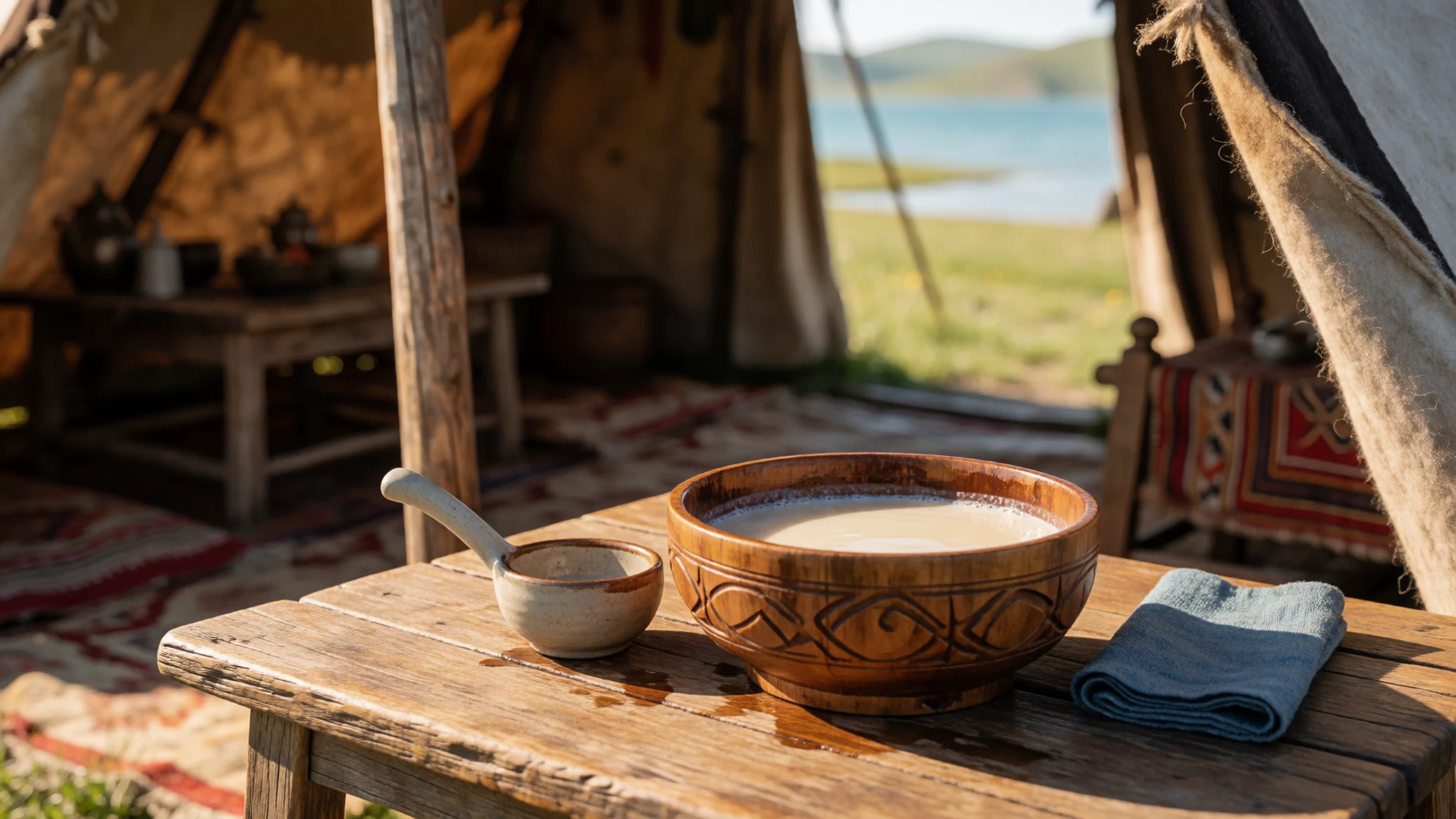
- Khuushuur — Small canteens in Hatgal
Khuushuur are flat, fried pastries filled with minced mutton or beef, crisp at the edges and juicy inside. They make a filling stop on the long road and are one of the most reliable dishes in simple eateries.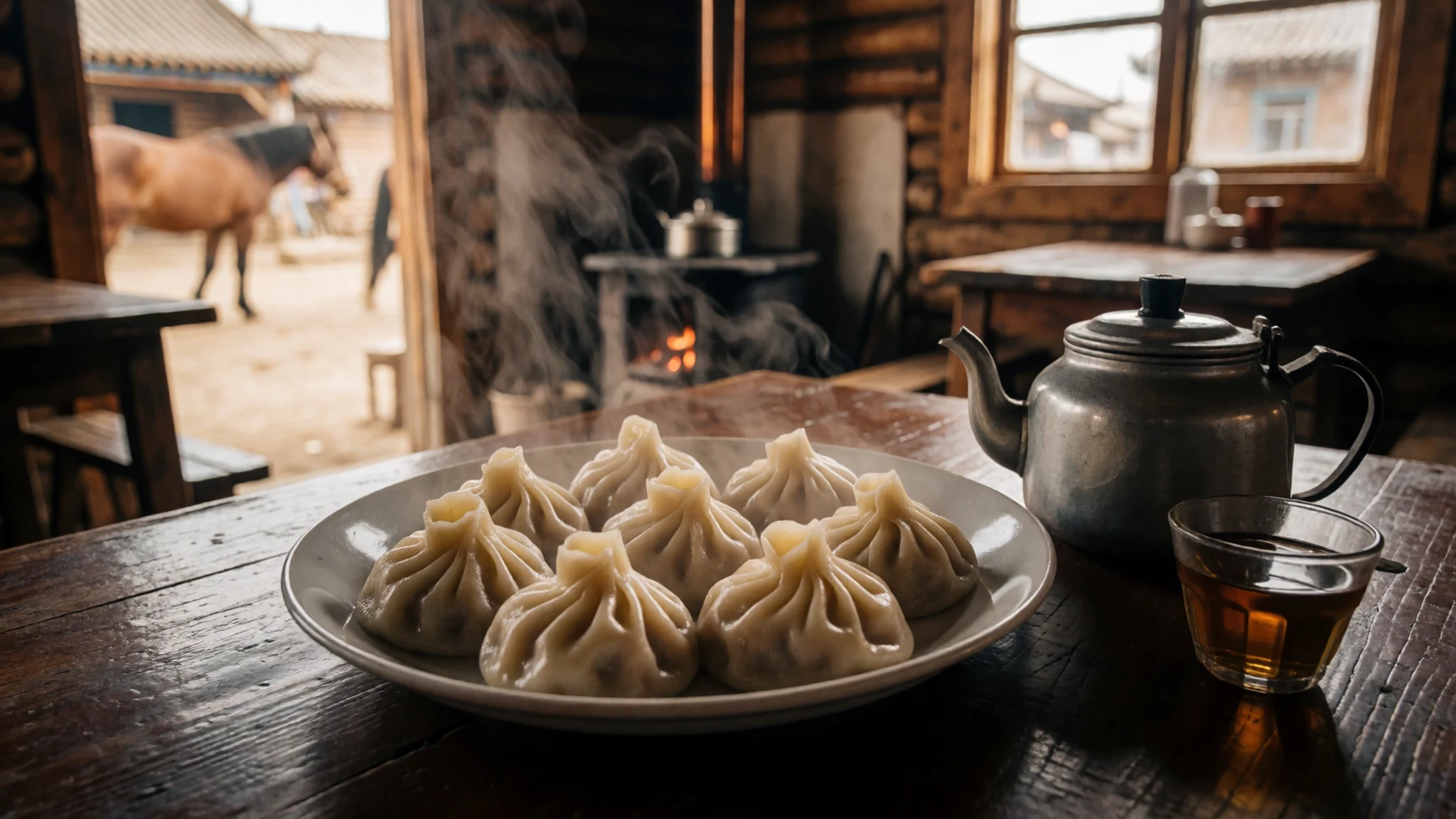
- Buuz — Canteens in Hatgal and ger camp kitchens
Buuz are steamed dumplings with a meat filling, traditionally eaten in quantity around festivals and family gatherings. They are plain and hearty, with little spice, and come with salty tea or a dab of sauce if available. - Tsuivan — Canteens in Hatgal and camp dining tents
Tsuivan is a one-pan dish of hand-cut noodles steamed or stir-fried with meat and a few vegetables such as carrot and onion. It is the sort of everyday meal a herding household would serve, and it suits cold, active days outdoors. - Suutei tsai (salted milk tea) — Herders' gers and every camp
Suutei tsai is tea simmered with milk and salt, savoury, warming and offered almost everywhere. It tastes odd at first but grows on most drinkers, especially after a cold morning ride. Refusing it outright can seem curt, so take at least a sip.
Plan it
Best time. June to September, when the lake is ice-free, camps are open and flights and roads are most dependable. July and August are warmest and busiest; September is quieter, with cold nights and stronger airag. In winter the lake freezes completely and most tourist services shut.
How long. 3–5
Getting there. Fly to Ulaanbaatar, then take a domestic flight to Mörön, the provincial capital, which runs year round. From Mörön, shared or private cars cover the last leg to Hatgal on the southern shore, and the road time varies with the vehicle and conditions. A direct small-plane service from Ulaanbaatar to Hatgal runs only in the peak summer season and has not operated every year. A daily long-distance bus from Ulaanbaatar to Hatgal takes most of a day. Check current schedules with the airlines.
Budget. mid
Tips
- Book flights and camps well ahead for July and August, and confirm the Hatgal flight is actually running.
- Carry cash, as cards and mobile signal are unreliable away from Hatgal.
- Bring warm layers and a waterproof jacket even in midsummer, as evenings are cold and showers are common.
- Treat or boil water unless the camp confirms its supply is safe.
- Allow slack in the itinerary, because long distances and rough tracks make delays likely.
Etiquette
- Ask before photographing herding families or the Tsaatan, and do not hand out money or sweets to children.
- Take rubbish away with you and keep soap and fuel well clear of the shore.
- Do not step on the threshold of a ger, and accept offered tea or food politely.
Nearby
Sources
- Wikidata Q192215 (CC0)
- Wikipedia: Lake Khövsgöl (rev 1385214483) (CC BY-SA 4.0)
- Wikivoyage: Lake Khövsgöl (rev 5320167) (CC BY-SA 4.0)
- Photo: View of Earth taken during ISS Expedition 67 (Public domain)
- Photo: Relief map of Mongolia (NordNordWest / Виктор_В) (CC BY 3.0)
- Photo: Rainy clouds over Lake Khövsgöl (Bgelo777) (CC BY-SA 4.0)
- Photo: Panoramic view of Lake Khövsgöl (Zoharby) (CC BY 3.0)
- Photo: Alag Tsar Tourist Camp (Bernard Gagnon) (CC0 1.0)
- Photo: View across Hovsgol Nuur (Yaan) (CC BY 3.0)
- Photo: Clouds over Hovsgol II (lamoix) (CC BY 2.5)
- Photo: Hatgal 2006 (yaan) (CC BY 3.0)


