La Désirade
La Désirade, France
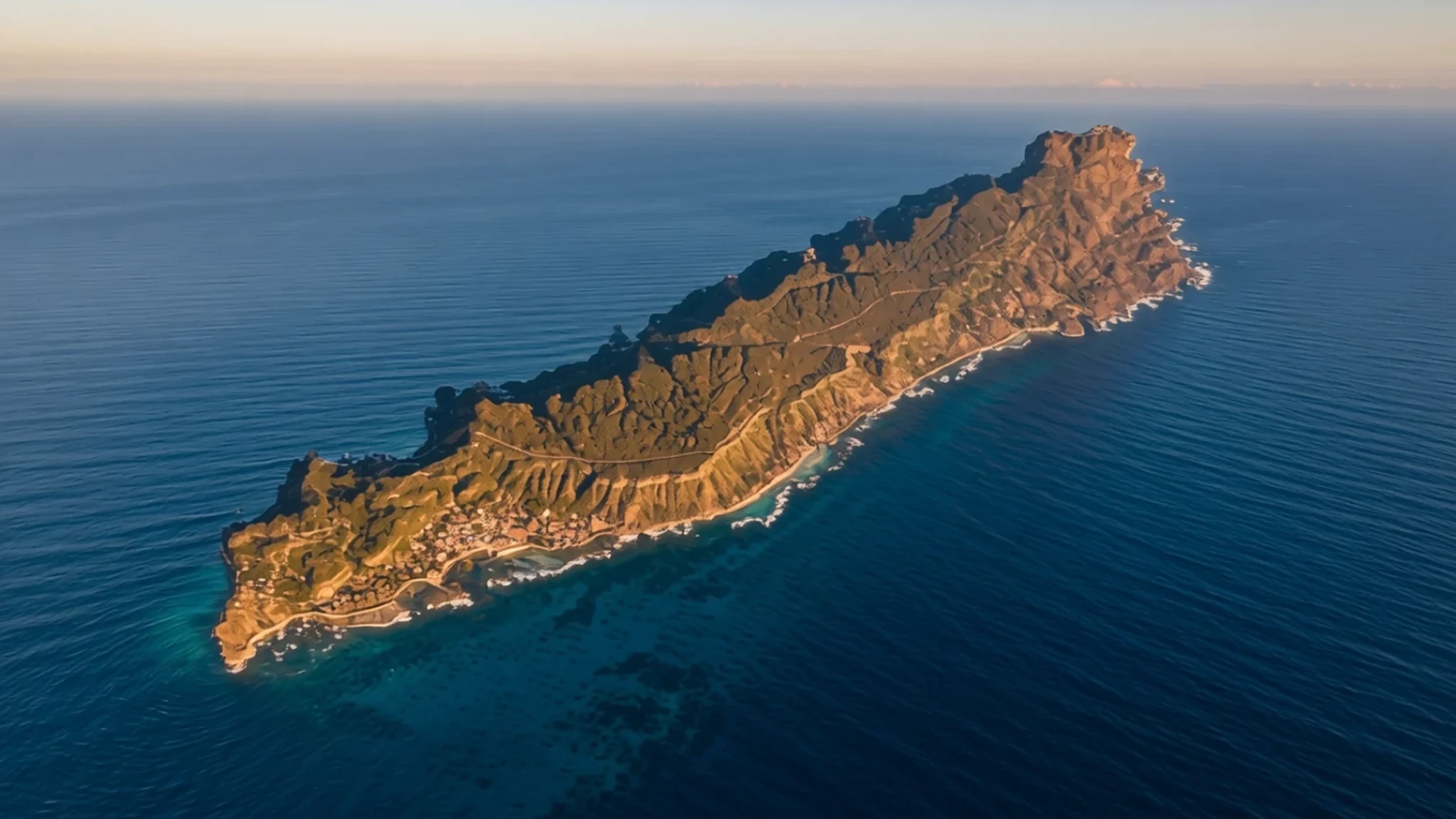
La Désirade is a dry, windy island of goats, iguanas and a long south-coast beach, a short ferry ride from Grande-Terre.
The place
La Désirade is a small limestone island in the Guadeloupe archipelago, a French overseas department in the Lesser Antilles. From the ferry it reads as a long, pale ridge: a dry plateau above, a thin coast below, and the greener bulk of Grande-Terre falling away to the west. The commune also includes the uninhabited islets of Petite Terre, a nature reserve of shallow water, scrub and nesting seabirds lying about seven miles off the island. Most people live in Beauséjour, the principal village, where the church, the town hall and the ferry quay stand close together. Houses are low and painted in strong colours. The plateau behind them stays open and stony. La Désirade sits in the trade winds and takes much less rain than Basse-Terre, the high volcanic half of Guadeloupe, so the vegetation is scrub, cactus and grass rather than forest. Goats graze that scrub. The Lesser Antillean iguana, paler about the head than the green iguanas common elsewhere in the region, still holds on here and on Petite Terre. The shore changes along its length. Grande-Anse is the long sandy beach of the south coast. Farther east the limestone turns rugged: at Le Souffleur the swell drives spray through a hole in the rock, and Pointe Doublé carries a lighthouse facing the open Atlantic. Anse des Galets is a beach of stones, as its name suggests. Fishing boats, a few small lodgings and the ferry from Saint-François are what the island runs on. After the last boat the village goes quiet, the wind keeps up, and the eastern horizon is empty sea. La Désirade is a parish of fishers and herders that happens to have a wide, windy coast.
Its story
La Désirade entered written European history under a Spanish name. On his second crossing of the Atlantic, Christopher Columbus sighted this island and called it Deseada, the desired land. French usage made that La Désirade and kept the sense of arrival. The island was later tied to Guadeloupe, useful for cotton and goats and, in a darker role, as a place to send people the colony preferred to keep away. For a long stretch of its history La Désirade held a lazaret. People with leprosy were sent from Guadeloupe to live apart, with a chapel, a cemetery and rules that enforced the separation. Exile and stigma outlasted the colony itself. Ruins and graves remain. They record a real banishment, and they are not a curiosity. An account of La Désirade that skips them leaves out the hard half of the place. In Beauséjour a bust of Victor Schœlcher stands before the mairie. Delgrès led resistance in Guadeloupe when France moved to restore slavery, and chose death over surrender. His last fight was not here. The bust still ties this fishing commune to the abolition that ended slavery in the French colonies. Cotton faded. Fishing, herds and the ferry stayed. Visitors arrived late, mostly for the day or for a few rooms, and did not replace the parish. People speak French and Guadeloupean Creole and keep the feast days of a Catholic island. La Désirade's story is a double reputation: the desired land of a famous crossing, and for generations afterwards a place of separation.
What to see
- Beauséjour — Beauséjour
Beauséjour is the village where La Désirade lives. The ferry docks here, and the town hall, the church and the small shops stand a short walk from the quay. Houses are low and brightly painted, with the dry plateau rising behind the roofs. The day turns on this harbour: boats in the morning, a quiet street after day-trippers leave for Grande-Terre, and goats at the edge of the houses.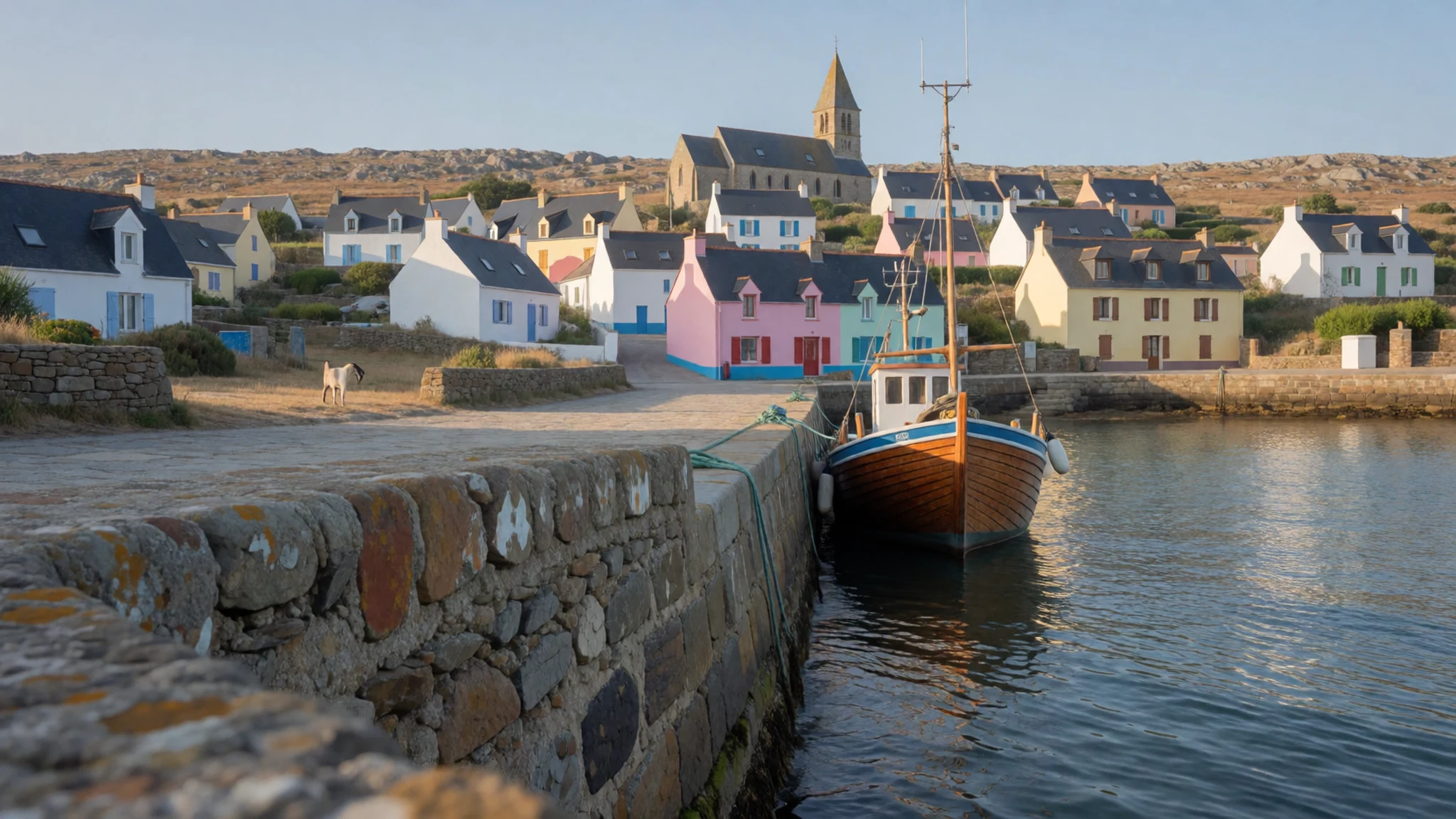
- Grande-Anse — south coast
Grande-Anse is the long beach on the south coast of La Désirade. Sand runs under the trade wind, with the plateau behind and open water in front, and the swimming is simplest here when the swell is modest. Shade is scarce, so the practical visit is a morning one. Fishers use the same shore, and the beach never feels like a resort front.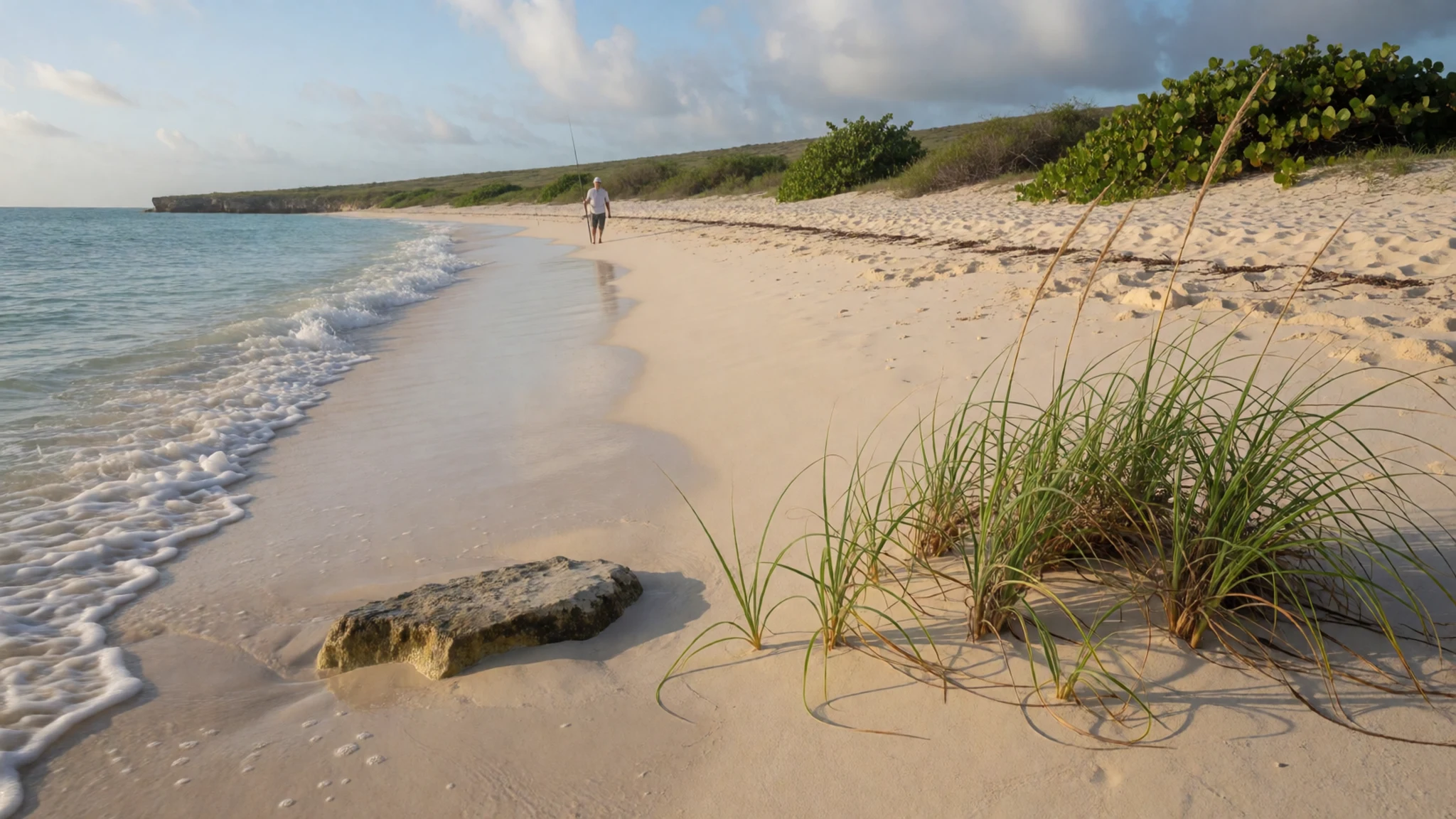
- Pointe Doublé lighthouse — eastern point
The lighthouse at Pointe Doublé marks the eastern end of La Désirade, where the plateau breaks into cliffs above the Atlantic. It is a plain working light, and the point around it is wind, rock and spray. Grande-Terre sits far off to the west; east of the tower the sea is empty. The path is exposed, and loose stone and strong sun make an early visit the comfortable one.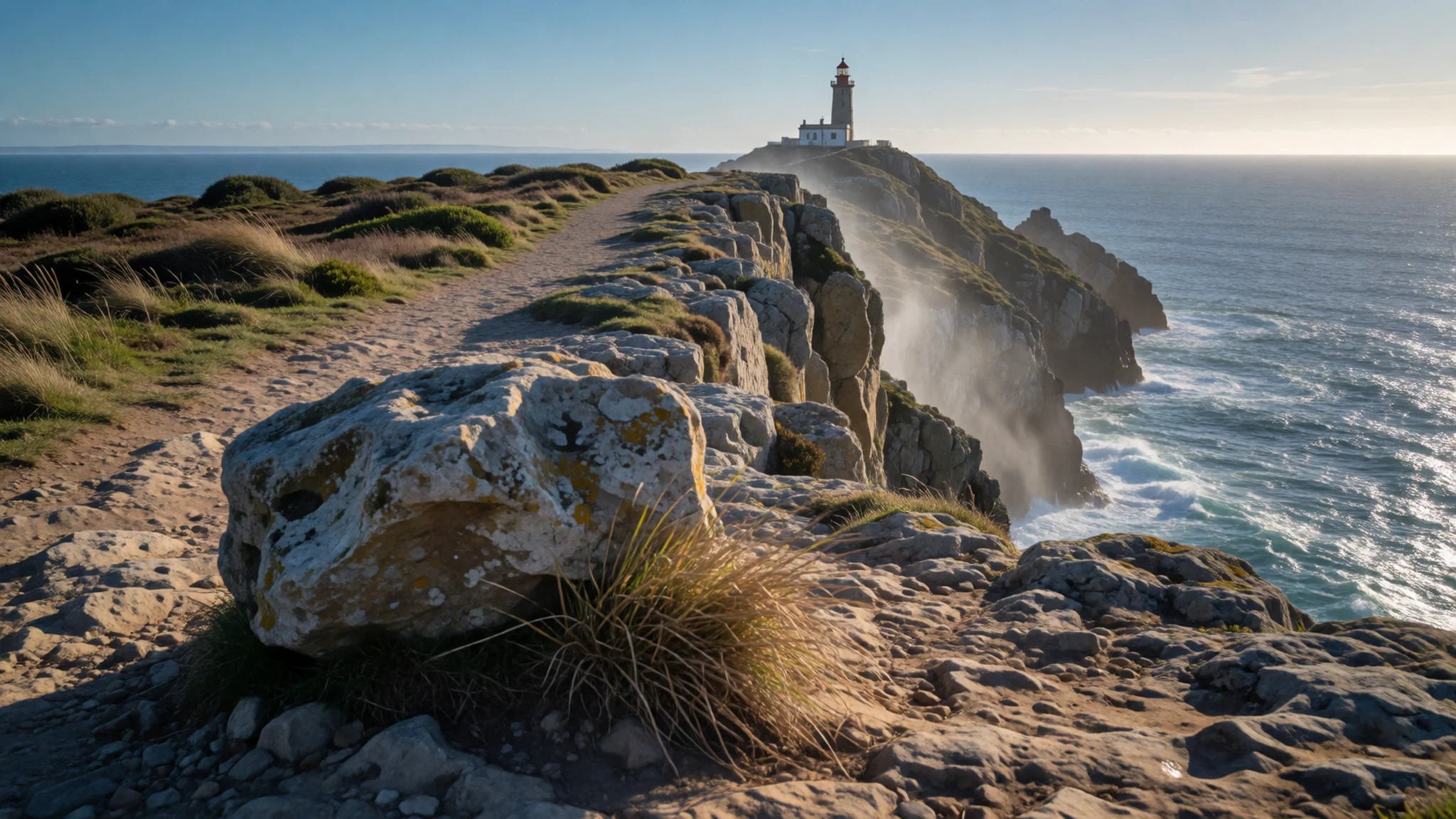
- Église Notre-Dame du Bon-Secours — Beauséjour
Église Notre-Dame du Bon-Secours is the parish church of La Désirade, in Beauséjour. Our Lady of Good Help is a fitting dedication for an island that lives by boats. The building is modest, a village landmark rather than a large shrine, and feast days are when it fills. On an ordinary morning it is a cool room a few steps from the quay.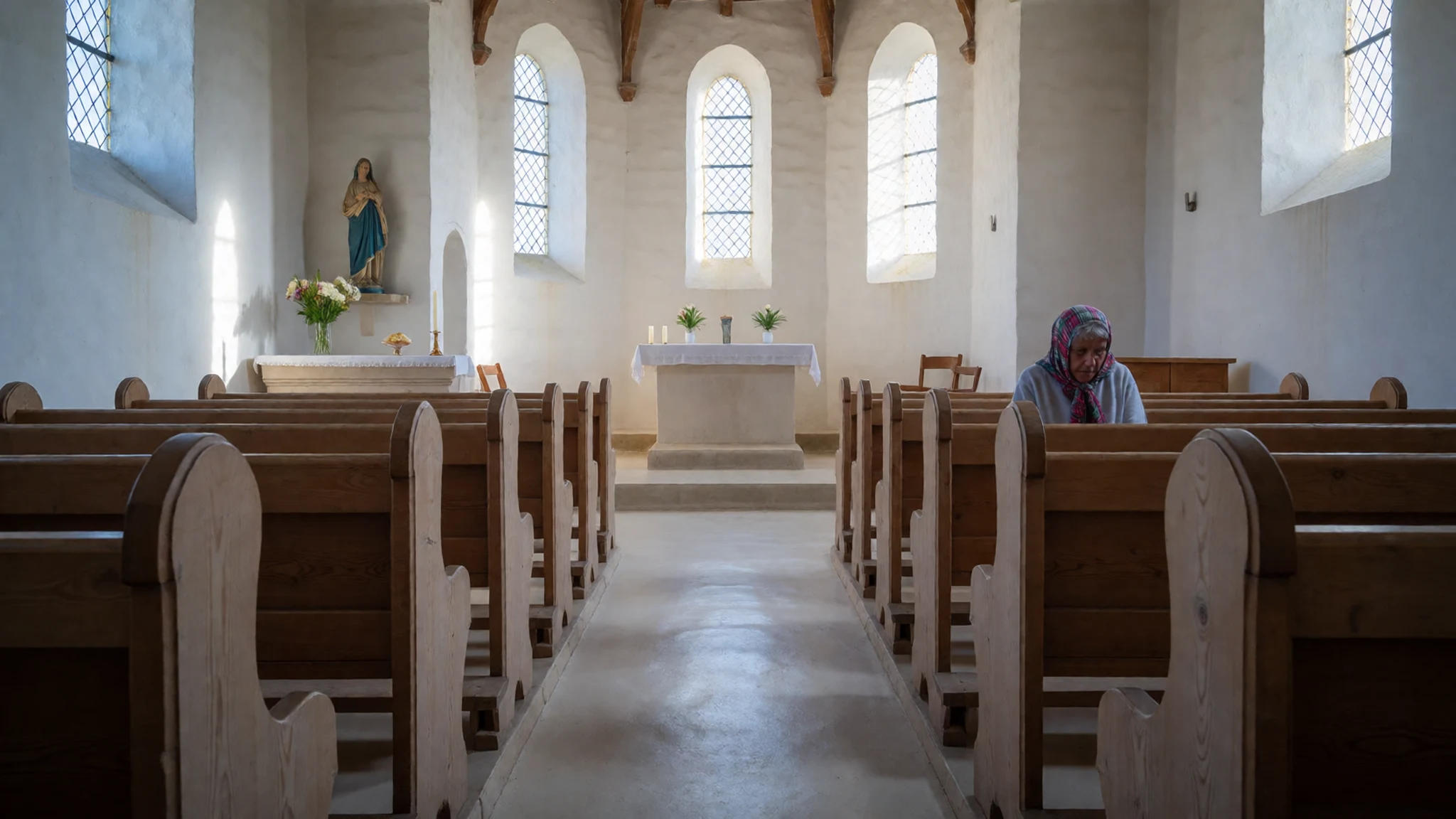
- Le Souffleur — eastern shore
Le Souffleur is a blowhole on the rocky eastern shore of La Désirade. Swell runs under the limestone and forces air and spray through a gap, loudest when the Atlantic is up. Nothing about it is arranged for visitors: no furniture, no formal viewpoint, just coast doing what coast does. Grip matters on the rock, and a high sea is a reason to stand well back.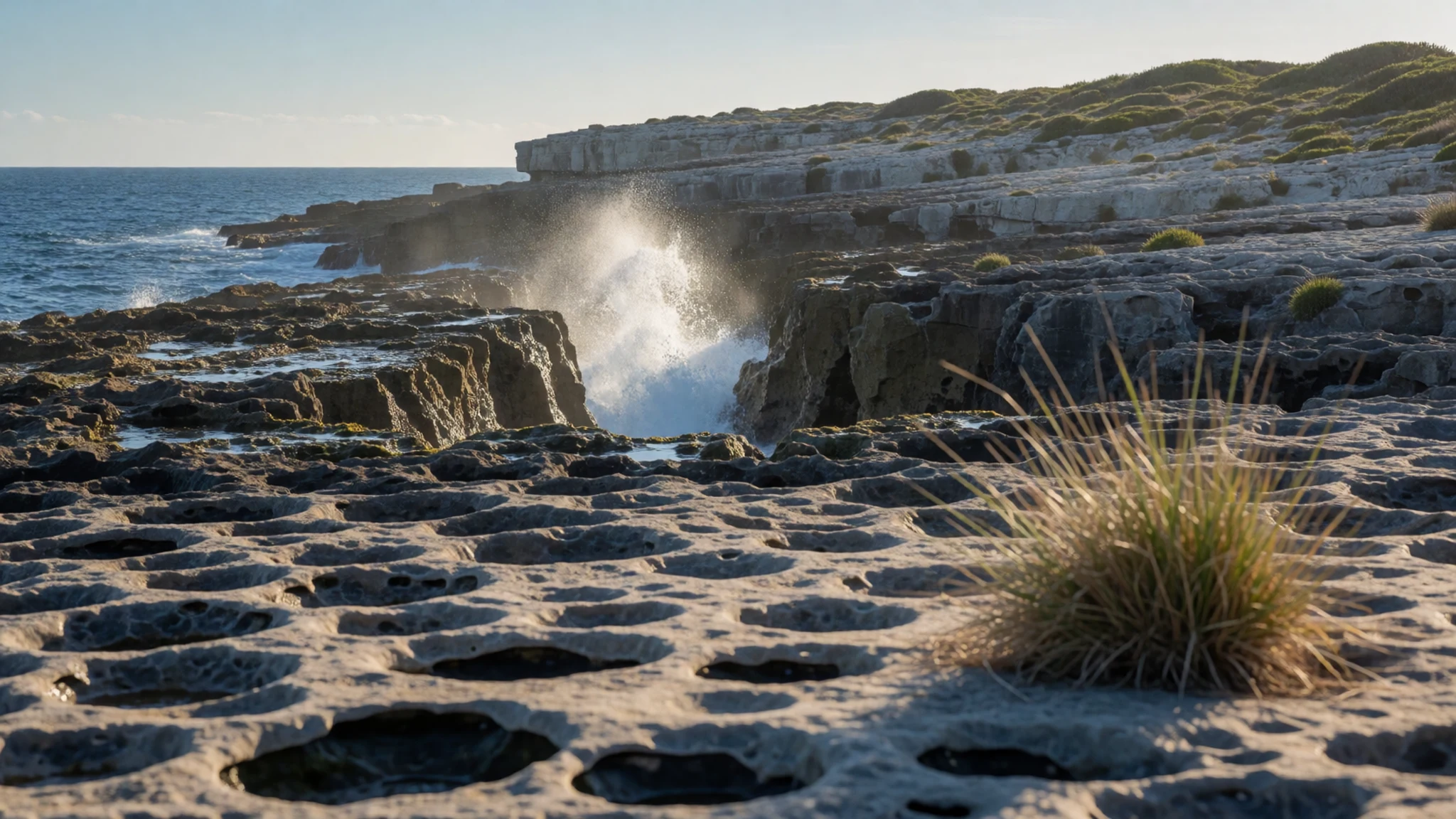
- Lesser Antillean iguana — plateau and Petite Terre
The dry plateau of La Désirade still shelters the Lesser Antillean iguana, Iguana delicatissima, crowded out elsewhere by habitat loss and by the green iguana. On this island the animals belong to the scrub, the stone walls and the islets of Petite Terre. They are wild animals, not an exhibit. A respectful look keeps a distance, stays on existing tracks and leaves nesting ground and cactus untouched.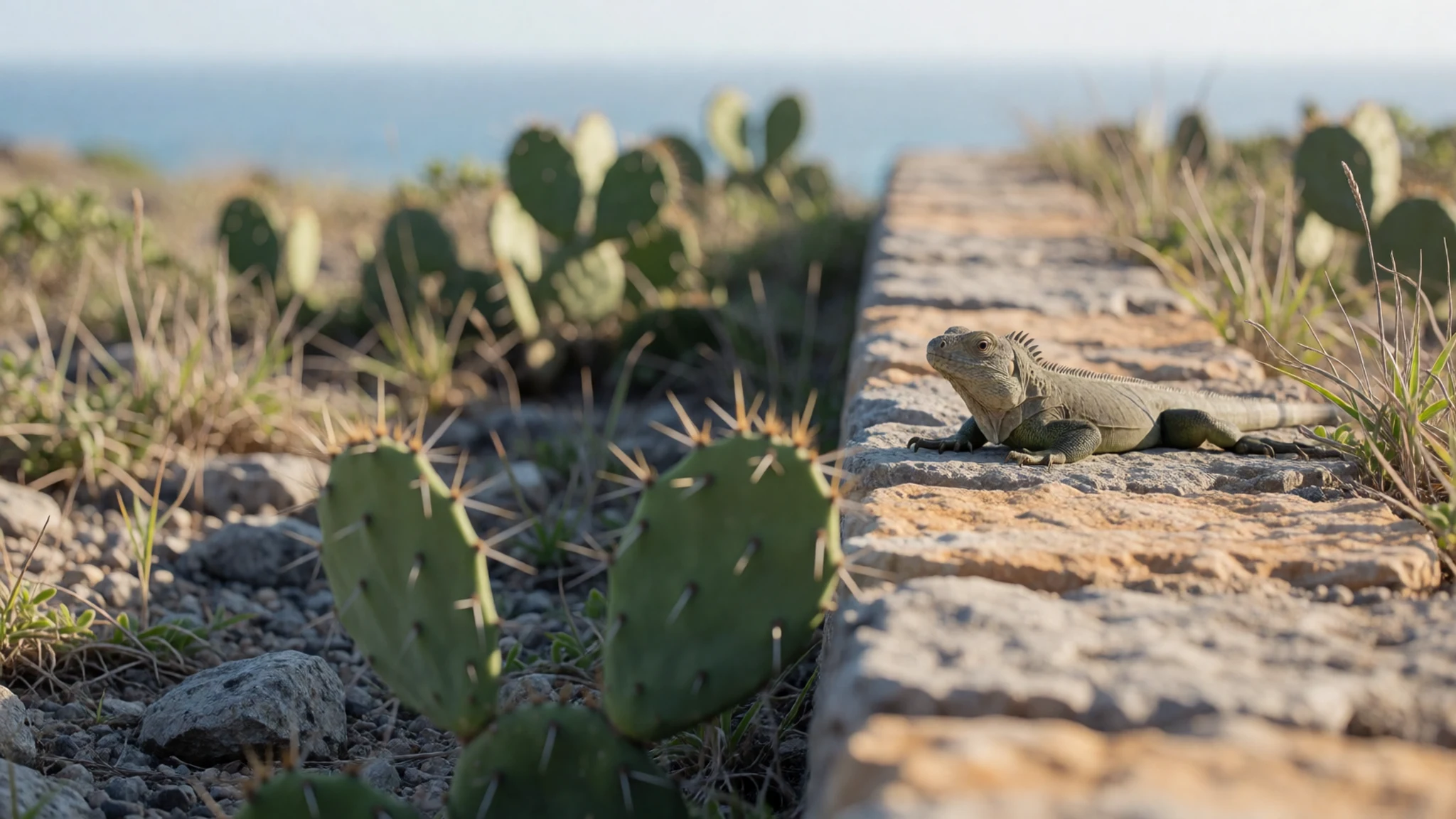
Culture
La Désirade shares the Creole culture of Guadeloupe and still keeps the habits of a small parish. French and Guadeloupean Creole sit side by side: official life in French, and a great deal of everyday talk in Creole. The Catholic year gives the island its gatherings. On feast days of Notre-Dame du Bon-Secours the village dresses up, cooks more than usual and fills the square. Gwo ka drumming, quadrille and zouk appear at a fête, a wedding or a saint's day, not as a nightly show. Fishing and goat-herding are visible livelihoods, and the people who do them are neighbours. The leper colony remains living memory for some families; pressing residents for those stories, or treating the cemetery as a photo stop, is a poor kind of curiosity. Day-trippers from Saint-François come and go with the boat. On La Désirade, greet people with a bonjour before any request, cover shoulders and knees inside the church, and do not photograph residents or the lazaret graves without asking.
What to wear
La Désirade dresses as Guadeloupe dresses, with a traditional costume that still comes out for feast days, quadrille and weddings. The cloth is madras, a bright checked cotton, cut for women into a full skirt, an overdress and a headscarf whose knots once carried a coded message about whether a woman was free, promised or married. Men wore a madras shirt or neckerchief, often with a bakoua straw hat against the sun. Gold earrings and a stiff, formal carriage belong to that costume. It is celebration clothing, not the weekday uniform, and on this island it appears when the parish has a reason to dress up. Everyday clothes are the clothes of a hot, windy coast. Fishers wear shorts, faded shirts and caps; shopkeepers and office staff wear light cotton and linen; younger people wear the same T-shirts, trainers and sundresses seen in Pointe-à-Pitre. Few people walk the village in beachwear, even though the beach is close. Swimsuits stay on the sand. A visitor to La Désirade will be comfortable in loose, covering cotton, a hat with a brim, and shoes that can handle pebbles and goat tracks as well as sand. Shoulders and knees should be covered before stepping into Notre-Dame du Bon-Secours. Reef shoes help on rocky entries, and a light layer is worth having on the ferry, where the trade wind feels stronger than it does in the lee of the quay.
What to eat
- Colombo de cabri — home-style tables in Beauséjour
Colombo de cabri is goat in Colombo spice, and on La Désirade it follows from the herds on the plateau. Turmeric, garlic, cumin and chilli colour a sauce served with rice or local roots. It is a weekend dish at home-style tables in Beauséjour, not a beach snack.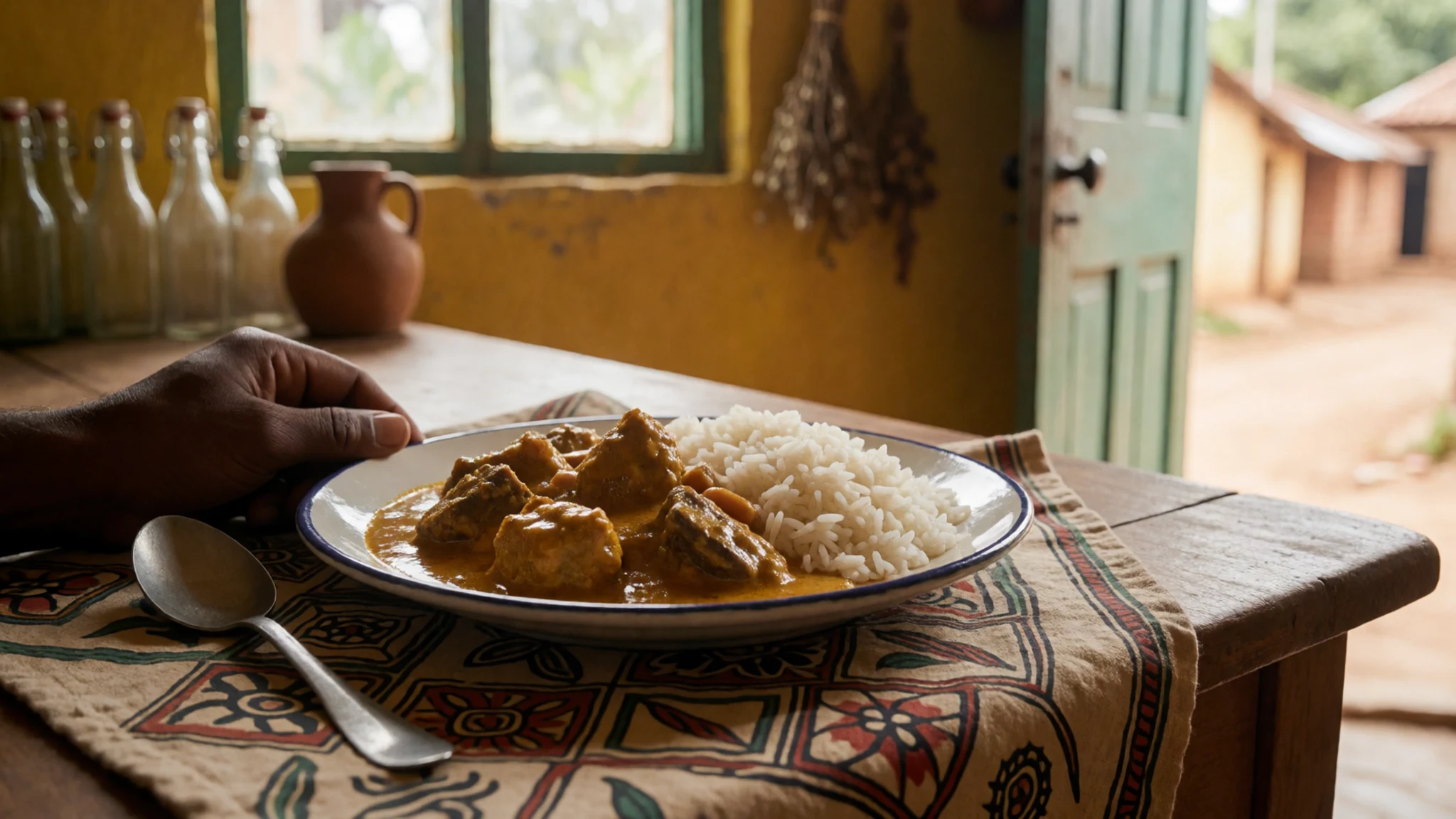
- Féroce d'avocat — lolos and family kitchens in Beauséjour
Féroce d'avocat is seasoned avocado from the Creole table, eaten on La Désirade with drinks or as a starter. Salt cod, cassava, chilli, lime and onion are worked into the fruit so it is hot and filling. Lolos and family kitchens around Beauséjour make it when the fruit is ripe.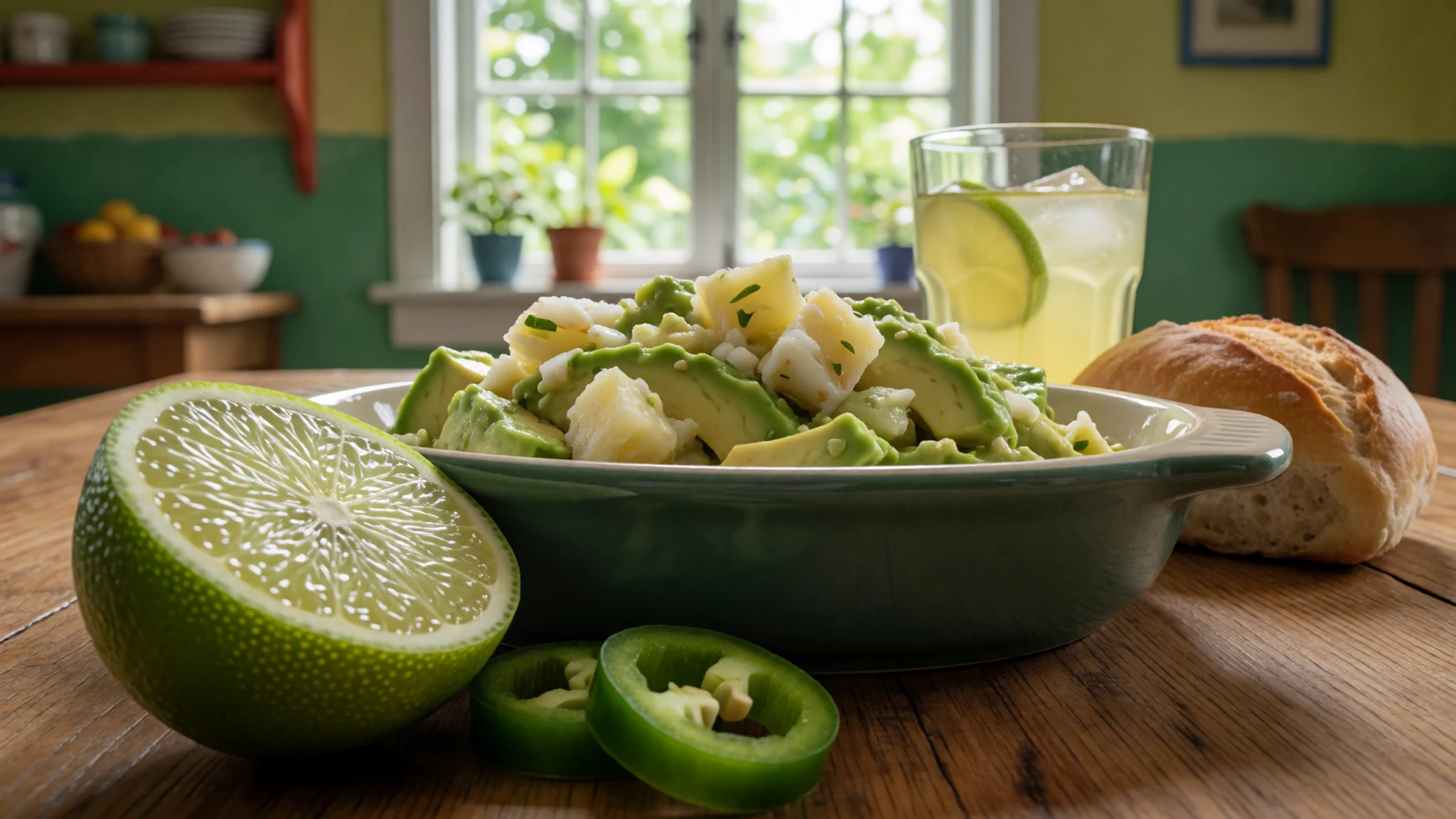
- Accras de morue — snack stands by the ferry quay in Beauséjour
Accras de morue are salt-cod fritters, the handful of food La Désirade eats while the ferry loads. Spiced batter holds soaked, shredded cod, and the fritters come out hot. Snack stands by the quay in Beauséjour fry them in batches on boat days. - Court-bouillon de poisson — simple eateries in Beauséjour
Court-bouillon de poisson is fish in a tomato, lime, thyme and chilli sauce, and on La Désirade the fish is whatever the boats landed. Rice or boiled roots come with it at simple eateries in Beauséjour. The sauce is sharp and herbal, and a good morning's catch shows. - Bokit — stalls around Beauséjour
A bokit is fried dough split and filled, Guadeloupe's sandwich, and on La Désirade stalls around Beauséjour sell it. Salt cod is a typical filling; sausage and salad appear too, with chilli sauce on request. It is the lunch to carry down to the quay. - Blaff — home kitchens and simple eateries in Beauséjour
Blaff is fish cooked quickly in a sharp broth, and on La Désirade cooks use whatever the boats brought in. Lime, garlic, thyme, chilli and onion do the seasoning, and the broth stays light. Home kitchens and simple eateries in Beauséjour serve it when the catch is fresh.
Plan it
Best time. February is the most comfortable month, driest and a little cooler, and January to April stay the drier stretch. September is the hottest month and October the wettest, and the heart of the hurricane season is a poor time to come. Heat lasts all year.
How long. 2–3
Getting there. Reach La Désirade by air to Pointe-à-Pitre, road to Saint-François, and the ferry to Beauséjour. Check the boat's current timetable on the operator's site, and do not count on a late return.
Budget. mid
Tips
- Reserve the ferry and any room ahead of French public holidays.
- Carry cash for stalls that do not take cards.
- Walk early; the plateau has little shade.
- Bring drinking water, since shops cluster in Beauséjour.
- Visit Petite Terre only on an organised boat; it is a nature reserve.
Etiquette
- Say bonjour before a request.
- Cover shoulders and knees in church.
- Ask before photographing people or lazaret graves.
- Give iguanas room and do not feed them.
Nearby
Sources
- Wikidata (La Désirade) (CC0)
- Wikipedia: La Désirade (CC BY-SA 4.0)
- Wikivoyage: La Désirade (CC BY-SA 4.0)
Wildlife
- Lesser antillean iguana (animal)
The Lesser Antillean iguana is a big, tree-climbing lizard that lives nowhere else in the world but the Lesser Antilles, and it is a little paler about the head than the green iguanas you may see elsewhere. It still survives on La Désirade, and on neighbouring Petite Terre, though it is becoming rare through lost habitat, wild predators, hunting and mixing with green iguanas. Watch it from a respectful distance, stay quiet and still, consider going with a local guide, and never feed it.