Kumamoto
Kumamoto, Japan
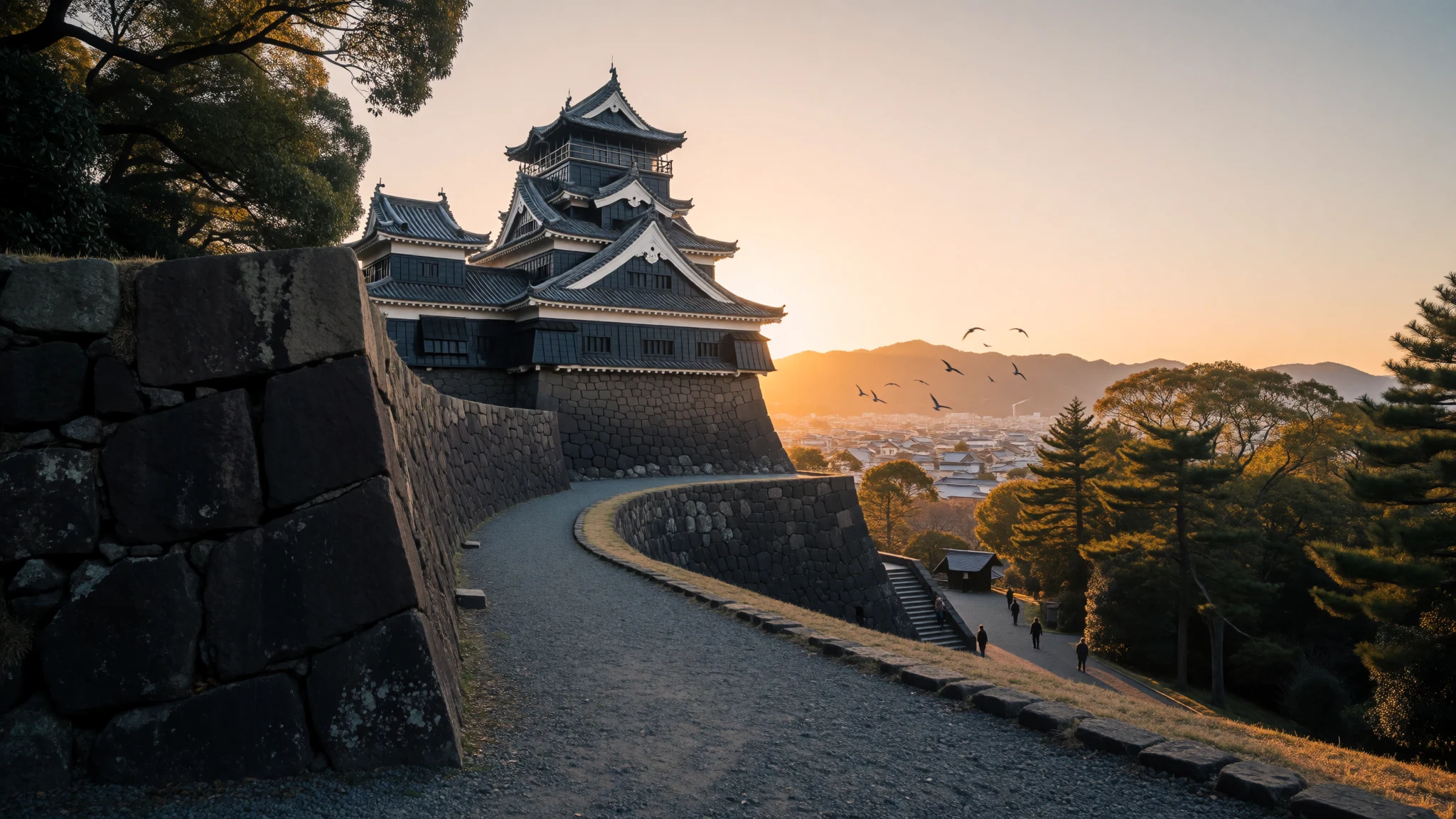
Kumamoto is a Kyushu castle city with a calm garden, good local food and an easy bullet-train link from Fukuoka.
The place
Kumamoto is the capital of its prefecture on the island of Kyushu, in south-western Japan, and home to about 738,000 people. It is a government-designated city, a status that brings extra administrative powers, and it feels more relaxed than the big metropolises to its north. The centre is compact: a castle on a rise, a covered shopping arcade district below it, and tram lines running through the streets.
The climate is humid subtropical. Summers are hot and sticky, with August the warmest month at around 28 °C on average, and winters are cool, with January averaging about 6 °C. Rain falls in every season, but June is the wettest month, and the rains carry on into July. The yearly average temperature is about 17 °C, which makes spring and autumn the comfortable seasons for walking.
The city's character comes from a few strong anchors. The castle dominates the skyline, a large garden sits to the east, and the downtown arcades of Shimotori and Kamitori hold most of the eating, shopping and late-night life. Beyond the built-up area are hills and lakes that make easy half-day outings. The station area on the west bank of the Shirakawa river is where the Shinkansen arrives, and a short tram ride connects it to everything else. Kumamoto does not demand a rushed itinerary, and it rewards slow wandering, particularly on foot or by tram, with a good meal waiting at the end of most days.
Its story
Kumamoto's story is bound up with its castle. In 1588 Katō Kiyomasa, a contemporary of the warlord Toyotomi Hideyoshi, was given half of the old Higo region to govern. He built the castle here, full of clever defensive touches, and it was long regarded as impossible to take. Kiyomasa gained a reputation as a master castle-builder.
After his death in 1611 his son Tadahiro took over, but in 1632 the Tokugawa shogunate removed him and installed the Hosokawa clan in his place. The Hosokawa ruled for the rest of the Edo period. The third lord, Hosokawa Tadatoshi, was a patron of the swordsman and painter Miyamoto Musashi, who spent his last years in the area.
The castle itself did not survive the nineteenth century. It burned during the Satsuma Rebellion in 1877, and the main keep seen today is a concrete reconstruction from the 1960s. The modern municipal government dates from 1889, the year in the city's facts.
The twentieth century brought further damage. In the closing months of the Second World War an Allied air raid destroyed about one square mile, around a fifth of the city's area. Afterwards the Buddhist monk Nichidatsu Fujii built a Peace Pagoda on Mount Hanaoka, to remember the dead of all wars and to encourage peace. Kumamoto became a designated city in 2012, and the castle remains the emotional centre of the place.
What to see
- Kumamoto Castle — Central Kumamoto
The castle is Kumamoto's defining sight, with a keep and turrets on massive stone walls. The keep is a concrete rebuild from the 1960s, so go for the scale, the walls and the views over the city. Allow a morning, and check the official city site for access and any restoration works.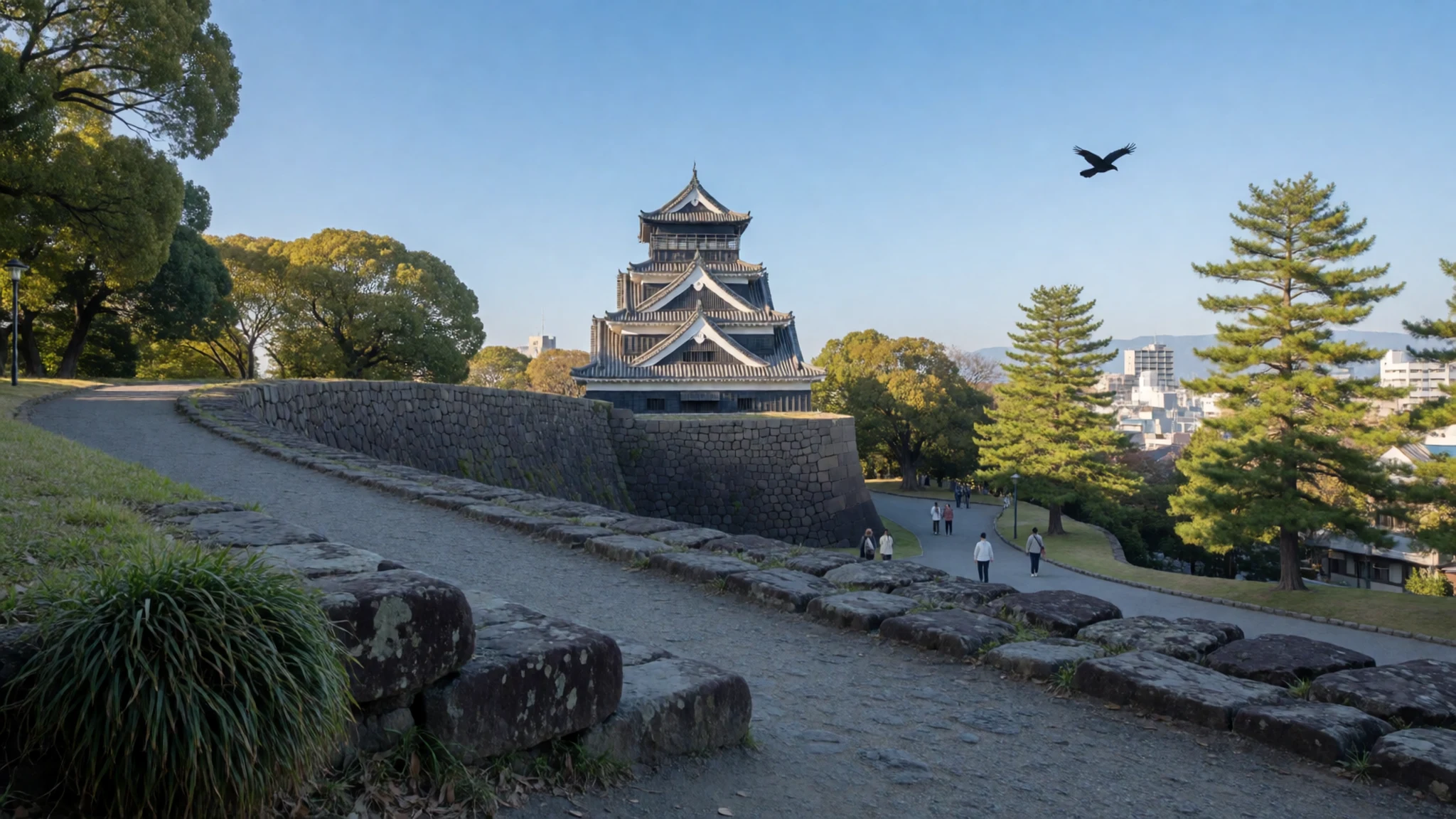
- Suizenji Jōju-en — East Kumamoto
A classic stroll garden built around a pond, with gravel paths, clipped pines and grassy mounds. One mound is shaped to echo Mount Fuji. It is flat, easy walking and best in the cooler hours, when the light on the water is soft and tour groups are fewer.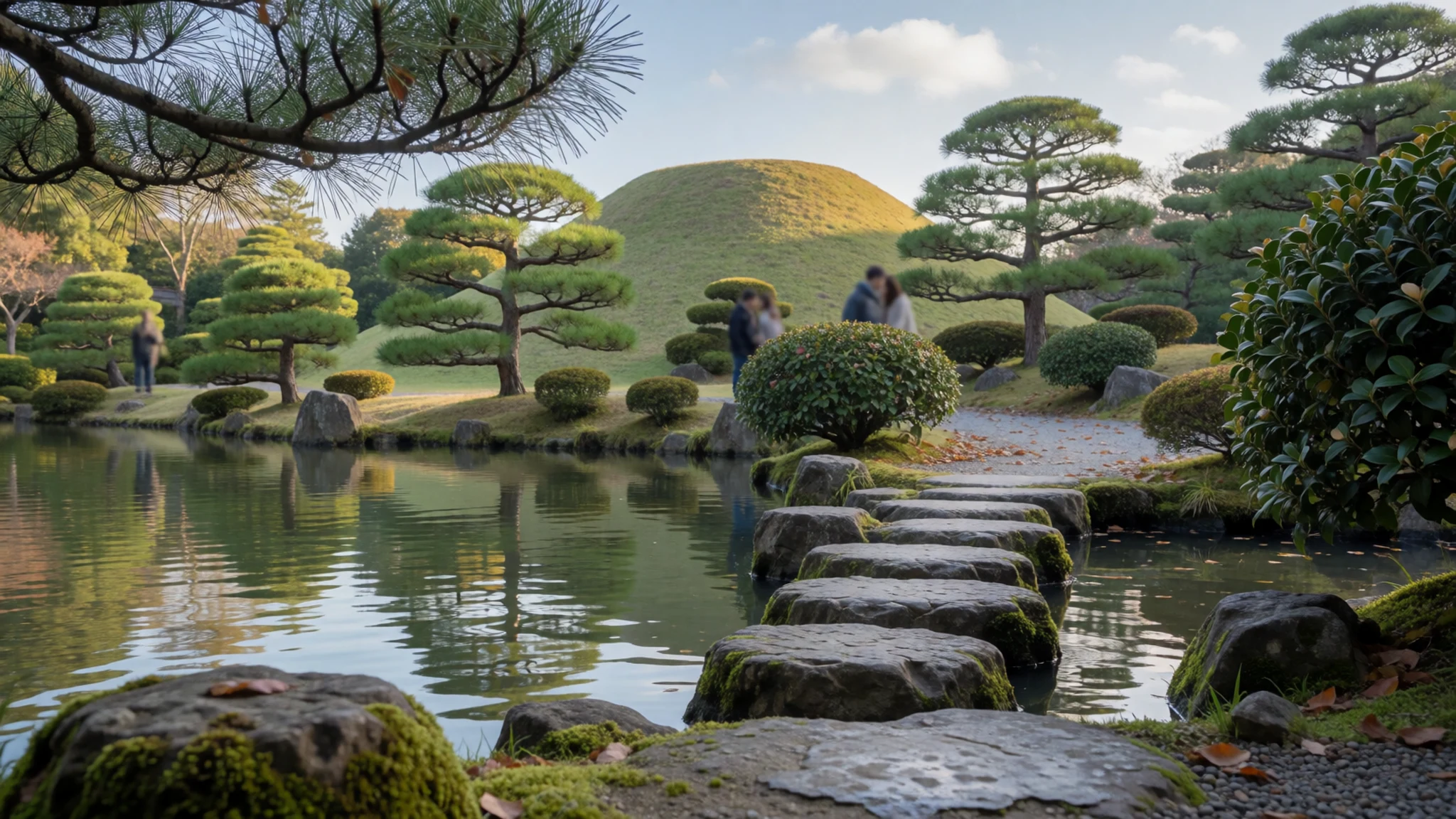
- Honmyō-ji Temple — West of the castle
This temple honours Katō Kiyomasa, the castle's builder, and sits partway up a hill at roughly the castle's level. The climb up the approach steps is a workout in summer heat. It is quieter than the castle, and a good place for a pause above the roofs of the city.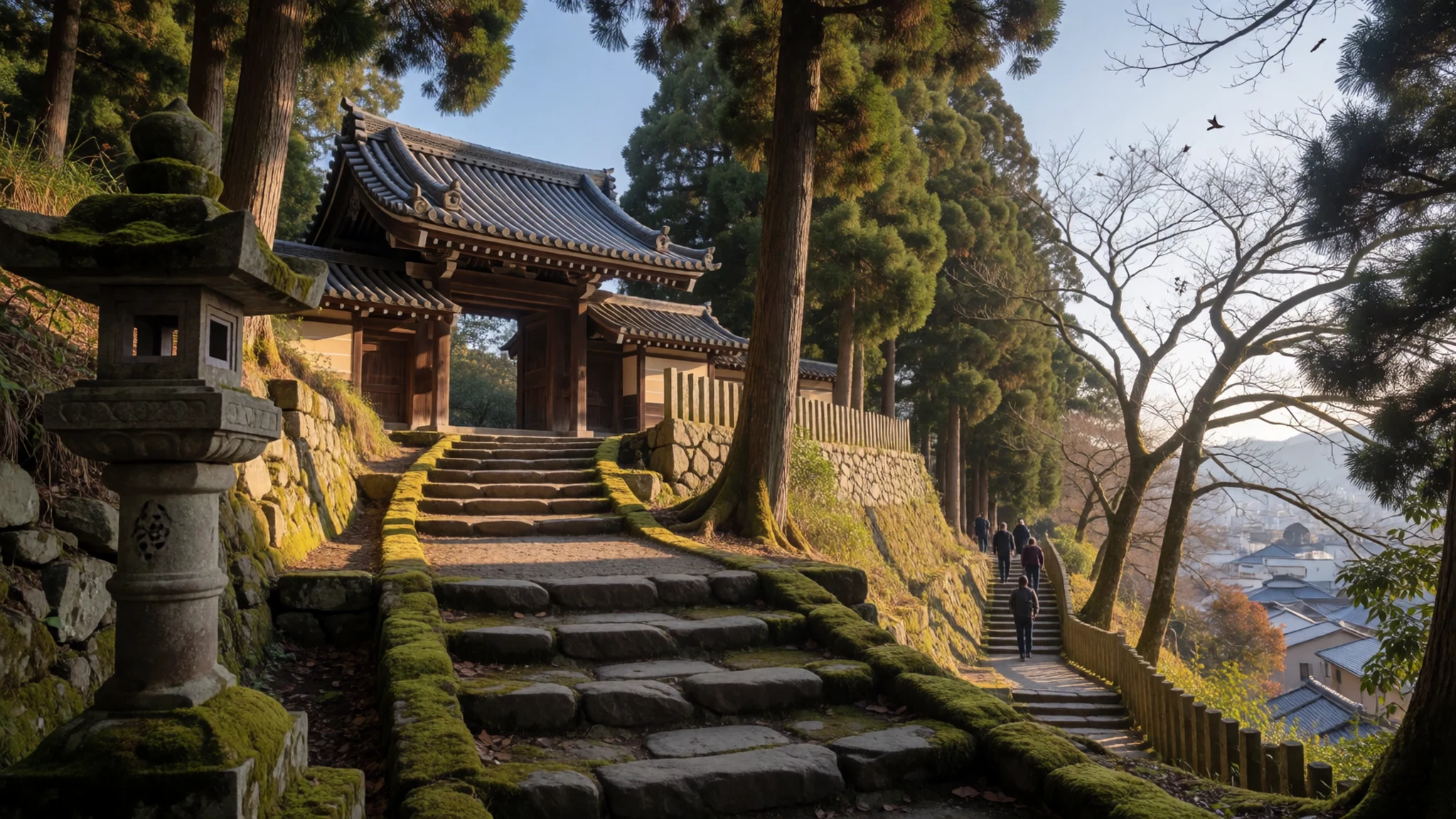
- Hosokawa Gyōbutei — Beside the castle area
A former residence linked to the Hosokawa clan, the family that governed Kumamoto through the Edo period. It is a modest, pleasant stop close to the castle, useful for adding a human scale to the grand fortress history. Pair it with a walk through the nearby streets.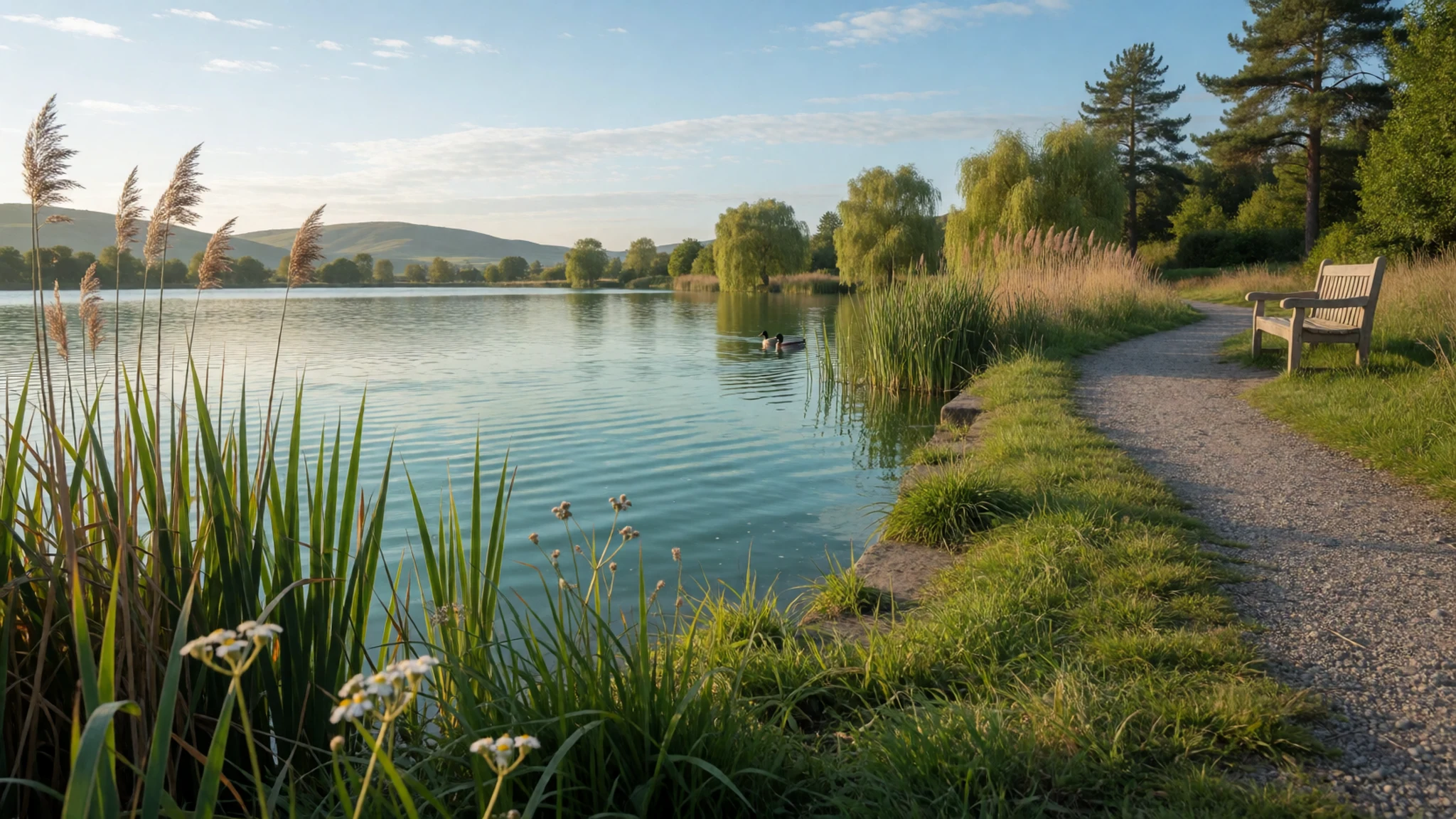
- Lake Ezu — South-east of the centre
Lake Ezu lies south-east of the centre and offers a quieter, greener break from the city's stone and concrete. It suits a slow walk or a short rest after the main sights. Reaching it takes a little planning, so check local transport options before you set out.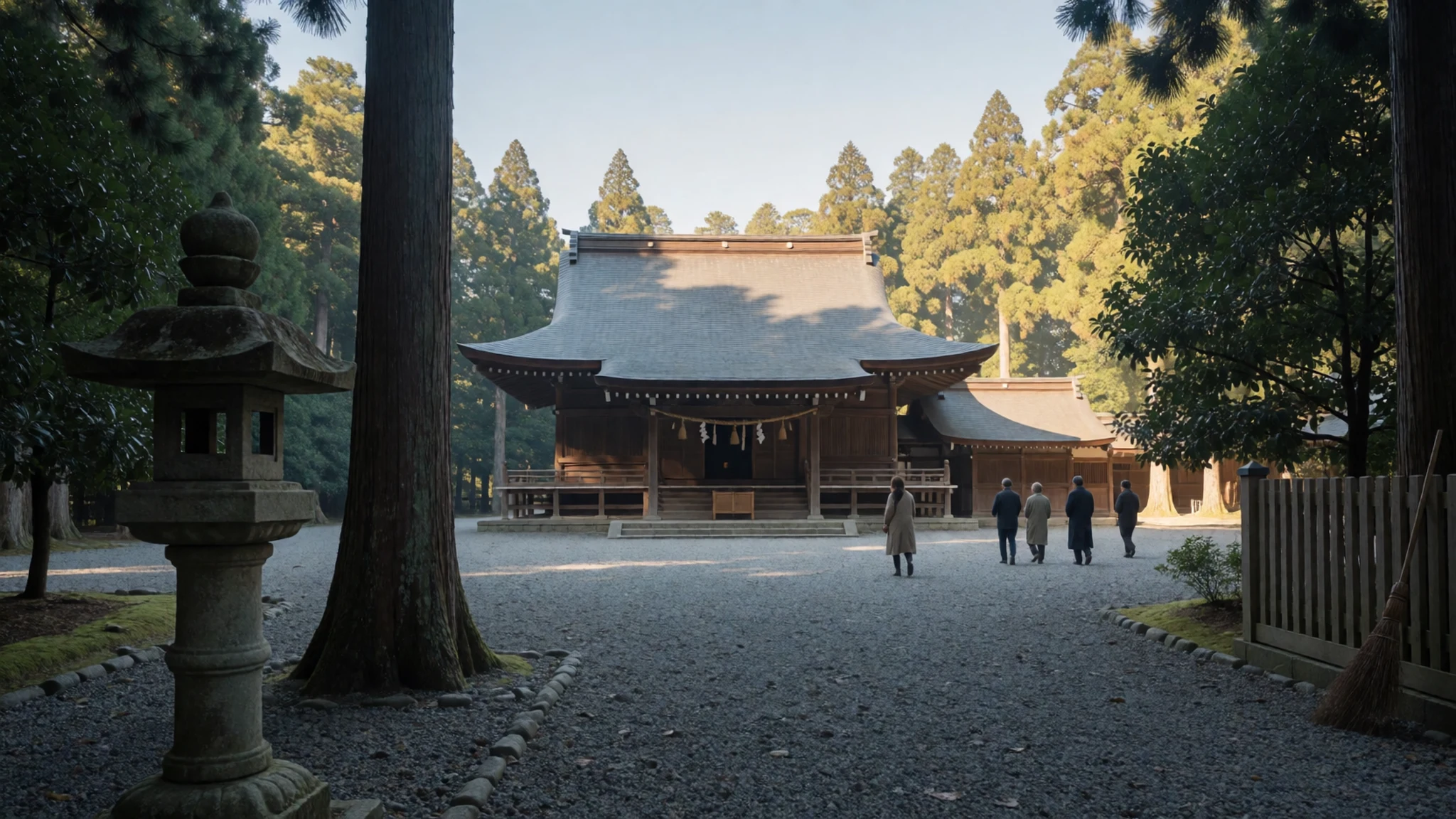
- Mount Tatsuda viewpoint — West of the castle
Mount Tatsuda is the wooded hill that closes the view west from the castle grounds. Seeing it from the keep's surroundings gives a sense of how the city sits between hills and river. It is a scenic backdrop more than a destination, and photographs best on clear mornings.
Culture
Kumamoto's culture is shaped by its samurai past and by everyday pride in a castle that has been rebuilt more than once. The Hosokawa lords encouraged the arts and martial skills, and the city still carries that mix of discipline and refinement. The Kumamoto Prefectural Traditional Crafts Centre shows the region's handicrafts, and has a shop for gifts if you want something made locally.
Sport is a lively part of city life. Roasso Kumamoto plays football in the J.League, the Kumamoto Volters play basketball in the B.League, and the Hinokuni Salamanders are the local baseball side. There is also volleyball, with Forest Leaves Kumamoto. A yearly marathon runs around the castle, begun to mark the city's designated status in 2012, and the city has hosted handball world championships in 1997 and 2019.
Neighbourhood life centres on the covered arcades and the tram lines, where office workers, students and families mix. Shrines and temples such as Fujisaki Hachiman Shrine and Honmyō-ji sit within the ordinary city, and locals drop in quietly on the way to work or school rather than only on festival days.
At shrines and temples in Kumamoto, bow lightly at the gate, keep your voice low, and take off your shoes wherever you see a raised wooden floor.
What to wear
Kumamoto's traditional dress is the kimono, woven or dyed in silk, with cotton yukata for summer evenings and festivals. Kimono appear at weddings, graduations and New Year shrine visits, and on a few days of the year you may see them on the streets near the castle. Formal wear for men includes hakama, the pleated divided skirt worn over a kimono.
Day to day, people in Kumamoto dress much as they do in other Japanese cities: neat, practical, modest, with office workers in suits and students in uniform. Young people favour casual layers, sneakers and light jackets. In summer, cotton and linen are common, and many carry a small towel and a parasol against the heat.
For a visitor, the main issue is climate. From June to September, pack light, breathable fabrics, a hat and a compact umbrella, since rain is frequent and the heat is humid. Winter is cool rather than harsh, so a jacket and a scarf are enough. Shoulders and knees do not need strict covering, but modest clothing is appreciated at shrines and temples. Comfortable walking shoes matter most, as the castle grounds have long gravel paths and steps. Choose shoes that slip on and off easily, because you will remove them at temples, in some restaurants and at traditional lodgings.
What to eat
- Basashi — Izakaya around the downtown arcades
Thin slices of raw horse meat, eaten with soy, ginger and garlic. It is the dish most associated with Kumamoto. Look for it in izakaya, the casual pubs around Shimotori and Kamitori, and order it with a cold drink.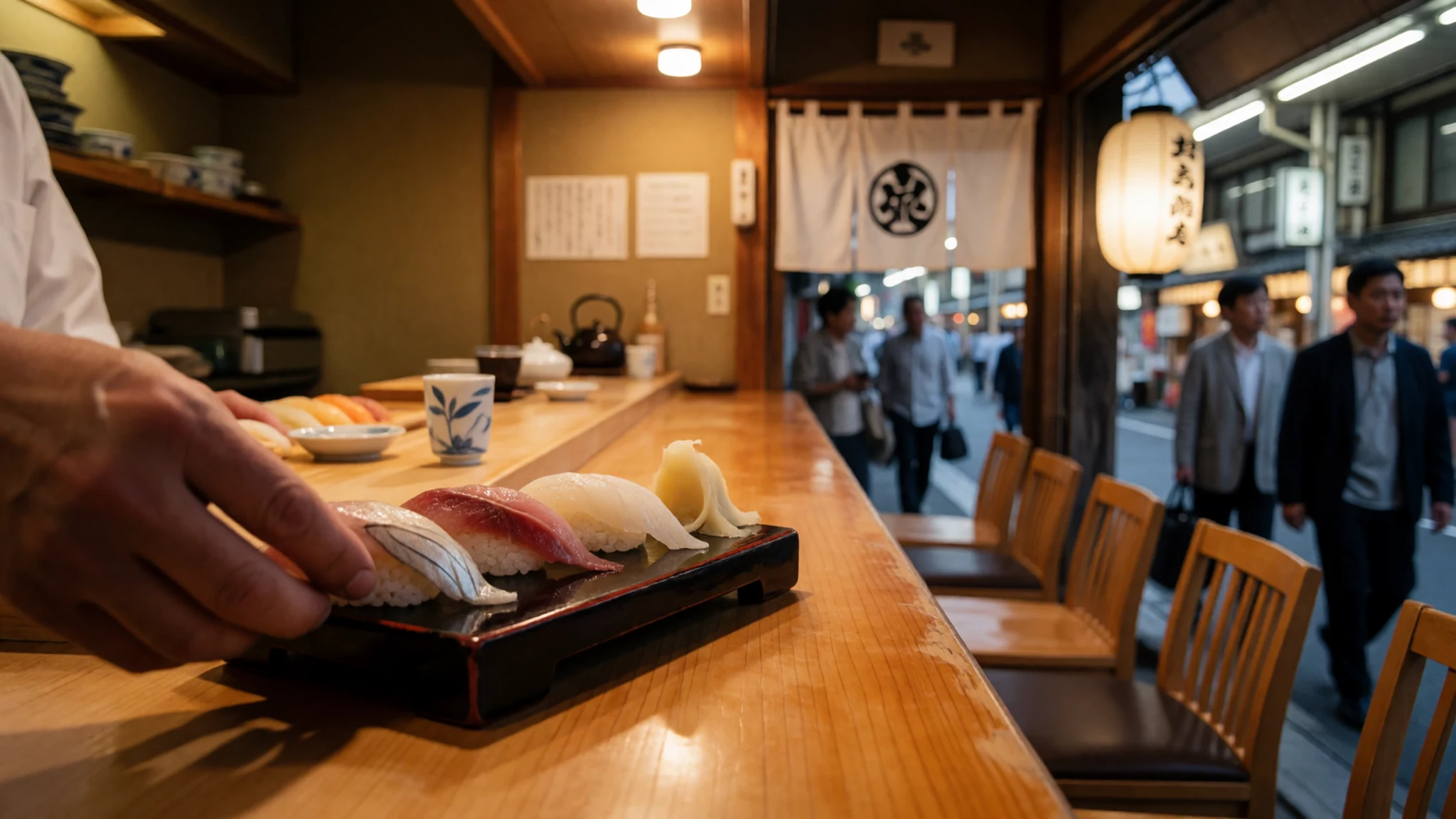
- Sushi — Sushi counters in the east of the centre
Kumamoto has long-established sushi counters in the east of the centre, where rice is seasoned by traditional family recipes. Sitting at the counter is the best way to eat, since the chef serves piece by piece and can advise on what is fresh.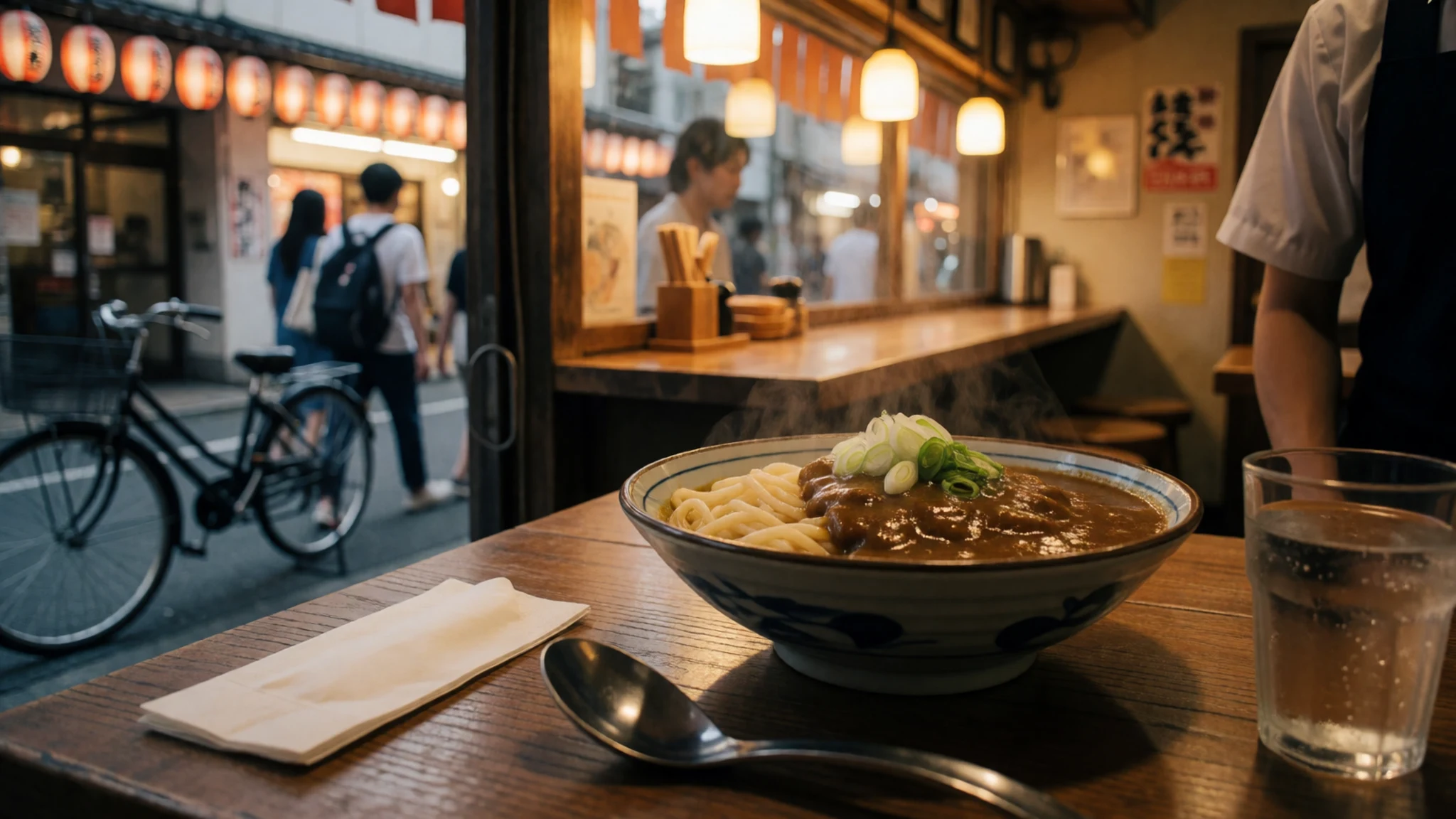
- Noodle curry — Curry restaurants near the downtown arcades
Curry served over noodles instead of rice is a favourite in local curry restaurants, including a well-liked Sri Lankan place. It is spicy, rich and filling, a good lunch on a rainy day, and an unusual alternative to rice. - Turkish kebab — Street vans in the downtown area
Fresh-made kebabs are sold from a van in the city, assembled in front of you. It is a cheap, quick meal and a change from rice and noodles. Ask locally for the van's current spot, as vans can move. - Gyūdon and quick bowls — Chain eateries in Shimotori and Kamitori
Chain restaurants such as Yayoiken serve set meals and beef bowls, some open at all hours. They are cheap, reliable and fast, especially useful late at night after the bars close, or when you want a simple breakfast.
Plan it
Best time. March–April and October–November, when temperatures are mild and skies are clearer. June is the wettest month and August the hottest, at around 28 °C on average, so summer needs patience and a lot of water.
How long. 2
Getting there. Kumamoto has its own airport, with a shuttle bus into town of about an hour. From Fukuoka Airport a highway express bus takes about two hours, or take the subway to Hakata Station and a Kyushu Shinkansen train, which runs several times an hour and takes under an hour. Tram or bus covers the last leg.
Budget. mid
Tips
- Visit the castle early, before the heat builds
- Carry some cash for small shops and street stalls
- Use trams for short hops between sights
- Check the official city site for castle access before you go
- Bring a compact umbrella in June and July
Etiquette
- Remove shoes at temples and traditional restaurants
- Keep voices low in shrines and on public transport
- Do not eat while walking through busy shopping arcades
Nearby
Sources
- Wikidata Q199889 (CC0)
- Wikipedia: Kumamoto (rev 1381557452) (CC BY-SA 4.0)
- Wikivoyage: Kumamoto (rev 5407702) (CC BY-SA 4.0)
- Photo 01: Hisagi (CC BY 3.0)
- Photo 02: MK Products (CC BY 3.0)
- Photo 03: Nagoya Taro (CC BY-SA 1.0)
- Photo 04: そらみみ (CC BY-SA 4.0)
- Photo 05: そらみみ (CC BY-SA 4.0)
- Photo 06: 663highland (CC BY 3.0)
- Photo 07: ltsc1980 (CC BY-SA 2.0)
- Photo 08: Kn-ys (CC BY-SA 4.0)


