Kourou
Kourou, France
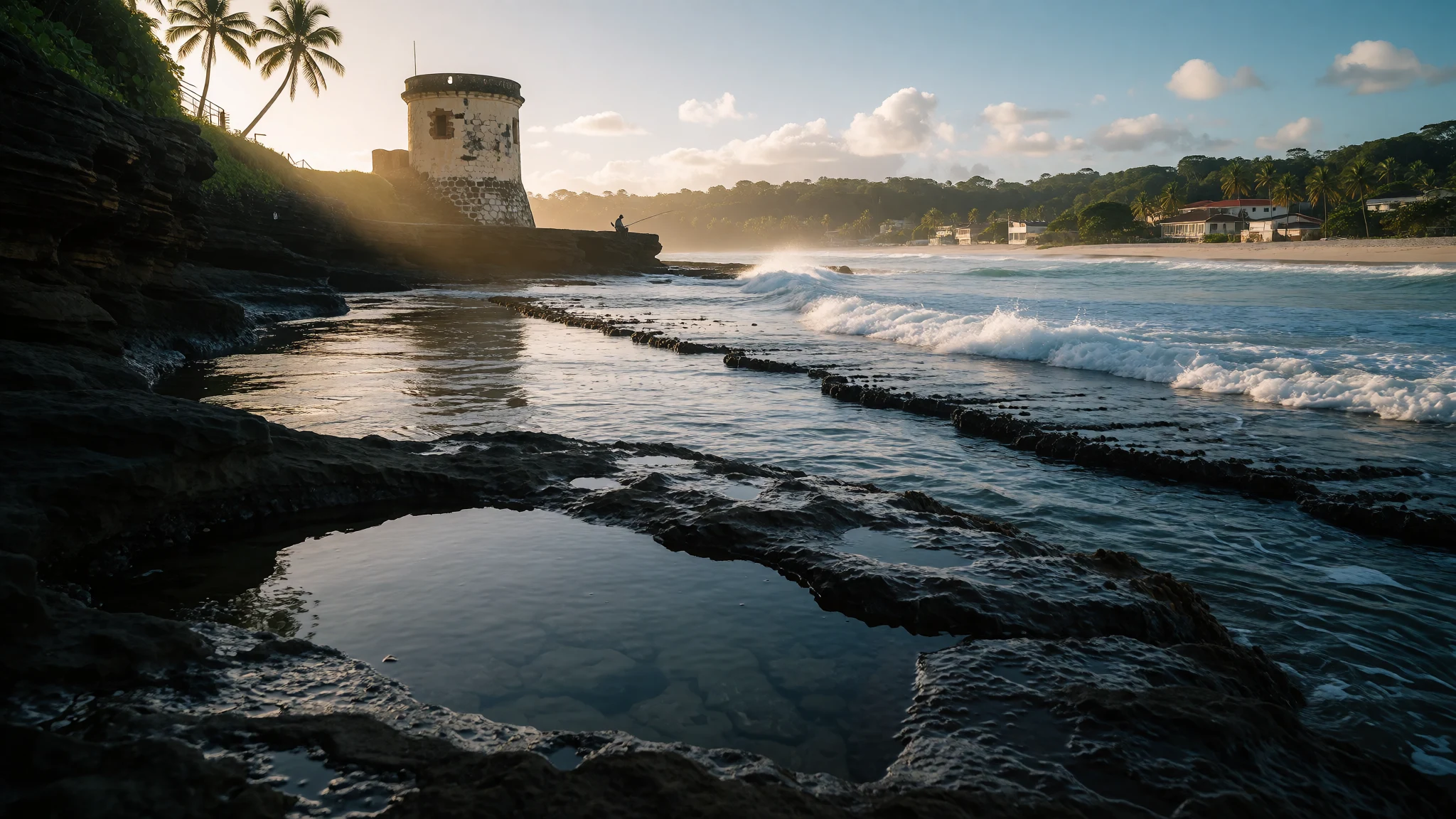
Kourou pairs Atlantic beaches and rainforest edges with Europe's rocket launch site, plus a boat ride to former prison islands.
The place
Kourou sits on the Atlantic coast of French Guiana, an overseas department of France in South America, at the point where the Kourou River reaches the sea. It is a flat, humid town of 24,824 residents, about 2 m above sea level, and it is best known as the base of the Guiana Space Centre, the launch site used by France and the European Space Agency. The spaceport dominates the local economy, yet the town has a character of its own. Low hills ring the built-up area, with higher ridges a little way inland, and three lakes within the municipal boundary are used for canoeing, kayaking and watersports; Lake Marie-Claire is the smallest and calmest. Towards the ocean, long white-sand beaches are interrupted by rocky points. Along the riverbank and inland, mangrove and dense rainforest take over. Cayenne, the regional capital, lies to the south-east, and the main road to the Surinamese border runs through Kourou, so the town works as both a stopover and a destination. The people are as mixed as the landscape. Indigenous Kalina, Creole and Maroon communities, families from metropolitan France, and newcomers from Brazil, Suriname, Haiti and elsewhere, including Hmong households, each make up a sizeable share of the population. Rain falls on most days for much of the year, and the sky is often grey. Crime is a real concern by French standards, with armed robbery reported regularly, so a visit here rewards ordinary urban caution as much as curiosity.
Its story
Kourou's written history starts with the Kalina, also called Galibi, who lived along this coast before French colonists settled it. The carved figures on rock walls at Les Roches Gravées, a short way from town, are the clearest surviving trace of that earlier world; beyond them, little is firmly known. European ships sailed past in the early sixteenth century without founding anything. French Jesuits later baptised a few Kalina and began farming across the river at Guatémala, but when the order was dissolved in the colony, Kourou shrank to a small village. Its real beginning as a planned town came after France lost Canada to Britain in the Treaty of Paris. Looking for a replacement colony, the French government sent a large expedition to Guiana. Engineers drew up the street layout of what became the Bourg, the old quarter around the Church of Saint Catherine beside the river port. The venture ended badly: heat, disease and poor supply took a heavy toll on the settlers, and the episode is remembered as a disaster. Around the same period, the scientist La Condamine passed this way on his return from a measuring expedition near the equator and gave his name to a mountain behind the town. In the mid-nineteenth century Guiana became a penal colony, and prison buildings in town and on the offshore Îles du Salut remain from that era. The modern chapter began when France chose this coast for its space launches; Ariane rockets, and later Russian Soyuz and Italian Vega rockets, now lift off from the centre that has reshaped Kourou's economy.
What to see
- Guiana Space Centre — North-west of the town centre
The spaceport lies north-west of the town centre, and its entrance is marked by a model of an Ariane launcher. Guided tours of the site are offered, while watching a launch generally needs an invitation requested online well in advance. Check the official channels for current tour and launch arrangements before building a trip around a date.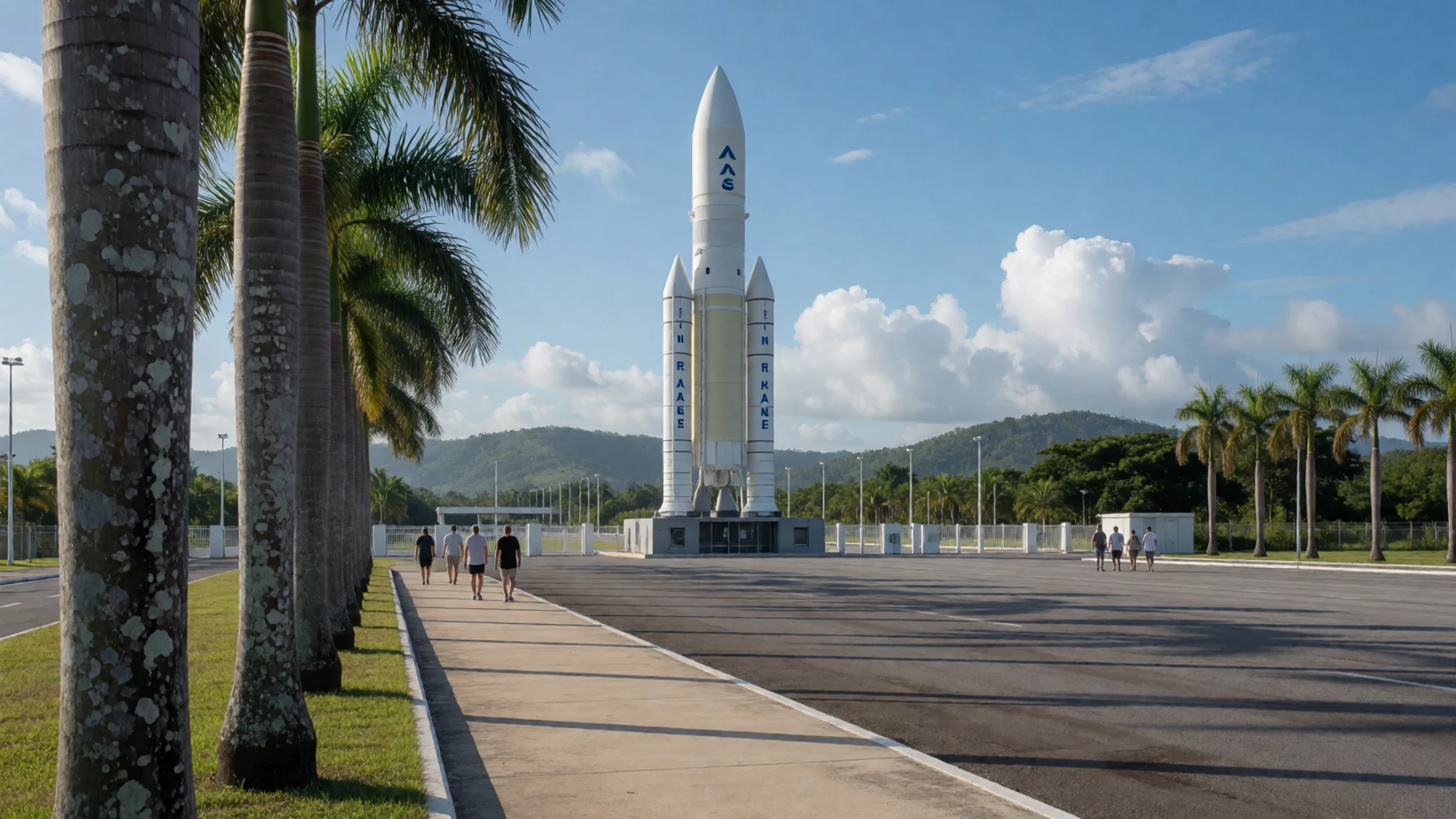
- Tour Dreyfus and Pointe des Roches — Pointe des Roches
A small stone tower stands on a rocky headland at the edge of town. It once carried Morse signals between the mainland and the islands offshore. Today it is a quiet place for a late-afternoon walk, with surf on the rocks, views along the coast and, on clear days, a glimpse of the islands.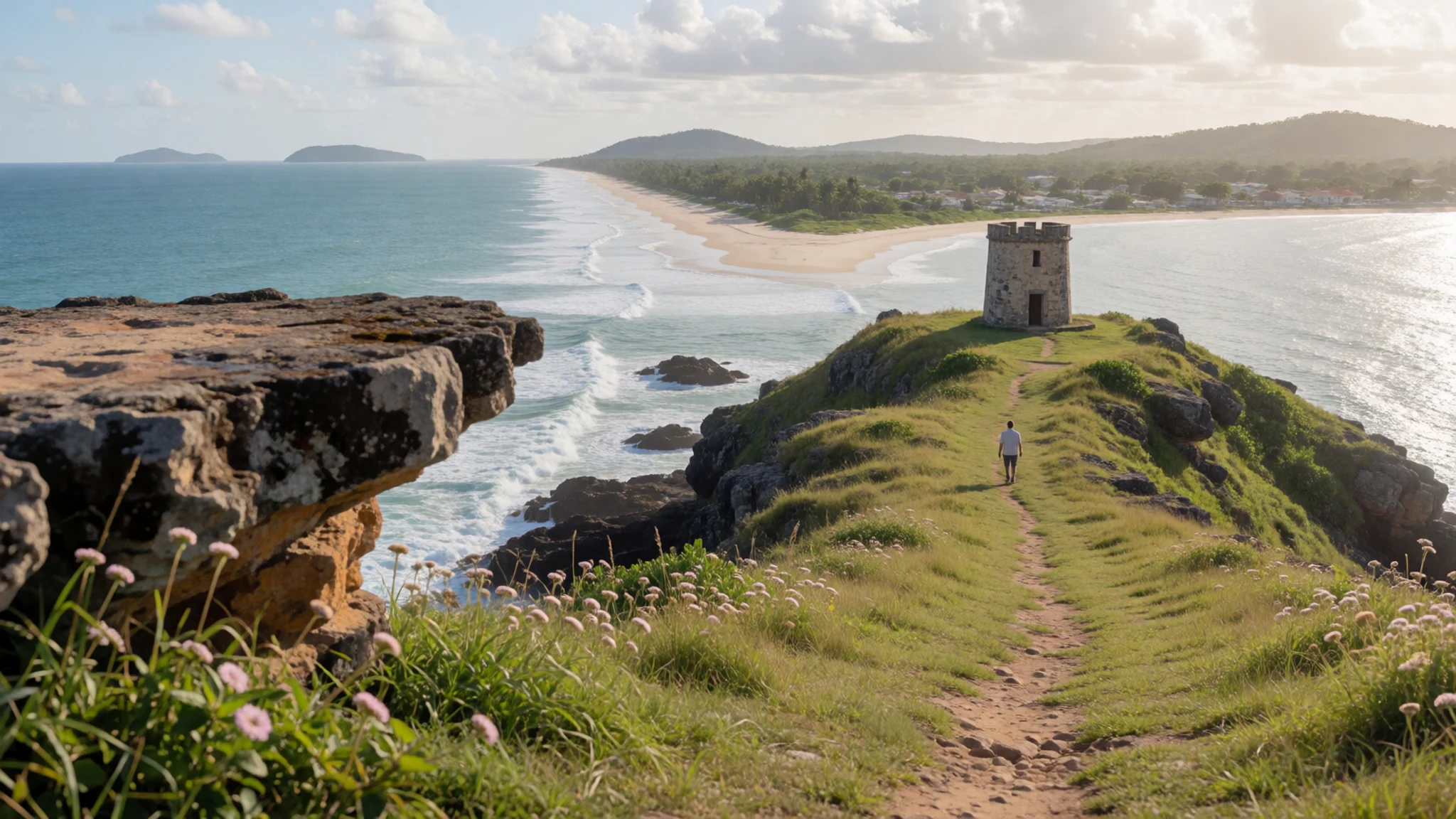
- Church of Saint Catherine and the Bourg — The Bourg, beside the river port
The old quarter by the river port was laid out around the Church of Saint Catherine, and it is a good place to read the colonial street plan. The fish hall sells the catch on most mornings, and older bars with terraces sit nearby. Mornings are the cooler, sensible time to wander.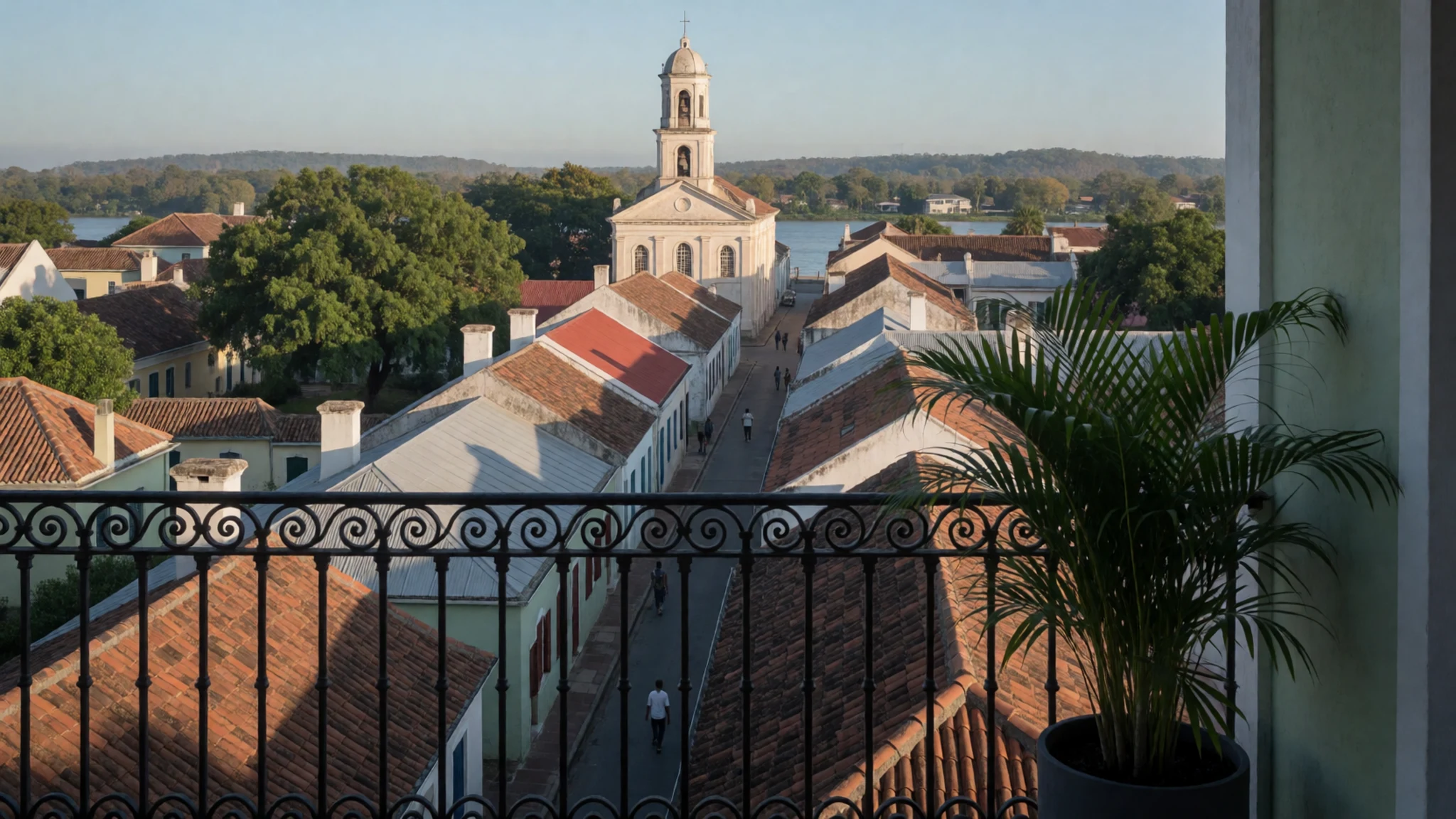
- Îles du Salut — Offshore, reached by boat from Kourou
A catamaran runs from Kourou to the Îles du Salut, former penal colony islands. Arriving on Île Royale, visitors find prison ruins, shaded paths and simple lodging with space to hang a hammock. Weekends and holidays get crowded, so book the crossing ahead and confirm sailing times with the operator.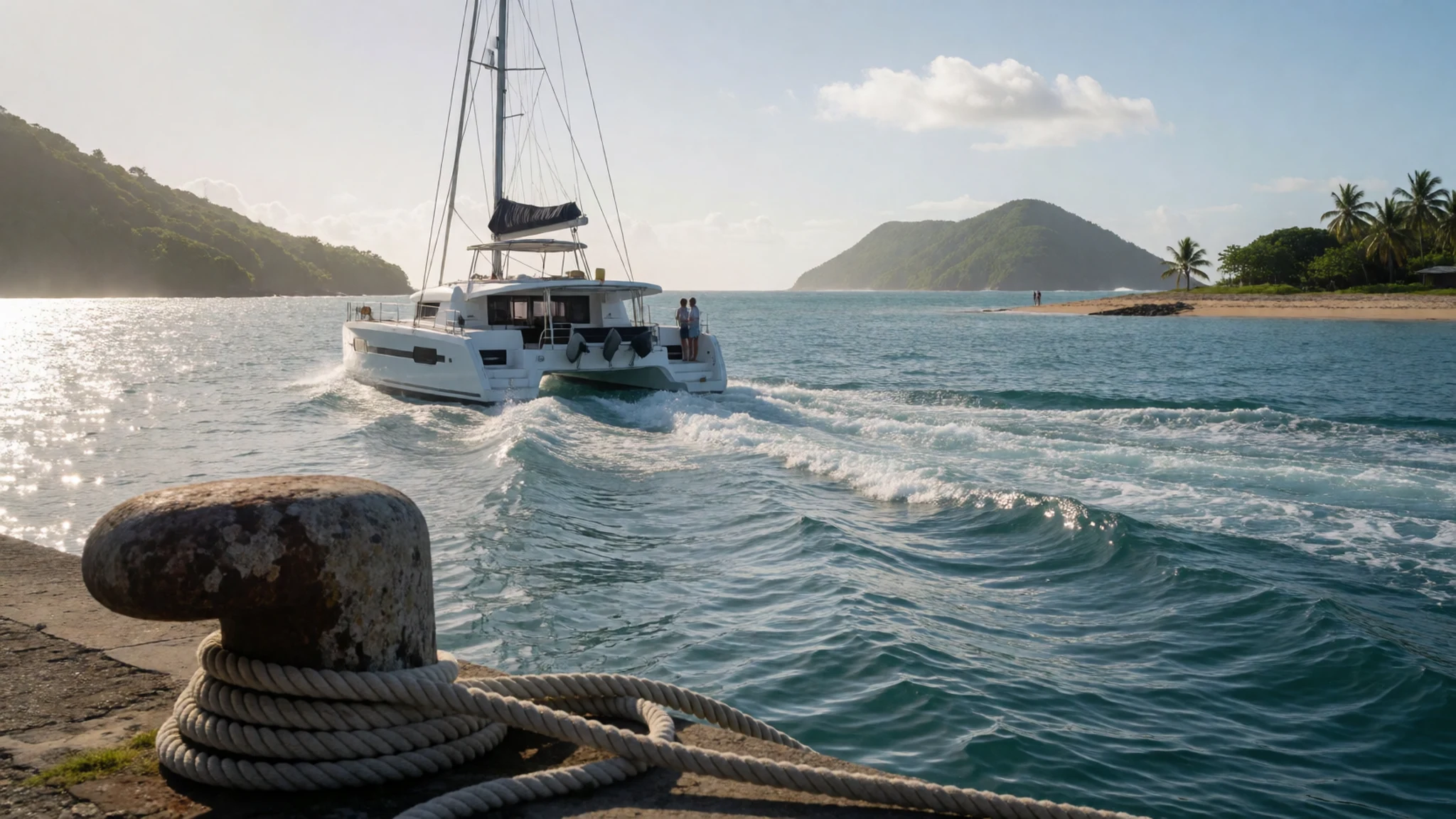
- Kourou beach and Pim-Poum — Town seafront
A long pale beach fronts the town, with rocky outcrops at its edge and the smaller Pim-Poum Beach tucked beside them. Families gather on Sunday evenings, and in July and August a free open-air cinema runs on the sand. Currents and surf vary, so ask locally before swimming.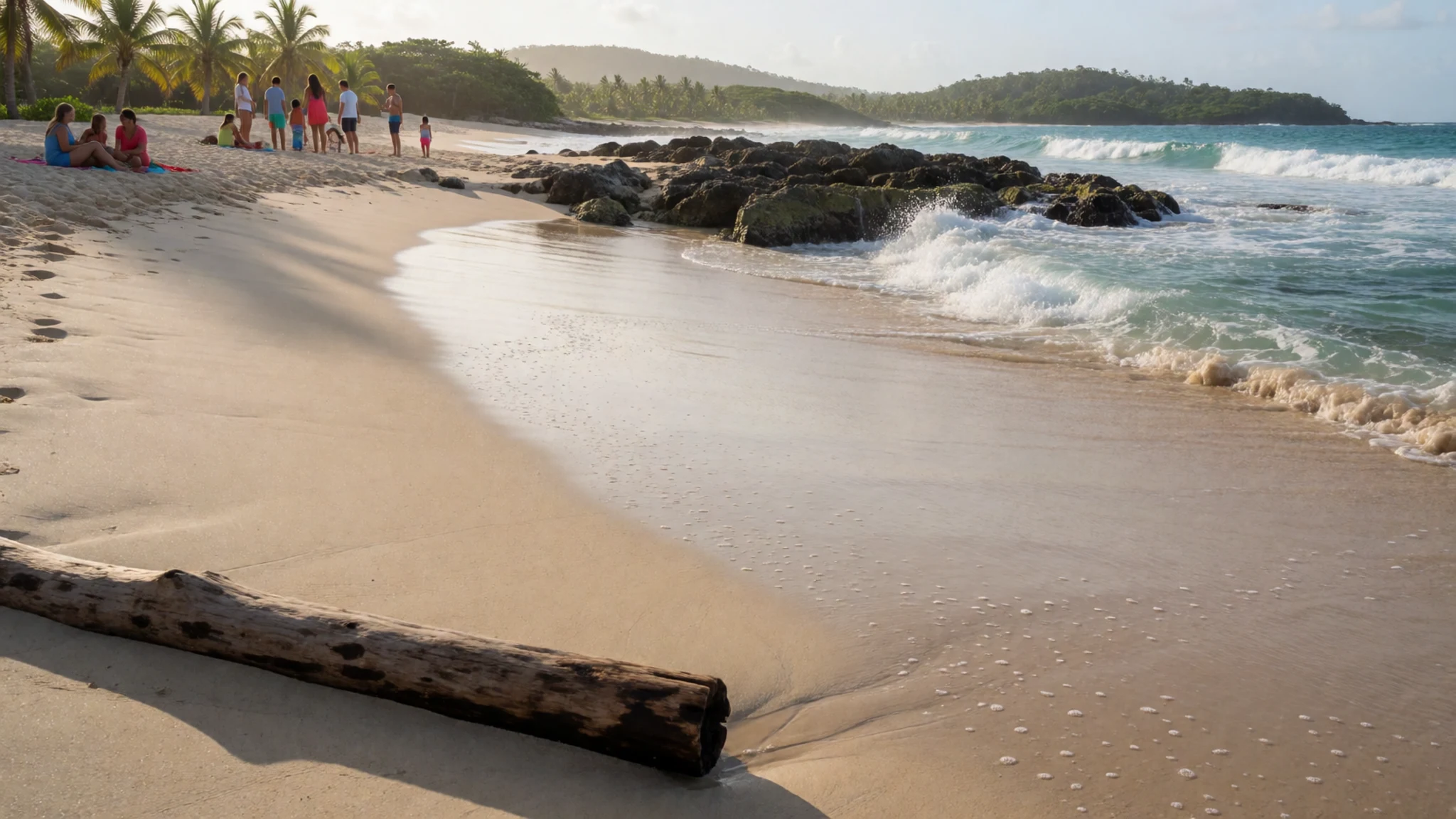
Culture
Kourou is a French town in South America, and daily life blends the two. Official business, schooling and most shop signs run in French, while Creole, Portuguese, Hmong and Kalina are all heard in the streets. The Saramaka quarter beside the river reflects the Maroon communities who settled here, and Kalina heritage reaches back long before any town existed. Many residents work for the space programme or the armed forces, including French Foreign Legion servicemen, which gives the bars and cafés near the centre a mixed, outward-looking crowd. Weekends belong to the beach: families gather in the evening, and a free open-air cinema runs on the sand in July and August. The year's big event is Carnival in February, with parades through the streets on Sundays and busier nightlife; anyone planning to attend should expect crowds, loud music and fuller lodgings. Football, Brazilian music and Creole dance bands all find an audience, and the church in the Bourg remains a local landmark. Everyday manners follow French habits, so a greeting comes before any question or purchase. Visitors should also remember that the space centre is a controlled site where rules are strictly applied. Greet people with a bonjour before asking anything, ask before photographing residents, and keep to signposted areas and guide instructions around the launch site.
What to wear
Kourou has no single costume; its dress traditions come from several communities. Creole heritage in Guiana is linked to the madras headwrap and long skirts in bright checked cotton, worn at festivals, Carnival and ceremonies rather than day to day. Maroon women are associated with wrapped cloths in strong patchwork or strip-woven patterns, and Kalina communities with glass-bead ornaments and woven cotton. Hmong families keep a tradition of embroidered festive clothing, usually brought out for celebrations. Day to day, people wear light cotton shirts, shorts, sundresses and sandals; football shirts are common, and work clothes at the space centre or among service personnel are plain and practical. Smart-casual French style appears for evenings out and Sunday outings. A visitor should pack breathable, quick-drying layers, a light waterproof for frequent rain, a hat and sunglasses, and swimwear for the beach, with a cover-up once back in town. Closed shoes with grip suit forest trails and damp paths on the islands, while sandals are enough for the beach and the boat. Insect repellent matters as much as clothing, and long sleeves at dusk help. Dress codes are relaxed, but covering shoulders and knees is courteous in a church or when visiting a village community.
What to eat
- Fresh grilled fish — The fish hall in the old town and seafood eateries near the beach
The Atlantic catch is grilled whole or served in a Creole sauce with rice. The old fish hall sells it every morning except Sunday, and small seafood eateries near the Bourg and the beach cook the day's fish.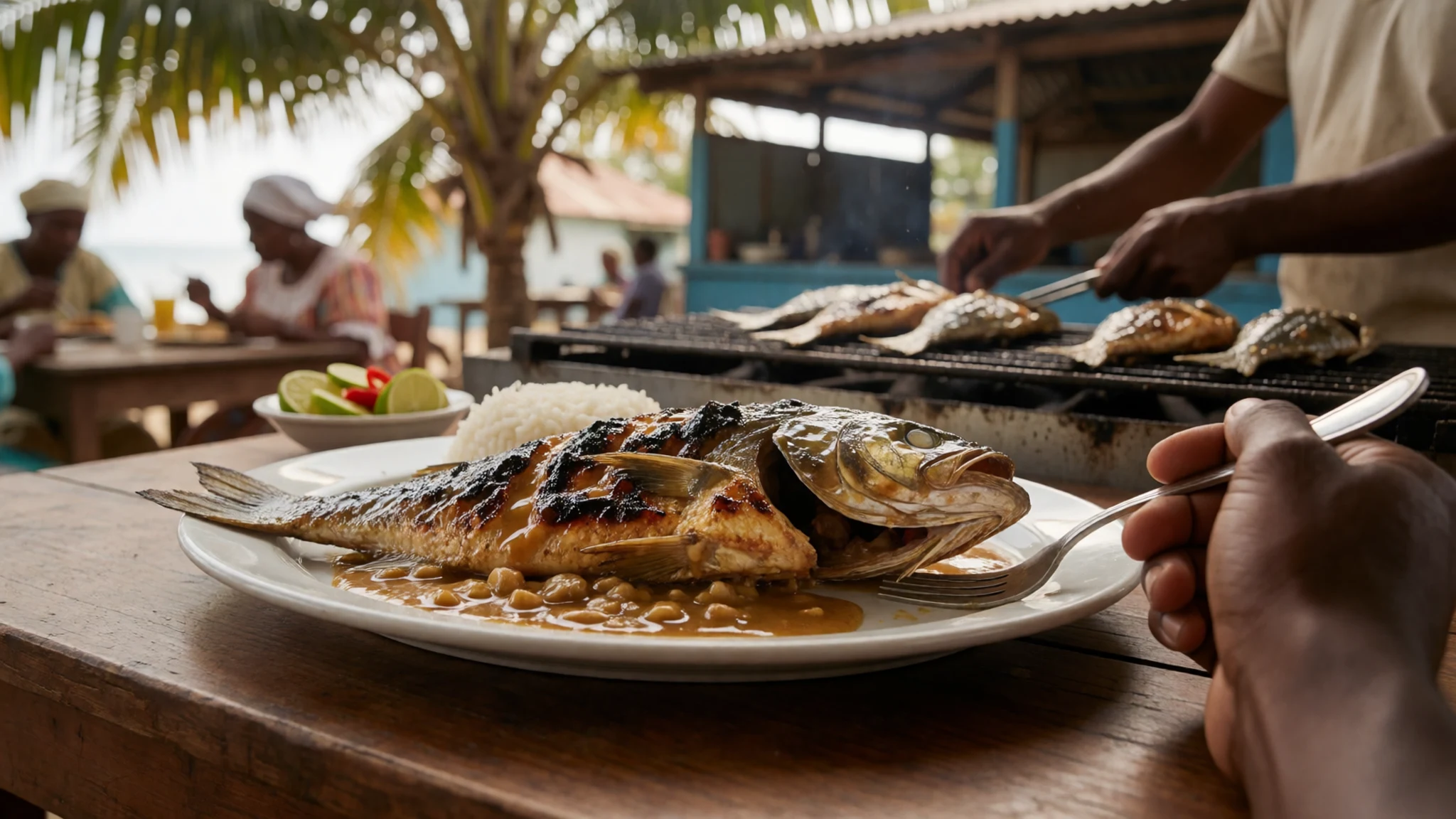
- Colombo — Creole eateries and family-run lunch spots
A Guianese Creole curry, usually of chicken or pork, spiced with colombo powder and served with rice. It is home cooking at heart and turns up on menus at Creole eateries, often with a side of cassava or beans.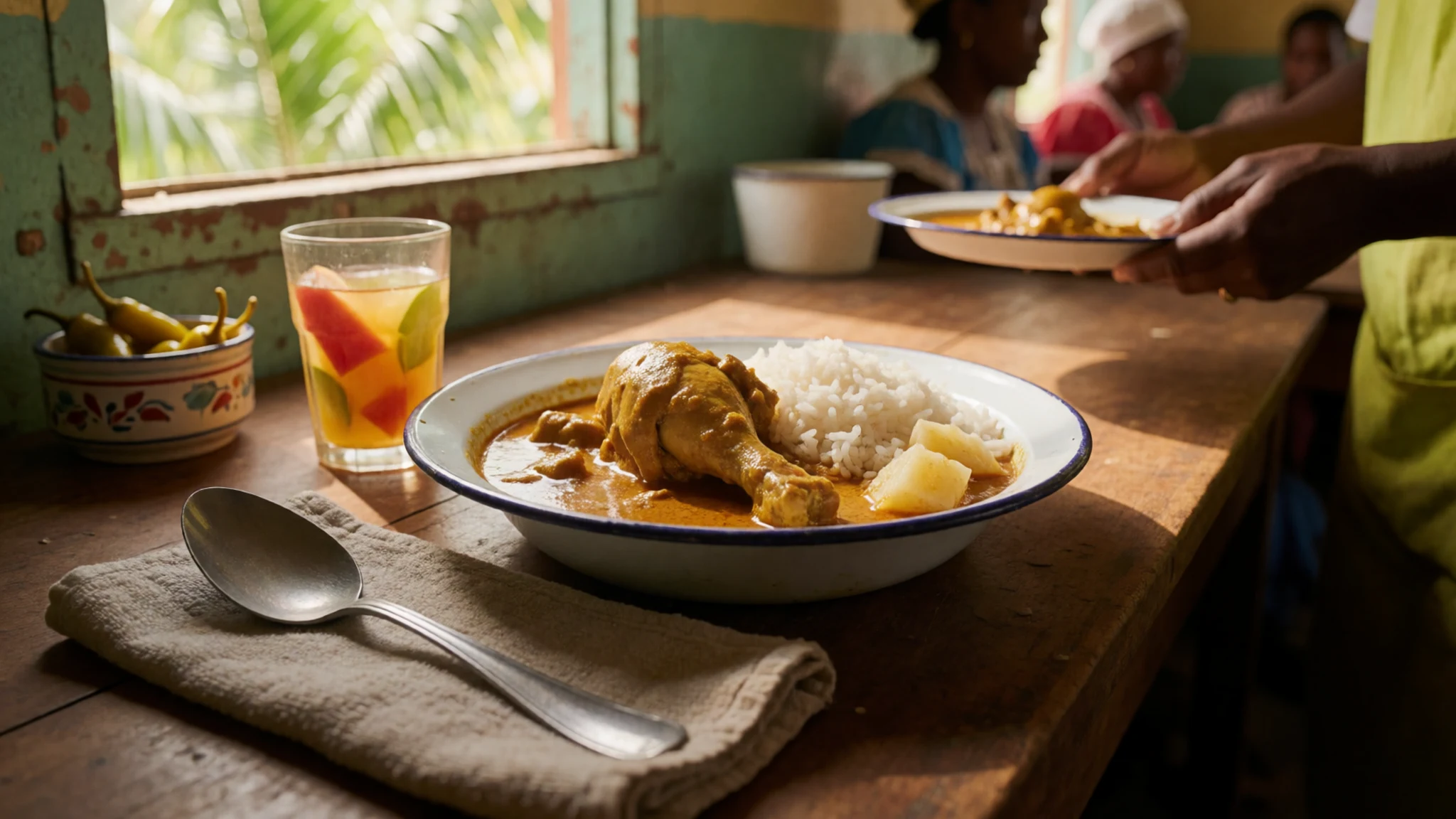
- Bouillon d'awara — Creole restaurants and family tables at holiday times
A festive Guianese stew built on the fruit of the awara palm, cooked with smoked fish or meat and vegetables. It is traditionally a celebration dish, so ask locally whether anyone is serving it when you visit. - Brazilian plates — Small Brazilian eateries around the town centre
Brazil's community here is visible on the plate: grilled meats, rice and beans, fried snacks and fresh fruit juices. Portions are generous, and lunch is the busiest time at the small eateries. - Nems and noodle soups — Chinese-run eateries and market stalls
Chinese-run eateries and Hmong cooks bring spring rolls, noodle soups and stir-fries to the table. These are fast, filling lunches that suit a hot day better than a heavy stew. - Market fruit and vegetables — Place de la République and the Saturday roadside market
Tropical fruit, roots and leafy vegetables fill the stalls on Tuesday and Friday mornings at Place de la République, finishing by early afternoon. A vegetable market also runs on Saturday mornings beside the road to the fish hall.
Plan it
Best time. August to October is the short dry season and the easiest window for beaches and boat trips. For the rest of the year rain is heavy and falls on most days under very cloudy skies. Carnival in February brings parades and crowds, and July and August bring the free open-air cinema on the beach.
How long. 2–3
Getting there. Fly to Cayenne–Félix Eboué airport, then take a TIG bus from Cayenne to Kourou (a little over an hour), a shared minivan or a taxi; a hire car gives the most freedom along the coast road.
Budget. mid
Tips
- Book the Îles du Salut catamaran ahead, especially for weekends and holidays
- For a launch viewing, apply online well in advance, and check official channels for space centre tours
- Carry a light waterproof and insect repellent at all times
- Keep valuables out of sight and out of parked cars, as crime is higher here than in much of France
- Go to the fish hall and markets early; check the town website, ville-kourou.fr, for events
Etiquette
- Say bonjour when entering a shop or eatery
- Ask before photographing people, and follow guide instructions at the space centre
- Take litter away from beaches and island trails
Nearby
Sources
- Wikidata Q273312 (CC0)
- Wikipedia — Kourou (CC BY-SA 4.0)
- Wikivoyage — Kourou (CC BY-SA 4.0)
- Photo: Allée du Bac, Kourou — Arria Belli (CC BY-SA 2.5)
- Photo: Centre spatial guyanais entrance — mike (CC BY-SA 2.0)
- Photo: Église Sainte-Catherine, Kourou (CC BY-SA 2.5)
- Photo: Tour Dreyfus at Pointe des Roches — Cayambe (CC BY 3.0)
- Photo: Kourou beach, Sunday evening — Arria Belli (CC BY-SA 2.0)
- Photo: Îles du Salut — User:Spooky (CC BY-SA 2.0)
- Photo: Locator map of Kourou — Tschubby (CC BY-SA 1.0)
- Photo: Kourou beach — Arria Belli (CC BY-SA 1.0)


