Khovd
Khovd, Mongolia
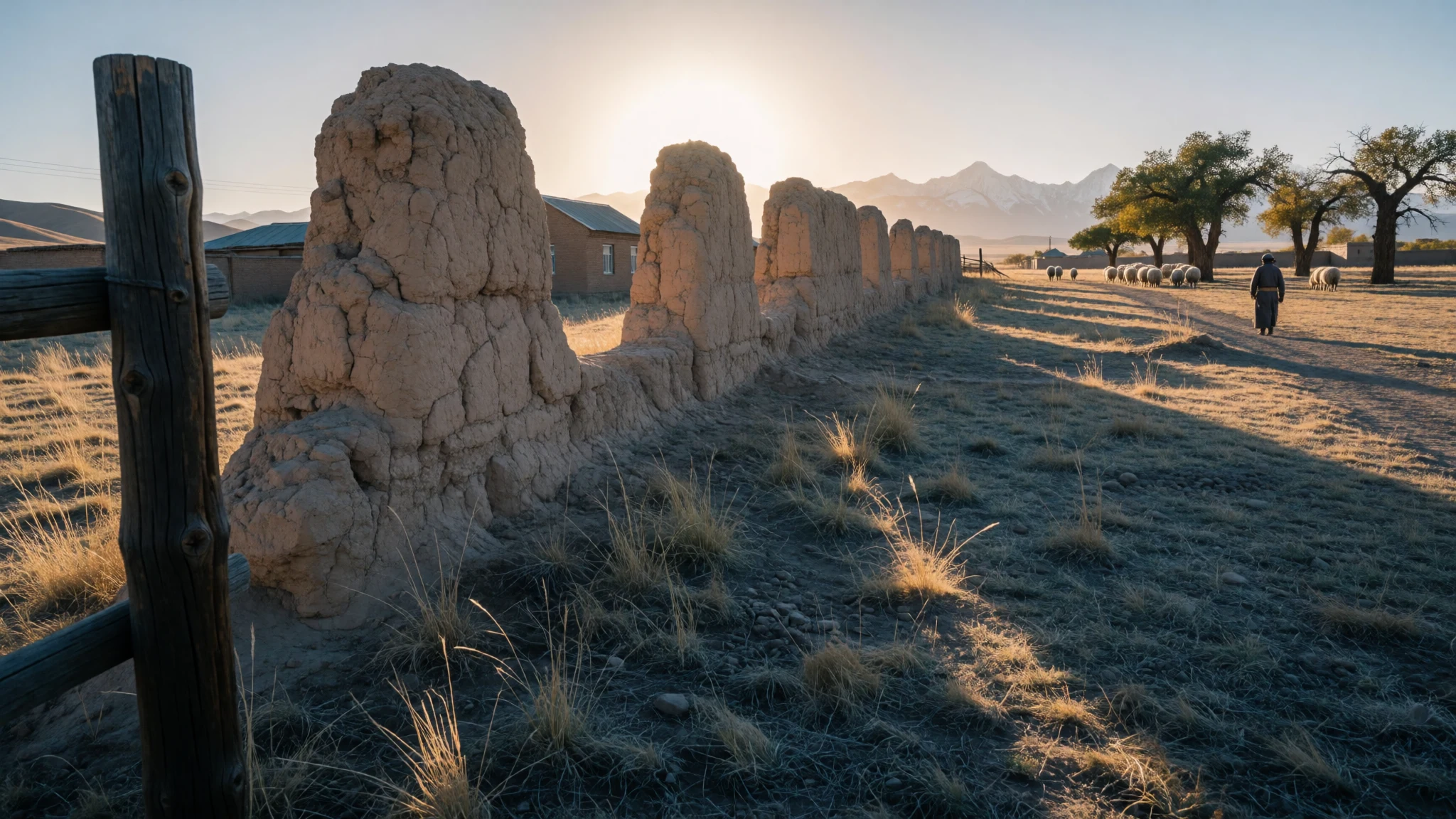
Khovd is a quiet western Mongolian town under the Altai, with ancient rock art, a Qing-era fortress ruin and a mix of peoples.
The place
Khovd sits in far western Mongolia, at the foot of the Altai Mountains, and serves as the capital of Khovd Province. Its elevation is 1395 m, and the Buyant River runs through the middle of town. With 26,023 people it feels more like a large, well-kept village than a city: low buildings, wide streets, a central square and the bare brown hills close behind.
The climate is cold desert. Winters are long, dry and bitterly cold, summers are short and warm, and what little rain falls comes mostly in summer. That shapes everything, from when travellers come to what people eat and wear. The trees lining the main streets were planted by the Qing administrators, and they give the town a shade that is rare in this landscape.
The town has grown steadily since the early twentieth century. It now has a university drawing students from across the west, a hospital, a theatre, a cinema and an airport, which is why it works as a base for the region. Locally it is also known by the older spelling Kobdo, and the district is called Jargalant.
What sets Khovd apart is its people. The province is divided into 17 soums, and the communities include Kazakhs and several distinct Mongolian groups, each with its own dress, speech and customs. East of town lie Khar-Us Lake and the protected land around it, and the mountains behind the airport hold rock art. Expect a slow, small-town pace, with few signs in English and plenty of curiosity from locals.
Its story
Khovd's history is a story of fortress towns moved from river to river as empires rose and fell. A Dzungar ruler founded a settlement on the Khovd River in the late seventeenth century, and captives from Central Asian oasis communities taught local people how to farm and grow fruit. Gardens and orchards became part of the town's identity, even in such dry country. Wikidata gives 1731 for the city as it is recorded today, so older and newer dates sit side by side in the record.
After the Qing broke the Dzungar state, the garrison town was relocated in the years after 1757 to the Buyant River, where Khovd stands now. The Qing placed an amban, a resident governor, here with troops behind walls, and the ruined fort at the north end of town is what remains of that rule. The trees along the main streets date from the same period.
The turning point came in 1912. On 7 August that year, Mongol forces led by Manlaibaatar Damdinsuren, Khatanbaatar Magsarjav and Ja Lama Dambiijantsan took the town, destroyed the Manchu and Chinese garrisons and ended Qing-appointed government. The attack is remembered locally as a liberation, and Baatar Khairkhan Mountain, south of town, is tied to the story as the place from which the assault was ordered.
Since then Khovd has become a regional centre for schools, health care and flights rather than a garrison. The older layers are still easy to find, from the fortress ruin to the museum collections, and rock art in the hills reaches much further back than any of the empires.
What to see
- Khovd Museum — Town centre
The museum occupies a yellow two-storey building across from the police station and is the best first stop in town. Its most striking holdings are full-size, complete costumes of the ten ethnic groups of the province. It also keeps copies of rock paintings as they looked before vandals damaged them.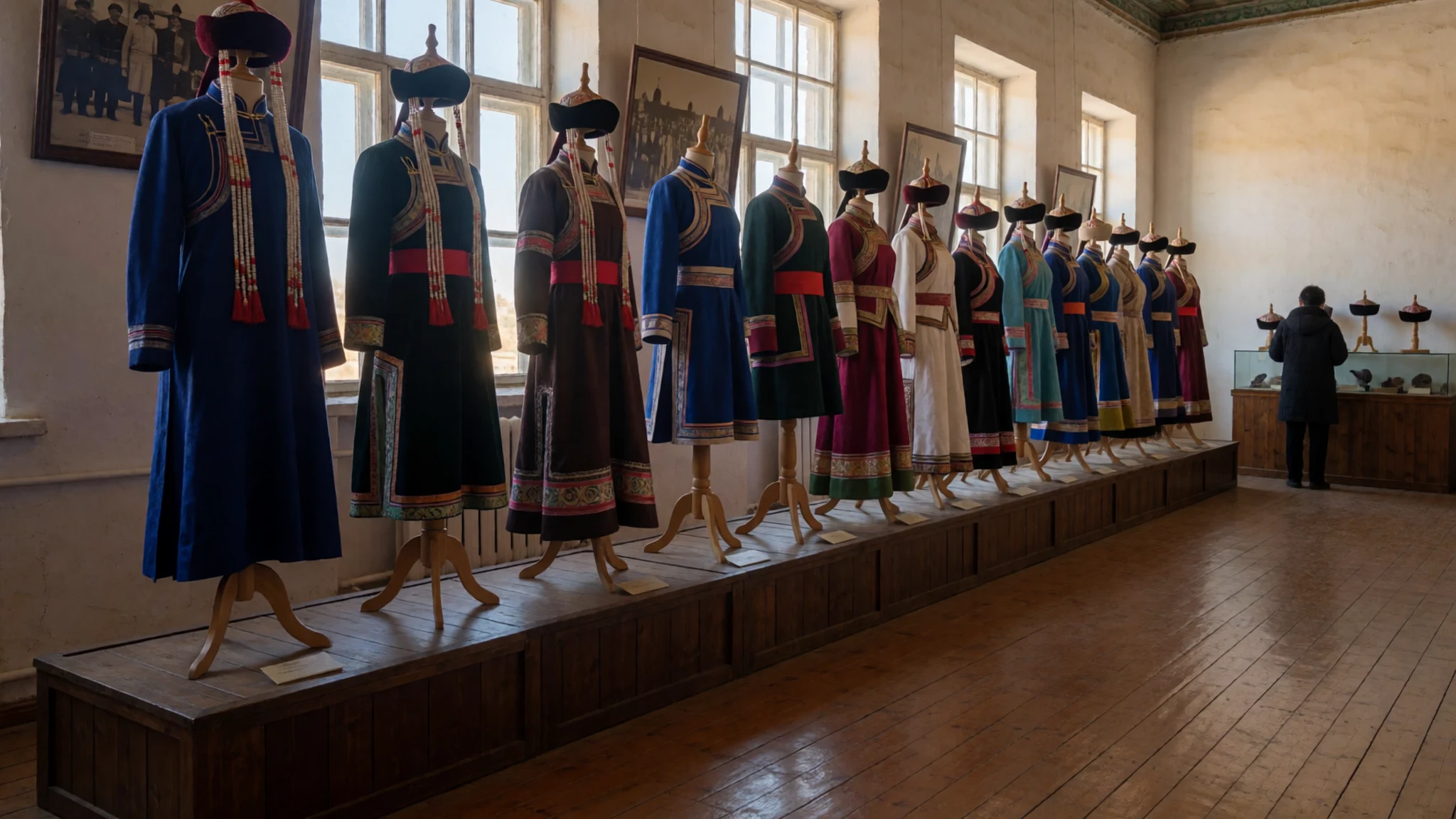
- Sangiin Kerem fortress ruins — North end of town
At the north end of town stand the ruined walls where the Manchu viceroy once lived with his troops. Little is left standing, but the footprint explains how a Qing garrison town was laid out, and the site pairs well with the story of the 1912 capture. Go in daylight and take care on crumbling ground.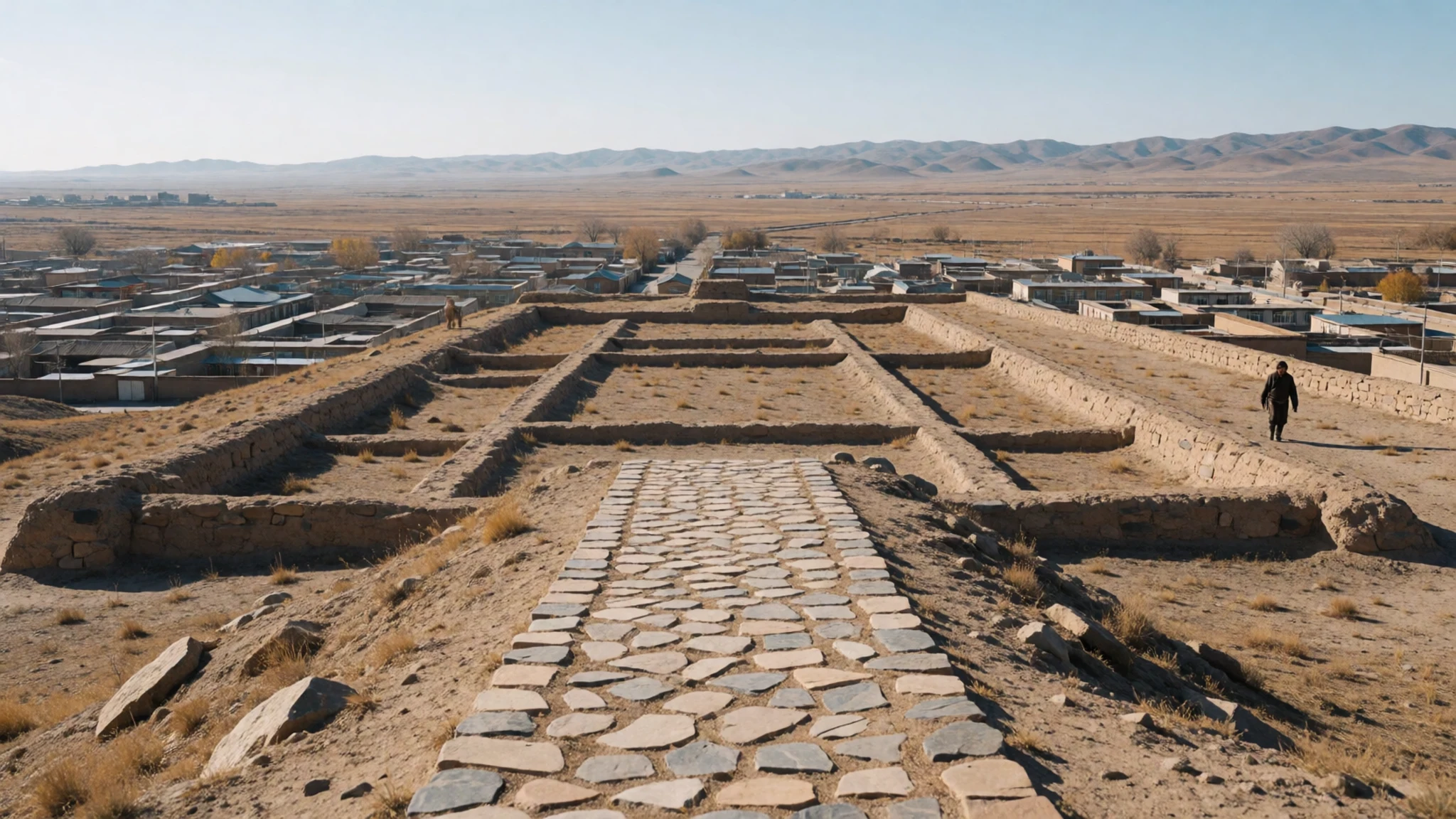
- Baatar Khairkhan Mountain — South of the airport
This hill lies about 6 km south of the centre, just beyond the airport. It carries both history, as the point from which the 1912 attack on the town was commanded, and rock art. Petroglyphs are mostly on the south and south-western slopes. Ask locals to point out the best panels.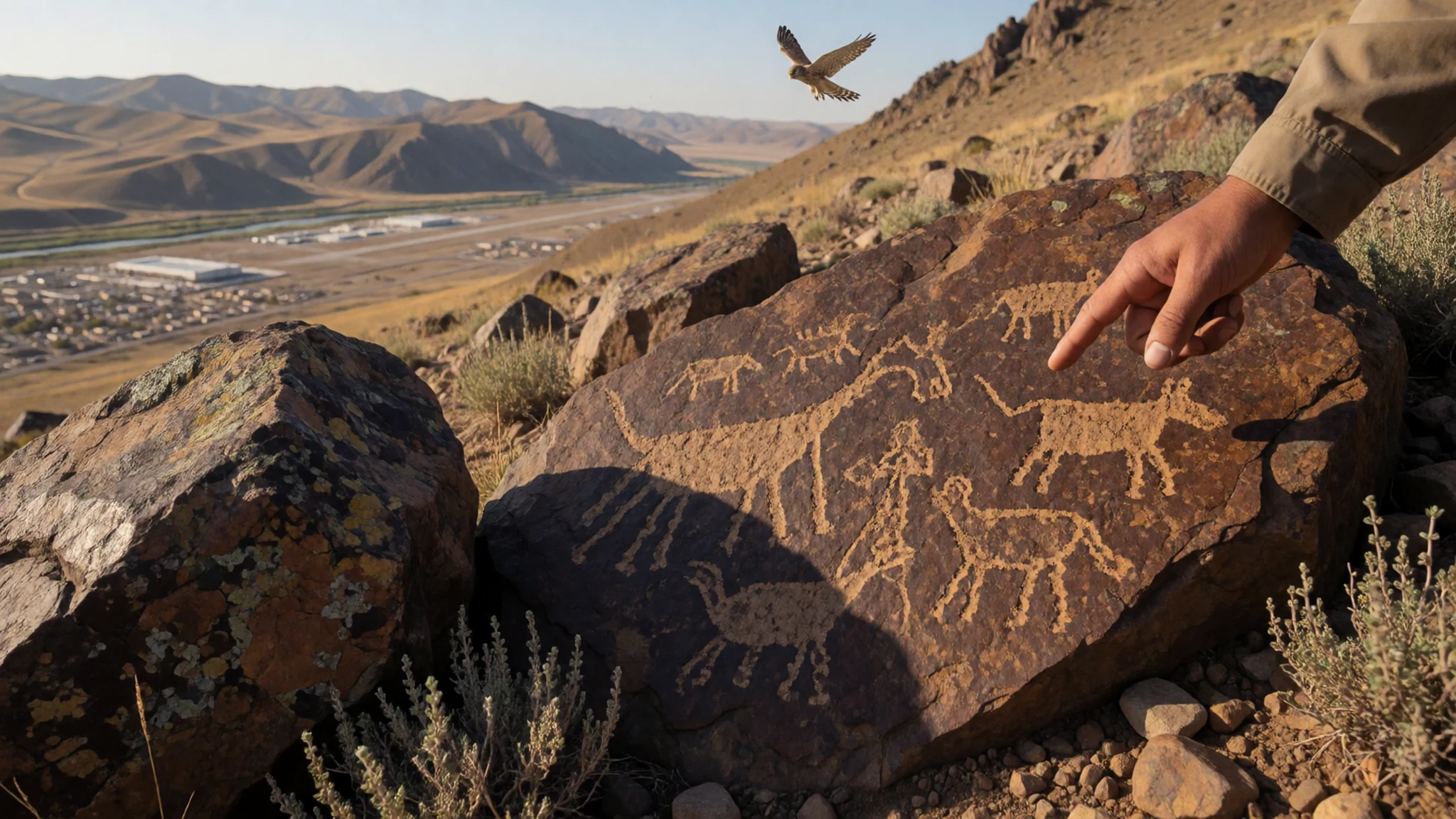
- Khar Us Nuur National Park — East of Khovd
East of Khovd lie three connected lakes and a large reserve of 850,000 hectares, ringed by the Altai, Khangai and Tangyn ranges. The lake edge is about 25 km from town and is the nearest real wilderness. It suits birdwatching and quiet walking, and it takes a vehicle and a local driver.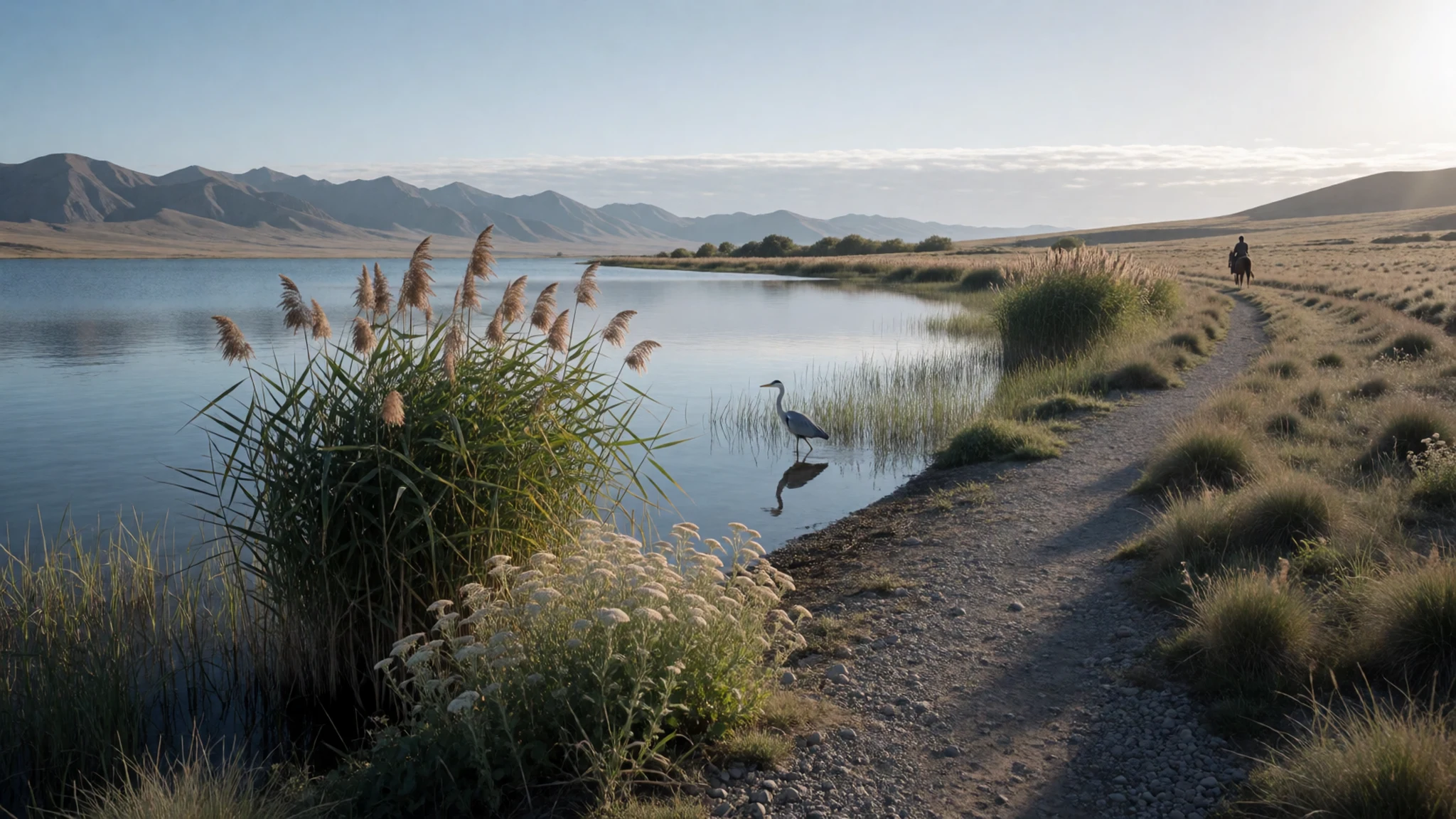
- Tsenkheriin Agui cave paintings — Mankhan soum, south-east of Khovd
The province's best-known rock art is in a cave in Mankhan soum, a long day's drive south-east. The red-ochre figures of camels, sheep, bulls, ibex and other animals are thought to be about 15,000 years old. Plan it as a full excursion, and ask at the museum first.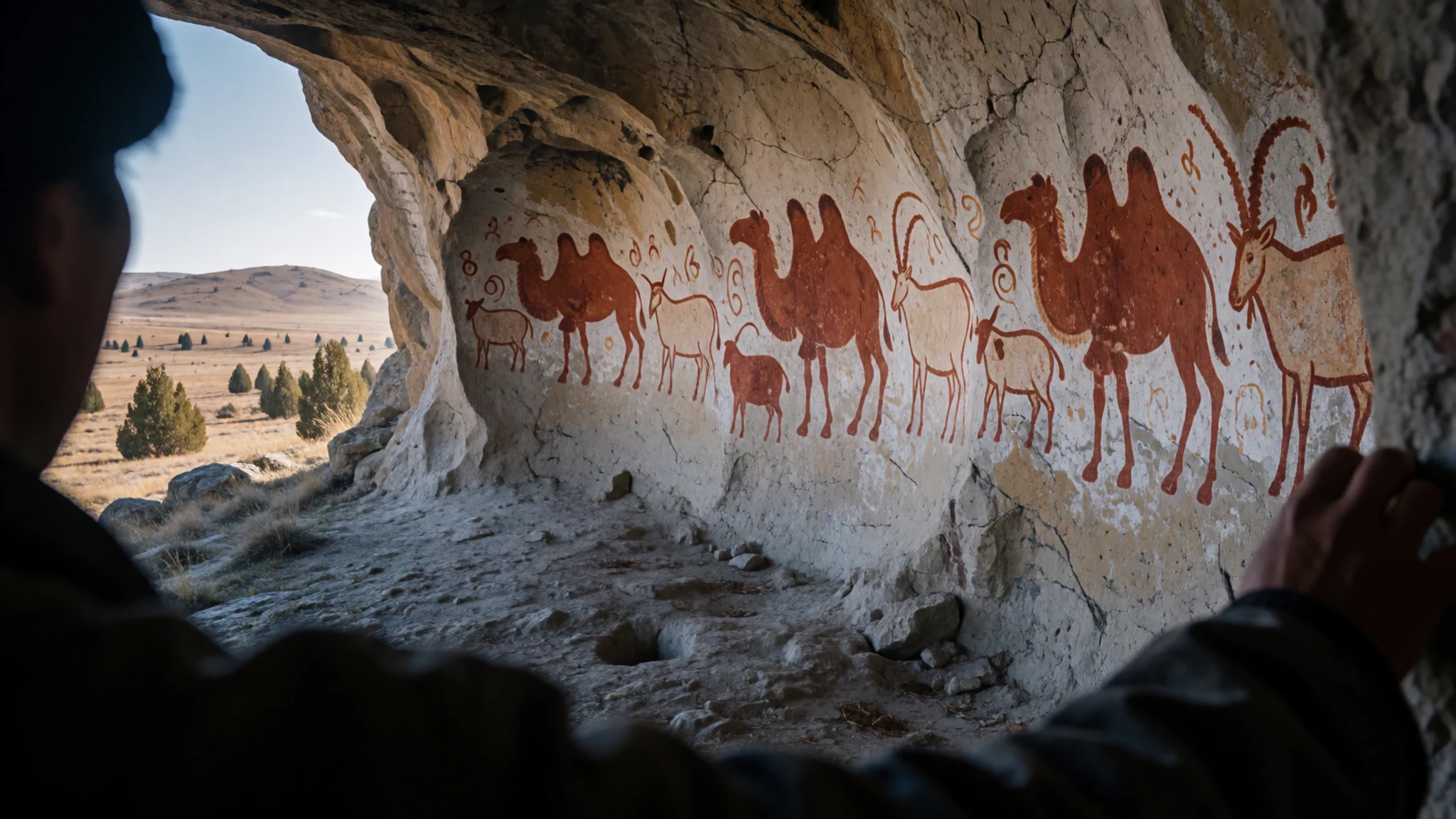
Culture
Khovd is one of the few places in Mongolia where Kazakh and several Mongolian traditions share one small town. Kazakh families, largely Muslim, keep their own language, music and cooking, while the Mongolian groups of the province each have distinct dress and dialect. The museum's costume collection is a good way to tell them apart before meeting people.
Hospitality here is old and practical, shaped by cold winters and long distances. Visitors invited into a home or a ger are usually offered milk tea, often with bread or sweets, and refusing outright can cause offence. The Qing years left their mark in the planted streets and the fortress ruin, and the 1912 victory is part of local pride, with statues of heroes such as Amarsanaa in the town's parks.
Life runs at a slow pace. Distances between places are long, buses leave when full and plans change, so patience is part of the culture as much as of travel. Herding still shapes the calendar, and many families move with their animals between seasons. The rock art in the surrounding hills reminds people that this land has been lived in for thousands of years, and locals tend to treat those sites with care rather than as attractions.
If you are offered tea or food in a home, accept it with your right hand or both hands, and do not step on the threshold or point your feet towards the hearth.
What to wear
In Khovd, traditional dress depends on the community. Mongolian groups wear the deel, a long wrap-over robe with a high collar, fastened at the side and tied with a sash, in wool, cotton or silk, heavier and often lined or fur-trimmed for winter. Each group has its own cut, colours and hats, and the museum's full-size costumes of the province's ten ethnic groups show the differences clearly. Kazakh dress has its own embroidered robes and distinctive headwear. These are worn mostly at festivals, weddings and national holidays, and some older people wear a deel daily.
On an ordinary day in town, people dress as they would in any small city: jeans, jackets, fleeces and padded coats in winter, with sturdy boots. Some herders and older residents still wear the deel with a belt and boots through the working week, and you will see the sash and boots at celebrations on the main square.
For visitors, the climate decides. Summer days are warm but nights are cool, so bring layers and sun protection, as the air is dry and the sun strong at this elevation. In winter, bring a proper down coat, hat, gloves and insulated boots. Dress modestly, with covered shoulders and knees, particularly in Kazakh households or religious places. For rock art sites and the fortress ruin, wear closed shoes with grip, as the ground is loose and rocky.
What to eat
- Khuushuur — Main market, near the entrance gate
Fried pastry parcels of minced meat, usually mutton or beef, with onion, crisp outside and juicy within. The main market is the place to try them, particularly from the stall just inside the market gate, which locals single out.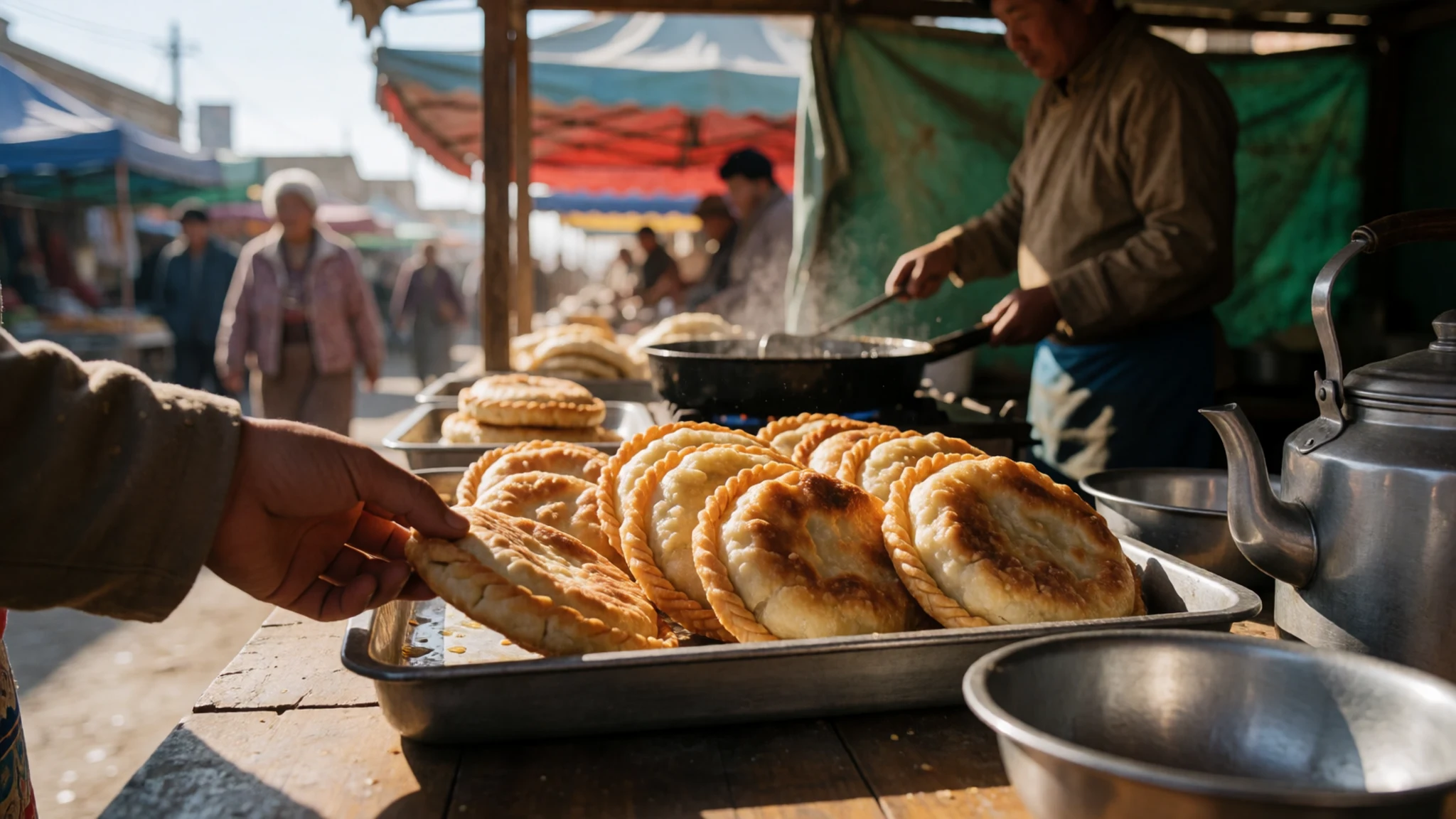
- Suutai tsai — Any local canteen or home
Salty milk tea, the drink that comes with almost every meal in Mongolia. It is warming, savoury and different from sweet tea. Order it alongside any meal if you want to eat as a local would.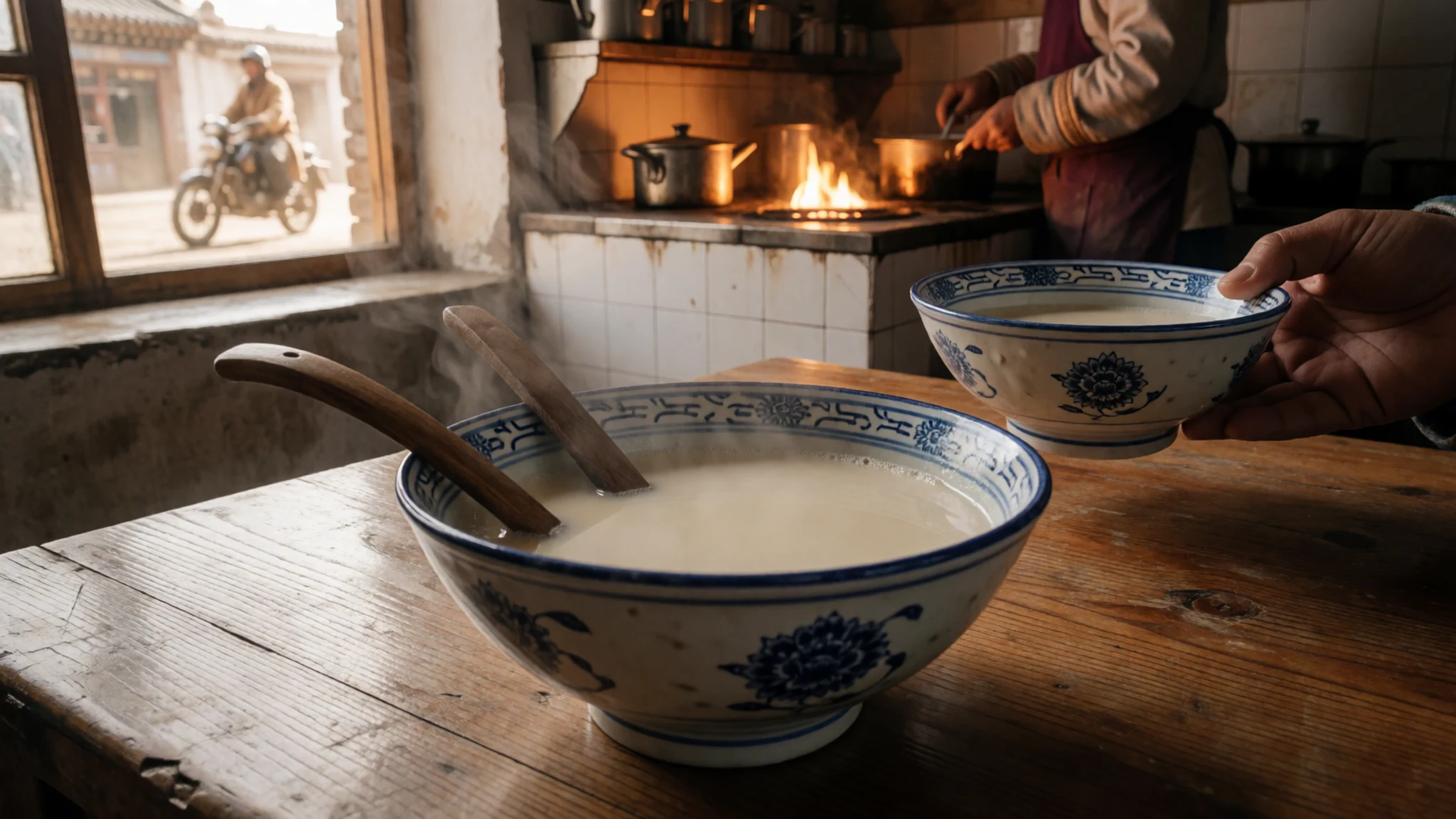
- Buuz — Canteens and eateries near the main square
Steamed dumplings filled with seasoned minced meat, usually mutton, and eaten by hand. They are a staple of home cooking and appear on most menus, though availability changes by day. - Tsuivan — Simple restaurants off the main square
Hand-cut noodles stir-fried or steamed with meat and vegetables. It is a filling, plain dish that suits a cold day, and it is widely available in simple restaurants around the centre. - Baursak — Market stalls and Kazakh households
Small pieces of fried dough, eaten with tea in Kazakh homes and sold in the market. They are a good way to taste the Kazakh side of Khovd's food, especially fresh and warm.
Plan it
Best time. June to September, when the short summer is warm and the dry roads are most passable. Winters here are long, dry and frigid, so travel then needs serious cold-weather gear.
How long. 2–3
Getting there. Fly to Khovd from Ulaanbaatar; check the airlines for current schedules, as there is no single official timetable to rely on. The airport is just south of town, and the centre is a short taxi ride away. By road, a daily bus from the Dragon Centre in Ulaanbaatar takes 24 hours or more. Vans from Ulgii take about 7 hours, and depart when full.
Budget. low
Tips
- Book flights early and confirm them near the date, as small regional schedules change
- Carry cash, as cards may not be accepted at markets and small eateries
- Bring layers and sun protection, because summer days are warm but nights turn cool
- Hire a local driver for Khar-Us Lake and the cave paintings, as signs are few
- Ask at the museum for directions to rock art, since locals know several sites
Etiquette
- Accept tea or food when offered in a home, using your right hand or both hands
- Do not climb on or touch the rock art, and take nothing from the sites
- Ask before photographing people, especially in Kazakh households
Nearby
Sources
- Wikidata Q731256 (CC0)
- Wikipedia: Khovd (city) (CC BY-SA 4.0)
- Wikivoyage: Hovd (CC BY-SA 4.0)
- Khovd Main Square — Nahcamuk (CC BY 3.0)
- Ховдын Жаргалант — MongolWiki (CC0 1.0)
- Khovd Street — Nahcamuk (CC BY 3.0)
- Hovd — Oschtan (CC BY 3.0)
- Hovd from the cemetery (Public domain)
- Amarsanaa Statue in Secret park (Public domain)
- Autorités chinoises de Kobdo — Chaffanjon (Public domain)
- Sangiin Kerem Kobdo — Lady Anu (CC BY 3.0)


