Khorgo
Khorgo, Mongolia
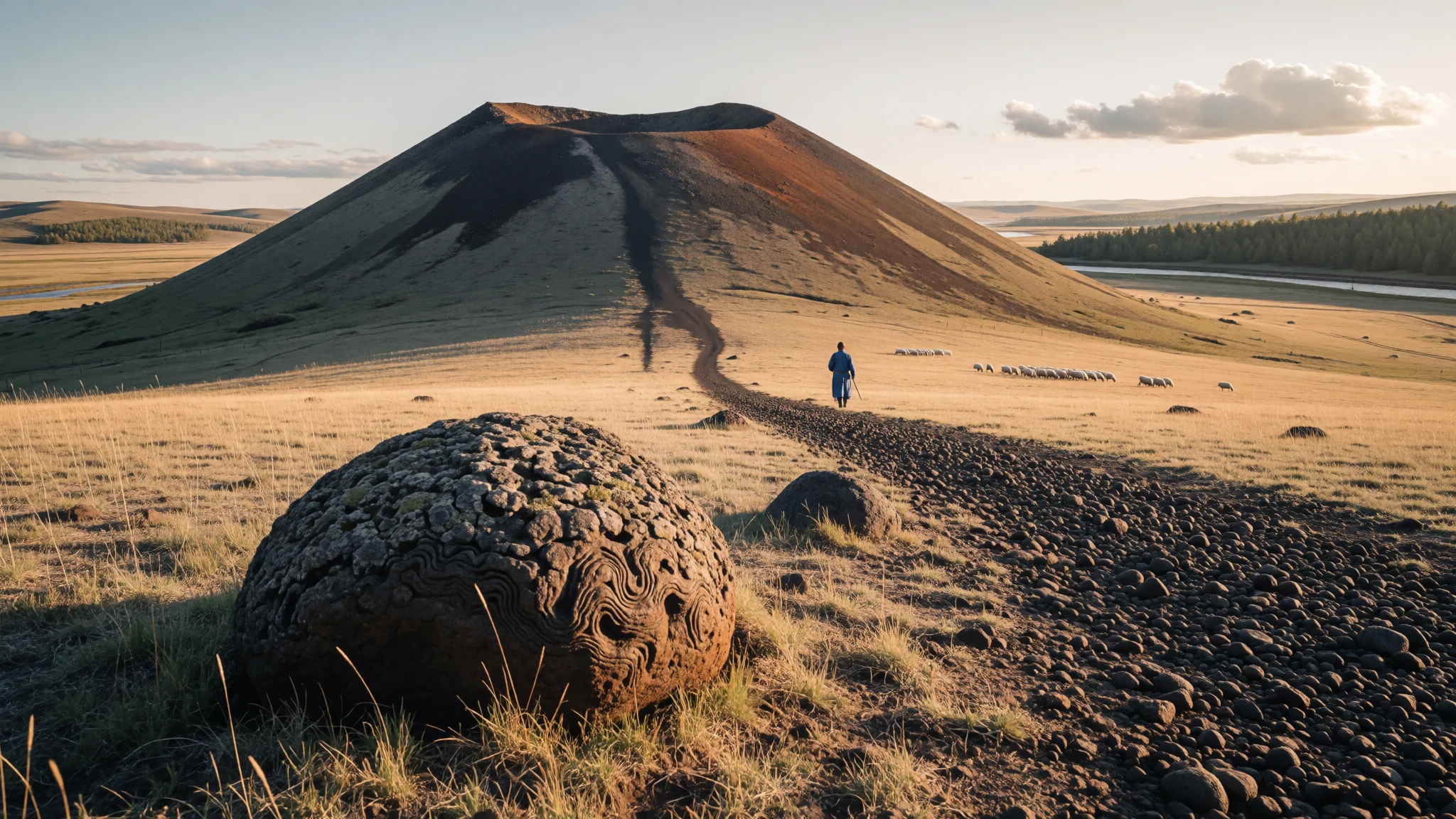
Khorgo is a short, easy climb to a real volcanic crater, set in quiet Mongolian steppe beside a lake that the lava itself created.
The place
Khorgo is a dormant volcano in Tariat District, Arkhangai Province, in central Mongolia, part of a cluster of vents known as the Taryatu-Chulutu volcanic field. The listed height is 2,400 m above sea level, but the cone itself stands only about 120 m above the ground around it, so the climb is short and the thin, cold air does more work than the slope. At the top, a crater about 180 m wide drops into a bowl of dark rock, grass and young larch, with no lake inside. Outside, the flanks are rough basalt in black, rust and grey, with loose cinder underfoot. West of the cone lies Terkhiin Tsagaan Lake, and together the two form the core of Khorgo-Terkhiin Tsagaan Nuur National Park. Protection began in 1965 and was tightened into national-park status in the 1990s, mainly to keep the scenery and the rarer plants and animals intact. The land around is high steppe cut by river valleys, with patches of Siberian larch on the cooler slopes. Herding families live here with horses, yaks, sheep and goats, so the approach to the volcano often passes gers and grazing animals. Birdlife is good, with ruddy shelduck on the water, while red deer and other deer live in the forest and wild boar and wild goats are also recorded. Khorgo is remote, quiet and exposed to weather. Its appeal is the mix of an easy ascent, a strange black landscape and a very open sky.
Its story
Khorgo's story starts with an eruption about 8,000 years ago, in the Holocene. Lava poured down from the cone into the valley below, cooled, and hardened into a barrier across the path of the river. Water backed up behind that natural dam, and the result was Terkhiin Tsagaan Lake, which exists only because of the eruption. The volcano is, in a sense, the author of its own scenery: the black rock, the crater and the lake all belong to a single episode. Some of the lava set into hollow blisters and chambers that local people call basalt yurts, a name that fits their rounded, domed shapes. The crater walls tell a quieter story too. Warm vapour still seeps from cracks in them at times, and in winter it freezes into ice formations. Seen from far off, these have been likened by locals to flocks of sheep scattered across the mountain, an image that says as much about herding life as it does about geology. Across Mongolia, prominent hills and passes are often treated with respect, and stone cairns called ovoo mark many high places, so a volcano like this sits naturally within that tradition. Official protection came in 1965, when the area became a nature reserve, and national-park status followed in the 1990s. The park's task today is to balance grazing, visitors and the survival of the endangered plants and animals it was created to shelter.
What to see
- The crater rim walk — Summit of Khorgo volcano
A path leads up the cinder cone to the rim, and the crater is about 180 m across. Walking part of the circuit shows the bowl from several angles, with larch and grass growing inside and the steppe spread out beyond. Wind can be strong, so keep well back from loose edges.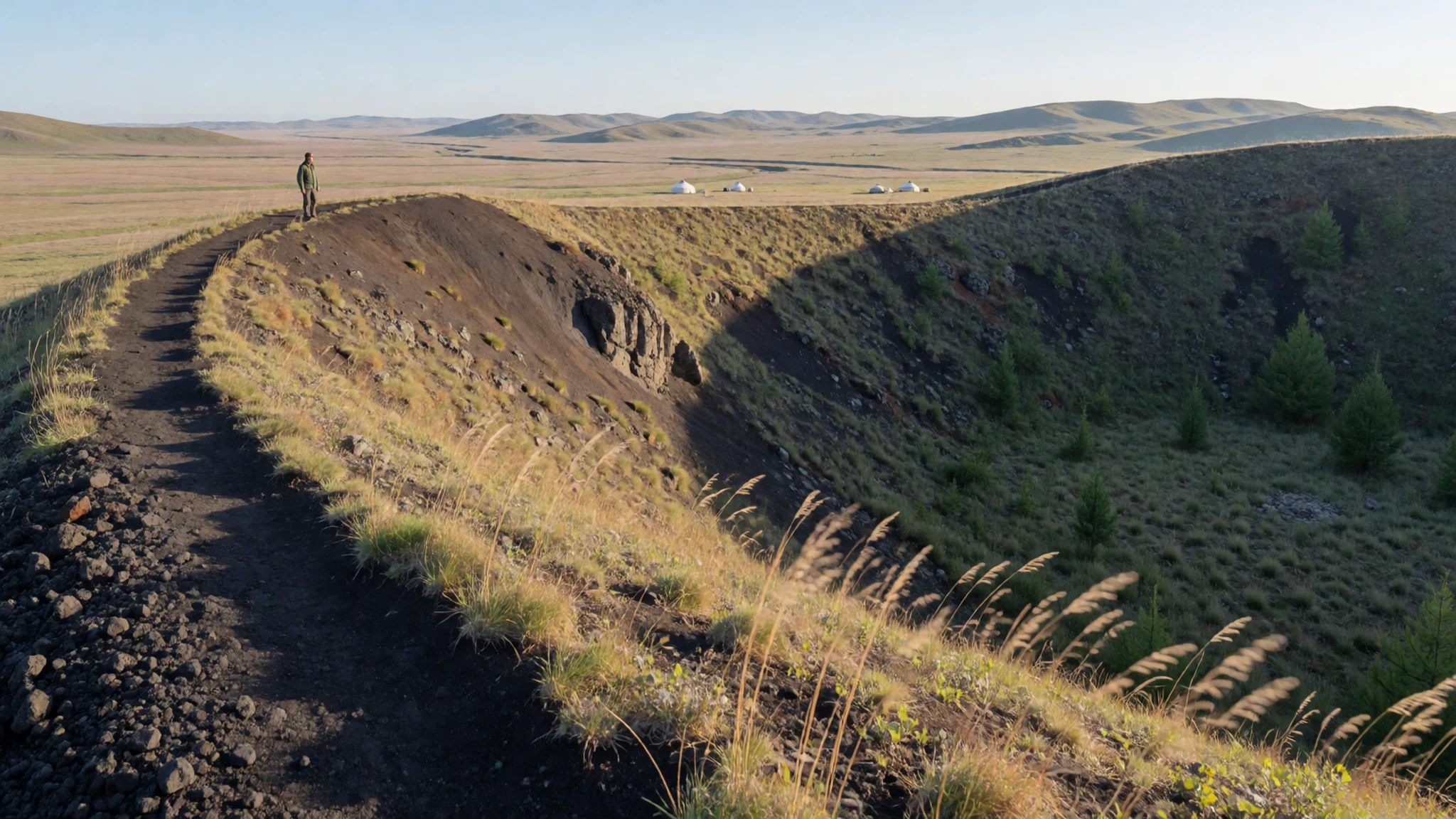
- Basalt yurts and lava formations — Lava field around the cone
Around the cone, solidified lava has formed domed blisters and hollows that locals call basalt yurts. The rock is dark, ropy and sharp in places, with rust-coloured staining. A slow wander at the base, looking closely at the textures, rewards more than rushing to the top.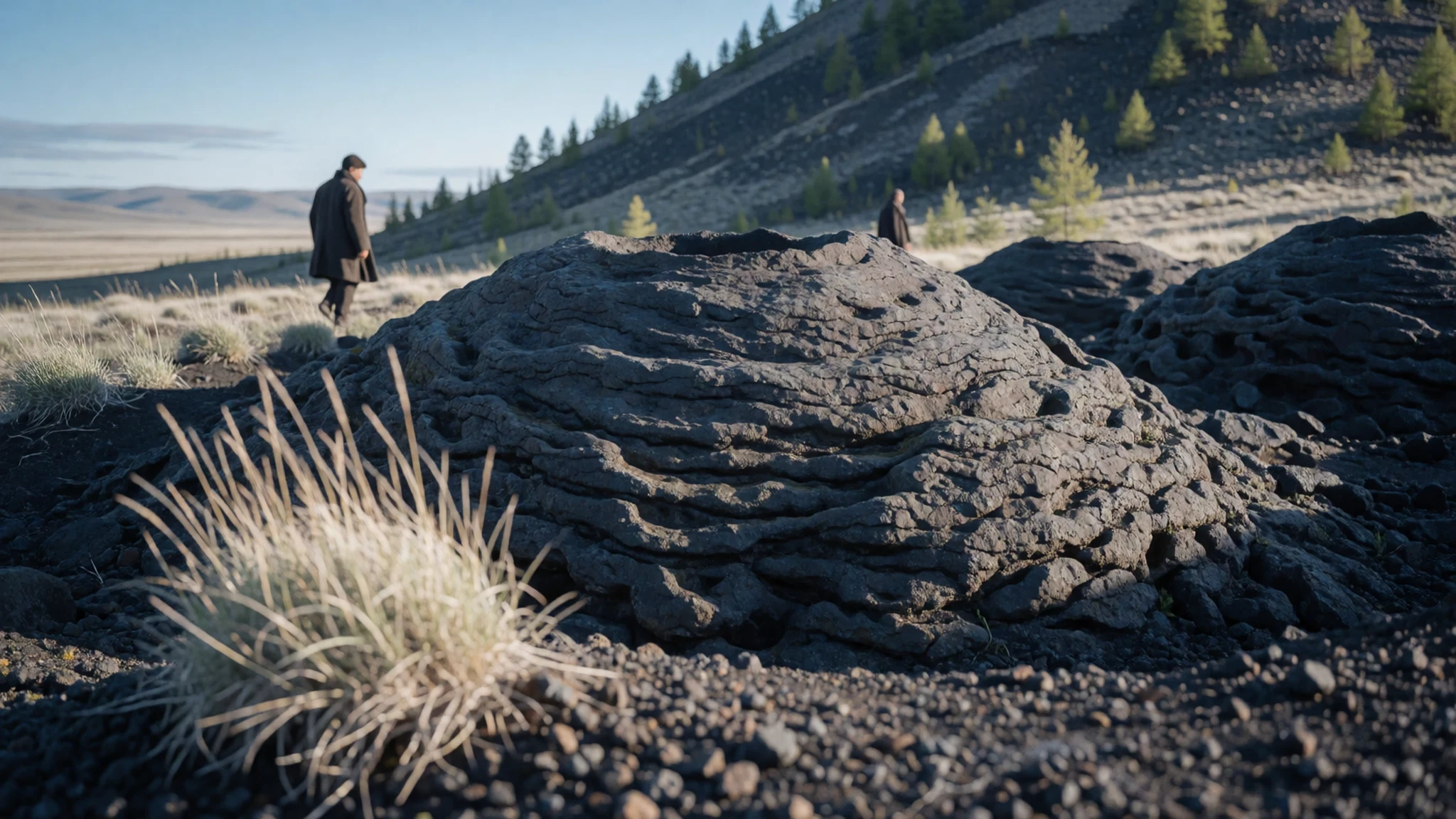
- The view across the lava field — Upper slopes, looking out over the valley
From the upper slopes the black flows can be traced down the valley where they once spread. Beyond lie steppe, larch patches and herders' gers. Clear mornings give the sharpest outlines, and the exterior of the cone looks most dramatic when low sunlight rakes across the rock.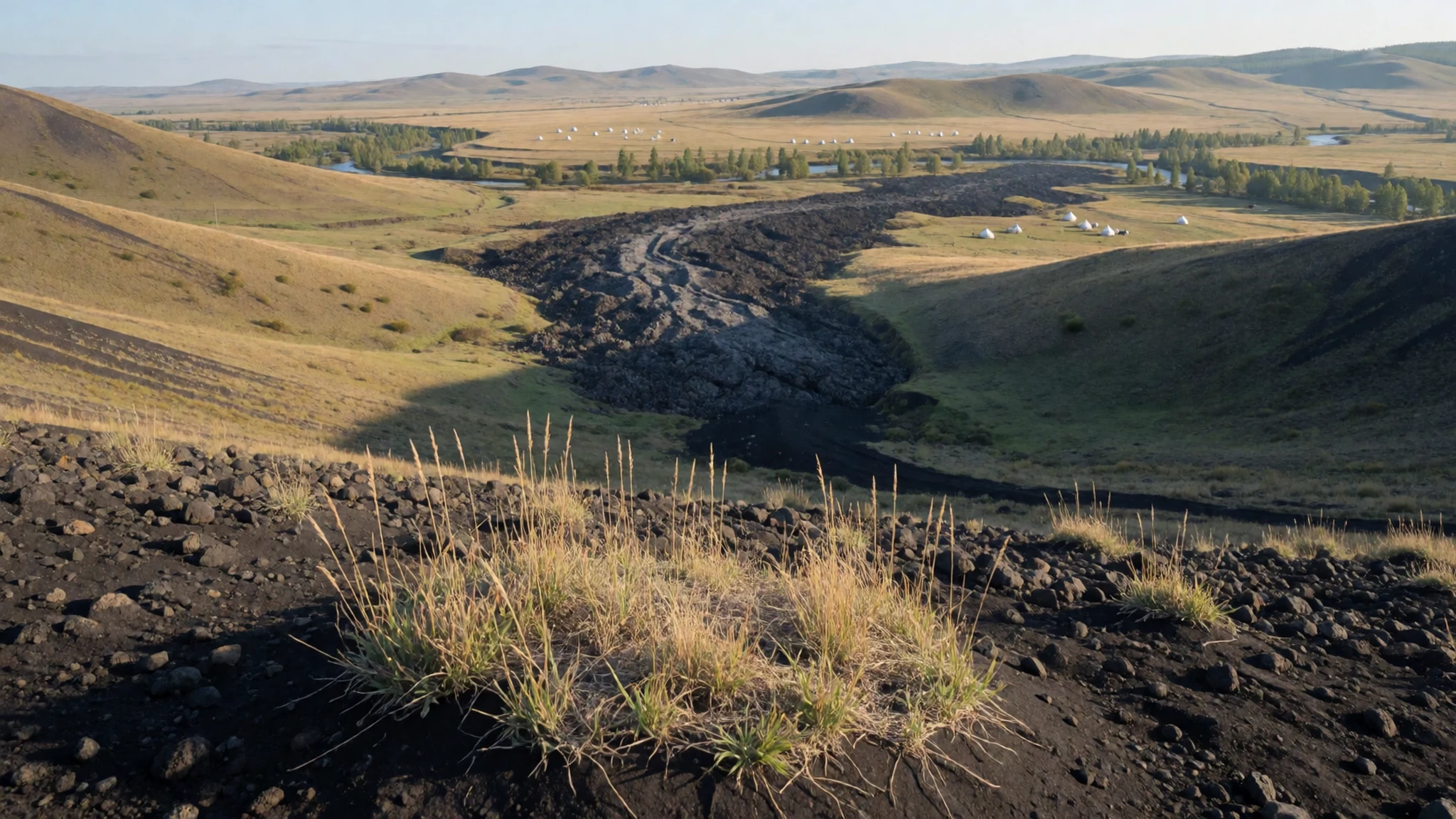
- Terkhiin Tsagaan Lake — West of the volcano, within the national park
This freshwater lake lies west of the volcano and was formed when lava blocked the valley. Its shores suit a long, slow walk, and waterbirds such as ruddy shelduck are regular visitors. Weather changes fast over the water, so carry a windproof layer even on bright days.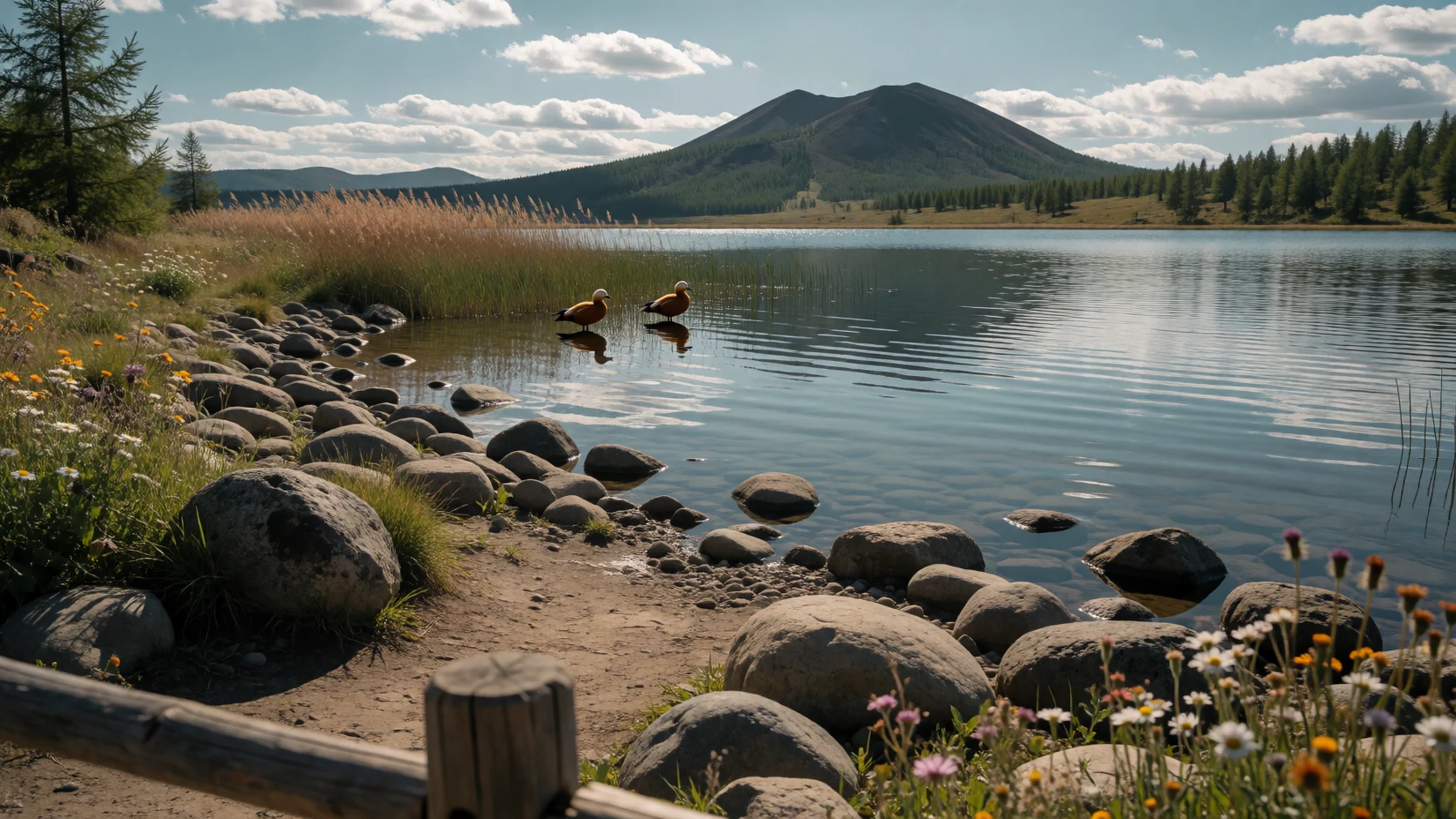
- Larch valleys and wildlife watching — Forested valleys around the volcano
The valleys around the cone hold small forests of Siberian larch, home to red deer and other deer, wild goats and boar. Sightings are never guaranteed, but early morning and dusk are the best times. Binoculars help for birds of prey circling above the ridges.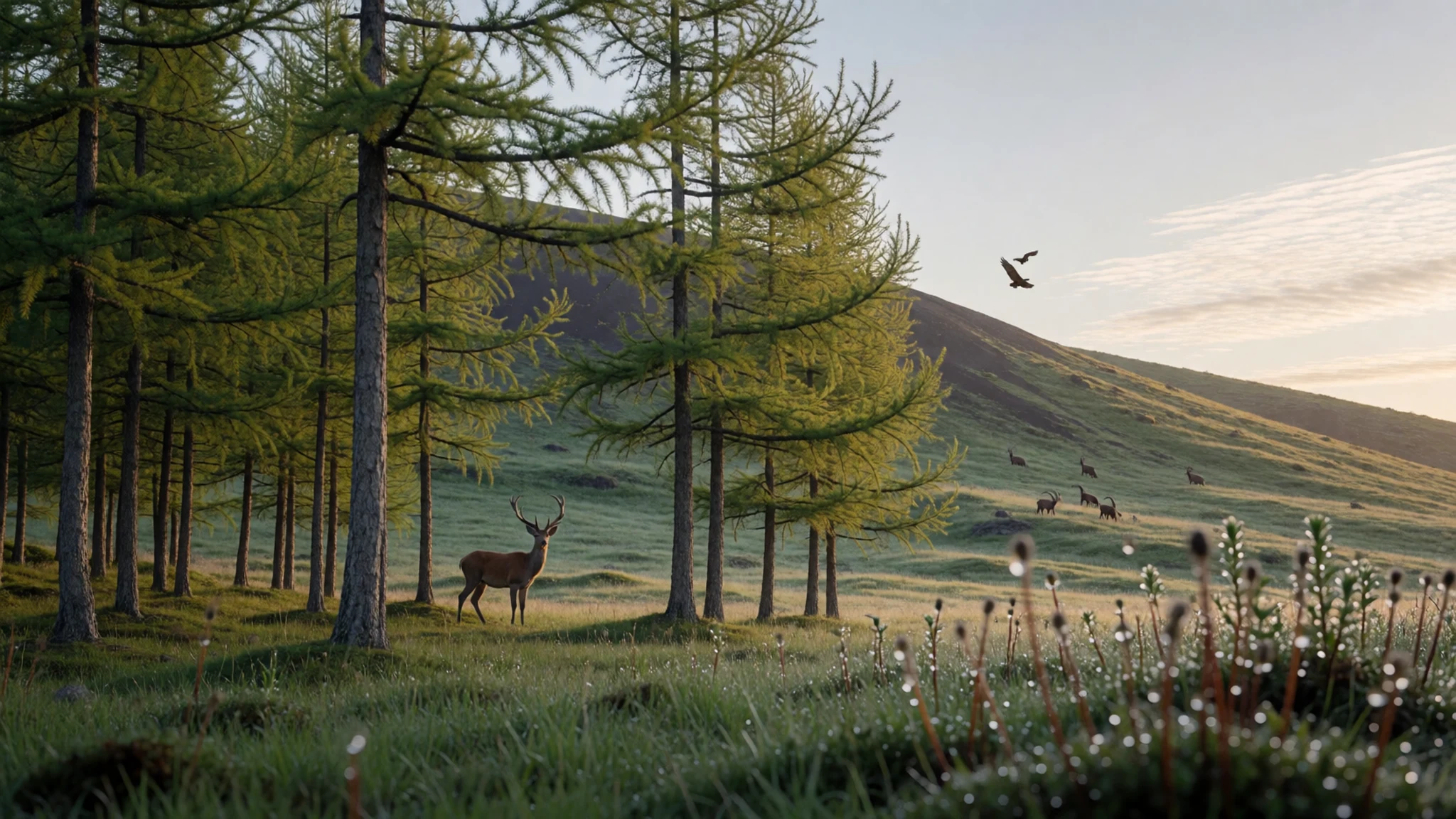
Culture
Khorgo lies in a part of Mongolia where herding is still the main way of life, and the culture around the volcano is shaped by that. Families move livestock between seasonal pastures, live in felt-covered gers, and judge a place by its grass and water as much as by its views. Hospitality is a strong custom: a traveller arriving at a ger is traditionally offered tea or a bowl of something to eat, and refusing outright can seem abrupt. Religious life blends Buddhism with older mountain and sky worship, and many high places carry an ovoo, a heap of stones, branches and sometimes blue cloth scarves left as offerings. Mountains are often treated as having spirits, so the volcano is more than a geological curiosity to local people. Naadam, the summer festival of wrestling, archery and horse racing, is the great social event of the year, with local versions held in many districts. In a small park like this one, tourism is a modest second income beside livestock, so staying at a family-run ger camp or buying dairy goods directly from herders genuinely helps. Distances are large and services are thin, so patience and a flexible schedule are part of the experience. Walk clockwise around any ovoo, never take stones or offerings from it, and ask before entering a family's ger or photographing the people inside.
What to wear
Around Khorgo, the traditional garment is the deel, a long wrapped robe fastened at the right shoulder and side, worn with a bright cloth sash. Summer deels are cotton or silk, often in blue, green or burgundy with contrasting trim, while winter ones are lined or padded with sheepskin or wool. Leather boots with upturned toes, called gutal, and felt or fur-trimmed hats complete the outfit. Formal deels come out for Naadam, weddings and the lunar new year. In daily life, many herders still wear a plain deel for work, especially in cold weather, while younger people and townspeople wear jeans, fleece, trainers and padded jackets, often with a deel kept for occasions. Visitors need clothing for a high, windy climate rather than for formality. Pack layers: a warm mid-layer, a windproof and waterproof shell, and a hat and gloves even in summer, because mornings and evenings can be cold. Sturdy boots or shoes with good grip are important on loose cinder and sharp basalt. Sunglasses, sun cream and a wide-brimmed hat help in strong high-altitude light. Shorts are fine for walking, but covered shoulders and knees are courteous when visiting a family ger or any monastery or shrine nearby.
What to eat
- Suutei tsai — Any herder's ger or ger camp kitchen
Salty milk tea, brewed with water, milk and a pinch of salt, is the everyday drink of the steppe. It is warming and slightly savoury, and is offered on arrival at most gers. Expect it at any herder's home or ger camp.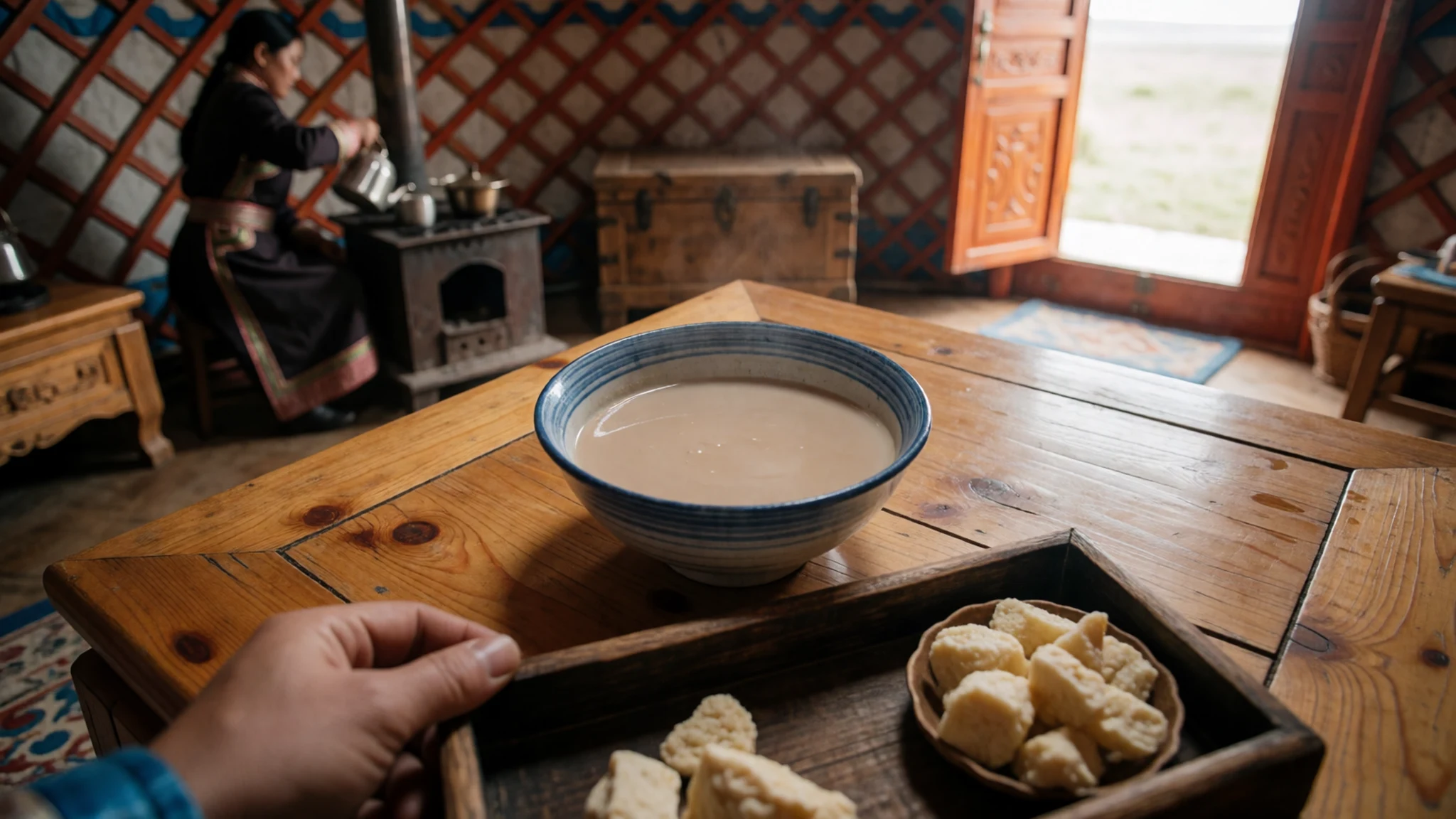
- Buuz — Small eateries in Tariat village and ger camps
These steamed dumplings are filled with minced mutton or beef, onion and a little seasoning, and are eaten by hand. They are especially common around the lunar new year, but are served year-round as a simple, filling meal.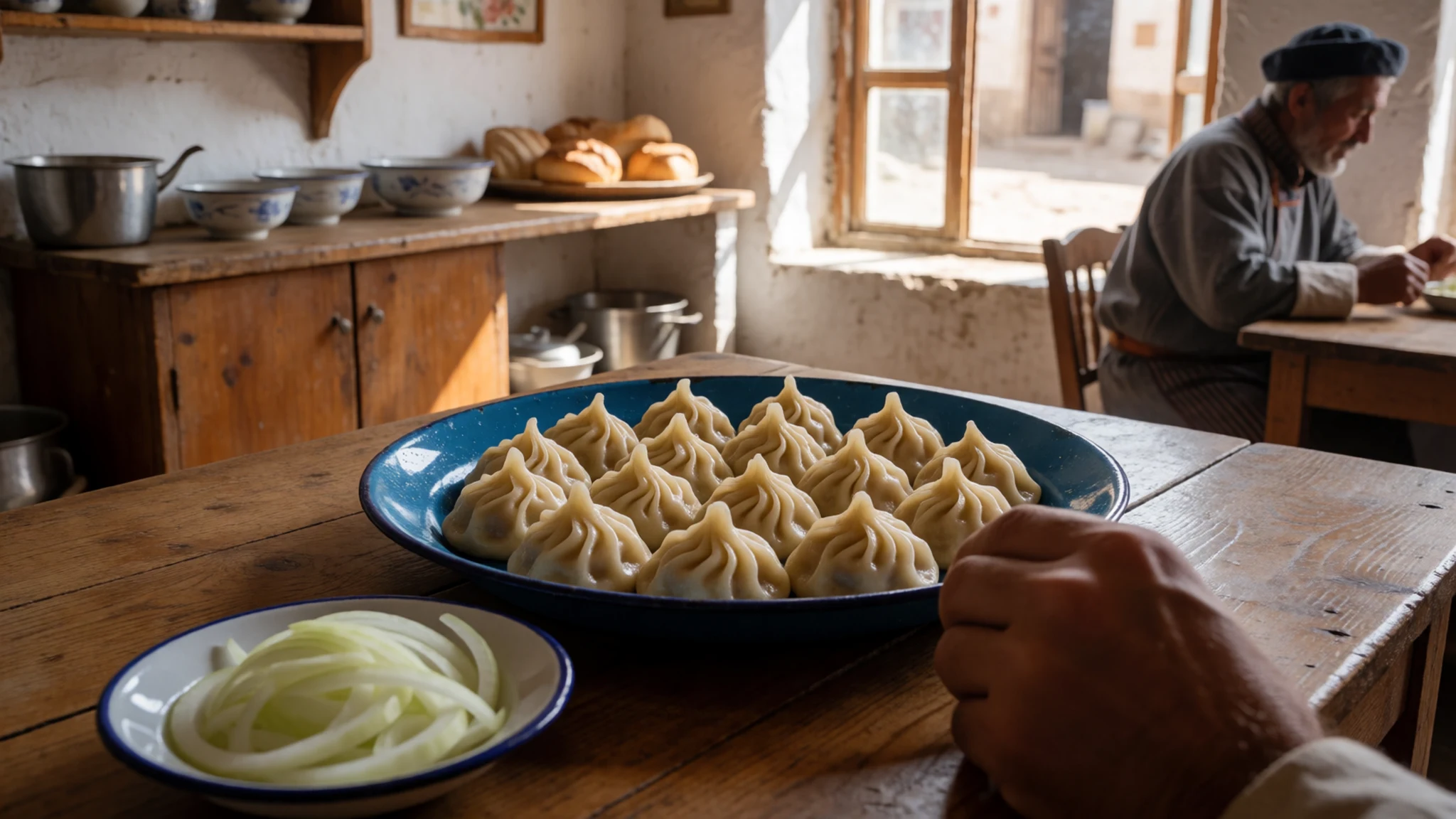
- Khuushuur — Roadside eateries and village canteens
A flat, fried pastry parcel of minced meat, crisp at the edges and juicy in the middle. It is quick, portable and well suited to a day on the steppe, and is sold wherever there is a stove. - Tsuivan — Family-run eateries and ger camp dining tents
Hand-cut noodles are stir-fried or steamed with meat and vegetables such as carrot and potato. It is a plain, hearty dish that suits long days outdoors, and portions are generous. - Aaruul and airag — Herder families in summer pastures
Aaruul is dried curd, hard and sour, left in the sun on the roofs of gers. Airag is fermented mare's milk, tangy and mildly alcoholic, made in summer. Both are acquired tastes, worth sampling in small amounts.
Plan it
Best time. June to September is the practical season, with the longest daylight, green pasture and mostly passable tracks. July and August are warmest and see the most visitors. Nights stay cool even in summer, and winter is very cold, though the frozen steam formations in the crater can be seen then by well-prepared travellers.
How long. 2–3
Getting there. Fly to Ulaanbaatar, then travel west by road towards Arkhangai Province, via Tsetserleg and on to Tariat. The journey takes a long day or more on mixed paved and dirt roads, so most visitors use a tour operator, a driver-guide or shared jeep. Check the park's official channels for current access and conditions.
Budget. mid
Tips
- Book transport and any ger camp well ahead for July and August
- Start the climb early, when the light is clear and the wind is lighter
- Carry cash, as cards are unlikely to work outside larger towns
- Bring plenty of water and snacks, since services near the volcano are limited
- Expect weather to change quickly and pack layers and a waterproof
Etiquette
- Stay on marked paths and do not take rocks from the volcano or park
- Ask before photographing herders, their families or their animals
- Close gates and keep well clear of livestock and dogs near gers
Nearby
Sources
- Wikidata Q2462320 (CC0)
- Wikipedia: Khorgo (rev 1362780062) (CC BY-SA 4.0)
- Khorgo Volcano 02, Bernard Gagnon (CC0 1.0)
- Horgoo volcano 2008, Alex Ang (CC BY 3.0)
- Relief map of Mongolia, NordNordWest / Виктор_В (CC BY 3.0)
- Khorgo Volcano 08, Bernard Gagnon (CC0 1.0)
- Khorgo Volcano 07, Bernard Gagnon (CC0 1.0)
- Khorgo Volcano 09, Bernard Gagnon (CC0 1.0)
- Greifvogel, J. Patrick Fischer (CC BY-SA 4.0)
- El crater, Raul P (CC BY 3.0)
- Wikivoyage (CC BY-SA 4.0)


Wildlife
- Red deer (animal)
The red deer is one of the biggest deer in the world; the male is called a stag and the female a hind. In Khorgo, look for them in the valleys around the cone, where small forests of Siberian larch shelter them alongside other deer, wild goats and boar. No season or time of day is recorded, so ask your guide. Watch from a good distance, keep your voice low, move slowly, and never offer food.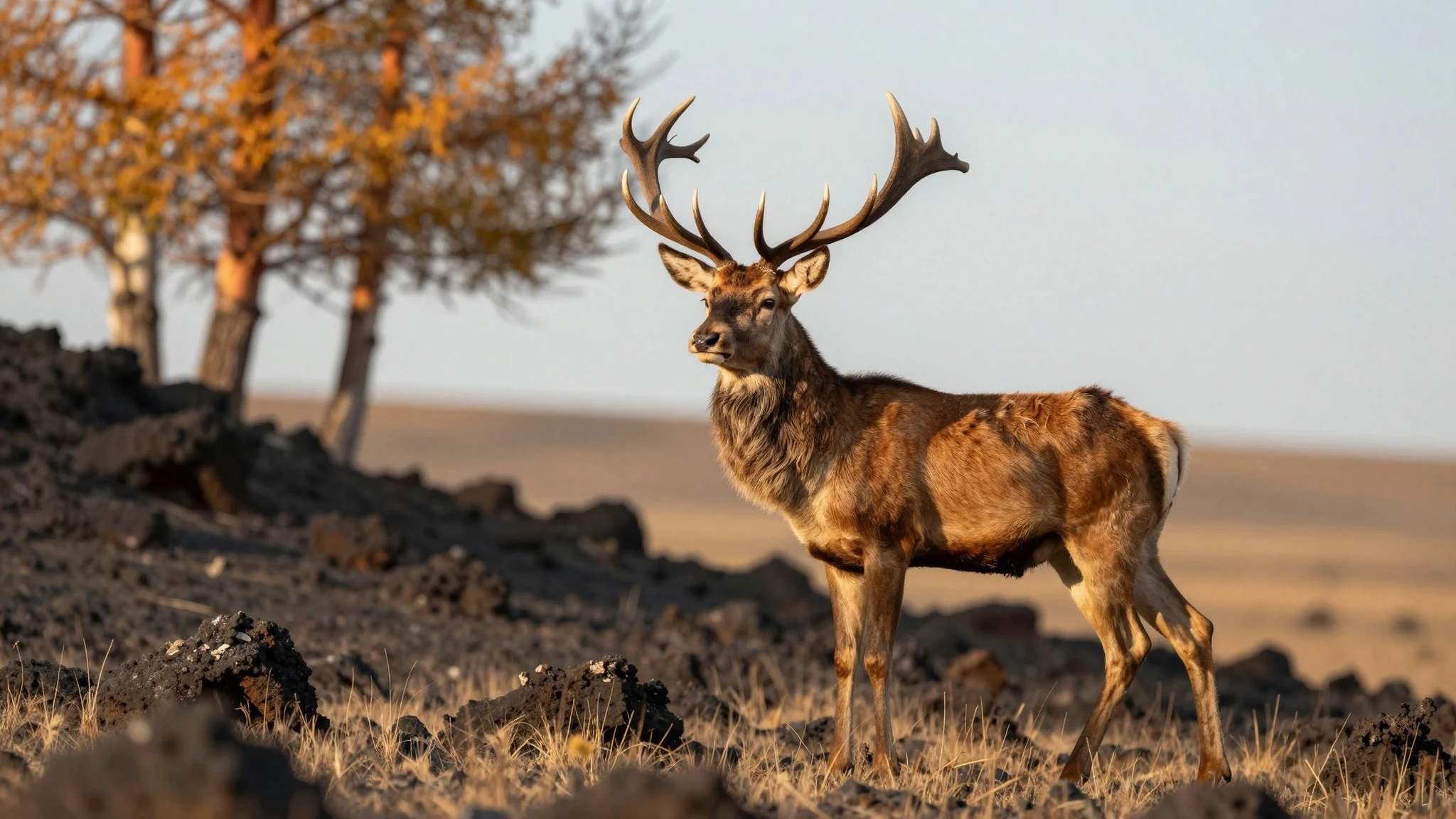
- Ruddy shelduck (animal)
The ruddy shelduck is a handsome orange-brown waterbird with a paler head, a black tail and a loud, honking call. In Khorgo it turns up often along the shores, so an unhurried stroll beside the water is a lovely way to find one. No season or hour is recorded, so ask your guide. Keep well back, stay quiet so it is not startled, and never feed it.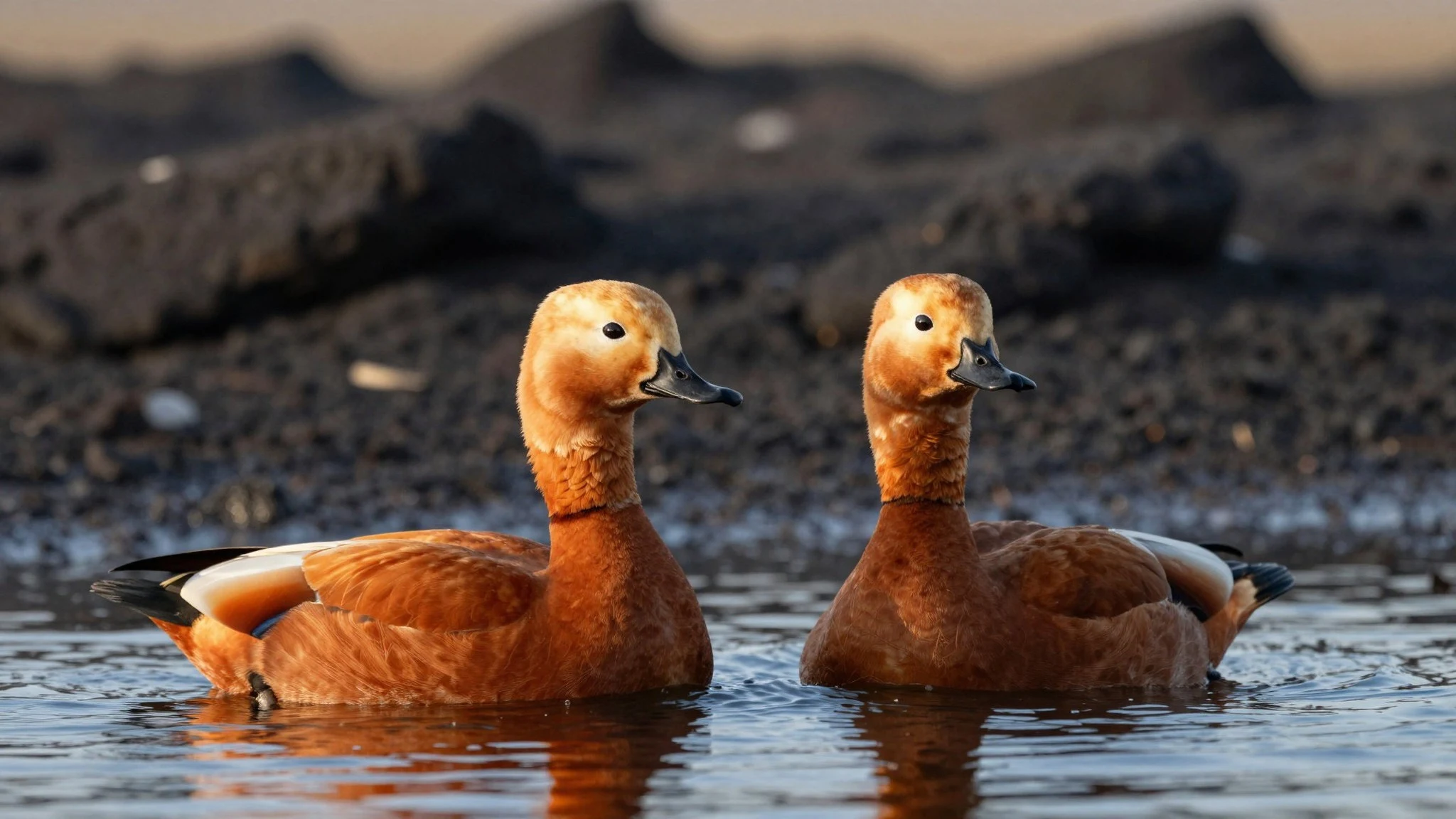
- Ruddy shelduck (bird)
The ruddy shelduck is a handsome orange-brown waterbird with a paler head, a black tail and a loud, honking call. In Khorgo it turns up often along the shores, so an unhurried stroll beside the water is a lovely way to find one. No season or hour is recorded, so ask your guide. Keep well back, stay quiet so it is not startled, and never feed it.