Kharkhiraa Mountain
Kharkhiraa Mountain, Mongolia
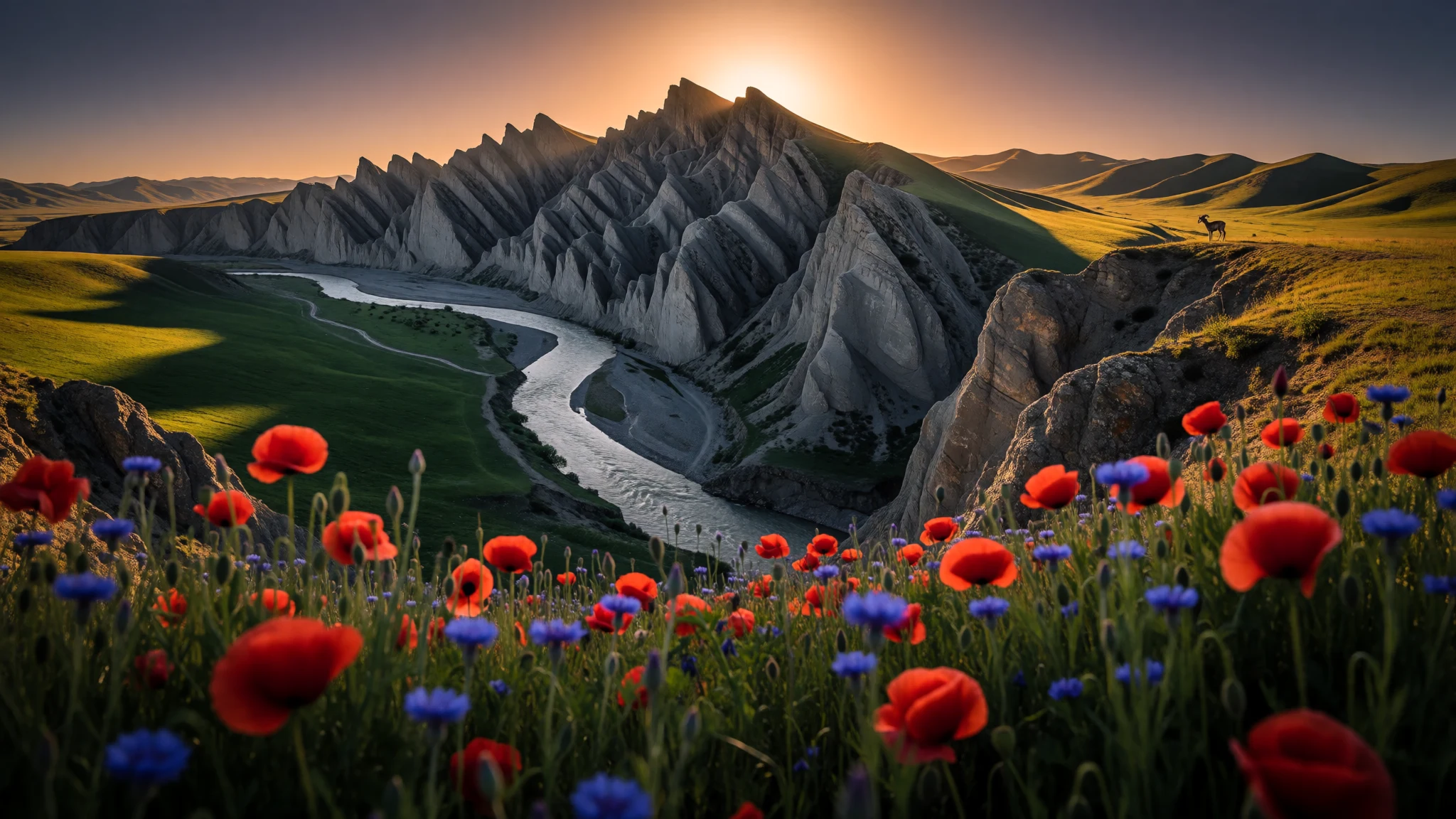
Kharkhiraa Mountain is for travellers who want empty western Mongolia: herding country, a river running down to Uvs Lake, and almost no crowds.
The place
Kharkhiraa Mountain sits in Uvs Province, in the far north-west of Mongolia, where the high ground of the Altai region drops towards a wide, closed basin. The name is shared with a river that rises on its slopes and runs from west to east, one of the streams that feed Uvs Lake. That link is the best way to read the landscape. Snowmelt and summer rain gather on the heights, run through valleys grazed by sheep, goats, horses and cattle, and end in a shallow salt lake with no outlet to the sea. Wikidata files the name as a river and its English description wrongly places it in Colombia, so listings are thin and the place has few signposts and almost no tourist infrastructure. Ulaangom, the provincial capital, is the usual base for the region, and from there a local driver or guide is the realistic way to reach the foothills. The country is open steppe and rocky upland, treeless in many stretches, with sharp weather: bright, windy days and cold nights even in summer. Mobile signal fades quickly away from towns. Those who come usually combine Kharkhiraa with Uvs Lake and the neighbouring ranges rather than treating it as a single sight.
Its story
Kharkhiraa Mountain has little written history of its own, and saying so plainly is part of its story. What can be told comes from the shape of the land and the way people use it. The river that carries the name flows down to Uvs Lake, and for as long as herding families have worked this basin, water coming off the mountains has set the rhythm of the year: winter camps in sheltered folds, summer pastures higher up where the grass comes later and the air is cooler. The province is home to several Mongol groups, the Dörvöd among them, each with its own dialect and customs, and the valleys around Ulaangom have long been crossing points between the steppe, the Altai and the Tuvan lands to the north. In the twentieth century the region was folded into the socialist state, with collectives, schools and roads reshaping how families lived. Herding returned to private hands once that era ended, and the seasonal moves continue today. The mountain's meaning is still mostly local: a landmark, a source of water, a pasture. Outsiders wanting a deeper account will learn more from the families they meet, and from staff at Ulaangom's local museum, than from guidebooks, which barely mention it.
What to see
- The Kharkhiraa River valley — Uvs Province, along the river
The valley of the Kharkhiraa River is the clearest way into the area. Water runs west to east across open grassland, with herds on the banks and gers set back from the floodplain. Spring and early summer are greenest. Cross streams only with a driver who knows the fords, since levels change with rain upstream.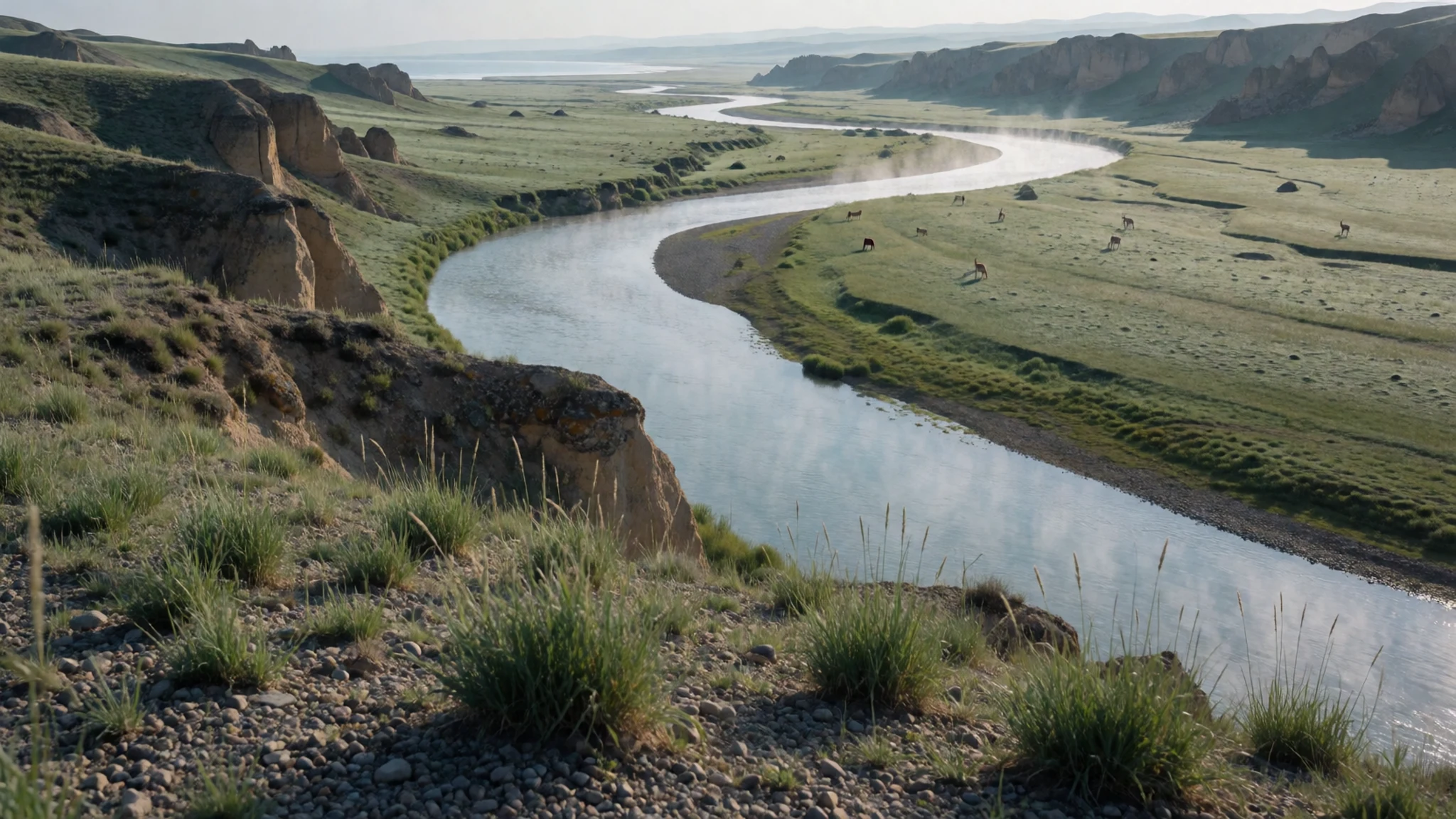
- Kharkhiraa's upper slopes — Kharkhiraa Mountain, Uvs Province
The upper slopes of Kharkhiraa Mountain are summer pasture, with short grass, scattered rock and long views back down the valley. Walking here is unmarked and exposed, so go with a guide, carry a windproof layer, and start early, because afternoon cloud and wind can arrive fast and the weather turns quickly.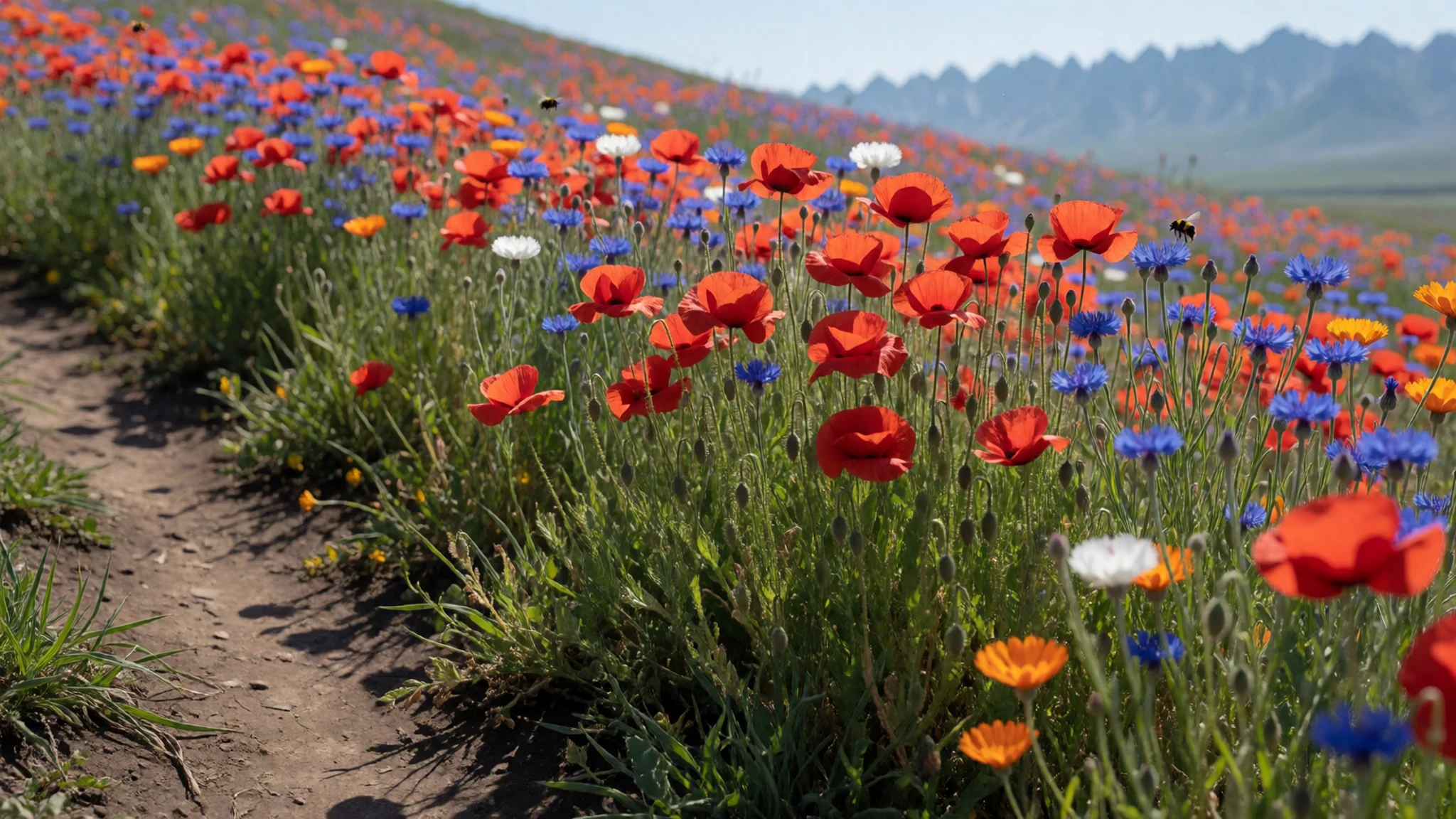
- Uvs Lake shore — Lake basin north-east of Ulaangom
Uvs Lake is where the Kharkhiraa River's water ends up. It is a salt lake with reedy edges and wide, flat shores that attract waterbirds, especially on migration. The light is soft at dawn and dusk. Expect mosquitoes in warm months, and be aware that the shoreline is soft and muddy in places.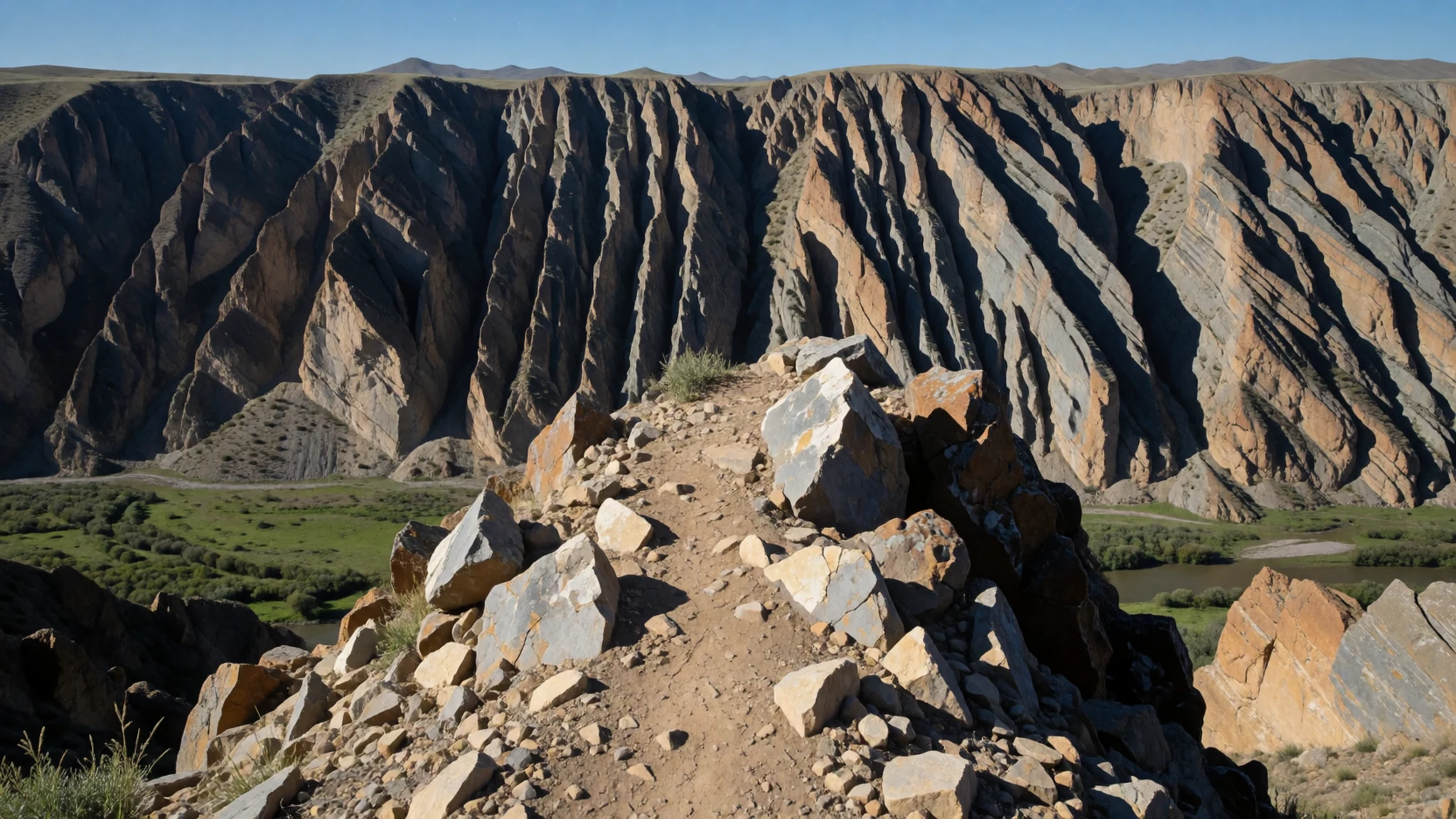
- Ulaangom town — Ulaangom, Uvs Province
Ulaangom is the provincial capital and the practical base: fuel, food, a market, shops and a local museum that gives some context on the province's peoples. It is functional rather than pretty. Use it to arrange a driver, buy supplies and ask about road and river conditions before heading out. - The Turgen range views — Turgen mountains, west of Ulaangom
West of Ulaangom the Turgen range rises above the basin, and on a clear day its ridges make a backdrop to any trip around Kharkhiraa. Tracks climb into higher valleys with cooler air and glacier-fed streams. Conditions are serious here, so go with local guidance and check weather before driving up.
Culture
Kharkhiraa Mountain lies in a part of Mongolia where mobile pastoralism still shapes daily life, and the culture around it is that of western Mongolian herders. Families move livestock between seasonal camps, live in felt-covered gers, and measure wealth in animals and in readiness to host. A traveller arriving at a ger is usually offered salty milk tea and something dried or fried, and refusing everything outright can seem cold; a sip and a nibble is enough. Mountains in Mongolia are often treated as having a presence of their own, and cairns of stones and blue cloth, called ovoo, mark passes and summits where people pause to ask for safe travel. Uvs Province is home to several Mongol groups, including the Dörvöd, and songs, horse racing and wrestling surface at summer festivals, with Naadam the main occasion in towns. Winter is a hard season for herders, so spring births and the summer fattening of animals shape the calendar and the conversation. Visitors who show curiosity about animals, weather and grass tend to be rewarded with long, warm talks, helped along by a guide's translation. Walk clockwise around any ovoo, never take stones from it, and ask before photographing a family or entering their ger.
What to wear
Kharkhiraa Mountain is herding country, and the traditional dress is the deel, a long wrap-over robe fastened at the right shoulder and held at the waist by a broad sash. Everyday deels are cotton or wool, festival ones are silk brocade in strong colours, and winter versions are lined or made from sheepskin. Boots called gutal, with thick soles and upturned toes, and felt or fur-trimmed hats complete the outfit, which is still worn daily by many older herders and by almost everyone at Naadam and family celebrations. Day to day, people in Ulaangom wear jeans, fleeces, padded jackets and trainers, while herders often pair a deel with a modern jacket and rubber boots for work. Visitors should dress for wind, sun and sudden cold: layers, a windproof shell, a warm hat even in summer, sunglasses and sun cream. Sturdy, broken-in walking boots suit rough, stony ground, and quick-drying trousers cope with river crossings. Modesty norms are relaxed, but cover shoulders and knees in towns and at any temple or monastery, and take off hats when entering a ger.
What to eat
- Suutei tsai — Any herder's ger, and canteens in Ulaangom
Salty milk tea, brewed with milk and sometimes a little millet or butter, is the first thing offered in any ger. It is thin, warm and filling. Accept a bowl with both hands, and expect refills while you sit and talk.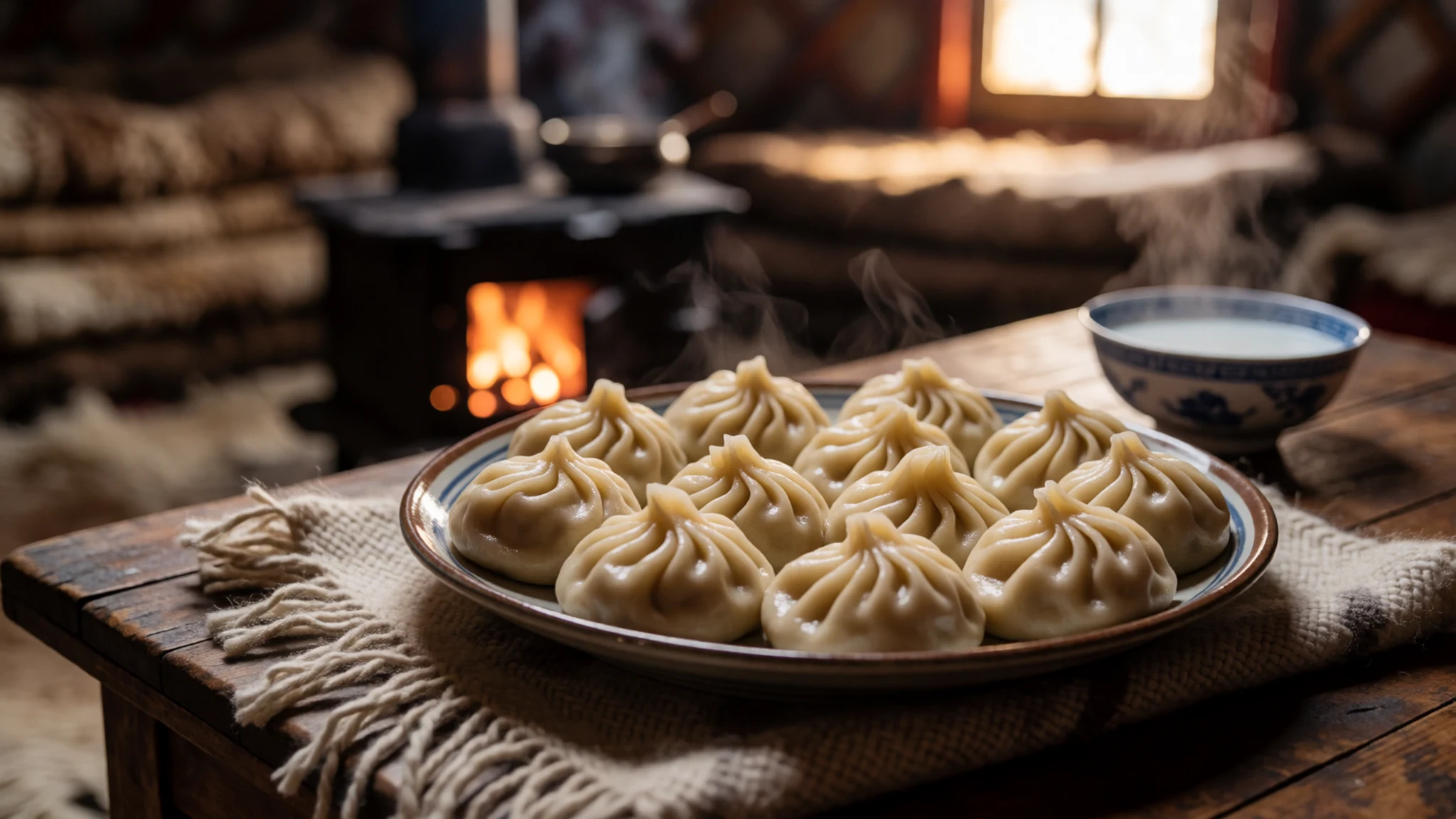
- Buuz — Small eateries and canteens in Ulaangom, and family gers at holidays
Steamed dumplings stuffed with minced mutton or beef, onion and little else, often made in large batches for celebrations. They are juicy, so eat them with your hands, bite a corner first, and drink the broth.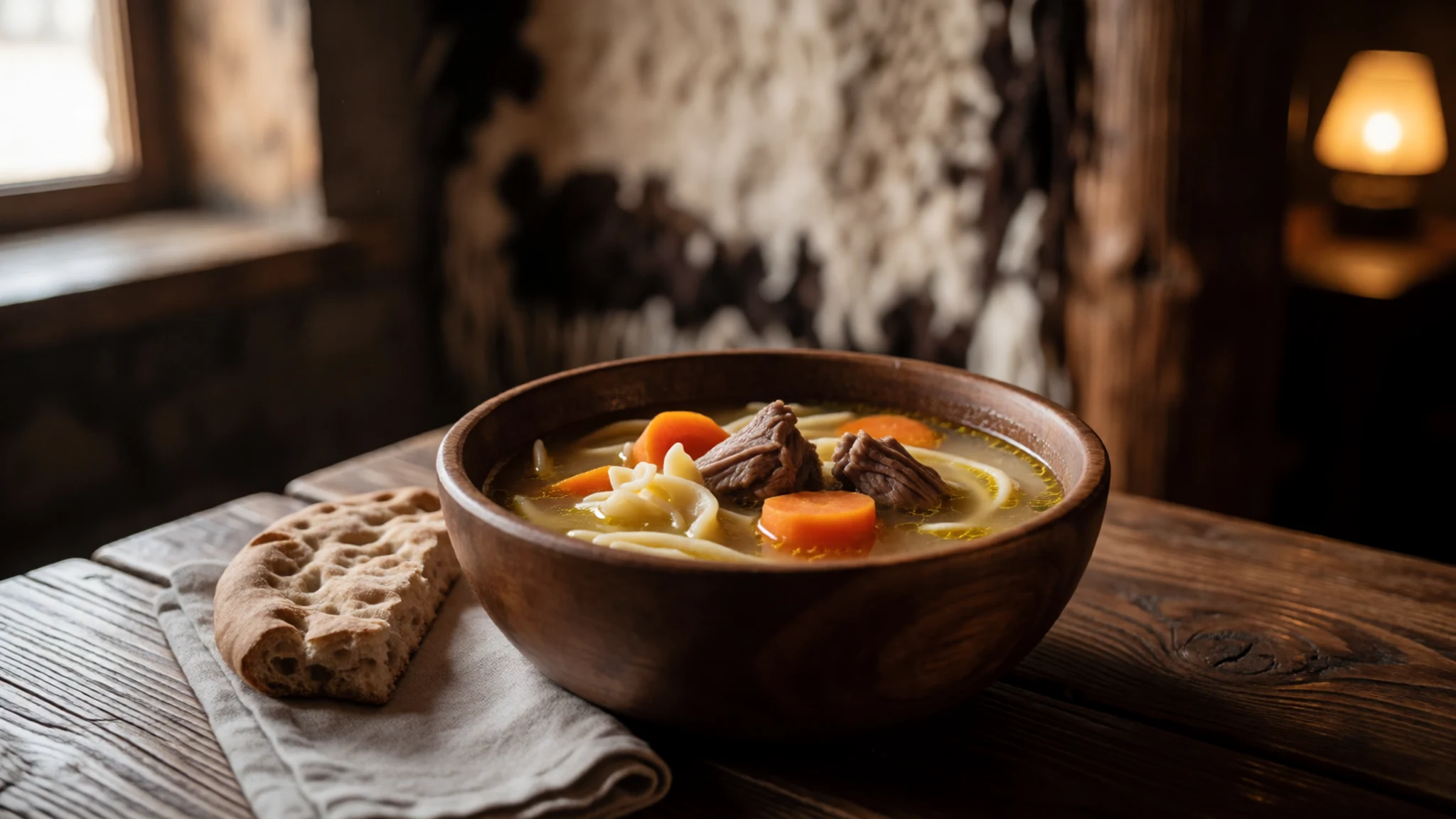
- Khuushuur — Market stalls and roadside eateries around Ulaangom
Flat, fried pastries filled with minced meat, crisp at the edges and greasy in the best way. They are a standard road snack and lunch, often served with tea, and travel reasonably well in a pocket on a long drive. - Aaruul — Ulaangom market, or direct from herding families in summer
Dried curds, made from soured milk and left in the sun to harden, range from chalky-sweet to sharply sour. They keep for months and are the herders' travelling snack. Start with a small piece and chew slowly. - Airag — Family ger camps on the pastures, usually July to September
Fermented mare's milk, lightly fizzy and sour, is made in summer when mares are milked often. It is an acquired taste and mildly alcoholic. Even a small ceremonial sip is appreciated, and your host will be pleased by a second.
Plan it
Best time. June to September, when the grass is green, tracks are driest and days are warm, though wind and cold nights are normal. Winter is very cold with snow and short days, and spring thaw can make tracks and river crossings difficult.
How long. 2–3
Getting there. Ulaangom is the base for Uvs Province. Check with Mongolian domestic airlines for flights from Ulaanbaatar to the local airport, or plan a long overland journey by road. The last leg to Kharkhiraa is by hired 4x4 with a local driver on unsigned tracks.
Budget. mid
Tips
- Arrange a driver and guide in Ulaangom, since tracks are unmarked and river crossings vary with the weather
- Carry cash, because cards are rarely accepted outside the town
- Bring spare food, plenty of drinking water and a paper map, as mobile signal is patchy
- Pack warm layers even in summer, and start walks early before afternoon wind and cloud
- Check river levels and the forecast before leaving town
Etiquette
- Ask before photographing people, animals or the inside of a ger
- Walk clockwise around ovoo cairns and leave the stones in place
- Close gates, avoid disturbing herds, and take your rubbish with you
Nearby
Sources
- Wikidata Q17023460 (CC0)
- Wikipedia — Kharkhiraa River (rev 1367587202) (CC BY-SA 4.0)
- Wikivoyage — Mongolia (CC BY-SA 4.0)
Wildlife
- Argali sheep (animal)
The argali is the biggest of all wild sheep, a mountain sheep made for high, rugged country. It belongs to the Altai and other Asian highlands, and Kharkhiraa's wild habitat is one of the places that shelter it. Ask your guide where and when to look, as sightings cannot be promised. Stay far back, keep your voice low, use binoculars, and never offer food, so the sheep stay wild and unbothered.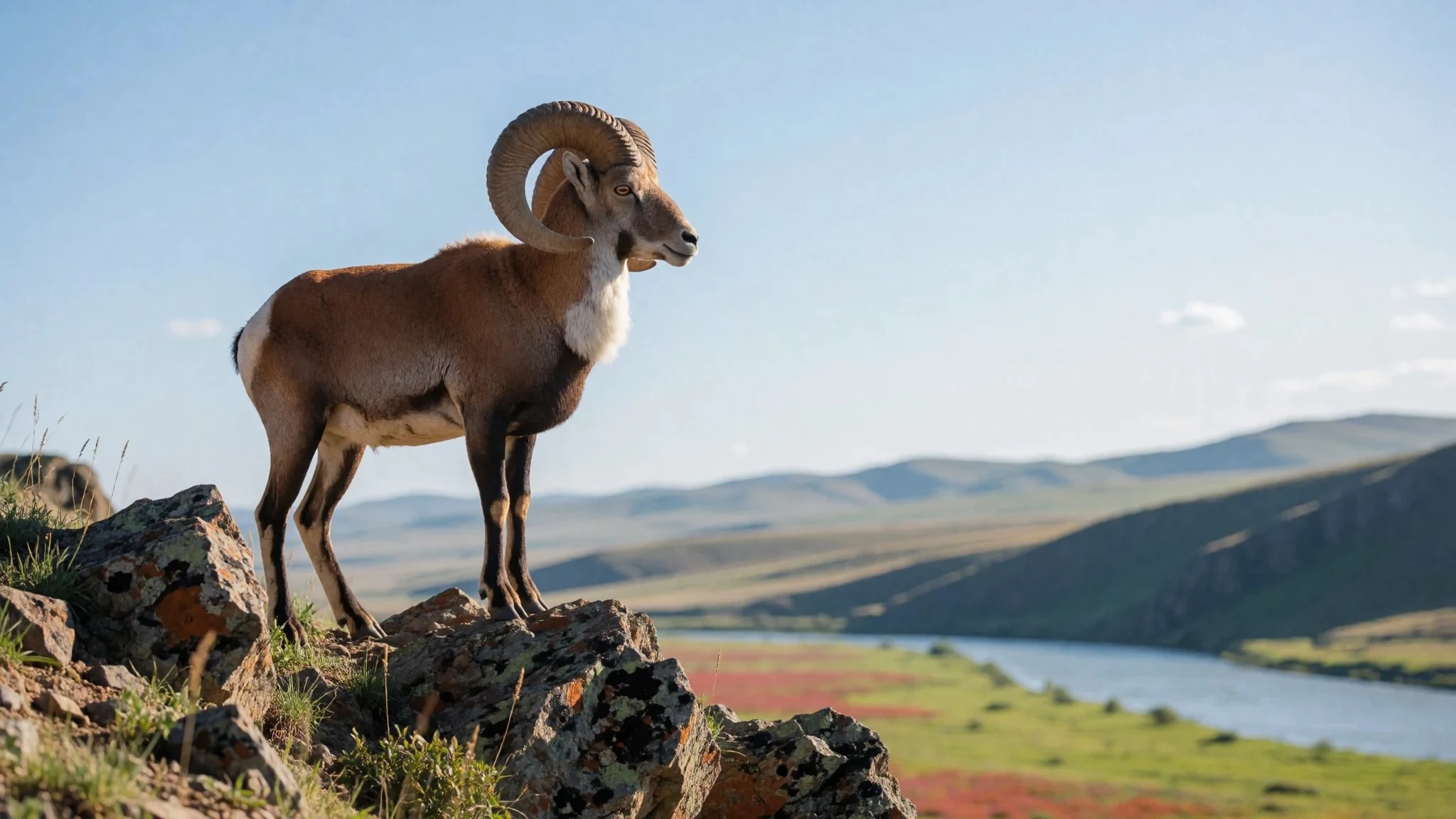
- Saiga antelope (animal)
The saiga is a wild antelope of the open steppe, a grassland wanderer that once roamed from Europe to Mongolia. Kharkhiraa's mountain ecosystem is home to it, and the Mongolian kind lives only in the west of the country, so it is a rare treat. Keep well back, speak softly and move slowly, and let a local guide help you find it. Watch with binoculars, and never feed it.