Khar-Us Lake
Khar-Us Lake, Mongolia
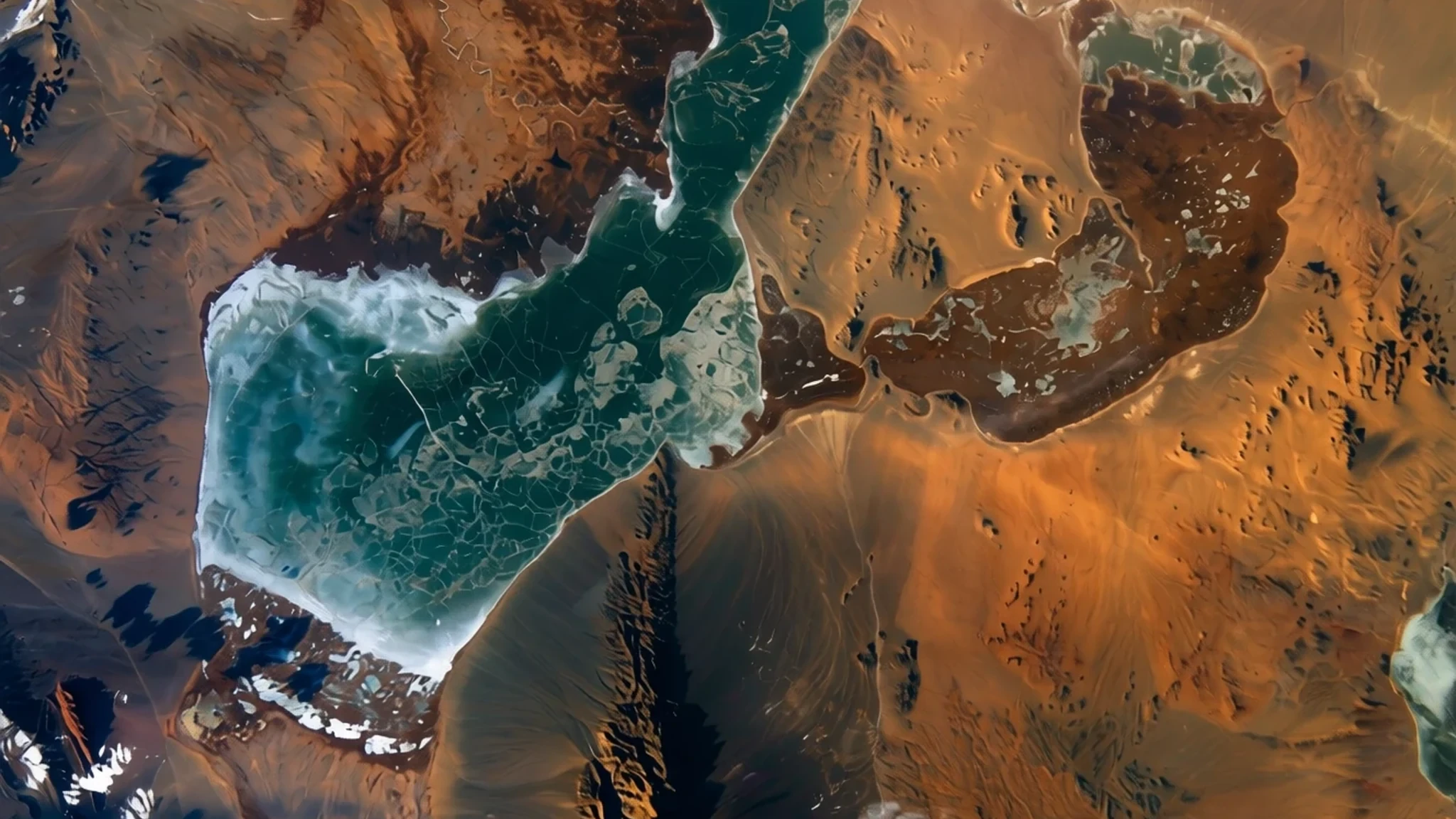
Khar-Us Lake is a reed-laced freshwater reach in Mongolia's Great Lakes Depression, under the snow of Jargalant Khairkhan.
The place
Khar-Us Lake lies in Hovd aimag, in the Great Lakes Depression of western Mongolia, where the Hovd River slows and spreads into a wide, shallow basin. The name Khar-Us Nuur (Хар-Ус нуур) means black water, a plain label for the dark surface under a huge sky. From the shore the far bank often vanishes into haze, so the water feels less like a pond than a reed-broken inland reach. Snow stays on the Jargalant Khairkhan mounts after the steppe has browned, and that white ridge is what people on the shore use to find west when the waterline is only a blur of grass.
The basin is a chain of lakes and salt pans, not a single bowl. Khar-Us is the freshwater reach. Water arrives from the Altai, threads channels and islands, and moves on towards neighbouring lakes. Reeds thicken where the current dies. Channels kept open by herders' boats are the roads of the southern and eastern margins. Wind builds a short chop, flattens the grass and lifts the dust that turns afternoons pale.
Families move with sheep, goats, horses, cattle and sometimes camels, pitching gers on ground that stays dry when the lake stands high. Birds fill the reeds in the warm months. Winter locks the surface and the camps shift to more sheltered valleys. Hovd town is the gateway, and the last approach is open track.
Its story
Khar-Us Lake has long been a herding and fishing shore, not a city and not a shrine precinct. On the western steppe, open water holds fish, keeps grass alive deeper into a dry year, and anchors the round of camps. Oirat Mongol families, and Kazakh herders who share Hovd aimag, have treated the lake as part of a wider pasture. The Hovd River was the way in, carrying meltwater from the Altai and the movement of people between mountain valleys and the depression.
Western Mongolia sat between the Oirat world, the Kazakh Altai and the Qing administration, whose western post was the town of Hovd. Garrisons, monasteries and caravan trade came and went. The lake stayed a working edge of that map. Herders watched weather, wolves and the height of the water, while officials in town counted households and routes. The split is still visible: a modest aimag centre, and a shore of gers, livestock and a few boats.
The modern state drew protection around wetlands used by birds migrating across Central Asia. Khar-Us, with its reeds, channels and islands, fell inside that care. Grazing, fishing and seasonal movement continue, with limits on how hard herds may press the reed edge. Outsiders now arrive by track from Hovd with a hired vehicle. The shore is still organised by animals, weather and kinship, with the Altai in view.
What to see
- Open water — Central basin, Hovd aimag
Khar-Us Lake's open water is a dark reach broken by reed islands and low shores, with the far side often lost in haze. Wind lifts a short chop by midday and lets it fall towards evening, when the mountain can take a reflection. Boats stay in the channels. The open fetch is for looking across, not for a casual crossing.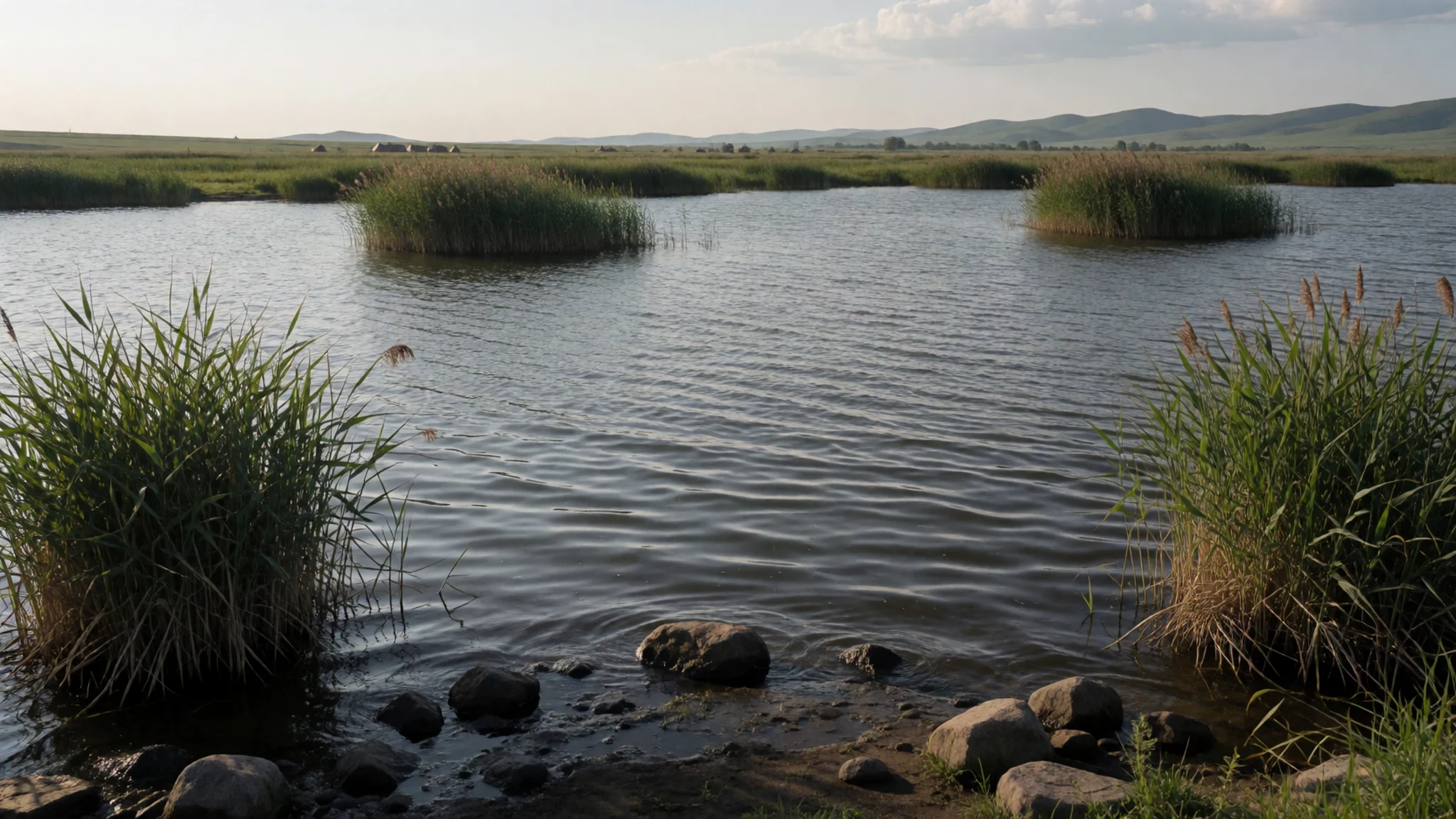
- Jargalant Khairkhan — Skyline west of the lake
Jargalant Khairkhan is the snow-held mountain that closes the view west of Khar-Us Lake. It rises straight from the basin, white on the high ridges while the shore stays brown and flat. When haze hides the far water, the peak still marks west. Most visitors watch the light move across the rock from the shore.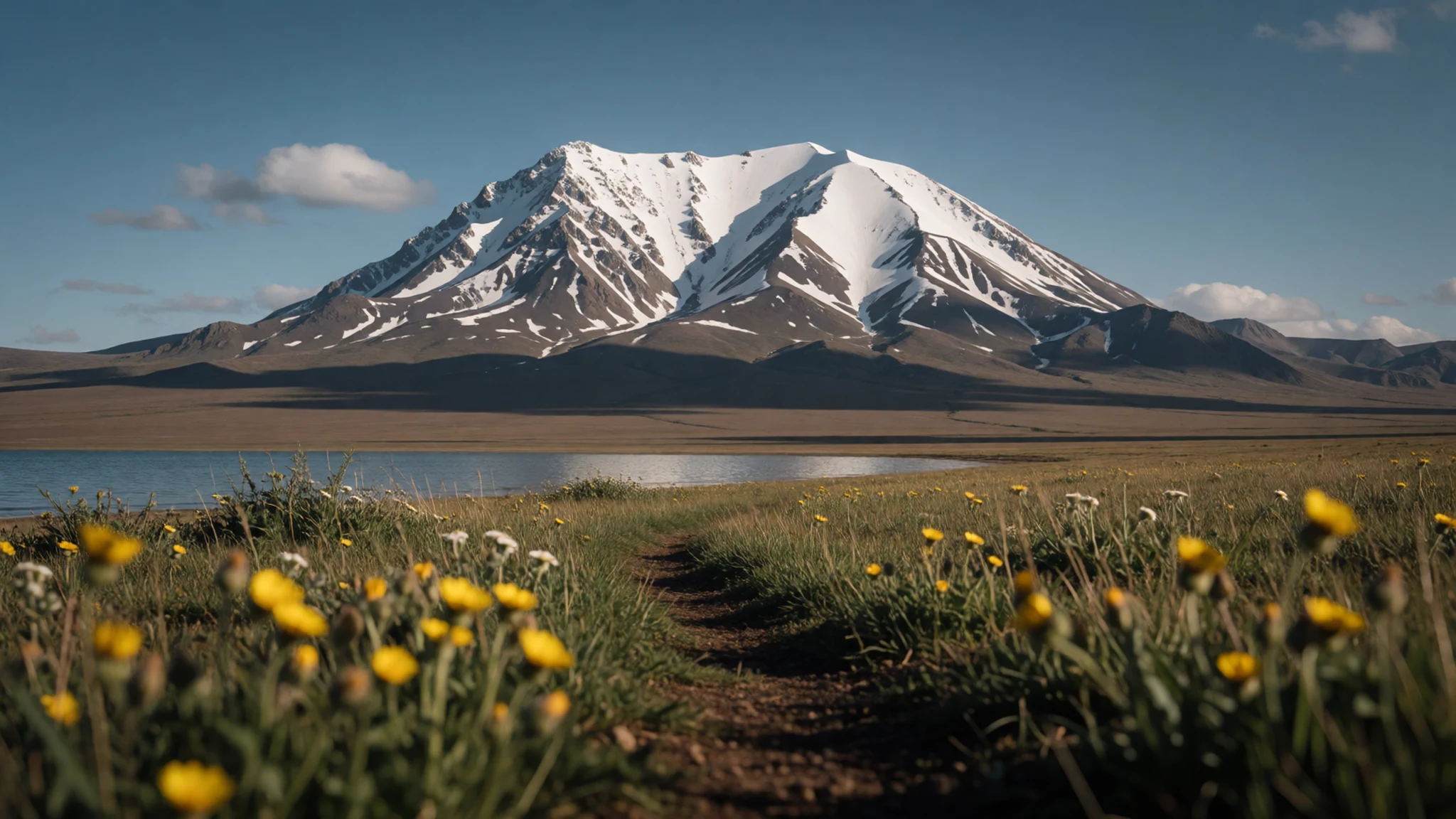
- Reed channels — Southern and eastern margins
The reed channels of Khar-Us Lake are a second landscape tucked inside the first. From open water they look like a green wall. Inside, the world narrows to dark water, rustling stems and birds. Herders and fishermen use the cuts as roads, because the reeds are too thick to push through at random. Early morning, before wind and heat, is the generous hour.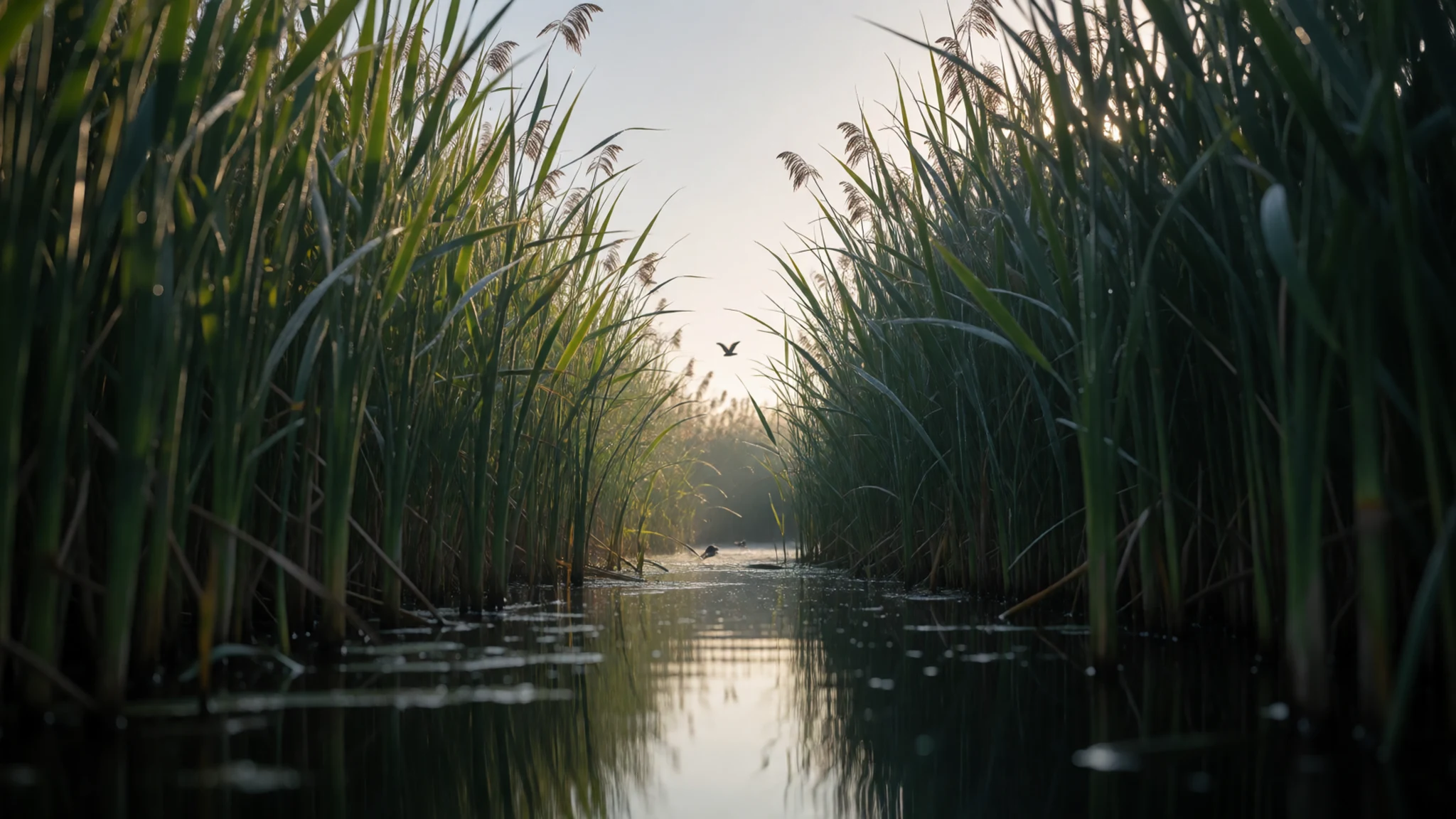
- Hovd River mouth — Where the Hovd River enters the lake
The Hovd River is why Khar-Us Lake holds fresh water. It comes down from the Altai, slows, and splits into silt, willow scrub and shallow fans before the main body of the lake. River grey meets the darker basin here, and wading birds work the margins. After rain the tracks to this edge go soft.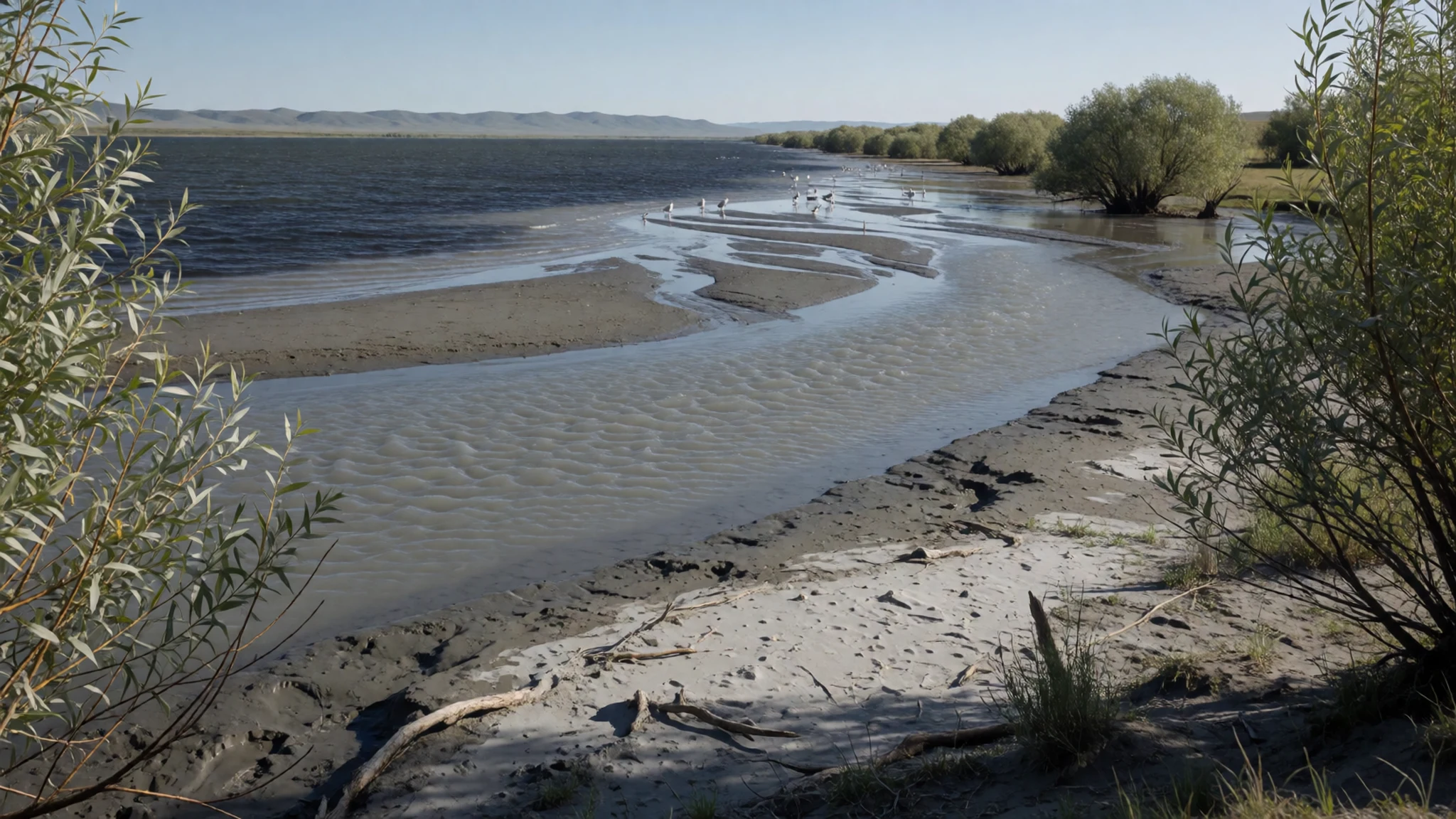
- Shore pasture — Dry ground above the reed edge
The pasture around Khar-Us Lake is the human landscape: gers on pale grass and horses on a line. This is working ground, and the water is the edge of someone's seasonal home. A rise above the reeds shows the lake in front and the open depression behind. Late light, when the mountain warms and the wind often drops, is the kind hour.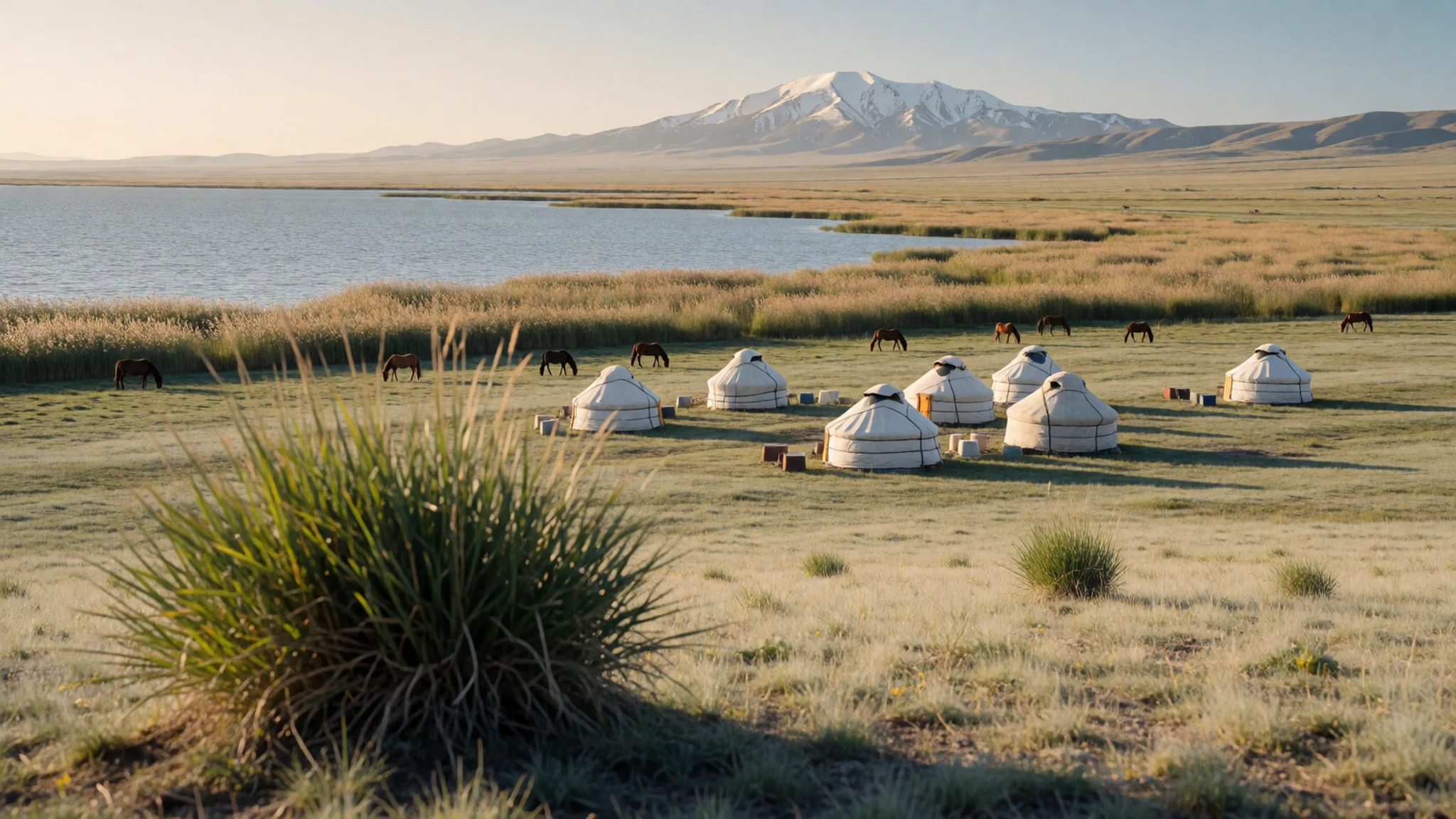
Culture
Khar-Us Lake's culture is the culture of the western Mongolian pasture, not of a resort. Hospitality runs through the ger. A visitor who is waved in is offered a seat away from the door and a bowl of milk tea, received with the right hand or with both hands. Talk starts slowly. Questions about the herd are ordinary; questions that put a price on a family's animals are not. Oirat custom shapes much of Hovd, and Kazakh families in the aimag keep their own language, food and celebrations beside Mongolian ones. Naadam, the warm-season festival of wrestling, racing and archery, may be a quiet affair at a shore camp rather than a city gathering. Stone ovoo on the passes above the lake are walked around in the direction of the sun. Ask before you photograph a person or the inside of a ger, and do not step on the threshold as you enter.
What to wear
Khar-Us Lake has no costume of its own. People dress for wind, sun, horses and cold nights. The traditional garment is the deel, a long robe with a high collar, an overlapping front and long sleeves, closed by a bright sash. Wool handles the cold months. Lighter silk or cotton appears in summer, often in strong colour, with gutal, boots whose toes turn up for the stirrup. A deel is still worn for Naadam, for visiting and by elders on ordinary days. Working dress on the shore is mixed: trousers, a shirt, a padded jacket, a cap or wool hat, and boots caked in dust. A visitor should copy that practical layer unless invited to a celebration. Sun on the basin is fierce and the wind is cold, so a long-sleeved shirt, a warm layer, a windproof shell, a hat and sunglasses earn their place. Long trousers and mud-proof shoes beat beach clothes, which look careless on a working shore. If the day takes in a monastery in Hovd, keep shoulders and knees covered.
What to eat
- Suutei tsai — Gers around the lake, and canteens and market stalls in Hovd
Suutei tsai, milk tea, structures the day at Khar-Us Lake. It is salty and milky, served in a bowl and refilled while talk continues. Herders drink it in the ger at morning and whenever someone arrives. The same tea turns up in Hovd canteens and market stalls.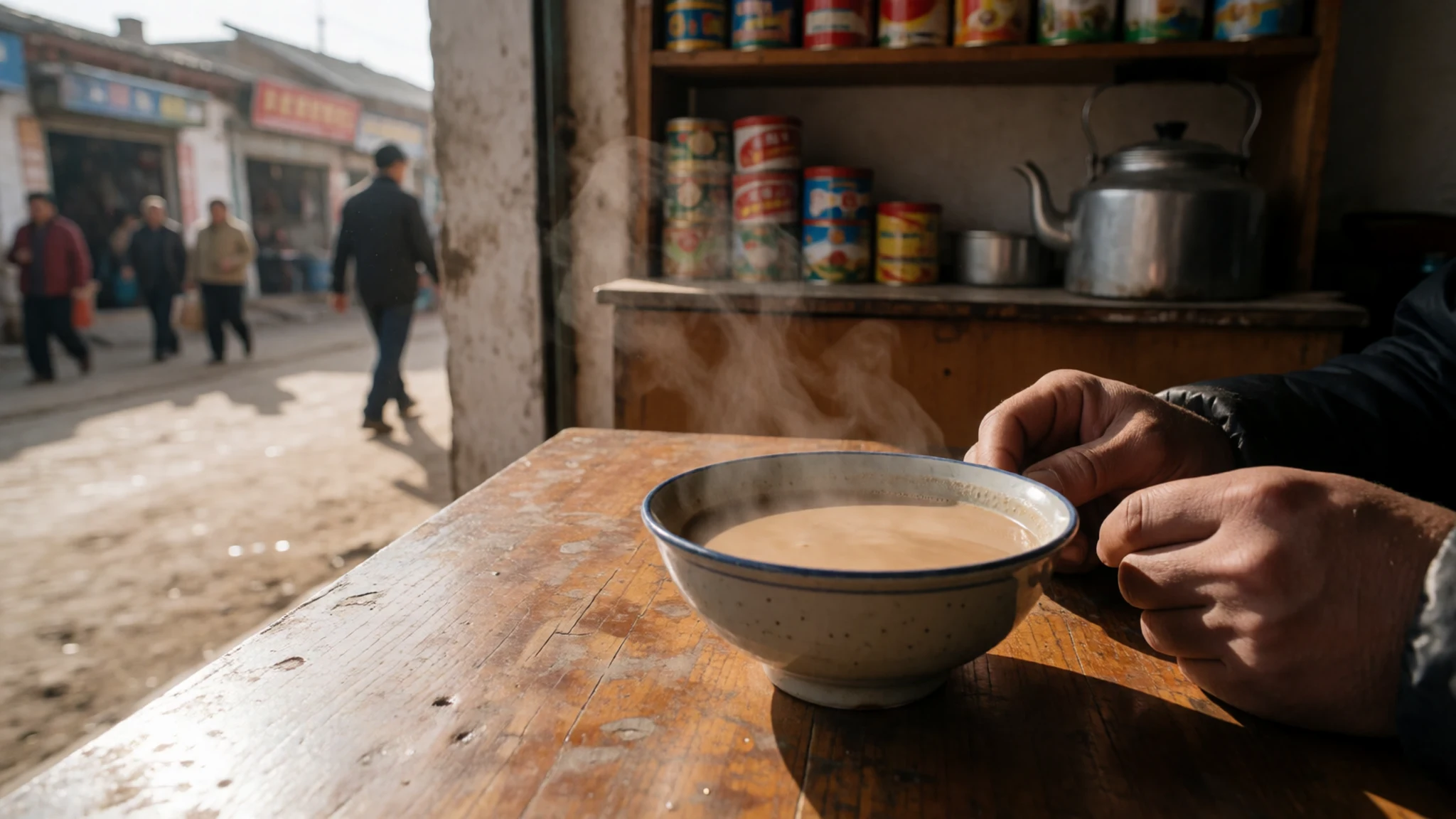
- Buuz — Canteens in Hovd and home kitchens at gatherings
Buuz are steamed mutton dumplings, sometimes beef, pleated with onion so they stand upright in the pot. Around Khar-Us Lake they are everyday food in the canteens, while an ordinary herder day leans on boiled mutton. Hovd canteens serve them hot as an ordinary meal, and home kitchens do too.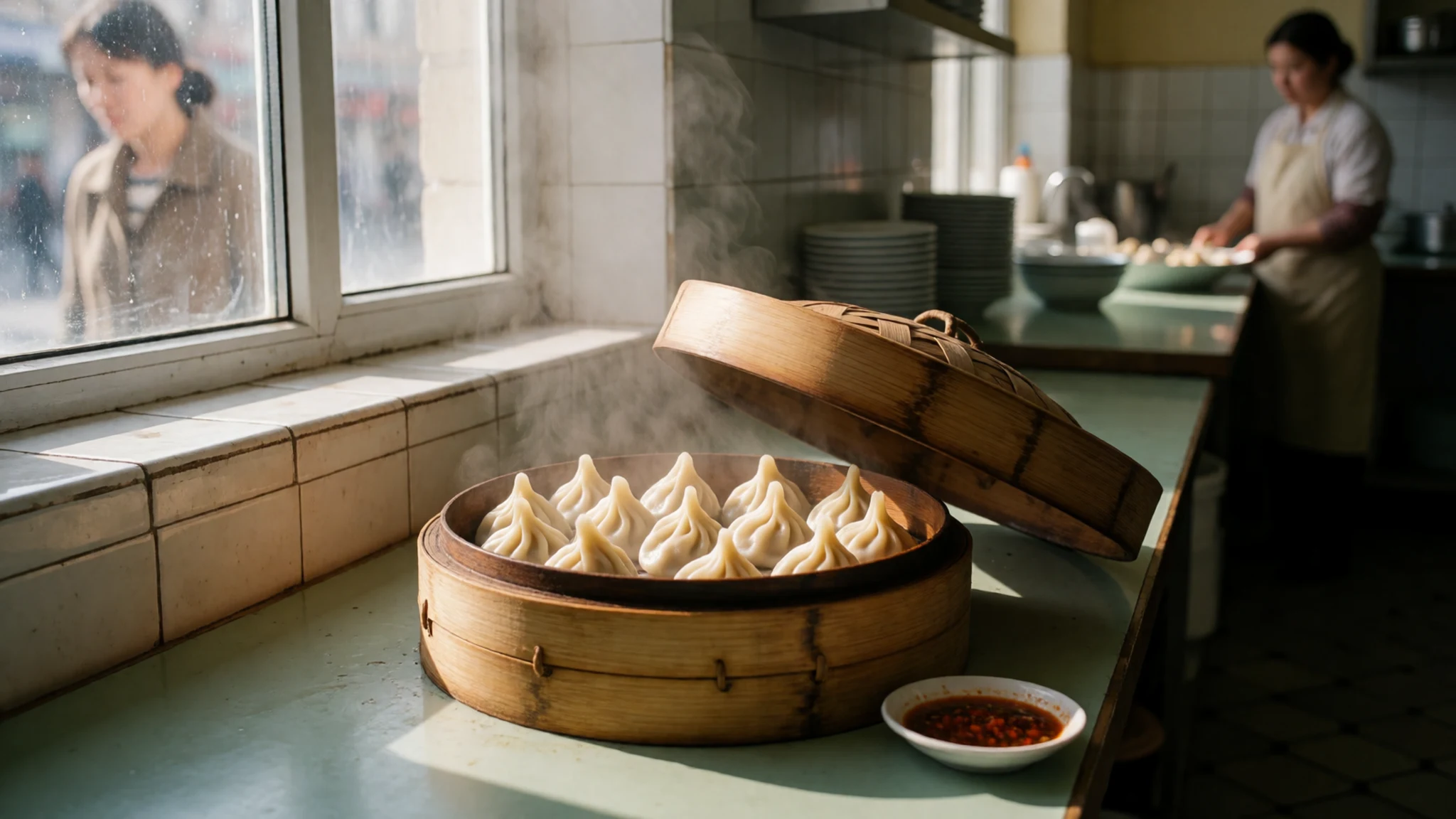
- Khuushuur — Roadside stops between Hovd and the lake, and small eateries in town
Khuushuur are fried meat pastries, sealed at the rim and cooked in oil until they blister. They travel well, which is why they appear on the drive between Hovd and Khar-Us Lake, eaten at the roadside. Mutton is the usual filling. Small eateries in town fry them at midday. - Airag — Summer herder camps with horses
Airag is fermented mare's milk, sour and lightly fizzy, shared in summer when the mares are in milk. At Khar-Us Lake that means gers which keep a horse herd, not a café in town. Being offered a bowl is a kindness. - Tsuivan — Canteens in Hovd
Tsuivan is a noodle stew: flour dough cut into strips and cooked with mutton and whatever vegetables are to hand, often potato, carrot and onion. A Hovd canteen will plate it when a visitor wants a full meal before the rough road out to Khar-Us Lake. - Aaruul — Gers on the shore and the market in Hovd
Aaruul is dried milk curd, hard and sour-sweet, made when summer milk is plentiful and eaten for the rest of the year. At Khar-Us Lake it is pocket food, a piece broken off while watching stock. Hovd market sells it by the bag.
Plan it
Best time. Khar-Us Lake is worth the journey from June to September, when the ice has gone, the reeds are green and camping on the shore is realistic. May and October can still bring hard cold and strong wind. Winter freezes Khar-Us Lake and turns the tracks into a specialist journey.
How long. 2–3
Getting there. Fly to Hovd from Ulaanbaatar, then hire a vehicle for the last leg across the depression to the shore. The long road from the capital suits a wider western journey, not a short visit. There is no railway to Khar-Us Lake. Confirm flights and any permit locally in Hovd before you set out.
Budget. high
Tips
- Hire a driver who knows Hovd aimag; the last tracks are easy to miss and turn soft after rain.
- Carry cash, because cards often fail outside Hovd town.
- Bring drinking water for the whole day; the lake is not a water supply.
- Begin shore walks early, before wind and insects build.
- Arrange a ger camp or a homestay in Hovd before you leave town in the warm months.
- Pack a torch and a warm layer even in summer; nights on the depression are cold.
Etiquette
- Ask before you photograph people, and do not photograph inside a ger without a clear invitation.
- Step over a ger threshold rather than on it, and sit where you are shown.
- Walk round an ovoo in the direction of the sun, and leave its stones where they are.
- Keep to existing tracks so the vehicle does not cut pasture the herds need.
- Carry rubbish away with you; the shore has no collection.
Nearby
Sources
- Wikidata (CC0)
- Wikipedia (CC BY-SA 4.0)
- Wikivoyage (CC BY-SA 4.0)