Kermanshah
Kermanshah, Iran
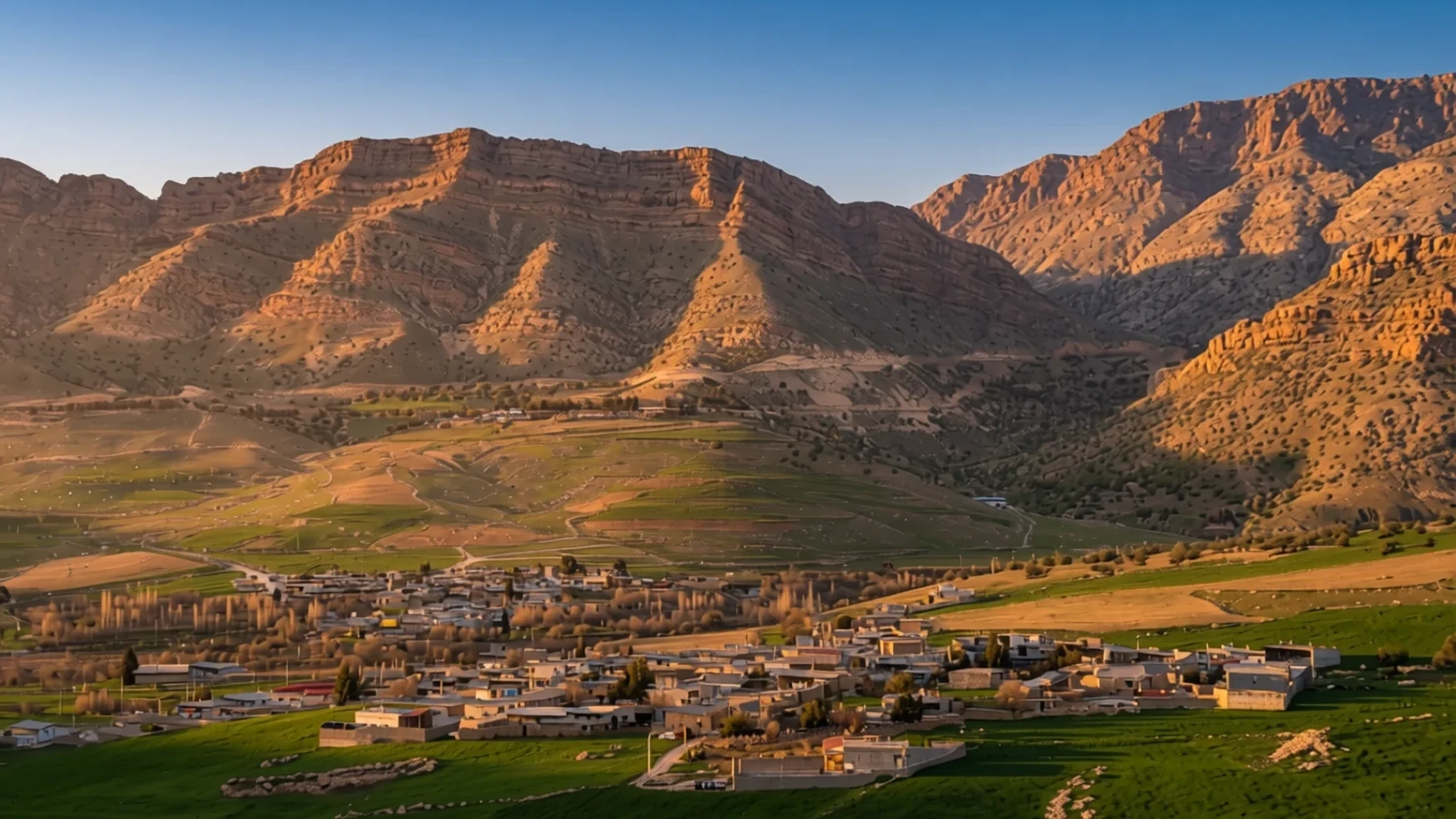
Kermanshah is a Kurdish-flavoured Zagros city where Sasanian rock carvings, tiled mourning halls and mountain caves sit within easy reach.
The place
Kermanshah sits in the Zagros foothills of western Iran, at an elevation of 1,392 metres, and is the capital of its province. It lies roughly 525 kilometres from Tehran, a long day by road or a short flight. The city is home to about 946,651 people, and the Kurdish language, in several dialects, is heard everywhere, from the bazaar to the taxi rank. That gives the place a character distinct from the Persian-speaking plateau cities further east.
The altitude shapes everything. Winters are cold, with snow lying for a couple of weeks. Rain falls mostly in autumn and spring, and the city gets noticeably more of it than Tehran. Summers are almost rainless and fiercely hot by day, yet the nights cool sharply, so a hot afternoon often gives way to a comfortable evening.
The centre is a working provincial city of busy avenues, an old bazaar and a scattering of Qajar-era houses. Most of the sights that draw visitors lie on the outskirts. Taq-e Bostan and its park are in the northern hills, while the great inscription at Behistun is a drive to the east. A visitor therefore tends to treat Kermanshah as a base: mornings among carvings and caves, afternoons in the bazaar, and evenings over a slow Kurdish meal. It is not a polished tourist town, and that is much of its appeal. Few people speak English outside hotels and museums, so a translation app helps.
Its story
Kermanshah and its surroundings have been lived in for an extraordinarily long time. Stone hand axes found east of the city point to Lower Palaeolithic visitors, and caves in the province such as Warwasi and Do-Ashkaft have yielded the only Neanderthal skeletal remains found so far in Iran. Later, farming villages appeared here, among the earliest in the region. Ganj-Darreh, near Harsin, produced some of the first pottery made in Iran, and sites such as Asiab and Sarab belong to the same early settled world. Mounds inside the city itself, including Chogha Kaboud and Tappa Gawri, hold traces of village life and the early Bronze Age.
Legend gives the city a grander start. Persian myth credits its founding to Tahmuras, a king of the mythical Pishdadian line. Historians more often link the name to the Sasanian ruler Bahram IV, called Kermanshah, 'king of Kerman', who is said to have left it his title. Under the Sasanians the area was valued as a royal summer retreat and a place of healing.
That royal past is still carved in stone. Rock reliefs at Taq-e Bostan show Sasanian kings, among them Khosrau II on his charger Shabdiz. Further east, the multilingual inscription at Behistun, now a UNESCO World Heritage Site, records the deeds of an ancient Persian king in several languages and helped modern scholars read cuneiform.
What to see
- Taq-e Bostan — Northern edge of the city
Rock reliefs cut into a mountain face beside a spring-fed pool in the northern hills. The largest grotto holds a huge carving of the Sasanian king Khosrau II on horseback. Go in the morning for cooler air and softer light, then walk the park behind.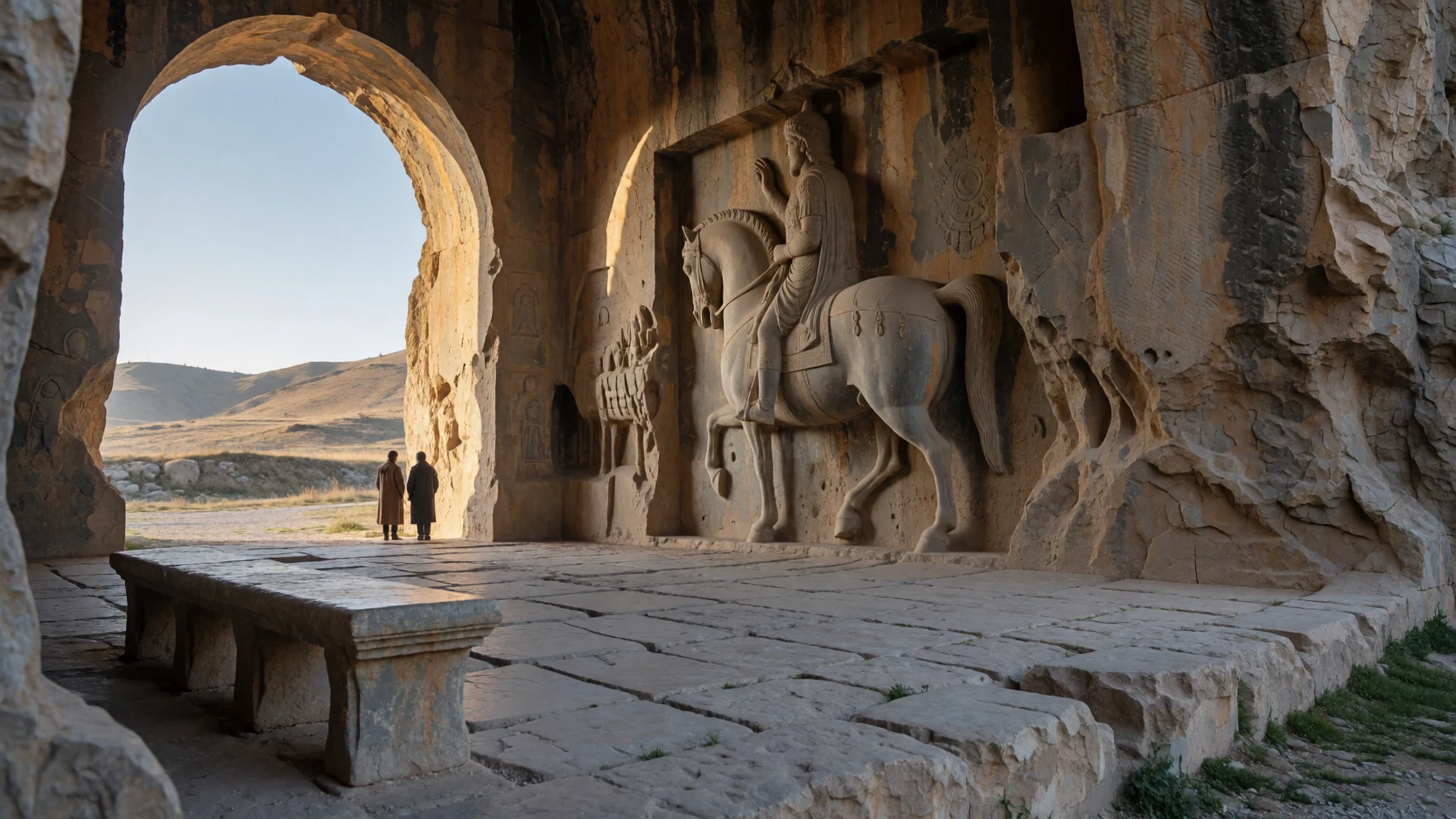
- Behistun Inscription — East of Kermanshah, on the Hamadan road
A UNESCO-listed carved inscription high on a limestone cliff, written in several ancient languages. The text itself is hard to read from the ground, but the setting is dramatic, and the site also has a statue of Hercules nearby. Allow a half day with Taq-e Bostan.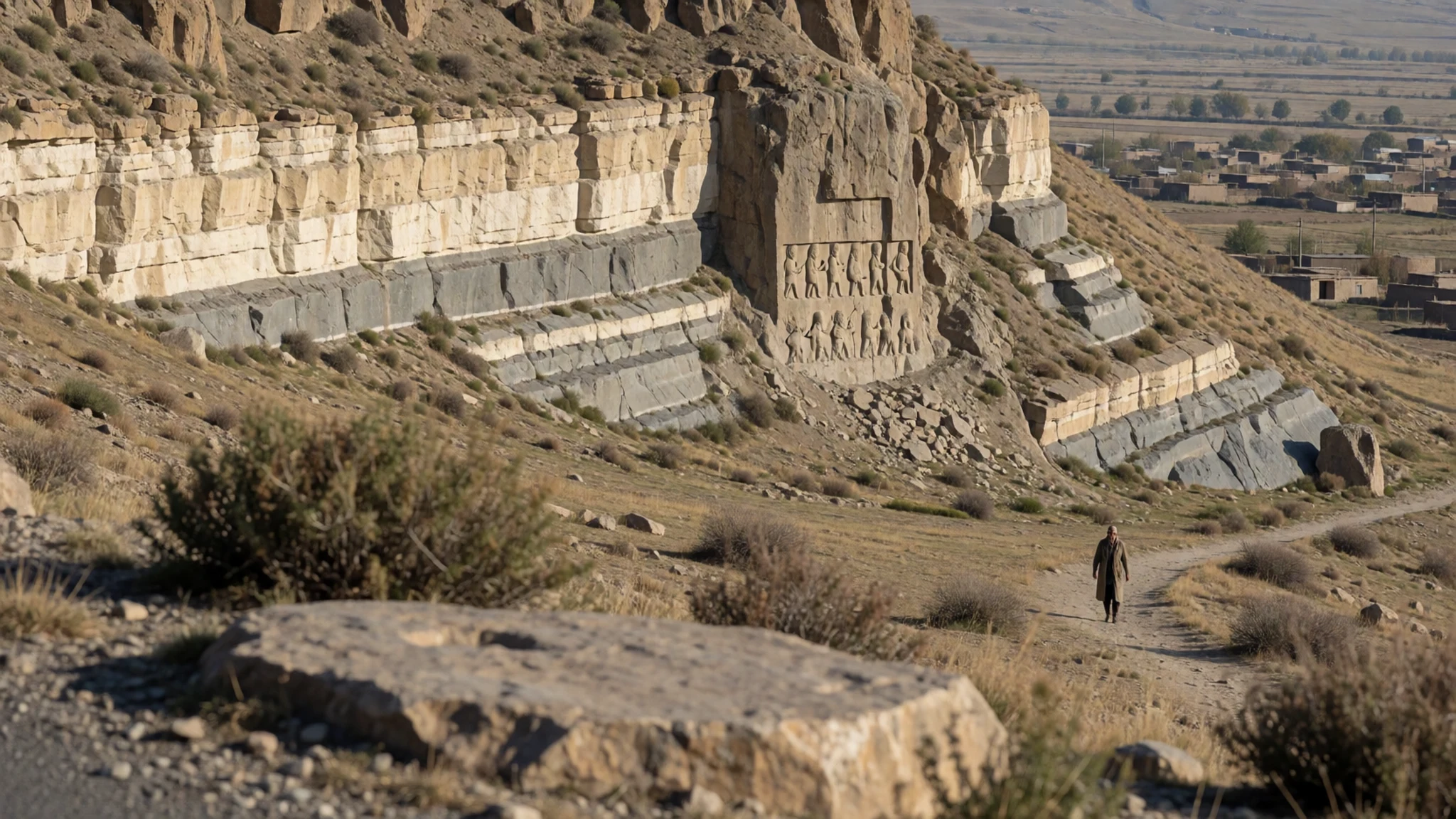
- Moavenalmolk Tekyeh — Old city centre
A Qajar-era mourning house, used for Shia remembrance rituals, covered in tilework. The panels show scenes from the Battle of Karbala beside Achaemenid kings and Persepolis, an unusual mix. It also houses an ethnography museum. Take time to look up and along the walls.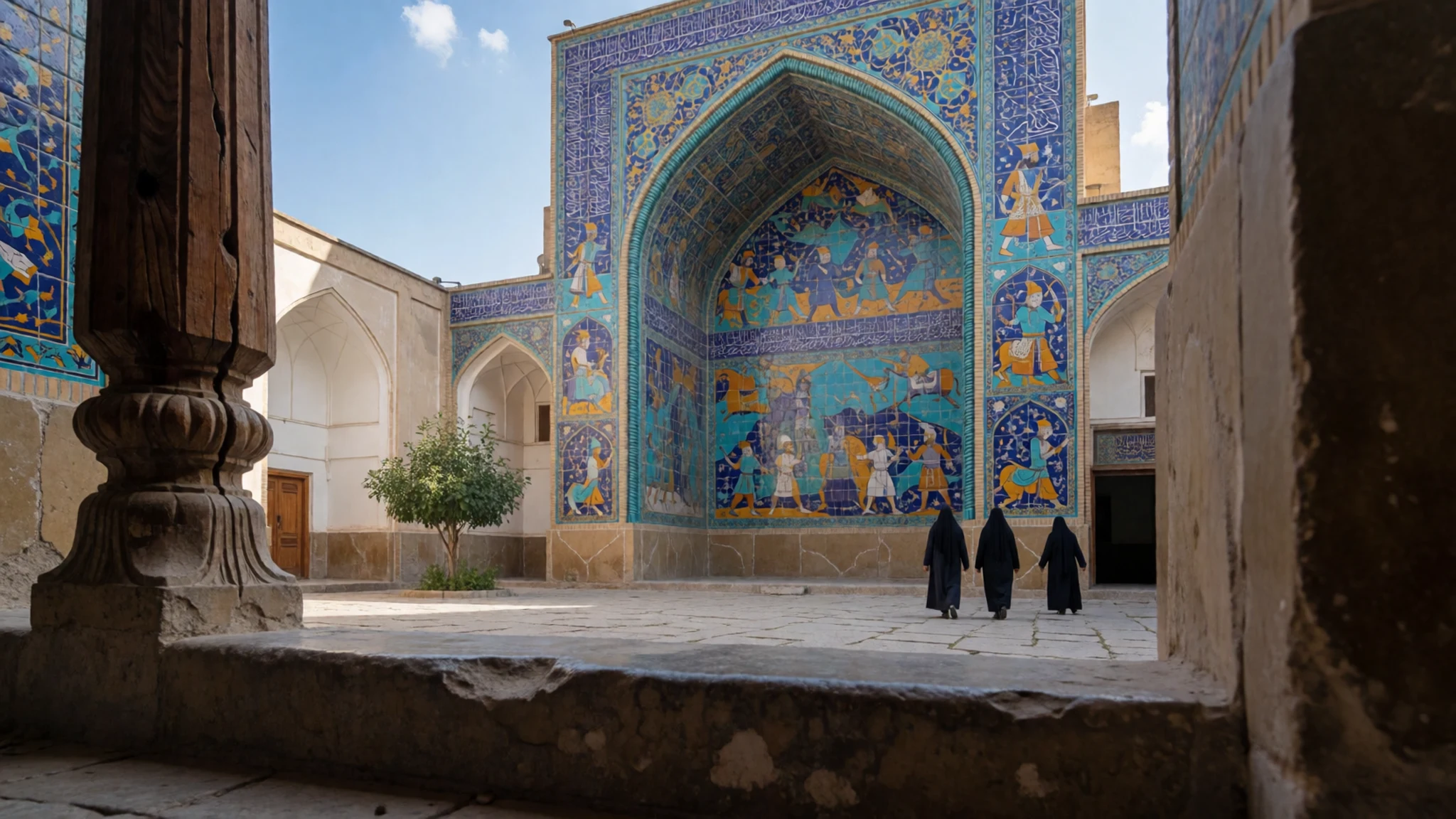
- Tekyeh Biglar Baigi museums — Old city centre
Another restored Qajar house, holding the Zagros Paleolithic Museum, whose stone tools and animal bones fill in the area's deep prehistory, and a small museum of epigraphy and Qajar handwriting. Compact and quiet, it suits a hot or rainy afternoon. Check the opening days locally.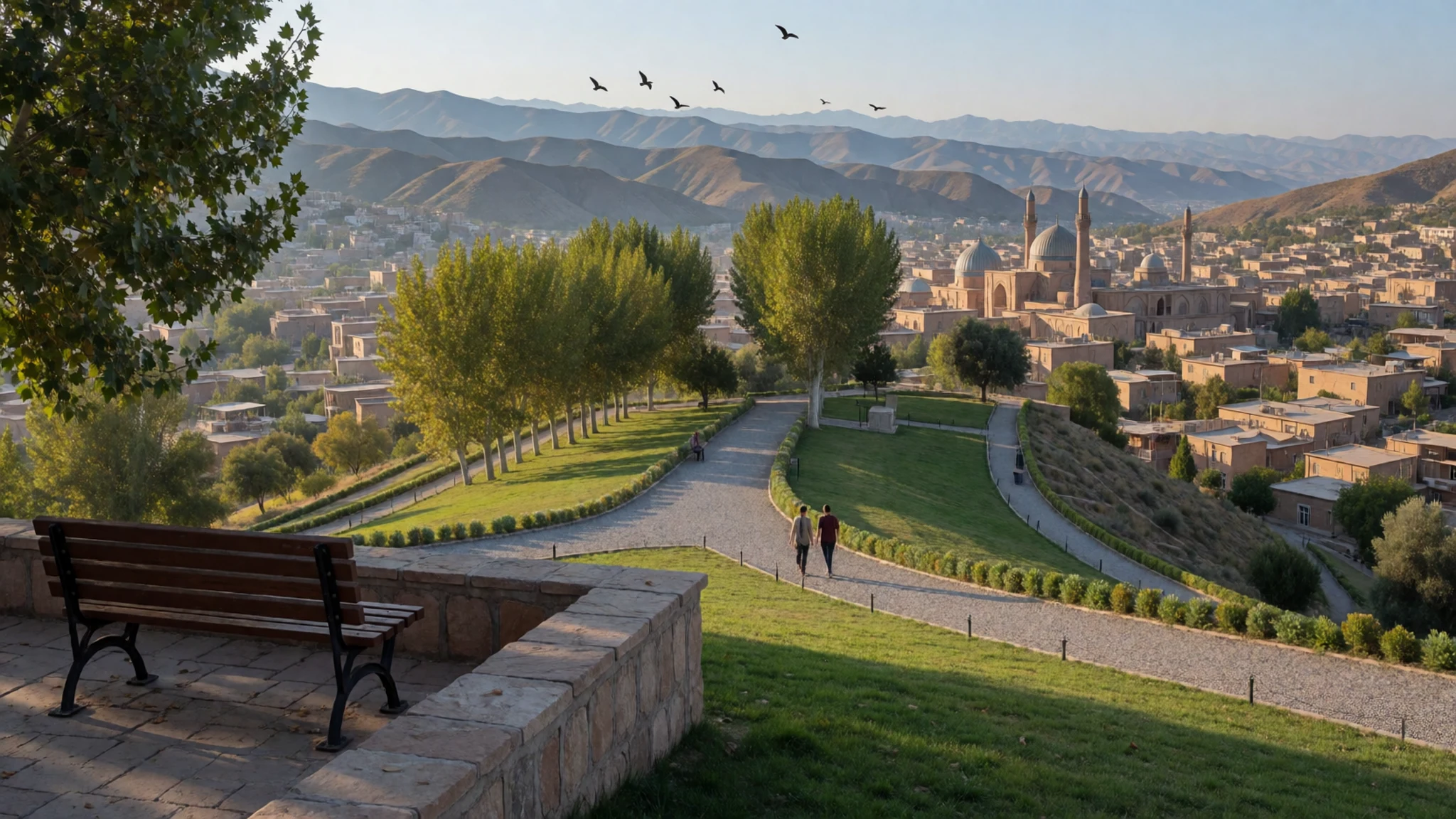
- Kouhestan Park — Northern hills near Taq-e Bostan
A hillside park near the Taq-e Bostan mountains with a wide view over the city. It is an easy place to see how Kermanshah spreads across its basin, and families come here in the evenings. Bring water in summer and a jacket after sunset.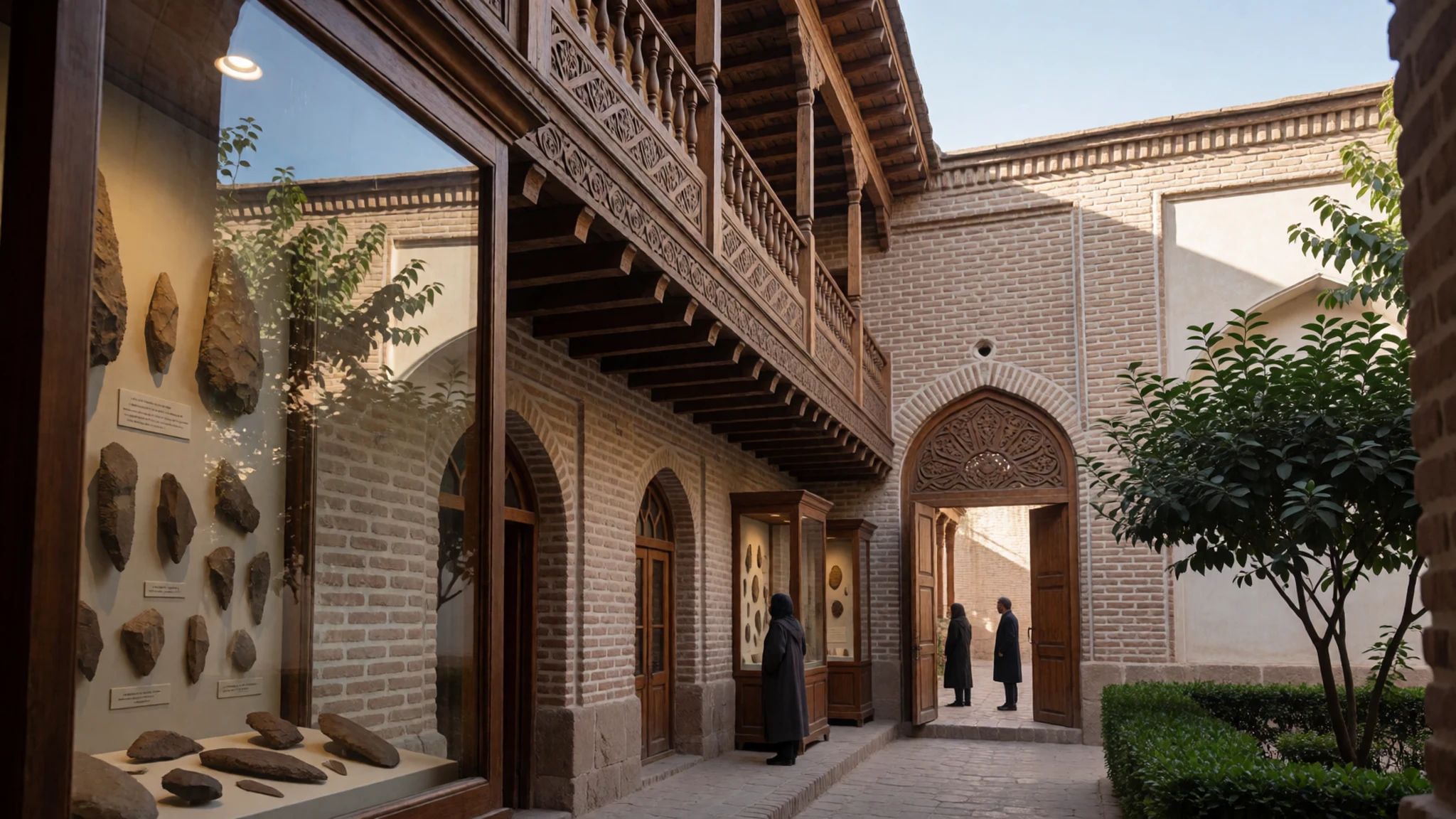
- Talab-e Hashilan — Outside the city, wetland reserve
A wetland about 32 km from the city, with small floating islands of vegetation and many bird species. It is best in spring and early summer, when birdlife is busiest. Without a car it is awkward to reach, so arrange a taxi for the half day.
Culture
Kermanshah is a Kurdish-majority city in a Persian-speaking country, and the two cultures sit comfortably together. Kurdish is the everyday language in many homes and streets, and music, dance and storytelling here have a character of their own. Folk songs and group dances come out at weddings and festivals, and a visitor may hear the daf, a large frame drum, and the sound of the sorna, a double-reed horn.
Religion is part of daily life. Most people are Shia Muslim, and the Tekyehs, mourning houses, are used for rites commemorating Karbala, especially during Muharram. The tilework in the Moavenalmolk Tekyeh draws on both religious scenes and Iran's pre-Islamic kings, a good reflection of how people here hold several layers of history at once.
Wrestling has a long tradition in the region, and a small museum of traditional wrestlers keeps that memory alive. Hospitality matters too. Tea is offered readily, a refusal is expected once or twice before accepting, and conversation about family, food and travel is the usual way to start. Visitors who try a few words of Persian, or of Kurdish, are met with real warmth.
During Muharram, dress sombrely and ask before photographing mourning processions or people in prayer; in any mosque or tekyeh, remove your shoes at the door and follow local guidance on where to stand.
What to wear
Traditional Kurdish dress in the Kermanshah region is colourful and practical. Men wear loose trousers gathered at the ankle with a short jacket, a wide cloth sash at the waist and often a turban or cap; women wear layered, brightly patterned dresses, long vests, scarves and, at celebrations, coins or beads on headwear. Cotton and wool are the usual materials, and heavier woollen felt or cloaks are worn in the cold hills. This dress is most visible at weddings, festivals, holidays and in folk performances, and in villages among older people.
In the city, everyday wear is modern. Men wear trousers and shirts or jackets, with warm layers in winter. Women wear a headscarf with a coat or tunic and trousers, with many different styles, colours and levels of formality. Younger people follow the same fashions as elsewhere in Iran.
Visitors should dress to the national rules and local custom. Women are required to cover their hair with a scarf and wear a loose, long top covering the hips and arms; men should avoid shorts and sleeveless tops. Choose breathable fabric for summer, which is very hot, and pack a warm coat for winter. Sturdy, comfortable shoes with grip suit the rock sites at Taq-e Bostan and Behistun, and shoes that slip off easily help at mosques and tekyehs.
What to eat
- Abgoosht (dizi) — Traditional dizi eateries around the old bazaar
A slow-cooked stew of lamb, chickpeas and potatoes, served in a stone pot. The broth is eaten first with bread, then the solids are mashed into a paste. It is hearty and filling, and a good choice on a cold day.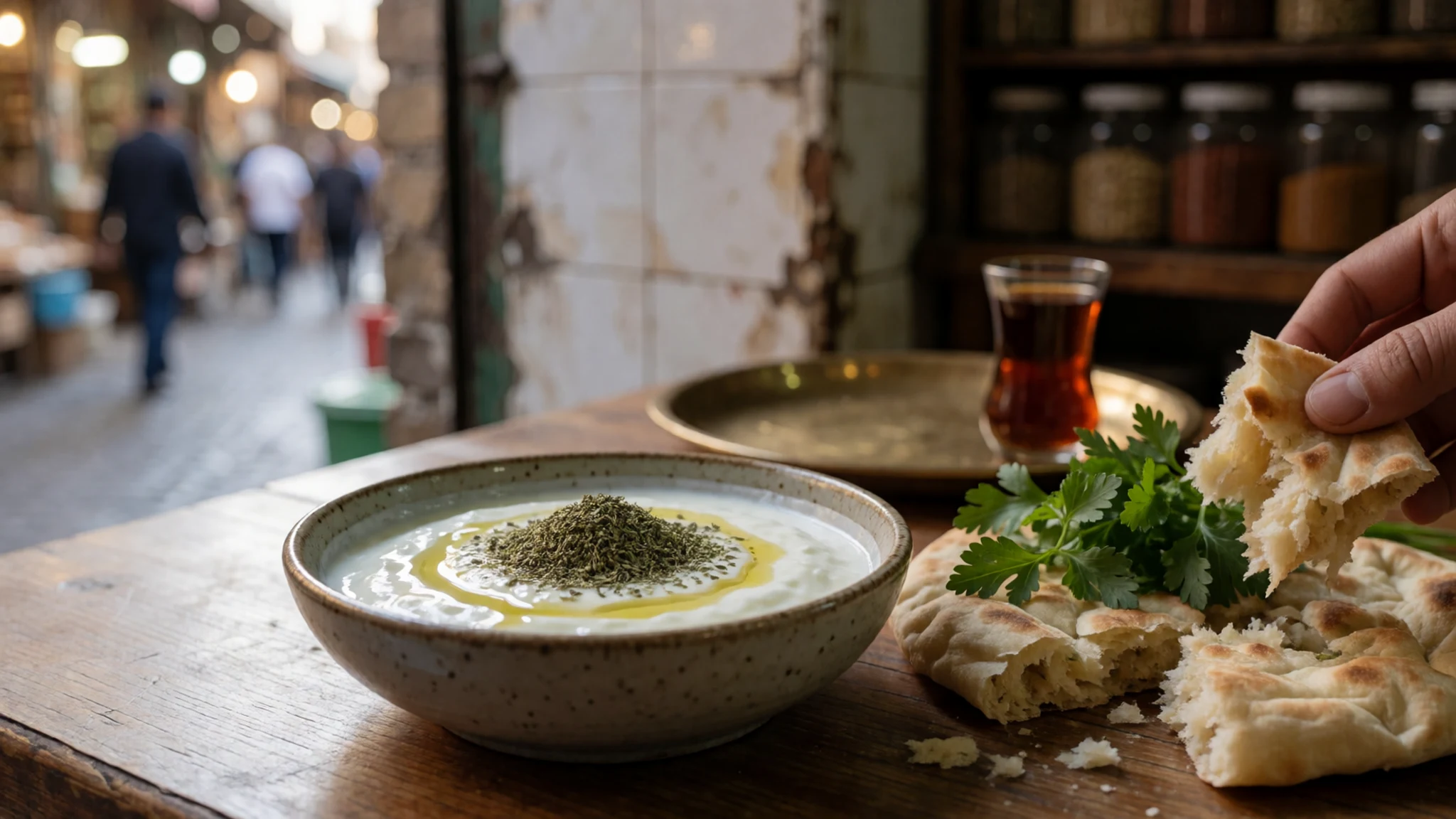
- Kebab and grilled meats — Kebab restaurants on the main avenues and near the bazaar
Skewers of lamb or chicken grilled over charcoal and served with rice, grilled tomato and flatbread. Western Iran's kebabs are usually simply seasoned, so the quality of the meat shows. Pair it with yoghurt drink for a standard lunch.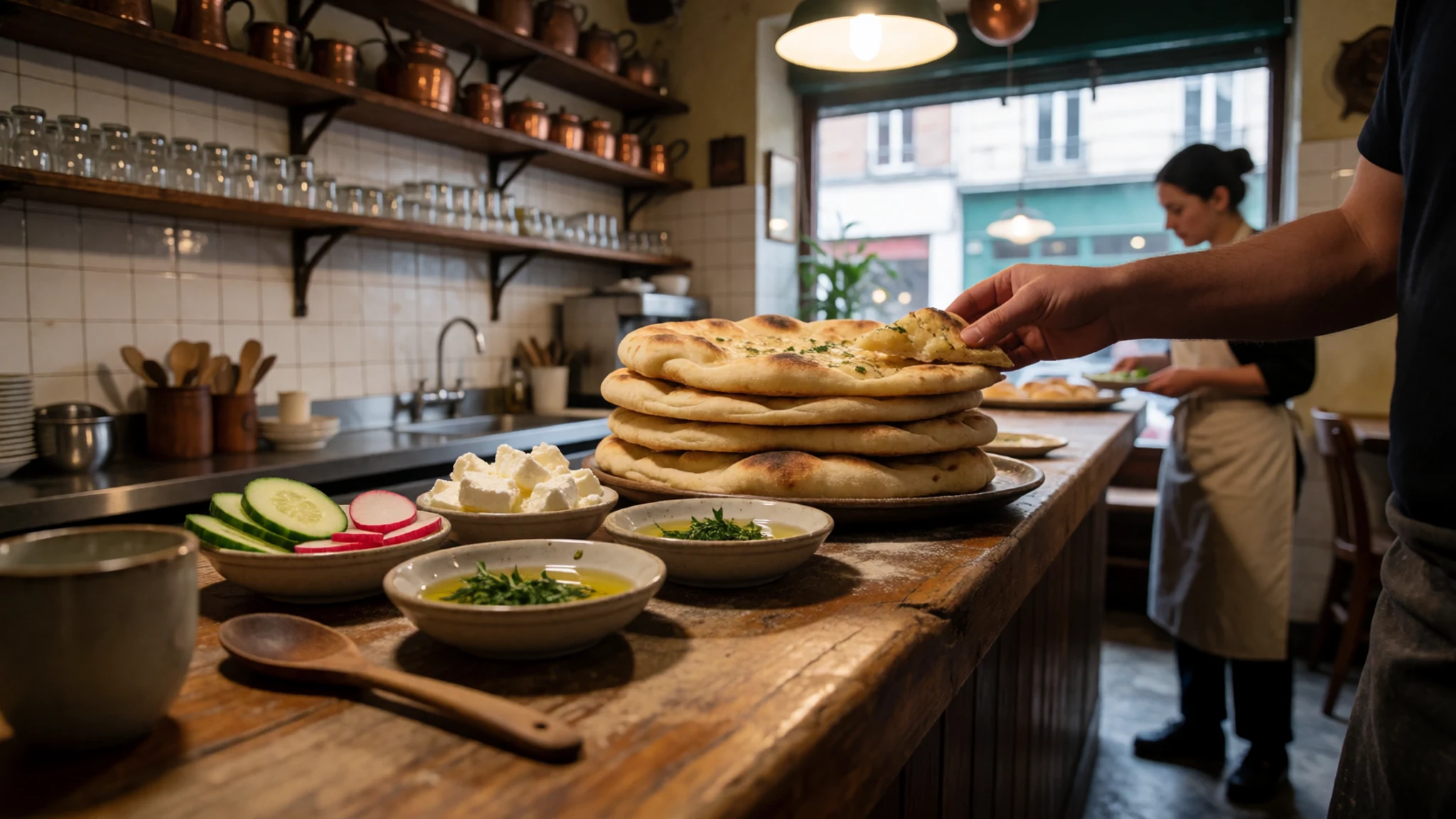
- Ash (thick soup) — Small eateries and family kitchens; ask for ash of the day
A thick herb and bean soup, often with noodles, and topped with whey and fried onion. Versions vary between households and seasons. It is warm, filling and usually vegetarian, which makes it useful for travellers who avoid meat. - Kaleh pacheh — Specialist breakfast shops, open at dawn
A traditional breakfast dish made from boiled sheep's head and trotters, served early in the morning with bread and lemon. It is for the adventurous and is eaten for its strong flavour and local tradition. Go early, since it sells out. - Fresh bread and local cheese — Neighbourhood bakeries and the bazaar
Flat bread baked in a clay oven, eaten hot with soft white cheese, herbs, walnuts and tea. It is a simple, cheap breakfast, and a good way to eat like a local before a long day of sightseeing in the hills. - Kurdish sweets and dried fruit — Old bazaar sweet and dried-fruit stalls
The bazaar sells local sweets, nuts, dried fruit and sesame or date-based confections, ideal for gifts or for the road. Buy small quantities from stalls that have fast turnover, and ask to taste before buying a larger bag.
Plan it
Best time. April–June and September–October. Spring and early autumn bring mild days and cool nights, while July and August are very hot in the afternoon and winter is cold with snow for a couple of weeks.
How long. 2–3
Getting there. Kermanshah has its own international airport, with flights from Tehran, Mashhad and Istanbul. A railway station opened in 2018, and buses run from Tehran and other major cities. In town, the ride-hailing apps Snapp and Tapsi are easy and cheap.
Budget. low
Tips
- Visit Taq-e Bostan and Behistun in the morning, before the heat and the day-trip crowds
- Carry some cash, and check whether your cards will work, as international cards often do not in Iran
- Drink bottled or filtered water and carry a bottle in summer
- Download a translation app, since English is limited outside hotels and museums
- Check official travel advice and the city website https://kermanshah.ir before you book
Etiquette
- Cover your hair (women) and arms and legs (everyone) in public, following local dress rules
- Ask before photographing people, especially women and religious ceremonies
- Accept tea when offered; it is part of hospitality
Nearby
Sources
- Wikidata Q180078 (CC0)
- Wikipedia: Kermanshah (CC BY-SA 4.0)
- Wikivoyage: Kermanshah (CC BY-SA 4.0)
- Photo: Kermanshah Photos M3 (Fars News Agency) (CC BY 4.0)
- Photo: Kermanshah Photos M6 (Fars News Agency) (CC BY 4.0)
- Photo: Biglarbeygi (Rezayph) (CC BY-SA 4.0)
- Photo: Tiling of Takieh Mo'aven ol-Molk (ninara) (CC BY 2.5)
- Photo: Jameh Mosque of Shafei (M. Ali Asadi) (CC BY 4.0)
- Photo: Taq-e Bostan (Ho3in1988) (CC BY-SA 4.0)
- Photo: Shahbanu Farah Pahlavi visits Kermanshah (Public domain)
- Photo: Hercule Statue, Bistoon (Alieh) (CC BY 2.5)


