Babak Castle
Babak Castle, Iran
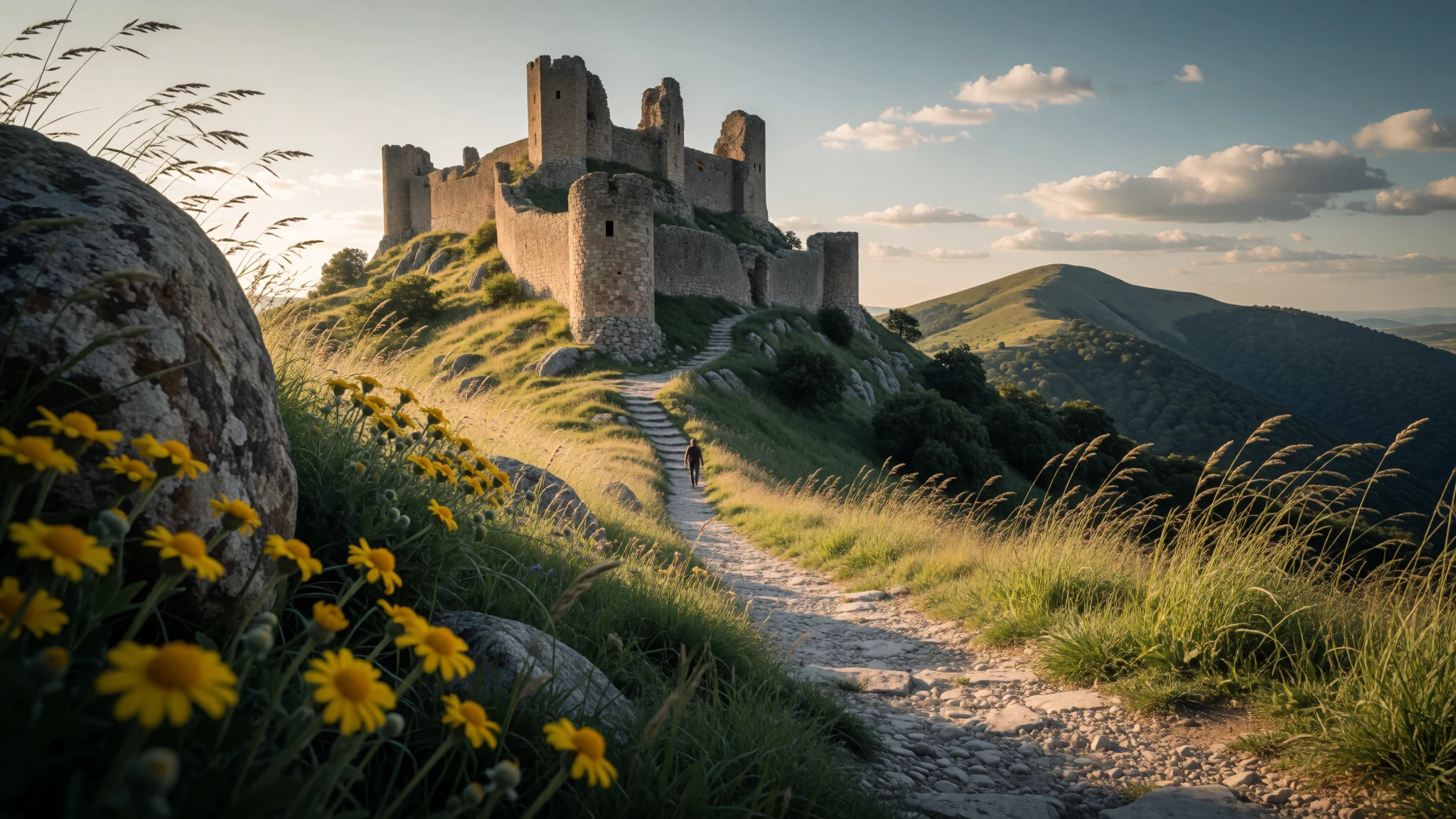
Babak Castle is a ruined mountain stronghold in Iran's Arasbaran forests, tied to Babak Khorramdin's rebellion against the Abbasid caliphs.
The place
Babak Castle (Persian: قلعه بابک) crowns a mountain in the Arasbaran forests of north-western Iran, in Kaleybar County. It is a ruined citadel rather than a tidy castle with a gatehouse and towers, and that is part of its character: the setting does most of the work. The nearest town is Kaleybar, about 6 km away, and Ahar lies about 50 km off, so most visitors arrive by road and finish on foot. Wikidata classes the site as a castle and a cultural property, and Iran lists it as a national heritage site.
The country around it is green, hilly and wooded, which surprises anyone who pictures Iran only as dry plateau and desert. Stone, trees and cloud give the summit a moody, northern feel, and in cool or wet weather the top can disappear into mist. The ground is steep, so the visit is physical in a way that a roadside monument is not.
The fort is also a place of memory. Iranian tradition links it with Babak Khorramdin, who led the Khurramites against the Abbasid caliphate, and many people come for that story as much as for the masonry. It works best as a half-day outing from Kaleybar: the climb, the view, then a meal in town. Facilities near the ruin should not be assumed, so food, water and a charged phone belong in the bag. Crowds stay modest for most of the year, though families and school groups gather in Iranian holiday periods, and the town itself is small and quiet.
Its story
Babak Castle is generally dated to the Parthian period, with changes made under the Sasanians, so the hilltop was a fortified site long before the events that made it famous. That fame belongs to the early ninth century, when north-western Iran was unsettled by Khurramite movements opposed to Abbasid rule.
Two such movements existed in the region. One was led by Javidhan, a landowner whose headquarters were at Badd, close to the Aras river. The other was led by Abu Imran, who often fought him. Around 816 Abu Imran was defeated and killed, and Javidhan was fatally wounded, dying soon afterwards. His apprentice Babak Khorramdin took over the leadership and married Javidhan's widow.
The chronicler Tabari places the start of Babak's revolt in 816–817. The caliphate sent commanders against him, but they fared badly. Babak's forces beat the government troops in a major battle at Hashtadsar, and the campaign launched by Caliph al-Ma'mun had come to nothing by the time that ruler died. The medieval writer Ibn al-Nadim names Javidhan and Babak as the leaders who held this stronghold against the Abbasids.
The end came in 837, when an army under the Abbasid general Afshin conquered the fort and ruined it. Most of what survives in writing comes from the rebels' enemies, so the picture of Babak is shaped by hostile chroniclers, and his later reputation in Iran owes much to retelling. The ruins on the summit are what the conquest and the centuries left behind.
What to see
- The summit ruins — Summit above Kaleybar
The ruined walls and stonework on the mountain top are the reason for the trip. Take time to follow the lines of the walls along the rock and to notice how the position controls the ground below. Wear shoes with grip, because the surfaces are uneven and can be slippery after rain.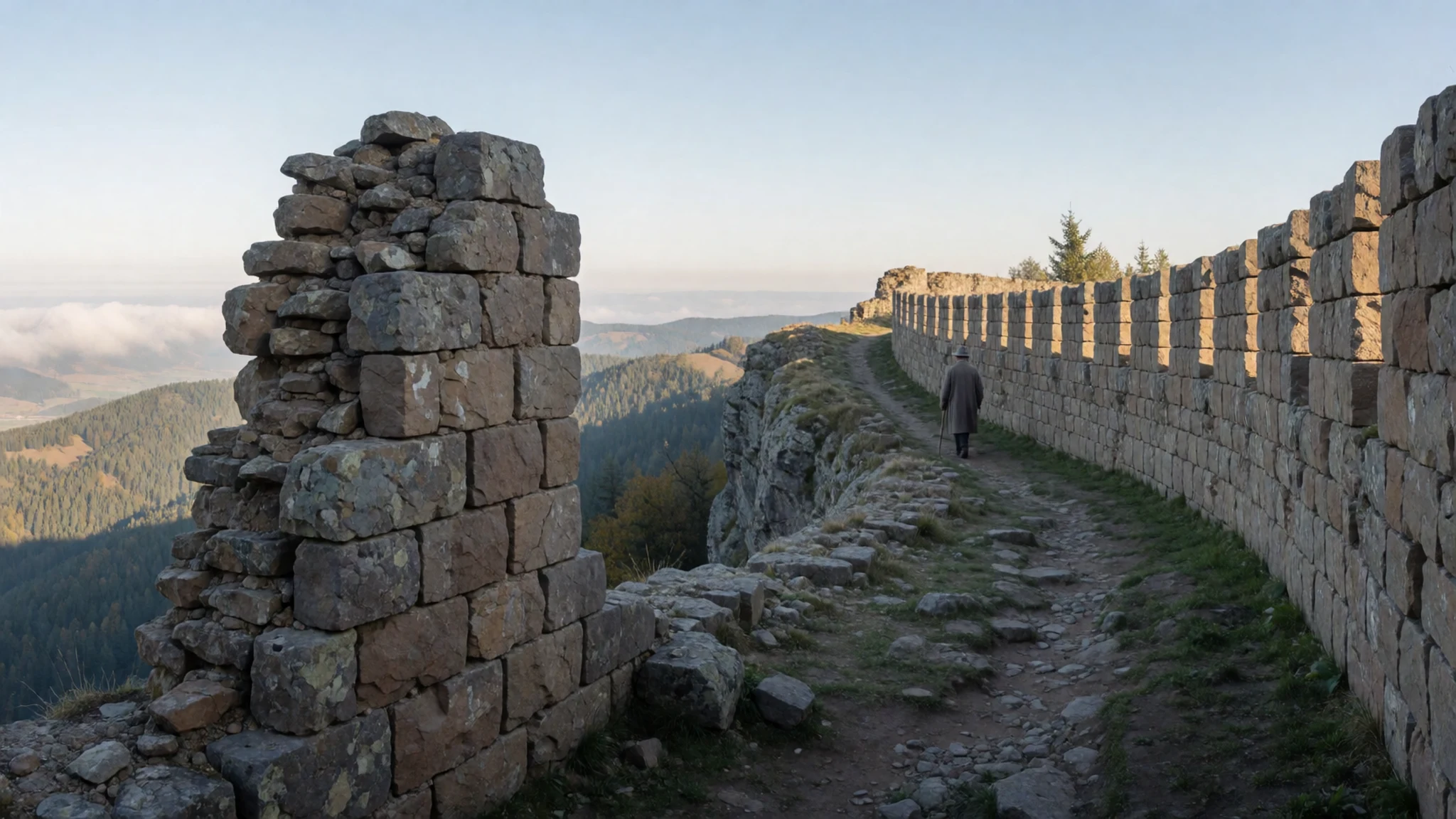
- The climb and the viewpoints — Approach path from Kaleybar
The approach on foot is half the experience, rising through rock and scrub with the fort gradually coming into view. Pause at the open stretches to look back over the valley and forested ridges. Ask locally about the current path and conditions, and start early so the descent is not rushed.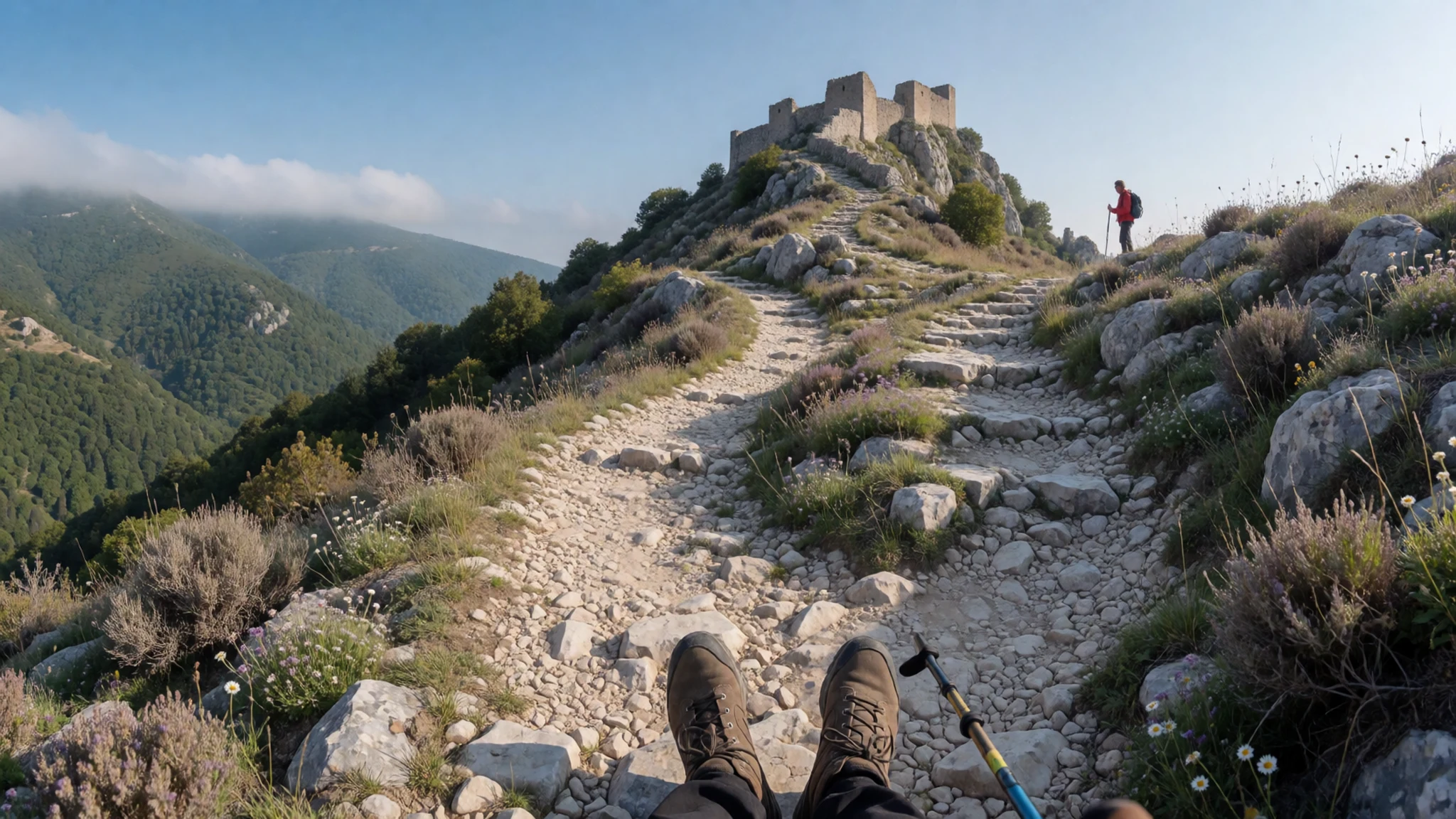
- Back view of the fort — Slopes around the summit
Walking round to the far side shows how much the fort depends on natural rock and steep drops rather than built defences alone. Photographers like this angle for the contrast between pale stone and surrounding greenery. Keep well back from edges and avoid climbing on loose or fragile masonry.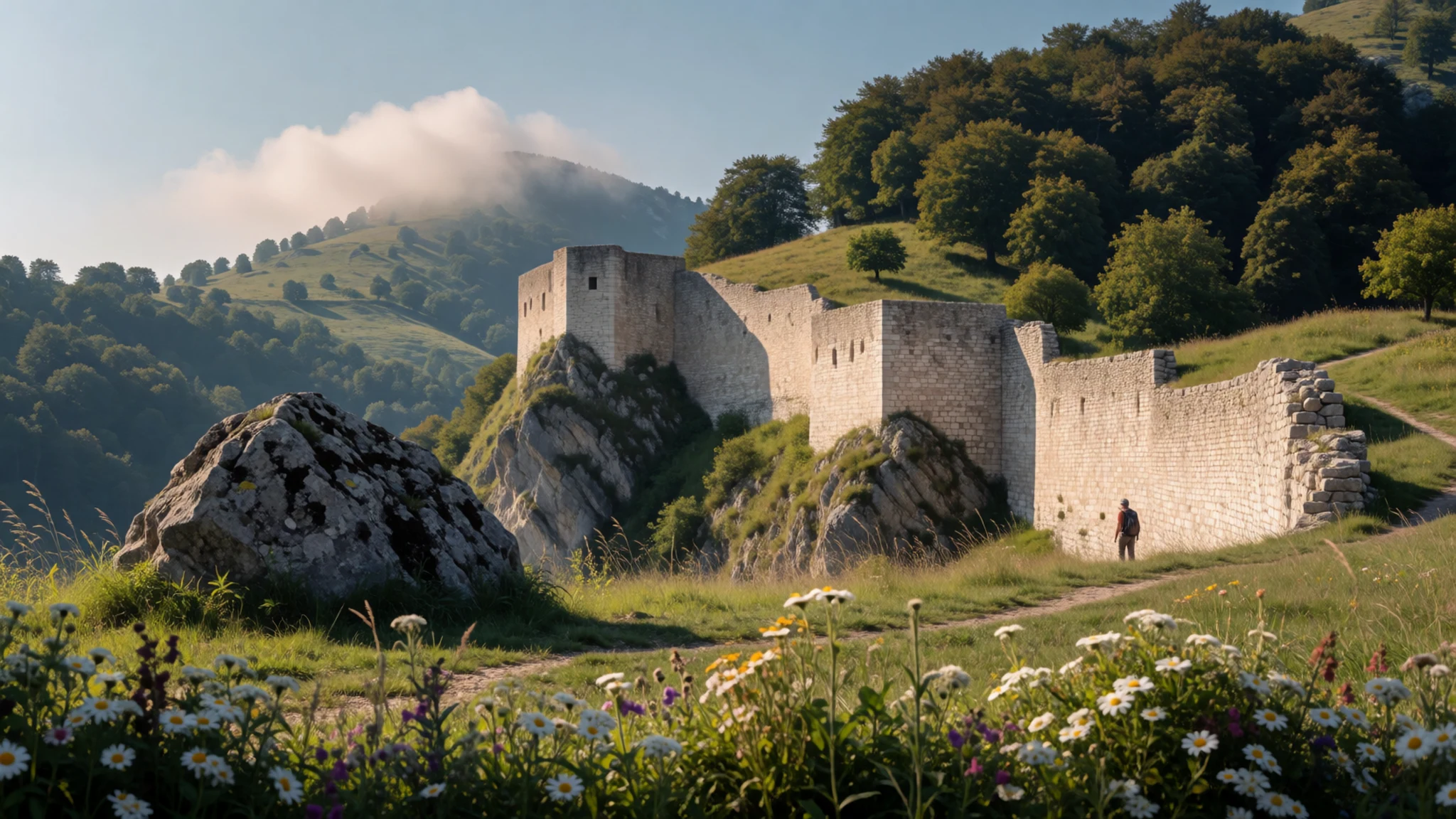
- Bazz fortress — Kaleybar County
Bazz is a separate fortress in the same county, photographed and written about alongside Babak Castle. Whether it is easy to reach or open to visitors can change, so ask in Kaleybar before planning a stop. It makes a useful second look at how defence was handled in this mountain country.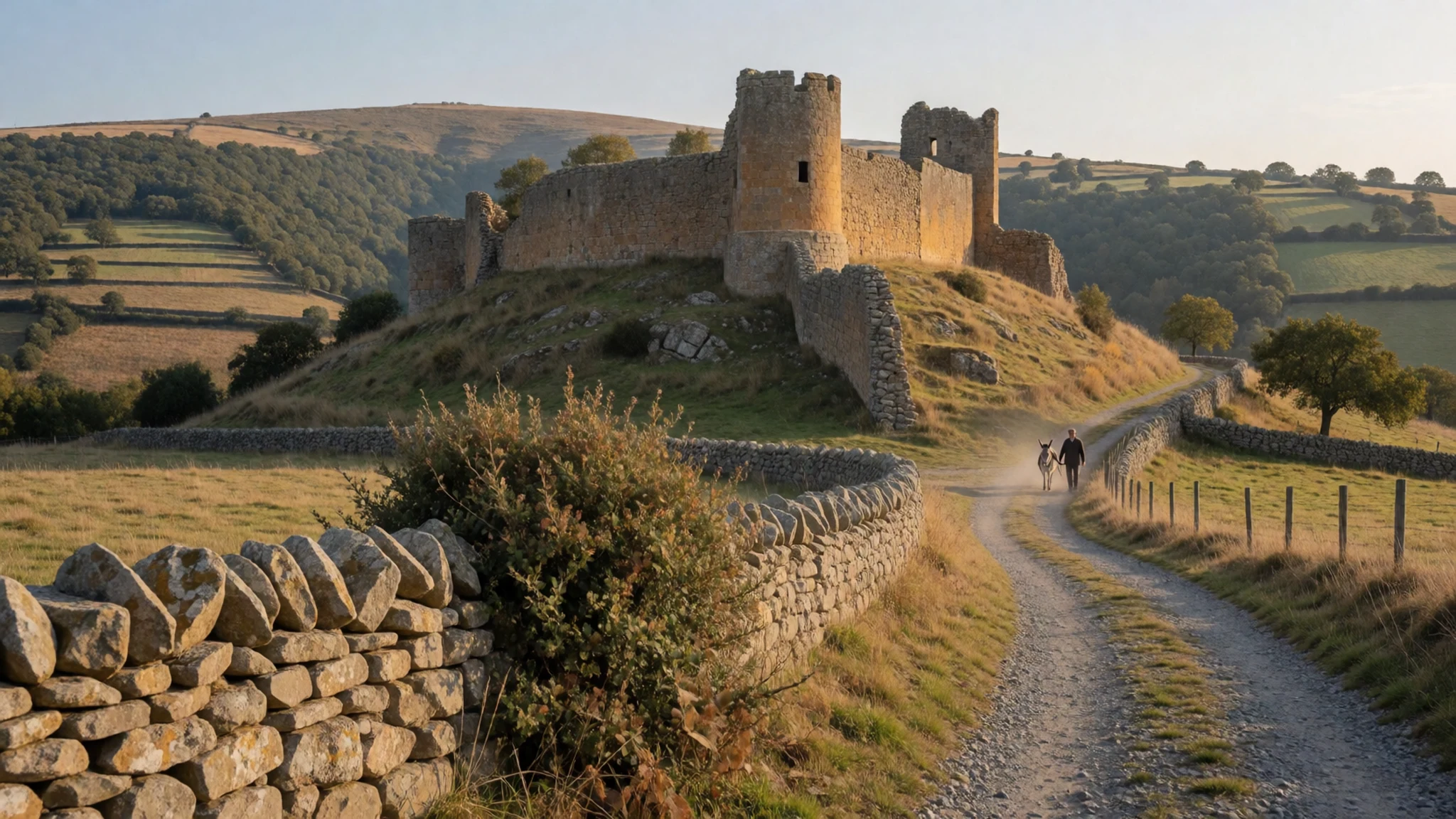
- Kaleybar town and the Arasbaran forests — Kaleybar and the surrounding hills
Kaleybar is the practical base: a small town with local eateries, shops for water and snacks, and people who know the mountain. Beyond it, the Arasbaran forests reward a slow drive or a short walk, especially in spring and autumn when the hills are green or turning colour and the air is cooler.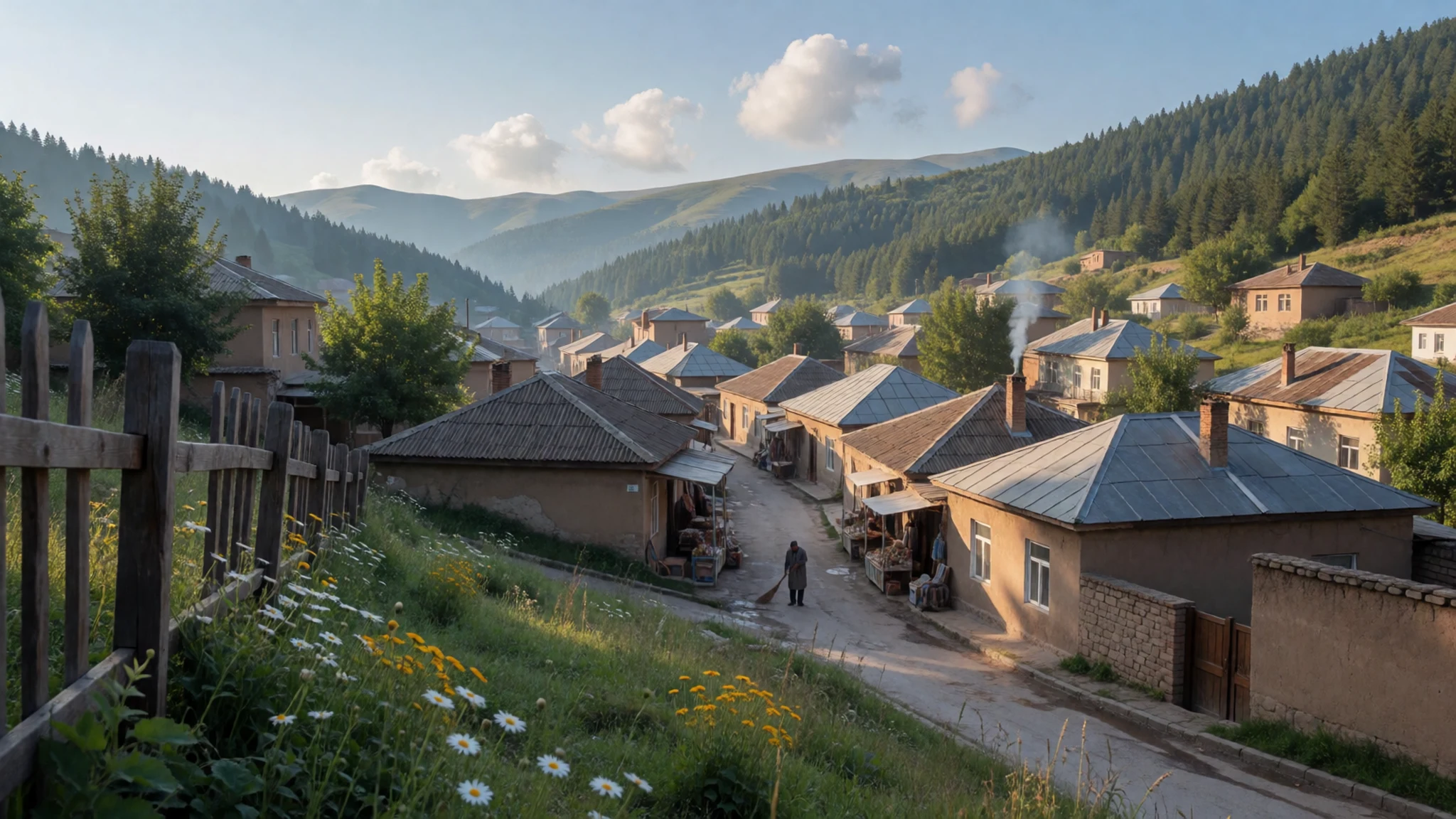
Culture
Babak Castle sits in a part of north-western Iran where the everyday language is often Azerbaijani Turkic, alongside Persian, and where hospitality is taken seriously. Visitors, especially foreign ones, are often greeted with curiosity and offered tea, fruit or sweets, sometimes before any conversation has really started. Accepting the offer, even if only a small taste, is part of good manners, and meals and social visits tend to be slow and relaxed.
Persian courtesy is formal. People are addressed as Aghaye (Mr) or Khanoom (Ms) with the name, and plural verb forms show respect. A welcome sounds like "Kheili khosh amadid". Handshakes and hugs are normal between men, while contact between men and women is more restrained.
Babak Khorramdin is a figure of strong feeling in Iran. For many people he stands for resistance to outside rule and defence of local identity, and the castle is treated as a place of national memory, not just a ruin. Visitors will get further by listening to local accounts with interest than by arguing over the history, since the surviving sources were mostly written by his opponents and the story has been told in many ways.
In Kaleybar and nearby villages, life is more traditional and private than in big cities, so it pays to be modest in manner and dress, and to ask before photographing people.
Wait for a woman to offer her hand before shaking it, and always ask permission before photographing local people or their homes.
What to wear
Babak Castle lies in Azerbaijani-speaking north-western Iran, where traditional dress has long been shaped by cold winters and mountain life. Older regional clothing relies on wool and felt, with layered garments, embroidered or patterned waistcoats, and for women colourful gathered skirts and headscarves. Handwoven wool and carpets are part of the local textile culture. These outfits are now mostly seen at weddings, festivals, folk performances and among some older villagers, not in daily life.
Everyday clothing in Kaleybar and Ahar is practical and modest. Men usually wear long trousers and shirts, with jackets in cooler months. Women wear a headscarf with a long, loose coat or tunic, and some wear the black chador, particularly for religious occasions or in more traditional households. Colours vary, and younger people mix in fashionable styles within the limits of the dress rules.
Visitors should plan for both the climate and the law. Women, including foreign visitors, are expected to cover their hair with a scarf and wear a loose top that covers the hips and arms, with long trousers or skirt. Men should avoid shorts and sleeveless tops. For the castle itself, the priority is footwear: closed shoes or light boots with good grip for a steep, rocky climb. Bring layers, since the summit can be cool and windy even when the town is warm, and add a waterproof layer for wet spells and a hat for sun.
What to eat
- Ash — Local eateries in Kaleybar and Ahar
Ash is a thick, herb-heavy soup with noodles, pulses and often a tangy topping. It is warming after a cold mountain walk and widely made across north-western Iran. Vegetarian versions are common, but ask about meat stock.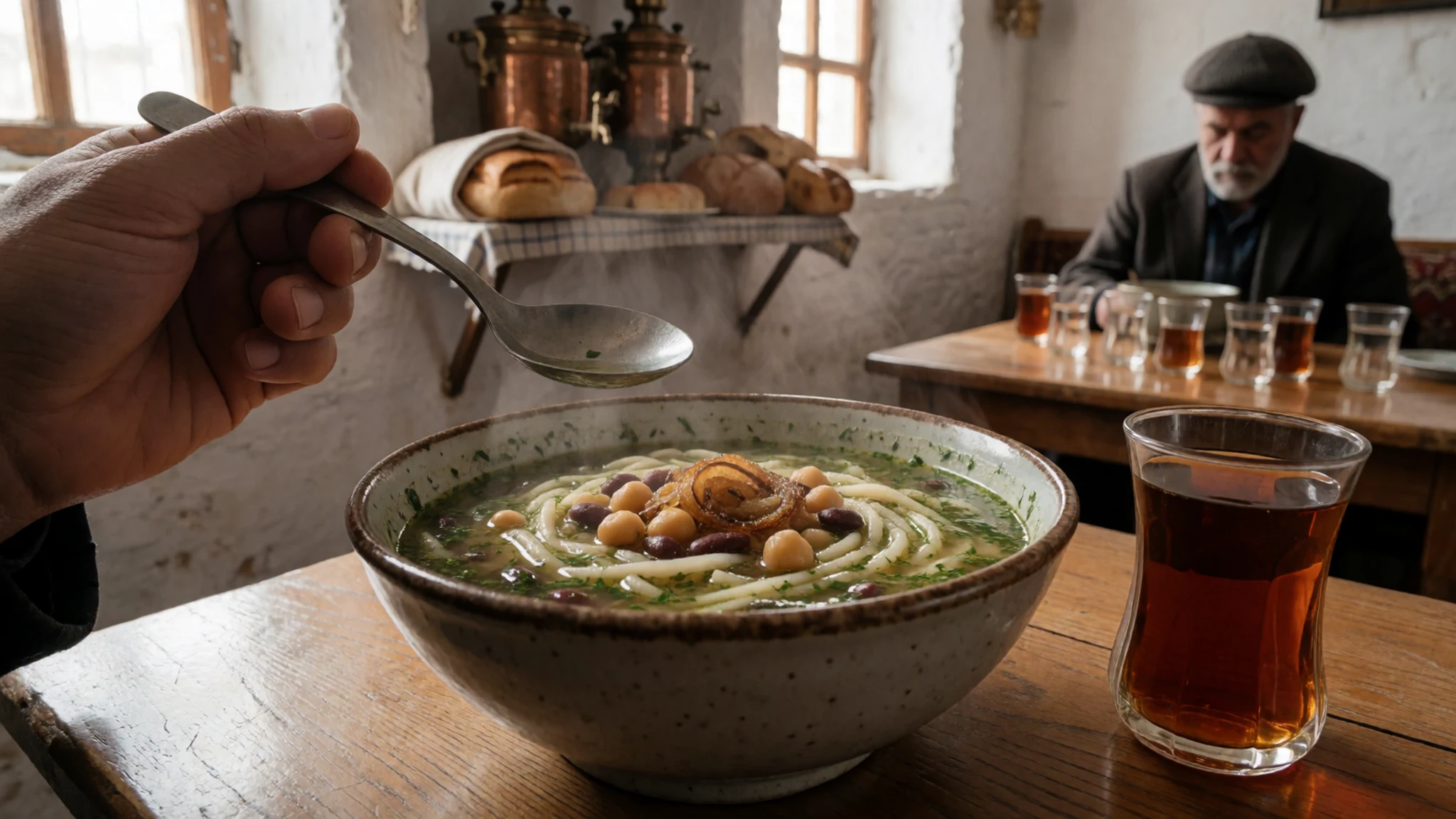
- Chelo kabab — Kebab restaurants in towns along the main roads
Grilled minced or cut meat served with saffron-tinged rice, grilled tomato and flatbread is the standard Iranian meal. It is filling and easy to order, and a reliable option after the climb.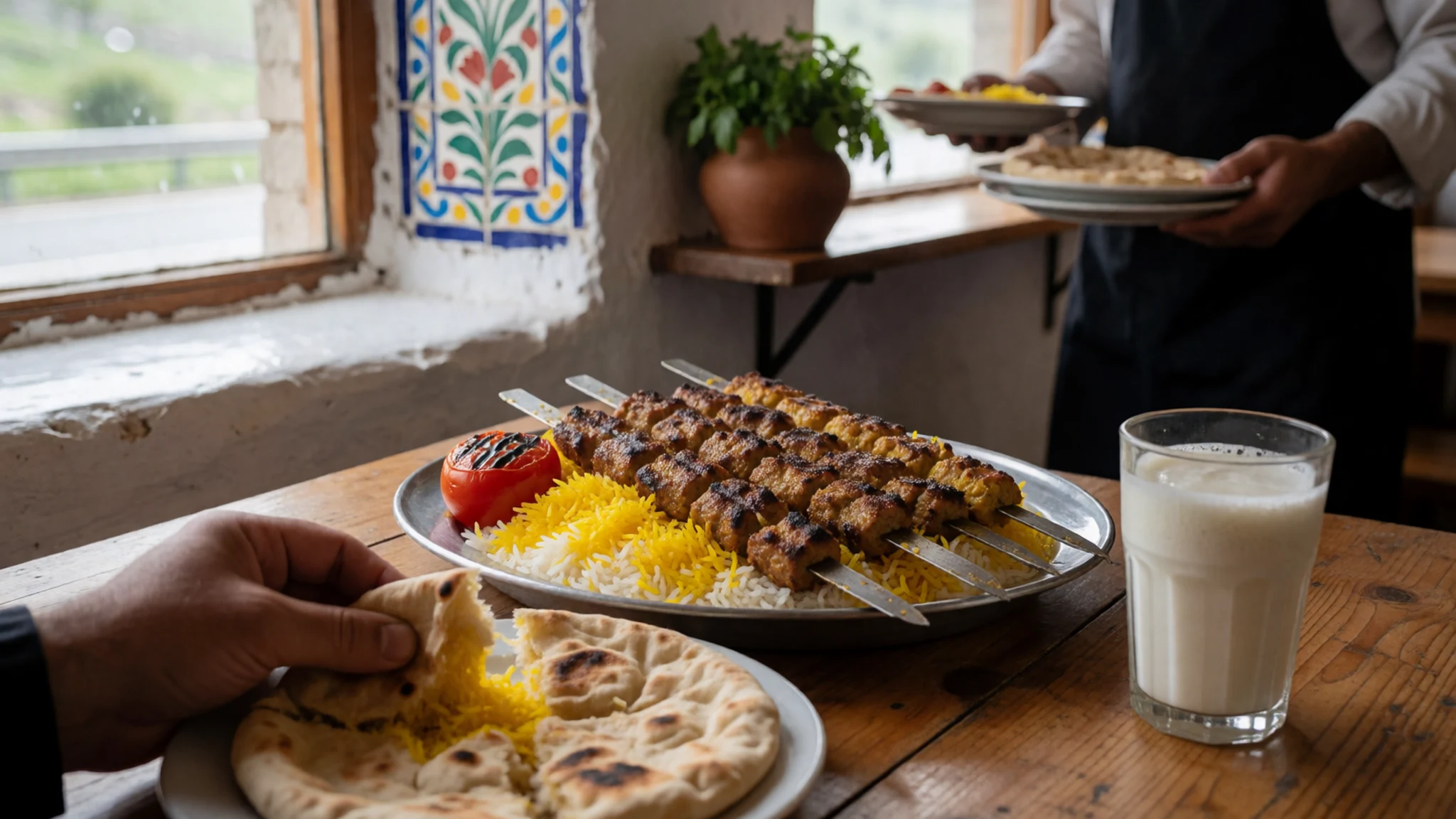
- Dizi (abgoosht) — Traditional eateries, usually at lunch
Dizi is a slow-cooked lamb and chickpea stew, served in a small stone pot. The broth is eaten first with bread, then the solids are mashed. It is hearty, a little messy, and best shared with someone who has eaten it before. - Kuku sabzi — Home-style eateries and family tables
Kuku sabzi is a baked herb omelette, dense with parsley, coriander and dill, often with walnuts or barberries. It is eaten with bread and yoghurt, and suits vegetarians. Locals may offer it at picnics and family meals. - Tea with sweets — Tea houses and market stalls
Black tea, served hot in small glasses, comes with sugar lumps, dates, nuts or local sweets. It is the usual way to sit, rest and talk. Refusing outright can seem abrupt, so accept a glass and take your time.
Plan it
Best time. Late spring to early autumn, roughly May–June and September–October, when the Arasbaran hills are green or turning colour and the climb is comfortable. Winters in this mountain country can be cold and snowy, and paths may be slippery. Midsummer can be hot on the exposed climb, so start early.
How long. 1–2
Getting there. Fly into Tehran or Tabriz, then continue by road via Ahar to Kaleybar, the small town about 6 km from the castle; Ahar is about 50 km away. The last leg is a steep walk up the mountain. Check current road conditions and local transport before travelling.
Budget. low
Tips
- Start the climb early so there is daylight to spare for the descent
- Carry water, snacks and a charged phone, as facilities near the ruin should not be assumed
- Bring cash in Iranian currency, since foreign cards often do not work; check your bank's advice before travel
- Ask in Kaleybar about the current path and weather before setting off
- Check your government's travel advice and visa rules well before booking; entry conditions differ by passport and change often
Etiquette
- Women should cover their hair and wear loose, long clothing; men should avoid shorts
- Ask before photographing people, and accept offered tea politely
- Do not climb on loose masonry or leave litter at the site
Nearby
Sources
- Wikidata Q627928 (CC0)
- Wikipedia: Babak Fort (rev 1379154028) (CC BY-SA 4.0)
- Wikivoyage: Iran (rev 5412767) (CC BY-SA 4.0)
- Bazz fortress. Kaleyber, Iran — Alireza824, via Wikimedia Commons (CC BY 3.0)
- Qalebabak2 — Behrad09, via Wikimedia Commons (CC BY-SA 4.0)
- Babak Fort (1) — Ali Safdarian, via Wikimedia Commons (CC BY 3.0)
- Babak Fort (6) — Ali Safdarian, via Wikimedia Commons (CC BY 3.0)
- Babak Fort, or Babak Castle — میرنظامی, via Wikimedia Commons (CC BY 3.0)
- Babak fort back view — Elnazmostaan, via Wikimedia Commons (CC BY-SA 4.0)
- Babak Castle — Abdossamad Talebpour, via Wikimedia Commons (CC BY 3.0)
- Babak Catle 2 — Abdossamad Talebpour, via Wikimedia Commons (CC BY 3.0)


