Bandar Abbas
Bandar Abbas, Iran
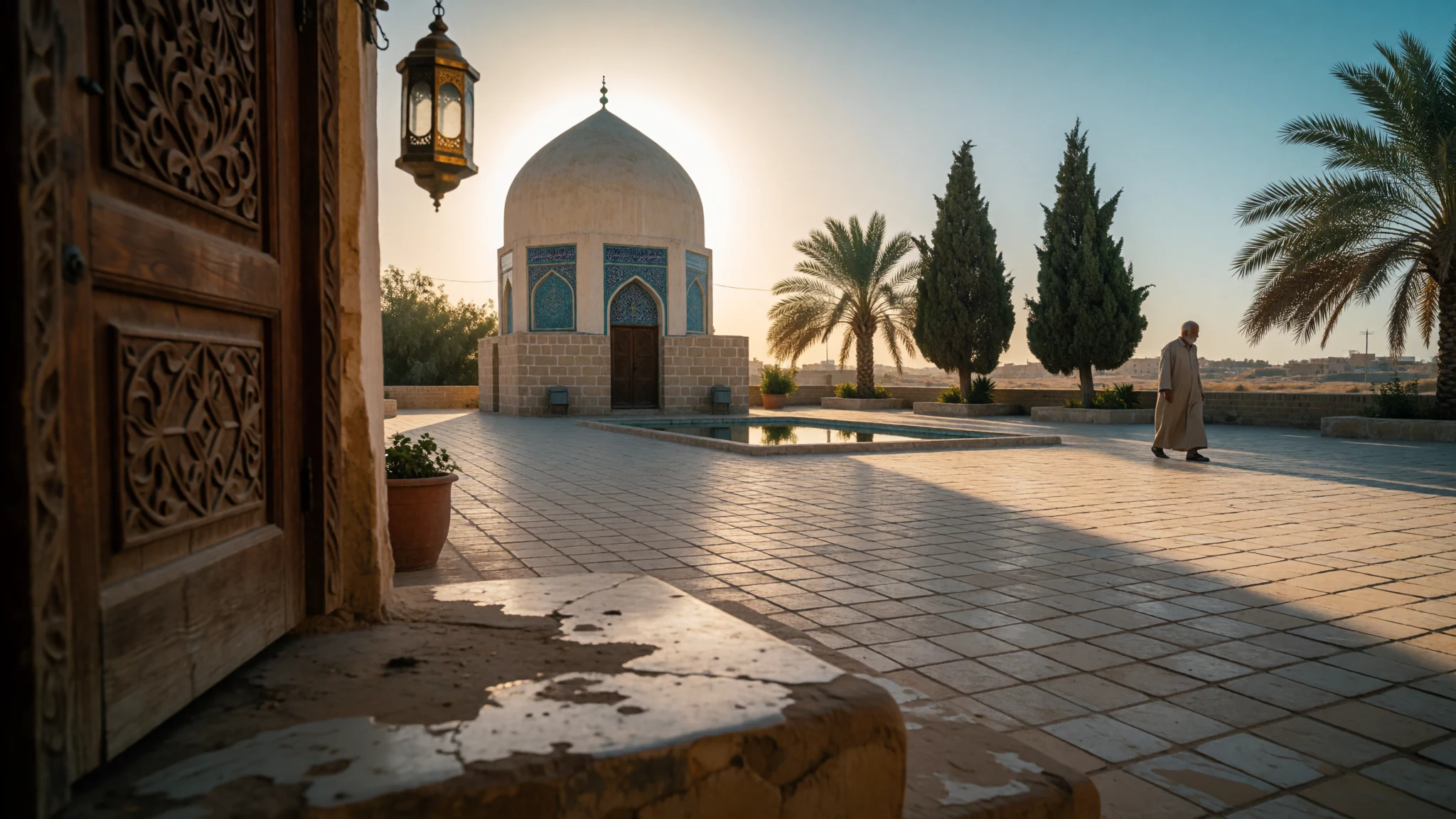
Bandar Abbas is a working Gulf port on the Strait of Hormuz, worth a day or two for its bazaar, fishermen and ferries to the islands.
The place
Bandar Abbas is the capital of Hormozgan Province and the main port on Iran's southern coast, where the Persian Gulf squeezes into the Strait of Hormuz. Roughly half a million people live here, on flat ground only 9 metres above sea level. The Omani shore of Musandam faces the city across the water, and the island of Qeshm lies just offshore to the south. Inland the land rises slowly: Mount Geno stands to the north and Mount Pooladi to the north-west, while the seasonal River Shoor reaches the sea east of the centre only after rain. The city works first and charms second. Many residents came from other parts of Iran for jobs in shipping, fishing, trade and the navy, which keeps its main base and headquarters here, so the mood is practical rather than touristy. The climate shapes everything. It is a hot desert, with summer highs that can reach 49 °C, winter nights that may dip to about 5 °C, and around 170 mm of rain in a year. What makes summer punishing is humidity: warm Gulf air pushes dew points among the highest averages of any city, so the heat feels far worse than the thermometer says and daily life shifts to the evenings. Winter is the season for walking. The sea is for looking at rather than swimming in, since the water by the city is polluted. Most travellers use Bandar Abbas as a gateway to the islands, but a day or two among the harbour, the bazaar and the fishing boats gives a fair sense of a working Gulf town.
Its story
Bandar Abbas has served as a harbour for a very long time. In the Achaemenid period, the commander Scylax is recorded as setting out from this coast on a voyage towards India and the Red Sea, sent by Darius the Great. When Alexander of Macedon overran the empire, the place was known as Hormirzad. By the 16th century, Persians called it Gamrun, and a European navigator noted a name meaning 'customhouse port', which tells you what the town was for. The Portuguese took it in 1514 to guard their Gulf and Indian trade, and called it Comorão, after the lobsters and crabs along the shore. Shah Abbas the Great won it back from them, and in 1622, with help from English ships, his forces defeated the Portuguese in the region. The port was renamed Bandar-e Abbas, 'Port of Abbas', and he built it into a major trading harbour. English writers spelt the name in a dozen ways, among them Gombroon, Gumbroon and Gameroon, which shows how hard it was to catch the local pronunciation. In 1625 an Anglo-Dutch fleet attacked the Portuguese here and seized their trading posts. Later the port became known abroad for pottery, and 'Gombroon ware' reached England as an early import of fine porcelain until Chinese china replaced it. Today the harbour trades in dates, citrus, tobacco and canned tuna alongside general freight.
What to see
- The bazaar — Central Bandar Abbas, near the seafront
The main bazaar sits a short walk back from the waterfront, spread over a couple of blocks of covered lanes. It is the liveliest part of Bandar Abbas, with spices, dates, cloth, household goods and the chatter of a port town. Late afternoon, once the heat eases, is the best time to wander. - Fish market and seafront promenade — Eastern seafront
A promenade runs east along the water, with an evening flea market on the way. At its far end the fish market is busy and noisy, and the fishermen are often glad to be photographed with the catch. Ask first, and expect to be asked to buy something.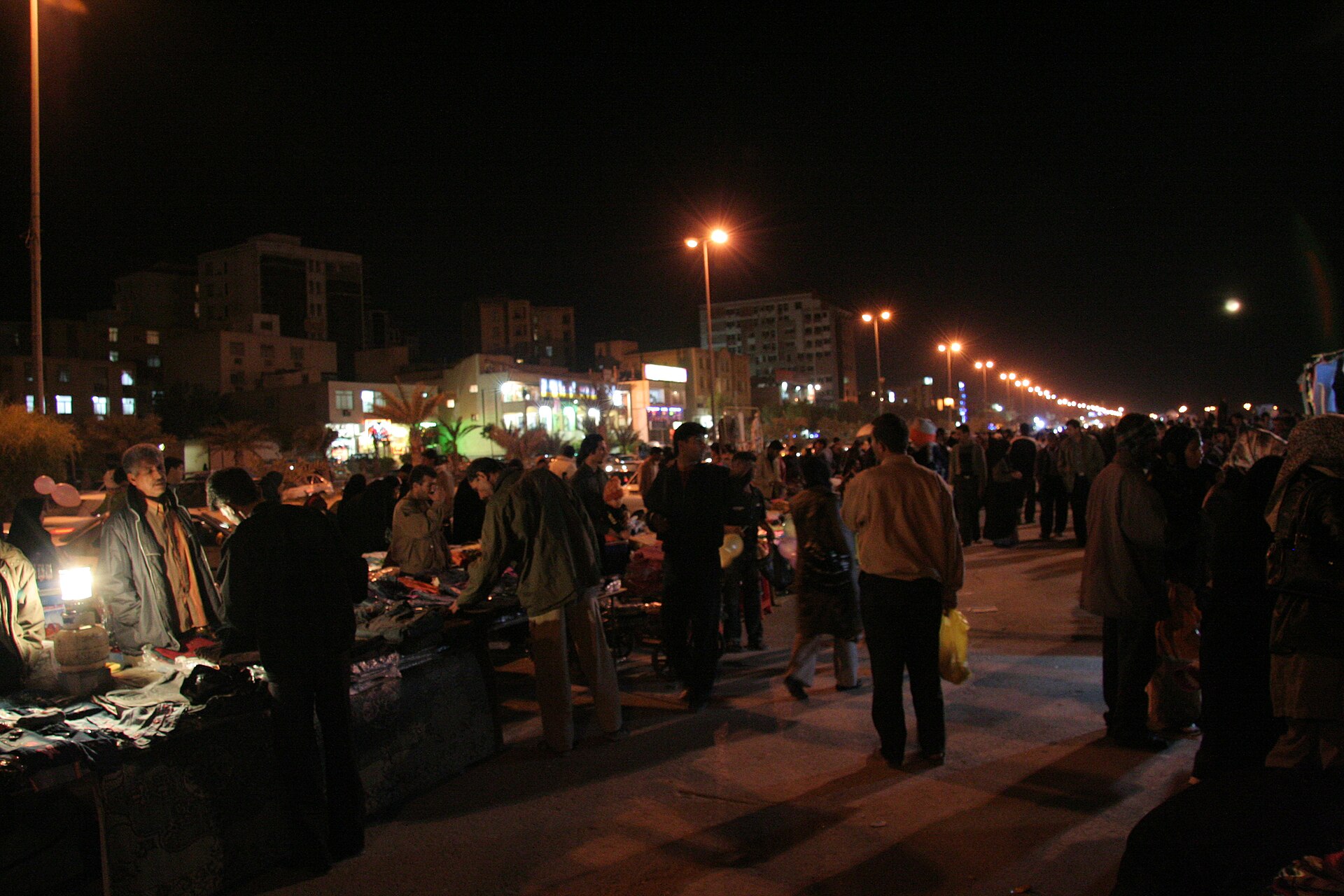
- Hindu temple (Mabad Hendooha) — Old town
The small Hindu temple is a reminder that this was a meeting point for traders from across the Indian Ocean. It is an unusual building for an Iranian city, and the visit is brief. Treat it as a quiet place of worship, and check locally whether it is open before going.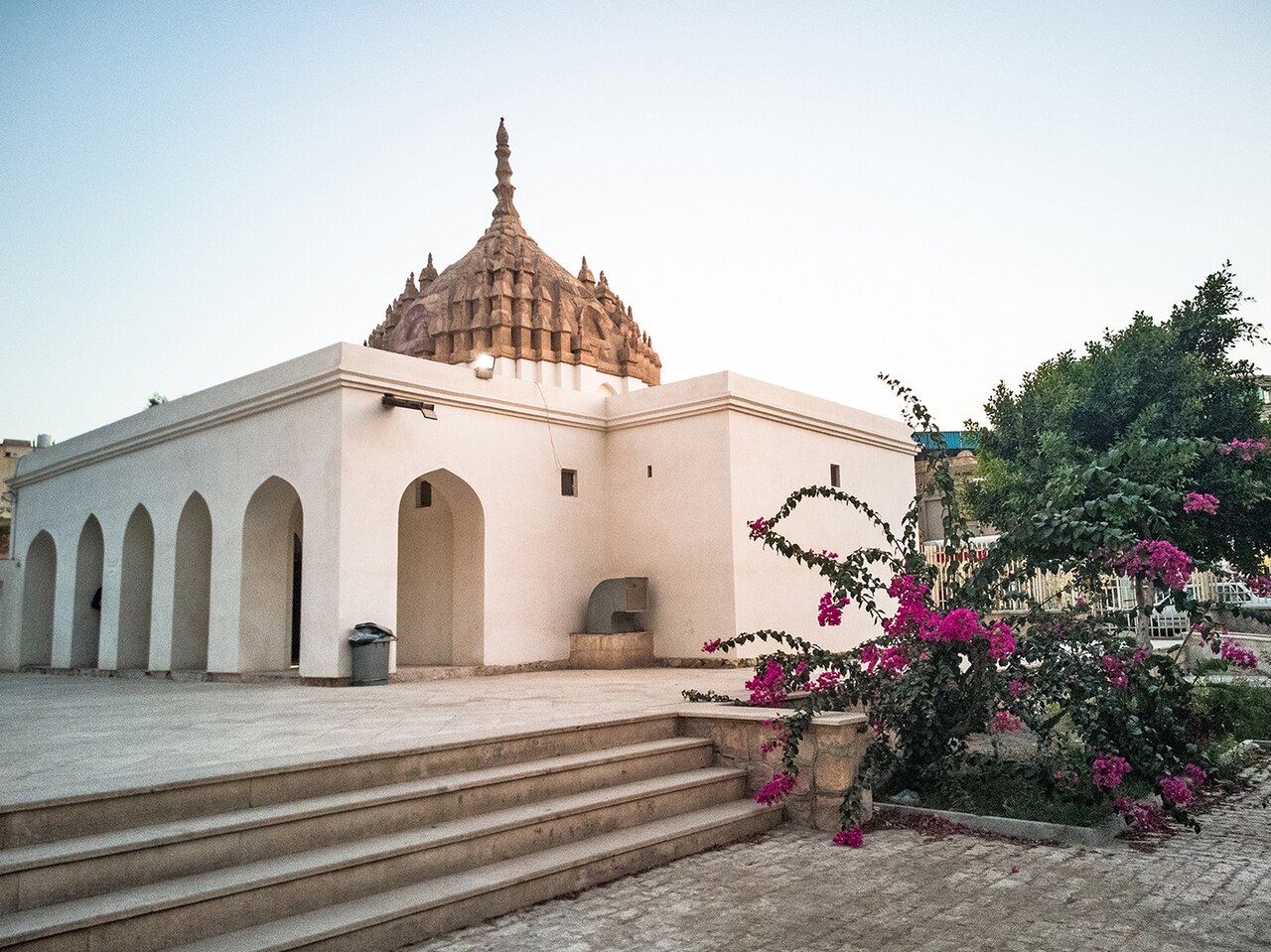
- Imamzadeh Seyed Mozaffar — Bandar Abbas
This local shrine is one of the imamzadehs, burial places of descendants of Shia imams, that dot Iran. It gives a sense of religious life in the city beyond the port. Dress modestly, and non-Muslims should ask before entering the prayer areas or taking photographs.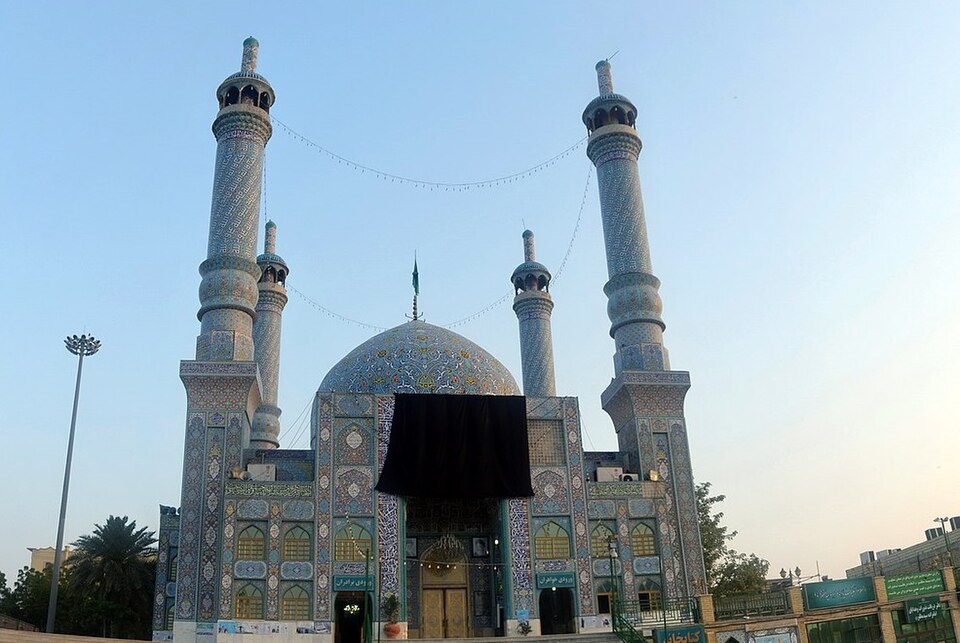
- Genoo thermal spring — North-east of the city, on the Sirjan road
The Genoo spring rises in the hills north-east of the city, about 34 km along the road towards Sirjan. Its mineral-rich water is used to irrigate nearby palm groves. It makes a half-day outing by taxi or car, best in the cooler months, away from the summer heat.
Culture
Bandar Abbas sits where Persian, Arab, Indian and African influences have met for centuries, and that mix shows in speech, music, cooking and dress. Many families in the wider Hormozgan region speak Bandari, a local variety of Persian, and Arabic words and Gulf habits are common. Because many residents came for work from elsewhere in Iran, the city is also a patchwork of accents and customs, with Persian as the shared language. Life follows the climate. In summer people stay indoors through the afternoon and come out after sunset, when the seafront, the bazaar and the parks fill with families. Fishing and sailing remain part of local identity, and traditional wooden boats can still be seen around the harbour and the nearby islands. Religious life is Shia Muslim in the main, with prayer times, the month of Ramadan and the mourning rituals of Muharram shaping the calendar. The Hindu temple points to older commercial links with India. Hospitality is warm, and a visitor who shows interest in the sea, the dates or the food will often be offered tea. Politics and the navy's presence make it wise to be discreet about photography near ports and military sites. When you meet local people, greet them first and accept tea politely, and never photograph naval areas, harbour installations or women without clear permission.
What to wear
Traditional dress in Bandar Abbas and the wider Hormozgan coast is bright and suited to the heat. Women in Bandari communities wear colourful dresses and loose trousers in light cotton and similar fabrics, often decorated with embroidery and metallic thread, with a patterned scarf. In some coastal communities, older women also wear a stiff face mask. Men have traditionally worn loose shirts and trousers, and a cloth wrapped on the head against the sun. Festive and wedding clothes are the main occasions when the full costume appears. Day to day, most people wear what is common across Iran. Women usually wear a headscarf with a long tunic or coat in light fabrics, and often in dark colours in public. Men favour long trousers and shirts, and shorts are uncommon outside private places. In the heat, thin cotton and linen are the practical choice for everyone. Visitors should dress for both climate and law. Women must cover their hair with a scarf and wear a loose top that covers the hips, with long trousers or a long skirt. Men should wear long trousers and a shirt with sleeves. Choose breathable natural fabrics, a hat or scarf for the sun, and comfortable closed shoes or sandals for dusty pavements. For shrines, carry a scarf, and for women a full-length cover may be offered at the entrance.
What to eat
- Ghalieh mahi — Family eateries near the harbour and bazaar
A spicy, sour fish stew, usually cooked with tamarind, herbs and garlic, and a signature of southern Iran. It is served with rice or bread. Look for it at family-run eateries in the town centre and near the harbour. - Grilled fish — Seafront eateries and around the fish market
Fresh fish from the Gulf, seasoned with spices and cooked over charcoal or fried whole, is the simplest way to eat here. Choose a place where you can see the fish on ice, and eat it with bread and lemon. - Ghalieh meygoo — Seafood restaurants in the town centre
A prawn version of the southern stew, with a thick, tangy sauce of tamarind and fresh herbs, normally eaten with rice. It is richer and sharper than most Persian stews, and worth trying where seafood is sold fresh. - Sambuseh — Bazaar stalls and evening street vendors
Small, crisp triangular pastries filled with spiced vegetables, meat or fish, and a fried snack that reflects the Indian Ocean links of this coast. They are sold in the evening and are good with a cold drink. - Dates and date sweets — Main bazaar and market stalls
Dates are a major local product, and sold in many varieties, fresh, dried or stuffed. Sweets made with dates and nuts also appear at stalls, making a good gift or a snack for the heat.
Plan it
Best time. November to March, when days are warm rather than punishing and winter nights stay mild. Summers are extremely hot and humid, with highs that can reach 49 °C, so avoid June to September if you can.
How long. 2
Getting there. Domestic flights reach Bandar Abbas from Tehran, Isfahan, Shiraz and Mashhad, and there is an international link to Dubai. Trains run from Tehran and Mashhad, and long-distance buses come from cities such as Tehran, Kerman and Shiraz. Ferries cross the strait from Sharjah and Khasab, and local boats run daily to Hormuz and Qeshm.
Budget. mid
Tips
- Plan outdoor sightseeing for the morning or after sunset, even in winter, and carry water
- Do not swim off the city's beaches, as the sea is polluted
- Budget travellers may find the city costly, so book rooms in advance and check the official city site, bandarabbas.ir, for local news
- Carry cash in Iranian currency, since foreign cards generally do not work, and check current travel advice before booking
- Take the half-hour ferry to Qeshm Island for a quieter day trip
Etiquette
- Women should cover their hair and wear loose clothing in public, and men should avoid shorts
- Ask before photographing people, and avoid photographing port, naval or military sites
- Remove shoes at mosques and shrines, and dress modestly
Nearby
Sources
- Wikidata Q154814 (CC0)
- Wikipedia: Bandar Abbas (rev 1382002057) (CC BY-SA 4.0)
- Wikivoyage: Bandar Abbas (rev 5343141) (CC BY-SA 4.0)
- Photo 01: Mabad Hendooha, Hasanbardal (CC BY-SA 4.0)
- Photo 02: A view from Hormoz Hotel in Bandar Abbas, Hamid Hajihusseini (CC BY 3.0)
- Photo 03: IA University, Bandar Abbas, SM Mirhosseini (CC BY 3.0)
- Photo 04: Imamzadeh Seyed Mozaffar, auoob farabi (CC BY 3.0)
- Photo 05: Costumes des quatre parties du monde (1670), Luycken (Public domain)
- Photo 06: View of the city of Gamron, Johann Wolffgang Heydt (Public domain)
- Photo 07: View from Shahid Haghani Port, Ivan Mlinaric (CC BY 2.5)
- Photo 08: Bandar Abbas night, Sorosh (CC BY 2.5)


