Ahvaz
Ahvaz, Iran
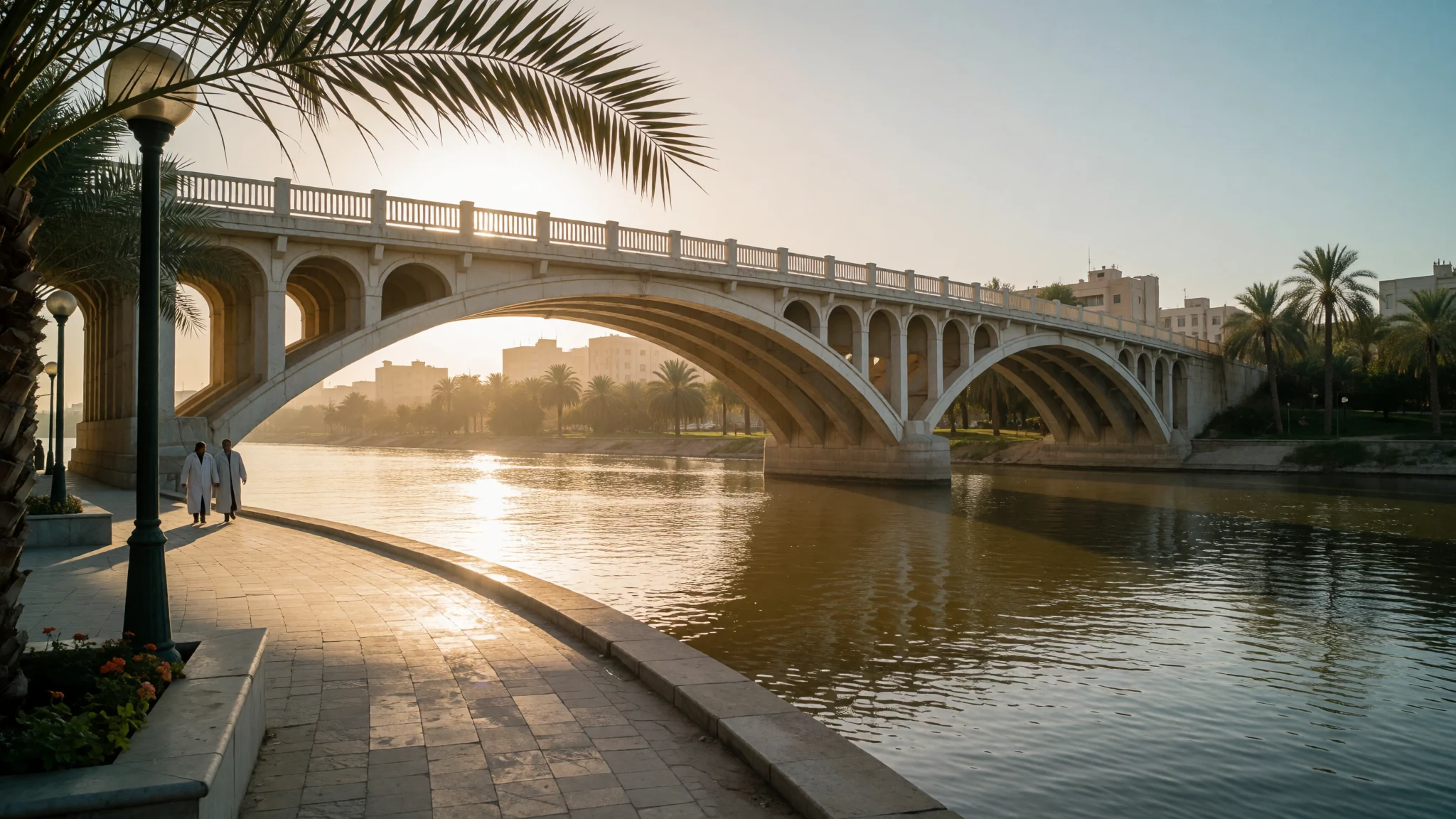
Ahvaz is a hot, working oil city on the Karun River, worth visiting for its bridges, riverbank evenings and Arab village life.
The place
Ahvaz is the capital of Khuzestan province in south-western Iran, a city of about 1.2 million people on a flat plain only 23 metres above sea level. The Karun River runs through its centre and shapes almost everything: the parks along the banks, the long boulevards, and the many bridges that tie the eastern and western halves together. That is where the nickname City of Bridges comes from, though since the early twentieth century it has been better known as an oil capital.
The city sits not far from the Iraqi border, and its population reflects that position. Persians live alongside Arabs, with smaller communities of Qashqai, Kurds and others. Persian is the common language, but Khuzestani Arabic is heard widely, and you can pick up Bakhtiari and other dialects too.
The climate is hot desert. Summers are long and punishing, and winters are short and mild, so the city really lives by the season. In the heat, daytime streets empty out and life moves to the evening, when families gather by the river and the air finally loosens.
Ahvaz is not a polished tourist town. It is an industrial and transport hub, busy and practical, with traffic, concrete and refineries. Its appeal is in the river, the layered local culture and the nearby villages, rather than in a single famous monument. Visitors who come with modest expectations and an interest in everyday Iran tend to leave with the warmest memories. The city's official site is ahvaz.ir.
Its story
Ahvaz has a long past, reaching back to the Achaemenid period, and in ancient times it was linked with the learning of Gondishapur. By the nineteenth century, though, it had shrunk to a small riverside settlement, with travellers' estimates ranging from a few hundred to about two thousand inhabitants.
The revival came in the 1880s, when the Karun was dredged and reopened to commerce. A railway crossing at Ahvaz made it a meeting point of river and rail traffic, and the opening of the Suez Canal gave trade a further push. A new port quarter was built and named Naseri after the reigning Qajar shah, a name the city carried until the Pahlavi era, when the old name returned.
Then came oil. Finds near the city early in the twentieth century brought money and people, and Ahvaz grew quickly. Local power during these decades was contested between a Qajar governor, the Bakhtiari leadership and the ruler of the emirate of Muhammara, whose influence stretched across much of Khuzestan.
In 1926 the provincial government moved here from Shushtar. The Trans-Iranian Railway arrived in 1929, and by the Second World War Ahvaz was the main built-up centre of the interior of Khuzestan. The bridges that followed, among them the White Bridge built by German engineers in the 1930s, became the visible mark of that rapid growth, and the city has kept its character as a place of trade, energy and movement.
What to see
- White Bridge (Pol-e Sefid) — Kianpars, Karun riverbank
The White Bridge was the first to span the Karun here, built by German engineers in the 1930s, and it is now the city's best-known symbol. Walk across it in the late afternoon, then stay for sunset, when the river catches the light and locals gather on the banks.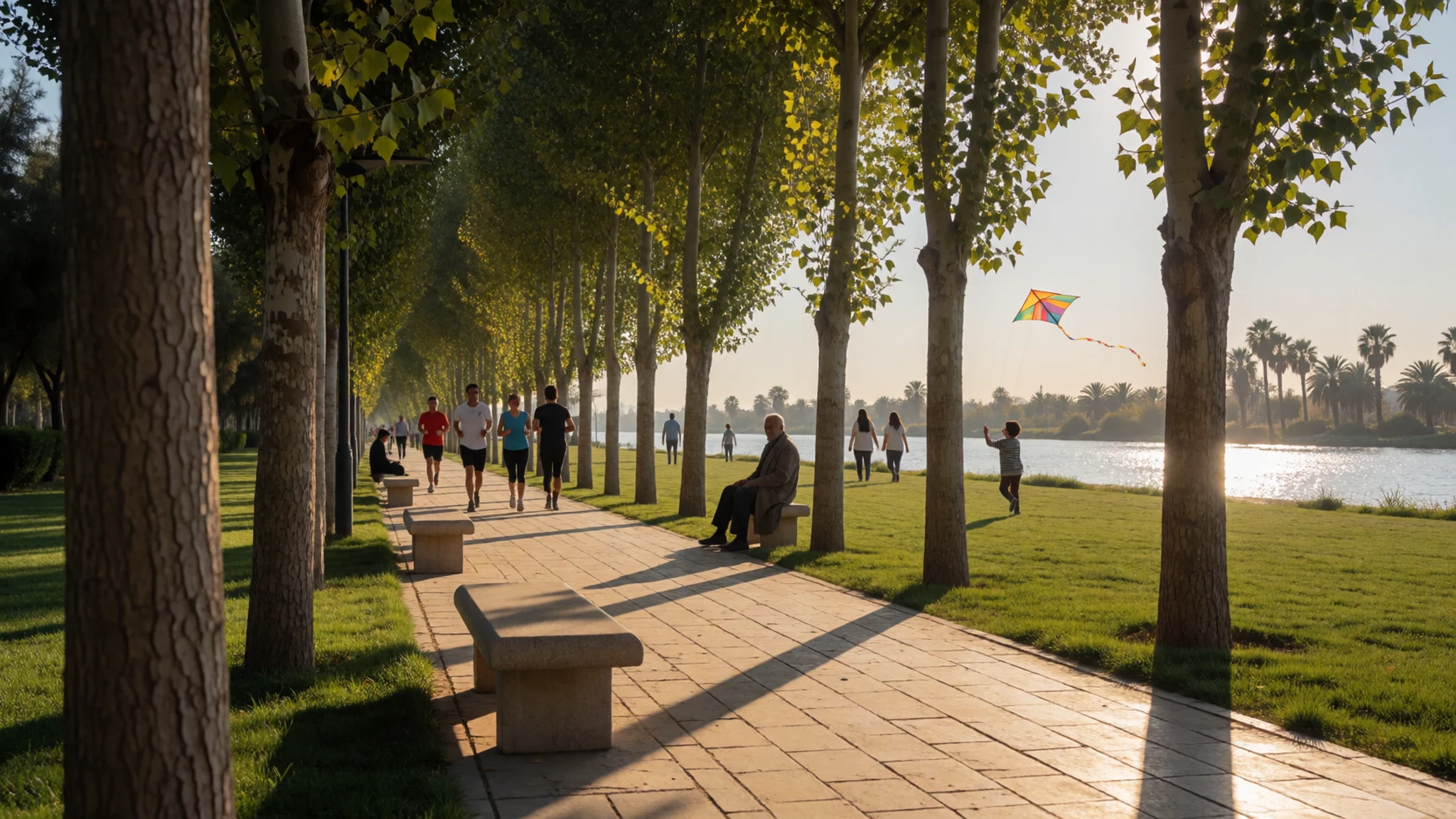
- Riverside parks and boulevard — Karun River banks
The best of Ahvaz is along the Karun, where a riverside boulevard links a string of parks. The oldest park is in Kianpars beside the White Bridge. Come in the evening, when it is cooler and families picnic, and the whole stretch feels like the city's living room.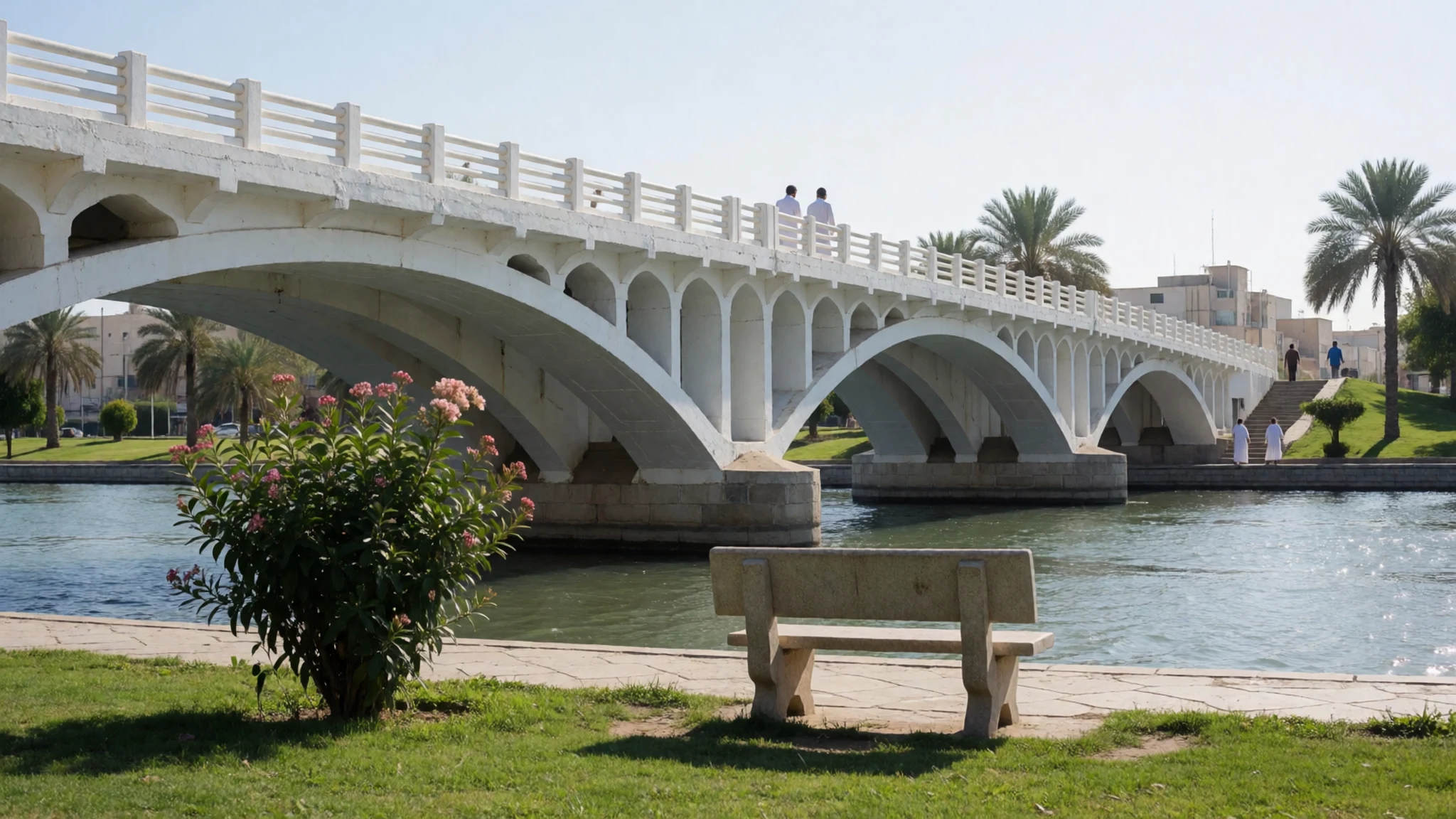
- Boat trips on the Karun — Riverside parks
Boats can be rented from several riverside parks for a slow trip on the Karun. It is a good way to see the bridges from below and to escape the traffic. Agree the route and duration before setting off, and go at dusk in warm months.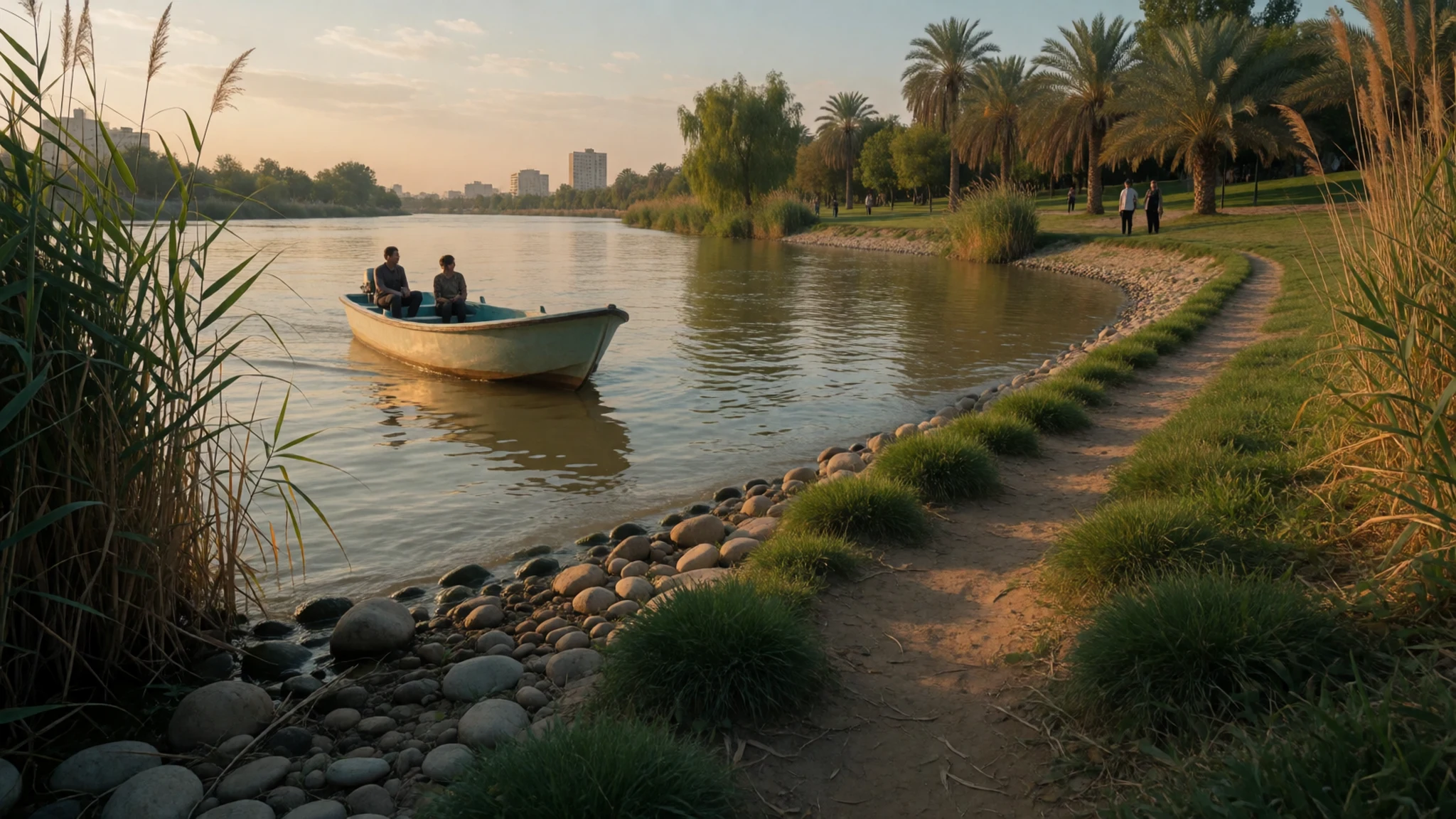
- Kut Kut and the buffalo villages — Karoon county, outskirts
Karoon county, known as Kut Kut, lies a short drive from the centre and is home to water buffaloes. Arab villagers lead their herds to the water through the day. Hospitality is the custom here, and a simple breakfast is traditionally offered to visitors, so go with a local guide if possible.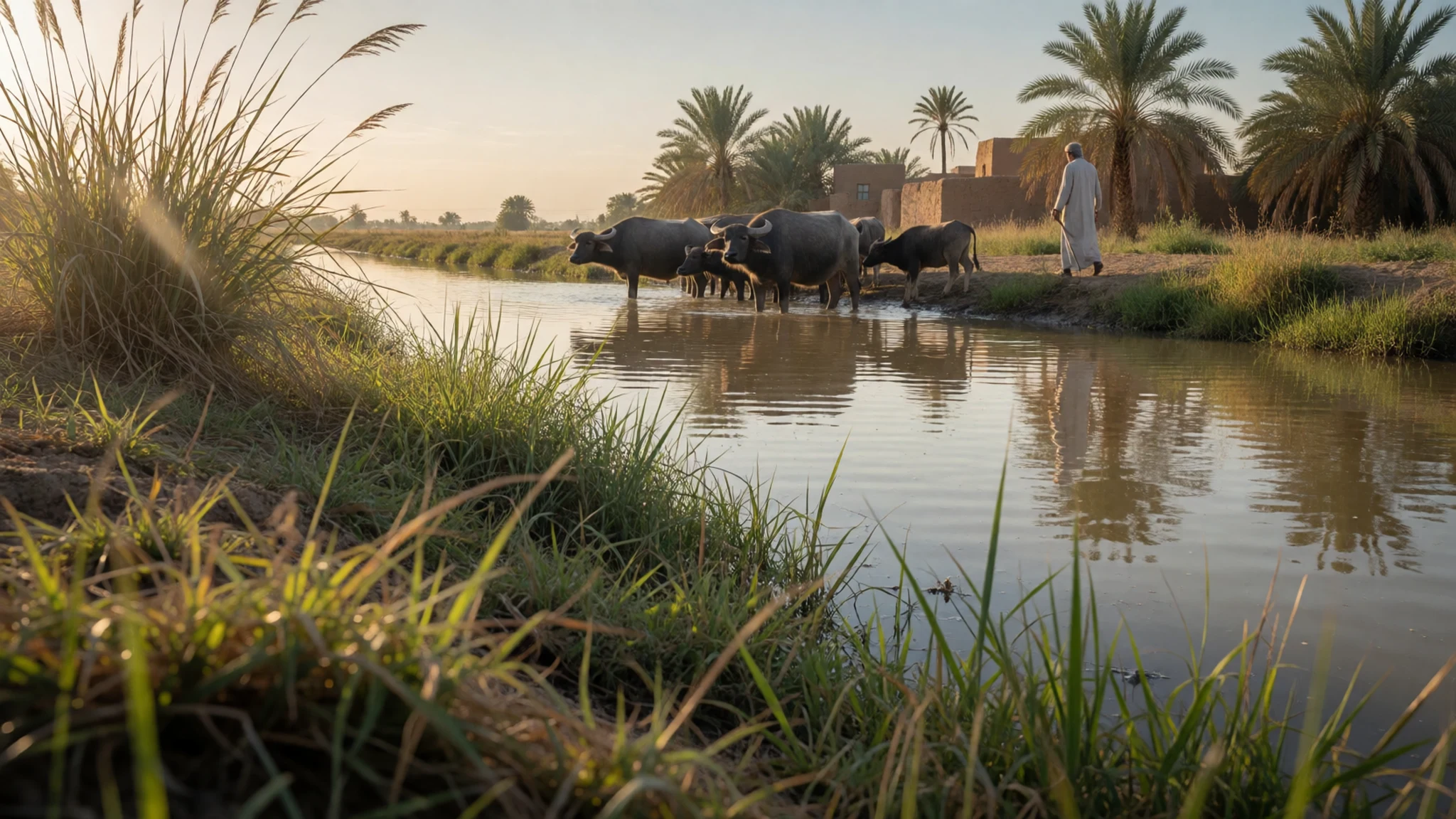
- Ghazaviyeh Village — Ghazaviyeh, south of the city
About 6 km from the city, Ghazaviyeh is a green village of date palms and vineyards that stays leafy even in deep summer. Visitors can join traditional Arabic coffee gatherings hosted by the village head. It is a gentle contrast to the city's heat and industry. - Oil flares at night — City outskirts
Gas flares burn on the edge of the city, and after dark they make an eerie orange glow across the plain. It is a sight that tells the story of Ahvaz better than any museum. It only works at night, so combine it with an evening out.
Culture
Ahvaz is a meeting of Persian and Arab Khuzestan, and that shows in everyday life. Khuzestani Arabic is spoken in homes, markets and villages, and Arab hospitality is a point of pride, so a greeting is usually returned with a warm welcome rather than a nod. In the villages around the city, guests are traditionally offered food and coffee, and refusing outright can seem cold.
The river is the social centre. In the evening, families, students and couples walk the banks, sit on benches and picnic on the grass, and the bridges are lit up. In summer, almost everything happens after sunset because of the heat.
Oil shapes the city's identity too. Ahvaz has seen the industry's wealth and its pressures, and locals have strong views on the environment, air quality and the region's place in Iran. Travellers do best listening more than debating, and asking about food, family and the river rather than politics.
Water buffalo herding, date palm farming and coffee ceremonies are the rural traditions closest to the city, and they are worth experiencing respectfully with a host rather than as a photo stop.
When you are invited into a home or a village gathering, accept the coffee or tea offered, and ask permission before photographing people, especially women and elders.
What to wear
Traditional dress in Ahvaz follows the region's Arab and Persian mix. Arab men in the villages commonly wear the long, loose robe known as the dishdasha, usually in cotton, with a headcloth held by a cord, which gives shade and keeps dust off. Women often wear long, colourful dresses and a headscarf or a black abaya. These are the clothes of daily life as well as of festivals, chosen for the heat as much as for custom.
In the city, most people dress in modern clothes adapted to Iranian rules. Women wear a headscarf and a loose coat or tunic over trousers, often in light fabrics for the summer, and men wear shirts and trousers, rarely shorts. Younger people mix in fashion trends, so the streets look more varied than outsiders sometimes expect.
Visitors should plan for two things at once: heat and modesty. Women need a headscarf and a loose, long top covering the hips and arms to the wrist or close to it, and trousers or a long skirt. Men should wear long trousers and a shirt with sleeves. Choose cotton or linen, which breathe in the heat, and a wide-brimmed hat or scarf for the sun. Comfortable closed shoes suit the pavements, and sandals work for walks beside the river. In a mosque, women need to cover fully and should dress more conservatively, and shoes come off at the door.
What to eat
- Shir mahi kebab — Mid-range kebab restaurants around the city
Fish kebab, as the Khuzestan rivers and Gulf nearby suggest. Grilled fish is a local speciality worth looking for, alongside the usual meat kebabs. Order it with rice, grilled tomato and fresh herbs.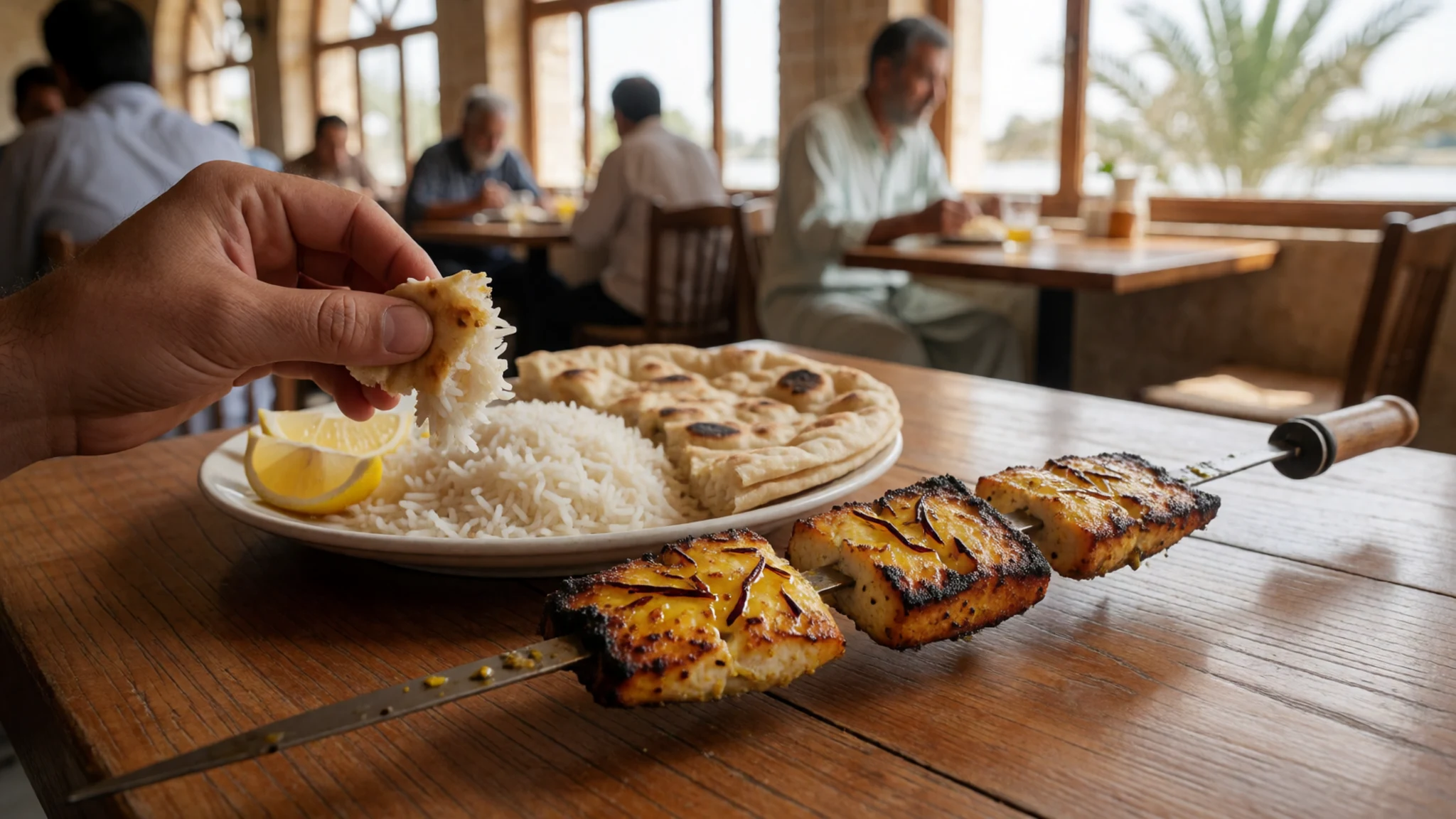
- Grilled river and Gulf fish — Riverside eateries and fish restaurants
Fish from the Karun and the Gulf appears grilled or fried on many menus. It is usually served whole with bread, rice and lemon. Ask what is fresh that day and go for the simplest preparation.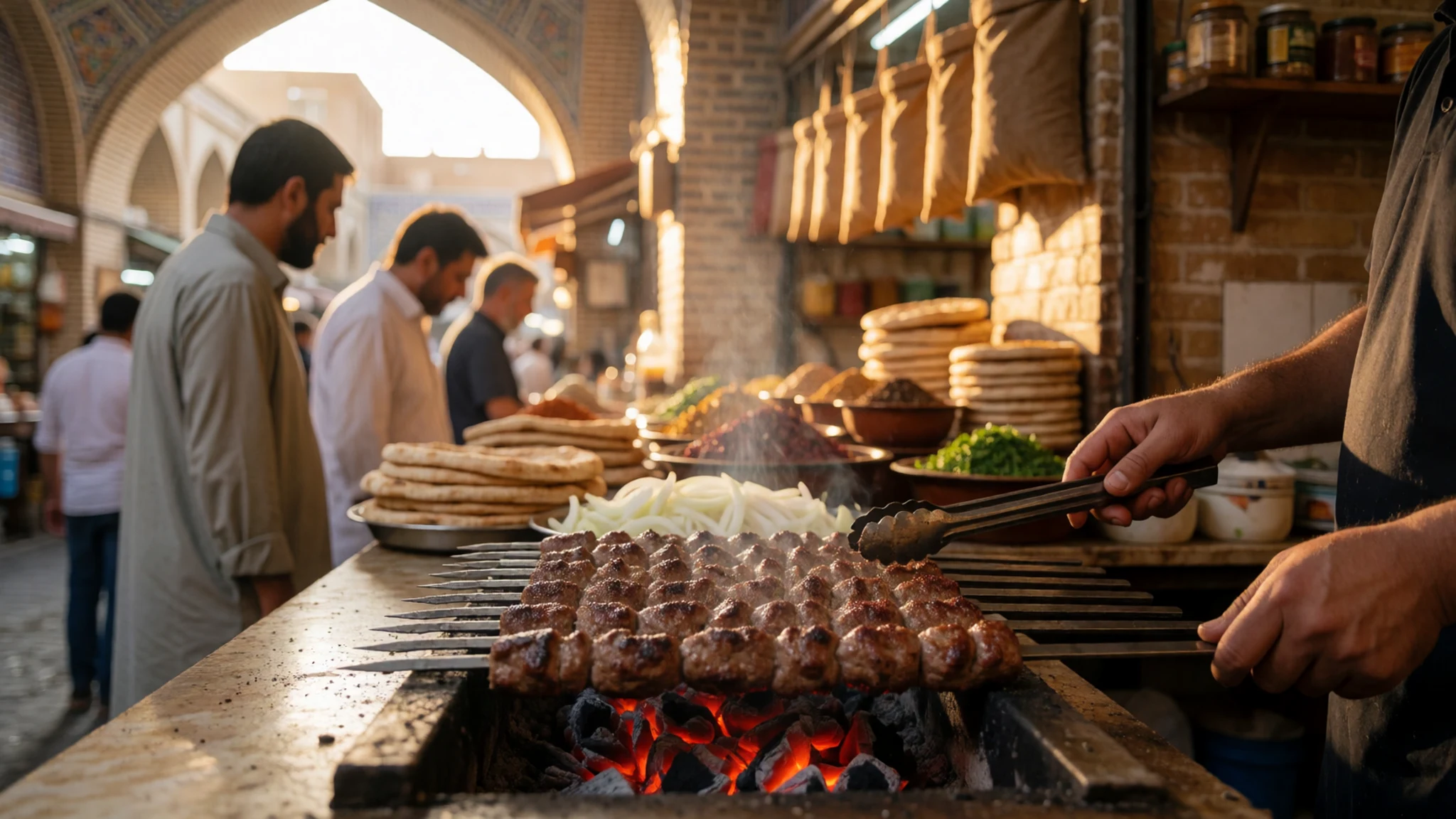
- Fresh fruit juice — Juice shops on busy streets
Alcohol is not available in Iran, so juice is the drink of choice, and Ahvaz has plenty of juice shops. Orange, pomegranate and seasonal fruit are all easy to find. In summer, be cautious with cantaloupe juice and banana milkshakes, which can upset stomachs in the heat. - Village breakfast — Kut Kut and village homes
In the Arab villages near the city, visitors may be offered a simple, filling breakfast of bread, dates, cheese and tea. It is a gesture of hospitality rather than a menu item, so accept graciously and thank your hosts. - Arabic coffee and dates — Ghazaviyeh Village gatherings
Coffee is served in small cups at village gatherings, often with dates from nearby palm groves. It is bitter and fragrant, and traditionally poured by the host. Take a cup and shake it gently when you want no more.
Plan it
Best time. November to March, when the days are mild and walking by the river is pleasant. Summers are long and very hot, so June to September is best avoided unless you stay indoors by day.
How long. 1–2
Getting there. Ahvaz has its own airport, with daily flights from Tehran, Isfahan and Shiraz. Trains run from Tehran and the southern ports, with the railway station on the western side of the city and a metro stop nearby. Long-distance buses leave from separate stations depending on direction.
Budget. low
Tips
- Visit the river parks and bridges in the evening, when it is cooler
- Carry water and a hat, and avoid midday outdoor plans in warm months
- Check train and flight schedules with the airlines or railway before you travel
- Bring cash as well as cards, as foreign cards often do not work in Iran
- Visit the villages with a local guide or host for the best welcome
Etiquette
- Dress modestly, with a headscarf for women and long trousers for men
- Ask before photographing people, especially women and elders
- Accept tea or coffee when offered, as it is a sign of respect
Nearby
Sources
- Wikidata Q170366 (CC0)
- Wikipedia: Ahvaz (rev 1384937295) (CC BY-SA 4.0)
- Wikivoyage: Ahvaz (rev 5343169) (CC BY-SA 4.0)
- Photo: Milad Hamadi (CC BY 4.0)
- Photo: Eeehhssaannn2 (CC BY-SA 4.0)
- Photo: Morteza Jabberian (CC BY 4.0)
- Photo: RGE lighting company (CC BY-SA 4.0)
- Photo: Derafsh Kaviani (CC BY 3.0)
- Photo: Meysam.ebrahimi (CC BY 3.0)
- Photo: Derafsh Kaviani (CC BY 3.0)
- Photo: PayamAvarwand (CC BY 4.0)


